9th May 2026 / Temp: 16C / Sunny with northerly breeze
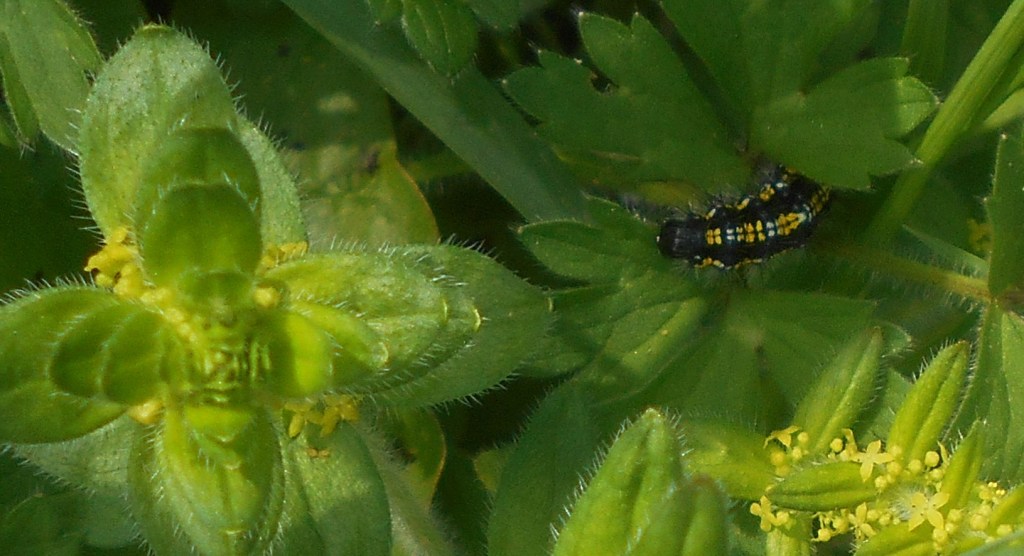
Lots of action alongside the cycle path in the newly opened section, a surprising sight of a Scarlet Tiger Moth caterpillar which we have only seen flying along the banks of our local river, but we pleased to discover they are also found in wooded areas as well. This species is predominantly confined to the south and west England and Wales and when larger larger they are often found feeding on Common Nettle, Bramble, sallows, Honeysuckle and Meadowsweet, although this one was spotted among a cluster of crosswort plants.
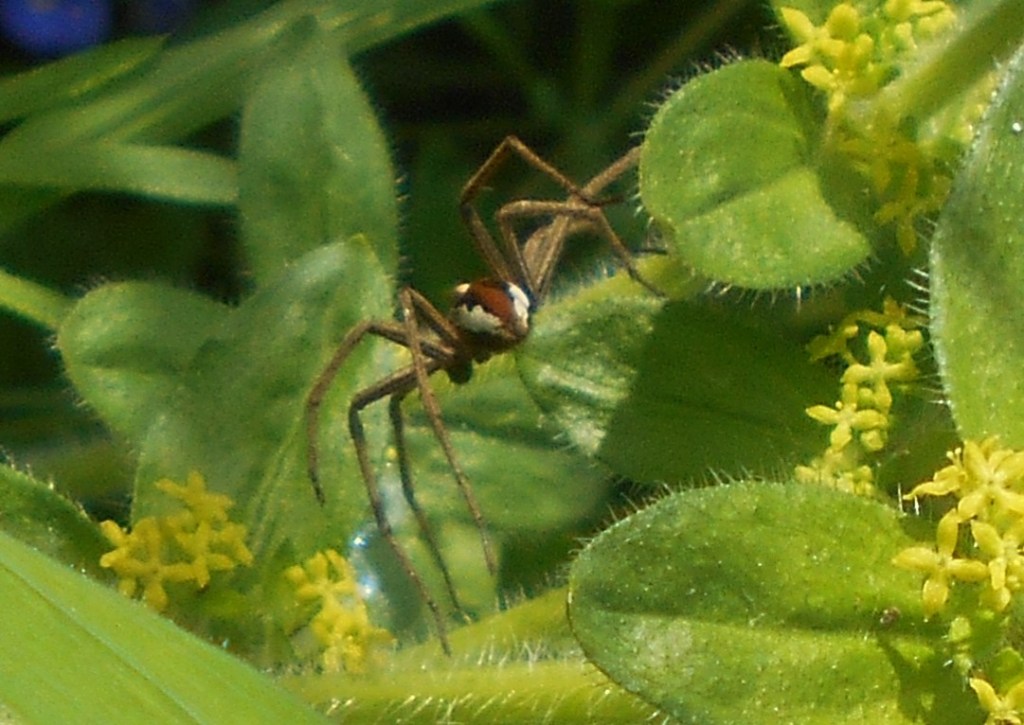
Another visitor to the Crosswort plants is this spider Chieriacanthiam erraticum, a new species for our records. As this identification is based solely on the rear view of a fast disappearing spider, we cannot be absolutely certain it is correct, but given the description : “A foliage spider. The markings of this spider are distinctive. It has a wide dark red stripe running down the centre of the abdomen, which is in turn surrounded by an area of creamy-yellow) and the time of year it seems the closest match.
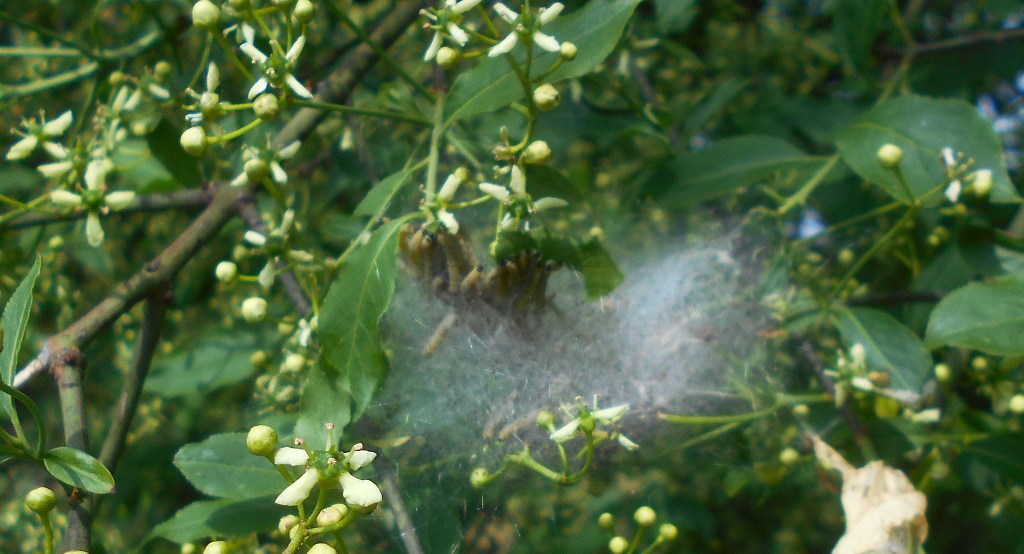
Spindle Ermine Moth caterpillars are hard to miss as they form large skeins of cobweb-like nets which are draped along the higher branches of the shrubs where they cluster together in groups. We notice Spindles in the autum with their colourful pink and orange fruits which are so noticeable, the small white flowers are easily missed.
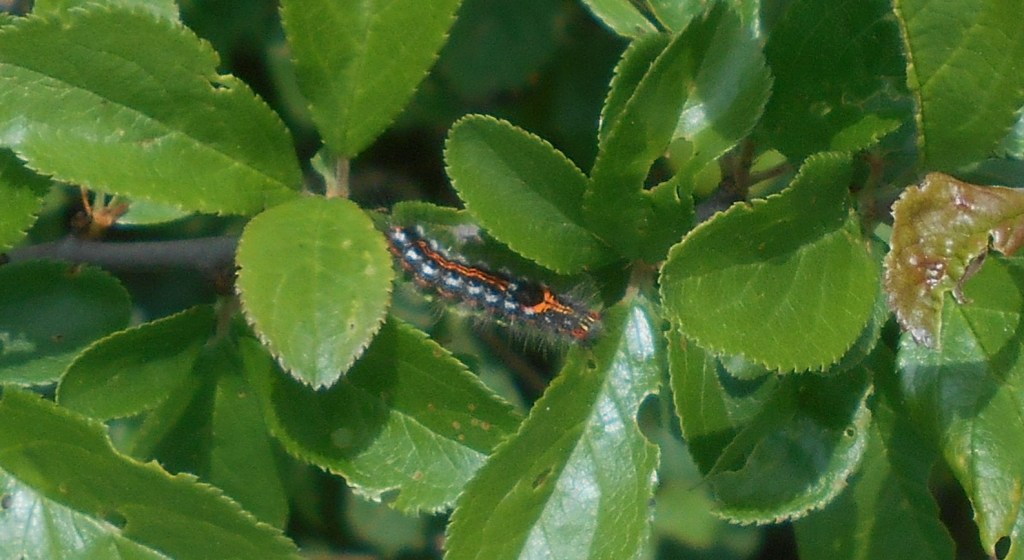
This Yellowtail Moth caterpillar is a new species for us, we cannot recall ever seeing the Moth or the caterpillar before. According to UKMoths: “The caterpillars, in common with many of the Lymantriidae, are covered with irritating hairs and should only be handled with extreme care. They feed on a number of deciduous trees and shrubs.”
 WILD WAY Route 24 :