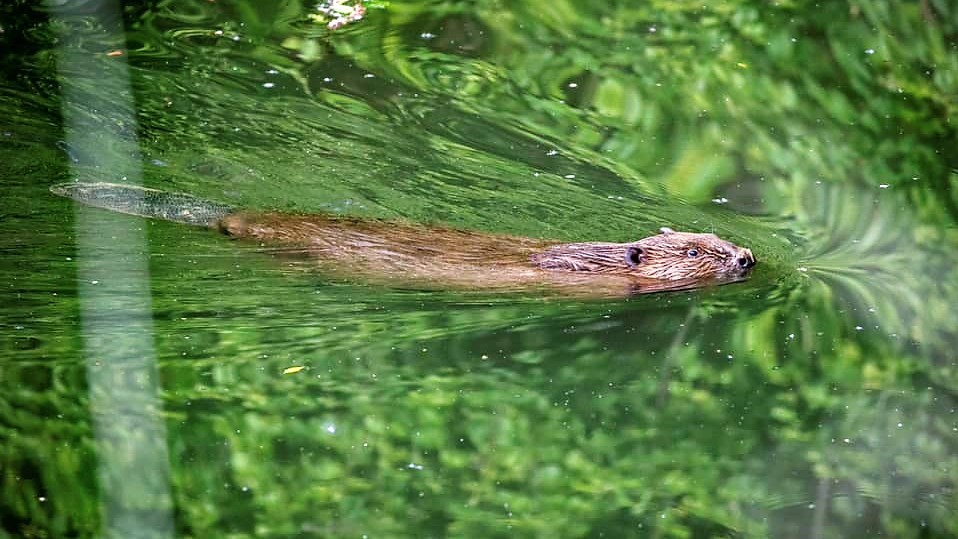
The Somerset River Frome rises near Witham Friary, heads downstream through Frome to Freshford, where it joins the Bristol Avon. The river is a rich habitat for Otters, Water Vole and the recently reintroduced (2018) Beaver. Water birds share the river, Dippers, Kingfishers, Grey Wagtails, Grey Heron, Great & Little Egret and many, many more, while Badger, Muntjak, Roe Deer, Red Fox, Rabbit and Brown Hare roam the water meadows.
This blog records any wildlife or signs which we see along a stretch of river while surveying as volunteers for the Somerset Otter Group Somerset Otter Group
"There are always unmet things to look forward to, along with unknown things to discover" Steve Smailes August '23

Name each river, name each mountain, name them warmly. Stranger, take my warmest blessings – may your future road be clear and bright
Hai Zi
Somerset Otter Group Two-Day Event : Day 2 : 29th March 2026
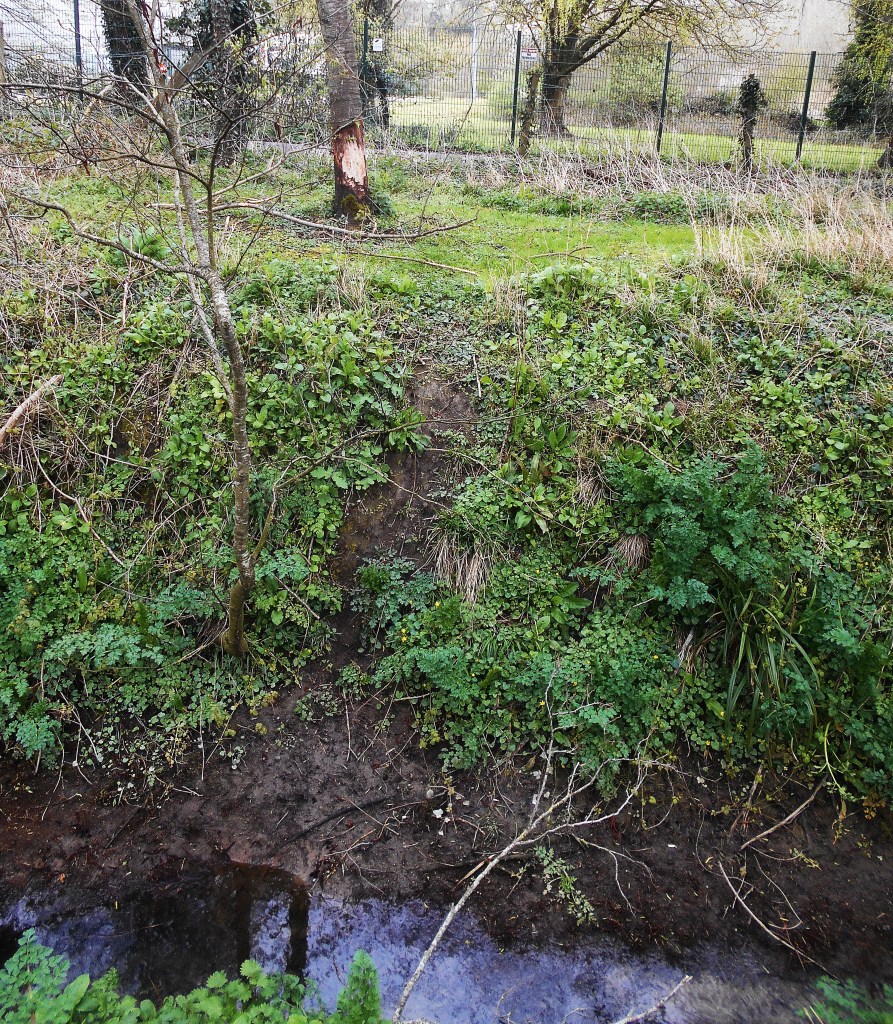
Heavy cloud, cold south-westerly wind and without yesterday’s full sun, it felt much colder and pretty uninviting, the river high and the currant running fast.
However, good to see the Beaver had been active overnight and today’s photograph shows not only fresh Beaver gnawings on one of the trees but also a well used “slide” into the overflow channel which runs down into the river.
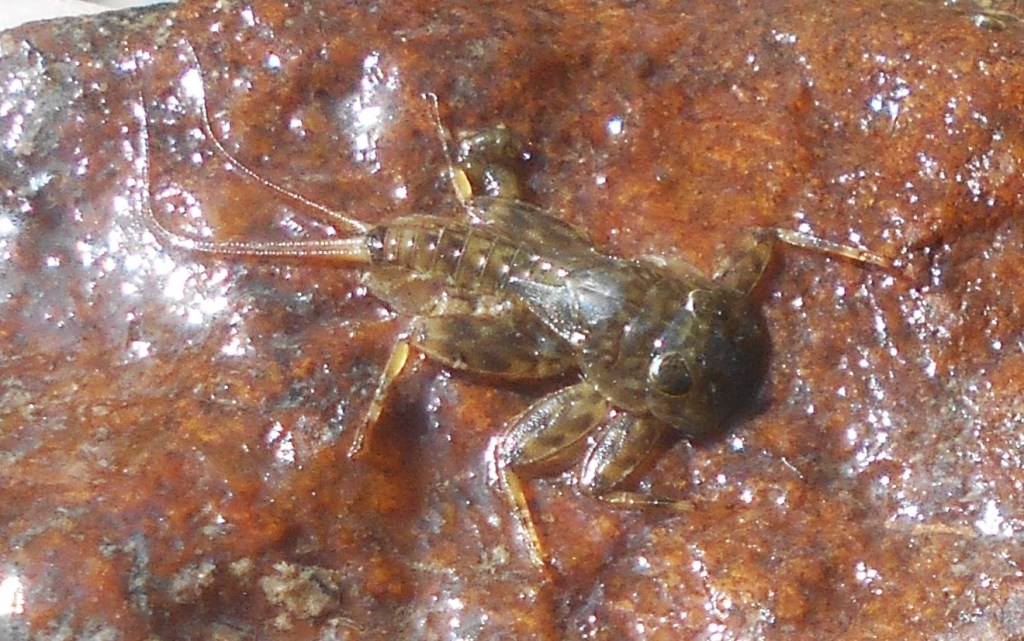
Another cheerful sign was spotting a dragon clinging to a stone on the water line at the edge of the stony beach! The water was freezing so I didn’t turn many stones but to find even one of the caddisfly invertebrate species, a flat-bodied stone clinger nymph Ecdyonorus, lifted the spirits. This tiny creature, together with the couple of fresh water shrimps sharing its space, tells us that some at least have survived last summer’s drought and the exceedingly wet winter season with its constant floods. Only time will show if the Mayfly hatch this year have been adversely affected by the weather.
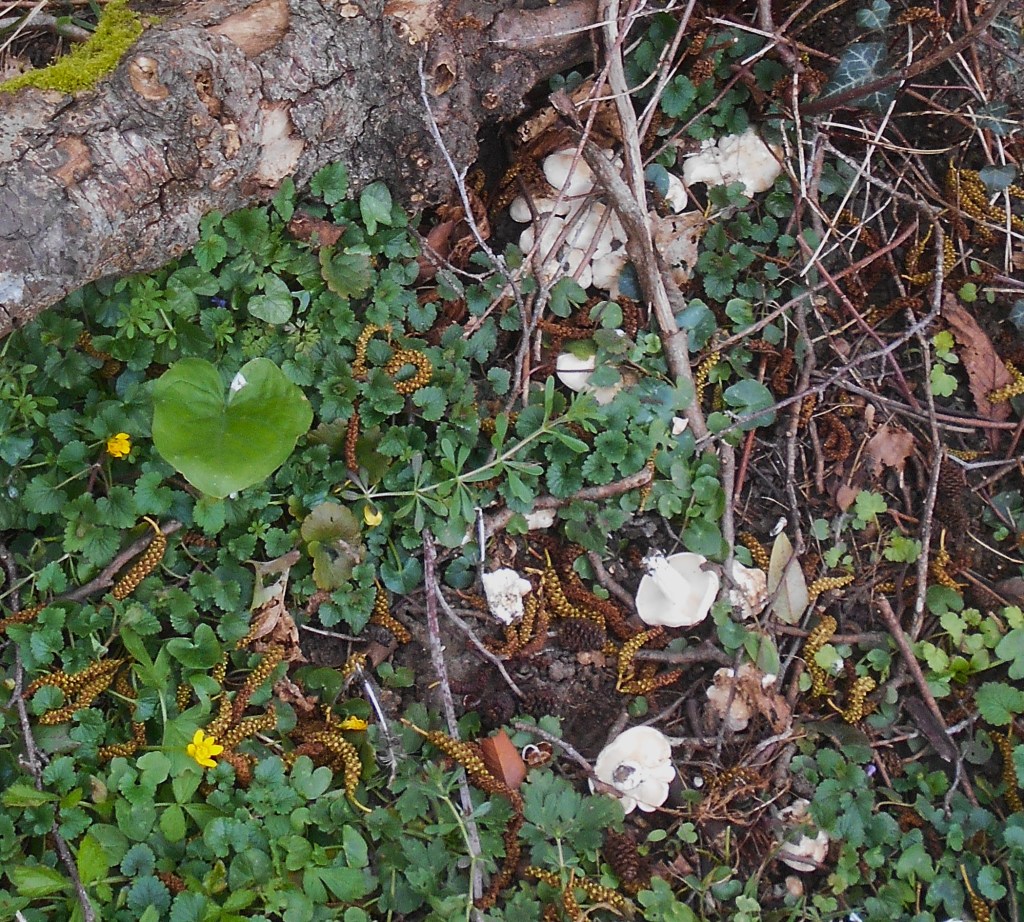
Leaving the river bank and walking to the next survey site through the woods which have become the Beavers favourite larder. Luckily they do not eat fungus so a large, healthy collection of St George’s mushrooms which appear in this spot every year are thriving; we hope the farmer is able to enjoy these delicious wild fruits before they are eaten by other local wild life!
No signs of Mink, or the Kingfisher we heard and saw yesterday, and the water again too high for Dippers and the absence of fresh spraint indicated that Otter did not visit our sites overnight. Nevertheless, a good survey result – fresh signs of Otter, Beaver, riverfly invertebrates, Ducks and a Kingfisher – the river runs through lowland, dairy cattle country and this stretch is a few miles from a sizeable town – certainly not a sparkling, clean and clear mountain stream but it is clean enough to feed and support a fair collection of wild life.
Somerset Otter Group Two-Day Event : Day 1
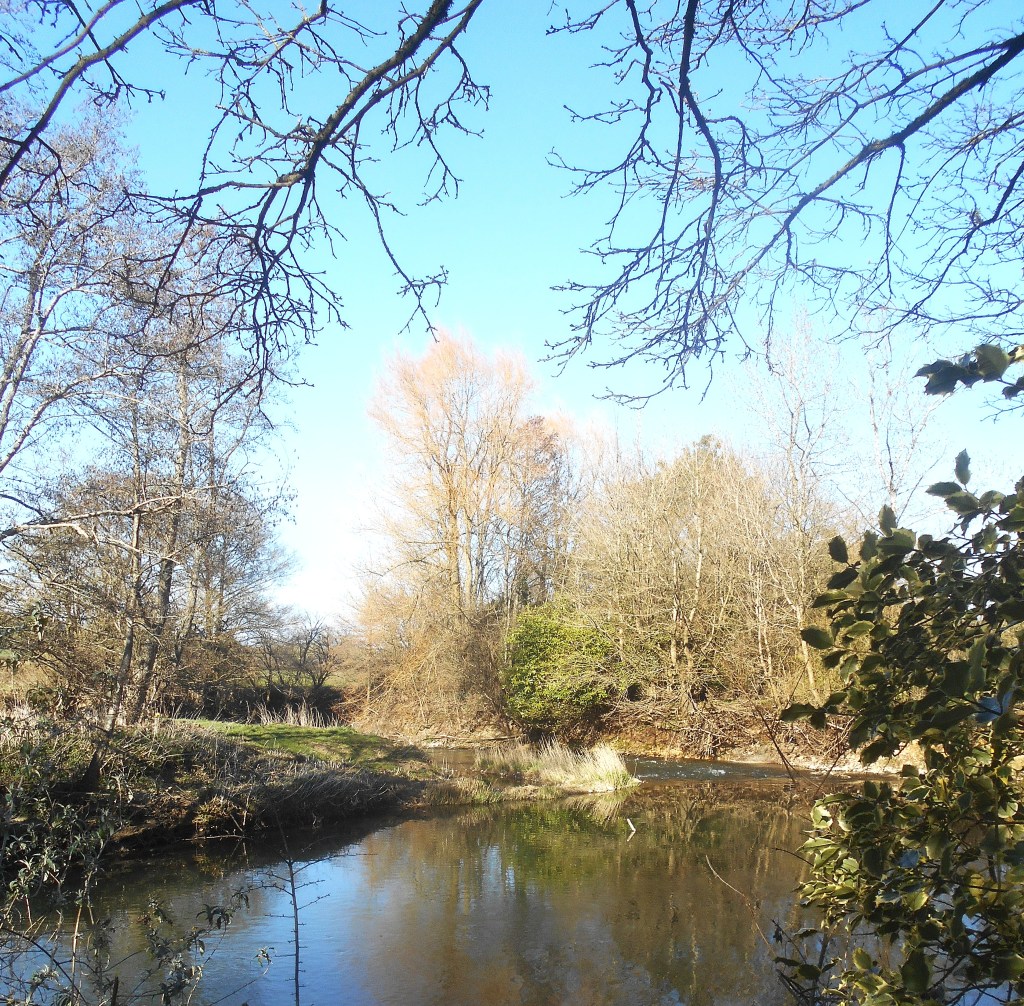
28th March 2025 / Temp: 8.5-9 C / Water Level: High
Mostly bright, sparklng, sunny intervals, blue skies with skudding white and grey clouds, the strong wind from the north-west making it feel very cold.
Since Beavers have been introduced in the Somerset Rivers, we have been asked to note evidence or sightings of Mink, Beaver, Water Voles, Kingfishers or Dippers in our monthly Otter Surveys and our annual Two-Day Event. We are fortunate that our allocated sites contain all these species, apart from Water Voles.
Once the records are received from all the volunteers throughout the county, the details are collated and we will be able to get an idea of the size of the Otter population across Somerset. It is always interesting to note the fluctuations in various areas.
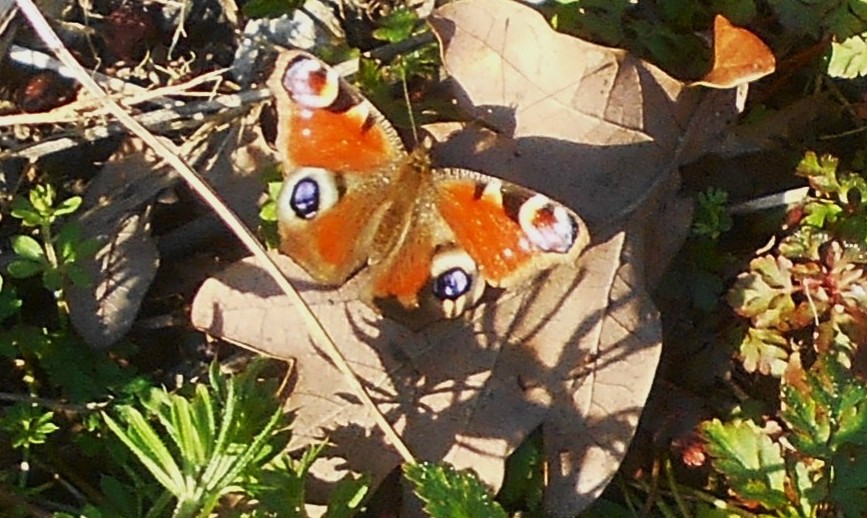
Always cheering to see the first butterflies of the year, Peacocks and Brimstones are usually the first to appear and it was good to see the warm sun has persuaded a Peacock to come out.
We were extremely pleased (and relieved!) to spot three lots of recent Otter spraint at our second site, particularly as there has been a dearth of Otter signs along this stretch of the river for almost a year. We were also pleased to hear and see a Kingfisher flashing downstream. No sign of Mink and no sign of Dippers the water level being far too high at our usual Dipper site, the stones from where they usually fish were well under water and the current very fast.
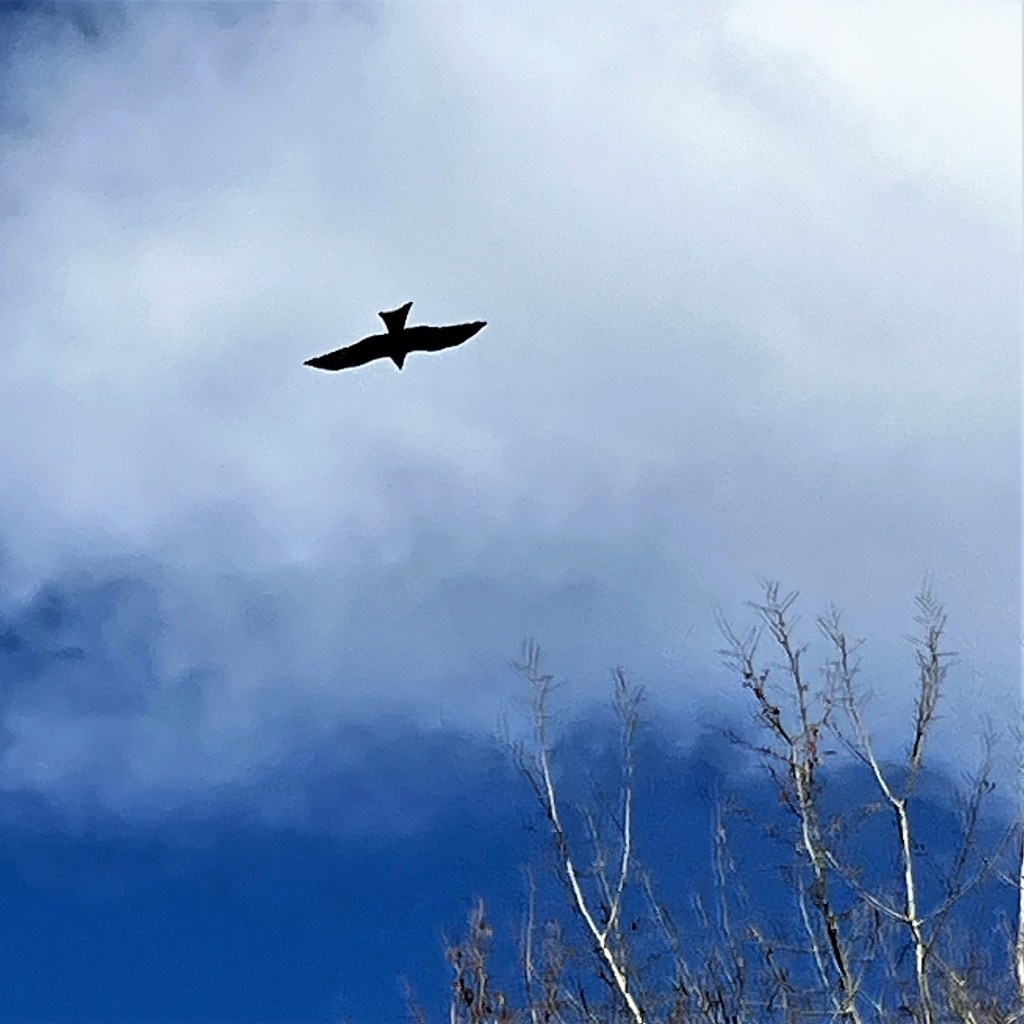
Some bird activity apart from the Kingfisher, a Red Kite circling over our heads, a couple of Buzzards soaring above a wood, Blackbirds, Robins, Wrens and a Greenfinch singing, Crows, Jackdaws, Pheasants and Wood Pigeons of course, but only three male Mallard and a Moorhen on the river, no doubt the other water birds were breeding, out of sight.
11th March 2026 / Temp: 9.5 C / Water Level: High
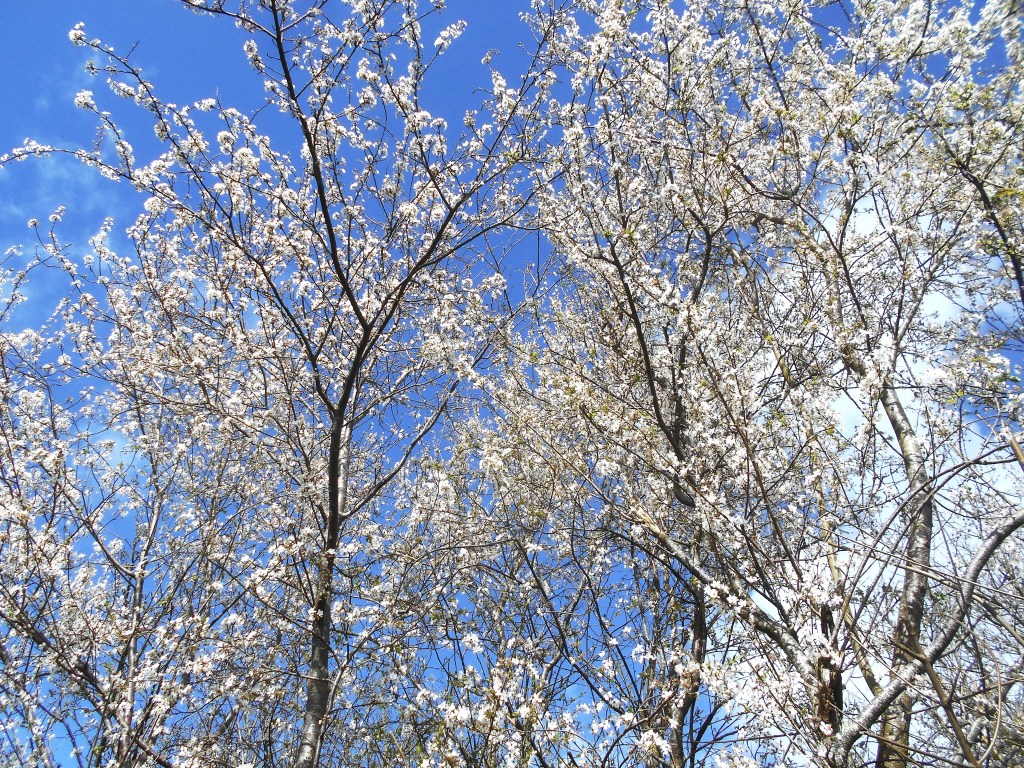
Full sun, blue skies, breezy with scudding clouds …. oh what a perfect day! The first walk over unever tufted and thick grass water meadow following his broken hip accident for my husband and we couldn’t have chosen a better day. With the aid of his two metal walking sticks he managed the walk across the meadow to the river bank, sat on a picnic chair and soaked up the sun while watching the bird life, and couldn’t have been happier!
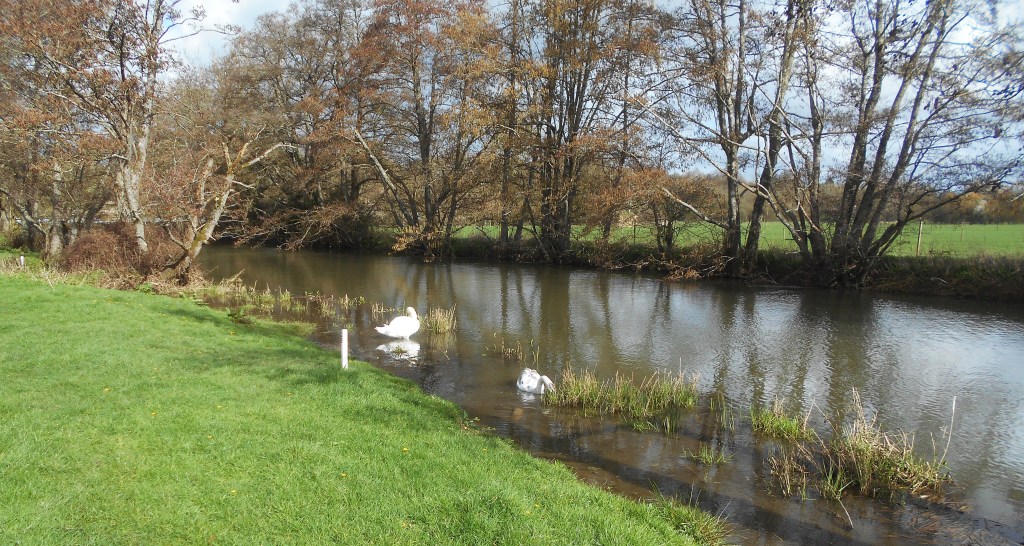
Not a great number of bird life, although we startled a pair of Blackbirds, heard Robins, spotted a couple of Crows, a number of Jackdaws, a colony in the trees opposite the river it sounded like, the occasional bird flying over, Gulls and a single Red Kite and we watched a pair of Pheasants facing each other, bowing and bobbing in a mating display and the two Swans in the photograph above – the male Swan and Cygnet which we noticed towards the end of last autumn and it’s a relief to see they have survived the winter and tragic to remember this male and his mate with their cluster of 7 or 8 small cygnet chicks and realise that these two are the sole survivors, so many having been lost to predation.
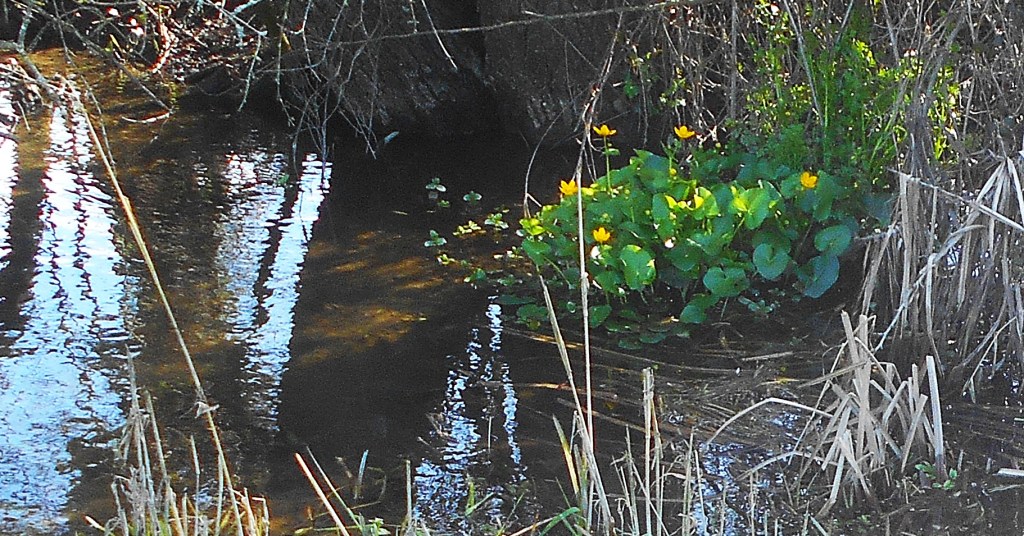
While my husband rested I walked along the river bank to where a small stream or irrigation canal joined the river. This was created originally for flooding the water meadows to prevent the pasture from freezing and providing the cattle with “the first bite” early in the year. It was too early to spot the first tiny sprats in the stream but this is the best site to spot kingcups lining the bank of the stream, and there they were, their large, brilliantly glowing gold flowers soaking up the sun.
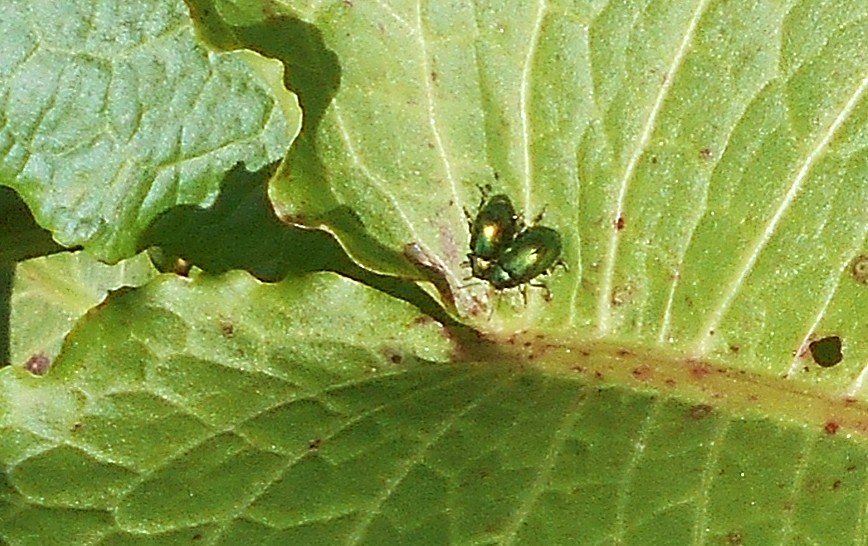
Bugs and bees and beetles, lots of insects stirring among the blossom and newly emerging leaves, queen bumblebees are on the wing, flying so fast they only just manage to avoid crashing into our faces, honey bees are being noticed around the flowers and these two were spotted, whether cosying up with the intention of mating or simply sniffing each other out we have no idea but it’s good that now meteorological spring has well and truly arrived to see such promising stirrings of new life.
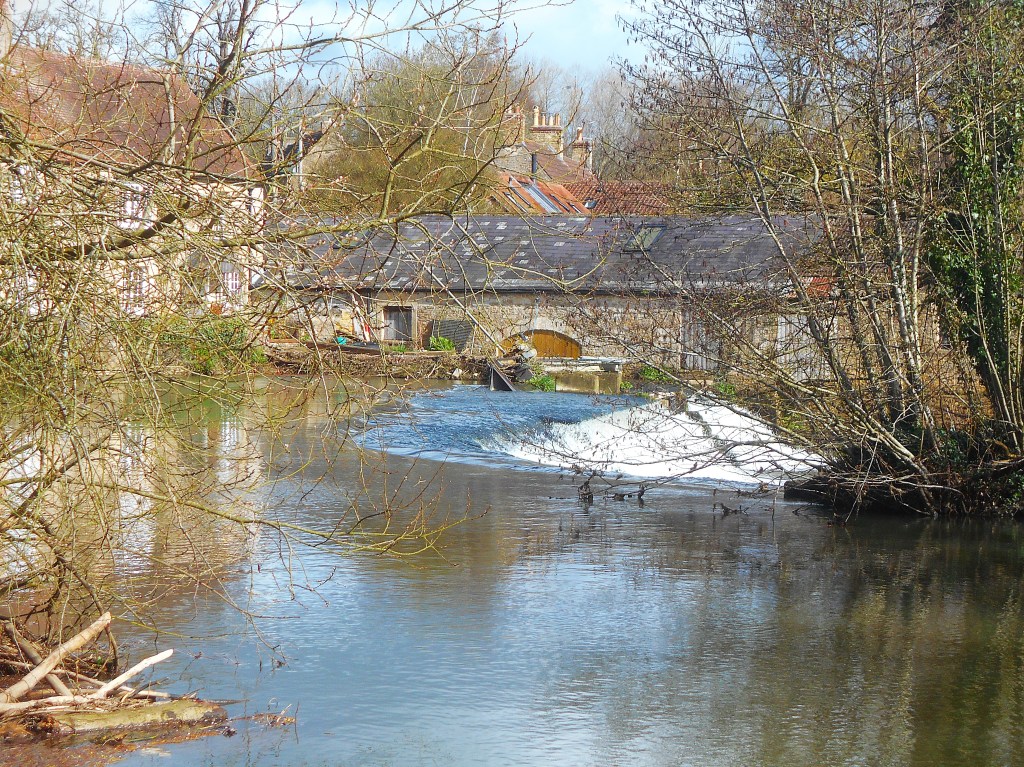
We checked out the weir at the far end of the fields and were a little disappointed there were no signs of life. We often see a number of Mallard gathered at the top of the weir accompanied rarely with Goosanders sharing the space, but alas, no sgns of either today but maybe they are still over-wintering at the nearby lake, and will be back later in the season.
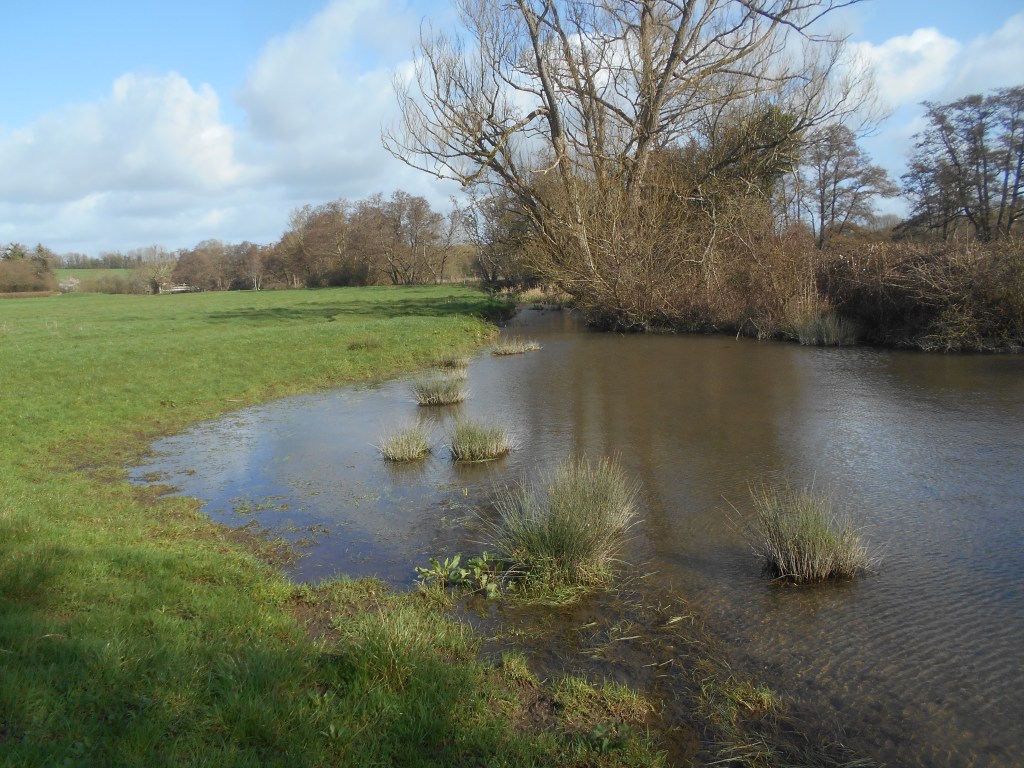
We walked back past the the flooded stream which often particularly in wet, persistently rainy winters like the one just passed forms a pond at the corner of the field but sadly there have been no signs of Otter along the whole of the river bank at this survey spot, although it’s not unusual to draw a blank… too many fishermen? Impossible to tell but of course the Otters do travel vast distances in their search for food so maybe they will come back.
We arrived at the thick mud and deep puddles of the gateway leading to the path homewards, the farm vehicle tracks and the heiffers hoofprints show us the way in case we have forgotten after our nearly four month hiatus.
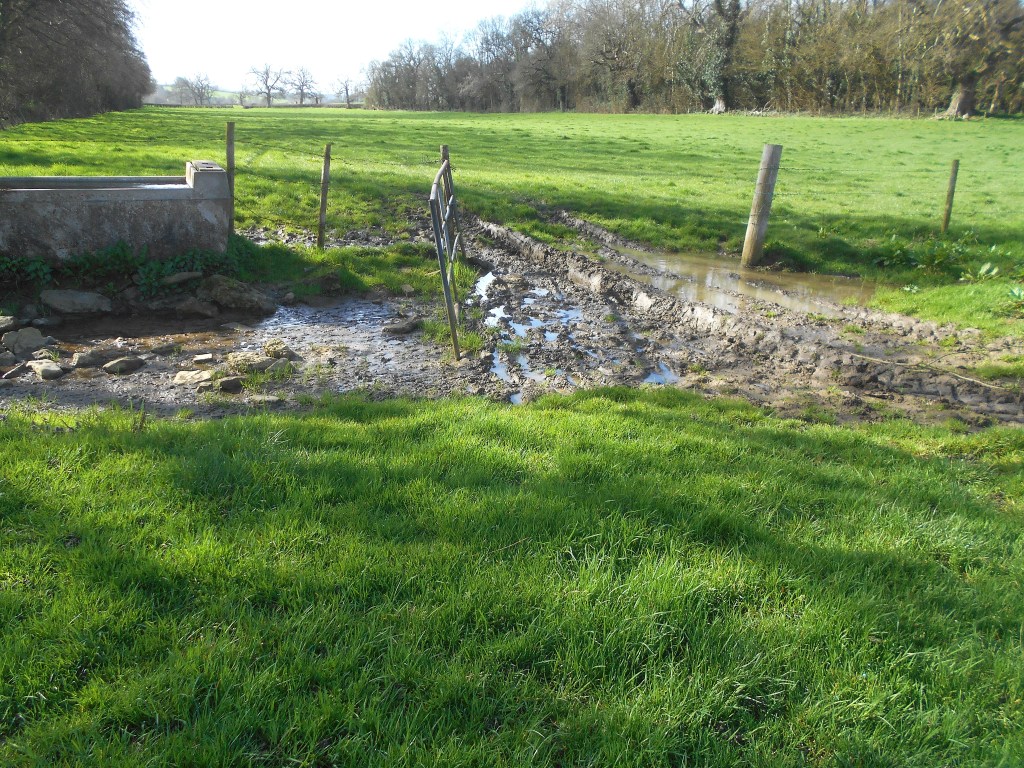
Lunch calls and we head out across the meadow, my husband very pleased to have managed for the first time since his accident to walk across rough ground with huge pleasure and delight and, more importantly, safely, without incident!
24th January 2026 / Temp: 8C / Raining
Nearly six weeks have passed since the accident (outlined below 15th December) and it is a huge relief to report that with the help of rest, daily injections by visiting district nurses to thin his blood, continuing the exercises recommended by the physiotherapist, my husband is making a steady and satisfactory recovery.
However, as you might imagine, walking the river meadows, one such only accessed via a climb over an unsteady, chest-high, five-barred metal gate is not on our agenda at the moment so he must content himself with watching the turning of the year from his chair, hoping to spot the occasional passing wildlife…
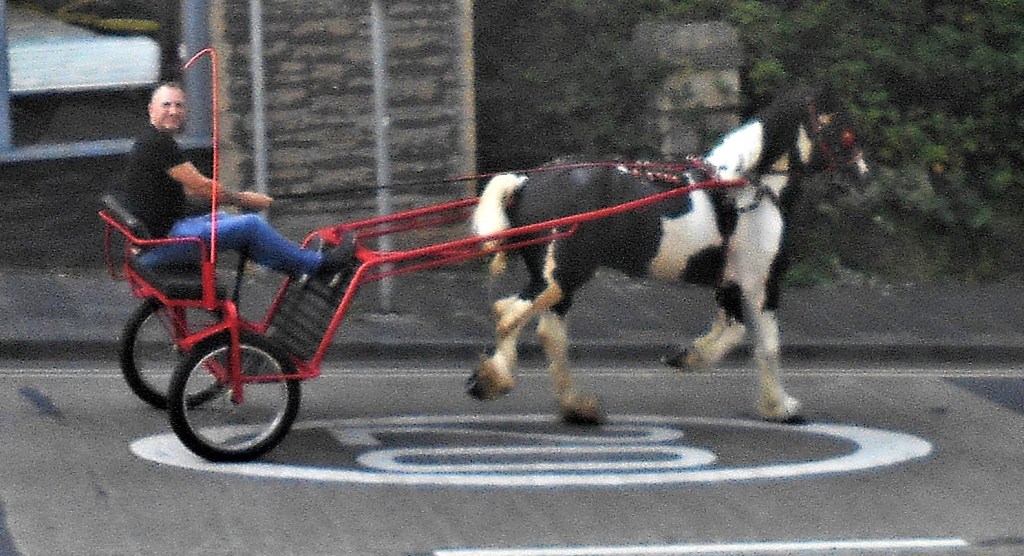
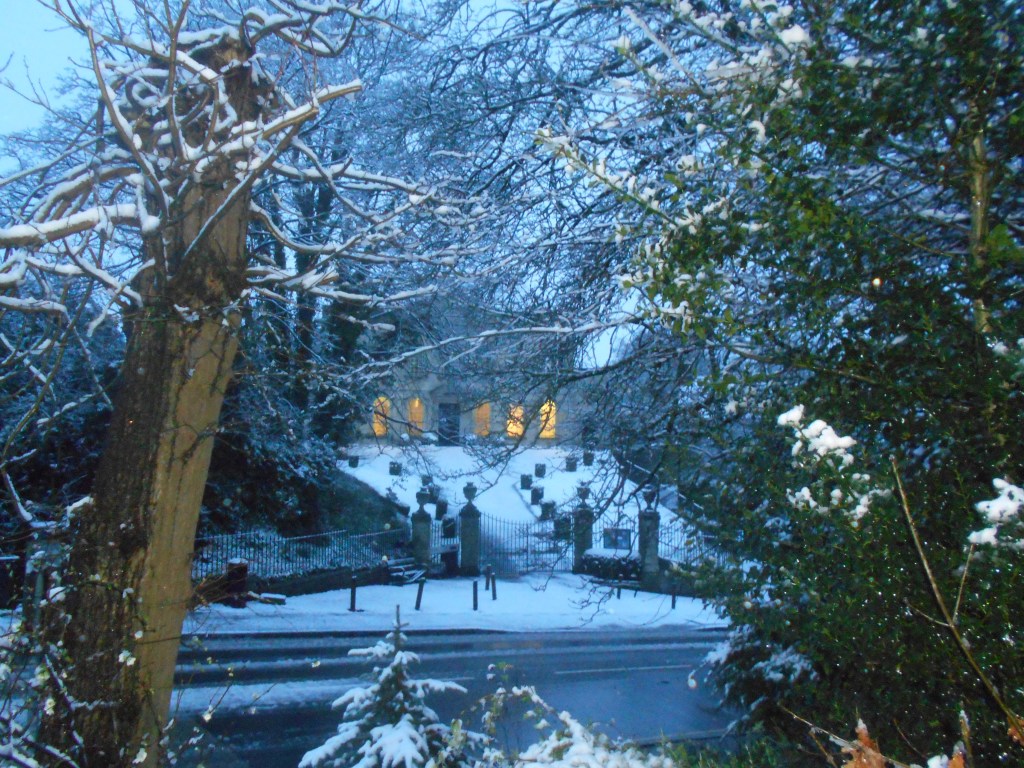
While we do spot the occasional horse drawn trap dashing smartly down the hill and squirrels leaping at speed between the branches, birds are by far the most common sight. Magpies, Blackbirds, Carrion Crows, lots of small birds, like Wrens, Long-tailed Tits, Blue Tits, Coal Tits flitting in amongst the branches of the trees searching for grubs and insects. Robins, Blackbirds and the occasional Song Thrush hunting for worms and snails on the steep grass tree-lined bank in front of our house, and across the road among the trees and grounds of the 18th Century Chapel opposite.
The sky is often full of passing flocks of Jackdaws, Lesser Black-backed Gulls and Herring Gulls, Wood Pigeons, of course, feral pigeons, while most days either a Buzzard or more likely a Red Kite effortlessly circles above the tree tops, forever on the hunt for prey.
We hear Tawny Owls and once a Little Owl and, in spring, dwindling numbers of Swifts and Swallows. We see Ravens (once watching a young Raven making a lot of noise, being very demanding, as it’s fed by an adult perched on the roof opposite). For many years there was a Crow’s nest at the very top of a tree in the Chapel’s grounds, their nestlings being fed with eggs raided from a Wood Pidgeons’ nest, which shared our lime tree with a pair of Goldfinches whose nest was so well hidden in the tangled clematis, it proved safe from the many predators. Wrens have also been seen nesting low down in the shrubbery.
It’s not a massive haul, however, we find it pretty astonishing (given the relentless traffic driving up and down the hill only yards away) that anything is able to survive the fumes and noise and constant activity enough to nest and successfullly raise a brood!
23rd January 2026 / 10C / Raining
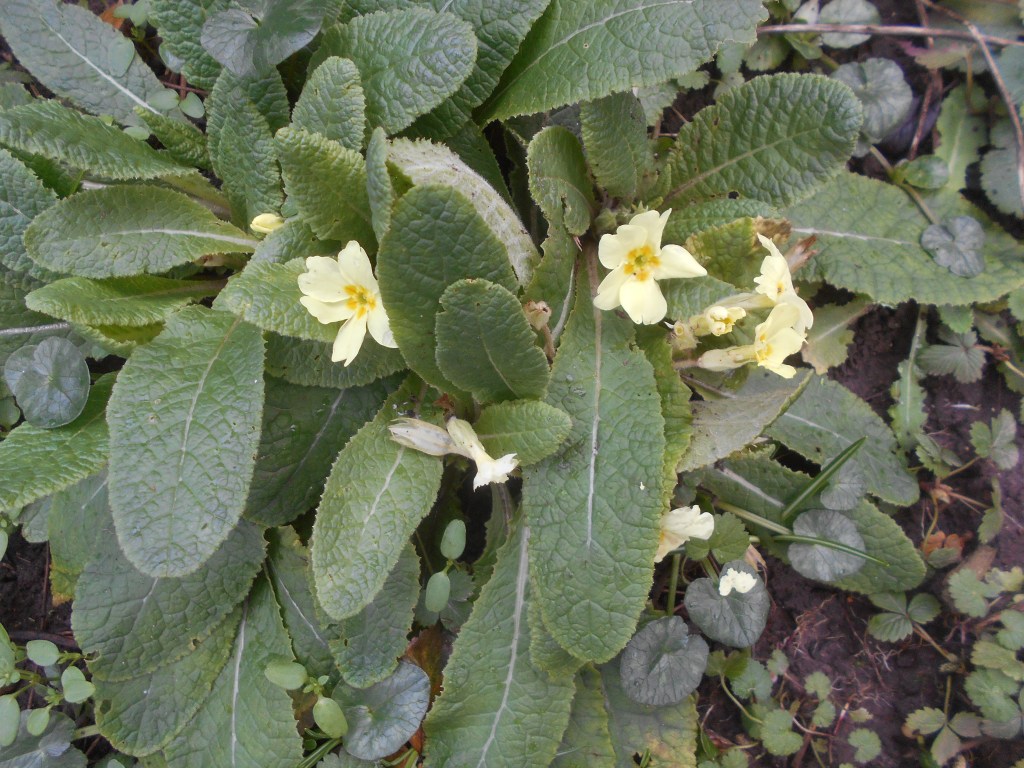
Although by far the most plants and shrubs in flower at this time of the year are the non-native plants, often the result of plant hunters in the eighteenth and nineteenth centuries travelling as far afield as China and Tibet in their search for beautiful plants to adorn the gardens of the landed gentry, there are a few native plants just beginning to blossom, including one of our most beloved favourites, the delicately scented primrose.
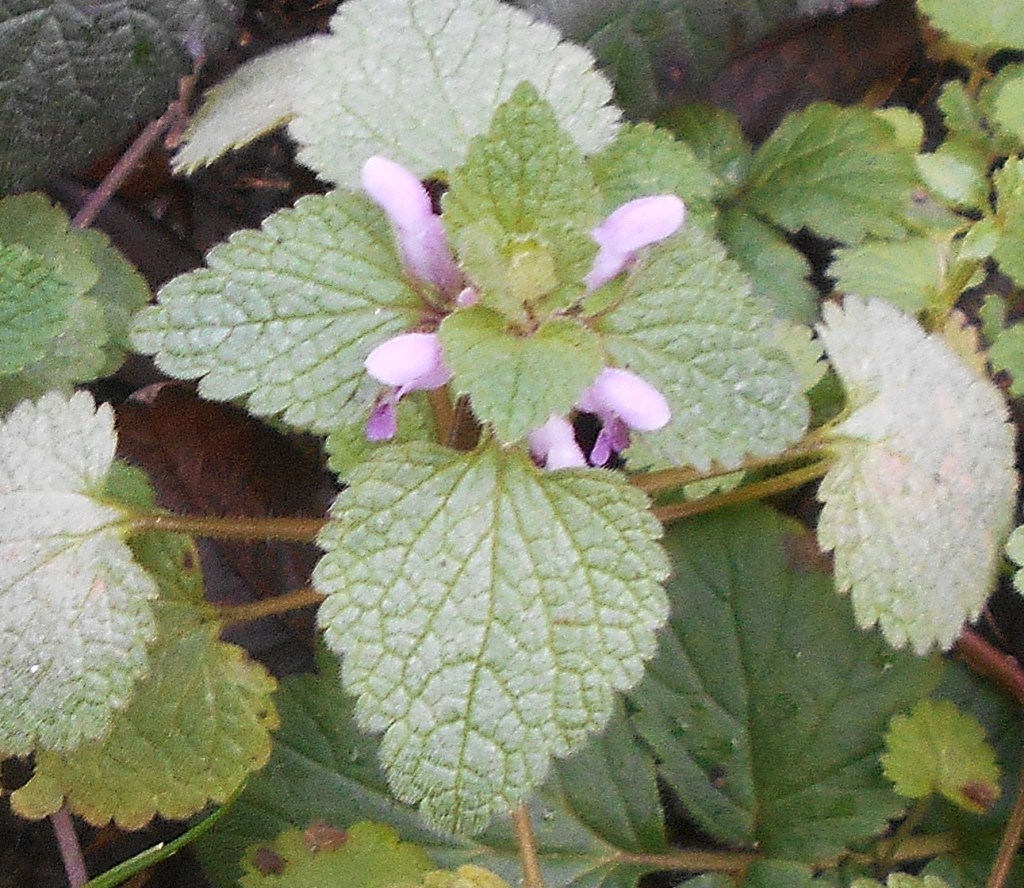
The Red Deadnettle doesn’t often get star billing as it’s often overlooked but it is one of the few native plants which flowers so early in the year. Widespread and abundent plant – anywhere where the ground has been disturbed or cultivated, it’s pungent when crushed, but it isn’t until peering very close that the lower lip of the corola can be seen to be toothed at the base
15th December 2025/ Temp: 10 C / Rain
“Cometh the hour, comest the man….” This afternoon my eighty-eight year old husband parked his car and walked the short distance across the car park and along the pavement towards our house, when, walking around a young women pushing a child in a push-chair, he missed his footing and fell heavily, breaking his hip. Fortunately a young man who was approaching and saw what happened, managed to flag down a passing ambulance before trying (unsuccessfully) with the young woman’s help to get him to his feet. When the paramedic arrived with the carrying chair, he and the young man managed to get him into the chair, dragged it across the road and manoeuvred it into the ambulance. About two hours later, a fully manned ambulance arrived from a town 20 miles away and took him to hospital.
A moment’s mis-step on a rainy afternoon ten days before Christmas could have been catastrophic save for a lucky chance of an alert young man, a passing ambulance providing shelter and, although in excrutiating pain, a bed to lie on while waiting. After arriving in hospital, he was assessed, x-rayed, taken to an orthopaedic ward where he spent an uncomfortable night before being operated on the following morning. Physiotherapy began the next day and continued until the 22nd December when he was able to leave hospital in time to spend Christmas with his family and continue the slow, often painful and always uncomfortable road to recovery at home with the aid of two sticks to steady him.
10th December 2025 / Temp: 10.5-12 C / Water Level: Very High
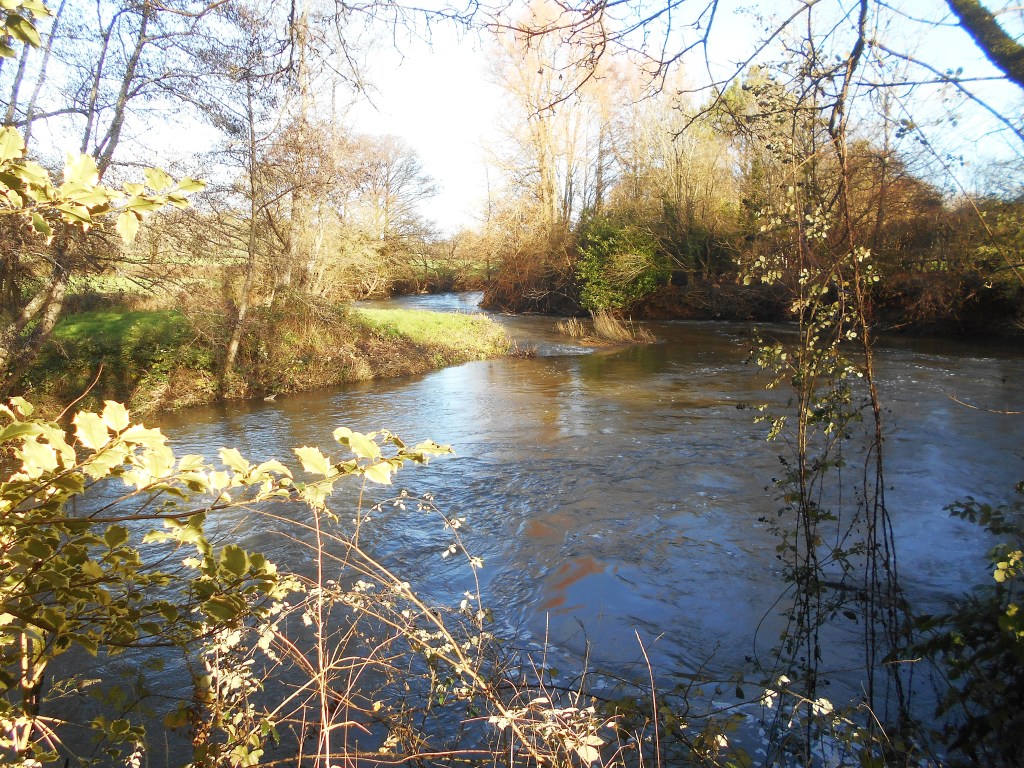
The river level was very high, higher than we have seen it this year, but hardly surprising as the aptly names Storm Bram (no doubt in celebration of Bram Stoker, the author of the Dracula stories!) swept across the country, dumping flood making downpours on already sodden land. The currant was strong, fast and fierce, slapping against the vulnerable river banks, scouring more mud into the water, however, we could see from the flattened grass that it had already dropped by around two feet from the height of the flood.
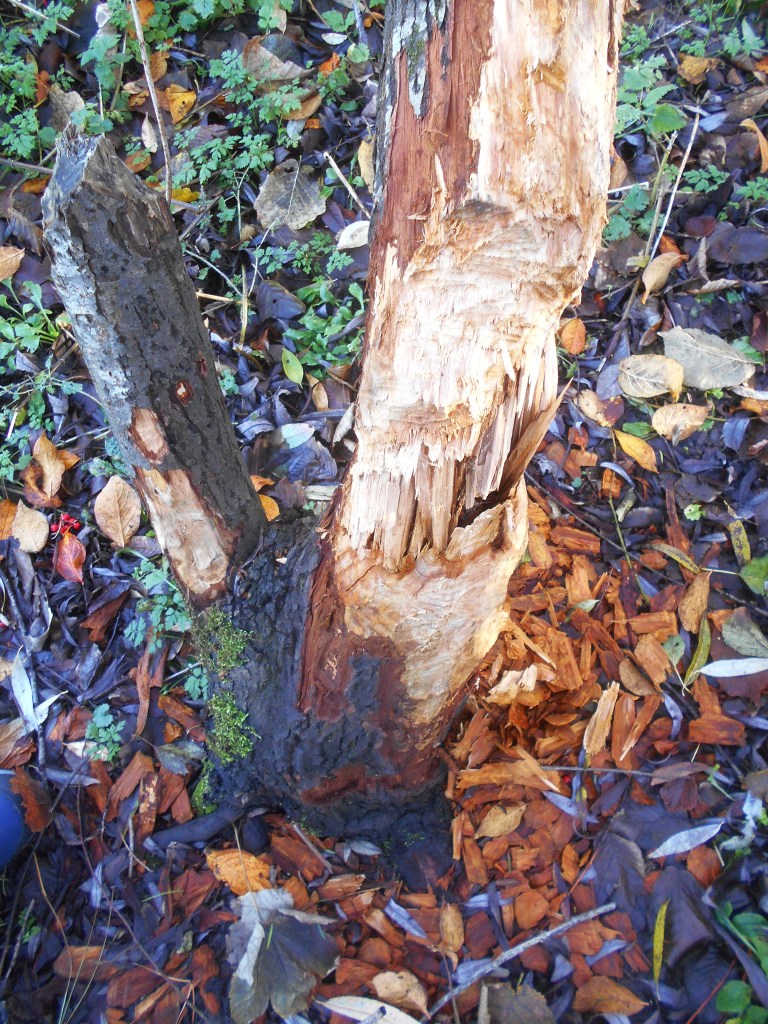
However, the Beaver seem to be oblivious to the surging torrants and as the news signs of a recent feeding show, they are still managing to travel the river and feed well on the trees of the plantation, although as their usual well-worn trail up from the river is now under water, they have formed a new trail from the one part of the beach above the river.
Dreary October and November, heavy clouds, drizzling rain, torrential downpours, gale force winds stripping the gold, russet and red leaves from the trees, months to endure and then….
A day when the sun breaks through, warm sun on your back as you walk, the whole world washed clean leaving the river and countryside sparkling, a day to treasure, to lock into memory and celebrate!
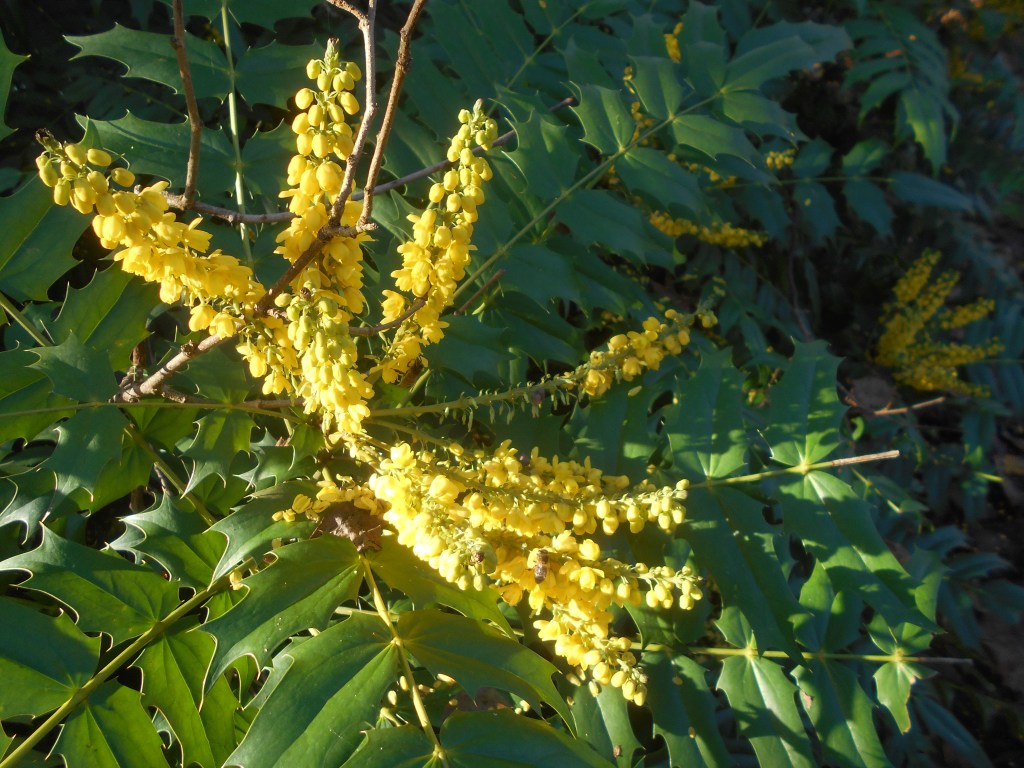
The Mahonia, a very old tree high shrub, burst into flower in the dull, gloomy days of November, but today (for one day only!) it is glowing in the warm sun and displaying its full, glorious colour – attracting so many honey bees it was astonishing to witness.
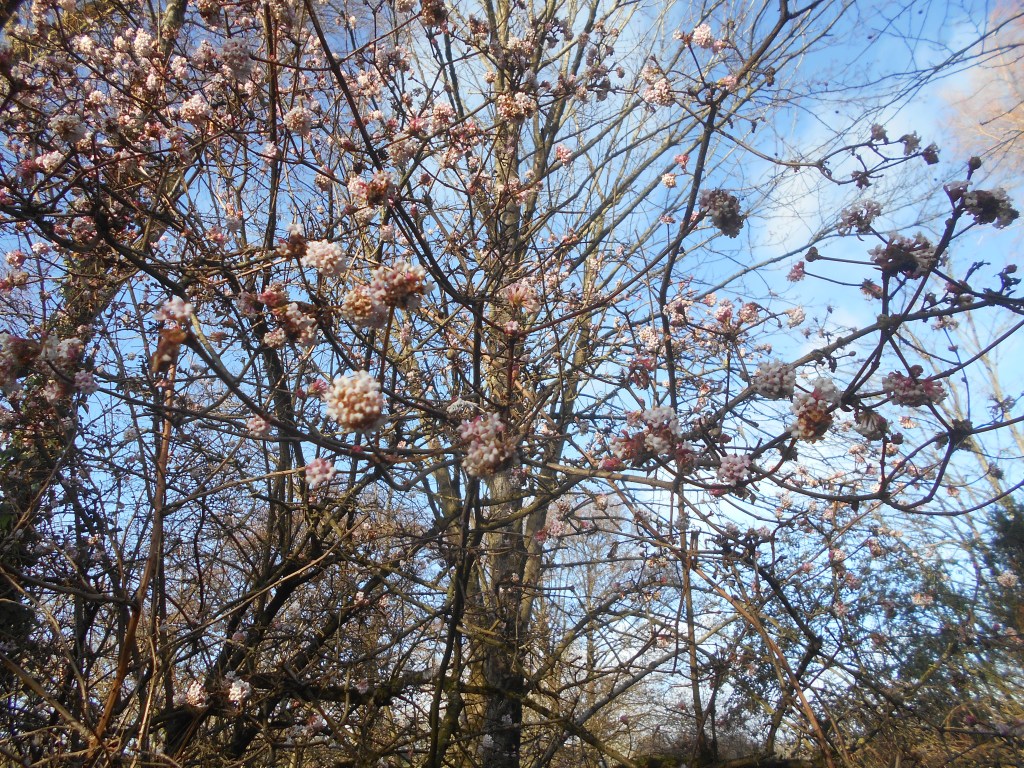
The Daphne is less noticeable – the subtle, pale pink clusters of flowers, are just not strong enough to draw the eye, so it wasn’t until, walking under the tree searching for fungi, that we noticed the fallen petals scattered amongst the thick layers of wet leaves and looked around for the source. Reaching up to pull down a branch and then – oh bliss – the deep, sweet scent of Daphne – what a treat!
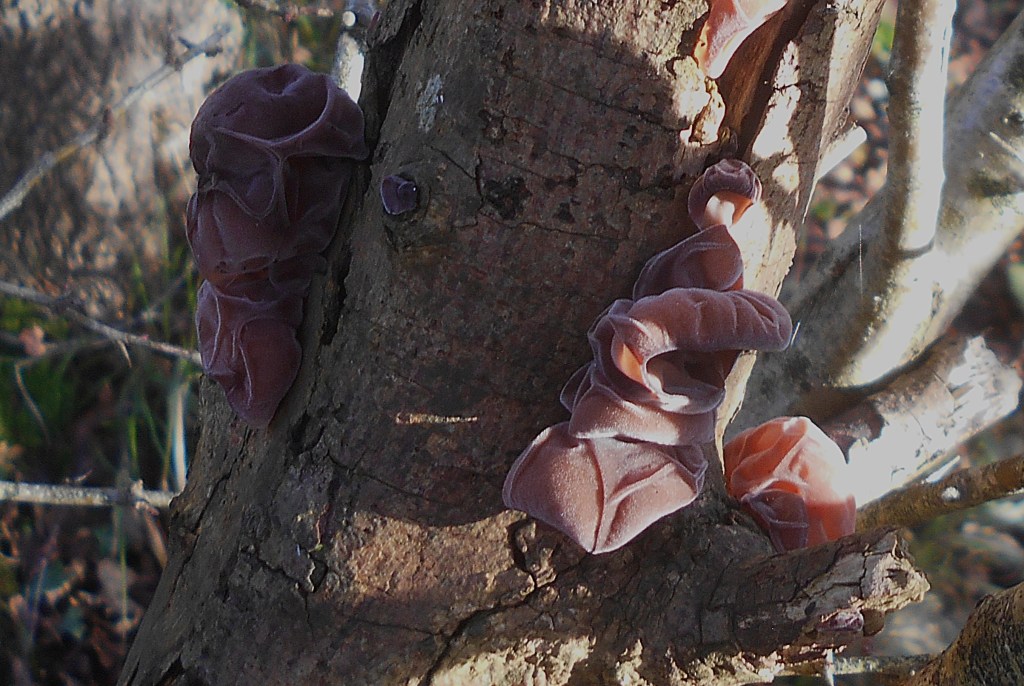
We did find some fungus – the jelly ear is always a winter favourite, the sunlight shining through its thin furry skin always confirms its common name – it looks so like an ear it’s almost uncanny.

The tiny parasol mushrooms which grow on branches and really only noticed when the branches fall are a delight, so small, so perfect, it’s like entering a secret world in miniature.
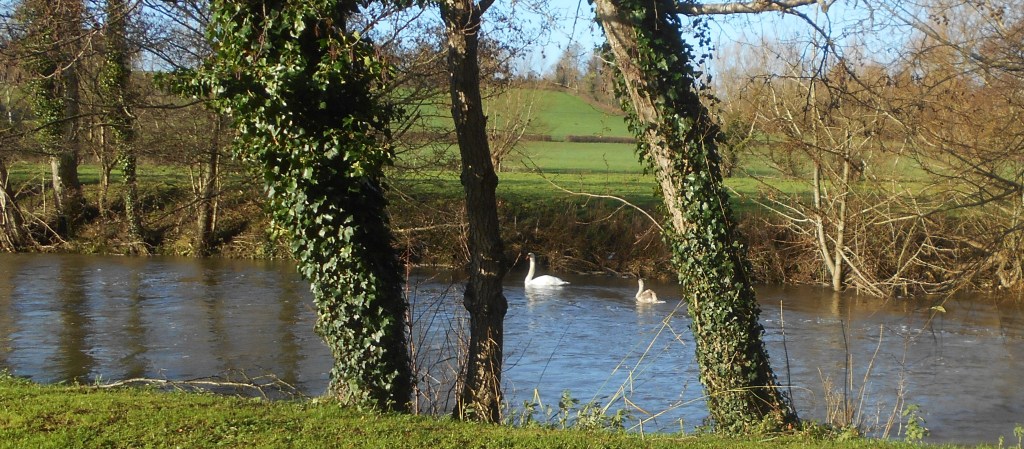
A rather sad sighting of a pen and her single remaining cygnet from an original brood of five healthy birds clustered around her during the warm days of summer. No knowing if the others have fallen to predation or the extremely dry summer, months without rain, and very low water levels, may have not provided enough healthy weed to feed them. A cluster ot Mallard disturbed by our approach and making off at high speed down the river showed another drop in numbers – merely 3 male and 3 females – bird life along the river, like everywhere else, is extremely precarious. Not just climate change but the intensity of agricultural pesticides poisoning the countryside have led to a drastic fall in bird numbers throughout the whole country. A pair of Red Kites

A clump of fungus, possibly velvet shank, growing at the foot of a recently pruned tree, the upper branches of which had been brought down by the October gales made a bright splash of colour.
As we walked back at the end of our survey (sadly no signs of Otter anywhere along the bank) we began to spot more birds – parties of Long-tailed Tits dashing between the branches of the trees, a Green Finch, Wrens, Robins, a couple of Magpies, flocks of Jackdaws, a few Herring Gulls, Carrion Crows and a pair of Red Kites. We heard a Chaffnch, spotted four Redwings and four Cormorants – the most we had seen for some time… the winter visitors are arriving!!
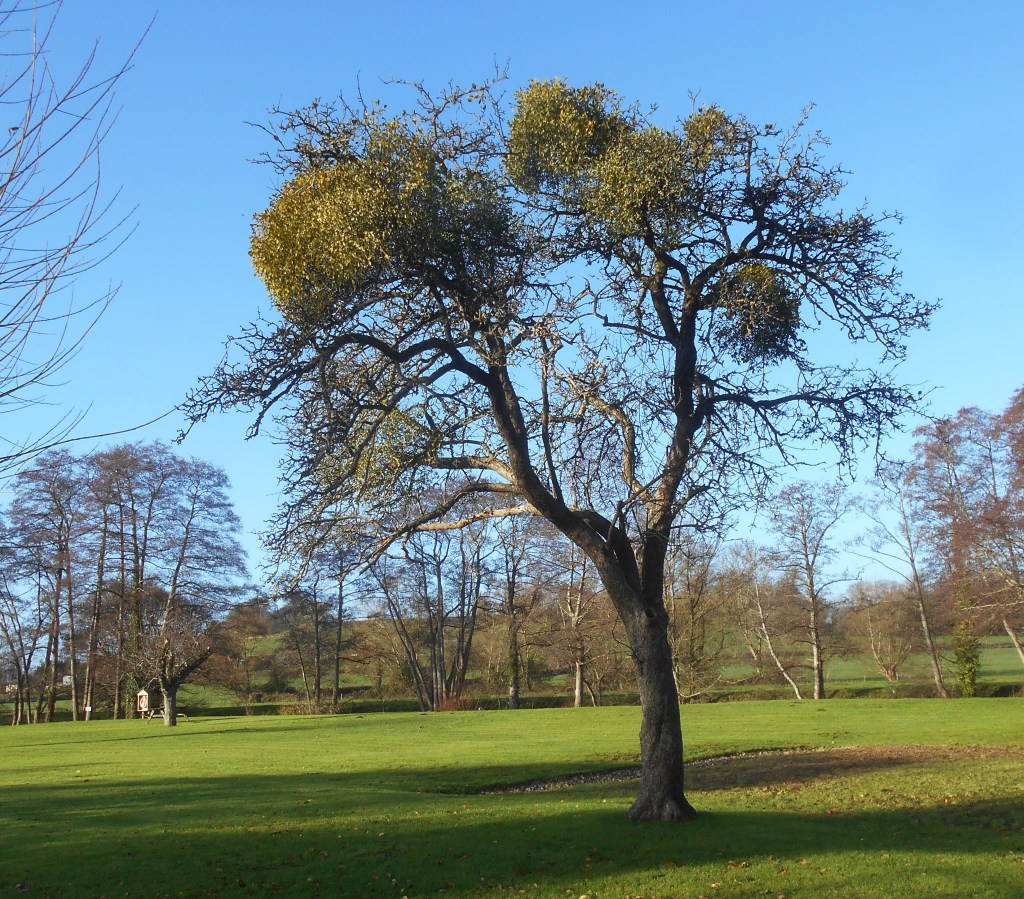
Fortunately the mistletoe tree in the orchard is heavily laden this year, as are all the berry fruiting trees, so there is ample food for the winter migrants and enough to spare for the branch to be hung from the farmer’s oak rafters at Christmas!
13th November 2025 / Temp: 14C / Water Level: Med High

Chatting to an angler enjoying a morning’s fishing, while showing us his catch of healthy looking Roach and Chub, commenting that a week ago he had caught a 10lb Bream plus double the number of fish. This is such encouraging news on the health of the river, particularly as he added that there are a good number of Chub fry as well.
He mentioned that the river had dropped 6 inches in the 4 hours he had been fishing, but the rain storms forecast for the following day would mean the banks and part of the field being flooded.
We spotted four pairs of Mallard, a Little Egret and were nearly in a collision with a Kingfisher which barely missed our heads as it shot around a bend in the river, all good indicators of a river being ‘clean enough’.

It was all very quiet, the cattle were placid, the bull uninterested and few other birds about – just the usual Robins, Long-tailed Tits, a largish flock of Jackdaws & Rooks flying over, Crows and Wood Pigeons and then a welcome sight of a Green Woodpecker.
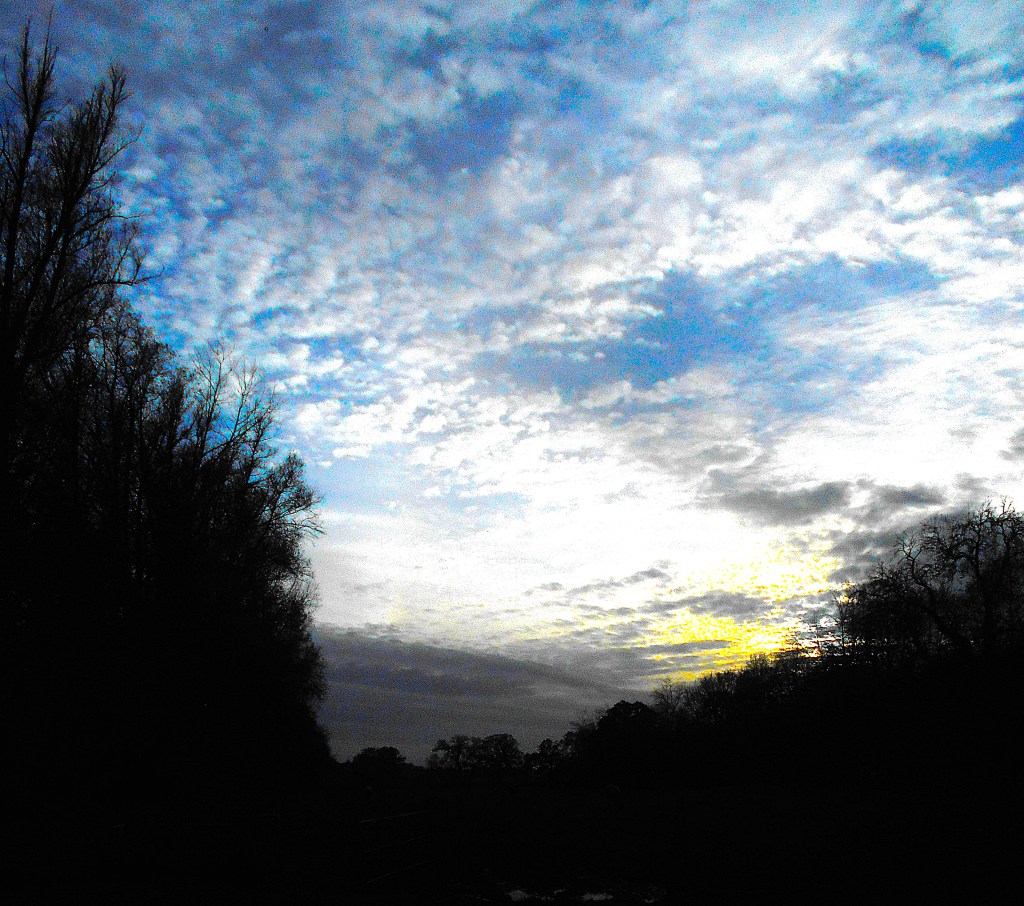
We’re beginning to adjust to the shorter days following the autumn equinox, but it’s still a jolt to see the sun setting, the river banks enveloped in the advancing dusk at 4 o’clock in the afternoon. The change from warm sun on our backs to a slight chill in the air as the temperature suddenly drops is very marked. Not cold yet but a reminder that winter is stealthily arriving.
27th October 2025 / Temp: 12 C / Water Level: High

As the photograph shows, our local Beaver have been busy, this latest felled large branch crashed and lodged itself precariously on an upright post creating an interesting structure – although a trap for the unwary passing beneath!
Latest news from Heal Nature Reserve, a few miles upstream close to the source of the Somerset River Frome, that the first Beaver kits born on their site have been recorded. This is a new and rather exciting milestone which confirms what has long been suspected, solid evidence of Beaver activity along the whole length of the Somerset River Frome – from source to its confluence with the River Avon at Freshford!
The river is fortunate in its surroundings, flowing as it does from reserve to reserve. Heal complements Frome’s 72 acre Rodden Meadow, formerly cattle pasture purchased by the Town Council in 2014, which has been transformed into a recreational area of riverside wild meadow for the enjoyment of the those living and working near the town centre. It has been joined by the newly added purchase by the Town Council in July this year of another small Water Meadow of 3.5 acres (the cost topped up by generous donations from local townsfolk). Nearby is Rodden Nature Reserve, created by diverting Rodden Brook (a tributary of the Somerset Frome) into a wetland site on the eastern edge of Frome, locally managed and funded by ASDA Stores Ltd. since 2004. All of these nature reserves and parks help by providing suitably quiet, relatively undisturbed areas, enriched by local wildlife, for both Otters and Beavers to thrive.
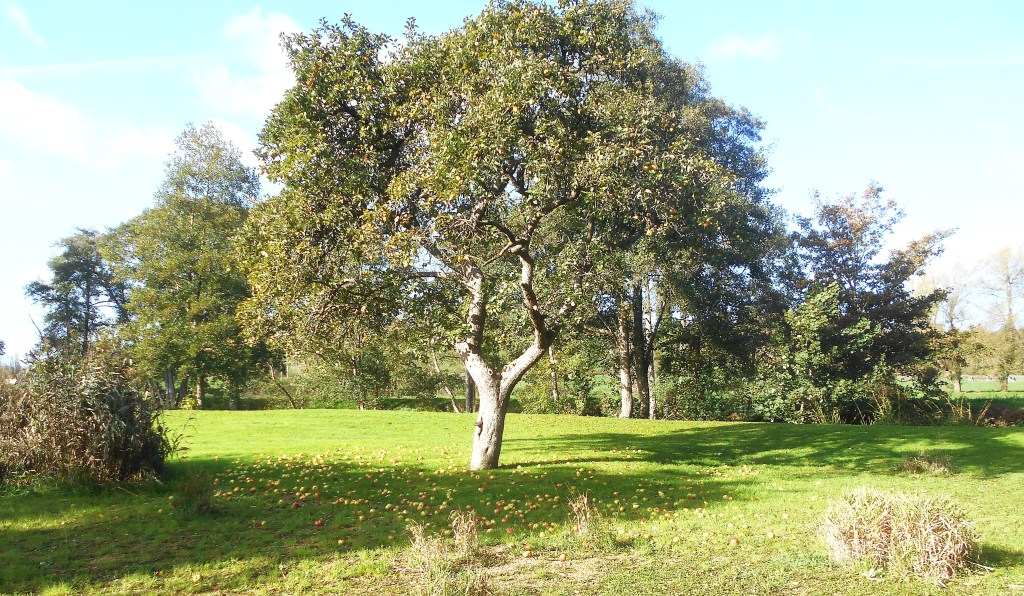
The bright sunlight streaming through the windows enticed us to abandon duties, chores and paperwork piling up all around us and take advantage of a beautiful autumn day – maybe the last of the golden sunlight falling on golden leaves days, to check the river banks of our Survey Area for signs of Otter, Beaver, Roe Deer, or anything at all – a perfect chance to get some fresh air and exercise while admiring the glut of fallen red ripe fruit around the apple trees in the Orchard, with its usual collection of hungry wasps.
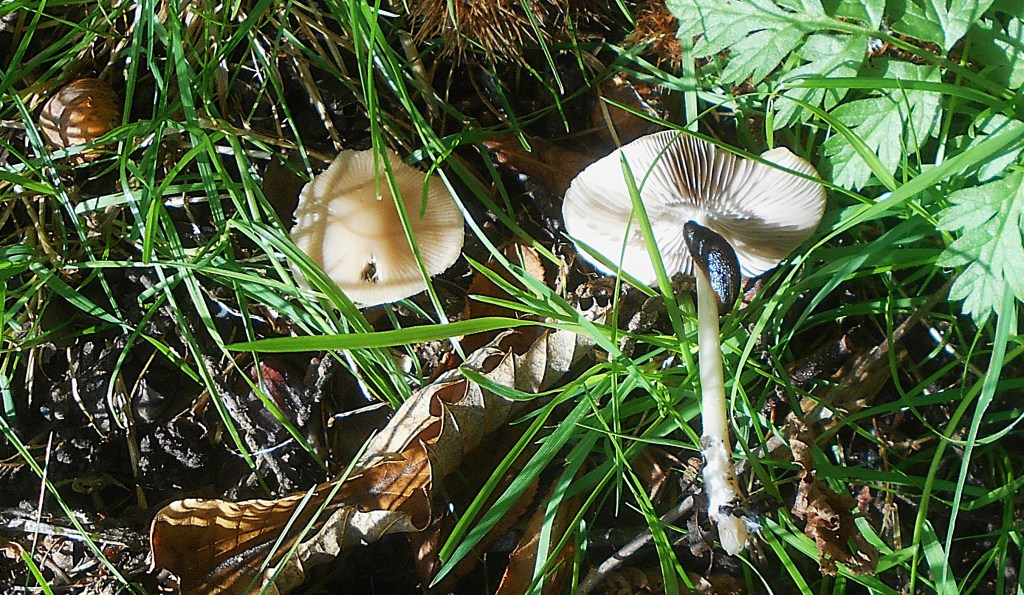
We walked along the river bank into the small wood where we spotted lots of autumn fungi scattered among the wet grass under the trees – often with a slug attached, feeding greedily on the fruits of the forest, totally oblivious to our presence.

Prolific growth of fungi and lichen was noticeable everywhere, both on the fallen logs littering the ground…..

or decorating the old, gnarled trees like trails of bunting,

on the moss covered branches and sprouting in small clusters from the thick grass and fallen leaves in the shade of the tree.

Have you ever considered whether the effect of autumn leaves falling into the river was good or bad? No, neither have we – but reading an extremely interesting recent blog in Wild Fish we discovered that leaf litter is actually a vital source of energy for aquatic invertebrates.

As Luis Moliner Cachazo in the article states “The leaves are colonised and transformed by microorganisms first (bacteria and fungi) and/or broken into smaller fragments by a specific group of macroinvertebrates: the shredders. These include some species of stoneflies, caddisflies, crane flies, crayfish, shrimps, water hog lice and some molluscs.” https://wildfish.org/latest-news/the-role-of-autumn-leaves-in-freshwater-ecosystems/
This particular stretch of the river is bordered with native trees (mostly alder, willow, field maples, wild plum, blackthorn, hawthorns etc) on both banks so this answers the question we had often asked ourselves, why the clouds of the mayfly hatch is so extraordinary massive! On some late afternoons in May, the air and the riverside plants are absolutely full of newly emerged male Mayflies, transformed from larvae, rising from the river, alighting on leaves of riparian plants to dry and strengthen their wings before performing their entrancing mating dance to attract the females – all fed by the fallen leaves of autumn!

Sitting and resting, we drank in the soothing sound of water tumbling over stones, listened to a flock of Jackdaws calling and chattering to each other as they flew over our heads, and the mewing call of a hunting Buzzard plus the gurgle-gobble of a nearby strutting Pheasant while watching two pairs of Mallard, the Males in their bright colourful breeding plumage sailing by effortlessly swimming with the current and admired the golen leaves – a heavenly peaceful escape ….. we may never go home…!

When we were able eventually to rouse ourselves and head back, we were delighted to catch sight of a Little Egret rising from the river and then a Red Kite wheeling silently overhead. No signs of Otter. Difficult to know if they have abandoned this particular stretch of river, leaving it to the water birds and Beaver or whether they are exploring another area, not for nothing are they called the wanderers!
23rd September 2025 / Temp: 11.5C / Water Level: Low
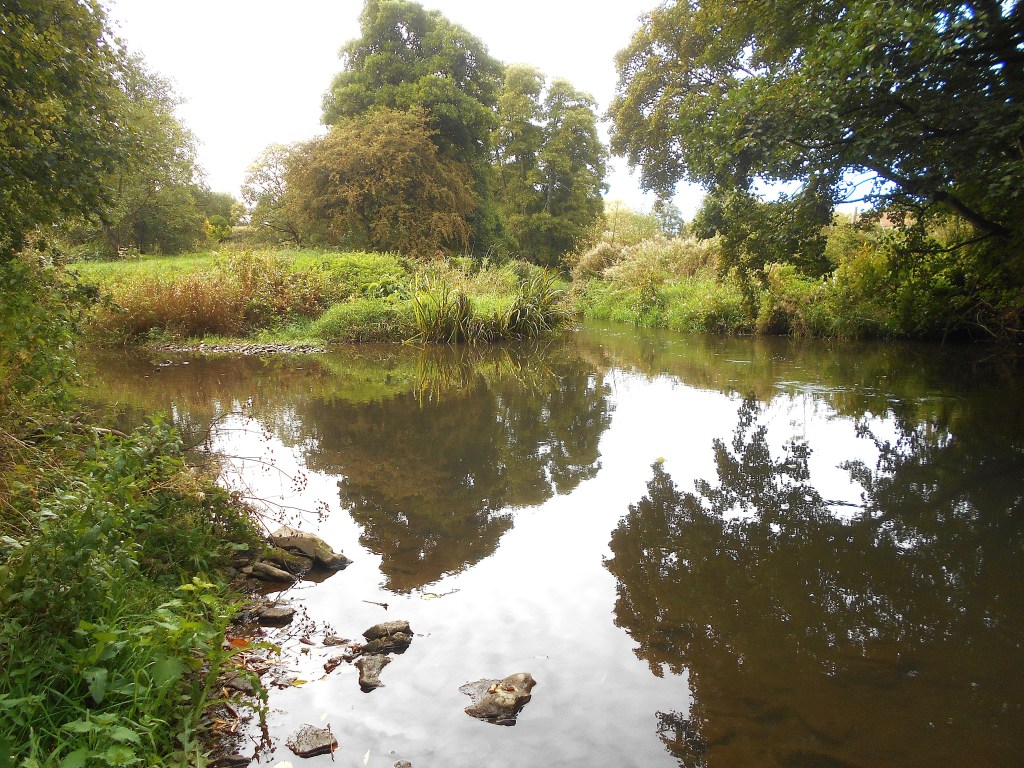
The first day of the Autumn Equinox breaks fair and sunny with a fresh, northerly nip in the air and the river looks calm and peaceful, quiet and restful – soothing the troubled mind.
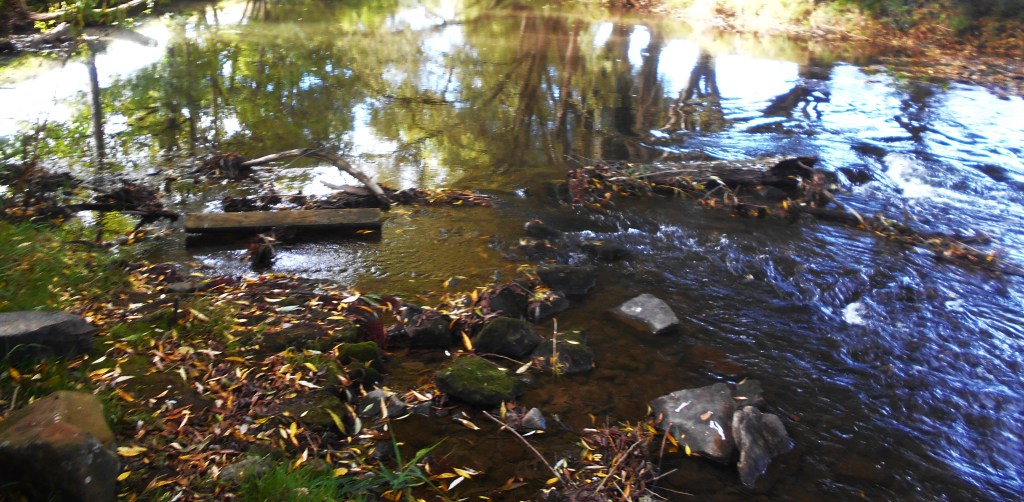
The ancient crossing stones, exposed by the low water, have gathered the colourful gold and red fallen leaves and the detritus of plants and branches and the nutrients from the leaves disperse throughout the river. The shredded and dissolved organic compounds provide important nutrition for the microbes and other organisms within the stream, like Mayflies, Stoneflies and Caddisfly larvae, essential food for the fish.
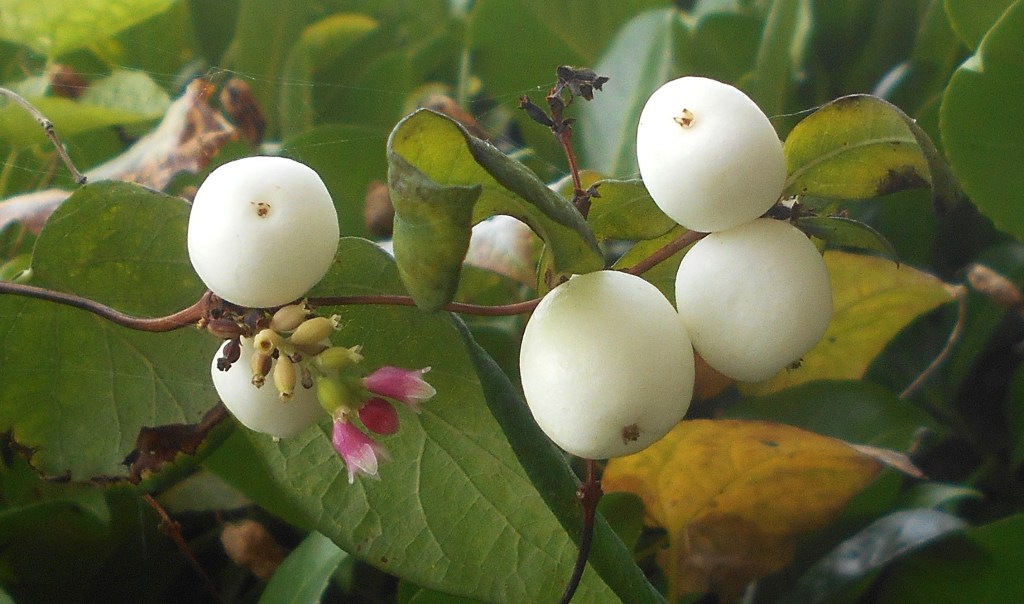
A sign of how topsy-turvy this year has been and how nature has by the rains arriving in time to rescue the plants is the wonderfully fresh display of Snowberries, still flowering, while their fruit is looking perfectly beautiful, bang on time for the first day after the autumn equinox.

Another welcome sight is several flowers on the Greater Periwinkle, completely out of season. Usually blooming in late spring, the recent rains followed by days of bright sunshine has encouraged it to bloom again. Although it is most commonly found in woods and under hedgerows, it is also found, like this cluster of plants, on the riverbank.
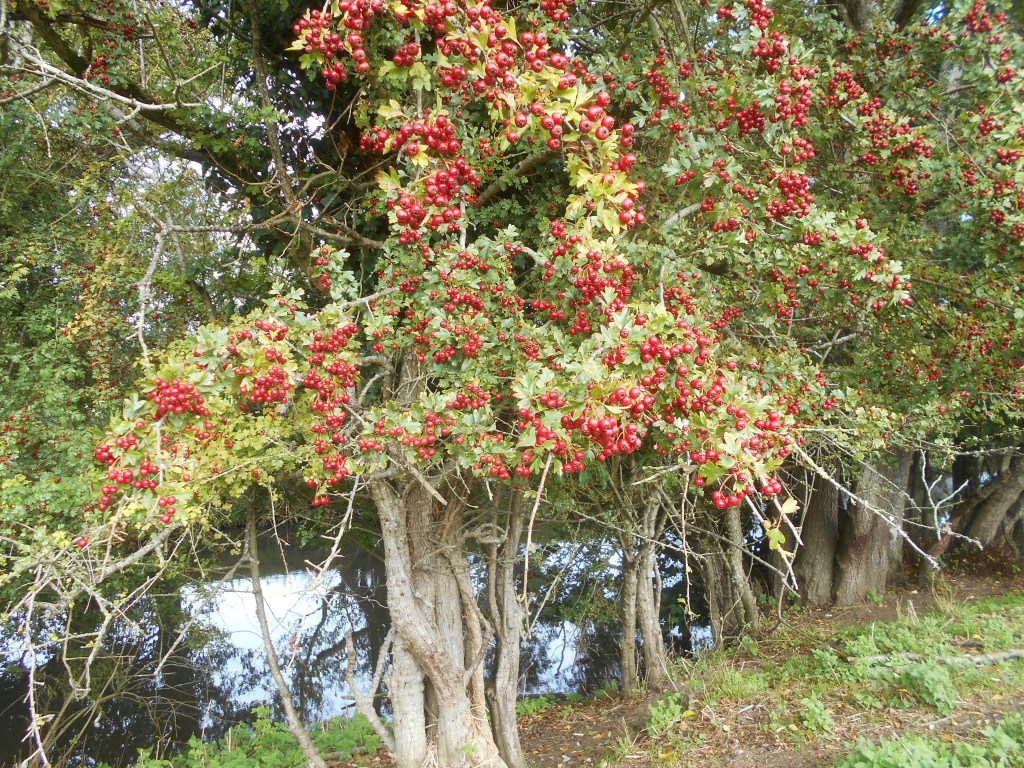
A beautiful splash of colour on a heavily laden Hawthorn tree, a feast for so many birds, particularly the Redwings and Fieldfares which should be arriving soon and the native Thrushes.
9th September 2025 / Temp: 17.5 C / Water Level : Low
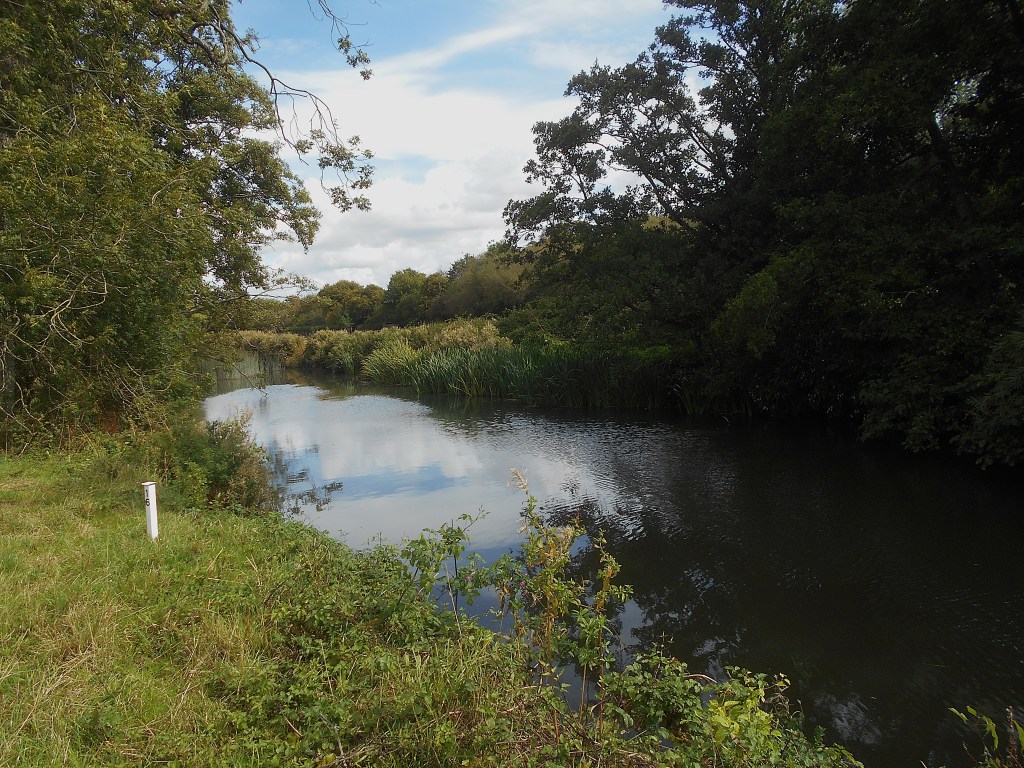
A beautiful early autumn morning, a fresh, light breeze with bright intervals, the sun deliciously warm – the perfect time to walk the water meadows in search of we knew not what!
Almost immediately we reached the river bank we spotted four separate clusters of fresh Otter spraint, easily noticeable by its orange-brown colour filled with the white chippings of American Signal crayfish shells and gastrolith pearls against the bright green grass. It’s found only in the areas of the country where the Otter feed on crayfish as a significant part of its diet that this colour is found, as the astaxanthin in the crayfish turns the spraint ‘pink’.

Spotting a clear path from the bank through the plants to the river we hunted around and sure enough, there was a neat little pile of Otter spraint. We were extremely pleased to find so much mixed adult and cub spraint pointing towards a successful breeding year and good to see Otter returning to a long stretch of river where it had appeared they had abandoned altogether.
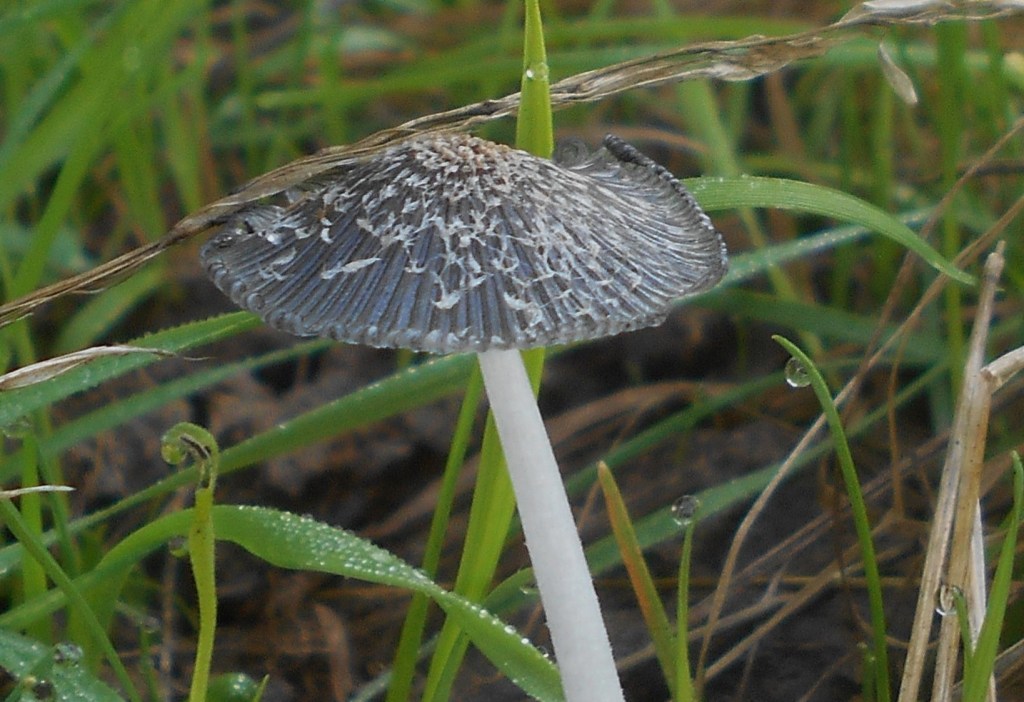
Walking to the next Otter site we passed lots of inkcap fungi, their beautiful delicate pure white stems still early enough for the shreds of white veil to be still clinging to the opened grey parasol. Within hours the furry white coating that initially covers caps and stems disappears as the caps change from egg-shaped to this specimen – convex and flat; the rim finally turning upwards, as it is beginning to do here, and shrinking in diameter to produce an inrolled margin that creates a shallow, distinctively black-ribbed translucent bowl – quite extraordinary!

The Snowy Inkcap is another dung-loving mushroom, most often found on old horse dung or, as in this case … emerging on the edge of a cow pat. It seems inconceivable that such tiny, delicate, fragile little mushrooms should breed from such an unpromising but obviously highly nutritious substance.
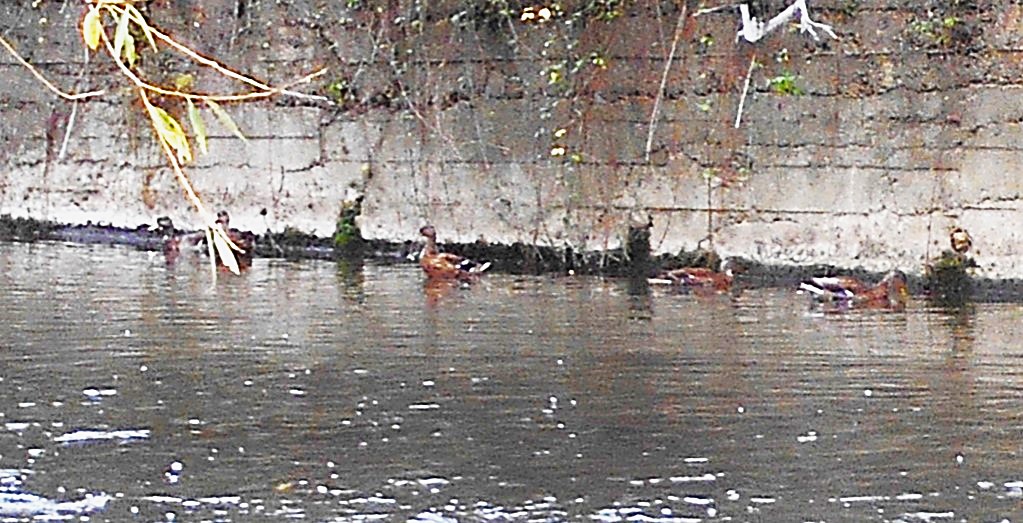
We were bemoaning seeing so few birds – just a few Crows, a Jackdaw, a Robin – pretty poor show we thought, then in quick succession a Kingfisher streaked past, very high, possibly because we had been spotted, we heard a Moorhen and then a family party of Mallard swam upstream towards us! Male, female with sadly only three juveniles, the rest probably lost to predation. No sign of Swans, Little Egrets, Heron or Cormorants which we see fairly often but a single Buzzard began mewing high above our heads while circling lazily, seemingly effortlessly head bent towards the field scanning for prey.
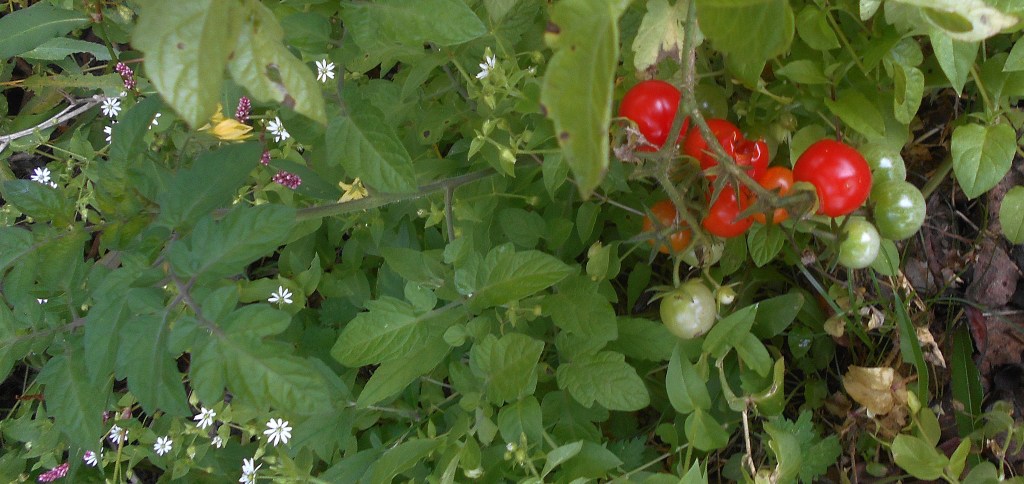
Finally, an unexpected find amongst the wild flowers on the stony beach – a tomato plant with a cluster of scarlet, ripe red fruit! It conjured up an angler discarding a tomato or maybe an entire unwanted sandwich as he was packing up after a day’s fishing. We often see wildlings, apples from thrown cores and plums, damsons other stone fruit trees sprouting in unlikely places but this was our first tomato plant! The three heat waves in quick succession over the summer followed by torrential downpours must have been the perfect conditions for this plant to sprout and grow and finally bear fruit – an interesting sideline of global warming.
11th August 2025 / Temp: 23C / Water Level : Low

The water level remains very low, exposing more and more of the beach, but the good sized trees along the bank offer welcome shade and helping to prevent a total drought. During a prolonged heat waves, three of which we have endured this year, the reduced flows lead to higher water temperatures and increased pollution concentration, impacting aquatic wildlife and affecting vital ecosystem functions, drying up tributaries, exposing riverbeds, to the detriment of river creatures.

Although the exceptionally low water has exposed one rather lovely sight – the slabs of an ancient pathway across the river, believed to be Roman but likely to have been an upgrading of a path, already well-used from time immemorial. When the water level is at is usual height, these stones create a riffle across the river, where fish spawn and also serve to aerate the water increasing the amount of dissolved oxygen in the river.

Thankfully there was sufficient water for the several families of Mallard with their young to feed. It isa common sight to see several families flocking together like this.
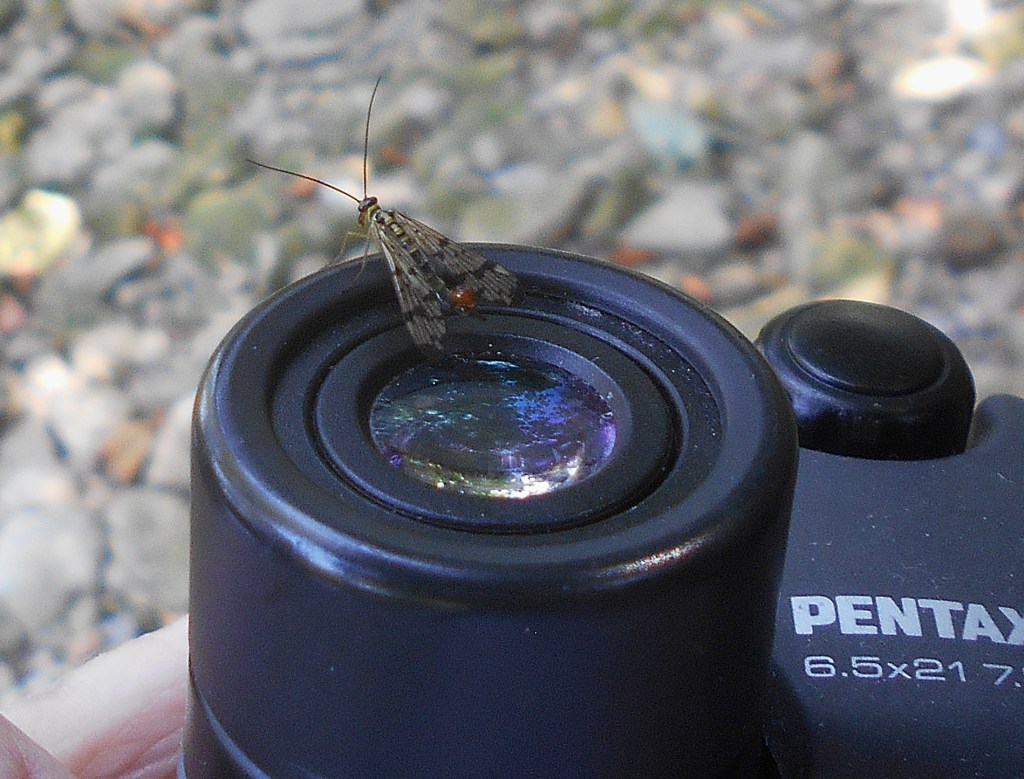
A male Scorpion Fly decided to hitch a ride on my Papilios, a very common insect but the males are so striking with their bright yellow beak and orange ‘tail’ they are difficult to miss. The curved ‘tail’ that looks exactly like a scorpion sting is, in fact, the males’ claspers for mating. Adults usually mate at night, but mating can be a dangerous game for the male, who might easily be killed by the female. So he presents her with a nuptial gift of a dead insect or a mass of saliva to placate her – hmm!!

A pile of dead clippings and tree prunings readying for bonfire night or a Beaver lodge conversion? Possibly the latter as the farmer has been unable to burn his detritus owing to the signs, sounds and movement of an animal under the stack. He left it for some weeks, thinking the animal was just foraging, but eventually he accepted that it actually appeared to be living there.
We passed on our photographs, the farmer’s comments, and the result of our thorough check along the river beach and around the stack to our Otter Survey co-ordinator. In the absence of any signs of Otter anywhere nearby he believes it may well be a young Beaver making use of the bonfire stack to build a lodge.

Between the stack and the river is a pretty well-worn slide down the bank and into the water. Given the size of the slide he is of the opinion that it could be a juvenile Beaver, forced out from the family dam (usually around two years of age) and looking for somewhere suitable to build a lodge and find a female to start breeding.
Evidently Beaver often make use of or adapt such stacks in suitable sites for a lodge, and he expects the Beaver to start adding branches, gnawed into shape, on the top of the stack and create underground tunnels into the river. It will be fascinating to check his progress when we do our periodic Otter Surveys as the farmer is content to move his bonfire stack somewhere else and allow the Beaver squatters’ rights to remain!

A well gnawed tree trunk nearby – not necessarily the juvenile Beaver as there have been gnawed and felled willows and alders along our Otter Survey sites for a couple of years.
6th August 2025 / Temp: 20.5 C / Water Level: Low

Each time we arrive at the river the water level has dropped but although it is certainly below the normal level for this river according to the Government website, it is not that much lower, and it is shown to be rising. This shot was taken only about half a mile from the confluence of the River Mells (a notable trout river) with the Somerset River Frome so although the River Mells is also low and in previous years the leat fed by that river has run dry, it probably still feeds into the main river.

The low water is also very noticeable at the weir, downstream from the previous photograph, the water reduced to a subdued wash rather than its usual summer steady flow and winter torrent.
It isn’t a crisis yet but we wonder, with the second heatwave of the summer forecast to arrive in the next week, whether this second exceptionally dry period will cause a major problem for the fish and other inhabitants of the river.
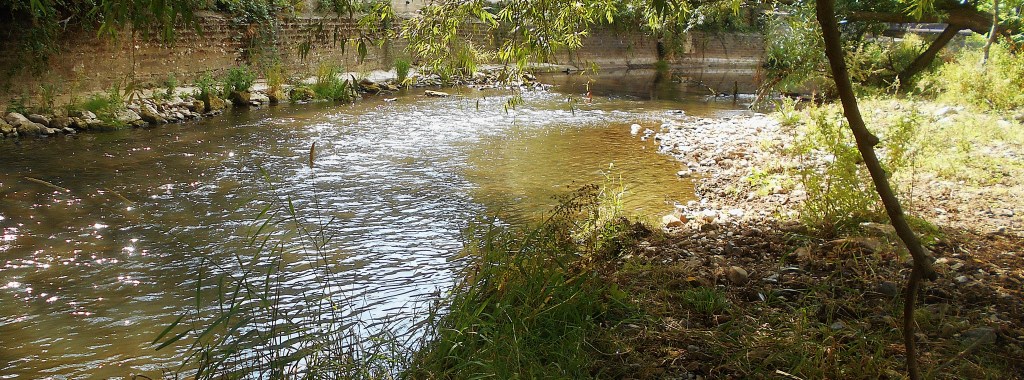
Further downriver, the devastation caused by the repair work to a retaining wall together with the falling water level further exposing the stony beach makes the area look pretty bleak, the lush jungle of wild flowers filled with damselflies, dragonflies, mayflies and butterflies of previous summers just a memory – there was not a single river invertebrate to be seen.
The severe cutting back of the riverside trees, plants and hedges to make a larger space for anglers’ pegs, combined with the harvesting forage for the dairy herd cutting the meadows to the bone, make a desolate sight. Gone are the wide margins of wild flowers around the edge of the pasture, now the machines cut within centimetres of the wall of the weir and the river banks. Lost is the wide margin of white corky fruited dropwort in full flower, edged with yellow crosswort, tiny blue speedwell, pink herb robert, red campion all gone and with them the butterflies, bees and hoverflies which fed on them – we became overwhelmed by a feeling of sadness, of loss and melancholy.

Thank goodness a magnificent bramble scrambling over a fallen split trunk of the large willow at the back of the beach had evaded both the water bailiffs shears and the contractors blades. Heavy laden with deliciously sweet blackberries, it attracted a Comma, a Red Admiral, Large Whites and Meadow Brown butterflies, the only signs of insect life we had seen, apart from a few bees.

We didn’t linger at the cowpat splattered beach but turned our backs on the denuded parched fields and memories of the kingfisher and grey wagtail glimpsed paradise where brilliant blue and green damselflies, yellow and green drake mayflies filled the air, and walked on, downriver, to the the quieter waters where the river runs slow and deep and quiet, a favourite hunting ground for Chub and especially Carp.
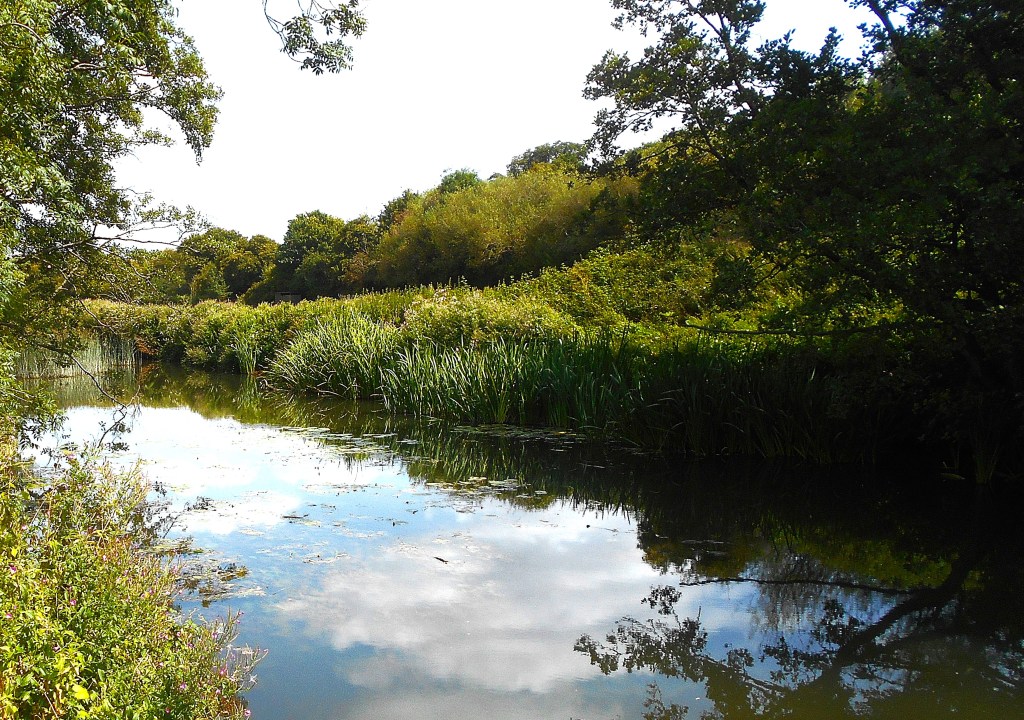
The morning was warm with intermittant sunshine and enough breeze to make walking pleasant and we were rewarded for our long walk not only by the sight of numerous Banded and a single Beautiful Demoiselle damselfy, but a large Grey Heron rising up from the river and a Cormorant in his normal roost. A Buzzard circled silently overhead, and there on the bank in lonely splendour, we at last spotted some fresh Otter spraint filled with the splintered remains of a signal crayfish!

It was so joyous to see a stretch of river bank crammed with masses of wild flowers

Hemp agrimony, also known as ‘raspberries and cream’ a plant of wet places, damp meadows and river banks, displays ‘frothy’ clusters of tiny, pink flowers on top of long, reddish stems in flower from July to September.
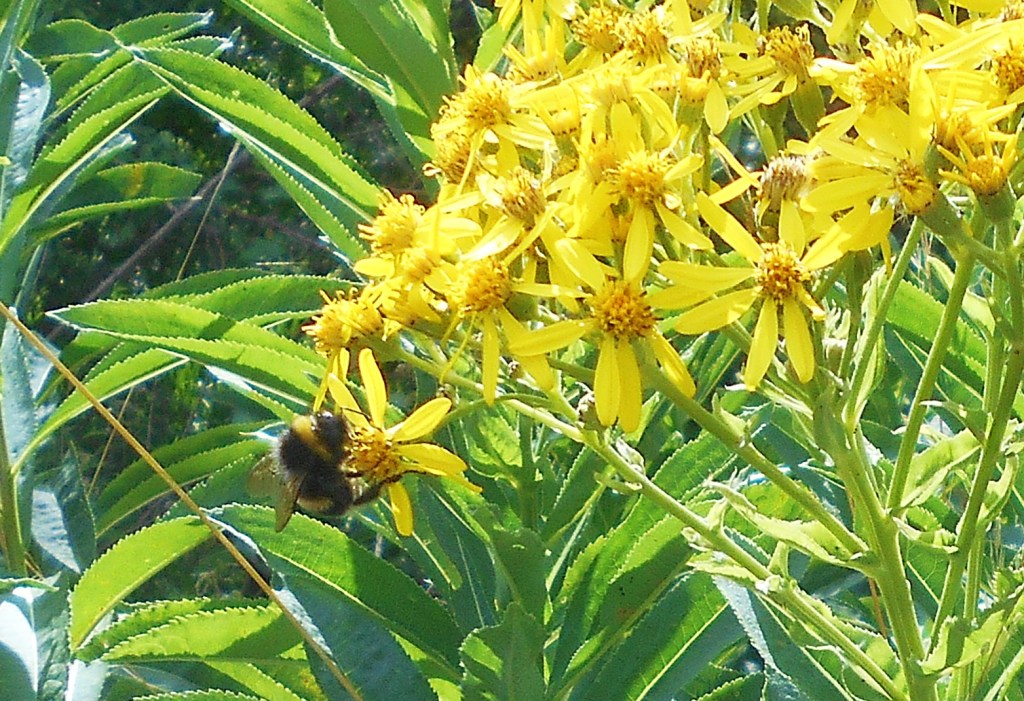
Lines of Saracens Woundwort, also known as Broad-leaved Ragwort, the despised by some invasive species, but we find it difficult to reject plants which are always provide such a splash of bright colour, especially on dull days, and always attract swarms of wild and domestic honey bees who have seeming difficulty in finding nectar elsewhere – at their best end of July early August.
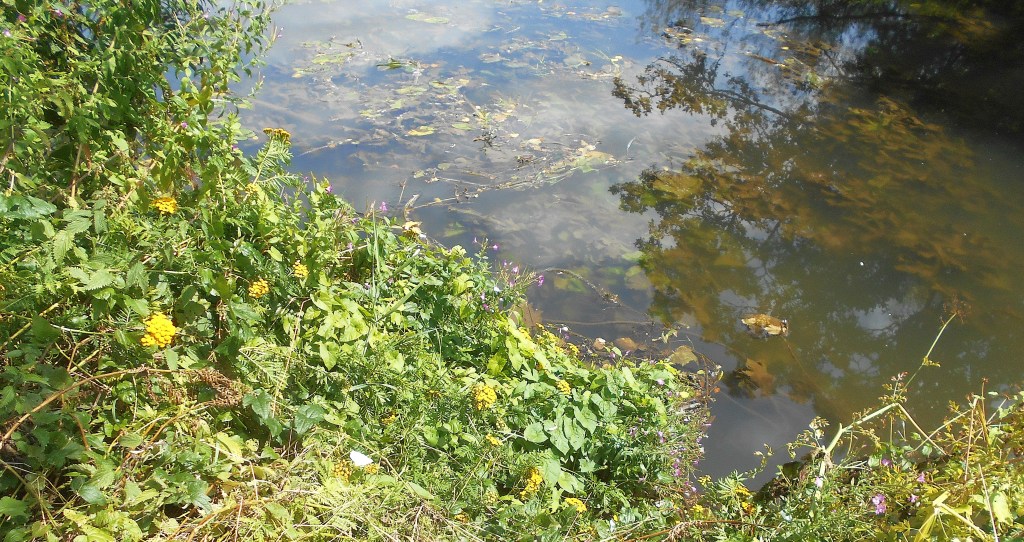
We perched on our fishing stools and drank in the view of floating clouds reflecting in the surface of the water, gazing at the banks of wild plants, in a glorious tangle of stems and flower head drinking in the scent of the herbage crushed under our feet.

Great Willowherb is a common wildflower with pretty pink-and-cream flowers, sometimes called ‘Apple-pie’ and ‘Cherry-pie’. It can be found in damp places, such as wet grasslands, ditches and riversides (and just about everywhere else!) during July and August.
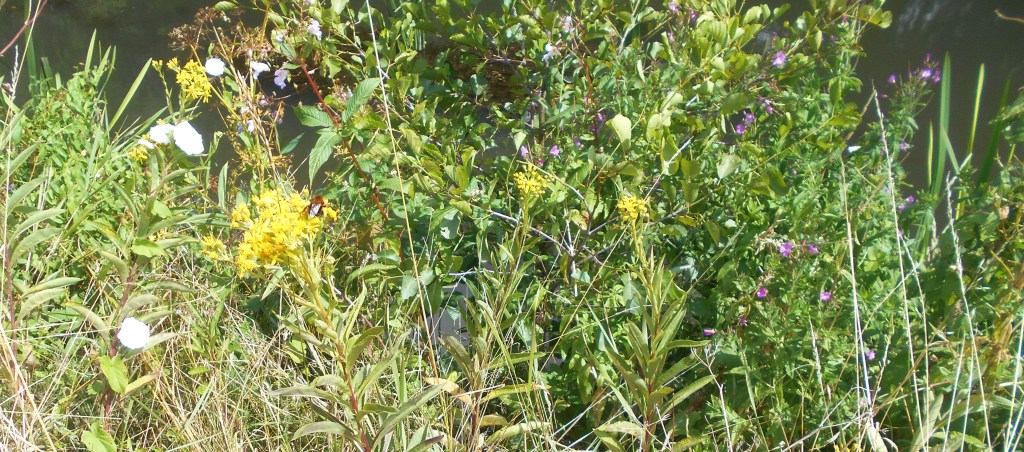
We soaked in the feel of the warm sun on our faces and let the beauty of the river, the morning, the summer and the quiet peaceful solitude of the riverside scene fill our hearts and minds with gratitude.
It’s a cliche, but like all cliches it contains the seeds of uncontrovertable truth, in troubled times when it’s difficult to lift our heads and chins from the weight of overwhelming despair, it is essential for our own well-being to bathe in what moments of joy the world offers us to give us the courage to go on.
13th July 2025 / Temp: 31C / Water Level: Low

The heat wave is due to end today but it’s already very hot at 8.20am in the morning and tired after a sleepless night we decided to escape to the water meadows and walk down the shady side of the river bank in the hope of some relief from the intense heat.
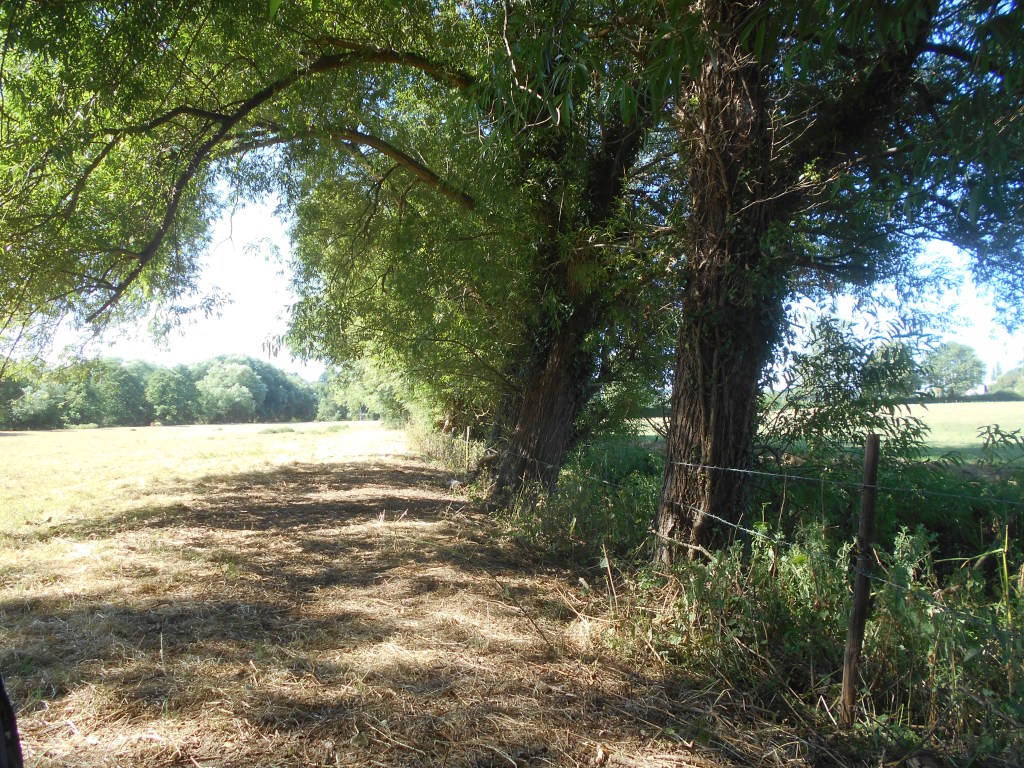
The meadow was tinder dry and golden brown, shorn by the cattle which had been moved on to a new pasture leaving the meadow to recover and display its new green shoots. The trees lining the river were in full summer leaf, showing no signs of distress at all and what a blessing this line of alders, willow, hawthorn and field maple are for keeping water birds, cattle, fish and people cool from the ravages of the too hot sun!
When we arrived at the first Otter survey site we found the river level had dropped even further since our last visit less than a week ago, exposing a wide stony beach where we usually see rushing water. Having carefully made a path through the nettle bed and undertaking a “challenging” scramble and slide under the barbed wire fence and down the steep bank, we managed to reach the beach, cool and shaded and the perfect spot to find Otter spraint.
Well, it might have been the perfect spot, but despite carefully searching the whole length of the stones, there were no signs of Otter at all. We turned lots of stones, many of which still held the remains of caddis cases with the hole where the larva pupated and made its way to the surface and avoiding the Trout, flew to the overhanging branches to dry out before searching for a mate.
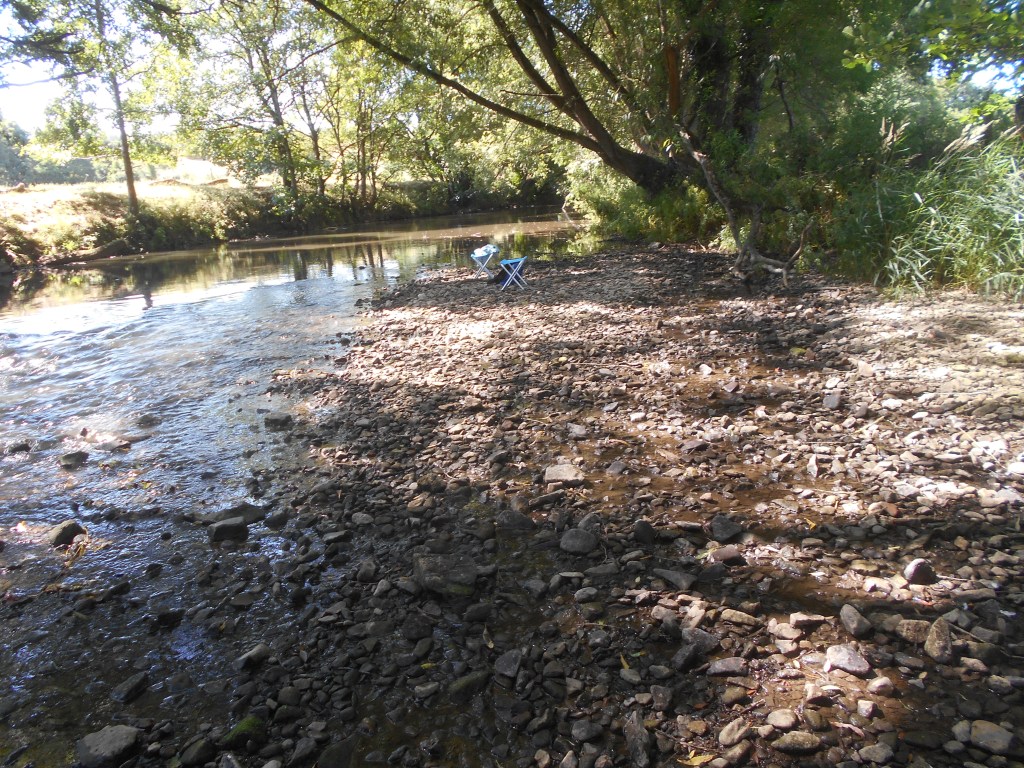
A bit disconsolate we sat on our stools to rest, but soon cheered up, as we listened with deep content to the sound of the river rippling over the stones and watching the play of the sun and shadows, and the bright sparkling light glittering over the water. We were watching the sunlight lighting up the single Peacock butterfly fluttering past, when we suddenly caught sight of a Dipper, still some way downriver, walking through the water!

What luck! For years we got used to seeing pairs of Dippers along the river throughout the breeding season, but we hadn’t seen any for some time and had begun to wonder if they had abandoned this stretch of river altogether. We were so thrilled to see it wasn’t the case, we sat perfectly still, watching his very successful foraging around and between the stones, coming up with fat invertebrates in his bill.
We had been watching the Dipper so intently, we didn’t notice the Grey Wagtail until he flew upstream, landing on a pile of moss and plant covered boulders and began foraging for ants, midges or any other insects or snails – whatever he could find.
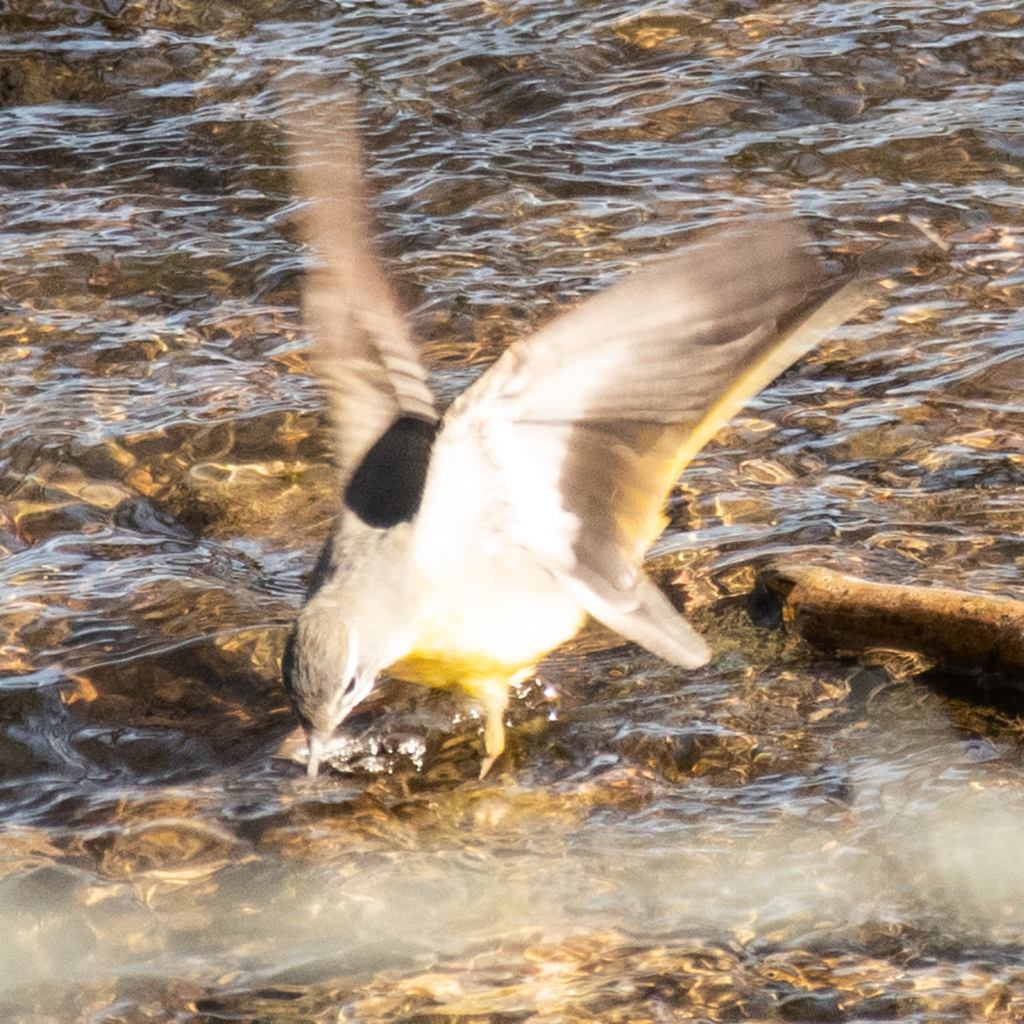
We lost all sense of time watching these two legendary birds who, merely yards away, seemed totally unaware of our presence. Feeling the cool breeze chanelling down the river, while soaking up the sight of the sun, blazing 31 degrees celsius onto the tree tops, the parched water meadow and sparkle onto the water, while we remained comfortably cool in the shade of the river side trees, watching a Speckled Wood settling on a leaf, listening to a Blackbird singing, half hidden up in the trees close by, a tiny Wren’s extraordinary loud, tuneful singing, the alarm cry squawk of a Moorhen, while idly watching a family of Mallard chasing insects near the river’s edge. Heat wave? What heat wave!!
8th July 2025 / Temp: 17.5C / Water Level: Low

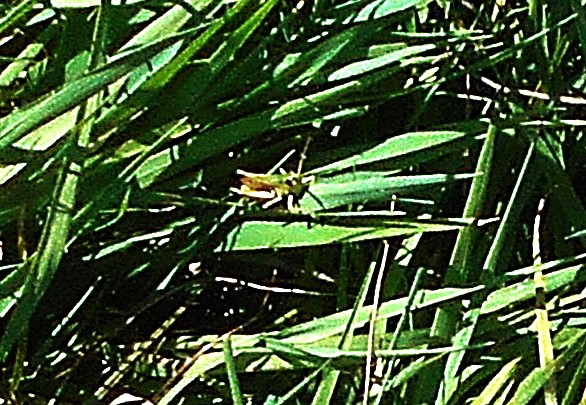
A glorious morning, full sun with a cool breeze, a perfect time to walk through the water meadows to the river. We missed the Mayfly Hatch this year, a great loss as it’s such a magical experience but who would count their losses on such a perfect day when we can walk across the fields disturbing scarlet Cardinal beetles, clinging to the tall grasses, tiny white grass moths and grasshoppers at every step, fleeing and leaping away from our heavy large booted feet, these tiny insects who usually only have to share their space with heiffers who never stride about but wander gently, graze and chew the cud, or doze quietly in a civilized manner!
We couldn’t be sure, but this one looked like a Lesser Marsh Grasshopper, which can be spotted from Mid July to October. They are common in damp grassland like this and similar to the Meadow Grasshopper but with full length wings.
No water birds and few other signs of birdlife – although we were pleased to spot a Grey Wagtail darting about above the exposed stones in the middle of the river as they have been sparse this year. The little Wren was in his usual place, half hidden in the foliage lining the the narrow stream, but we heard his loud unmistakeable call, and spotted a Buzzard, circling endlessly above the woods on the rising slope above the river meadows, a few crows and of course the ubiquitous Wood Pigeons!
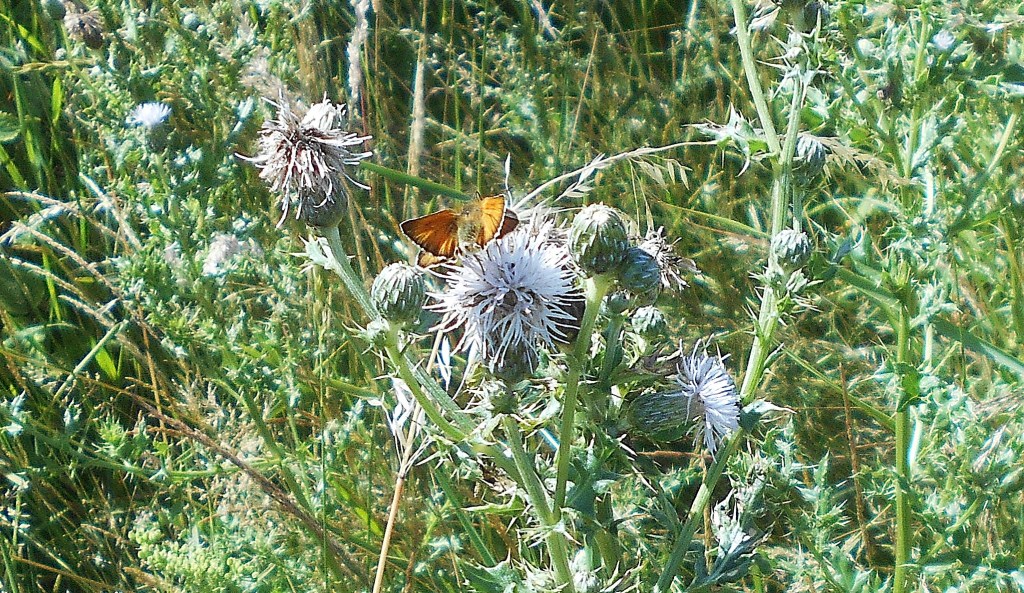
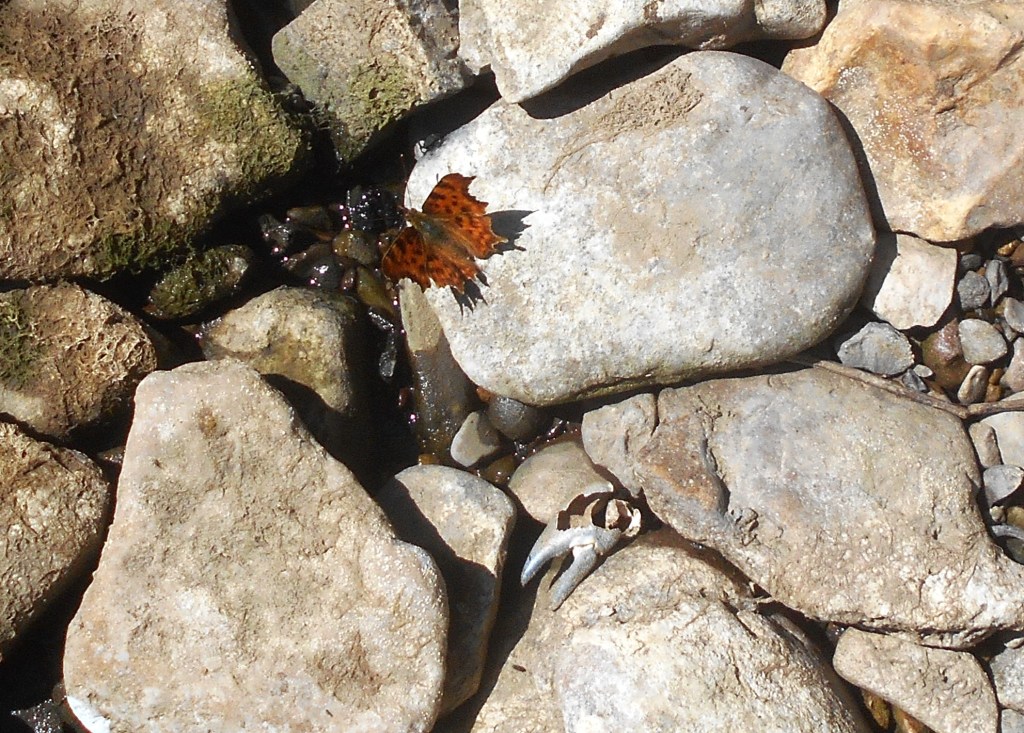
Few damselfies either apart from a handful of Banded Demoiselles, several Common Blues, a single Common Hawker dragonfly but good number of butterflies, which was heartening. We spotted lots of Whites, too numerous and too fast to be sure of identifying them, a Small Blue, two Speckled Wood, a single Small Skipper on an area of creeping thistles and a Comma stopping at the beach to drink beside an American Signal Crayfish claw, the remains of an Otter’s meal.
We had begun to feel a little down-hearted finding no signs of Otter at all their usual spots so we were extremely pleased when we reached the wide stony beach, bleached in the strong sunlight and found two recent spraints among the stones and old spraint on an earthen hump very close to the edge of the river.

As mentioned, the river was low, never more noticeable than the beach covering nearly half of the river bed, exposing more and more bleached stones. This beach had been cleared of all plant life while the work shoring up the retaining wall of the river was carried out and it was wonderful to see the many plants which had been reborn.
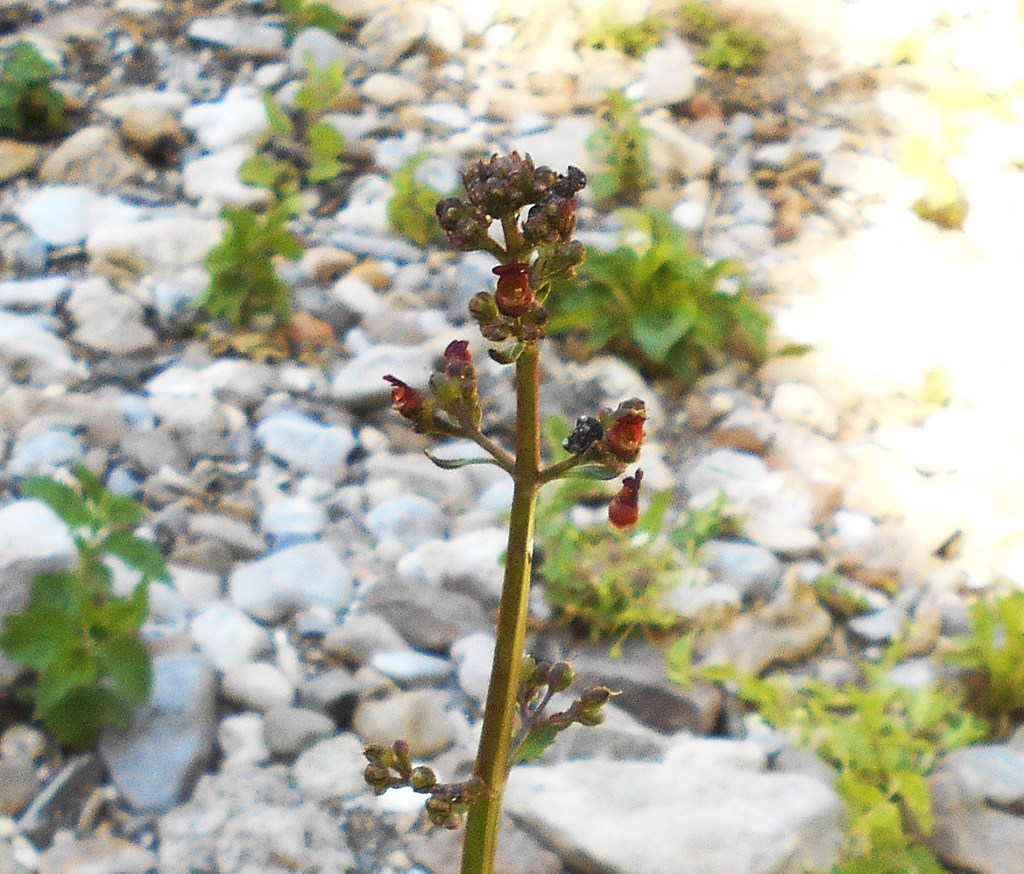
Nowhere near the thick, jungle like tall plants of the previous summers, where anglers from the local Association made pathways through the head height flowering plants like Hemlock Water Dropwort close to the waters edge, with reeds and other umbelifers, Purple Loosestrife, Great Willowherb, filled with butterflies, hoverflies, damselflies and bees, wide beds of nettles thick with writhing caterpillars, and shoulder high blue flowered tufted vetch.
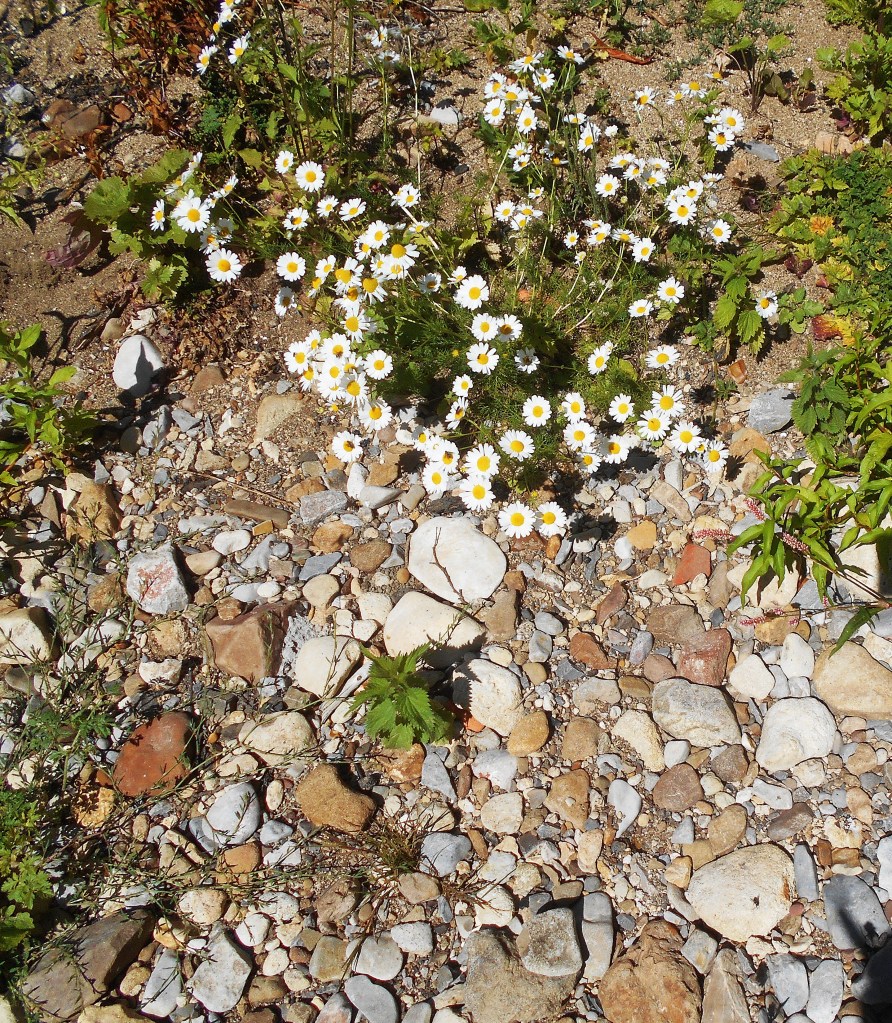
However, some plants must have deep roots or strong seeds because they are beginning to appear again, growing and reclaiming the beach in a minature rewilding of the bare bleached stones with the scant earth beneath!

Finally, the blessed cool offered by mature and spreading willow trees whose shade provides such a welcome place to rest after beach-combing among the pebbles and stones. To sit and watch the emerald and blue damselflies hunting up and down, the exploring white, blue and orange butterflies, never still, examining every flower head, hearing and catching sight of small birds overhead while listening to the gentle burbling of the river is the very essence of a perfect midsummer’s day in Somerset.
27th June 2025 / Temp: 25.5 C / Water Level: Low

Every season along the river has its high spots, but its hard to beat the waterlily season. Native to the UK their intense golden yellow flowers make striking splashes of colour amongst their dark green pads. It has a positive impact on ecosystems thanks to its ability to release oxygen into the water through its leaves. Its roots absorb excess nutrients, whilst their flowers help reduce excessive algae growth by casting shade across the surface of the water. When flowering, it is sometimes referred to as ‘brandy bottle’, the distinctive scent smelling like the dregs of wine. We have never noticed the scent – perhaps we are never close enough – or maybe we are not familiar enough with the dregs of wine – we usually finish the bottle!

Good to see the Scarce Chaser returning again this summer. Last year was the first sighting of this dragonfly – a species of lowland river floodplains that usually inhabits slow-flowing, meandering rivers – and we feared it was simply a stroke of luck, unlikely to be repeated. However, the British Dragonfly Society writes: “Inhabited sites characteristically have good water quality, which supports submerged and floating plants as well as prolific stands of emergent vegetation.” A habitat which pretty near precisely describes this stretch of the river above the weir so we can only hope they will now become established here.

The water certainly looks clear in the stretch of river pictured above – one of the areas of water not covered in water lillies!

Good to see the wild Cherry Plum tree in the hedge laden with fruit. We notice them most of course for their early blossom in spring and never consider the fruit, but they are said to be delicious so we must wait until they are ripe and remember to have a tasting session!!
10th May 2025 / Temp: 15C – 17C/ Water Level: Low
In preparation.
27th April 2025 / Temp: 17.5 – 19.5C / Water Level: Med-Low
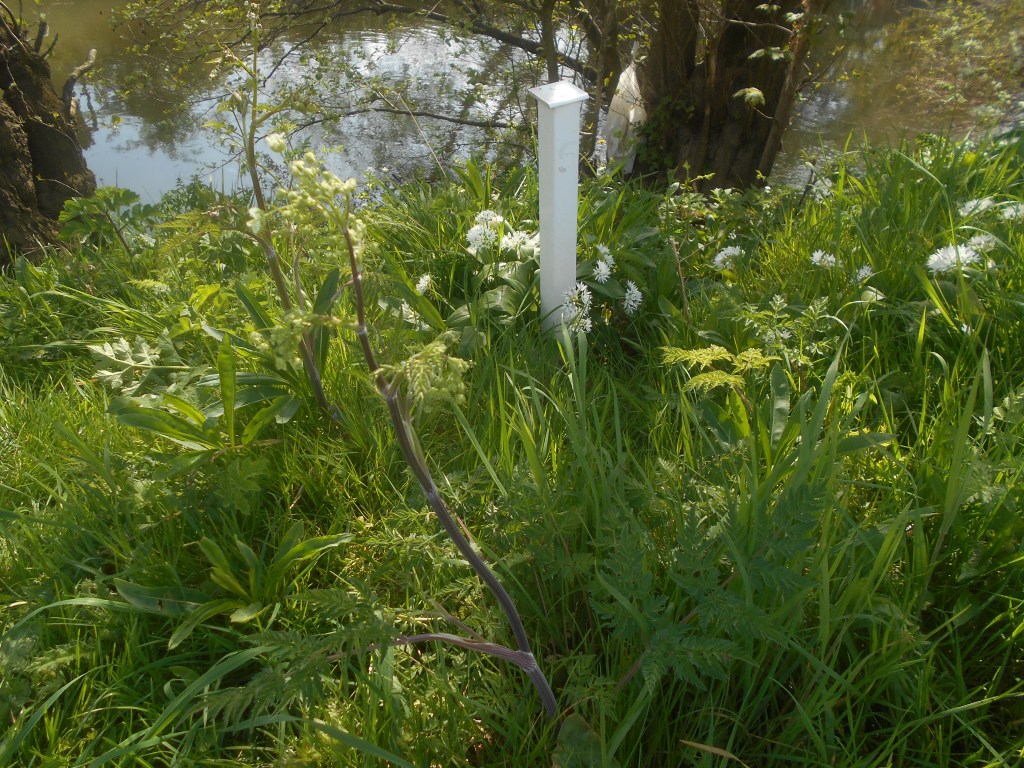
A perfect late spring afternoon – sunny and warm, Wild Garlic still in flower around the angler’s peg, which cheered our daughter and she collected a few heads to add to her salad. We all enjoyed the first good show of butterflies of the year as we spotted Orange-tips, both male and female, several Green Veined Whites, a Tortoiseshell, a Peacock and a Holly Blue – not great numbers, but nevertheless, a very welcome sight!
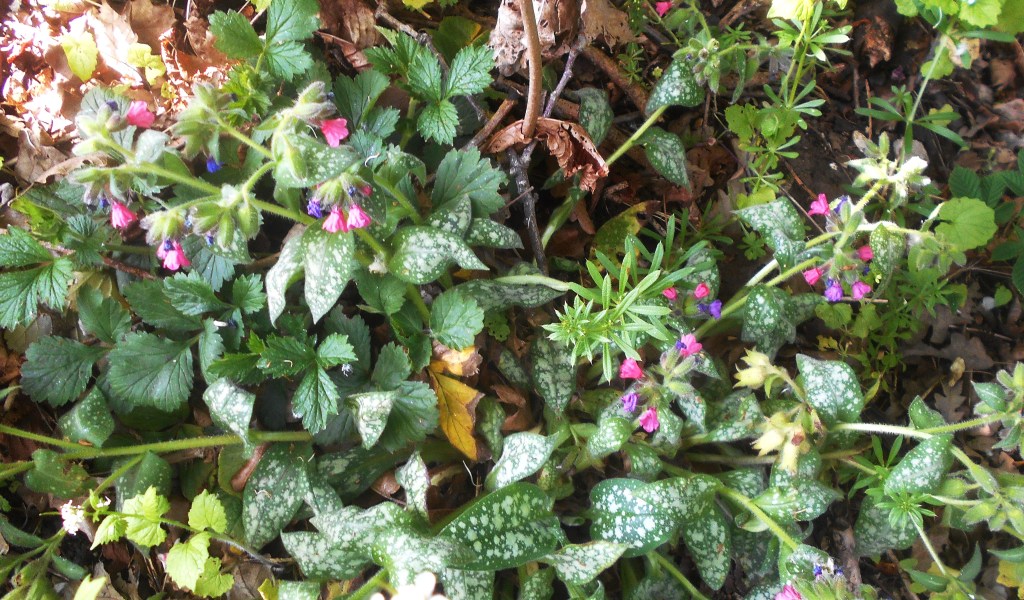
There was a good showing of Lungwort in flower in the shaded areas under the trees and lots of noisy Robins and Wrens in good voice, singing in the branches above. We watched a Kingfisher shoot upstream and a little later shoot back down again, spotted two Wagtails, saw a Chaffinch, a Coal Tit and heard a Chiff-chaff; we watched a Heron flying overhead, heard and then saw a Moorhen and noted just one Cormorant on their favourite perch, a stark, leafless tree, which is slowly dying due to their droppings but then, to our great delight, we saw three Swallows slicing through the sky above. If one Swallow doesn’t make a summer, three surely do!
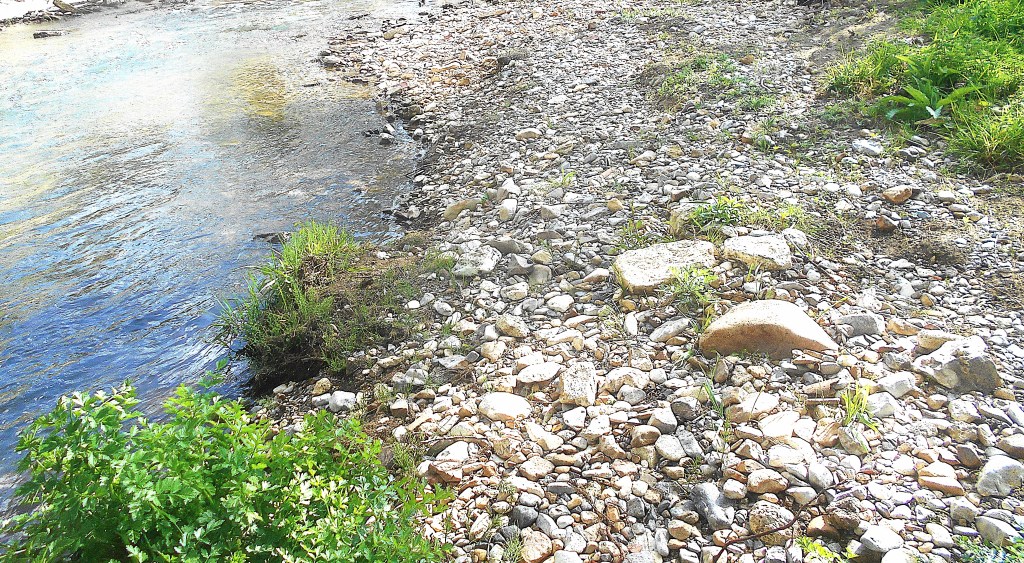
New work which has been carried out to the wall of a building abutting the river has caused considerable disturbance to the gravel river bed and we think this may explain the large fossil encrusted stone pictured below which our daughter spotted on the beach.

We asked Simon Carpenter, a local geologist, who is always so helpful and supportive if he could identify the fossils embedded in the stone. He believes they are likely to be corals in carboniferous limestone. He is also of the opinion that, as the fossils are standing proud of the stone, this is indicative of it being in the river for aeons, transported during flooding/strong currents which moved the stone along the river bed. He said that over a long period, the distances rocks can be moved by water currents can be considerable.
Carboniferous limestone is not local to this stretch of the river so it is very likely that it was dislodged from the extensive Carboniferous beds north of Mells; this makes sense because the Mells River cuts through those beds and feeds into the River Frome. Extraordinary to think that this area was once, some 3,000 million years ago, was a tropical sea so, a pretty exciting find!!
https://www2.bgs.ac.uk/mendips/localities/mells.html
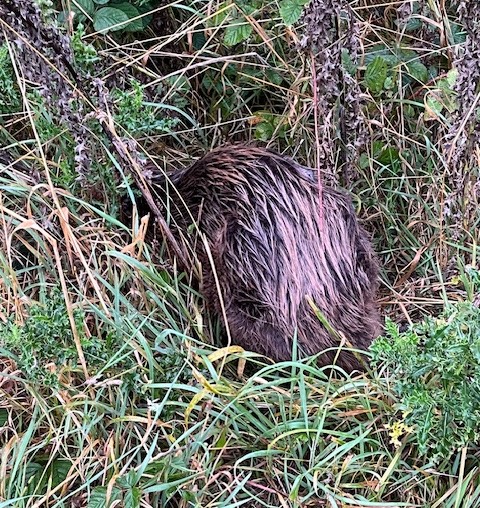
Whilst we were checking the beach for Otter spraint, we fell into conversation with Tracey a keen local wildlife enthusiast, who mentioned that she had several times seen a Beaver on the river bank, and showed us phone footage, taken only three days previously, of a Beaver with his back to her, so busy working away at something unseen, that he seemed unaware of her presence! She often sees Otter in this part of the river when she is walking very early in the day, and on the same morning, she also filmed a huge spawning Chub, laying her eggs amongst the gravel of the river bed. This section of the river is famous amongst the local anglers as being full of big Chub – 6lb plus are not infrequent!
Tracey’s husband, an enthusiastic Angler, has been fishing these waters since he was a boy, when the whole of the length of the river was accessible to fishermen, and remembers the occasion twenty years odd ago when he caught sight of a large terrapin sitting on a log, soaking up the warm sun. The semi-acquatic reptile didn’t seem in the least disturbed by his presence so he assumed it was probably someone’s released or escaped pet.

As we walked downstream to check the next beach for Otter spraint it was good to see beds of crosswort and ground ivy almost hidden amongst the thick grasses and feathery leaves of the summer plants.
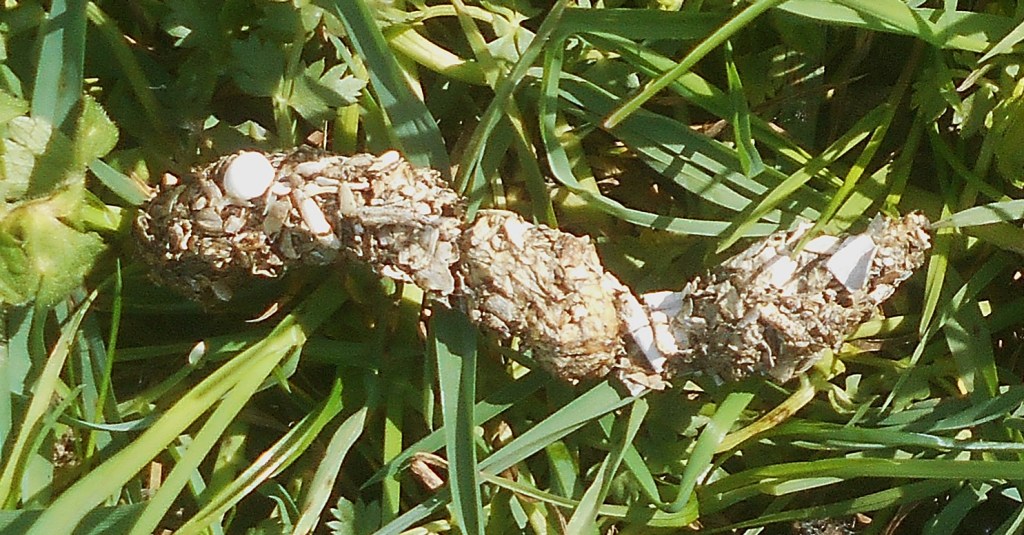
Possibly not quite so photogenic as the wild flowers in the water meadow, but interesting – one of the Otter spraint we spotted was chock full of pieces of crunched up Signal Crayfish as the Otter change from their autumn/winter diet of fish, frogs and whatever they can forage to their summer diet which is almost entirely crayfish, which is why during the coming season, most of the spraint we see is almost always orange/red.
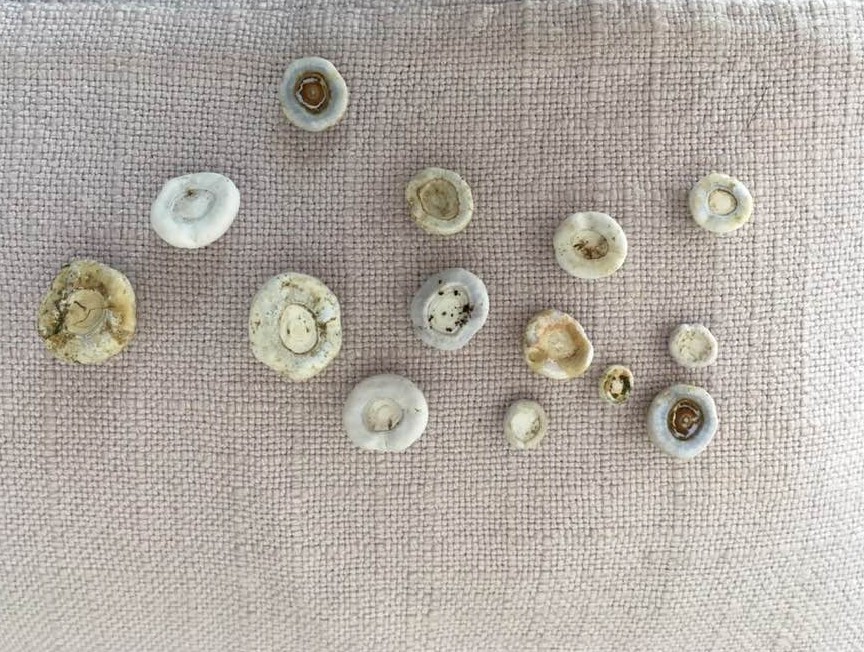
There was also a single mushroom shaped gastrolith (literally stomach stone) in the spraint which came from the crayfish’s stomach where they are found in pairs in each crayfish as calcium stores prior to moulting. We often spot these small stones next to crayfish remains on the beach. As well as this recent spraint, we also spotted one fresh and two more recent spraint on the same stretch of river, which together with the wild Brown Trout, Chub, Pike, Dace and Bream, and stunning numbers of mayflies during the main hatch, shows the water if not pristine, is clean enough for wilflife to live and thrive.
26th April 2025 / Temp: 17.5 C / Water Level: Med-Low
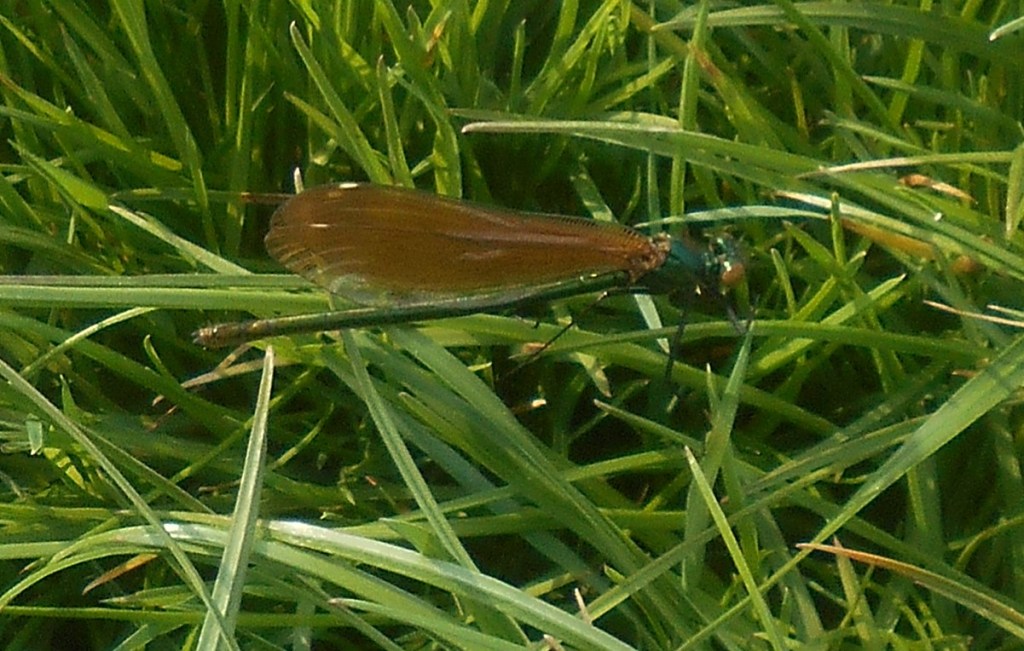
Oh what joy! Is there anything more enjoyable than chasing a Beautiful Demoiselle damselfly across the water meadow on a beautiful, sunlit afternoon in late April? Our first sighting of the year and a hint that summer is not as far off as the early morning chill would have us believe.

This water meadow is a particular favourite of ours with on one side there is a narrow, shallow stream or leat, the remains of the old meadow flooding system so popular in the 18th century, and on the other, the river where the line of a Roman ford can still be discerned by the stones half buried running at an angle across the river. It’s a good place to be in troubled times, to drink in the peace and tranquility of the lush spring grass and emerging leaves on the trees while thinking about the huge upheavels, revolutions, wars and change which have passed through this land over the centuries while the river flows on and the grass still grows.
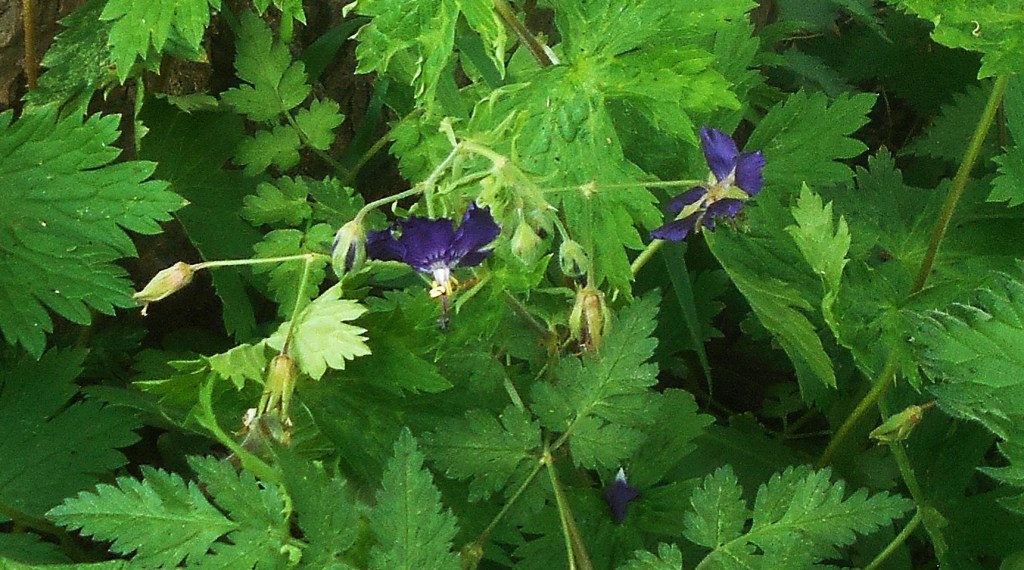
5th & 6th April 2025 / Temp: 12 C/ Water Level: Med
TWO-DAY EVENT – SOMERSET OTTER GROUP
This is an annual event which checks the population of Otters in the surveyed areas across the whole of Somerset on one particular night. If there is fresh spraint/padding on the second day where there was no spraint on the previous day, this is conclusive proof that there was an Otter present on that night. We are also asked to note evidence of Mink Beaver, Water Vole, Kingfisher and Dipper.
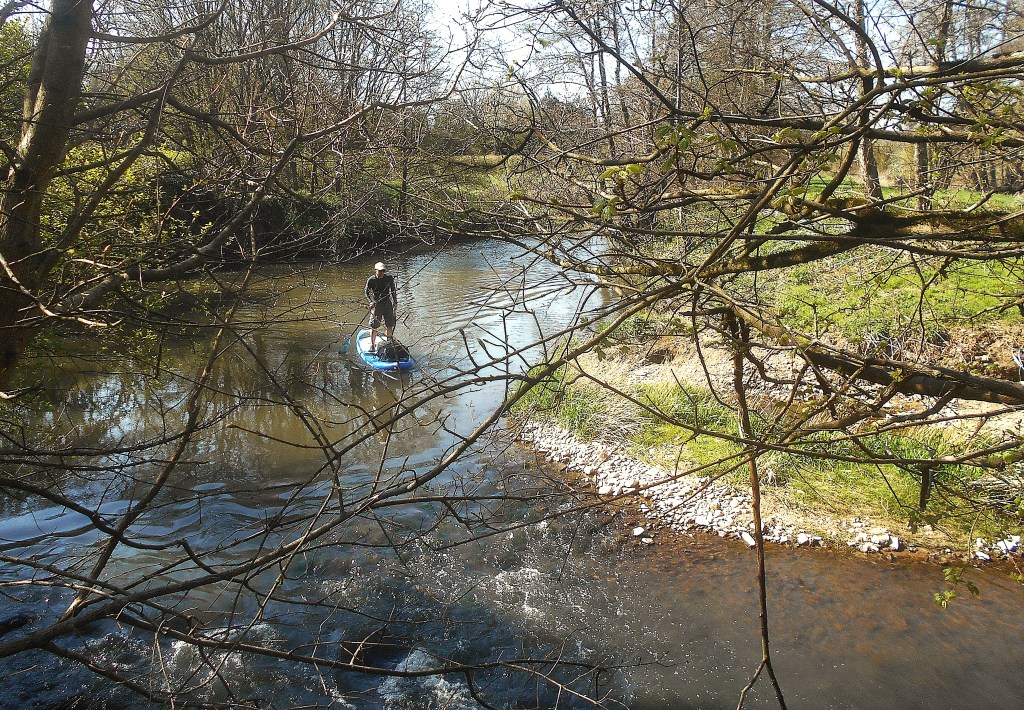
No, this is not our novel way of conducting our Otter survey (although it’s certainly an idea which might be worth persuing) simply unusual passing traffic as we were examining the beach!
Despite the stiff north-easterly breeze, it was beautifully sunny, a perfect morning for an Otter hunt! It started well with sighting recent Otter spraint at the first site, chock full of crayfish remains, one of the signs that winter is over and the crayfish are active again.
Sadly there were no signs of Otter at any of the other three sites we surveyed – a great disappointment as we had seen signs of Otter and kits only a few days ago at another site not very far downstream. No sign of Mink either but the local Beaver have been extremely busy, the two main trees they have been working on in recent months look ready to fall any time soon!

Much better news on the water bird front – 5 male Mallard fighting over a single female who was mounted by more than one male as they pushed her under water. We heard the Moorhen in the same place as we spotted one on our last visit and luckily at our third site we heard the warning peep of a Kingfisher and then caught sight of one shooting upstream away from the nest area, and also another group of 2 male and 1 female Mallard. Other bird sightings were Common Chiffchaff, Greenfinch, Blackbirds, good numbers of Wrens and Robins and a Red Kite.
Day Two / 6th April 2025
Another beautiful morning, and as mentioned above, sadly no Otter, Mink or Water Vole sightings

The river bank trees and hedges were filled with blossom so it wasn’t so surprising that we saw so many bees, hoverflies and a couple of bee-flies, as well as a few butterflies – a Peacock, Orange Tip, Small White, Comma and Red Admiral.
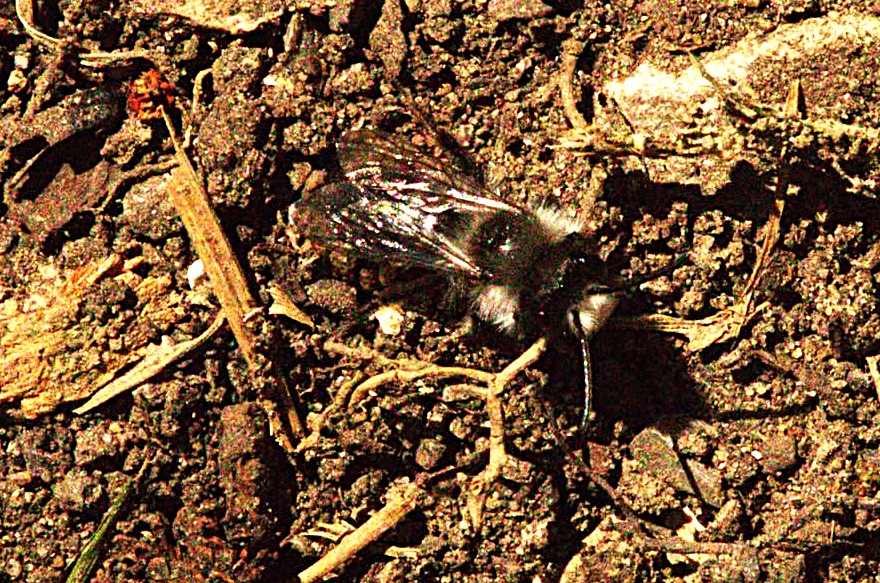
We also spotted an ashy mining bee one of the solitary bees where the female bees live alone, each creating their own nest. They can be found in a wide range of open, sunny places like riverbanks and collect nectar and pollen from spring flowering trees and shrubs like willow and blackthorn, as well as flowers such as dandelions and buttercups.
Each female digs a nesting burrow in a patch of bare or almost bare earth, such as on a well-trodden footpath like this one. Sometimes many females will nest close together. Look out for a little heap of soil piled around the burrow entrance, like a miniature volcano!
26th March 2025 / Temp: 16.5 C / Water Level: Med

A gloriously sunny morning with a touch of summer in the strength of the sun on our backs as we walk across the river meadows towards the bank to check for Otter spraint. The sticky buds were well formed on the Horse Chestnut tree and there were even one or two which had burst open, showing their bright yellow-green young leaves. We heard a Great Tit and several Robins were singing loudly – such a beautiful song, really impressive whistling with lots of rippling notes thrown in, and so loud – challenging all other Robins to keep well away!!

Sweet Violet is a low, creeping plant with fragrant flowers, usually blue-violet or white; a wildflower of woodland margins and shady hedgerows, growing on runners like strawberries. We spotted these growing on the riverbank below the remains of an old wall, possibly a demolished or ruined house and it’s intriguing to wonder if they had been planted in what was the garden or whether given the perfect conditions, self-seeded. Notable that all the plants have only white blooms, no sign of the purple flowers at all and this the only place where they have been seen growing.

Nearing the river we noticed a sizeable tree which had been uprooted by the winter floods lodged firmly into the river bank and thought what a useful ledge for an Otter to scramble up on to reach the meadow. Barely had we registered the thought than we suddenly caught sight of a single spraint dropping by one of the angler’s pegs. This was an area we had never seen spraint before due to the difficulty presented by a sheer, steep bank but seemingly now made perfectly possible by the fallen tree! Searching the area carefully we were astonished to see a scattering of spraint, different sizes denoting adults and kits, and the condition of the droppings showing a now popular site, over some time, possibly more than a week. Oh what joy! Oh the huge relief! We had begun to think that our local Otter had abandoned these waters – but here they are, resiliant as always, what a clever mum!!!

We were so pleased to see the first flowers on the Rue-leaved Saxifrage, although we’ve read that some areas of the country the have seen them blooming as early as the first week in March, we have never seen them so early.
This is one of the lowland saxifrages, the vast majority being mountain plants. It grows in areas with neutral or basic soils so it’s often seen in limestone areas like here on the concrete weir where we notice it while checking for Otter spraint. This is a favourite spot of theirs, and sure enough, after what seems months and moths of no show, we spotted 5 recent spraint, prominently deposited on the line of stones forming the boundary! Extraordinary – now two areas of droppings again over some time – maybe a female Otter has brought her kits here as this stretch of water (a favourity fishing spot for the local anglers) is a proven feeding area for Otters too!
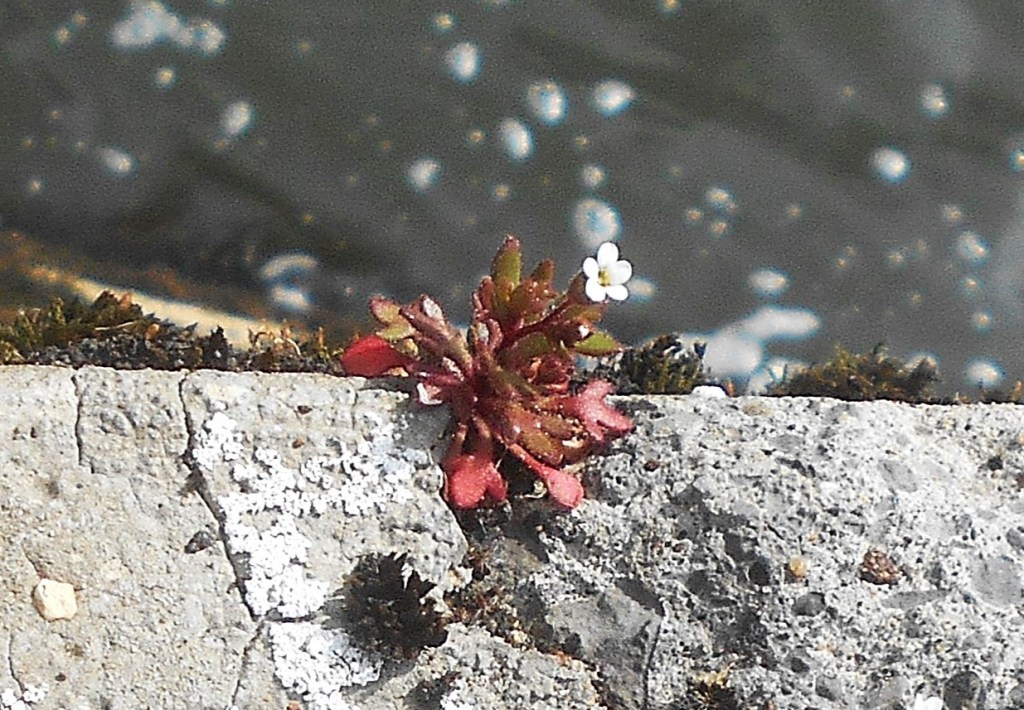
Our local plants are always red, sometimes like the one above which has a few green leaves; this photograph also shows the “three-fingered” leaves very clearly. It’s certainly one of my favourite flowers, it always seems quite magical that such a colourful and striking plant can flourish in such stark and poorly nourished conditions.

It was a shock to come across this dead wild duck lying on the river bank, its head almost hidden in the long grass. There were no signs of predation and it looked for all intents and purposes a healthy bird by its good colour and plump body. We checked when we got home and found that Mallard often don’t show any signs of bird flu so knowing that cases of highly pathogenic avian influenza (bird flu) are increasing in both kept poultry and wild birds across multiple areas of Great Britain, we reported it to the government body concerned.
https://www.gov.uk/guidance/report-dead-wild-birds
This is the second dead bird we have seen in the same area and although the government agency didn’t collect the first, we were telephoned by one of their staff who was unable to find the spot so my husband drove over to the area with a map and showed him the place on the map and he knew immediately where to look. We haven’t received news of the findings when tests were carried out, but he said that he had collected three or four in the surrounding area recently. A very concerning situation because there are several dairy farms in this area and dairy cattle are very susceptible to bird flu infection.
From this…

To this….

So sad. Will the beach recover? The beautiful flowering riverside plants awash on warm sunny days in summer with damselflies, dragonflies, caddisflies, scarce chaser butterflies, mayfly nymphs, bees, hoverflies, beetles, ladybirds and so many more insects return? When we turned stones on the river margins there were few signs of caddis larvae and the stones were covered in brown sludge.
This stretch of river is the single habitat for Water-crowfoot – Ranunculus aquatilis – which although said to be common, is very uncommon on the Somerset River Frome. The plant was already diminished by the Angling Association removing a great deal a few years ago but although much smaller, it did hang on.
However, there were no signs whatsoever of this valuable plant which provides cover and refuge for fish fry, insect larvae like mayfly, damselfly and dragonfly and other small invertebrates. Dense stands can alter stream dynamics, causing water flow to slow down, which in turn allows other plants to root and increases biodiversity. It supports a rich invertebrate ecosystem, which in turn feeds juvenile trout. A great loss to the biodiversity of the river.
20th March 2025 / Temp: 19 C !!! / Water Level: Med-Hig
SPRING EQUINOX
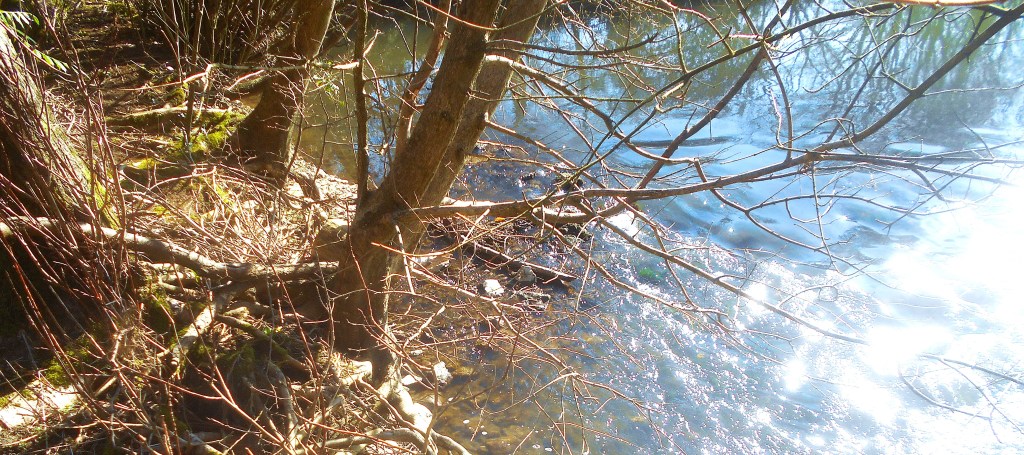
Sunny, gentle breeze, floating fair weather clouds and the sun warm on our backs – perfectly glorious! A perfect day for the spring equinox, the first day of spring and we sauntered along the river bank drinking in the delight of the sun sparkling off the water and noting the fresh growth beginning to push memories of winter to the back of our minds.
We immediately spotted four Mallard in the river, rather slowly moving upriver away from us, probably reluctant to leave their exploration of the river weed but no sign of the resident Swans so probably the pen was on her nest.

14th January 2025 / Temp: 6 – 8 C / Water Level: Med-High

Anthony House, the local Organiser for the Somerset Otter Group, is a keen trail camera enthusiast and has set up cameras on river banks where both Otter and Beaver are regularly sighted – this shot is a still from one such recording. He was the first to hear and record a Beaver in our local waters back as far as 2018 and has continued filming and recording them ever since.
He has issued a strong caution which, if you are active around Beaver sites, you should be aware of: Beavers on arriving in a new area soon excavate a tunnel system on the river’s edge so he advises keeping an eye open for an approximately 4-6inch hole which is the tunnel breath hole at the end—- before you step forward… he has received a waist high soaking in the past so this is very sound advice.

A very chilly morning, which reads 6C but feels more like 4C, however there are a few breaks in the overall cloudy skies, some clouds black, but there are a few slithers of blue so it might warm up.
Bird sightings meagre – 4 Mallard, 2 Swan, 1 Moorhen, Robin, Crow, Blackbird, however, great news, we spotted two fresh spraint on a boulder at our second site – the first signs of Otter at this site for months and months. As if to celebrate our sighting, two Kingfishers flashed by downstream, probably the breeding pair from their nest further upstream, the chestnut-orange feathers of their underside warming the chilly air!
More fresh and recent spraint on the bank above an inlet, this was a popular place for sightings, but not for the past 12 months or so, so we were extremely heartened to spot this. No spraint on the last beach site but in the bowl of a large old moss covered willow (another favourite place) copious signs of old spraint, dried enough to see the fish bones and scales, so yet another hopeful sign.
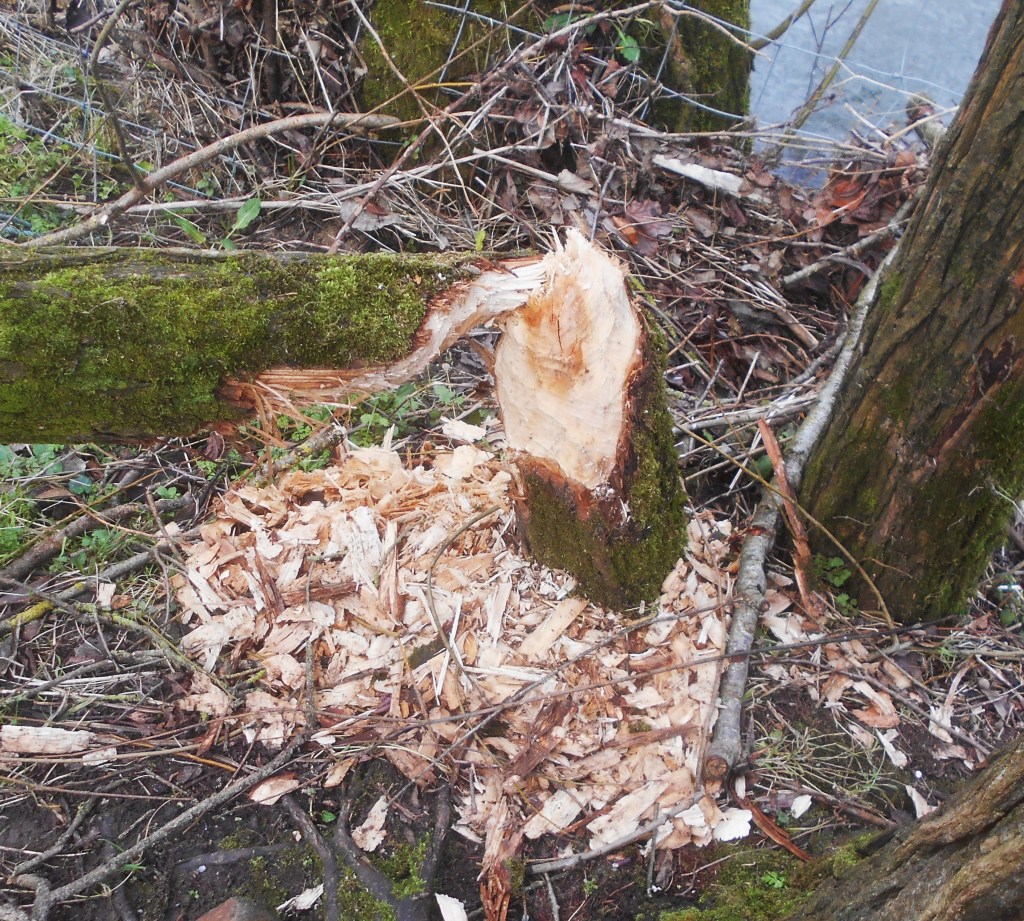
We have seen lots of Beaver signs along the river bank in recent years, but this large willow tree is biggest which has been felled so far. It shows all the classic signs of Beaver behaviour, the sharp, gnawed trunk and the large pile of chips surrounding the stump left in situ.

The trees most often felled have been Alders, smaller trees with narrower trunks – this is the first Willow we have seen brought down.
The Beaver don’t actually eat the wood, which is why all the wood chips are left behind, instead they eat the cellulose underneath the bark and use the wood to build dams and lodges.

Native tree species like willow or alder which have evolved alongside beavers over millions of years do not die when felled. They coppice, re-rooting from felled stems or debarked cuttings and grow rapidly.
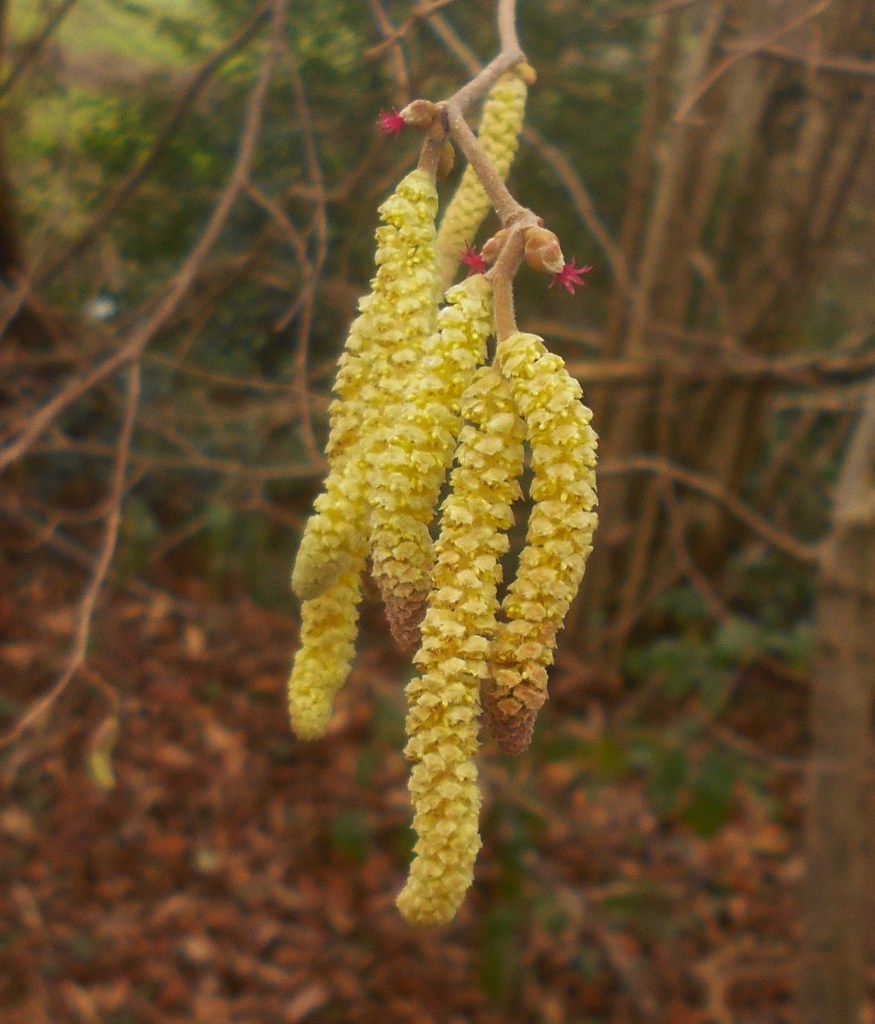
Whose spirits are not lifted by the first signs of spring, particularly after weeks of freezing weather and the forecast arrival of thick mists obscuring everything in the days to come. We can soak up the joy of the bright yellow hazel catkins. Some, like this one, sporting the red flowers of the female flower each with four stigmas which capture the pollen and produce the cob nuts.
No signs of Otter at the final site, but the piers of the bridge where they usually spraint were under water and the few exposed stones at the edge of the river were empty. The river was running fast and full, although the signs of flattened grass on the previous beaches showed that the water level has fallen considerably.
http://www.somersetottergroup.org.uk/94-2/elementor-2862

Lots of colourful “flowers of winter” bracket fungus and orange spot fungus decorating the logs stacked in the wild garden. The mature

trees, particularly those close to the river whose roots are often exposed, can suddenly develop a wood rotting fungus which slowly, sometimes over years, eats away at the tree and causing it to eventually fall.

However, they do add interest and colour to the countryside, which at this time of the year can look pretty bleak.

As well as the fungi, mosses and dried seed heads, the other eye-catching plants are always the polypodies..

Often seen growing on the moss covered limbs of the willows lining the river bank, they are striking ferns, beautifully shaped, with small, round clusters on the back of the leaf, which are the Polypody spores, the tiny reproductive cells produced by the sporangia. The spores are released into the air and carried by the wind to new locations where they can grow into new ferns.
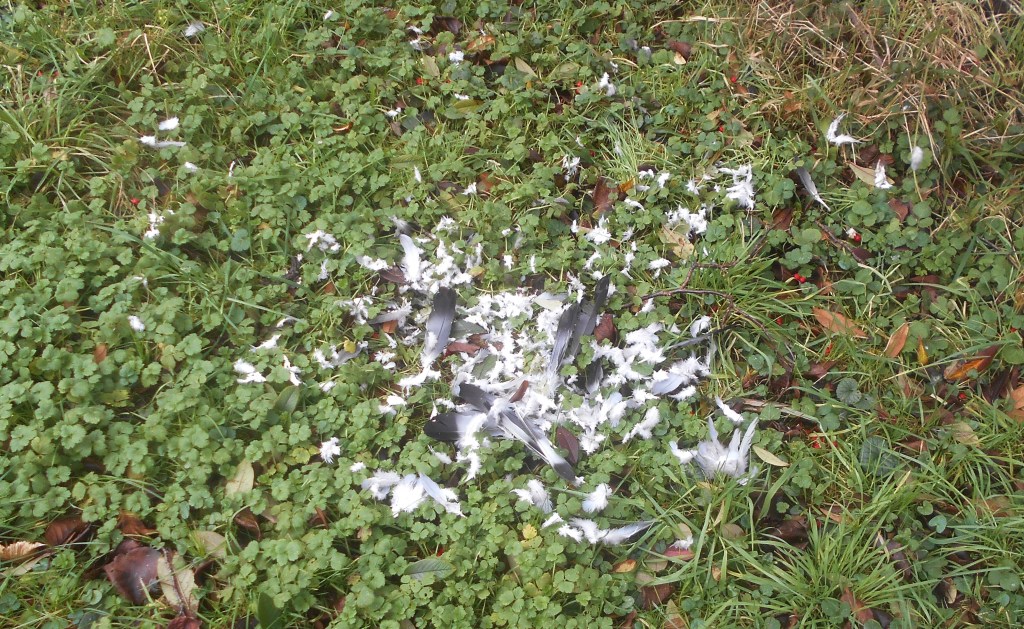
Finally, at the most distant area from any habitation, on the grassy area in front of a small woodland, we spotted the typical spread of feathers of what looked like wood pigeon, scattered over a quite wide area. No sign of the carcass, the legs, feet or head of the bird, just the feathers which leads us to suppose that it was a fox kill, maybe taken by a hungry vixen who could be gestating her cubs around now and has carried the carcass back to her den.
1st November 2024
The arrival of the first Great White Egret to the river meadows
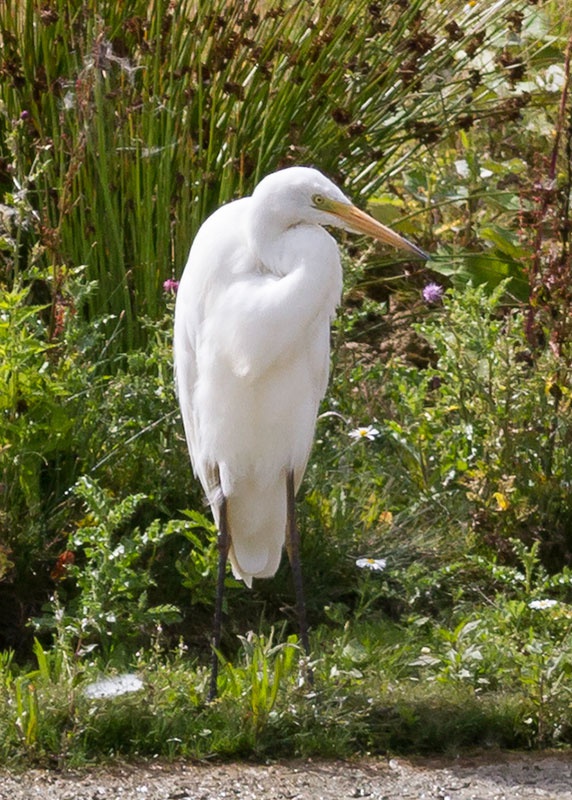
It was lovely to run into the owner of the land where we have done most of our Otter survey reports. He is always very supportive and interested in the surveys and, as a keen bird watcher, keeps us up to date on his own sightings. It was particularly thrilling to hear that in early October he regularly spotted a Great White Egret around the river, it stayed around for two or three weeks but he hasn’t seen it since.
This rather confirms an account written in the Somerset Wildlife magazine’s autumn/winter edition about a Great White Egret which in 2022 was ringed in the Somerset Levels as a chick. Two months later it was sspotted in Lincolnshire, then Yorkshire and then Northamptonshire. However, last summer (2023) it was spotted back in Catcott Nature Reserve on the Levels. The pattern of sightings was believed to suggest that it was wintering in the north of the country, returning to the Levels in the south-west to breed. It therefore seems extremely likely that the Great White Egret that the owner spotted on his land was migrating north for the winter. It will be exciting if it chooses the Somerset River Frome as a stopping place if it returns to breed next spring!
31st October 2024 / Temp: 11 C / Water Level: Med-High
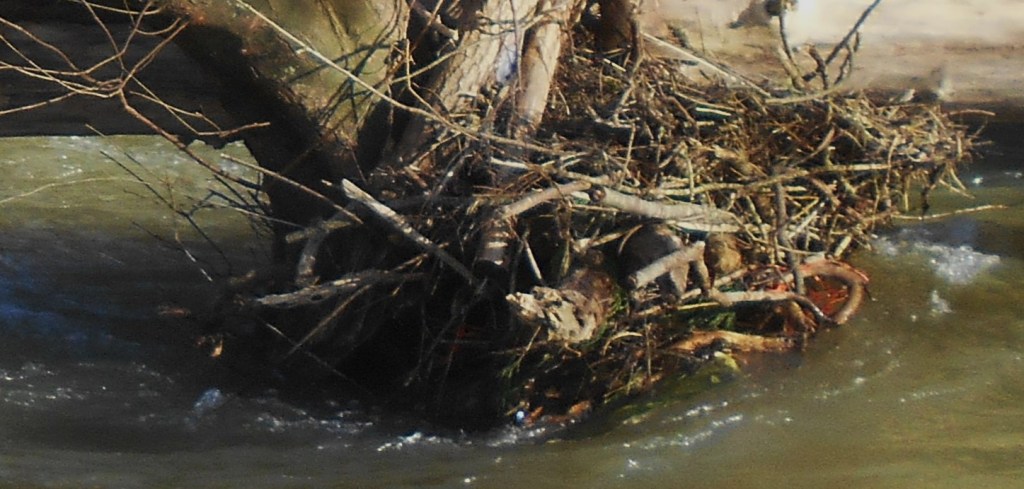
A thick mist hung over the river and bank, just beginning to clear in places, so noticeable as at the top of the hill before we drove down, it was beautifully clear and sunny. Through the mist we suddenly spotted a Heron lifting off from the water at our approach. There was so much debris caught around the bridge piers, so much tangled branches and detritus, it looked just like a Crane’s nest, but was a good indication of how high the floods had reached as a result of the recent rain storms, almost 6 feet above it’s normal level.
No signs of Otter at the first two sites but two male Mallard flew upstream as we arrived. The sound of the lively river crashing and splashing over the stones was almost deafening, making it difficult to hear each other. We spotted a flock of 60-70 gulls flying over, some Herring /Lesser Black Backed size, some Black-headed size and a Kingfisher shooting downstream.
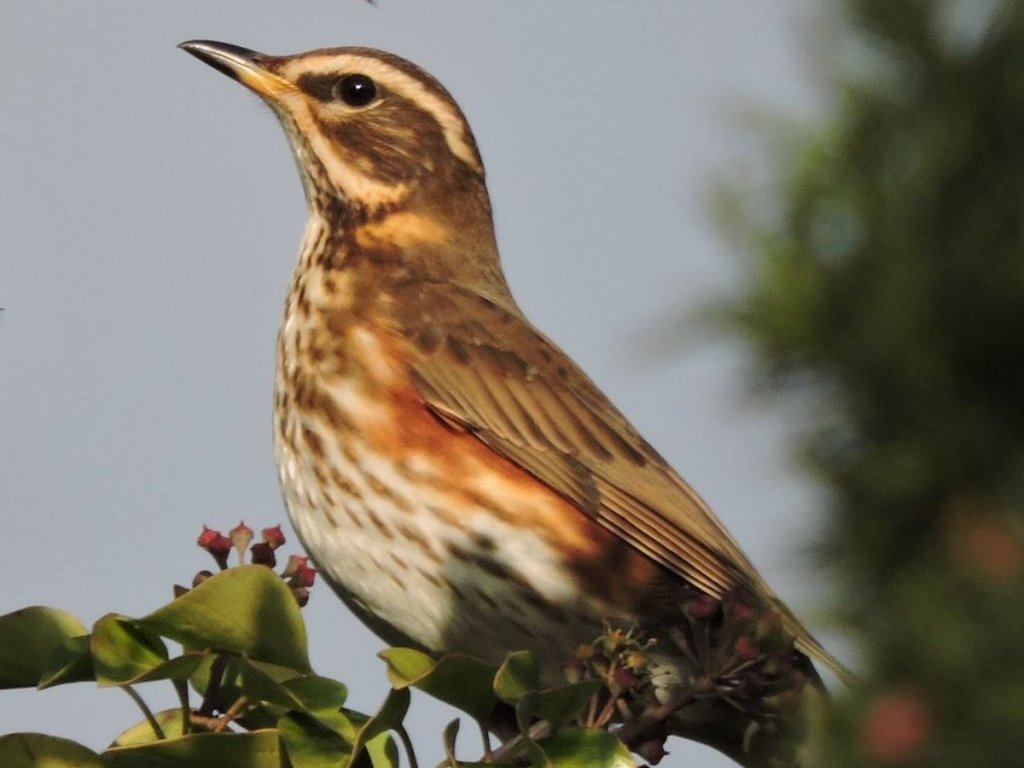
We watched a Redwing flying from one side of the river to the other where there was a tree heavy laden with red berries and then flew back again and perched on a branch. It’s always startling when you catch sight of them up close at how red their underwings are – really lovely.

We were extremely relieved when we reached the final survey site to spot a line of all four Otter padmarks and the trail of its tail clearly defined in the wet soft sand on the edge of the river beach – very encouraging because there has just been such a dearth of sightings for some months. A Jackdaw flew over as we sat and rested on our fishing stools. Delicously quiet, the river slower here, just a steady flow and not much to distract except near the edge of the bank a sizeable tree stump covered in tiny, tiny, tiny parachute mushrooms.

We were able just to drink in the peace, the flowing river, listen to the birds as we heard a Magpie, a Robin, a Blackbird and a couple of Crows – so few birds about, but grateful to see those few.
25th October 2024 / Temp: 15.5 C / Water Level: Med/High
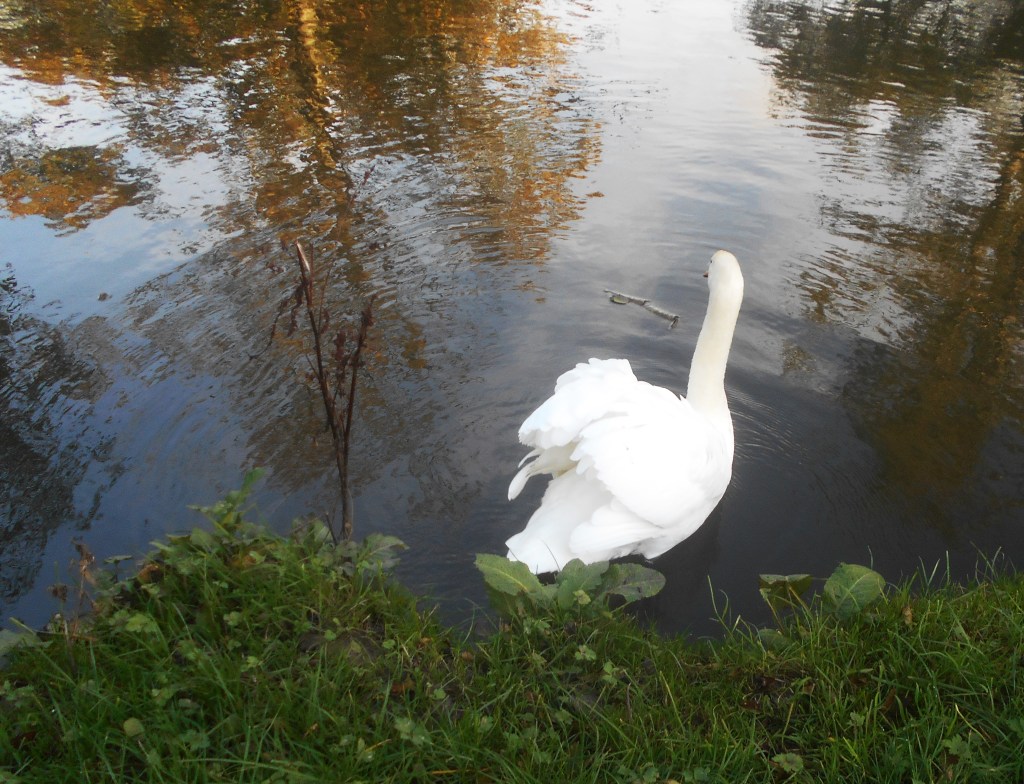
One of a pair of Mute Swans swimming off in disgust when it realised we hadn’t any food. Both of them had swum up to the bank when we appeared, showing clearly that someone is feeding them, never a good idea.
Beautiful, sunny afternoon, we are late getting to the river so the sun is low but very bright and clear, almost blinding – probably due to so much rain clearing the dust from the air.
We stopped to speak to Michael, an angler from the Frome & District Angling Association, who had seen a Kingfisher flashing downstream, spotted a Wren hunting the river banks and caught a Bream! This was his first time fishing the river, he usually fishes lakes, so he was finding the river is a bit more challenging. It was looking beautiful, very slow and calm and quiet which he was appreciating and hoped to make regular visits to explore the river.
We spotted four Mallard in the middle of the field, pecking away at the pools of river water still remaining after the recent flood, but sadly, no signs of Otter at all. It is not too surprising, most of the beaches where they bring their ‘catch’ to eat, or just rest up, are completely under water so they must be hunting in another reach of the river.
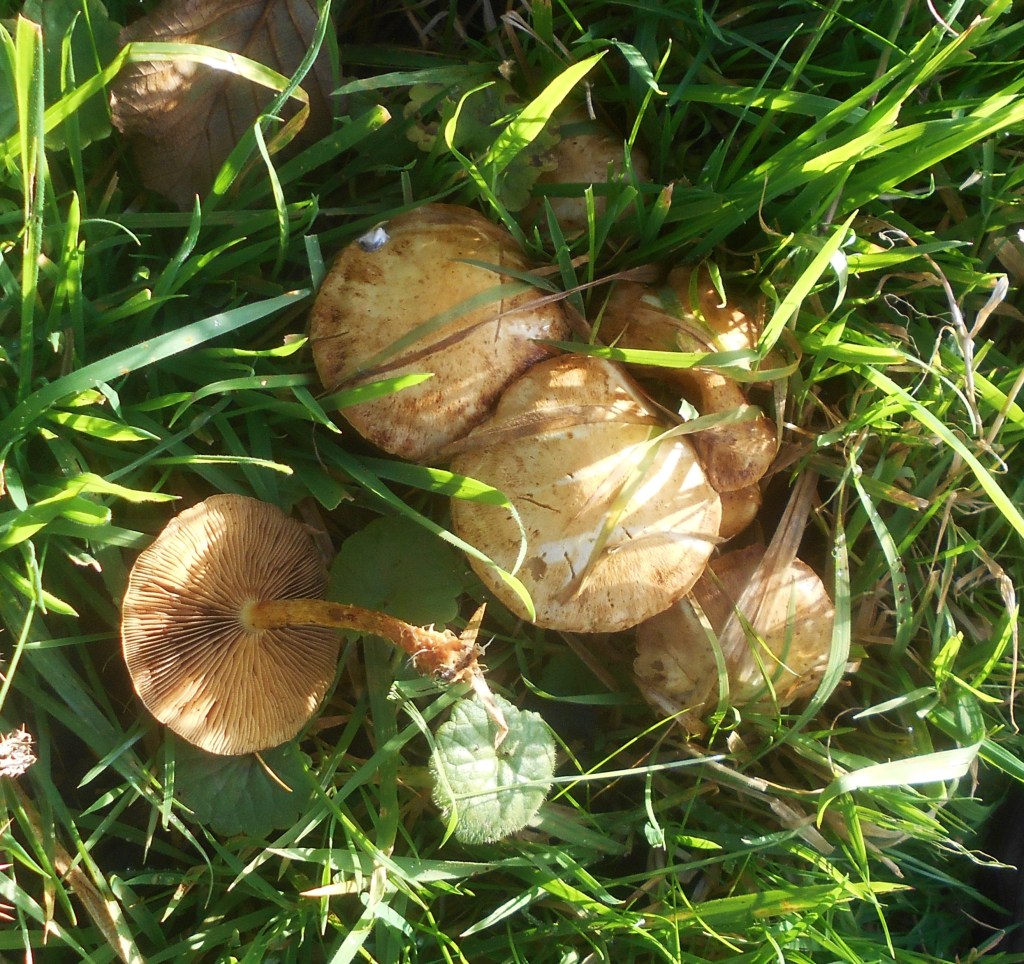
A goodly cluster of mushrooms in the long grass, almost hidden under a bramble and snowberry hedge. These water meadows are pretty good hunting ground for fungi, but often they are species which we have failed to identify – like this one! We will add the species later if we can.
28th September 2024 / Temp: 11 C / Water Level : High

The orchard was looking serene and peaceful under the unexpectedly bright, warm sunlight which sparkled among the drops of rain soaked grass and lit the feathers of a small mixed party of Long-tailed Tits and Great Tits as they shot from tree to tree along the hedge.

We were checking along the bank where the outflow from the lake flows into the stream when our eyes were drawn to the extraordinary number of small fish, probably minnows, which, despite the strong current, were swimming around, maintaining their position in the outflow and not swimming into the stream. We often note the large shoals of minnows in the main river (see photograph above and below taken in early summer) but this is the first time we have seen them in the stream.
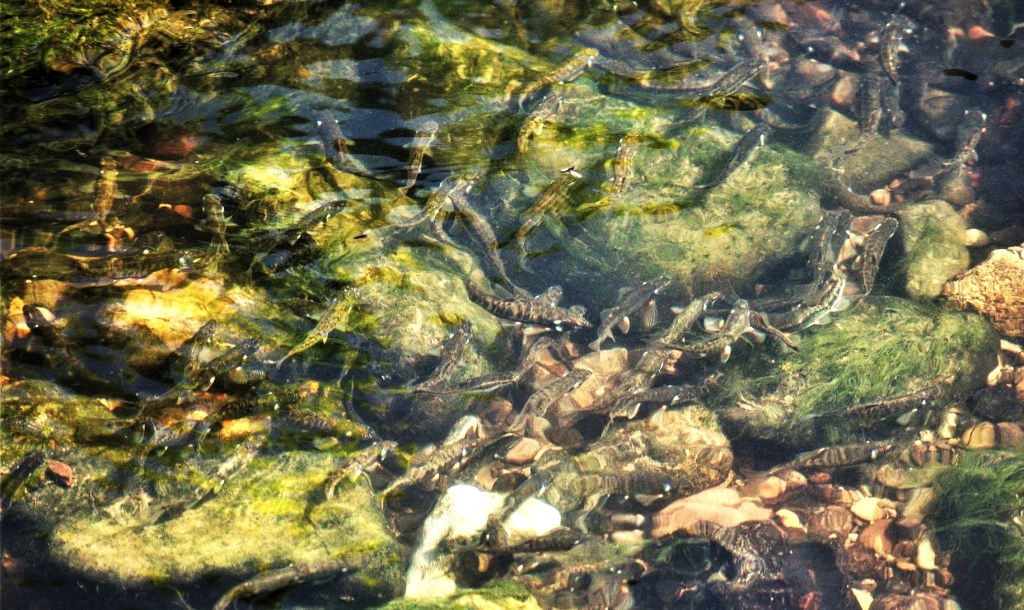
Generally swimming in shoals that considerably range in size, minnows are forever alert, darting quickly in response to food or danger that they face from every angle. The British record minnow doesn’t even reach an ounce (13.5 drams) – and if you get one around 10cm then it would be a specimen, but a small species like minnows being present in numbers is a good indicator that the river is healthy. They also form an important part of the food chain for kingfishers particularly and all predatory fish, so perhaps it’s not surprising that we have two Kingfisher nests in the banks along the relatively short stretch of river which is our Otter and Beaver Survey area.

The river level was high, covering almost the entire width of the beach, and the current was running fast so although disappointing, we weren’t too surprised that there were no signs of Otter or Beaver whatsoever.

Quite a surprise though to catch a glimpse of batman sunbathing on a stalk in the nettle bed! It looks like a Dark Bush Cricket, our first sighting of one along this stretch of the river although this meadow edge where the grass gives way to nettle beds and bramble beside an ancient hedgerow is their favourite habitat where they are usually spotted crawling and sunbathing, particularly here in the southern half of Britain where they’re the most common. Crickets are also absolutely voracious, their omnivorous diet comprising a host of smaller insects. Whether it was ‘singing’ rubbing its legs together we have no idea, its pitch far too high for our ears to detect!
21st September 2024 / Temp: 18 C / Water Level: Med

Who cannot love the little snowy inkcaps, pure white, egg-shaped mushrooms, their entire caps sprinkled with fleecy white wooly fibrils when they first appear. They are a common feature of water meadows which are grazed by cattle as they grow in their cow pats.
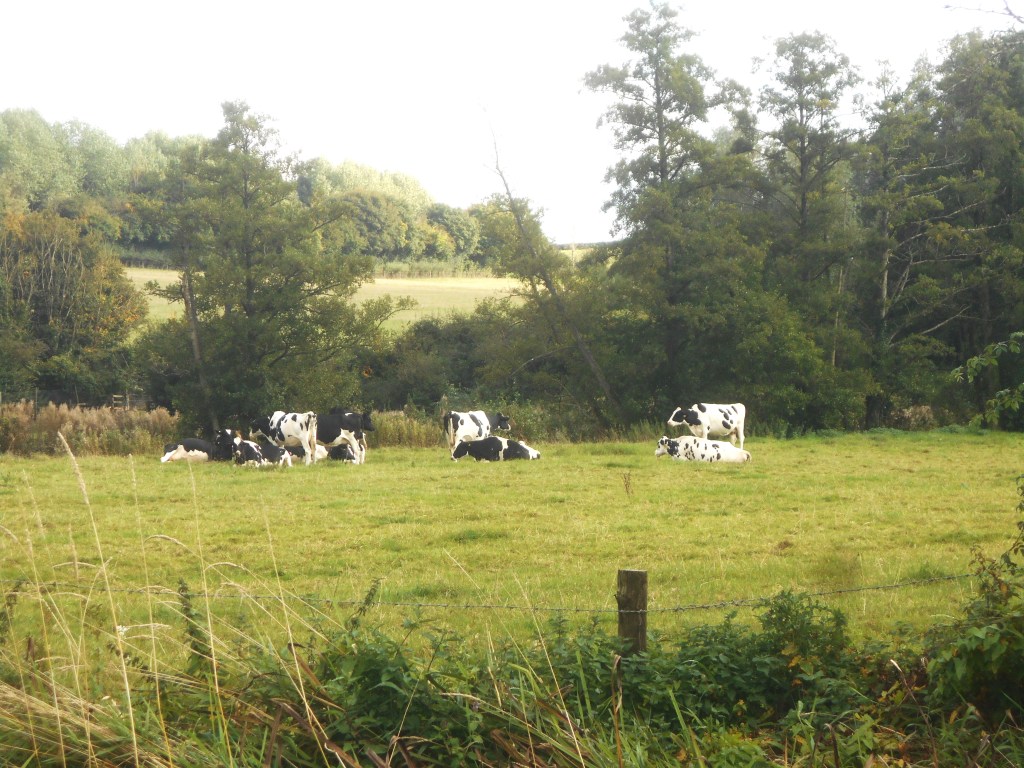
A handful of cattle were in the adjoining field, very docile, and totally ignoring us, unlike early in the season when, just let out of their sheds after the winter sheltering, they are always so curious, following us everwhere and coming far too close for comfort, particularly if they are heiffers with their bull in tow!

One of the several Green Veined White butterflies we spotted – heartening to see them, the summer hasn’t quite passed, a few last hurrahs still to be seen. Bending down to capture a snap of the butterfly, I was very close to the cluster of creeping thistles it was feeding on and noticed for the first time their strong sweet smell – somehow it came as a surprise, not expecting thistles to be scented, especially so strongly. I managed to pick half a dozen sprays (without ripping my fingers to pieces!) to take home and double check; it is said to be a honey scent which was a surprise – it seemed to me to be too heavy and sweet for honey, however, an interesting new discovery to tuck away!
The one excitement of the afternoon was watching a surge of waves, starting near the bank and then moving upriver, very likely to have been caused by a largish creature swimming under water. The river on this stretch had been completely calm with only a very occasional minor ripples caused by flurries of gentle breezes. Given that we had seen fresh Otter spraint only a quarter of a mile upstream a couple of days before, it was very likely to have been an Otter as we haven’t seen any Mink spraint in our area for months and months.
Several dragonflies on the wing, an Emperor, a Common Darter and an unidentified blue dragonfly. A few Jackdaws, a few Tits and we heard a Magpie – pretty underwhelming!
19th September 2024 / Temp: 22 C / Water Level: Med
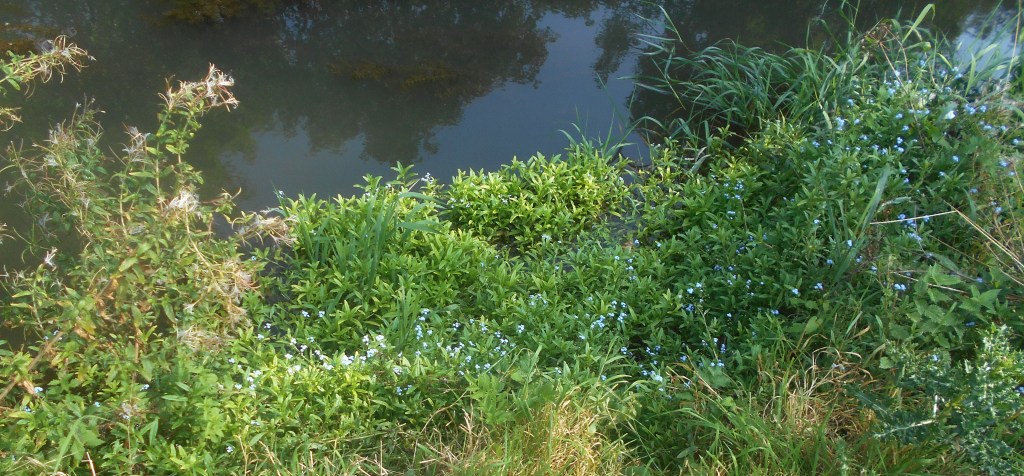
Having felt buoyed up by spotting fresh Otter spraint on the piers of the bridge, we walked the river bank admiring a good crop of water-forget-me-nots at the river’s edge with a spring in our step. It was a gloriously sunny day, hot, feeling like high summer, so we were grateful for the fresh breeze with its suggestion of cooler weather in the offing. We determined to soak up the sun as much as we could because the weather was about to turn. Coming up to the Equinox in three days the forecast was for thunder storms, hail and torrential rain for two days, followed by rain every day until the end of the month!

Despite the hot sun, and autumn only days away, we weren’t surprised to see a goodly crop of fungus scattered over the large log by the gate, looking striking, plentiful and pretty sizeable.
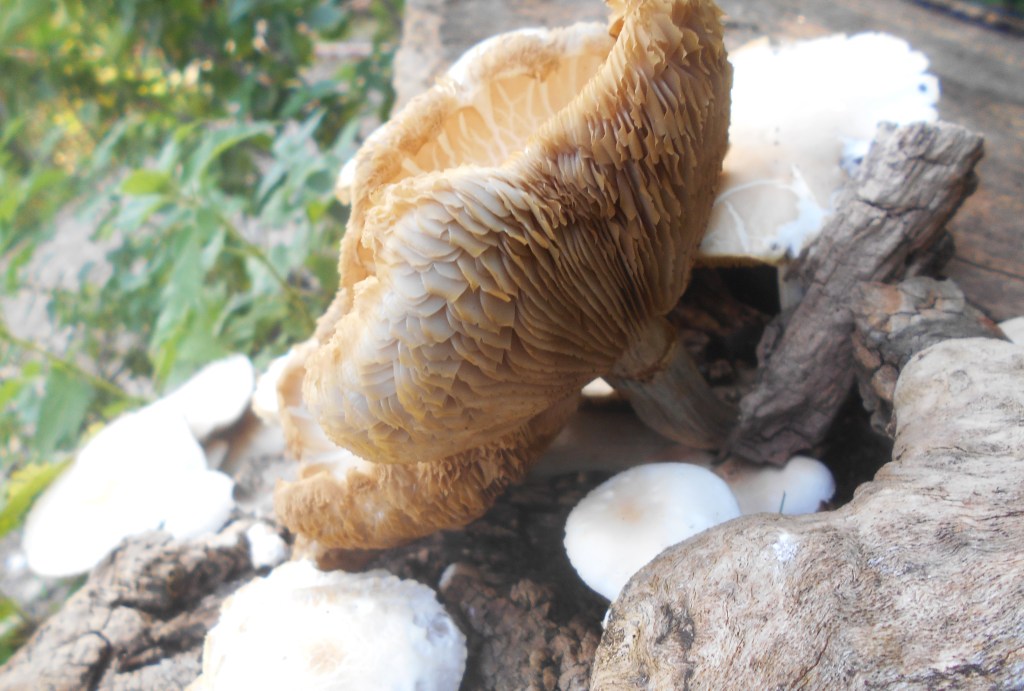
The colouring and shades of the aging mushroom gills clustering around the stem in the photograph above remind me so much of the breast feathers of a bird when they are ruffled and showing the pale, often soft white, inner feathers. The beautiful soft caramel colour outer gills of the mushroom had parted, exposing the lighter tones underneath – looking charming and quite captivating!
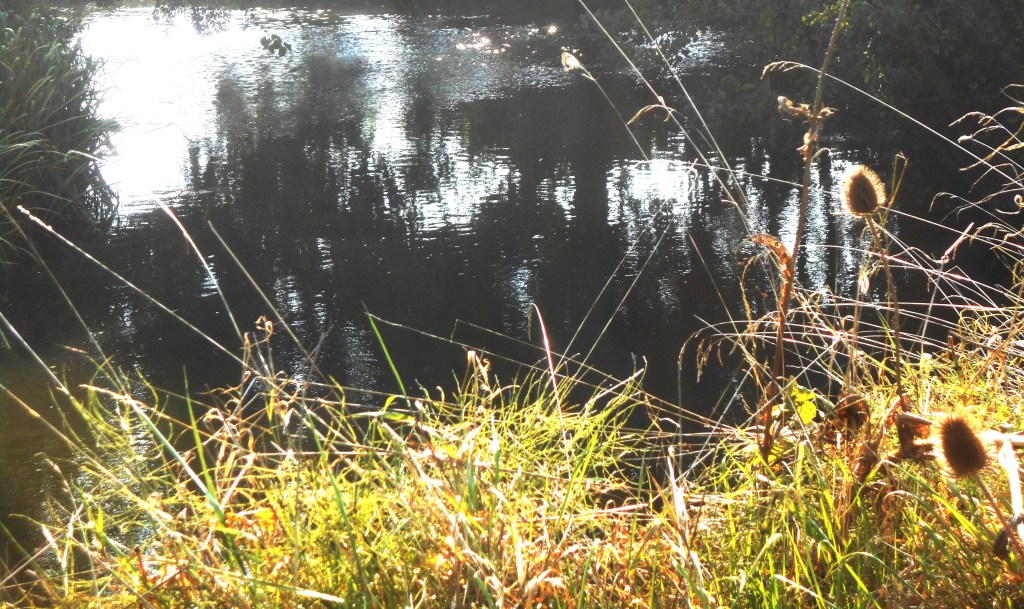
We noticed the absence of the damselflies which we usually see in numbers, particularly when we reached the wide gravel beach where all the riverside plants had been removed. These plants are crucial for riverflies, it’s where the damselflies and dragonflies hunt for the tiny insects on which they live, and the autumn mayflies use on which to alight as they emerge from the river. They need to dry their wings and bodies before flying and looking for a mate. The larvae of some caddisflies also feed on these plants and the fish feed on them!

The problem for the Creamery factory on the opposite bank is how close they built their factory to the river’s edge so that their retaining wall had replaced the original bank. When a full sized tree was swept downstream by last year’s floods, it became wedged tight between the wall and the fully grown mature willow growing on the beach. Inevitably as more large branches, smaller trees and other flood detritus was forced by the current, more and more got caught by this barrier, putting the retaining wall under pressure so the factory were forced to remove it.
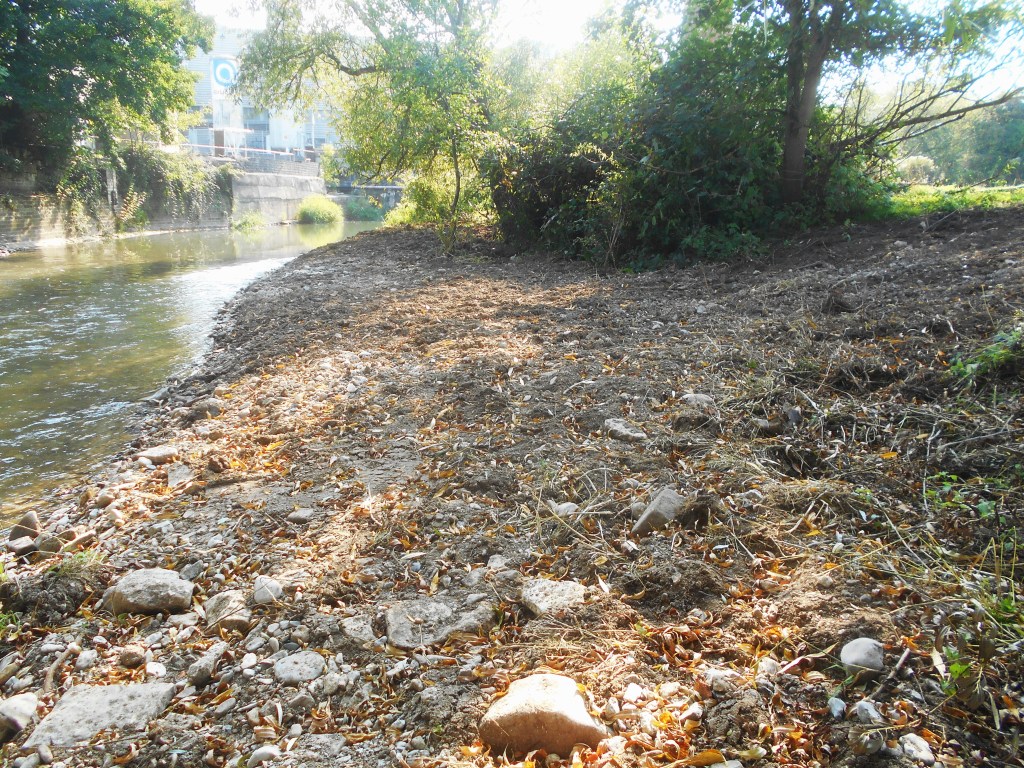
From the tracks across the beach it was evident that heavy machinery had to be brought in to remove and cut up the trees and branches and it appeared that hard core had first been laid on the bed of the river to give purchase to the tracks of the machine.

We don’t know if the water crowfoot plant which was buried by the stone will be able to recover and grow through cracks which might appear with the shifting of the stones by the autumn and winter floods, only time will tell. But it certainly would be a sad loss to the riverflies as this is the only place where there is crowfoot growing to our certain knowledge.
As we walked further along the river back, we suddenly caught a brief glimpse of a Kingfisher as it flew across the river and disappeared into a tree. This is where we have seen Kingfishers perched potionless on a branch before diving and emerging with a fish in its beak. Later we had a better sight of it flashing past downriver, the sun on its back, brilliant turquoise blue, low over the water – surely one of the most beautiful sights that rivers can gift us!
However, there were, sadly, very few other birds in evidence – a couple of Swans, a group of five Jackdaws flying over; we heard one or two Crows and a single Blackbird – pretty poor showing which appears to be reflected by bird numbers in the rest of the country, whatever the habitat. The collapse of insect life this year is reflected in wildlife generally, and bird populations particularly, despite the bushes and trees being loaded with ripe berries.
14th September 2024 / Temp: 19 C / Water Level: Med
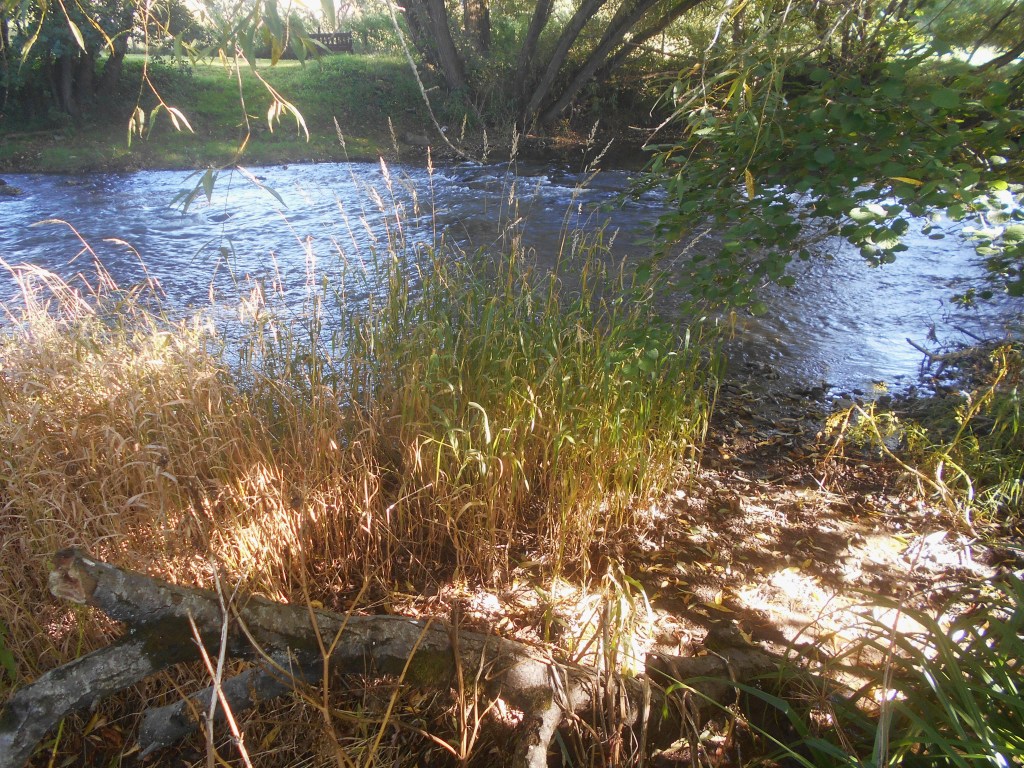
Another gloriously sunny September afternoon walking the river bank checking for signs of Otter, Mink and Beaver olong our survey stretch. No signs of all three which is a disappointment but it’s difficult to feel glum when watching large white butterflies flitting up and down the bramble bushes and finding a few purple loosestrife in flower.
There were craneflies everywhere! In late spring and throughout the summer, every step across the water meadows set up leaping grasshoppers jumping to right and left of us, and for the past week or so it’s craneflies flying up at every footfall!!

So good to see a Common Blue Damselfly sunbathing in the warmth of the sun on the muddy sides of the stream, while we feel the sun on our back and a few insects about, we can kid ourselves that summer is still lingering…

Spotting a Common Darter was also a cheerful sight, although they can be seen as late at December, they are still redolent of summer days.

A wasps’ nest in a hole in the stream bank, with a constant stream of wasps flying in and out – so many but with the abundance of juicy, sugar filled autumn fruits like blackberry and guelder rose along the hedgerows lining the field edges, they won’t go hungry.
A Heron appeared and flew low across the field downstream and a pair of Buzzards circled and circled high in the sky.

A handful of Jackdaws suddenly appeared, cackling as they fly over, followed almost immediately afterwards by a Red Kite which is almost certainly what disturbed them. Circling, head was bent, he looked to be checking the trees along the river, but after a few circuits he flew off, disappointed. Like the Buzzards (and us!) he also couldn’t spot any small birds around.
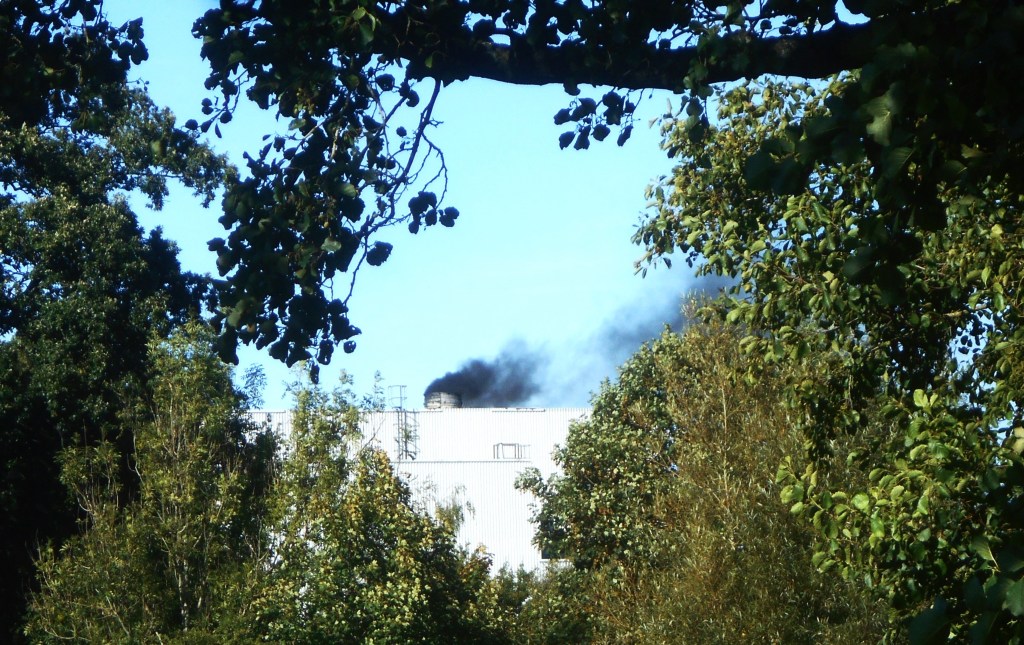
Dramatic, heavy black smoke began pouring out of the Arla milk processing plant downriver. We watched it for some time but there were no signs or sounds of fire engines so we assumed that whatever process produced the smoke must be common practice.
18th August 2024 / Temp: 18 C / Water Level: Low

Ha! Was it only five days ago, full of gloom and doom comments filled the blog – no sign of Otters and no sign of Dippers for months and months and then….. arriving at the first of our survey sites there in the riffle of the river below us a Dipper! Unfortunately it caught sight of us and flew off, so we began searching the exposed stones due to the low water level without success and then we spotted fresh Otter spraint, anal jelly and signal crayfish remains on the pier under the bridge! Not one but all three classic signs and confirmation that Otter has also returned to our survey stretch of the river. Such relief, such excitement, the wanderers have returned!

The water meadows and the river were quiet, the strong breeze tossing the branches of the trees may have accounted for the lack of other bird life, a small flock of Jackdaws flying over, a few Wood Pigeons were all we saw. There were quite a good showing of bees though, mostly on the teasels, and thistles, but a few on the gypsywort, water mint, purple loosestrife, ragwort, great willowherb, water forget-me-not and meadowsweet as well.

All of these plants were almost filling the leat, the lower channel drainage ditch which was part of the ancient Catchwork system. This was designed to flood the water meadows, protect the pasture from ice as well as warming the soil to encourage early spring grass for the cattle.
We spotted a wasp nest in the earth on the edge of the leat, probably a disused bank vole or mouse burrow; at this time of the year there were so many wasps visiting and leaving the nest, they formed a constant stream. We noticed quite a few of them collecting mud from the shallow edges of the stream but they looked to be common yellow jackets (Vespula vulgaris) not potter wasps and we have been unable to find out why they were doing this.

We saw several shield bugs and a dock bug but, by far the most striking of the species was the collection of three separate clusters of Parent Bugs (Elasmucha grisea) with their final instar nymphs clinging to the leaves of an Alder tree on the banks of the leat. The strong breeze was tossing the leaves about but it didn’t appear to disturb the Parent Bug or her offspring. This species overwinters as an adult, emerging and mating in the spring. The smaller male dies soon after, but the female survives for some time, brooding the eggs and young larvae, which feed on Birch and Alder. New adults may be found from August onwards.
13th August 2024 / Temp: 19 C / Water Level: Med. Low

Sunny periods with a brisk breeze along the river, little sign of life, no spraint, anal jelly, pad marks, crayfish remains, nothing to show that Otter had ever visited this beach which some months ago was one of our surest Otter survey sites. No bird life beyond the cackle of passing Jackdaws, a few Wood Pigeons, but less than can be seen on an average day in the town and one Crow.
Rather concerning to see so little life as we walked through a large field, pasture for a flock of sheep who rose at our approach and galloped over to the boundary hedge. We know this field is neither sprayed with pesticides or fertiliser and apart from the boundary hedge, the trees lining the river bank and the roofs of the farmhouse just visible above the trees, it should be the perfect countryside habitat for a number of insects.
We spotted a couple of Small White butterflies, one Speckled Wood and three or more Gatekeeper butterflies, a sprinkling (10 or so) of bumblebees feeding on the comfrey and thistles in the wild garden, a couple of 7 spot ladybirds but even the damselfly numbers appear to have dropped although perhaps not so surprisingly as it’s coming to towards the end of the season, but all together a pretty disappointing morning as we sat on our fishing stools and stared glumly at the river which “just keeps rollin’ along”
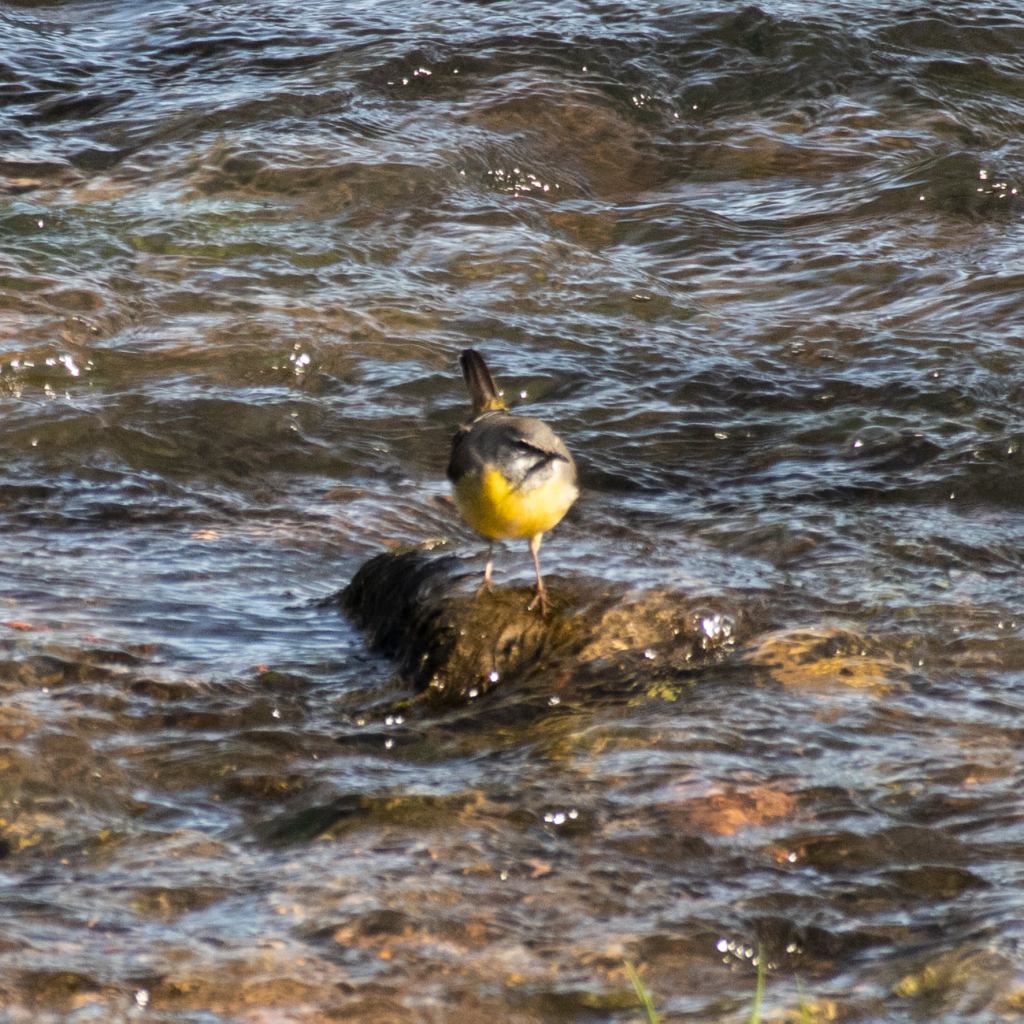
Imagine our delight when a Grey Wagtail flew around the bend of the river and alighted on a old bare branch of the tree immediately opposite us. He turned this way and that, displaying his beautiful colouring from every angle whilst looking up and down the river and then oh joy and joy… it’s mate flew down onto the exposed stones at the edge of the beach and began hunting amongst the stones! The male flew downriver almost immediately but the female hunted for some time giving us a great opportunity to watch her at close quarters.
The extreme rainfall and storms of the past autumn, spring and summer plus the attendant flooding, meant we hadn’t seen any Dippers or Grey Wagtails on any of our sites since last summer, so we were thrilled to see not just one Grey Wagtail but a pair!
This stretch of the river is perfect for both these species and the area where in the past we have been most likely to see Dippers in the shallow riffles over the exposed stones in the river bed. There is a Kingfisher nest in the bank nearby so by next summer we look forward to watching both species nesting and producing young.
We suddenly heard a Wren burst out into full song from a nearby tree and across the river spotted the “local” Little Egret flying off down the nearby mill leat, it white feathers highlighted by the sunshine against the overhanging green foliage and tall feathered grasses along the bank and a Buzzard circling and mewing overhead and out of nowhere the Dragonfly we had spotted earlier high up in the trees, too far away to identify, appeared obligingly in front of us, hunting the riverside plants on the opposite bank. It was as we had surmised, our most common dragonfly along these waters, the Emperor. There is life – you just have to be patient and stand (or sit) and stare!

Scrambling back up the bank from the river, we caught sight of a plant unknown to me but which my husband recognised as a Shepherd’s Rod (more commonly known as Small Teasel). This is a first sighting of this plant anywhere along our complete survey stretch so a great find. They are a biennial plant which usually appears in disturbed ground, usually calcareous soil, in damp woods or beside rivers.

As the water level drops in the summer months, both the line of the Roman Ford becomes clearly apparent, and occasionally as long as there is no rain to muddy the water, the actual stones of the ford become visible.
It has been excavated in the past and the Roman Road leading to and from the ford have been established, however as has been mooted in other parts of the country, it is unlikely in lots of instances that the Romans instigated new roads, simply made use of existing tracks which on their arrival in these islands had been used from time immemorial. Fords were sometimes paved in the Roman period simply to aid the crossing of pedestrians, horses and carts.
9th August 2024 / Temp: 21.5 C / Water Level: Med

None of the far too many photographs I have taken over the years have adequately managed to capture the magnificence of the line of White Poplars standing guard over the entrance to the water meadows, however, they are so lovely they need to be marked and remembered, particularly in the long dark gloomy days of autumn and winter looming towards us when blue skies and fluttering poplars seem like a fantasy.
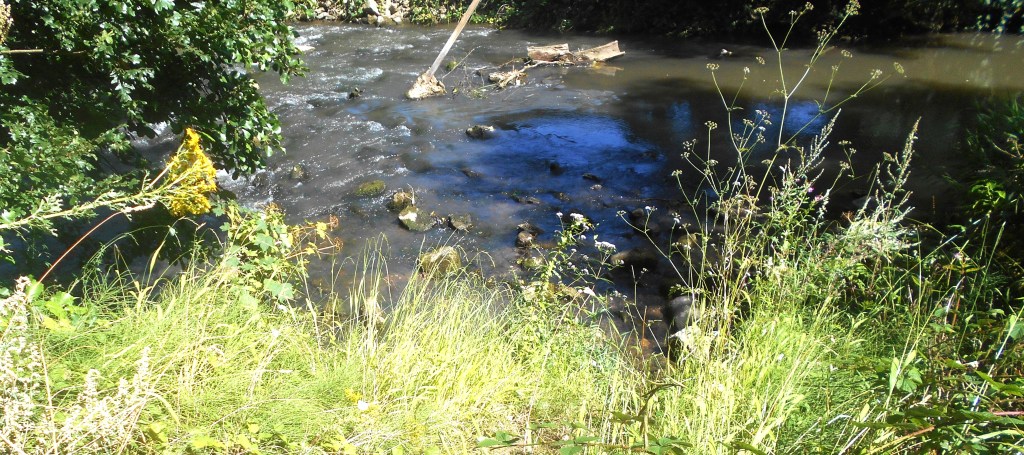
Sadly no sign of Otter at any of our sites along the river, the longest period we have ever experienced during the seven years we have been surveying this line of river bank. As there are many sightings elsewhere it seems that they have simply abandoned this stretch for better pickings, who knows they may return, we will have to wait and see.
The river has endured a turbulant autumn, winter and spring, with constant rain causing frequent floods, fallen trees and debris in the water (surprisingly even now with what appears to be a block of concrete with a metal post) interrupting and sometimes blocking the flow which may have had a knock on and detrimental effect on the life of the river, making food scarce for the Otters.

It was good to see a few butterflies at our first site, a Gatekeeper, one Meadow Brown and a couple of whites – unfortunately too far away to identify, but given the derth of butterflies anywhere this summer, it was a relief to see these.
Another very positive sign was when chatting to one of the anglers who had been fishing along the river today, was when he told us that although his fish count overall was disappointing, he did manage catch a four foot eel, a really heartening piece of news! Eel numbers are falling in most parts of the country but there have been intermittent but constant confirmed sightings along the river here. The presence of eels tends to confirm a fairly reasonable state of health of the water, surprising perhaps given his noticing a turgid looking stream from a private house’s sewage outflow on the opposite bank and the added effluent from the sewage treatment works’ overflow caused in part by the constant rainfall over the past nine months.

The Saracens Woundwort, as always, attracts the most hoverflies and bees. Like the Himalayan Balsam it is another invasive non-native plant but does not seem to attract the opprobrium of the former plant.

It makes such a wonderfully strong splash of colour with its egg yolk yellow blooms and often flowers on until well into the autumn. It is also a riverside plant, but maybe not quite so prolific as the Himalayan Balsam which is certainly difficult to control, often despite the best efforts of the Environment Agency and Angler Associations and many other bodies, as personified by a broad swathe of the plants in full flower, giving all the appearance of thriving on the opposite bank of the river.
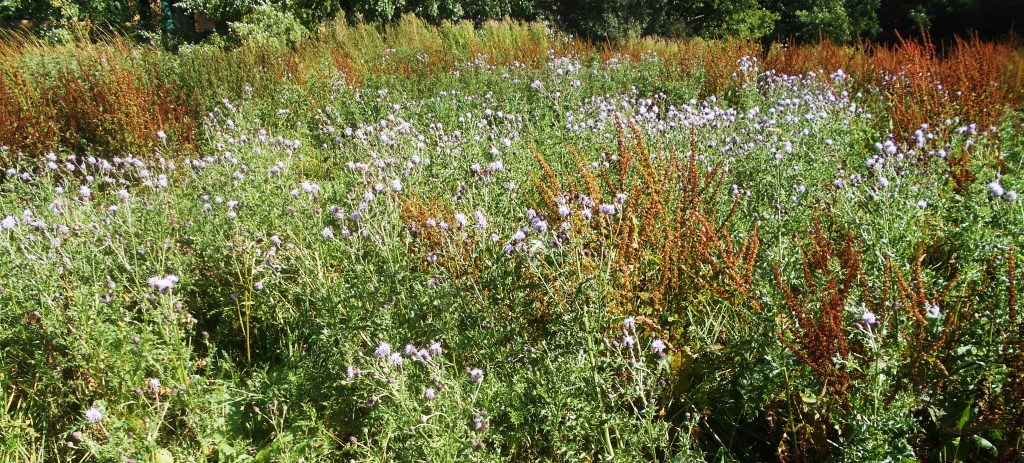
We are often struck how, as the seasons change, the colours change, this is the yellow and purple season, and the plants change, one field or part of a field, will be dominated by one or two plants, like the photograph above. The centre of one pasture is smothered in creeping thistle – alive with grasshoppers! – and docks (now in seed) or a stretch of bank will be filled by one plant, like the himalayan balsam or the saracens woundwort, drifts of cow parsley, hogweed, purple loosestrife or the water dropworts which take such a hold on the bank that they appear to prevent most other plants from growing. These beds of single species create the impression that a garden designer has carefully selected and planted the beds to display them to their best advantage, and not a random force of nature.

We turned a few stones at the river’s edge and noted that all the caddis retreats and caddis cases we found glued to the stones were empty, the larvae which built them having abandoned them once they pupated. Some of these cases are said to remain attached to the stones for as long as 60 days, so strong is the silk glue which the larvae produce. Such amazing creatures.
It was noticeable how few birds there were, apart from a few Wood Pigeons, a solitary Magpie, some passing Gulls and a single Kingfisher spotted by an Angler flying downstream.
However, there were so many damselflies along the water’s edge on this stretch above the weir, where there was a large bed of water forget-me-nots and other plants, and more further along, at an area close by where the bank had eroded and left an overhang where I was standing so unable to see what was attracting them. They were almost exclusively Banded Demoiselles which are the dominant species in this river, their glorious vivid blue bodies flashing in the bright sunlight – but so many it’s difficult to keep count, as there were more and more everywhere down the bank, continuously hunting, with barely a pause.

It was with some trepidation we approached the wide, gravel beach along the river, this wonderful jungle of plants alive in the summer with dragonflies (including the Scarce Chaser) and damselfies, butterflies and in spring with mayflies (including the beautiful Yellow May). Our fears proved justified – not one of the summer plants which support both riverflies and butterflies remained. “Control of marginal vegetation is often necessary for anglers. If continuous stretches of marginal vegetation are cut this destroys much dragonfly habitat. Therefore, angling societies should be urged to restrict cutting to fishing points” is a point well made by the British Dragonfly Society, so it is dismaying to see the entire destruction of their habitat. We watched a couple of Banded Demoiselles flying up and down the brambles on the opposite bank, looking for the tiny insects on which they survive without success, in stark contrast to the large numbers we usually see along this beach and had seen earlier in our walk along the river bank.
Trout feed primarily on invertebrates that live in the river, or drop on to the water from trees and plants on the banks. Some favourite trout food includes the freshwater shrimp, and the larvae of mayflies, caddis flies, damselflies and dragonflies, all of which rely on the bankside plants so it seems bewildering to see the destruction and disappearance of Hemlock Water Dropwort, Cow Parsley, Hogweed, Common Reeds, Purple Loosestrife, Thistles, tall shoulder high grasses, Herb Robert, Meadow Cranesbill, Hedge Mustard, Red Campion, and Water Forget-me-not and Brook Lime from along the water’s edge.
29th June 2024 / Temp: 22 C / Water Level: Med
Beautiful blue skies, beautiful sunshine – glorious afternoon! But the same story – barely any birds or insects. A few Tits along the boundary hedge, a Blackbird, a Little Egret rising languidly from the water as we arrived at the river bank and we heard a Moorhen sounding a warning note – really scary lack of birds this summer. Lots of honey bees, a few Buff-tailed bumblebees, but virtually no other insects to speak of, apart of course from the river invertebrates whose numbers might be a little down, but not noticeably so.
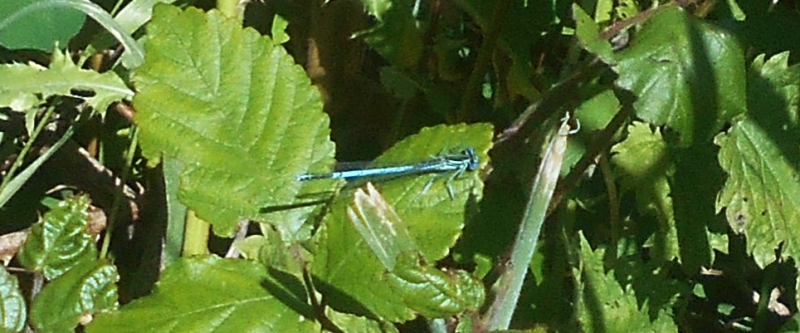
We had come to the river in the hope of seeing a few Red-eyed damselflies, usually to be spotted at this time of the year, perched patiently on the native Yellow Water lily pads waiting for a passing female, but we were unable to see any.

lutea)
There were a good number of other species including the White-legged Damselfly illustrated above (who have a strong preference for Yellow Water lily in which to insert their eggs). It took me some time to identify as the colours seemed completely wrong to the ones we usually see. However, it was confirmed by one of the experts on iSpot, which is such a valuable resource in cases like this. This used to be an uncommon damselfly, even in its natural habitat of slow flowing lowland rivers like this one, but numbers have increased and it is not currently a species of conservation concern.
The Yellow Water lilies looked beautiful, their golden yellow petals glowing in the bright sunlight – such a joy to see them, even though there were fewer blooms than usual.

Lots of Banded and Beautiful Demoiselles as always on our river, none obliging enough to pose for my camera, and several Blue-tailed Damselflies, like the one above. Just the usual two Dragonflies, an Emperor and a Broad Hawker, flying fast, hunting non-stop over the water or the reeds, impossible to capture even a blurred image.
No signs of Otter at any of the three sites, a really dry period this year, a total contrast to the same time last year. Apart from a few sightings of spraint in February and April we have seen no sign of them. They call them the Wanderers as they constantly move territory to where the best fishing is to be found so there is no cause for concern – lots of sightings on other survey sites upstream, but sad that we have hit a barren patch.

Surveys completed it was good to take a break – so lovely sitting on the river bank, wonderfully peaceful, under the shade of a clump of alder trees, looking out over the meadow, no anglers today, sometimes we caught the faint sound of traffic wafting towards us on the breeze, or the occasional voices of golfers across the fields but mostly blessedly quiet. A slight breeze moving the leaves of the trees which broke up the reflections of the splashes of sunlight in the river, fish rising, their ever expanding rings or dimples announcing their presence and, at last, the cheerful sound of a Chiff Chaff singing lustily from across the river, the sound of summer!

A crowd of ten or more young people arrived, lifted their bicycles over the style, cycled across the meadow, shouting across to each other, throwing their cycles down, stripping and leaping into the river with shouts of shock at the cold, jumping off the bridge, arms in the air, yelling with triumph …….. possible explanation why the Otters and the water birds have moved on elsewhere …..time to leave.
28th June 2024 / Temp: / Water Level:
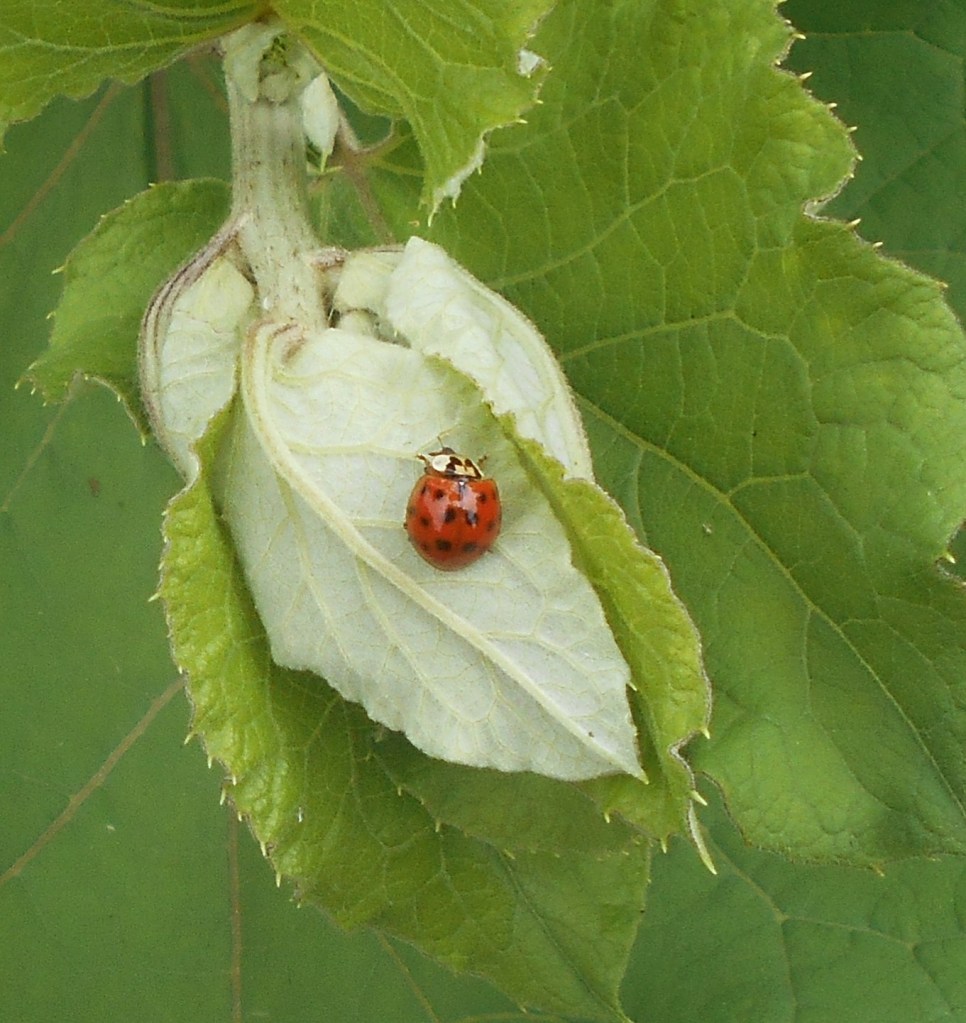
20th June 2024 / Temp: 18 C / Water Level: Med
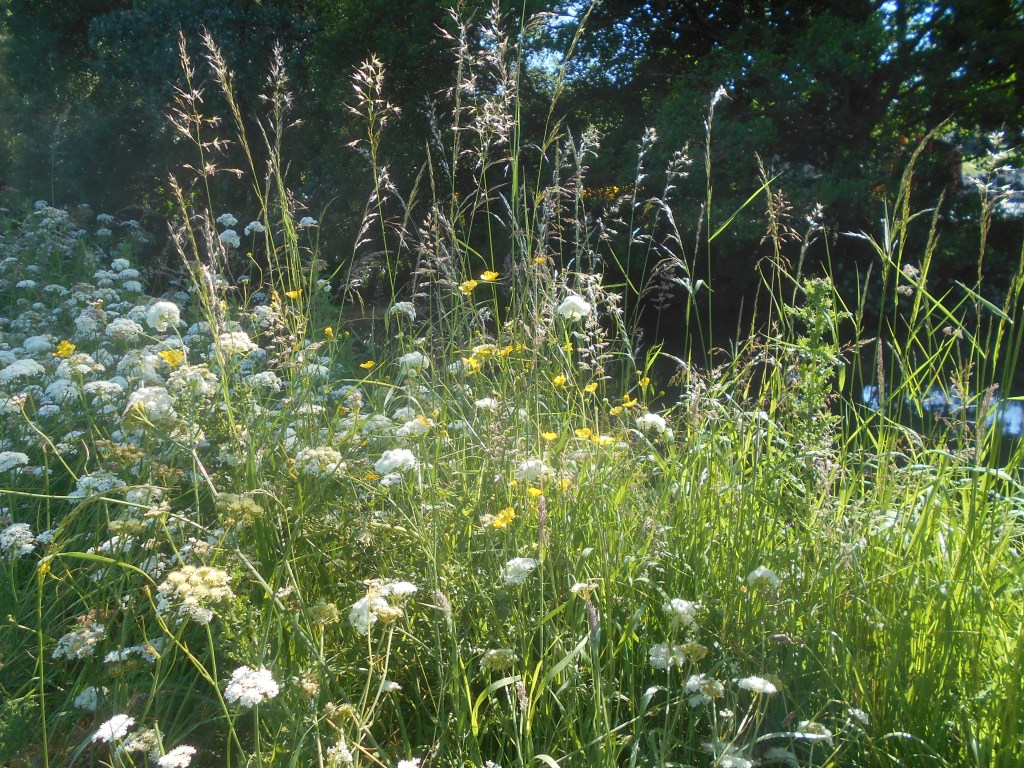
Every year we wait for this stunning display, noting the first flower buds showing their mauve-pink haze, through the partial openings, oh so slow as the days edge into weeks and hoping for this – the full bloom on a sunny day showing them at their best – a magical sight for a few short precious days!

A plant of hay meadows, particularly grazed, often in lowland areas so this river meadow is a perfect habitat as is noteable by the profusion of plants thriving along a wide margin of river bank almost the whole length of the meadow.
But here’s the thing. In this explosion of blossom as we walked the length slowly, examining almost every bloom, we saw a couple of honey bees, one hoverfly and a single alder leaf beetle. That was the total sighting of insects, which was barely added to as we walked through the meadows. Midges above the river, damselflies on the river and on the riverside plants, a single dragonfly but where are the beetles, hoverflies, wasps, wild bees, butterflies and moths which we usually see? The paucity and barreness of any signs of living life (apart from the riverflies) is truly terrifying and unsettling as is the concomitant lack of bird life.
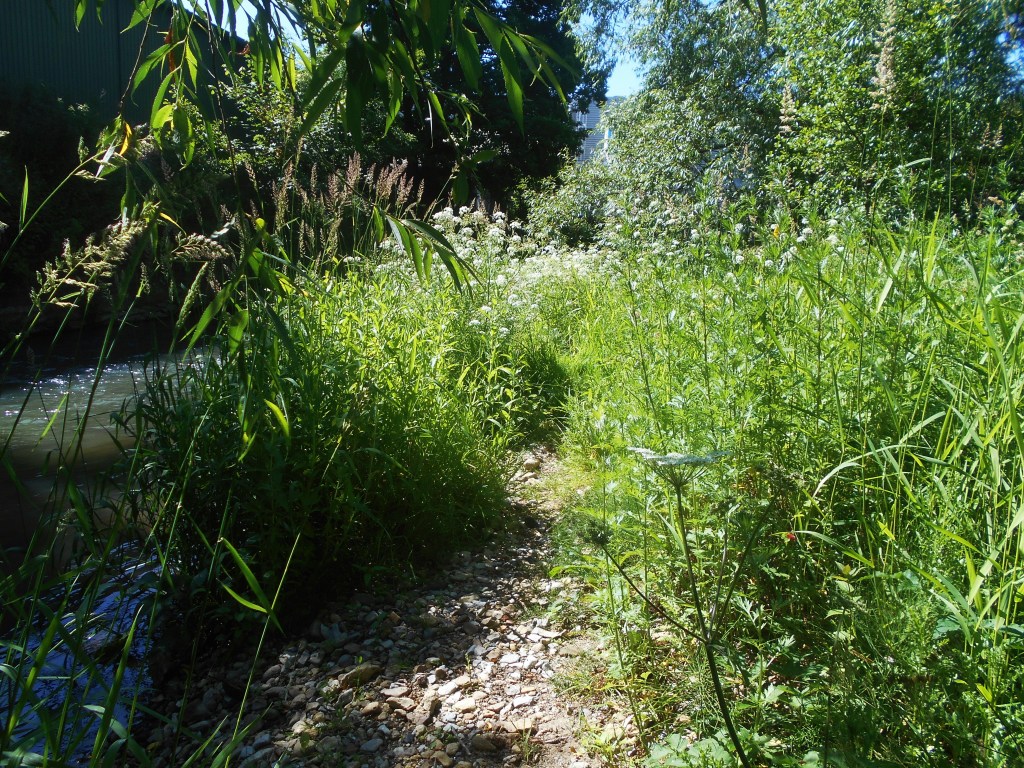
We clambered down onto gravel beach which, as you can see, is carpeted with stones, pebbles, grit, broken freshwater mussel shells from the tiny pea mussels to the grey duck mussels, washed smooth by the river….. except in high summer when there is an explosion of herbage, the plants forming a thick impassable jungle of plants, five feet or more high creating a wild garden.

Although the Hemlock Water Dropwort and the other umbelifers like Cow Parsley, followed by Giant Hogweed, tends to dominate the beach, edging up close to the river and challenging the line of Common Reeds, there are always plenty of Purple Loosestrife, purple Thistles, a variety of grasses, Herb Robert, Meadow Cranesbill, Hedge Mustard, Red Campion, and Water Forget-me-not and Brook Lime on the water’s edge.

These plants are always alive with damselflies particularly but usually one or two dragonflies, butterflies, bees and hoverflies, while the clumps of stinging nettles are usually writhing at this time of the year with the hairy, black caterpillars of the Peacock Butterfly.
20th May 2024 / Temp : 20 C / Water Level: Med-High

It’s still May, it’s still buttercups filling the sheep pasture – barely a hairs breadth between each stem, and mayflies! And what Mayflies – as we walked along the river the number of damselflies fell and the number of mayflies rising out of the water increased. The afternoon moved on, the temperature rose, the mayflies increased and then the highlight of May – the Hatch!!

Hundreds and hundreds of male spinners, each Mayfly fluttering its way up to the sky and gently floating down in a graceful performance where males seek out females, rising and falling, rising and falling in a mesmerising mating dance. They seem to prefer to perform under or beside trees, we didn’t see any mating columns on the stretches of treeless bank.
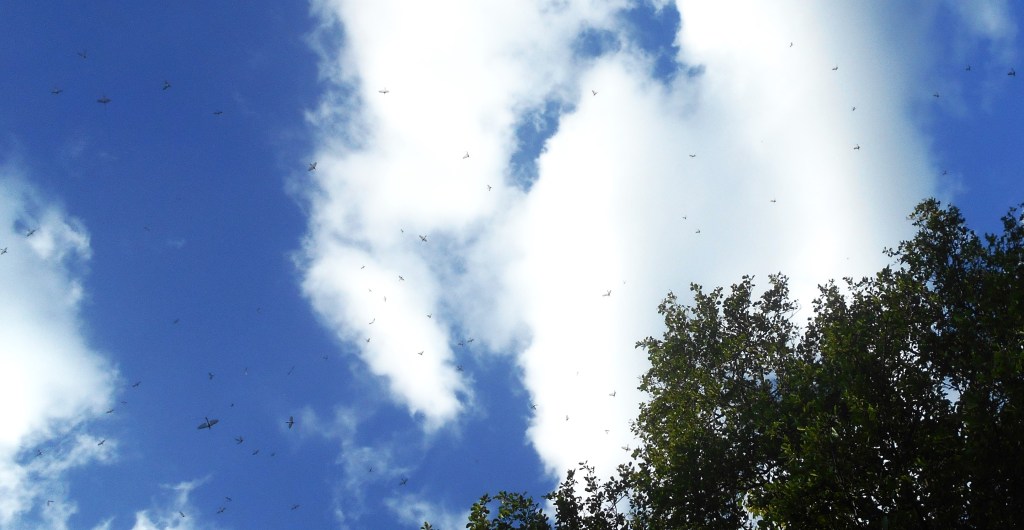
It’s so difficult for a photograph to adequately convey the experience of walking through a mass of Mayflies, a laughing delight bordering on exhiliration, knowing that this singular moment of the year is so brief – more like the childlike joy of walking through the first gentle snow flakes of winter, a feeling remembered and recalled often to bring comfort in the long reaches of a sleepless night.

When they first emerge, the imago flutter up to look for somewhere to settle and dry off and a favourite on this stretch of the river are the tall comfrey plants, self-seeded en masse in the wild garden. Dozens of them cluster on one plant, clinging in line, like bats across a cave.
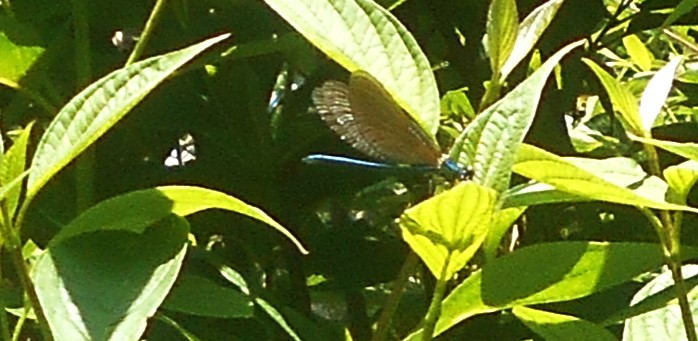
So many damselflies hunting along the river among the reeds and waterside plants but one or two obligingly settled on a shrub – including this female Demoiselle, another jewel in the necklace of delights along a lowland river in May.
15th May 2024 / Temp: 19C / Water Level: Med-High

Mayflies and Buttercups – what encapsulates a beautiful morning in May more! The colour of both, the sunny, golden sun coloured flowers and the delicate yellow and brown of the insects shouts hot days, green meadows, newly greened trees, that gorgeous mint green of the leaves before they darken as the season moves on, a splashing river, sparkling in the sunlight and the sound of birdsong filling the air “Oh to be alive at such a moment…” on such a day!

The first image of the mayfly (probably Green Drake, Ephemera danica) is a dun newly emerged from the river, it’s pale yellow wings a sign that its true colours have not yet formed…
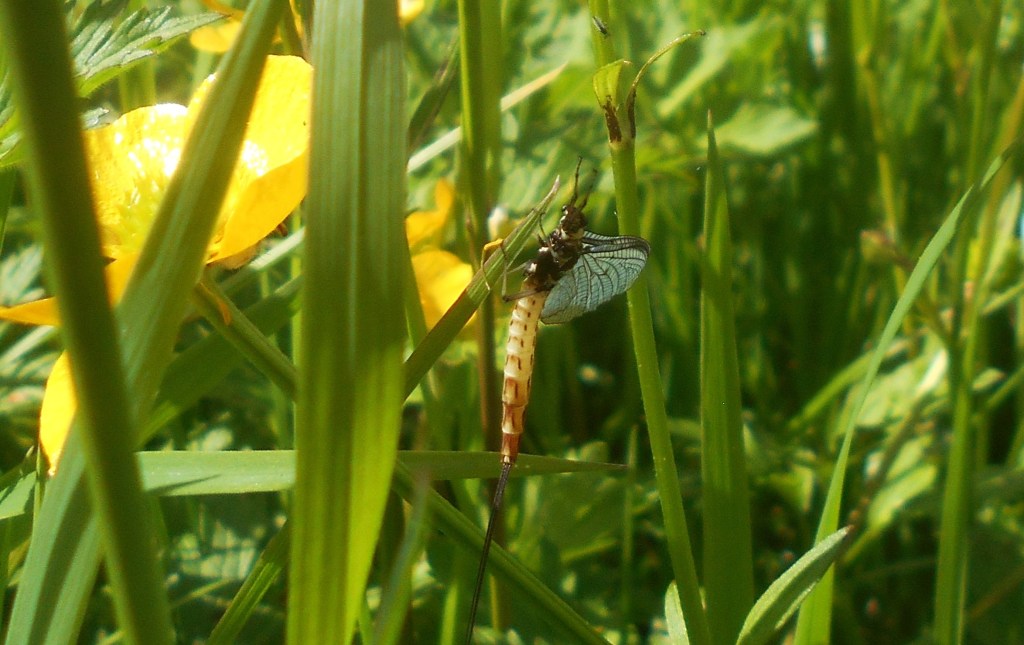
The second and third photographs are the spinners, their wings transluscent and with their veins making them appear almost black.
8th May 2024
Very sad report published today by the Cardiff University Otter Project about the results of a portmortem on a heavily pregnant Otter. If you have any suggestions of the identify of the object, please contact them on otters@cardiff.ac.uk
7th May 2024 / Temp: 19 C / Water Level : Med

Our first sighting of a damselfly this season – later than we have seen them previously but although we’ve had a mild winter, and above average temperatures in April, the weather so far this month has been very wet and chilly so perhaps not surprising.
We hoped to see a few mayflies but no show however, the lack was more than compensated by seeing four Little Egrets together at one of our sites! So pleasing, when the numbers dropped a few years ago, we have been lucky to see one or two. We also spotted two Cormorants on their favourite tree and one more flying over and then the toast of the day – a female Goosander with five young.
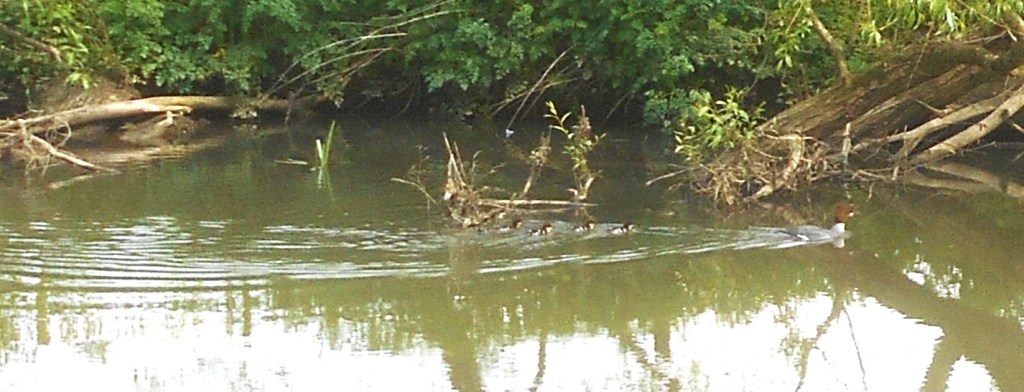
Sadly a very inadequate photograph but she had been skulking in the vegetation and I only caught sight of her when she was making her way at top speed upstream.
25th April 2024 / Temp: 8.5-11C / Water Level: Med

Chilly morning, which felt more like February than April and we felt for the poor solitary Mayfly, hatched far too early and, although alive, was obviously extremely weak in the cold north-easterly wind with no chance of mating. It’s the first time we have ever seen one so early in the year, most years the earliest sightings are around the 10th of May.

However, the sheep field was lush with long grass and carpeted with Meadow Buttercups and Meadow Foxtails so when the animals arrive they will have a feast! The loud and penetrating song of the male Chaffinches followed us along the first two Otter sites, from hedgerows thickets and blossom loaded Apple trees, hoping to attract a female. They out-competed the Blackbirds whose beautiful song was lost in the cacophony, although at least the Wrens managed better to be heard, astonishingly loud for such a tiny bird!

A very brief splash of sunshine warmed the river and bank and highlighted both sets of recent Otter spraint at either end of the beach – orange-red with signal crayfish remains, which will remain their diet for the rest of the year until winter sets in. A huge relief, the first sightings since September last year – not surprising given the relentless rain and floods of this winter past when the beaches were continuously under water.
21st April 2024 / Temp: 11 C / Water Level: Med

Good to see the Jackdaw perched on the highest branch enjoying the warm sunshine despite the chill wind, one of several we heard with their unmistakeable and familiar hard ‘tchack, tchak’ call – so few birds appeared to be around apart from Wood Pigeons and Crows, although the muddy beach left after the floods receeded were a maze of bird tracks, so they have been about possibly in the very early morning. Roe deer and small mammal tracks were also clearly visible as well as dog.

When we reached the small stream we found the banks lined with clumps of beautiful glossy-leaved Marsh-marigold – or Kingcup plants, their open flowers glowing golden yellow in the sunlight and here by the hedgerow we began to hear Wrens, Robins and in the distance the faint but unmistakeable drumming of the Great Spotted Woodpecker.

All across the meadow we came across the first small clumps of Lady’s- smock (or Cuckoo Flower) which love damp places like wet meadows and a favourite with Orange-tip butterflies, one of which we spotted but too fast to photograph but so lovely to see – our first of the season. The flowers are thought to coincide with the arrival of the first Cuckoo – a sure sign that spring has arrived at last!
Lots of hoverflies among the masses of dandelions in full flower, most ignoring the cow parsley, garlic mustard, white deadnettles, buttercups and daisies, a few honey bees and one or two Buff-tailed bumblebees – again on the dandelions and of course, as always, masses of yellow dung flies – a clear signal of cow pastures.
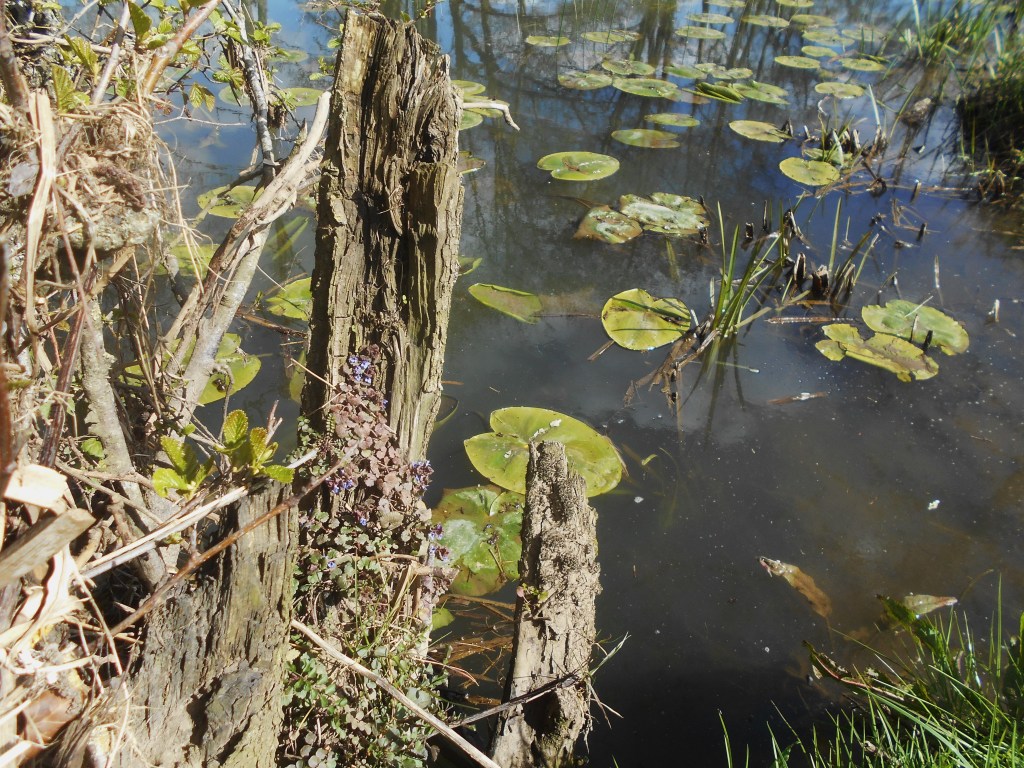
The native Yellow Water-lily pads which have been dormant all winter, having died off in the autumn have started to grow now the temperature is rising and above we spotted Ground-ivy decorating the remains of a dead tree on the river bank. It’s a strongly scented plant, smelling of blackcurrants, whose aromatic leaves were once used as a popular bittering agent for beer until eventually replaced by Hops.
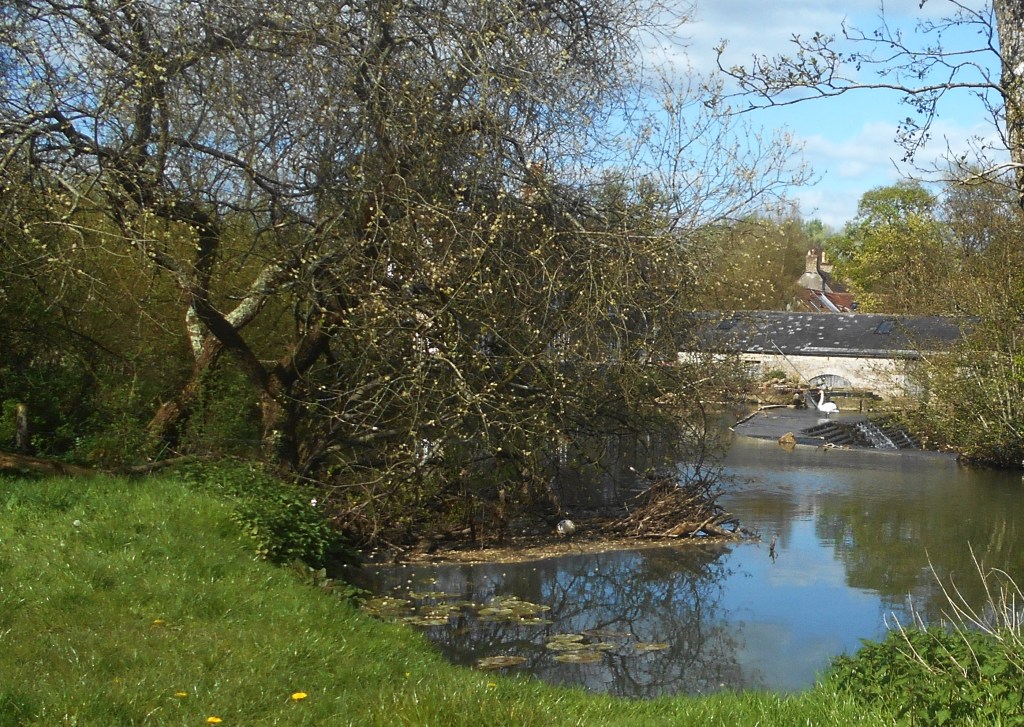
Finally, we at last spotted some water birds – a male Swan preening itself on the top of the weir – the water shallow and barely a trickle compared with the thunderous sound of the river in spate during the floods. No sign of his mate, but if she was on her nest close by, she would have made sure it was well hidden.
As we perched on our fishermen’s small folding stools for a rest whilst enjoying the warmth of the sun, we watched a mass of bees flying around and settling on the yellow pollen covered willow catkins, enjoying a good feast, and suddenly noticed a Mallard drake and duck on the step just below the top of the weir – their heads occasionally visible. Both species as well as the resident Mandarin produced good broods last year so we look forward to seeing how they manage this year.
No sign of Otter at any of the sites – another blank. However, we did meet one of the members of the Frome & District Anglers Association who reported seeing recent spraint on the wall of the much larger weir further upstream which wasn’t there when we surveyed the area a week ago, so all is not lost! The Otter are still around, but perhaps not staying in one place but hunting up and down its territory.

Finally, I stood in the warm sunshine and just looked. At the water meadow in front of me carpeted with buttercups and daisies, the tree-lined river running through the foot of the valley, at the small pools remaining months after the winter floods, and the blue sky and floating clouds.
Away from the sound of the weir, the bleating calls of the new lambs in the adjoining field were much clearer, as was the sound of a Blackbird singing in the hedge and hoofbeats of a horse clicking along the road, the buzz of a bumblebee close by. The serenity of the moment, tranquil and calm, restful and still, filled me with such a rush of gratitude for these sounds, this place, this time when it felt so very good just to be alive.
12th April 2024 / Temp: 13 C / Water Level: Med

Spring is definitely here with garlic mustard, celandines, wild garlic, forget-me-nots and bluebells in flower, a Peacock butterfly fluttering along the Blackthorn hedge looking stunning in its freshly emerged colouring and a Wren and Robin singing loudly from the beautiful horse chestnut tree in full spring greenleaf. Sadly, no pad marks, spraint or any other signs of Otter at all.
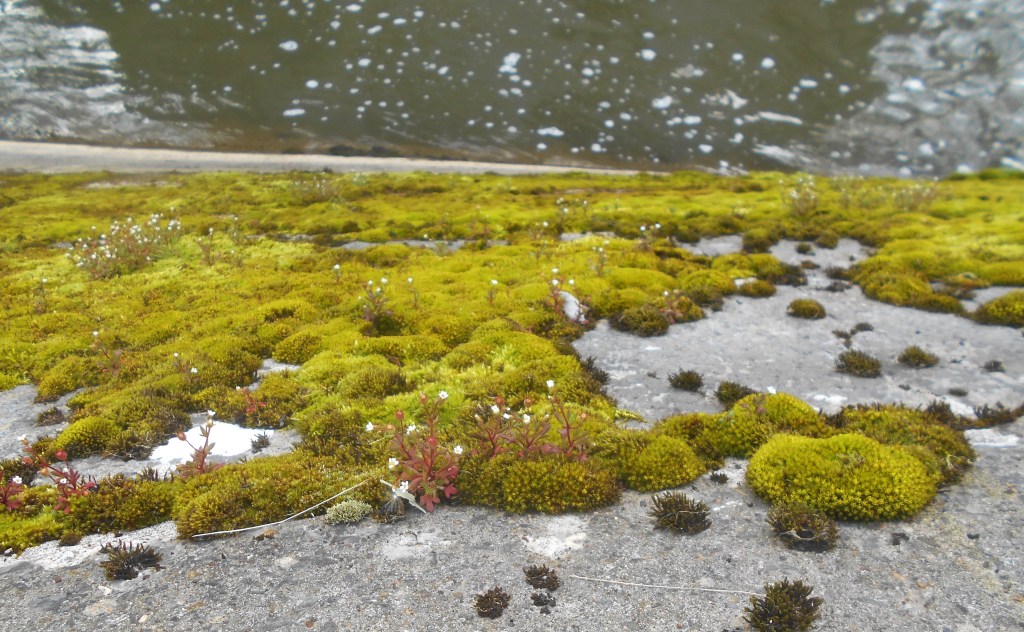
The limestone bank below the weir is home to a variety of wall plants including the Rue-leaved Saxifrage with its reddish stems and leaves. The stems are sticky-hairy, the basal leaves three-lobed and curved over at the edges. Scattered across the sloping bank they make a colourful contrast growing in amongst the vivid green moss.

Still no sign of Otter at this our third site on the wide stony beach which is still showing signs of the floods of the past months with lots of strewn detritus and the river still blocked by fallen trees.

The sun was warm on the beach, protected from the blustery chill wind, so we decided to sit and rest in the sun, glad of the warmth after weeks of incessant rain. We were soon joined by a Comma butterfly, hunting across the bare sand and water-washed stones until it found the single dandelion in flower, where it settled to feed on its nectar. We listened to the beautiful notes of a Blackbird, yet another Wren giving voice, a couple of Wood Pigeons cooing, as we watched a Buzzard circling overhead and two drake Mallard, the only water birds, which flew up from the river.

With little to see above water, we began to explore the larger stones along the shallows, lifting and turning, peering and searching. Many of the stones were empty, on some there were merely freshwater shrimps shuffling their sideways slide with a couple falling off into the river but eventually the wonderful moment when tiny dragons were found clinging to the stones! We’ve found these tiny Mayfly nymphs on stones as early as January and some hatch from March through to May.

We found a couple of stones with the remains of the Caddis cases still glued fast. Some caddis larvae as they grow are forced to make new, larger cases, abandoning the earlier ones, or these could be the free swimming caddis larvae which build a retreat where they prepare to pupate.
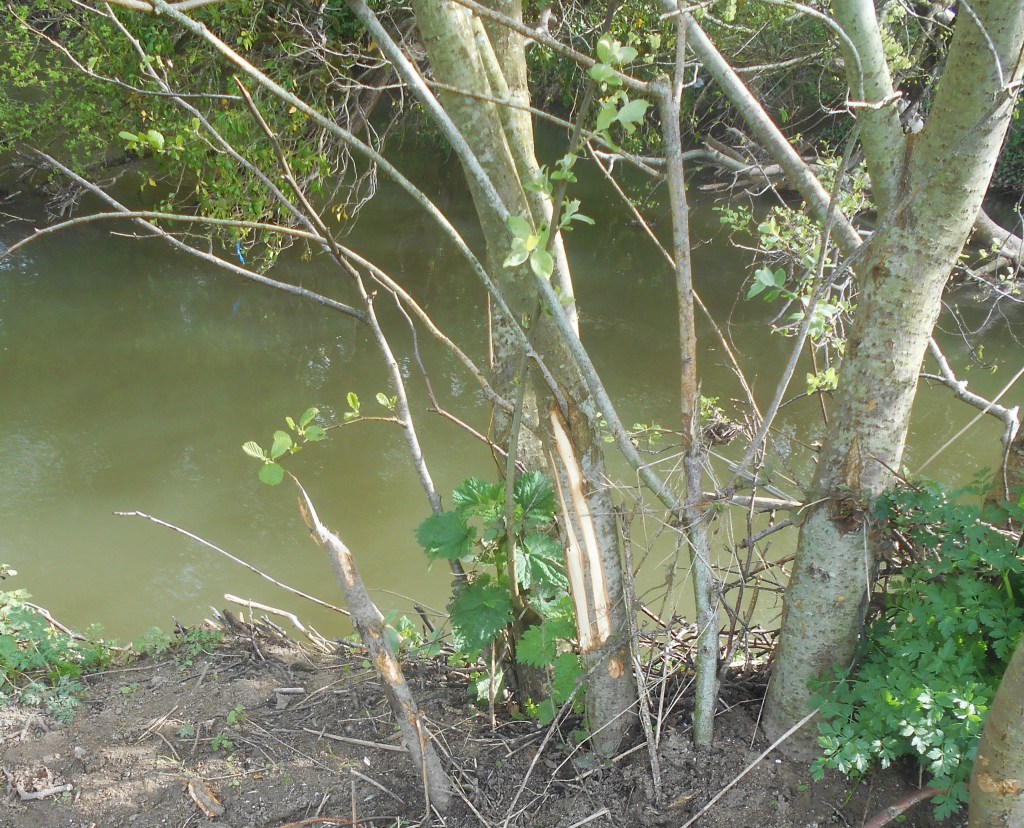
Again, when we checked our last site, still no signs of Otter, although we stopped to note the stripped bark of a willow and almost all of one of its small saplings chewed off – all clear signs that at least the Beaver are around and pretty active!
The grass in the meadows was very long and very wet so soon not only our boots became soaking wet but our trousers as well. Difficult times for the farmers forced by the boggy and water drenched fields to keep their cattle indoors and having to be fed when they would usually be out enjoying the first tender growth of the years.
As we crossed to the five-barred gate and headed for hom, we spotted a Brimstone and a White bringing the number of butterflies to four. We heard a Chiff Chaff and Great-Tit, spotted lots of bumblebees, hoverflies and a bee-fly on the stinging nettles, and small black spiders running all over the layers of dead wood and fallen twigs scattering in every direction as we walked. A small party of Gulls were calling and yowling as they flew over our heads, their white feathers brilliant against the dark grey clouds and a couple of Pheasants were squawking in a nearby field, so the wildlife was certainly beginning to wake up to spring.
Otter Two Day Survey Saturday 23rd and Sunday 24th March 2024 Temp: 8C and 10C / Water Level: Med

Heartening to see the Damson tree teetering on the river bank had burst into flower, and blooms beautifully fragile and spring like in on a pretty unseasonal looking morning.The first day of the Otter Survey didn’t look in the least promising, scudding dark clouds, spitting rain showers and a bitterly cold north-westerly wind blew along the river freezing cheeks and ear tips alike so not the best conditions to search for spraint and so it proved.
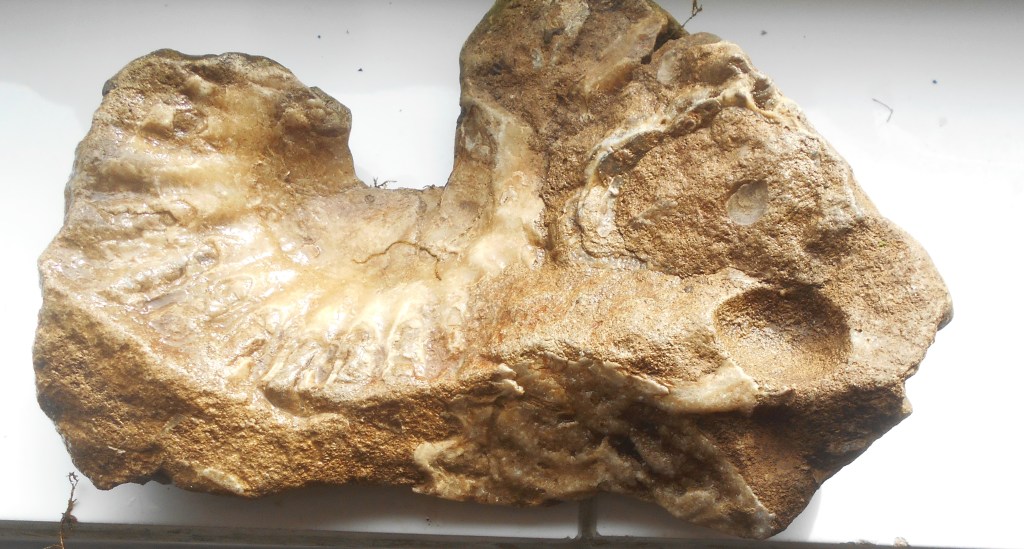
It might appear odd to include the photograph of a fossil when writing about a Two Day Otter Survey, but sadly we didn’t see any signs of Otter at any of the sites, almost certainly due to the extensive flooding along this stretch of the river, where houses were cut off as the water flooded across pastures and roads were made impassable by blocked drains. Reports have been coming in from other parts of the country of orphaned Otter cubs being rescued and cared for in sanctuaries, holts being flooded and even adult Otters being swept away and drowned, unable to withstand the ferocity and force of the strong currents of the rivers in spate.
However, the good news is that while searching the river beaches for signs of Otter spraint we found a block of water-worn Jurassic limestone with a large bivalve/shellfish preserved in the mud (8 inches x 6 inches).
A local Geologist who advises the Frome Heritage Museum and arranges exhibitions of his extensive library of fossils kindly identified it for us. He said: “These were common filter-feeding animals living attached to each other or to a hard substrate on the seafloor. Your fossil shows the inside of the shell – this tends to be smoother to accommodate the living animal. The outside (see diagrame above) has distinctive ribs/ridges and growth lines.” An exciting find and a small compensation for the lack of Otter signs!
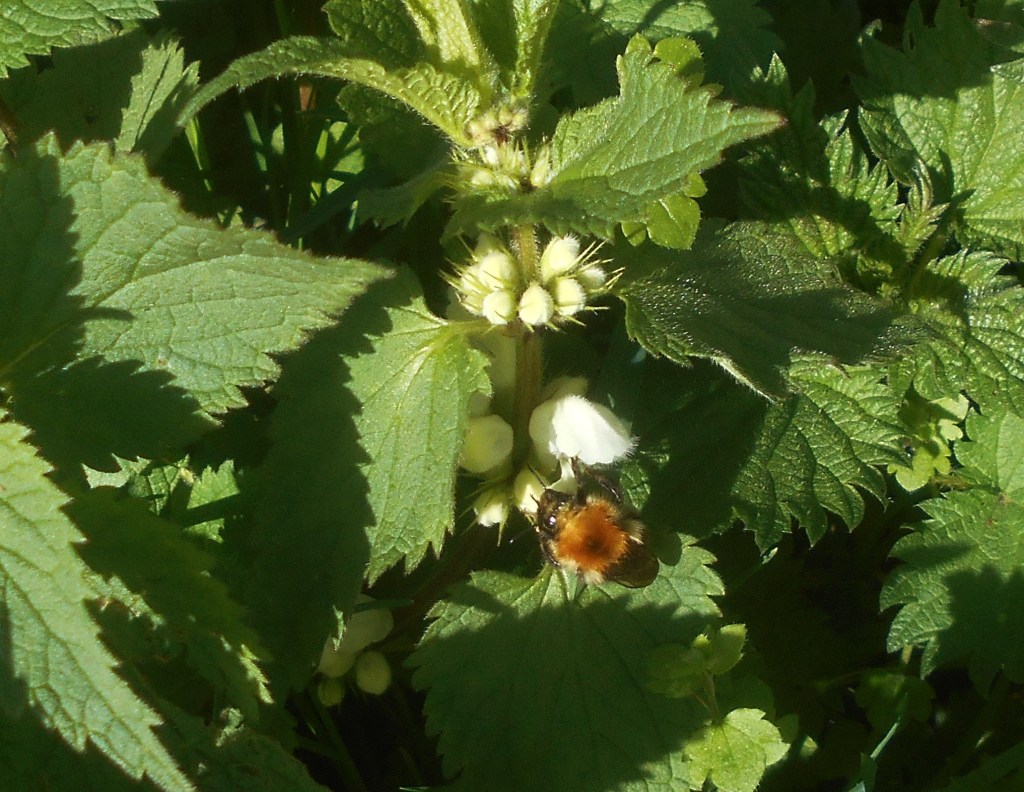
Fortunately the light rain showers stopped half way along the survey stretch, the sun appeared, and although the bitter wind still blew its icy blast into our faces, the sun was warm enough to bring out a few early insects. When we reached the bed of nettles we spotted this Carder Bee buzzing from flower to flower of the White Dead Nettle plants, disappearing head first into each blossom!
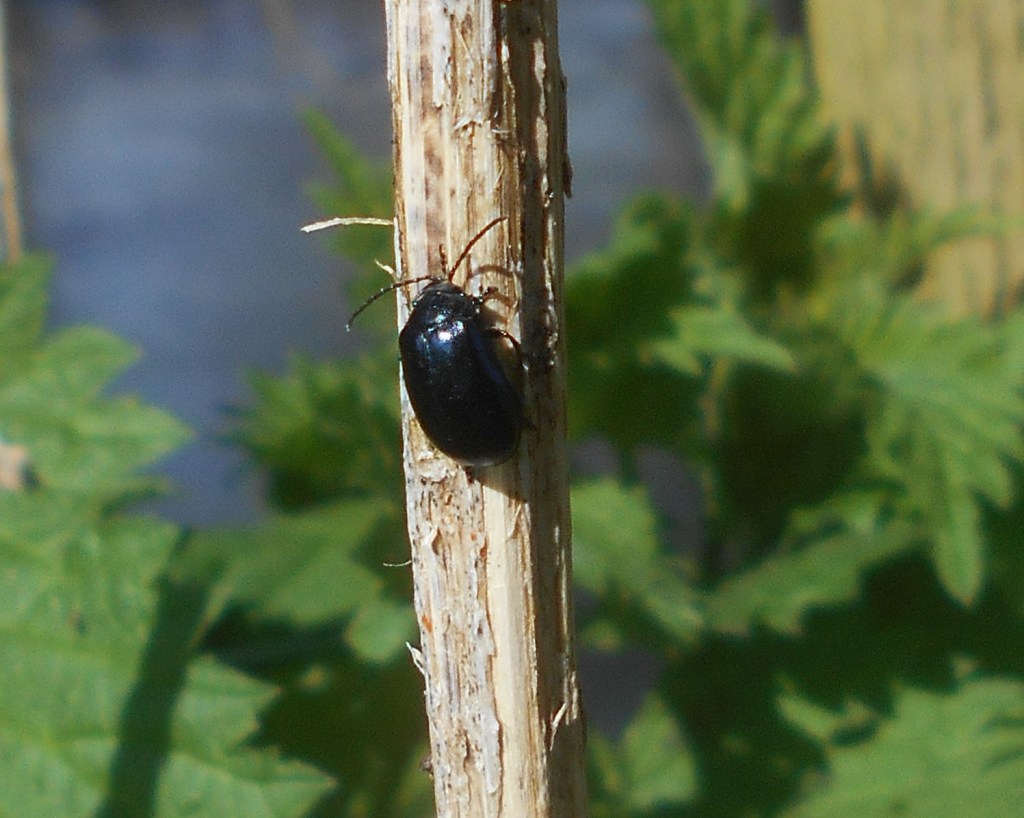
Our first sighting of an Alder Leaf Beetle this year so it won’t be long when every Alder tree and the undergrowth beneath will be covered with these metallic blue little beetles feeding on the leaves and by the end of the summer most of the leaves will be shredded and the trees looking devastated.
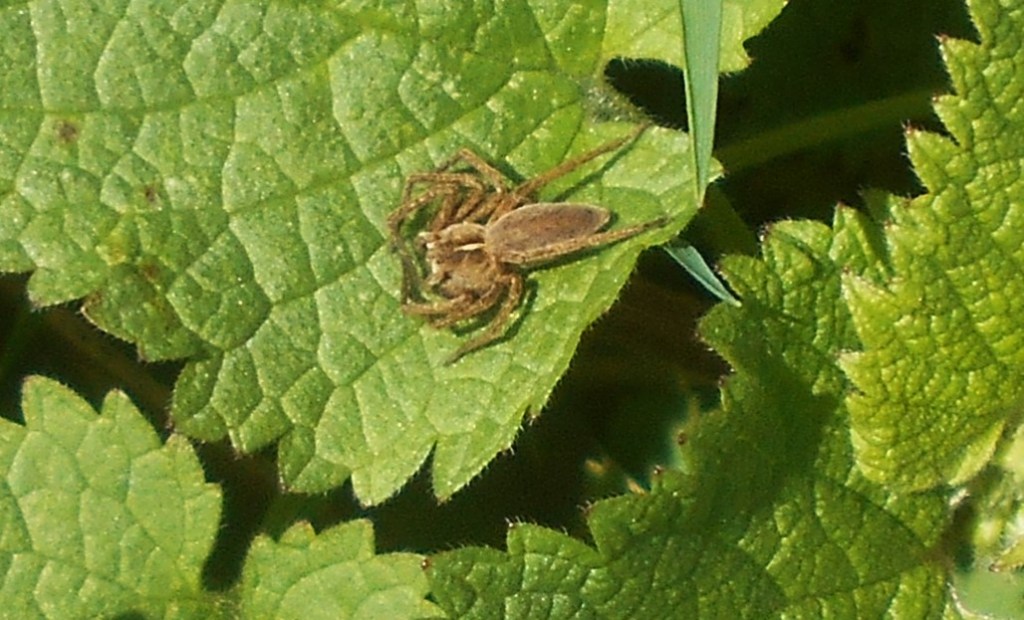
The first of the Nursery Web Spiders, a very common spider along the whole of the river bank vegetation during the summer months where in May we will spot their tent-like webs full of spiderlings.
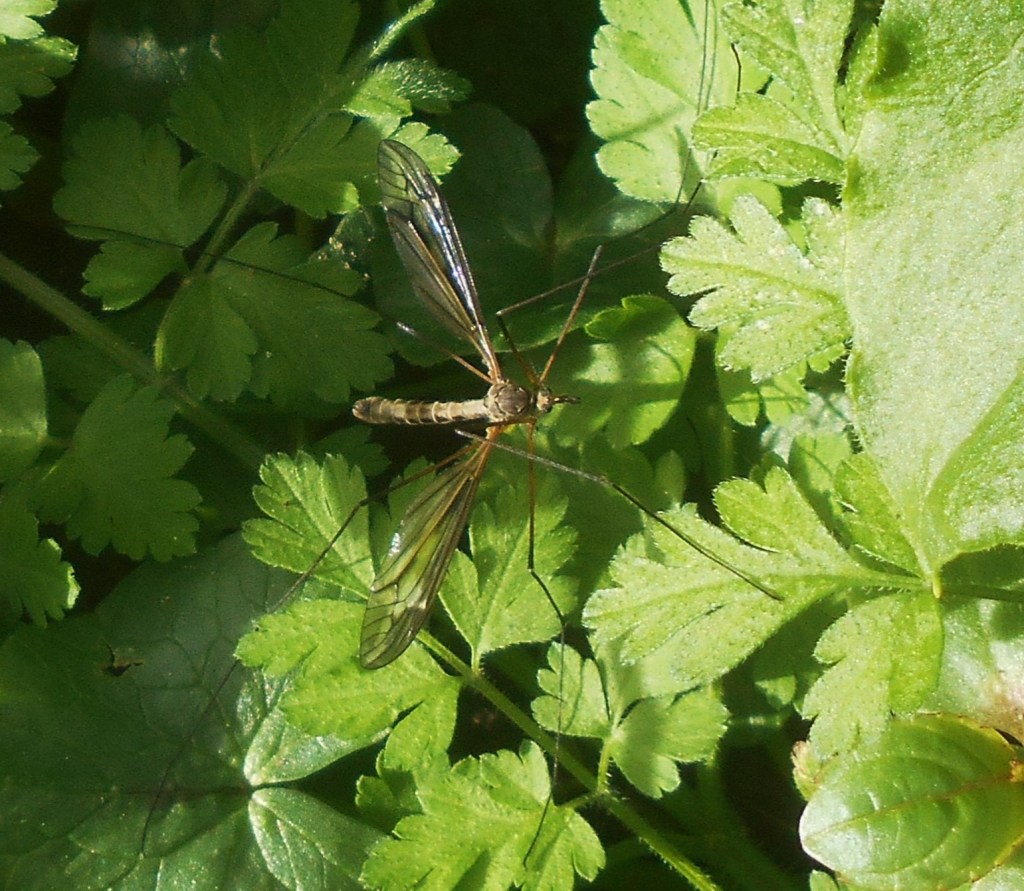
Lastly we spotted a pair of Crane Flies on the beach. These are the early fliers (April-June) Tipula Vittata which are large cranefly with distictively patterned wings and dark stripes along the sides of the abdomen. The larvae live in boggy areas and sometimes along stream sides and by far the most common species we see along the river bank.
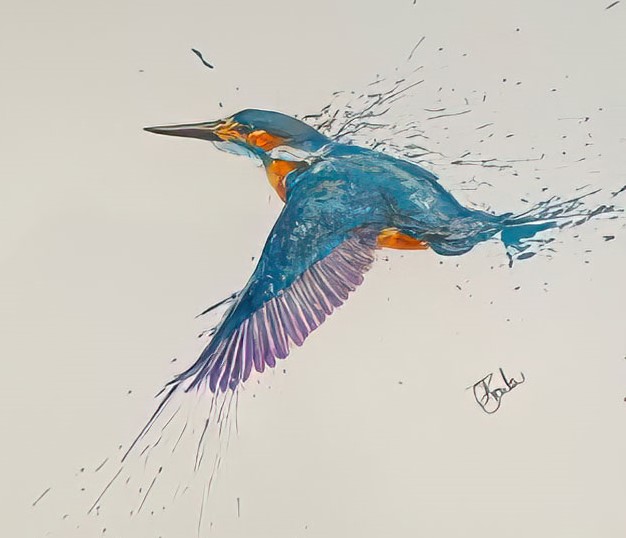
Finally, a sight to gladden the heart – a Kingfisher – flying up and downstream on both days, returning each time to where we believe Kingfishers have nested in previous years – we think they are breeding!!
Bird sightings on the two days included 2 Sparrow-hawk, a Buzzard, a Red Kite, 3 Jackdaws, 2 Mistle Thrush, Blackbird, Great Tit, Blue Tit, 4 Herring Gull,Tree Creeper, Wren, Robin, a pair of Mute Swans, 3 Mandarin, 4 Drake Mallard and a Little Egret were all out and about on Day 1, and on Day 2, a Chaffinch giving a repetitive, single note cheep, said to be its rain song, forecasting rain – pretty likely presage in what have been the wettest months of many a year!! Also seen a Kingfisher (in the same area as Day 1) Great Tit, Wren, Robin, Cockerell, 2 Buzzards, a Greater Spotted Woodpecker, 2 Drake Mallard, a flock of 30 Jackdaws, barely any of them singing – not surprisingly -the cold winter wind possibly had something to do with their reluctance to burst into song!
20th March 2024 / Temp: 14-14.5C / Water Level: Med
– SPRING EQUINOX –

The banks of the brook (a tributary of the River Frome) are covered with wild garlic plants – good foraging for those who see Wild Garlic Pesto as the first signs of spring!
For others, it’s the bird song, and the local population didn’t disappoint – Chiff Chaffs, those harbingers of spring, flying in from West Africa weighing less than two teaspoons of sugar, these fluffy bundles which herald spring tidings of life-affirming delight have begun to arrive and we listened with delight to it’s insistent “chiff, chaff, chiff chaff” to let us know it was here. We heard a Greater Spotted Woodpecker drumming non-stop, the yaffle of a Green Woodpecker, the beautiful, melodic songs of both Song Thrush and Blackbird. Wrens, Robins, Great Tits, Blue Tits twittering away, Jackdaws chattering as they flew overhead, Crows cawing and Pheasants squawking – the trees surrounding the book were alive with birdsong – a wonderfully life enhancing sound.

The area of grassland, studded as it is with Yellow Meadow anthills, was carpeted with Barren Strawberry plants in full flower. They flower earlier and are over sooner than the wild strawberries, grow close to the ground on shorter stems, but they are a reminder that the sweet strawberries are on the horizon.

The anthills covered in holes looks as if they have been under attack – probably from hungry Green Woodpeckers who are known to visit yellow meadow anthills. In the past, pasture was left unploughed for many years and this allowed large ant colonies to become established. Sometimes you can see the large nests of the yellow meadow ant in old fields like this one. Today, pasture is ploughed regularly, re-seeded and fertilised to produce richer grazing for livestock, which of course destroys the ants’ nests as well as those ground nesting birds.

We arrived at the brook and began searching along the edges of the banks for Great Scented Liverwort. Although it prefers damp, shady, mildly base rich to neutral substrates, such as shady rocks by rivers, streams and waterfalls, but it can also grow on soil on damp banks and, as here, shady walls.

Last year around the same date we found two plants actually in the water on the edge of the brook in flower, a rare enough occurance for us to return in the hope of seeing them again. Alas, the plants were no longer to be seen, possibly washed away by the winter spates, during what has been a particularly wet season.
Sometimes referred to as snakeskine liverwort, understandably for seen in good light, the pattern on the thick and leathery leaf does look rather like snakeskin but the scent if you rub the leaf is surprisingly strong – definitely great scented!!

Wading along the brook turning stones to check for invertebrates didn’t produce the bonanza of last year, but possibly it was later in the spring. We saw a few cased caddisfly larvae glued to the stones, lots of freshwater shrimps as usual but little else. Sitting down to log the finds I spotted a tiny river limpet which had clung to my hand underwater – a nice surprise as it’s always a delight to see river limpets and a triumphant flourish to crown a lovely afternoon exploring the brook!
27th February 2024 / Temp: 5 C / Water Level : Med-High
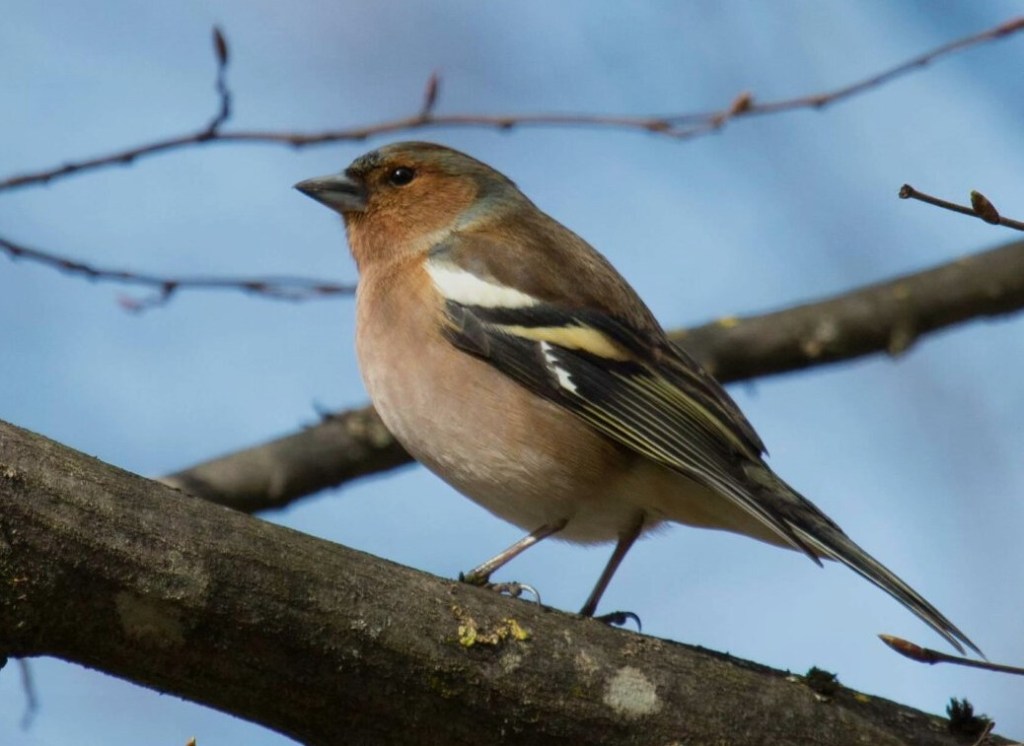
A herald of spring!! A male Chaffinch singing his heart out from one of the trees lining the river bank, hoping his song will attract a mate. So early in the year and a confirmation if one were needed of the past winter being the mildest on record. It certainly felt the wettest!!
Such a welcome sight, lots of Wrens and Tits, a Blackbird or two, several Robins and the wonderful sound of a Great Spotted Woodpecker drumming – another herald of spring – and only three days to go, thank goodness.

The first sign of Beaver along this particular stretch of river, although we have seen multiple signs along other areas. Given the worrying number of trees which have been brought down by the recent floods and other flooding over the banks and into the meadows and cattle pasture on our survey sites, the local Beaver must be having a field day! This is a new fallen tree since our last visit and during the course of the morning we saw three other new ones. A worrying time for the farmer as the loss of his river bank trees must cause further erosion.
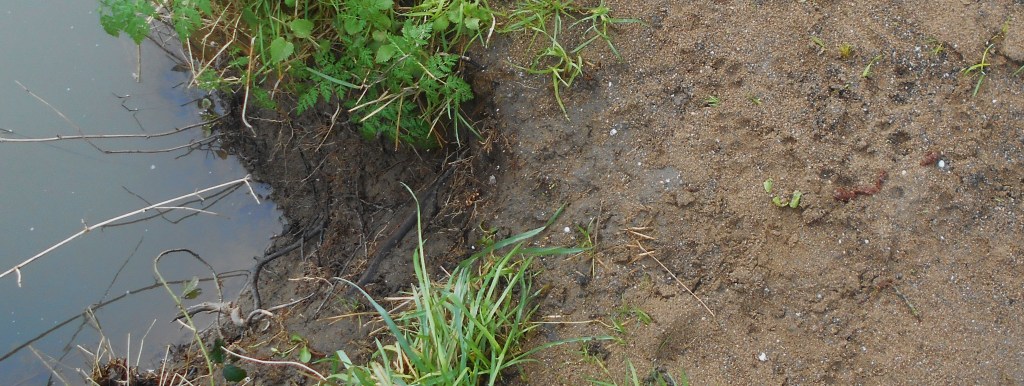
The best sighting all morning: Otter spraint and pad marks – at last – the first we have found since October! We almost didn’t check as the relentless rain had barely stopped but with further rain storms promised for the rest of the week, we changed our mind and what a reward for our trouble!
Local Otter spraint is easily spotted by its bright orange-red colour, just a trickle so either a young one or maybe a adult at the end of its run. What surprised us about this site (which has only in the past year become a favourite spot) is that the bank is so steep when there are much easier areas when the river bank is very easily accessible. Whatever the reason, we are just pleased to see it and know that they are still around.
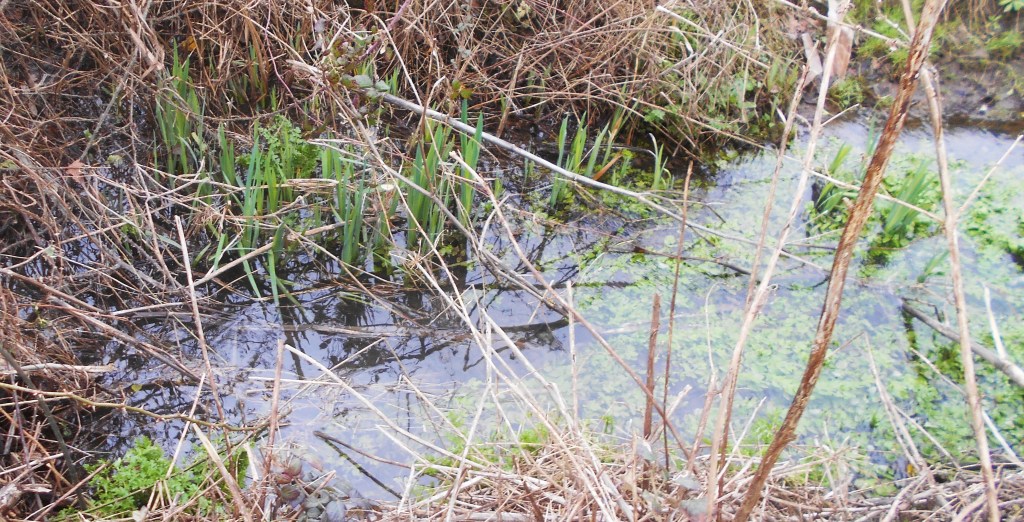
A narrow, weed choked stream, barely worthy of a passing glance except, this is where the yellow flag iris grow, that delight of many a May morning, early summer along the waterways, following April’s marsh marigold. The plants are looking sturdy, unbothered by the rain, growing taller ready to present their showy blooms in a couple of months or so, the delight of so many of us and of course many of the pollinators.

Great kerfuffle in the woods on the opposite bank of the river and first one Red Kite rose out of the trees and began circling above the meadow and then what looked like another Red Kite also rose up from the trees which headed away towards Beckington and disappeared. We saw another raptor (either a Buzzard or a Kite) circling in unison on the other side of the meadow. A mating pair?

A fallen Alder across the river bank its bark displaying a magnificent garden of lichen not normally seen as it is growing towards the crown of the tree.
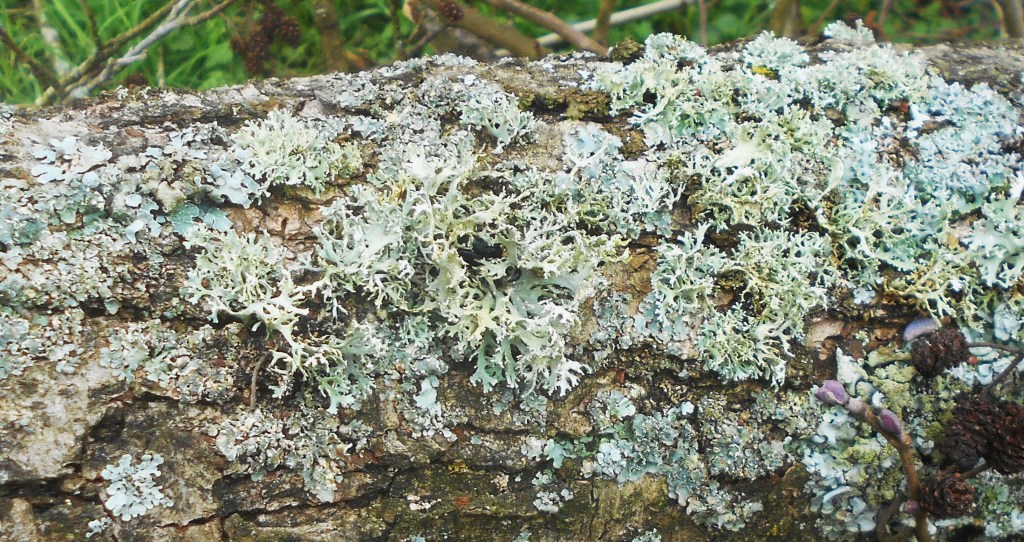
Sad to see the bright purple buds of the catkins already swollen before blooming – it might produce this year but probably a swan song, for the last time.
18th February 2024

A whole new reading of the word “water meadows”!! What is normally a river running through pasture has been transformed into a large lake as the flood water has covered the field and spread to the boundary fence alongside the road.
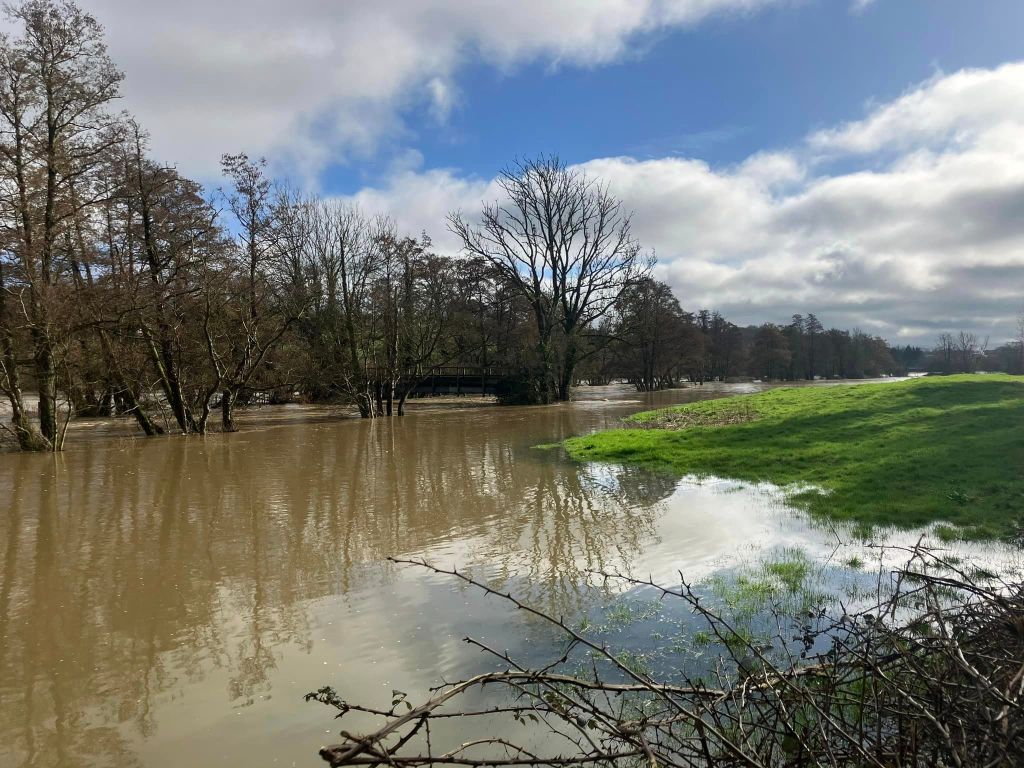
At least three-quarters of the field was under water. These fields usually carry a herd of cows and a bull, which are moved around the pastures of the farm. It is difficult to see when they will be dried out enough for them to be moved from their present pastures which will be an added expense to the farmer provided fodder.

A farmer’s cow pastures flooded and almost certainly out of use by his herd for some considerable time. Difficult to see whether the house on the opposite bank still above the flood water.
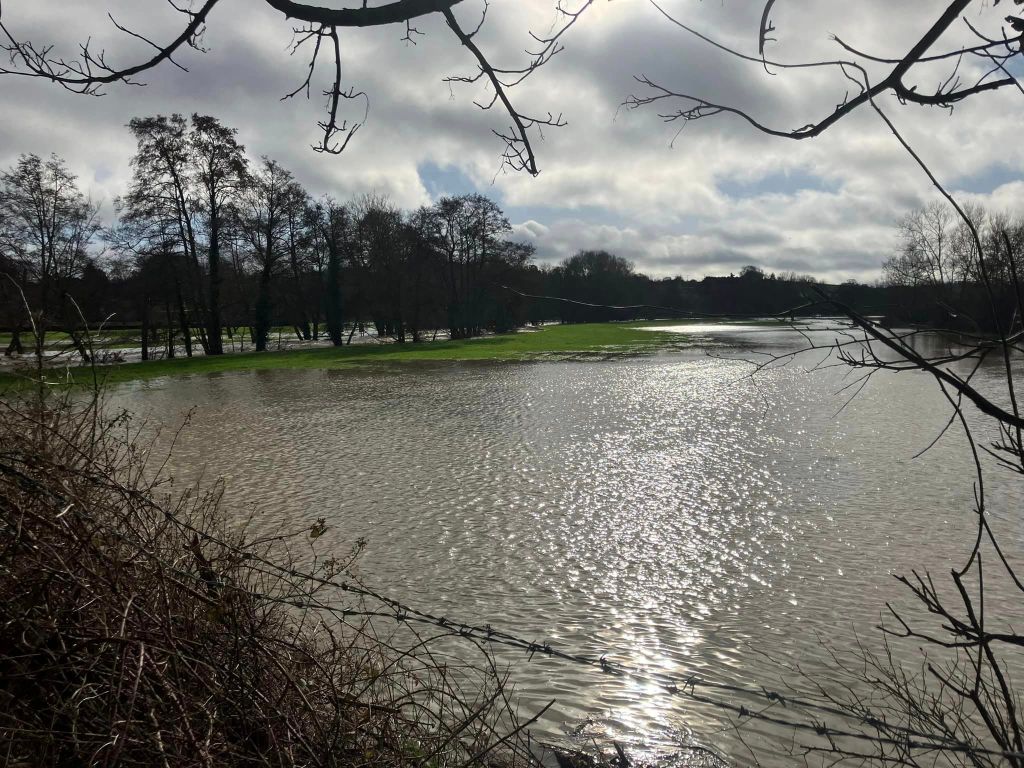
More first rate pasture flooded – the fields alongside the river becoming one large lake as the water has reach and covered the small brook at the edge of the field.
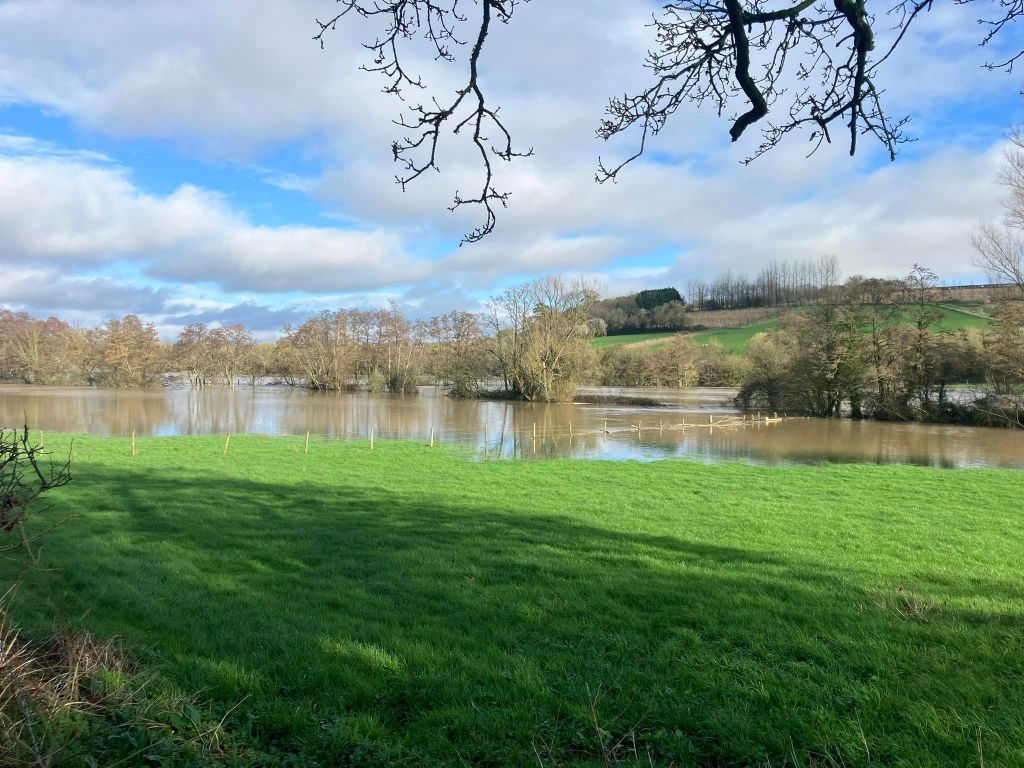
15th February / Temp: 13 C / Water Level: Med. High
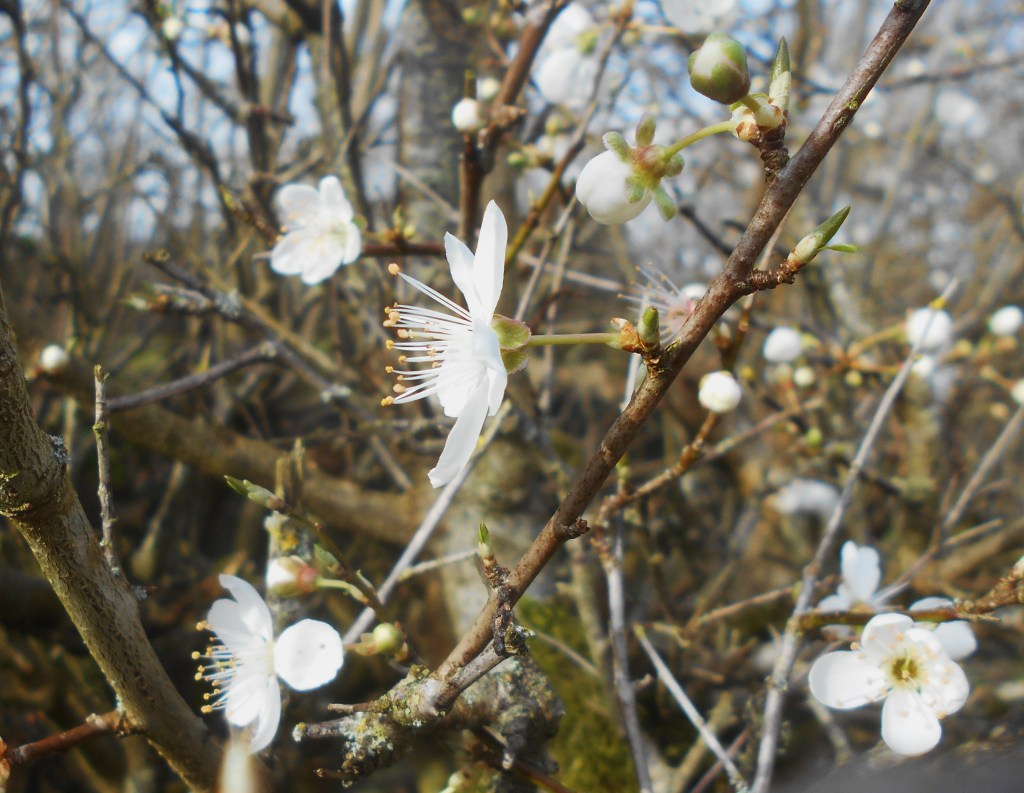
The weather felt unbelievably warm, the air and the warm sun combined felt almost like summer, apart from the quite stiff breeze with its chill wintry edge. The delicately beautiful flowers of the cherry plum in the hedge adds to the spring-like air but the sparse signs of life over the rest of the fields and along the river tell a very different story.
The pool formed in the centre of the field by the January floods has grown slightly smaller and a little appears to have drained away, but too much rain topping it up for it to clear completely. Maybe its not quite so surprising that there are clumps of water reed taking root in the middle but we’ve yet to find wrigglies or fish!
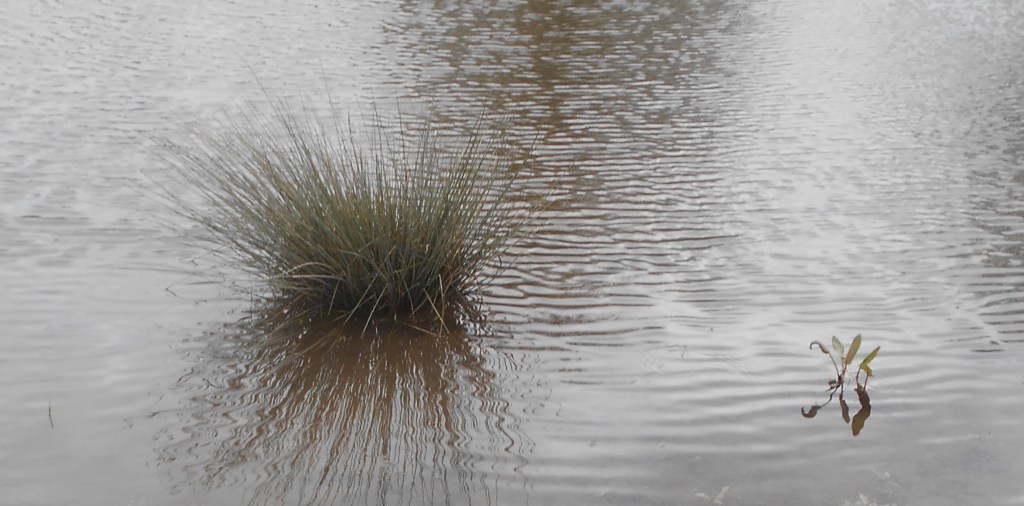
Sinking into at least two inches of thick, goey mud we made our way gingerly along the river bank, trying not to slide into the river. Robins singing loudly establishing their territories is another sign of spring being on the way, but apart from those, we saw very few birds at all, a Blackbird and Great Tit. No sign of the Swans or any other water birds. We heard a Raven which may have been the cause of the Jackdaws, Rooks and Crow making such a fuss in the adjoining field as we arrived.
A sizeable flock of sheep in the field beyond the river, where a line of six or seven trees in full white blossom lined the boundary – very early to be blackthorn but too big to be cherry plum and too far away to confiedently identify. A couple of Blue Tits in the trees, no sign of Otter – how long it is since we have seen any sign of them – surely the high water must be the cause of them moving somewhere else. The river looked very deep but calm as a mill pond backed up behind the dam – still waters run deep, no stones or boulders to impede the flow or disturb the current.
It was so lovely to feel the sun on our backs as we sat resting, drinking in the peace and quiet of the river – so comforting to sit in the warm sun in mid-February – and suddenly to spot a Buzzard flying over who began to circle over the sheep field, and then a Cormorant – at last a water bird, more Robins, a couple of Crows and of course Wood Pigeons.

Rain clouds began to gather, obscuring the sun and it became chilly, a signal to make our way home. Amused to see someone has stuck two Swan feathers in one of the wooden fence posts, they certainly draw the eye, fluttering madly in the breeze. They mark a good growth of lichen on the top so that may be to remind the walker that this particular post is the only one bearing gifts.
“Beating the bounds” as we walked towards the stile, we were gifted a parting present, the sight of a small squirrel leaping through the branches of the trees along the stream edge among the singing Robins. We heard the warning squawk of a Pheasant and disturbed a pair of Mallard, a male and female, who flew out of the stream and down the field complaining loudly. We were glad to have seen at least two species of water birds although as we listened to yet more Robins giving their piping song, echoing across the quiet fields, we wished there were an equal plentitude of water birds too.
12th February 2024 / Temp: 7.5 C / Water Level: High

Glorious late winter morning, full sun, blue skies, sailing clouds like blobs of whisked egg white floating in the air and although the stiff north-westerly breeze held an edge of icy blast it was an absolute joy to be out along the river after weeks and weeks of endless rain.
The pussy willow catkins were showing their furry paws on the trees lining the stream which made the scene look springlike and are always so welcome when very little else shows much signs of life.

Two Swans at their usual position hoping to be fed and if it is the same pair as last year, no sign of their cygnets. Two Mallard flew off downstream before we could catch a photograph and we could hear but not see two Robins, one on each side of the river, shouting their challenges at each other!
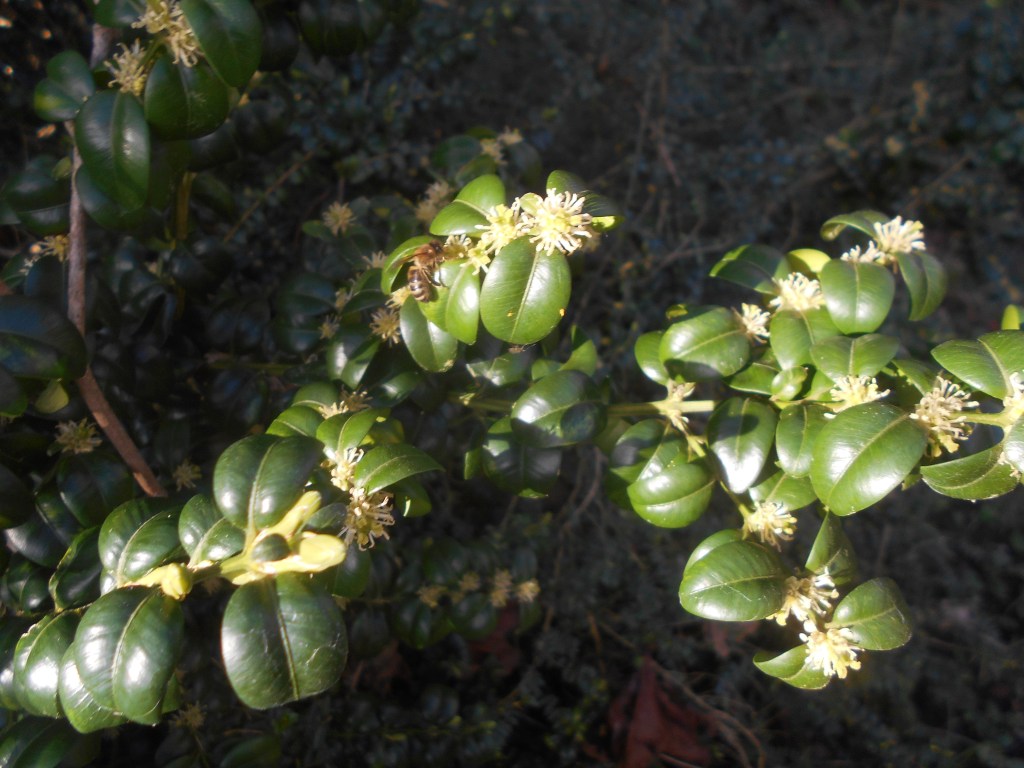
Spotting Honey bees on a winter flowering shrub was a welcome sight and totally unexpected! There were so many of them buzzing around and under the flowers it was difficult to keep count, but we think we saw at least ten. Lovely to think that these might be from the hive where our Christmas gift of a jar of delicious honey came from – it was certainly sweet-scented.
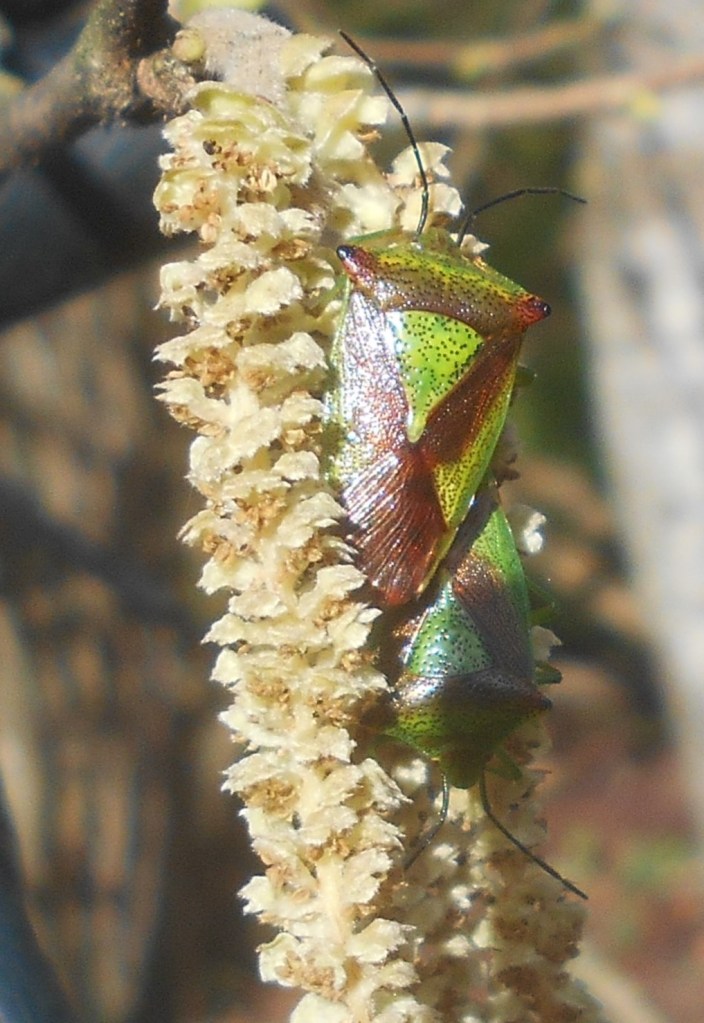
The Honey Bees weren’t the only unexpected insect – we saw two mating Hawthorn Shield Bugs clinging to a Hazel catkin – we’ve heard of party swingers, and daring young men on a flying trapeze but never swinging shield bugs!! We can only think that the unseasonally early mating is the result of weeks of unseasonally mild weather – non-stop rain causing flooded fields and roads along the river, but one of the warmest winters on record.
26th January 2024 / Temp: 8.5 C / Water Level : High (falling)
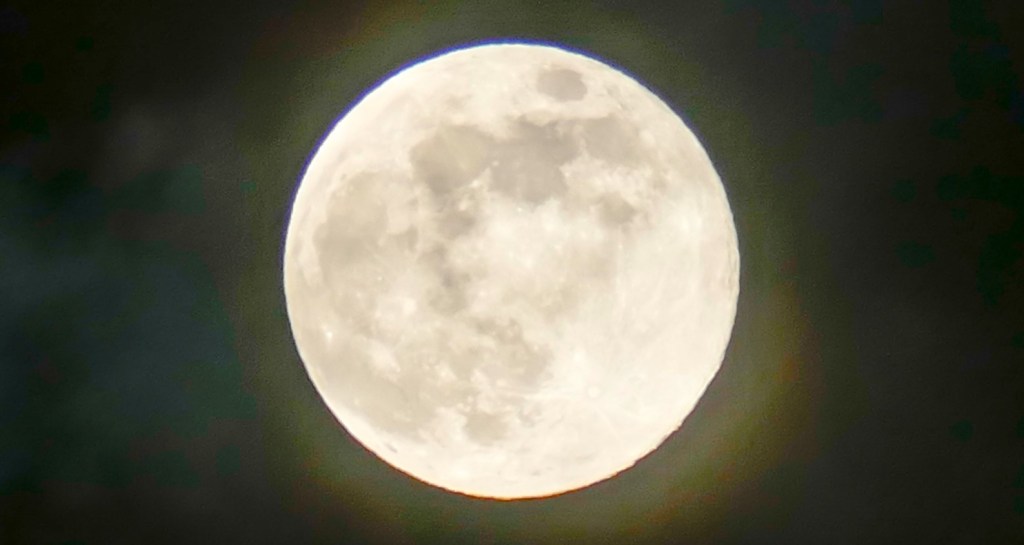
Wolf Moon last night, glowing in the clear, cloud-free night sky and a beautiful cloud-free morning, full sunshine, wall to wall blue skies, chill wind. The river very high, very fast, the sound of the water crashing over the stones extremely loud and the sight quite dramatic – the moon affects the tides, can it affect the river too, making it fast and turbulent?

No signs of Otter pad marks or spraint, but while checking the small stream where it joins the main river we were enchanted by a tiny Wren perched on a branch of a tree leaning over the stream singing his heart out, such an incredibly loud song for such a tiny bird! We often see Wrens at this site so almost certainly a nest close by as they don’t travel very far. As he flew off a Robin replaced him – a good start to a walk in a period where, in both woodland and farmland we have noticed such a crash in birdlife.
A noxious smell of fish and slurry hung in the air – similar to the same noticeable smell at our last survey – possibly muck spreading on the adjoining pasture or dead fish and other detritus from the recent floods left behind as the water levels dropped and receded from the river banks. Whatever the source extremely unpleasant.
Walking across the thick mud towards the drier part of the field, we were delighted to be surprised by the sight of a Kingfisher shooting down-stream. We spotted a Kestrel perching on the overhead wires, a favourite viewing point as we often see one there, a Magpie and, astonishingly, a Red Admiral butterfly hunting along the hedgerow, no doubt brought out by the warm sunshine. Wonderfully, we heard the croak of a Raven resounding across the fields, we spotted a few Pheasants and of course lots of Wood Pigeons.

When we reached the river it was still very fast, whipping over the stones and rushing downstream, the sound of the water making it impossible to hear very much over its crashing, tumbling sound, but it didn’t seem to bother the Blue Tit searching among the bushes and bramble along the wall on the opposite bank!
The river must have flooded over the entire gravel beach and up and over the bank, about six feet above its present level and even more than that to its normal level. As it receded it deposited a great deal of silt both well into the field and on the beach where it formed a new bank which will make it easier come summer to climb down onto the beach and it should produce a wonderful display of plants. The force of the river “re-arranged” the shrubs and plants flattening them so the empty duck mussel shells gleamed in the sunlight and the size of the beach was revealed in its entirety. Flood water always brings in more mussel shells although there are not as many now as we used to see along this beach five or six years ago.

A great conglomeration of fallen trees, the size and weight of them makes it almost unbelievable that they have been swept down the river simply by the force of the water and lodged against a victim of earlier floods which is wedged into the building opposite. One has been caught up in the old willow on the bank and the other stuck with its roots in the water. Who knows, perhaps the second will produce leaves come the spring as it is so well watered!!

It was good to move away from the noise and turbulence to the quieter stretches of the river where it is deeper and calmer. Extraordinary to notice how quiet it was – and even though the current was moving at a good pace, the surface of the water was like a mill pond.
There were a dozen or so Jackdaws flying overhead and around the same number of Gulls sweeping in a large circle over the field. No sign of water birds along the whole length of the river, no Cormorants in the cormorant tree, and still no signs of Otter. However, in previous years from late December into January is the time where the first signs of Otter cubs have been reported so perhaps they are still tucked away in their holt or keeping away from the main river until the turbulence settles.
The Jackdaws started calling and the Gulls suddenly disturbed when we caught sight of the possible cause of the lack of birds – a Red Kite, high, high up in the sky, its kinked wings identifying it, slowly circling. A Kestrel, a Raven and now a Red Kite, no wonder the small birds at least were keeping well out of sight!
10th January 2024 / Temp: 4.5C / Water Level : High (falling)
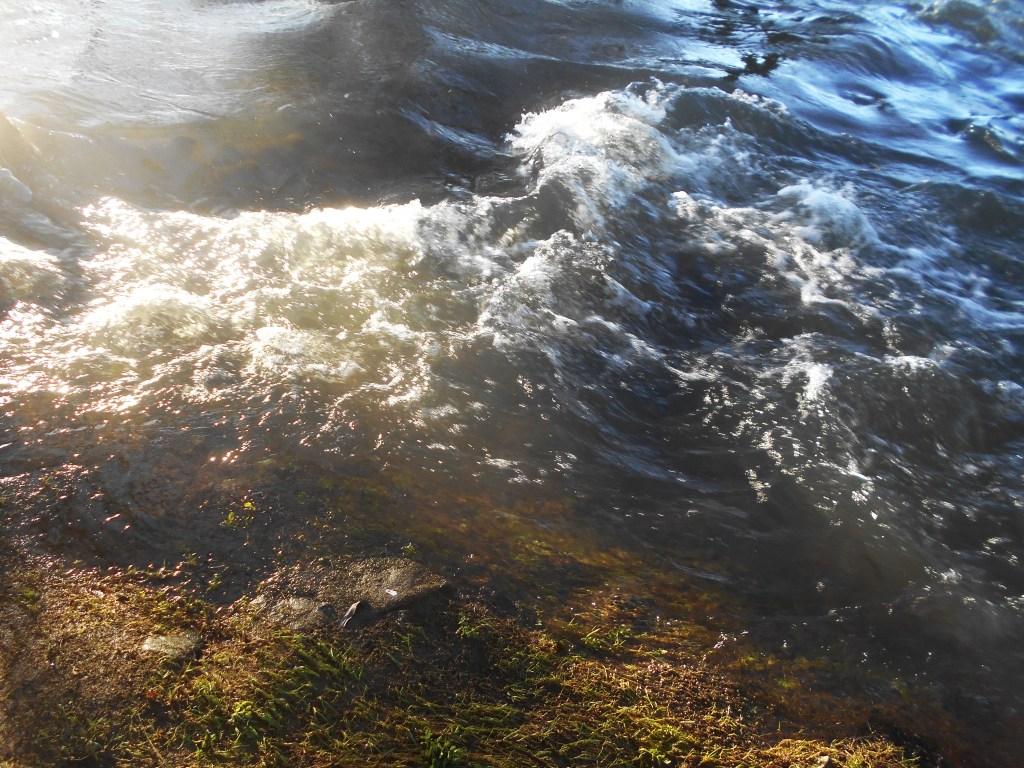
The river was still high and turbulent, running fast downstream, foaming and splashing against the remaining half buried stones of the old Roman ford but there were signs everywhere that the water level had fallen.
The plants on the bank showed the classic lines of flood, lying flat, in line with the flow of the river, the earth beneath scoured bare of the smaller, shallower rooted plants and their place taken with a fine silt, all that remained once the water drained away.

However, according to National Geographic, the silt or fine sediment which settles on the land on either side of the river channel is usually rich in plant nutrients, so the soil that it forms is very fertile. It will be really interesting to note whether there is enriched plant life growing on the banks from the flooded margins later in the spring and summer!

We were surprised to see how far the flood waters had spread over the surrounding land, overflowing some areas where the banks are as high as six feet or more, and reaching past the river banks and into the sheep pasture beyond where large, heavy sawn logs and quite substantial branches had been flung by the force of the river up into the fields and left high and dry once the water receded.
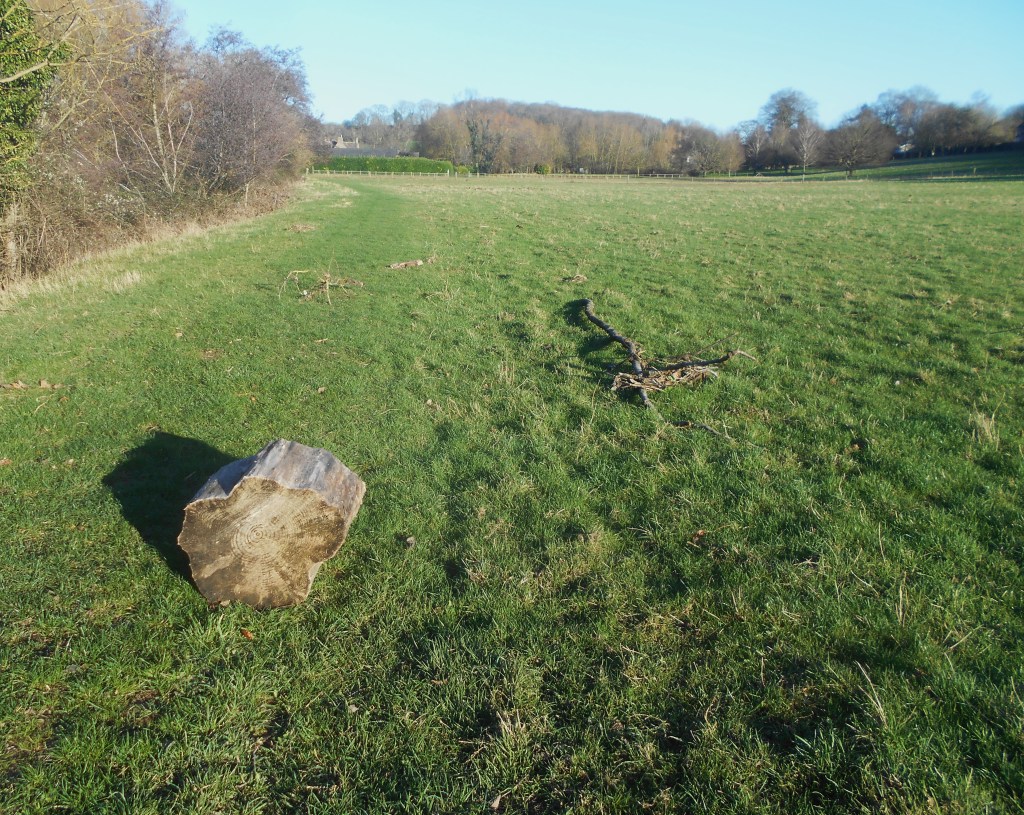
We saw little signs of life – a couple of Mallard and a flock of about thirteen or fourteen Jackdaws returning to their roosts, chattering amongst themselves as they did so, a single Raven, one Blackbird and a small party of Tits was all we saw.
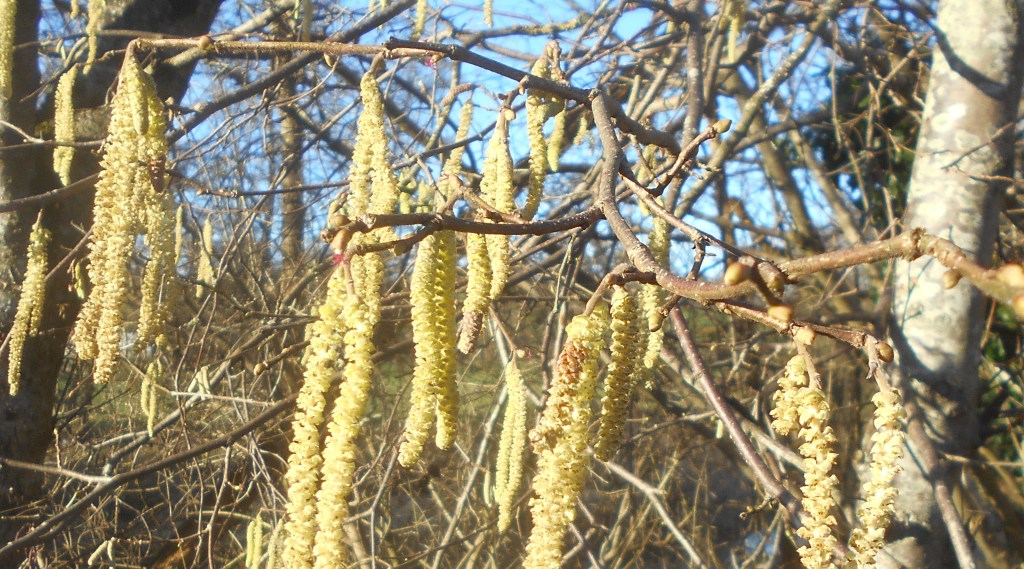
We did see two beautiful Hazel trees, their pale, silvery trunks catching the sunlight which made the golden male catkins glow. Two clusters of red filaments poked out from the female buds making a lovely splash of bright colour to lift the spirits!!
1st January 2024 – New Year’s Day – 7 C / Water Level: High (rising)
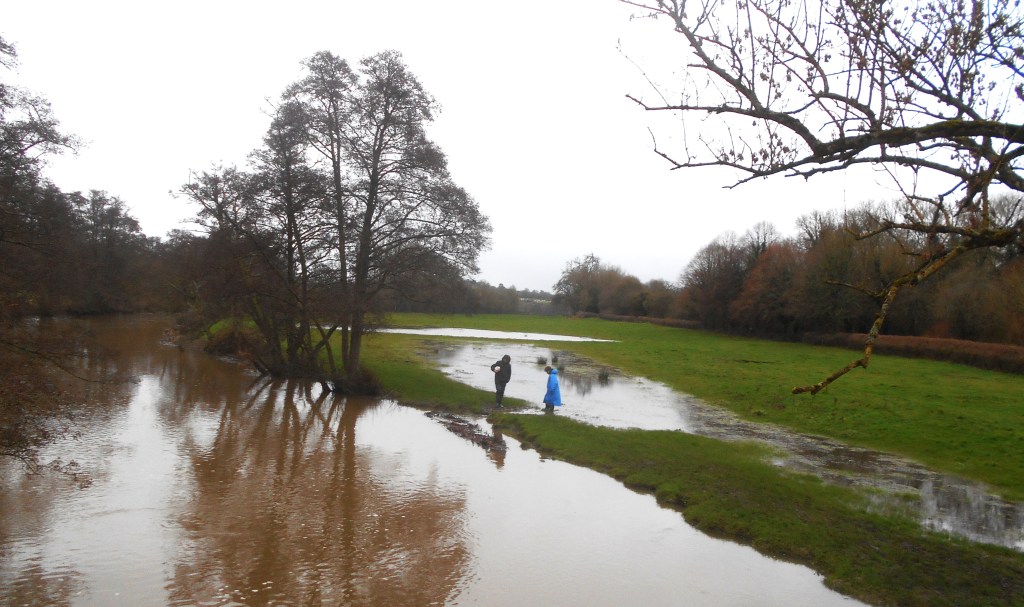
Water, water everywhere! The river in spate, fast, muddy, quite sizeable fallen branches being swept downriver like matchstick, banks flooded, forming ankle deep lakes across the fields, mizzling rain gusting in the strong northerly winds across the open ground – pretty typical January weather!
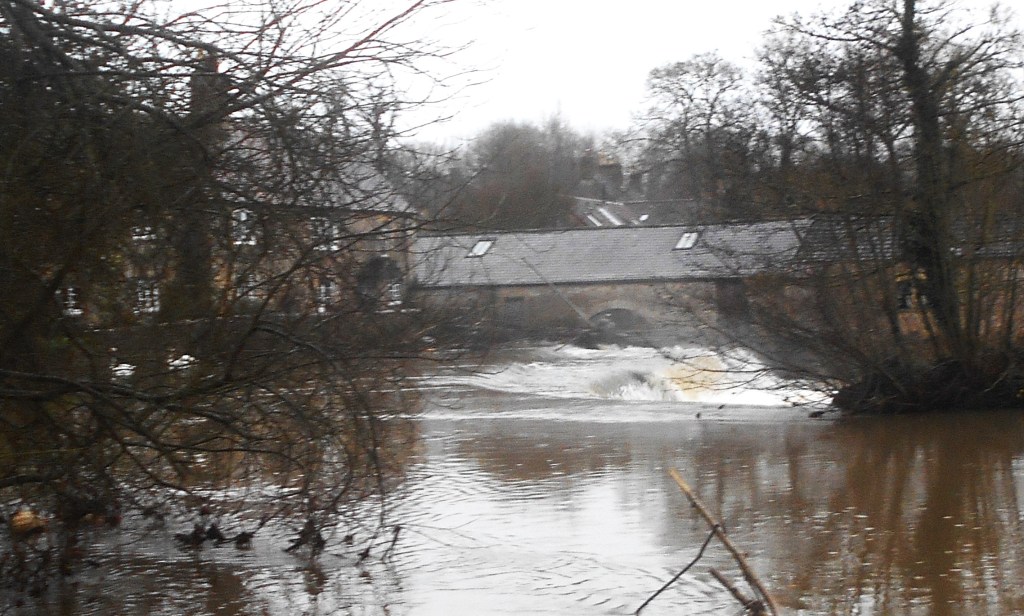
The photograph doesn’t quite pick up the fine misty spray blown off the surface of the weir as the flood water thunders over the dam, the force of the strong north-easterly wind being so strong. We noticed the two Swans ( just visible ) were keepling well into the bank, sheltering from the gusts so as not to be thrust over the weir!
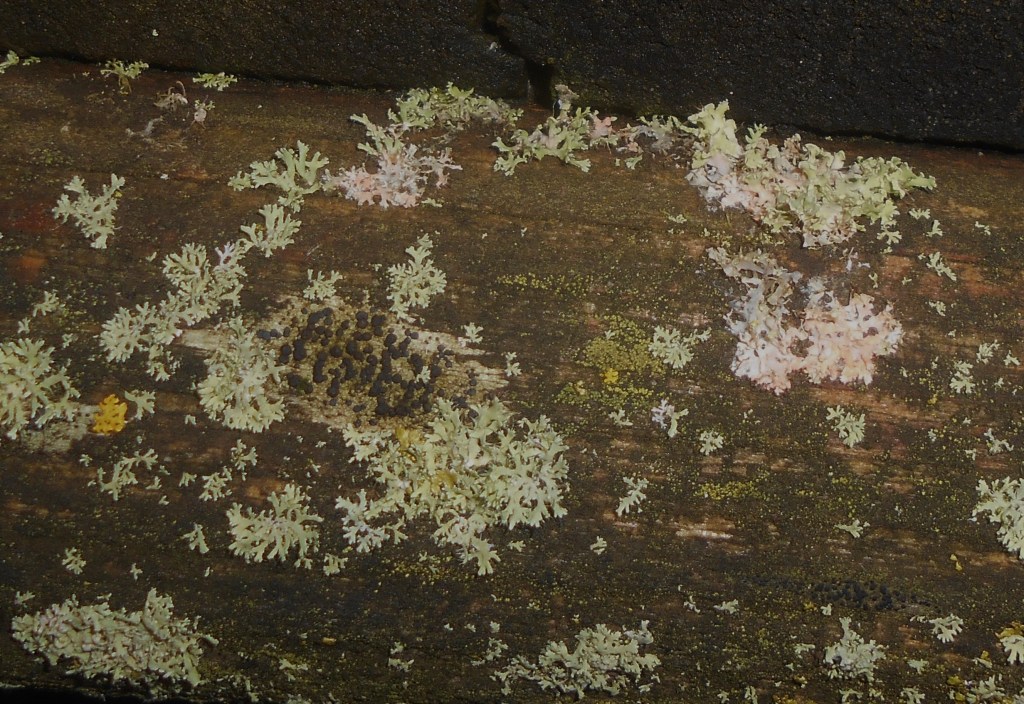
We were quite intrigued by the lichen covering the wooden supports on the bridge over the river but sadly, despite posting it on iSpot, no-one was able to identify either the crustose lichen or the pink leaf lichen which was a shame but we understand there are so many variables microscopic evidence is crucial to confirm an identification.
21st December 2023 – Winter Solstice Eve
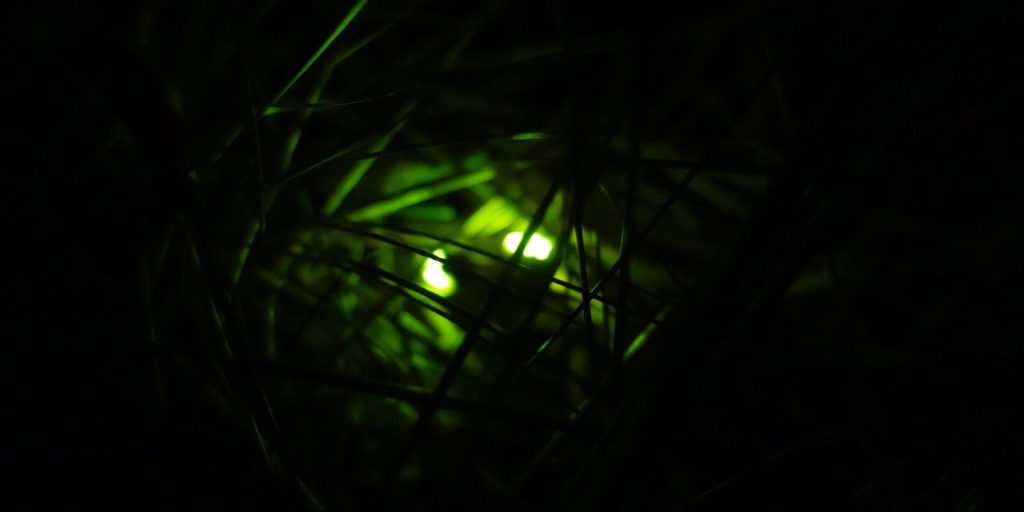
Here is an image to gladden our hearts at the turn of the year, on the eve of the shortest day when our spirits begin to lift as our thoughts turn to the days beginning to lengthen and looking forwards, even as far as the longest day, the summer solstice when if we are very fortunate we may see glow-worms in the grass!
Delivering a precious pot of delicious honey from the hives in his orchard, the owner of the land where we carry out our Otter and Beaver Surveys brought a second precious gift – the news that we could add glow-worms (and slow worms!) to our species list as he had noticed they weren’t logged and so perhaps he hadn’t mentioned that he and his family saw both regularly in season.

This is such lovely news! Glow-worms are not rare in most of the United Kingdom (although missing from Ireland) but like far too many species, it is estimated that their numbers have fallen by 75 per cent in the last 20 years meaning for every four glow worms that could have been spotted in the 90s, there is only one to be found now. Human impacts on our environment are likely to be causing much of that decline. Changes in land use, habitat destruction and use of pesticides are all thought to be very damaging to numbers of glow worms. So a wide dirt track along the edge of fields, with uncultivated verges filled with wild plants provides a perfect grazing ground for slugs and snails, the main diet for glow-worms and slow worms!
8th November 2023
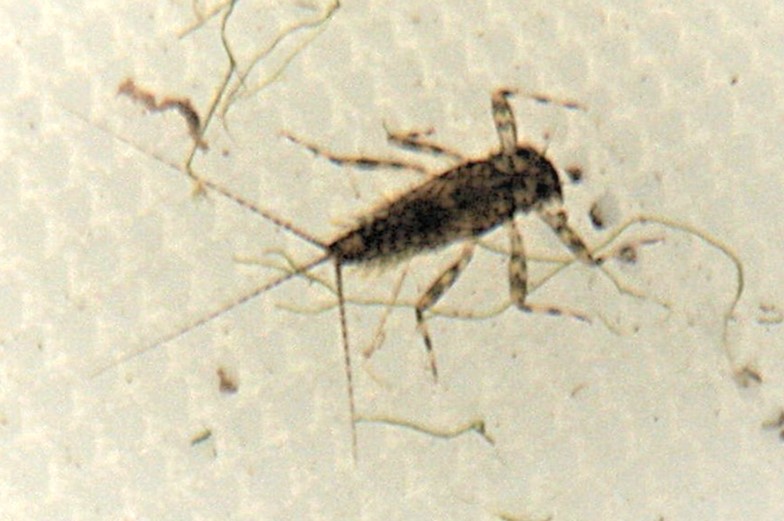
We recently wrote to Buglife to ask if our kick surveys, restricted now to simply identifying species but not a full count, can give any indication to the health of the river. Craig Macadam, of the Riverfly Partnership and Director of Buglife has now replied and I think it’s worth quoting his relevant comments in full:
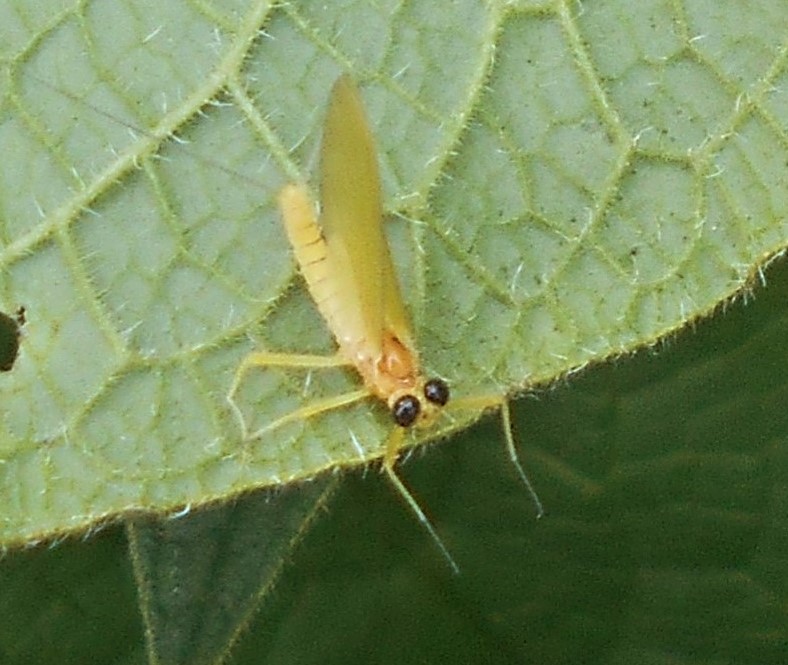
“Whilst it’s good to understand how the abundance of invertebrates change through the year, the presence or absence of individual families of invertebrates can tell you a lot about the health of a watercourse. Stoneflies generally require the fast-flowing, clean water, as do the Heptageniidae . The Caddis are more tolerant of organic pollution, and species such as Hydropsychidae are found in areas of good flow. Shrimps are generally found where there is organic material present.”
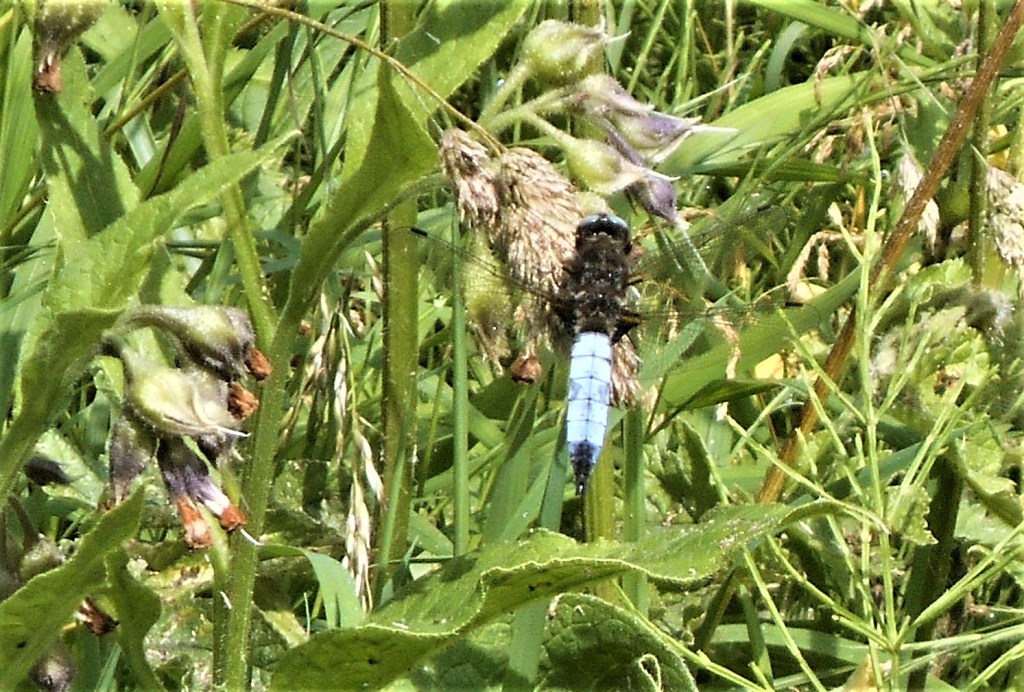
This is extremely encouraging news as although we have never found Stoneflies, we have found Heptageniidae larvae throughout the year on all of our kick survey sites from the conjunction of the Mells and Frome Rivers to and including the Creamery. The last stretch of river at Lullington is too deep for us to survey but this year for the first time we spotted a Scarce Chaser Dragonfly (Listed as Near Threatened in the British Odonata Red List 2008) whose habitat also needs good water quality which supports submerged and floating plants as well as prolific stands of emergent vegetation.
26th October 2023 / Temp: 15.5 C / Water Level : High
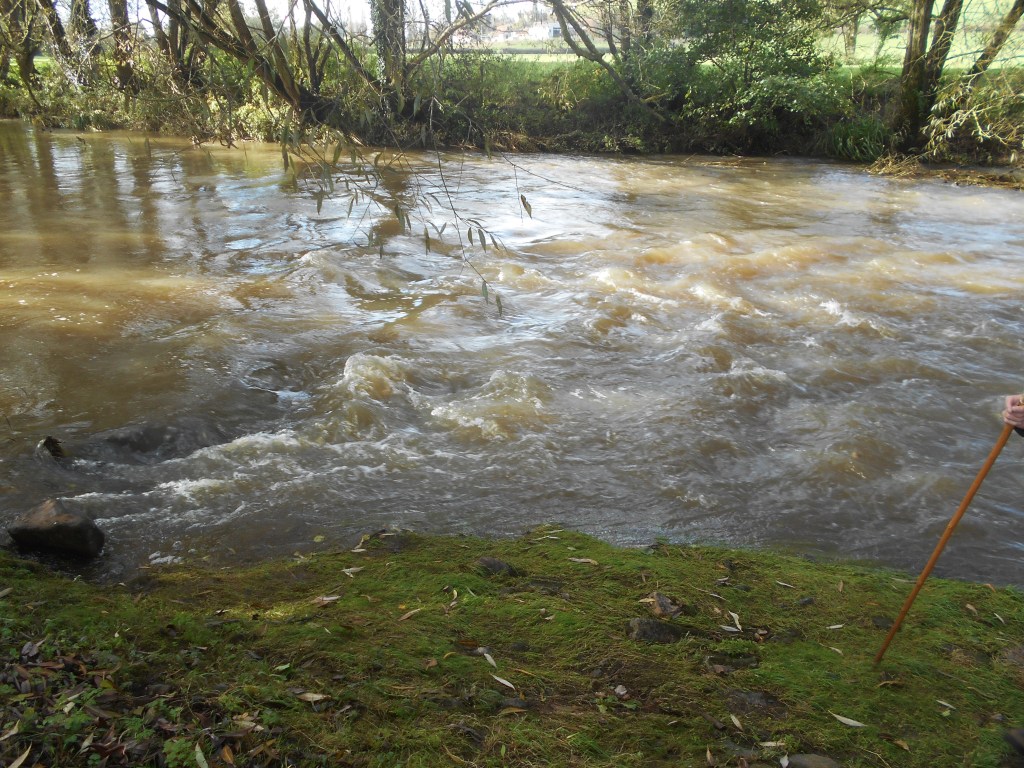
The river was looking pretty wild with the water level pretty high, and a swirling fast current. Although it was noticeable from the flattened grass on the bank that the water level had dropped considerably from it’s previus level.
It is possible that the turbulant water was the reason we saw so few water birds. We only spotted a couple of Mallard flying downstream when we disturbed them and a Little Egret at the other end of our sites. There were no signs of Otter spraint at the first two sites, and we thought we would be disappointed, but then on the grass at the top of a steep bank we spotted what proved to be anal jelly coating a spraint, the black shiny oil-like liquid which is thought to be the mucus lining of the gut which protects from all the sharp fish bones consumed by the Otter. The day was sunny with a fresh, fairly brisk wind so the anal jelly was pretty fresh, almost certainly no older than 12 hours when an Otter had climbed up onto the bank.

Once we reached the last site, a small wood or copse on the river bank, we also spotted signs of a visiting Beaver who had left his well gnawed calling card, a classic pointed stump with distinctive teeth marks and a scattering of wood chips on the ground and the rest of the trunk lying on the ground.
Very little sight of bird life at all, what is becoming commonplace, just a Blackbird, Blue Tit, Wren, Jackdaw and a Crow the only birds and all of them were on their own. However, given the turbulant nature of the river, most of the water birds were almost certainly holed up and resting waiting for the wild water to calm down before venturing out.
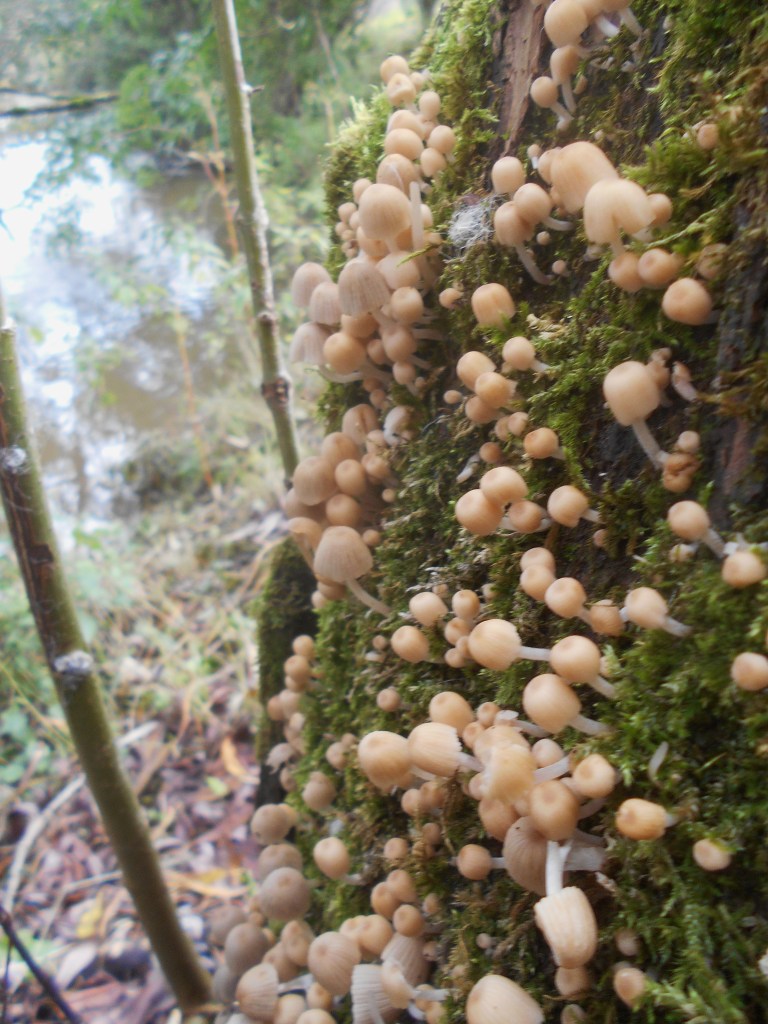
The quiet atmosphere gave us the chance to look around and spot a staggering number of Fairy Inkcaps covering a fallen log and making their way up the moss covered trunk of two trees close by the river.
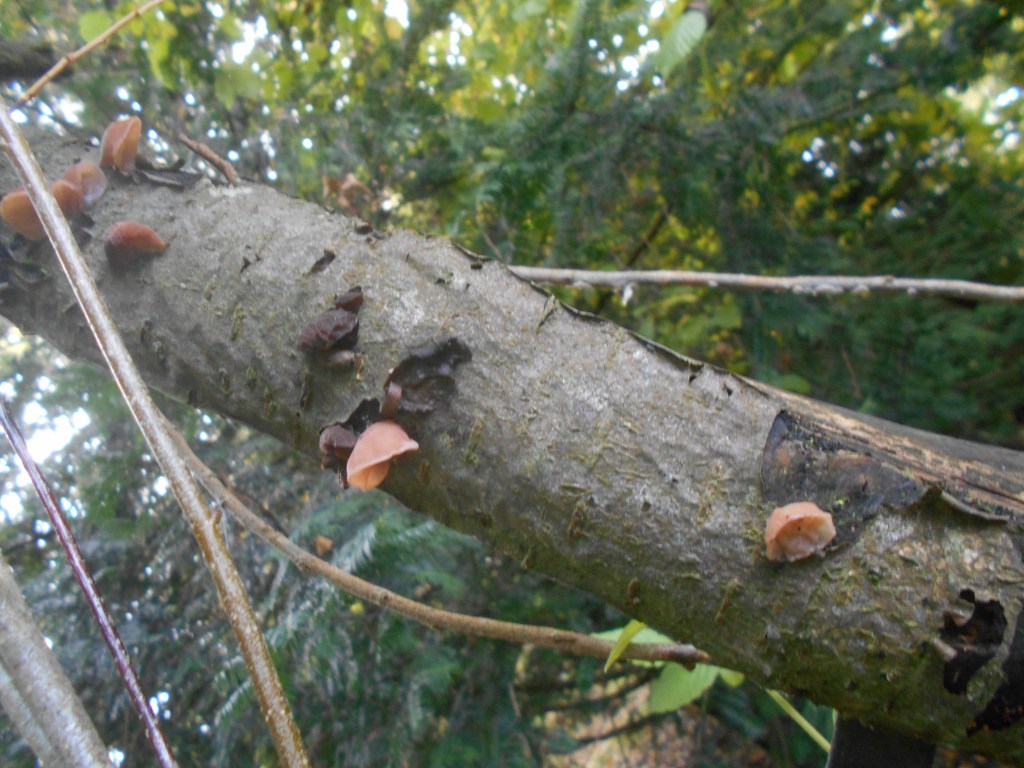
A scattering of Jelly Ear fungus was spotted on a fallen branch and what might by White Brain on a nearby branch, all of which compensated for the lack of fungus on the floor of the small wood near the river, usually a good fungus hunting ground.
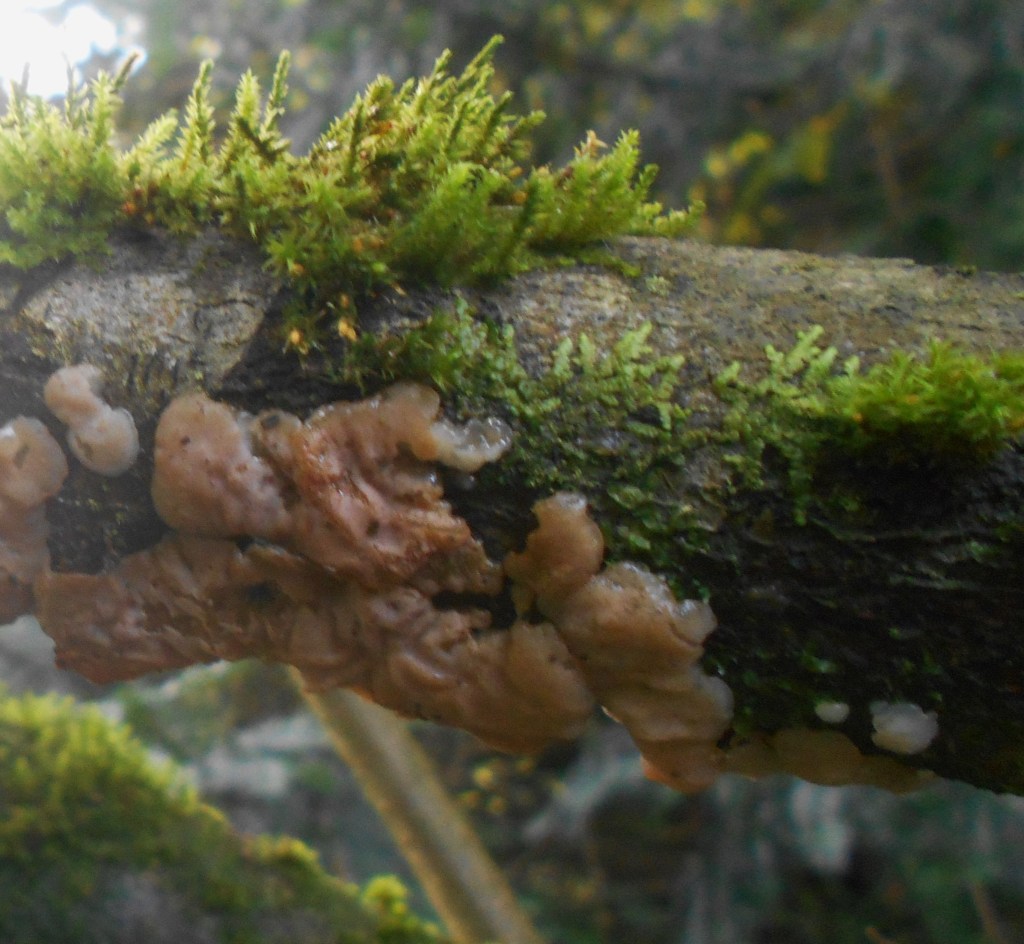
Passing the scattered feathers of where a Wood Pigeon met its untimely end on the edge of the wood, probably caught and eaten by a hungry Sparrowhawk which are pretty common in this area and photographs of them attacking Wood Pigeons appear not infrequently in the local press.
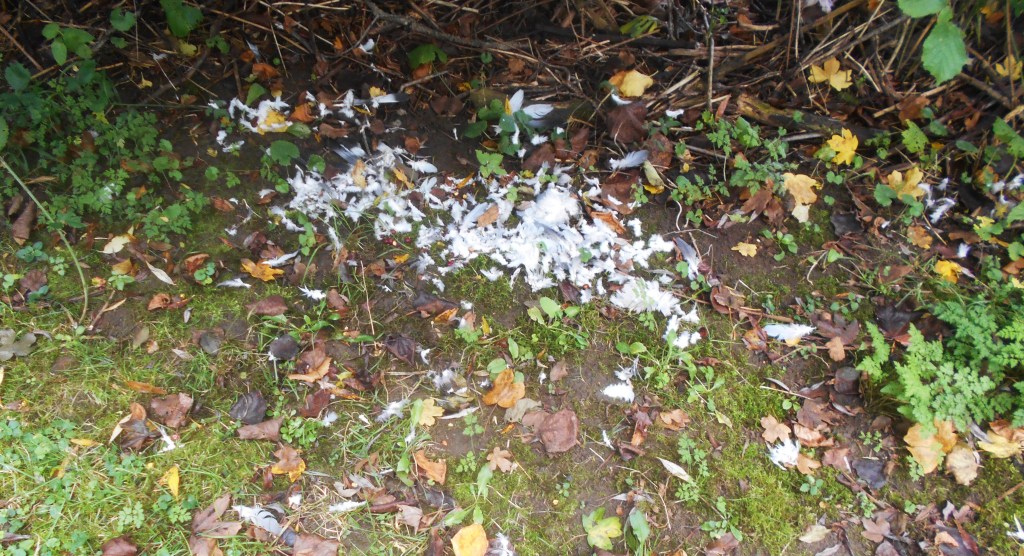
Leaving the wood behind we walked back across the pasture, enjoying the sunshine warm on our backs and soaking up the calm sight of a herd of sheep taking advantage of the good growth of unimproved grassland, unsprayed since time immemorial. Lucky sheep!
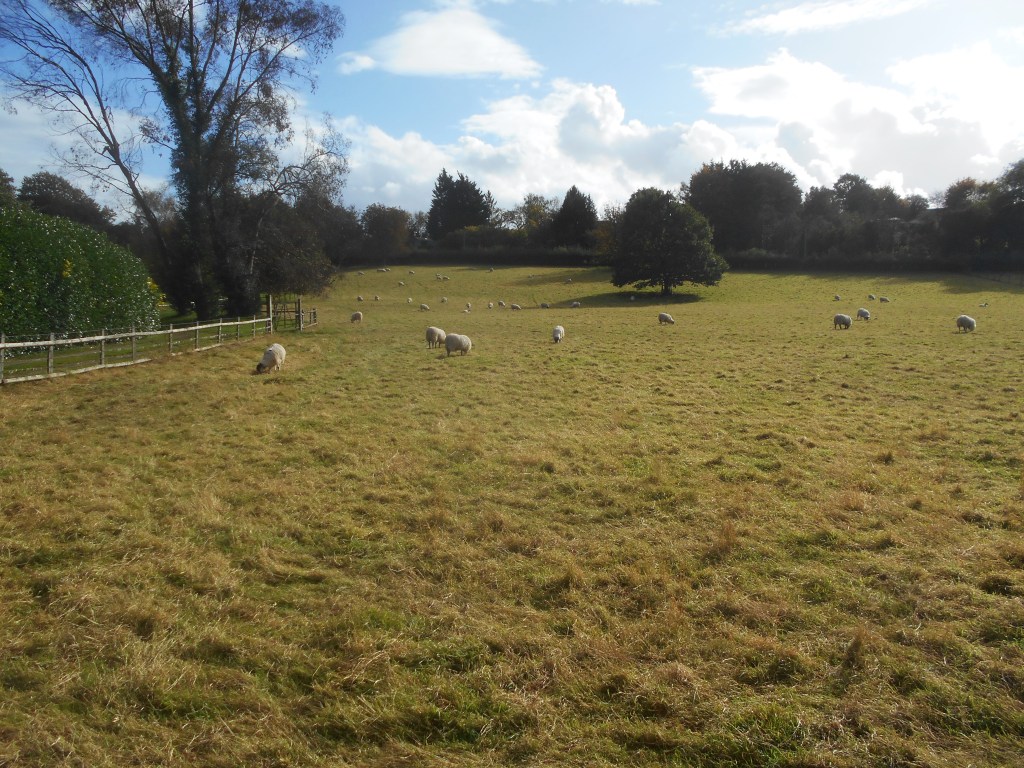
It’s a joy when the rain storms and high winds ease up, even if it is only for a day, to grab the chance to soak up warm sunlight and blue skies before the real chill of late autumn early winter takes hold.
22nd October 2023 / Temp: 14.5 C / Water Level: High
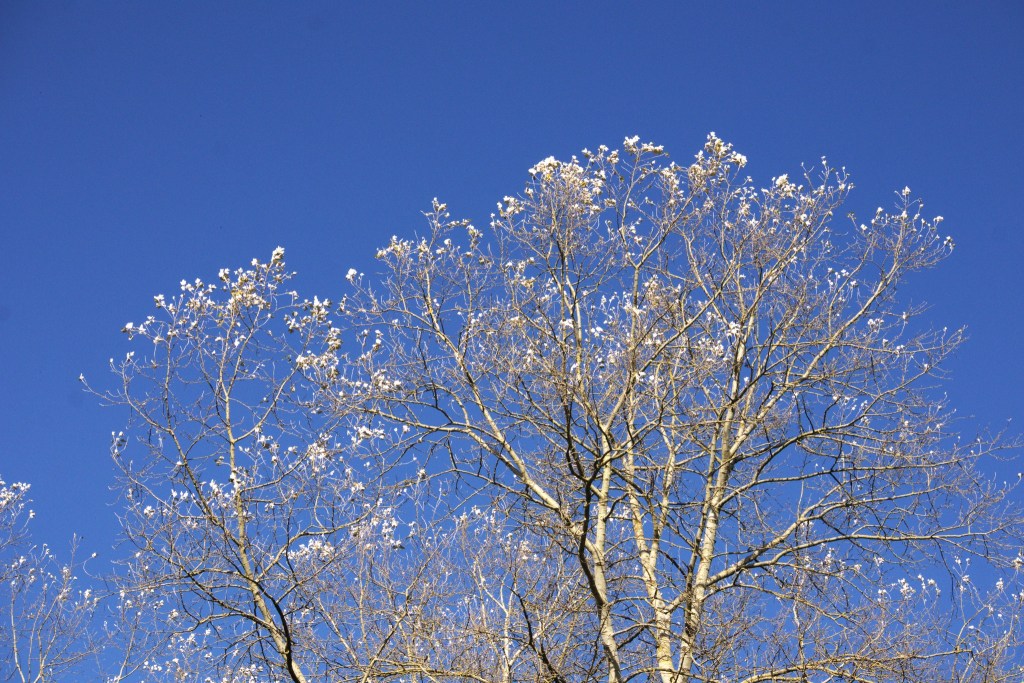
The cool breeze marked autumn but the sky was blue, the sun warm, highlighting the White Poplar leaves and gilding their trunks and branches. We kept a wary eye on the bull surrounded by his harem of heiffers but apart from a cold stare, he made no attempt to move and the heiffers continued chewing their cud and remained lounging on the grass.
We disturbed three Little Egret as we approached the river, the most we have seen together for some years and then spotted the resident male and female Swans leading their three cygnets away from us, all in line upstream.
No sign of Otters at the first site under the bridge but we found two recent spraint at the next site and three fresh spraint and signal crayfish remains at the third on the flood-flattened grass, another indication that the visit had been very recent. All good signs that the juvenile Otters appeared to have suffered no ill consequences from the recent storms and high
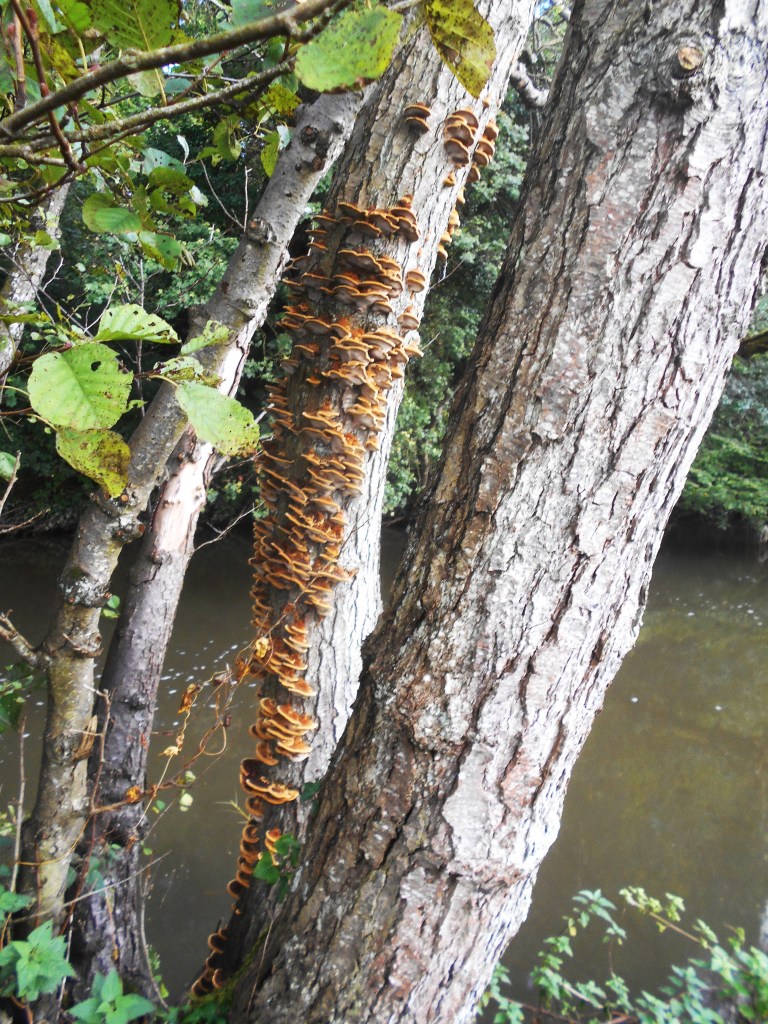
The first signs we have noticed of Alder Bracket fungus infecting one of the Alders, a sad sign of another dying tree. We disturbed two Little Egret and a Heron from the wide gravel beach, a Pheasant exploded from the Little Beach giving good voice to its annoyance at being disturbed, a Buzzard wheeled and mewed overhead and a Cormorant lifted from the river and flew to its tree, hunching like a disgruntled old uncle on its usual branch.
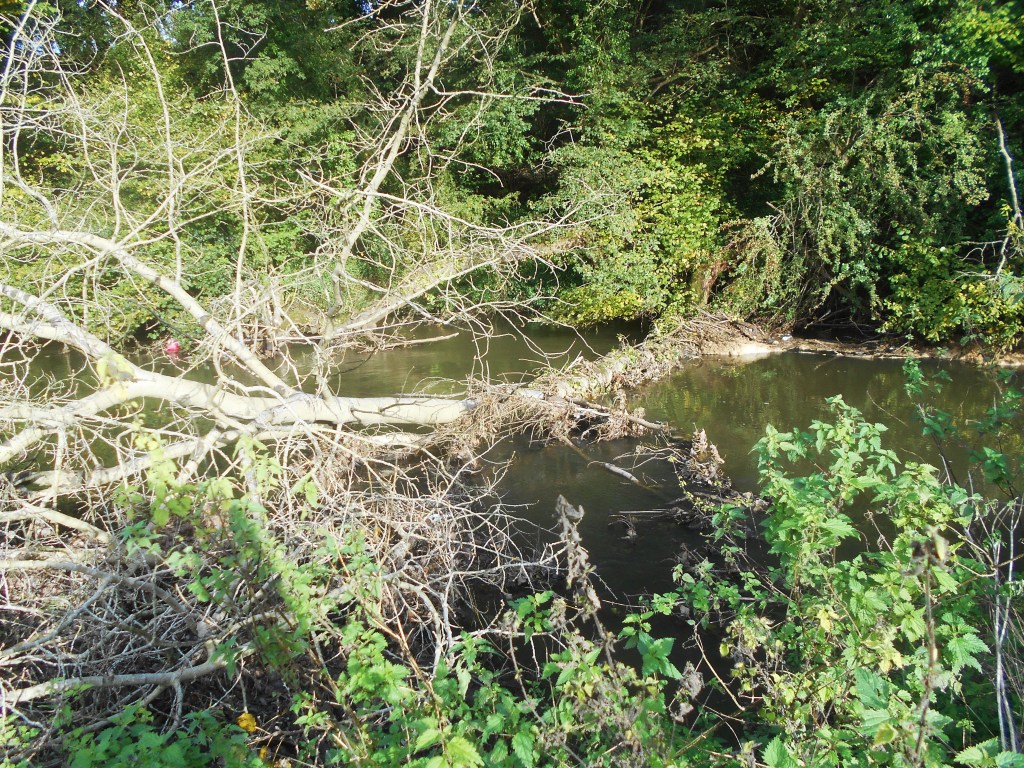
Sadly yet another tree brought down by the recent high winds, the anglers are happy to see them as they slow the current of the river, but the trees are rarely replaced and the thinning of the river bank trees causes other problems for the wildlife of the river.
It was lovely to catch a glimpse of a speeding flash of a blue and orange bullet – a Kingfisher on a mission, but a little disappointing that we spotted only one Mallard – as always, we hope the rest of the flock are wintering on the nearby lake.
We were lucky to run into the new Water Bailiff who introduced himself (just checking who we were as is his job!) and we had an interesting chat about the health of the river (pretty reasonable always bearing in mind that it is running through a growing market town, in an agricultural area with several large dairy farms). He favoured fly fishing and was full of praise for the Mells River, a main tributary to the Frome upstream, which is a typical trout stream, shallow and very beautiful but we suspect not as rich with wildlife as the main river.

We were joined by Paul Cook who was also walking the river bank. He is a committee member of the Frome & District Angling Association who very kindly always lets us know about any Otters he sees (quite frequently!). He told us that a change in the rules with regard to trapping Signal Crayfish, meant that traps must be now be emptied and the Crayfish killed on site and live animals not removed from the riverside. This is going to have a hugely detrimental effect on the river, leading to an increased number of crayfish in a waterway where they are already present in plague proportions. What is a small sideline for Paul, more of a hobby than a real source of income, is now no longer viable – no restaurant is in the least bit interested in dead crayfish. Only time will tell the long term effect this will have and by then it will be too late.
However, he was pleased to say that the filming of crayfish trapping with Sarah Beeny and her children for her programme “New Life in the Country” went well and the boys were good fun and very enthusiastic. He hasn’t been told when it will be broadcast but has promised to let us know!
17th October 2023 / Temp: 12 C / Water Level: High
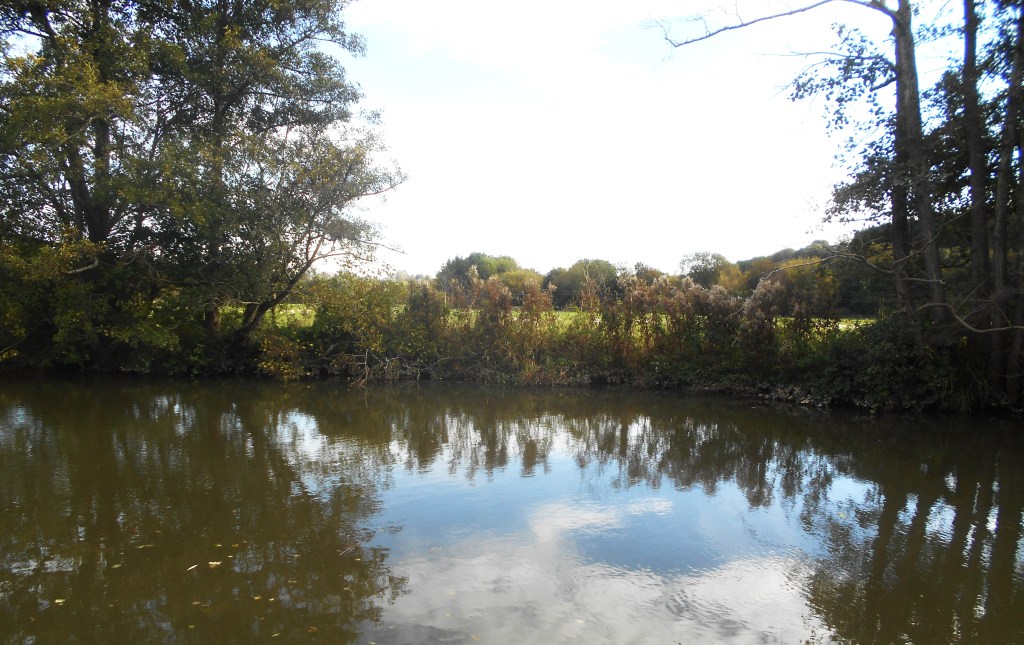
29th September 2023 / Temp: 15C / Water Level: Med-High
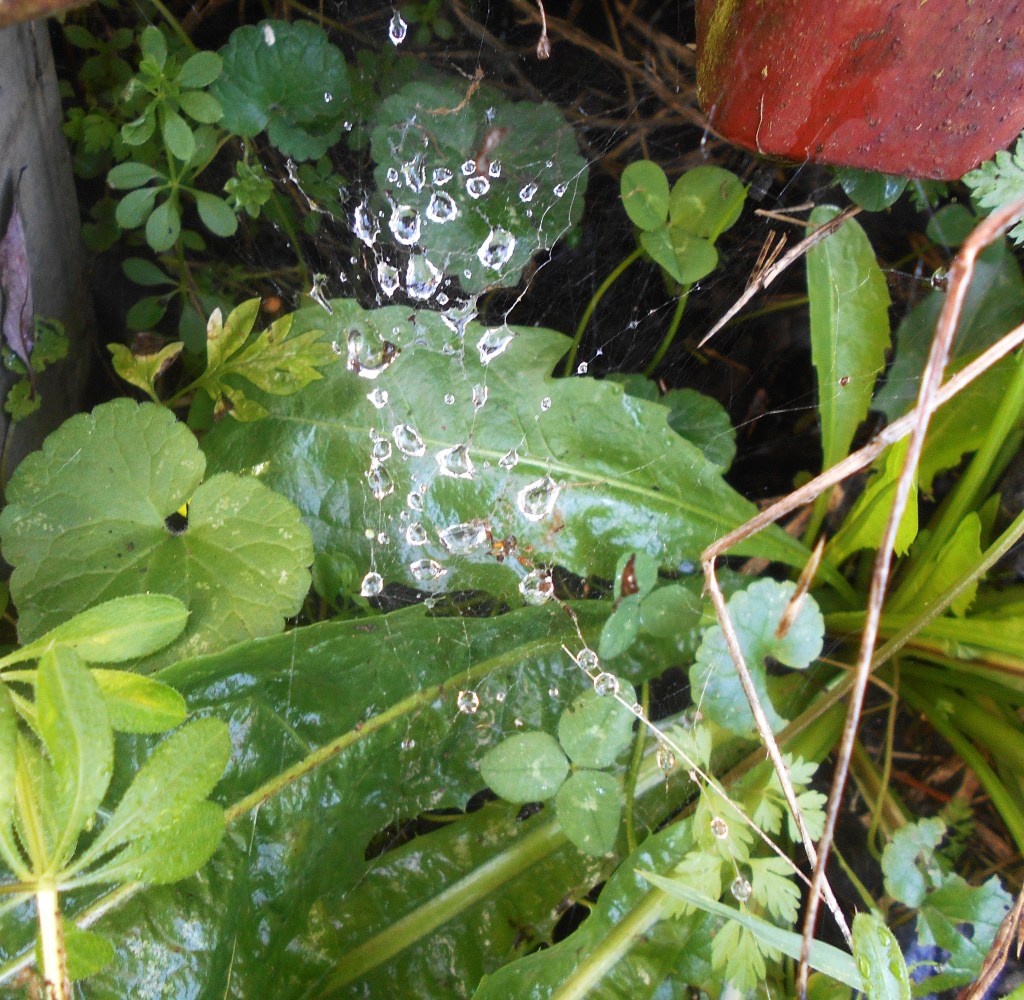
The last days of September, the meterological autumn has passed, there is a chill to the air, even though the sun is still hot. This is the time of swollen rivers, rain drops or mist clinging to cobwebs, craneflies in the long grass, their long, spindly legs making them such ungainly, clumsy creaters. Shy moths bathe on dock leaves in the last of the warmth, while tiny, timid red and black rove beetles and scurrying spiders, replace the grasshoppers of summer.
The water level seems high, covering the rocks where the Otter usually spraint at one site and covering the bridge piers at another. The water high at the next two and running very fast so no signs of Otter at any of our usual sites.
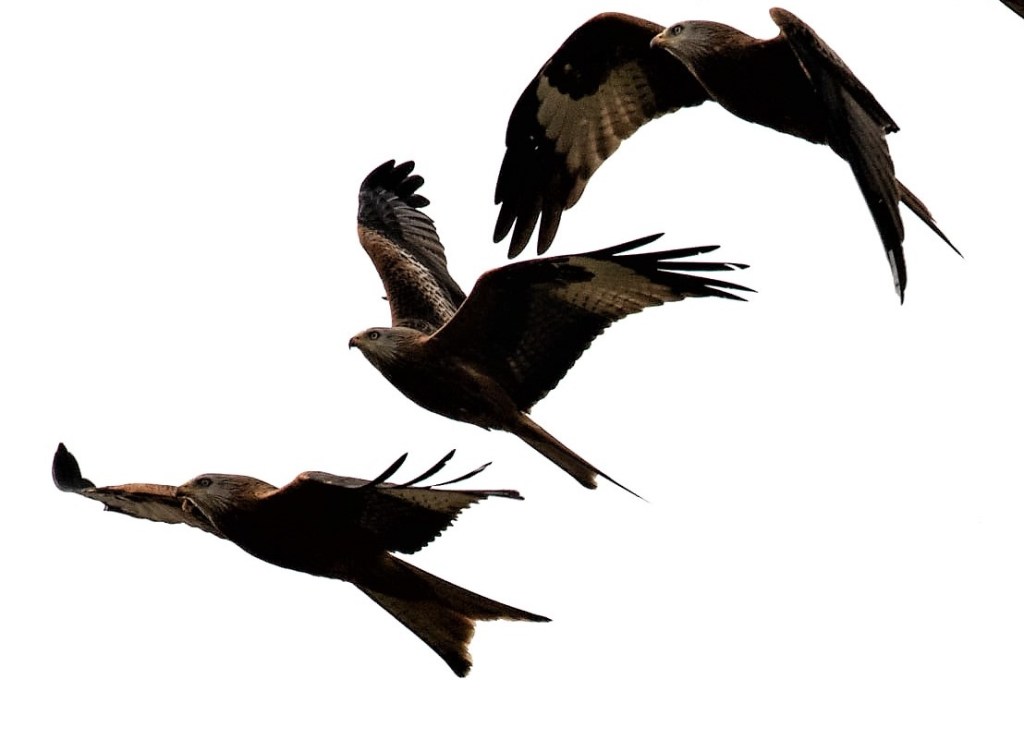
Another sign of the days shortening are more regular sightings of raptors. We usually see a good gathering above the harvester cutting the hay for the winter fodder, but the autumn gatherings are sending a different message. As two Red Kites fly across the fields and circle above the line of mature broadleaf trees, scattering the wood pigeons, followed by a family group of four Ravens calling and chatting to each other as they passed, and then the atmospheric call of a single Buzzard, hoping to frighten a small harvest mouse, this is the sign of birds of prey hoping to fatten up before winter sets in and prey becomes harder to find.
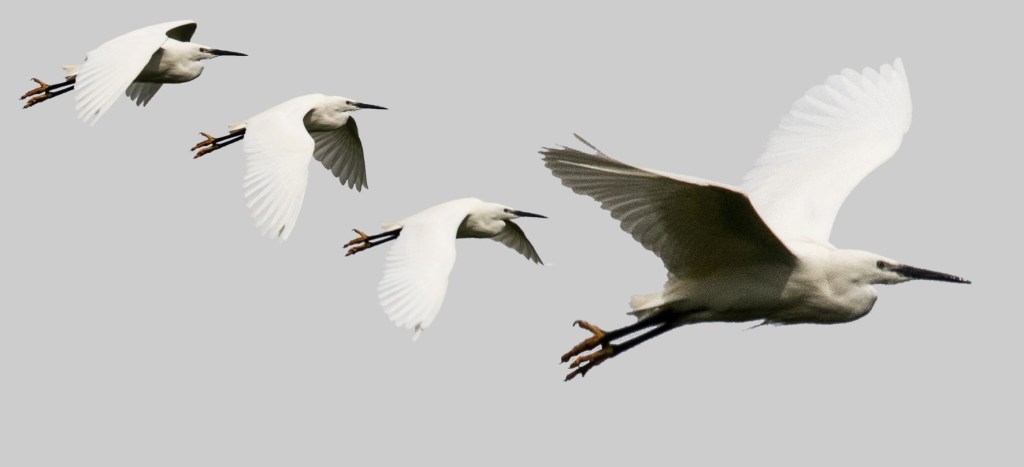
It was good to see the Little Egret in his usual spot in the large pond which the cattle have created from the flooded stream, before something disturbed him and he languidly flew out of sight. We disturbed two Mallard from the river and a Heron which flew up river and then swerved to perch on the Cormorant tree (of them there was no sign). We spotted Magpies, Jackdaws, Pheasants, Blue Tits, Wrens and Robins, but one of the best sightings was of a Grey Wagtail bobbing up and down, his yellow chest flashing in the sunlight and of course his pert little tail wagging up and down too.
14th September 2023 / Temp: 15.5 C / Water Level : Med
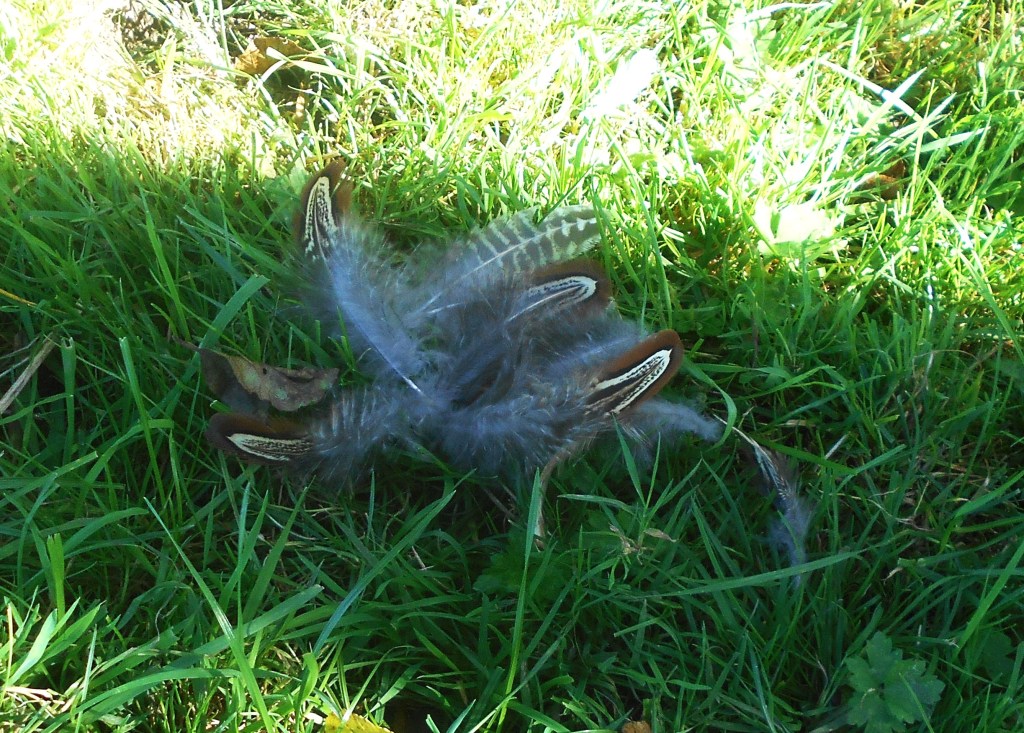
A cluster of feather and more scattered around are all that is left of a predator’s prey on the river bank. A Pheasant which had no doubt escaped the hunters’ guns from a nearby shoot, only to fall foul of what looks like a Fox attack. Imported as eggs or chicks from France in spring, reared until August when the are sold to the shoot and fattened up by the gamekeeper for the start of the season in September. A pitifully short life and when we hear them calling from the hedgerows and small copses, we wonder how long they will survive in the wild.
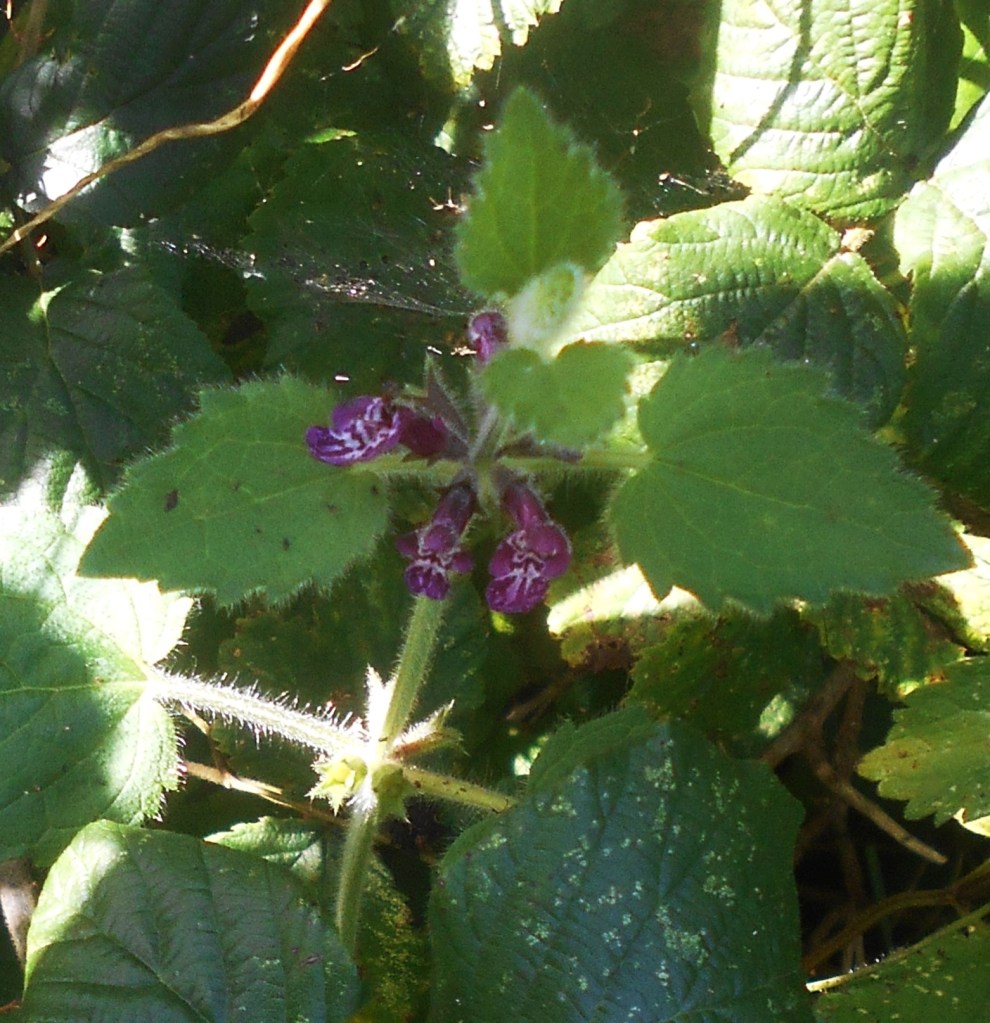
The plants of the Hedge Woundwort are easy to miss, tucked well into thick hedges, but they are worth looking out for as their tiny flowers at this time of the year – “many a flower is born to blush unseen” wrote the poet and surely these are one of them – they intricate marking on deep magenta petals surely ought to be better celebrated.
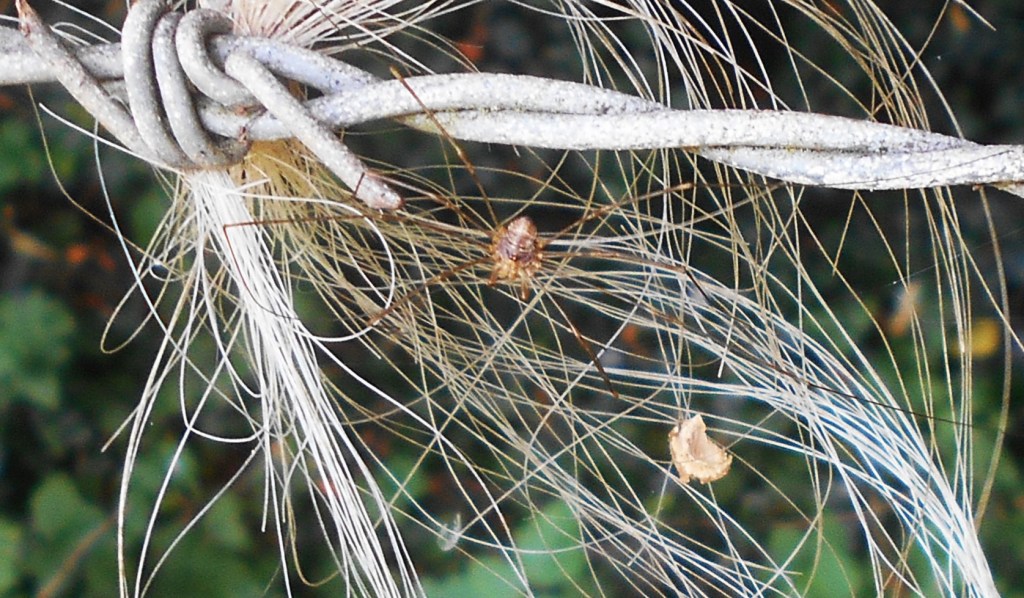
Another common sight at this time of the year are the Harvestman spiders. This handsome wee beastie was a surprise find when I went close to the barbed wire fence at the edge of the field to exmine the hair caught in the knot (probably cattle). Daddy long legs is the other common and very appropriate name – the length of the legs is indeed prodigious!!
No signs of Otter at any of the three sites here today.
13th September 2023 / Temp: 14 C / Water Level: Med

Overnight rain on the recently mown grass in the orchard produced these beautiful little mushrooms which were scattered in ones, twos and threes across the lawns. Milky Conecap (Conocybe apala) which open in the morning and, if it’s sunny, shrivel and die during the afternoon – blink and they’re gone. A first for us, we haven’t ever seen these before. As is the case of so much in the natural world, or in fact in every walk of life, timing is all!
It was so lovely, as always, surveying our allotted stretch, no longer warm, in fact the stiff breeze was decidedly chill, but the bright sunshine on the purple sloes fattening, lots of fat blackberries looking luscious on the bramble (one with a Comma butterfly feeding happily) and the river looking stunning as ever, tumbling over the stones. Another Comma spent an inordinate amount of time fluttering around on the still rain soaked grass, for what reason we have no idea!
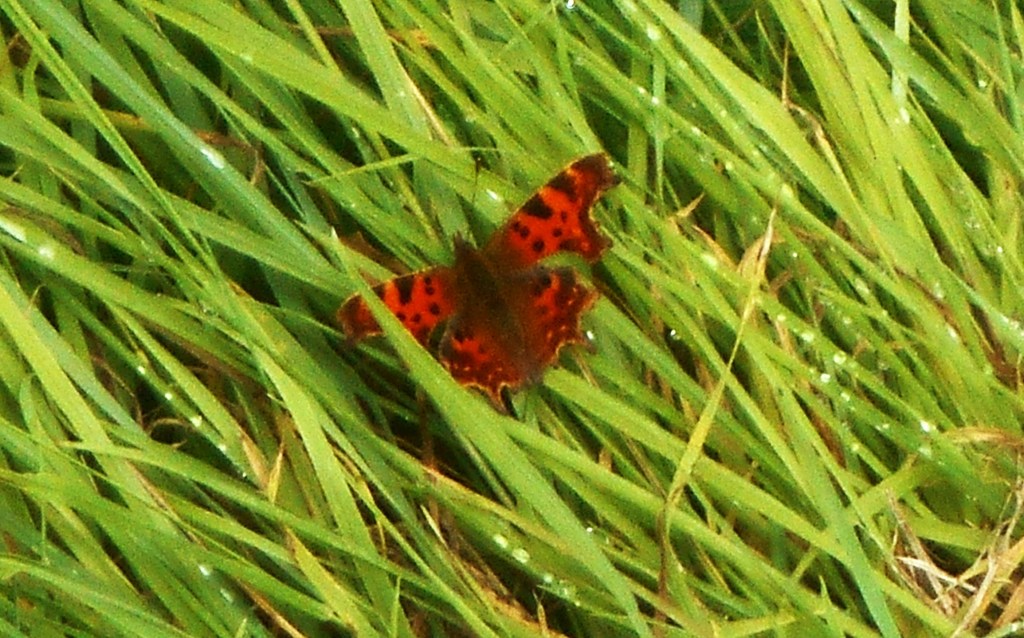
At the area which has been allowed to grow wild, there were lots of bees and hoverflies busily feeding on the large beds of tall white comfrey in full flower and masses of tiny 16-spot ladybirds feeding on the nettles. These insects are so small, no bigger than 3mm, they are difficult to spot, but there were so many, their movement caught the eye.

We were really pleased to see 3 fresh Otter spraint at the second site which looked like a mum & 2 juveniles, and 3 fresh and 2 recent Otter spraint at the last site – two out of three of the sites positive signs were a very welcome sight indeed.
Glancing up at the sound of a familiar peep, a glorious flash of brilliant azure blue and orange illuminated by the bright, clear sunlight flashed low over the river and passed in the blink of an eye. It’s always thrilling to see a Kingfisher shooting upstream and then, if we’re lucky, watching as he later shoots back downstream, peeping a warning and performing a perfect tilted wing manoeuvre as he rounded the bend in the river before being lost to sight. And the Robins are back – at last! We spotted or heard 5, establishing their territory loudly and firmly, as well as a Wren, 4 Mallard, a Magpie, and of course the resident Jackdaws and Crows. Worryingly no sign of the pair of Mandarin who successfully bred in the spring and should be on the river.
28th August 2023 / Temp: 19 C / Water Level: Med-High
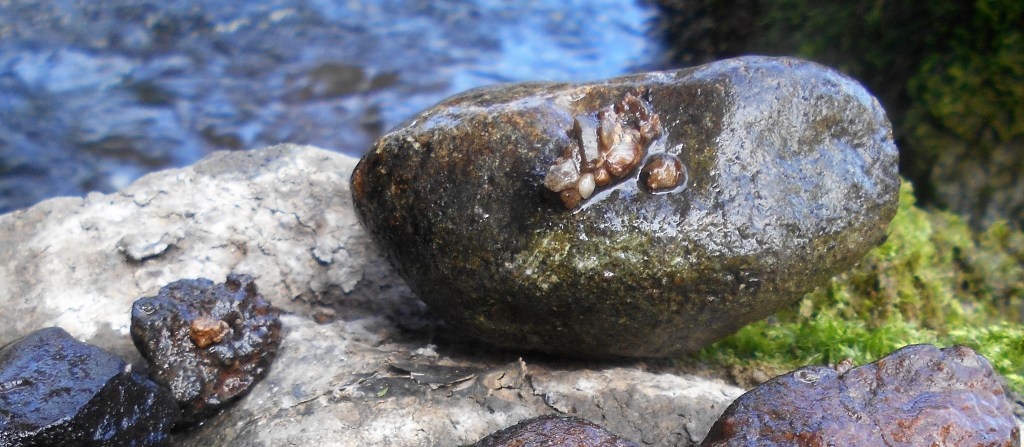
This collection of gravel from the bed of the river looks like a Rhyacophilidae pupal case as both ends are closed. The Somerset Frome is a perfect river for this species which is found in stony, flowing waters of small streams to large rivers, with a substratum preference ranging from coarse gravel to boulders, and in high current velocities, which pretty much exactly describes this stretch of water! Rhyacophila dorsalis (the species we see most often in our kick survey tray) is a green free-living species and so does not build a case like many other caddisfly larvae, feeding by active predation. However, it does build a shelter when it is ready to pupate, attaching it to a stone. The ability of tiny, soft-bodied larvae to assemble a collection of sand grains or pieces of gravel, form it into a case, crawl inside, close it off and then spin an inner pupal case, as protection against predators while it pupates is surely one of the most awe-inspiring feats of nature!
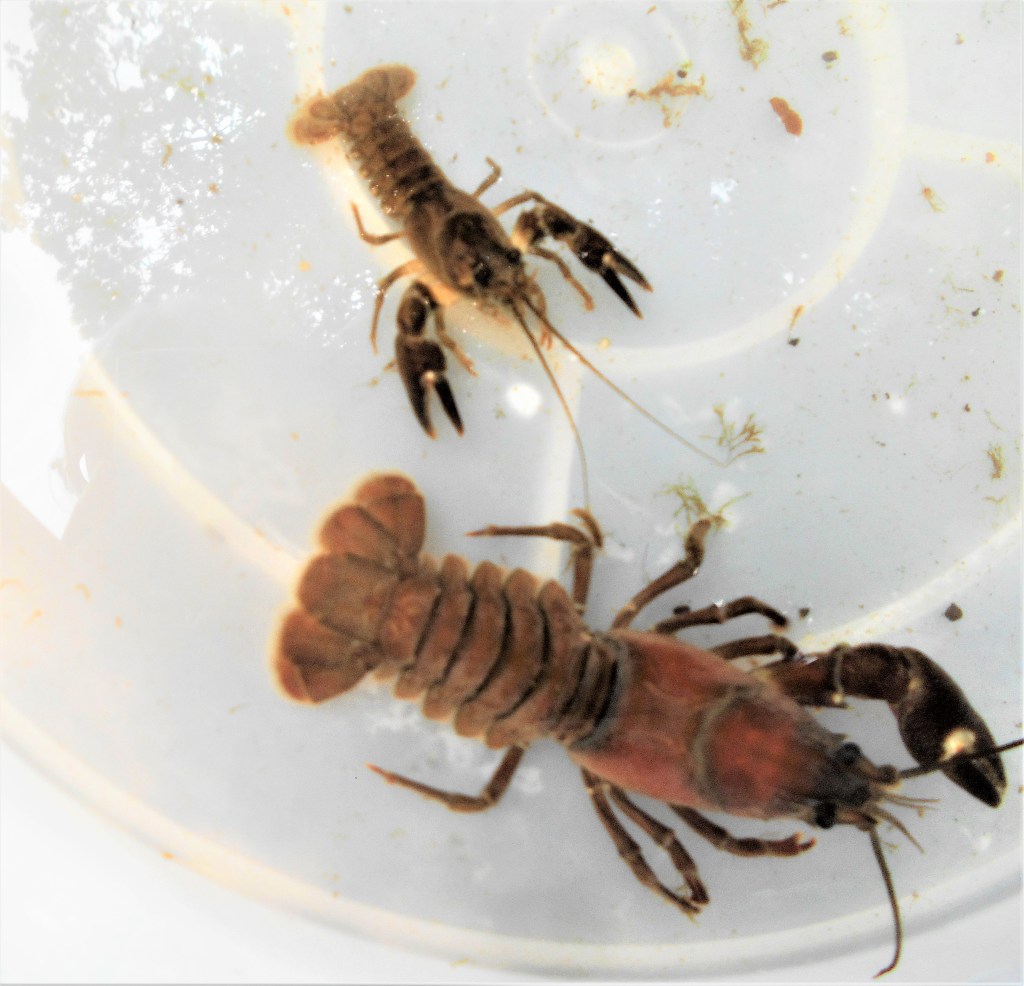
The main business of the day is to “assist” our grandsons on their crayfish hunt! There are few sights which are more enjoyable than watching small boys with large nets clambering about among the boulder strewn river bed, wellington boots full of water, soaking wet tee shirts, shorts, arms and legs, a’huntin’ the crays!! The running commentary whilst wading about, the shouts of delight at a find, the immense care transferring them to the bucket, the close examination and discussion of every point is a delight to watch and be part of.
Our relationship with these Signal Crayfish is ambivalent to say the least. They form the main diet of our local Otters (orange-red spraint, liberally sprinkled with crushed shell and small white crayfish pearls [gastroliths] is ample proof of this). They are extremely nutritious which keeps the Otters healthy, they are easier to catch than the fish, so for the most part the Otters leave the Trout alone, plus the added bonus that, as American Signal Crayfish numbers have reached epidemic proportions, the Otters help to keep the numbers down.
However, the Signal Crayfish do of course carry a plague, (to which they are immune but our native White-clawed Crayfish are not), consequently the native crayfish are almost entirely absent from most rivers in this country. What is more, Signal Crayfish burrowing can cause erosion of riverbanks as their burrows can be up to 2m deep, with many inter-connecting tunnels that weaken the bank.

Given the noise and the splashing and the tramping about, we were not surprised to see the resident Swan parents lead their three cygnets back upriver to their usual sheltered beach which we can attest is always quiet and undisturbed by anyone – not just noisy small boys! A lovely, lovely day to which our grandsons had been so looking forward, and worth the long, boring drive for them to reach.
10th August 2023 / Temp: 21 C / Water Level: High

Very exciting survey along the river today, not only fresh Otter spraint at two of our sites but the very first sighting of a Silver-washed Fritillary and a Jersey Tiger Moth anywhere along the river! The Silver-washed is a beautiful butterfly of woods and woodland rides where we see it feeding on bramble flowers but it does love Buddleia so this plant has attracted it which explains its presence here.
This Buddleia tree is growing very precariously on the edge of a small six foot cliff formed by the erosion of the river bank, undercut by flood water. In places, stones have fallen to form a natural breakwater to slow the erosion but the flood water is so strong it will inevitably undermine all the trees growing along the edge, including the Buddleia, and inevitably they will eventually fall into the river. However presently the Buddleia is flourishing, flowering freely, and, as well as the Silver-washed Fritillary, we spotted two Peacocks, two Red Admirals, several Large White butterflies and, astonishing, the first Jersey Tiger Moth we have ever seen along the river, all feeding on the single tree.

You will need sharp eyes to spot the stunning Jersey Tiger Moth feeding on the nectar in the tiny flowers at the end of one of the Buddleia sprays. It is an unmistakeable black triangular shaped moth with yellow radial lines and when it spreads its wings, vivid orange underwings. Once a rare visiting migrant from the Channel Islands, it is now well-established in Devon and Dorset and parts of London, and beginning to be seen over the past couple of years in Somerset, so it was a great treat to see it here by the river. It feeds on Common Nettle, Hemp-agrimony, White Dead-nettle, Borage, plantains, Ground-ivy, and Bramble, and its caterpillars also feed on Nettles.
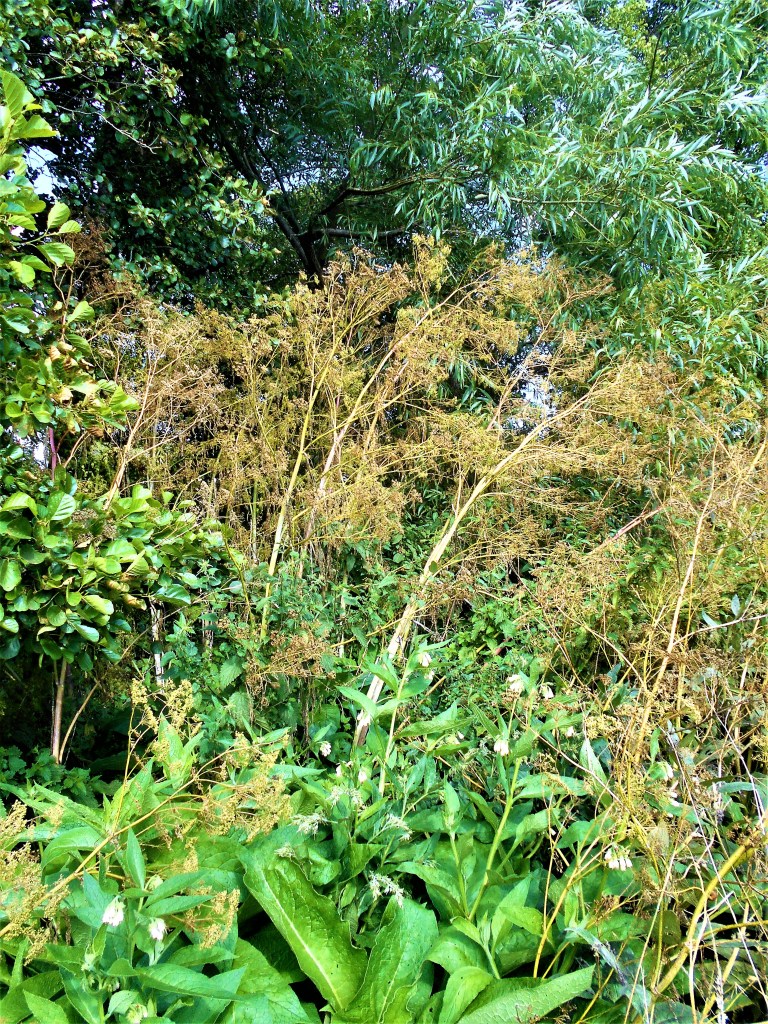
You are probably wondering why I’m listing the plants in such detail, the reason lies in the Buddleia (a favourite plant of this particular moth) but also the wild garden (see above) close by which was created by the owners and has become a mass of flowering plant where the mullein and umbellifers are nearly as tall as the trees! The plants listed above apart from borage (although comfrey which is the same family is found in abundance) are all found flourishing and growing to extraordinary size in the wild garden, which means that there is a strong possibility that the Moth will lay her eggs there, knowing that they will have copious amounts of nettles to feed on!

It’s not only the Jersey Tiger Moth, the caterpillars of Peacock (we saw two on the Buddleia) and Small Tortoiseshell butterflies also feed on nettles, as do Nettle Groundbugs (two or three of the tall nettles were covered in their late instar nymphs – see above) and seed eating birds, including Buffinchs (which are becoming increasingly scarce) feast on the nettle seeds in autumn. This precious plot, a mere 40-50 square metres of wild plants is a crucial nursery, a breeding and food station for insects whose numbers have fallen so drastically in recent years.
9th August 2023 / Temp: 19.5 C / Water Level: High

Running along the field boundary separating the fields is a small, spring fed stream which always supports masses of plants, reeds, marsh marigold in spring, purple loosestrife, great willowherb, hemp agrimony, yellow flag iris to name but a few. Early in the year it is a nursery for tiddlers, the tiny babies which dart for cover at the first footfall close to the stream. Presumably it is safer away from the main river, too shallow for the large, predatory fish and it also warms up quickly so great shoals of them remain there for their first months before moving down to the river.
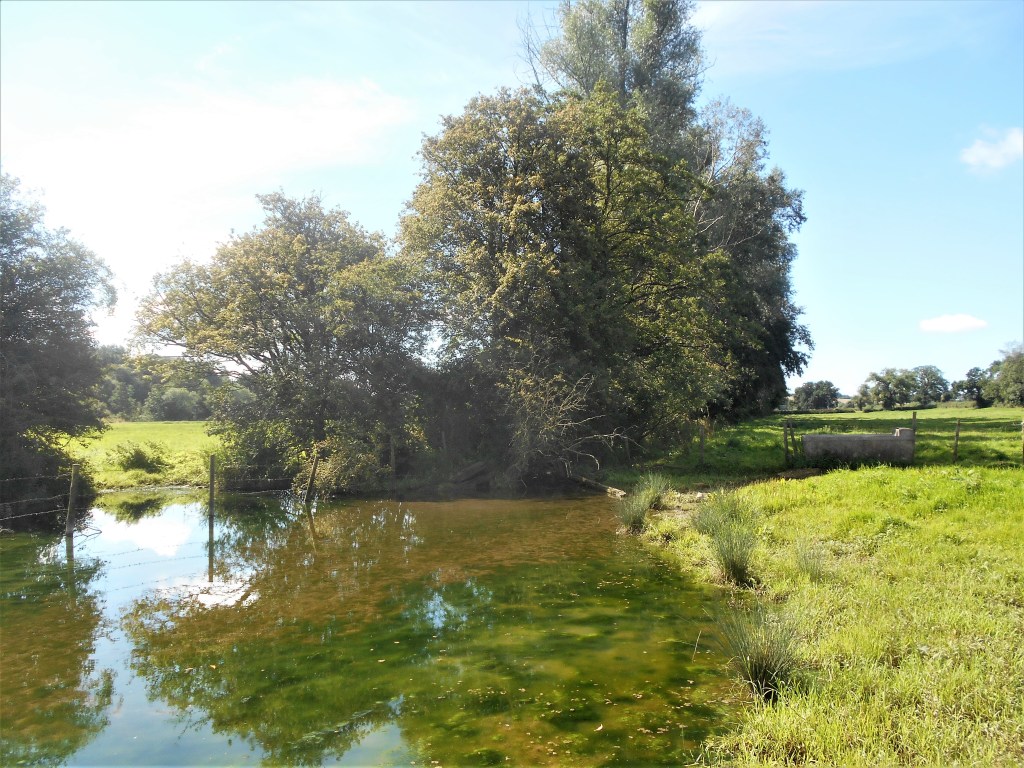
Between two fences where the cattle trough stands, and the cattle gather, the ground has fallen away and in periods of heavy rain the stream broadens and forms a small pond. Not the most attractive pond, muddy and churned by the cattle, nevertheless on sunny afternoons in high summer this unexceptional small body of water becomes a hunting ground for dragons!
We watched large Brown Hawker dragonflies with golden-bronze wings challenge each other for the hunting rights to the midges, small flies and mosquitos. One particular dragonfly, no bigger, but by far the most aggressive, fought off all comers again and again whilst patrolling his patch, never pausing to rest. However, during all the time we watched, he didn’t manage to catch anything. Hoping to get a photograph, we waited for it to land to eat but it didn’t. An Emperor dragonfly then visited, flew over the flooded stream for a brief period, before losing interest and flying off, presumably to better feeding stations, leaving the field to this one triumphant indefatigable Hawker still relentlessly flying up and down up and down!

The five Common Darter dragonflies we spotted, fly around a bit and then take their ease and rest on grass stems, boulders, riverside plants almost anywhere, perching enjoying the sunshine, chilling out, while the Brown Hawkers never seem to rest – never ceasing in their determined quest hunting for food and quite impossible to photograph.
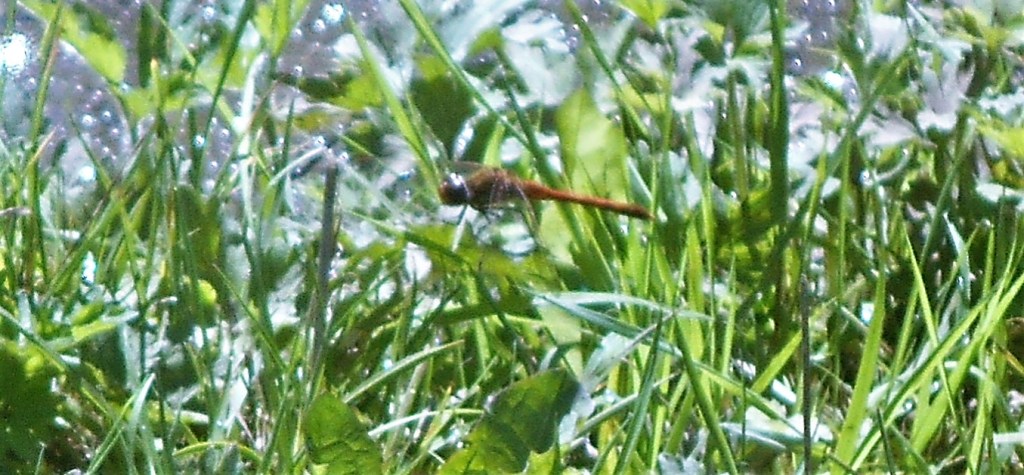
As every year, it appears that when the dragonflies appear, the damselflies which have had the river to themselves from late spring to early summer, seem to disappear, or at least their numbers drop considerably. We did see four Blue-tailed and three Banded Demoiselles, but not the masses of Banded Demoiselles we are used to seeing along this stretch of the river.
It was such a beautiful morning, full sun, blue skies, a cool breeze to dry the rain soaked grass and a sprinling of butterflies, Meadow Browns, Gatekeepers and this Small White, enjoying the quiet, lush green meadow; whilst hoverflies and bees humed around the bramble bushes and fed on the purple loosestrife. We heard a Moorhen, caught sight of a Little Egret, and Cormorant in the adjoining field were the only signs of water birds in spite of the Mallard, Goosander and Mandarin family groups all with young which we saw on the river a few months ago. We heard and later saw a Raven, and two Buzzards. But apart from a Greenfinch and a couple of Blue Tits, no sign or sound of any small birds, all of which is concerning, so the brief glimpse of a scampering squirrel was a welcome sight.

It’s always a surprise to see mushrooms, which we associate with autumn, but of course they fruit all the year round, including high summer, like this beautiful brown silky mushroom, which unlike the Pleated Inkcap we spotted, this species is completely unknown to us. [Update: the brilliant Peachysteve an expert on iSpot has identified this mushroom as Rooting Shank Xerula radicata, which is is saprobic, rooting on rotten wood, often buried deep beneath leaf litter. Good to know!]
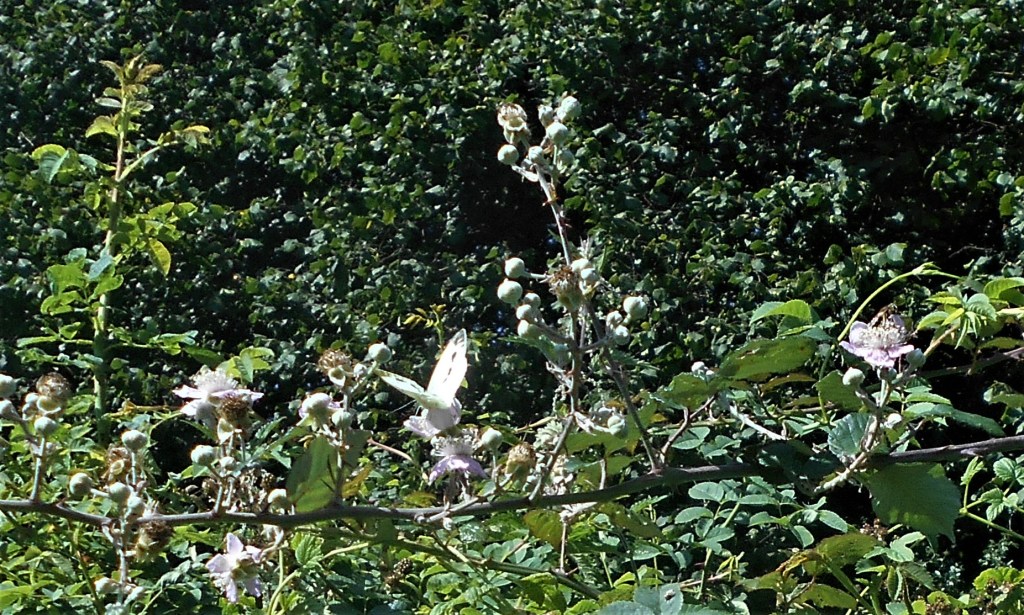
Walking past the boundary hedge as we headed to the stile and home, we missed capturing a shot of a beautiful Common Blue butterly on the brambles but admiring another Small White and a large bee feeding on the flowers made a satisfying end to a perfect morning!
In these increasingly difficult and problematic times, a walk along a river drinking in all the signs of summer, it is a welcome rest for the mind filled with anxiety and stress.
25th July 2023 / Temp: 16.5 C / Water Level: Med. High

Looking down into the barely moving river from the bank, filled with flowering plants alive with Butterflies, Hover Flies and Bees we watched the Pond Skaters dashing around on the sky reflecting water – it’s what you do on a sunny morning in the last week of July here in the South-West!

Such calm water was in complete contrast to the wide gravel beach further downriver, where the recent high water of the incessant rainstorms we have been experiencing, has flattened the nettles, hemlock water dropwort and other riparian plants and widened the beach so that the damselfies had further to fly to rest.
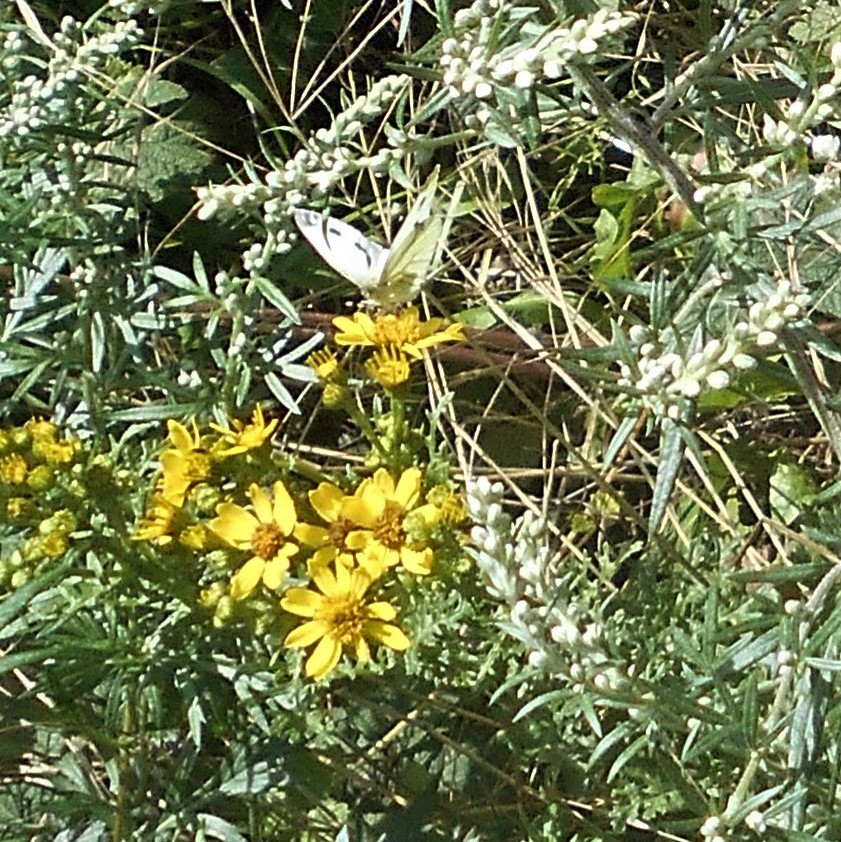
Lots of butterflies, LOTS of male Banded Demoiselle damselfies which appeared everywhere, even the delightful sight of a Kingfisher flashing upriver, but only one sign of Otter – a recent spraint at a favourite spot beside the weir, but apart from that no signs at all.

But at least I managed this snap of a meadow grasshopper – not brilliant but better than all the others i have taken so far this summer!
20th July 2023 / Temp: 18.5 C / Water Level: Low

Small stretches of waste land – clearings in woodland, or patches of grassland on the edges of streams – not large enough to do anything with and so they are left alone, soon to be covered with wild plants. A thick tangle of tall thistles, ragwort, umbellifers, stinging nettles, sorrel, bindweed etc impeding every step, plus feet high ants nests forming carefully laid traps for the unwary and searching among them for insects covers exposed skin, clothes, hair and boots in fluffy thistle seeds, grass seeds and nettle stings!

But of course this is where the most insects can be found, as these areas abound with butterflies, bees, hoverflies, beetles and plant bugs. Meadow Brown butterflies of course, but also Holly Blues, while among the thick hedges of brambles which form the boundary, is where we find the Commas feeding on bramble flowers or if they are lucky, the nectar of the occasional clump of large and fully flowering Hemp Agrimony.

And if you have the time, the energy and the enthusiasm, you can chase the Small Copper Butterflies, who never stay still, are constantly on the hunt often, as in this case in twos, but if you are lucky many more and capture a photograph, hopefully a better specimen than my pretty indifferent effort! However, at least I managed a quick snap, not so lucky with the Brimstones, Red Admirals, Gatekeepers and Ringlets or the Beautiful Demoiselle damselflies and the stunning Brown Hawker which dashed passed…

But all good things come to an end and we turned our steps and minds to the reason we were there, to check for Otter spraint along one of the small streams which formed a tributary to the Somerset River Frome.

The contrast could hardly be greater than the stream which at this time of the year, when the trees are in their full summer leaf, shading and darkening the stream to almost dusky twilight and the area of chalk grassland filled with bleached grasses, thistles, ragwort and umbelifers in full sunlight and filled with butterflies!
The stream, bordered by nearly 5 ft high, thick stemmed Hemlock Water Dropwort, leaning over the water from waist to shoulder level, while the long stems of Pendulous Sedge block any sight of the stream as they lie across from bank to bank from ground to chest level, any spare space filledwith stinging nettles, trailing bramble, and Hart’s Tongue Fern. It was almost impenetrable, more like a jungle stream than a small trickle in the West of England, certainly unlikely to appeal or attract a hunting Otter and so it proved, the areas of bank we were able to get to showed no sign of them anywhere.
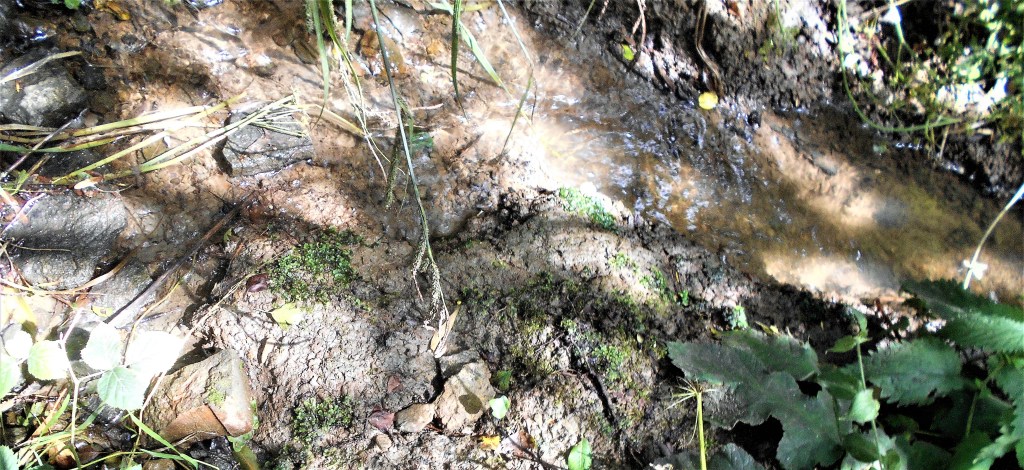
The stream, which during winter and spring had been a busy, hurtling and splashing over stones – gin clear and full of life, looked sluggish, discoloured and murky, so we were not tempted to turn stones in search of caddis larvae. The exposed bed clearly showing the tufa deposits was scattered with small clumps of liverwort, but little else. This stream travels through a mixture of mudstone, limestone and sandstone underground for some distance before seeping or trickling from its springs at the top of the hill and it is this which gives rise to the petrifying elements of the water.
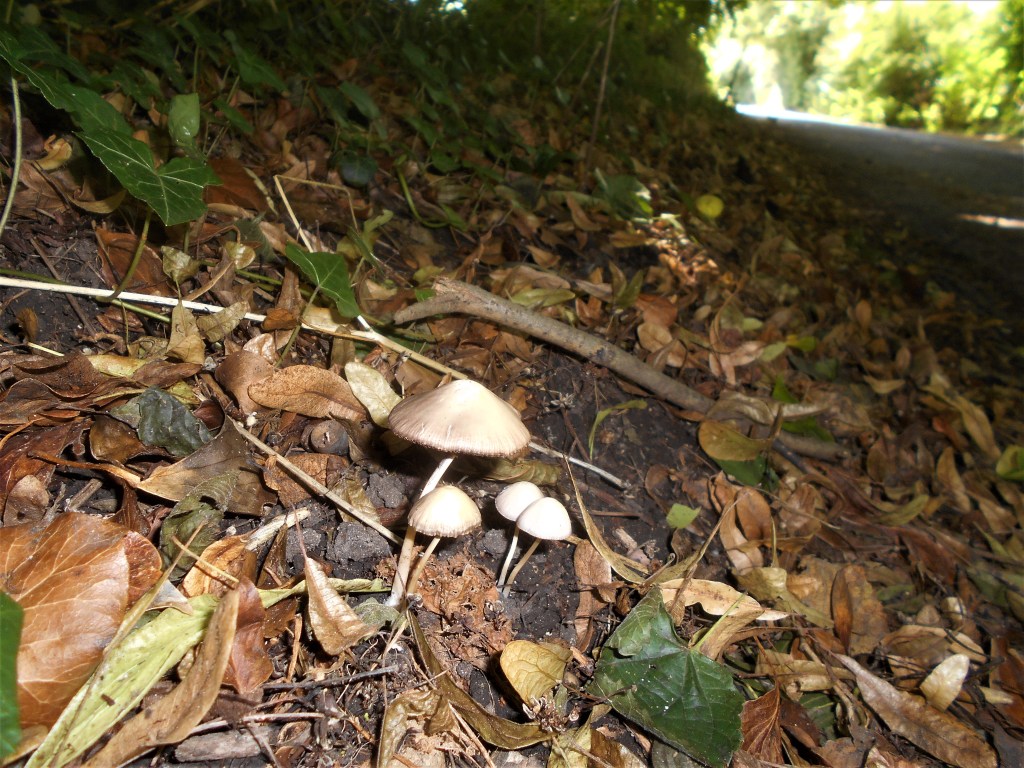
Leaving the stream, the meadow and the woods and turning up the lane leading towards home, we spotted this small clump of summer mushrooms, possibly brittlestems. Always a surprise to see fungi in summer and they send a warning – enjoy the sun and the butterflies and the warmth while we can – autumn isn’t that far away!!
13th July 2023 / Temp: 17.5 C / Water Level : Med-Low

The area around the bridge is not large but is a mass of bramble, Great Bindweed and Red Valerian so while the river bank and the fields beyond are empty of butterflies, in this small patch we spotted three Red Admirals, two Large White Butterflies, and at least four Buff-tailed Bumblebees in the three or four minutes we spent looking at them as we searched for Otter spraint under the piers.
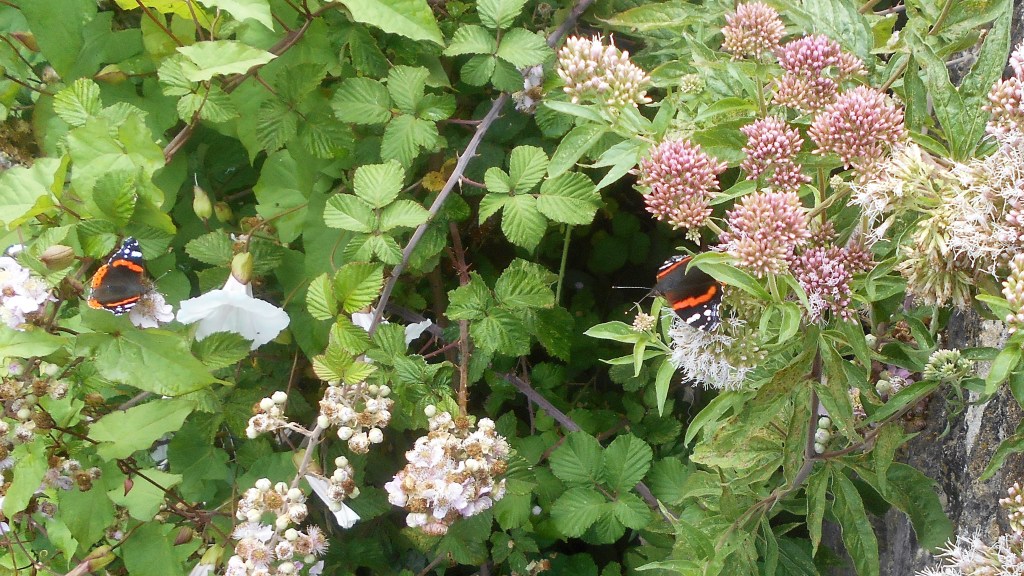
Although there was no sign of spraint there or on the stones and boulders standing proud above the water level of the river, we were delighted to catch sight of a Dipper perched and bobbing up and down as it searched the water for food.

Turning back to the flowering hedge, we suddenly spotted a Pellucid Hoverfly busy among the Greater Bindweed and among the grasses and ragwort on the riverbank we caught sight of several Banded Demoiselles and a Frog-hopper searching a Mugwort on the bank for insects.

The old saying still waters run deep might have had this stretch of river in mind, slowing and deepening before the weir, the banks filled with water-forget-me-not, Great Willowherb, Wild Parsnip, Reeds, Great Bindweed and lots of stinging nettles at this time of the year, and Marsh Marigold and Yellow Flags in spring.

The slower water permits Yellow Water-lilies to spread out their leathery pads provide a great place for fish to hide from predators and male Red-eyed Damselflies to sit watching for unwary females to flutter past and the water birds like the female Mallard we spotted nosing around the stems.
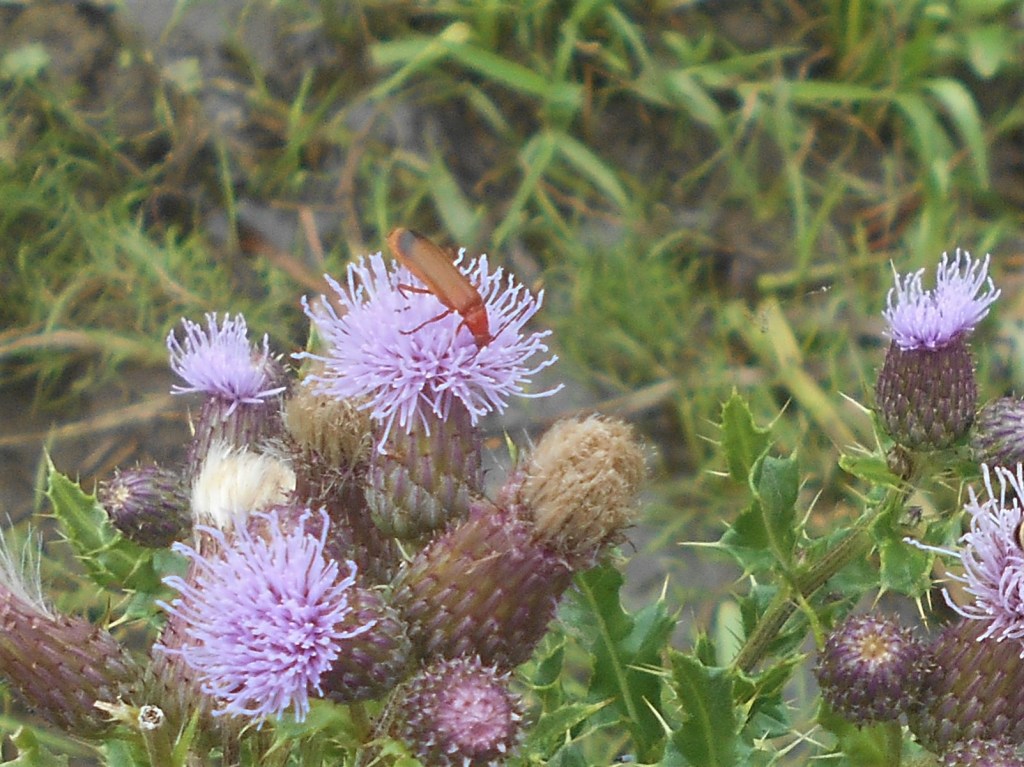
The Spear Thistles are in flower, always a favourite for the Common Red Soldier Beetles, although it is very noticeable that while there is only one beetle around this flowers this year, in previous years they would have been swarming in considerable numbers, covering every flower head.

They always attract ladybirds, bees and hoverflies too, in this case a passing Honey Bee was busy feeding on the pollen, so although there are fewer insects this year, at least there are a reasonable showing along the river.

The hedgerow forming one of the boundaries of the water meadow is still the area where we find most bees, particularly the stretches where the brambled have smothered the hedge which is where we spotted this Cuckoo Bumble-bee – a striking bee with its eye-catching white body.

On the same hedgerow, a couple of swells cosying up together – two Miridae plant bugs, the red bug with the yellow heart is the red form of the Deraeocoris ruber we saw a couple of weeks ago – the other is sometimes called a Jumping Tree Bug and somtimes Flathorn Plant Bug but always Heterotoma planicornis which kind of rolls off the tongue – both common but colourful and interesting looking!
We were so busy checking the hedge, we nearly missed the two Swallows swooping low over the meadow catchng insects – they are so wonderful to watch performing their aerobatic show – quite mesmerising!!
7th July 2023 / Temp: 22 C / Water Level : Med-Low

Oh the joy of a shady stretch of river, water splashing over stones the only sound until a peremptory peep peep and a flash of metallic blue, brilliantly lit by the sunlight, announcing a Kingfisher hurtling past. Then a Greenfinch churred from a tree and a Wren called loudly while a few Crows flew over cawing a greeting.
Banded Demoiselles flew among the reeds, always the most common damselflies along this river, although we did spot a couple of Common Blues. Lots of Small White butterflies but Meadow Browns far exceeded them, particularly above and around the sheep meadow.
Two fresh Otter spraint on the beach, one orange with chips of Signal Crayfish shell, one dark filled with fish bones and scales, probably Trout, possibly these are the spraint of the mother and cub regularly reported along the river.

Wild Water? Not today! The river was calm, serene and slow, the trees offering blessed shade on a day of full sun, the heat belying the temperature – it felt extremely hot which may account for the dearth of birds along the rest of the survey stretch – a single Mallard, the resident Little Egret and the pair of Swans with their three surviving cygnets.
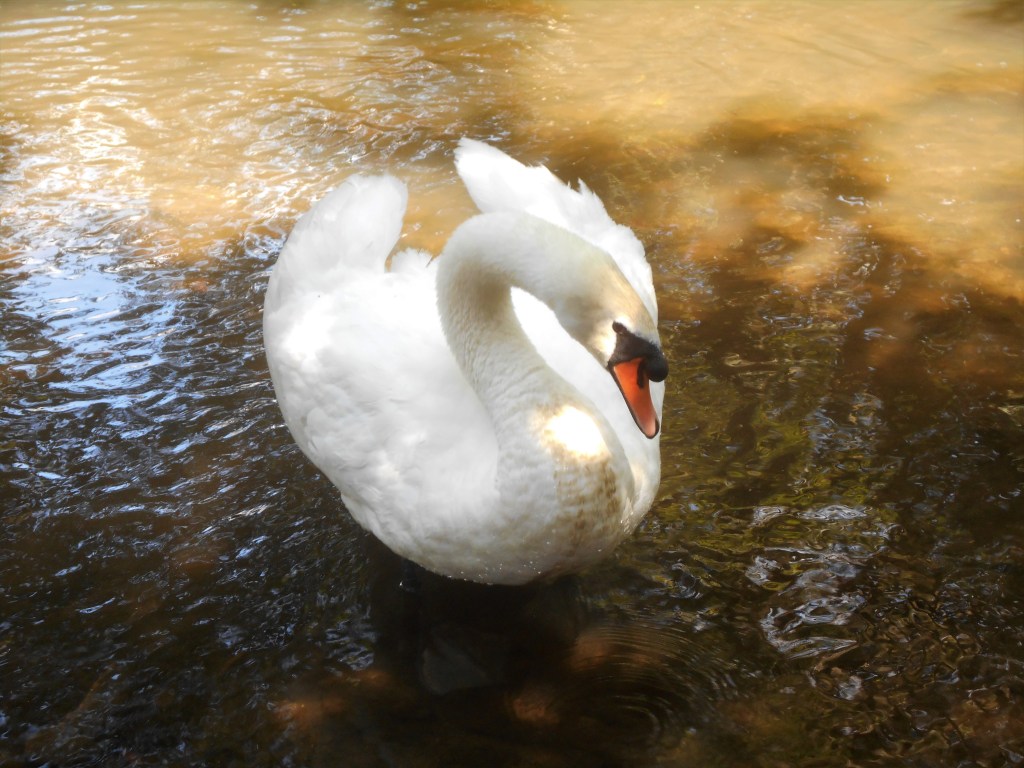
Mama and Papa Swan appeared outraged that we should dare to occupy “their” beach and although Mama only twitched her tail and guided her brood away, Papa sped towards us, oaring his feet to get more speed, hissing loudly. When he arrived only feet away from us he reared up, hissing, came down again then lowered his head almost in the same manner as a bull preparing to charge. We thought discretion being the better part of valour should be our reaction and moved away from the beach – but not before we took him to task pointing out it wan’t “his” beach!
We didn’t spot any other water birds, we were very disappointed not to see a Dipper at their usual spot and there was no sign of the breeding Mandarin and their chicks which we had spotted during our last visit.

A single pink foxglove its flowers like church bells, crawling with insects. The plant was so close to the river its roots must be permanently wet, jostling for space beside a giant rhubarb whose huge leaves dominate the riverbank.

We spotted a shiny black plant bug crawling over the comfrey leaves – known as a Red Bug (Deraeocoris ruber – this is the black variant) one the the myriad number of Miridae, most of which are well patterned and colourful for such tiny bugs.

Walking back across the sheep meadow more Meadow Brown butterflies fluttered around the flowers and going to ground to feed on salts, a scattering of Ringlets, our first sighting of a Marbled White butterfly this summer and a Brown Hawker dragonfly hunting along the hedge, some distance from the river, and later, when we drew close to the river, we watched an Emperor dragonfly flying up and down, up and down above the buttercup yellow water lilies with their large dark green pads. Not huge numbers of insects, but enough to raise the spirits, although hardly necessary on such a beautiful summer’s afternoon, when our spirits were already high!
3rd July 2023

This juvenile is only the second capture of a Barbel recorded by the Frome & District Angling Association along the Somerset River Frome and both have been caught by Paul Cook! The first was three years ago, a year after Barbel were introduced to the river. And, as recorded by us on the 1st February of this year, 500 Barbel of around 4oz were again introduced to the River by the Angling Club with the aim of a self-sustaining population to eventually establish themselves (they need clean gravel and a clean ecosystem to survive). The hope was for the stocked fish to start showing in catches “in a few years” and fingers crossed their offspring would grace their nets for years to come. The Club certainly didn’t expect Paul to catch one five months later!
The Somerset River Frome is a well-known and increasingly popular river for coarse fishing and its reputation for fly fishing for Trout and Barbel is growing by leaps and bounds on both the River Mells and the Somerset River Frome itself.
29th June 2023 / Temp: 17.5 C / Water Level: Low/Med.
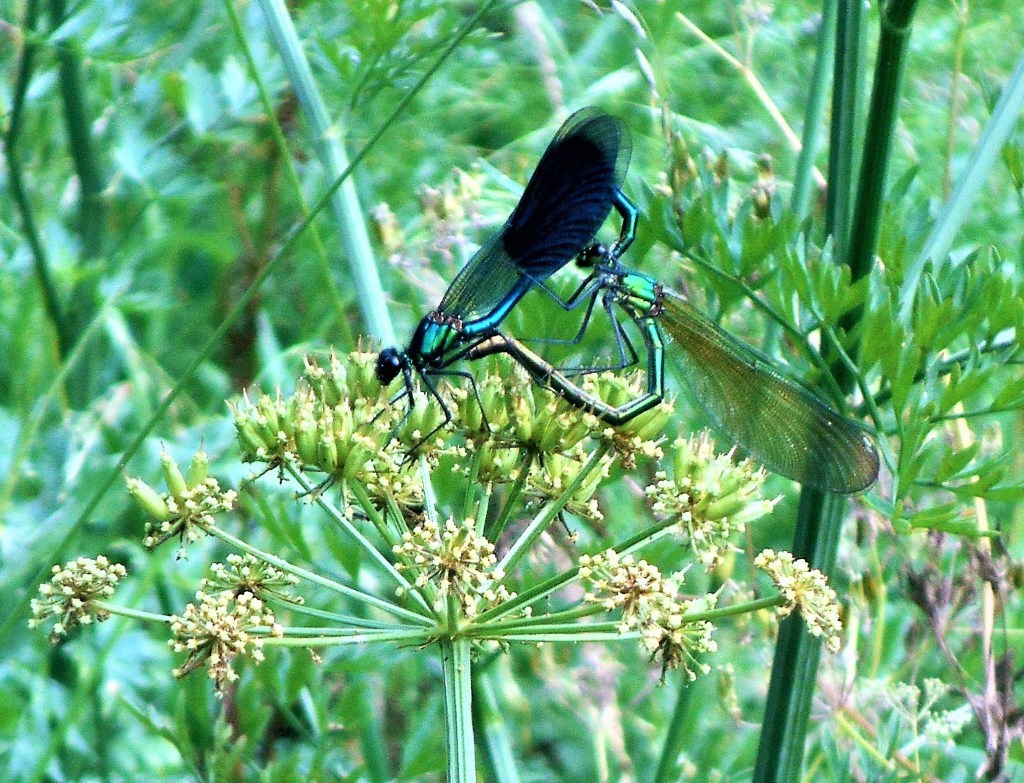
Summertime, and the living is easy, and the affectionately named “gravel beach” is lost to sight under a mass of tall, shoulder high, dense and tangled plants providing brilliant resting places for damselflies and dragonflies, hoverflies and ladybirds, butterflies and beetles.
Frustratingly they always land just out of easy focus for my camera so many were missed, including a shot of the beautiful Brown Hawker dragonfly, our first sighting this year, many were unfocused but thakfully it did manage to capture a pair of Banded Demoiselles mating, and another shot of a Scarce Chaser. Whether the latter was one of the pair we spotted 2 miles or so downstream at our last survey site (more than possible, they can travel thousands of miles) or a new sighting altogether is quite impossible to tell. We have read that these previously very scarce dragonflies are increasing in number in Devon, Somerset and throughout the south-west, a very encouraging and hopeful sign and lovely to see this male around the purple comfrey. Who knows, we may be lucky enough to spot a female later in the summer.
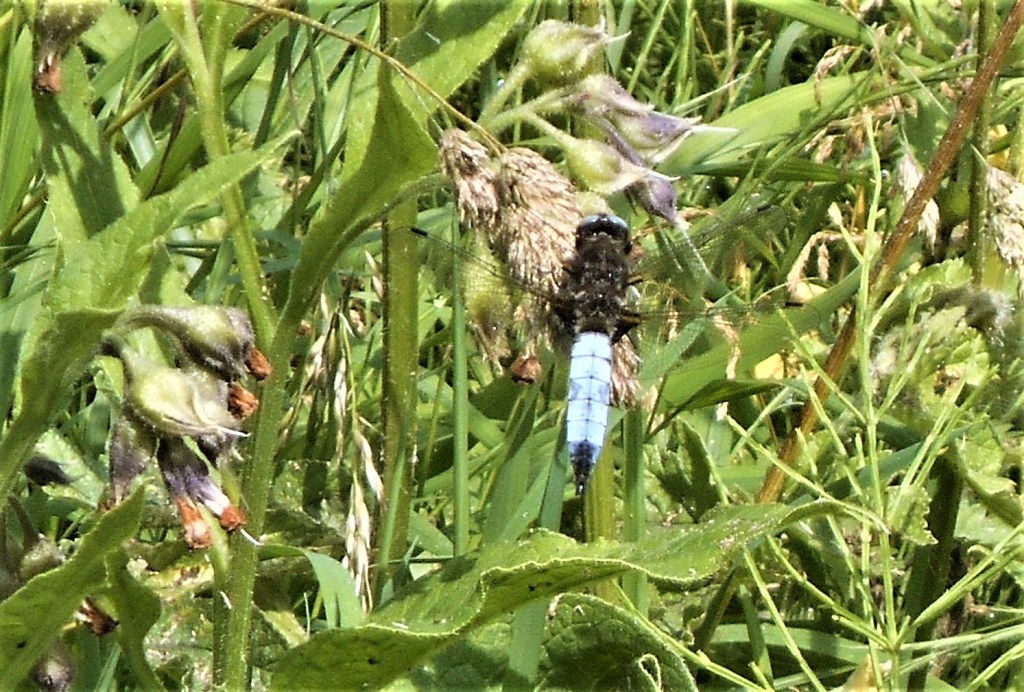
It is quite entrancing to walk across a river meadow on a warm summer’s morning, when at every step a handful of grasshoppers leap away from your boot and numbers of pale grass moths flutter up and sink down like falling flower petals onto another grass stem at your side, not once but again and again and again, all the way across the meadow – so much life hidden in and among the long grasses dotted with Corky-fruited Water Dropwort, Meadow Foxtail, Cow Parsley, Fat Hen, Hawkbits, Buttercups and Chickweed, shared by a Red-eyed Damselfly we catch sight of along the way…
and still the grasshoppers jump just as far as your footsteps take you until you reach the river where a Common Blue Damselfly poses carefully on a hogweed seedhead waiting to be admired!
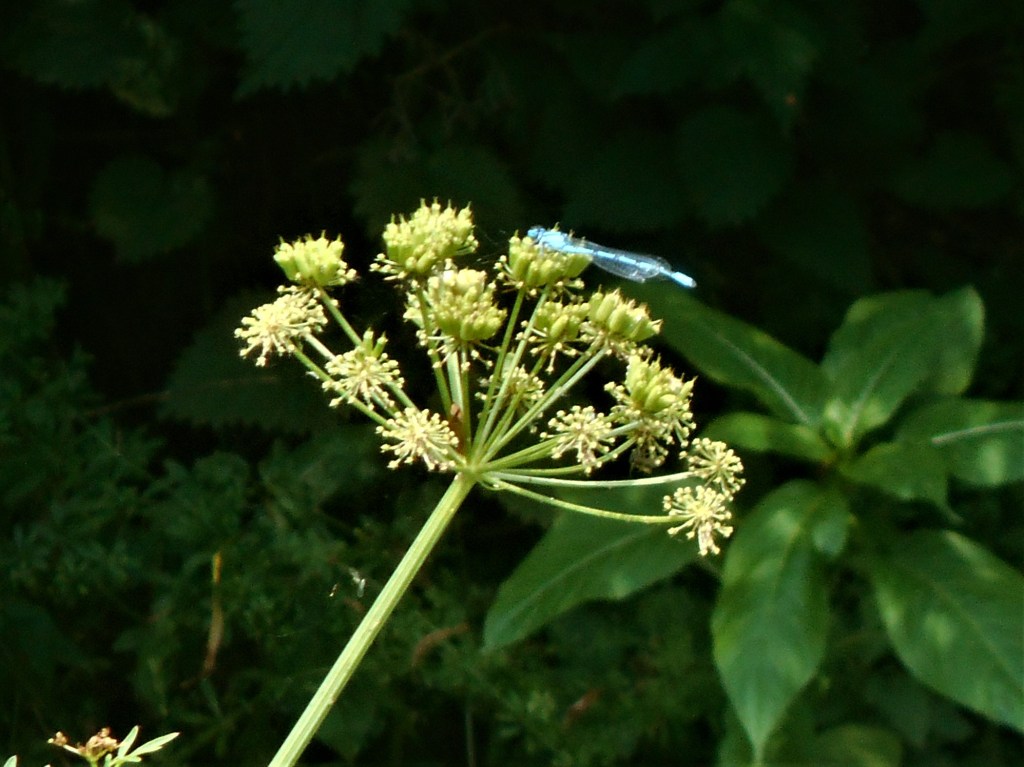
Half-hidden amongst the tangle of riverside plants, a ladybird shares a dock plant with a dock beetle, and manages to find a leaf which, so far, has remained whole from the depredations of these busy and colourful beetles.
and a Small White butterfly manouvres a flight through the tall plants with all the skill and aplomb of an ace pilot!
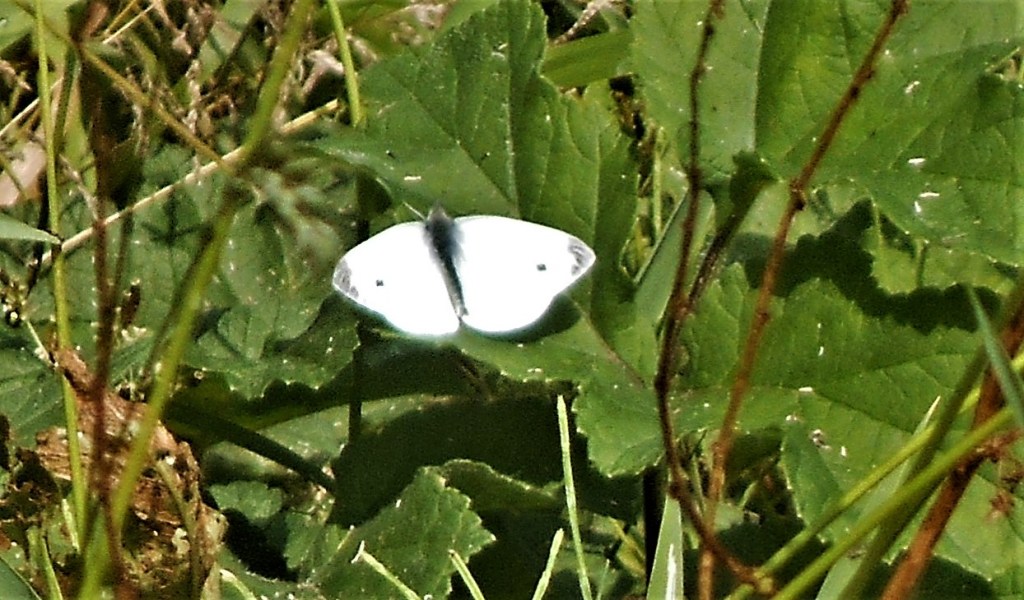
while amongst the nettles a tiny Orange Ladybird with its unusual white spots tries to hide on what is almost the lowest down on the stem. This is a first sighting of this particular ladybird so perhaps I might be forgiven the tremble of hand not being able to hold the camera steady!

When we checked under the bridge for Otter spraint, we were pleased to see three recent spraint on the pier and one fresh spraint beside the small trickle running beside the river. As there were no other sightings on the three sites we checked that day we were pretty relieved to spot those on the bridge.
A couple of bonking soldier beetles were enjoying the comfort of their scented bed of a beautiful, delicate, lacy counterpane of hogweed flowers…

and a Thick-legged Flower Beetle is busy pollinating a lucky buttercup, his vivid luminous green colouring making a colourful contrast to the golden yellow flowerhead….
So much insect life even though the numbers are down on previous years, particularly among the hoverflies and bees, but most of the usual species are present in complete contrast to the frightening lack of insects we noticed only days before near arable fields. The river is not pristine but it is still able to support life, the insect larvae and fish are still managing to cling on, even if precariously, and we must all do all that we can to maintain and hopefully improve the status quo.

Not many birds about, a Common Whitethroat singinging lustily from among the thick branches of a tree as we passed, a Wren, always incredibly loud for such a tiny bird, a Magpie, a family group of Jackdaws flying over, a Raven croaking to let us know he was there and then we saw him high in the sky with a Buzzard circling nearby.
A peep peeeeep and a blue and orange bullet shot upriver, the Kingfisher as always on a mission to get somewhere in double quick time in contrast to the Little Egret lifting slowly and languidly from the shallows to fly upriver, and again repeating the same manouvre when we reached his new resting place. You could almost hear the grumblings as he was forced to move yet again! Ah well, we are heading for home, so will leave the Little Egret, the Kingfisher and the damselflies to their usual peaceful enjoyment of the river, the meadow and the sunshine of a perfect summer a day.
26th June 2023 / Temp: 21.5 C / Water Level: Low

In a year when there has been a frightening lack of insects at our usual haunts along the river, in the woods and up on the downs, it was heartening to catch sight of first one and then a second Scarce Chaser (both males) joining the dozens of damselflies flying over the water lillies and settling on the bankside vegetation.

Even more heartening to read “inhabited sites of this species characteristically have good water quality” which reinforces the discovery of 7 out of the 8 Riverfly target species of invertebrates found in the kick survey which we carried out last month further upstream of this stretch of the river. All of this doesn’t mean to imply that the river is pristine, it is not, but it does show that the water is clean enough to support fish including Trout, damselfly, dragonfly, mayfly and caddisfly larvae as well as Kingfisher, Dipper, Goosander, Little Egret, Heron, Mandarin, Mallard and Otters!

They also prefer slow moving water with a good growth of water plants and tree cover, all of which is well provided on this quiet stretch of the river.

Always a treat to see the White-legged Damselfly among the small patch of nettles on the sheltered area of the river bank – strange how many insects there are around nettles – we spotted moths and beetles sharing the plants with a number of Banded Demoiselle Damselflies (male and female) the species most common along the whole of the river. No signs of Otter or Beaver to be seen, although we didn’t survey the far corner of the meadow where the bull was guarding his harem of heiffers in case he was feeling frisky!

Walking back to the stile, we followed the hedgerow which borders the meadow and it is here where we see the greatest variety of species flying around the bushes – no Banded Demoiselles, but Beautiful Demoiselles, more White Legged and Blue-tailed Damselflies as well as countless numbers of grass moths we disturbed from the long grass as we walked through.
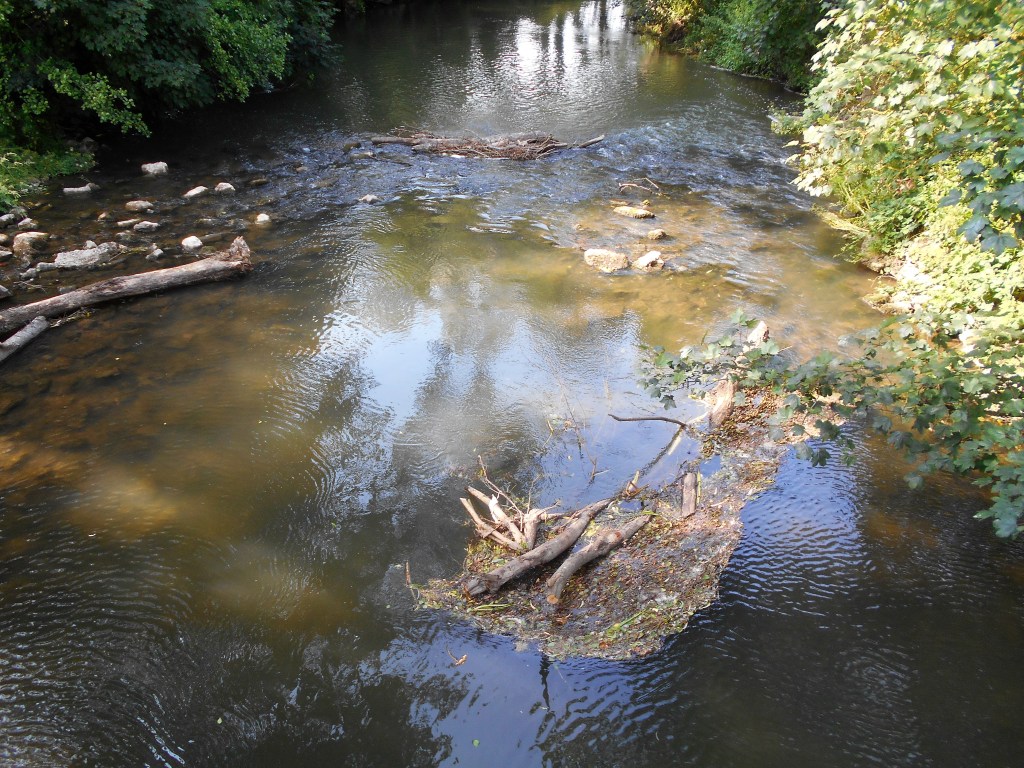
Moving on to the last survey spot, we were pleased to see fresh Otter spraint, a Dipper, 2 young Mandarin, a Little Egret flying off and landing in a tree, and four Swallows swooping high above the trees. We fell into coversation with a lovely family of father, mother and son who been enjoying a successful day fishing for Brown Trout. They also saw a pair of Swans and 3 cygnets, a Kingfisher, a Kestrel and Buzzard as well as hearing a Great Spotted Woodpecker, so we all went home very contented with our visit to the river!
14th June 2023 / Temp: 21 C / Water Level: Low

The quiet country road which divides the river on one side from one of its tributaries on the other, was a grey ribbon with green verges massed with frothy, lacey, white flowering cow parsley and early hogweed, and the hedges smothered with trailing pink dog roses. Almost hidden in and amongst their bright green summer stalks and leaves were my favourite summer flowers, the beautiful Meadow Cranesbill, making wonderfully vivid splashes of deep violet-blue amongst the white and the green.
We had decided to check out the tributary as it was in shady woodland and the decision seemed a good one when climbing over the stile to the path to the river, a small macro moth flew out from the flowering dogwood across the path, settled composedly on a low leaf, and posed obligingly for a photograph…

The Olive Pearl Moth, a new sighting for us, so it seemed a good omen for the morning. The mini heatwave of the past week made the days from mid-day onwards just too hot for us so we reverted to our well-tried heat-wave walks – out early in the morning before the heat of the day became unbearable and back home in the cool shade of our darkened rooms until the heat eased in the evenings. This way we still manage to enjoy the joys of summer without getting hot and bothered, which always worked perfectly.
There is something magical about early mornings in early summer, the air fresh, the sun warm and the trees and plants in full leaf but still new green before they became tired and dark later in the summer. There is a feeling of the release of school holidays with the summer stretching out before us with the conviction that it will last forever….
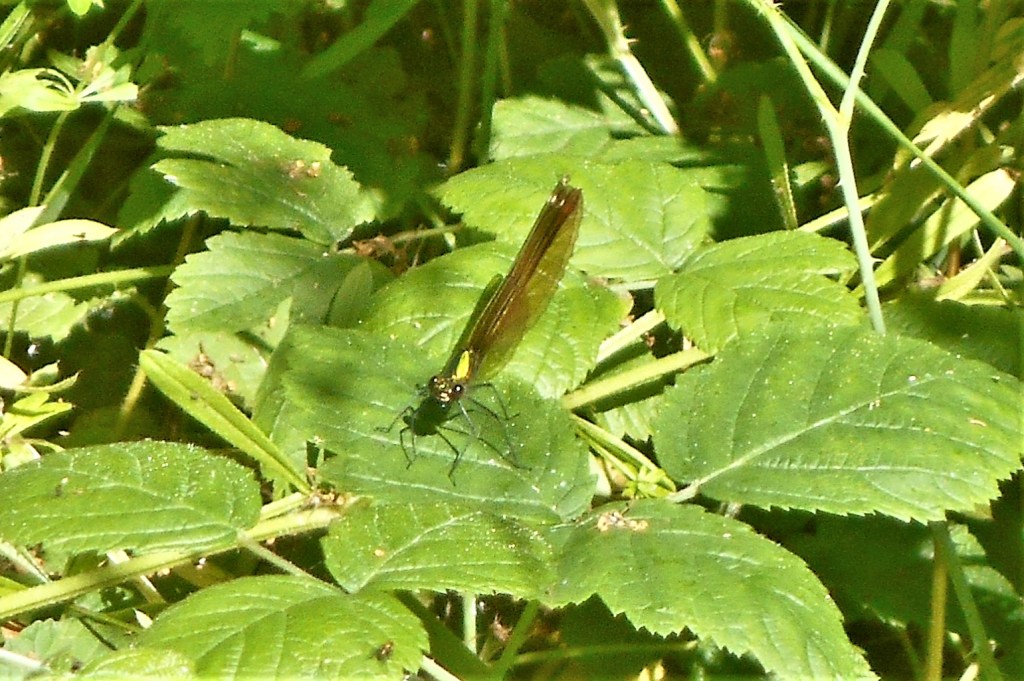
As we followed the winding path through the well-shaded wood a female Banded Demoiselle alighted on the bush beside us, another close by and a couple of males chased each other along the path in front of us and as we emerged into the open, we arrived at the huge nettle bed which covered the whole of the river bank in front of us. We lost count of the number of large tented webs on the heads of the nettles – a clear indication of the Nursery Web Spiders we have spotted for weeks past sunbathing on the nettle leaves!

Under some tents the tiny spiderlings were already hatched and the female was keeping guard close by (until disturbed by annoying passers-by like us!)
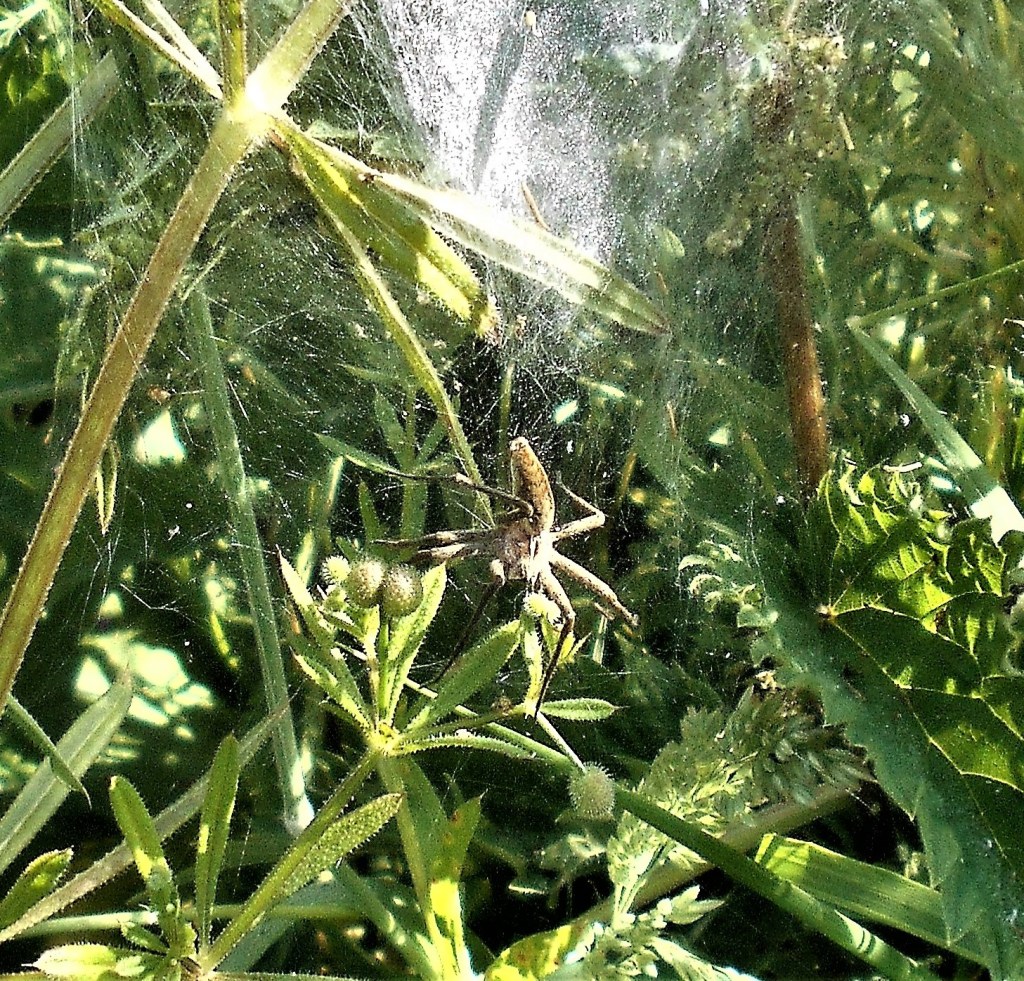
While a few were completely empty, and one had a pale cream egg mass ball at the centre of the web.
The open grassland opposite the nettle bed couldn’t be a greater contrast – waist high grasses with their deep purple brown seed heads gently swaying in the breeze, moon daisies, fox & cubs, goats beard, buttercups, greater hawkbit, cut-leaved cranesbill and surprise, surprise ….. orchids!!
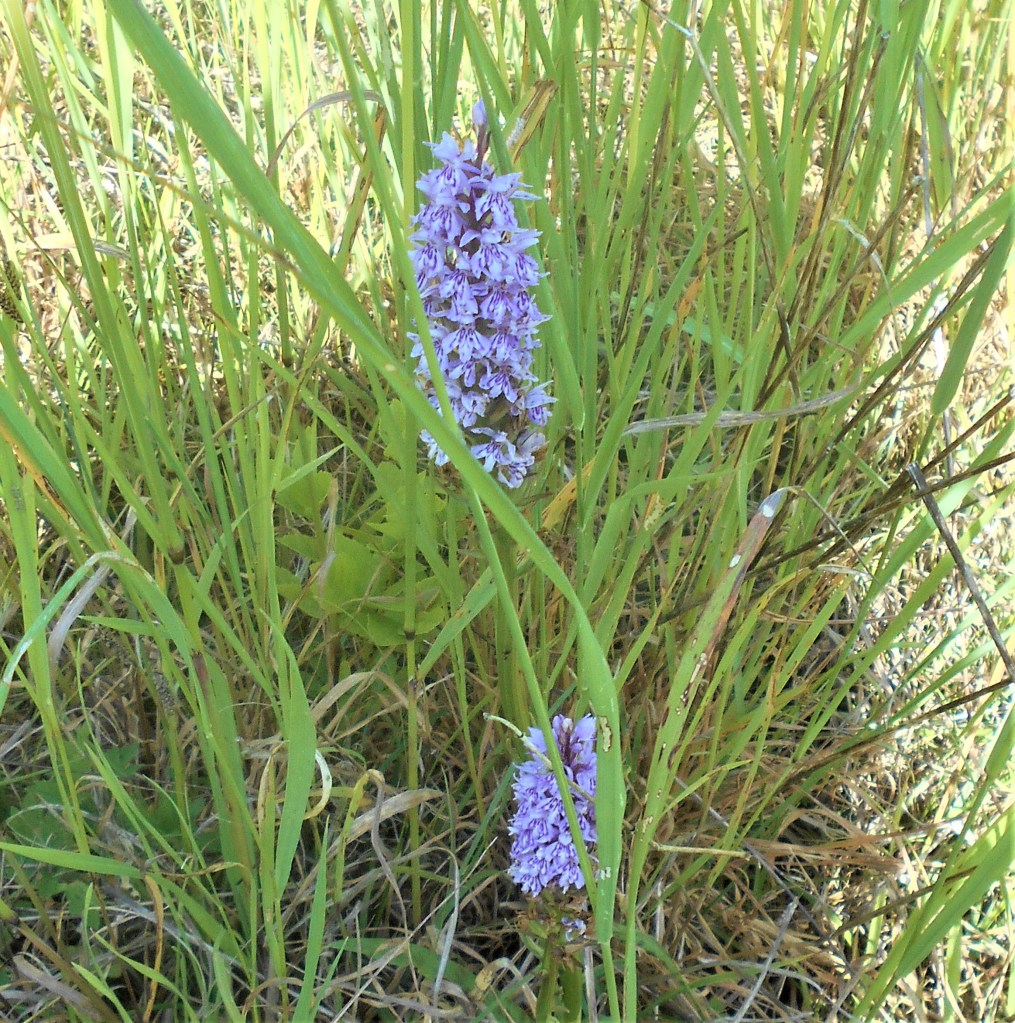
The Common Spotted Orchids are a reminder that the udnerlying soil is chalk, as the bordering stream is tufa. The fox & cubs always make a splash of colour – the first time we have seen it in a patch of grassland, it usually is seen on the edge of pavements.

The moon daisies make a bright scattering of white and gold against the grasses – always the herald of summer days, wicker picnic hampers brushing against their tall pollen scattering heads as we walk across the fields, and their distinctive smell of summer heat – such a lovely sight.

A hack through the shoulder-high nettles to get to the stream and then a hack through the head-high Hemlock Water Dropwort and Pendulous Sedge, wading upstream to check for signs of Otter or Beaver – neither obliging us for our trouble with spraint or gnawed trees or branches.
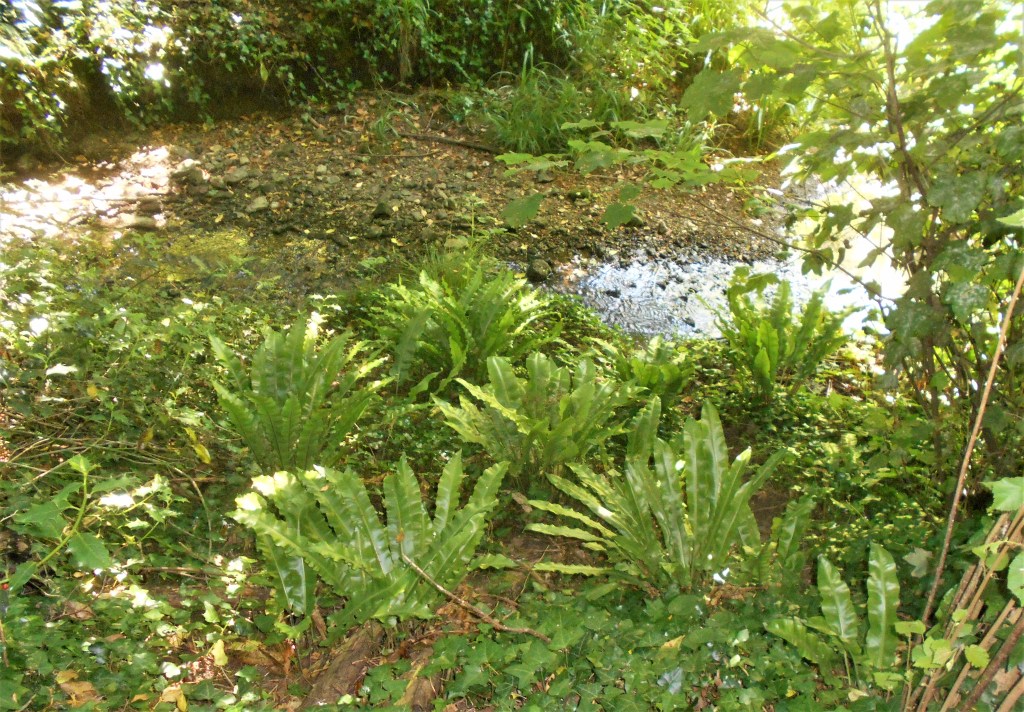
The water was very low and rather murky after weeks without rain, needed to seep through the chalk of the Mendip Hills to feed the stream. No sign of the Yellow Archangels scattered along the bank only a few weeks ago but we did see a single Deadly Nightshade in flower.
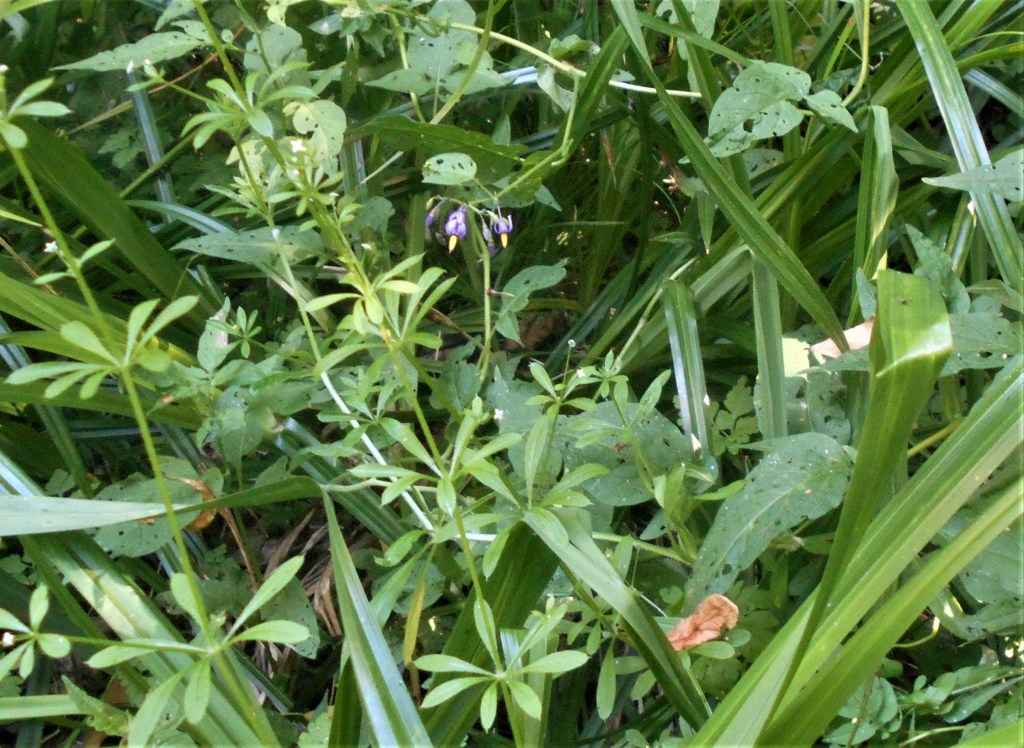
It was beautifully cool under the heavy canopy of the arching trees in full summer leaf, a lovely respite for the hot sun beating down as we reached the hottest part of the day but time to climb out of the steep banks of the stream and head for home before the sun reached its zenith.
31st May 2023 / Temp: 20 C / Water Level: Med
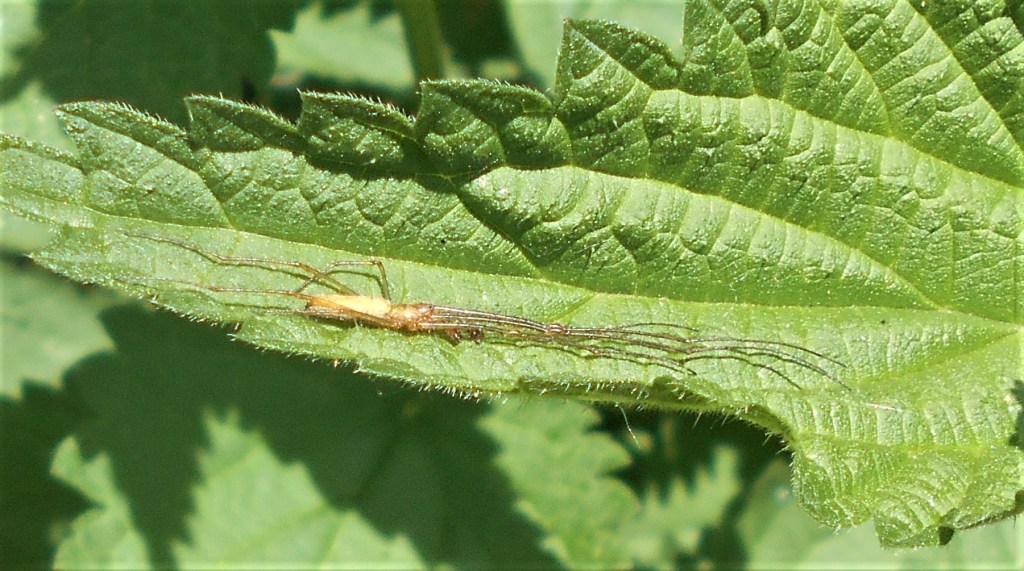
Not one but two Long-jawed Orb Weaver spiders stretched out on the leaves of a large nettle patch close to the river! They really are the most extraordinary looking creatures and they catch the eye in the brilliant sunlight. They are social creatures and often spin their webs close together and if they are disturbed they are said to leave their webs and scurry down to stretch out in this strange fashion so they will be less noticeable. These spiders sit in their web or on a nearby plant and wait for prey to tangle itself in the web. They generally eat small flying insects, including moths and leafhoppers. When their longer legs are stretched flat, these spiders camouflage themselves well against a twig or a plant stem. Despite that, they are predated by birds and other small animals.
Camouflaged against a plant stem is very effective as we once spotted one of these spiders in such a position and it was almost impossible to see – but against a green leaf? In bright sunlight? It doesn’t seem the ideal hiding place! In addition to constructing webs in vegetation, these spiders are known to be able to walk on water.
A very much more effective camouflage is surely that used by female Mandarin Ducks which nest in trees. She is so well hidden amongst the leaves that we would never have spotted her if one of her chicks hadn’t drawn our attention by quacking loudly and persistently in the river below the nest, a small bundle of fluff with a beautiful creamy yellow face and neck with the distinguishing dark bars above and below its eyes, like an American Indian in war paint! It eventually persuaded the mother to fly down and shepherd the chick down-river, well away from our prying eyes. Presumably there were other young in the nest, but we noticed that the male Mandarin who wasn’t too far away upriver made no attempt to go to the aid of the chick or the mother!
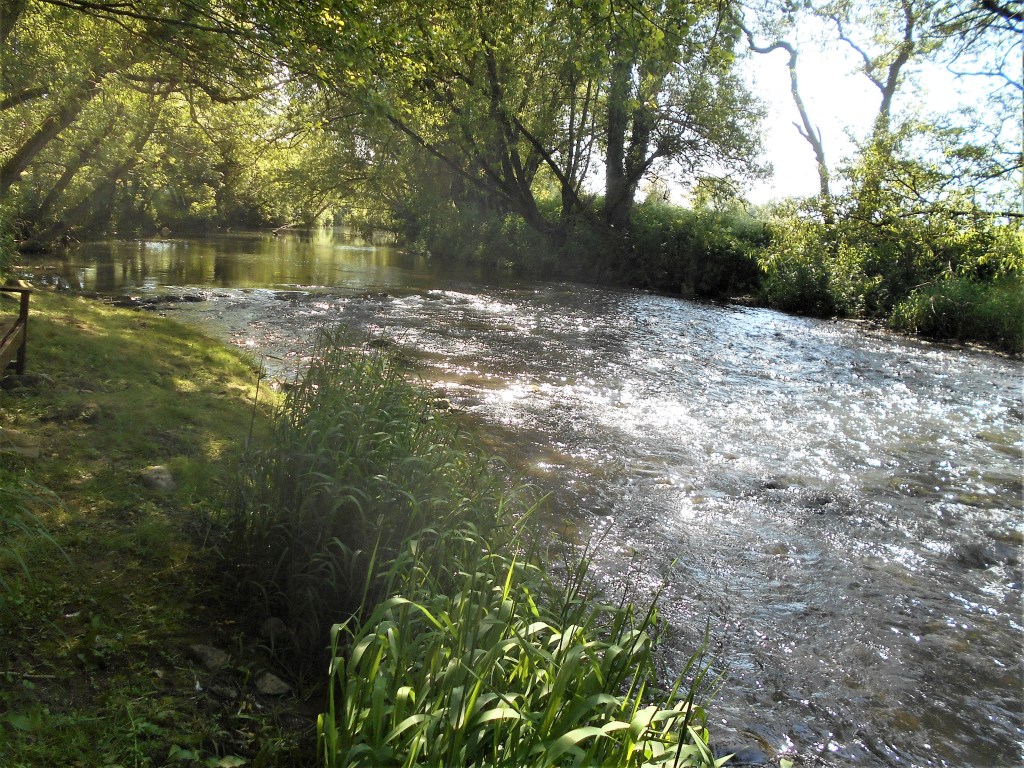
Clusters of damselflies among the plants at the river’s edge, Banded and Beautiful Demoiselles, a mob of male Banded Demoiselles chasing a poor female who managed to evade them whilst we were watching. Seven Mallards up on the river bank, the familiar single Mute Swan, a Kingfisher flashed by while Blackbirds, Chaffinches and Wrens sang from their hiding places amongst the trees, a Little Egret moved reluctantly while four Swallows dived and soared inches above the water, feasting on the midges.
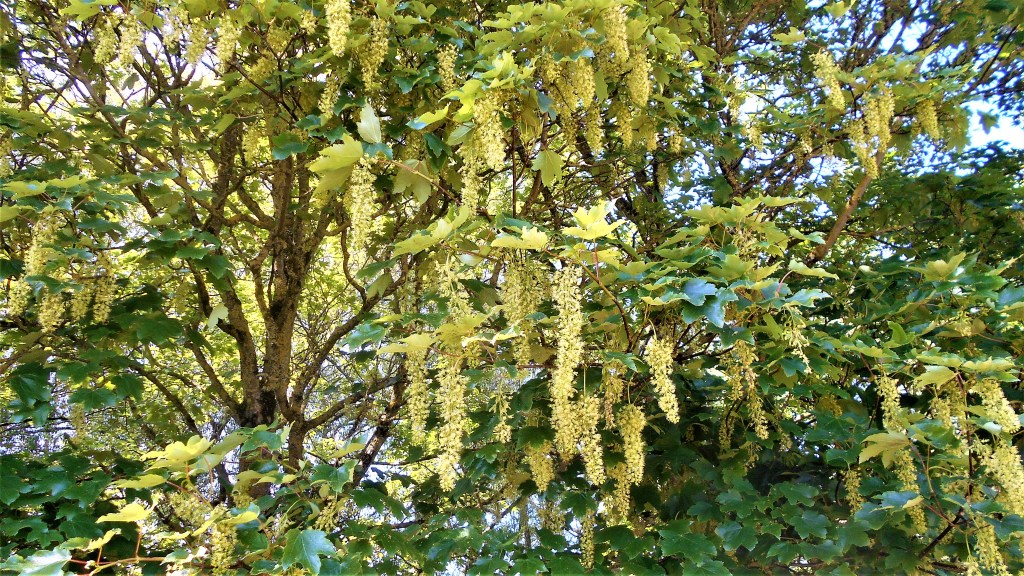
The Sycamore was a mass of flowers, loved by bees and hoverflies judging by the number of them swaming around the hanging tassels, it must be a good year for flowers and fruits, judging by the quantity of fruits hanging from the Hornbeam, the line of trees along the hedgerow a wonderful display to tempt the birds and insects.

A few desultory Mayflies rising occasionally from the river, a sad reminder that we missed the main hatch this year to our great chagrin, just the carnage of dead Mayflies covering the comfrey plants, such a brief life counted in hours in the warm late spring sunshine, before they mated and died.

No fresh signs of Otter, although three recent spraint spotted on their favourite flat stone and fresh Beaver gnawings on the trunk of one particular tree whilst the surrounding trees had been ignored – it must have been particularly tasty!
20th May 2023 / Temp: 18 C / Water Level: Low
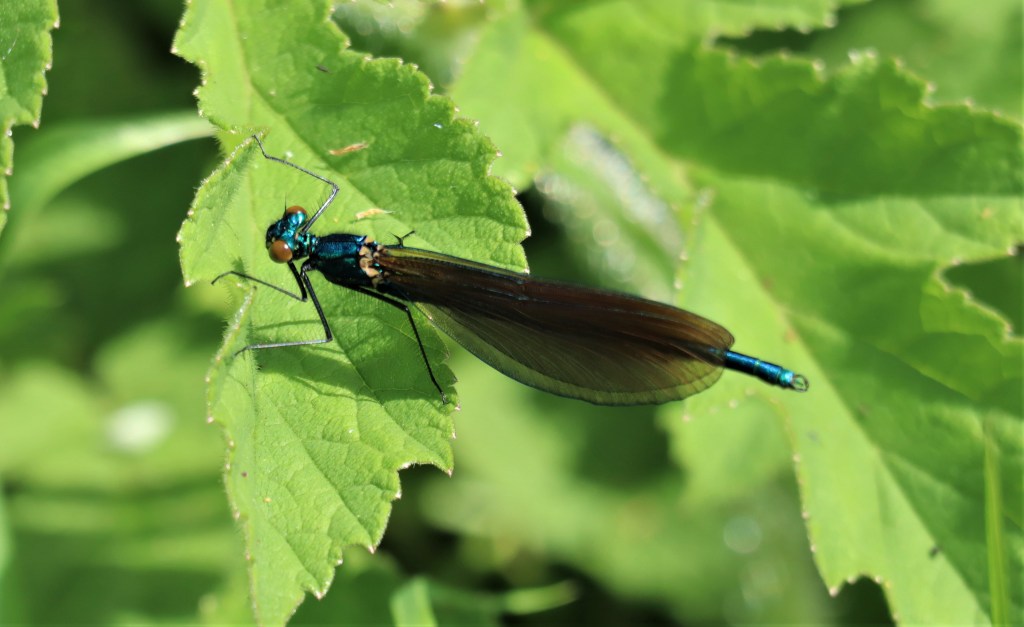
Passing damselflies when carrying buckets, trays, nets, stools, rucksack and all the paraphernalia connected with kick surveys is always a bit problematic – do you drop everything and scare the insect away, try to retrieve your camera while knocking your hat off with the net or try both at once but slowly and grab a shot – probably best not to start from here!
Male Beautiful Demoiselle looking, well, beautifu! Jewel-like colours sparkling in the sunlight, lifting the spirits, great to be alive on an afternoon in May along the river!
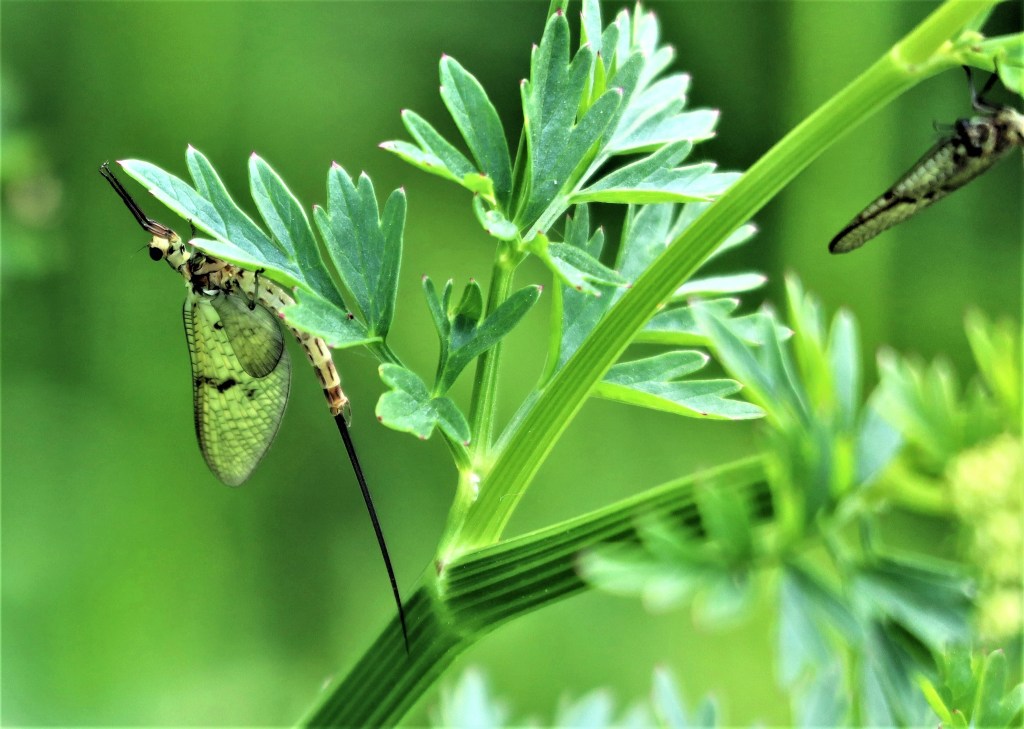
Not just Damselflies announcing the month of May but also Mayflies, only Green Drakes at the moment, and not in anywhere near the numbers we saw last year but welcome all the same , watching them rise from the water, find the nearest vegetation on which to alight, and slowly dry out before taking to the air in their courting dance to attract a passing female, like the mating dance of the Maasai warriors, jumping high!

The beach is a litter of stools and buckets and sample trays as we stand calf-deep in the swirling water with our nets kicking the stones on the bed of the river to collect whatever we can find of interest.
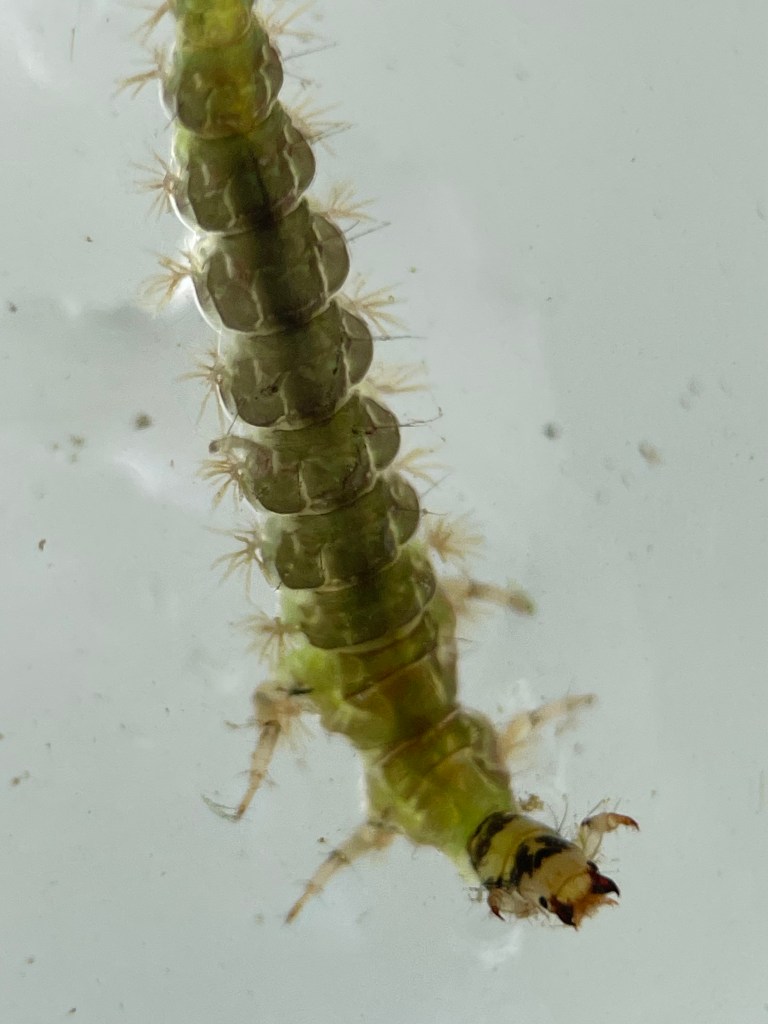

Noticeable was how few green drake larvae we found compared to previous years, even finding dead ones turning up in the tray, something we had never seen before and all species seemed to be rather scarce.
Only one or two free swimming caddis larvae, no sign of damselfly or dragonfly nymphs, lots of freshwater shrimps as always, and fortunately there were a few Blue Winged Olive nymphs – beloved of Fly Fishermen and Trout alike, so good to see.
Always good to see Miller’s Thumb (European Bullhead) in the river. We usually see them, in various sizes – this was a very small, newly hatched fry, so pale and delicate looking, but sturdy and bidding fair to grow into a good, healthy specimen!

Our daughter whiled away the time whilst we were sorting and naming her catch by turning a few stones in the deep, middle section of the river and came up trumps with this wonderful find!
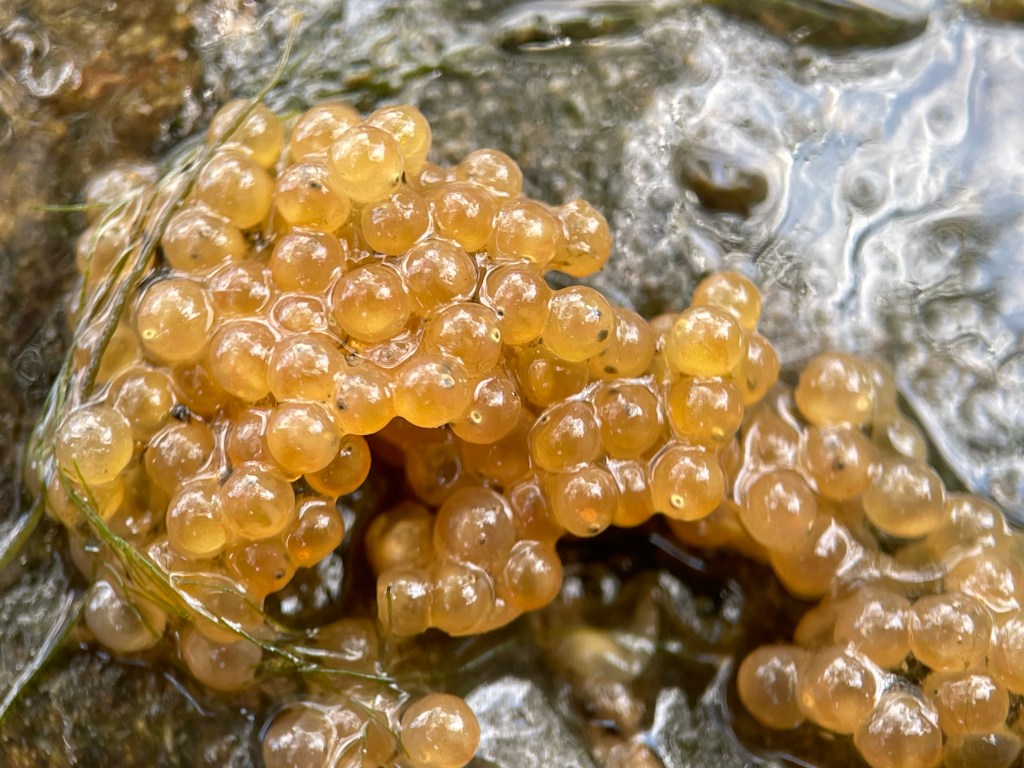
Miller’s Thumb eggs!! Something we had never seen before and greeted with great excitement and pleasure to see so many and imagining so much new life arriving in the river – these small fish are only found in clean, stony waters and on the Red List of Threatened Species.

Unusually among fish, the European Bullhead exercises a great deal of parental care. The male excavates a nest under a suitable large stone to attract a female. The female lays a batch of up to 400 eggs (2–2.5 mm in diameter), which adhere to the underside of the stone. The male then defends the brood against egg predators such as caddis larvae (in fact if you look carefully at the stone above you should be able to spot several stone clinger caddis larvae) and manages the nest by fanning the eggs with his pectoral fins. In the absence of the water circulation provided by the male, fungi rapidly invades the eggs.
18th May 2023 / Temp 17 C / Water Level: Low
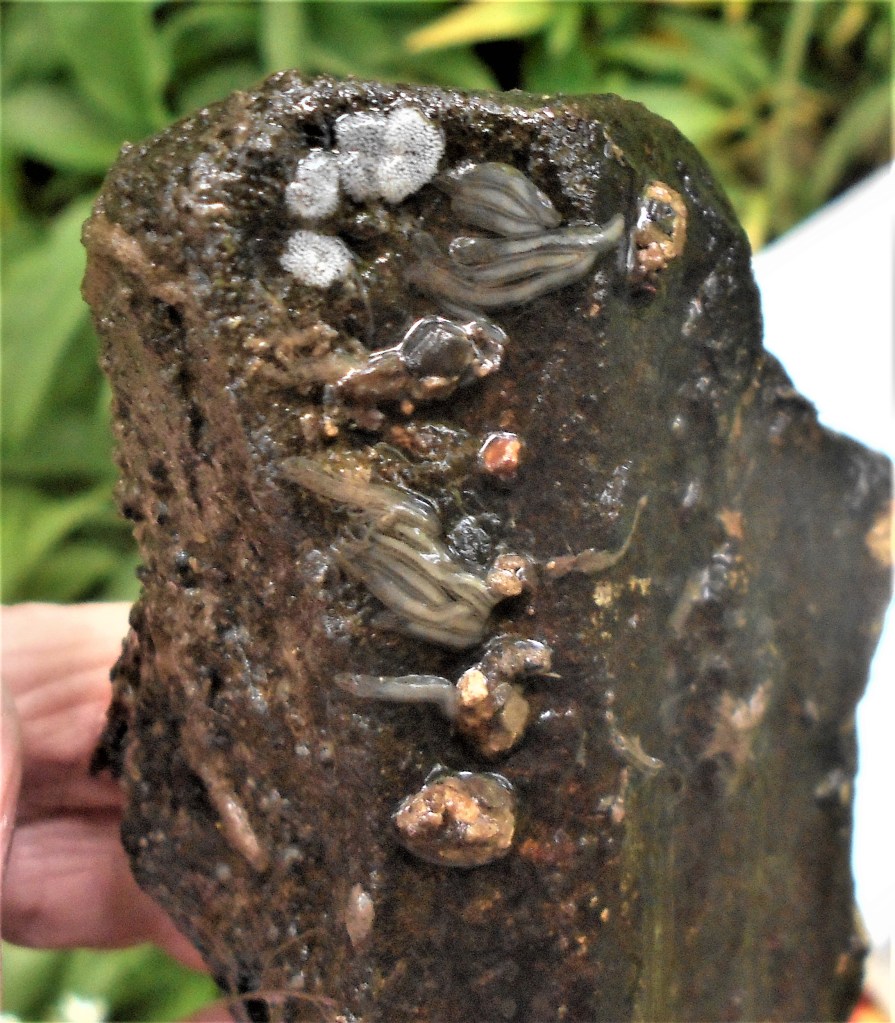
Back at the stream to check on the state of the river by doing a kick survey. Very disappointing results, lots of freshwater shrimps, a free-swimming Caddis larvae Rhyacophila dorsalis, a Mayfly larvae, almost every underwater stone plastered with Agapetus (saddle-back) Caddis larvae in their humped cases meticulously crafted grain by grain of coarse sand where they graze algae from the surface of the rocks, but little else.
So these small egg masses took on an important and interest they wouldn’t have received in other circumstances. After much searching, we believe that they are of the family Chironomidae, non-biting midge eggs. Not altogether certain but it’s likely that the tiny segmented worms (also encased in jelly) are the first instar Midge larvae.
14th May 2023 / Temp: 17.5 C / Water Level : Med

Another beautiful May afternoon, warm and sunny, trees covered in new leaf, flowers opening, new life awakening. The most perfect month of the year! Orange Tip and Bristone Butterflies, Bee Flies, the first Azure Damselflies of the season and the Mayflies should be appearing any time soon. Perfect!
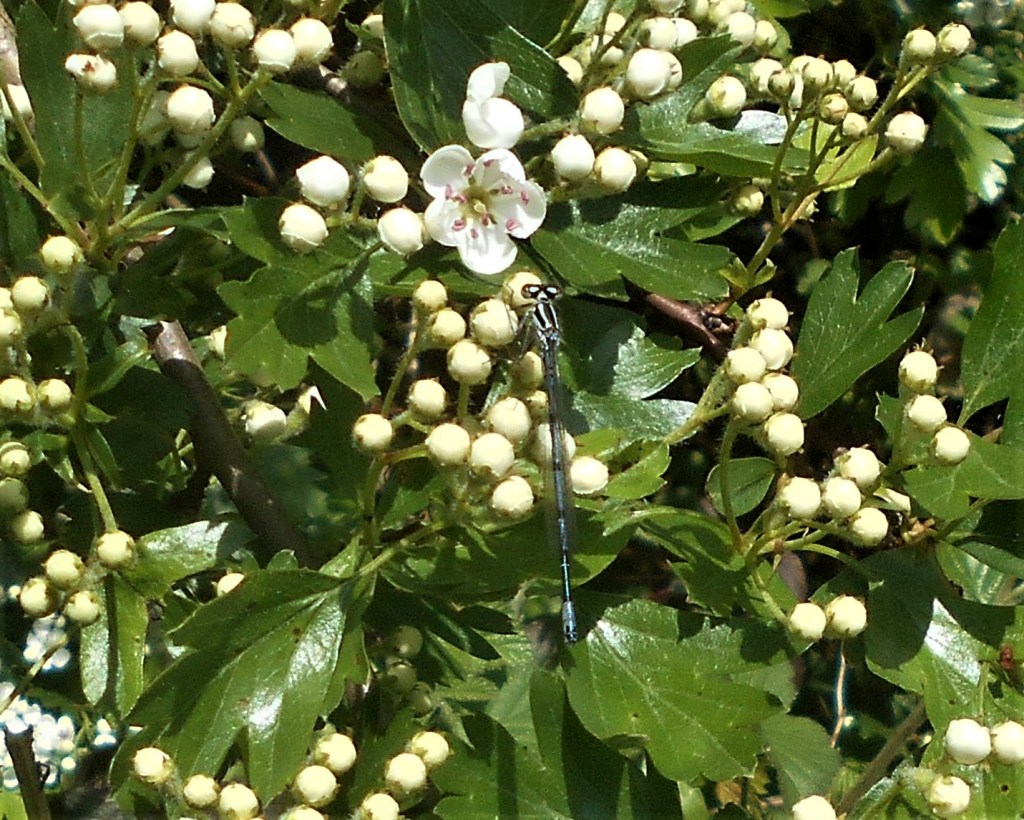
A Chiff Chaff constantly reminded us that he had arrived, while a Chaffinch and Blackbird sang louder in response and then a Robin joined in. No sign of either Buzzard or Sparrowhawk today but we did hear the local Raven calling out as he passed by.
As we were walking along the path to the stream, a female Pheasant appeared followed by three poults. She was ferocious in protection of her young, hissing and squawking and flapping her wings before ushering them into the safety of a large stinging nettle patch. Only then did the male Pheasant appear who stalked past in a lordly manner!

Our first sighting of Yellow Archangel anywhere in this area, in fact we couldn’t remember seeing it at all locally so a great find. We spotted it along the edge of the stream, where it appears to be very well established with a good number of plants. These are the native Yellow Archangels, easily distinguished from the more common garden escape plant which has variable leaves in contrast to our native species with its sharply toothed leaves, more akin to stinging nettles.
10th May 2023 / Temp: 15 C / Water Level : High
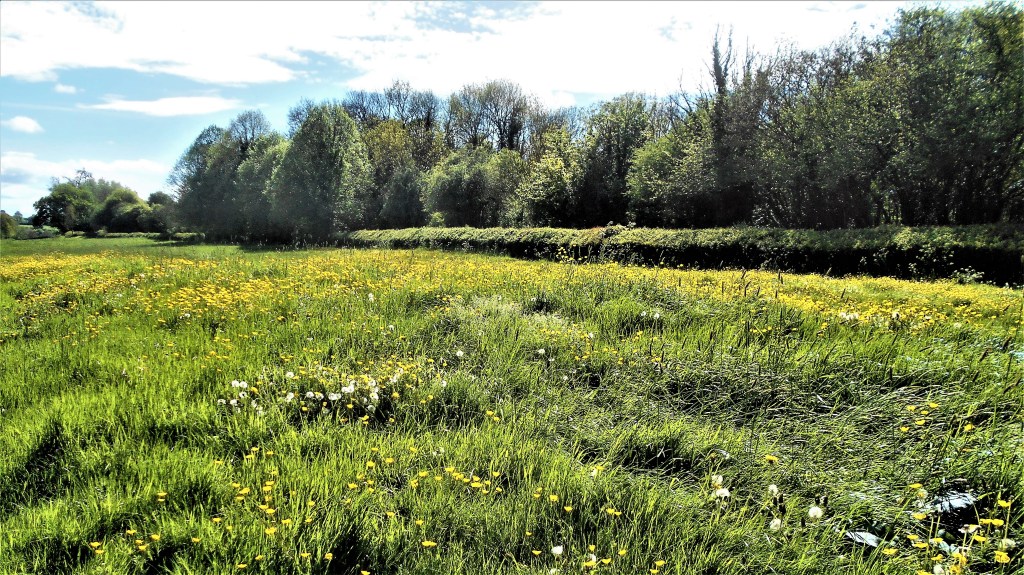
Always a welcome sight to gladden the heart in May – a watermeadow in full summer glory which never fails to lift the spirits. Nothing very rare or even remarkable, the delicate lace flowers of cow parsley standing tall, the palest mauve ladys smock, a for Orange Tip butterlies (a number of which were fluttering around, masses of buttercups, white deadnettle; the grass thick and long and lush so that the crushed resting places – Otter? Roe Deer? – could be seen clearly in several favourite places across the meadow – a perfect summer sight!

Our first sighting of damselflies this year! A Beautiful Demoiselle and a Large Red Damselfy – we saw other species but unfortunately they were too fast and too far away to feel certain of identification, but several looked at a guess immature Blue-tailed.
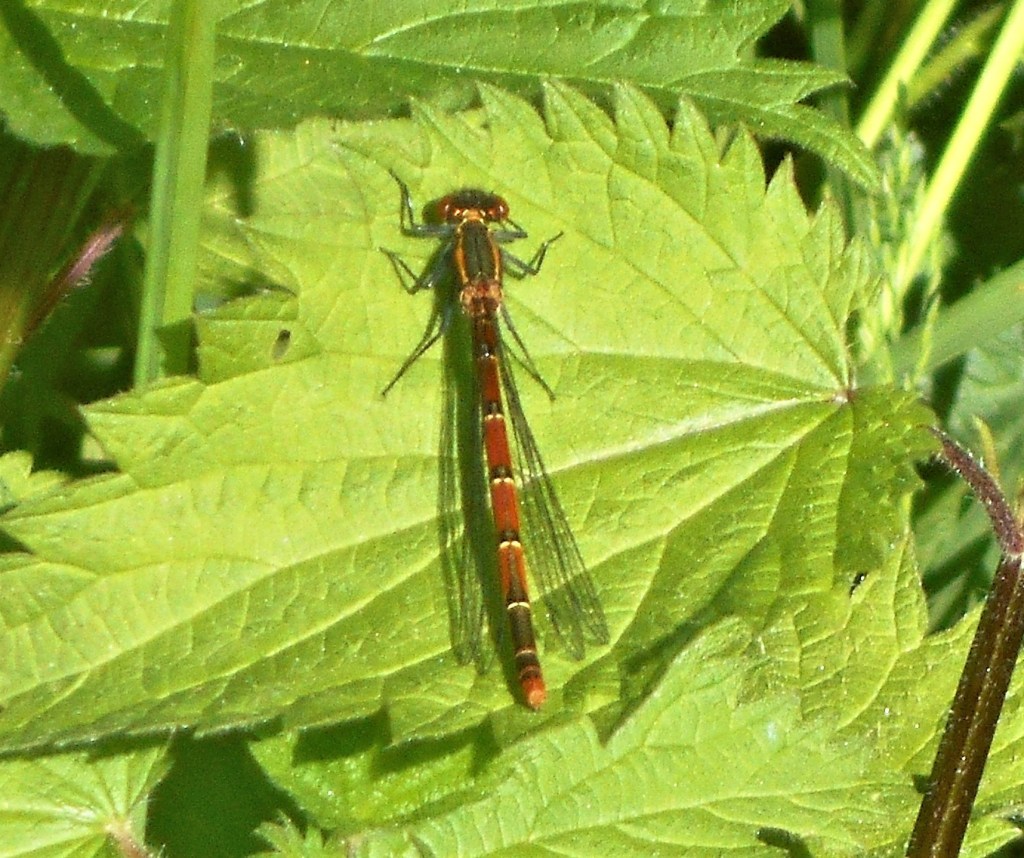
It isn’t quite summer yet – in fact the temperature was lower than it was three weeks ago (noticeably brisk chilly breeze) but seeing damselflies is a lovely promise of the months ahead.
After so much rain and even flash floods in the south of the county, the river was high and boisterous and we wondered how the female Goosander and her three young were managing to fish in the murky brown muddy water.
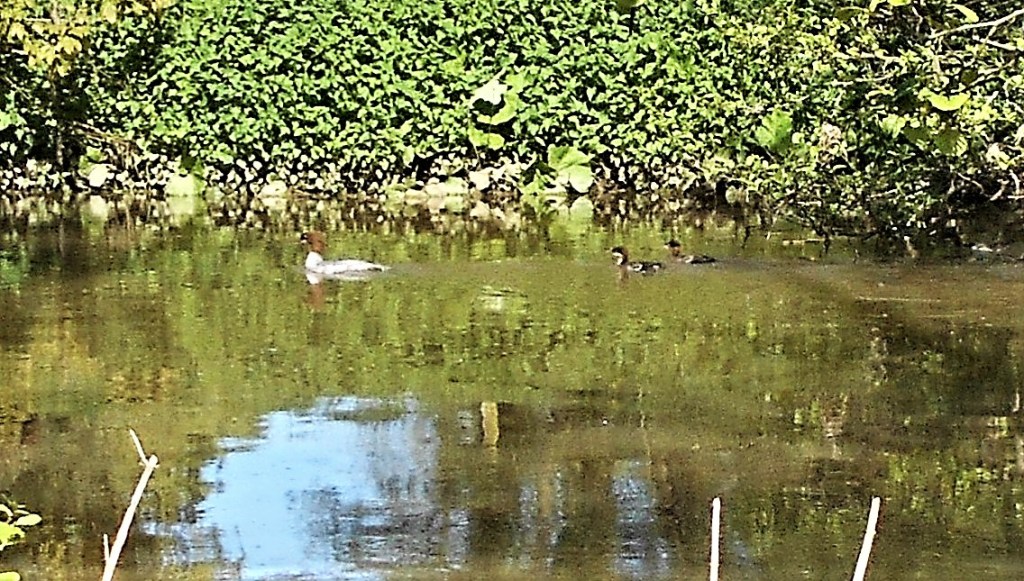
It was good to see the Goosander and particularly her successful brood, it has been several years since we last saw them on the river. We spotted two pairs of Mallard one pair with four young and the others shot for cover before we coun count, we disturbed a Little Egret, and annoyed a pair of Canada Geese who were happily resting on the river bank. They are handsome birds but if other rivers and lakes are to be believed, she will breed prolifically and swamp out the native species.

Another interloper, a pair of Mandarin Ducks with 5 young so they are also thriving here but sadly the Grey Heron lifting up from the flooded stream seemed alone with no sign of a female or young.
No signs of Otter either – they are around but not here. They are often called the Wanderers as they travel considerable distances to hunt and fish and there have been multiple sightings and film fottage of Otters in the centre of Frome at the beginning of the month, but it appears the have found better hunting grounds at the moment – they’ll be back!
1st May 2023 / Temperature 12 C / Water Level : Med

The Pendulous Sedge, an indication of Ancient Woodland, was thriving along the stream, the male catkins thick with pollen which smothered everything on the merest brush. It was a beautiful sunny day and very warm sheltered from the chill wind, a perfect May Day afternoon!
20th April 2023 / Temp: 15.5 C / Water Level: Med
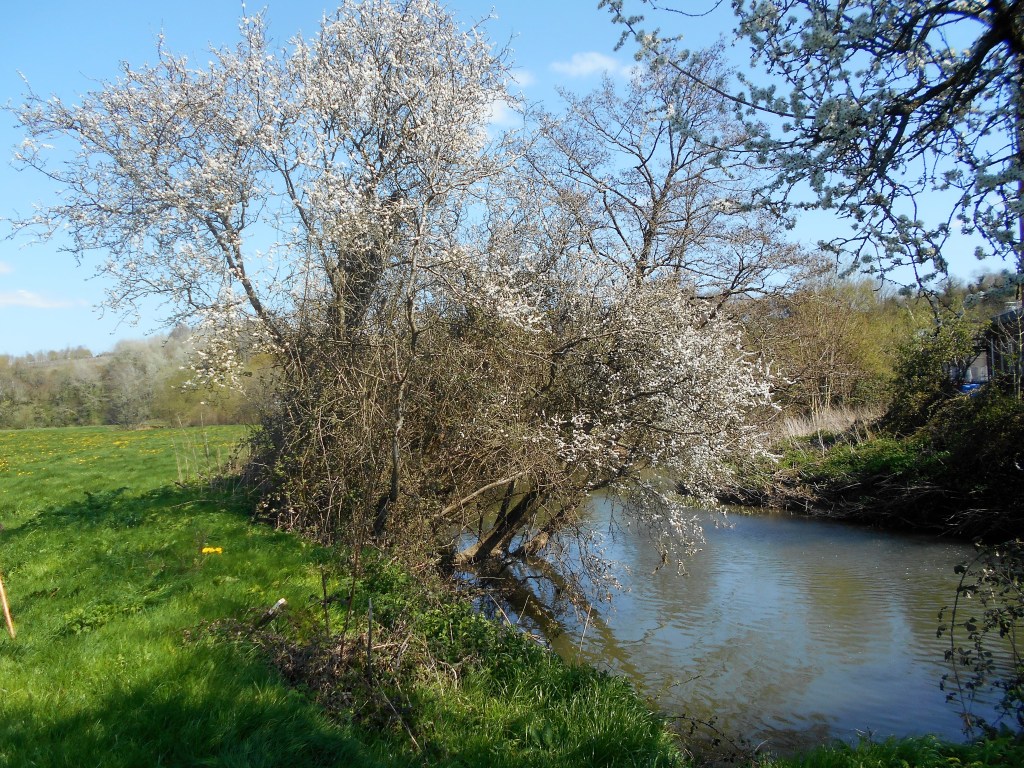
Full sun, blue skies and a stiff breeze from the north-east – the perfect afternoon for a stroll along the river bank, searching for Otter signs and any other wildlife we could spot.
A solitary Chiff Chaff singing spring had arrived was the high note, a Swan, a single Magpie, one Blackbird and a few Crows and Wood Pigeons wasn’t quite what we had hoped for. Where are all the birds? Is this the Silent Spring arrived after years of warnings and concern? We were slightly mollified by spotting a pair of Mallard on the river, and two female Mallard disturbed from a marsh marigold filled field boundary ditch and then a Swan sitting motionless in the middle of a field. The river level has been high, and the water turbulent and in spate, but although Swans do spend time in fields in winter when the river weed, other acquatic plants, small fish and frog in the river is low, this seems rather singular well into spring.

Lovely to see a clump of Lady’s Smock on the river bank, but sadly only one other plant spotted all along the river. A couple of plants won’t be enough to feed the Orange Tip butterflies which should be arriving about now, recent field spraying may be the cause. However we did spot Brimstone Butterflies, 2 males 2 females, but no other butterflies.
When we reached the weir, we found one recent black Otter spraint in the usual place beside the low retaining wall, half hidden in the grass, and another red spraint above the fishing peg, also a favourite place – not on a prominent stone, again hidden in the grass and quite easy to miss.

A scattering of sunshine Dandelions glowing in the water meadows, many attracting hoverflies which are beginning to appear, but surprisingly the blackthorn, in full flower on the many trees and shrubs along the bank, don’t seem to be attracting many pollinators, although most are so tall it could be they are there, but too high for us
The beach was looking particularly beautiful with the new growth of plants greening the areas between the pebbles, stones, broken water snail, duck mussel and clam shells – a beachcomber’s dream. We found a cache of recent spraint decorating the gnarled roots of the old willow, with one signal crayfish pearl (gastrolith), so although the spraint was dark, and not yet the spring / summer distinctive orange-red tinge of an almost entire crayfish diet, it shows there are some at least around.
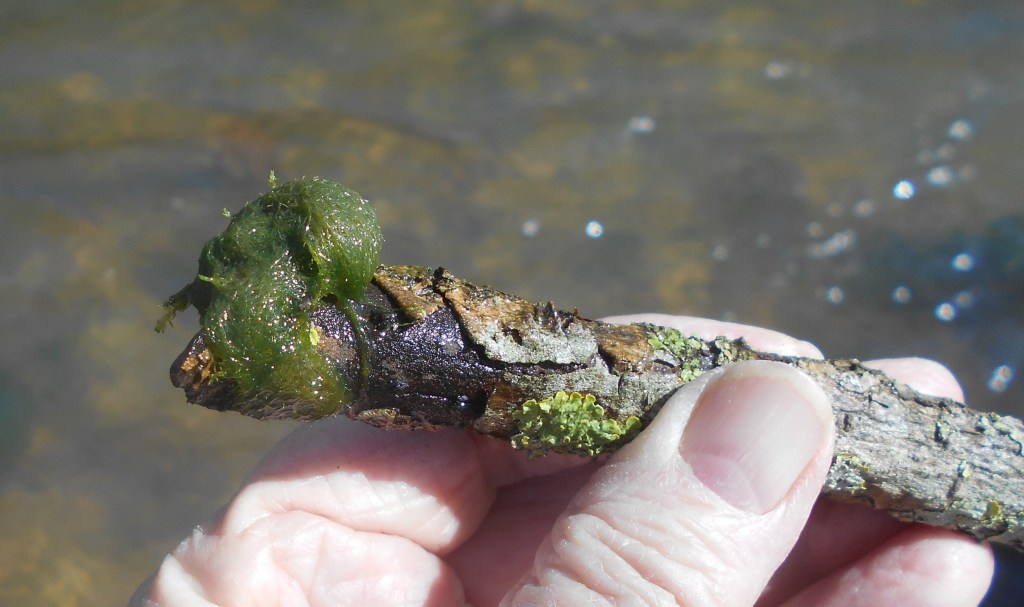
Attempting to photograph to identify the river moss coating the edges of the beach proved fruitless as usual, but I did manage to fish out what I thought was trailing algae attached to the bank underwater, on closer examination it looked as if it was possibly moss, however examination by hand lens should give a better idea.
While I was examining the beach, a man called down from the roof of the Creamery on the opposite bank with news of an Otter sighting the previous Thursday (13th April). It was when the river was very high and had flooded the beach, and as he watched, the Otter was diving and swimming, and eventually caught a fish. These physical sightings are so welcome, particularly at a time of flood when finding spraint is so difficult, so we were extremely grateful. We chatted about the Kingfishers which also fish close by and which he has often seen in May when the nestlings first appear and the Kingfisher has many mouths to feed.
ANNUAL TWO-DAY EVENT – OTTER SURVEY : Saturday & Sunday 8th & 9th April 2023 / Temp: 14-15C / Water Level: Med-High

The river was fast and high after a period of heavy rain day after day so one beach was completely under water and the others were a small narrow strip so this may have deterred the Otters as we only found two recent spraint and pad marks on the first day but fortunately one fresh spraint on the second day, confirmation we were looking for th show that the Otter had visited the site overnight.

The first day was gloriously sunny and warm, lots of fat female bumble bees disappearing into the long grass or holes in the ground search for suitable breeding sites and this vividly colourful Tawny Mining Bee, one of the earliest and the most easily recognised.
We spotted a pair of Mistle Thrushes under the apple trees in the Orchard and a pair of colourful Mandarin Ducks by the river, heard a Greater Spotted Woodpecker, Chiff Chaffs, Wrens, Chaffinches, Blackbirds, heard a Raven, saw five Buzzards (probably a family group) circling above and even spotted a Tree Creeper doing what they do – creeping up the trunk of a tree on the opposite side of the river.
On the second day the most notable sighting was the Red Kite circling above the Orchard, but apart from ubiquitous Wood Pigeons, bird sightings were fewer, although the Mistle Thrush pair were still there and of course the Mallard who are resident.

The most exciting was this fallen branch lying across the river bank close to the water. We noticed the deep scars which appeared to us to be gnaw marks left by an animal… but which one? We know both Roe Deer and Badger gnaw at the bark of trees and fallen branches to get to the insects underneath, but as Beaver have recently been seen in this area, we wondered if it could possibly be Beaver!
Checking with all the experts we had contact with, we were absolutely thrilled to discover it was in fact Beaver signs, and to add a cherry on top, we had been asked to report any signs of Beaver when we completed our Otter survey – hooray!!
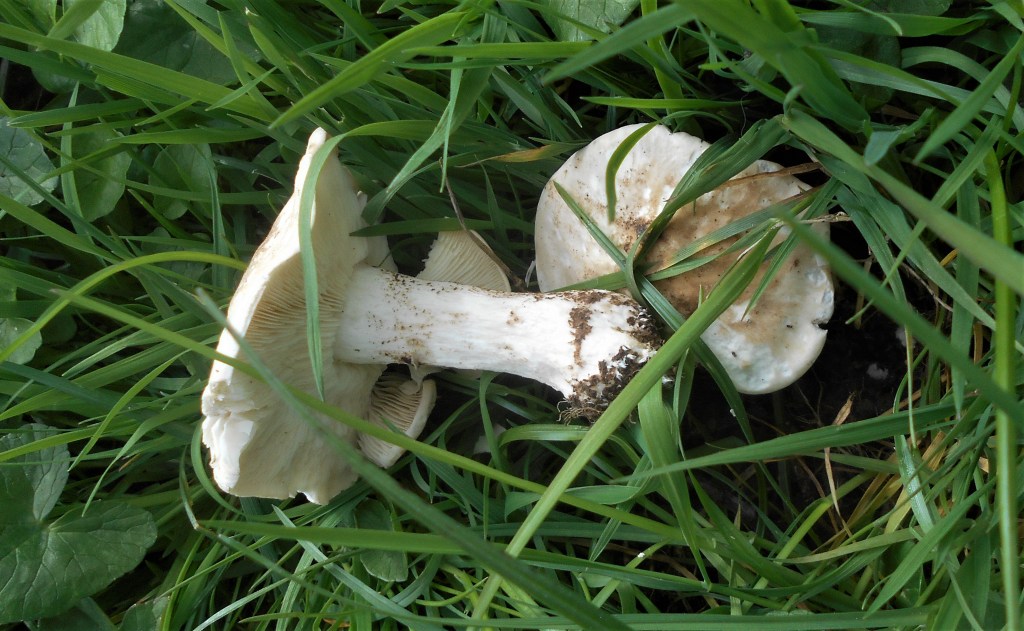
One other sighting which added to our red letter day was the semi-circle white mushrooms around a birch tree which were later confirmed as St George’s Mushrooms – we had only ever seen them once before and not in their notable circle so a lovely end to a thoroughly satisfying Two-Day Event!
4th April 2023 / Temp: 13 C / Water Level: Med-High
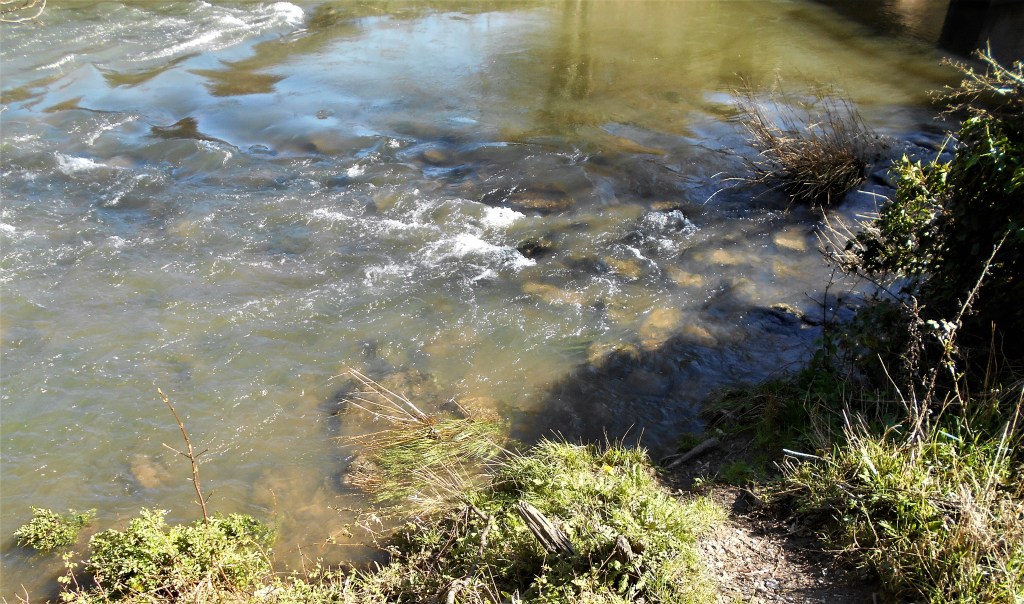
A glorious warm spring afternoon, full sun, blue sky and the perfect time to walk the river bank looking for Otter spraint and marking the change of the season and the welcome return of flowers, bees and beeflies, buterflies and craneflies!

The meadow was thick and lush with spring grass, lots of lesser celandines, chickweed and golden dandelions and the stone wall above the crashing weir was smothered in moss, English sedum and chickweed while on the wall below small clumps of yellow stonecrop held on to cracks in the stonework.
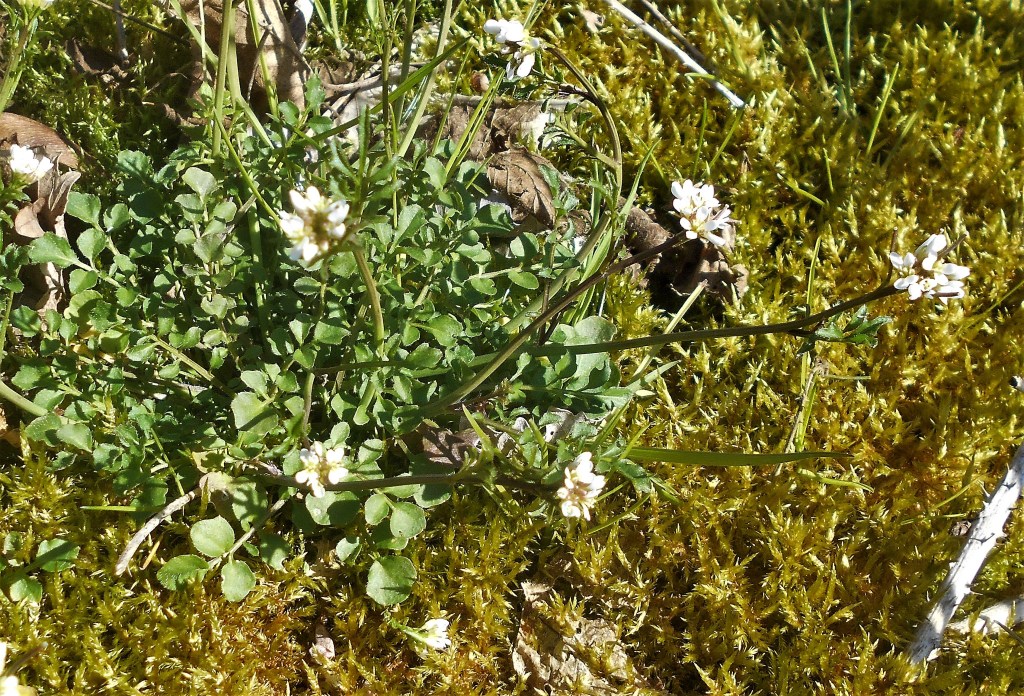
When we passed the weir, we only found old Otter spraint scattered around the low retaining wall, grey and crumbling, showing white chips of shell and a dried black winter spraint but no fresh. However, we did spot a Little Egret, rising from the tree hidden river, his great white wings lit by the sun and beautiful against the blue sky as he languidly flew across the meadow, no doubt heading towards the stream where he hoped for a quieter, undisturbed spot to fish.
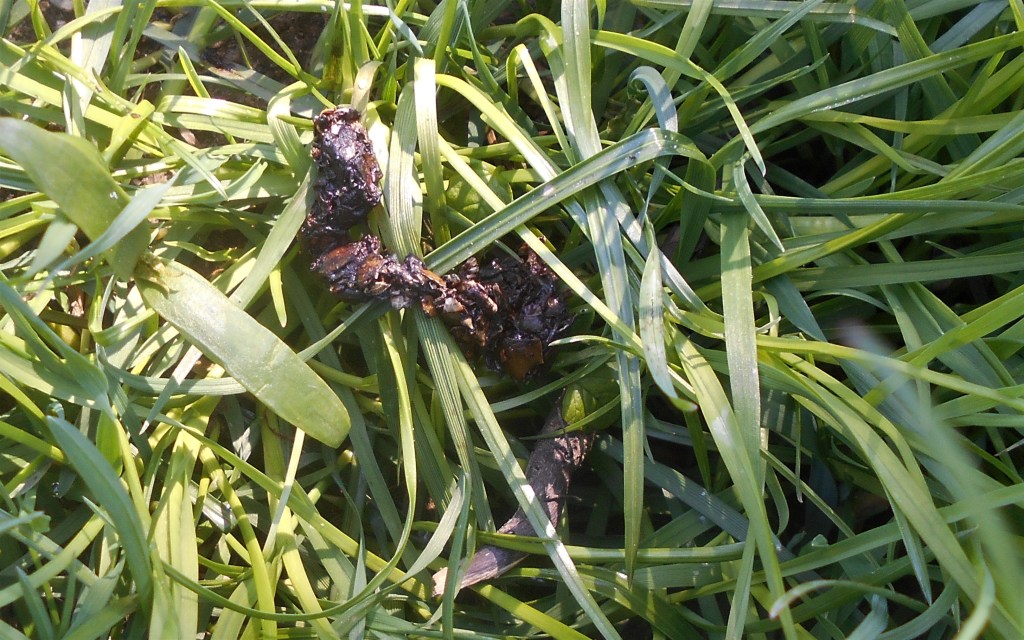
Walking along the river bank towards the great beach we spotted fresh spraint at last, almost hidden in the long grass above a fishing peg, where the river at this spot is believed to be one of the best Trout fly fishing spots, downstream from where the Chub spawn – this Otter knows his river!
We walked on, checking for water birds (only one Swan and the Little Egret so far and no sign of Mallard or Kingfisher), but we heard a Great Spotted Woodpecker, a group of noisy Jackdaws and the wonderful call of a Chiff Chaff, announcing summer had arrived!

Two days without rain meant the water in the river shallows was relatively clear, and the flooded beach was navigable, only the rags and detritus left clinging to the low branches of the trees and the number of empty Duck mussel shells showing the extent of the recent flood.
Turning stones in the hope of finding caddis larvae, we instead discovered this small, rubbery creature clinging under a stone. Despite searching possibilities when we returned home, we were unable to identify it but, fortunately, Mark Wilson of iSpot came to the rescue and was able to identify it as a leech egg cocoon, almost certainly Erpobdella octoculata! Quite extraordinary!
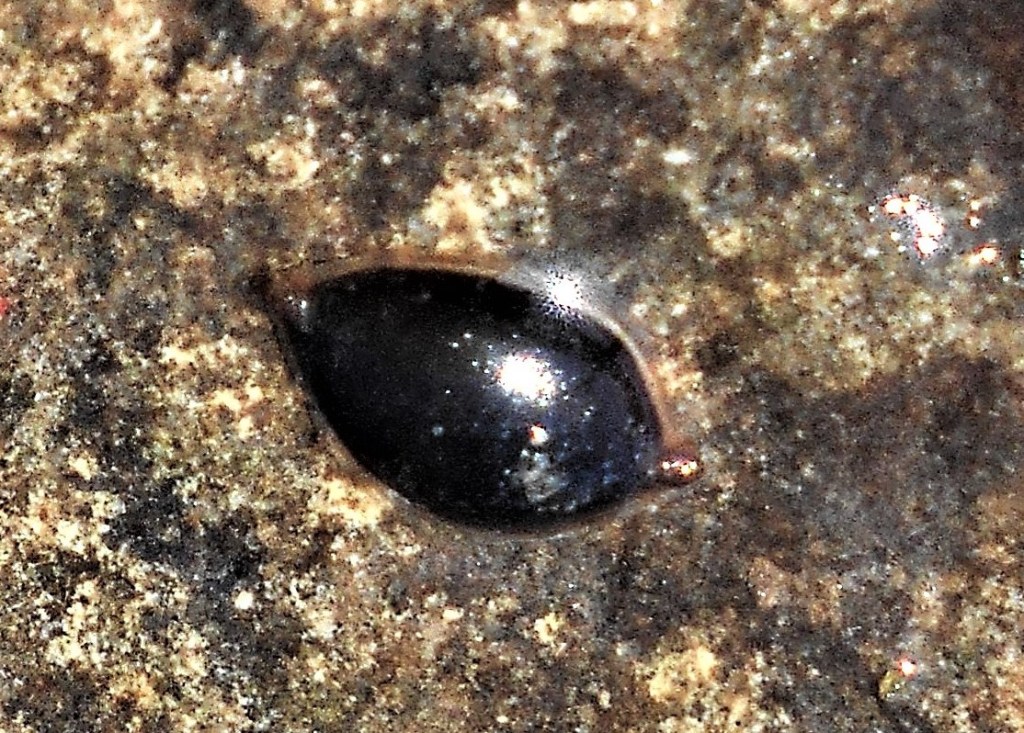
Evidently the leech, an hemaphrodite, lays these cocoons usually containing between 5-10 eggs either on a plant or stone within a year of hatching and subsequently die.
The above sketch shows the eggs and their growth within the cocoon. As is the way of the world, leeches feed on insect larvae, snails and even other leeches and they are in their turn eaten by fish, especially Trout. I doubt anything would be able to pierce the thick, rubbery shell of the cocoon so the female leech is able to keep her eggs safe at least. The contrast with the hundreds of caddis eggs contained in an egg mass of transparent jelly also attached to stones in the river couldn’t be more striking.
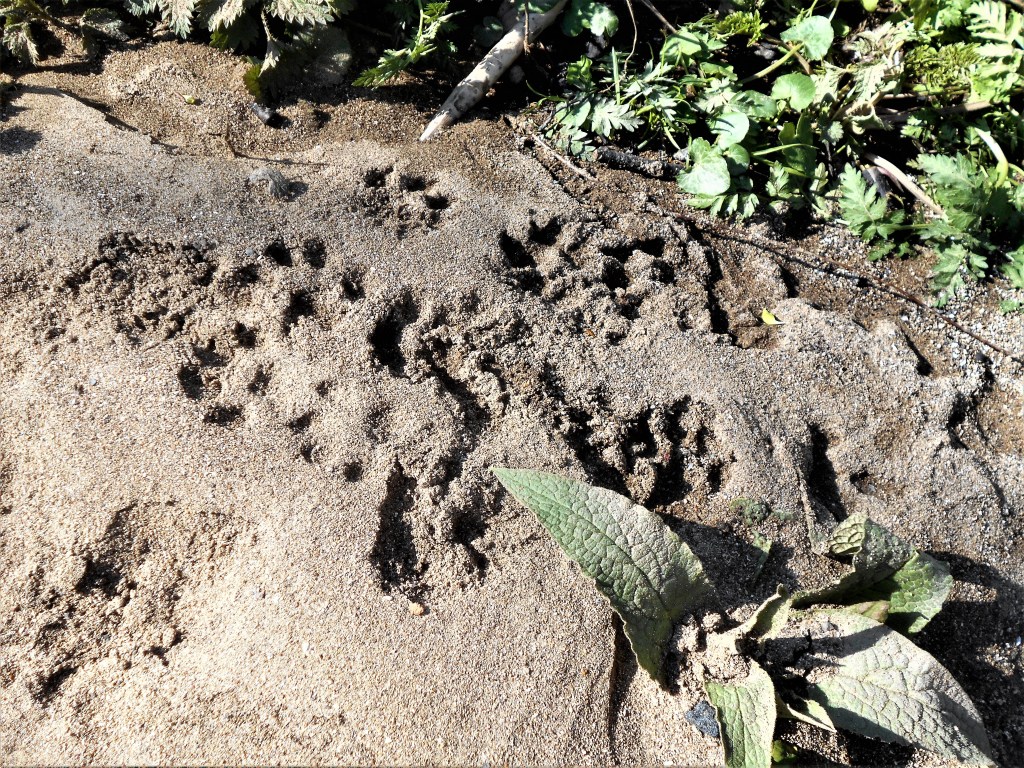
Checking along the beach for Otter signs we noticed that luckily the sand had remained wet enough from the flood for a foraging Otter to leave clear tracks so although we didn’t find any more spraint, he left his calling card to show he had recently passed this way.
26th & 27th February 2023 / Temp: 4.5-6C / Water Level: Low

We have been exploring the triutaries to the Somerset River Frome – a very different environment from the main river. Small shallow trickling streams over gravel beds, so unlike the fast currents and crashing weirs of the river which as it cuts through farmland dirt banks inevitably disturbs loose earth and clouds the water. This constant erosion is exacerbated by the American Signal Crayfish which tunnel into the banks, causing yet more disturbance to the soil. Here, along with the other tributaries we have visited, the water is low, the beds are stony so the water is crystal clear, a mass of river limpets and caddis larvae on every stone with banks a thick mass of bryophytes, mainly liverworts a species totally unfamiliar to us, and mosses.
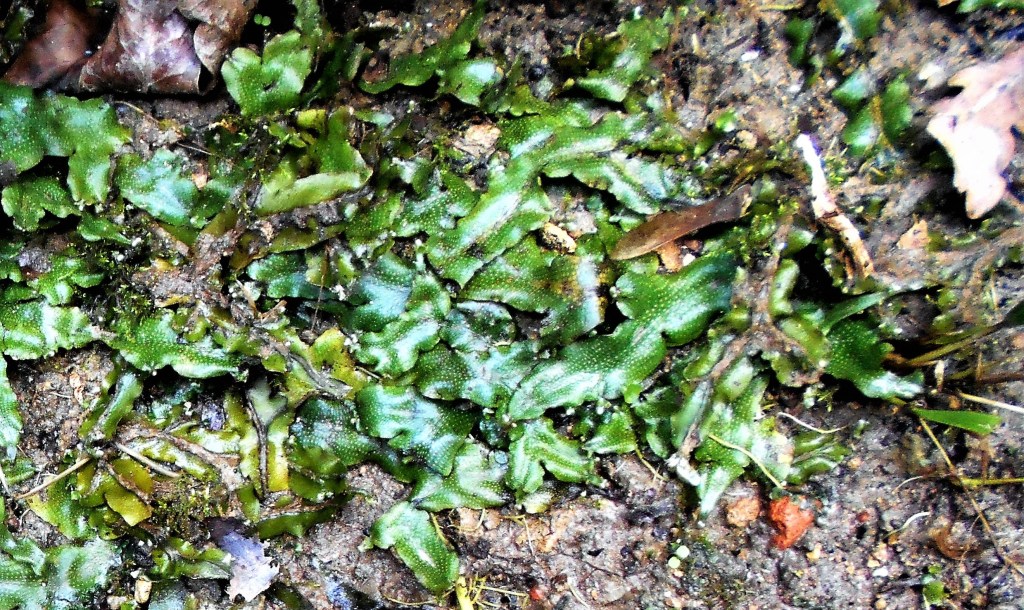
We discovered thick strappey mats of Great Scented Liverwort clinging the bank, and small, delicate Crescent Cup Liverwort which while looking beautiful, mixed up with bright green moss, glowing in the bright winter sunshine on the edge of the stream……
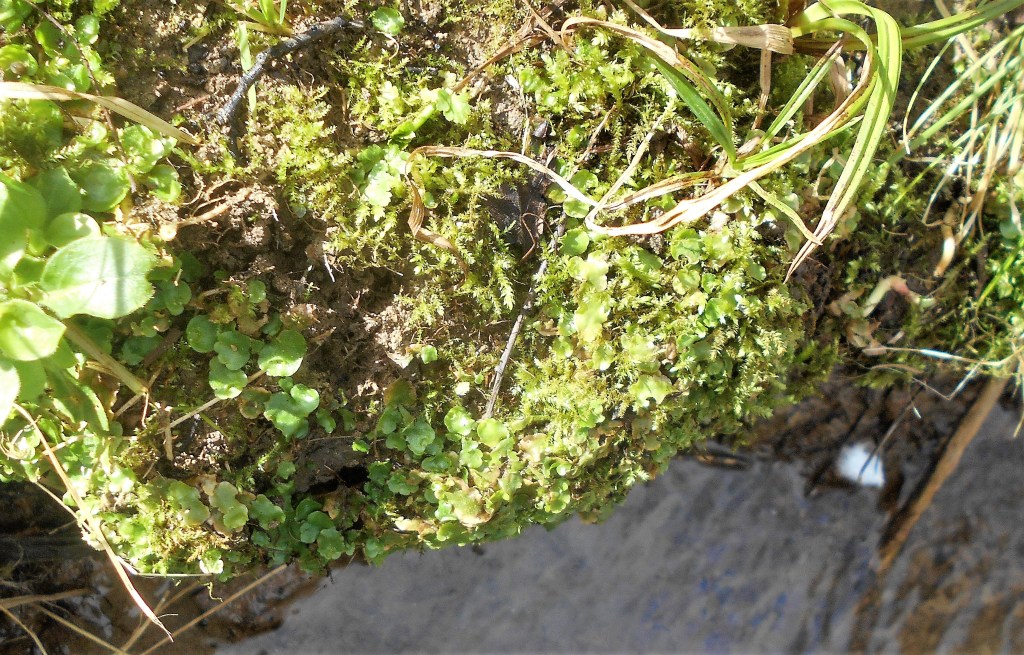
which we only managed to identify once we were able to examine it properly. It was then, with the help of our hand lens, that we noticed, the small crescent shaped cups, which, unique amongst thallose liverworts, contain green, disc like gemmae. A first for us and a very exciting discovery!
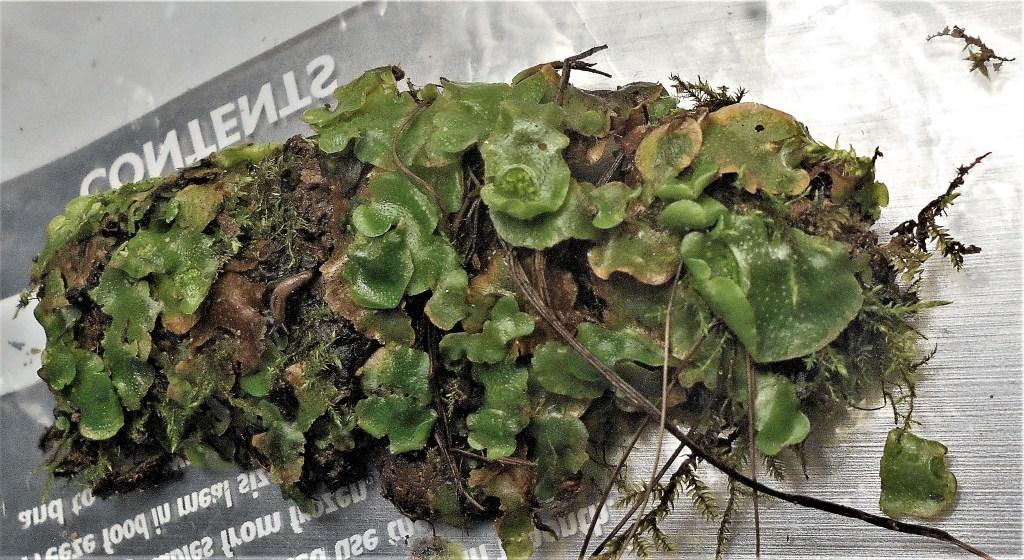
So intent were we in searching for the cups, we totally missed spotting the small slug which accompanied our specimen back to the house!
Wading the stream we saw great clumps of Hart’s Tongue ferns littering the banks, together with the thin but sharp tough upright leaves of pendulous sedge. The banks were covered in ivy, which with trailing bramble always make a hazardous trap for the unwary.

and when it becomes necessary to pull aside curtains of ivy trailing down from moss covered branches to negotiate the only path along the stream, the whole area begins to take on the atmosphere of an impenetrable jungle rather than a gentle stream in the south west of England!
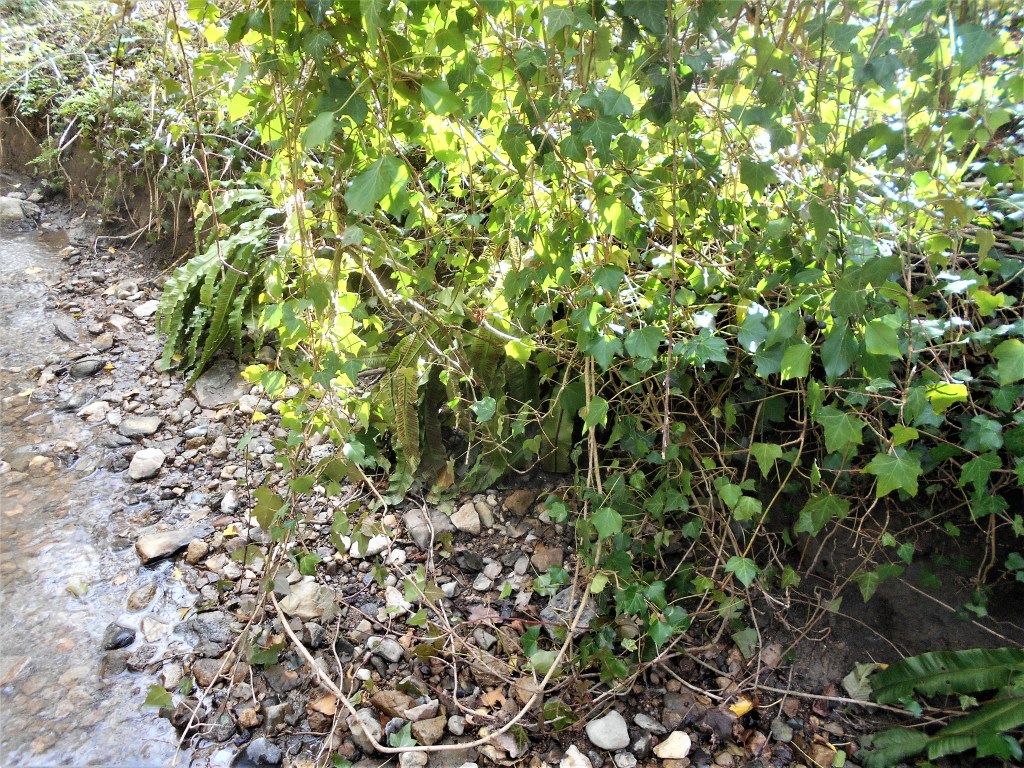
However, the rewards are worth every near fall and wild clutch at a steadying strong branch and a full boot from a sudden dip in the stream bed. The sheer number of invertebrates in the stream are astonishing! We gave up counting and simply admired the sheer abundance of freshwater species.

An algae covered boulder smothered in midge larvae – so many it’s astonishing to believe that there is sufficient algae to feed them all! The large stones in the stream and even the gravel bed of the stream covered in masses of cased caddis larvae.

It’s difficult not to think that this overwhelming bounty may have been commonplace in all the rivers and streams of this country. The density of human population, with their profligate use of water for sewage and bathing, dishwashers and washing machine together with intensive farming and all that entails have overwhelmed the waterways. Such a toxic combination of pollutants which includes the runoff from roads and pavements have so badly affected the wildlife, numbers have inevitably fallen drastically and if this is not properly addressed, they may well be simply unable to cope and disappear..
19th and 25th February 2023 / Temp: 4.5-6C / Water Level: Med
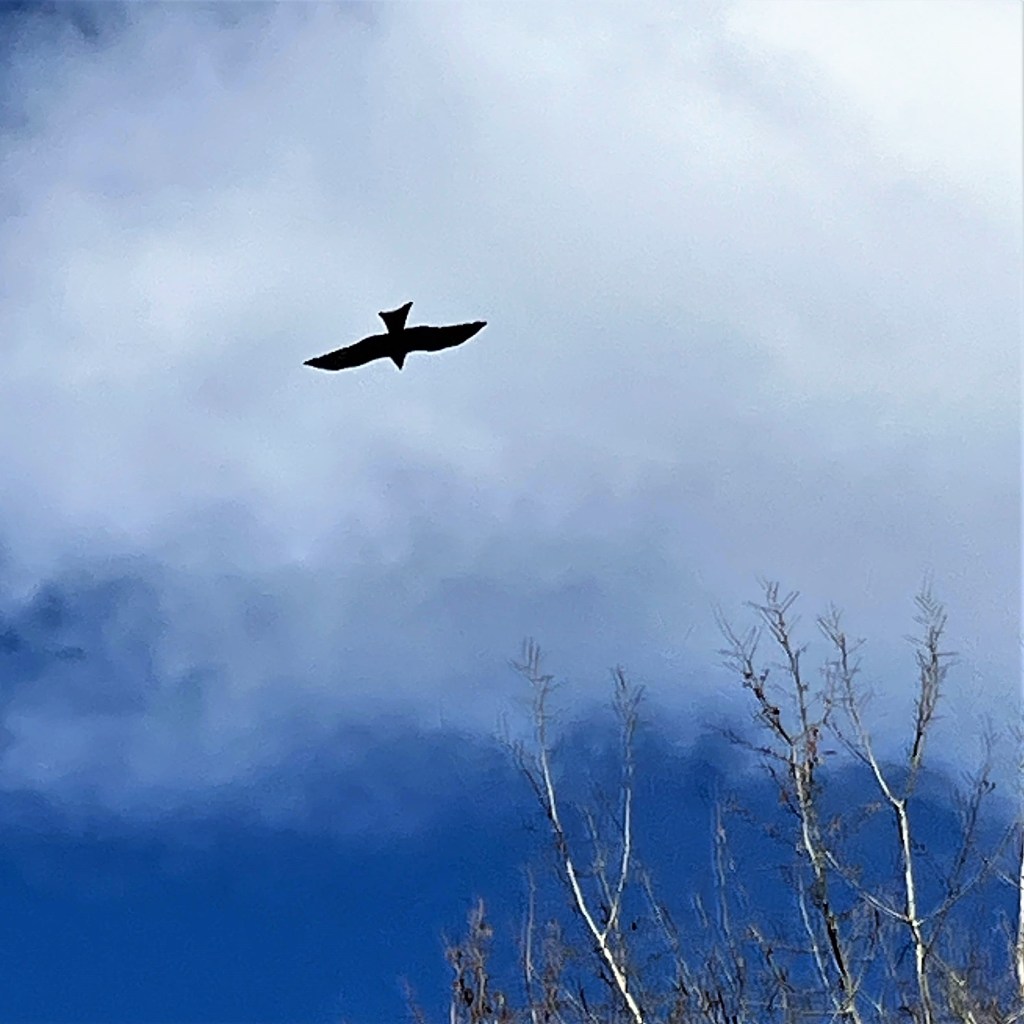
If you want to see wildlife, take up fishing would be the advice of Paul Cook, a member of the Frome & District Angling Association!
During two quiet and successful days fishing he not only spotted an Otter swimming past and staring up at him, but on the second occasion he saw it again and followed it upriver before it was lost to sight!
Paul managed to capture some brilliant video footage of a Mink sprinting along the opposite bank (regretfully unable to upload) plus not one but two Muntjac grazing in the water meadow, as well as a Cormorant roosting at the top of a tree and a Red Kite circling overhead. A pretty impressive haul for for any enthusiastic naturalist!
13th February 2023 / Temp: 11.5-13 C/ Water Level: Med

The leaf buds of the Hawthorns make a cheerful splash of deep pink as they sprout and begin to open – a welcome sign that spring cannot be too far away. Pre-spring flowers are beginning to flower and it was also cheering to see the small clumps of snowdrops along the river bank. We spotted a pair of Mallard on the water, the male resplendent in his breeding plumage, the female looking drab and colourless beside him plus a single Swan were the only water birds seen during the whole of our walk. The river at this point runs parallel to the lake where we’ve heard that 19 Heron have been counted around the large untidy nest of the Henronry as well as a Little Egret, so no doubt the Cormorants which we usually see are also there.

The sizeable tree which was wedged firmly between the wall of the Creamery and the large old willow was a stark reminder of the force of the recent floods, as was the amount of scattered river debris spread across the water meadow, 20 feet or more from the river bank showing clearly how far the water rose above its normal level. Impossible to know where the tree came from and how far the flood water carried it but the farmer and the Creamery must be pretty fed up – it is only a matter of months since they had to clear a similar sized tree from the weir.

As the sun was warm on our back and the beach raked clean by the receding flood, we took time to turn stones in the river, with very little to show. A marked difference between the shallow water of the tributary where cased caddisfly larvae were plentiful, we didn’t see ever a single one here. However we did find lots of Horny Orb mussel shells, and for the first time ever, many of them complete which was a bonus. We collected several and when we returned home we couldn’t resist putting a few in a Duck Mussel shell, showing the extraordinary difference in size – we sometimes think Pea Mussel is a better description than the accepted Horny Orb given its miniscule size!
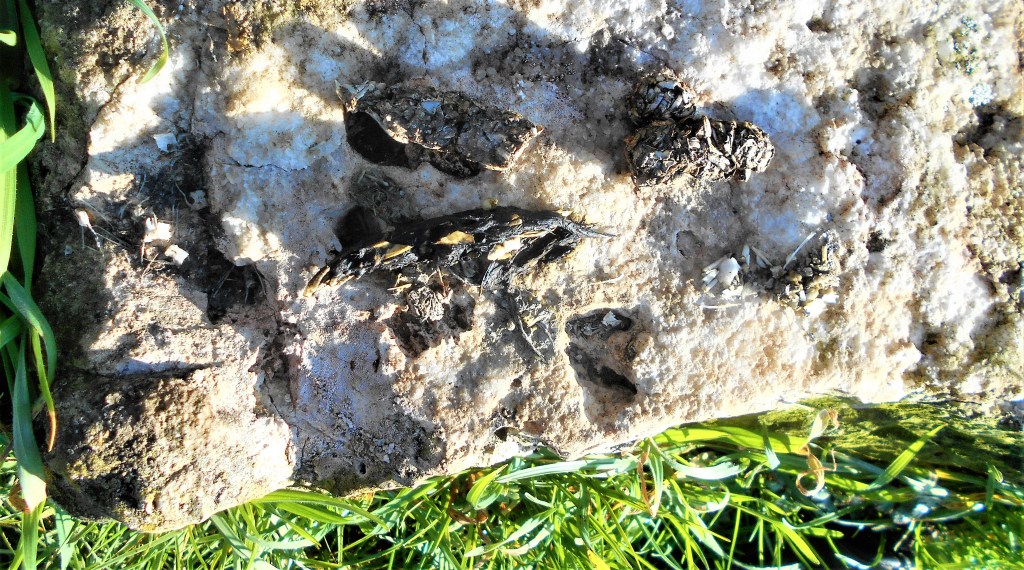
Good to see old, recent and fresh Otter spraint above the weir and above the beach which suggests a single Otter and not a female with cubs. It is always striking how black the spraint is in winter time, such a marked contrast to the usual red spraint when the signal crayfish are in season.
Not many birds to be seen although it was good to hear so much bird song from the trees and hedgerows, another good sign that spring is on its way. A Raven, a Crow, several Long-tailed Tits, a Wren and a Buzzard was pretty meagre sightings but the best is yet to be – not too long to wait!
12th February 2023

In view of the catastrophic fall in the number of insects, particularly the frightening decline in caddisflies it was heartening to see so many cased caddisfly larvae in one of the tributaries of the Somerset Frome glued to the stones in the bed of the stream.

1st February 2023

Exciting news for local anglers, FROME & DISTRICT ANGLING ASSOCIATION have just issued the following notice:
The culmination of two years of nurturing for the guys at the EA’s Calverton Fish Farm is when they see their babies set free. Thanks for these fish, we appreciate your efforts, it felt quite joyous setting them free.
500 barbel of around 4oz were introduced today to the River Frome at the Factory.
The aim is for a self sustaining population to eventually establish themselves, these stocked fish will start showing in catches in a few years and fingers crossed their offspring will grace our nets for years to come.
31st Jauary 2023 / Temp: 10 C / Water Level: Med-High
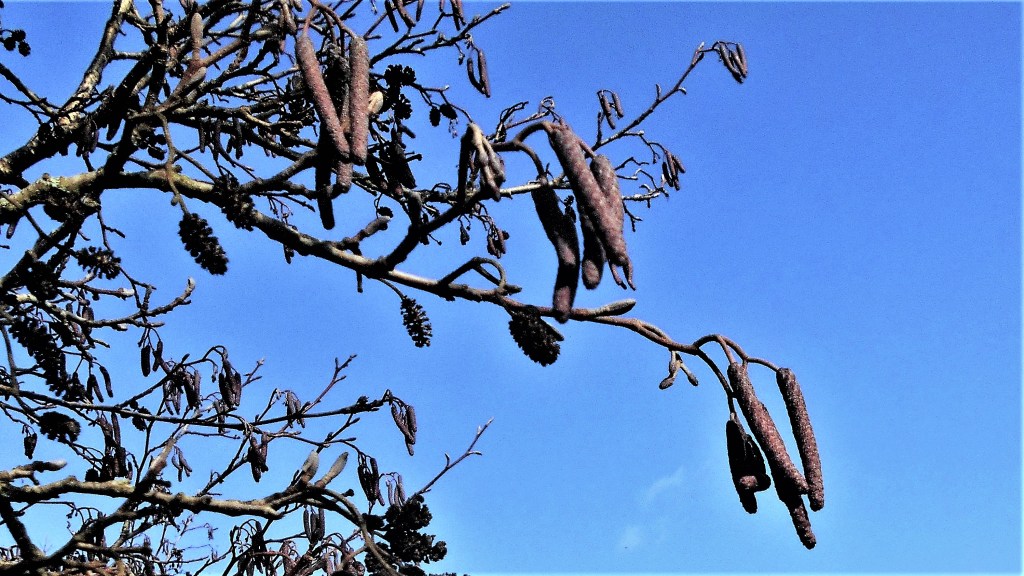
How lovely to feel the sun on our backs, the temperature rising above single figures, see the Alder catkins purpling up and drink in the blue, blue azure blue sky – can it really be – it certainly seems possible – it feels as if winter might be releasing its grip, at last!
It was wonderful to be out along the river after what seems months since we last checked for Otter signs so although the wind still held its icy edge, once we reached the line of trees lining the river bank we were sheltered enough to enjoy the walk.
Wonderful too to reach our second site and find two large stones with liberal amounts of Otter spraint, 2 fresh and 1 recent on one and 3 fresh and 1 recent on the other. Nestled among the tussocks of grass above a small inlet of slack water, 3 more large spraint, old and crumbling but a favourite spot so good to see that it is still being used and at our final site 2 fresh and 1 recent so the Otter are here, active in the vicinity as well as in the Nature Reserve and town centre upriver.
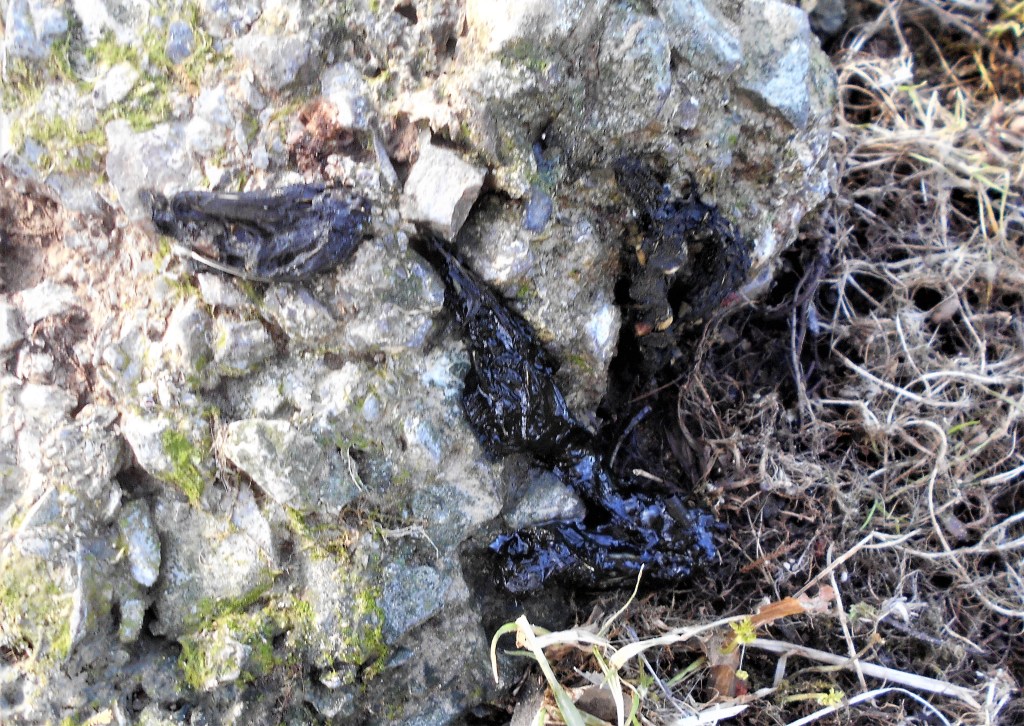
The spraint we see at this time of the year is very strikingly different to the summer spraint, black and tarry instead of red from the American Signal Crayfish which is our local Otter’s main diet. In winter they eat what they can get, including birds, which certainly looks like the possible contents of this particular spraint.
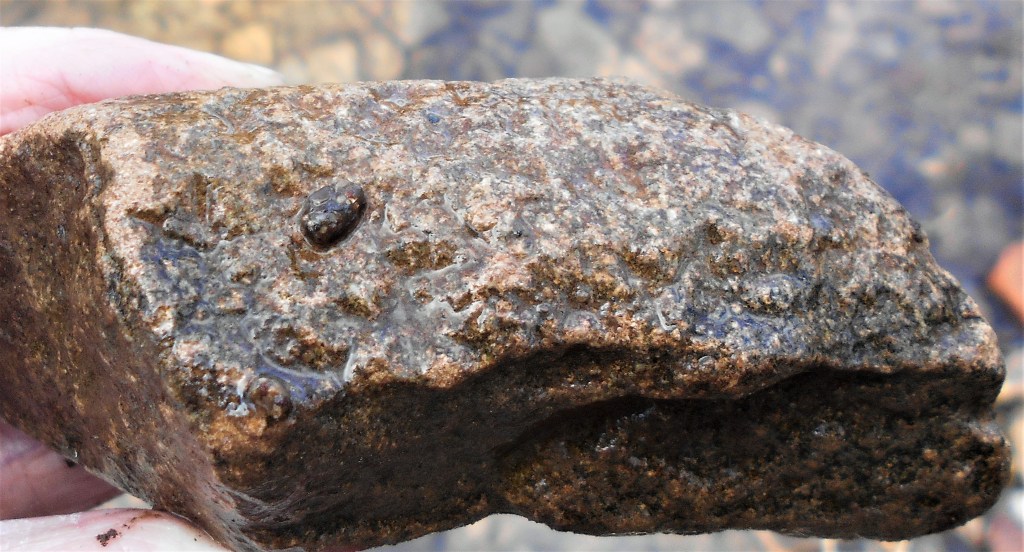
We were a little pressed for time but still found a few moments to turn stones at the edge of the river hoping for signs of life. Not much to see, mostly minute snails and smears of what might have been uncased caddis larva galleries, but we did find what appears to be a cased caddis larva – possibly Glossoma, due to its humped appearance (saddle-back) and lack of a ring of sand around the entrance, but impossible for us to definitely identify.
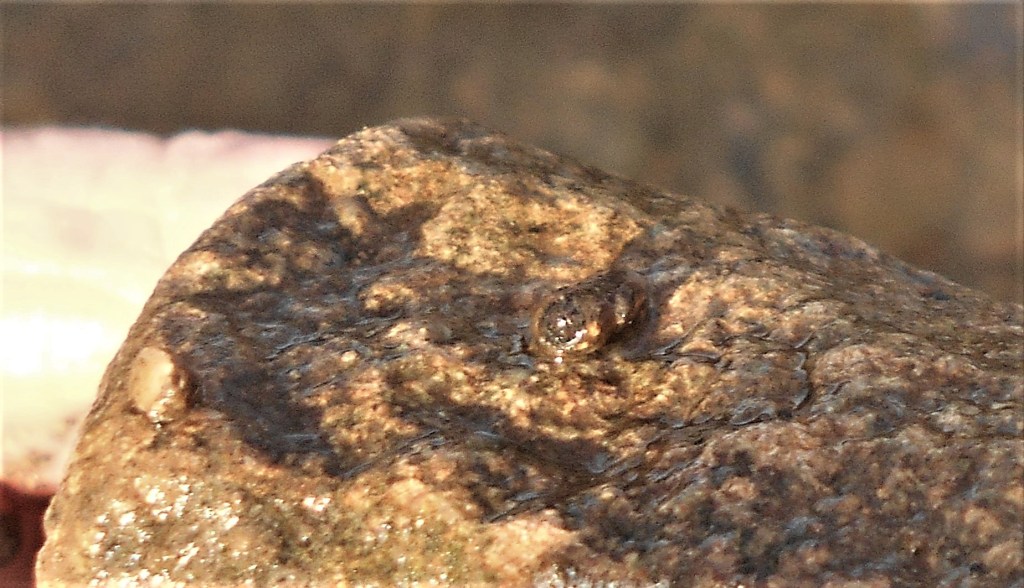
While we were busy checking the beach, we saw a Tree Creeper, a Blackbird and three Long Tailed Tits busy amoung the trees and around the hedges, a few signs of birdlife to add to the single Heron and a Herring Gull we saw flying over, a Little Egret and two Crows on the other side of the river, and three Jackdaws calling and chattering as they flew between neighbourikng trees. Not exactly alive with birds but we did disturb a small gang of seven Mallard, a tight group close to the river’s edge which took off in alarm as we walked by. A great clatter of wings but silent, unlike the noisey complaints they usually make if disturbed! As we were leaving, possily half an hour later, they flew around but didn’t land when the caught sight of us.

Another welcome sight of new growth to cheer us as we walked out away from the trees – the bright green leaves of the Arum lilies sprouting from their underground rhizones, often the first plants to show signs of life and another sign that winter is drawing to an end?
9th January 2023 / Water Level : High
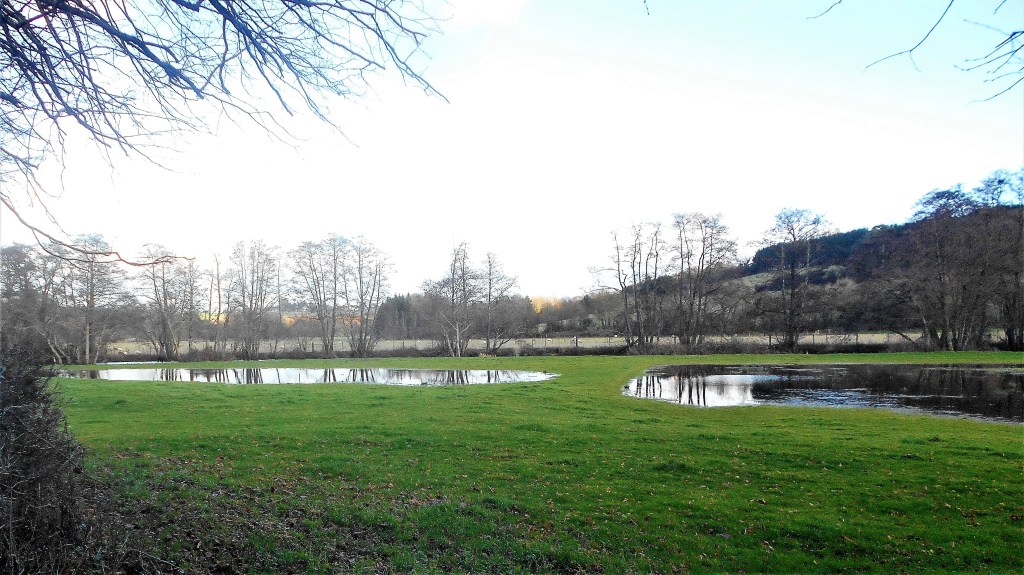
The many niggling challenges of increasing old age are frustrating but never more so as when they prevent us from doing what we want to do! Unfortunately a bout of ill-health has stopped us from visiting the river as often as usual over the past couple of months so, as the wind was strong and decidely icy, the fields along the main river flooded and uninviting, it seemed a good idea to make a a trip to one of the tributaries to the main river, one of many small streams which trickle down either from springs or seepages or underwater streams from as far away as the Mendip hills. They are often sheltered by trees and shrubs and the step sides of the stream give excellent protection from the wind.
It is always a mini adventure to wade upstream, navigating the tangled ivy, moss covered elder branches which snap as we reach for support, ducking under fallen branches and negotiating skeins of interlaced tough honeysuckle vines, but at last managing to reach the main reason for our visit, a small tufa cascade, an outfall from one of the Mendip hills seepages.

The cascade is not very big, probably no more than a three feet drop, but the build up of tufa deposits at the point of the outfall, the coating of algae and the stalactites which have formed over the years make it quite an unusal and striking sight.
We searched the water below the cascade, looking for the Endangered caddis Adicella filicornisa larvae or, extremely unlikely, the particular rare cranefly larva Ellipteroides alboscutellatus, a species associated with tufa-depositing seepages, but although we found what appear to be Agapes cased caddis and the larval galleries of uncased caddis, in amongst the black river limpets, these were the only larval remains we were able to find. However, it is mid-winter and most of the recorded findings have been in the warmer months, so we will return later in the year and hope for better luck.

The stalactites are accumulations of calcium carbonate deposits from seepages of lime rich water. As the slightly acidic rainwater passes through limestone it reacts with it by absorbing the calcium carbonate which it then deposits when reaches the air.
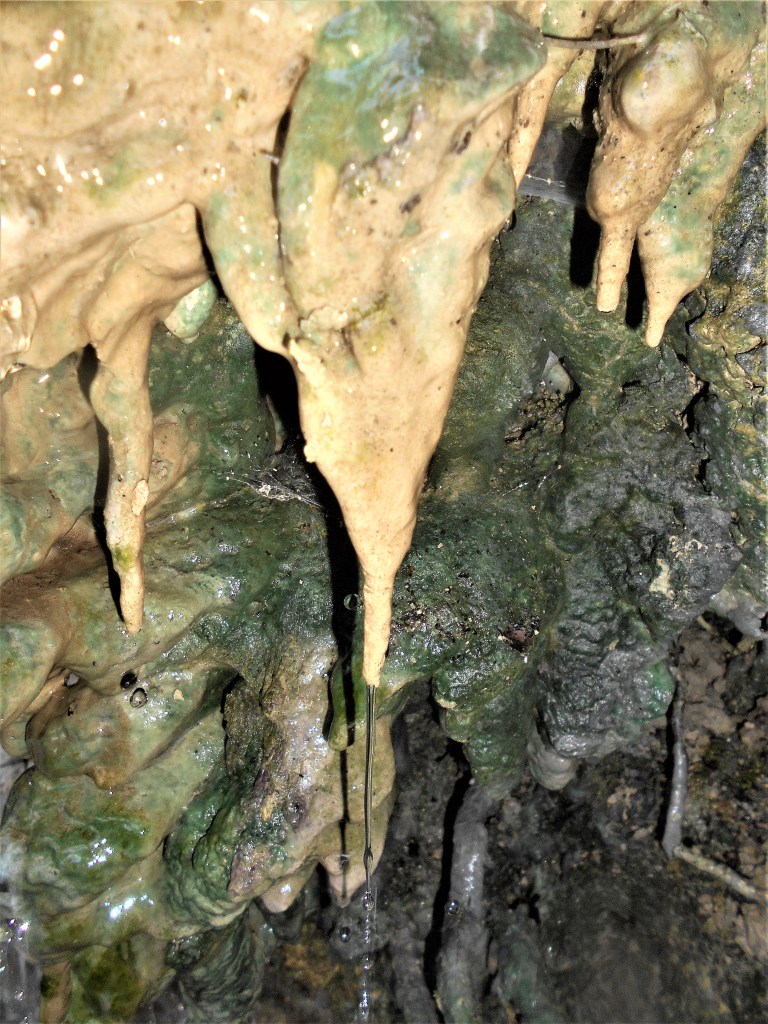
We had rather more difficulty in climbing up out of the steep sided stream than we did wading along it, and promised ourselves we would plan a better route next visit, one which is more suitable to our age and lack of agility!!
20th December 2022 / Temp: 10 C / Water Level: High
Winter Solstice Eve
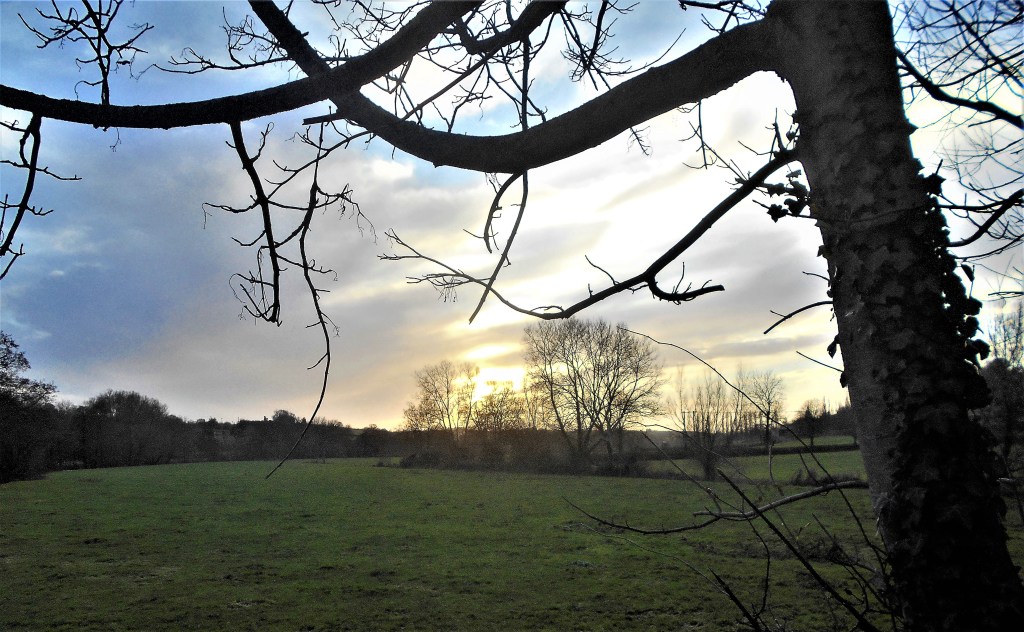
As we left the river the sun was beginning to set, and tomorrow would thankfully be the shortest day of the year, heralding the return of the sun. Always a relief to have managed the three darkest months of the year and come through it relatively unscathed with the knowledge that the worst is now over and the best months of the new year are not too far away!

The river had been pretty wild during the whole of our Otter survey! Rushing and tumbling along at torrential speed as we walked gingerly along the bank looking for spraint but keeping a weather eye on the river by not getting too close. Togged out against the cold we were conscious that a careless slip on the rain sodden muddy bank could result in a slide into the fast current that, given our age might prove challenging! Having been warned by the Health Minister’s very helpful (!) advice not to take risks, we didn’t want to be blamed for further endangering the present chaotic state of the National Health Service by our actions.
All of our usual sites were flooded and we felt it very unlikely we would spot any signs of Otters at all so were pleasantly surprised to find two fresh spraint on the grassy bank above a small inlet of calm water away from the main current.

Typical winter spraint in our area, lacking the usual orange/red of crayfish feeding, this looked full of snail shells – poor pickings for a hungry Otter but needs must in winter when they scavange on what they can find.
No water birds on the river of course although we did see the resident Swans (no sign of their cygnets) and four Mallard on the bank. Apart from a couple of Blackbirds, a Herring Gull flying over and c.15 Black-headed Gulls in an adjoing field, we didn’t see any other signs of life either.
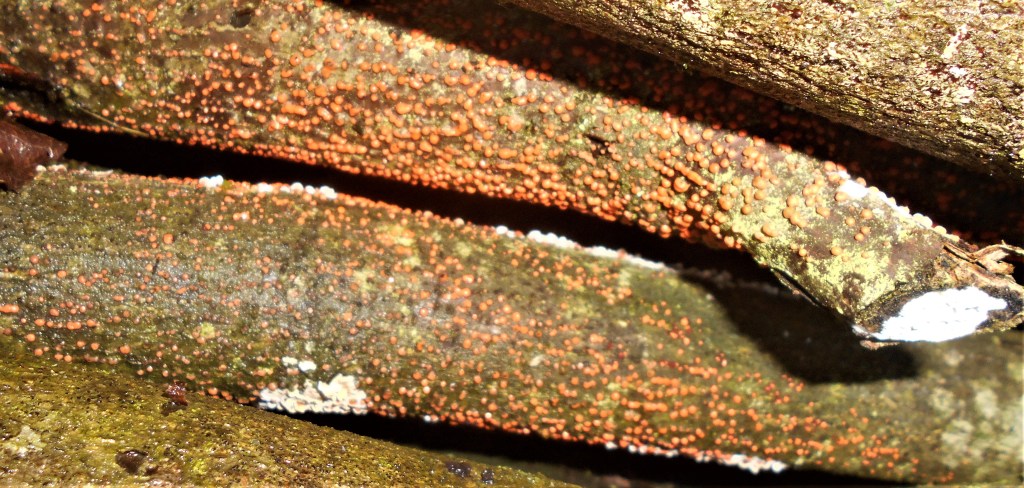
A pile of logs were dressed in bright Coral Spot fungi, making a cheerful Christmassy splash of colour amongst the drab tones of winter, but with fresh evidence of Otters along the river, we could view the other sites, empty of all signs of life, with equanimity and merely note their flooded beaches with passing interest.
29th November 2022 / Rodden Nature Reserve

copyright : Jenny Vickers
An image taken from Jenny Vickers’ delightful video of two Otters playing in the reserve in the centre of Frome and posted on Frome Wildlife Watch https://www.facebook.com/groups/
14th November 2022 / Water Level: Normal, falling / Temp: 16.5 C
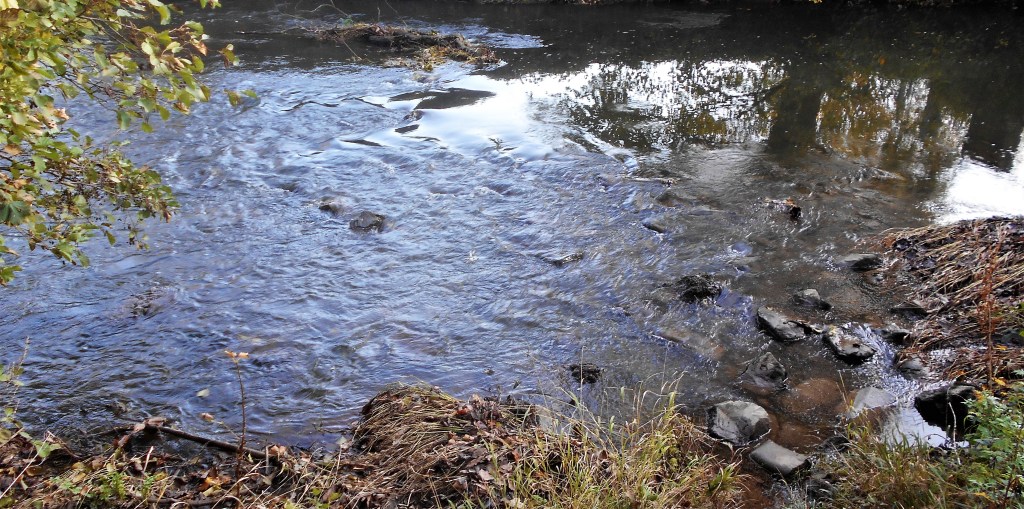
It was a huge relief to see the river beginning to recover from the summer drought, not yet up to its usual level at this time of the year which is usually after the wettest months of October and November but the flow is back to normal and if it continues at this rate, it won’t be too long before the river is fully recovered. No signs of water birds – not even a Mallard, so perhaps they have all moved to nearby lakes – only time will tell whether they return.
It was a beautiful morning, full sun, blue skies and lots of birdsong, at least the small birds of tree and hedge were about in numbers – Wrens, Blackbirds, Magpies, Long-tailed Tits, a flock of Jackdaws fly over, chattering as always and the wonderfully evocative croak of a Raven calling a greeting as it passed overhead.

White-tailed Bumblebee (Bombus lucorum/terrestris/magnus/cryptarum)
Nothing can illustrate quite how unseasonably warm the weather has been this autumn better than this image of a White tailed bumblebee, still crawling around in the wet grass in mid-November. It’s wings were so wet it was unable to fly but the sun was warm enough to dry it and we left it in peace to recover.
Two fresh Otter spraint on the gravel beach but no other signs of life either on the ground nor under the stones we turned in the river. Rather disappointing not to find a single caddis larva, river limpet or even any ubiquitous freshwater shrimps clinging to any of the stones, we hope not a sign of the drought.

A very hot, very dry summer followed by a warm, dry autum has produced a bonanza of fungus, more than we have every seen in the woods and up on the downs and here along the water meadows they were blooming in profusion, fairy ring chanterelles scattered in numbers wherever we walked, Snowy Inkcaps, with their sprinkles of snowy fibres intact, Dung Roundheads, and the wonderfully delicate little Yellow Fieldcaps, so small they are easy to miss…
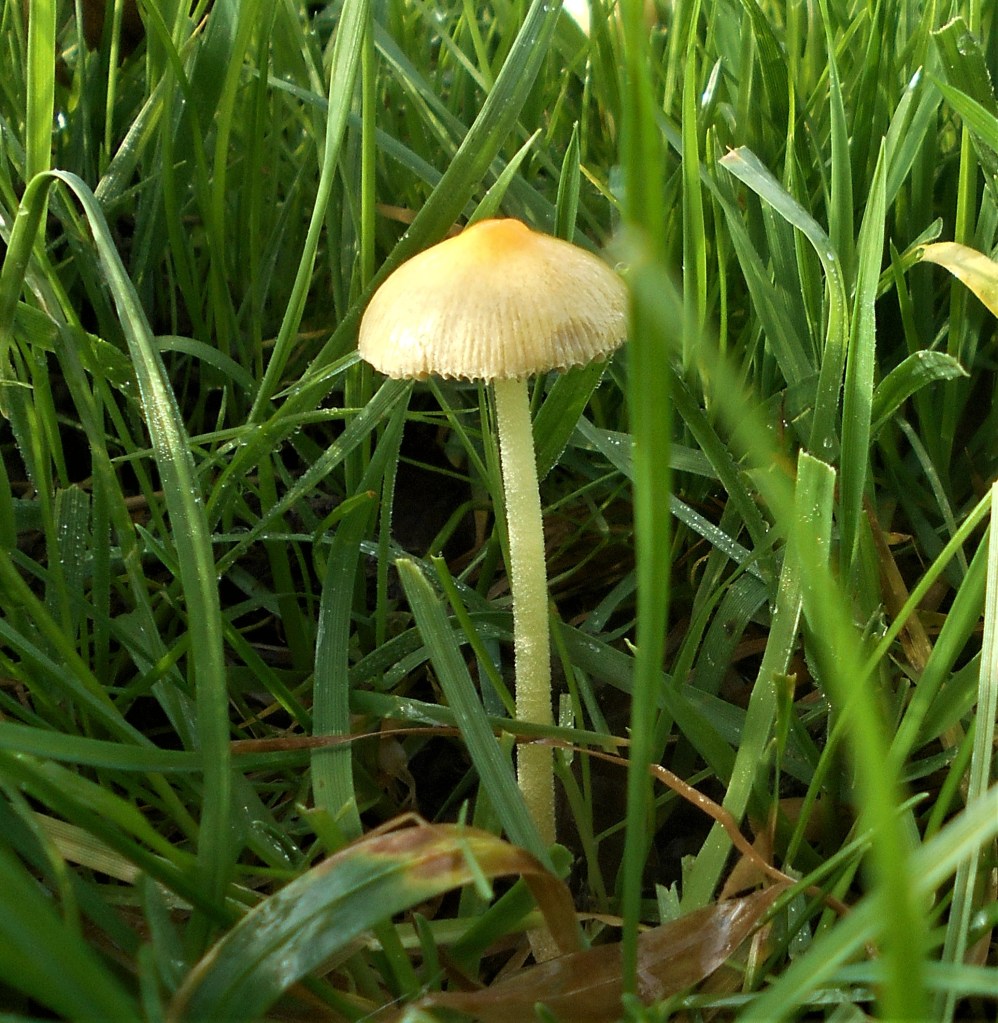
We spotted a Speckled Wood butterfly among the riverside plants as well as a dragonfly – sadly far too fast to get an identification and too far away for a photograph but heartening to see both, it’s still warm, winter hasn’t arrived even though the nights are drawing in and then we caught sight of not one but three Cormorants in their usual roosting tree – and lovely to see that one had a white underside – a juvenile, so mum and dad had at least one successful breeding season, although from a possible clutch of about 3-5 eggs, not a great survival rate.
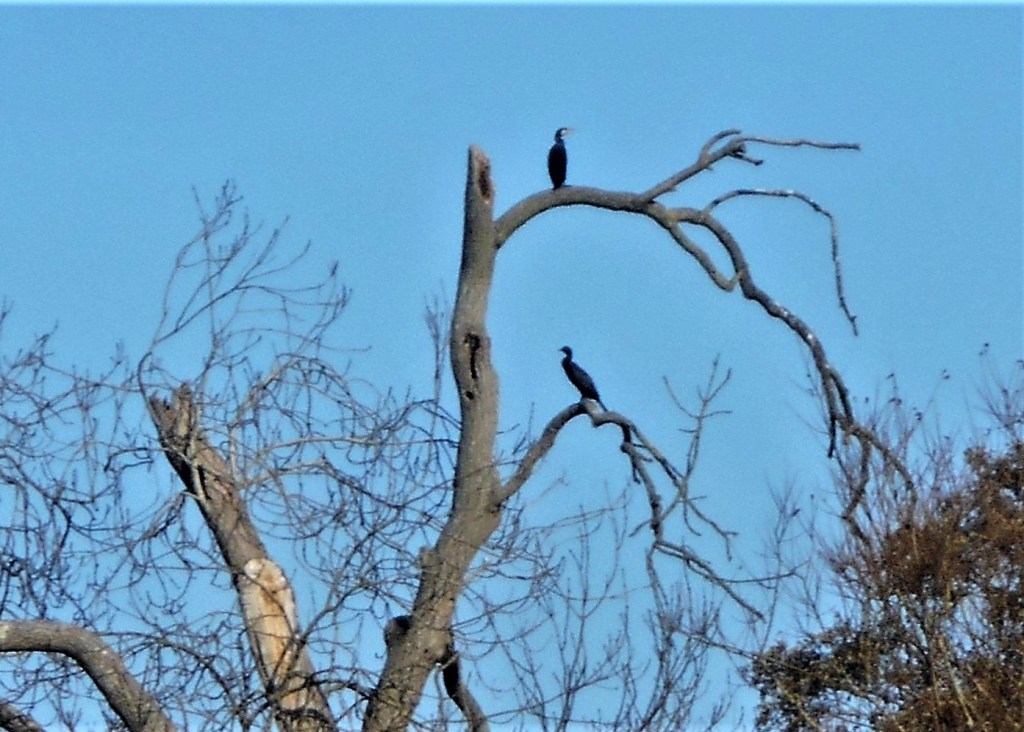
It’s always easy to spot their roosting trees as, like this one, it has lost its leaves – sadly one of the side-effects of nesting together as a colony is the volume of droppings, which over time kills the breeding trees. We don’t know how long it has taken for it to decline to this extent, but we have seen them using this tree for a number of years.
18th October 2022 / Water Level: Below Normal / Temp: 16 C

All very calm along the river, surprisingly and very welcomingly warm for the third week in October. After checking the muddy beaches, wooden anglers’ jetty, under the bridge and along the grassy river bank for Otter spraint (none) we perched on our stools backs to the sun and basked. This field just above the weir often floods in winter so perhaps it is not surprising that it never parched as badly as the other fields on the farm, confirmed by the lush growth after a couple of days of rain.

No sign of the Canada Geese on the bank or river, or of their piles of droppings which make walking so unpleasant, but the warm sun had brought out the dragonflies – we counted 4 male Common Darters, a single female and a pair in tandem over the almost stagnant scummy pool, an overflow formed by the small stream draining into the river.
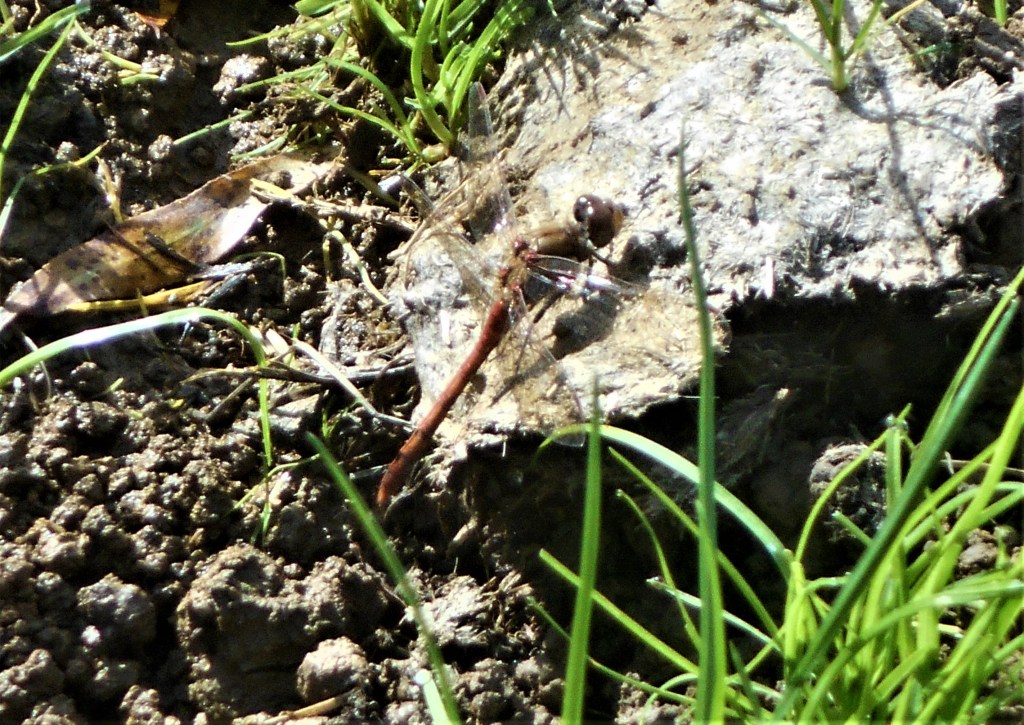
An Emperor dragonfly hunted relentlessly up and down the reeds, annoyingly just beyond the range of my camera, and difficult to follow with my Papillons. Given the warm sun, brilliant light and sheer number of dragonflies while watching its eratic flight, it was almost possible to persuade ourselves that it was still summer.

Moving from the sublime to the more mundane, although just as beautiful in its way, was finding what I believed to be the wonderfully named Cowpat Gem (Cheilymenia granulata) but which dejayM on ispot pointed out is not the only granular one, and thre wasn’t sufficient detail to persuade him to accept, so we therefore settled on Pyronemataceae as a likely ID.

Little bird life, 4 Crows, 6 Jackdaws, a Moorhen, a Mallard, a Blackbird and two Buzzards, mostly heard and a few seen – not exactly a hive of activity. The insect life was rather more energetic, we caught sight of at least 6 wasps, a couple crawling up and down the trunk of an catkin bearing alder tree, a Hornet hunting among the reeds, several drones and a bumble bee – it must be Indian Summer!
15th October 2022 / Temp: 15.5 C / Water Level : Normal (but very low) Mells River: Below normal
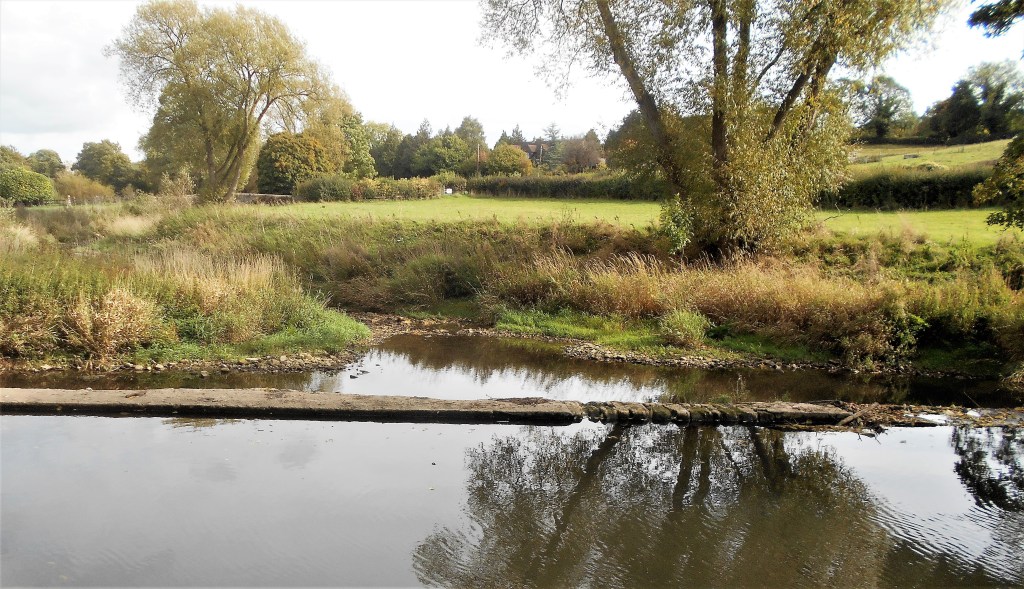
The view of the weir is rather sobering, the wall being visible for the first time shows very clearly the drop in the water level of the river. The old mill leat has taken the main flow of the river which is not that strong, but the hedge cutting has revealed the full view for the first the first time since the spring growth showing clearly the full effect of the summer drought.
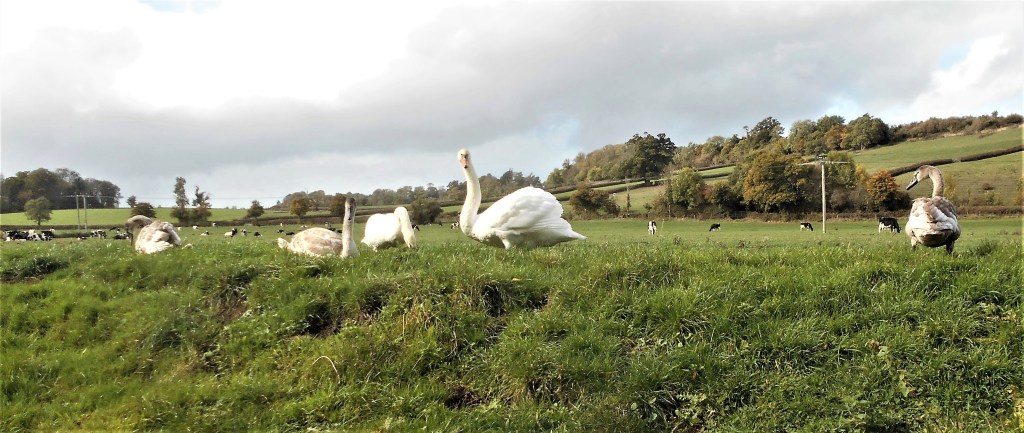
Fortunately there was enough water to support this pair of Mute and the three remaining cygnets of the original six and they all look healthy enough so let’s hope they survive and thrive through the coming winter. They were certainly a pretty feisty pair, both objecting vociferously by hissing and growling as we passed them on our way to check for Otter spraint – we hissed back and trudged on, but were relieved to reach the beach whilst they remained with their cygnets on the bank!
14th October 2022

Great news! The large tree which was brought down by the violent storms last autumn and has been blocking the weir and causing more and more plants to lodge and root around it has at last been removed from the by Andros the creamery factory which owns the righ-hand stretch of the river. It was extraordinary to watch over the months how nature managed to get a foothold and expand to cover the whole of the top of the weir and slowing the river even when it was flowing well before the drought.
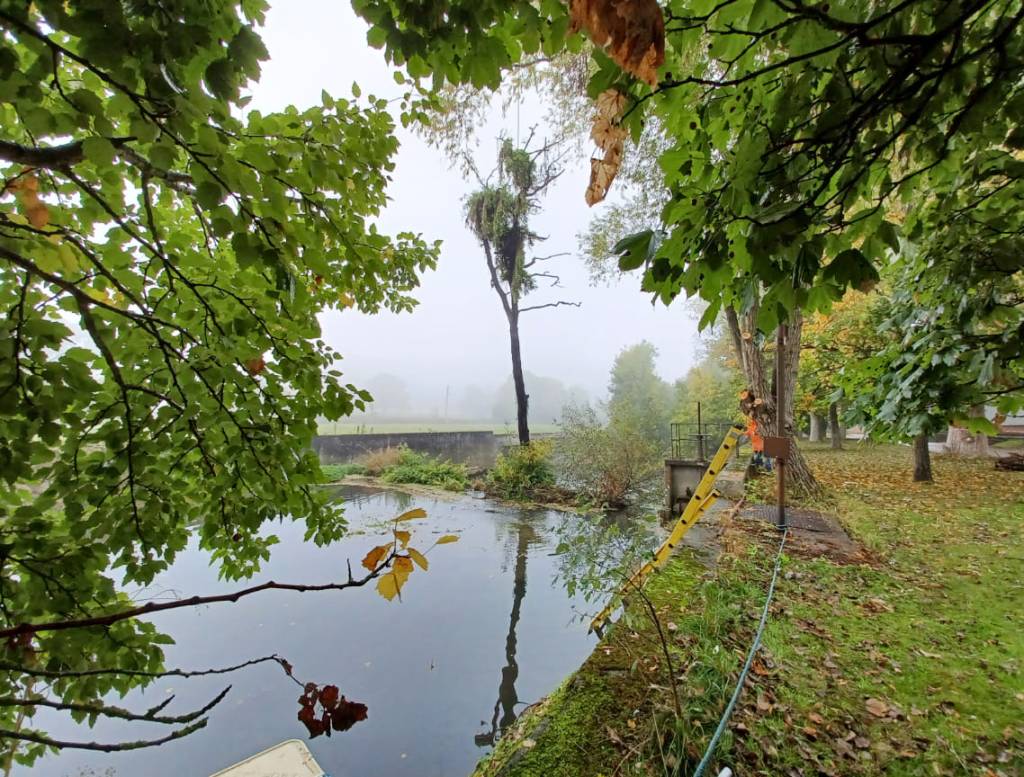
It is to be hoped that the autumn rains will clear the debris and flourishing plant growth from the top of the weir so that the water can flow flow once more.

It seems a pity that Andros didn’t clear the whole of the weir which their delay had allowed to build up.
11th October 2022 / Temp: 15 C / Water Level: Remains Below Normal at this location – Steady

A pair of Swans and four Mallard (two male and two female) were the only water birds we spotted along the river but thankfully no sign of dead birds, victims of bird flu which are beginning to turn up in places like Langford Lakes. We must hope that the wild bird population here is spared, numbers are not high and an outbreak spreads to this area the consequences could be devastating.
Days of heavy rain showers appear to have made little difference to the water level on the main river which is still lower than normal, as is the Mells River which feeds into the Frome where the level is falling. Surprisingly the level at the source in Witham Friary is normal and rising but it does take a good while before the effects of such a prolonged period of drought are rectified. Impossible yet to know the effect this is having on the wildlife in the river without carrying out a complete kick survey on our usual four sites which we have been unable to do this summer due to other commitments. It may be that we will have to wait until the mayfly hatch next spring to see how the invertebrates have fared during this exceptionally dry summer.
Despite the very sad loss of the female Otter and cub last month, generally the Otter news is very encouraging, with several sightings along the river and finding two fresh Otter spraint on one of the beaches. Although this is a lot less than we found earlier in the year, Otters are not called wanderers for nothing and females make full use of what is often a 20 kilometre territory and an even larger territory in the case of the dog Otters in their hunt for food.
4th September 2022 – Road Kill

We have received the extremely sad news of a female Otter and cub being killed on the very busy road a quarter of a mile from the river. This photograph was taken at 7.20pm last night so although we don’t know when the accident occurred, this is always a particularly dangerous time of the year for Otters when the light is falling earlier in the evening but the nights are still too short for them to only hunt at night.
All dead Otters in Somerset are collected and delivered to Cardiff University where they provide a valuable resource for their ongoing research into Otter, as the autopsy will show the health of both mother and cub to add to the bigger picture.
Update: Twelve other roadkill Otters have been collected over the county during the past month, which is a sad reflection that roadkill is still the greatest cause of death in Otters.
It is believed that this pair could be the daughter and grand-daughter who have been sharing the same holt along with her mother and this years brood. This is a fairly common practice when there is sufficent food in the river to support the whole family.
3rd October 2022 / Temp: 11 C / Water Level: Below Normal

Autumn is upon us and the first signs are already appearing as the leaves of the riverside trees are showing their gold and copper tints. It’s also the fungus season and across the river meadow and river bank small mushrooms and toadstools are sprouting, not unnaturally as these are cattle pastures, the delicate dung snowy inkcaps have sprouted everywhere.

We spotted a flock of at least 50 Black-headed Gulls feeding on the spillage from the recent maize harvest on an adjacent arable field, more than we have seen for some time. We also heard more birds singing than we had for months, mostly Robins but also Great Tits, Blackbirds, Magpies and Crows and even a Nuthatch flying across. But what delighted us most was catching sight of a Little Egret and then disturbing a Heron which rose languidly from his perch in a tree on the edge of the bank and as we contiued walking, he was joined by his mate who had remained hidden in the tree. A juvenile Cormorant remained motionless on the skelton tree at the edge of meadow during all the disturbance but a Buzzard appeared and began circling and circling above us in perfect cruise control!

1st September 2022/ Temp: 17.5 C /Water Level: Below Normal at this location – Steady
Drought!

The West Country is now officially designated as one of the areas of the country in drought as the water levels in the rivers, streams and lakes drop lower by the day and in one popular fishing lake close by, the water fell so low all the fish died.

The river has dropped so low that the weir is completely dry, depriving the mill leat of water and although there was no sign of dead fish, it seems certain that the invertebrates which fish and some water birds rely on for food will have perished.

The cattle are fortunate that the meadows where they graze have the river which not only gives them water whenever they are thirsty but the blessed shade ofthe trees which line the banks. However, the recent heatwave and so long without rain have bleached the fields so the farmer has been forced to start feeding them on the winter hay. So many parts of the country are also in drought that the situation come winter is likely to prove pretty dire.
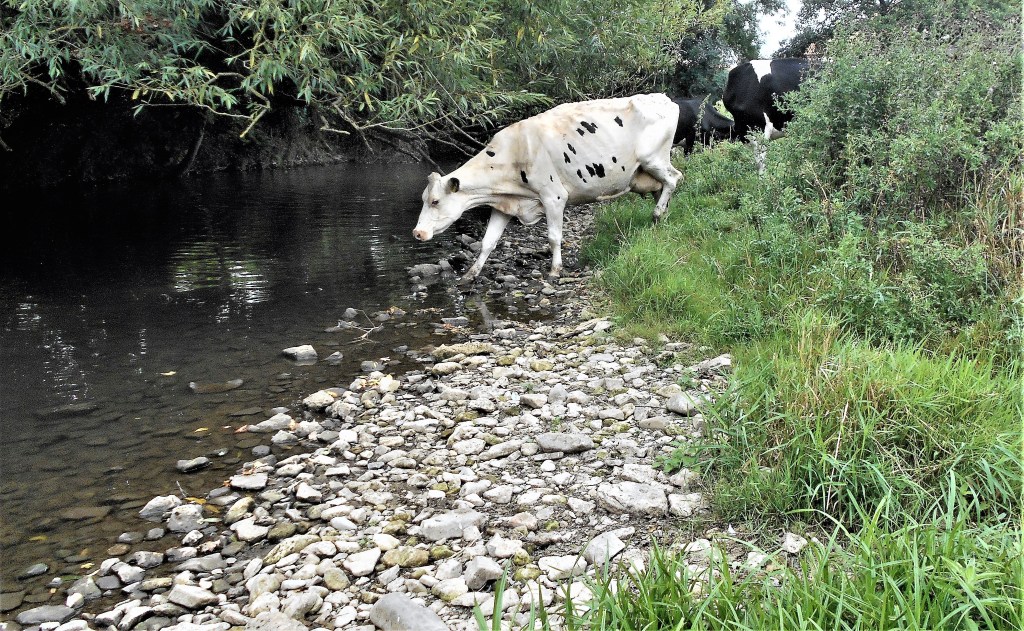
The Mells River, the main tributary of the Somerset River Frome water level is below normal and falling at the time of writing and this will also have a marked effect on the river. Whether the fall in the water levels accounts for only one fresh spraint along the whole of this stretch only time will tell but it is a warning bell. We only saw 4 and then later 8 Mallard in the river, a Heron and Little Egret, Crows, a Raven and Magpie the only birds along the river.

A good showing of wild hops in the hedgerows along the track nearer the upper pastures which despitethe parched ground seemed still to provide enough for a mixed flock of Rooks and Jackdaws – c130 Rooks and c25 Jackdaws.

Finally, it was heartening to see a SmallTortoiseshell and several Large White butterflies around the red valerian – it may be September but there are still a few lingering reminders of what has been, despite the drought, one of the most spectacular summers we can remember in our long, long life!
27th August 2022 / Temp: 22.5 C / Water Level: Low
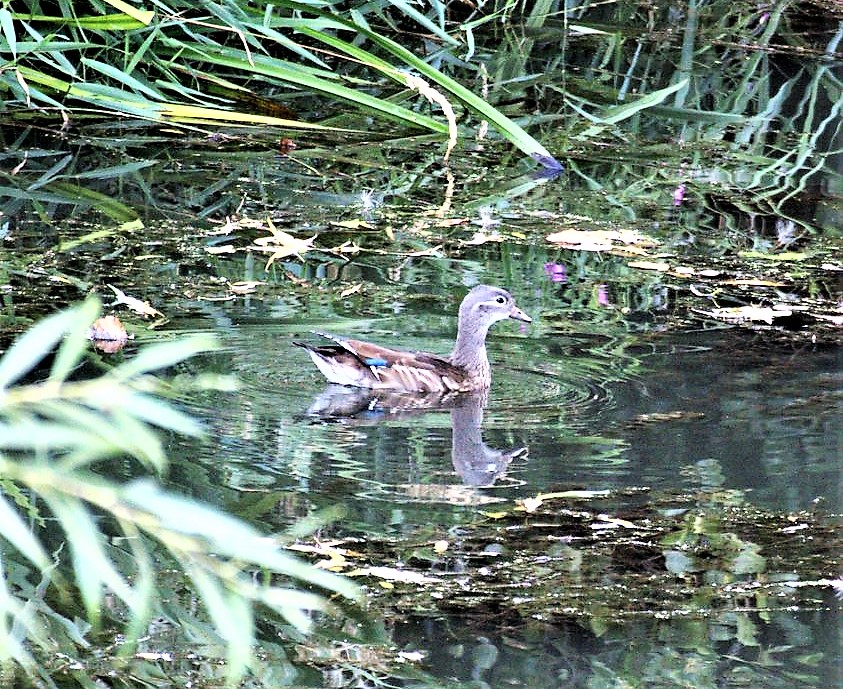
Fantastic afternoon at the river! We saw more water bird and dragonfly species than we had seen for months – we found Otter spraint on two of our sites and we heard from the owner of the farm that his trail camera had filmed two Otters, young foxes, roe deer, mink and hedgehogs!!
The river level was still low, lower than normal at this location but steady and even slightly higher than it has been at its lowest level. It was a great relief to see such good signs of life, including our favourite, a Dipper, his white bib and chocolate brown feathers a perfect camouflage amongst the stones, bobbing and exploring the crevices for a tasty morsel – caddisfly larvae perhaps!

Two Kingfishers flashed past in perfect synchronization as we were admiring the Dipper, obligingly the first tilting so we could get a perfect view of his dazzling electric blue wings whilst the second tilted in the opposite direction so we could appreciate the full pallete of fiery orange-chestnut feathers on her chest!
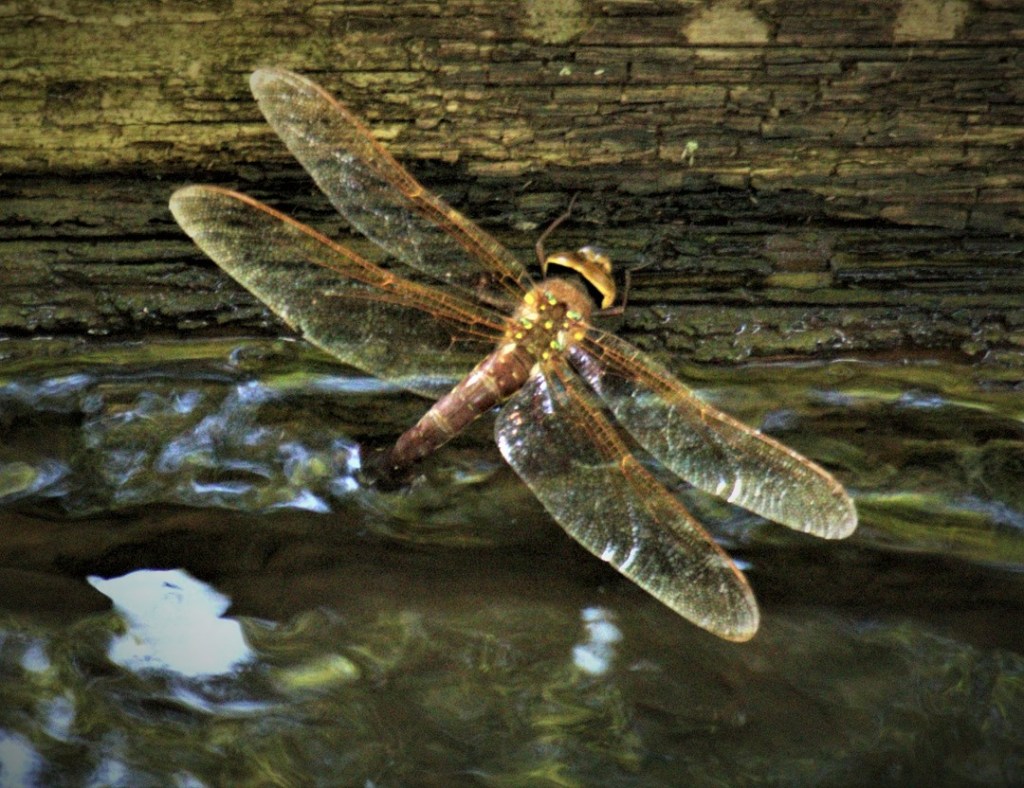
We spotted several Red Darters, Emperor Dragonflies and a couple of Brown Hawkers, including this beautiful female injecting her eggs either in the rotten wood as seems likely or in the stem of a plant in the river.
21st August 2022 / Temp: 22.5 C / Water Level : Low

Two lots of fresh spraint at our first survey site under the bridge and of course a Speckled Wood butterfly sun bathing on the dry and dusty path leading down the quite precipitous slope to the river. We haven’t seen the Butterfly Count results for 2022 but we fully expect to see a bumper year for this butterfly, they are everywhere!
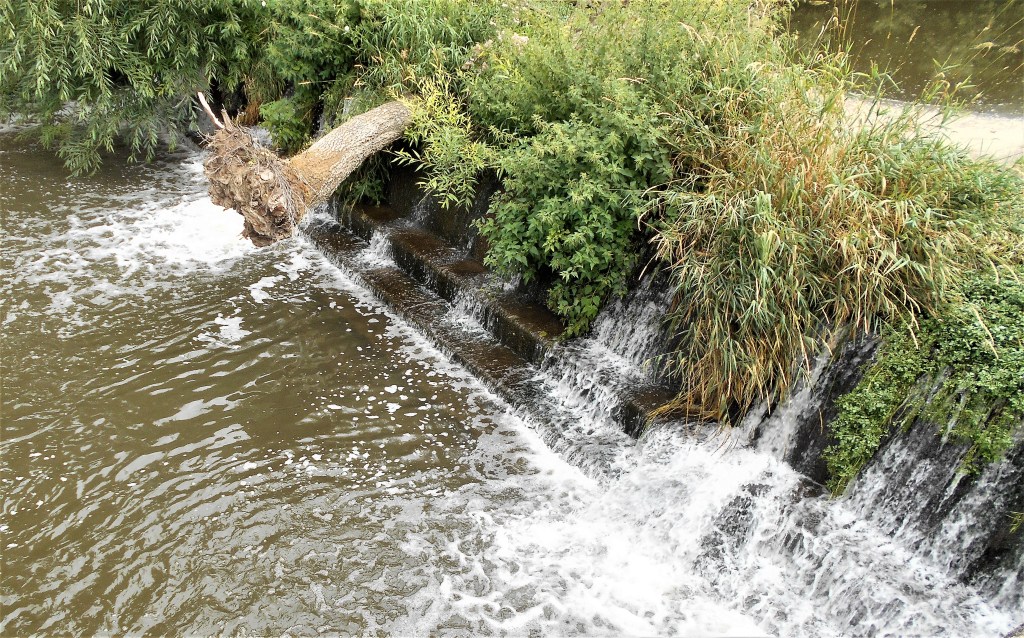
During the whole time, almost twenty years, we have been walking the riverbank and watching the river through every month of the year, we have never seen such a low flow of water over the weir, nor seen the huge amount of sediment, fallen branches and plants being able to take root in such a restricted flow.

In the past, even in high summer, a rain storm or a week’s rainfall has always cleared the debris and allowed the river to run free. At the time of writing the river levels at the various stations are still showing below normal levels and steady as they are over most of the country causing great concern for the health of the wildlife living in the river.
We mention this because if there are Otters about, they climb out of the river, up the sloping grass and plant strewn steep slope just beside the weir, and leave their trademark spraint at the top. When we arrive, we check the line of old white crumbling spraint, recent dried, but still coloured spraint, to see if the Otters have been around, and left their fresh orange-red spraint full of crayfish shell.
No sign of fresh spraint today so we walked on and then noticed that a fresh beach had been formed where the river is usually high enough for the Chub to spawn in spring, and on the beach we found …… three lots of fresh spraint! At least the signal crayfish are seemingly finding food to eat so the Otters are hopefully managing to find enough fresh food.
We also spotted three Heron, not stalking the river as normal, but finding something to feed on in the meadow where all three were hunting. There were two Grey Wagtails hopping about in the shallows and stones beside the river, so there must be midges and snails enough for them to eat although we saw very few.

But the day belonged to the Saracen’s Woundwort – the edges of the river bank were lost to view by the ranks of tall, healthy-looking plants, covered in flowers which were covered in bees, wasps, flies and hoverflies of every description!
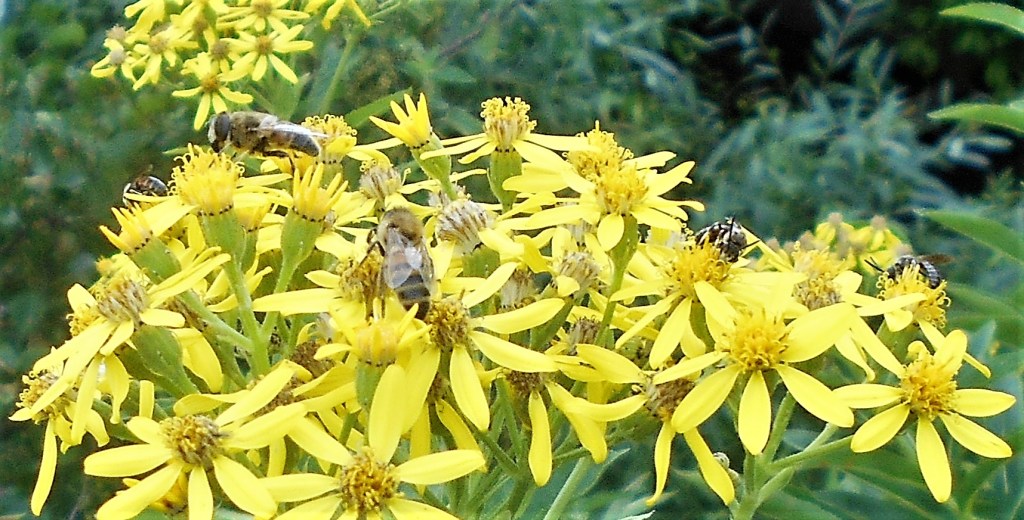
including a Common Blue Butterfly feeding on the flowers, a species we rarely see along the river so it was possibly a good omen for the future. Two Small Whites, a Banded Demoiselle and an Emperor Dragonfly were the only other insects we saw but we did see and hear three Buzzards lazily circling in the sky above the trees. We didn’t see or hear any small birds, so they would have to join the Heron and hunt the river meadows!!
12th August 2022 / Temp: 22 C / Water Level: Very Low

The river was lower than we had ever seen it, exposing stones which are usually completely covered, like the hunger stones on German rivers with dates of extreme droughts carved onto them. Some even had messages, one reading “If you see me, weep.” The weather forecasters say that there are only 3 or 4 days before this present heat wave of temperatures topping 33 C in this area so if the temperatures drop and we gets sufficient rainfall, hopefully the river will recover.

The only sign of life was one of a pair of Speckled Wood butterflies chasing each other amongst the trees of the riverbank, until one rested, beautifully camouflaged, and very helpfully for a woodland butterfly against the split trunk of a rotted tree, home to a myriad of tiny creatures.
There were no signs of algae bloom on the river which has devastated some of the Lakes in the Lake District and areas further upstream, however, we are unlikely to see the full extent of the damage of the drought until next year’s mayfly hatch and damselfly/dragonfly numbers.
Downstream is a different story. Along the river meadow just above the weir you would strain to find signs of drought. The water is held back by the weir, the level only marginally lower than a normal summer and the grass green and lush unlike the parched fields upstream, which are bleached and bone dry.
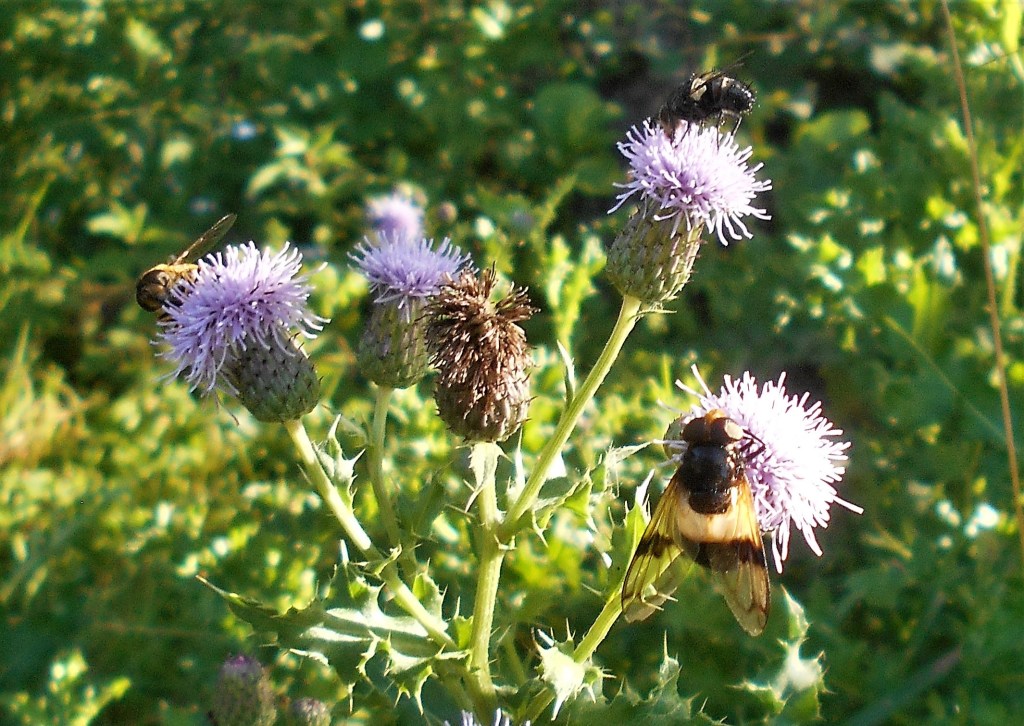
The insect life certainly reflects the greener conditions with many flowers in bloom, butterflies, moths and hoverflies around like this beautiful and striking Pellucid hoverfly feeding on the creeping thistles.

A Green-veined White, one of several we saw visiting the last of the brambles still in flower, and a beautiful, pale and delicate moth, which ispot fortunately identified as a Mother of Pearl moth, a new species to add to our ever-growing list.
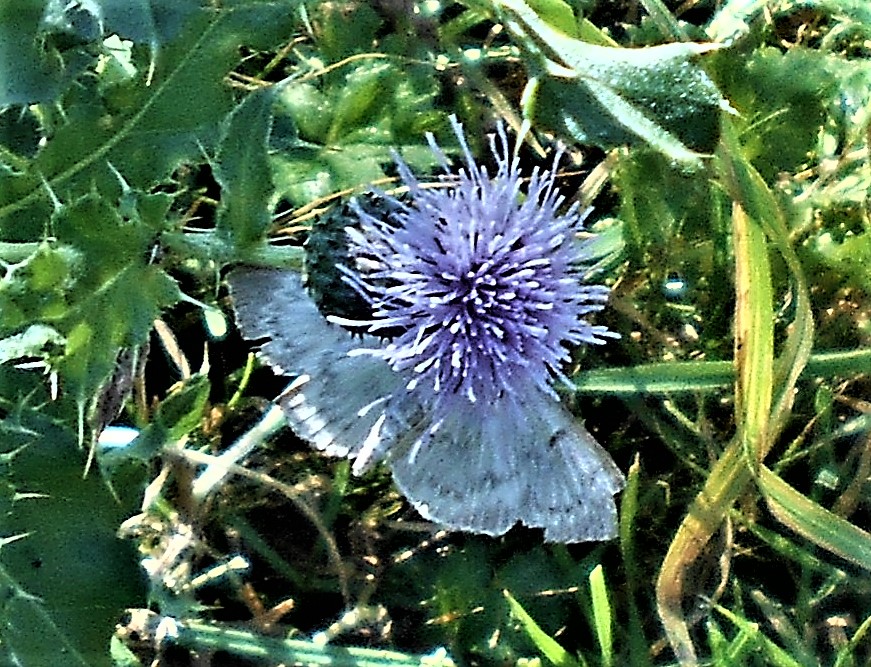
Not many damselflies, but we did spot a Common Darter dragonfly, which as the name suggests is extremely common along this stretch of water from the end of summer onwards.
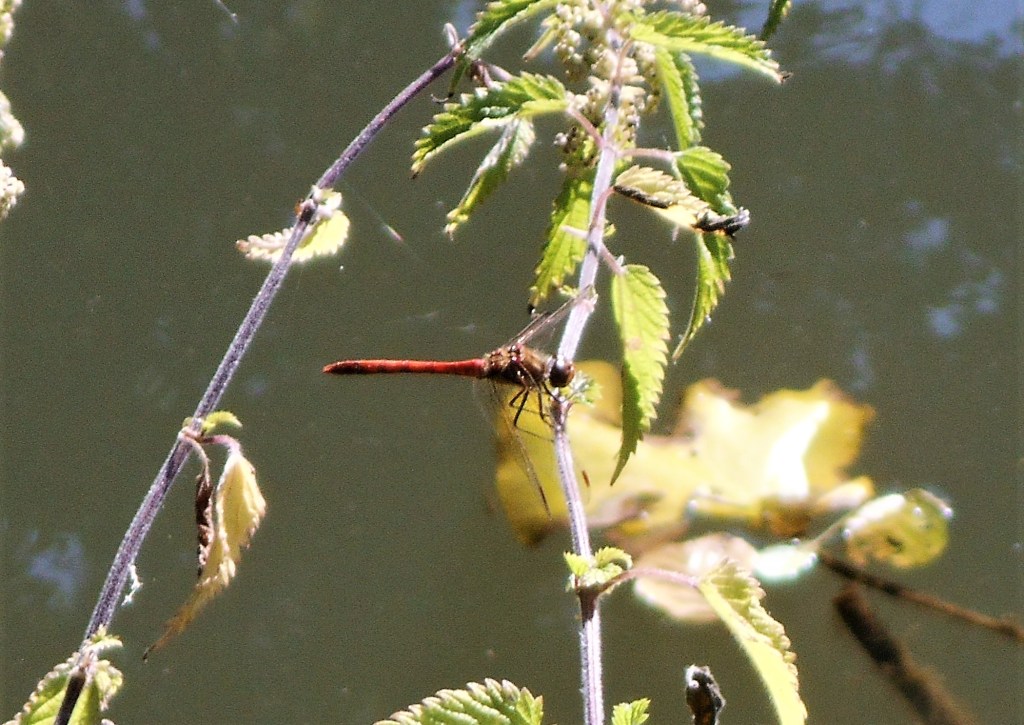
Sighting the Darter is a pleasure tinged with sadness, the first of many signs that these wonderfully sun-filled days of summer are starting to wane – oh how reluctantant we are to see them go and how we cling to the need for just one last day filled with light before the gloom of autumn!
5th August 2022 / Temp: 25 C / Water Level: Very Low
Swallows!! Wonderful to see a successful brood, a family of eight swooping and soaring above the river catching midges for two juveniles sitting on a branch still begging for food. This is the second family breeding pair along the river this year, how it raises our spirits.

Climbing over the stile into the river meadow, we eyed the cattle with some trepidation, having never seen so many in this field before, but we soon noticed it was the milking herd who are calm and well used to people and so it proved. Although watching us as they languidly chewed away, they moved before us as we walked the riverbank, an older female breaking up a tetchy pair of heiffers butting each other like trainee bulls!
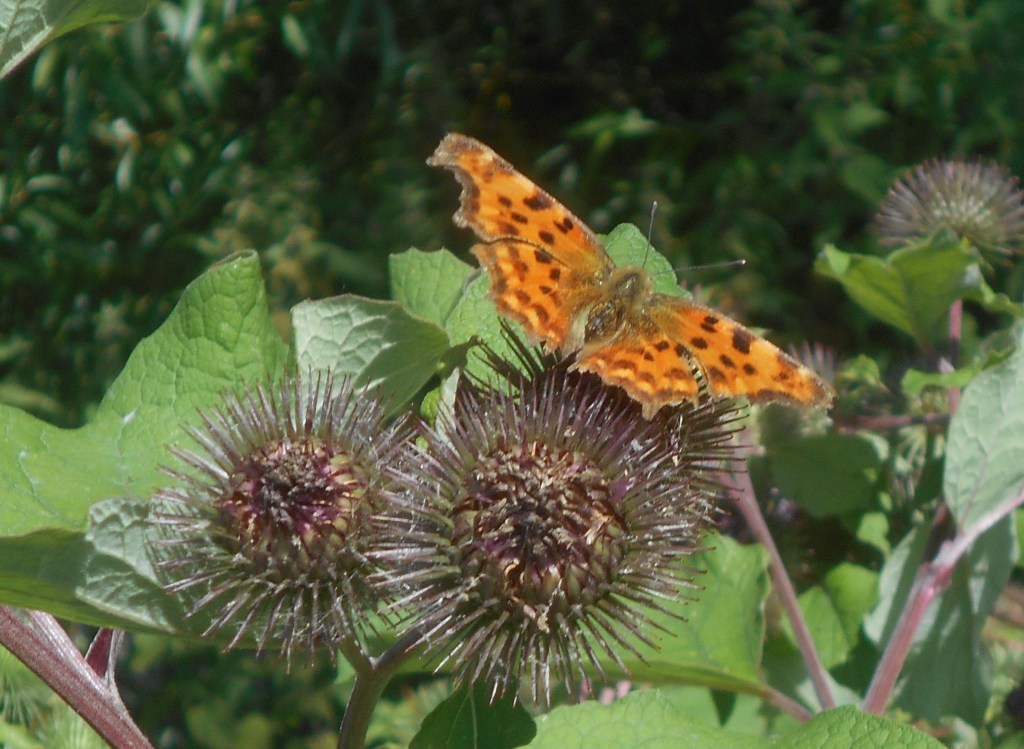
Lots of butterflies to add to the Big Butterfly Count, a beautiful Comma glowing amongst the burdock buds, Green Veined Whites along the bramble hedges, Speckled Woods and Meadow Browns and even a tiny Holly Blue fluttering bravely amongst the big boys!
But as always it is the damselflies which touch our hearts, including the illusive White-legged damselfy, so tiny and oh so delicate and so beautiful – a female, cream and black.

We were pretty sure we spotted a Red-eyed damselfy through binoculars perched on a lily pad hoping to catch a passing female but regretfully too far away for our camera to capture, but also quite a number of banded demoiselles, both male and female over the river and resting on the riverbank plants.
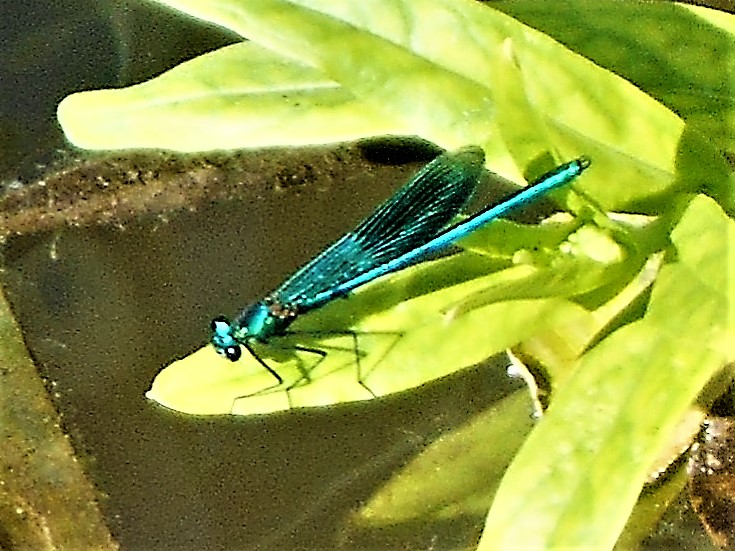
As we wandered down the meadow, keeping a weather eye on the black and white cows contentedly tearing and chewing the grass and flicking their tails, we disturbed a Little Egret, showily snowy white against the green of the alders in their full summer leaf, and watched a mewing Buzzard circling overhead while listening to the haunting call of two Ravens flying across the sheep field on the opposite bank. The usual parties of Tits were flitting amongst the trees but if there were other birds around, they were well hidden and silent.
There were no signs of Otter on any of the sites, no spraint, crayfish remains or pad marks in the mud; no fishermen lined the riverbank, they had been asked not to fish in the depleted waters of the drought affected river, and no crowds of young teenagers either swimming in the river, warned off by reports of several becoming sick after bathing in the water, which had become polluted and toxic by the low flow, so it was just us, the butterflies, the cows and the damselflies, all pretty serenely enjoying the river.
27th July 2022 / Temp: 16.5 C / Water Level: Low

The river is worryingly well below the normal lowest level at this time of the year which not only causes stress to the fish and invertebrates living in the river as the level of oxygen falls but also concentrates the chemical pollution in the water from both the nearby sewage works and the creamery factory as well as from the dairy cattle.
A recent Riverfly Report from Wildfish (formerly the Salmon & Trout Conservation) makes sobering reading as it outlines the effect of chemical polution in all of the UK’s rivers and draws attention to the fall in numbers and species of the invertebrates which fish and other creatures feed on – as relevant to our river as it is to England’s famous gin clear chalk streams. https://wildfish.org/wp-content/uploads/2022/07/2021-Riverfly-Census_200722.pdf?mc_cid=ffd73ea824&mc_eid=8fc0266882&mc_cid=72e04c2dba&mc_eid=8fc0266882

The water along the relief carrier stream, which leads off from the old Mill leat, was equally low with just a shallow trickle running down the centre of what is usually a deep channel of water. No sign of Otter along its length but as always lots of damselfies, mostly Banded Demoiselles, the vivid spectacular metallic blue of the males with their dark thumbprint mark on their wings were busy among the masses of flowering plants on its banks, proving a good hunting ground for insect prey.

The Banded Demoiselle damselfly favours slow rivers, streams or canals with a muddy bottom so this stream must be a perfect habitat and no doubt why we always see so many of them there. Interestingly the species is very sensitive to pollution, so a good indicator of clean water, showing that the stream must be comparatively free of any chemical pollutants.

Luckily for us the water level drop must have been recent, leaving an edge of still wet muddy sand on the beach of the main river, wide enough for a scampering Otter, or possibly its cub, to leave good clear pad marks. For some reason they didn’t linger as there were no signs of spraint. Otters travel some distance to find food and as we have been unable to find sprain beyond the main road bridge we think they must be working their way upstream.
As we walked along the riverbank to the next site we disturbed first a Little Egret which flew up into a tree, then a sizeable group of Mallard including a female with four juveniles, who swam or flew off with a great deal of fuss, complaining loudly. No sign of Mandarin but they are so quiet they could have swum off without us noticing. A careful crawl under the barbed wire fence produced its usual moans and groans and creaking of old joints from us which was no doubt what disturbed a Brown Hare and set him off racing down the fence line until he was lost akong the grass. It may also have alerted first one and then a second Heron lifting in their usual leisurely fashion from the river and set off, flapping nonchalantly over the river meadow where they joined another Heron standing in the grass.
Good signs of Otter on the last beach, mostly white and dried and old but there were two recent red spraint, filled with crayfish shell, on a large stone, a good sign with the pad marks that they were still about.
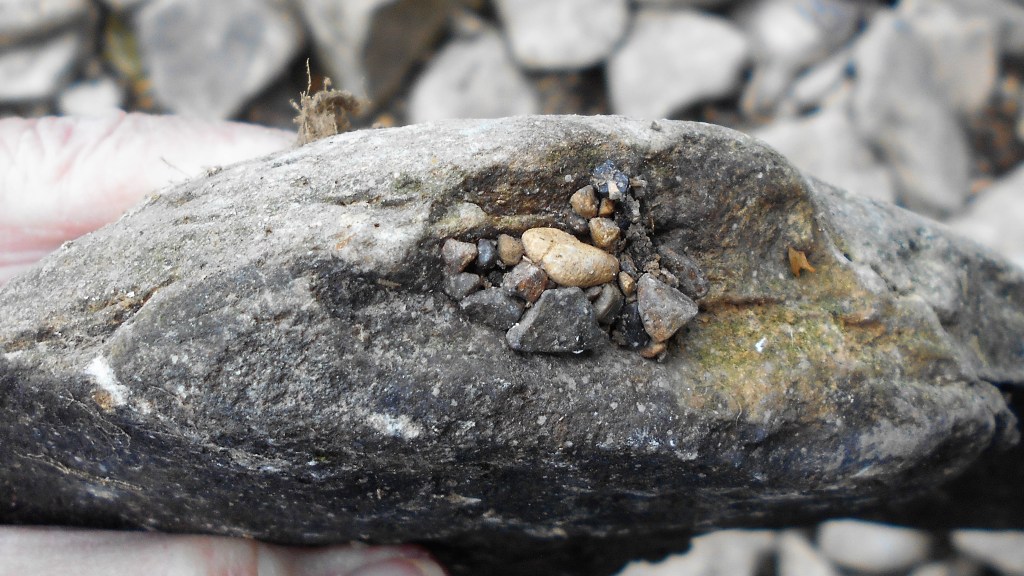
Blackbirds singing and a Chaffinch pinking was a delightful accompaniment to our spraint search and rest during which we spotted a stone with old caddisfly larvae cases glued to the side.
A climb up the bank and the start of a rather weary trudge across the river meadows and as we lifted our heads to glance around we were astonished to spot two Brown Hares running across the field before stopping to watch us. How wonderful they looked – so fit and glossy golden coated, their black tipped ears bolt upright and alert! We needed to get home and so we continued to walk slowly and steadily towards them. As we grew closer, but still too far away for my little point ‘n snap camera, they eventually took fright and bounded away at speed. What a delightful gift the river meadows gave us to send us happily on our way home for lunch.
21st July 2022 / Temp: 17.5 C / Water Level: Low

This bridge is always a favourite place for local Otters to leave their spraint when the river level is low enough to expose the generous sized pile cap in the centre of the river, we always check it and are often successful, today being no exception. Recent spraint, a scatter of crayfish remains spread over most of the cap among the river debris of broken branches and twigs.
Slightly downstream of the bridge the stones exposed by the low water and the tiny island of water forget me not make a good hunting ground for a visiting Grey Wagtail, hopping from boulder to stone, stone to island from which to search for prey. The good news for
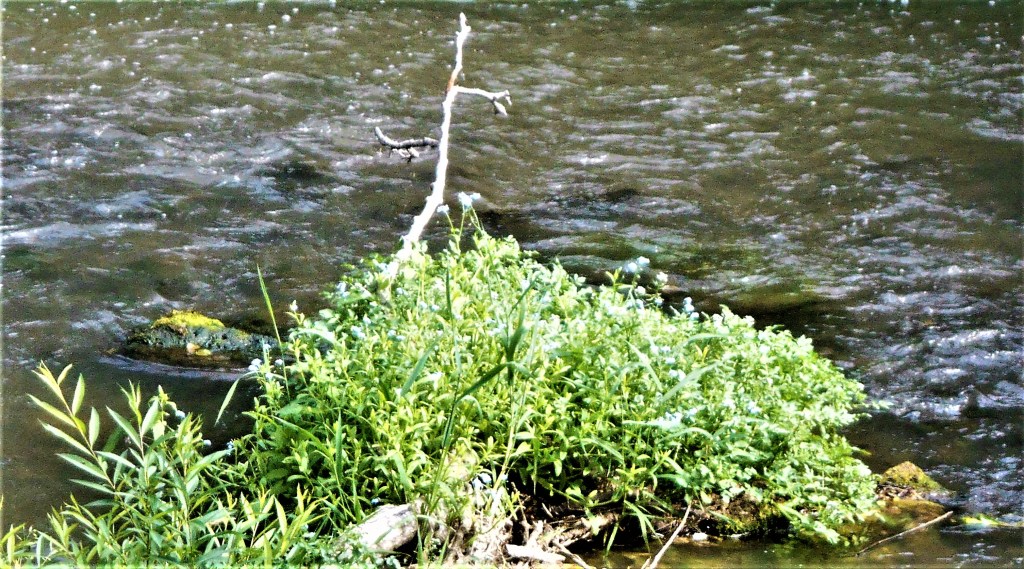
this beautiful and engaging bird is becoming more common and has moved from the BTO Red List from Red to Amber which is really heartening, it doesn’t seem a good river if there are no Grey Wagtails, Kingfishers or Dippers
The tall reeds and water plants which line the edge of the river were alive with damselflies, the Banded Demoiselle whose brilliant metallic blue coloured bodies and thumb print marked wings inevitably catch the eye – a brief glance along the plants clocked at least nine, but just a couple of Beautiful Demoiselle.
Our delight at finding Otter spraint under the bridge suffered a sharp set-back as we checked the other three sites – no signs of Otter at all! The damage caused by the extreme heat of Sunday, Monday and Tuesday plus the lack of rain for weeks was very noticeable on the river pasture in dried bleached grassed and lack of insects.
14th July 2022 / Temp : 19.5 C / Water Level: Low
Another beautiful morning, full sun, blue skies and the air clear and fresh and thankfully not yet too hot – a perfect time to wander the river bank and saunter across the recently mown hay meadows, checking the wildlife and the summer flowering plants.

It was beautifully cool under the trees by the river and the owner of the farm who stopped for a chat said that it felt 10 degrees cooler on the stony beach than out in the full sun.
We certainly took our time searching the beach for footprints and other signs of Otter spraint, Mink scat or gnawed wood of Beaver as part of the 6th National Otter Survey of England which we had volunteered to take part in once our chosen 10 kilometer square area had been agreed. The Otters were living up to their name as “the wanderers” – only old spraint on their favourite stones where weeks ago we had found 8 or 9 spraint onthe same spot. No signs of Mink or Beaver either. What we did find was the line of cut stone revealed by the falling water level of the old Roman ford after which the nearby bridge was named.

Out into the hot sun where the newly flowering teasels, comfrey, butter yellow mullein and brilliant yellow ragwort flowers were all attracting pollinators – bees, hoverflies, soldier beetles, butterflies and flower beetles.

We counted the butterflies, a good number of Speckled Wood, Small Skipper, Small White, Green-veined White, Ringlet, Gatekeeper, Meadow Brown, Comma and just one Peacock. A similar story with the damselflies, Common Blue were everywhere, a few Blue Tailed and even fewer Banded Demoiselles which a few days ago on another of our sites were everywhere but only one solitary dragonfly – a Brown Hawker hunting up and down, up and down the plants and hedgerows along the river bank.
After a long hot walk across the hay meadow we decided to stop under the trees and have a rest and a drink of water before checking the final two sites. Imagine our delight as we had barely perched on our stools with a good view of the river when a Dipper swept past, landed on the shallow rapids and began hunting among the stones for caddisfly larvae and other invertebrates. Although too far away for a photograph, we watched through our binoculars as it fed, dipping up and down, happily hopping from stone to stone or disappearing from view as it waded through the water – such an unexpected pleasure and delight!
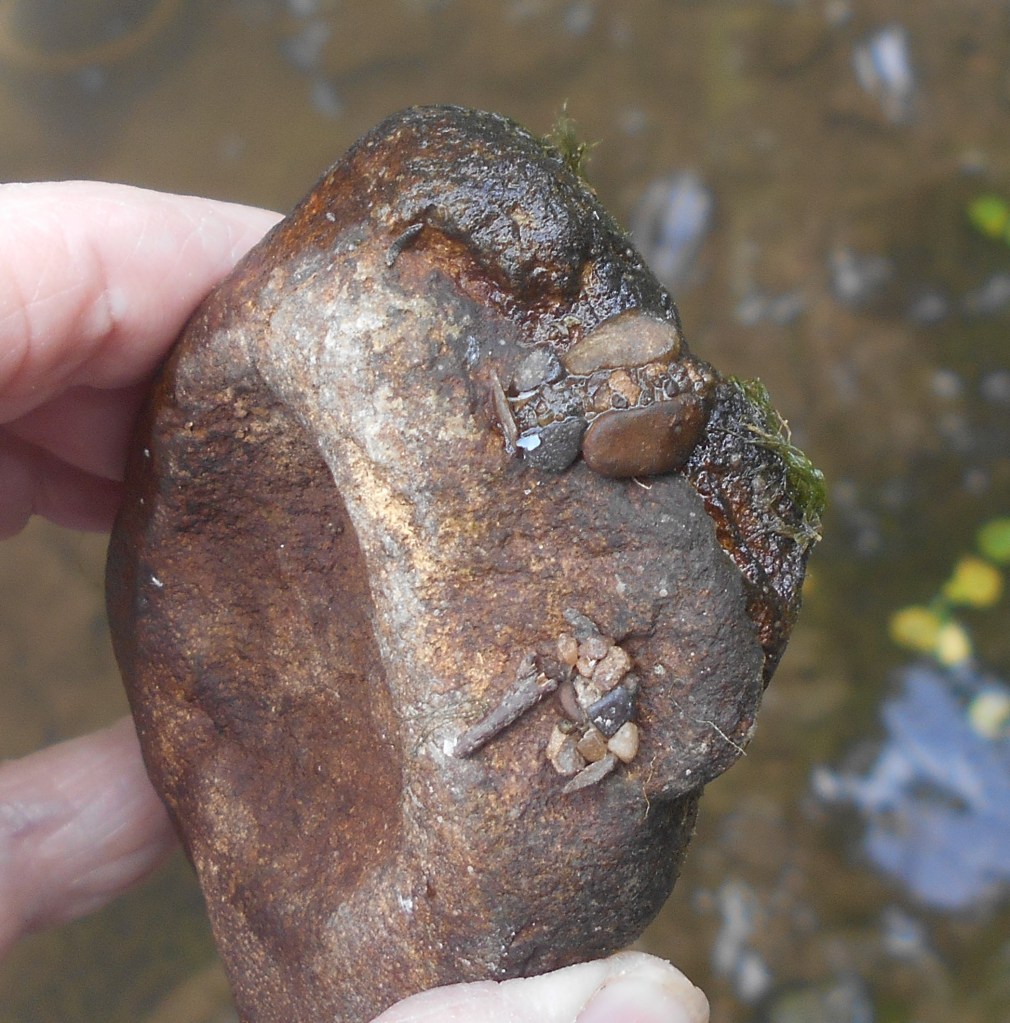
It was time to move on. We still had to survey two more sites and the time was moving towards mid-day, when the sun was far to hot and burning to be ambling across hay meadows without shelter.
Clambering down to the next beach our delight in the day reached its zenith when we found first Goera pilosa Caddisfly larva case welded to the bottom of a stone in the water, an easily identifiable case as the larva glues larger stones along the sides of its case to prevent predation by Trout etc. It was our first sighting of this species of Caddisfly in our stretch of the river, so a very exciting find and also particularly satisfying having watch the Dipper hunting riverfly larvae to find a stone with three distinct specie’ cases of riverfly attached!

The second coup was discovering two areas among the stones, each showing what was certainly spraint left by two Otters, most probaly the female and cub which had been seen by several observers hunting, diving and catching crayfish beneath the weir some miles upriver. The Otter spraint in this area of river is notable among the Somerset Otter Group for the bright red/orange colour of the spraint and the amount of crayfish shells (and even antennae!) of the American Signal Crayfish with which this river is infested and is their main diet. When we find the spraint we usually find nearby crayfish claws, parts of skeletan and what are known as crayfish pearls – the gastroliths which the freshwater crayfish produce in an effort to retain calcium, all of which we found close by.
Unfortunately no signs of either Beaver or Mink for our National Otter Survey of England, but having proof of Otter, we still have until next January to find Mink and Beaver signs in our 10 kilometer area!
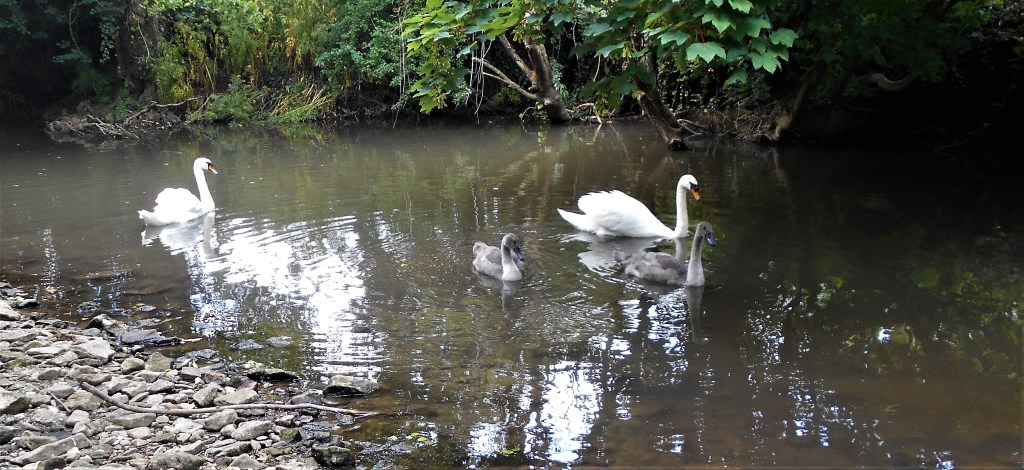
Mum and Dad and the kids arrived – the parents looking outraged to find us on their beach! We think these must be Harry and Sally (named by the owner’s wife) because she said they are well groomed and perfectly white whilst the other pair and their cygnets are a good deal scruffier and wilder looking (she calls them Tarzan and Jane!!).
Apart from the Dipper, we saw few birds, just a Heron taking off and a Buzzard overhead, but we did hear a Green Woodpecker, a Raven and a Bullfinch but most seems to be keeping cool in amongst the trees and we merely see or hear a flutter of wings as they move among the branches.
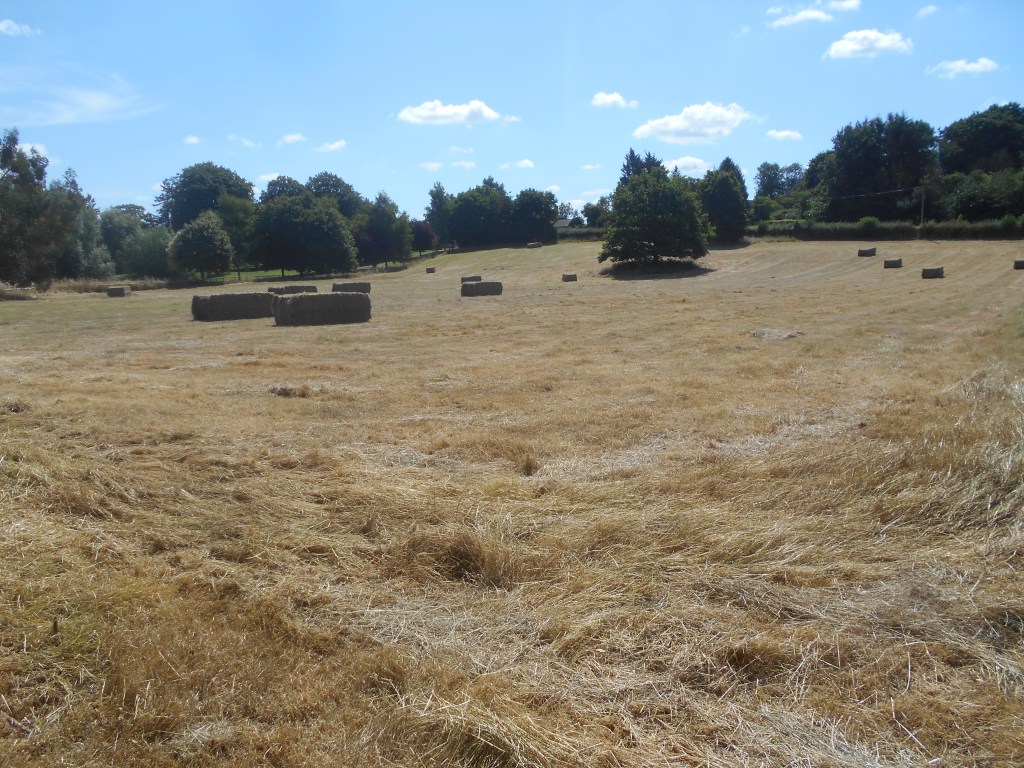
Time to pack up, leave the cool of the river beach and its tree shaded bank and strike out across the bleached hay meadows where the scent of new mown hay, straong and heady in the heat of the mid-day sun called up fond memories and an aching nostallgia in one of us at least of long days hay-making man and boy in the depths of the Sussex countryside.
12th July 2022 / Temp: 19 C / Water Level: Low

Quiet along the river but blessedly cool under the trees. No Otter signs, and very little bird activity but we did heard and spot a couple of Moorhen, the first sighting of these water birds for far too many months. No signs of the Canada Geese whose droppings usually coat the river bank or even Mallard so it seems most of the wild fowl have, like the Otters, moved on!

But fortunately, the insects are still staying put including this beautiful Black & Yellow Longhorn Beetle feasting on the newly opened bramble flowers, joined only yards away by another striking yellow and black longhorn – the Four-banded Longhorn Beetle feeding on a purple thistle!
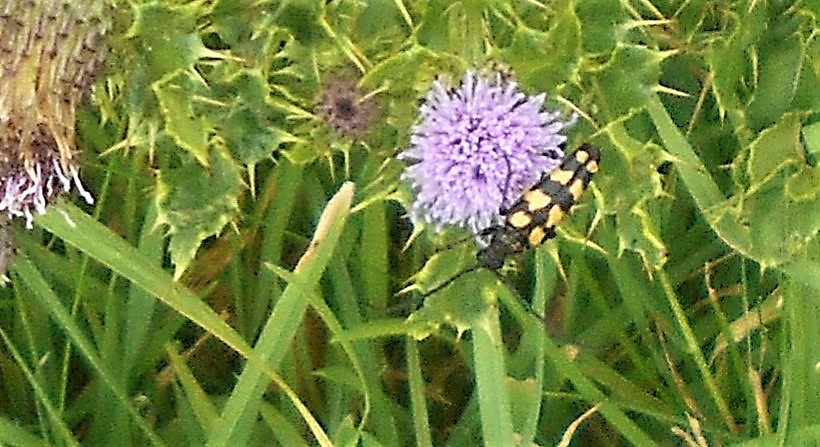
Walking along the boundary hedge, alive with hoverflies, worker bees, damselflies and butterflies which were all very skittish and not staying long enough to catch a photograph, we were relieved to come across a beautiful Tiger Cranefly sheltering in the shade of a large branching thistle.

Lots of Common Blue and Banded Demoiselle damselflies but no sign of the Red-Eyed Common Blue damselflies we had hoped to see. This is the only site where we have seen them in previous years and they should be about but like all wildlife, there is no guarantee they will appear on cue!
28th June 2022 / Temp: 17.5 C / Water Level : Low

A wild and windy morning, the branches thrashing and creaking but the river meadow was blessedly free from cattle so we didn’t have to keep a weather eye out for the bull and could take our time examining the river bank for Otter signs.
The mats of water lilies were looking quite stunning – the flower heads newly opened, each one a perfect specimen – an absolute delight! The Meadowsweet, wild Watercress and Water Forget-me-not was in full flower along the river and carrier stream margins which was lovely to see, particularly as the wind had frightened off all but a handfull of damselflies, Common Blue and Banded Demoiselles, one solitary Brown Hawker dragonfly and a few Small Tortoisesheel butterflies.

Ispot is such a blessing. I posted several insects and flowers, amongst them this furry beastie with its head buried in a bramble flower confident that it was a buff-tailed bumblebee. Wrong! It was corrected to a Bumblebee Hoverfly – how careful one has to be not to see a common insect and jump to conclusions!

Not a single water bird on the river – it always catches us out every year, that period when the birds are moulting after the nesting period and keep out of sight until their new feathers have grown. The seasons move on almost without our noting the passing days, we turn and it is high summer already! We did at least hear a few birds – Crow, Wood Pigeons, a Common Whitethroat (which I always refer to as “Five Go Mad in Somerset” due to its frantic mangled song!) and a couple of Wrens but the strong blustery wind kept them hunkered down amongst the thick undergrowth of the hedgerow or hidden in the protection of the trees, heavy with summer leaf.

A few surprising awaited us at the last survey site. Recent spraint under the bridge and this large, dark almost orange and black striped hornet mimic hoverfly – a first sighting along the river – a magnificent wee beastie!!
22nd June 2022 / Temp 20.5 C / Water Level: Low
We arrived to see 4, 7, 9 no 11 Swallows swooping down over the river meadows and up again, travelling at top speed and no hesitation straight under the roof of the barn – presumably lingingering long enough to stuff a few beaks before out they came again, to repeat the same dare-devil manoeuvre – the Swallows have nestlings!
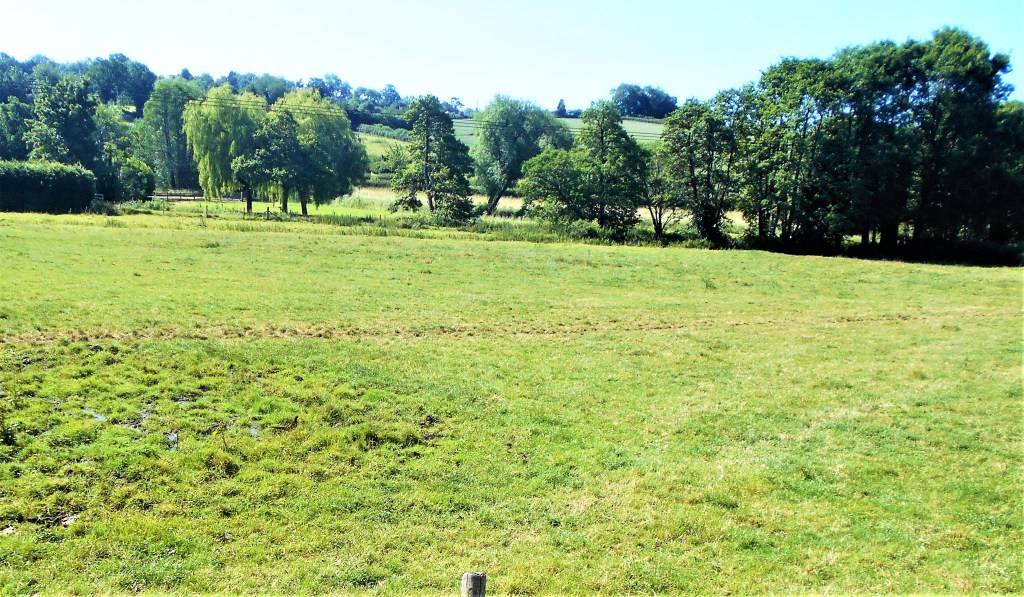
As usual one of us checked under the small bridge and walked along the banks of the carrier stream, the remaining channel of the ancient field flooding system until it joins the main river while the other checked the weir. Although we can see the water in winter, at this time of the year it disappears under a river of plants alive with worker bees from the nearby hives, hoverflies and damselflies and only visible by the line of trees showing its trajectory as the plants haven’t yet transformed into their full summer riot of colour, but still allowing an Otter taking a short cut along the stream, to be be completely hidden from view until the stream meets the river.
Where the two meet there is a muddy beach which is often a trackers’ treasure trove – covered in foot prints! Deer slots, Mallard, Heron and Mandarin, Badger, rarely Mink and, if we are lucky Otter pad marks. Not today. But before the beach was reached, a Brown Hare, who had been hidden in the tussocky clumps of rough grass, shot out from its form and “hared” across the river meadow, far too quick to photograph but in sight long enough to watch entranced with surprise and delight.

Lots of damselflies, mostly Banded Demoiselles, and butterflies, Meadow Brown, Large White, Painted Lady, two Large Skipper and a single Gatekeeper and water birds, at least 20 Mallard, a handful of Mandarin, 2 Mute Swan, a Little Egret and a Heron, the last two flying off over the meadows at our approach.
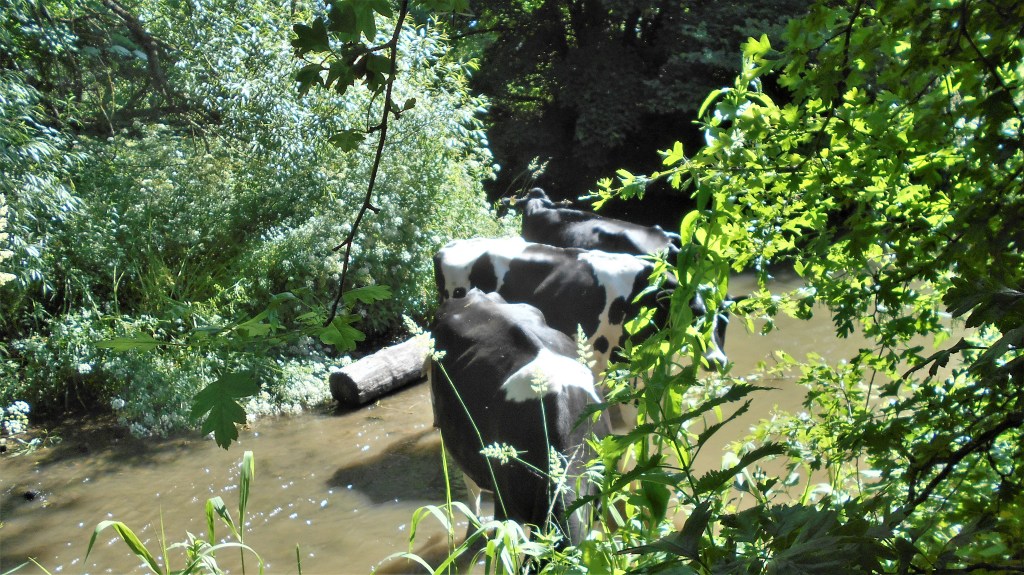
17th June 2022 / Temp: 24.5C / Water Level: Low

There are few wild flowers which are more beautiful than Water Figwort and it was an absolute delight to see a row of plants self-seeded in a line along the open culvert. The colour is so striking, a deep blood red with the deep cream centre wide open.
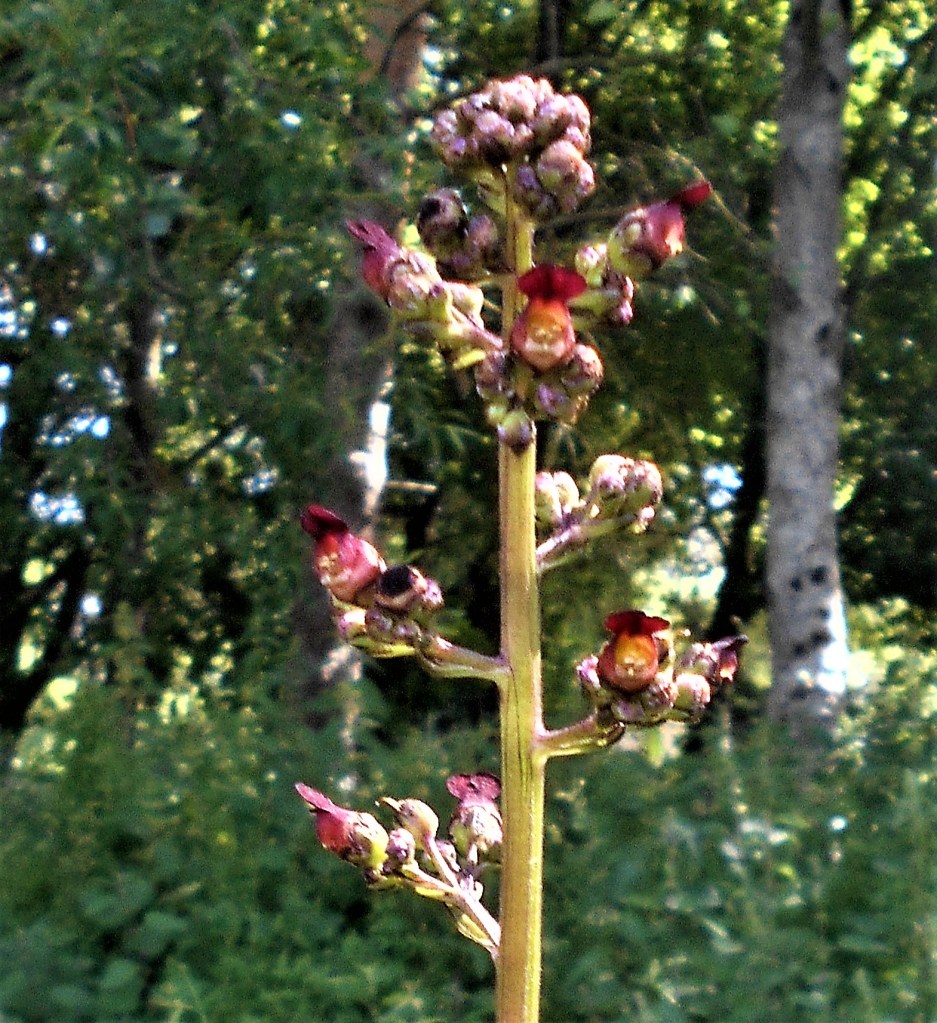
The rounded top petals are like the open lids of a pot revealing the pollen coated four fertile stamens huddled in a rectangle in the lower half of the flower. They are always a joy to see but particularly today, on such a beautifully hot summer’s day of cloudless blue skies and still fresh green leaves shading the river and offering pools of perfect cool out of the intense heat of the sun.
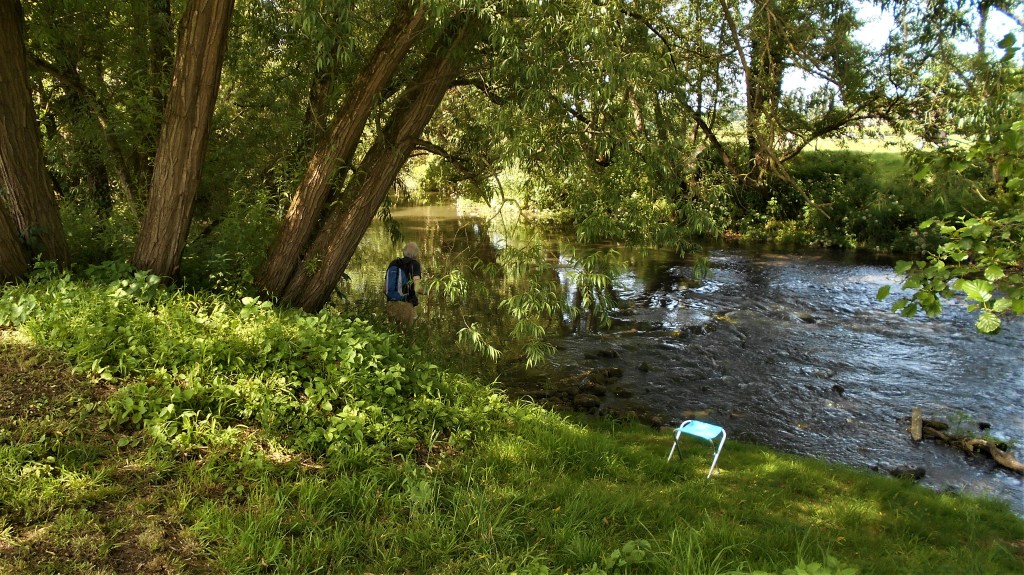
As we checked the beach we were astonished to find only recent Otter spraint, after months of so much spraint both from the female Otter and her cub we expected today to be no different but it appears they have both gone on a wander, as is the wont with Otters, but who knows where! What made it all the more perplexing was the amount of fresh spraint we found under the bridge close by only two days ago. However we were glad of an opportunity to take advantage of the shade by double-checking all their favourite stones and grass tufts and beach edge before venturing out into the full sun again.

When we came up to the wild rockery it was to find a wonderful display of wild poppies replacing the Mayfly strewn plants of barely a month ago. Today there wasn’t a single Mayfly to be seen either by the river or on the plants – it was as if the frenzied blitz of thousands of riverflies had never existed! In fact there were few insects about at all – around half a dozen or so Banded Demoiselle, about the same number of Common Blue damselfies and a couple of Beautiful Demoiselle were all that there we could see. A handful of Meadow Brown and Small Tortoiseshell butterflies and just three or four Speckled Woods along the whole of the river bank – maybe a lull between broods.

But we did manage to catch sight of a small, fluttering moth, in amongst the grasses. By its pattern and behaviour resting along a grass we believed it might be a Sulphur Pearl moth which although it is a night time moth, does appear during the day to feel on umbellifers of which there were uncountable numbers lining the river bank.
It was glorious to be walking through the river meadows, thick with waving grasses already in seed, listening to the Blackbirds, a pair of Chaffinches, Wrens, Magpies, a few Crows and the jack jack jack of Jawdaws calling down as they flew overhead. We only spotted one pair of Mallard, a single Little Egret which we disturbed as we climbed downn to the beach but then caught sight of a flash of blue as a Kingfisher appeared and we were able to watch it flying inches above the water downstream until it was lost to sight at the bend of the river – a truly halcyon day!
15th June 2022 / 19 C / Water Level : Low

The Meterological Office have promised that this could be the hottest day of the year – not the best time to be walking across unshaded river meadows or clambering up and down river banks so we decided a very early start would be the best solution. And what a treat awaited us. The air felt fresh, the sun warm, the river sparkled and the meadows were thick with all the umbellifers awash with full summer flowering – quite magical. To raise our spirits still further, at our first survey site we spotted 4 fresh and 5 recent Otter spraint, bright orange-red and crammed as always in summer with crayfish remains.
Banded Demoiselle, Common Blue and Beautiful Demoiselle damselflies flitted all around us as we checked the stones, and we even caught sight of a Brown Hawker dragonfly – our first of the summer!
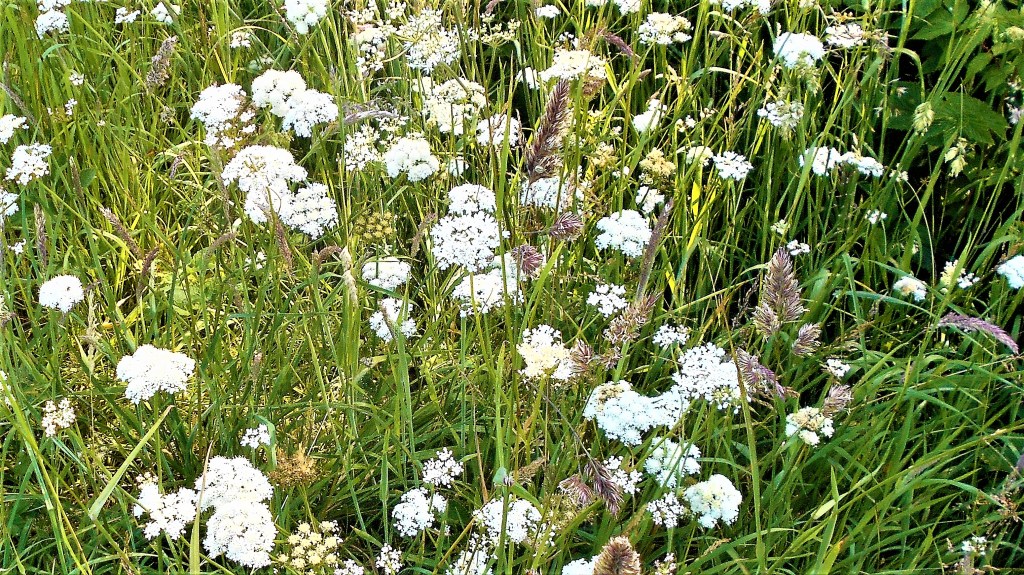
A glorious sight greeted us as we walked through the river meadows – the sun pouring down on to all of the wild flowers along the edge of the hay fields – the Corky-fruited Water Dropwort, Moon Daisies, Cow Parsley looking newly opened, the Timothy and so many other grasses swaying in the light breeze, a wonderfully uplifting sight to behold!

Seeing the mass of Moon Daisies makes us long to return at night to see if in such profusion they live up to their name – glowing in the dark! While on the steep sloping banks of the weir the clumps of Biting Stonecrop glowed sunshine yellow among the scattered vivid violet-blue flowers of the Meadow Cranesbill and Self-heal.
Who couldn’t be happy on this best of all possible midsummer mornings, walking along a river bank, seeing the fall of pink field roses coating a tree, the sparkle of the sunlight on the river and the flash of brilliant blue, black-blue, iridescent golden-green bodies and wings of passing damselfies!

A similar story awaited us when we reached the wide, stony beach – a veritable jungle of flowering plants, some even taller than us (and my husband is 6ft 4ins!) covering almost every inch. Reed Canary grass along the river’s edge, thickets of Hemlock Water Dropwort rather surprisingly offering nectar to hoverflies and butterflies alike, Red Campion, Hogweed, Nettles, Hedge Mustard, brambles, Teasels and tall grasses fighting for space, shaded in parts by the remains of the ancient Willow one of whose large branches, split during one of the named winter storms, still lying in full leaf at the rear of the beach.

A Beautiful Demoiselle (surely wrongly named in this instance) had caught and was slowly demolishing the delicate, most beautiful Yellow May, a rather scarce Mayfly along this section of the river amongst the profusion of the masses of Ephemera Danica.
11th June 2022 / Temp: 19C

Two clear days without rain as a prerequisite for Otter surveys can be challenging in the south west of England as the warm Atlantic winds make landfall into the prevailing wind from the south-west so we get a good deal of rain. Despite dry sunny days being promised, the rain fell and plans had been thwarted again and again for more than two weeks so we decided to explore the spring fed trickle feeding the carrier stream which drains into the river.
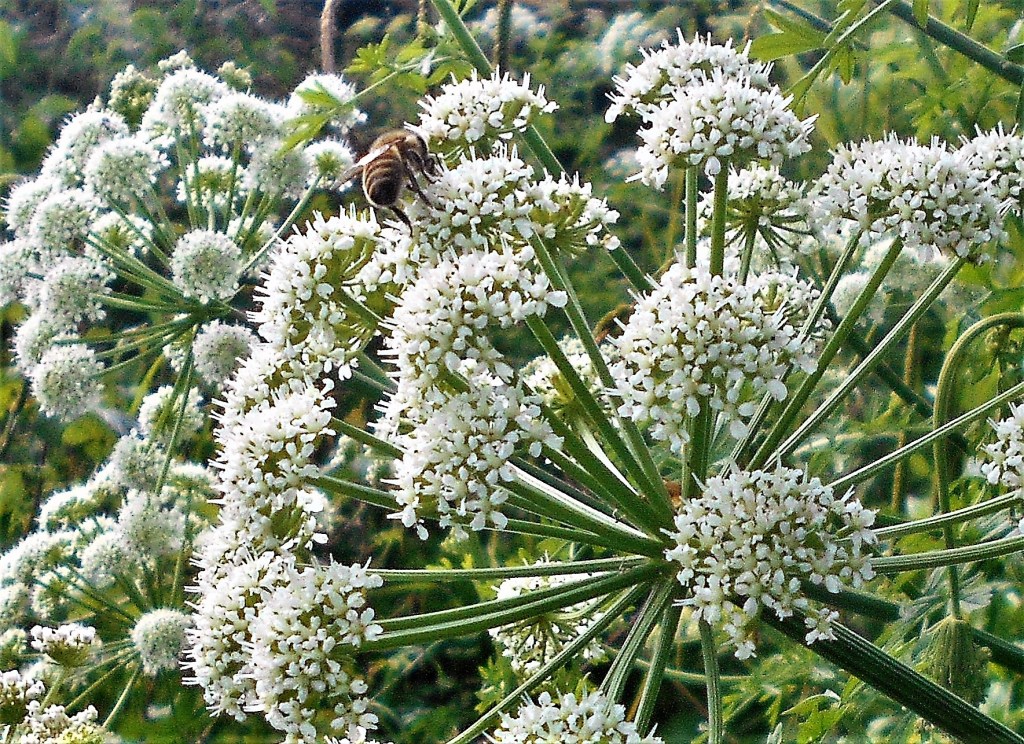
Summer growth had produced a veritable wall of large, tall Hemlock Water-dropwort, their heads thick with white balls of blossom a delight for pollen loving hoverflies, but these together with the brambles heavy with still tightly sheathed buds made any exploration of the stream extremely difficult, as barbs caught and tore our clothes and hair at every step. It wasn’t made any easier by the deep cattle hoof prints in the rain softened mud along the very narrow edges of the trickle. Sadly, after so much effort there was little to show for our trouble – a few wandering pond snails, a good number of freshwater shrimps was the sum of our finds, despite searching the water carefully. No sign of any cased caddisfly or any other invertebrates found in the water at our last exploration that we could see. However, we determined to come back at the next opportunity with a pair of secateurs to clear a path of thick bramble to allow us to follow the trickle to its source.

A vivid red longhorn beetle caught the eye, but true to this rather frustrating afternoon, it was determinedly exploring the Water-dropwort and bramble just too high for my camera to focus and what was worse it decided to play hide and seek every time I was able to manouvre into a decent position to capture a decent image!
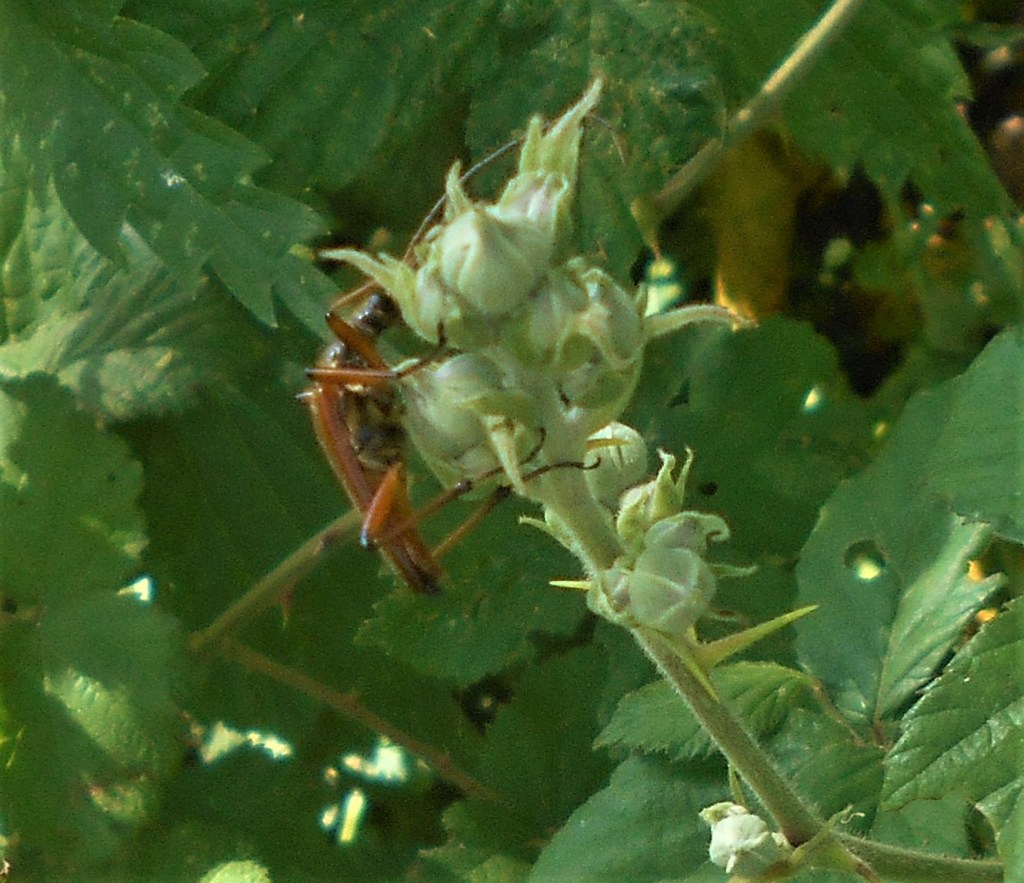
However, the image was just sufficient to identify the longhorn beetle as Stenocorus meridanus which appears in bright sunlight in June-July to feed on the pollen of, among other plants, umbelifers! The hosts of these insects are often conifers but also deciduous trees like the mature Ash tree dominating the edge of the trickle. Steven Falk in his excellent paper “A Review of the Pollinators Associated with Decaying Wood……” mentions Hemlock Water-dropwort as one of the umbelifers Stonocorus meridinus will feed on. This is a new species for us, so the exploration of the area was not completely wasted.

We saw a number of damselflies, both Banded and Beautiful Demoiselles and this beautifully delicate Common Blue. We also noticed lots of very tall Pendulous Sedge plants intermingled with the Water-dropwort, which we discovered can be a sign of ancient woodland – rather surprisingly.
Before leaving the spring-fed trickle, we took the opportunity to test the water and found that the Nitrate level was 0 but the Phosphate level was still 2.0, matching most of the river level. We haven’t been able to establish whether the outflow from Orchardleigh Lake which according to the maps drains into this trickle – bearing in mind the treated sewage from the golf club drains into the lake might be the cause of the raised Phosphates or whether the source of contaminate is the cattle. Most likely a combination of the two.
28th May 2022 / Temp: 16.5-17C / Water Level : Med-Low

Beautifully quiet afternoon and from “The View from the Bridge” the river looked spectacular, flat and calm, reflecting the blue sky and drifting clouds with the small huddle of ruminating heifers reassuringly surrounding the bull tight enough for us to venture along the river bank to check for Otter spraint! Sadly not a sign along the whole stretch of river, but we did see a female Mallard with 5 duckling and 2 Canada Geese Surprisingly only a handful of mayflies rising and only one spotted resting on a riverside plant.
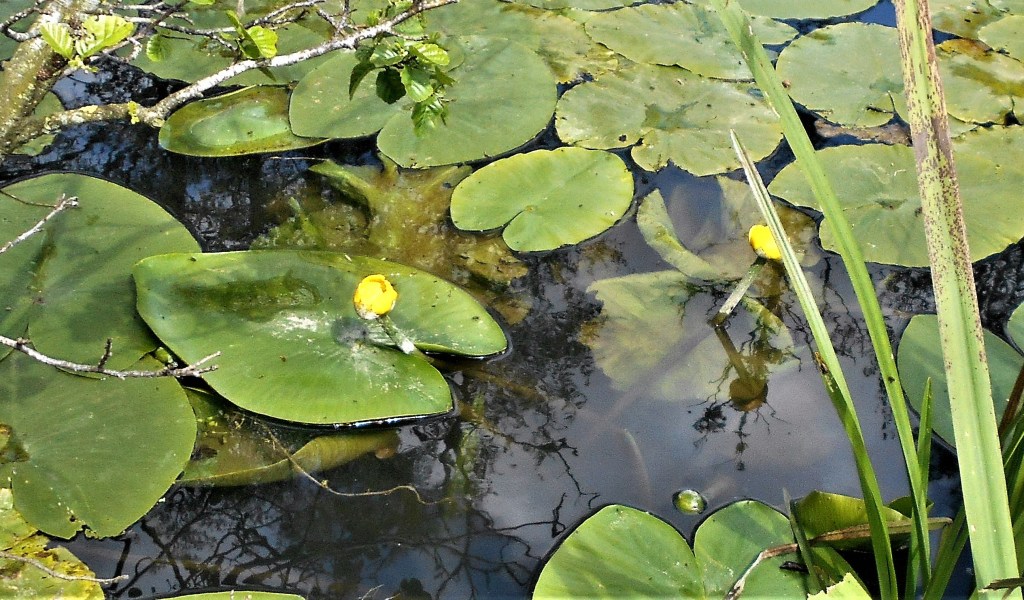
Lovely to see the Yellow Water lilies coming into flower and to note the large rubbery leaves where we spotted three Common Blue damselflies. This is the spot which we hope will soon show good numbers of Red Eyed Damselflies, the only place we know where they can be seen.

There was a good show of Yellow Flag Iris this year along the border of the small feeder stream, standing proud amidst a tangle of white umbellifer (probably cow parsley), buttercups and white dead nettle.
We heard a Green Woodpecker, Buzzard and Song Thrush as well as several Blackbirds and two Jackdaws, saw a Little Egret flying over and two male Mallard but surprisingly perhaps very few insects bar a couple of desultory bees – maybe they we arrived just as they were settling down to their afternoon nap!!

We arrived at the second site just in time to catch sight of a Grey Wagtail fishing enthusiastically from a waterlogged branch caught in the river – a brilliant perch from which to spot any signs of activity in the water.
As if the Otters wanted us to know they are still about, we spotted two fresh and 1 recent spraint plus crayfish remains and pearls on the stones by the river and under the bridge pier. We also heard our resident Wren giving voice at top volume and a Chaffinch trying, and succeeding, in competing! All’s well along the river, looking so beautiful and serene.
27TH May 2022 / Temp: 16 C / Water Level: Med-Low

We arrived at the survey site as the Swallows were swooping down from their nests and zooming low over the river meadow, up into the sky, down again then up, up, up and whizzing full tilt into one of the five nests under the roof of the barn – a wonderful sight, redolent of summer! Not so welcome was a Sparrowhawk which the farmer had seen diving out of the sky to catch Swallows and his White Doves. However, he seemed pretty unconcerned as the White Doves were becoming too many so the hawks were performing a service in keeping the numbers down.
It was hay-making time and as usual the sky was alive with raptors swirling around above the machines covering a large space as they searched for prey! We counted Five Buzzards and two Red Kites chasing the haymakers and on the ground after the tractors had left there were about twenty-five or so Lesser Black-Backed Gulls, Jackdaws and Crows well spread-out, feasting on the fallen seeds and insects.

In the shallow water of the carrier stream the Brooklime was coming into flower and as we walked the banks we could hear but not see the Mallard squawking and complaining loudly under the arched stone bridge. Wild Angelica, Red Campion and Cow Parsley were the only plants along the stream which were in flower, it needs another month before they reach their full glory but they were already attracting a few damselflies, bees and hoverflies.

When we reached the beach we were pleased to find both fresh and recent Otter spraint and watched a number of both Banded Demoiselle and Beautiful Demoiselle flitting about the riverside plants, a Small White butterfly, disturbing a couple of female Pheasants who left surprisingly quietly, not making their usual noisy complaints.
A Heron flew off as we walked to the next site, about five Mandarin flew down to the water from the river bank but the Mallard stayed put on the grass. Blackbirds singing from the hedgerow, a Magpie cackled and chattered and a Kingfisher zoomed past, heading downriver.

We were immediately struck when we reached the river at the last site by the incredible number of mating, non-biting midges swarming above the water. These tiny flies do not feed, they only live long enough to mate, lay eggs, and die, but the fish beneath seemed oblivious – maybe having gorged on mayflies they simply weren’t hungry enough to leap for the midges!
More good signs of fresh and recent Otter spraint along the stones of the beach, damselflies, a Red Admiral and only one mayfly rising from the water and resting.
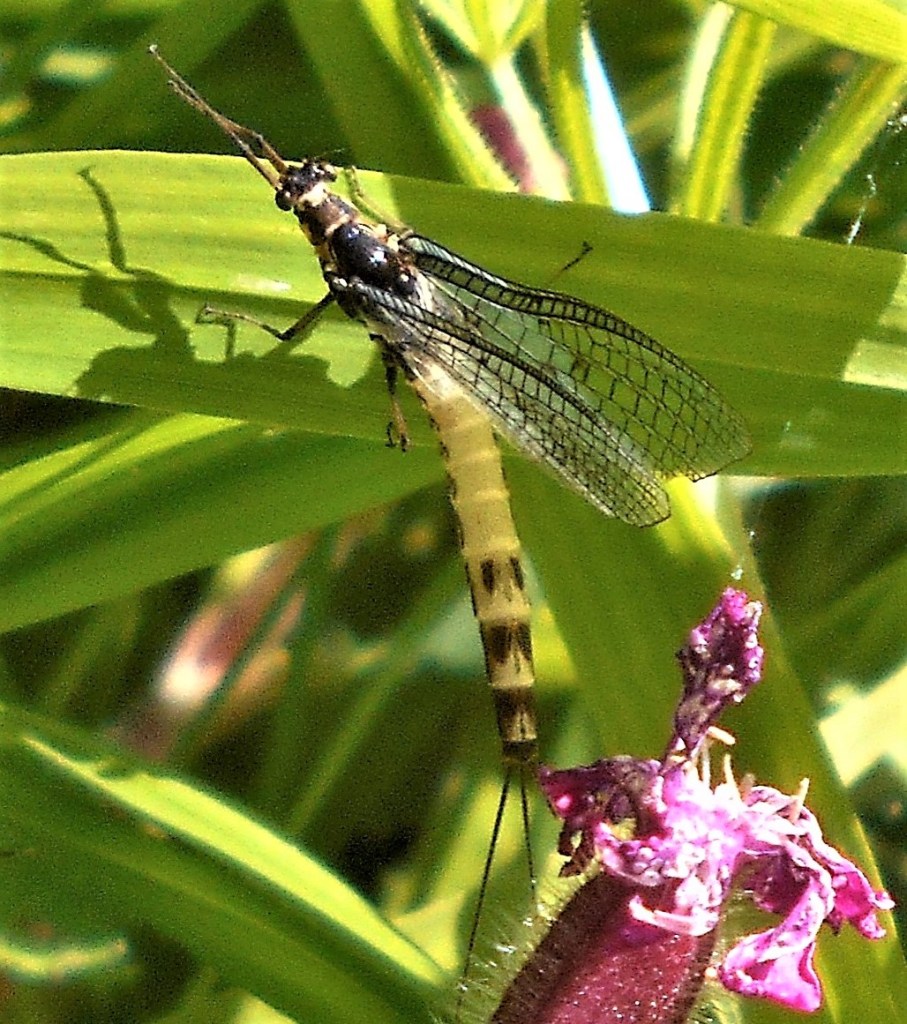
The beach is always protected from the wind, which was surprisingly cool and quite strong, so it was delightful to wander about, checking for spraint in the warmth of the brilliant sunshine, watching the Long-tailed Tits flitting from tree to tree, Swallows swooping overhead and listening to songs and calls of Whitethroats, Chiffchaffs and Chaffinches whilst enjoying the delightful sound and sight of a busy river, rushing, sparkling and splashing over stones in its constant dash downriver.
24th May 2022
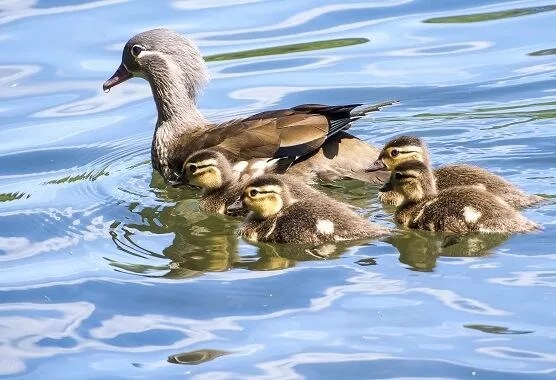
Our Angler friend has also alerted us to a behaviour which I have not witnessed but which my husband tells me is quite common among wildfowl and other birds. The Angler writes that the two female Mandarin he has seen on the river appear to have amalgamated their broods. Evidently one female (which is darker than the other) is hanging out with the drake, without ducklings, and the other female now has 9!
There are several hypotheses why this occurs, it could be that two females join forces which improves their own probability of survival by sharing the demands of brood-rearing with other adults, which in turn increases their reproductive output. Another is that survival of young is higher in large, amalgamated broods, which provide greater protection from predators and access to food supplies. Our research doesn’t offer an explanation of a flighty female dumping her ducklings and swimming off with a male duck!!
23rd May 2022 / Temp : 16.5 C / Water Level: Med
OTTER NEWS – LATEST
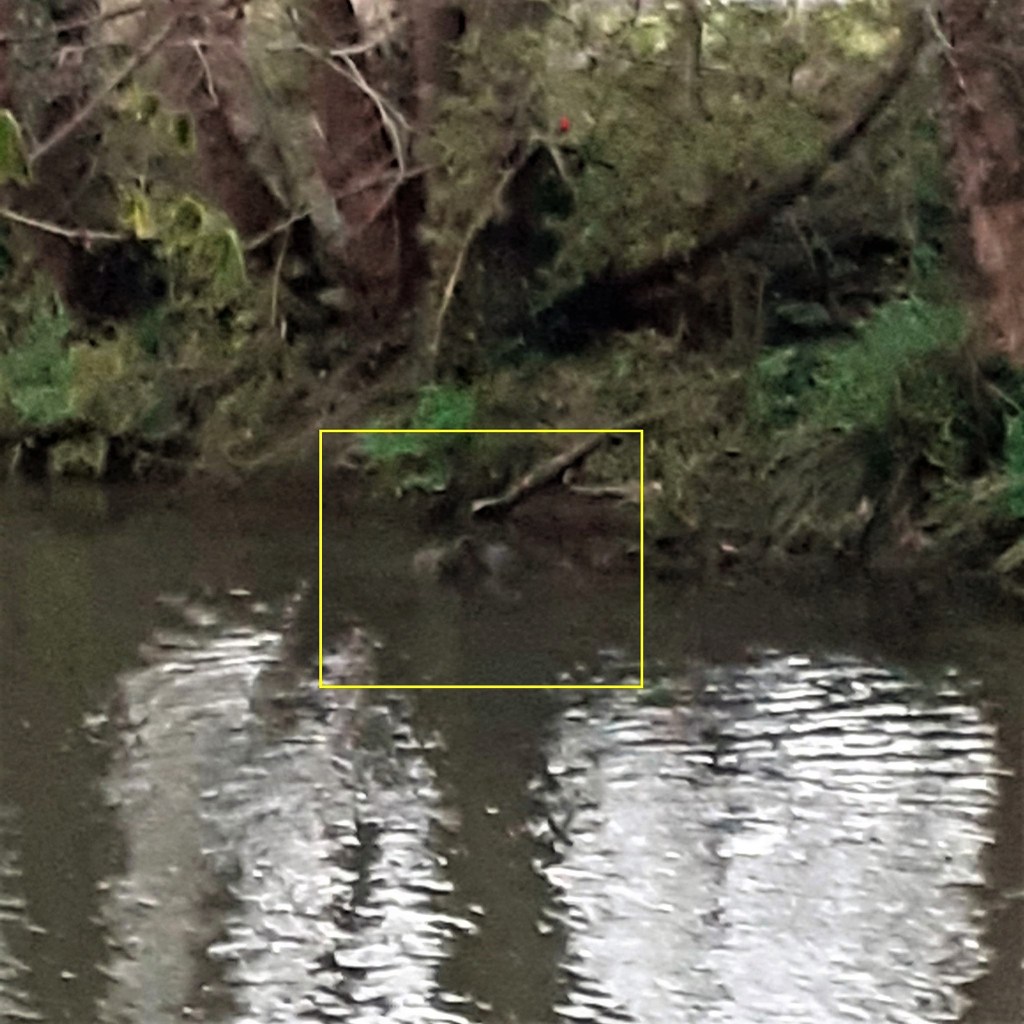
Huge reluctance to move after a pretty exhausting weekend and only the threat of days of heavy rain forced us out. Trudging along to the first Otter site, convinced that, after the bumper sightings on our last survey, we would see nothing but – there they were – scattered acrossed the beach on 6 different stones and tufts of grass 6 fresh Otter spraint and 6 recent!
What made this particular find exciting was the confirmation (not that one was needed) from an Angler’s sightings over the past couple of months (Frome & District Angling Association) https://www.fadaa.uk/ In April, around the time of the Group’s annual 2 Day Event, he saw a female Otter and pup (who stay with their mother for the first year) foraging for crayfish, crunching away at the female’s catch on the shallow bank of the river and, as it grew darker and they swam off downstream, making bird-like, whistling signal calls to each other. It must have been a wonderful moment and we were extremely envious but felt consoled knowing that we now had hard evidence of what we suspected given the amount of spraint we had found, there were indeed a mother and pup along this stretch of the river!
The icing on the cake came yesterday when the same Angler reported again seeing a female Otter and cub this time downstream from the April sighting but not too far as an Otter swims where he believes there is probably a holt.
Amongst his other sightings of Heron, Little Egret, Mandarin (with 4 ducklings) and nesting Kingfisher, the Angler also spotted a female Goosander with five ducklings! We haven’t seen a Goosander along this stretch of water for years so five new additions to the river is extremely welcome news.
INTENSE HATCHES – MID-MAY ONWARDS

When fly fishermen talk about “intense hatches” we now know what they mean – and how! Coming up from the river we walked into an absolute blizzard of Mayflies. The so called Green Drake (Ephemera danica) had arrived mob handed. Apart from film of locusts in Africa, we had never seen so many insects in the air at the same time – it was an astonishing spectacle. What we had thought were great numbers only a week ago on another site downriver was put into the shade by today’s display. The owner and his assistant who were working on site stopped to chat and when we commented on the number of mayfly he said that earlier in the morning he was astonished to see a large Pike jumping out of the water after the Mayflies. He also said that at dusk he watches the bats around his house and barn feeding on them too.
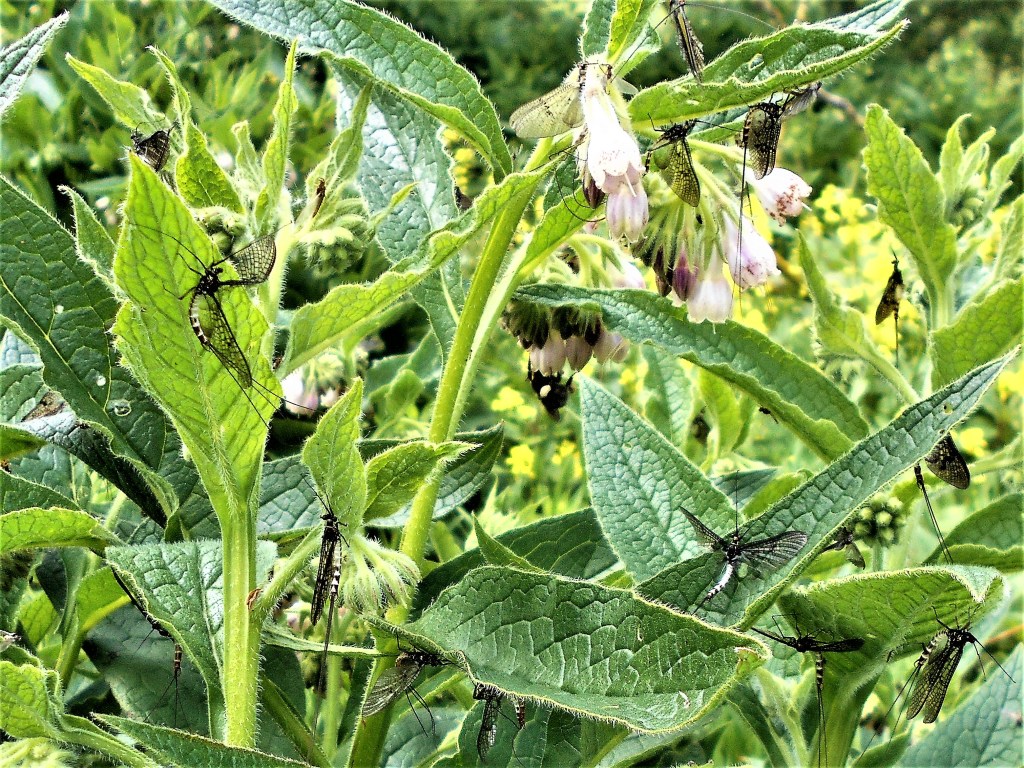
Walking past a wild area of flowering comfrey, wild mustard and nettles we noticed that barely an inch of stem or leaf was free from resting mayfly – the vast majority Green Drake, but also our very first sighting of live Yellow May (we counted at least eight in our short stop) as well what we think may well have been Blue Winged Olive, (Sherry Spinners).
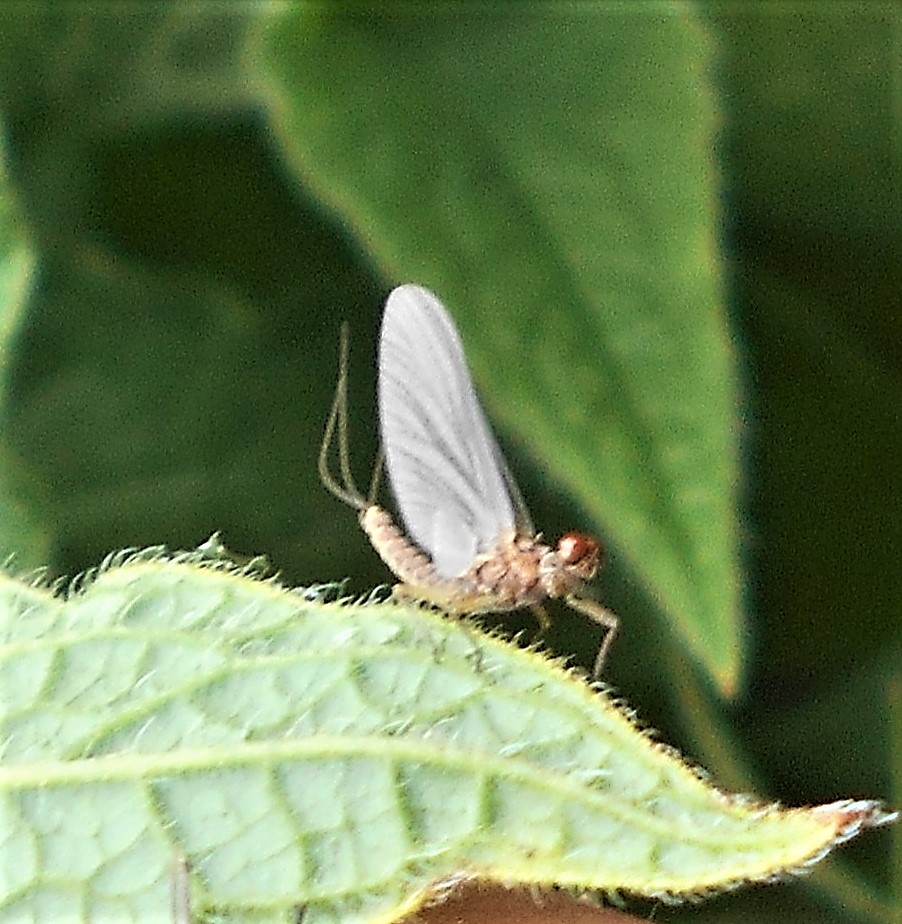
This is the area where the owner sees a large grass snake sunbathing so we intend to keep a look-out in future. This is the time of year we have seen grass snakes swimming in the river, but never so far in this spot.
14th May 2022 / Temp: 16.5 C / Water Level: Low
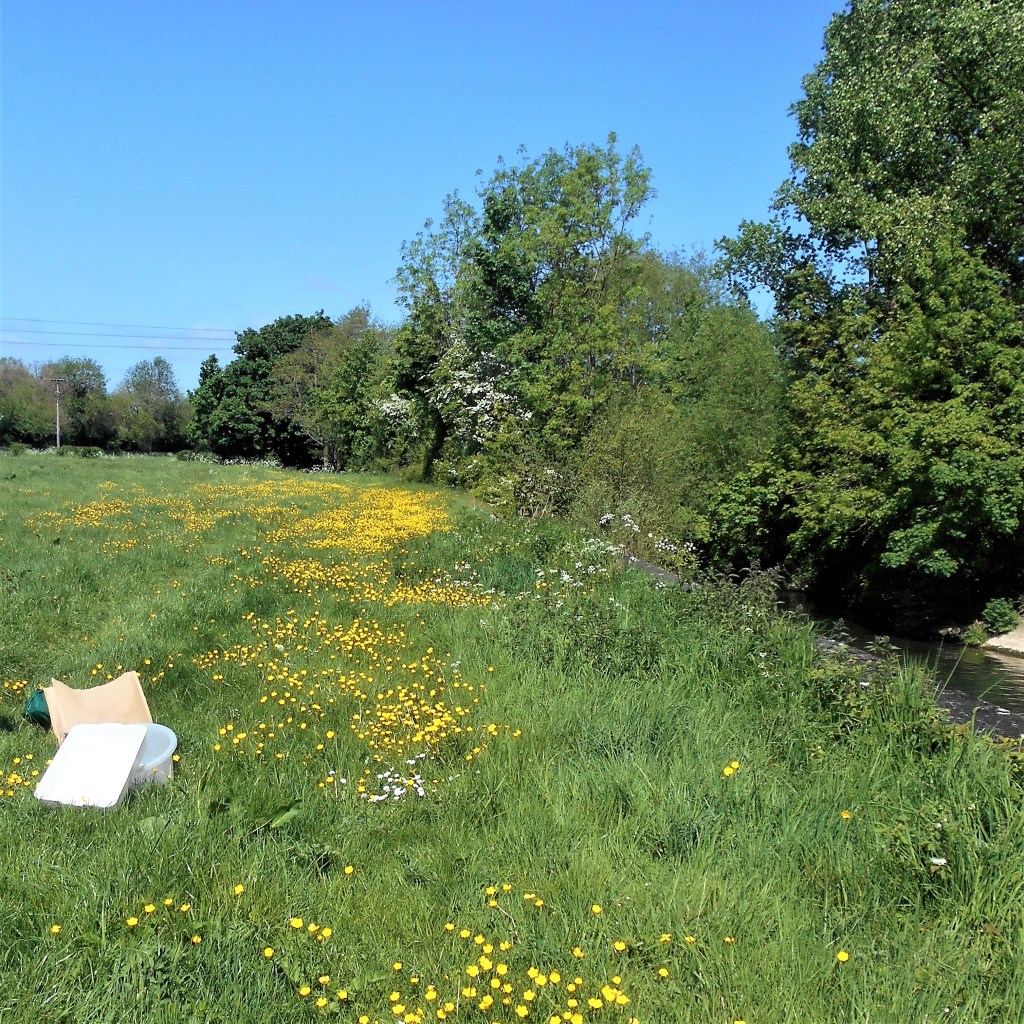
A perfect May afternoon, clear air, deep blue skies, all the trees dressed in new leaf and the river meadow carpeted with buttercups and cow parsley. All those long dark months of autumn and the cold grey days of winter seemed a distant memory which happened in a country far away, for here all is warmth and beauty, filled with male bird-song from nesting birds.
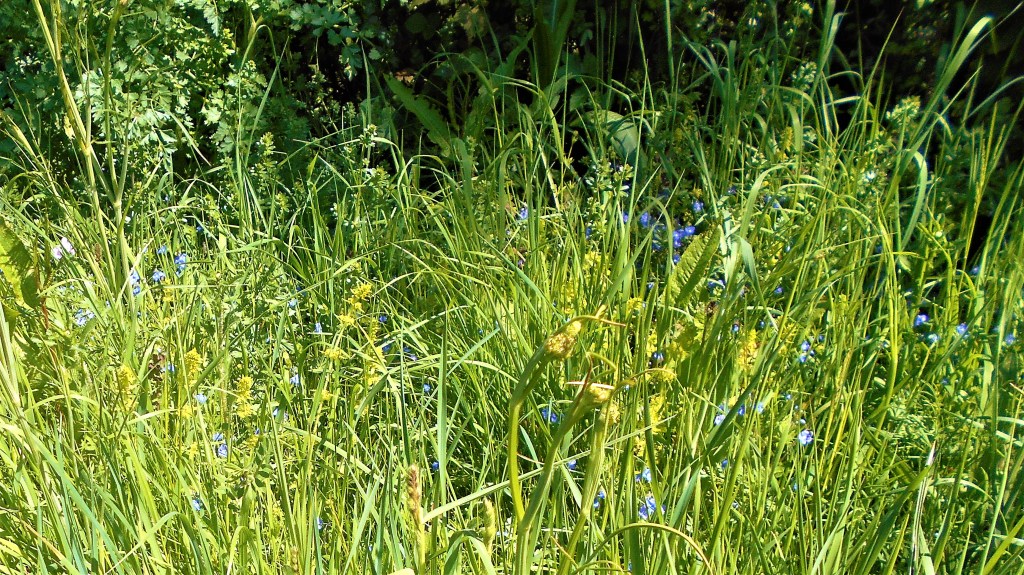
Sauntering along the river bank, stopping to admire the yellow crosswort (or smooth bedstraw, a member of the coffee family) just breaking into flower among the brilliant blue birdseye speedwell sprinkled among the tall grasses where many tightly budded Corky-fruited Water-dropwort stood erect, waiting for their spectacular debut not too many weeks away. While standing admiring and looking down into the river we suddenly began to see them, first one the another….

the damselflies had arrived! Fluttering along the river and settlingon the riverside plants in numbers. As fast as we counted them more appeared, the numbers jumping from three to seven to ten until we reached fifteen altogether! Twelve Beautiful Demoiselle, male and female and three Banded Demoiselle. This is summer arriving with a spectacular fanfare, a blaze of bronze and green and blue, vivid and sparkling in the sunlight.
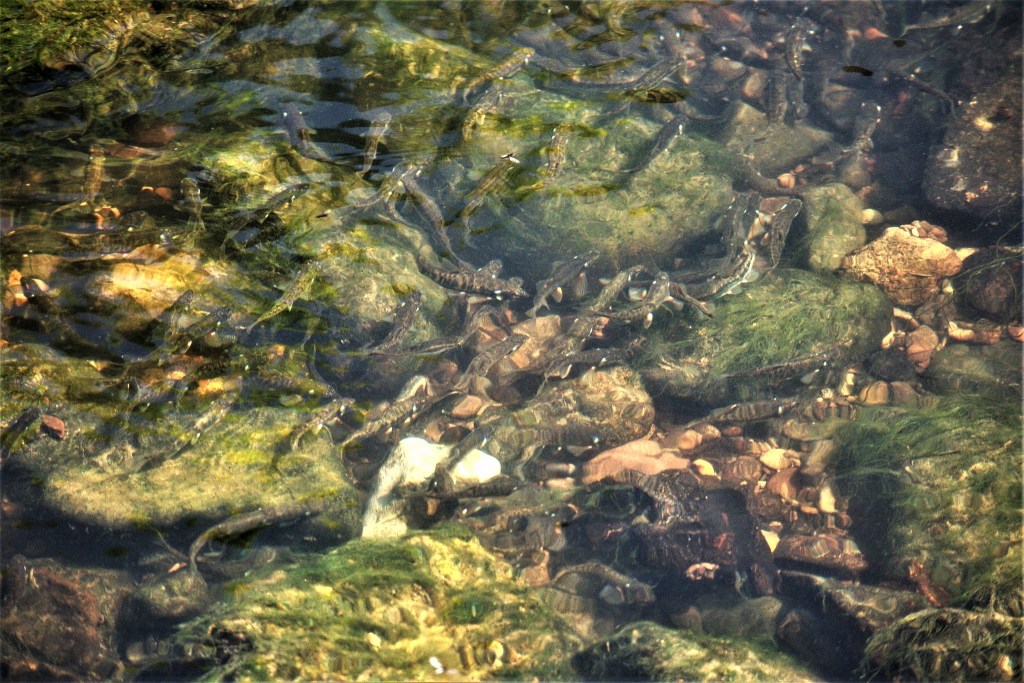
When we reached the beach filled with tall pink flowering red campion and delicate white cow parsley, the old gnarled willow covered with fresh new leaves and the river dancing and sparkling in the sunlight we spotted shoals of minnows in the shallow stony edge of the river. We were intrigued by the way they flashed white and scarlet and when our daughter managed to fish one out, we could examine it closely. We can’t do better than include a comment from Steve Smailes when we posted the photograph on iSpot :

“Lovely photo and Nostalgic too. The male minnow in May / June is probably my favourite creature on earth, and that’s saying a bit. Most people in modern times are unaware of it (even naturalists!) – shown a picture they might guess at coral reefs and tropical seas.
It would be nearly 60 years ago now that I waded into a fast, mossy, cobbly run in my local brook. (This was in Derbyshire.) The water over-topped my little wellies. It surged on into a large, deep pool, but by some good luck I didn’t. I swept the net down through the rapid and lifted it to find, and feel the weight of, a mass of squirming, bejewelled fishes which I had never guessed were there. All were male minnows, gorgeous bottle greens and yellows, flagged with white and trimmed with scarlet and coal-black.“
While nothing can compete with the delight of discovery of a small boy, we were pretty astounded by the striking coloours of this, one of the most common fish in English waters.
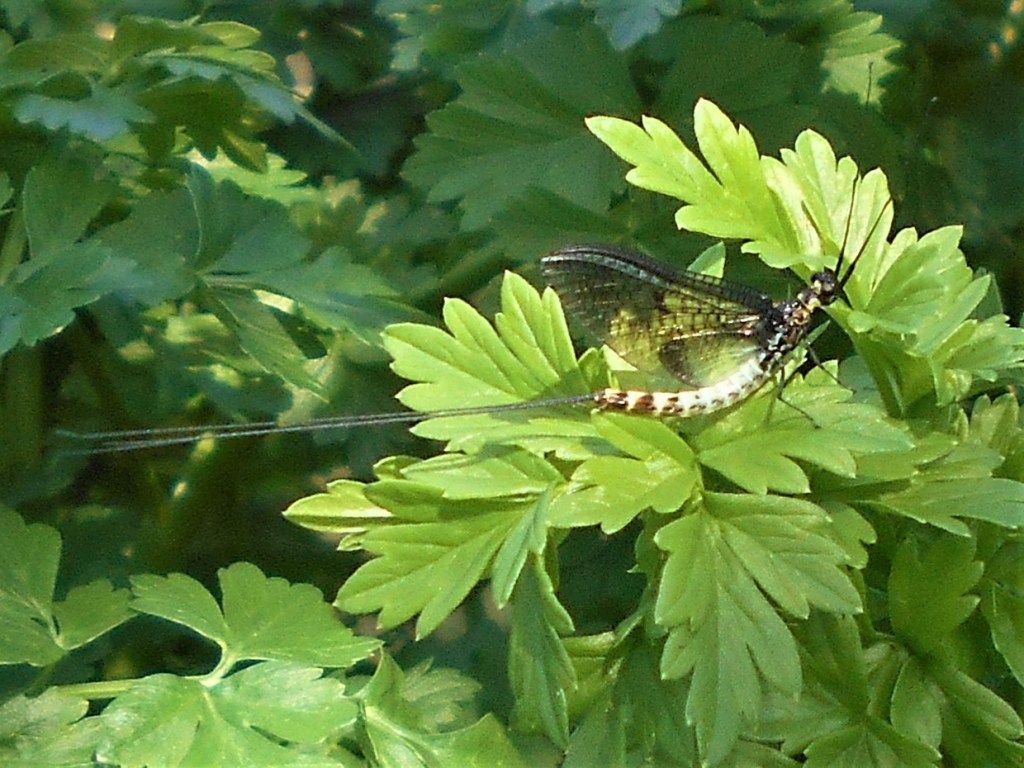
How lovely to start seeing Mayflies in numbers! The earliest we have seen a hatch in previous years was the 10th May so the 14th is not that later. When we arrived we saw just a few rising but as the afternoon wore on the numbers started to increase and the mating dance of the males began in earnest! Impossible to count, we kept reaching a number, giving up and starting again until we abandoned the idea altogether and settled for “there are a lot of Mayfly!”
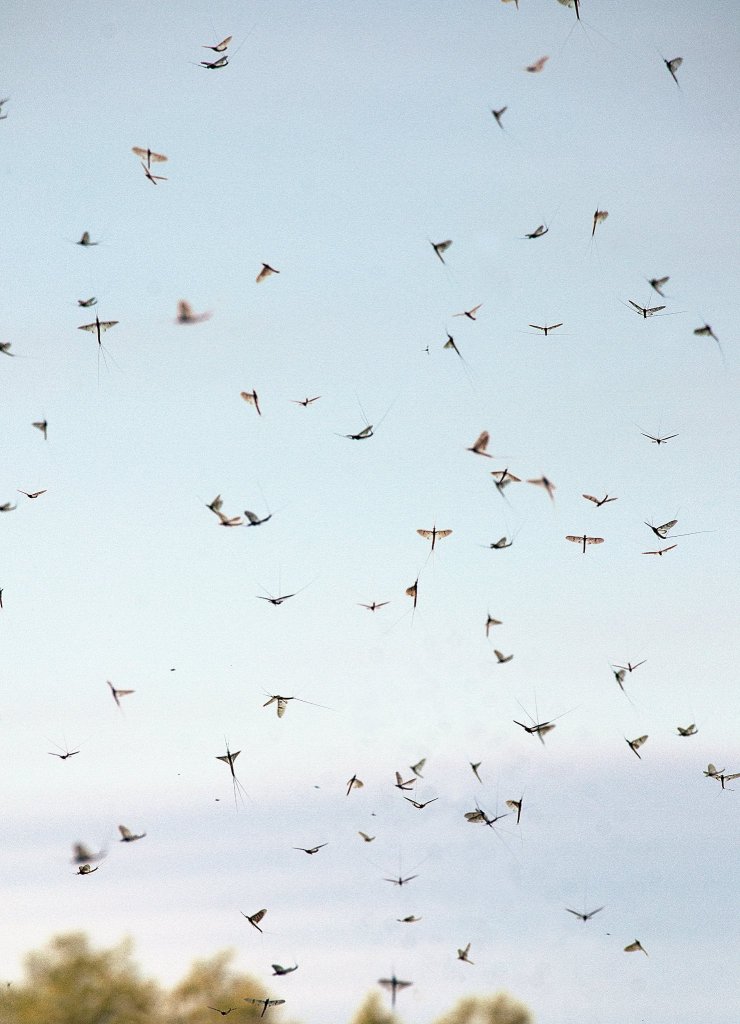
Whilst wandering around the beach, watching the Mayfly and checking the low hanging branches and tall plants for resting insects we came across this mayfly caught in a cobweb. It was fluttering wildly, and I tried to release it but there was one strand of web which seemed impssoble to break and remove. I settled the Mayfly on a plant and left it to its fate so cannot tell if it survived. At first I thought it might be a Yellow May but then checking with First Nature it also looked not unlike Baëtis fuscatus. To make matters even more murky, when we came to do a brief kick survey, we managed to find both a Yellow May nymph and a Baetis nymph so it would appear that both Mayfly are likely to be around.
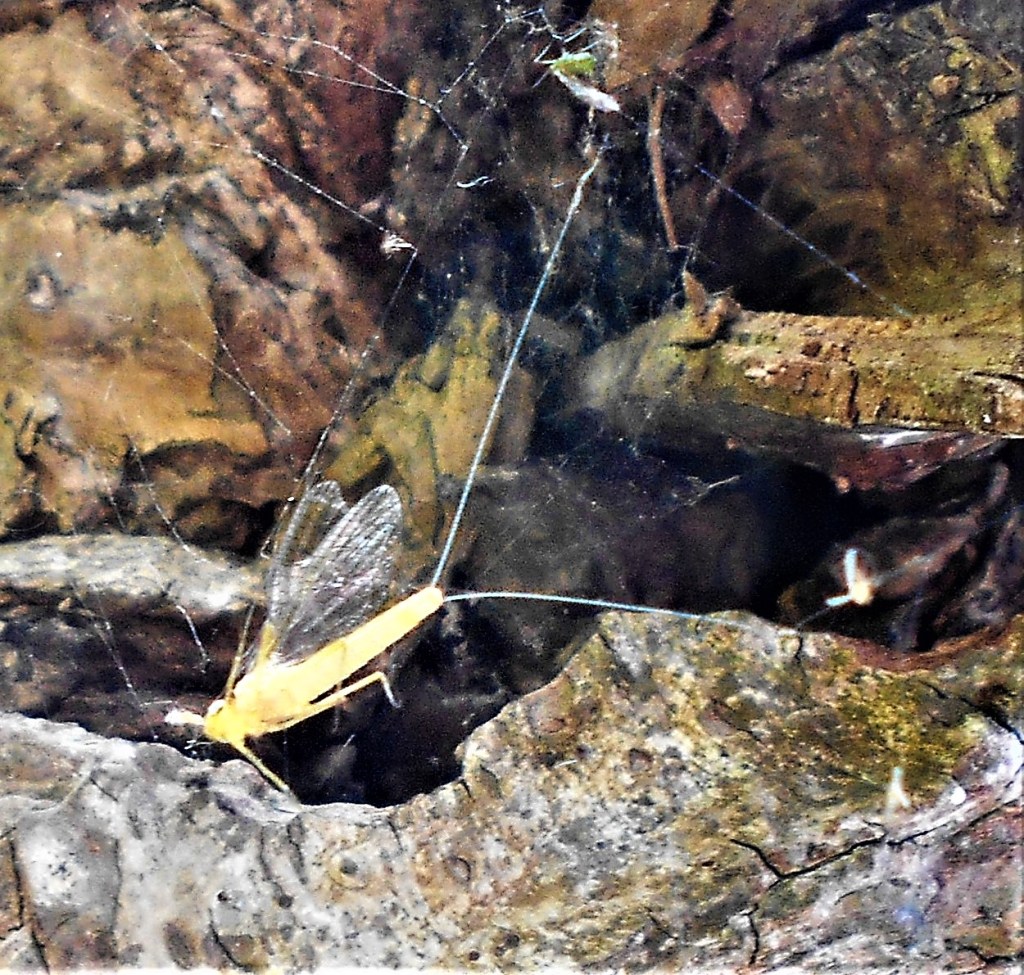
!10th May 2022 / Temp 16 C / Water Level: Low

No swimmers to prevent us from surveying the Otter site, but sadly a large herd of heifers and a bull had taken possession of the river meadow so, as we can no longer run as we once could, we turned again to the small stream. Although it was beautifully sunny, the breeze was quite stiff, gusting to very stiff so climbing down to the stream, which was protected by high banks and thick undergrowth, proved to be an oasis of stillness and calm – a perfect solution.
This relief turned to delight when we caught sight of a male and female Wren flying out of a bramble bush with grubs or caterpillars in their beaks and disappearing into the undergrowth only feet away where they presumably had a nest of young hungry chicks.

Perched on a felled ash trunk we had a beautiful “birds eye view” of the action and sat entranced watching the incredible speed with which the birds flew betwixt food source and nest. Despite holding the camera ready, it proved impossible to catch a good shot and this blurred image is the only one of a dozen or so which at least shows the ghost of a bird!

We didn’t have our nets and trays with us, so just checked the stream by eye and still managed to spot a few interesting finds. Not quite so many freshwater shrimps, although they were still prolific, but lots of snails, including this wandering snail settled comfortably on the stream bed next to what looked like fragments of twigs or splinters of wood.

Very, very slowly, barely noticeably, the splinters began to move. It was so slow that I thought it must have been the current, but then it became obvious that although I couldn’t see any legs, they were moving across the bed of the stream. Could they be cased caddisfly larvae? Very likely, there is a possibility that they are Anabolia nervosa who build sand cases and glue sticks to each side to prevent Trout from swallowing them.
[Note: Sharon Flint at irecord has confirmed that these are indeed caddis larvae, but has been unable to offer any further explanation due to the photograph not offering sufficient information].

Close by we found what looked like the abandoned net of a net-spinning caddisfly larva, and although we couldn’t be entirely certain, the net was secured to a boulder and stretched between several stones, leaving a good sized opening to catch nutrients in the water.
{Note: This net has now been identified by Ian Wallace, the authority on Caddisflies at iRecord, as the snare of the Plectrocnemia Caddis (possibly conspersa) which is found in trickles where the bed of the stream is stony. This is very exciting news as it is a new species for us!]
There were three holes in the closed end, possibly from predators or larva leaving the net, difficult to say.
7th May 2022 / Temp : 20 C / Water Level: Low

Thwarted by hordes of young people swimming and picnicking from surveying the Otter sites, we made our way instead across the river meadow to check out a small feeder stream which trickles down to the river. The weather was gorgeous – warm, full sun, all the trees and shrubs covered in fresh new green leaves and the air full of butterflies, Orange Tip, Brimstone, Peacock, Marbled White and even a tiny Holly Blue up among the old ash tree beside the stream.

We had often been curious about this tiny stream and wondered whether would contain anything of interest beyond a few damselfly larvae, so we had never checked it out, concentrating on the river. But once we began to root around, we were astonished to find such a variety of invertebrates, particularly as the stream was no more than inches deep.
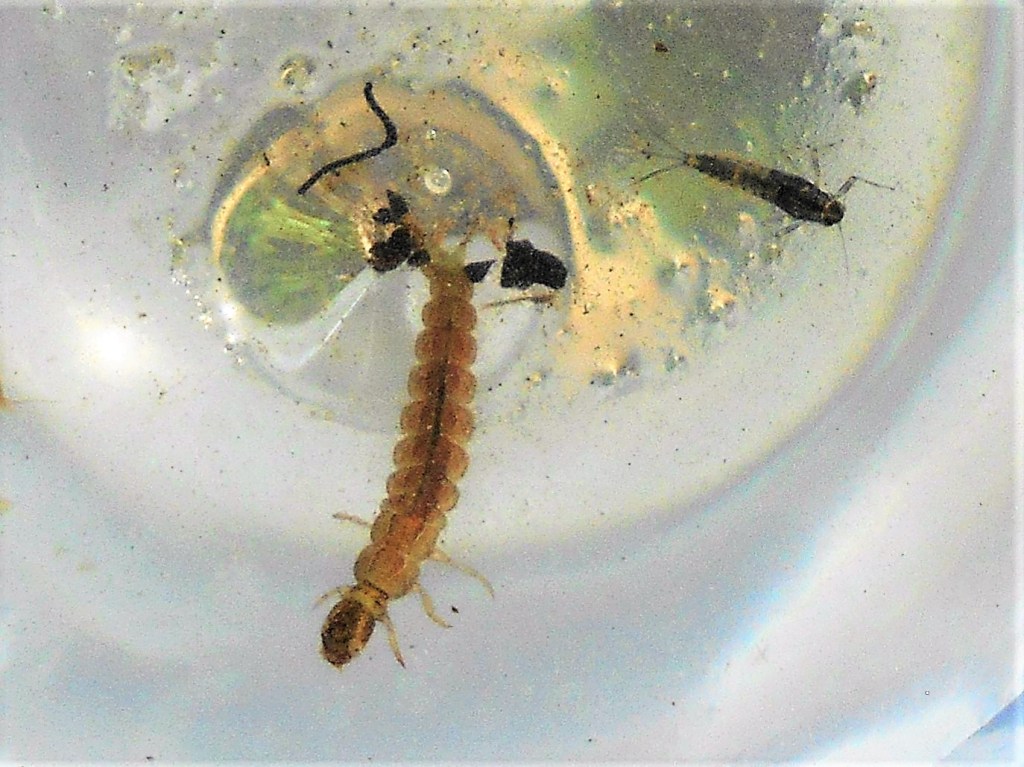
A free-swimming Caddisfly larva shared the tray with a Baetidae (Olives) Mayfly, the difference in size is really striking. Turning a few stones and rocks, we then came across this astonishing collection of caddis larvae…

which again look like the free-swimming species but which unfortunately we disturbed their retreat, the small cluster of tiny stones, cemented together where they hide from predators while waiting to pupate. We carefully returned the stone to the stream bed where we had found it and hoped they would find shelter before they were found by a hungry predator.

This lovely little case, beautifully constructed with grains of sand with larger stones protecting the sides, by the Caddify larva Gaerida, sometimes referred to as the weighted casemaker caddis, a scraper larva, a grazer, living on the algae growing on the stones of its preferred habitat. As ever, we are most grateful to Ian Wallace of iRecord for the identification and explanation.
A tiny little spire shell, possibly Jenkins Spire Snail, was another discovery, which I hope irecord will approve as I have so often hoped to find one!
It was such a beautifuly early May afternoon, and lovely to see a few butterflies, Orange Tip, Holly Blue and a Marbled White, as well as a few insects, a Cranefly, two St Mark’s flies, Alderleaf beetles, a couple of Beautiful Demoiselle damselfies and this strange looking little beast..

which we managed to identify when we to reached home as a Crampball Fungus Weevil! When back in the autumn we found a fallen branch brought down by a storm with a line of crampball fungus attached to its bark, little did we imagine that one of them might have had a small weevil growing inside!
A microlight flew back and forth above our heads a few times rather noisily, but redolant of summer and we spotted a few birds – lots of tits including at least four or five Long-Tailed Tits, and a Great Tit, a Little Egret, Jackdaws, Chaffinch, a Green Woodpecker, Blackbirds, Robins, 3 Crows and last but not least a lightning speeding Weasel haring for cover along the line of the hedge!
5th May 2022 / Temp: 17 C / Water Level: Med
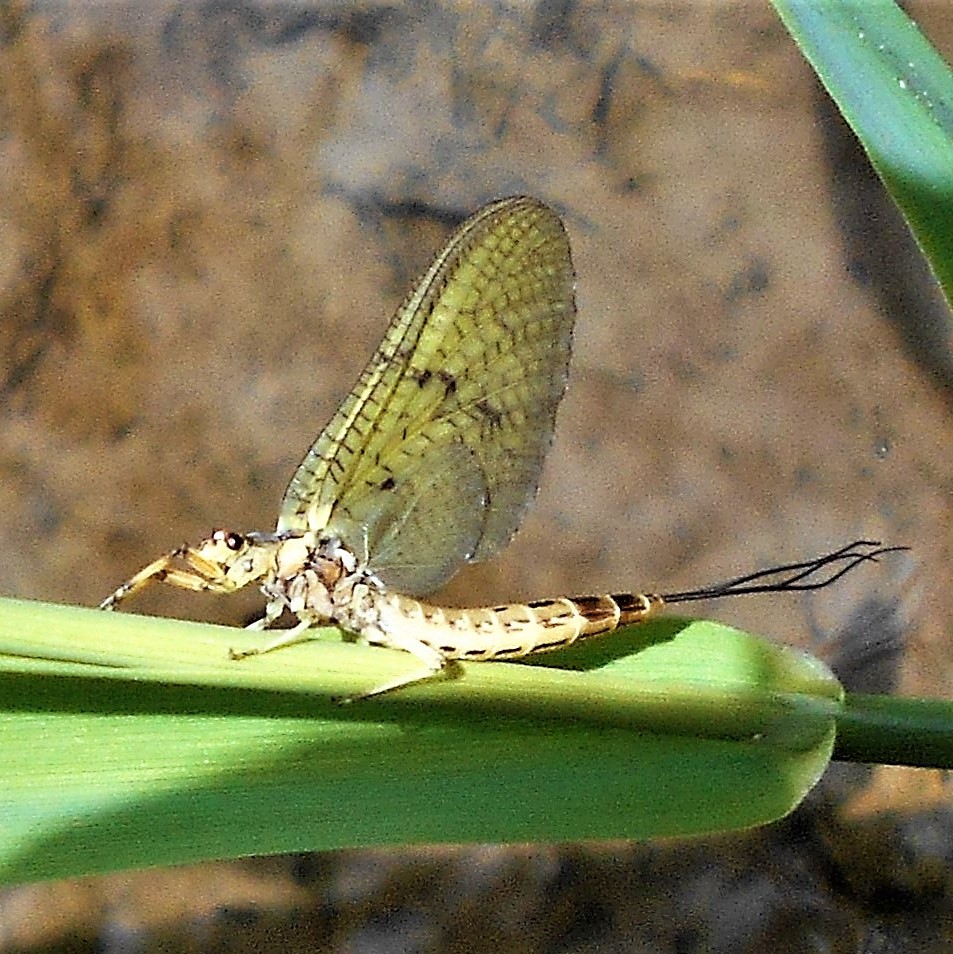
Our first Mayfly of the season? What delight to spot it landing on a riverside reed, its tails still bent, clinging perfectly still while it dried and hardened off!
High winds, gusting strongly, persuaded us to check out the river whose steep banks provided the perfect shelter and where the sun felt deliciously warm. No signs of spraint on any of the stones, but our attention was distracted by the sheer number of midges covering the river, the recent sunny weather having lead to an explosion of newly emerged flies, a feast for the local wild brown trout!
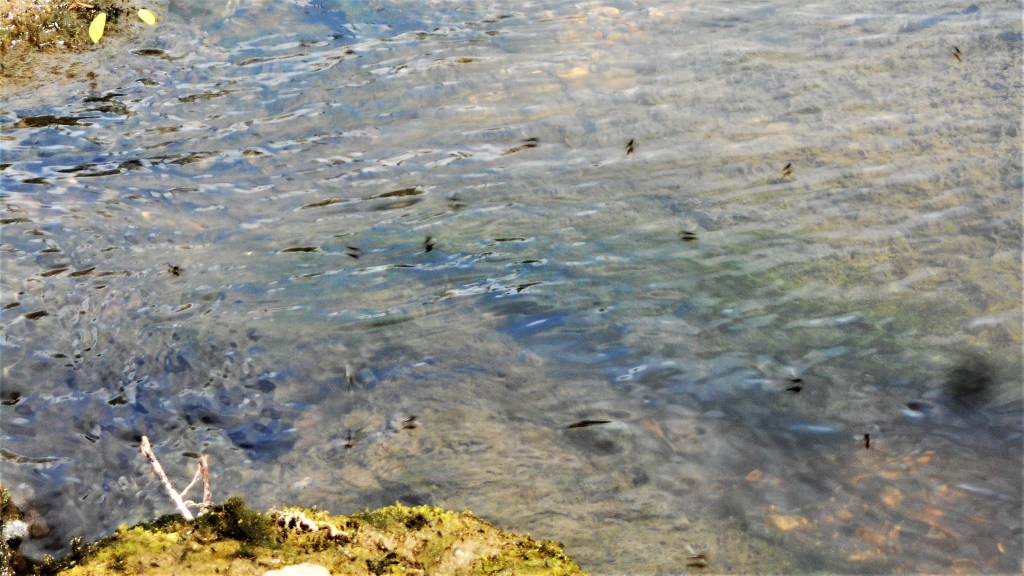
We began pottering about along the edge of the river where the water was shallow and almost still. Imagine our excitement when we found among the usual freshwater shrimps, green drake and olive mayflies a totally unknown Mayfly nymph in our tray!

When we researched and compared we found it was a prong-gilled mayfly which, according to Firstnature, are seen mostly in the south and the west and never plentiful. The nymphs are poor swimmers, crawling among mosses and tunneling within waterlogged leaves, particularly in the slower moving water of river margins, so we were in the right spot to find one. We were so pleased as this new find brings to six the number of Mayfly species we have now found in this stretch of river.
23rd/24th April 2022 / Temp: 13C/14.5C / Water Level: Med
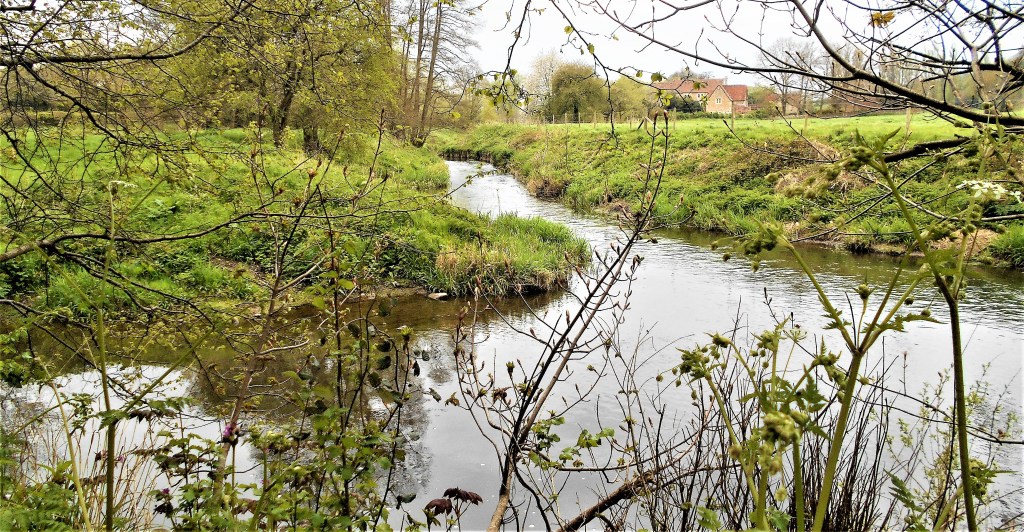
A busy weekend! The Two-Day Event which normally takes place on the last weekend in April, cancelled for two years running due to the pandemic, was able to go ahead this year. We set off to check the first of our sites for Otter spraint, which, once recorded, and spraint removed with a stick so that there was no human contact, the stones were clear so that on the second day any new signs of spraint would be obvious and show that an Otter had visited the site overnight.

We were so lucky in our choice as we had an absolute bumper haul – finding 9 fresh spraint, 8 recent and 1 set of pad marks on the first day, the most we have found at one site in all the years we have been surveying! Lovely to see a large bed of wild comfrey edging the river but we had little time to check other signs of wildlife, and, as there was a stiff north-easterly wind blowing, sending spits of rain from lowering overcast skies, we certainly weren’t tempted to linger. However, we did at least manage to spot three Mandarin Ducks, 5 Male Mallard in a group and a Buzzard wheeling overhead.

Day Two dawned fair and by the time we arrived under blue skies and full sun it felt considerably warmer despite the same stiff north-easterly breeze. The heavily blossom laden fruit trees were humming with bees and hover flies and we even spotted our first St Mark’s fly of the year (said to arrive on St Mark’s Day, the 25th April) trying to settle on a gate post but struggling in the wind.

Unfortunately there were no signs of any new spraint where we found so much on the previous day, but we were extremely pleased (and relieved) to find 3 fresh spraint at the next nearest next, proving there had been an Otter(Otters?) in the area overnight – great news!
A fair sprinkling of butterflies spotted as we walked the river bank, 5 Orange Tip, 2 Small Tortoiseshell, 2 Brimstone, a Peacock and a Speckled Wood. We heard the lovely sound of Blackbirds singing their hearts out and spotted a male and female , almost certainly a nesting pair. We saw a Little Egret, a Heron, 2 Mallard, a Swan, and heard Wrens, Chiff Chaffs, a Chaffinch and Greenfinch and finally, joy on joy, two Kingfishers flashing up and down the river!
Our last cherry on the cake was when the owner of the property told us that he had seen a Hedgehog clost to his house, this added a new animal to our species list and made for a bumper couple of days, a thoroughly satisfying Two-Day Event and one which will be difficult to match next year.
10th April 2022 / Temp: 13 C / Water Level: Med – falling

Bonking beetles can mean only one thing – summer has arrived and for the first time this year the river level was low enough for the grandchildren to join us for an afternoon exploring the river.
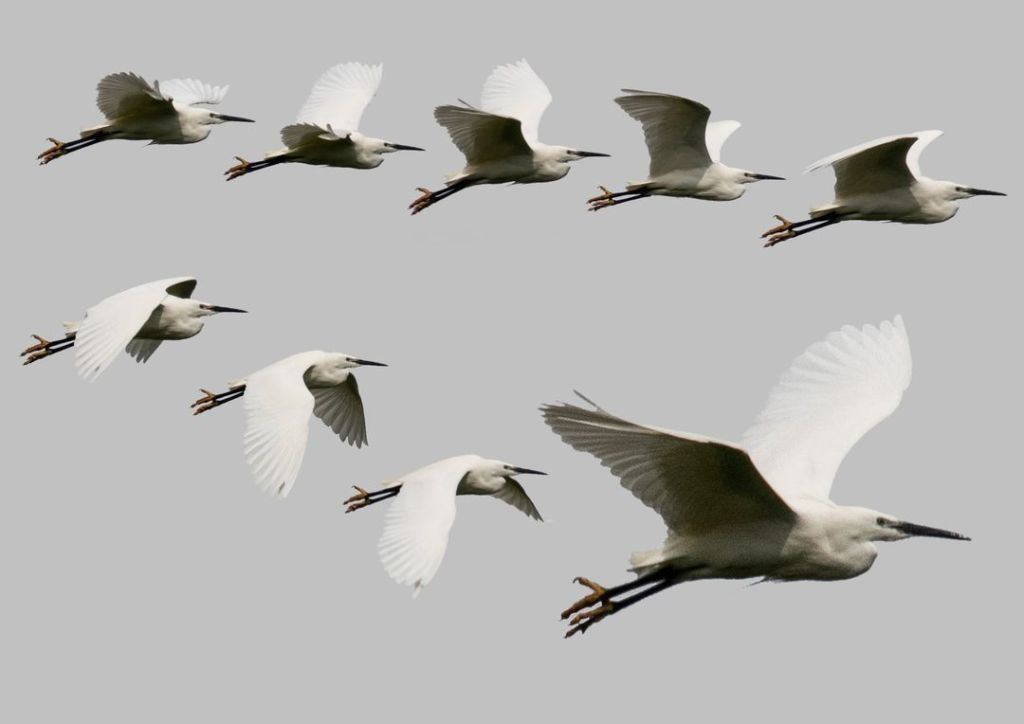
As we tramped across the river meadow loaded down with nets and buckets, trays and pipettes, wellington boots and identification sheets it was delightful to see our first sighting this year of a Peacock butterfly on the bushes, two Mallard and a pair of Canada Geese in the river, a Little Egret flying overhead and numbers of Yellow Dung flies on the search for a mate.

Once we reached the small area where the river runs through a stony section where the river is shallow enough to wade, the business of the day could start, and two boys were soon wading in, nets at the ready, as they began searching amongst the stones for treasure – wee beasties, fish, fossils, river limpets, mayfly nymphs, signal crayfish – whatever turned up in their nets they were happy.

Their first find was an absolute beauty – a Mayfly nymph, one of the flat-bodied or stone clinger nymphs which cling to the bottom of stones and feed by scraping the algae. This one looked as if it had been in the wars as part of one of its three tails was missing.

Next was a Bullhead, a small fish, less than 10cm long, but with the most beautifully marked large pectoral fins which allows the Bullhead to hold its position in the fast flowing water.
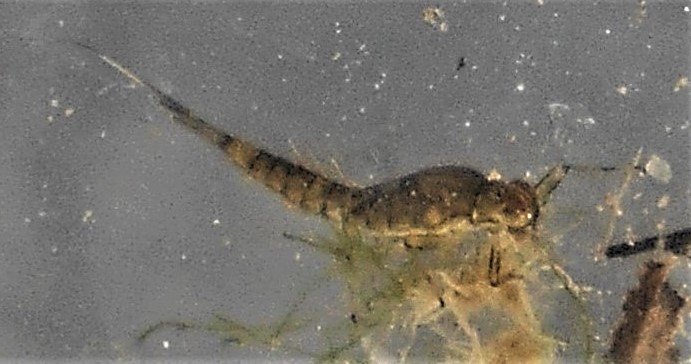
After such excitement it was a bit of a let down that net after net produced nothing more exciting than freshwater shrimps, Caddis and Mayfly nymphs hidden by weed and murky water which made the creatures almost entirely indecipherable in the photographs, although we managed to see at least two Baetidae nymphs, several Green Drake (Ephemera Danica) nymphs, free-swimming Caddis nymphs (Ryacophilidae) and three net-spinner Caddis (Hydropsyche), not huge numbers of species but small boys are rather more interested in hunting for crayfish than wee beasties so not a bad haul.

One of the advantages of standing in the centre of a fast flowing river is being well positioned to catch sight of birds like a Kingfisher shooting past and two (probably a pair) of Grey Wagtails fishing from opposite sides of the river, our single Swan still patrolling and guarding the nest well hidden out of sight, and a Heron languidly lifting from the shallows.
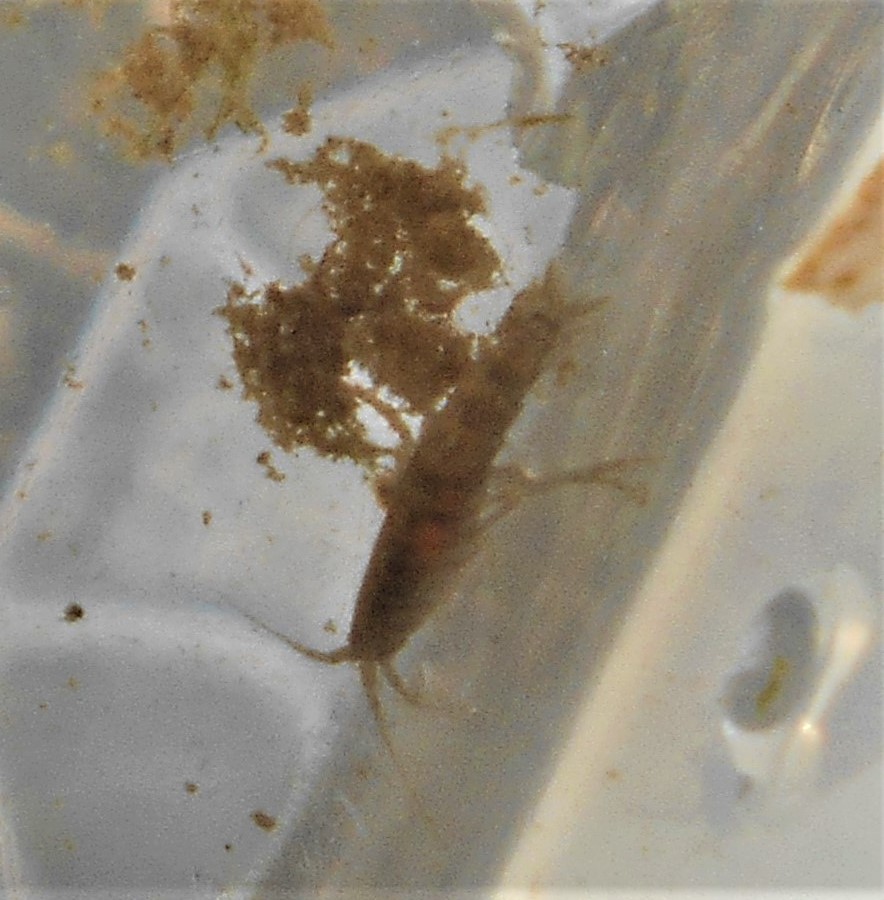
One of the freshwater shrimps was instantly noticeable by a bright orange/red spot on its body which was rather concerning as we later learned it was the larva of the Acanthocephalan parasitic worm Pomphorhynchus spp. The larval stage, known as the cystocanth, causes a characteristic orange spot to develop within the body of the intermediate shrimp host, increasing the shrimp’s visibility to fish which prey on them. After the shrimp is ingested the larva burrows into the gut of the new host and develops into the mature worm.
Barbel and Chub (present in this stretch of the river) are both susceptible to these parasitic worms. According to the National Fishing Laboratory, emaciation and mortality have been recorded in infected fish, however, where infections of the parasite remain relatively stable, e.g. in the river Avon, fish growth and survival does not seem to be adversely affected.
There are no means to eradicate P. laevis after it has become established. The intermediate host, Gammarus (freshwater shrimp) is an important food source of most freshwater fish and cannot be controlled without damaging the environment, so the life cycle of the parasite cannot be interrupted.
25th March 2022 / Temp: 17-18.5 C / Water Level: High

A lovely afternoon, hazy sun, but surprisingly warm as it was still the end of March and it appeared that the birds were reacting to the warmth as we saw a Little Egret and a Heron on the opposite bank almost immediately after we arrived (the first Heron we have seen for months). A pair of Mallard skittered across the river as we walked along, three Mandarin swam upstream away from us, followed by two Canada Geese.
When we climbed down to the beach to check for Otter spraint, we found one fresh and one recent spraint on its favourite large stone and then, when we checked the rest of the beach, we found more signs of Otter activity – two more recent spraint in the centre of the beach and another two at the far end. When we later chatted to the one of the owners, she told us that early one morning as she was walking alongside the shallow stream she saw what she supposed by its size to be a dog Otter reclining at ease on its back in the water, very relaxed and very much at home!
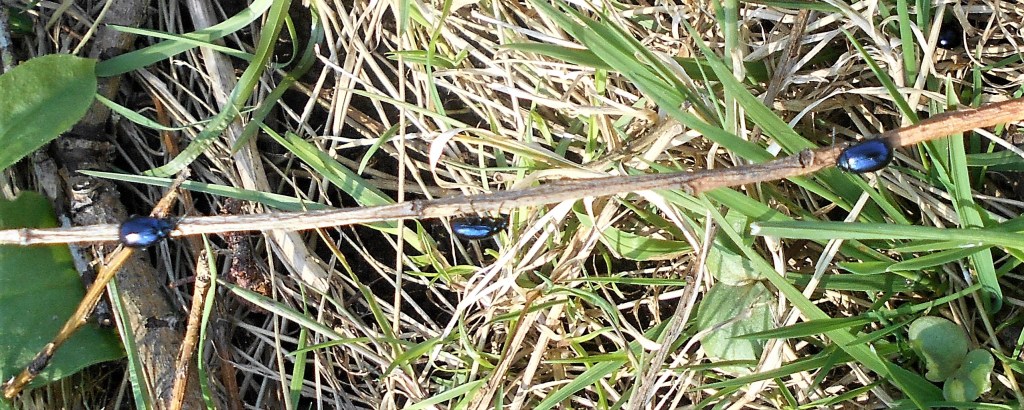
Given the warm sun we expected to see a number of insects, but apart from an ubiquitous 7-spot ladybird, the only other signs of insect life were these three alderleaf beatles marching across a dead stalk on their way to who knows where, looking very glossy and new minted.
A number of male Robins were singing loudly from the trees and bushes as we walked along the river bank to the final survey site where we could see a Mute Swan preening itself on the beach below, but once it saw us it moved off into the water, but stayed close by which was explained by the owner telling us later that it was nesting nearby. Another Heron flew over, we heard a Magpie chattering and a male Chaffinch singing, joined by a Wren announcing its presence with astonishing volume for such tiny bird, a Blue Tit searching through the branches of a tree and a beautiful Kingfisher, a sudden dart of vivid orange, blue-green and electric blue, flashed by with a sharp call.
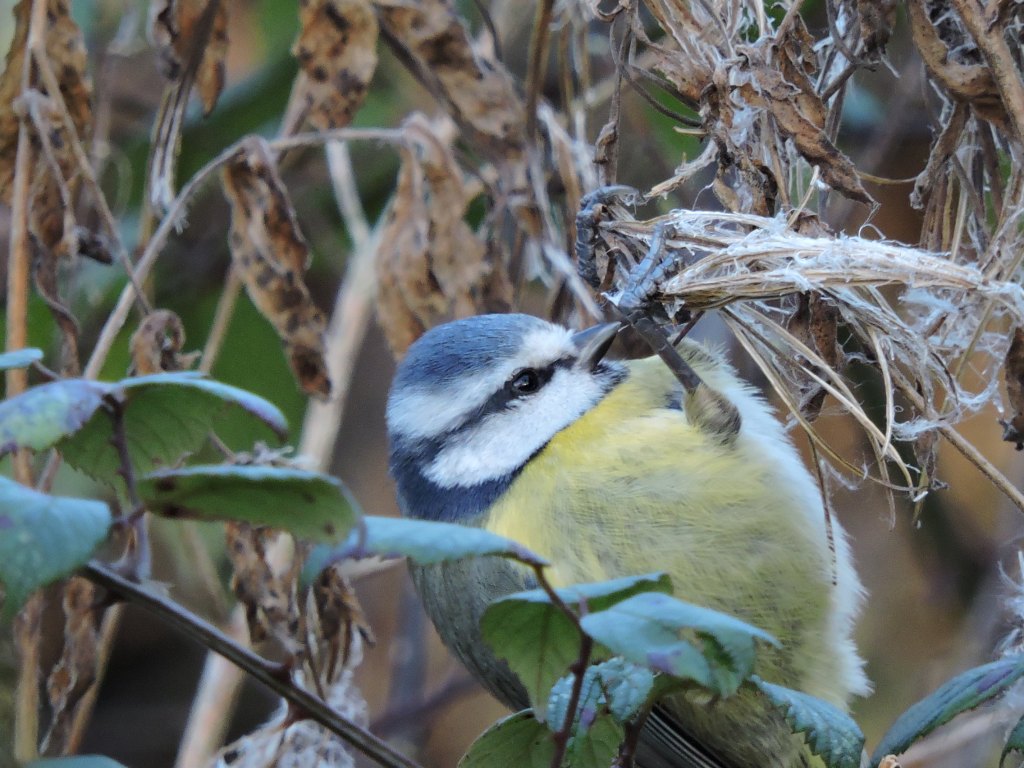
Though resting only briefly from our climbing up and down banks and precarious loose stone slopes, we were still enough to spot a Tree Creeper living up to its name on a tree trunk on the opposite side of the river. They are always such a delight to watch, heightened on this occasion as we listened to the yaffle of a Green Woodpecker from a nearby tree.
On our way back we met the owners and had a long chat about the wildflife on their property, seeing the Otter for the first time and also mentioning that she was feeding both the ducks and the breeding Swans as well as the pair of resident Moorhens which had successful raised a brood of eight young last year. Whilst we chatted, the two Canada Geese flew over honking and calling and she mentioned that they had only arrive for the first time that day. It was heartening to see so many birds in a relatively small area – more than we had seen at any of our walks up on the downs, through the beech woods and along other stretches of the river – a veritable wild life haven. Maintain an area for wildlife and they will come!
23rd March 2022 / Temmp 16 C / Water level: High

A wonderfully sunny spring morning and the tone was set as we arrived at our first survey site to be greeted by a bright yellow Grey Wagtail seranading us with great gusto from a fence post and two Buzzards wheeling and circling overhead!
Fat bumble bees, hoverflies, two Small Tortoiseshell and a Brimstone butterfly buzzed and fluttered around as we walked and we even saw our first Beefly of the year of which sadly, despite many tries, I wasn’t able to get a good photograph.
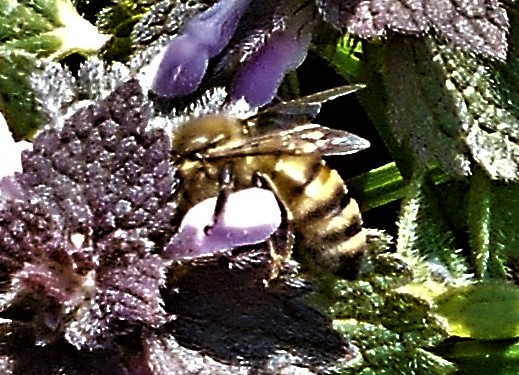
Padmarks across the muddy beach at the first survey site, one fresh and one recent Otter spraint at the next but none at what is usually our most productive beach, which was a surprise. However looking again at the mere narrow passage of stones where there is usually a wide stoney beach supplied the answer – the river was too high.

Still, we still managed to navigate the beach and spent an enjoyable time “flipping” stones in the shallows and were delighted to find a couple of River Limpets which are so small not only are they difficult to see but even more difficult to photograph. I was unable to capture it’s backwardly directed apex – a shame as it is a clear identification if one is needed. Ancylus fluviatilis is an air-breathing limpet found in unpolluted running water clamped to the sides of stones.

Searching further under the stones we enter a secret, hidden world of the tiny Stone-clingers, minute creatures, no bigger than a thumb nail, beautifully marked and patterned with huge eyes and three long tails which confirms they are Mayfly nymphs.
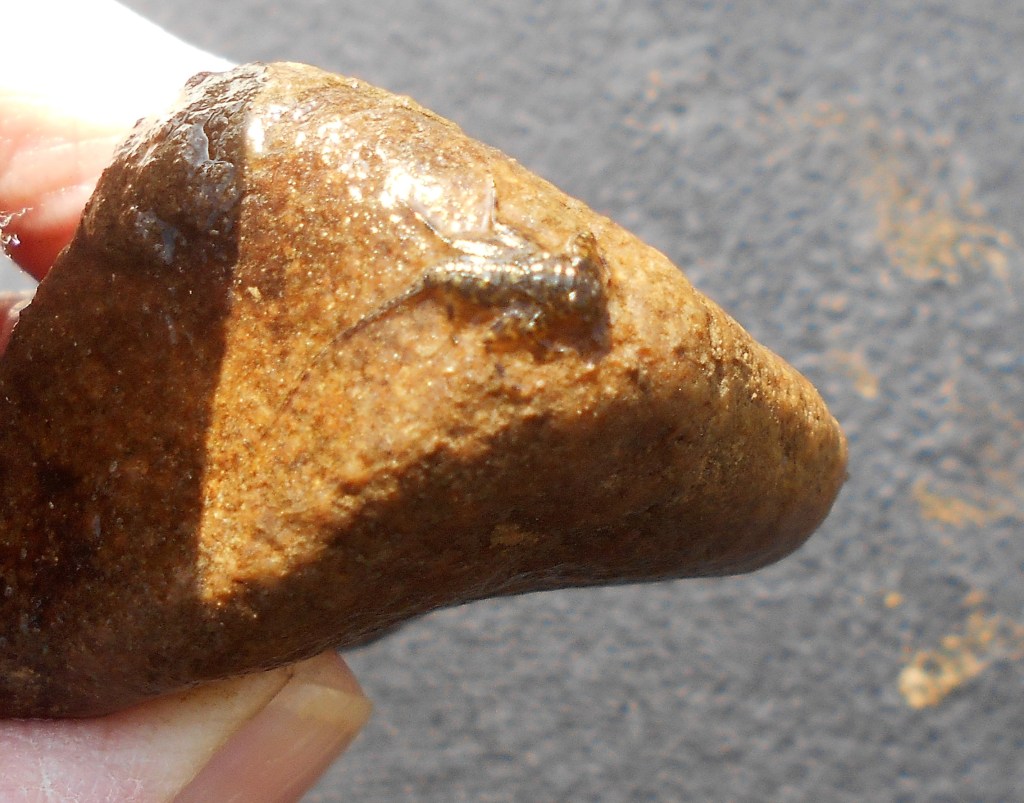
Few pleasures in life can equal crouching beside a fast flowing river on a warm spring day with the sounds of the water splashing and tumbling over stones and a Robin singing his heart out while lifting stone after stone to discover every other stone with a tiny creature clinging to its surface. A veritable heaven.
Apart from the usual large flock of a hundred plus Rooks and Jackdaws rising and falling from the fields and over the stand of trees on the hillside, we saw and heard Greenfinch, Great Tit, Long-tailed Tits and Blue Tits, Wrens, Blackbird, Herring Gulls, Crows, but only 3 Mallard, 1 Little Egret, and one Swan, the only water birds to be seen. There were no signs of the other two Swans who usually gather together or of the 20-30 Mandarin Ducks we often see at this site.

No sign of Hares or Kingfisher either but we did see a small field mouse scampering for cover, the first flowering cow parsley of the season, joining red and white deadnettle, scarlet pimpernel, lesser celandine and perriwinkle, feeding the newly emerging insects and also a line of Roedeer slots across the small muddy beach down to the water’s edge which conjured up a magical image of the sun rising over the river and a small deer dropping its head to drink.
19th March 2022 / Temp: 16C / Water Level: High but falling

A glorious afternoon, full sun and despite the brisk chill wind there was a definite feeling of spring in the air – a perfect day to spend walking through the river meadows carrying our buckets and trays, nets and pippets ready for our first Kick Survey of the year – what fun!
We were delighted to find fresh spraint at our first site, and at our second site and even more to find two fresh and one recent at the next. Nothing to see on the last two sites but we felt pretty upbeat to find so many, two of them with crayfish claws alongside.
17th March 2022 / Temp : 12-13.5 C / Water Level: High
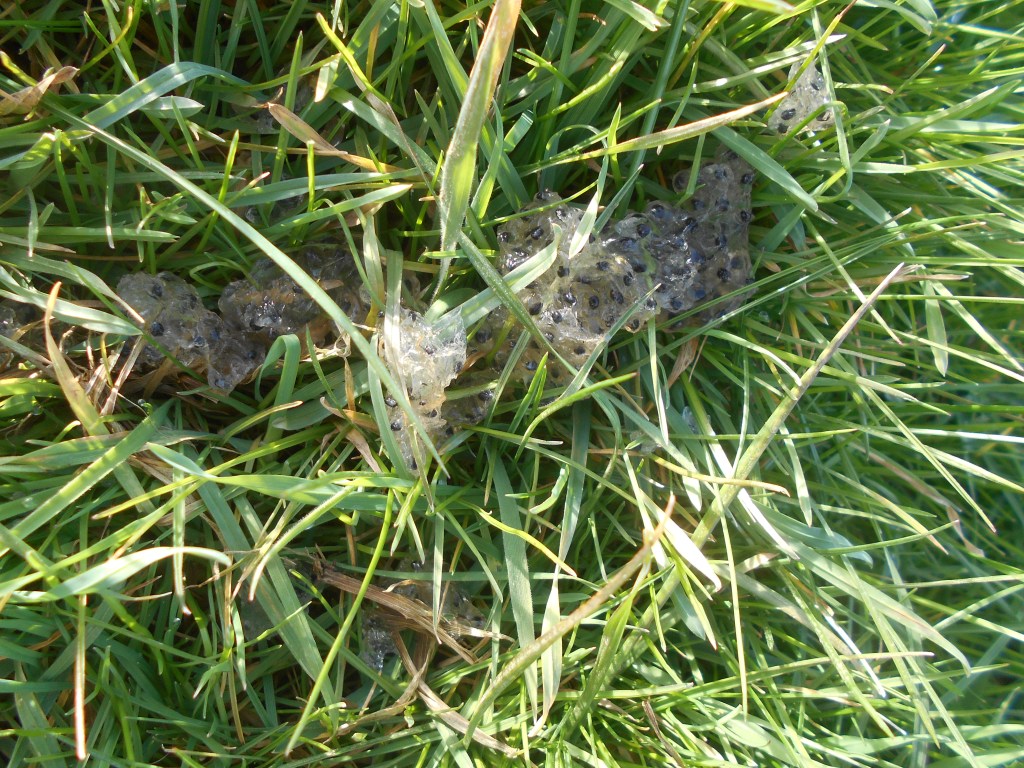
We were surprised to find clumps of frogspawn on the bank above the carrier stream when we were checking Otter spraint, one fresh, one old on either side. Otters do consume amphibian eggs and small juvenile and subadult frogs, so this is likely to be evidence of Otter activity, although not a phenomenum we have noticed before.
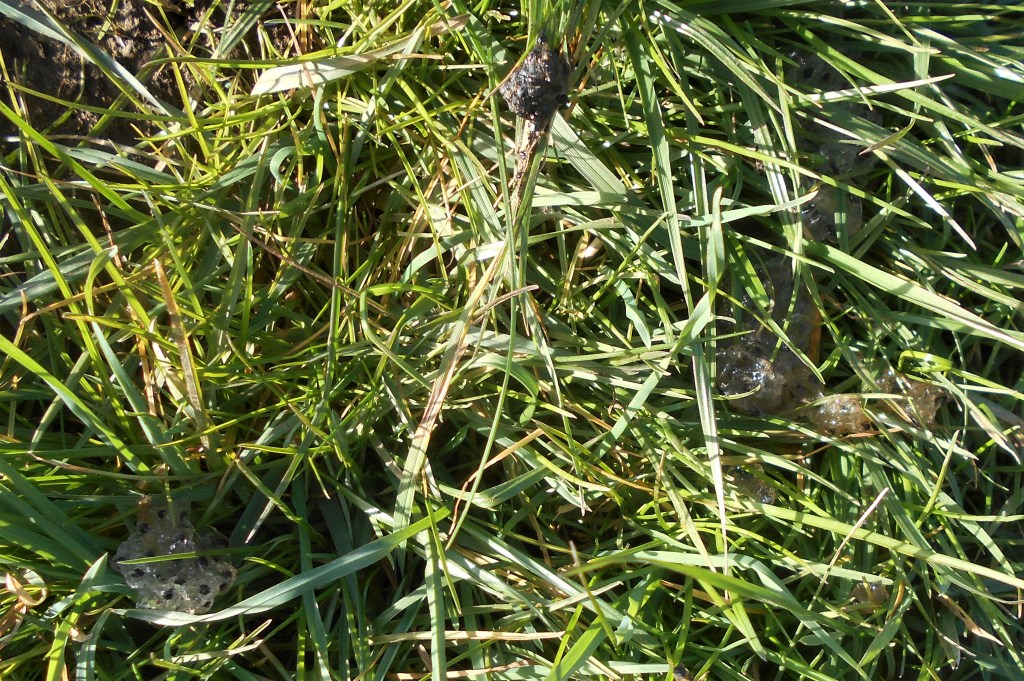
When we examined the spraint more closely, it appeared to contain not only black frogs eggs but also some of the jelly which encases it. An interesting find, confirming an article we had read on Tadpoles in the diet of Otters in the Journal of Vertebrate Biology. The scientests found that Tadpoles made up a large part of the Otter’s diet in June more than at any other time of the year, which although the Tadpoles must be a reasonable size by then, one would have imagined there were sufficient crayfish and fish to eat.
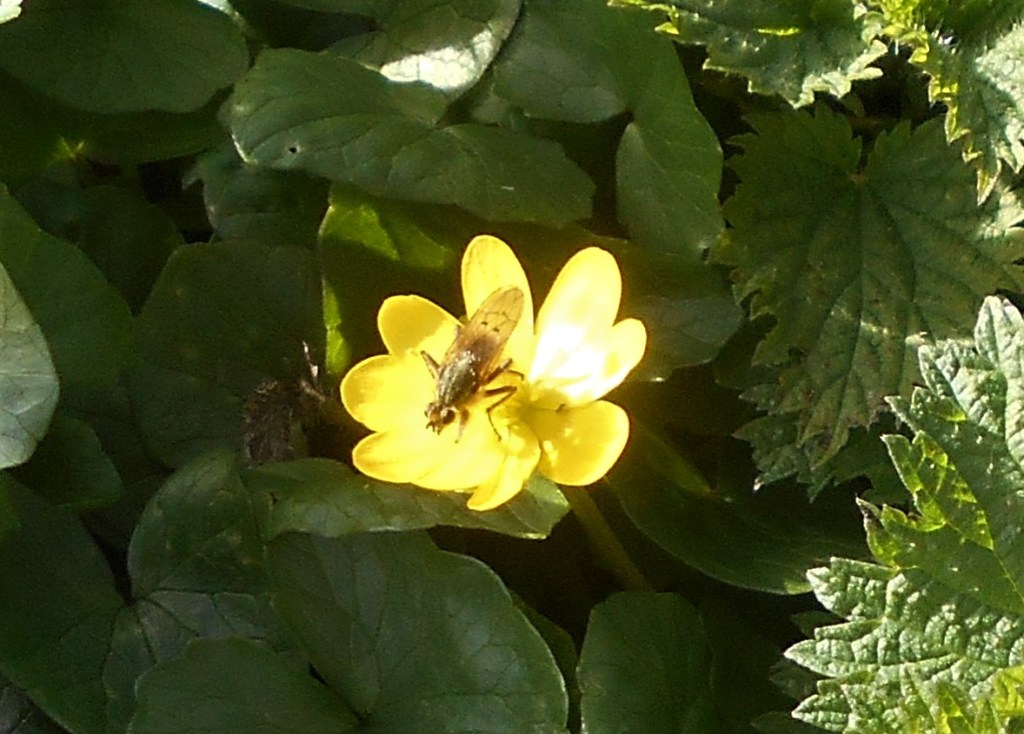
Great to see the first dungflies appearing over the past week gearing up nicely for the nesting season. It won’t be many weeks before every step across the river meadow will send up a cloud of dungflies – a sure sign of spring. We also saw a Tortoiseshell butterly (the first of the year) which flew away before I could snatch a photograph.
We were pleased as we walked the site to spot a male and two female Goosanders and 3 Mallard on the river, then obligingly flying over, joined soon afterwards two Cormorants and three more Mallard. We later saw another 3 Mallard, a Little Egret dawdling in the middle of an adjoining field, and a couple of Wrens flitting between the trees on the river bank.
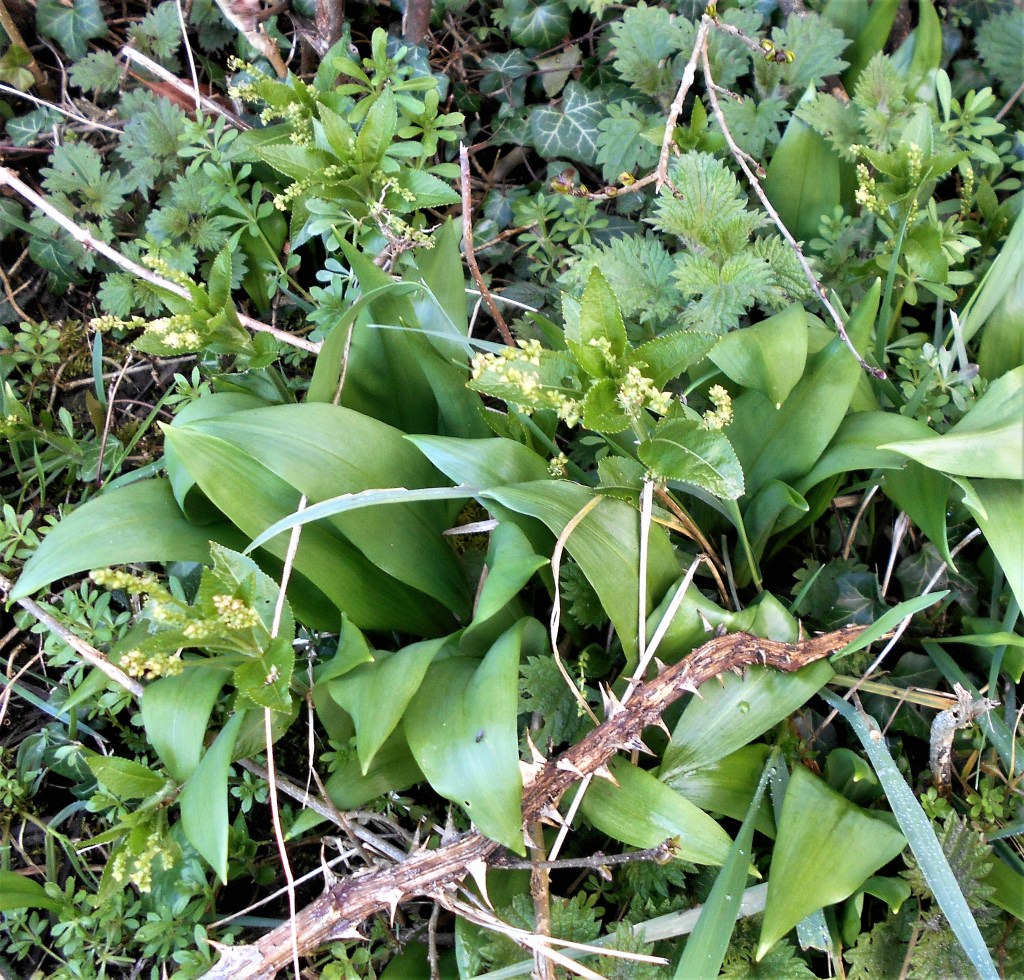
There were goodly clumps of Dog’s Mercury in flower in the shelter of the hedge and it certainly felt springlike when we heard a Yellowhammer, several Robins, Great Tits, Blackbirds and the constant calling of Jackdaws from the stand of trees at the top of the rise.

Intermittent blue sky, periods of sunshine and the sound and signs of spring together with promise of full sunny days and 18 C temperatures in the coming week combine to lift our spirits and convince us as nothing else could that winter is definitely over.
28th February 2022 / Temp: 10 C / Water Level: High

A quick dash to the river before the rain sets in for the rest of the week. We expected to get soaked and see nothing – it shows how wrong we can be! First it was dry, not surprising give the still wind, and secondly we had one of our most productive visits to this stretch of river. We spotted fresh fresh and recent spraint, and under the hedgerow amongst the scattered broken twigs and small branches of the recent storms, these two skulls, within a few yards of each other.

They have been well cleaned so must have been there for some time yet we’ve never spotted them before. We were so pleased to find them because although we have a small collection of animal skulls, the only bird skull up until now is a pheasant, so it’s good to add a couple more, particularly the Mallard.

A pair of Canada Geese were quietly enjoying their snug little spot on the river bank and made the most almight row as we approached, took to the water, and hightailed up river in very high dudgeon! The bird count which began at zero and looked as totally unpromising as the overcast sky and dull meadows with their brown, leafless trees. But we also disturbed three Mallard who flew over, we could hear mostly Rooks and a few Jackdaws in the adjoining field followed by Wren, Blackbird, at least five Robins, a few desultory Gulls and totally unexpectedly – a Red Kite!
27th February 2022 / Temp: 11C / Water Level: High
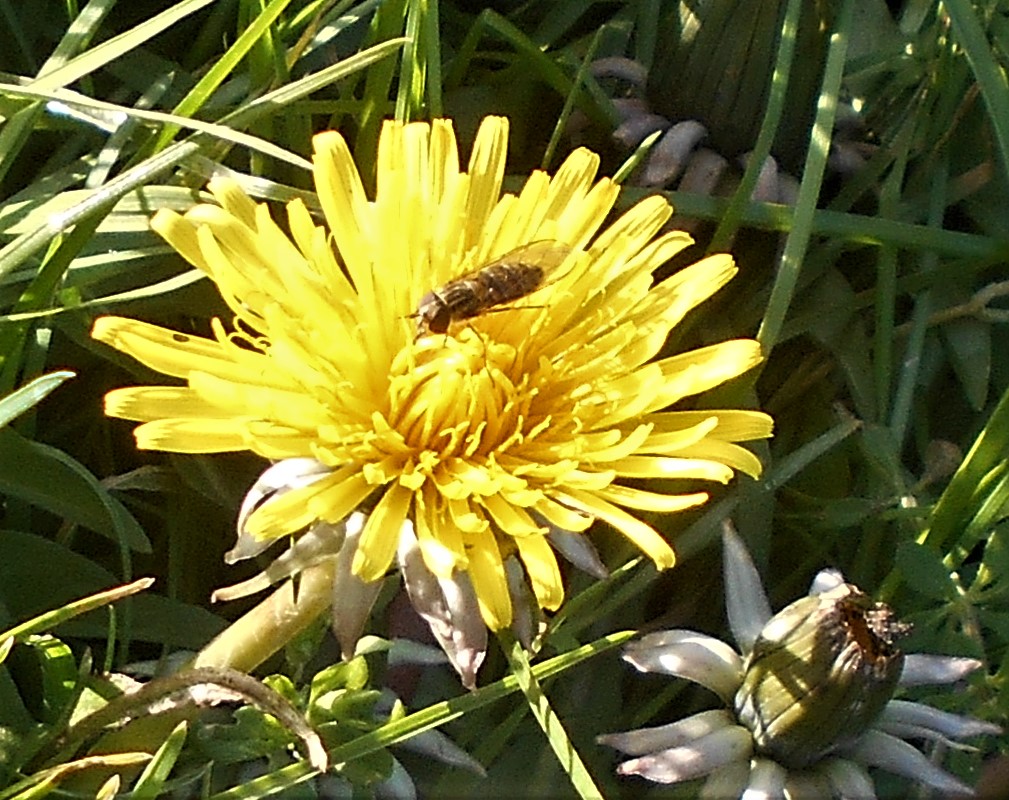
The first hoverfly of the year! It lifted our hearts to see it there, settling on a newly opened dandelion in the last week of what has been a wild and stormy February. It was probably encouraged by the brilliant sunshine – despite the brisk and blustery wind, sheltered spots felt positively springlike as the sun was so warm.
We also spotted two Magpies when we arrived – two for joy and so it seemed when we found two recent Otter spraint, not where we usually see them but on the grass which may have been due to the high water levels and the fast and furious current.
Disappointing bird life – a couple of Crows – ditto Blackbirds but several groups of fishermen taking advantage of the sunshine. No signs of Otter at the next two sites and little other signs of life so we sat on the bank and imitated the fishermen – sitting still and quiet and were almost immediately rewarded by a pair of Canada Geese swimming up river towards us. We heard a Raven flying over, Rooks from an adjoining field, spotted 4 Jackdaws jak jaking a greeting as they passed and a tiny Wren glowing almost red in the bright sunshine and a party of tits slitting about between the branches of the tree opposite.
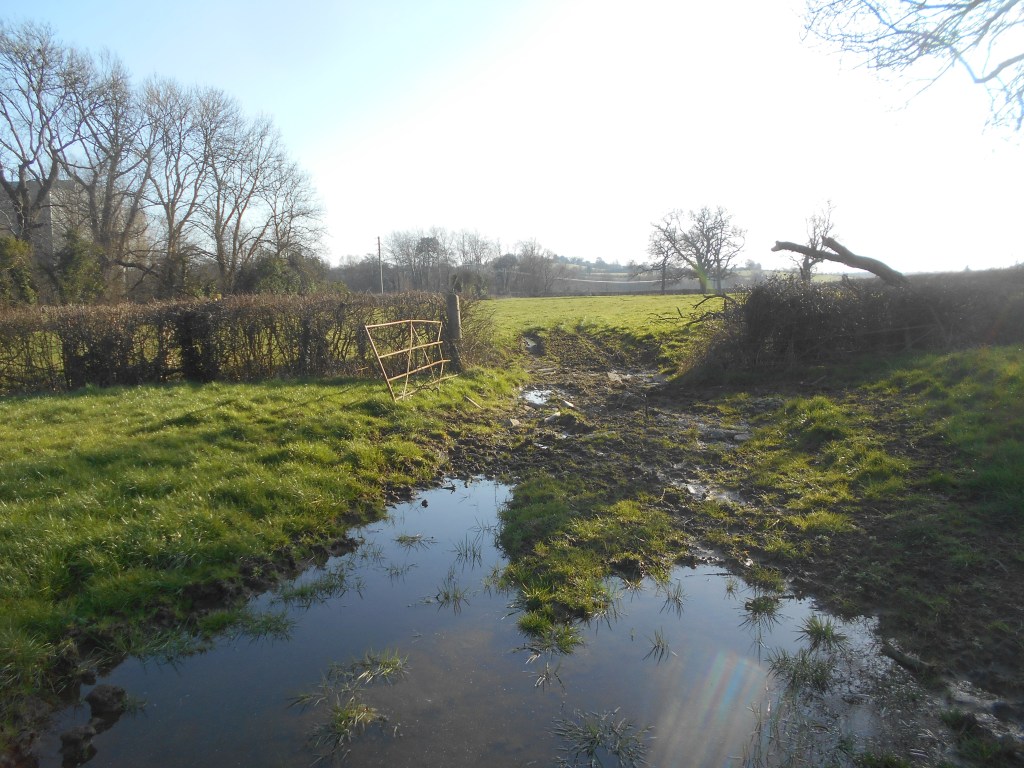
Walking back across the river meadows the stiff wind brought colour to our cheeks and good fresh air to our lungs and we meandered along, checking the fallen branches and twigs for lichen, moss and any other treasures when we found this tiny tree snail attached to one of the large twigs.

Difficult to identify but we plumped for Balea sarsii but have posted it onto the iSpot website and will change and update if this suggestion is proved wrong.
A large old Ash tree in the line of hedgerow was one of the victims of the latest storm. Sad to see such a beautiful tree down but we picked a handful of stems with their sooty black buds to take home in the hope that eventually they will break into leaf. Spotted some Red deadnettle in flower in the shelter of the hedge alongside several lesser celandine plants in flower. Spring is edging ever closer!
17th February 2022 / Temp: 10.5-7.5 C / Water Level: High
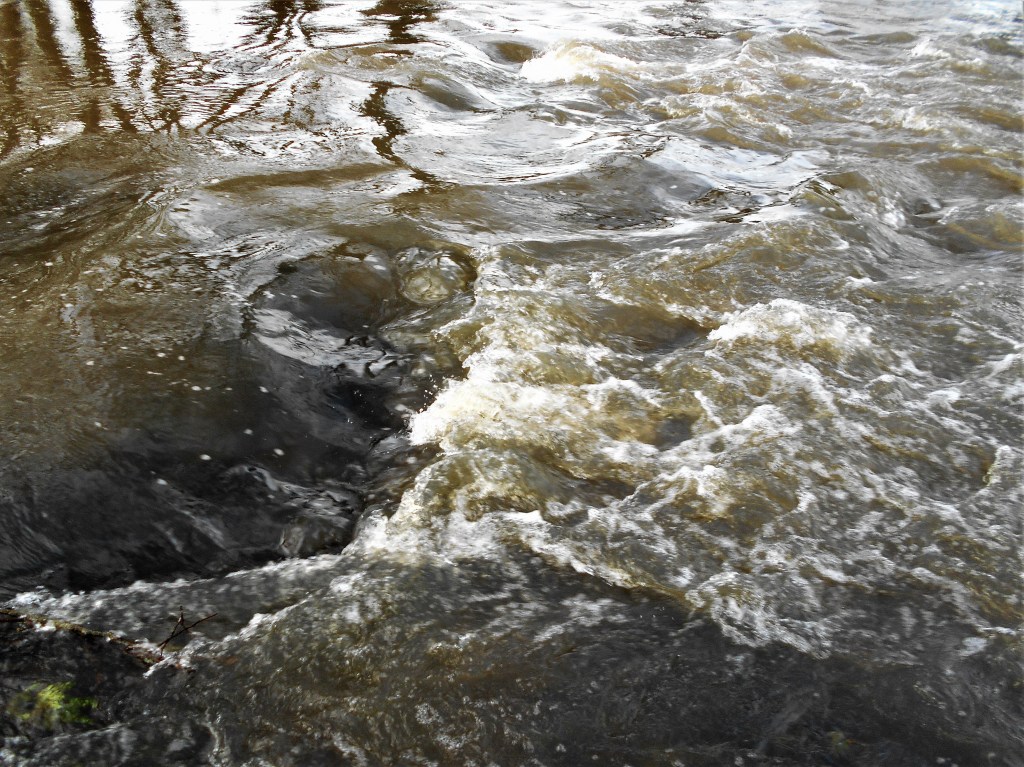
Overcast, strong wind, brief periods of brilliantly clean sunshine and a sudden heavy rain shower – apart from snow it was one of those days where all the seasons passed in a couple of hours, but one glance at the river and the recent weather is clear – high rainfall and swollen, turbulent rivers follows as night follows day! The resulting swirls, eddies and miniature whirlpools in the tumbling water make for a dramatic picture.
The fresh and recent spraint we found wan’t on boulders, large stones or on a scraped hillock as we usually find, but on a small patch of grass, up from the river and, as was the case in the last spraint a couple of weeks ago, red from its last meal of signal crayfish.

Another sign of the weather beginning to turn was a small cloud of winter gnats which followed us along the river bank. Annoying though they are, it is a reminder that there are warmer days coming sometime, winter doesn’t last all year despite every sign showing the contrary.
Some water bird activity, if comparitively few in numbers, at least we caught sight of a Cormorant, a Swan, a couple of Mandarin and eight Mallard, although no sign of Heron or Little Egret. A few Robins singing their hearts out, Long-tailed Tits and Blue and Great Tits flitting throught the trees, a small flock of Jackdaws and a few Crows and Gulls flying over. We may have missed some, as the sharp shower descended we headed at speed to the shelter of the car and gave little attention to what was flying overhead!
8th February 2022 / Temp: 11-13 C / Water Level: Med-High
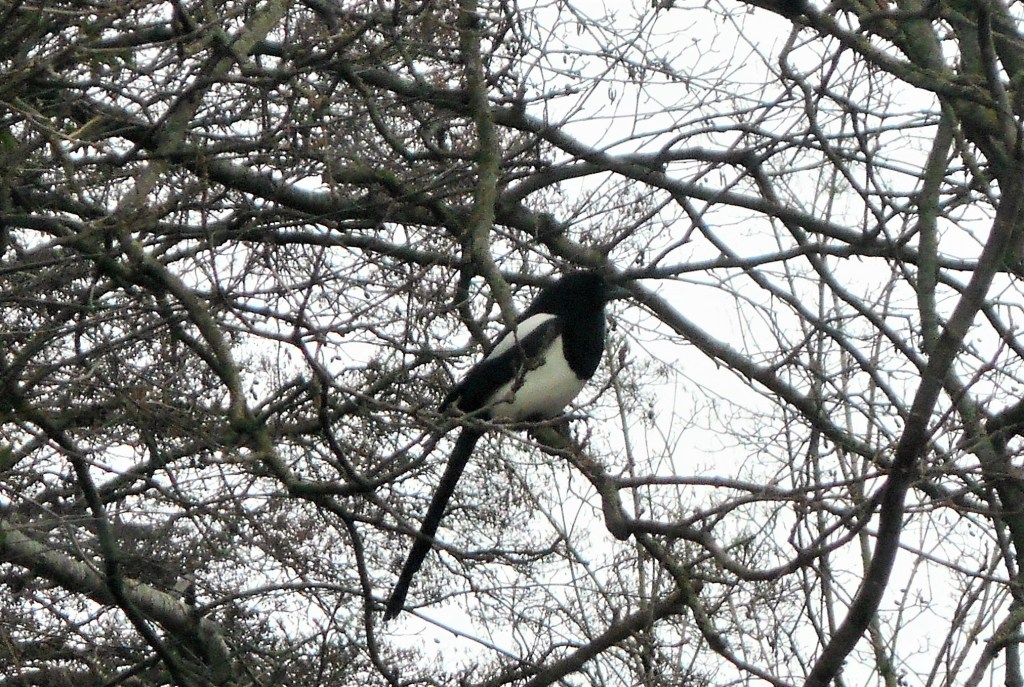
One of a pair of Magpies, busy around the bank and trees, beside the river on a mild but very overcast day where the light was gloomy and wintry. As the weather had been a mixture of mizzle and heavy cloud for days we expected little, merely driven out by noisy builders from a neighbouring house, we thought the calm of the river might be just what we needed. We were proved right. Even on a dreary day in February there is always something to see and we were further rewarded by the unexpected find of two fresh and two recent Otter spraint. The fresh spraint was the first “red” spraint for at least 2 or 3 months which tells us that the crayfish are active again.

Almost every branch and the twigs of most of the trees are coated with lichen and the sunburst lichen earns its name – making a bold splash of colour in amongst the drab brown leafless trees – a delight to the eye and draws us every time to examine its tiny cups and delicate leaves.
Always a frision of excitement when we catch sight of or hear a Buzzard, so much more so when we see first one then two more Buzzard wheeling and mewing high, high above our heads and also hear as we did the croak of a Raven. The appearance of the raptors may have accounted for the few small birds we heard or saw – merely a couple of Robin, ditto Wren and a single Blue Tit. But later briefly sitting quiet and still on the river bank, we spotted a Coot, which has become a rare sighting for us, skittering across the river, scrambling up the bank and disappearing under the trees.
We met a local fisherman who was walking the bank, checking the fish stock. We often see him along the river and he is always a mine of information as he has fished these waters since childhood. He showed us the above photograph which he was sure was Otter kill, although we have always understood that Otters eat the fish head first so it was unlikely. We agreed to differ and he told us when and where to go to see the barbel and chub swarm, and where he sees Otters most frequently. He promised to take a film of the Otters next time he saw them and we promised to look out for the fish swarming.
Update: 10.2.2022 :
Well I was totally and utterly wrong! Having checked with the Somerset Otter Group, Lucy Mead writes: “Yes, a typical otter. Takes the food behind the head where the organs and best store of nutrients are.” Below is a link to the S.O.G. website with that and other signs of Otters being present.
I’ve sent my apologies to the fisherman.

We were perturbed to see creamy-brown scum all the way along the river wherever there was slack water. We sent half a dozen photographs and exact locations to the Environment Agency even though they have recently announced that they do not have sufficient staff to be able to send one of their officers monitor the possible pollution incident they replied:
“The information you provided about pollution in the River Frome has been logged onto our system. We combine this incident information with other data. This helps us to assess how serious the incident could be.”
They also add the following:
This year the Environment Agency received less funding for responding to environmental incidents. This means we:
– are unable to respond to every environmental incident reported to US
– need to prioritise OUR activities on incidents that cause serious and significant risk
– are reducing OUR response to less severe incidents
– may in some cases, after assessing the risk, decide that no further action will be taken
– will use the information provided to build a picture of environmental threats which may allow US to secure additional funding
– will continue to regulate activities with an environmental permit so WE can prevent damage to the environment
– will not provide feedback to individual reports of environmental incidents
26th January 2022 / Temp: 5C / Water Level: Med.
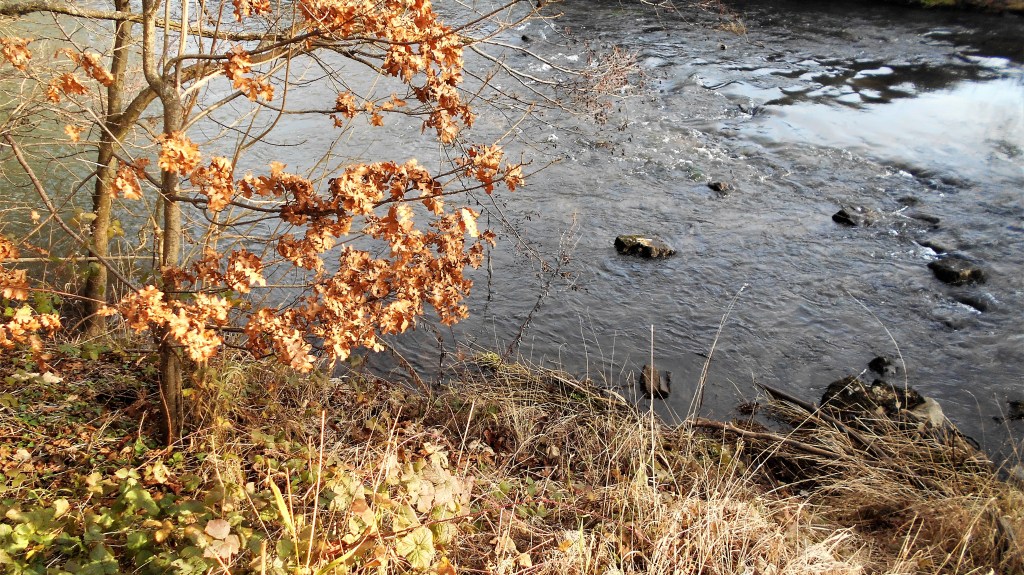
Sunny, cloudy morning, stiff chill wind and the air crisp and clear. As we arrived at the stile leading to the river, a Grey Heron rose languidly from the water and flew majestically across the water meadows, and a small flock of some six Mallard squawked off with a great flapping of wings – a good sight to see water birds back along this stretch of the river. Even better, as we walked down we disturbed a snowy white Little Egret who flew a short distance along the field and then moved twice more as we came ever closer to his previous spot. We looked across the small carrier stream to the bend in the river where a dead bare tree stood sillouetted against the sky. It is a favourite perch for the local Cormorants and there he was, a Cormorant, looking fine, standing tall and proud at the topmost branch – the pterodactyl of the riverside! A goodly haul for a chilly morning in January.
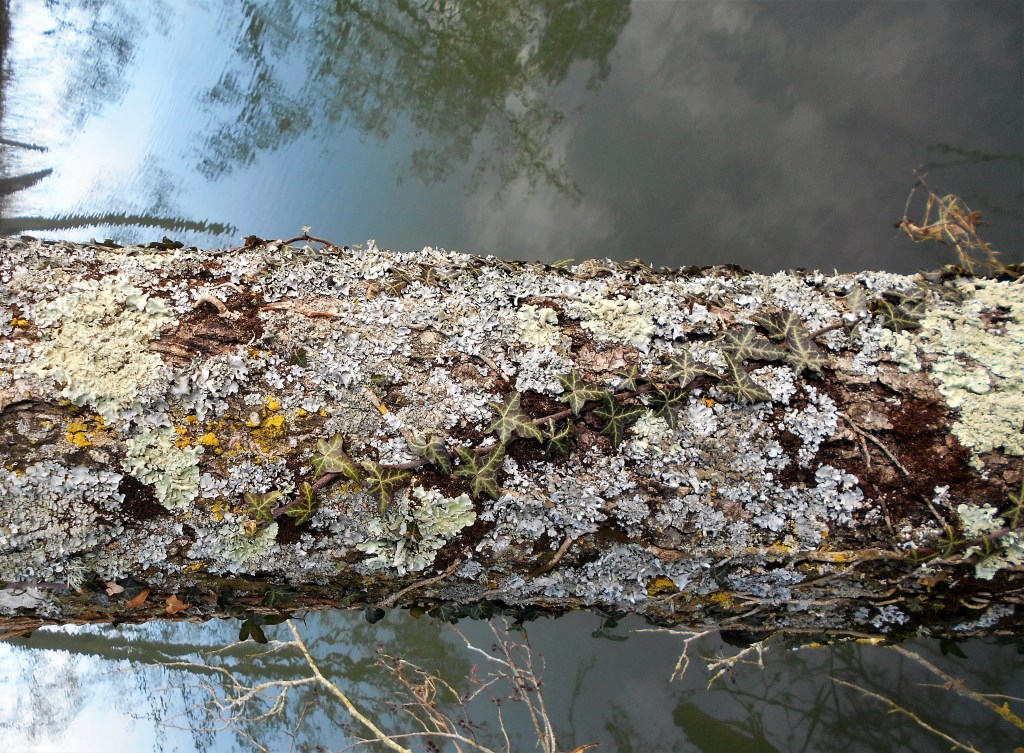
Lichens take the place of flowers in the depth of winter, when the days are short, often dark and invariably finger numbingly cold, providing, along with the purple alder catkins, what little colour there is to see. Even common shield lichen, and the golden splash of Xanthoria parietina though very widespread and, well, common, is a welcome sight.
No signs of Otter at any of the three sites but we stopped and chatted to a fisherman who was just setting up and told us how he had seen an Otter in the first week of December – great news. He felt the river was too slow and sluggish to give him much sport today but he was looking forward to a quiet time by the river. Fishing for him was the perfect antidote to a stressful job, allowing him to sit in the sun and unwind. We seconded that feeling – one we shared when out Otter-spotting – rivers are the most calm making environments we know.
20th January 2022 / Temp: 4 C / Water Level: Med-High
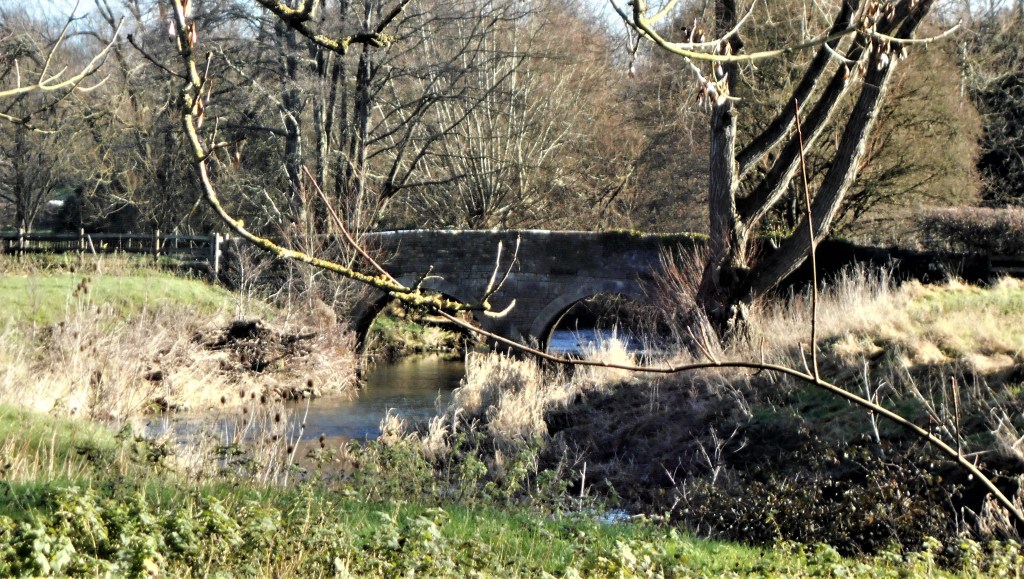
Choosing a different track to walk to the river, higher up, across a south facing slope, protected from the cold north-easterly wind we were able to bask in the warm sunshine and glory in yet another beautifully crisp clear winter morning – bliss. This has been the sunniest January either of us can remember and we count ourselves so fortunate to be able to enjoy it.
The warm sun had melted the hoar frost so the ground was wet and soggy and by the time we reached the river our boots were caked in mud becoming heavier and heavier as we walked. The Brown Hare we caught sight of running away up the maize field seemed to have no such problem! He kept running until he reached the open gate, when he stopped and then arched his back, almost like a cat, before lolloping off and was soon lost to sight.
Reaching the beach and splashing around in the stony shallows helped clear the mud and gave an opportunity to pick up stones and search for signs of life, which included this fearsome beast, for all the world like a minute dragon, glaring and threatening for being disturbed.
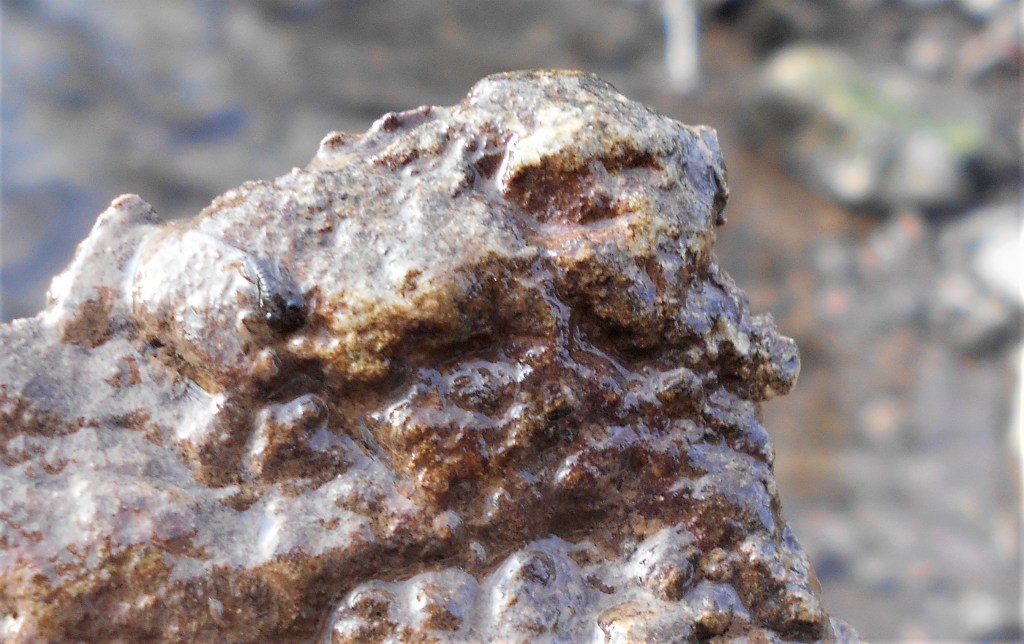
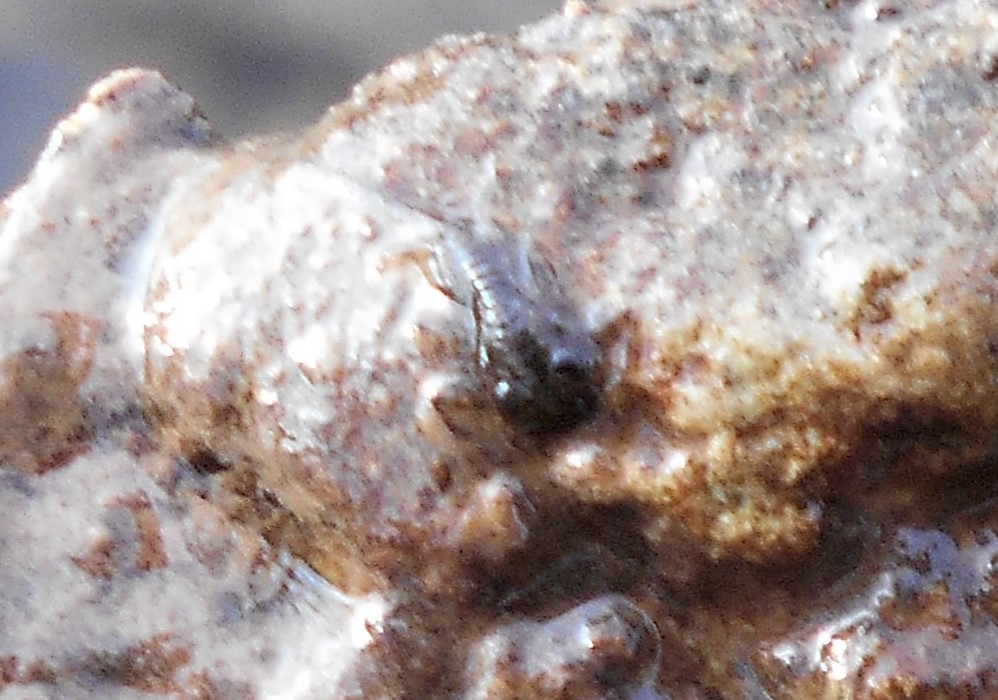
It looked like a flattened Mayfly nymph – with its large eyes – possibly Ecdyonuridae, difficult to be sure, but delightful to see clinging to a stone. Presence of flathead nymphs is often an indicator of good water quality, because they are relatively intolerant to pollution. [This has now been identified by Craig Macadam of The Riverfly Partnership via iRecord as Flat-bodied Up-wings Heptageniidae but he was unable to identify the species as the image was not clear enough].
If you take the time to to flip over enough stones and rocks in moderate moving water you’re bound to find lots of Flathead Mayfly (Heptageniidae) nymphs of various sizes. Trout feed on these larvae all the year round, tipping up the stones to find them underneath where the nymphs hide if they are disturbed.
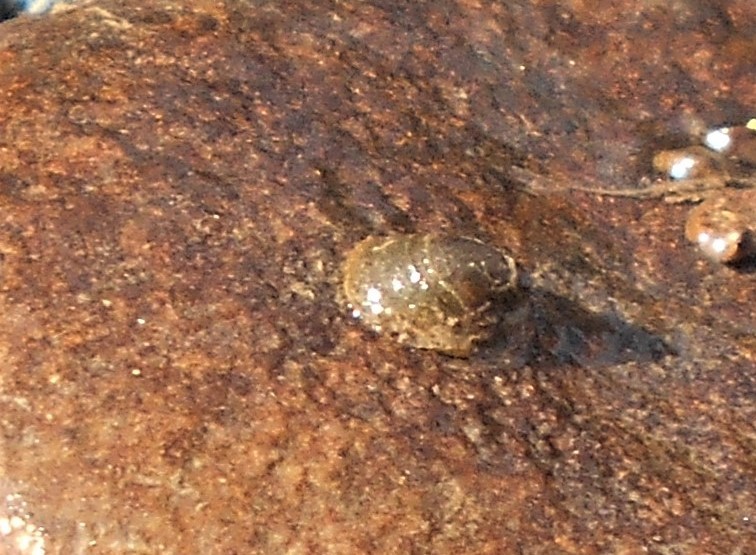
Another unexpected find was a tiny freshwater river limpet, on its own which was a surprise as we usually see them (if at all) clustered together along a stone. It’s always difficult to get a good clear photograph to show its conical, backwardly directed apex, which we always think looks like a French Liberty or Phrygian cap, but it is clear enough to show some growth lines.

Messing about among the shallows rooting through the stones in the water made us forget why we were there so we eventually turned our attention to Otters and began a serious search and were delighted to find two fresh Otter spraint at either end of the beach. Interestingly no signs of crayfish in the spraint so they must still be staying in their tunnels, difficult to i.d. the contents but possibly frogs.
Magical to hear the warning peep of a Kingfisher flashing past which with the warm sun beating down on this sheltered beach reminded us that winter won’t last forever.
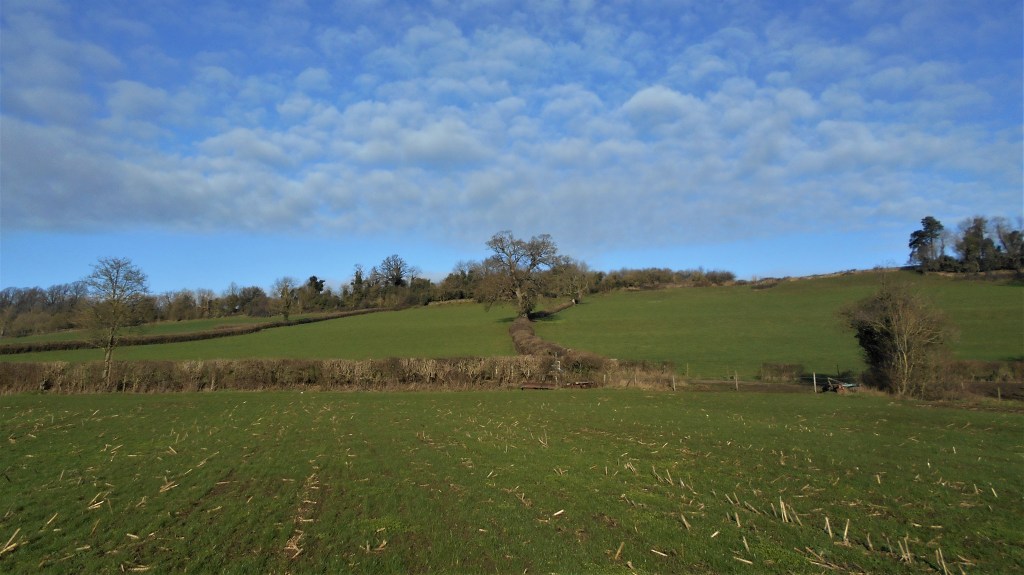
Walking back along the river, scanning the track for signs of Otter and the skies for signs of birdlife we spotted a pair of Cormorants flying up from the river and settling on one of the trees. Only 1 Mallard seen during the whole morning but a mixed flock of male and female Mandarin, only 7 so numbers still down, but a circling Buzzard, Jackdaws and a Raven as well as 2 Swans and 1 last year’s juvenile plus the usual Robin, Tits, Chaffinch, Magpie, Blackbird, Crow and Pheasant.
Along the line of electric fencing which we have to crawl under on our hands and knees we were amused to note the number of tracks, very visible in the long grass, of animals who have chosen the same route – probably badgers given the number of setts we see on the eathen bank at the top of the field, and not the adult and juvenile Roe Deer whose tracks we spotted on the mud of the big beach – they would have had no problem leaping the wire.
17th January 2022 / Temp: 7 C / Water Level: Med-Hi
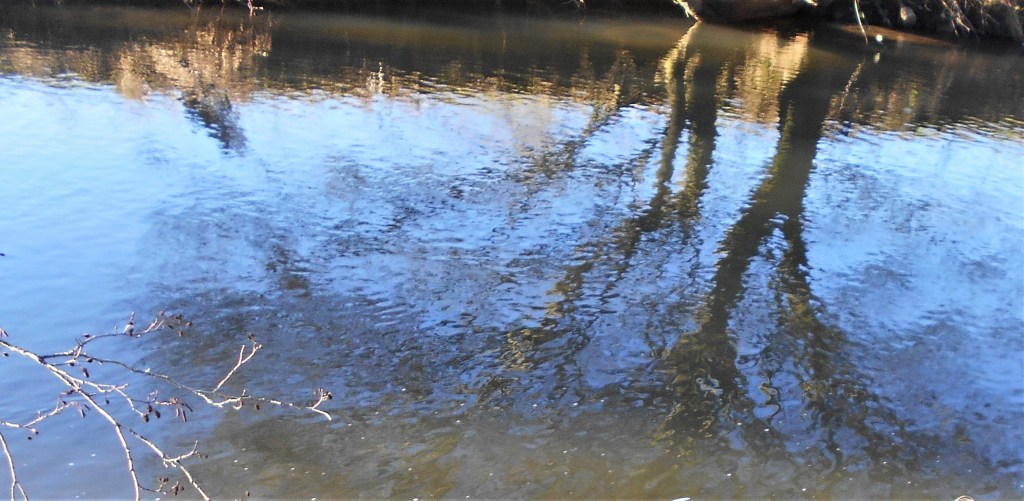
Another glorious winter’s afternoon, warm sunshine again and blue blue skies, such a pleasure to be out and about and wonderful to spend a couple of hours pottering along the river bank.
Our one sighting was a splodge of anal jelly on the ford beach but sadly no signs of spraint and as far as we know there has been no record of Otter in the town for some weeks, so although this and the pad marks of three days ago shows that there is an Otter about, it seems pretty shy and doesn’t appear to be lingering.

Our first sighting of polypody ferns along the river – winter is the time for spotting fungus and such plants as there is little to distract the eye at this time of the year.
Not as many birds as we usually see on this particular stretch, but it was lovely to see a Song Thrush and 8 Mallard and also a Coal Tit (a first along the river) and Blue Tits in a party of tits in a favourite tree. We heard Jackdaws and a Robin and saw 6 Herring Gulls flying over, but disappointingly few given this stretch of river is our best area for bird spotting.
14th January 2022 / Temp: 5-4.5 C / Water Level: Med-High

A beautiful, perfect winter’s day, the air cool and fresh, the sun warm on our backs as we walked the route, and bathing the river and trees with golden light – good to be alive!
The meadows were drenched with melted hoar frost, which still lingered frozen on the sheltered margins. Three fishermen along the bank still hopeful of a good catch but when we passed they were out of luck. As were we – although not entirely! We checked the culvert which carries a winterbourne or overflow along a muddy stretch to empty into the river and found 6 pad marks. This is a favourite route for Otters as the pipe is easily large enough for them to use as a run between fields, and although it is not as welcome as lots of spraint, it’s at least a sign that the Otters are out and about.

There’s a lovely old tree on the water’s edge, possibly an alder, covered in moss and lichen where we sometimes find Otter spraint displayed on one of its knobbly roots. No luck on the spraint but we did spend time examining all the lichens which included my favourite Fanfare of Trumpets (brilliant name!) and just about spotted three tiny, tiny delicate and fragile fungus, like miniature parachutes, almost hidden amongst the moss and dwarfed by a clump of lichen (possibly Ramalina canariensis).

Although almost impossible to see, these droplets of melted frost were clinging to an invisible spider’s web – one of the delights of winter.

More spider’s webs with their cluster of water drops, these almost lost among the leaf litter at the foot of an old wall of a building, its stones providing a good home for masses of moss..

Little bird life, merely a few Blackbirds, a Wren, Wood Pigeons and Pheasants, we heard a Mallard and saw three more Mallard and several Crows flying over and heard Jackdaws from the neighbouring fields as we walked back across the meadows. The sun was still warm although sinking fast so we rather reluctantly headed home before the temperature began to drop too low but not before spotting one last reward – a beautiful fungus covered log along the way.
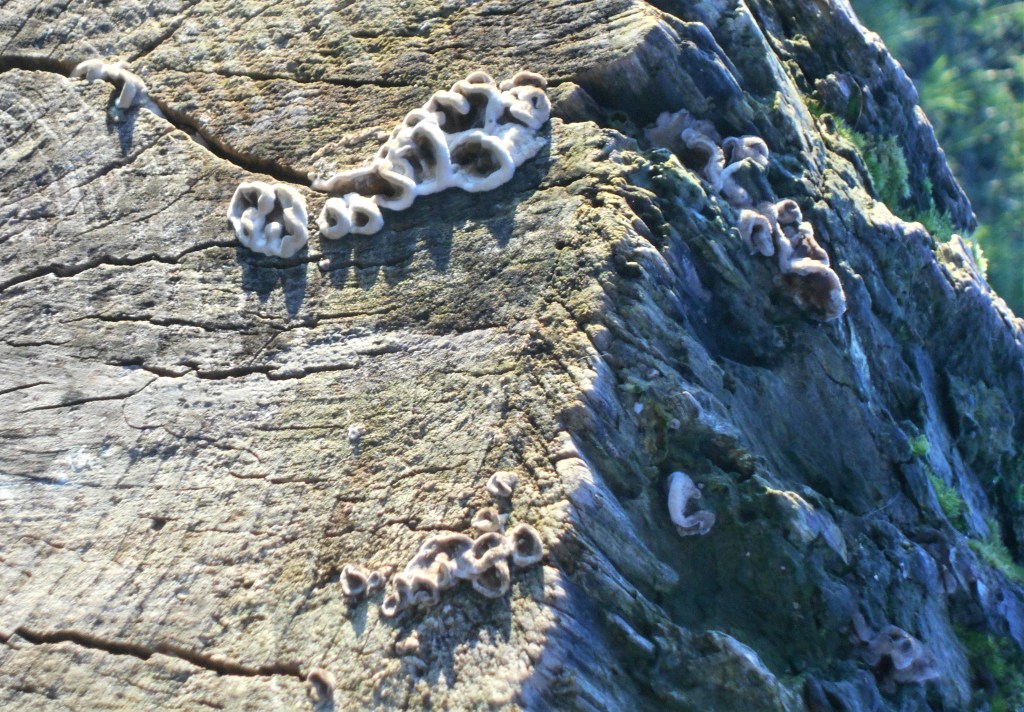
31st December 2021 / Temp: 15 C / Water Level: High

Richard Downes captured this wonderful photograph of an Otter hunting upstream and posted it on the Frome Wildlife Watch website. This raised our spirits considerably after we had spent the same afternoon checking two of our sites without success, we could find no signs of Otter whatsoever.
However, the afternoon was not wasted. A group of fishermen from the Frome & District Angling Club were just getting into their cars as we arrived and joy on joy Paul Cook whipped out his mobile phone and showed us film he took in November of an Otter swimming under water just where he was fishing, and told us of another sighting up river in the next field in October, the Otter too fast to catch on camera!
The day began to look up. Checking along the river bank (zilch!) we saw two fishermen on the opposite bank, one whom, Max Pang (F&DAA), said we had just missed seeing a Kingfisher and he had spotted a Mink streaking along the river bank a couple of hours before!

So good to hear of lots of action along the river – and we did see a Swan by the weir, a celandine in flower, several flowering dandelions as well as lots of winter gnats…. hmm.

We began to tramp back across the meadow as the light was fading fast and sunset less than half an hour away when quite suddently the sky seemed to be full of birds. In the first flock, flying over towards their roosts, were at least 30 Black-headed Gulls, followed by a mixed flock of 50+ Lesser Black-Backed and Herring Gulls, then a small party of 6 Mallard circled above and flew off downriver past the Swan, and finally a flock of about 30 Jackdaws with 3 Rooks among them headed towards the tall trees at the top of the hill, chattering vociferously all the while. Such a lovely sound in the gathering dusk, the golden hour on a winter’s day and surely an omen of good fortune, why not as it was New Year’s Eve!
21st December 2021 / Temp: 5.5 – 4.5 C / Water Level: Med
Winter Solstice
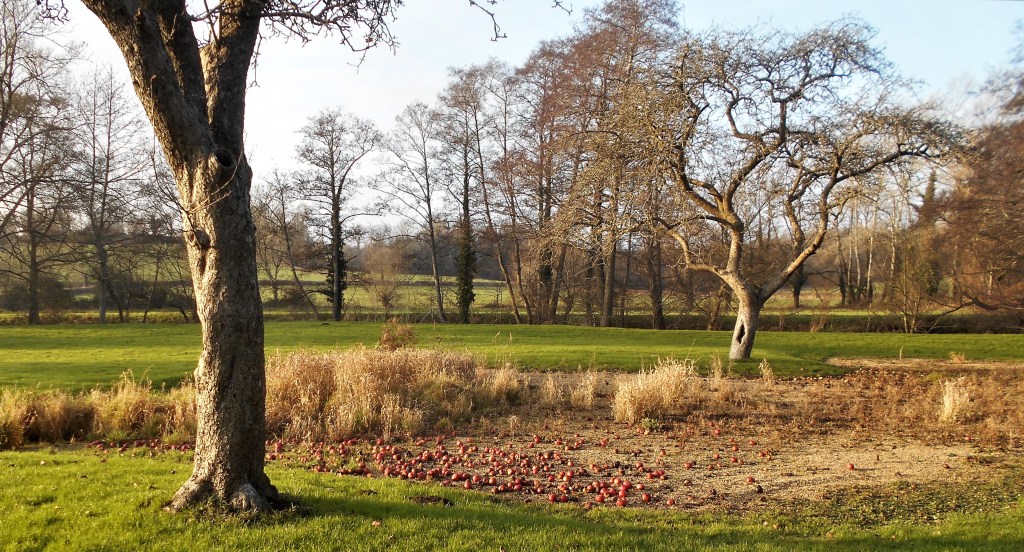
A cold, bright afternoon with a stiff icy wind blowing from the east so we wrapped up warmly and headed along the river in search of Otter. Three Blackbirds were feeding on the berries of the first tree we passed and a handful of Tits were working their way busily along the line, the sun was shining making the red windfall apples glow and gilding the great clumps and balls of mistletoe festooning the tree above.
We set up a pair of Mallard as we reached the river bank, flying off over the old ford with a good deal of squawking and complaining, disturbing a peacefully browsing Moorhen as they did so, making it also scoot off.
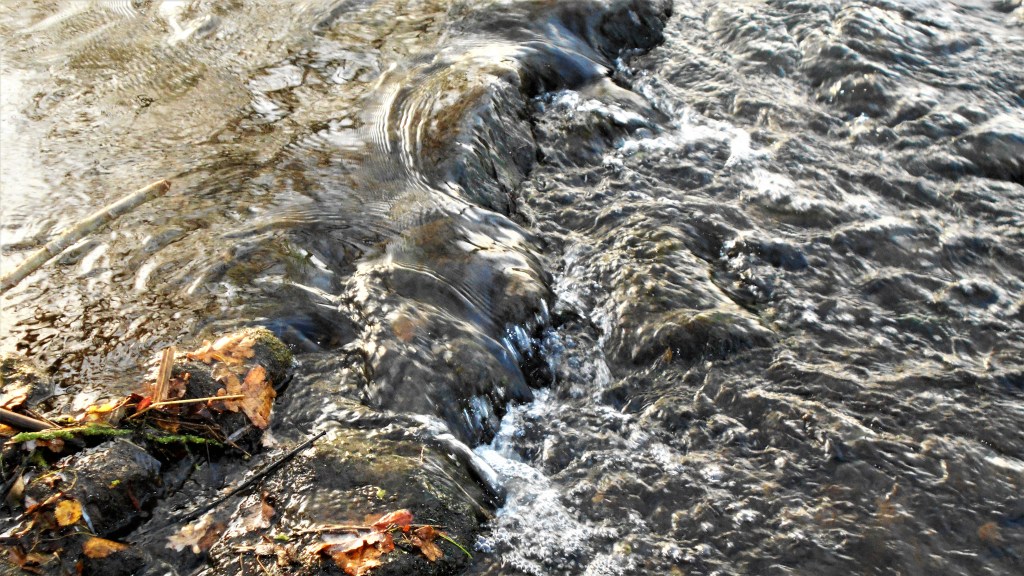
The river looked black and cold as it rushed and tumbled over the stones and swirled in the fast current, a black sloe river, reflecting the starkly sillouetted and leafless alders and willows along the bank.

No signs of Otter at our first two sites but we did spot a Heron and a Little Egret through the trees, sharing the field on the opposite bank within shouting distance of each other, and heard and saw a flock of Jackdaws and Gulls flying overhead.
Although the stand of trees sheltered us from the worst of the wind, it was still too cold to linger, so we hurried on to the next site, a lovely wide stony beach where we usually find at least one spraint but not today. Just as we were about to leave the beach a little disconsolate at our lack of treasure, we spotted a single fresh pad mark in the gritty sand – closer inspection showed the claw marks and two other pad marks, so faint in the drier area of sand as to be almost invisible to a passing glance. This raised our spirits considerably – not spraint or jelly but a sign that an Otter has passed by!

A couple of feathers showed that at least one water bird had tarried or passed by too – possibly Little Egret but more likely to be the feathers of an almost adult cygnet which we have seen recently which although it had lost most of its brown juvenile feathers, still retained a few which might be why one of the feathers had brown markings.

We walked on to check the last two sites where we had seen a pair of Dippers at our last visit and a good deal of spraint on the survey before that but not today – ah well, it is December after all, when the local Otters seem to make themselves scarce from our particular stretch. But we passed a wintering flowering cherry tree, its blossom beautiful and pristine in the lowering sunlight which warmed our backs and turned the grass and trees golden as we walked back across the fields, the air heavy with the smell of wood smoke – a good log fire warming some lucky householder’s hearth!
15th December 2021 / Temp: 12.5 C / Water Level: High

Our favourite willow tree has been in the wars again and has lost another of its main branches, split from the trunk and covering half of the beach. We couldn’t be sure whether it was caused by the recent Storm Barra or whether old age and disease led to its downfall but it was so sad to see. We always used to check the branches for their glorious moss and lichen which is often the only signs of life in winter.

Sadly no signs of Otter at any of the three sites and no sightings yet in the town, but we are still hopeful. The most striking aspect of the morning’s walk was the huge flocks of Gulls clustered together in the fields of which we counted 85 Black-headed Gulls and 16 Lesser Black-backed Gulls with about 16 Jackdaws and 4 Pheasants standing almost like sentinels well separated from each other and the Gulls. Suddenly, as if on a signal, they all rose in a huge cloud and flew off, soon to be lost to sight, however, during the whole of our walk across field after field small flocks of Gulls flew over our heads in a restless ever searching flight.

25th November 2021 / Temp: 6 C / Water Level: Med

Brilliant sunshine, sparkling icy air and blue, blue skies was the backdrop as we clambered over the five-barred gate with gusto and as we set off on the last Otter survey of November we couldn’t have asked for a more perfect day. The northerly wind burned the tips of our ears with the fierce cold remembered from childhood so stout boots, warm socks and muffled scarves were a blessing as we took the full force in our faces.
The fields seemed frozen in their sunny perfection – not a movement – no birds, no cattle, no insects, no signs of life whatsoever, merely the confetti fall of golden leaves, melted frost on the grass and the bleached reeds bending and straightening along the water’s edge.
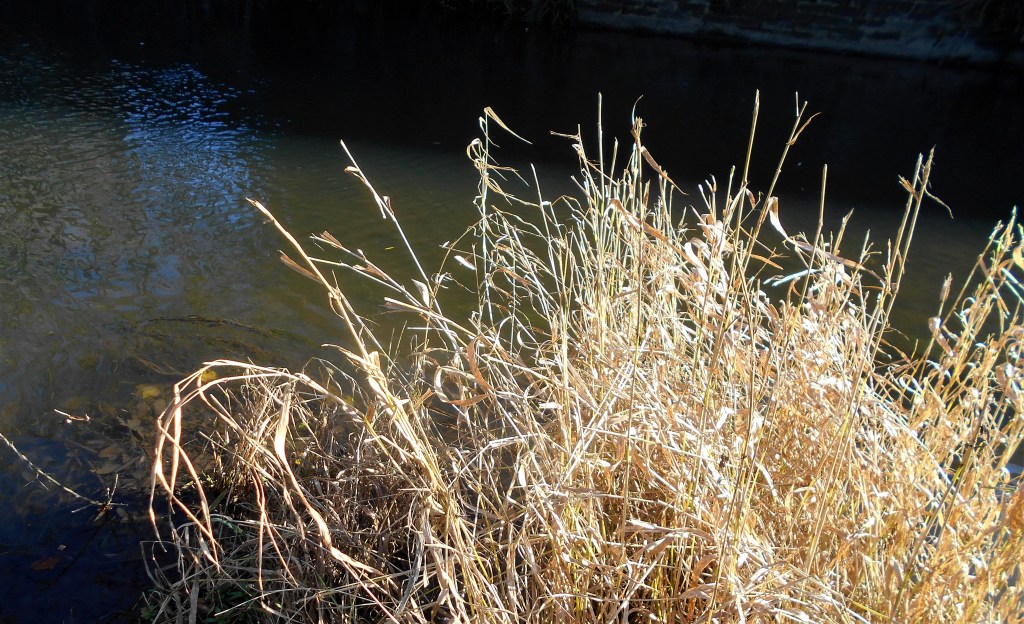
The Otters seemed to take the hint not to disturb such pristine perfection with their spraint as there were no signs of Otter at all on any of the three sites, the river slipped along almost silently as there are no riffles or stones along this stretch and the deep peace of a frozen silence gripped the scene.
Eventually first one, then another and another as three Herring Gulls appeared and flew across the field – sparkling white in the bright sunlight and as always surprisingly large. A few Wood Pigeons flew from one tree to another to no apparent purpose and then we disturbed a Pheasant hidden among the reeds below the bank, no doubt sheltering from the wind, who flew off across the river with lots of noisy squawking and fast claps as it bangs its wings together – startling in the frozen silence.
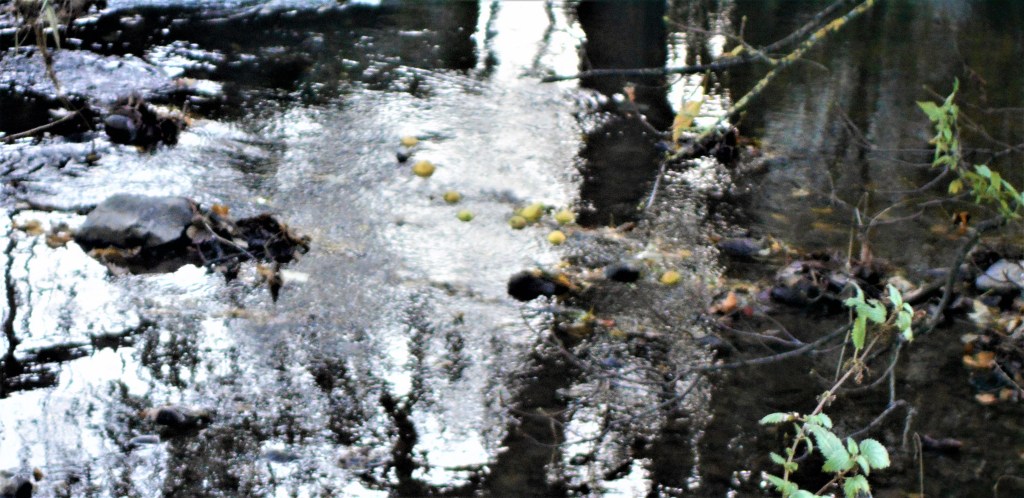
We began to notice clusters of apples caught in the river eddies in increasing numbers – a box thrown into the river upstream perhaps. Surprisingly Otters are known to eat quite a lot of fruit, blackberries and all varieties of berries and even apples, so this fruit should offer some valuable vitamins against the coming winter.
And then, at last – bonanza! We heard hidden Mallards quacking, we saw a Cormorant perched motionless on its usual tree at the end of the field, a Heron stalking the hedge boundary, no doubt hunting for frogs, and then two Buzzards appeared, mewing loudly, circling overhead above us, round and round searching the ground for food.
After checking the farthest beach, also empty of Otter signs, we headed back across the field – and reached the bridge in time to spot a pair of Magpies, another Herring Gull and flitting across the river and among the trees a brilliantly coloured Great Tit, its breast glowing yellow in the sunlight. We had noticed winter gnats and midges about so lots of delicious snacks for hungry Tits. There is life – even in this still and silent world where no birds sing!!
22nd November 2021 / Temp: 5 C / Water Level: Med
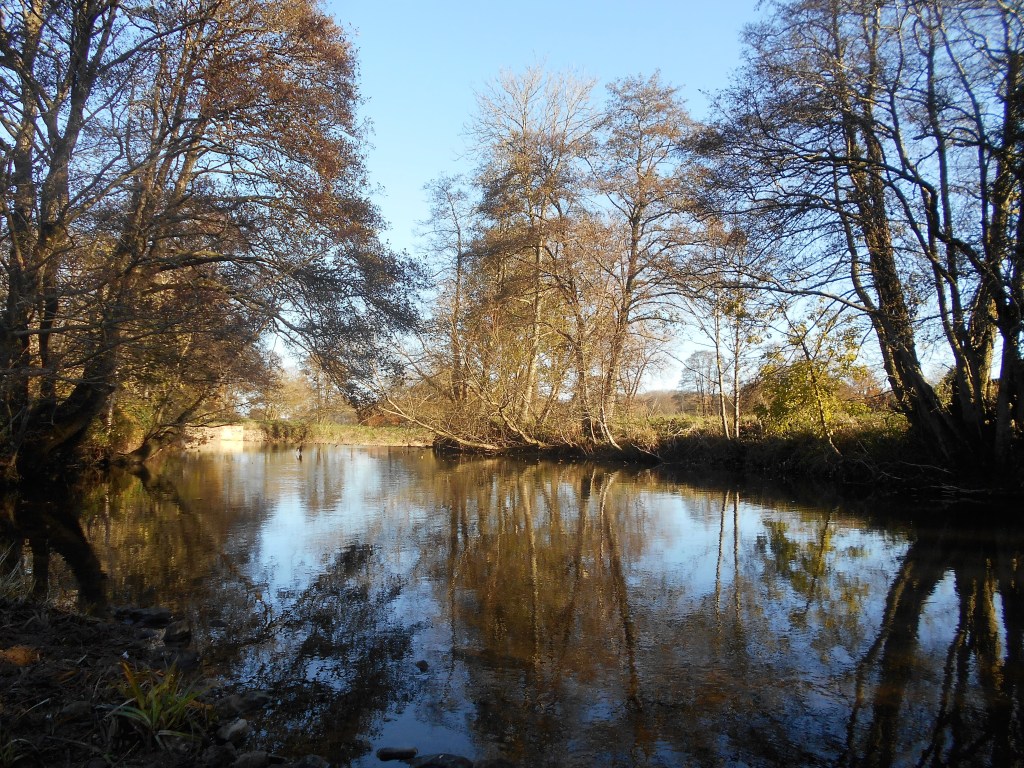
Strong icy wind and frost still thick on the shady areas of the fields unexposed to the sun, but a beautiful morning, cloudless blue sky from horizon to horizon – a perfect day for crawling under 2 foot high barbed wire fences and navigating steep, unstable river banks!
No signs of Otter at the first two sites but it was wonderful to see a number of Mallard heading upstream as we approached the river, seeing twenty plus take to the air followed by at least a dozen or more Mandarin and a Little Egret. We had been so perplexed during last month’s survey at the total absence of both species, so it’s a relief to see that event was an aberration rather than an abandonment of the site.

Good to see gulls lifting and swirling above the recently harvested maize field, a mixed flock of Black-headed and Lesser Blackbacked as well Herring Gulls in good numbers. The large flock of Jackdaws and Rooks in amongst the cattle (who appeared very calm – thank goodness!) and circling the trees on the hill slope seem to grow larger at each visit, their chattering and calls such an evocative sound of autumn.

Negotiating a very tricky and careful descent of the steep bank onto the last beach, battling with brambles and hidden hollows, we eventually made it and found two fresh and one recent Otter spraint. In one of the fresh spraint we noticed quite large fragments of freshwater mussel shells, almost certainly duck mussel. Although we knew that Otters ate mussels, this is the first time we have actually seen signs. Another undigested remain was a small spike – possibly from a stickleback – ouch! Otters digestive tract must be lead lined to be able to cope with such objects passing through.
We were pleased to see at least some signs of life at our last site – a just reward for our struggle! But possibly an even greater delight when we discovered that the beach was totally protected from the cold north easterly wind – oh the bliss of pottering and exploring the stones with the full sun on our backs, hot enough for early summer rather than late November!
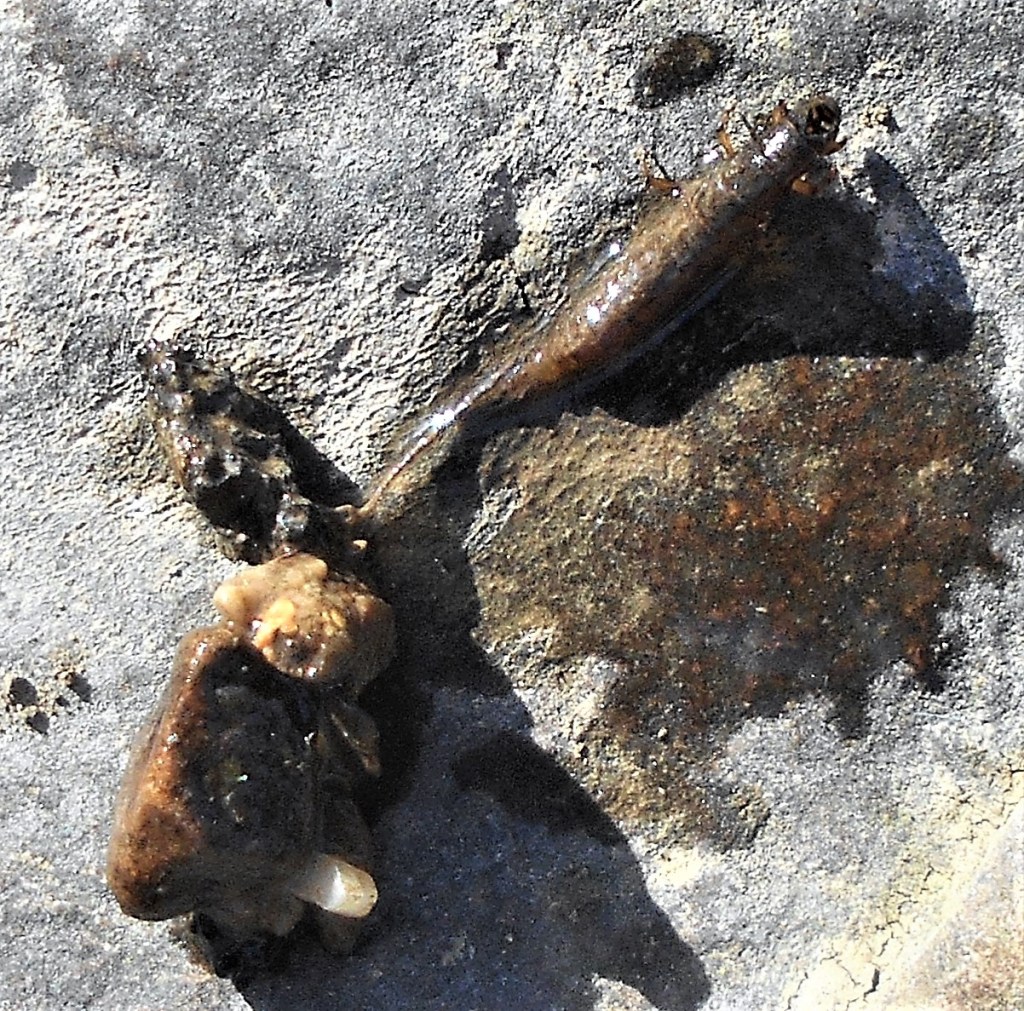
Lifting stones and searching for caddis larvae, we found this specimen which crawled out from its temporary retreat, while I was trying to photograph its domed pupal cocoon enclosure of rock and stone fragments constructed by the larva when it is ready to pupate. We have posted on iRecord to check but we think it is a Net Spinning Caddis larva, one of Hydropsychidae species, which spins a silk net to catch small particles like leaf detritus and even animal parts.
December 9th – Note: Ian Wallace (author of Simple Key to Caddis Larvae) has confirmed that this is indeed one of the Hydropsychidae species – Hydropsyche pellucidula). This is extremely good news as this is the first sighting at this site and means that we have identified Net Spinning Caddis larvae along the whole length of our survey area.
These caddis larva are always exciting to see as most species of free-living caddisflies are very sensitive to pollution and levels of dissolved oxygen, so they are usually found in only the fastest sections of clean rivers and streams.
Having spent some time happily pottering about the beach, we scrambled back up the steep bank and headed across the cattle pastures towards home.
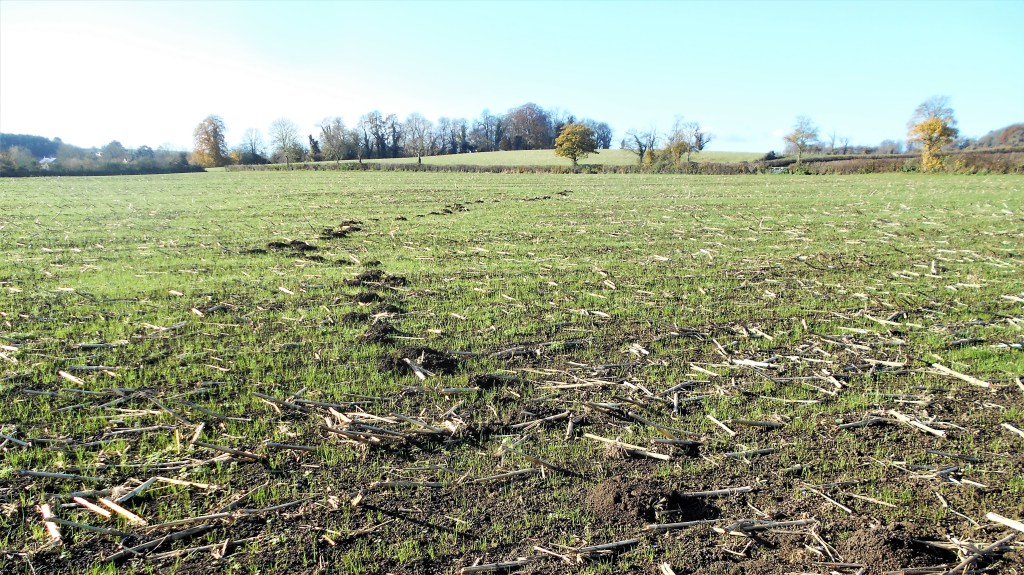
We were rather amused by a wayward mole’s tunnels across the newly sown field – not the most direct way from A to B!!
Altogether a successful, thoroughly enjoyable morning – quite extraordinary how the strong north-easterly wind blowing into our faces has transformed into being wonderfully refreshing rather than horribly cold as it was when we ventured out!
***************************************************

A couple of excellent photographs from the Frome & District Angling Association’s Facebook page illustrating a number of American Signal Crayfish entrances in the banks of the Mells Rive. It gives a really clear indication of the damage that this invasive species is causing, undermining the banks by excavating their burrows in ever increasing numbers.

A photograph illustrating the half moon shaped opening which is a classic sign of a crayfish burrow entrance, Water Vole’s burrow entrances for example are round.
19th November 2021 / Temp: 12 C / Water Level: Med-Low

The mist had dissipated leaving an overcast, damp and chilly morning and the weather was reflected in the wildlife out and about – pretty much zilch. No signs of Otter at either of the two sites surveyed and very few birds. We heard what sounded like a few Mallards, saw a couple of Pheasants which had probably escaped from the nearby shoot, parties of Tits flitting along the riverbank trees, constantly on the move, Crows, a single Robin and cackling Jackdaws.
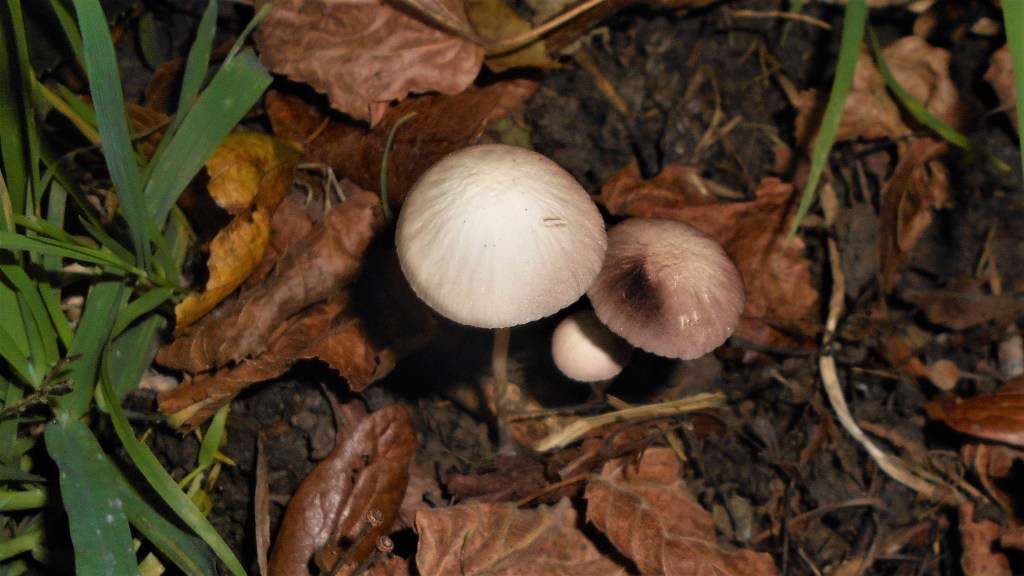
We saw a rather handsome red-legged black spider on a mission, racing along the bridge rail but were unable to identify it despite trawling through our spider books. Trudging back across the field we spotted a small cluster of mushrooms which we were just too dispirited to identify – bonnets? inkcaps? who knows!
However, we ran into a fisherman, also heading home, too cold to stay longer, but he was really bucked up by having landing a five and a half pound Chub earlier in the morning, a beautiful, healthy looking specimen, so his day wasn’t wasted. He hadn’t noticed any birds but mentioned a pair of breeding Kingfishers which he often sees along the river at Weylands Field. Heartening news – even the most gloomy of days has its bright moments!
17th November 2021 / Temp: 10.5 C / Water Level: Med-Low
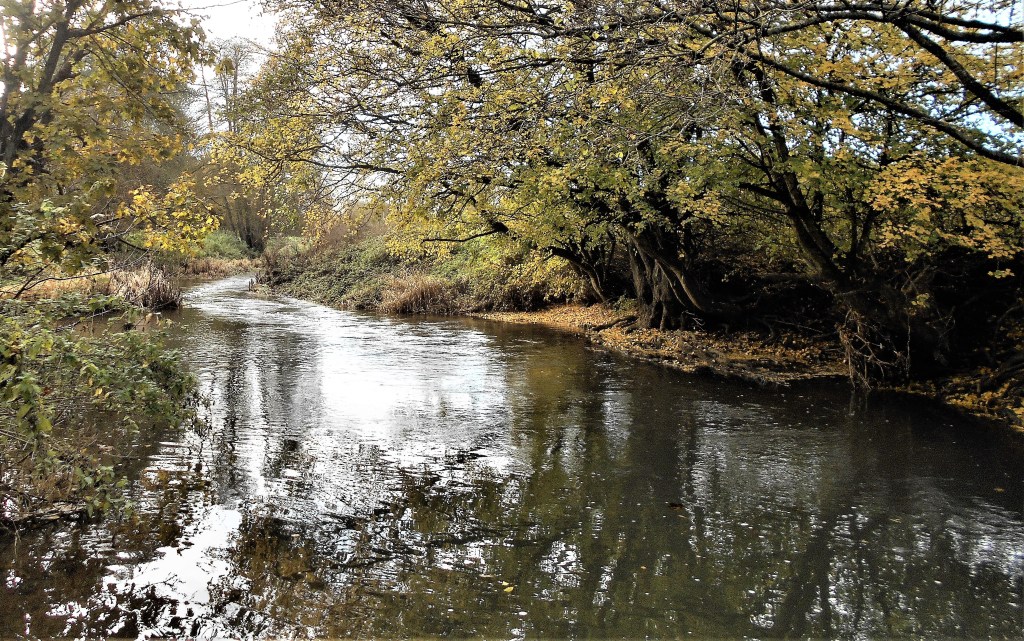
To say we were reluctant to leave the comfort of a warm house, a comfortable chair and coffee within reach would be a bit of an understatement! But we drove ourselves out, mumbling, groaning and complaining all the way and of course once we began to walk along the river bank, disturbing three Mallard, who flew off with great squawkings, two majestic Swans and a Cygnet, our spirits rose and good humour was restored. The intermittent sun helped as did the still golden leaves on a number of trees and the friendly twittering of the flocks of Long-tailed tits flittering from tree to tree leading the way along the river cheered us still further.
When we reached the first Otter site, we found two fresh spraint and one recent on the beach of the old Roman ford despite the overnight rain. Moving on to the next beach we found one recent spraint and on the last beach we found one recent spraint and two fresh anal jelly! This is the most spraint we have ever seen on this site and made up for the disappointment of finding none on our last survey – great excitement!
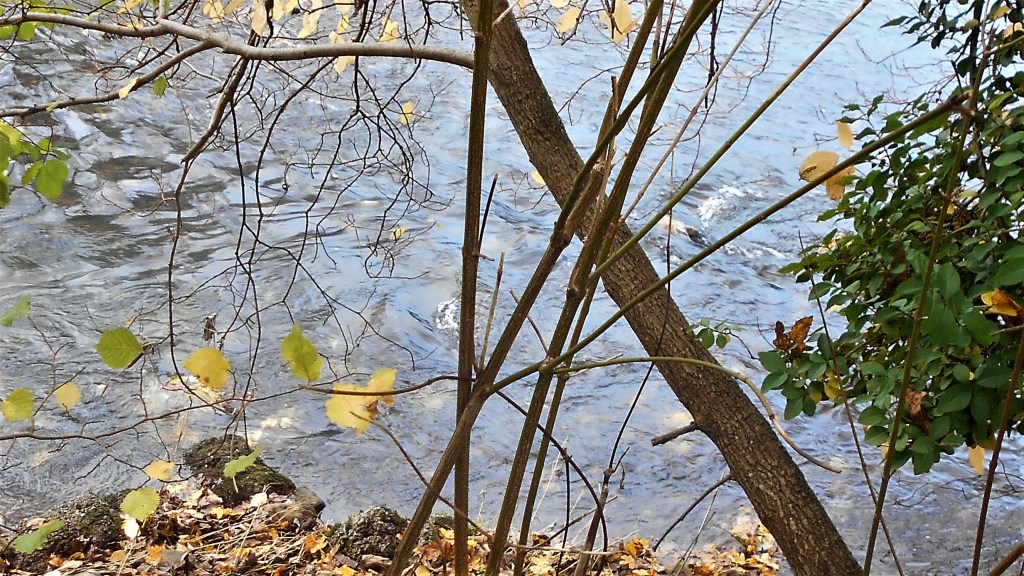
But by far the biggest excitement of the morning came as we neared the last beach, just in time to catch a glimpse of two Dippers flying off. We’ve never seen Dippers at this particular stretch of river – normally we spot them, if at all, farther downstream below the Roman ford or upstream near the confluence of the River Mells and the Somerset Frome so it was wonderful to catch sight of them here – particularly a pair.

The river is joined here by the Mill leat, and forms small stony rapids, perfect Dipper country. Rather weary from scrambling up and down banks, climbing over fences and negotiating the stony beaches made treacherous by the thick layer of fallen leaves hiding the dips and larger boulders, a rest seemed a brilliant option. Unfolding our little fishing stools, we perched on the bank above the beach, half hidden by the trees and shrubs, enjoying the sound of the water tumbling over the stones, and the sun turning the yellow leaves into pure gold. Half dreaming, watching the water, imagine our delight when one of the Dippers returned! First perching on a stone in the rapid dipping and dipping and dipping, hunting for food before flying off, low, and disappearing upstream.
Still we sat, reluctant to move, when what joy – the Dipper returned again! This time it began foraging in the water on the edge of the beach, not 5 yards below where we were sitting. We had the most perfect view of the Dipper feeding, head down, walking under the water, a feat we don’t often see – such a marvellous sighting, although sad to say, again it didn’t stay that long.
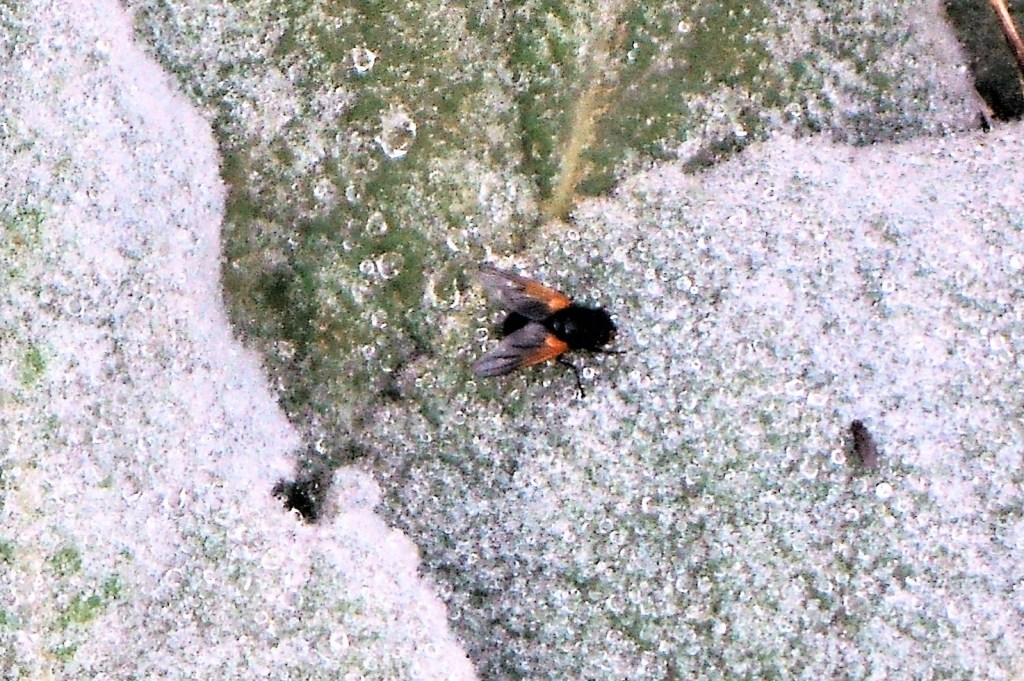
Rather surprisingly we caught sight of three Noon flies basking in the weak sunshine and a Eristalis sp hoverfly resting on the large leaves of a mullein as well as clouds of winter gnats, so a few insects are still around. Steven Falk, the Bristol entomologist (author of the Field Guide to the Bees of Great Britain & Ireland) mentioned on twitter yesterday that he has this autum changed the season for Noon flies, which used to finish in October, but has now been extended as there have been so many about this month.
Moving at last, checking out the good crop of mushroms under the trees, we walked to the boundary for a final check when a Kingfisher flashed by, downstream, following the bend of the river, although the sun wasn’t shining at that point, the bright, vivid blue was unmistakable. The well-known myth that Kingfishers are so difficult to spot, they have inspired a saying: ‘Only the righteous see the kingfisher’ sounds always rather unlikely – perhaps fortunate would be a better term or maybe blessed – whatever, it was a lovely final flourish to a very satisfying morning!
4th November 2021 / Temp: 9.5 C – 8.5 C / Water Level : Med

A sunny-cloudy afternoon, a chill in the air – fresh and clear, still no frost so far this autumn but colder, a hint that winter is not too far away. The river was also beginning to take on a look of autumn with the water level rising and making islands in what in summer are wide beaches. It won’t be long before the fast tumble and spates of winter raise the water level still higher and even the islands will disappear, not to be seen again until next summer. As the water rises we will look in vain for Dippers and Grey Wagtails who should be seen all year round but we never seem to spot in winter. There is said to be remarkably little difference in the behaviour of Dippers in winter, although we have yet to spot them, but the Grey Wagtails reportedly move away from the rivers to more urban areas, or farmyards and slurry pits or gardens.
No signs of Otter along either the river bank or the carrier stream, under the bridge or on the stones, maybe they like the water birds have moved on to more rewarding areas of the river.

All the insects have disappeared, apart from the winter gnats and midges, this beetle which I disturbed when pushing through the shrubs and trees – it looks like an alder-leaf beetle, quite the most common of the beetles almost everywhere and we spotted a single wasp around the ivy flowers. Very few flowers on the plants, just a tired looking bedraggled few still lingering – water mint, white dead nettle, dandelions, ragwort, hogweed and a few red clover – nothing to interest hungry insects looking for nectar.
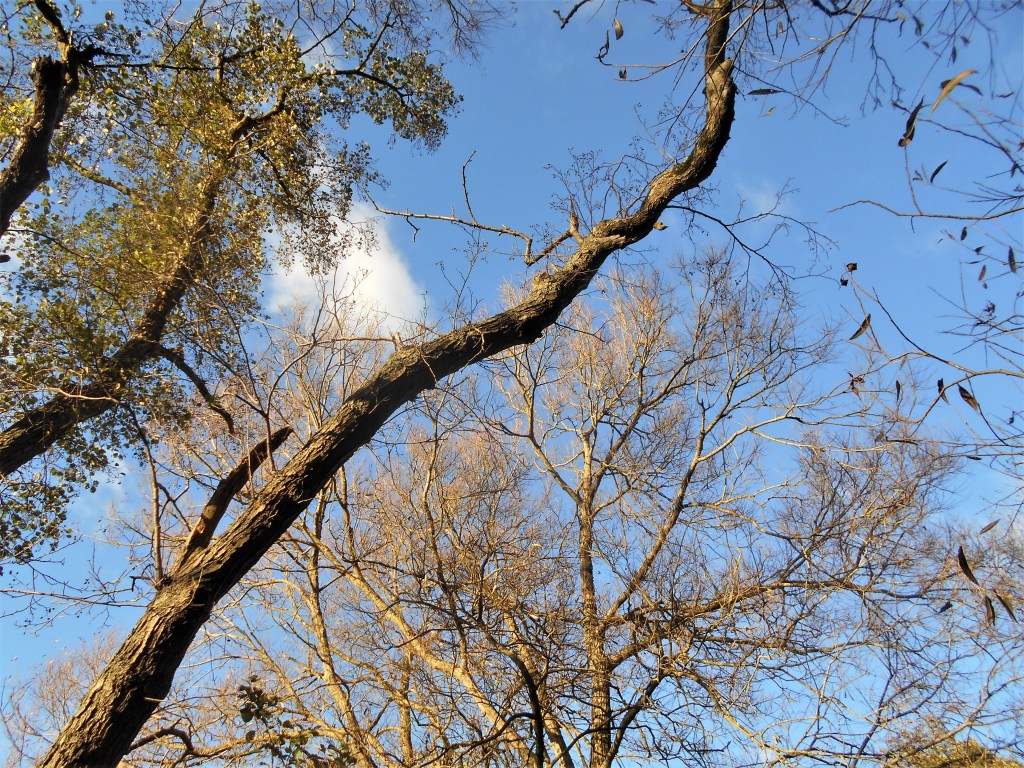
Despite summer becoming an almost distant memory, these are the golden weeks – low bright sunlight turning yellow leaves, pale leafless branches and tree trunks to gold – a time of golden sunburst yellow scale lichen coating the branches, when fanfare of trumpets lichens offer good support for a cobweb spinning spider and shout look at me, look at me, I’m beautiful!!

Few birds although there were a good number of Jackdaws and Wood Pigeons, but apart from those a pretty meagre count of a couple of Crows, ditto Herring Gulls, ditto Blackbirds but again no signs of water birds, not even a single Mallard. We did hear a solitary Raven, his evocative call lifting our spirits but overall the river and meadows seemed quite suddenly empty but….. apart from the sound of the tumbling river it was also very, very quiet, calm and wonderfully soothing to bathe in the sunlit beauty of an autumn afternoon …. it’s so good to be alive and able to walk in such a place on such a day with such a dear companion.
14th October 2021 / Temp: 13.5 C / Water Level : Med-Low
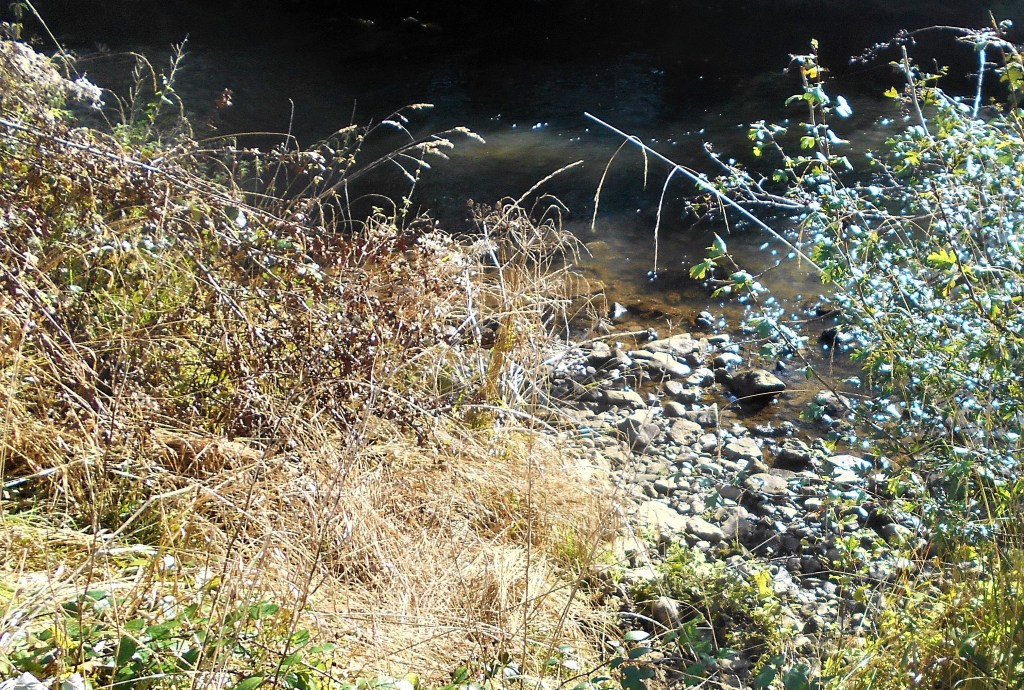
Wrapped up against forecasted chilly temperatures, we walked from one site to the next, gradually removing a layer at a time, and still felt too warm – those same forecasters hadn’t taken into account the strength of the sunlight, surprisingly wonderfully hot, particularly for mid October!
Clambering up and down steep banks always added a bit of an edge to this stretch of our survey, will we or won’t we make it! Any doubts are ignored as these quieter, more out of the way, overgrown beaches are the most rewarding places for Otter spraint as proved to be the case today. One fresh, one recent, crayfish remains and two pad marks on the water’s edge – not a massive amount but proof the Otters are out and about.
There were no signs of Mallard at either of the first two sites, and astonishingly no Mandarin Ducks on a grassy bank where they are reguarly fed by a resident. We are used to seeing flocks of at least 20 Mallard and upwards of 30-40 Mandarin along this stretch of river so to see none at all seems a bit end of days! We had been listening to an 80 year old ornithologist on “Open Country” the Radio 4 programme who lives in the south of the county, and also mentioned the plummeting number of Mallard in his area. He believed there was something in the water which was causing the crash in numbers; certainly it appears to us here that it is the plant eating water birds which are suffering such a steep decline whereas Dipper, Kingfisher and Grey Wagtail numbers although low appear to be constant.

Falling numbers does not seem a problem faced by Jackdaws and Rooks if today’s numbers are seen – the full grown sycamore dominating the hedge on the border of the field was full of swirling, chattering, calling birds enjoying the remains of the maize harvest – from a rough estimate there looked to be at least 100 odd Jackdaws and 50 plus Rooks – what a racket but a lovely racket, the most evocative sound and sight of autumn fields.
A thorough search of the final beach was rewarded by finding 3 fresh spraint, 2 recent and crayfish remains and pleasingly a pair of Mallard swimming upriver! Lots of hoverflies and wasps and even a soltary Red Admiral fluttering by.

Back across the harvested fields and watching yet more Rooks and Jackdaws above the wood of mixed mature trees at the top of the hill – this time joined by a few Lesser Black-backed Gulls, all rising, swirling, calling and warning as three Ravens flew over and began circling, scavenging for whatever they can find.
12th October 2021 / Temp: 14 C / Water Level : Med-Low
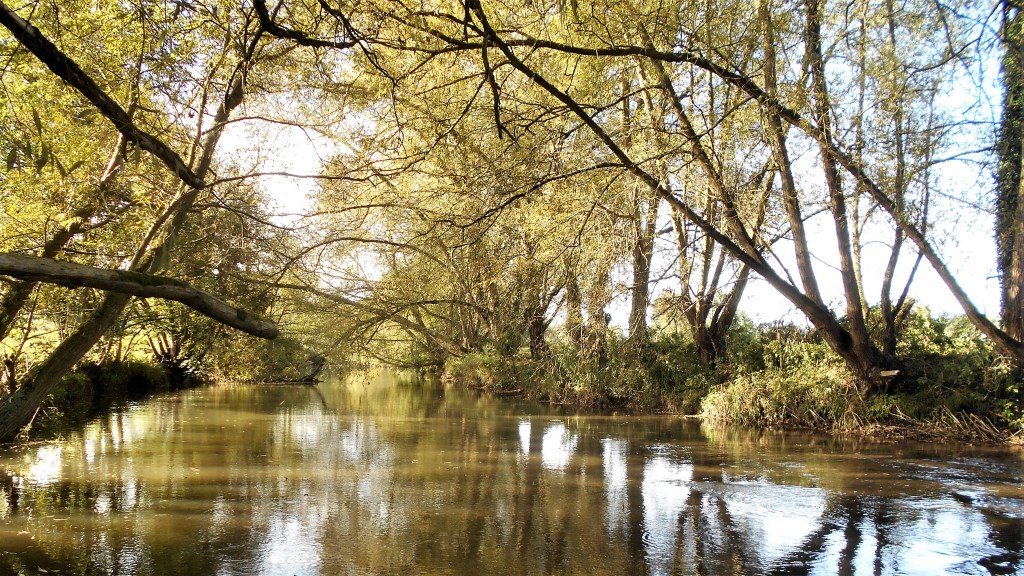
Bright sunlight, fresh chill breeze, clear skies, a perfect autumn morning for walking and checking the river bank for Otter spraint. We were immediately struck by the amount of bird song as we crossed towards the river. It appears to be the perfect mixed habitat for the smaller garden birds – Chaffinch, Robin, Wren, Blackbird, Long-tailed and Blue Tits, etc as there is an abundance of cover from hedges, fruit trees as well as a broad belt of trees and shrubs along the boundary as well as a good number of full-grown alders, willows and hawthorns along the river bank. After the near silence of the bird empty fields of the previous couple of days, it was a delight to be walking in bird song.

No sign of Otter as we walked along but when we reached the wild area of stacked logs, nettle beds, giant mullein and clumps of still flowering comfrey we were astonished at the number of insects – honey bees, bumblebees, hoverflies, moths and ladybirds buzzing around, feeding on the nectar of soaking up the sun! All those lovely pollinators keeping the apple trees fruiting and providing fodder for the birds – a heartwarming sight.

As we arrived at the first beach we were delighted to see a Dipper flying away upstream although sad that we had disturbed it in what appears from previous sightings to be a favoured fishing spot. A good omen as just a few minutes later we found the first sight of Otter, recent spraint on the usual flat slab of stone. Sadly, this was to be the only spraint along the whole stretch of this particular survey area, despite careful and hopeful searching.
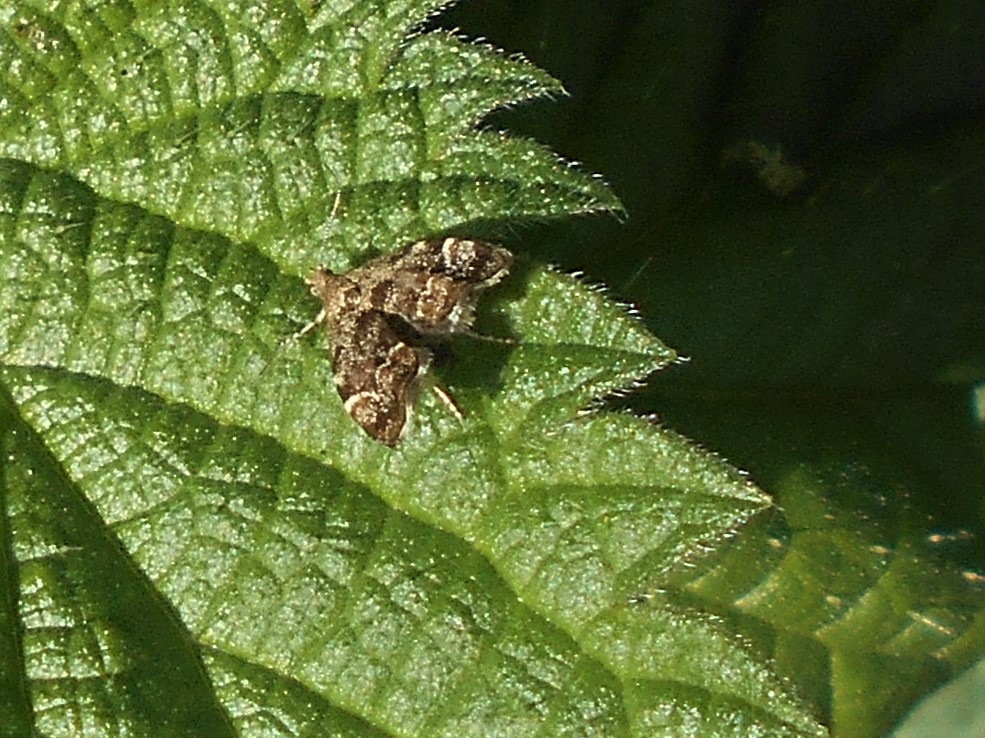
More insects as we made our way to the next beach – a common green shieldbug soaking up the sun, a potato leafhopper sharing a leaf with a dungfly, and what may have been a chalcid wasp of the Torymidae family as well as a good many Harlequin ladybirds and their pupae scattered across the leaves of low branched trees. Sad to say no native ladybirds – concerning how the invasive species seem to taking hold.
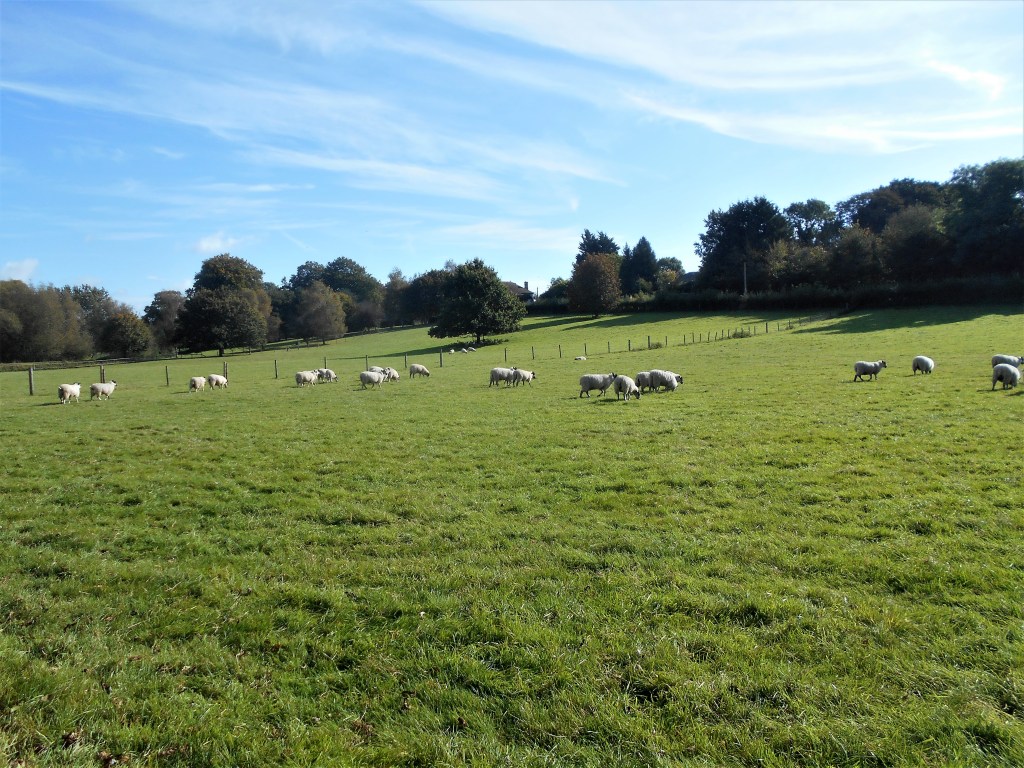
Walking back across the pasture we caught sight of a Little Egret flying in an arc overhead as it left our stretch to return the river further upstream. They are such beautiful snow-white birds, looking almost cumbersome in flight in comparison with their supremely elegant stance standing stock still in the shallows seaching for fish.
11th October 2021 / Temp: 14.5 C / Water Level : Low

Another gloriously sunny afternoon and having checked the cattle were at the far end of the field, we began searching the river bank and beaches for Otter spraint. Sad to say we drew another blank, no sign of Otters at any of the three sites, and although we were heartened to see a pair of Grey Wagtail flying up and down above the weir, we felt rather down after inspecting the last beach. However, we decided to sit and enjoy the sunshine – who knows it could be the last gasp before autumn gets really cold.
Almost dozing with the hot sun on our backs, idly watching and listening to the mesmerising sight and sound of the tumble of the river, we almost missed the flash of startlingly blue wings of a Kingfisher flying across the river not more than 18, 20 or so yards away from us! He disappeared into the low branches of a sycamore on the opposite bank and we stared waiting, expecting him to flash upstream from his perch. Imagine our delight and astonishment at the loud splash, almost like a good sized stone dropping into the water, as the Kingfisher dived, reappeared in seconds and again disappeared into the leaves!
Again and again he dived until we lifted our binoculars at just the wrong moment and he was off disappearing downstream, a brilliant flash of blue! Extraordinarily, he was barely lost to view before another Kingfisher shot past, coming downstream and took up position where we saw the first bird fly from! We could hear but couldn’t see him diving for some time before he also sped past, back upstream, his wings glowing, almost sparkling in the sunshine.

We have seen Kingfishers on the nearby lakes perched on a branch and diving into the water, often, but not always, emerging with a small fish in its beak and we have seen Kingfishers innumerable times, up and down the river, but this is the first time we have caught sight of them in the act of fishing the river. A wonderful sight worth waiting for which made us forget all about the lack of Otter signs and which we we always treasure.
We rather reluctantly got up to leave the beach and were disconcerted to see what we hadn’t noticed with our backs to the field – a long line of cattle ambling across the meadow forming a neat barricade between us and the gate out of the field! Rather than race them to the gate we decided to cross the field behind the stragglers and climb the wibbly wobbly leaning gate into the next field.
A good move, just walk slowly and calmly, the bull was in the middle of the herd, heading towards the far field, no problem….. except as we were half way across the field, the cattle turned around and watched us and then began ambling back! By the time we reached the gate the bull, now at the head of the herd, was only 3-4 yards away and our scramble as we wobbled and nearly fell as the gate, lurching first one way and then another, made our precarious climb on the panicky side, but oh the relief – before any of them got to us we were over and safe!! The bull and the rest of the herd gathered around the gate and stood watching us as we called a cheery goodbye and walked away. A farmer in the same position would have slapped the bull on his rump, chatted and turned his back and walked in front of him without a second thought – what a pity we are not farmers.
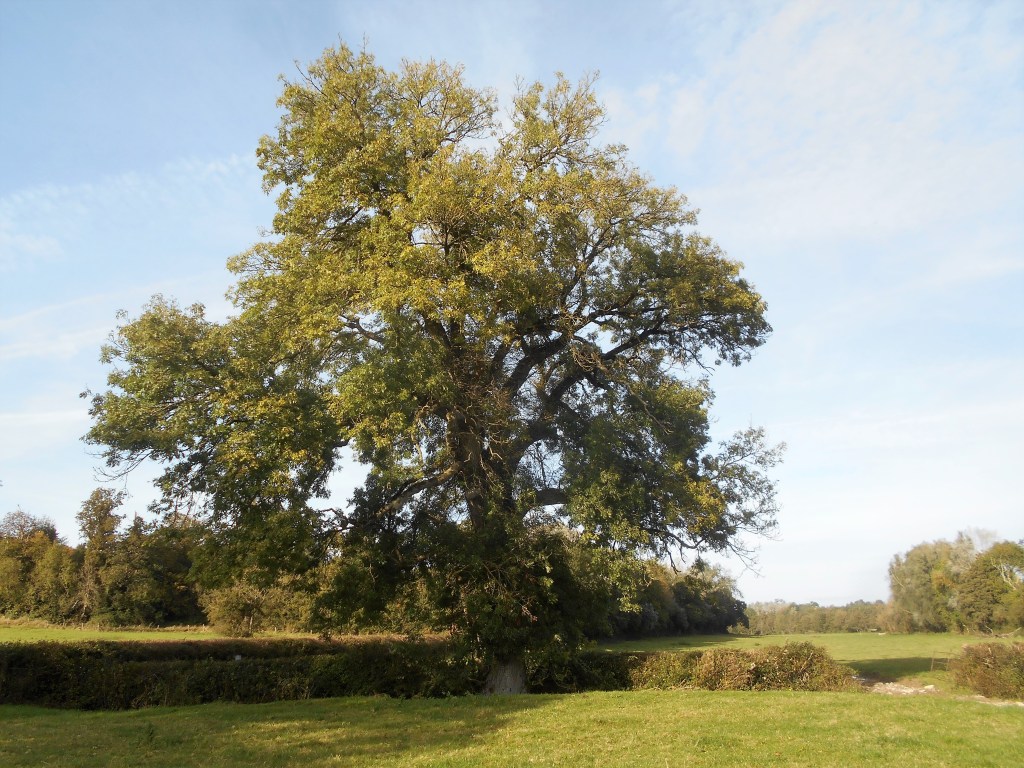
How calm the fields looked, how beautiful the ash tree bathed in sunshine, how welcome the sight of a clump of field mushrooms, a delightful distraction as we gathered a couple of handfuls for our supper at the end of what had turned out to be a memorable day by the river!
10th October 2021 / Temp: 18 C / Water Level: Low

Beautifully warm, sunny afternoon – astonishingly warm for the second week in October! It was delightful to saunter along the river bank searching for Otter spraint, so quiet, just the cackle of Jackdaws flying over, what a wonderful sound they make, and the mew of a couple of circling Buzzards.
We were pleased to see a Heron, the first for some time along this stretch of the river and then a beautiful Little Egret lifting off but few other birds, just Blackbirds and Robins apart from the usual Pheasants, Crows and Wood Pigeon. We were surprised to see not only a Common Darter but also an Emperor dragonfly patrolling the river as well as a Red-legged Shield Bug clambering around on the grass.
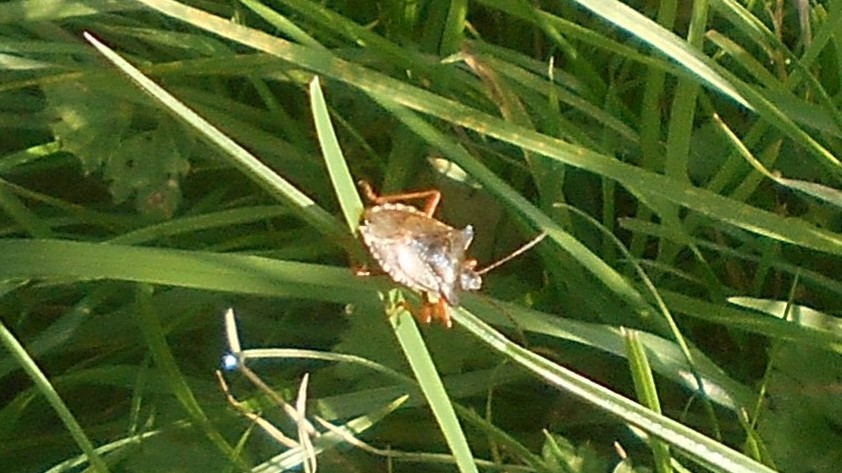
Unfortunately, despite our best efforts, no sign of Otter anywhere, not even old and dry crumblies. We haven’t been able to risk this site for six weeks or so due to the bull being in the field with young heiffers. We are almost sure he is safe but the “almost” which puts us off!
Still a few lingering water forget me not and trifid-bur marigold in flower and as we watched the dragonflies darting by we caught sight of a Kingfisher flashing upstream, his colours vivid and astonishingly bright in the low afternoon sun – magical!
29th September 2021 / Temp: 15 C / Water Level: Med
A brief trip to check the bridge at Oldford to see how Somerset Bridge Department had dealt with the damaged stone pillar and broken rails after the safety barriers erected to offer some protection had been thrown into the river. We were really pleased that the contractors appointed by Somerset County Council had been able to come so quickly after we had reported the damage, although rather disappointed that the railings hadn’t been repaired/replaced. However, replacing the missing safety barriers is a great improvement.
Whilst we were there we checked the riverside for Otter spraint but after so much rain the water had risen considerably since our last visit and covered the stones and bridge pier so no signs of Otter. A great many wasps, bees, hoverflies and noon flies all flocking around the flowering ivy.
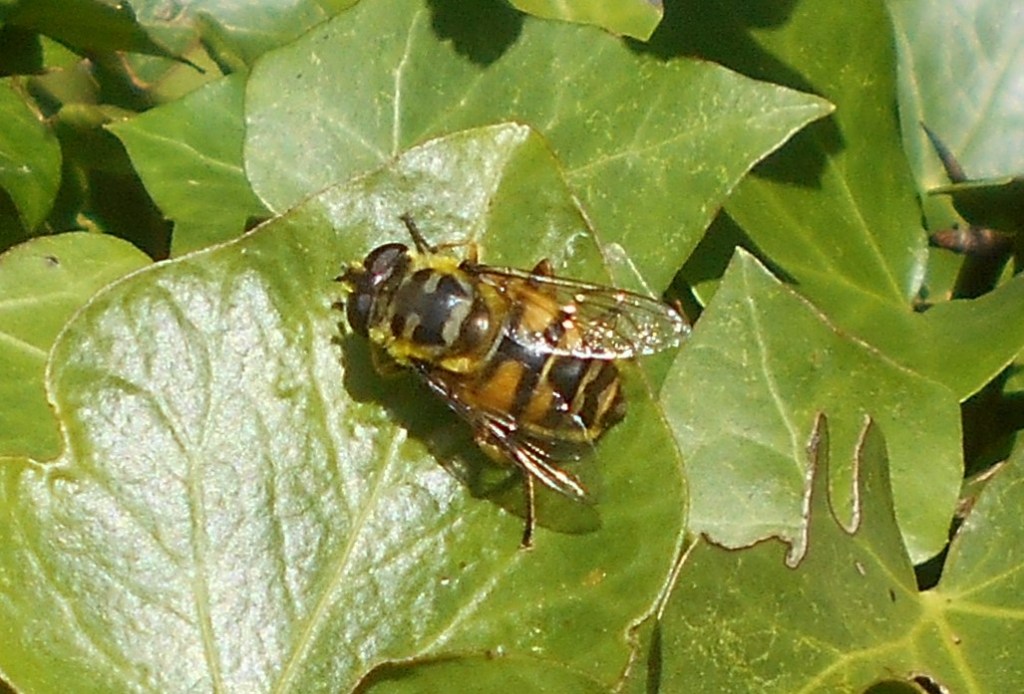
The Myathropa florea hoverfly is always rather striking, and is often seen around ivy flowers at the end of summer. Evidently its larvae live in rot holes or cavities of decaying leaves amongst roots at the base of trees of which there are many at the top of the river bank. We are often struck by the varieties of trees in such a small area which include larch, oak, horse chestnut, ash, alder and even a full sized sequoia!

We hadn’t noticed a hazel amongst the trees until we caught sight of the Hawthorn Shieldbug which its distinctive markings, as if someone has left a toffee on its back which has dribbled a mixture of drips and blobs!
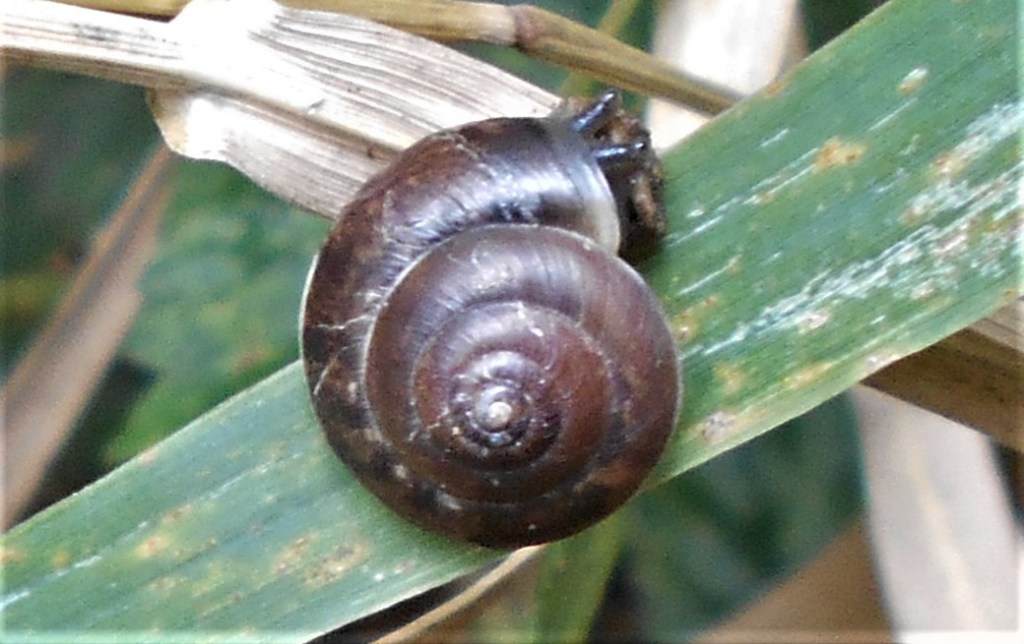
The only other creature which caught the eye was this small snail which we hazard Strawberry snail as an identification. We’ve posted it on iRecord and if the id is corrected, we will correct it here.
No sign of any bird life – no water fowl but no other birds either which was surprising as the day was sunny and not cold, but it was extremely windy so perhaps that had deterred them.
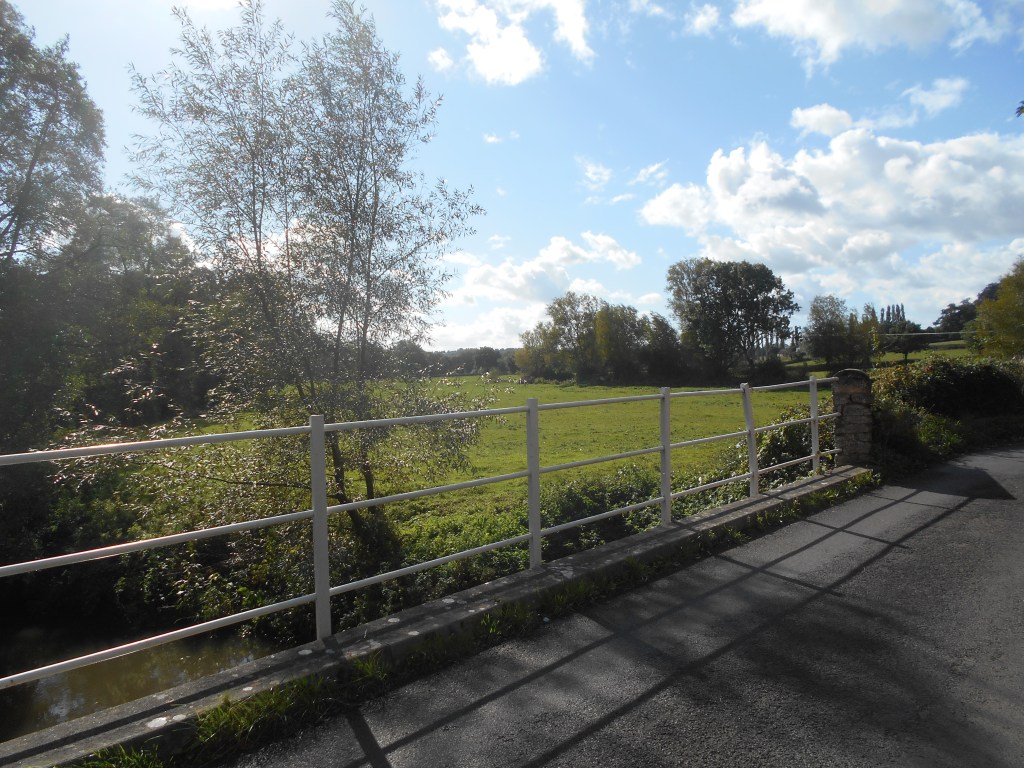
A view of the bridge on the undamaged side of the road. The road is very narrow and carries quite a steady stream of cars so it does make walking across the bridge pretty hazardous and we, like most other walkers, step off the road, perch on the raised concrete ledge and lean on the railings to keep clear of the traffic so at least one side of the bridge is safe for pedestrians.
18th Septeber 2021 / Temp: 20 C / Water Level: Low
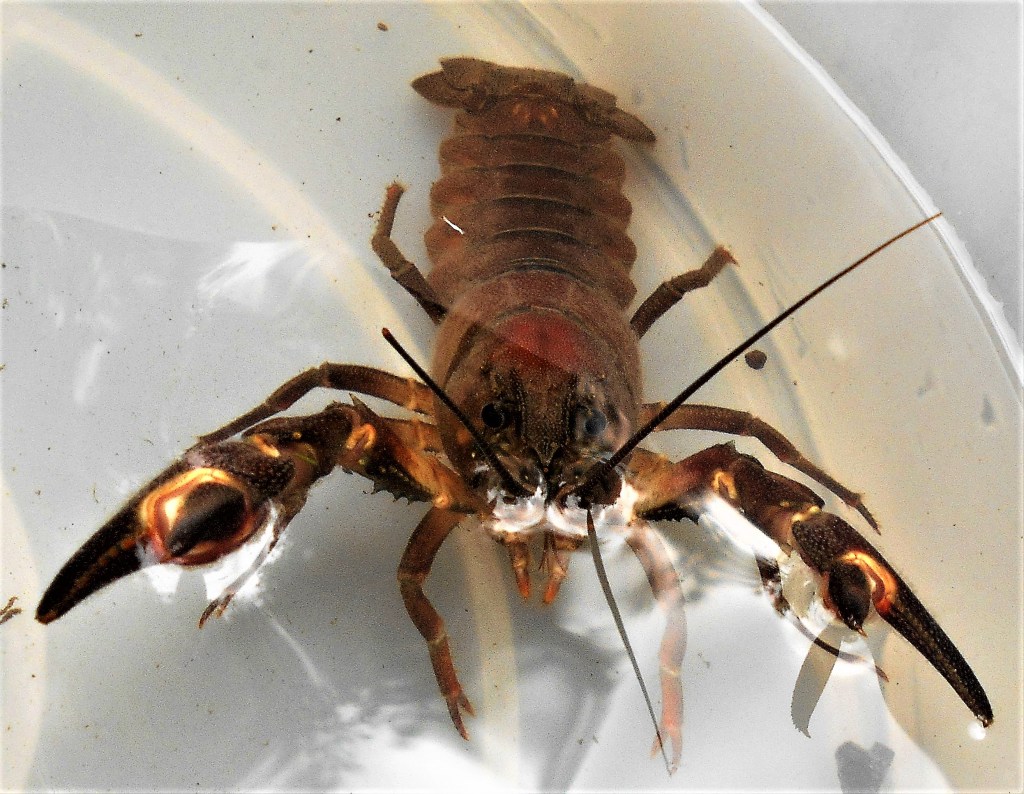
Messin’ about on the river with our son and grandsons – what could be more fun! They are pretty indifferent to wrigglies so that attempting a kick survey was not on the cards although they were very happy to use the buckets, trays and nets for what they consider the business of the day – a’ hunting of the crayfish!
Who says that children have a short concentration span? They were relentless as they stumbled on the hidden stones and boulders, up and down the river, wellington boots full of water, soaking wet shorts shrieking with glee, shouting with triumph, standing in the middle of the river with the fast current swirling around them gazing awestruck as they excitedly demanded we look at the size of this huge and scary whopper! The crayfish looked less than amused and even possibly rather cross (see above).

Two Kingfishers flashed past which earned barely a glance, a Grey Wagtail flew up to what is a favourite perch on the river and executed an impressive handbrake turn when he saw the crowd. We saw Small White and Small Tortoiseshell butterflies, a string of ponies crossing the bridge being led by a rider, we found Bullheads and small fry none of which could be allowed to interfere with the serious business of the day – catching the dratted crayfish. They are the bane of our lives, undermining river banks with their tunnels and contributing to the sedimentation of the river, killing native White Clawed crayfish either with the plague they carry or by dominating the habitat. Our eagle-eyed grandson who misses very little, noticed that one of the crayfish had white eyes. Searching the internet on returning home we discovered that this could have been a mutation or, perhaps more plausibly, a sign of the highly infectious species of fungus Aphanomyces astaci, the plague referred to which attacks the soft tissue, including the eyes.
But all of this is nothing to our intrepid hunters out on a mission and finding creatures which are extremely plentiful, look strikingly ferocious and are very easy to catch!
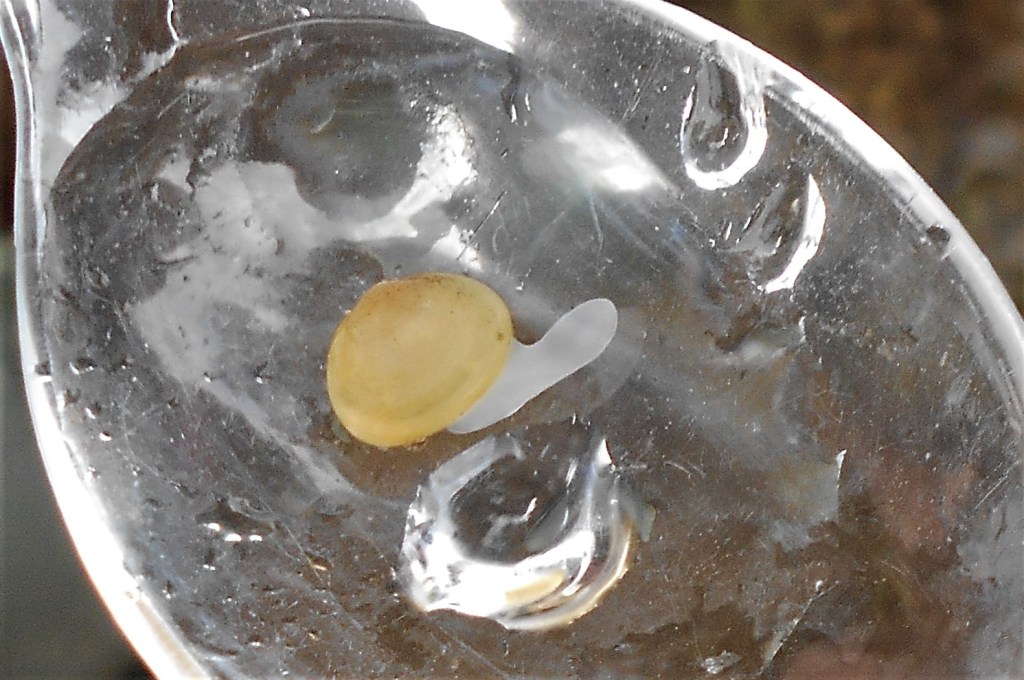
But then…. how can anyone not be impressed when one rampaging hunter bends down and picks up a pale yellow shell, not more than 4mm in size and holds it out in the palm of his hand. We find lots of these shells on the water line of beaches but we noticed that this one was a complete closed bivalve so we put in the tray. When we came to examine our catch later, the shell had opened and a single foot had stretched out and was clinging to the side of the tray. A live Horny Orb Mussel – a bioindicator of not too polluted water – the first we had ever seen!! What a brilliant find – what a wonderful grandson – what a marvellous day!!
7th September 2021 / Temp: 29 C / Water Level: Low
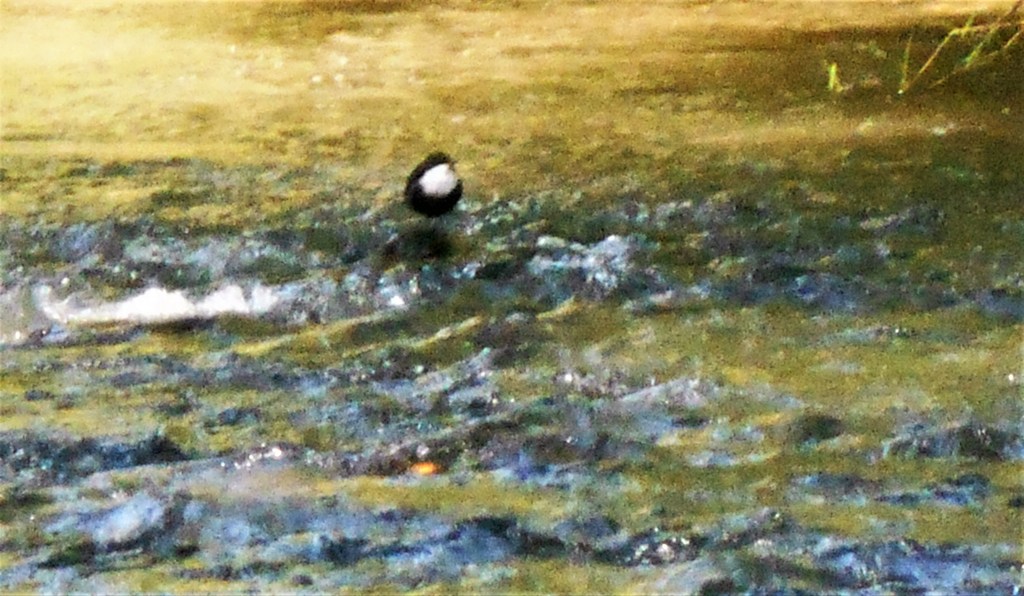
Forgive the appalling photograph but the best my little snap camera could manage in capturing a beautiful Dipper fishing downriver from us. We were perched on our stools, peering into our tray of treasures from a half-hearted attempt at a kick survey, when what looked like a male Dipper flew upstream, perched one legged on a convenient stone, and began to examine the water.
He seemed totally unaware of us, remained stock still for quite some time, possibly resting but eventually he flew across the river found another suitable stone and began his usual Steve Smith at the crease impersonation, bobbing, and bobbing and bobbing! It must be the answer because he soon stuck his head under the water and began feeding in earnest. So intent was he that he ignored our raised binoculars, camera and murmurs of delight and continued contentedly picking away at whatever he was finding under and around the stones.

Judging by the number of mayfly nymphs and caddisfly larvae we had been finding he wouldn’t be short of food. The mayfly nymphs looked rather small and thin but the fat net-spinning Caddis larvae (Hydropsche pellucidula) must surely make a tasty morsel for any discerning Dipper!
We found Flat-bodied Heptageniidae (stone clingers – possibly Yellow May), Olives Baetidae as well as the mayfly larvae, lots of Gammarus (freshwater shrimps) and a couple of leeches although as far as we know Dippers don’t feed on the latter two species, possibly shrimps at least swim far too fast.
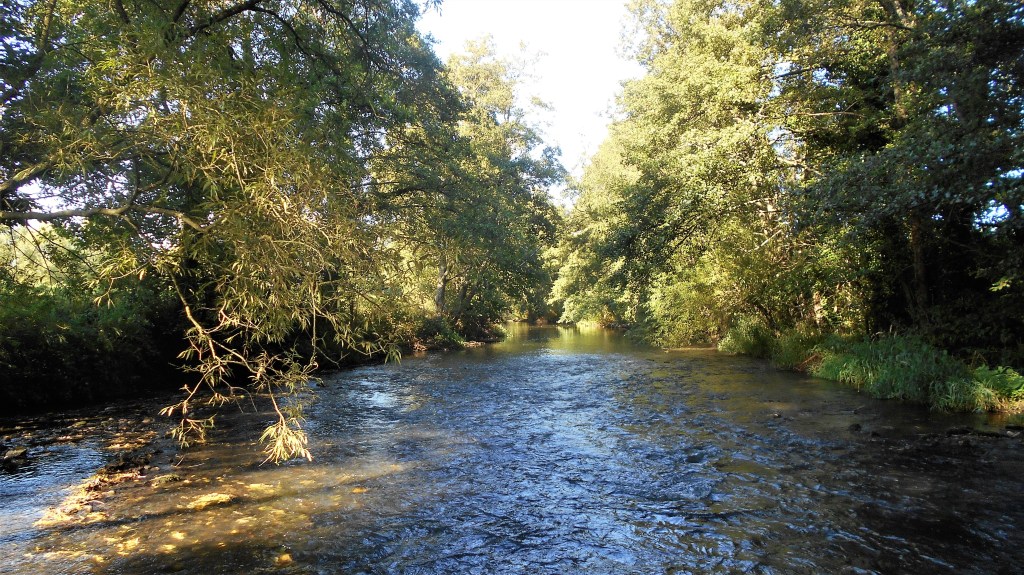
What a difference a week makes – the temperature a mere seven days ago a chilly 15 C with a blustery north-easterly win and today a balmy 29 C with a soft south westerly breeze! A beautiful afternoon, hot sun burning the field but wonderfully cool under the trees, listening to the gurgle and chattering river rushing past tumbling over the stones of the ancient ford and watching the wind play with the leaves of the willow and alders on both banks. Good to be peering into trays of wrigglies, glancing up in time to see a Kingfisher flash past low over the water and watch the small white butterflies fluttering over the water and up into the trees.
7th September 2021 / Temp : 20 C / Water Level: Low
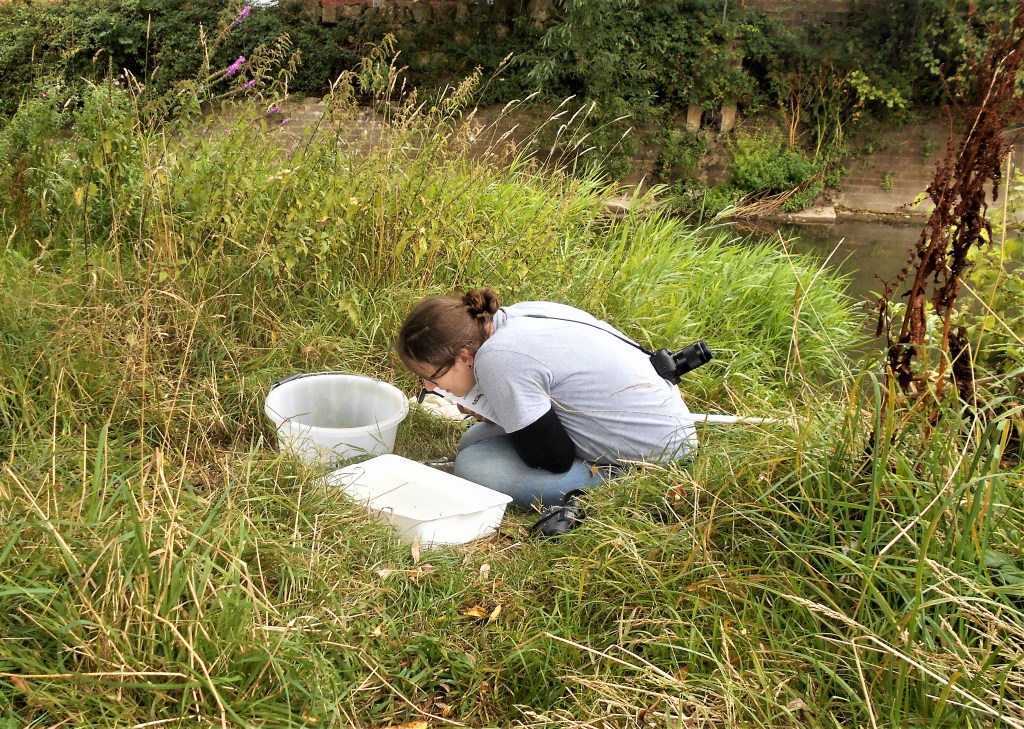
Gum boots and buckets, trays and dipping nets, sieves and spoons, cameras and anti-bacterials, stout sticks and notebooks, all essential items for a mooch by the river and a scooping up of wrigglies, and, if you are very, very fortunate, a beloved daughter willing to give up a day to help. Oh the relief – younger, fitter, sharper eyed, who can scramble up and down river banks with ease and spot what we have missed and tireless in sweeping vegetation, river weed, kicking gravel and stones from the river bed – marvellous!
Lots and lots of the usual mayfly and net-spinning caddis larvae in every net, counted and logged, even more tiny fishes, too small to be sure of identification but counted anyway, minute worms, but then we found a prize!

A diving beetle not previously found, a Platambus maculatus, with its subtle colours and beautiful markings which we eventually managed to corner long enough to photograph (it took two of us – we can confirm it swims fast, very, very fast!!). It is common and widespread throughout the country where it lives on vegetated margins of rivers and eaten by trout. Not a rarity but a great find. Note: iRecord hasn’t checked it but iNaturalist has accepted the species identification and given it Research grade status.

More little fishes but surprisingly we didn’t catch one freshwater shrimp when upriver we catch so many they become a bother separating them from more interesting finds. The margins turned out to be a good source of new species – including a water measurer (Hydrometra stagnorum) what looked like orange millipedes (3 but unidentified), a faucet snail (Bithynia tentaculata) .
We were all fascinated when my daughter spotted a tiny caddis larva, possibly left too long in the tray, begin to forage for plant debris and other detritus which it then assembled around itself, a small fragment at a time. Caddis larvae live underwater for most of their lives, where they make cases by spinning together stones, sand, leaves and twigs with a silk they secrete from glands around the mouth. Some live in them, discarding and constructing ever larger ones as they grow, some are free swimming and only build a case to shelter in whilst they pupate. This one was so small, it might have been building its first shelter; it seems quite extraordinary the lengths such tiny creatures go to to survive and mesmerising to watch.

We did take breaks from peering to wander around the beach, checking on large stones and grass tussucks for Otter spraint without success, but my daughter spotted a tiny brown frog, a single Beautiful Demoiselle female damselfy and a dragonfly, there were lots of bees, hoverflies and, as always very noticeably at this time of the year, craneflies.
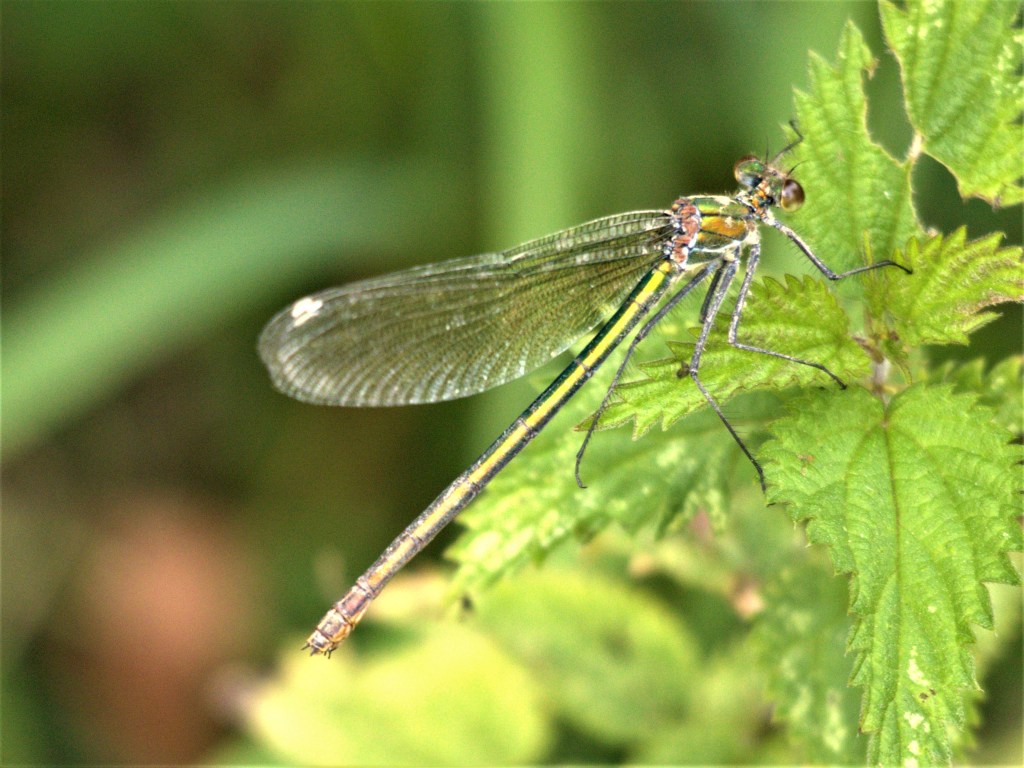
We also checked on the number of birds – very few – we were rather relieved to see a Cormorant perched in their favourite tree at the far end of the field because we didn’t see any other water birds. Blackbirds, Crows, Wood Pigeons and a Magpie seemed the only birds around until my daughter spotted the Buzzards flying overhead – it looked like a family party of five and, happily, walking back beside the river we spotted a pair of Grey Wagtails below the weir. Impossible to know if this is the same pair which we have seen on occasion since spring but if so we have yet to see signs of successful breeding. Whilst we were watching the birds, my daughter scrambled down the track made by the Otters climbing up the steep bank and found clear signs of fresh anal jelly.

Further on the Otter spotting front, rather shameful to report that although both my husband and I had checked the shallow beach for Otter spraint before we began the kick-survey and found nothing, just before we were leaving and my daughter was emptying the species tray she spotted, yes you guessed it, a clear red fresh spraint! Oh dear…. However, we were at least able to spot 2 seperate deposits of fresh Otter spraint on either side of the bridge piers, one with 2 crayfish pearls – so good to see so many signs that the Otters are still here and seemingly thriving!
1st September 2021 / Temp: 15.5 C / Water Level: Low
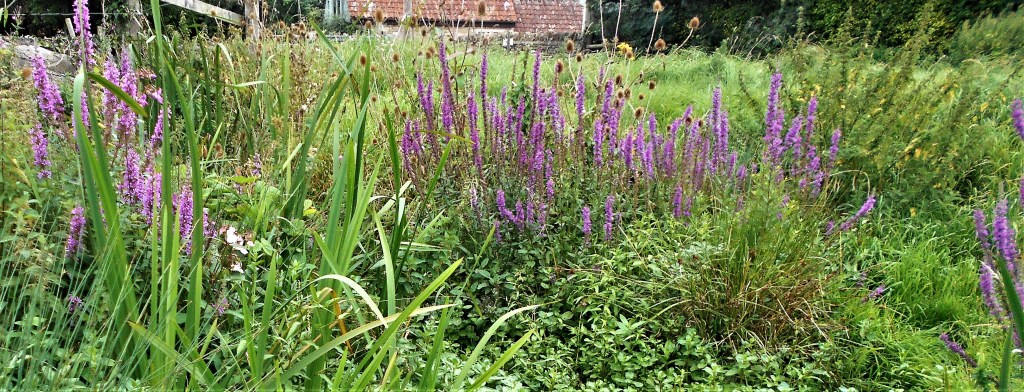
The north-easterly wind not quite so strong but still hanging around and pulling the temperature down over the last week but the sun shone, if intermittently, and we were beguiled at the beginning of the Otter survey by Swallows still swooping around the buildings and the narrow carrier stream from the old flood workings a mass of flowering plants in a line across the water meadow.
The stream is barely visible beneath the tangle of which we managed to identify nearly twenty plants in flower: purple loostrife, woody nightshade, bindweed, water mint, angelica, leafy hawkweed, yarrow, stitchwort, valerian, teasel, white dead nettle, stinging nettle, creeping thistle, great willowherb, gypsywort, redlegs, comfrey, great willowherb and water forget-me-knot and water-cress!
Our spirits were further raised by spotting fourteen fresh Otter pad marks in the soft mud of the first beach, disturbing 10 Mallard who, as usual, complained in the most unreasonable fashion at our intrusion as they flew off.
At the next site even better, more pad marks as well as 4 fresh and 5 recent sets of Otter spraint and the 5 Mandarin who flew up at our approach did so silently – almost inscrutably one might even say! As we walked along the edge of the river, although screened by trees and shrubs in full leaf, we still disturbed the main flock of Mandarin – we counted at least 50 as they rose and flew across the fields to find a more secluded spot. Quiet they might be but the sound of such a sheer number of wings meant they were unable to make a silent escape! Was it the Mandarin which alerted a small flock of Ravens to take to the sky? Five in all – adults and juveniles? Difficult to be sure but so lovely to hear their friendly chattering to each other as they flew overhead.

Another trek, another beach – and what a beach! At the far end of our Otter survey sites, the longest walk, the most difficult barbed wire fences to negotiate, the most uneven, tussocky long grass where we usually arrive battered by low hanging branches, stung by nettles, scratched by a combination of barbed wire, rose briars and strands of bramble trailing under-foot across the path to trip the unwary or caught in our hair when we are studying the ground! But oh the reward – Otters just love this hidden beach and we usually find the most spraint there. Today was no exception – Eight fresh spraint (which often means more than one Otter) six recent and two old – crayfish claws, crayfish pearls and all the usual detritus of their latest meals scattered across the stones and pebbles, some easily spotted a strong orange red-rust from the crayfish but some black, glistening or dull and more difficult to see. It’s lovely scrambling around, eyes darting everywhere, listening to the river riffling and tumbling at this point, sun on our backs and all thought of tiredness completely forgotten!

A pair of beautifully marked Tipula lateralis Crane flies (mating so still enough for a change to get a good shot) who had found a perfect spot dangling down from the river bank. In a small cave at the foot of the bank, half hidden, were two Large Red slugs Arion rufus, only one of which was red! A long walk back being necessary we were forced to shift our stumps and very reluctantly leave the beach and head home. But the scramble up the bank did bring a rather surprising reward in the shape of a Glandular Globe thistle – a plant previously unknown to us.

Unfortunately the photograph simply doesn’t convey quite how spectacular the flowerhead is (or the height of the plant and size of the prickly leaves for that matter) but as it is an unusual find in such an unlikely place we thought it worth recording. They can live for 30 years so this may be an old plant which would account for its size – the fact that it usually flowers July-August, a period we often miss on our monthly survey, maybe why we have never noticed it before.
A Small Tortoiseshell, three Speckled Wood, a Meadow Brown and six Small White butterflies accompanied us across the sunny fields towards home – weary but oh so happy to be alive on such a day in such a place!!
31st August 2021 / Temp: 14.5 C / Water Level: Low
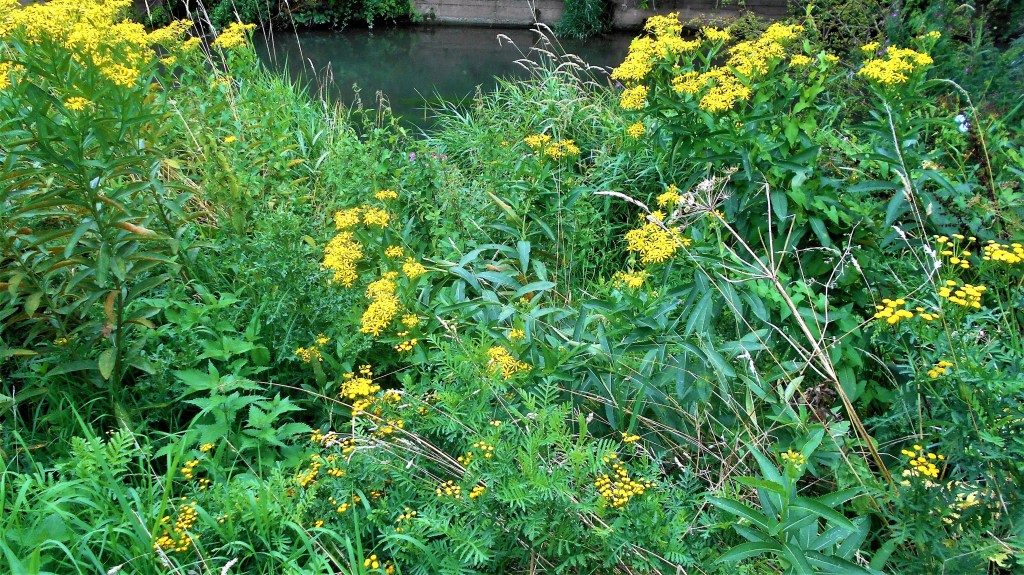
How often we have complained about the cattle trampling down the plants on our favourite beach with its full-grown ancient willow trees and massed flowers in summer. Well, this is what it looks like when the cattle haven’t been in the field for some time! Looking down to the river and, once we had scrambled down and edged our way through the less dense areas of undergrowth, looking up to the river bank!
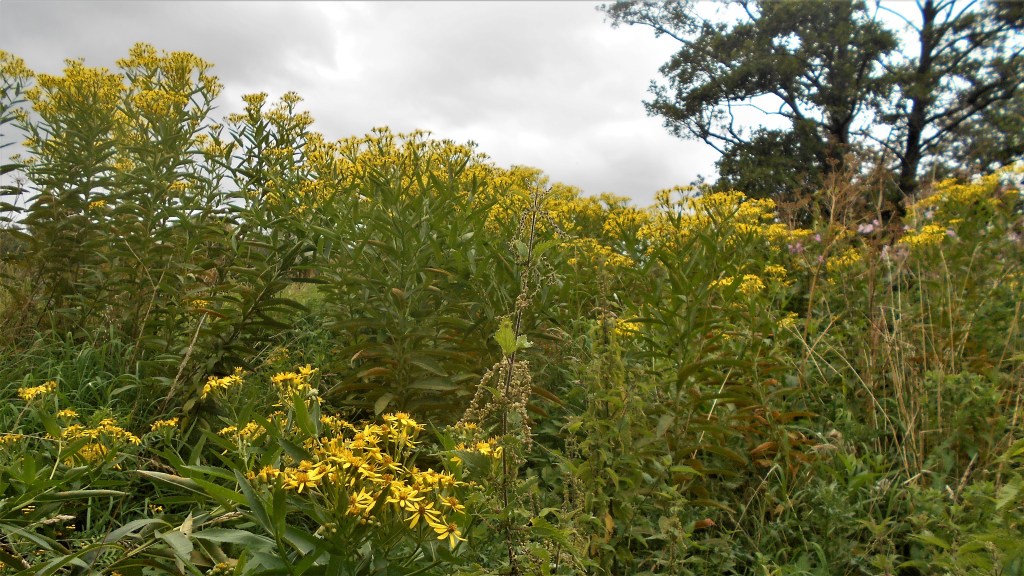
It’s the yellow season! Swathes of saracens woundwort and tansy fill the beach, almost swamping the reeds, water mint, purple loosestrife and water forget-me-not. Wonderful for the bees and hoverflies (of which there were countless numbers) not so good for the drangonflies and damselflies, only two seen – a single lonely male Banded Demoiselle and a Migrant Dragonfly. No other insects either, which given the amount of flowers was unexpected.
No water birds (in fact apart from a pair of Grey Wagtails and a Buzzard we saw no other birds at all). A few grasshoppers leaping about and we spotted a green shieldbug in its summer colours but very little life – maybe they were put off by the unseasonably chilly and pretty lively north-easterly wind!

What did catch the eye were the Euura proxima larvae which were feeding on the narrow-leaved willows causing these knobbly coffee bean shaped galls. Evidently they transect the leaf blade but grow more on the upper surface according to what we have read. We often see them but not usually quite so red.
Heading for home we eventually managed to spot some Otter spraint on some stones near the river edge which wasn’t swamped by plants and more near the weir and 4 fresh spraint under the bridge together with crayfish remains so all is not lost – at least there are Otters about.
4th August 2021 – Sad to report a dead Otter was found last evening lying by the side of the road close to the river. Arrangements were made to bag and convey it to Jo Pearse of the Somerset Otter Group in Glastonbury where she will ensure it is delivered to the Cardiff University Otter project people who will carry out a post mortem.
3rd August 2021 / Temp: 20 C / Water Level: Med
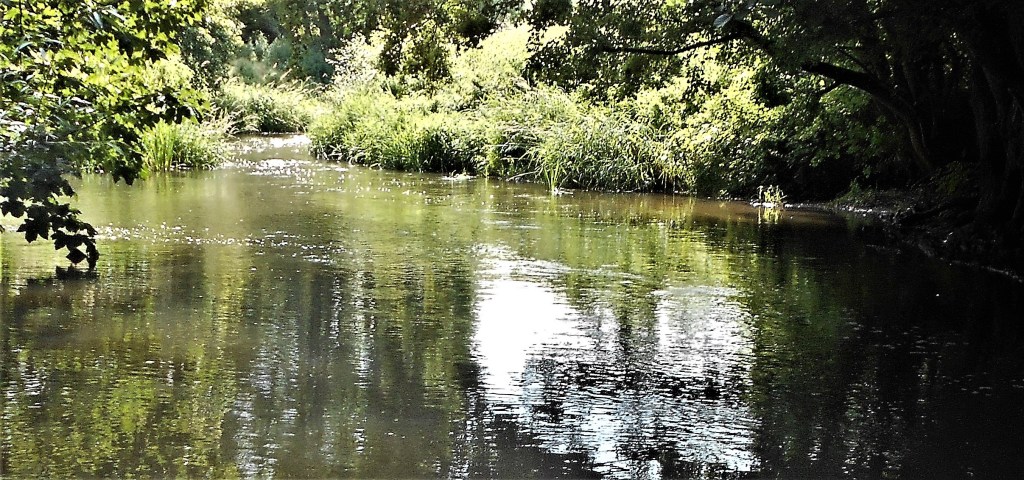
Full sun and a beautiful afternoon to explore our last Otter survey sites of the month along a quiet stretch of the river. Hazel nuts are already dropping and the meadows have an end of summer air, straw coloured grasses heavy with seed, hugely tall mulleins with most of the blossoms dropping, but enough flowers in bloom to interest the hoverflies and bees on the bramble (10+), Himalyan Balsam (10+) and Comfrey (10+) a few on the welted thistle but none at all on the spear thistle, rather surprisingly. A few butterflies about – Meadow Browns, Small Whites, Speckled Woods, Commas and Red Admirals. 2 Brown Hawkers were the only dragonflies and there were only a few Banded Demoiselles as far as we could see which was surprising on such a sunny day.
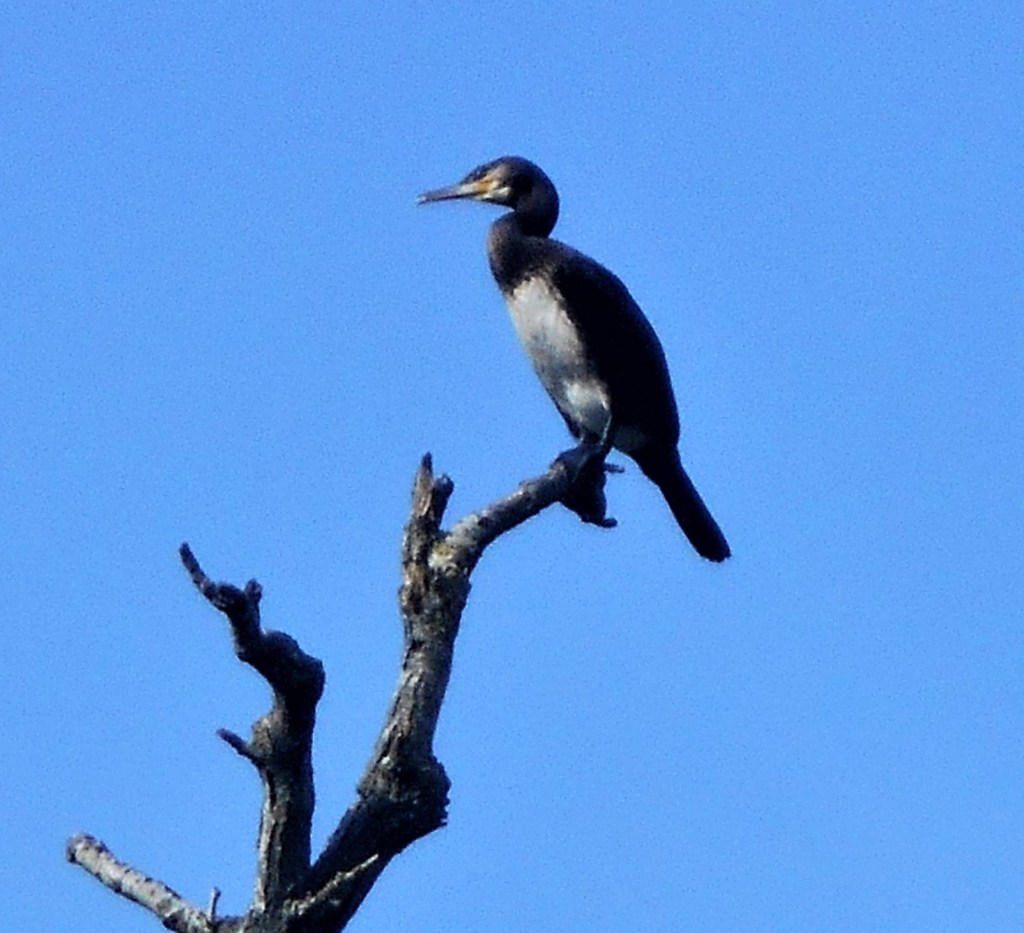
Very little activity on the water – they must have stopped working from home! We disturbed a group of four Mandarin but the two Heron we spotted were in the middle of the water meadow on the opposite bank and there was only a single juvenile Cormorant on sentry duty on the top of a dead Alder tree. There are a number of trees along the bank similarly afflicted by a type of fungus, Phytophthora. Sometimes known as alder dieback, the disease is more noticeable in summer as the leaves of affected alders are abnormally small and yellow and often fall early. Alders perform such a crucial job in flood mitigation along river banks where its roots help to prevent soil erosion so the spread of the fungus is a cause of growing concern.
When we arrived at the final site without finding any signs of Otter we were glad to perch on our folding stools and have a restful few minutes. Surprising what you see when jus’ sittin’! We idly watched the flies around the stones on the beach, continuously flying in, settling momentarily then flying off again in an ever moving swarm. We had time to examine them through our butterfly binoculars and noticed that the sawn off appearance of the wing tips on some of the flies also sported a white splodge (a technical term!).

These were semaphore flies (Poecilobothrus nobilatus) we discovered when we reached home. Evidently one of the most researched insects because they are easy to identify and there are a lot of them! It’s a pity the photograph doesn’t show their beautiful colouring, lime green eyes and thorax looking burnished in the full sun.
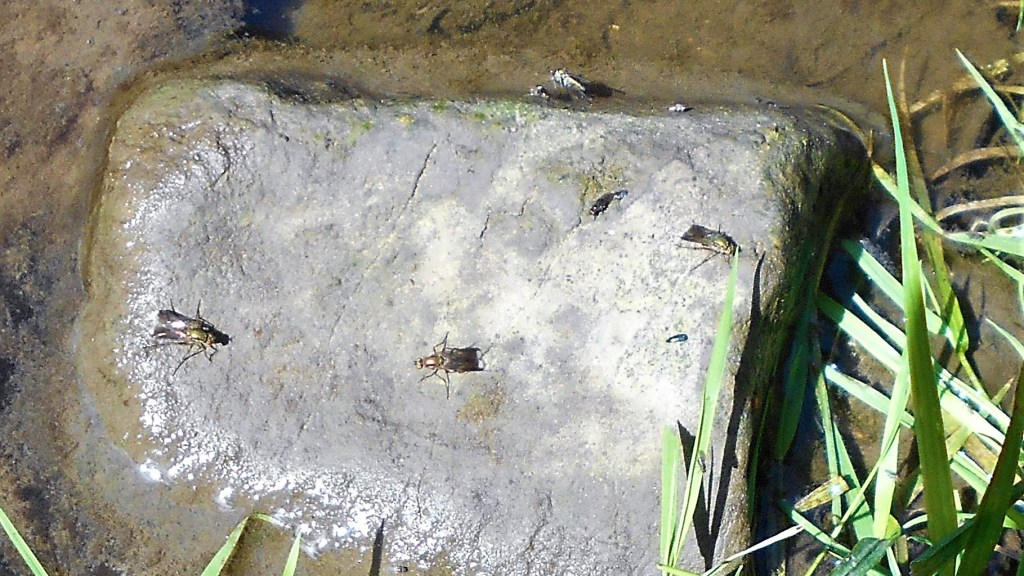
We learned that they are called semaphore flies because the males fly down and stand opposite the female, fluttering and signalling with their white tipped wings. If the female is interested they will mate but if she is not she will simply fly away. It appears that with female flies size is everything as they always chose the largest males with whom to mate!
Well rested we move off the beach, looking carefully where we put our feet, when to our surprise we spotted what we had missed earlier – fresh Otter spraint! It was small, possibly a cub or female Otter, red and chock full of crayfish shell – the change from winter black to summer red does seem to follow the abundence of crayfish. As mentioned, it’s interesting to notice what there is to see if we sometimes stop and stare!
22nd July 2021 / Temp: 23 C / Water Level: Low

9.55am Another beautiful heat-wave morning and we ran a bit late as we hoped to get our Otter survey done before the sun became too hot for us to bear but by the time we reached the river it was already very hot and along this stretch of the river there was not much shade but the Chub, growing bigger by the week, and leisurely swimming slowly up and down, for all the world like a fishy passeggiata, seem to be unbothered by the heat.

Brown Hawker copyright Tony Hisgett
The Brown Hawkers seemed equally oblivious – skimming up and down the riverside plants, in their everlasting hunt for food, we watched first one and then the two more who joined in. They are so large we were constantly catching sight of them and expecting to see a small bird, a wren maybe or evena kingfisher dashing by. The dainty, delicate Banded Demoiselles, Blue-tipped and Common Blue Damselflies went about their business totally oblivious to the bully boys amongst them.
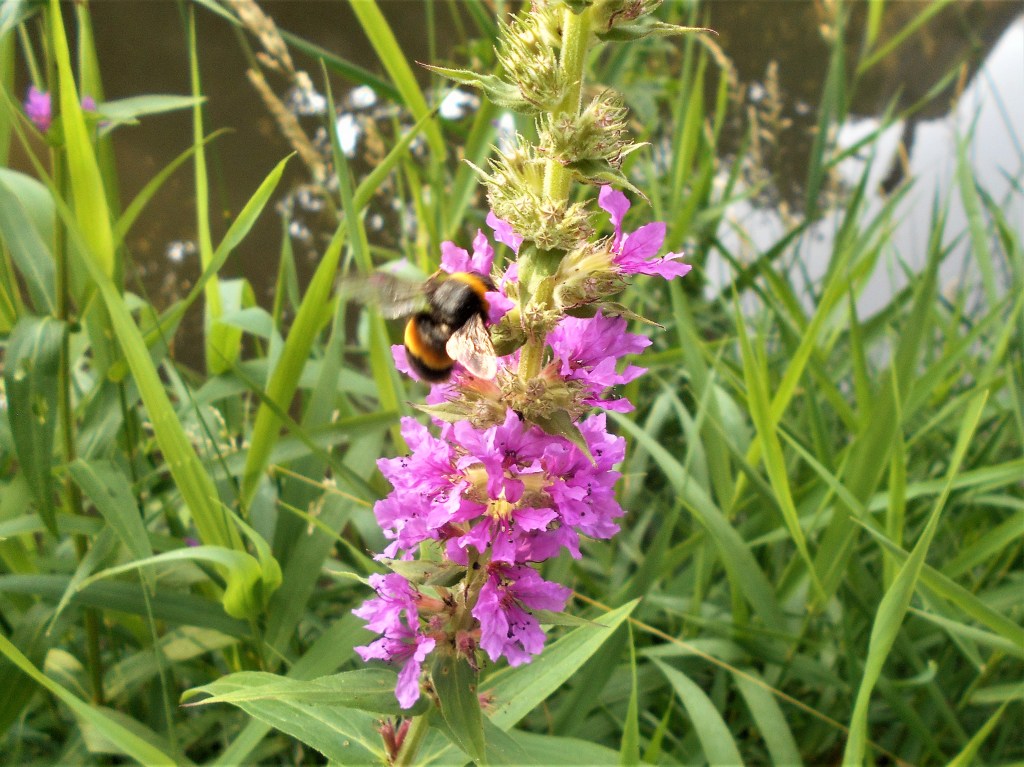
As we checked for Otters (no signs) and collected our water samples, we listened to the Green Woodpecker echoing across the meadows and a Raven calling his distinctive greeting as he flew overhead. We admired the clumps of water forget-me-not almost hidden in the thick border of reeds, the beautiful purple loosestrife A steady stream of leaves fell from the riverside trees into the river almost entirely alder and willow although there were hawthorn and blackthorn. No doubt the very early leaf fall was due to the nearly week-long heat wave where the heat of the sun was so intense.
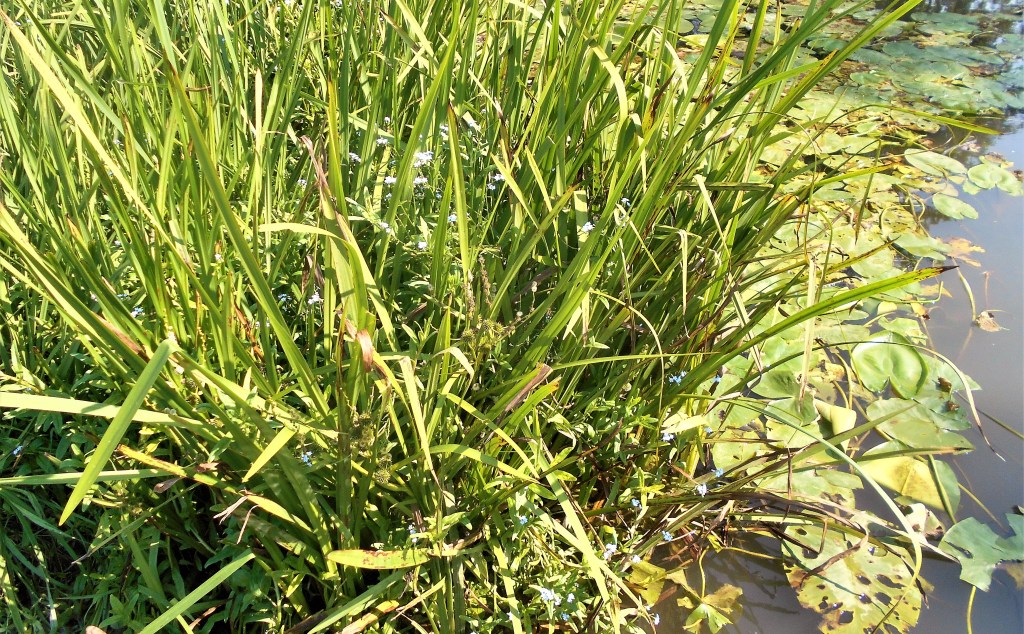
However, the predominant sight which met us when we arrived and before we could carry out our survey was upsetting in the extreme. Reluctant as we are to bring news of such devastation to our celebration of our beautiful local river, we cannot just let it pass by without comment. Cartons, food packaging, drink cans, plastic bottles, socks, plastic bags, towels, plastic wrappers, tin foil barbecue containers, beer cans and bottles strewn over a large area all along the river bank. In the centre of the field were three large dustbins bags full to the brim and spilling their contents of yet more picnic detritus onto the meadow.

Seeing the cows and bull at the far end of the field we had no choice but to collect all the rubbish, making sure we collected every plastic bottle top, medicine package, crisp packet or anything else which might be harmful to the domestic or wild animals which frequent the field (although we did draw the line at picking up discarded plasters and we were unable to remive the plastic bottles thrown into the river as they were too far out for us to reach.
Given that this is private farmland regularly used for grazing cattle and the bank and river are owned by the local Frome & District Angling Association one would have imagined that tresspassers who swim and picnic would at least leave the river, bank and field as they found it but it appears that is not the case.
As for the water samples, the readings were much as expected, the Nitrates were above the safety level and Phosphates considerably higher than that and of course both much higher than that recommended by the Water Framework Directive.
21st July 2021 / Temp: 22.5 C / Water Level : Low

9.05 am – Clear sunny morning after a hot muggy night and we’re off on an Otter hunt! Not expecting to see the animal, we are never that lucky, but hoping to see spraint or pad marks or signs of them passing by. Sadly just one sighting under the bridge, all other sites were Otter free.
The river looked beautiful, sparkling in the sunshine, the damselflies fluttering over the water, all through the riverside reeds and purple loosestrife – 2 or 3 White-legged, 13 Banded Demoiselles, a handful of Beautiful Demoiselles and a large, very important looking Brown Hawker patrolling his patch, looking very masterful!
There were also 9 Small White and 4 Small Tortoiseshell butterflies, 8 ladybirds (almost entirely Harlequins), loads of grasshoppers and we counted 10 soldier beetles before we gave up as they seemed to be on every plant!
Not many birds – a Buzzard circling, a busy Wren close to the river, a couple of Mallard scooting off at our approach with lots of noisy complaints, a lovely Goldfinch and at last the reward – a Kingfisher flashed past!!
17th July 2021 / Temp : 29 C / Water Level : Low
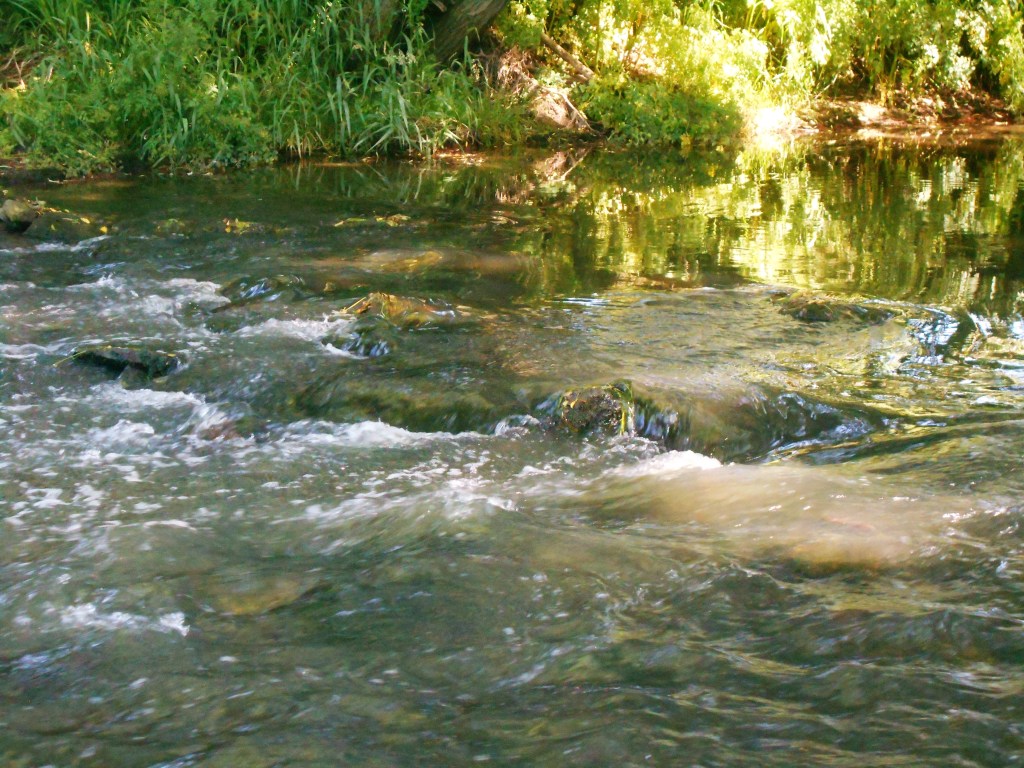
It was extremely hot and almost tropical in the house and the clear skies made for burning sun and a longing for the cool shade of the tree lined river. We headed to the water to check along the beaches and banks for signs of Otter but despite our best efforts, we didn’t spot a single pad mark or spraint or even the tell-tale crayfish remains.
However, what we did see was a joy – we discovered river limpets for the first time! We found loads of shells on the beach river line further upstream but we have never before found any actually living in the river, attached to stones, so we reconciled ourselves to the belief that the shells had been washed downriver from one of the tributaries. But here they were – so incredibly small and so difficult to spot but once we found one we found many others, although disappointingly they also proved too difficult for my little camera to capture a clear image – hence the unfocused photo here!

Naturespot writes: A bottom living species found in unpolluted running water where it adheres to the sides of stones in moderate flows. Sensitive to pollution but is usually excluded from suitable habitat only by chronic pollution as it will normally recolonize lost territory after incidents. This was extremely interesting to us as the water test showed a sharp increase or spike in phosphate pollution since our last test a mere 8 days ago so we were concerned that these limpets and the caddis fly larvae might be harmed.
We were surprised to see so few butterflies or in fact insects of any description – a couple of banded demoiselles, 5 small white and 1 meadow brown butterfly being the sum total of the afternoon. Similarly apart from a family of Crows attacking a Buzzard, a few Wood Pigeons and Gulls and one Wren it looked as if that would be the lot, but when we were working the river close to the bank a Kingfisher shot past downriver, missing one of us by centimetres, and minutes later he shot back upriver again giving us a full view of his beatiful feathers, who could ask for more – river limpets and Kingfishers!
9th July 2020 / Temp: 19 C / Water Level: Low

Fortunately the rain held off and we were able to spend part of the morning testing the water for phosphorus and nitrates as part of the BART Waterblitz project. It was disturbing to note the high levels of both (2.00 ppm and 40 ppm respectively) which must effect the health of the river. Some creatures are able to tolerate that level of pollution, for example some of the Mayflies, Caddisflies, Dragonflies, fish and crayfish etc but some cannot. So that while we see a great number of Ephemera danica, both as larvae and as mayflies plus Yellow May larvae, we never see Yellow Sally Mayflies which are believed to be very susceptible to organic pollution. On the other hand, species like the Blue Winged Olive, which are very susceptible to phosphorus so we wouldn’t expect to see any but we have recorded both larvae and mayflies in the river.
What was also very noticeable was that the water was colourless but, predominantly on the edge of the river, the moss and stones were covered with a substantial layer of sediment which turned the fresh green moss-covered stones mid-stream into brown, sludgy unsightly brown on the slower bankside water. This is borne out by never seeing the Southern Iron Blue Mayfly which are susceptible to sediment.
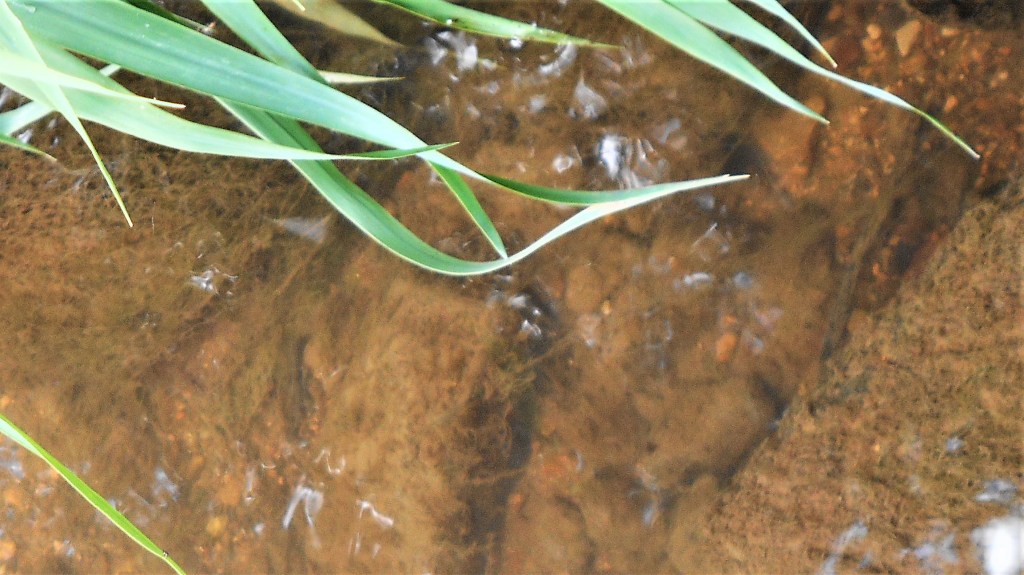
Standing calf-deep midstream watching the water rushing past one is reminded yet again that this isn’t a majestic river like the Danube with it’s huge commercial vessels ploughing all before, pushing steadily downstream, or commanding awe like the Sava, creating giant jagged slabs of snow covered ice along its banks in winter, full of pleasure boats and water skiers in summer, it’s not even deep and wide and serene like the Thames, carrying rowing eights with their beefy oarsmen and diminutive cox with a loud hailer almost larger than their heads – this is an intimate river, which, like an over-excited child, is always full of chatter. It never stops telling anyone who will listen the tales it has to tell, of the amazing things it has seen on its dash across country through villages and town, through farms and nature reserves and all the magical creatures it nurtures. As it tumbles over stones, like stumbling over words, runs deep and black and mysterious before weirs and shouts loudly over the rush and splash and thunder, that if you stop and look, really look, you will discover that here “there are more things in heaven and earth, Horatio, than are dreamt of in your philosophy.”

Wading back to the bank we walk along the edge of the luxuriant high summer growth of the feathery seed heavy reeds bending low beneath the weight, the opening common valerian, stately hogweed through which the damselflies which flash irridescent blue and emerald bodies with transparent or copper wings fluttering up and down, a small tortoiseshell butterfly, bees, hoverflies and swollen thighed flower beetle examining every bramble or ragwort flower, or craneflies hunting a convenient blade of leaf on which to rest, difficult when there are so many common wetland Amber snails clinging to reed stems displaying their spires with aplomb!
Our test completed, our wading done, we gathered sticks and binoculars, test kits and bottles and climbed the steep bank to the top. Standing on the bank taking a last glimpse of the river sparkling in the sunshine, we were just in time to spot a kingfisher flashing downstream. A perfect end to a perfect morning on the river!
1st July 2021
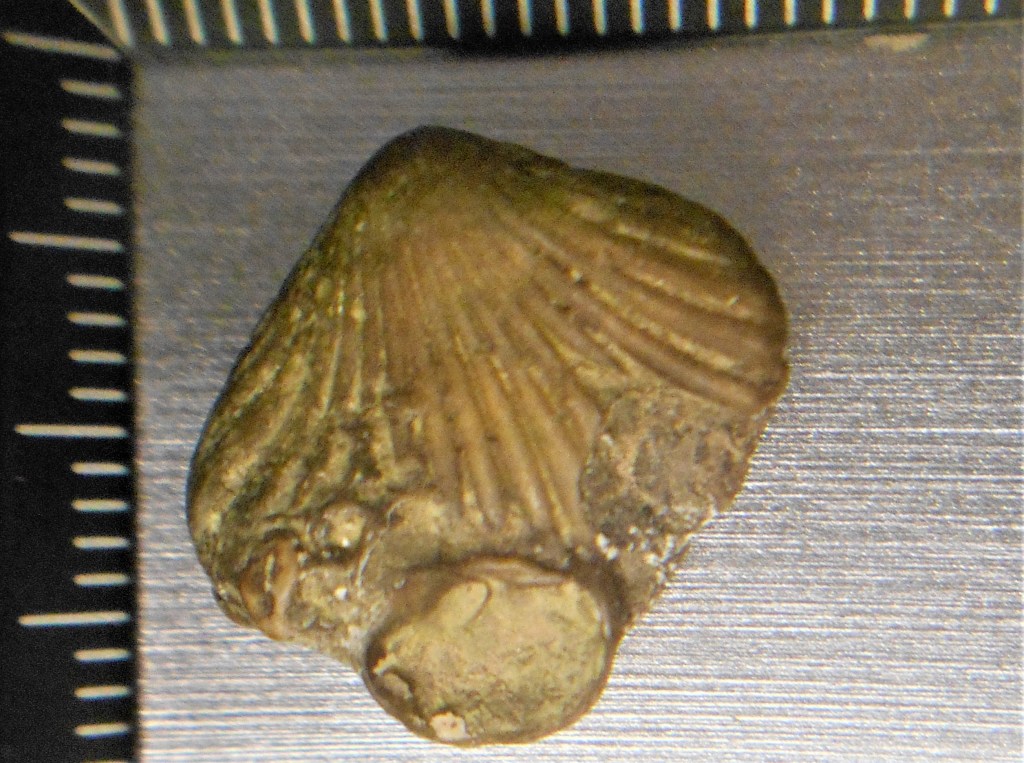
We are most grateful to receive a reply from the notable paleontologist Simon Carpenter who has kindly identified the fossil which our 9 year old grandson found in the river while we were doing our kick survey.

Simon Carpenter writes:
26th June 2021 / Water Level: Low

The idyllic calm of a fine summer afternoon looking upstream where the river is clear and full of fish and even fuller of empty ripped pupa cocoons and tumbled tiny stones of the free swimming caddis larvae Rhyacophila dorsalis escaping their bondage and now flying free!

Downstream are two young boys their father and grandfather a’hunting the crayfish, each catch larger than the one before, catching Bullhead from a tiny fry, looking for all the world like a flying insect, to good sized (for Bullhead!) fish,
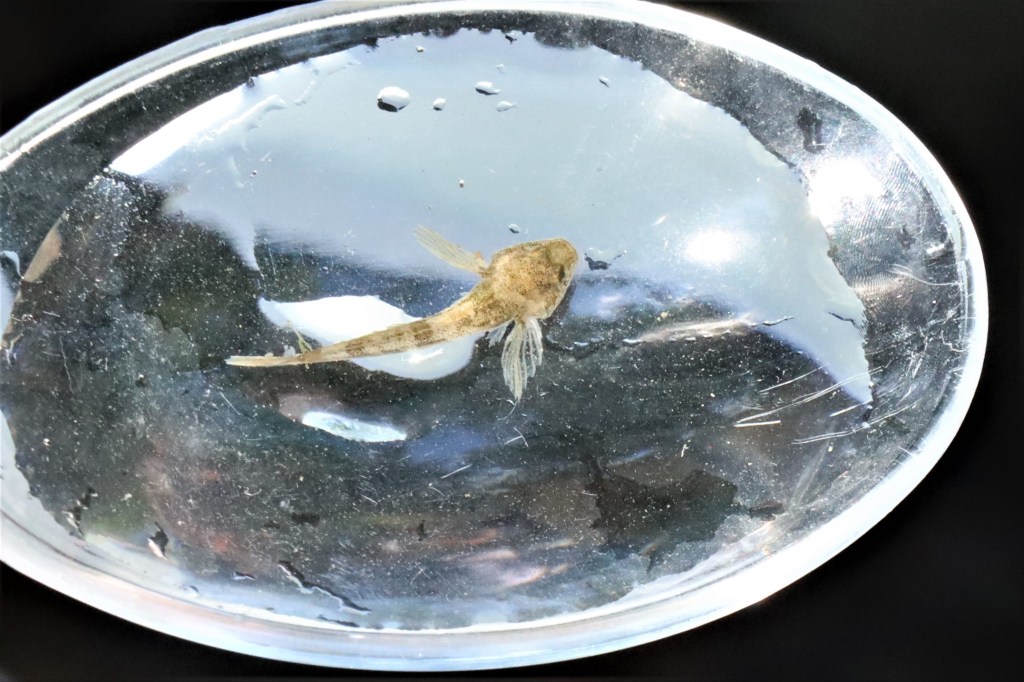
and watching a single Cormorant diving and fishing totally oblivious of his audience of children and parents alike standing stock still, knee deep in the tumbling current until the bird, presumably well-fed eventually swam off downstream and soon lost to sight in the bend of the river.

Above the water meadow a pair of Kestrels were mobbing a Buzzard whilst two more Buzzards circled higher up in the sky keeping out of trouble! We heard a Wren close by the bank complaining nosily at our intrusion and a Jay rattling from a tree near the carrier stream which may have alerted the Brown Hare to our presence because we caught sight of him racing down the line the stream to disappear towards the farm. Very few butterflies, a large white and a small tortoiseshell looking rather lonely as they fluttered around.
A marvellous, memorable day, full of excitement and action, the boys stopping only to pour out their almost full wellington boots before thrusting soggy socked feet back into soaking wet boots and returning to the hunt. And to crown what had been for a very happy but tired couple of boys a brilliant time messin’ about on the river was the younger one finding first a ramshorn snail and then this exquisite bivalve fossil.

We have found similar fossils but broken and incomplete but this one was a peach! Fortunately the organiser of our Somerset Otter Group has a friend who is a notable paleontologist and suggests that we contact him for his thoughts on the find. We can’t wait to hear what he has to say!
As the afternoon was drawing to an end, we oldies could think of nothing but a longed for cup of tea while the boys dragged their father off to the skate park – where do they get their energy from?!
2nd June 2021 / Temp: 20 C / Water Level: Med, falling

Mayflies! It’s the season! Everywhere we look, clinging to flower stems, stinging nettles, leaves of every description or caught in spiders’ webs, there is a mayfly clinging, hanging motionless. Sitting on the river bank and watching the mayfly hatch on a warm early summer afternoon, what could be more mesmerising. The duns lifting and drifting to the reeds, those falling back into the river to flutter and fail, the leaping fish early in the season, or the lazy fish later just opening their mouths or completely ignoring them. The non-stop yo-yo mating dance of the spinners sometimes over the water or over the river bank, so thick it’s amost impossible to walk through – summer has arrived at last!
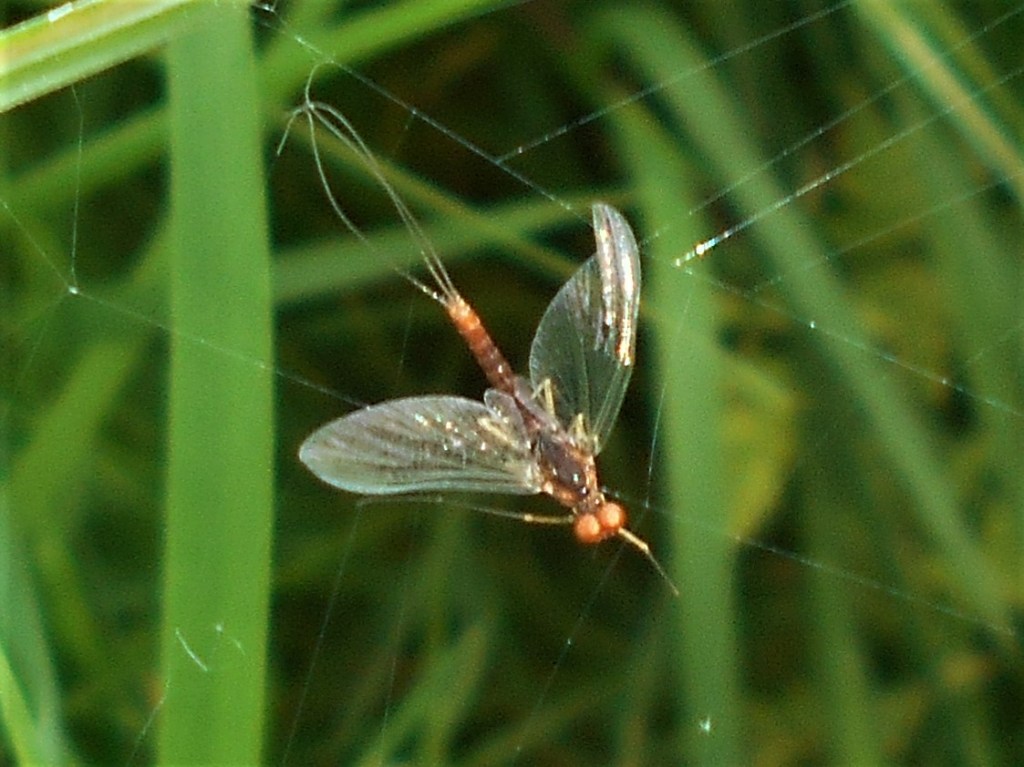
We were particularly thrilled to spot a Blue Winged Olive dun, rather sadly caught in a web, a tragic end to a joyful rise into the sunshine from the water after two years as a larva confined to the river, but exciting for us to see this species for the first time – one of the species indicative of unpolluted water.
Lots of damselflies joining in the flight, male and female banded demoiselles, beautiful demoiselles, blue-tailed, and common blues but still no signs of dragonflies – maybe too early. No butterflies either, just one orange-tip and a solitary holly blue examining a large Otter spraint on the beach, but we did spot a nomad bee among the buff-tails and honey bees, what might have been a dagger fly and even a click beetle clinging to a blade of grass!
Little Egrets, a Heron, 29(!) Mandarin, 10 Mallard, a flock of Rooks and Jackdaws around the heiffers; a particularly loud Song Thrush singing from the tree, challenged by Whitethroat, Chaffinch, Chiff Chaff, Blackbird all giving full throat – a wonderful sound.

We were so pleased to see a good number of Otter spraint at the first site, 5 fresh and 3 recent, more than we have ever seen which raised our spirits, lifted further by spotting two brown hares, running away from us and then squatting down, low on their haunches, even though they were not hidden as the meadow has been recently cut and hay gathered, but this year’s crop of maize should give good cover pretty soon.
Our next Otter site was even better – 7 fresh spraint, toffee-red and chock full of crayfish shell and pearls and 2 recent which raises the possibility of more than one Otter. There were lots of fingernail clams and spiral water snail shells among the coarse sand on the waterline, a pond skater, male and female damselflies along the edge plants while in the water mayfly and damselfly nymphs, lots of freshwater shrimps of course, but also some intriguing small beetles, at least 25, which unfortunately were just too minute for us to identify.

As we walked back across the stubbled water meadow we found what looked like a nest of pheasant eggs which had been run over by the farm vehicles – a common sight now that most farmers mow their hay fields twice a year, the first when the ground birds are still nesting. As we neared the farm we watched with delight the rather more fortunate handful of Swallows streaming high and weaving low across the sky before disappearing into the barn, their beaks full of flies to feed their early brood. Summer has arrived!!
31st May 2021 / Temp : 20 C / Water Level : Med. falling
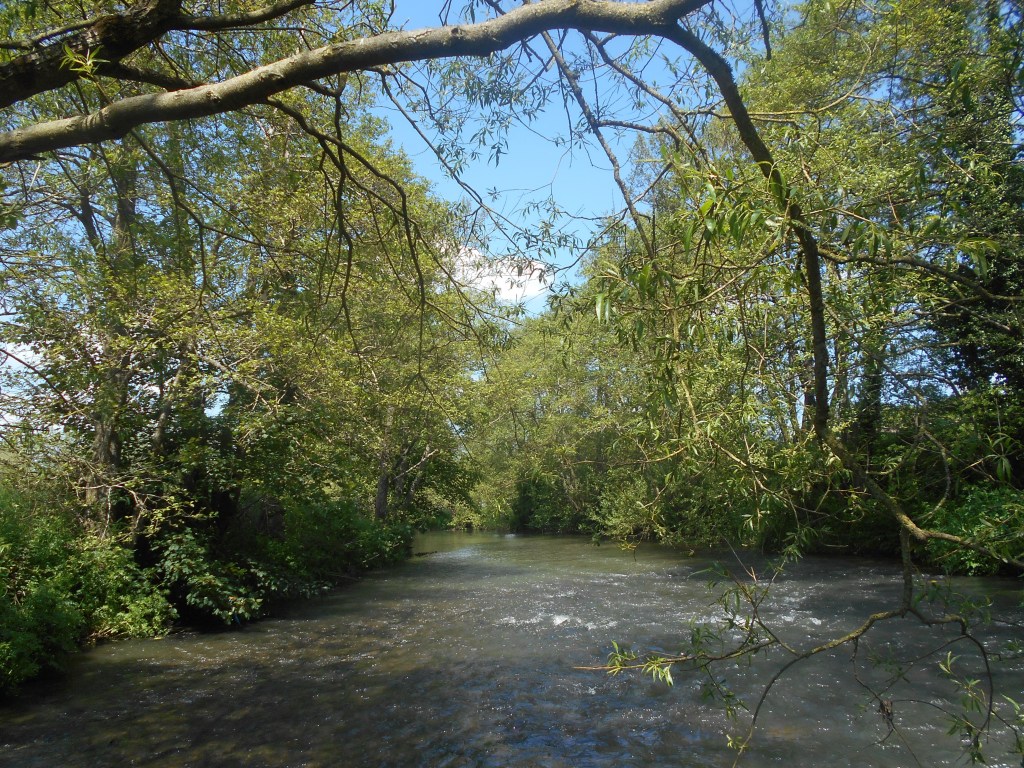
A beautiful afternoon, sunshine and drifting fair weather fluffy clouds, the air full of blue tailed, banded and beautiful demoiselle damselflies, including several dark ink blue immature male demoiselles with caramel coloured wings, orange tip and red admiral butterflies and even a pair of Great Spotted Woodpeckers nesting in a tree close to the river.

It was a good time to get the second kick survey done and be out of the way before the coarse fishing season starts in a couple of days. The water level in the river was also falling which makes it a good deal easier to negotiate, given that the current is fast and furious, tumbling over the stones of the remains of the old Roman ford at that point. It usually has rich pickings and we were not disappointed but extremely pleased with our haul! A caseless caddis, which Ian Wallace from iRecord kindly identified as Rhyacophilladae dorsalis, and what we think may well be its pupal skin abandoned on a stone when it left the river.
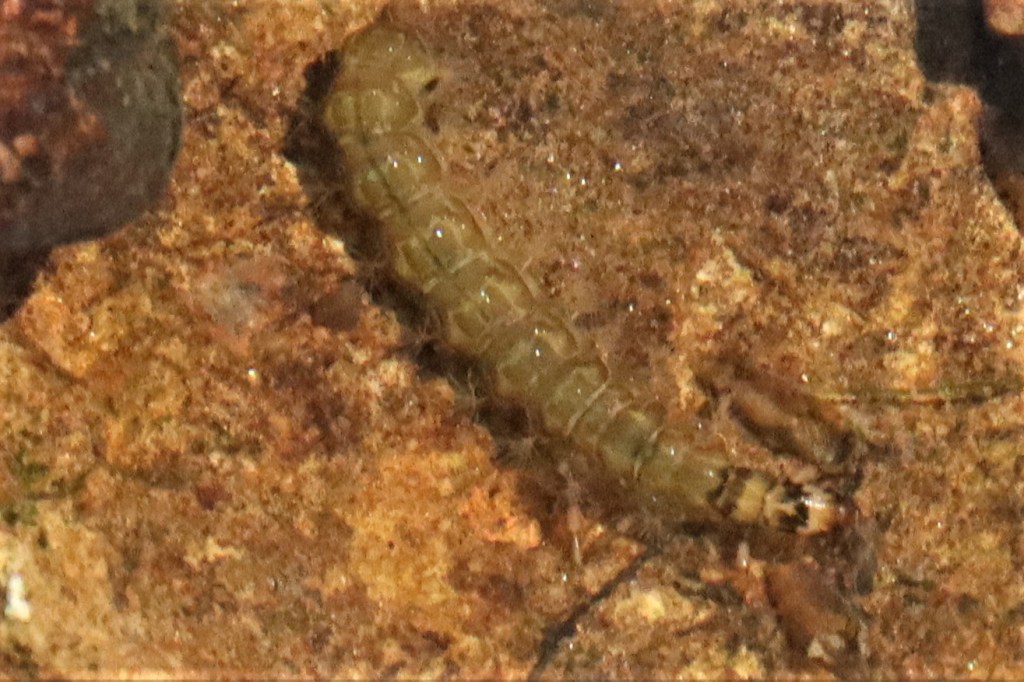
copyright Rebecca Muirhead
A good showing of Dragonfly and Mayfly larvae both Ephemera danica and Serratella ignita (both of which were rising from the river around us) several freshwater leeches, cranefly larvae, alderfly larvae (possibly the mud alderfly Sialis lutaria), uncountable numbers of freshwater shrimps, midge larvae, worms and river weed, the latter a thorough nuisance as everything hid under it.

copyright: Rebecca Muirhead
Lots of small humped Agapes cases secured to stones, they are extremely abundent here. We are extremely ignorant and amateurish in our identification of these water creatures and what little we know has been garnered by hours spent pouring over the diagrams and re-reading the explanations in Ian Wallace’s excellent “Simple Key to Caddis Larvae” and the FSC Freshwater name trail but learning from books is very much second best to learning from experts in the field. This is to excuse our lack of naming the Agapes species – as far as we know, unlike the caseless caddis, we haven’t been able to see one let alone photograph one! The same applies to this little black creature, we have a photograph but it remains able to travel totally incognito as we have not the slightest idea what it is!
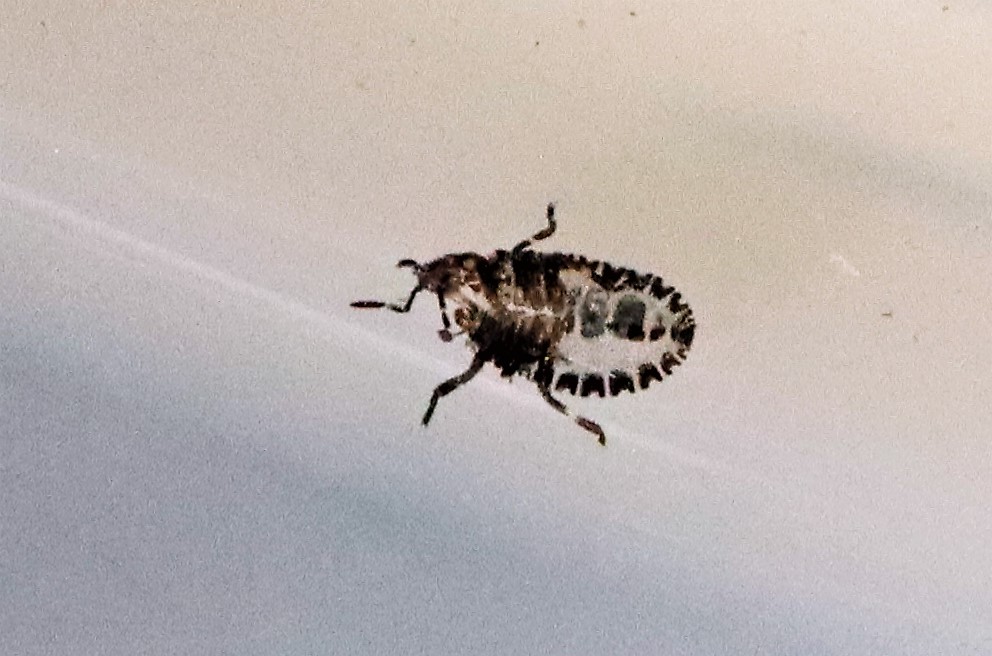
When we began to tire, we packed up all our paraphernalia, and made our way slowly back along the river bank and across the water meadow disturbing two pairs of Mandarin and one duckling, a Grey Wagtail, a Heron lifting laconically from the bank, a small flock of Herring Gulls with a Lesser Black-Backed gull amongst them passing overhead and a Red Kite, hanging around above the grass cutting machinery in the next field, hoping for a supper of small fat mammals fleeing the machines.
30th May 2021 / Temp: 20.5 C / Water Level : Med

On what promises to be a gloriously sunny Whitsun day we head to the river over burdened with rucksacks, kick nets, buckets, trays, cameras, binoculars and, most importantly of all, the picnic! Our dear daughte,r having offered to give up a couple of days of her holiday weekend to help with our kick sample which is becoming really too difficult for us to manage on our own, deserved a reward which I offered as soon as we arrived at the river – gin and tonic iced lollies! They were absolutely delicious, even though, melting fast, they dissolved into iced crush. We toasted Beltane with many cries of “Happy Belters!” which set the mood for the afternoon.
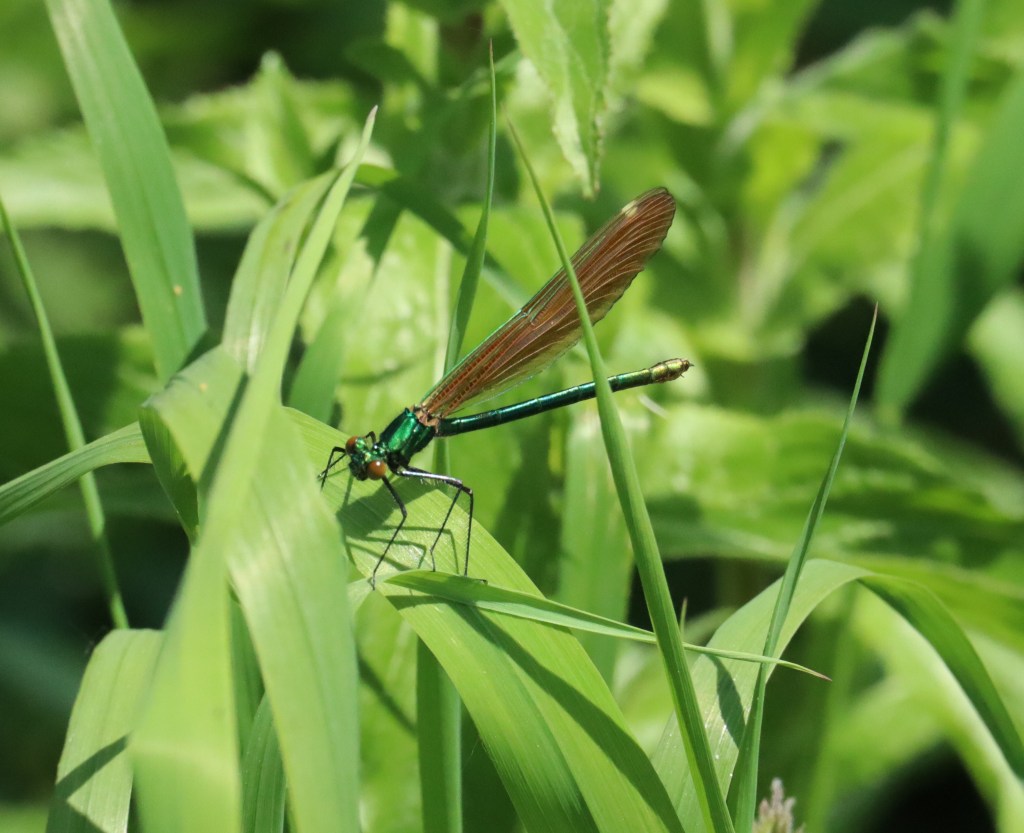
Beautiful Demoiselle (f) – copyright Rebecca Muirhead
We had found fresh Otter spraint (with crayfish pearls) at our first site on the way to the beach, scatterings of crayfish remains every 2 yards stretching for 30 yards and more fresh spraint on the beach. The beach was alive with damselflies, beautiful demoiselle, banded demoiselle and common blue, thick with flowers, red campion, cow parsley, buttercups, stitchwort, vetch all growing tall and so thick we had to edge through to make a narrow path through the undergrowth, and the mayflies were rising with a good number one after another and then another and yet more in a steady flight all afternoon – wonderful to see the river so alive and delightful to watch as we tucked into Mowbray pork pies, baguettes thickly spread with homemade pates, black olives and watermelon & feta salad.

Common Blue Damselfly (m) – copyright Rebecca Muirhead
We resisted the temptation to fall asleep in the sunshine with the only noise the soft soporific sound of the river tumbling and splashing over the stones, and set to, dragging the net through the long, green hair-like tendrils of the water weed and kept to the edge of the river, the main channel being too deep and fast to wade out to.
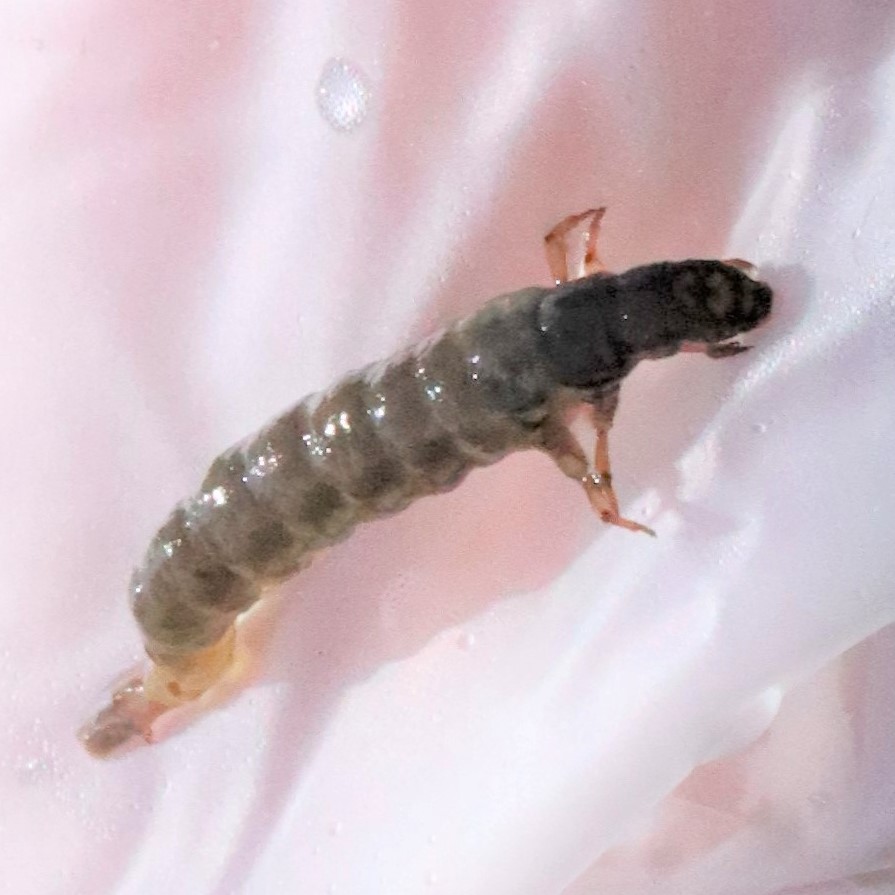
We struck gold! Almost immediately we captured this small creature in our net and watched it careering around the shallow bucket at top speed. A completely new species for us which we hope won’t be too difficult to identify – always a forlorn hope – a faint possibility it might be a net-spinning caddisfly larva but all these grub-like larva look so similar we may never find out!
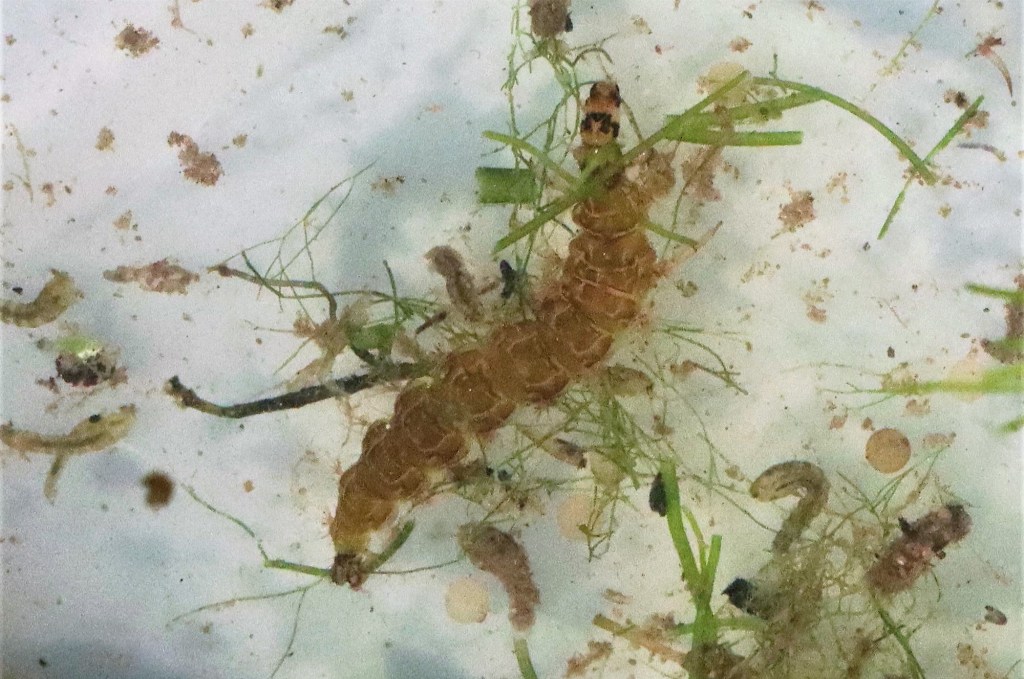
Note: This larva (above) has been identified by Ian Wallace of iRecord as Rhyacophila dorsalis, a free swimming caseless caddis larvae, now been confirmed as present in both kick survey sites.
However a goodish haul – dragonfly, damselfly and mayfly larvae (many flattened mayfly nymphs including 2 Yellow May) as well as the caddis larvae, the usual huge number of freshwater shrimps, plus water fleas, fish eggs, both biting and non-biting midge larvae. We weren’t able to carry out a full survey but working with what we had, it confirms that the water here meets the “moderately impacted” category, disappointing given the number of species indicating clean water, but not unexpected.
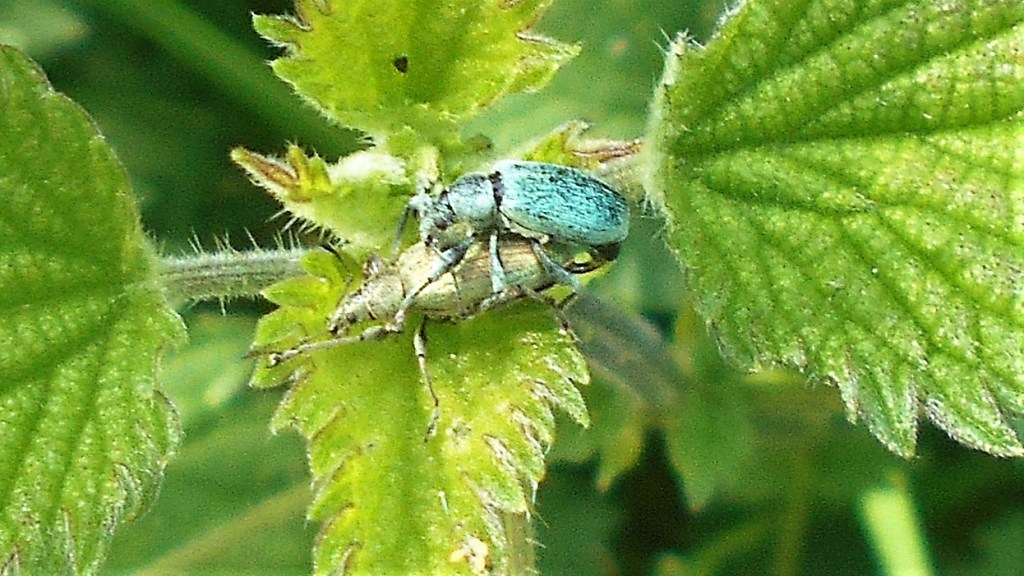
Breeding season for nettle weevils seems to be in full swing, three Pied Wagtails flying ackwards and forwards across the river, and up into a tall tree, bringing food for their nestlings, three Mallard, one male and two females, 3 Wrens, a Great Tit and as the afternoon wore on 4 or 5 Swallows suddenly appeared, weaving around the trees, feeding, before flying off. Short by incredibly sweet to see Swallows, harbingers of summer. Checking the last site, we disturbed a Heron but there were few other birds and no butterflies and by now it was time to pack up.
All afternoon the farm machinery had been working the water meadow, cutting the hay, and as we walked back along the river bank we startled a Buzzard threatening a Crows’ nest, it immediately flew up and away, being chased by both parent birds squawking loudly and shouting abuse. Three other Buzzards circled above the lines of drying new mown hay, all on the lookout for prey, two Red Kites were also on the look-out, one quite low over the grass, another higher up and also circling and finally we spotted a Kestrel joining in the small mammal hunt. None appeared to be successful whilst we were walking through.
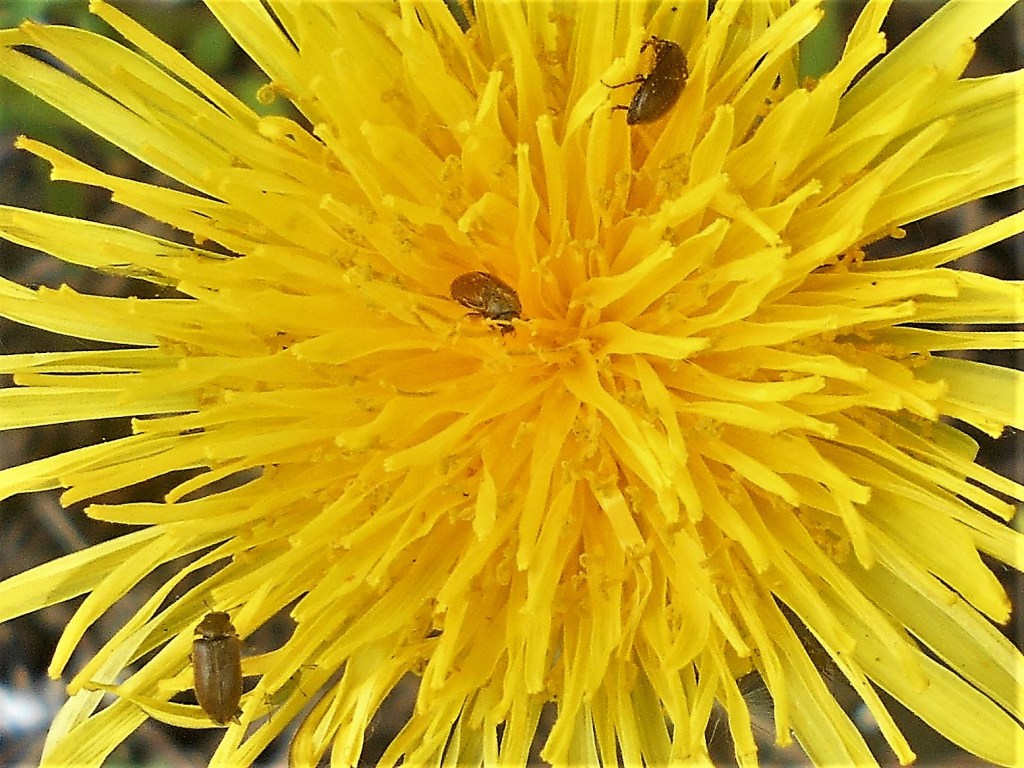
A good crop of dandelions by the five-barred gate, each one filled with lots of fruitworm beetles crawling between the petals feeding on the pollen. What a wonderful day to spend in the brilliant sunshine of early summer, away from all the cares and burdens of this long, seemingly endless plague, where our only concerns are river creatures and nestlings.
28th May 2021 / Temp: 18.5 C / Water Level: Med
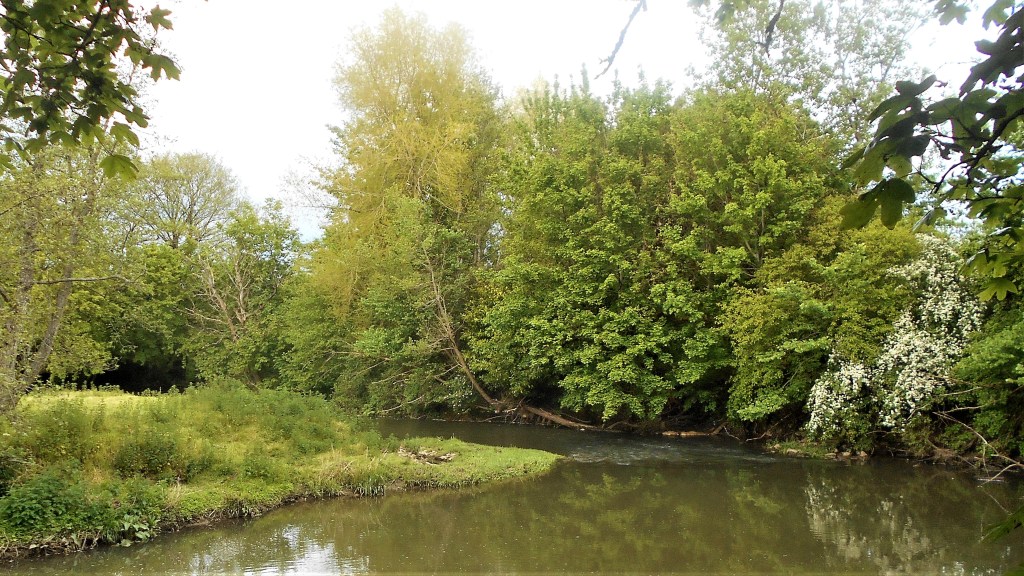
Such a relief to get out along the river and check what’s new, what’s happening with the Otters. After an unseasonably cold and dry April, it has been an unseasonably cold and wet May – horrible weather, almost autumnal but definitely October, grey and dreary so although the sky was overcast, at least it wasn’t raining!
After the bumper sightings of so much Otter spraint on last month’s survey along this stretch of the river, we had high hopes of finding lots. Sadly, not the case. When naturalists refer to Otters as wanderers, we can certainly second that, as despite almost crawling along with a large magnifying glass so carefully did we check every inch of the banks and beaches, we saw nothing but two dollops of recent spraint on the corner of the beach at the far reaches of our stretch of river. This exceedingly frustrating sighting fills us with deep gloom – as the river beyond that point is not accessible to us an we have visions of an adult female Otter and her cubs cavorting about just out of sight around the bend in the river, chortling happily!

However, searching for spraint meant we were looking everywhere and spotted this beautiful longhorn beetle going by the magnificent name of Anaglyptus mysticus which sounds very much like mysterious wallpaper! Whatever, he’s a handsome beast, whose larvae feed for two years in the dead wood of broad-leaved trees (we spotted him on nettles close by a wood pile) and after overwintering under the tree bark, emerge in April.
Very heartening to see both Swans with cygnets and Mandarin with at least four ducklings, Mandarin do very well here and their numbers are ever increasing, but whether that is because a householder farther upstream feeds them regularly or not is impossible to tell, but is extremely likely. We saw several pairs of Mallard but strangely no sign of young but they could of course have been hiding under tree roots in the river when they heard us approach. Little Egret, Pheasant, Chaffinch, Wren, Robin, a pair of nesting Crows in their nest high up in a tree and even a cockerel making his presence known.

There seem to be a fair number of alderflies (left) this spring, which is always a good sign of a healthy river where their larvae can thrive.
Another sign of reasonably clean water is the number of mayflies (we only saw the most common, Green Drake) clinging to grass stems and tall plants and low hanging leaves of the trees along the river bank.

We also spotted this half-drowned insect caught in the cleft of a teasel stem; we eventually identified it as a Dock Shieldbug, bamboozled by its amber body, almost glowing reflecting the golden buttercup, when we are so familiar with its more usual dull brown colouring and striking shape, although evidently its body does show red when in flight but we have never recognised it when flying.
We had a friendly and informative chat with the owner of the property who allows us access to his stretch of the river to carry out our monthly Otter survey. He was telling us that he had received a letter from a women who had been an evacuee at the farm when she was a child and was hoping to visit later in the summer with her family. It was still a working dairy farm when she had stayed there and she was longing to revisit and see if she could find reminders of her old haunts. We hope to hear or read in the local newspaper an account of her visit which should be fascinating.
9th May 2021 / Temp: 15.5 C / Water Level: Low

Dark and gloomy afternoon – difficult to believe it is the second week in May, usually the most beautiful month of the year but not this year. Easy to look around at the lifeless fields and grey sky and think this is what a plague inflicted country looks like, the temperature in the brief periods of sunshine warm but the wind cutting and more like March than May. The contrast from last year couldn’t be more marked – then we were basking in day after day of brilliant sunshine and balmy temperatures, this year it is so cold we see few insects and again no damselfies.
No sign of Otter spraint either, although there were signs of recent spraint at the second site on a favourite stone underneath the bridge, so they are still roaming around. Signs of what may be field voles in the field, piles of short nibbled grass stems scattered around one area close to the river bank, well away from the mole hills which line parts of the field. Lots of birds, a Green Woodpecker yaffling from the nearby wood, longtailed tits, robins, blackbirds, great tits, and the usual flocks of gulls and two pairs of mallard.
Just as we were leaving, walkng across the water meadow, there suddenly appeared a flock of swallows and house martins – out of nowhere – the swallows skimming inches above the grass no doubt feasting on the yellow dung flies which are everywhere! The weather may not feel like May, but Swallows and House Martins appearing for the first time, it must be!
2nd May 2021 / Temp: 14.5 C / Water Level: Low

A quick check along the water lily stretch of the river where we have been told we will find Red Eyed Damselflies, the males of which rest on the lily pads waiting to pounce on passing females. No luck. They usually appear from April onwards we have been led to believe but of course this year the weather has been unseasonably cold with ground frosts still covering the ground on some nights, and although the sun was warm, the wind was from the north east and decidedly chilly so perhaps the water temperature is too cold for them to appear. No sign of Otter at either of our two survey sites, or in the centre of Frome either where they appeared to be spending the winter months, so perhaps they have moved upstream to quieter stretches of the river.
However, it was good to see that there were a good number of birds – a Little Egret, a breeding pair of Mallard, Rooks, Crows, Wood Pigeons, Pheasants and Gulls around and over the fields and Longtailed Tits, Blue Tits, Robins, Blackbirds, Chaffinches and Wrens busying themselves flitting backwards and forwards across the river and in and out of the trees. Last year’s cygnet, now almost fully grown but showing traces of brown on its wings, joined later by an adult swan who flew in repeated circles round and round over the river, the sound of its wings in the still air creating a moment of pure magic.
The brilliant yellow of the marsh marigolds and buttercups, pale mauve ladies’ smock were enough to bring out the orange tip butterflies, several bumble bees and a single tortoiseshell butterfly and even a mayfly so surely the damselflies cannot be far behind.
We also found a small clump of wild garlic, and picked enough for the a chorizo & wild garlic tortilla for supper – delicious.
Full of good cheer, we walked to the second site and spotted two Wagtails, probably the same breeding pair we had seen upstream a few weeks ago. Three Mallard, a Tree Creeper, Wren and female Chaffinch so bird life is on the move despite the arctic conditions!
22nd April 2021 / Temp: 10 C / Water Level: Low

Final round of this month’s Otter survey on yet another glorious April morning with the sun shining, the river sparkling and Blackbirds and Chaffinches serenading us as we walked. No signs of Otter at the first two sites and only two Mallard on the water. But when we reached the third site after disturbing 7 or 8 Mallard and a Mandarin from the beach we found both Otter spraint (one fresh and five recent) but also crayfish remains and lots of pad marks which was very good news. Alongside the pad marks were deer slots and much smaller prints, possibly muntjak. Normally there are several Swans, Canada Geese and Mandarin Ducks sharing this beach so when the animals come down to drink it must be pretty busy! We followed the badger path to the next site and spotted yet more more spraint on the grass on two separate places – fresh and recent – surely signs of more than one Otter?
We met the farmer on the edge of the next field, he was becoming increasingly concerned about the lack of rain in a month which the weather forecasters say might well be the driest on record. He wants to get his crop planted but with no sign of rain for the next ten days or so he says there is no point as if the seeds do germinate, they will just shrivel in the ground. In passing, he mentioned that there were lots of Hares around this year and when his son was out the previous evening with his night-vision binoculars he had spotted ten Hares in all. As he spoke, two Hares raced past us uphill across the madow and turned and watched us before crouching down until they were almost hidden in the grass. We chatted for a few minutes more and then watched as another pair of Hares dashed across the bleached field, almost golden in the sun!
We moved off, he to his work and us to check out the next site. As we arrived at the beach a Kingfisher flashed upstream and a Blackcap, perched on a branch over the river, treated us to his full repertoire. Always a bit of a clamber down onto this last beach but it usually repays our efforts and today was no exception – no less than four fresh spraint and five recent spraint desposited on five different stones across the beach! What a bonanza! We have seen more spraint along the whole of our survey stretch over this last week than we have seen for years. All very heartening.

On the walk back, rather tired, we suddenly spotted a Swallow, the first of the summer, skimming low over the grass. The meadow was scattered with dandelions (some with small bees heads buried in their centres), red deadnettle, chickweed and field speedwell and lots and lots of dung flies so the Swallows should have a feast day. I’ve read that they skim low over meadows like these so they can hoover up the dung flies – the wheel of life, cows = cow pats, cow pats = dung flies, dung flies = Swallows, on it goes.

The dry and dusty path along the top of the field with its hedge of blackthorn in full flower and hawthorns in tight bud with ground ivy, white deadnettle and periwinkle half hidden in the long lush grass made a lovely area for the butterflies, difficult to count the Orange Tips as they were never still but at least two males and one female and what looked like a Small White. A couple of pear trees were in full white delicate bloom and the small orchard of apple trees were in tight bright pink bud – we’re beginning to dream of summer.
Suddenly a Kestrel swooped up towards us, hovered for a few minutes overhead, and then flew away to perch on a telegraph wire. We had seen an eviscerated pheasant close to the river bank at the beginning of our walk. The scattering of the softer breast feathers some way away from the still fresh and bloodied bones shown signs of a tussle – probably fox, but we wondered if the Kestrel might have had a share of picking over the carcus.
20th April 2021 / Temp: 15 C / Water Level: Low
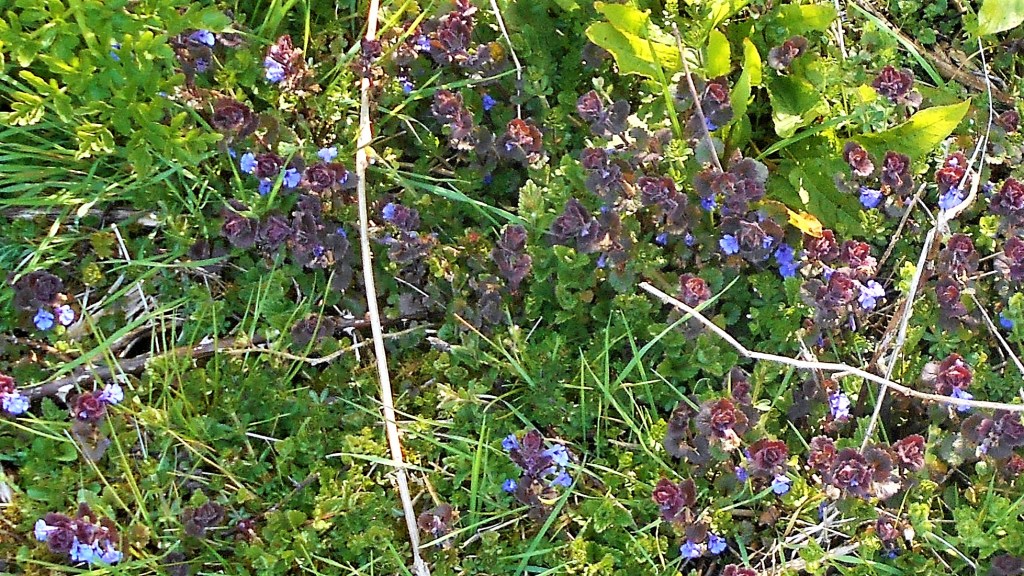
A beautiful morning, fresh, clear and full sun and although Otter signs along this stretch of the river have become increasingly rare, we still enjoy the walk and noticing the river and water meadows waking up to spring.
When we reached the weir we are always aware that we have seen Otter spraint only once (last March) in all the time we have been surveying. So imagine our astonishment when we saw first one, then two and eventually counted four recent spraints along the stones and on an ants knoll at the top of the weir. We had a bit of a spring in our step as we moved on to check the next site – a well worn area around the roots of an old tree and here we found one recent and two old spraint, all displayed prominently on several large roots – all pretty astonishing!

Walking through the water meadow to the next site we pass the trees lining the river bank and listened to the Chaffinches, Robins, Blackbirds, Chiff Chaffs, Wrens and Blue Tits singing from the trees, such a delightful sound on a sunny spring morning. One one of the trees we spotted what we think is possibly a Chocolate Mining bee sunning itself on the bark. They don’t appear until mid-April and are gone by the end of May so we don’t often see them, not enough to be sure. We were sure about the Common Carder bee and the Bee flies we saw in the same area although the photographs were disappointingly out of focus.
Another beach and astonishingly, more Otter spraint! Three recent and one old spraint, the first we have spotted since last May and before that in April and May 2019. There seems a pattern here! Although our enthusiasm is tempered with the memory of our excitement last year and the hope that the Otters were returning to what once had been a favourite spot, only to have our hopes dashed, so we are a bit more circumspect this time, they may have just been passing through – hoping for the best but prepared for the worst!!
There were at least a dozen alderleaf beetles on the old willow – not a good sign, there seem to be so many this year. We wandered up and down the beach, hovering in the hope of spotting a Kingfisher or even a Grey Wagtail but not sign of either. We did see a Tree Creeper, a Goldfinch, a pair of Mallard and on our walk up to the final site, spotted two Little Egrets and a Heron.

No sign of Otter at our final site, but our first buttercups of the year, a couple of Orange Tips (male and female) and a Brimstone butterfly and on the walk back a couple of Small Tortoiseshells. We spotted a Buzzard, heard a Raven and some Jackdaws, Pheasants of course and those dratted Wood Pigeons and Gulls but also a Dunnock.
Sunshine, birdsong, butterflies and a sparkling, dashing river trailing bright green river weed and the first tentative mayflies – how our spirits are lifted and life becomes not just bearable but positively hopeful once again.
18th April 2021 / Temp: 14.5 C / Water Level: Low
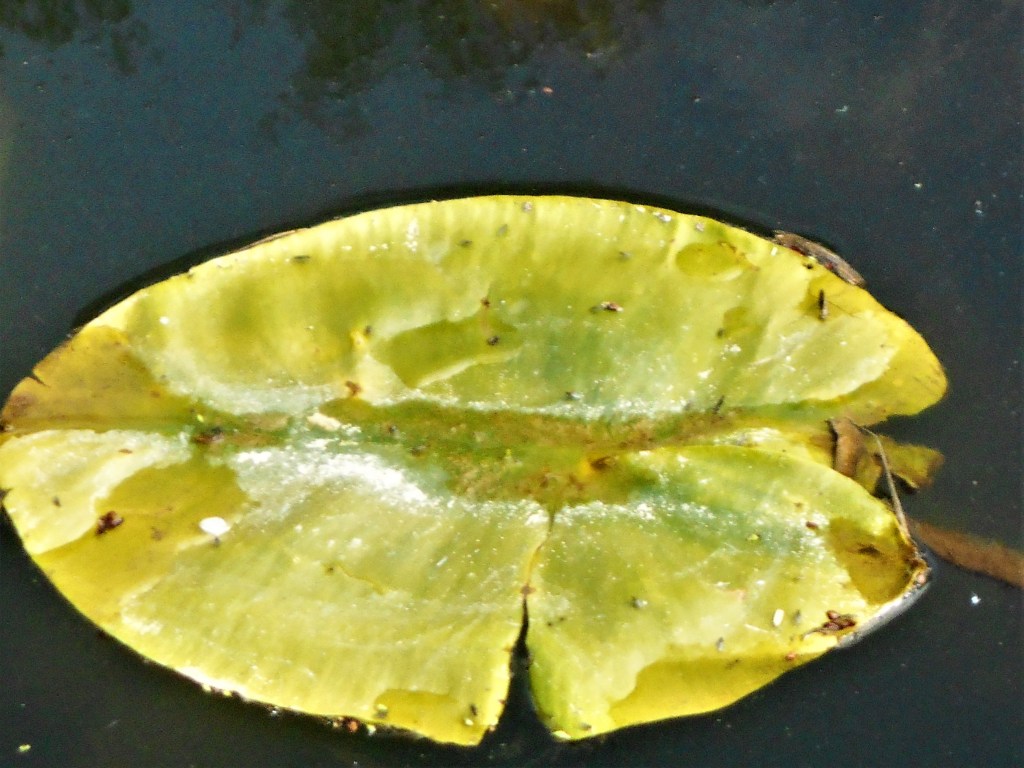
If you are fortunate enough to have 20 20 vision, you might be able to discern a pond skater in the top right hand corner of this lily pad! Not a great shot but the first of the season so it has earned its place.
After the extraordinary harvest of Otter spraint along the river a couple of days ago, we saw not the smallest sign of Otter all along the two sites we checked. However, it was a glorious day, warm and sunny so we enjoyed checking the river and water meadow for signs of life, hoping for perhaps an early damselfy but were content enough with the pond skater and a few pond snails, also clinging to the lily pads.
We watched an early crane fly puddling about in the mud on the edge of the river which was unseasonably low. April has been both much colder than usual but also much drier and for that reason the retreating water has exposed a much wider muddy beach than is often the case. We didn’t know quite what the crane fly was doing, fluttering and dipping, although we have read that crane flies do take minerals from muddy beaches so perhaps that was its purpose.
We find it almost impossible to tell one crane fly from another, particularly given the lack of clarity in our only photograph, but given the habitat and the time of the year there are not that many to choose from and so we tentatively suggest it might be a Tipula vittata which do in fact breed in mud on the edge of streams, rivers and lakes. It’s at times like these than I so envy the owners of macro lens cameras – the difference between looking through my close focusing binoculars and then through my point & snap camera is astonishing.
Ladies smocks are always a welcome sign of spring and in the area of the meadow which for a large part of the year is under water, there were a dozen or so plants although there wasn’t a sign of another plant across the whole of the rest of the field. As if on cue while looking at the ladies socks we soon afterwards spotted our first sighting of a male Orange Tip butterfly checking one for nectar. There was also a small clump of garlic mustard nestling in the shady area of long grass; it is often an unnoticed plant but if one looks carefully, the flowers are always so perfect – simple but beautifully pure.

Another sign of spring, the increasing sight of bees, here there were several bees on the dandelions which covered the meadow, Ashy Mining bee and what was possibly a Hairy Flower Bumblebee, also an early visitor, difficult to be sure as it was buried so deep in the flower head it was difficult to decipher – whatever, it’s just so lovely to see them.
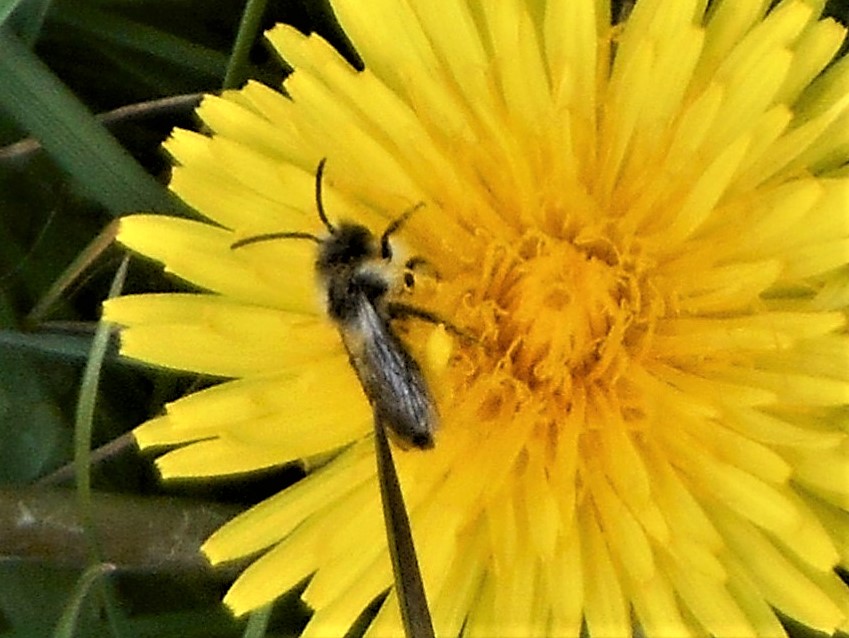
Always a joy along rivers is the peep peep warning note of the Kingfisher, “here I come” followed almost immediately by a bot of blue, a flash of orange, and gone, leaving an image on the retina which can be carried for hours. We were lucky to spot this bird flashing upstream then later back downstream and later still upstream again – magical. It was also good to see a few more water birds for a change, two Little Egrets, a Heron, two Swans, a female Mallard, we heard a Coot and spotted a solitary Mandarin Duck. There is a large flock of Mandarin further upstream so maybe they are becoming more widespread.
We were so pleased to see them all, so many times when we have walked this particular stretch of the river, apart from the occasional gaggle of Mallards there have been so few water birds.
Watching the families of small birds darting from branch to branch, tree to tree we spotted Great Tits, Long Tailed Tits, Wrens, Blue Tits, two Tree Creepers and heard Blackbirds and Chaffinches.

As we were watching a Buzzard circling and mewing high overhead, we were surprised to see it joined much lower down, barely clearing the tree tops, by one of the Swans which also began flying in continuous circles above the river, the sound of its powerful wings in flight echoing across the water meadows.
Crows and Rooks joined in the fly over, together with gulls, too high to identify, but the sound of the Green Woodpecker yaffling in the distance was loud and clear enough for anyone to hear.
Whether it was the longed for sun at last having some warmth which has brought all the birds out after what has seemed a very long winter an an unseasonably cold early April, is impossible to tell, but whatever the reason – we saw more bird species busying themselves along and around the river than we have seen for time. Signs of a promising year to come we hope. But whatever the year brings, it was a joy to soak up the sun and wallow in the pleasure of surviving this long, long, plague filled winter and know that the warm days of summer are still before us. So reluctant were we to leave the river that if a dark grey cloud hadn’t blotted out the sun and the north-easterly wind reminded us that it was still spring, we might be there still!
Finally, we cannot think of April along the river without mentioning the wonderfully thick clumps of Marsh Marigolds (or Kingcups) scattered along the edges of the streams and ditches, their large, deep golden flowers out-rivalling the lesser celandines which are beginning to fade and heralding the buttercups which are yet to arrive.
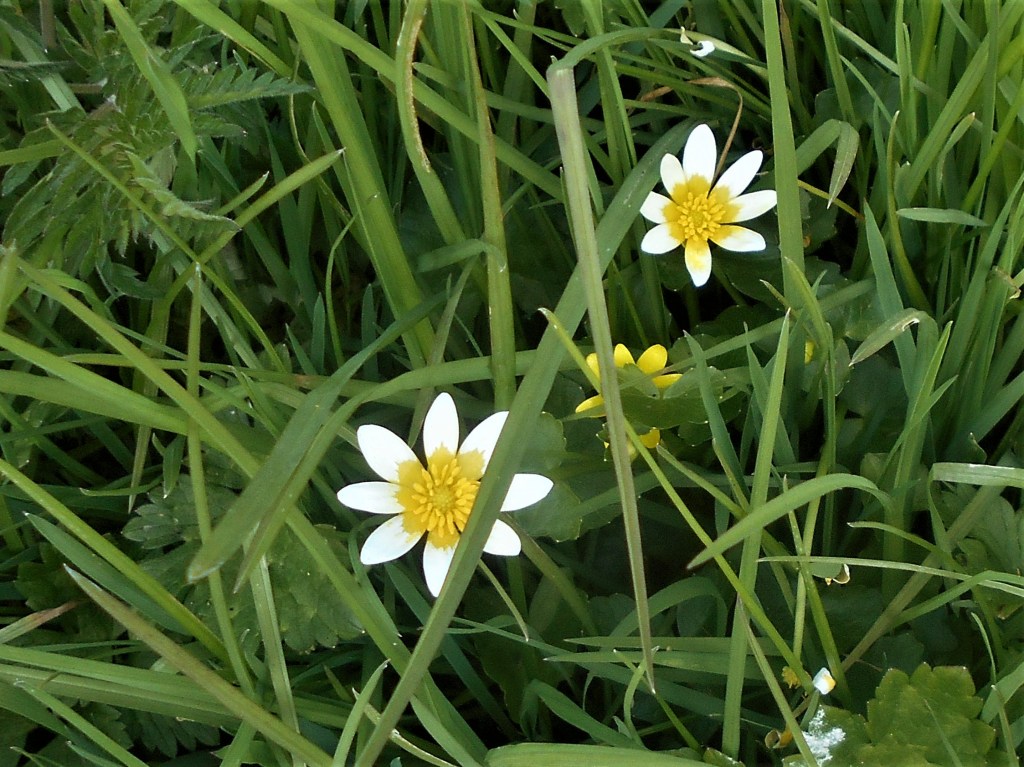
Writing about fading lesser celandines reminds me of the flowers we frequently see at this time of the year. They catch the eye with their white petals and yellow centre and often is the time when I have thought we have spotted a new, rare flower and then notice they are only celandines, fading as they grow older. We know how it feels!
15th April 2021 / Temp: 11 C / Water Level: Med

Full sun, blue skies, a slight chill in the air still lingering from the morning frost, a beautiful clear and sparkling spring morning and the perfect time to attempt the first Otter survey since February. Being laid low with an illness which didn’t shift for six weeks, left me horribly feeble and imprisoned in the house, so seeing the river looking shimmering and flashing in the sunlight as it tumbled helter skelter downstream, spraying over rocks and forcing its way through the river weed made my spirits soar and my view of life transformed!
Spring was confirmed by hearing the penetrating call of a Chiff Chaff’s repetitive song and the trilling song of a Wren as we walked along the river bank and clambered down to to our first site on a stony beach. Three lots of spraint on three separate stones, one fresh, two recent, interestingly showing no signs of crayfish in both the colour of the spraint or the contents. In fact we were so uncertain we poked the recent one with a stick and took a good sniff – and there it was, the distinctive smell of Otter, jasmine sweet with hints of lavender – someone should bottle it!
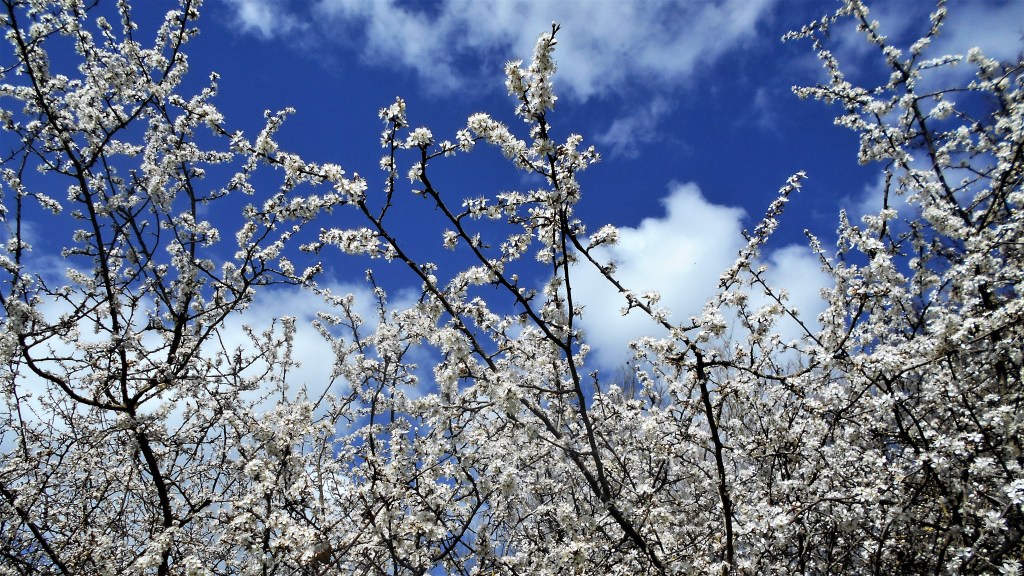
As we walked to the next site the path passed masses of sweet smelling blackthorn in full flower alive with swarming insects darting about high up in their branches. They looked like bees but they were so high and so fast it was impossible to tell. Lots of white dead nettle and comfrey nestled amongst the long grass under the trees and clumps of primroses close to the river and a single Swan making its way slowly upriver matching our slow pace.
There was no sign of Otter at the next fairly sizeable long beach which we wandered over, eyes checking every stone and log and grassy knots but without success. We weren’t surprised as we had never seen any signs on this beach before, but always checked just in case. But then, at the end of the beach where there was an area of coarse, gritty sand on the edge of the water, there were dozens of pad marks leading in and out of the water and on a fairly large stone nearby four spraints, all recent and nearby another recent spraint decorating another stone, and farther on yet another! It certainly looked like Otter heaven, so very quiet, no sound disturbing the peace but the rippling sound of the river, an area undisturbed apart from the occasional fisherman, with a mixture of fast and slack water, sparkling in the sun.
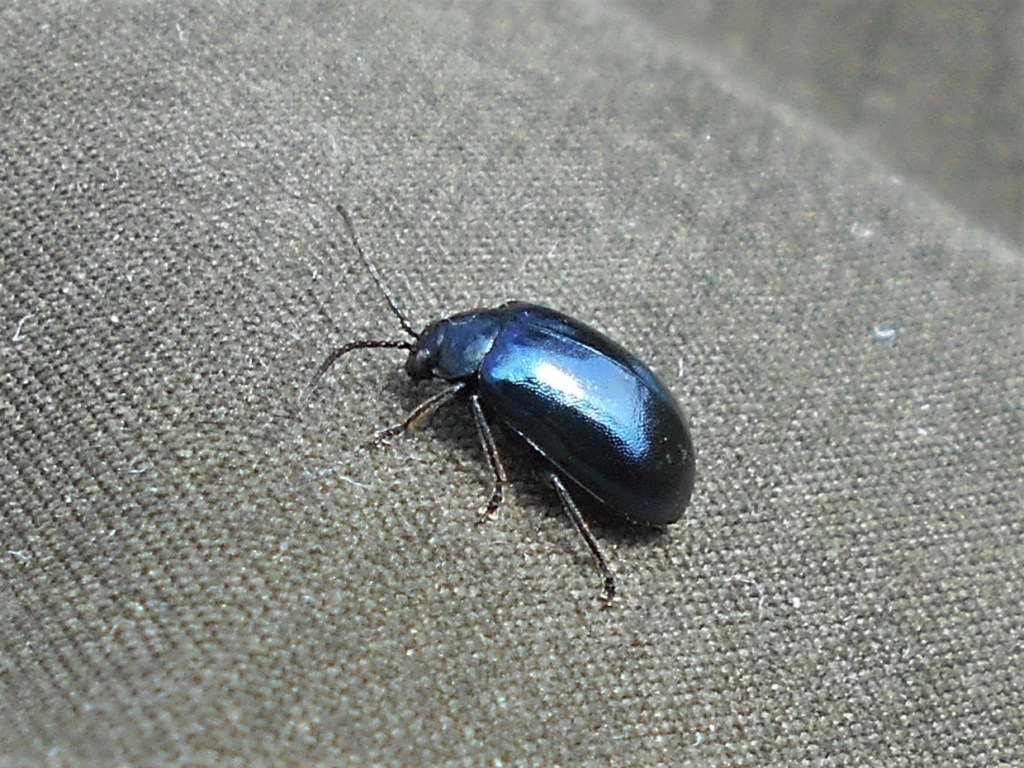
As we walked to the last site, I caught sight of an alder leaf beetle which had landed on my husband’s coat. I can’t remember a year when we have seen so many. Alders vie with willows as the most numerous trees along the river so we shouldn’t be so surprised, but this year they seem to have appeared so much earlier than ever before.
Lots of white dead nettle, comfrey, ground ivy and field speedwell as well as a bed of greater periwinkle, their flowers only just opening so showing a glorious deep purple instead of the usual blander blue.
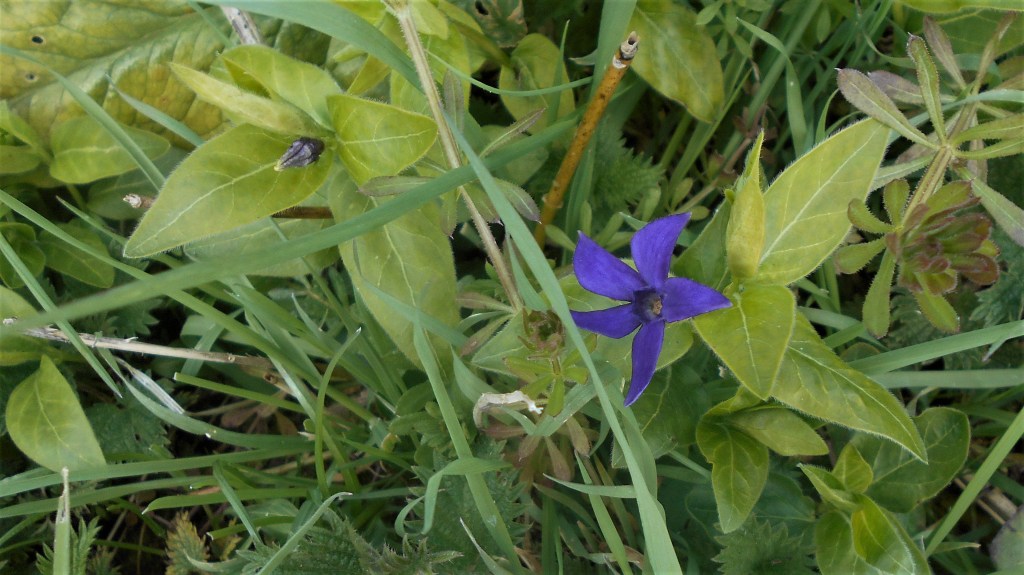
We were quite astonished when we reached the final beach which we checked out of duty rather than expectation so imagine our surprise when we there were three separate large spraints left on three prominent stones widely spaced across the beach. This stretch of river has turned out to be Otter heaven indeed!
4th April 2021 / Temp: 13 C / Water Level: Med

We thought we might treat you to a rather more visible photograph of a Grey Wagtail, taken by our daughter, which is a considerable improvement of the fuzzy image of a couple of days ago! The absense of a black bib under its bill persuades us that it is a female. We believe the other Grey Wagtail close by was a male, but not in its full summer plumage so difficult to be absolutely certain, however, both looked as if they were busy nest building. Whether the male is the same one we saw a couple of days ago, we can’t know, but he was alone so it’s good to see a pair. Both of them were feasting on the masses of midges clouding just above the water; although the wind meant the day had an edge of chill, the sun was hot and strong low down, protected from the wind by the river bank.

Managed a short walk only along the river bank and an even shorter check along the carrier stream but it was left to my daughter to do the Otter survey of both stream and river. No recent signs but we were not surprised given local news of the Otters moving upriver. The river looked wonderful, glinting in the sunlight, as it rushed and crashed over the stones of the old Roman ford and we disturbed 7 Mandarin Duck altogether, as they rose in 2s and 3s from roosting places in the trees or from the river. A Mallard couple dabbling and exploring the water weed and a single Mute Swan, who took exception to our coming too close and took off with the maximum amount of noise and fuss but when its wings were fully extended and it was flying it looked and sounded magnificent. We had been amused earlier when watching it travel downstream to see it choose the fastest part of the current to sail past at top speed for all the world like a surfer riding the waves!

We caught the tail end of a Kingfisher flashing past, watched a Tree Creeper examining a couple of willow trunks, listened to a Green Woodpecker yaffling from the trees on the edge of the water meadow, spotted Jackdaws, Crows and Rooks, several small Wrens (one very crossly and agitatedly rushing up and down what was probably a nest site) a Buzzard slowly wheeling overhead, heard a Yellowhammer’s distinctive call, and watched Blue Tits, Great Tits and a brightly coloured Chaffinch high in the tree tops along the river bank.

While we rested under the willows, a small insect felll out of the tree and landed on my husband. The photograph is not very good (one of mine!) but clear enough to tentatively identify it as one of the myriad species of leafhoppers, most likely to be a Idiocerus herrichi which are ubiquitous around willow trees.
We were extremely surprised to spot our first crane fly of the year, which after a good deal of searching in books and online decided it could only be a Tipula lateralis, which is found around water from March to October. It has been seeing such a huge number of crane flies in this particular field which alerted us to crane flies appearing for a good deal of the year when we had only noticed them before in the autumn.
Lots of red deadnettle, and white, all over the meadow, scatterings of dandelions making bright splashes of deep yellow, lesser celandine and the very first umbelifer, a poor stunted cow parsley, but showing white so it shouldn’t be long before they appear in numbers.
A few other brave insects have begun to appear as well as the cranefly and leafhopper, and of course those uncountable numbers of dung flies who shoot up at almost every step. We spotted a 7 spot ladybird, a dark edged beefly, a buff-tailed bumblebee, and so lovely to see, a Red Admiral and a Small Tortoiseshell butterfly – it really must be spring!
30th March 2021 – Temp : 20 C / Water Level: Med

After nearly four long, long weeks we plotted a daring escape from my sick-bed, wobbly legged down the stairs, thick socked, booted and fleeced, sun-hatted and clutching my trusty Papillions we made it to the garage and into the car and away, off into the bright sunshine of a perfect spring day and headed 5 minutes down the road, parked the car, and then with thumb stick assistance slid down the river bank, perched on a conveniently placed tussock of grass, and looked and looked.
We basked in the hot sun and watched the cool fast water racing downstream, tumbling over stones and being forced into a log and finding a spout to spurt out of like a miniature fountain. We watched two male Mallards squabbling over a single female and saw one withdraw defeated while the pair happily nibbled their river weed. We saw a Grey Wagtail dash up, land on a stone, look around, flick his tail up and down and dash away.
We had a lovely chat with the kind farmer over whose land we walk to carry out our monthly survey who had spotted us when he was driving his tractor between fields and came over to say hello. He’s a keen ornithologist and we always swop our latest news and sightings; he had also spotted the Green Sandpiper when going about the farm and told us about a female Mandarin who was nesting in a tree quite close to the farmhouse and on a first outing had mistakenly led her 8 chicks into the slurry mistaking it for a pond. She immediately escaped but abandoned her chicks to their fate and the farmer and his son had the unenviable task of scooping them out and putting them into a cardboard box. They retired to some distance away and waited, and sure enough the female came back, fussed and squawked and led all 8 off to the river appearing to be none the worse from their mini adventure.

We decided to wander a little way upstream and although feeling stupidly feeble, I managed a slow hobble and was rewarded by this beautiful Comma which obligingly settled on a log, displaying his patterned wings and then slowly closing until the wings closed, presenting the perfect camouflaged underwings, so well disguised on the log that we would never have noticed it walking past.

We could hear a Blackbird singing its heart out, soon joined by a male Chaffinch, a Great Tit and a Song Thrush. We spotted a tiny Wren flitting amongst the plants at the rivers edge, saw a Brimstone, that most beautiful of Spring butterflies, fluttering downriver, followed soon after by the short peep peep warning cry and then the vivid flash of brilliant, vivid blue as a Kingfisher shot downriver.
We waited, watching while a cabbage white butterfly explored the opposite bank, too far away to judge the size, a couple of Crows hunted through the trees and we heard first a Magpie and a solitary Jackdaw. We waited, noticing the brilliant yellow lesser celandine star like flowers scattered along the river bank and the wild garlic, still in bud and the lovely red flowers on the larch and still we waited, and then – at last, the peep peep, the flash of blue and the Kingfisher flashed upriver again!! Halcyon Days indeed.
17th March 2021

Exciting win for the Floodplain Meadows Partnership and it was good to see that of their defining plant list for floodplain meadows, we have identified 80% of the plants growing along our survey stretch of the Somerset Frome. Sadly no signs of Snakeshead Fritillaries but there are very few truly wild specimens left and most have been planted.
Signal Crayfish pearls (gastroliths)

We were reading an interesting piece in a Fishing Forum which was discussing American Signal crayfish pearls (gastroliths) which are often found in the stomachs of the trout they catch. The photograph above is a selection of the ones we have found, usually around Otter spraint. We knew of course that crayfish are a staple part of our local Otters’ diet but we had no idea that trout ate crayfish in such numbers as well. Not being a fisherman, when I think of trout I inevitably think of food and do wonder what crayfish fed trout tastes like – delicious I imagine, rather like salt marsh fed lamb.
Anyway to get to the point, one of the Fisherman asked the group if they knew what he had found in the Trout’s stomach could be. He said: “They were in the stomach of a good sized still water caught Rainbow trout which was also pretty stuffed with crayfish. The water I fish has a large number of American signal crayfish which appear to form a staple part of the trout’s diet as almost every fish I catch has evidence of crayfish inside.
I have noticed these before but only singly and have always just thought them small pebbles ingested when the fish were feeding on the bottom, never found five before and the uniform shape is what made me realise that these couldn’t just be stones. They feel cold to touch like stone, feel heavier than bone and are identical in shape, just vary in size.”
Another Fisherman in the Group explained that “all crayfish have a hard outer shell (exoskeleton) composed of calcium carbonate but no internal skeleton. Their body is formed of three parts; head, thorax and tail. The carapace protects both head and thorax. As the crayfish grows it must moult/shed its shell and grow a larger one. However, to do this it has to have a store of calcium to draw upon. It achieves this by growing a pair of gastroliths in its stomach prior to moulting.
The gastroliths are composed of calcium carbonate and are used to build the new shell. The process is repeated throughout the life of the crayfish. Any discarded shell may be eaten by the crayfish (or another crayfish) as an additional source of calcium. Just after moulting the crayfish is extremely vulnerable to predators as it no longer has its ‘armour plating’ to protect it from a predator.
3rd March 2021

Well, here’s a spot of good news. Yesterday we posted our photograph of the unnamed and unidentified mussel/clam on the iNaturalist observations page in the hope that someone would notice it and help us with identification. Help arrived prompty this morning from Canadian Ian Gardiner who confirmed that the shell was a European Fingernail clam (Sphaerium corneum) sometimes known as a Horny Orb mussel. A great relief because they all looked exactly the same to us so we were pleased to hear from an expert.
The clam is evidently “mainly a filter feeder and prefers healthy waters with good nutrition that provide a greater food source. These clams have exhibited a unique ability to climb up plants and structures around their habitat to find more optimal locations for feeding”. So mystery solved.
What a boon the internet is and how easy has it made identification and widened and increased our knowledge of the wildlife around us, however tiny and insignificant it might appear. We have a lot to be thankful for.
26th February 2021 / Temp: 7 C / Water Level High

Another glorious morning, sunny and bright, clear fresh sparkling air with a lingering chill from the remains of the heavy overnight frost. Perfect weather for checking Otter spraint.
We knew it was going to be a red letter day when we spotted a Kestrel perched motionless and watchful on a power line and who seemed pretty unfazed by our walking through the water meadows down to the river, we set up 6 Mallard as we approached the water and caught sight of a Chiff Chaff – a harbinger of spring. No sign of Otter though.
The two Swans preening themselves on the wide beach got reluctantly to their feet and stepped disdainfully to the water and swam off without a backward glance. Good that they moved as we then spotted a line of six clear Otter tracks across the soft gravel sand.
Although we didn’t see them until they took off, we must have alerted a small flock of 20 Mandarin Duck to our presence because they flew up from their hidden place a little way up river and, unlike the Mallard which are always so noisily complaining if they are moved, the duck were silent apart from the sound of their wings flying off across the fields.
There were three Herring Gulls sitting in the middle of the field, one last year’s juvenile, Jackdaws shouting above us, a Raven croaked, a Buzzard mewed as it circled above the woods and a Spotted Woodpecker drummed loudly, echoing in the fresh, almost springlike air. Blackbirds, Crows, Wrens, Robins, Great Tits and Long Tailed Tits yet another sign that the year is turning. There were clouds of midges everywhere both above the fields and above the river. We spotted Wolf spiders scattering at almost every steps, a couple of yellow dung flies, birds eye speedwell, the first of the year, red dead-nettle, snowdrops and even a clump of wild daffodils.
Climbing down the the beach of fine sand at our final site we were sad that there were no spraint, pad marks or any other signs of Otter. Whilst there we checked for pea/fingernail mussels as this is another very small stretch where the river drops its load. We collected a few, not many, but amongst them three or four new ones which we didn’t recognise.
We checked them with our eye glass and spotted what looked like the shell of a river limpet! We were stunned, but the backward facing horn like apex surely couldn’t be mistaken for anything else. We always thought the shape was so like the phrygian cap or liberty cap worn by the sans cullottes in the French Revolution, and this had the unmistakeable shape!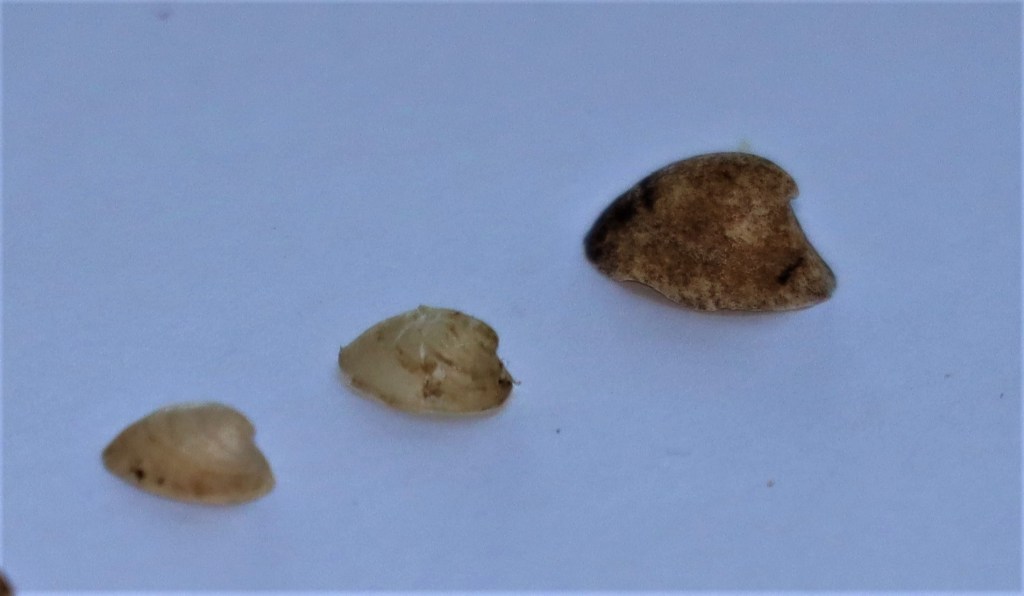 When something you have desired for so long is suddently presented to you, when you are not looking for it but concentrating on something else entirely, the surprise is so strong for quite some time we didn’t quite know how to react. We couldn’t wait to get home, check all the usual sources, contrast and compare, and when we did, it was confirmed. We had actually found four minute river limpet shells, three no larger than about 3.5 mm and the other larger one was still only about 5 mm so they are not that easy to spot.
What a day! What a triumph! What celebrations – Joy unbounded!!
25th February 2021 / Temp: 10.5 C / Water Level: High
Very sunny morning, blue skies without a cloud but a chill wind. When we arrived at the river there were already 5 fishermen scattered along the bank. They were a pretty affable crew and well disposed to sharing their Otter sightings and fishing catches. One had caught a 5lb Chub and another a large 7lb Pike which he said was the reason all the other fish were making themselves scarce – nothing like a cruising Pike to clear the waterways!
No sign of Otter and very little action, although we were pleased to see 7 Mallard in the flooded stream well away from the fishermen. They scurried off when we approached but made no attempt to fly off so they probably realised we were only passing through and they could return to their favoured spot.
Last year’s cygnet was also hanging around, we see a grandfather and young boy feeding him so he now thinks that everyone is coming with food and follows us as we walk upstream. A few Long Tailed Tits, Robins, and the usual Jackdaws, Crows and Wood Pigeons. We spotted the feathered remains of a Pheasant by the hedge, probably fox as the carcus was missing and the wing feathers intact.
We were intrigued to see a half circle trail of earth showing what was probably a mole’s shallow tunnel, but what was surprising was that it led from the path in an arc to the river and only stopped at the very edge of the bank. There were no pad marks on the soft mud directly underneath, so presumably the mole realised he had run out of ground and beat a hasty retreat.
23rd February 2021 / Temp: 10 C / Water Level : High

Beautifully sunny morning with blue skies and sailing clouds and although the wind was extremely strong and chilly, it proved exhilirating and we walked out with good cheer. The water meadow and riverside is pretty empty of life at this time of the year so spotting a single yellow dung fly was something of an event! Heartening, however, to see the tentative beginnings of life returning – scattered clumps of flowering lesser celandine made cheerful splashes of colour, good to see the occasional snowdrops right on the bank of the river and red deadnettle opening its blooms, as did a solitary daisy and common chickweed. 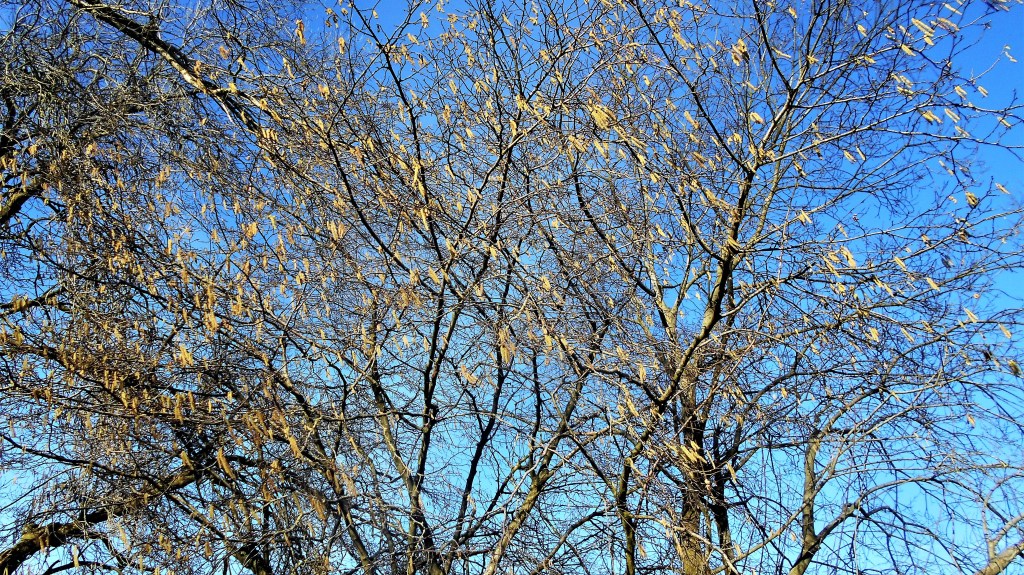
But what confirmed that winter was finally coming to the end was the sight of hazel catkins glowing in the sunlight while being tossed about in the wind, hearing the Wrens singing for the first time for ages and Robins shouting out their territory to all and sundry. No signs of any water birds down the whole length of our survey stretch and sadly no sign of Otter either. There have been so many sightings and film of Otters upriver in the centre of the nearby town we weren’t at all surprised but the lack of water birds is rather concerning. We saw a few other birds, a few Tits and of course Crows, Gulls, Pheasants and Wood Pigeons, heard a Blackbird’s warning rattle, spotted a couple of Magpies flying over and then three Buzzards circling above the trees which raised the tone a little but overall, little action. We scoured the wide gravel beach looking for signs of Otter without success. Although the river was high and very fast, almost in spate, we could see from the lay of the grass that the whole beach had very recently been flooded so the water was dropping.
We love exploring this beach which in summer is a mass of flowering plants feeding butterflies, beetles, bees and hoverflies so a riot of colour, but it has its delights whatever the season. On this occasion shreds of white plastic had been caught in the dead reeds when the water level dropped leaving them fluttering and streaming in the wind like so many ragged prayer flags on a Tibetan hillside.
As the current flows fast around the bend in the river it creates an eddy on the inside of the bend forming an inlet where the water is slowed and where it deposits finer material. At the farthest end of the beach there are two pockets of fine sand where the water is slowed down yet more downstream of a tree and that’s where it drops sediment like sand and shells. The advantage of winter when the beach is exposed is checking for duck mussel shells (two small closed ones today – very few on past numbers) and for the tiny pea mussels which are only about 4-5 mm in size. We have had innumerable tries at identifying this tiny mussel (which could equally be a nut orb mussel or a horny orb mussel!) and thought we had hit the jackpot with fine-lined pea mussel but abandoned that idea when we found out how rare it is. When we looked at the list Penny Green found in the River Adur on the Knepp Estate :
Horny Orb Mussel, Lake Orb Mussel, Caserta Pea Mussel, Porous-shelled Pea Mussel, Rosy Pea Mussel, Short Ended Pea Mussel, Henslow’s Pea Mussel and Shining Pea Mussel
and realised that there are still further 8 species to chose from, we threw up our hands in despair and settled for calling them just “pea mussel” or even”orb mussel” and left it at that! Whatever, these tiny pea mussels are really pleasing to see. Although most only live for about a year producing one brood, under certain conditions their growth is much slower and they can live for several years and have several broods during that time. These smaller mussels are hermaphrodites, which deliver living larvae. Conditions must be pretty good here as the edge of the water in the small area of coarse, very dark brown sand, there is a line of these empty mussel shells. What always draws the eye are the white ones, presumably bleached by the action of the water against the sand, but when we look closer, the duller but less worn light brown newer shells are just as abundant. As mussels filter and thus improve water quality for other species such as fish, eels, otters etc, even such tiny creatures as these are a very welcome sight as they fulfil an important function in the overall quality and cleanliness of the river.
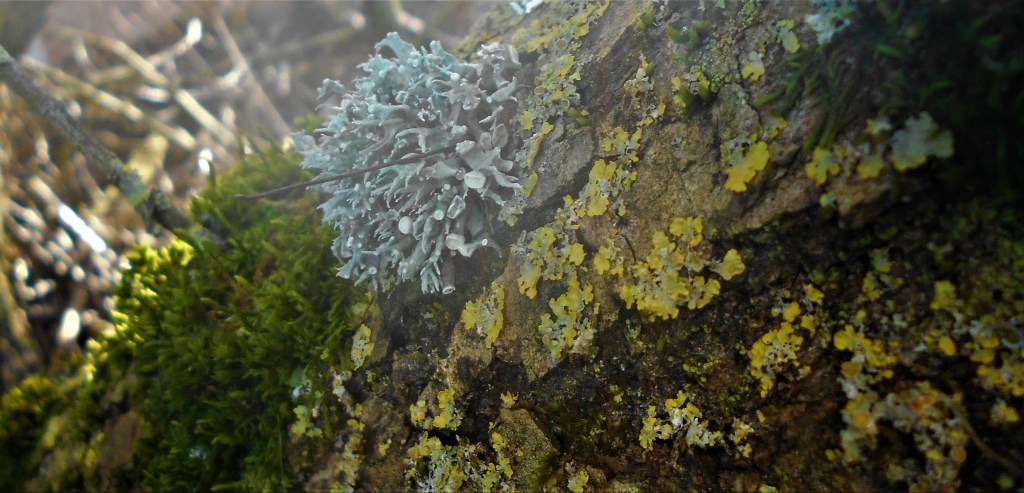
The great old willow tree is a bit of a shadow of its former self since its main limbs were lopped by the fisher folk so our main lichen garden and is no more, no doubt to a local stoat who use it as his hunting ground, but there was a nice clump of lichen on a nearby tree – fanfare of trumpets lichen with what may be the leafy yellow Candelaria concolor but I’m not altogether certain.
We walked back along the edge of the field hoping for some protection from the strong wind in our faces, checking the stream which was clogged with new plants, bright vivid green of new growth, and admired the beautiful arrow shaped leaves of the lords & ladies plant, splattered with dark brown sploges. Fingers crossed that all these signs really do signal that this long, dark winter, full of tragedy, worry and endless shocks is finally coming to the end and we can all welcome spring with a lightening of the heart.
6th February 2021 / Water Level : High / Temp : 7.5 C
A fine afternoon, chilly and damp but sunny spells and clouds drifting across blue skies. The river was high and fast and what was particularly noticeable was the height and flow of the water in the carrier stream – quite the highest we had ever seen. There were the first signs of early spring everywhere, a scattering of celandines and lots of clumps of snowdrops in flower all along the river bank, the hazel catkins a good length and even the wild chives were already 9 inches or so high when our cultivated chives at home have only just appeared.

As we walked along the carrier stream we suddenly saw a Green Sandpiper lifting from where the stream broadens out as still and quiet as a mill pond – a perfect environment for Sandpipers. This is the spot where our daughter spotted the Green Sandpiper the last time we came here so it seems extremely likely that the bird might have been here all winter and will stay until it flies off in March back to Sweden or Finland where it will remain until July.
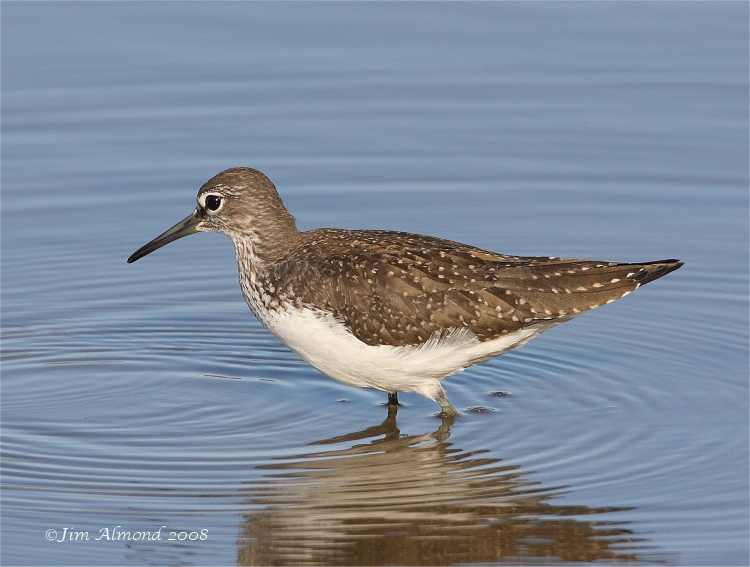
When we reached the pond area we saw lots of holes in the mud we did wonder if it had been pecking with its long beak searching for food except of course they rarely do this, they more usually pick up insects from just below the surface of the water so they are more likely to have been worm holes. While we stood examining the mud, a Song Thrush began singing loud and clear from the tree nearby – so beautifully, so heartbreakingly and heard for the first time this year.
There seemed plenty of tits, both Long Tailed and Blue Tits, we disturbed a fat little Wren flying low along the stream, Gulls, Wood Pigeons and Crows as usual overhead and we could hear the loud cackle of lots of Jackdaws but they remained hidden. We heard a Raven’s croak twice during the walk, but whether it was the same or one of a pair we couldn’t tell, but we love to hear a Raven’s greeting us when we walk.
To add to our pleasure we spotted 2 lots of recent Otter spraint which was surprising given there have been so many sightings of Otters in the Rodden Nature Reserve in the centre of Frome, we thought they had probably moved on. There were two or three other droppings which looked as if they might have been owl, possibly a Tawny Owl by the nearby neat pile of bones.

What there was in abundance were mole hills everywhere! Almost all follow the course of the river, quite close to the banks, or near the hedgerows on the edge of the fields. There must a goodly supply of earth worms in these water meadows given the number of mole hills and also the groups of badger setts along the banks on the rising ground.

18 January 2021 / Temp: 7.5 C / Water Level: Med. – Rising

A very quick dash between showers to get in an exercise walk which was pretty bracing in the north easterly wind and the water meadows did not look very enticing with the low cloud and gloomy light. Of the two trees caught on the weir, the trunk of one looked to be petty substantial but heavy rains are forecast for the next few days so perhaps the river will rise enough to lift them off and send them downstream. The Angling Club removed lots of trees and branches from the river back in September but unfortunately well before the Friends of the Somerset River Frome drew attention in their latest newsletter to the advantages branches and logs offer fish and other wildlife as shelter, as well as slowing the current to help prevent flooding. (See Instream Habitat on our September Blog page).
Nothing of interest all the way around but a lesser celendine in flower between two buds and a single cygnet on its own, a stark contrast to the abundance of spraint and the spotting of a rare winter visitor of only two days ago. The cygnet was one of last year’s young, still retaining its grey-pink beak but having lost quite a number of its brown feathers making its unusually mottled colouring and appearance quite striking.
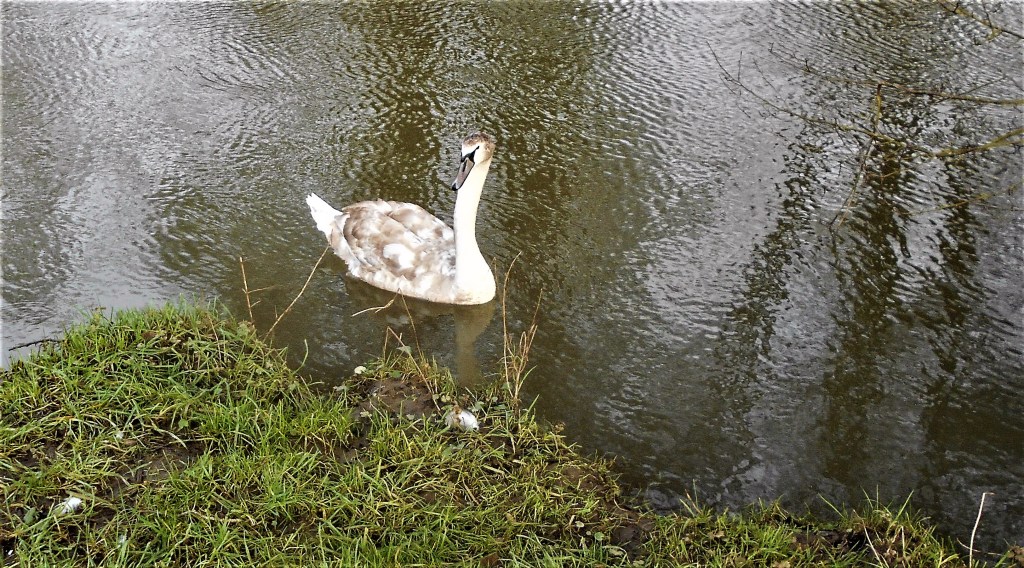
There were two fisherman along the bank, neither of whom had caught anything. We stopped briefly to chat about the state of the river and Otter spotting. Not surprisingly one of them had seen Otters fairly frequently, always in the very early morning just after dawn so if we are serious about spotting we must get out earlier. Although we are early enough risers, getting up at around 5.30am, we are slow to get going what with coffee and breakfast and newspapers and crosswords and our reluctace is reinforced as it is difficult not to imagine a scenario when we arrive at the riverside to pace up and down in the cold for our hour’s exercise, see nothing but feeling convinced the Otters might be a couple of miles up or down stream or even just around the bend out of sight and we have only just missed it. Everything comes to he who waits… we will wait and trust to our luck!
16 January 2021 / Temp: 9 C / Water Level: High

Oh the joy! First walk for six long, long weeks tied to the house with a broken toe – too late for the earlier sunshine but ecstatic to be outside whatever the weather enjoying some longed for fresh air and exercise.
The rewards were manifold and totally unexpected. At well spaced intervals all along the carrier stream we found fresh, recent and old spraint, chock full of fish bones and scales as well as signal crayfish remains. The water from the river directed down the carrier stream was higher than we have ever seen it and although fast, a good deal quieter than the main river. This would no doubt make more attractive hunting grounds for roaming Otters, particularly if these are the mother and two cubs which have been reguarly spotted father upstream in the centre of the town, both in the river but also recorded investigating the inside of a derelict boathouse.
When we reached an area where the carrier stream widens and the cattle have created beaches on either side, our daughter Rebecca (who had joined us for our support-bubble walk) spotted a Green Sandpiper on one of the beaches. Oh for the sharp eyes of youth! It flew off before we arrived but we were all so excited. This is only the second time a Green Sandpiper, a winter visitor, has been spotted on our survey stretch, the first time not by us but last year by the farmer who is a keen birdwatcher. Rather more mundane sightings were merely the usual Jackdaws, Rooks, Crows and Robins, and, rather more interestingly a Kestrel being mobbed by a Gull.
Walking back along the river bank, more fresh spraint and also anal jelly, and then spraint filled with blue-green irridescent beetle shells and snail shells which may or may not have been Otter (Owl pellets or Fox scat were suggested) and scat along a branch of a river bank alder. We also saw the remains of a blackbird, its bright yellow beak fully agape possibly a sign of its death throes.
The river was in full spate, fast and furious, churning around the flooded trees, making the most extraordinarily noisy rushing, swirling splashings which struck us that a recording might aid sleep in these turbulant times!
Our hour being up we very reluctantly left the water meadows and headed home. It was a brilliant first outing and as one of our number received his Oxford-Astra Zeneca vaccination against Covid 19 the day before, we hope like the first signs of spring, this might be the first signs of the epidemic beginning to come under control, the tragic news of the relentless numbers of deaths will end and we can return to fully enjoying the woods and rivers once again.
January 2021
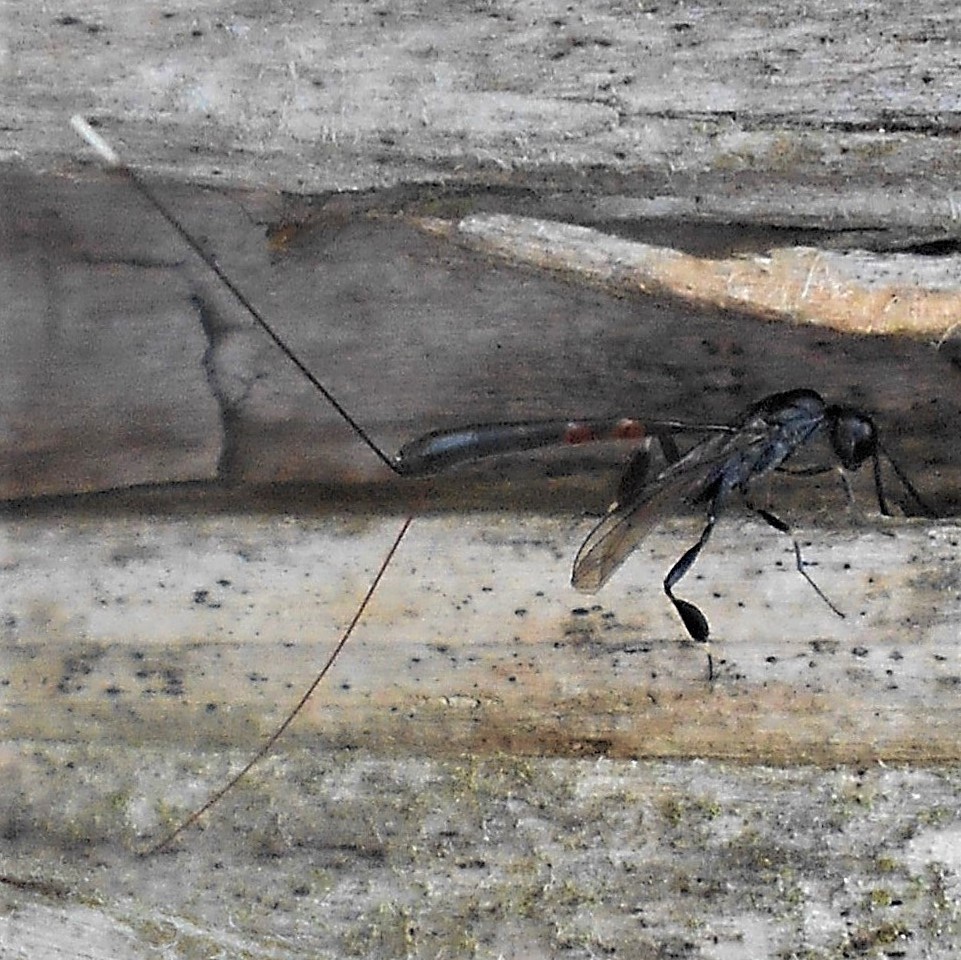
Happy New Year!! And are we happy to write as it signals the end of plague year 2020! Good riddance family traumas, marriage breakdowns, job losses, broken bones, arthritis flare up and hospitals and welcome 2021 – may this with its promise of Covid 19 vaccines and spring on the way be the new beginning we are all hoping for.
2020 wasn’t a complete disaster, we added an astonishing 59 new species to our records list including the wonderful Grasshopper Warbler (the first sighting for over 50 years!), dozens of saddle-case caddisfly larvae and our first sighting of Stoneloach and a Diving Beetle, the beautiful Black Stoneflower lichen and our favourite, the extraordinary Gasteruption jaculator (see photo of the year above) parasitic wasp! We were pleased to add our Beautiful Demoiselle damselfly to Durham University’s wing measurement study and see our cauliflower slime mold photograph added to Ispot’s permanent collection.
But most of all was the delight and pleasure we experienced on our Otter hunts, trekking across the water meadows, clambering down the river banks, wading though the river with our dipping nets, we blessed our good fortune in being able to experience all the joys of a beautiful lowland river throughout the year.
16th December 2020

Breaking News : Very exciting news that over the past ten days there have been 3 confirmed sightings of a mother and two cubs being spotted in the centre of Frome – upriver from our survey stretch. Unfortunately two were at dusk and the morning sighting was bugged by heavy cloud so no photographs. However, fortunately the two cubs exploring David Sugrue’s boathouse in early autumn were caught on his trail camera.
9th December 2020
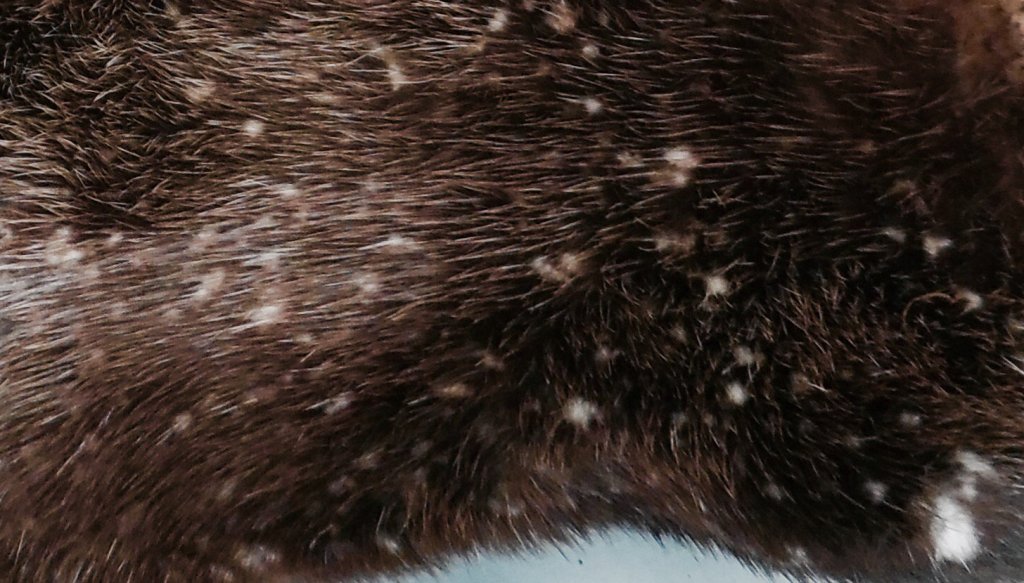
Cardiff University Otter Project message: Last post mortems of 2020! Busy day in the lab; 17 new arrivals (12 from south Wales, and 5 from East Anglia), 7 post mortems completed, samples archived. From a tiny juvenile found on a river bank in Worcestershire, to a large adult male with royal otter spotting* from Wiltshire. We look forward to examining more otters in 2021.
*A Cardiff University photograph of a previous Royal Otter from Worcestershire. These markings are extremely rare but very beautiful.
1st December 2020 / Temp: 6 – 9 C / Water Level: High
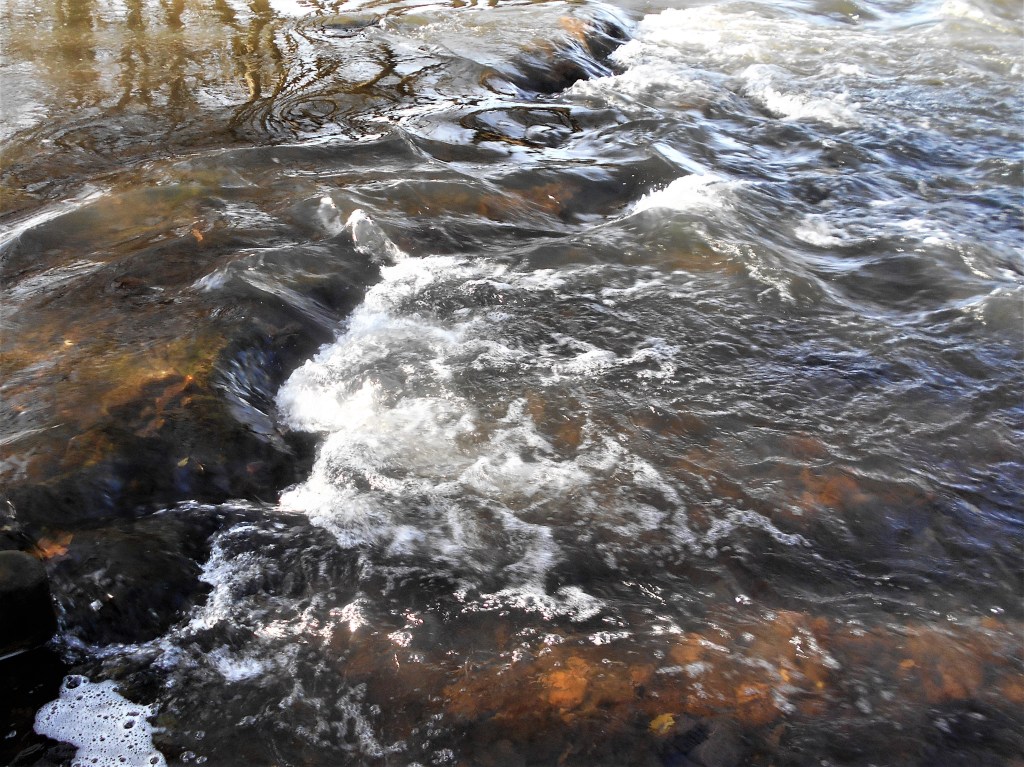
It was such a beautiful early winter morning as we set out to check for signs of Otter for our survey – full sun, blue skies and a light wind which was cold but as most of the time we were protected by the trees the air was not nearly as bitter as we expected.
No sign of Otter at the bridge or the tunnel but we had a good chat with a fellow who was magnet fishing. It was the first time he had explored this particularly stretch of water and he was interested to see if there were any interesting finds. He said that he enjoyed getting out in the fresh air through the winter lock-down and checking and clearing debris from the river was he felt a good use of his time. His main catch was usually abandoned fishing gear and cans and even road signs which have been thrown into the water which he hauls up and disposes of. He gets huge satisfaction in removing detritus which sullies the water quality and might trap fish but always with the hope that he might find something a little more interesting.
We understood what he meant about hoping for something interesting as we returned to checking along the river bank and the exposed beaches, but in fact eventually we were extremely lucky to spot Otter spraint not on one of the many large stones scattered near the water but among the leaves on the raised ground alongside. We were quite surprised to see broken signal crayfish claws in the spraint as although they don’t hibernate, crayfish are usually much less active in winter so more difficult for the Otter to catch.
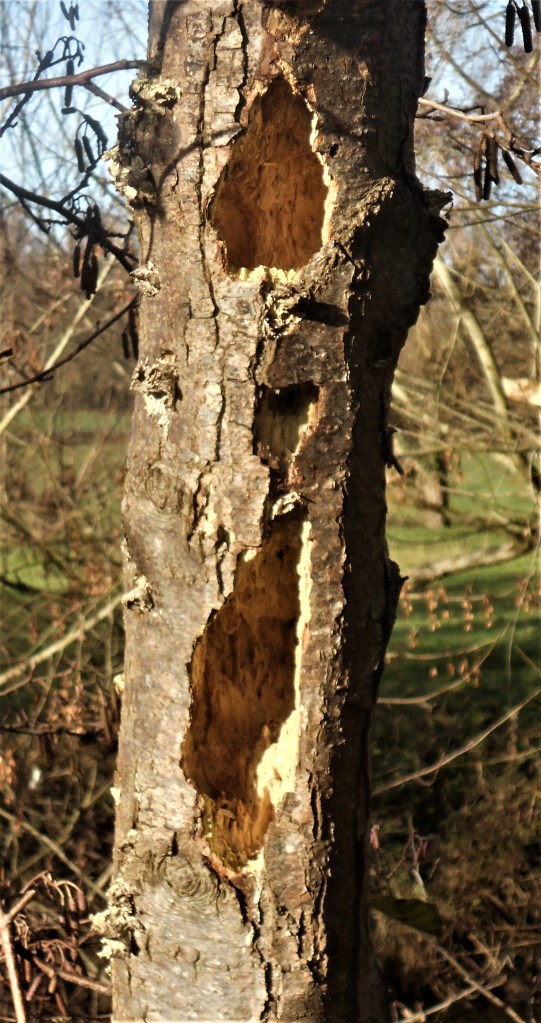
One of the many alders along the river bank was riddled with four or five pretty large woodpecker holes (probably the Great Spotted Woodpecker) while all the others are untouched. Some of the trees were hung with male catkins which always look particularly striking in winter, their branches laden with the soft purple coloured catkins, beautiful in the sunlight against the blue sky when there is so little colour about.
There were lots of specimen trees dotted amongst the alders, sallows and hawthorns along that particular stretch, Mahonia, Silver Variegated Holly, Weeping Willow and the winter flowering Daphne, it’s pale pink flowers scenting the air, all of which must have been planted 30/40 years ago by the size of the trees to create an ornamental woodland. The tree which caught the eye was the Wild Service tree, vivid purple red leaves glowing in the sunshine.
While clambering with difficulty along the river edge below this little wood, searching the stones for spraint, a squirrel scampered up to examine the ground inches from my boots, looking very fluffy and healthy, no doubt full of hazel nuts which had given it’s fur a glossy gleam. Suddenly it caught sight of me – gazed terrified for a moment, before leaping and dashing off at lightening speed.

The tits were very busy all along the riverbank trees, Great Tits, Blue Tits and family parties of Long Tailed Tits as well as Chaffinches and Robins flitting from tree to tree. We heard a Magpie rattling, Jackdaws chattering, Crows cawing and a Blackbird’s warning cry. A beautiful Little Egret, snowy white and majestic, lifted languidly from a tree and flew off across the water meadow, while a pair of Mallards puttered about on the river. In the meadow on the other side of the river we spotted Herring Gulls making a great deal of noise as they explored the grass around the cattle. Surprisingly these were the first time we had seen this species of gull on the river.

Several flowering crab apple trees which stood in a line in the clipped contoneaster hedge were absolutely laden, their fat orange-red fruit looking ripe and luscious. Good news for the birds when winter really sets in, these smaller fruits often attract Redwings, Thrushes and Robins – and the laden trees offer more than enough for a feast for all!
12th November 2020 / Temp: 10.5 C / Water Level: High

Blue skies, full sun, chilly, breezy wind – the perfect day for a stroll by the river and the rhyne and the meadow in between where every tree seemed to be covered in moss and lichen, including these tiny Bark Bonnets appearing out of the moss on a tree trunk leaning precariously over the river.
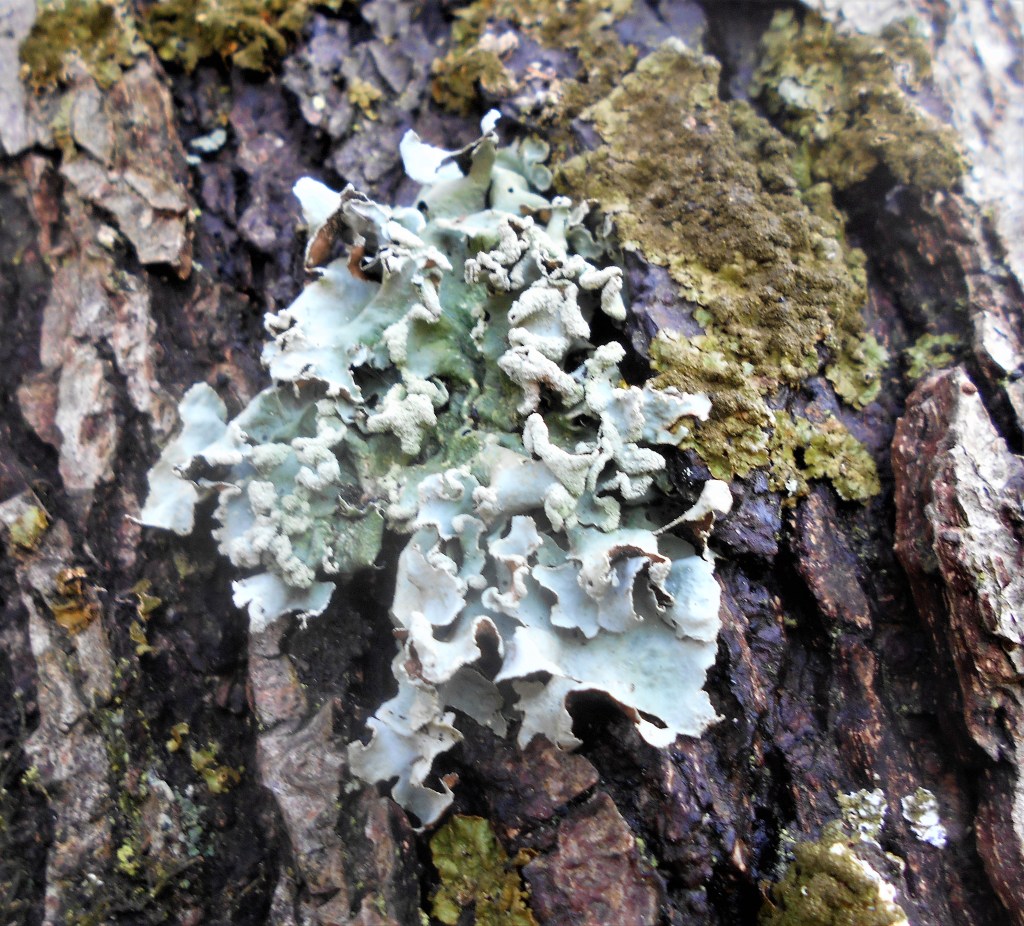
On another tree we spotted a growth of Black Stone Flower lichen, a first for the river, and one of my favourite lichens, the only one I know which has the lovely black or brown sheen on the underside of its leaves.
We saw flies every where, clustering together sunning themselves on tree trunks, or in the case of this rather beautiful Noon fly, on fence posts. He stayed still long enough for me to get a photograph, a little out of focus, but clear enough to see his gold face and tiny gold paws as well as his striking gold epaulettes.

Despite the beautiful morning, there seemed to be little other activity, few birds – a Blackbird rattling its alarm call as it flew out of the hedge when we arrived, two Ravens calling and flying overhead, flocks of Jackdaws, Rooks and Crows flying down from the colony up on the hill and strutting and circling the cows and a solitary Heron sqawking loud enough to draw our eyes and we spotted it, flying over, quite some distance away.
What was most notable, apart from the flies, were the cluster of wasps which appeared amongst the ivy. We have rarely seen so many so late in the year, the longer we looked, the more appeared so possibly they are helping the queen set up a new nest.
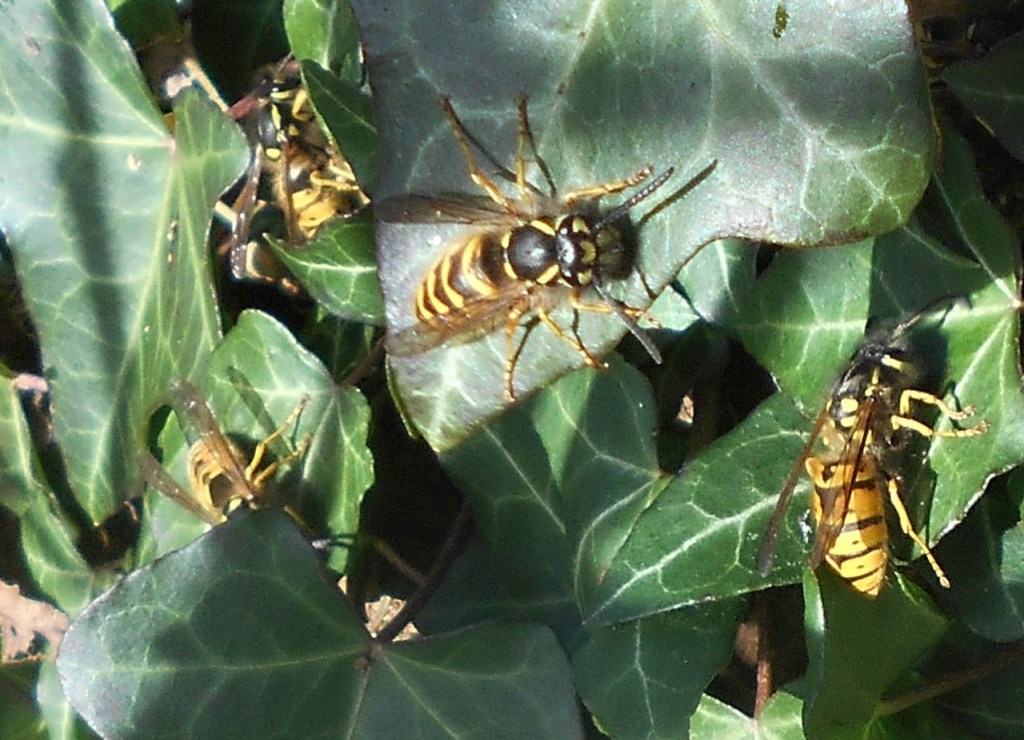
But the most striking sight was of course the lichen, at its best at this time of the year – the Common Greenshield below nestling among the wood bristle moss glowing in the sunlight, each growth forming a delightful garden along the branches of alder, ash and hawthorns along the river bank and willows beside the carrier stream.

The river was flowing fast and high, turbulent over the stones of the old Roman ford and swirling and flooding all of the beaches where we often see Otter spraint, so maybe if there was a passing Otter, he didn’t stop and leave a calling card – no sign of Otter anywhere.
4th November 2020 / Temp: 9.5 C / Water Level: High

Glorious sunshine and despite the low temperature and early morning frost, the sun was so warm it felt lovely to be pottering along the river.
We decided to survey the small brook which was the tail drain of the original meadow flooding system running along the edge of the fields. We decided to work up from where the leat or brook drained into the river as we had read that damselflies and dragonflies often lay their eggs in the quieter, calmer waters of these waters. We had intended to check it in the spring but didn’t manage it so it seemed a good idea to check it now before winter sets in. The bed of the brook had quite a layer of mud on top of which was a good layer of fallen leaves so we tried a figure of eight pond dipping technique through the river weed, and the aquatic plants. It proved to be difficult to do this without disturbing the muddy bed as the water here is not very deep but we did manage to scoop up a few treasures.

As might as have been expected, there were lots of snails! Every net had at least three or four pond snails and rather more interestingly, an almost equal number of juvenile fish.

Unfortunately most of our photographs were out of focus – but we believe the pond snails above look like wandering pond snails, and the juvenile fish a common groby. We were sad that the photo of the ramshorn snail was not clear enough to ID. There was a common minnow (we see lots of these in the main river).

The above is the only clear photograph of a pond snail. However, we did find freshwater hoghouse, a swimming mayfly nymph and what we think might have been a caseless cadisfly larva. The one somewhat intriguing find was a black spider that may or may not have been a water spider. We have never seen one before, the photograph was out of focus so we are really unable to confirm or deny.
Not altogether a satisfying morning’s work but the weather was glorious, it was lovely to be out in the sunshine (despite the noise of the constant guns of a pheasant shoot in a field on the edge of the woods a couple of fields away) and it was interesting to see there was lots of life despite the cold weather and frosts beginning to set in.
28th October 2020
A wide ranging report in The Frome Times about the current state of the Somerset River Frome including an interview with Sue Everett of Friends of the River Frome and details of a town council meeting where this matter was raised and discussed. A letter will be sent to the local MP asking for intervention with Wessex Water to reduce the amount of raw sewage flowing into the river. The Council and Friends of the River Frome are also liaising with local farmers to tackle the problem of run-off of pollutants into the river. To read the full story, follow the link below.
16th October 2020

An interesting article in The Guardian (below) on the Environment Agency’s latest data on river quality in rivers in England also has links to its detailed analysis.
The stretch of the Somerset River Frome which we survey was deemed Moderate for both Overall Water Body and Ecological but Fail for Chemical pollution.
A couple of areas leap out – every year from 2013 until 2018 the Chemical content was deemed Good but in 2019 it was deemed Fail. As there was a stricter test for this latter period, it is difficult to know whether the pollution is worse or whether it is simply down to the new test – common sense would lead one to suppose the latter.
The Somerset River Frome receives discharges from sewage works at Rode, Beckington and Frome, trade effluents e.g. cooling waters, boiler blowdown water and dairy effluent. For our stretch the pollution caused by continuous sewage discharge by the Water Industry and pollution from agricultural and land management (PBDE and Mercury and its compounds) were already in the river when it reached the beginning of our survey stretch, i.e. the confluence of the Mells River with the Somerset River Frome. The Environment Agency data doesn’t give details of whether the pollution becomes heavier downstream from that point so it is difficult to draw any conclusions about the health of this particular stretch of river.
Nevertheless, it is very likely that cattle from the dairy farm and the creamery factory outfall add pollution to the river. 50 years ago the entire River Frome was category 5, the highest pollution category, so there have been improvements, enough for Dippers, Kingfishers, Brown Trout, Stoneloach and invertebrates like saddle-case caddis fly, damselfly, mayfly and dragonfly larvae to survive.
However, despite PBDEs being banned in Europe since 2004, these pollutants are still found in virtually all European river fish, including those of the UK. We do not know the long term consequences of these pollutants, not only on the entire flora and fauna of the river but also on the Herons, Little Egrets, Otters and others at the top of the food chain but Bernd Heinrich in his book A Year in the Maine Woods as long ago as 1994 drew attention to these consequences when he observed: “Eagles along Maine inland lakes, rivers, and marine habitats reveal some of the highest levels of mercury and PCB contamination ever recorded, and they are among the slowest to reproduce of any birds in the whole of North America”. He also notes that the Bald Eagles near his log cabin although they built nests were unable to produce young which he believed was a direct result of these pollutants.
We contacted the Freshwater department of Earthwatch and asked for their thoughts on the Environment Agencies failing our water quality and our finding so many species which are normally only associated with clean water.
Kes Scott-Somme, Research Assistant in the Freshwater department replied:
“I would imagine that the Environment Agency ran more tests than just for nitrates and phosphates, so it may be an issue of something like heavy metals or other chemicals. Saying that, you can have high nitrate levels and still have a lot of animals present, nitrate pollution tends to lead to excessive growth of problematic algae, but if you have a resilient and healthy system, it can cope with quite a bit of nutrient input. Similarly, phosphate pollution is usually quite localised, so you might have an area where they are impacting the environment, but further downstream could be ok.
The Environment Agency operate using the Water Framework Directive ‘one out, all out’. So if you fail for chemical pollution, your river fails to get good status, even if you have lots of wildlife present. This is actually a good principle, because if you have issues of chemical pollution, your system may be able to cope with it to an extent, but if it continues, over time the quality of the habitat will deteriorate. It’s the science version of being ‘on the safe side’ and to make sure there isn’t any ‘optimistic sampling’.”
We found this extremely helpful and we hope to take up her suggestion of testing the water on a regular basis to check any signs of deterioration from the present levels.
FROM THIS…..

TO THIS!
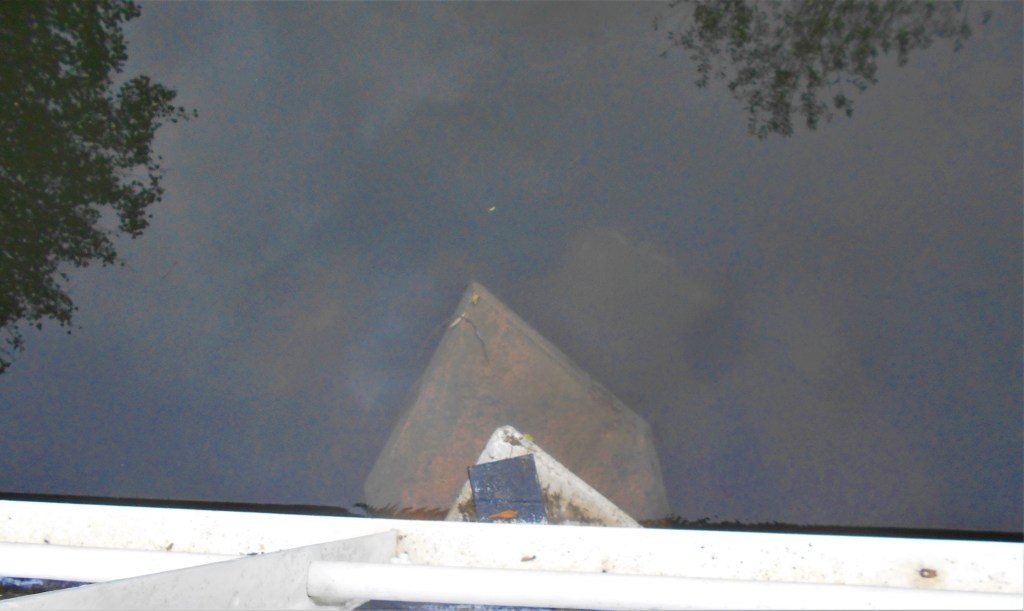
“Sound the All Clear!!”
15th October 2020 / Temp : 10.5 C / Water Level: Falling
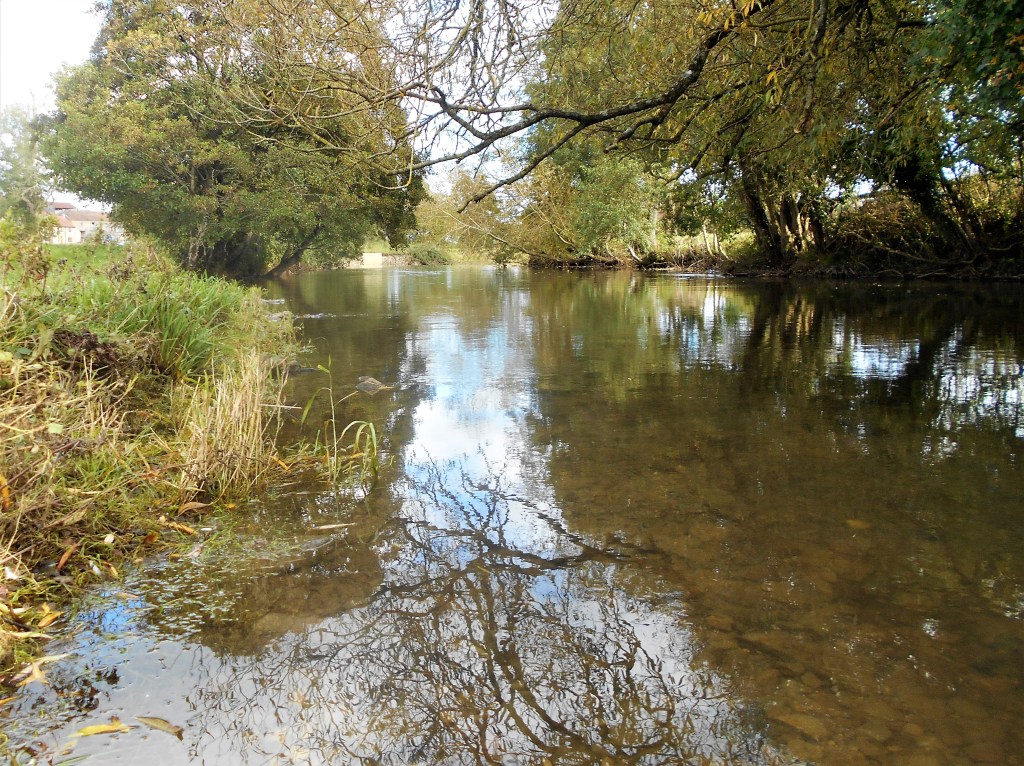
Another day another Otter hunt – the last stretch of our survey sites and one which we hope to complete quickly as the strong north-easterly was at our back, chilling us to the bone.
No signs of Otter at any of the four sites which was a great disappointment, but Mallard gallore! We counted 27 altogether as well as 17 Mandarin Ducks, 2 Heron and 1 Little Egret so good news on the water bird front; we also heard a Green Woodpecker and a Raven and watched two Buzzards slowly circling above us as we walked. We reached a stretch of river bank protected from the wind so the sun felt warmer and despite the lack of Otter signs it felt good to be able to enjoy such a beautiful stretch of countryside.


Lots of mushrooms like shaggy inkcaps growing in the grass, bracket and honey fungus appearing on the trees and lichen covering the tree trunks, branches and on the fallen logs (like common powder horn above), cows in the fields, large flocks of Rooks and Jackdaws scavenging together in the fields and clouds of gulls circling above the hillside, turning leaves, golden yellow and pink-purple, scarlet berries and black-purple sloes – a classic autumn scene.
14th October 2020 / Temp: 13.5 C / Water Level: Falling
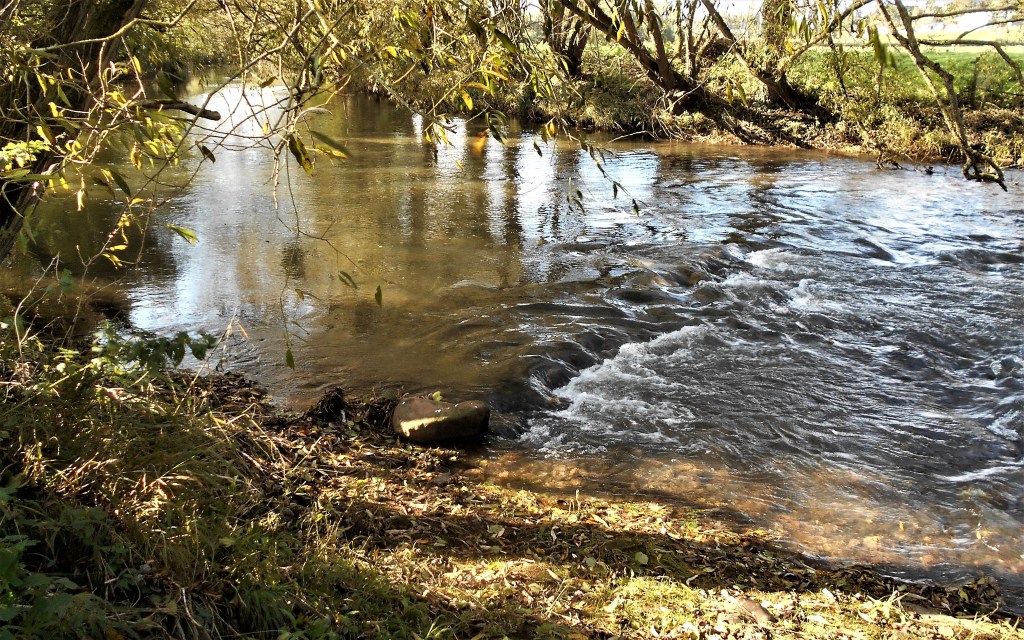
A beautiful autumn morning, the air clear and fresh and good tree cover provided protection from the stiff wind and we were excited when we came across the site of a Roman ford which the owners of the land had told us about. Extraordinary to think that just from the sloping banks on either side, the stony bed and the shallowness of the water the site is perfectly discernible. As if to salute the area, an Otter had left his calling card on a large (possibly Roman!) stone! Interestingly it’s the first spraint we have seen in years without any signal crayfish remains and instead of our usual red coloured spraint, this one was a classic black tarry specimen. Whether this shows that the crayfish are already retreating to their burrows for the winter or some other reason, we will be interested to see as the season progresses.
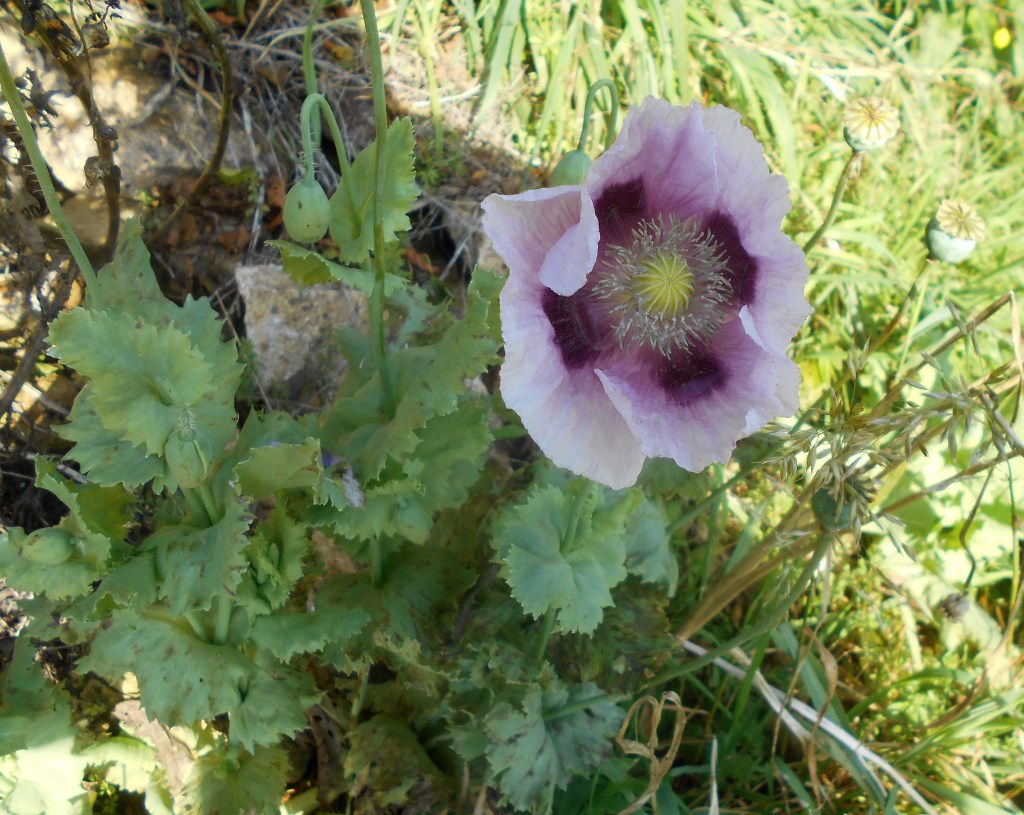
We were surprised to see this beautiful opium poppy in flower so late in the season and to notice quite a few hawksbit and scarlet pimpernel also in flower. The hedgerows had a good crop of sloes and hawthorn berries and the grass under the trees scattered with fungus so it was definitely autumn.

Finally, a totally unknown lichen growing on the bridge. Something to spend the long dark winter nights trying to identify – like chasing rainbows, totally pointless but enjoyable. However, there is of course an outside possibility that it is Varrucaria mamoria a crustose endolithic lichen which grows on limestone rocks and as the bridge is built of limestone, is it a strong likelihood? Hmmm.
13th October 2020 / Temp: 8.5 C / Water Level: Falling
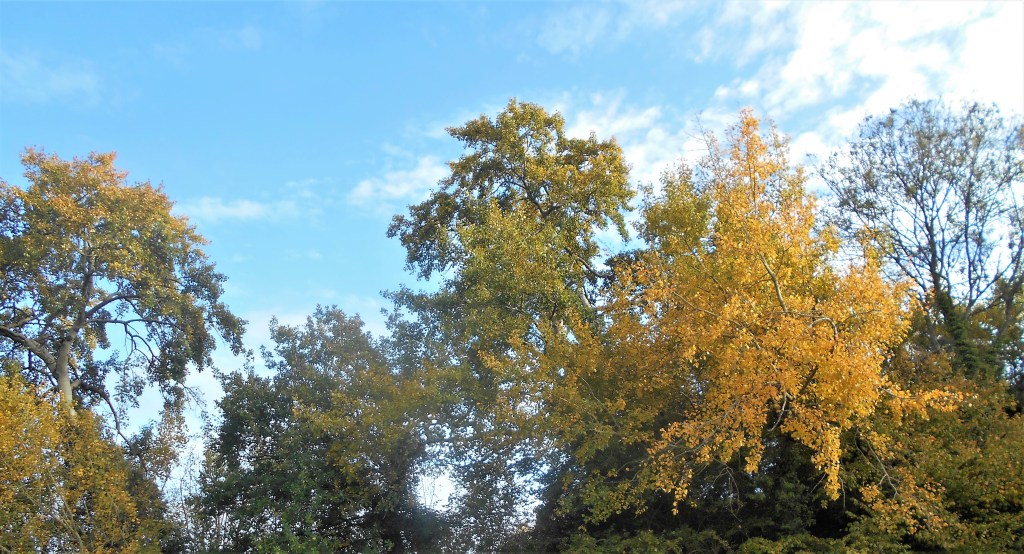
Beautiful morning, occasionally hazy, mostly full sun so despite the chill wind it felt wonderful to walk feeling the warmth on our backs and seeing the sun turning the autumn leaves to cascades of gold.
As we set out we were thrilled to see a Common Crane flying overhead – a sign of long life – so we continued walking with a definite spring in our step! When we heard of a Common Crane in Coleford in August and sightings over Colliers Way we never expected to see one here but all very exciting! We heard a Raven and a Buzzard, saw Magpies, Robins, Blackbirds, Rooks and Jackdaws and first a Swan and Cygnet gliding downriver past us, then two adult Swans and on the way back a Little Egret, also flying over.
Sadly, still no sign of Otter at any of the three sites we surveyed and despite walking the entire river and back along the stream in the hope of some signs of life, but to no avail. We still have two more stretches to complete the survey and hope to see spraint or pad marks at one of them at least, otherwise it begins to seem like a repeat of the past couple of years when Otter signs disappeared with the end of the optimal period for Signal Crayfish in October.
Everywhere was very quiet with virtually no signs of life; a number of common wasps, noon flies and cluster flies on almost every fence post, but the pink leaved guelder rose branches were heavy with bright shiny scarlet berries, the spindle trees were displaying their striking Schiaperelli pink, there were crowded clusters of fungi in the grass and the sun was shining – autumn is not without its compensations.
11th October 2020 / Temp: 13.5 C / Water Level: Med

No signs of Otter at either of the two sites but what was striking at the first was the field yet again flooded when the pasture had barely time to recover from last autumn and winter’s almost permanent flooding. This year there were 18 Mallard swimming around in the newly created lake (last year it was gulls). When three more Mallard flew over and looked to land, it seemed the whole group set up the most almighty racket, quacking away, possibly telling them to clear off there wasn’t enough room, despite the large area of water available! We did wonder why they preferred the flooded meadow to the river – possibly warmer as it was in full sun all day?

There were 9 more Mallard swimming around above the weir (which was in ferocious spate) and it was good to see the goodly number of ducks as there was no sign of any other water birds, in fact few birds at all – a few Crows, a small party of Tits and of course the Pheasants.

Few insects about, although several splendidly coloured Noon flies displaying their golden epaulettes, a Red Darter sunning instelf on the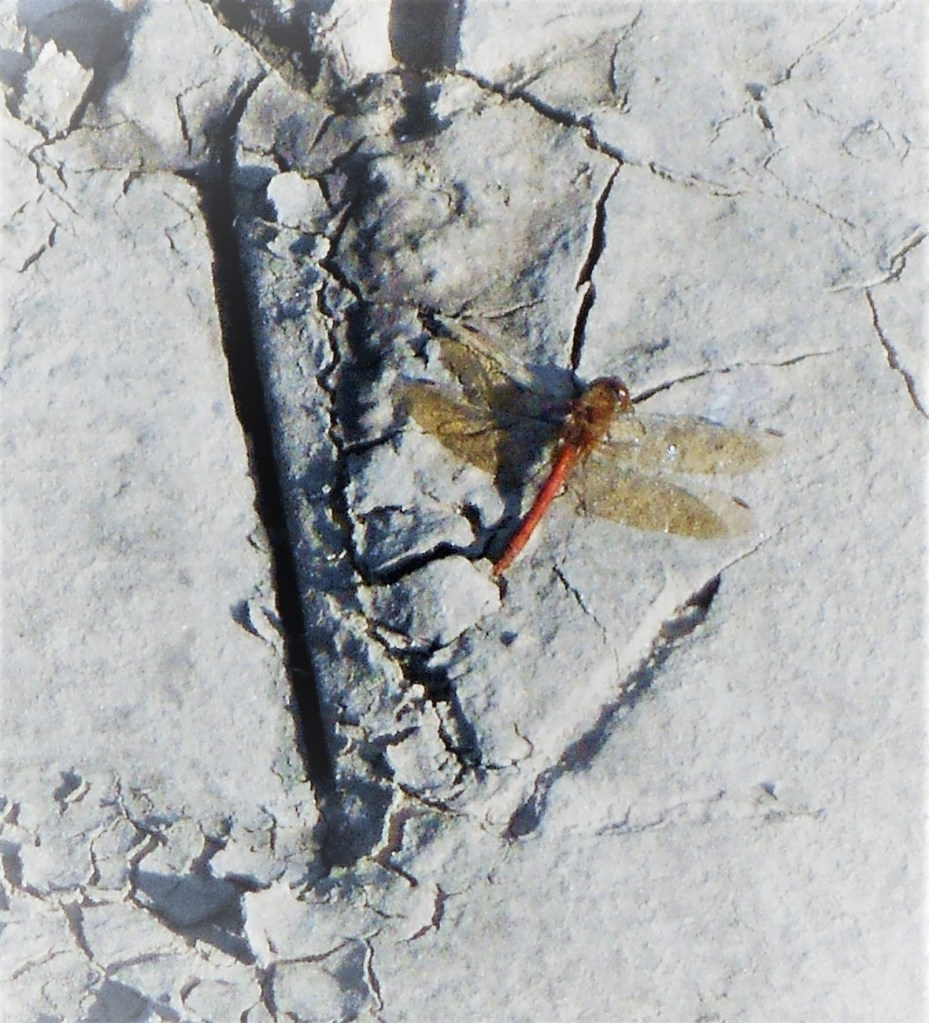
fishing jetty and quite a few, a dozen or so Ivy bees and common wasps around the ivy flowers many of which are beginning to form berries so they didn’t get much of a feast.
There are so few plants still in flower, apart from the water forget-me-not, some rather bedraggled looking marsh marigolds and tansy, there seemed precious little for the insects to feed on.
It was such a beautiful afternoon, brilliantly clear air, bright sunshine, blue skies and puffy white clouds and although the north-easterly wind was brisk, the warm sun ensured we felt warm.
We moved on from the water meadow to the bridge where the banks are very wooded. In a sunny glade beside the river there were clouds of winter gnats doing their mating dance, and bright black beetles clustering in the crevices of the sequoia tree bark. 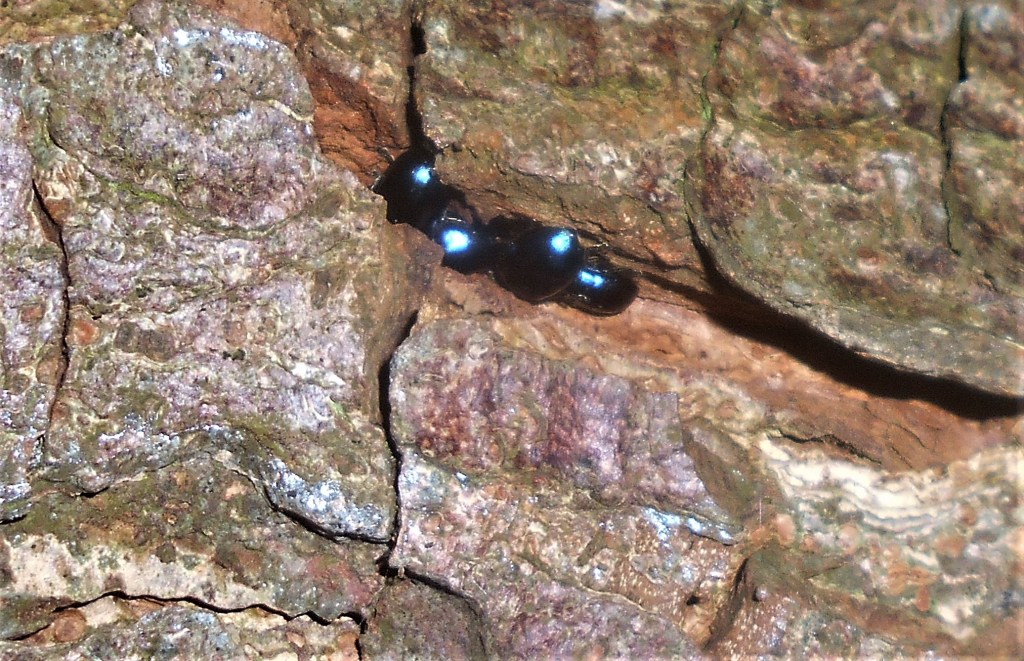 However although there were no signs of Otter, we did see Mink pad marks in the mud around the tunnel where the rhine stream joins the main river. We haven’t seen any signs of Mink for so long we had rather hoped they had moved on, but possibly because there is less Otter traffic or some other reason, it seems they are back.
 A couple of months ago when we were chatting to some of the working party clearing the river, they drew our attention to fish head surrounded by scales which they believed was Otter kill. We were not quite so sure as Otter eat fish head first and are more likely to leave the body of the fish rather than the head and the scat was definitely not Otter (or Mink) and we thought at the time is was Stoat. Although we knew that fish is a part of Stoat’s diet, we didn’t (and still don’t) know if they eat the head, in fact we know very little about Stoats – merely that they run up and down or lie along willow branches!
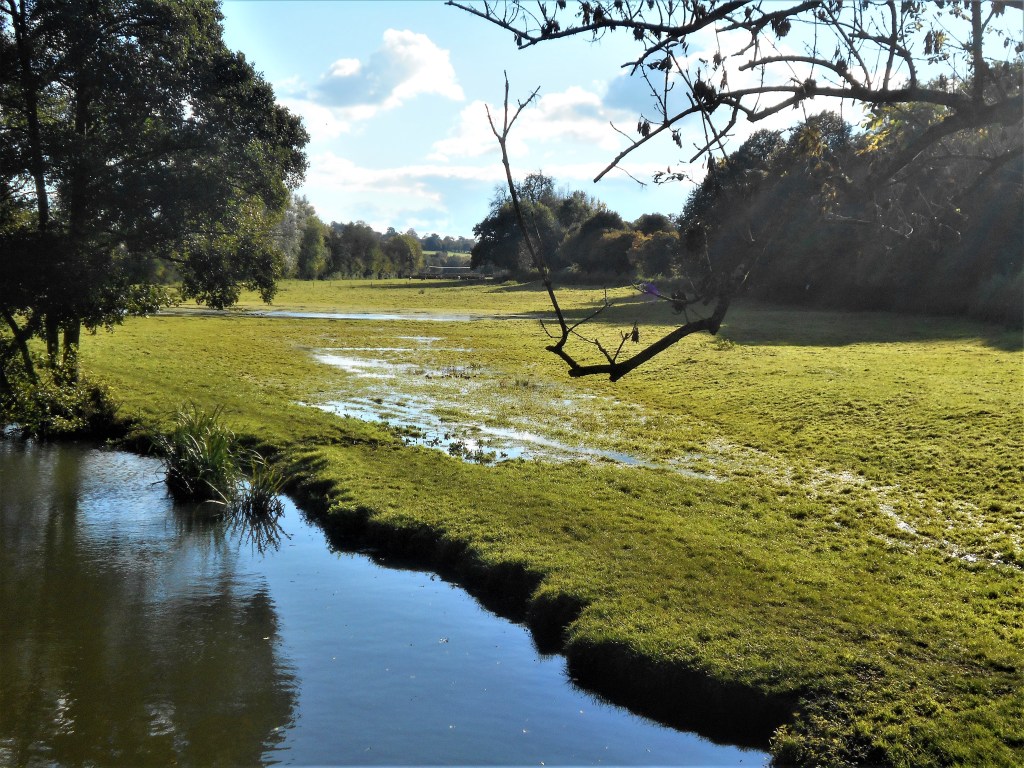 However, all thought of Otters, Stoats, Mink or anything else was washed from our minds when we returned to the river just in time to see a Kingfisher flash downstream and then within minutes a pair of Kingfishers flashed back upstream, the strong sunlight highlighting their startling flash of vivid cyan and blue. How wonderful when we were angsting that there were so few water birds, to be rewarded with a pair of Kingfishers. How lucky we feel when life sometimes offers us such totally unexpected and delightful treats.
8th October 2020 / Temp: 14 C / Water level : Rising
No signs of Otter on our very rapid survey or two sites. Access to the third site was blocked by the Fishing Club so we will have to discuss this development with our survey co-ordinator and perhaps remove it from the list of sites which we survey.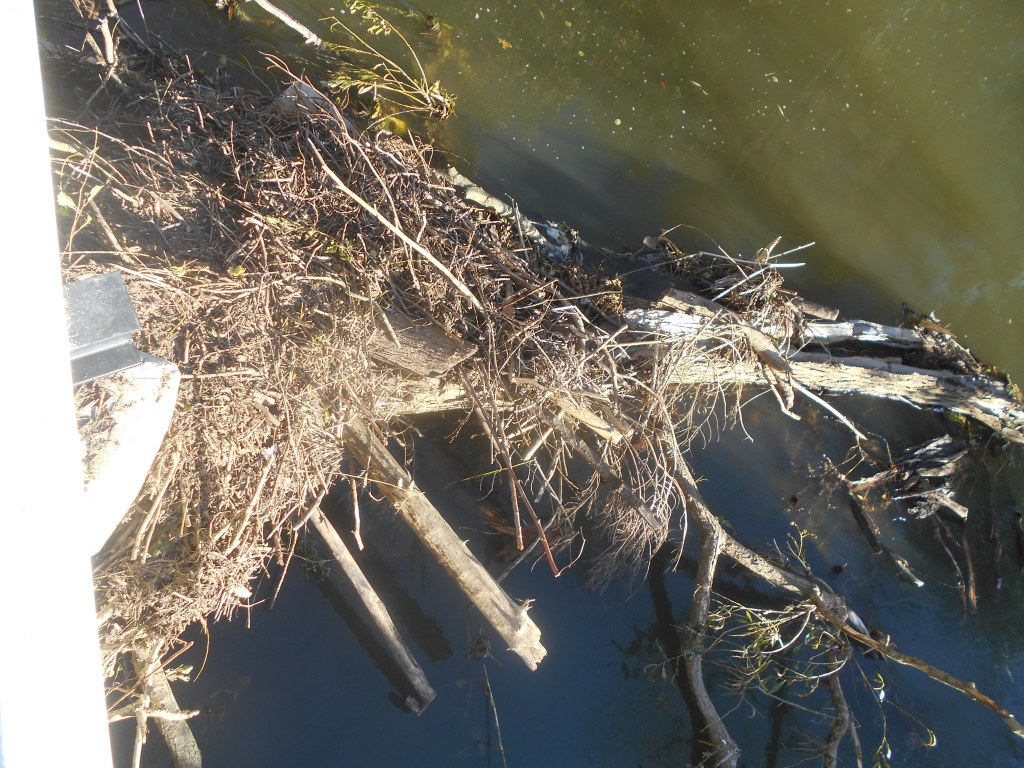 Fallen trees, branches and accompanying debris had partially obstructed one side of the pier and a large extent of one arch of the bridge. The river has been very low for most of the summer and the recent continuous heavy rain has cleared the river of fallen trees from farther upstream. If the Fishing Club had not cleared the river farther downstream, this extra load would have caused serious problems, possibly flodding.Very little else to see except a Little Egret perched alone in a large tree at the end of the field – sad to think that last year we had seen 7 Little Egret in the same tree.
17th September 2020
No sign of Otter at any of the four sites, no water birds along the whole stretch, but 3 Emperor and 1 Red Darter dragonflies, 4 Large White butterflies, innumerable wasps and crane flies while Magpie, Wren and Grey Wagtail were the only birds apart, of course, from the dratted Wood Pigeons and as usual at this time of year escaping Pheasants everywhere fleeing from the nearby shoot! A major three-day work party of volunteers from the Frome and District Angling Association, Canoe Club and other supporters cleared of a number of large trees and debris from the river and overgrown vegetation from the bankside. There now appear to be 25 pegs on a stretch of the river we survey, each peg with a wide clearance on either side, where trees have been severely cut back or removed and the bankside completely bare.
Expert assessment, advice and guidance was given and followed but to the untrained eye it does appear that the river will be more susceptible to pollutant (particularly phosphates) run-off from the fields which the previous plantlife and tree roots helped to absorb. The recent Defra report on the health of UK rivers drew attention to phosphates and other chemicals which, combined with untreated sewage (continuous on this stretch), is a particular problem in the overall health of the River Frome. However, we are certain that this has been taken into account and no doubt some of these plants will be encouraged to grow next spring to offer home to the midges and mosquitos the many species of dragonflies and damselflies currently inhabiting the river feed on as well as hiding places for the sedge flies during the daytime and resting places for the newly emerged mayflies as their wings form and harden.
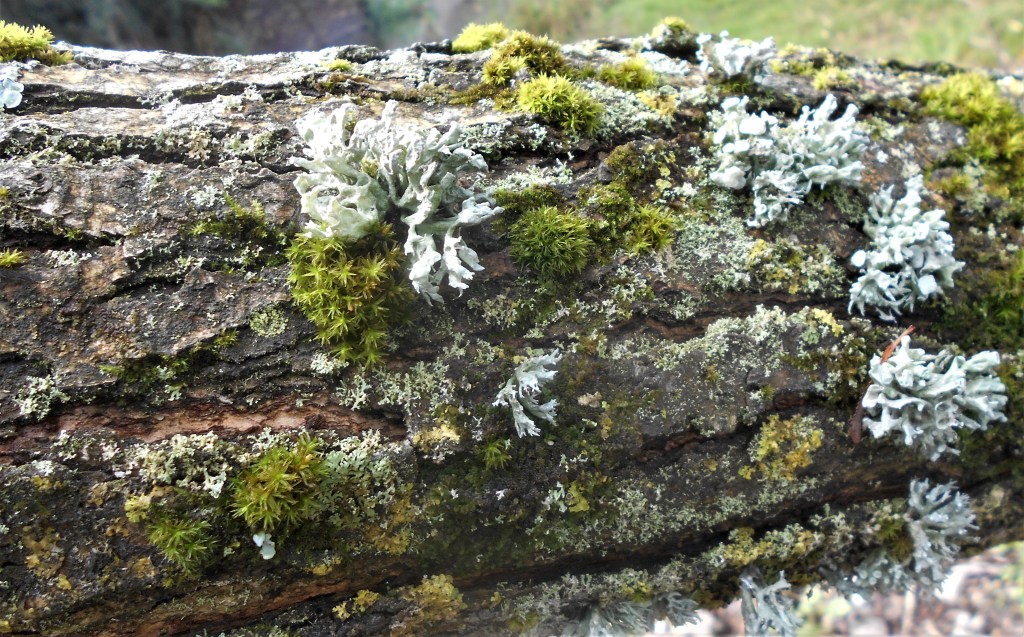
Of all the remedial work, we mourn the loss of a large branch of the ancient willow tree which stood proud in a central place of honour next to the bank on the shingle beach, the largest and longest of the several limbs which have been removed.

This old tree was a haven, a veritable garden, of so many species of moss and lichen and for some reason beloved of stoats whose hairs we often found unaccountably caught up in the bark. Why they would run along, or lie on the branch is a mystery we have long since ceased to try and fathom!
In the long dark days of autumn and winter when so little of the countryside seems to be living, it is always a delight to examine the vivid colours and varied shapes of these organisms – a miniature oasis, a tiny Eden, gone forever. Fortunately these photographs, taken on the 7th September, record the last flowering.
NOTE: Problems to guard against in maintaining good river habitat include
Intensive fisheries management
Regular ‘weed’ cuts in the channel; fencing off and mowing of strips along the bank; infilling and stabilisation of banks; removal of unwanted fish species (e.g. pike, grayling); and high stocking with farm-reared trout.
Retain aquatic, marginal and riverbank vegetation
Traditional river restoration techniques may be particularly damaging for invertebrate species that rely on the presence of marginal and riparian vegetation to provide shelter and emergence sites. Weed cutting has been suggested as the cause of the serious decline of the River Test’s best known caddis fly the Grannom (Brachycentrus subnubilus), nationally a common species. If fishing areas or ‘swims’ are to be cut in the natural vegetation their location should be rotated on an annual basis to allow re-growth of the vegetation.
Work liable to damage marginal and riverbank vegetation should aim to leave a mixture of species and sward heights. Such work should be undertaken on one bank only and on short stretches such as 50 metres in each 200 metres in any one year, with cut material gathered and stored in heaps in non-sensitive areas. When mowing paths on the river bank for access by anglers, leave an uncut fringe of tall herbaceous vegetation as a screen between the path and the river to provide shelter for adult invertebrates.
Riverside trees are an important component of the chalk river habitat, providing shelter for a number of rare and nationally scarce species including the fly Cosmetopus dentimanus and Scarce chaser dragonfly (Libellula fulva). The White clawed crayfish also favours sites with overhanging bankside vegetation. However, if the river or stream becomes completely shaded by overhanging trees, this can have an adverse effect on aquatic invertebrates, so it is important to maintain a balance.
16th September 2020
A paper has been published and put online by the Otter Project team at Cardiff University entitled:
Biological and anthropogenic predictors of metal concentration in the Eurasian Otter, a sentinel of freshwater ecosystems.
The conclusion* arrived at was that none of the pollutants listed in the graph below were sufficiently concentrated to adversely affect the Otters.
NB : *This conclusion would also correspond with the fact that there are other animals we have observed which are associated with clean rivers (such as Dippers, Kingfishers, cased caddifly and mayfly larvae, dragonfly & damselfly nymphs etc) which are also able to tolerate the degree of polution shown.
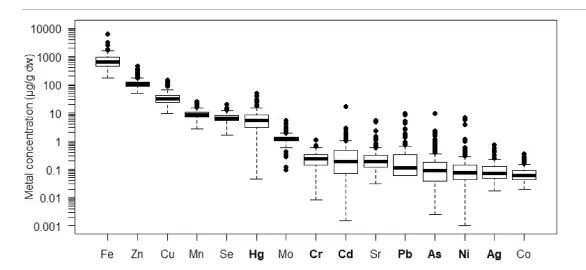
Explanatory note on the graph :
The amount of concentration of each metal in the Otters varies. The vertical scale gives the amount of concentration. Each metal is given its own vertical spread. The thick horizontal line in each case shows the half way mark (the median) of concentration for each metal. The “box” surrounding it shows the range of the central half of the amount of concentration. The “whiskers” leading up and down show the extent of the central three quarters of the concentration. There are individual Otters where the amount of concentration lies outside this range. They are shown by individual black dots.
To read the article in full, please click on the link below.
10th September 2020 / Temp: 13.5 – 18.5 C / Water Level: Med-Low
 Scorpion fly – Panorpa communis
We surveyed our last stretch of four sites on a beautiful September morning, blue skies and temperature rising as the sun reached its zenith, a wonderful day for a hunt.
No signs of Otter at our first site but we disturbed 8 Mallard and the air was full of Crows and Jackdaws. We also saw a dead pheasant tucked into the long grass low down on the river bank – it was sitting and by all appearances undamaged which lead us to wonder how it had died. The night was unseasonably cold but that seemed unlikely – a small mystery.
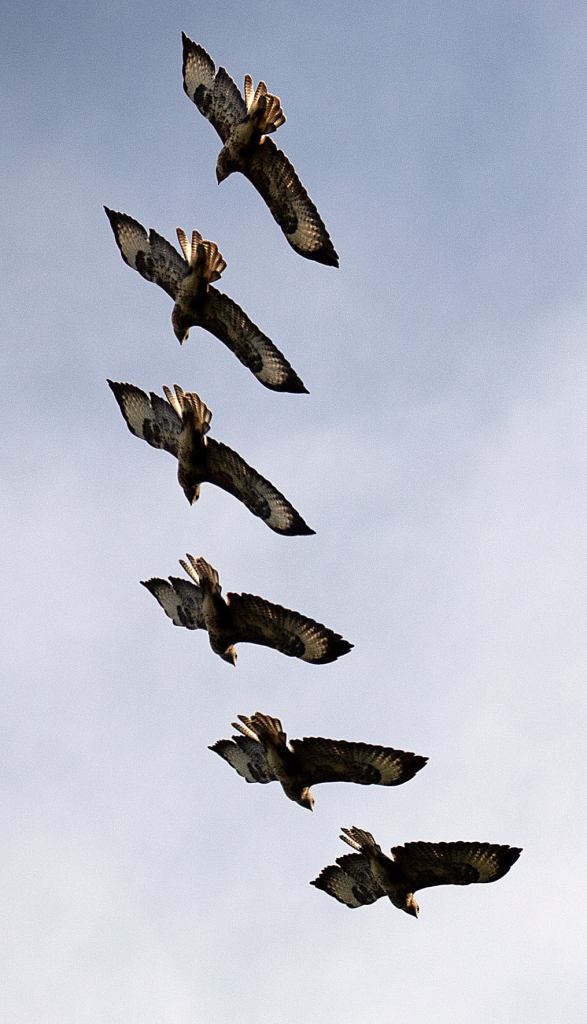
On to the next site where first a flock of 13 Mandarin rose almost silently from the river, followed by another 4 and then another 14 – 31 altogether about 10 more than the largest numbers last year. A Grey Heron soon joined them but no signs of Little Egrets which was disappointing as we had seen 7 roosting in one of the trees last autumn, although it was good to hear the plaintive mew of a circling Buzzard as we walked. We also drew a blank on Otters at the third site but what was noticeable, this area still being out of the sun, was the uncountable number of hammock spider’s webs in the grass, very striking, they seemed they seemed to be everywhere.
A great relief to find Otter spraint on our very last site – 1 fresh and 1 recent and lots of old dried sprint covering the stones of the beach exposed by the low water. We saw and heard a Kingfisher – confirming it was a halcyon day and when we heard a Raven calling a greeting we knew all was perfect in the “best of all possible worlds”!
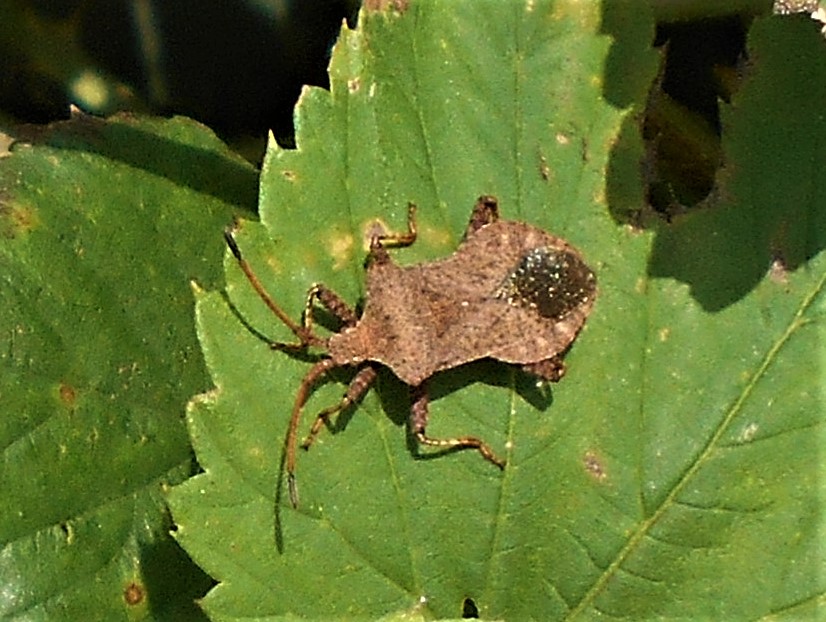
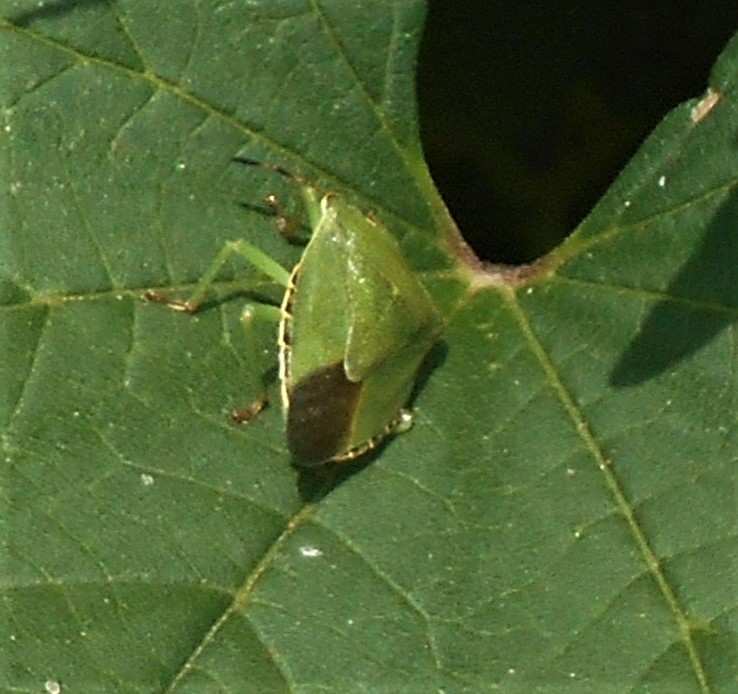
The two spiders which we spotted are difficult to identify, our best guess (and it is despite much research) still a guess is that they are grass spiders, Tibellus oblogus, which are often found in sand dunes near the coast but also in damp places like grassland.

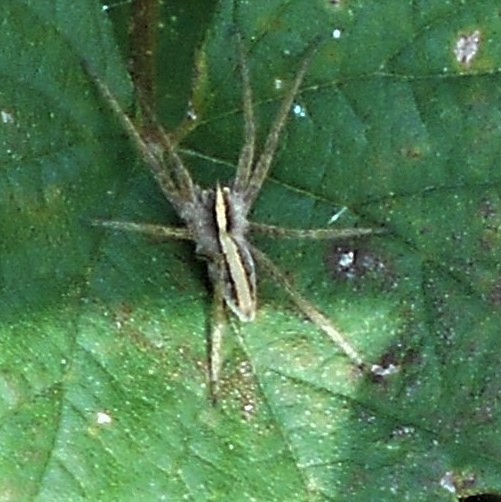
By now the temperature was steadily rising and the sun was really hot, so we were not surprised to see Large White, Orange Tip (female) and Green Veined White butterflies fluttering both across the meadows and all along the hedgerows.

Walking back across the dandelion scattered field, we noticed almost every flower head held a honey bee or hover-fly burrowing away. Evidently dandelions produce lots of pollen so at this time of the year provide a very welcome feeding station for pollinators. The farmer has a couple of hives so that honey bees always seem to predominate and most of them had their pollen baskets on their legs pretty full.
7th September 2020 / Temp: 13.5 – 16.5 C / Water Level: Med- Low

An early start to catch some sun and we were hugeIy rewarded for our effort – if you peer very carefully at the above photograph you might be able to discern a bird, you might even be able to see that it is an murky image of the Dipper we were thrilled to see from the bridge – the first we have ever seen in this particular stretch of the river. It hopped around from stone to stone and dipped its head under the water, seemingly searching, but during the whole time we were watching, it never dived down to fish.
A Grey Wagtail was its constant companion – also hopping and flying between the stones. We can only believe what the clusters of caddis fly cases upstream of this spot seemed to indicate – at the moment the river is pretty clean. A really cheerful start to our otter hunt, made even more spirit-lifting by spotting fresh spraint on the bridge pier, opposite the cluster we spotted two days ago – really great news.

There were no signs of Otter at two of our other sites and we didn’t survey the third – the new young bull which has replaced Ernie looked rather too energetic for our liking. However we were pleased to see a pair of Swans with 3 cygnets by the main beach, a Little Egret by the weir and heard a Green Woodpecker from across the water meadows. Brown Hawker, Red Darter and Emperor dragonflies, Banded Demoiselle damselflies and Large White butterflies were out and about enjoying the warm sunshine, wasps and noonflies sunbathed on the telegraph poles, lots of alderleaf beetles on the brambles and clumsy crane flies everywhere in the grass, as difficult to avoid in autumn as the grasshoppers in spring.
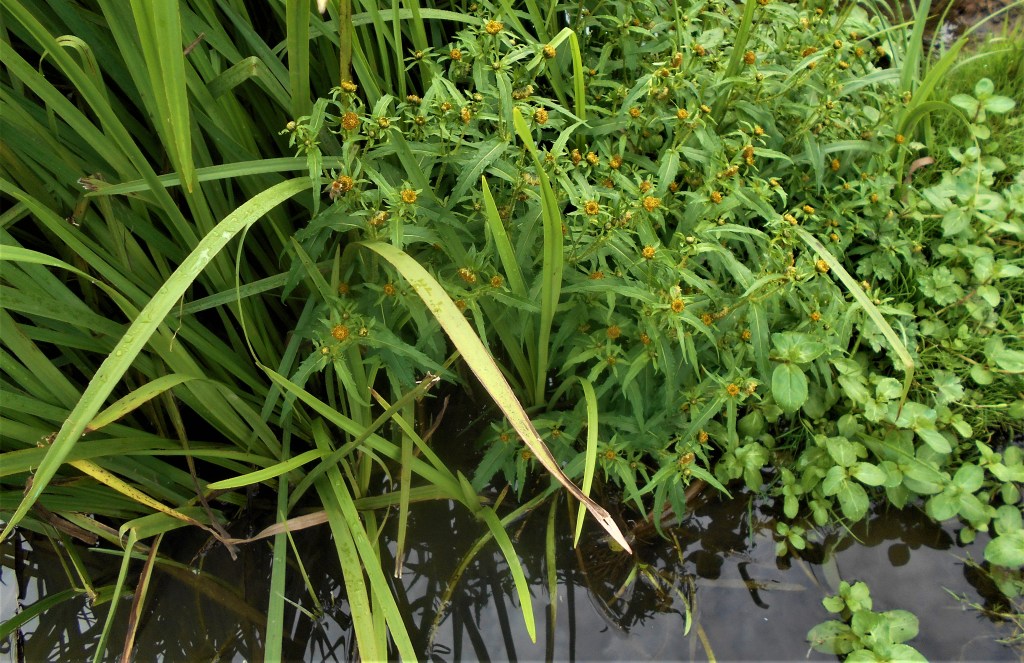
No signs of Otter at the last three sites but more Large White butterflies, honey bees, hoverflies, grasshoppers, pond skaters and craneflies, the trifid bur-marigold in flower along with, rather surprisingly, several large clumps of marsh marigold, water forget-me-not and purple loosestrife

and our first sighting of a pleated inkcap fungus, a slightly unwelcome reminder that autumn is upon us when every part of us clings to summer as we persuade ourselves that the sun is warm, the river beautiful and nothing will ever change.
15th August 2020

Rain? What rain? We’re off to the river to fish for treasure – what’s a little rain!
We did at last manage a brief kick survey under the bridge, in the same place as last year and caught pretty much a similar haul, athough not so many species (mostly bullshead and signal crayfish) but whether that was due to the rain it was impossible to know. What is so wonderful with children that whatever they find is exciting and their enthusiam is undimmed whatever the weather and they never seem to feel the cold or discomfort.
While waiting for the rain to ease a little, we stood close to the bank and noticed 3 or 4 empty crayfish shells floating in the river. The one which the children retrieved had a claw missing and knowing how crayfish fight, we wondered if several had been killed and their dead bodies cleaned out by predators but we have really no idea what caused it.
We checked for Otter spraint both on the bridge piers and on top of the boulders with no luck and so decided to walk to the next site which was at least sheltered a little by the overhanging trees and check the boulders for caddis cases.
Sharp-eyed youngsters soon found lots and the river echoed with their shouts of triumph as they discovered another and another – the sheer numbers of cases is a very positive indication of water quality. Most of the finds seemed to be Glossosomatidae (Saddle-case caddis) with one or two together on top of a boulder, some of which looked empty, whereas there were clusters of half a dozen or more underneath the boulders. It took an eagle-eyed child to find what had eluded us all – a squared tubular case which is a new species, even if we were unable to identify it!
It was a pretty tired party which made its way slowly back across the water meadow but all quietly satisfied that we hadn’t let the rain prevent our expedion!
11th August 2020 / Temp: 28-30 C / Water Level : Low
Even at 10.30ish in the morning it was extremely hot so it was good to walk the shady side of the river and even better to climb down to where the water is completely screened by overhanging trees and is full of riffles and eddies, tumbling over stones and where the air felt deliciously cool.
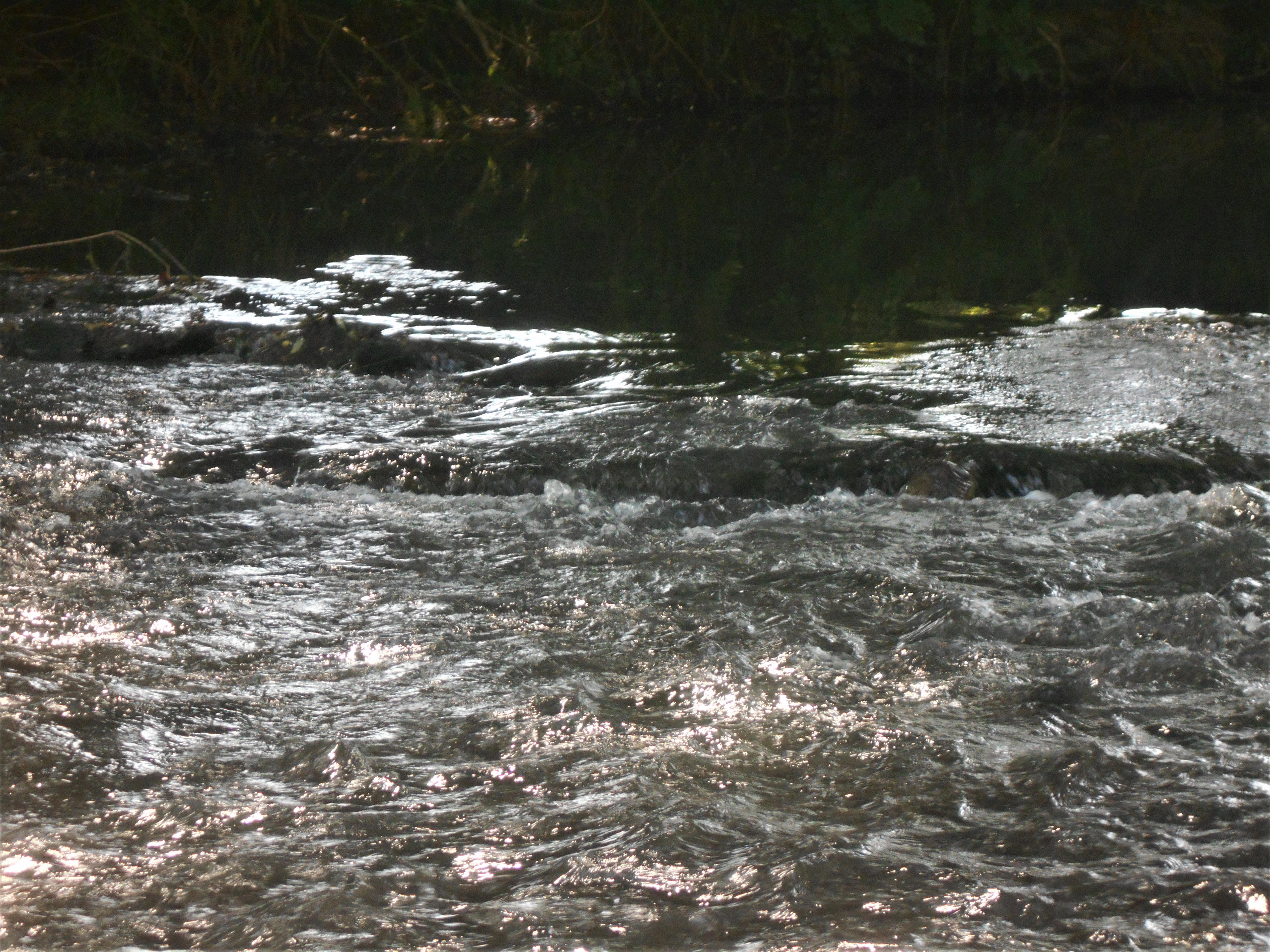
We spent an enjoyable time poking about the river bed, turning over stones, looking for insects among the riparian vegetation while hoping to spot Kingfishers and Dippers (yes to the first, no to the second). No sign of any insects or much movement in the river, but we did spot a couple of saddle-case caddis, completely out of the water and almost dry. Whilst examining the photograph at home we noticed what looked for all the world like a cooked shrimp on the stone below the saddle-cases.

We have examined it carefully but as we hadn’t focused on the shrimp, the image is not very clear – however we believe it could either be a mayfly larva which was stranded (or died) on the stone when the water receded or perhaps (more excitingly) the invasive species The Killer Shrimp!! Dikerogammarus villosus grow to about 30 mm long and were first recorded in the UK in 2010. It has spread to lakes, canals and rivers in most of the country, breeds prolifically and is thus a danger to native species. We have read that these gammerid types of shrimp have a head and body which are laterally flattened, so dead specimens (like this one) lie on their sides. It could have been swept downstream from the more sluggish stretches of river which it is said to prefer. Note: Excitement over – we submitted the photo to non-native species alerts at the Centre for Ecology & Hydrology and Dr David Aldridge from the University of Cambridge replied with the news that this is not a killer shrimp – we don’t know whether to be pleased or disappointed – the former of course!
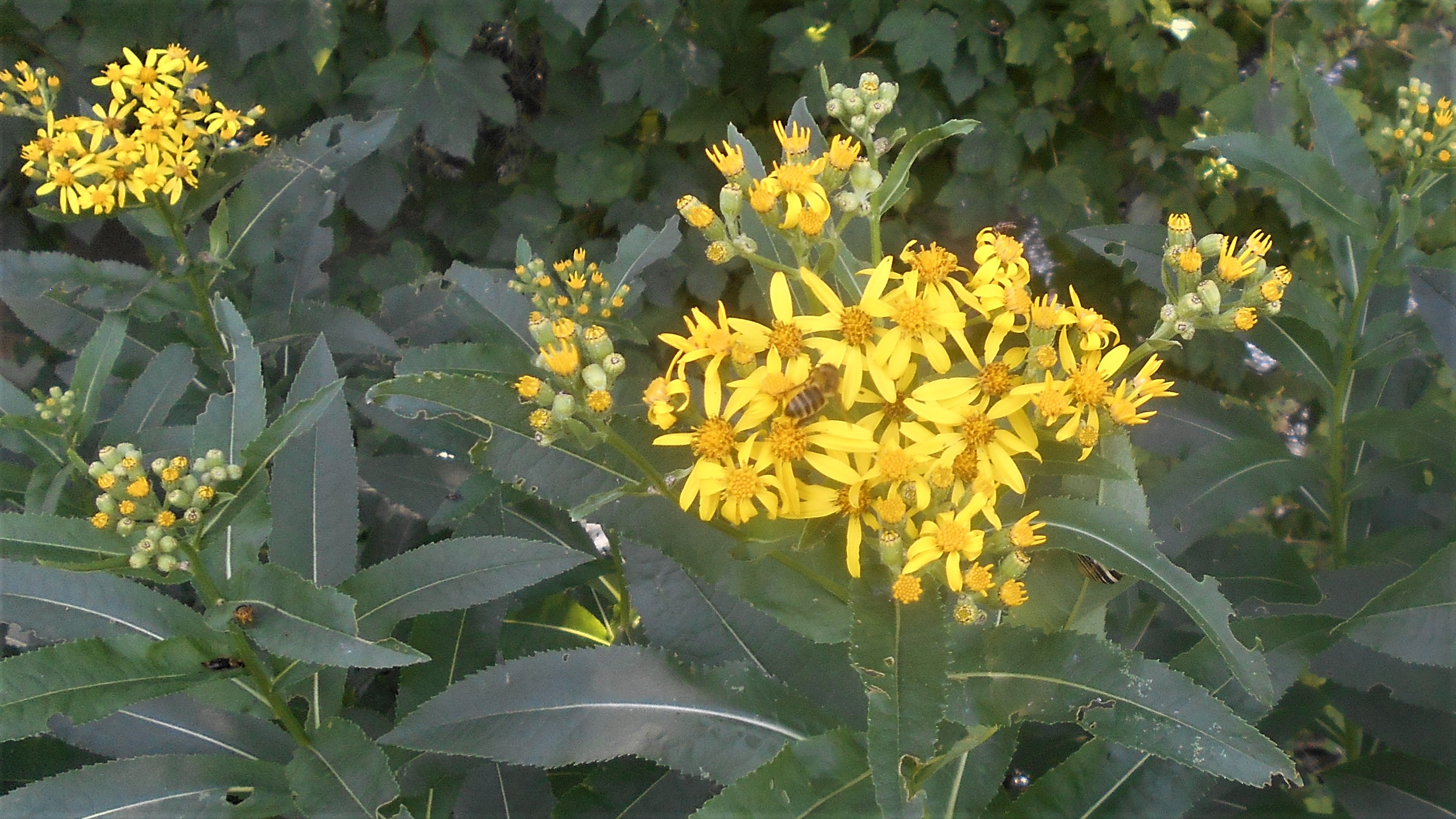
Lots of newly opened saracens woundwort and tansy both making vivid splashes of golden yellow along the banks; on one stretch there was a great tangled mass of pink great willowherb, purple creeping thistle, purple loosestrife, himalayan balsam, red and white dead nettle, white angelica with its purple stems, blood red burdock, white trumpets of great bindweed and white flowered hemlock which made a wonderful harmonic splash of colour, shape and height – all the riverside plants of high summer.
Given the amount of possible nectar on display, there were very few butterflies – mostly small and large whites and speckled woods. And apart from the Kingfisher flashing past, and hearing a Green Woodpecker, Magpie, Great Tit and Wren and seeing the usual Crows and Wood Pigeons, as expected at this time of the year, little signs of birdlife.
The most active insect apart from the bees was a Brown Hawker dragonfly, constantly flying, swooping and turning up and down the riverside plants in never ending flight, tirelessly searching for tiny midges to eat.
No signs of Otter under or around the bridge or along the river bank – off wandering no doubt.
2nd August 2020 / Water Level: Low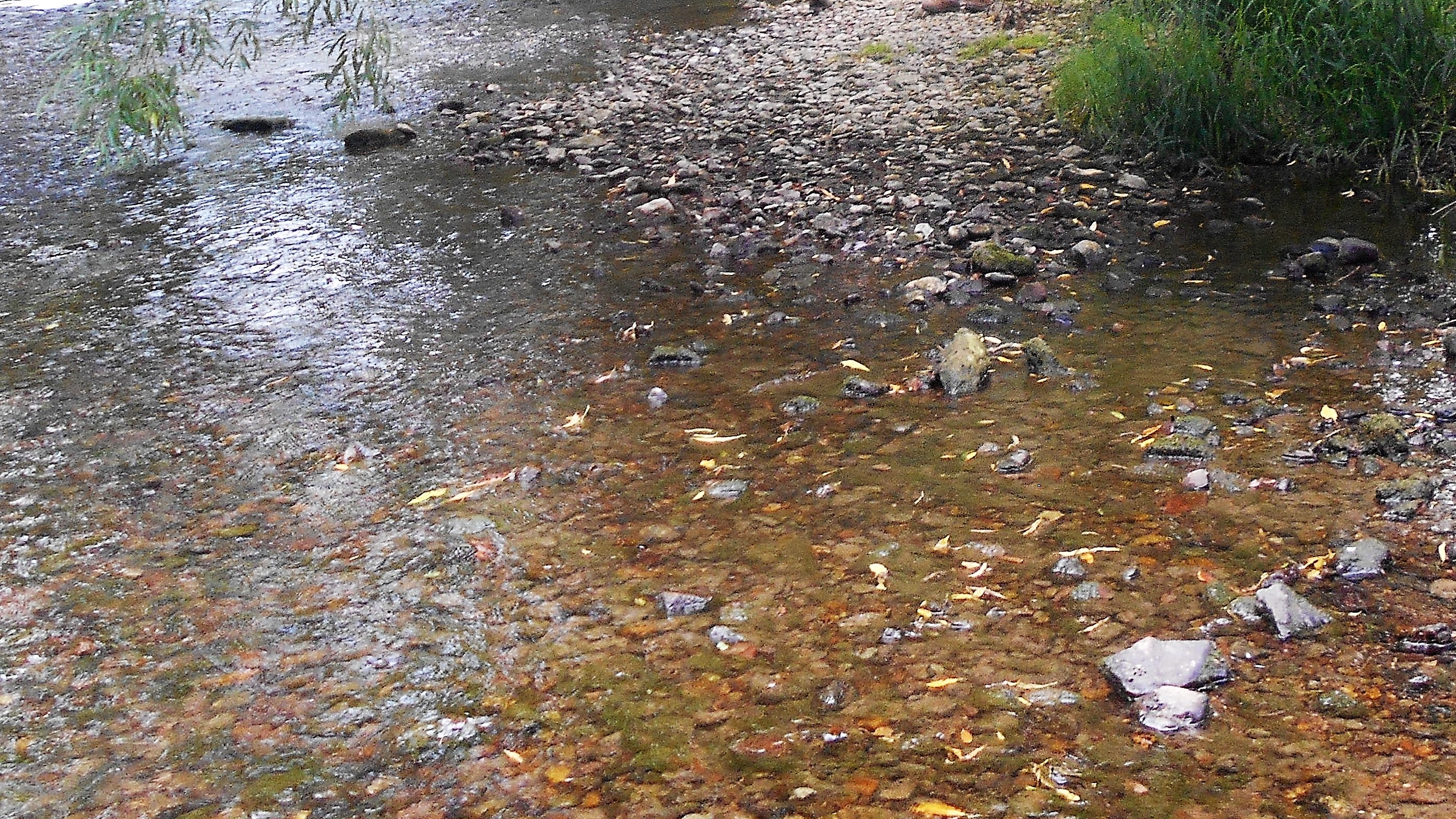
The afternoon was mixed with sunny intervals and scudding clouds, quite blustery and windy – the kind of day where it was either too hot or too chilly so a short walk along the river bank checking for Otter spraint was a good way to occupy our time. Clambering down to the stony beach is always fun and today was well protected
from the wind. No sign of caddis fly lavae cases or insects hiding in the foliage so after an enjoyable potter, we returned to working our way around the water meadow.
We were extremely pleased to discover this extraordinary looking creature, a female parasitoid wasp (Gasteruption jaculator), one of the two we spotted searching around a slowly decaying, hole ridden tree stump, presumably searching for a solitary wasp’s nest filled with eggs to lay her own eggs to predate on them. The length of the white-tipped ovipositer gives a clear sign of the depth she has to delve to seek out the nest.
 Since finding the cauliflower slime mould fungus on this stump, we always check it out to see what beetles, bees, wasps or fungus might be making its home there. Today whilst trying to photograph the wasp, we could see black woolf spiders running around the foot of the trunk hunting for who knows what!
It was fun to find this species of wasp, which is new to us, and made up for not finding any signs of Otter on any of the banks after spotting fresh spraint on one of the piers under the bridge. Few birds – a Raven, Wren, Green Woodpecker, Lesser Black-backed Gulls, Jackdaw, Crow and happily a Dipper but lots of grasshoppers, few butterflies – Peacock, Small Whites 
(including one poor bedraggled butterfly rescued from it’s desperate attempts to free itself from a cobweb)a Small Tortoiseshell and a Small Blue. Lots of bees, including loads of buff-tailed and a couple of red-tailed bumble bees and lots of flies everywhere.

Still a reasonable number of plants in flower, the tansy making a colourful display on the riverbank and it was good to see the first gypsywort of the season, along with purple loosestrife, purple teasels, creeping and spear thistles, himalayan balsam together with saracens woundwort just coming into flower, woody nightshade and thick clumps of water forget-me-not all along the rhyne, so thick and lush it was pretty much impossible to spot the water – such a wonderful celebration of summer!
29th July 2020 / Temp: 17 C / Water Level: Med-Low
The Common Field Grasshopper is the one most likely to be seen and our most constant companion on walks through the water meadows and along the river banks from June until late autumn and their leaping and chirring provide one of the special delights of smmer grassland. Such walks are not just thoroughly enjoyable they are also beneficial to good mental and physical health as is borne out by recent Blue Health reports which have found that the benefit of outdoor exercise is enhanced if taken near water. Rivers, sea, lakes etc add an extra dimension and, having spent almost my entire life living close to one or other, I always feel the strong pull of water and the need to be close. Whether beside the Thames, the Bristol Avon, the Sava, the Danube, the Java Sea, the Atlantic Ocean or the Somerset River Frome – each has its own very particular charm – no flying fish or dolphins but brown trout and otters – no lobster or seaweed but crayfish and watercress, Little Egrets instead of White Storks and flashing Kingfishers instead of diving Fulmars – all totally different but all totally captivating.

No luck at any of our four sites – no signs of Otter activity at all, not even pad marks in the mud, which was disappointing but not totally unexpected as Otters are constantly on the move over a long beat of river. No sign of water birds either but a sprinkling of banded demoiselle damselflies, both male and female, eight in all, but only one common blue and one blue-tailed damselflies and a single common darter dragonfly.
It was a similar story with butterflies, we spotted one each of speckled wood, small tortoiseshell, comma, gatekeeper, 3 red admiral but around a dozen small whites. As for birds we heard and saw Goldfinches, Blue Tits, Long-tailed Tits, Swallows, a Buzzard, Jackdaws, Rooks, Crows, Gulls and of course Wood Pigeons but no more than a handful.

And yet… what we did see was our first wild carrot whilst walking across the meadow, complete with a single pink/red flower in the centre and a beautiful yellow and black ichneumon fly (our first of the year and a new species to boot!) perched on the edge, lots of upright hedge parsley, a footballer hoverfly settled on a thistle leaf, a willow redgall sawfly and a willow leaf beetle larva on one of the crack willows, not to mention a flesh fly by the river, which together make an impressive haul of seven new species to add to our list! What a balm it is, to so lose oneself in examining this one single tiny insect, sitting on this particular leaf, on this very plant, feeling the warmth of summer on one’s back, while the worries and cares of the world recede and simply fall away.
And so even the frustration of the camera battery giving out less than half way around the sites mattered not a jot!
13th July 2020 / Temp: 17.5 C / Water Level: Very Low

The final stretch of river for our spasmodic Otter survey for this month. The weather was dull and overcast but the rain held off thank goodness and we checked all the sites without incident. We delighted in seeing the Swallows and House Martins swooping low over the fields and lining up along the telegraph wires – they always look as if they are having such a good time! Good to see a couple of Herons, Mandarin Ducks, hear a Green Woodpecker and we were thrilled to catch our first sighting of a Mistle Thrush in the area. Jackdaws, Rooks and Crows were noisily making their presence known as they spread out in an adjoining field and Wrens, Pied Wagtails in the trees while Gulls and the ubiquitous Wood Pigeons were constantly flying over, so lots of action.

Nothing very much to see on the river, apart from hundreds of shore flies on the mud and stones at the water’s edge; no signs of Otter on the first three sites, but we were rewarded by 1 fresh, 2 recent and 2 old spraint filled with crayfish bones and surrounded by scattered crayfish pearls.
Apart from a noon fly on a cow pat, a good number of bees feeding on the flowers of the greater willowherb, meadowsweet and bramble lining the bank, a few Small White butterflies and a single Red Admiral there seemed little other sign of insect life. So imagine our surprise when walking the path along the hedge on the way back to see first one or two and then dozens of Gatekeeper butterflies!
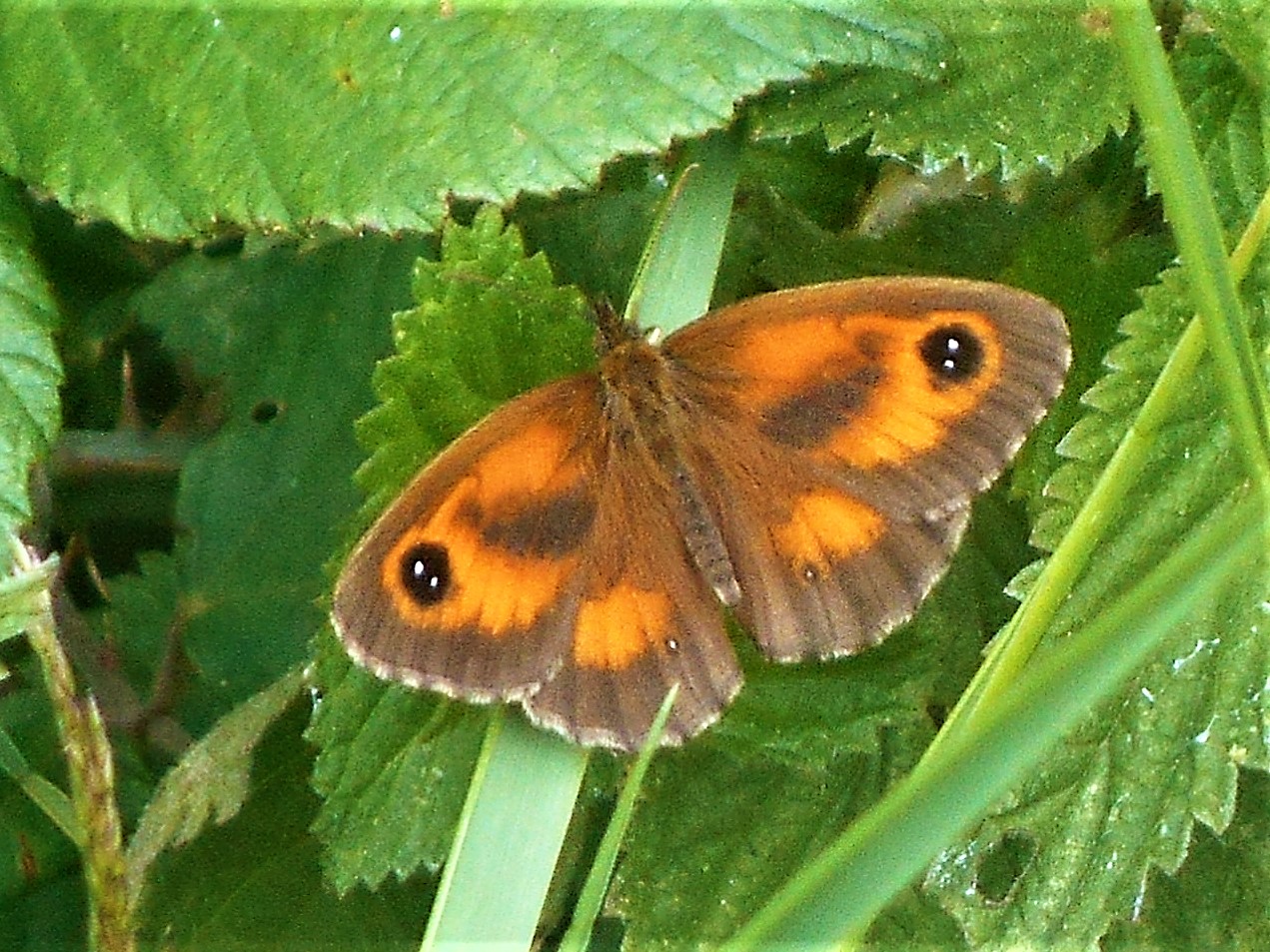
We have never seen them along the river before and yet there they were in profusion – strange. Interesting to see them totally ignoring the thick clumps of beautiful scentless mayweed and stately teasels both in full bloom to hunt among the leaves of the hedgerow.
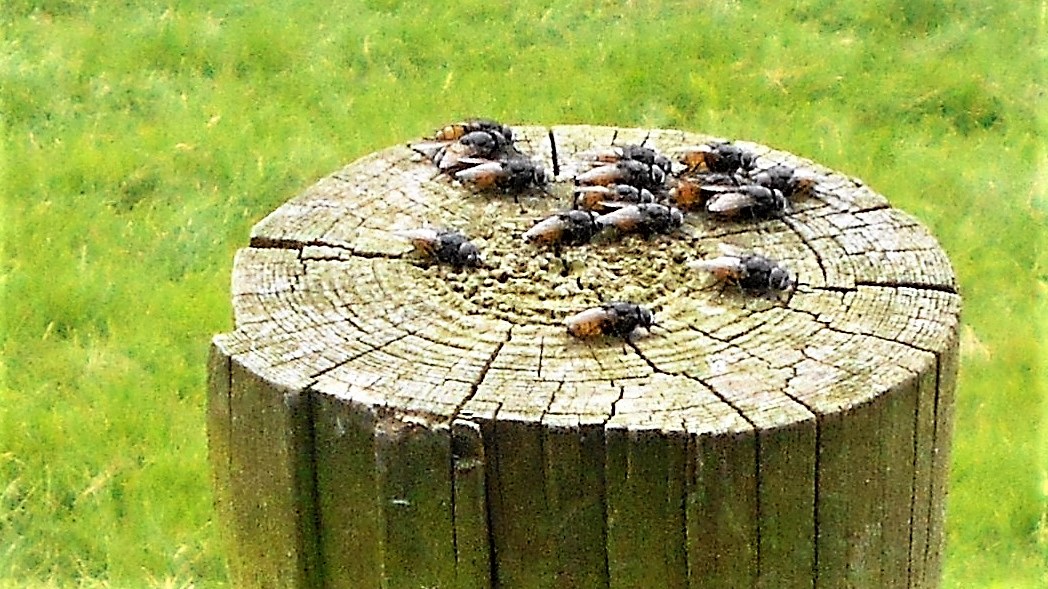
We were amused to see on every fence post a cluster of face flies, all sitting perfectly still, looking in the same direction, like sunbathers lined up on the beach.
11th July 2020 / Temp: 17.5 C / Water Level: Low
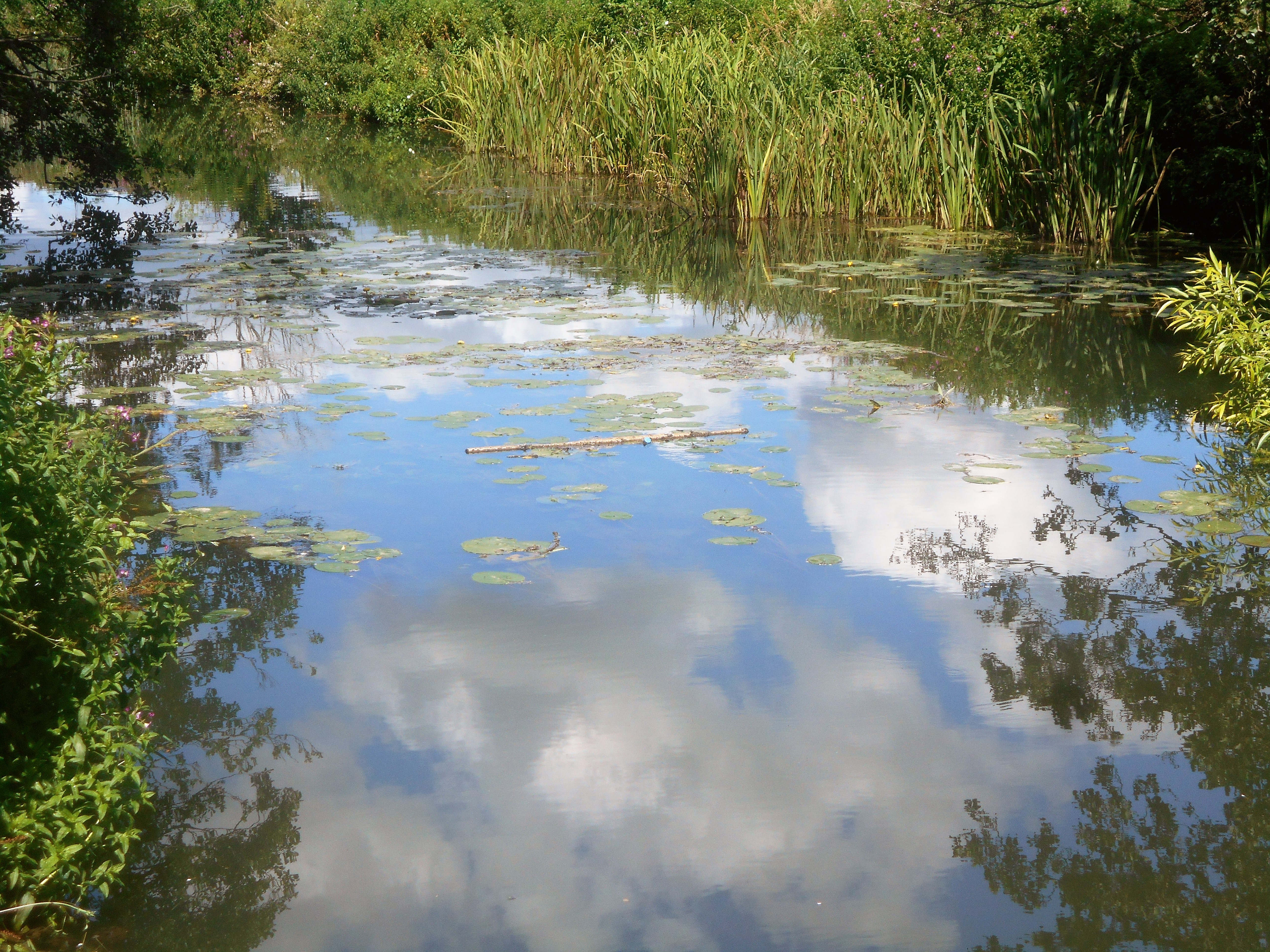 A quiet stretch of the river with water lilies
A beautiful day, warm, full sunshine, clear blue skies with a mixture of cirrus and fluffy meringue shaped clouds – a perfect summer’s afternoon for standing calf deep in a fast flowing river full of shoals of minnows while brilliant blue banded demoiselle damselflies and bossy brown hawker dragonflies flit around you.

We had moved farther downstream from our last kick survey to check the stretch of water 100 yards or so below the weir. The river does run fast here, swirling through the trailing tresses of the water weed and it was after sweeping the net under the edges of the weed that we were very excited to capture this beautiful Stoneloach in our net.

As these fish are mainly active at night and have superb camouflage they are notoriously difficult to spot, so we must have disturbed its daytime resting place in the stony silt of the river bed. Stoneloaches were listed by the Environment Agency in their fish survey of dead fish following a spillage of slurry from a farm above Frome in the spring of 2016, but they weren’t listed in either of their August 2016 or August 2019 surveys. We have read that Stoneloaches prefer very clean, unpolluted stony streams and they will not tolerate even mildly polluted waters, so their appearance in this stretch of water is the best yardstick we can have for the current state of the river.
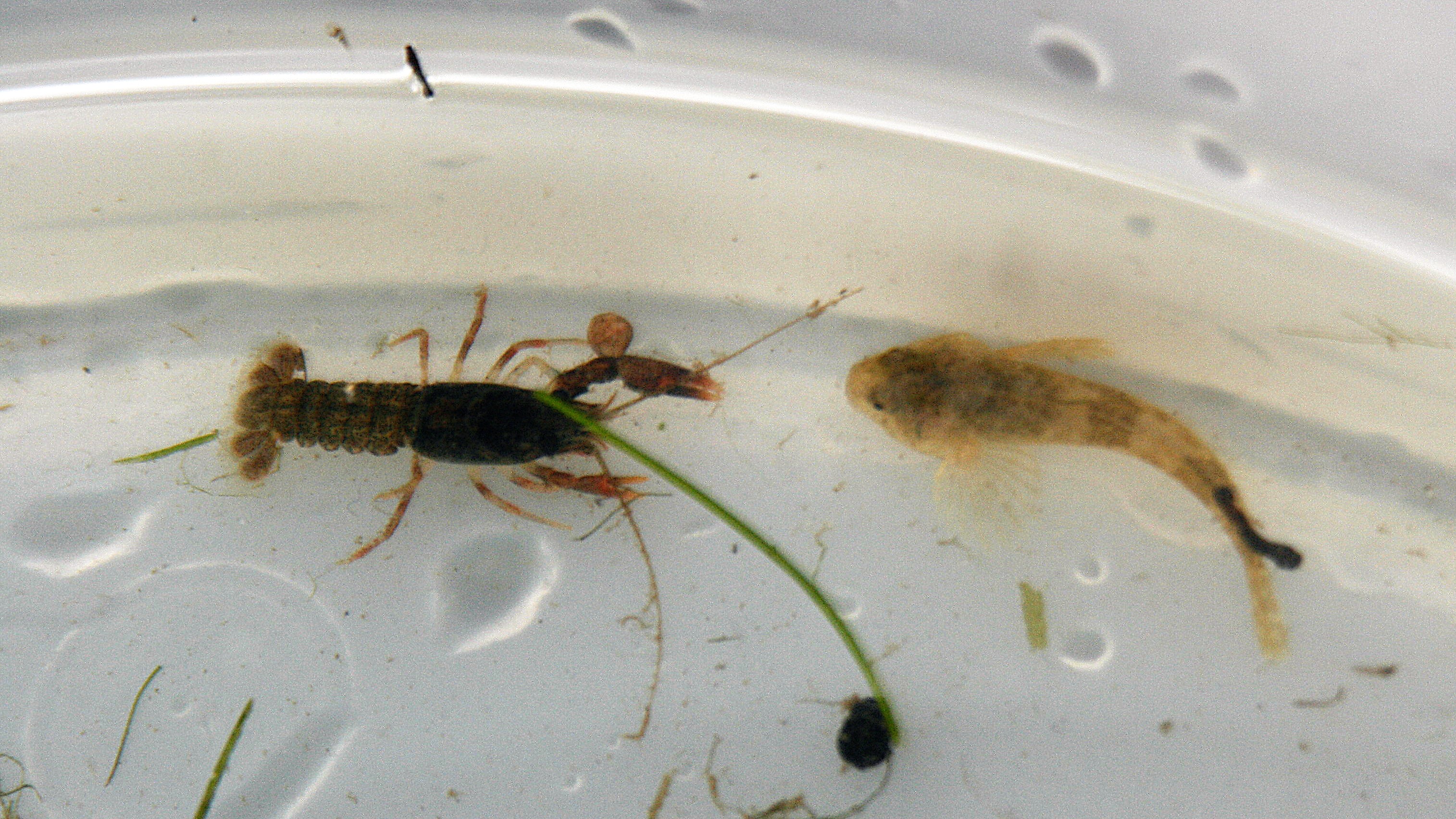 American Signal crayfish and Miller’s Thumb
During the search we netted lots of almost transparent freshwater shrimps, tiny signal crayfish, minnows, miller’s thumbs, mayfly nymphs and several larval creatures and worms which we were totally unable to identify and my daughter named ‘Weird Creature 2″!! [update: Mark Wilson from Ispot believes this to be Mayfly lava – ephemera danica]
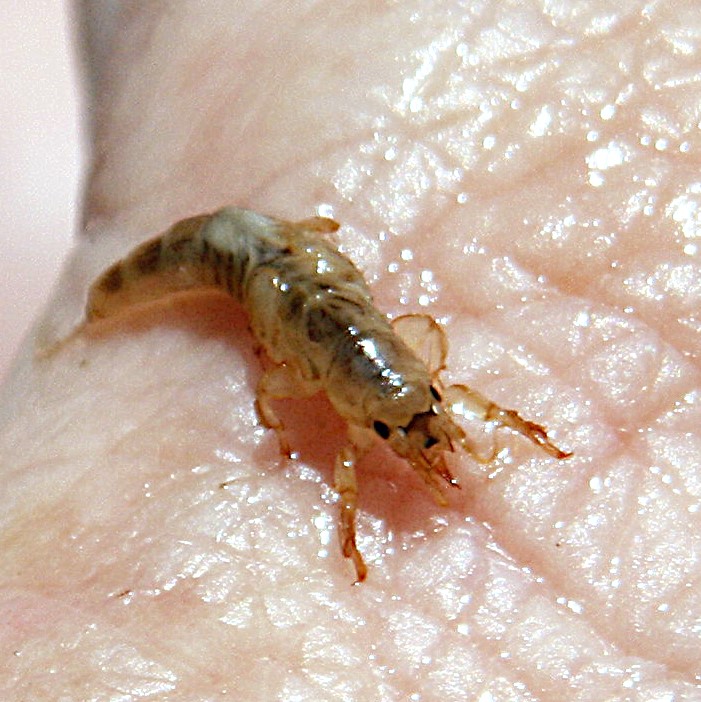
Apart from the stoneloach, we were most pleased to find yet more caddis fly pupa cases, again clinging to weed covered stones which we believed to be Agapetus fuscipes but which we will have to check to be sure.
Update:
Having failed to get a response from our usual bibles – Ispot/Project Noah/Twitter, we approached Paul Kenyon of Fly Fishing Devon for advice after reading his extremely informative article on caddis flies on his website. He was very helpful and wrote:
“I think your pictures are cases of Glossosomatidae (Saddle-case caddis).
As you know the case may contain larva of the genus Agapetus or the genus Glossosoma. Distinguishing between them would involve examining the underside of the case and extracting the larva; there are 3 species in each genus.”
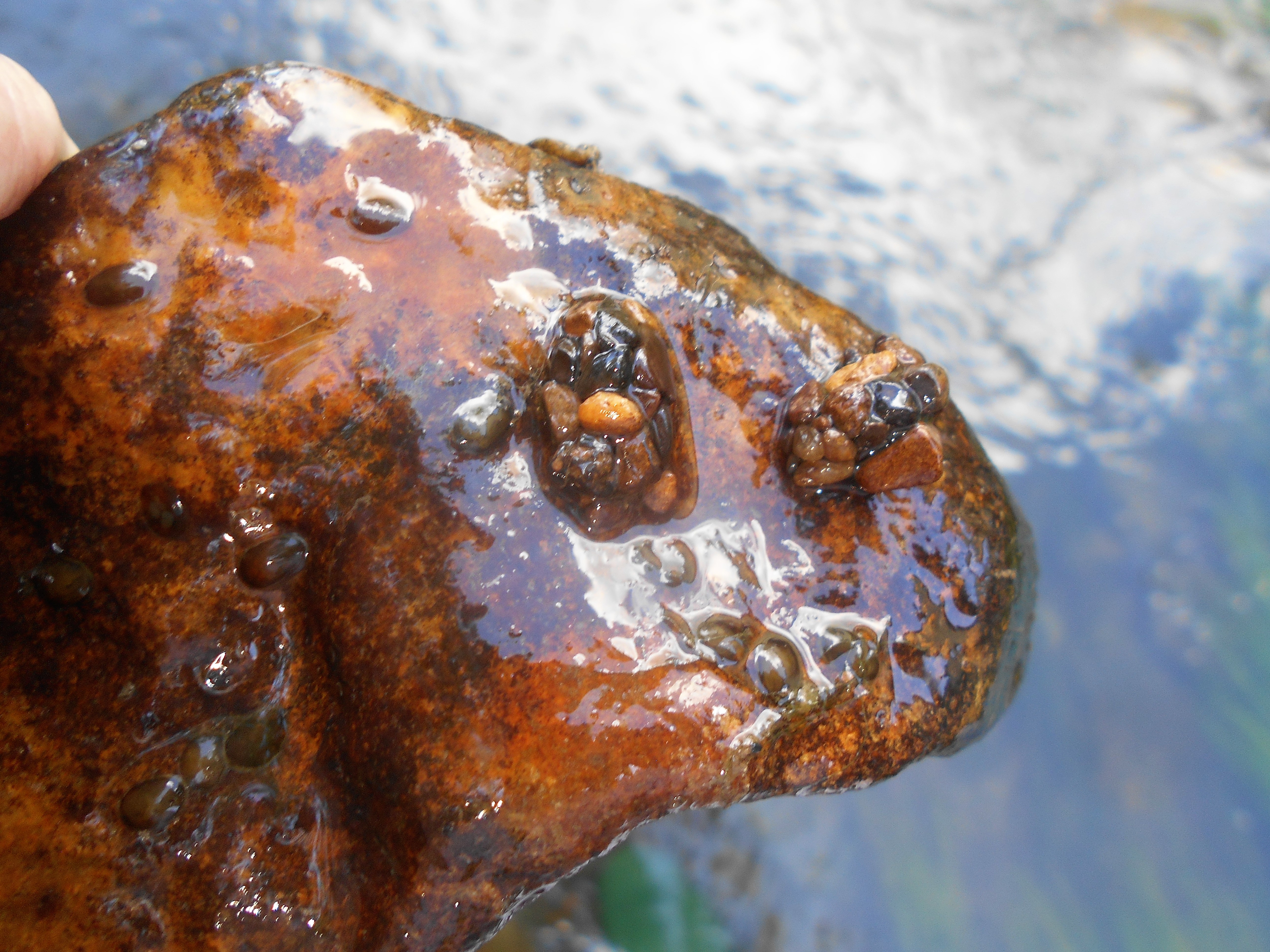
A group of men from the Frome Angling Association arrived as we were sweeping, and we had a long chat. They were a work party clearing the river weed and the overhanging branches and trailing dog rose briars from the bank. They were aware of an Otter holt downriver and said that a fisherman and his son had seen a large Otter swimming upriver through this spot the previous evening which was very good news as we hadn’t found any signs of spraint or pad marks along the beach.
One also mentioned the large fish head and scales which had been found earlier that morning at one of the pegs which he believed to be Otter predation, however we understood that Otters always eat the head first and quite often leave the rest of the fish, but we could of course be mistaken. We were also unable to find the Otter spraint which he thought was close to the kill.
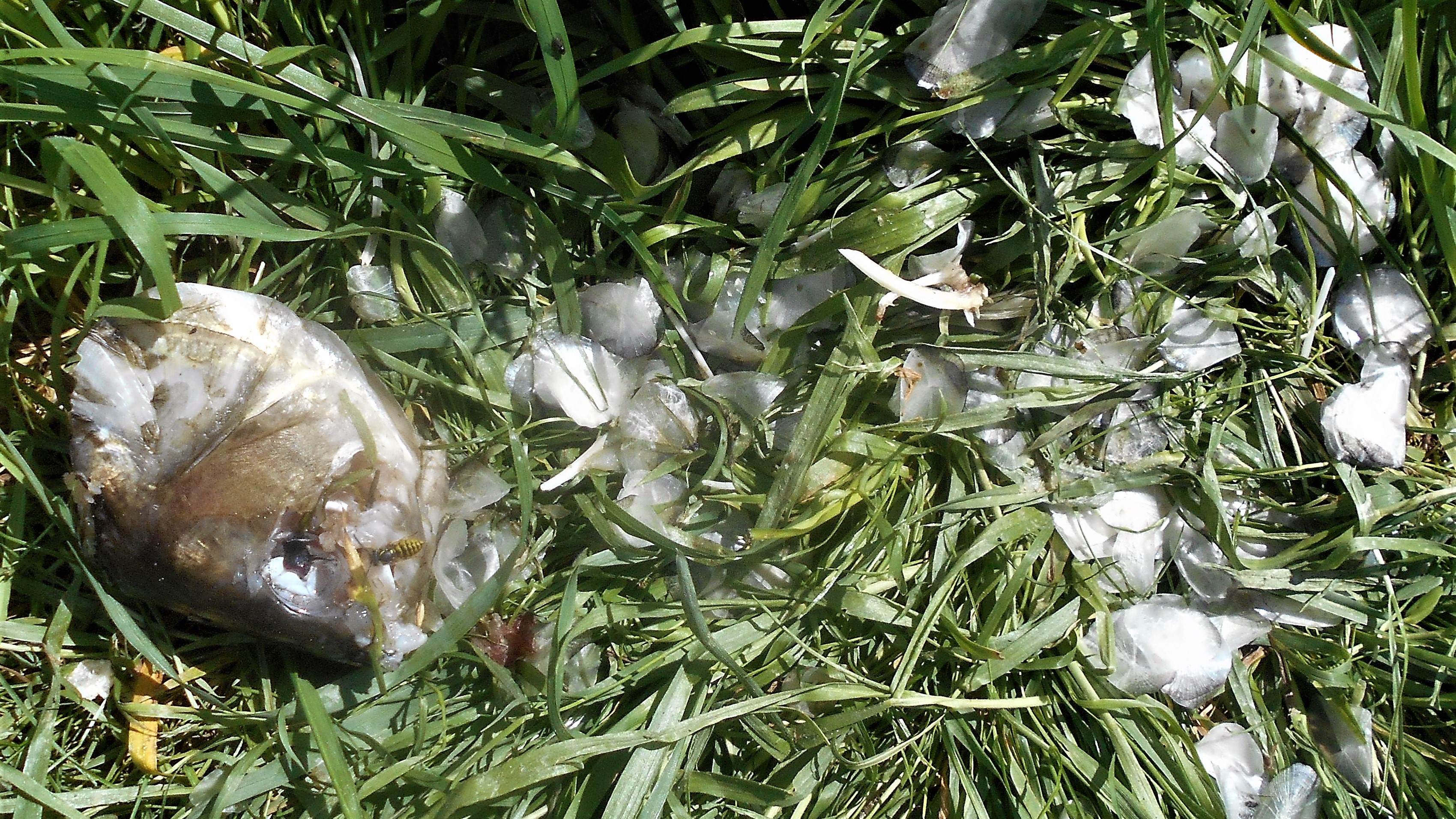
On a more cheerful note, we were extremely pleased to see a male and female Goosander with six or more young. We haven’t seen any Goosanders for years along this stretch of river so it is really exciting if they have returned. A cautionary note from my husband who pointed out that we were pretty close to the nearby lake where we have often seen Goosanders which is just a short flight away – ah well, we live in hope! But we did see our usual Little Egret although no signs of Heron, Coot or Mallard.

Heading home rather sunburnt and a little wearily after a magical afternoon wading in the river, recapturing the joys of childhood days with jam jars and bamboo stick nets, the meadow had still more to offer in the shape of a 14 spot ladybird and a Grey Dagger moth caterpillar – it’s such a haven for wildlife which keeps on showing us new species! 14 spot ladybird
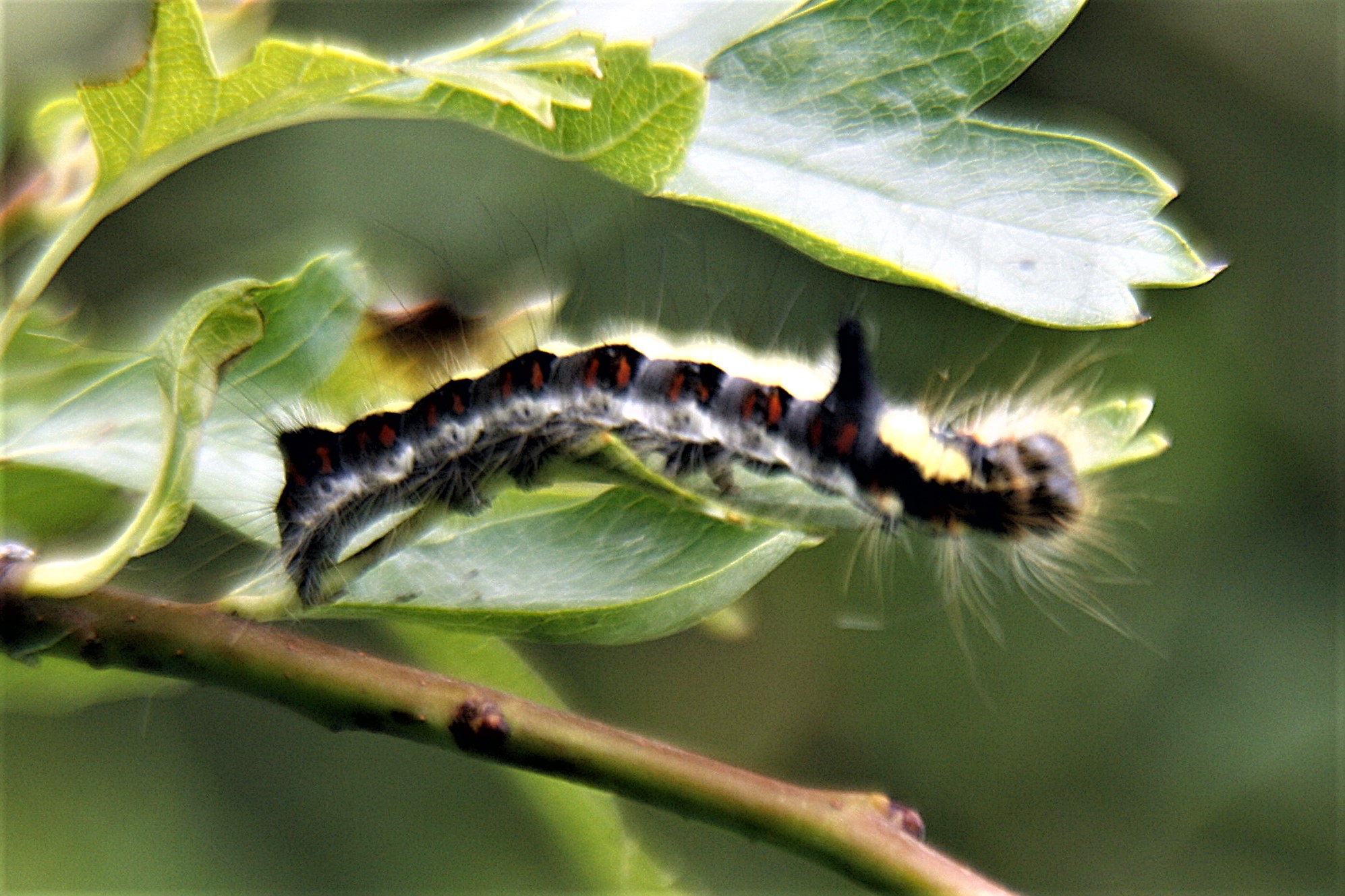
We also noticed a few butterflies including a Comma, a Red Admiral, quite a few Small Whites and also saw 3 Red Kites, 2 Buzzards and a Raven hovering over an adjacent field where the farmer was harvesting the hay. A good day.
8th July 2020 / Temp: 18 C / Water Level: Low

Today’s Otter hunt got off to a sparkling start when we spotted 3 fresh, 3 recent and 2 old spraint on one of the bridge piers and another fresh deposit of spraint on a boulder in the river shallows. All of them were accompanied by a good scattering of crayfish pearls and the last one was particularly red.
But the day belongs to the ‘bonking beetle’ season! Red Soldier beetles – their colour so bright, particularly on a dull day, that they always draw the eye and it certainly seemed as if every umbellifer and creeping thistle head was covered with these busy beetles, either crawling over the surface looking for females, flying in and jostling for position or, for the lucky ones, mating. And, despite lowering skies and a brisk wind tossing the trees and flattening the grass, there were also uncountable numbers of bees swarming over the brambles and meadow grasshoppers leaping or flying to safety at our every step.
It was also good to spot a Red Bug feeding among the stems of a large clump of water forget-me-nots and a Common Green Shield bug landing obligingly on my hand because there were few butterflies – only three small whites, two small tortoiseshell and a single red admiral; the damselflies also appear to have stayed in bed, just a couple of banded demoiselles were all that we could spot. Several ladybirds, the most common being the dreaded harlequins, although most interestingly there were 2 harlequins sitting very close to the discarded shell of a ladybird pupa but with no sign of the ladybird itself – foul play at foot?
A few water birds, including a moulting male and a female Mallard, we disturbed two Herons who took off from the water as we arrived and soon disappeared from sight over the meadows, followed soon afterwards by the ghostly white figure of a Little Egret. We could hear a Green Woodpecker in the distance and a very cross Magpie close to. Blackbirds and Wrens made their presence felt by the continuous calls and were soon joined by the chattering of a colony of Rooks and the coos of the Wood Pigeons. A small party of Swallows suddenly appeared over the trees and we watched delighting in their aerobatic displays and swooping, swirling flight. The single Buzzard circling over the trees was silent but intent on his hunt for food, but preferring easy prey like young birds from their nest or small mammals but the Swallows’ fast flight make them too hard to catch.

There were woolf spiders everywhere as usual but few other ground creatures, however we did see a Rove beetle (most likely Philonthus splendens) crawling in and out of the holes in a dried cow pat at top speed, in fact so fast checking every hole it was very difficult to catch sight of him on the surface to grab a photo.
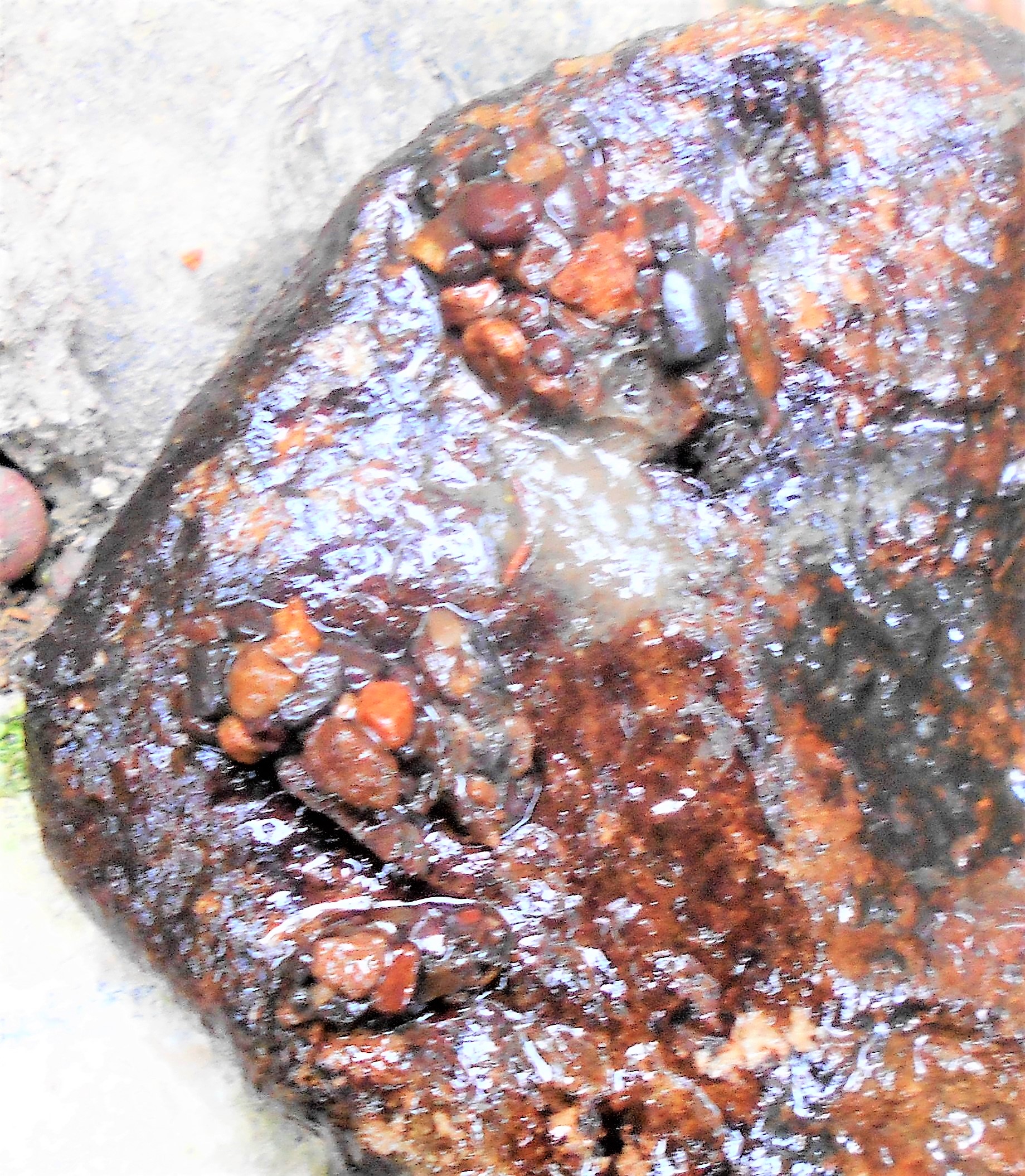
While checking one of the beaches where the river widens, the water level drops and the current is particularly fast, we came across small round caddis pupa cases clinging to a stone. These might well be the Glossosomatidae caddis (Agapetus fuscipes) which are small (3-7 mm) and often present in large numbers on the upper surface of stones in fast flowing sections of rivers.
They are thought to be the oldest (i.e. most primitive in evolutionary terms) type of case-making caddis. The more familiar caddis which make tubular cases from sand, stones or vegetation are thought to be a later evolutionary development.

We cannot be certain as we have never seen them before but they certainly looked much rounder, more igloo like, than the abandoned dried up more tubular caddis cases on a nearby stone.
It would be very welcome if it is Agapetus fuscipes as this is a caddisfly that only seems to occur in unimpacted streams and therefore can be a suitable indicator species for natural conditions. A. fuscipes is very susceptible to organic pollution and the species has decreased in the Netherlands because of human activities which caused organic pollution and hydromorphological degradation.
21st June 2020
Father’s Day

A strong breeze and overcast skies but thankfully the rain held off and the sun shone intermittently, so the perfect day for a kick-sampling, especially with such willing helpers!

In the rush to leave the house, we forgot the hand lenses and that, coupled with the uncertain light and the pretty indifferent photographs made identification difficult. However, at least we saw, as with the the sampling last year, lots of freshwater shrimps, water fleas, worms, leeches and blackfly lava.
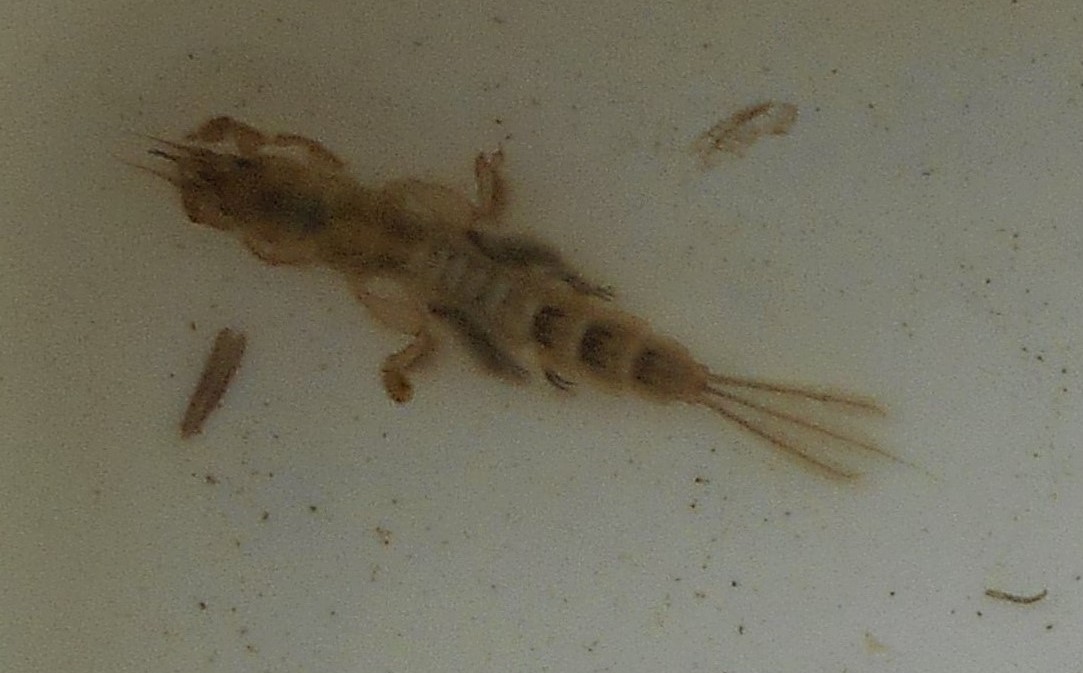
Both burrowing (above) and swimming mayfly nymphs were found in our trays as well as a damselfly nymph. This latter specimen proved to be challenging until we read that sometimes they are seen without tails after a predator attack so until we discover anything to the contrary, we will go with that explanation.

We were a little disappointed not to find signs of any fish at all, not even minnows, or Signal crayfish, Ramshorn shells or even river mussels all of which we found at last year’s sampling. Due to the coronavirus epidemic we were a month later than last year but this shouldn’t have made a difference to some of these species. However, our disappointment was mitigated by at last identifying a stone clinger, a Yellow May nymph, specimens of which we found last year and always love to see – sadly the photograph really doesn’t do it justice.
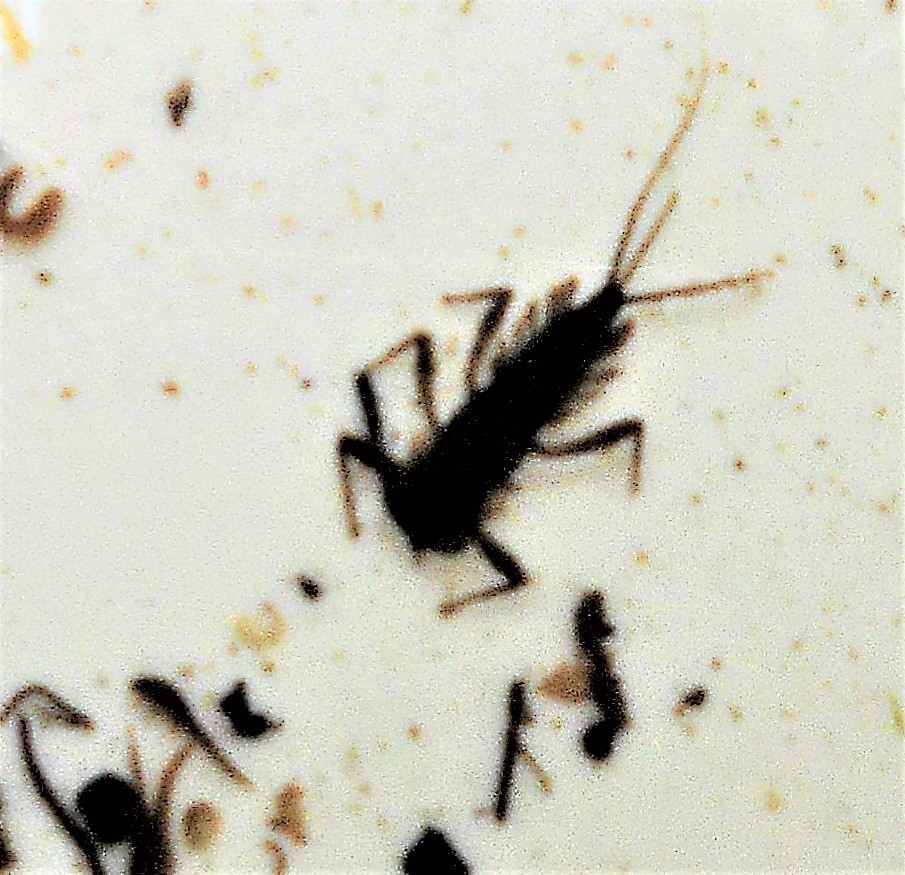
We might have been disappointed but luckily our helpers weren’t – they jumped up and down with excitement, shrieked and shouted at every examined bucket sample, and enjoyed the afternoon’s foray immensely. The thorough-going joy of young children is so very heartening, as is their endless enthusiasm for every last shrimp and flea!!
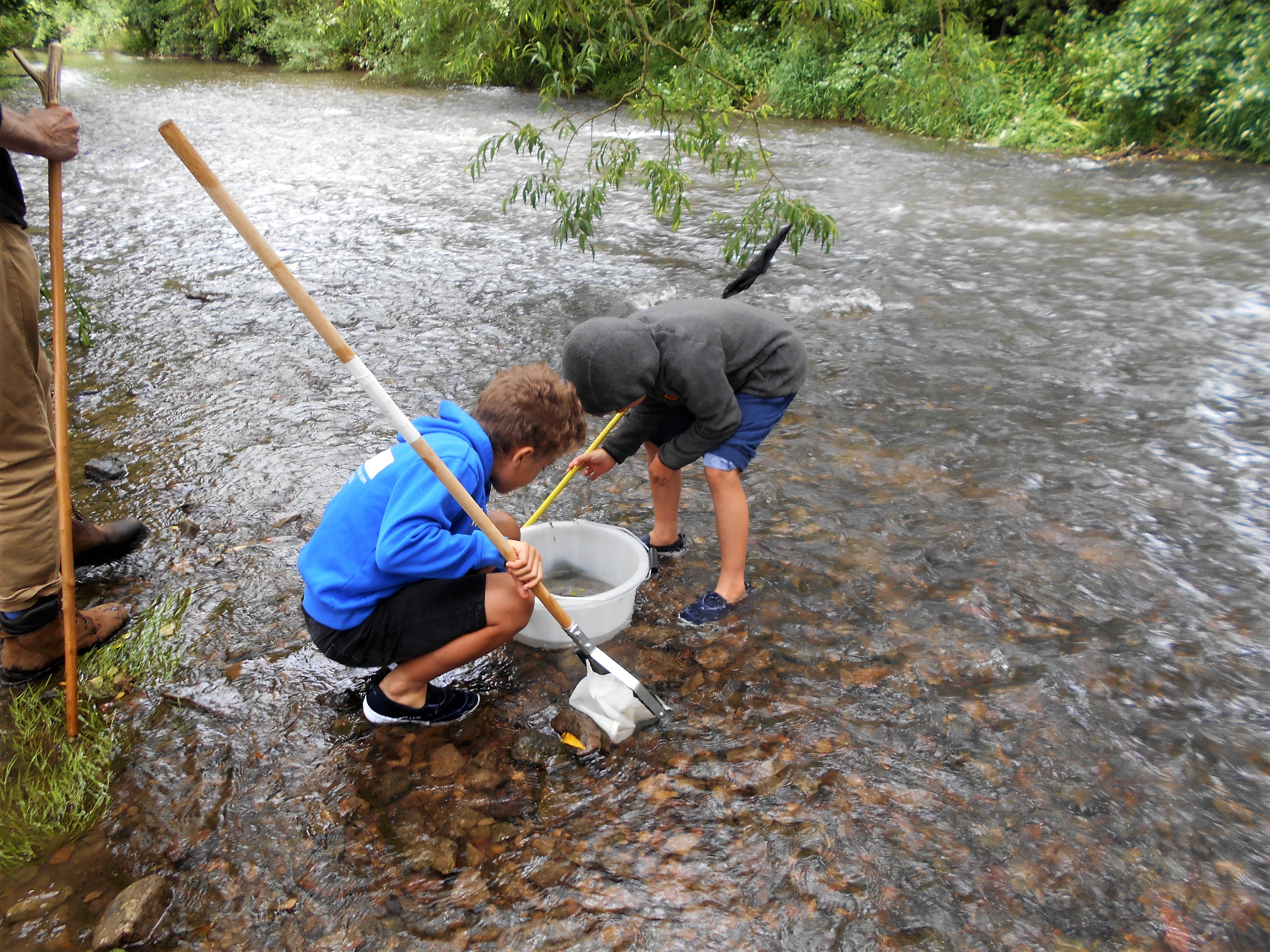
We decided we would try the same spot again in the next couple of weeks and sample the other side of the river as the side we chose is very shallow and often exposed when the water levels are low, but nevertheless we had expected to find much more life in the river here as it was much less turbid that last year’s site.
We saw only two small tortoiseshell butterflies, a single banded demoiselle damselfly (which may have been due to the strong wind and overcast skies) several undistinguished small brown moths and a Green Orb/Cucumber Green Orb spider, the first sighting for us along our stretch of the river.
14th June 2020 / Temp: 20 C / Water Level: Low / 2.30 – 3.15pm
Mixed weather with sunny intervals and when the sun did appear it was very hot, but the river meadow looked very fresh and green after the morning’s drenching and very heavy rain storm. The scarcity of butterflies and damselflies could be because of the weather however we did see 4 Small Tortoiseshell butterflies, a single White-legged damselfly, a handful of Banded Demoiselles and a couple of Beautiful Demoiselles. 
Walking along the side of the rhyne we admired the beautiful yellow flags, already beginning to go over. How fleeting the flowering season is, one blink and they are gone, and the chance of seeing them is over for another year; luckily the water-forget-me-not are longer lasting and we will enjoy them for weeks to come.
We spotted a Scarlet Tiger moth resting on a reed in the rhyne, flashing its very dramatic colouring which drew the eye once noticed but almost over-looked in the mass of greenery as was a Pellucid hover fly displaying its distinctive patterned wings while it harvested the nectar from a spray of newly-opened elderflower.

What was so very pleasing was the sighting of fresh Otter spraint, the first on the path beside the river which included some white crayfish pearls and the second on the path along the rhyne, which was chock full of blue crayfish parts, including a complete claw! When we reached the bridge, there were two separate fresh spraint on the pier. We haven’t seen so much Otter spraint, four lots within a hundred yards of each other for 6 months or more.

We had a short chat with the crayfish trapper who was tending his traps for the first time of the year, a catch of 125, which is half the number he can collect during the height of the season. He said that the river had only just warmed sufficiently for the crayfish to emerge and be active enough to trap so this is perhaps another reason the Otter are now back on our stretch. Whist we stood chatting beside a large bed of nettles, we suddenly caught sight of a small group of strange looking creatures which on closer examination were revealed to be ladybird pupa and identified at home as of a 2-spot ladybird.

Sharing the same leaf was a plant bug, one of the vast number of myriad species, which we tentatively identified as possibly plagiognathus arbstorum which are often found on nettles. We spotted more and more – including lots of ladybird lavae, mostly harlequin but a few 7-spot, a wandering pond snail – wandering up a reed, two areas of nettles sporting a writhing mass of black peacock butterfly caterpillars, a small pale netted slug who must have enjoyed the downpour earlier, and a rather jolly Common Red Soldier beetle, triumphantly celebrating reaching the heights of a large welted thistle!
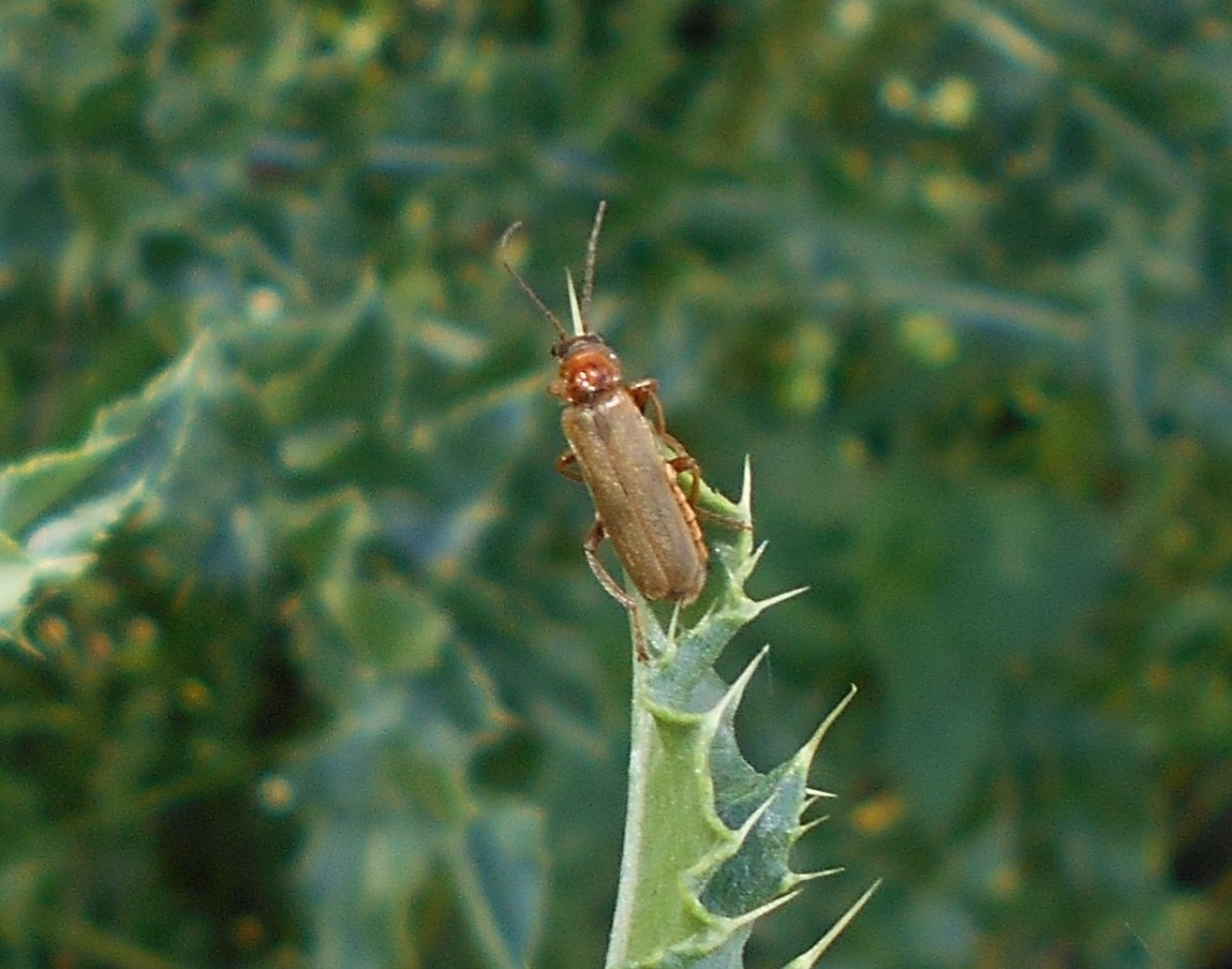
Very, very few birds, a few Blackbirds, a Wren and Jackdaws, we heard a Buzzard but no signs of any water birds at all, but the number of insects enlivened the afternoon’s saunter around the river meadow.
1st June 2020 / Temp: 23C / Water Level: Low / 10.30 – 11.45pm
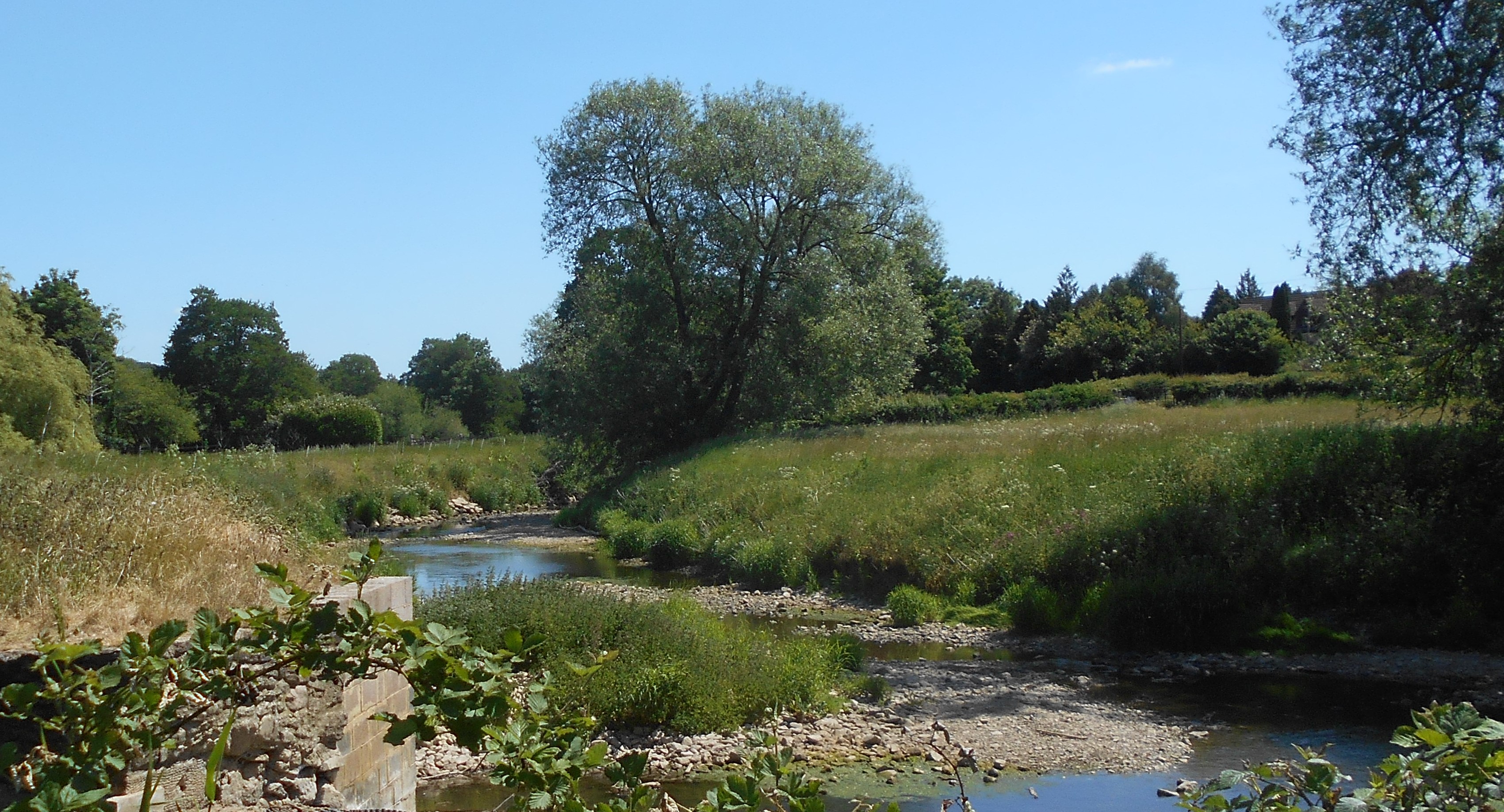
It is officially the first day of summer after the sunniest May on record and almost unbelievably we awoke to yet another beautiful morning, sunny and warm with a welcome fresh breeze. Today’s magical moment – hearing a Grasshopper Warbler!
We arrived at the river to be greeted by a family of Swallows swooping and skimming across the meadows – such a happy sight – the cows have been in the fields so there will be a good many insects for the Swallows to feed on. It’s always a little shocking to see the shorn fields after haymaking but a great relief to us – wading through knee-high grasses, lumpy tussocks and hidden holes had become increasingly exhausting.
There were no signs of Otter at our first three sites which always puts a bit of a damper on our day but damselflies rising from the plant filled rhyne, a Little Egret at the weir, a pair of Swans and four cygnets, a pair of Mallard and then a female with three young on the river lifted our spirits considerably.
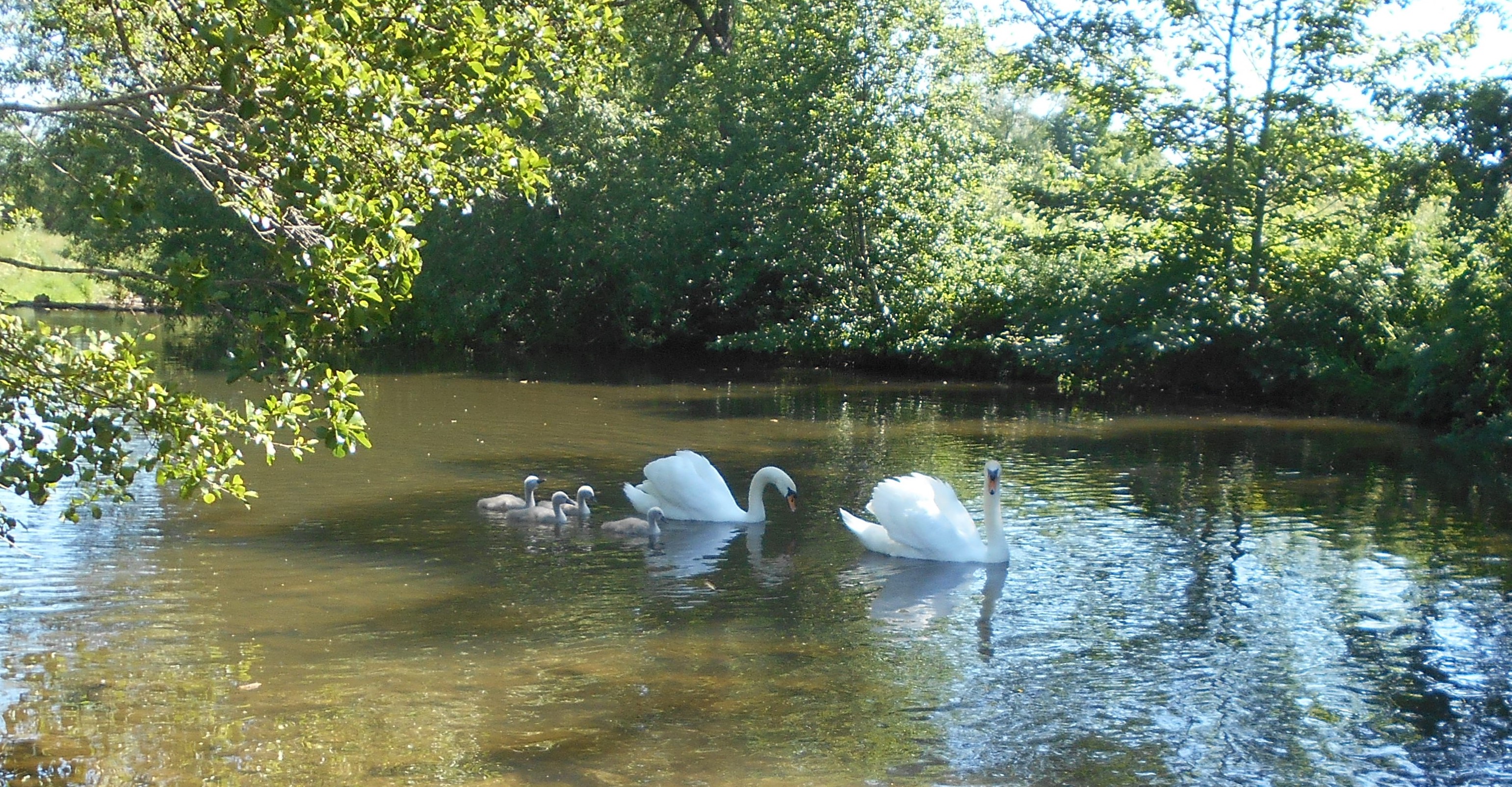
Walking the river bank, watching the damselflies (Banded Demoiselles, Common Blues and Blue-tailed) cheered us up as did the sight of a dozen Mandarin ducks and another 6 or so Mallard, and then, by the time we reached the last site and found 3 fresh spraint and 4 recent, we were pretty pleased and at peace with the world. We also saw a Greenfinch, Great Tit, Heron, Magpie, Green Woodpecker, Pied Wagtail as well as Wrens, Chaffinches, Jackdaws and Crows, but when we then caught sight of a Dipper and on the way back stood beside a tree which was surrounded by scrubby and bushy undergrowth on the edge of the water meadow hardly able to believe our ears – hearing the first Grasshopper Warbler we have heard for nearly 50 years – our cup runneth over!
 copyright : Tom Tams
This cracking photograph of a Grasshopper Warbler was taken yesterday and posted on twitter by Tom Tams of Northumberland. He was a good deal luckier than us, his warbler posed like this out in the open and whirred for over half an hour so he was able to take his time and get a collection of brilliant shots.
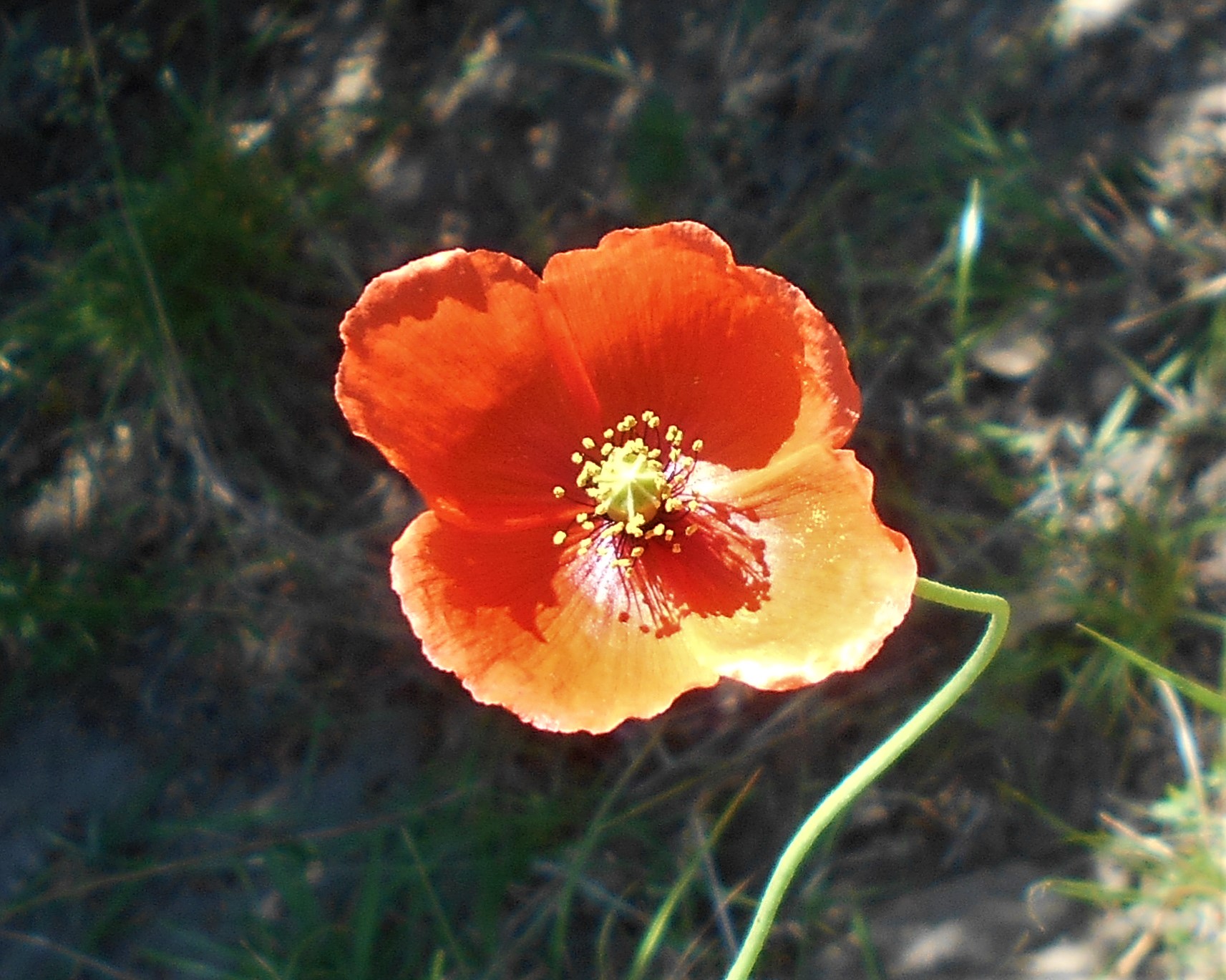
We rested at the far end of our stretch having found a comfortable grassy hummock among the fading common poppies so we could watch the damselfies (almost exclusively Common Blues here) and examined some tiny brilliantly yellow and black bees, their legs swollen by such huge bags of pollen, it seemed impossible that they would be able to lift off the ground. They were never still and so quite impossible to photograph and so intent were we on the bees, it was some time before the continuing bites on our backs and legs alerted us to the ants nest we were sitting on! When we quickly jumped up we could see the ants scurrying around, four at a time lifting the lavae we had disturbed and carrying off to who knows where!

It was a relief to observe the other, less aggressive insects we spotted on our way back – several Painted Lady and a Speckled Wood butterflies, lots of soldier beetles, both on the brambles and one even on a dried cow pat (evidently they are beloved of Brown Trout so the fish must be feasting as we see so many all along the river meadows). So many spiders webs slung in canopies in the bramble bushes and bees everywhere – mostly honey bees but a few buff-tailed and a scattering of hover flies to make up the numbers.
Taken altogether, it was a very satisfying morning’s scout – how will we cope when the inevitable happens and these long days of hot sun, clear skies and air full of birds, butterflies and damselflies come to an end?
Whit Sunday / 25th May 2020 / Temp: 24C / Water Level: Low / 12.45 – 4pm
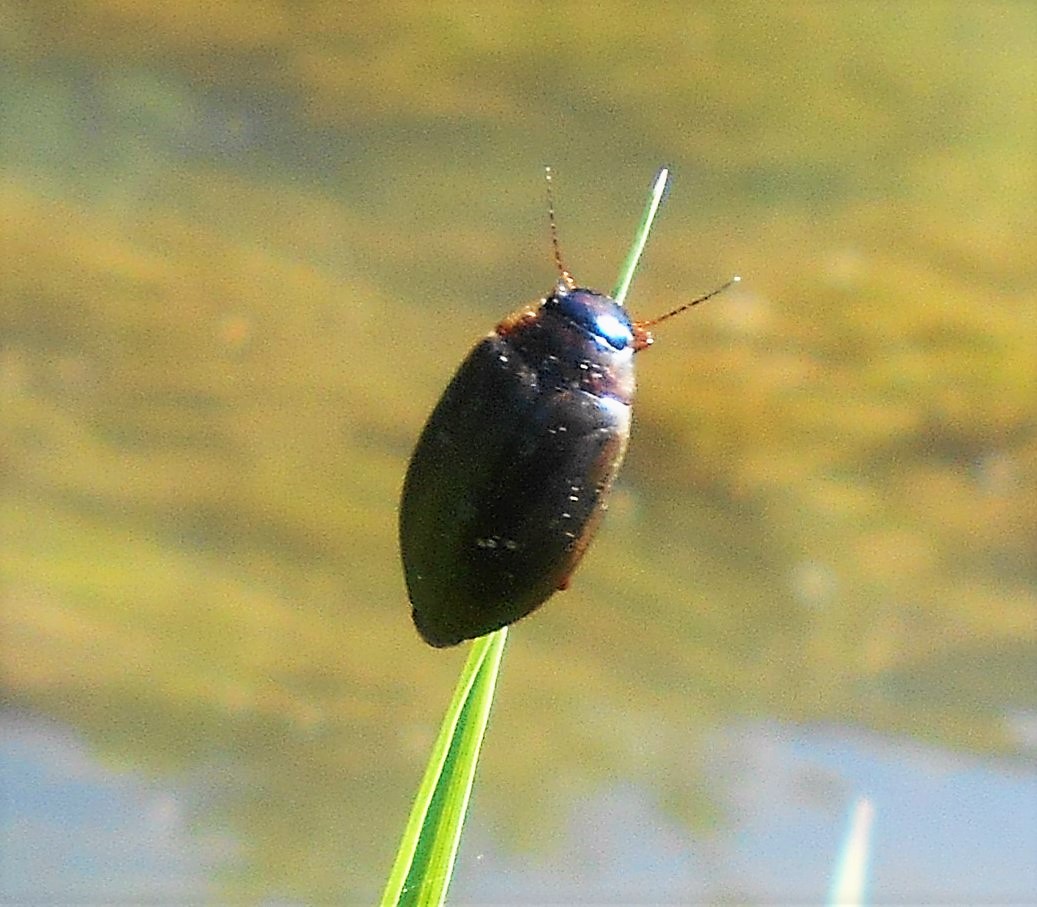
Our first sighting of what we think is a Diving beetle (Colmbetes fuscus) which we were surprised to read spend a good deal of their time out of the water.
It was such a lovely peaceful afternoon by the river – hot, full sun, wall to wall blue cloudless sky and a constant gentle breeze through the trees to send dappled sunlight moving across the grasses and massed cow parsley in full bloom. Watching the occasional fish breaking the surface of the river coated with whisps of willow seeds to catch midges or mayflies and the damselflies flitting from plant to plant or chasing the females.
The tiny beetles on the hogweed below (always a feast of insects) are even more problematic. After a good deal of page ruffling, googling and exhaustive searching we think there is a possiility that this might be a bird nest carpet beetle (Anthrenus pimpinellae) or varied carpet beetle but this is possibly subject to change at any time!

Today was a check on two sites (no fresh spraint) and a celebration of insects – particularly the profusion or the first summer explosion of damselflies!
Our precious White-legged damselfly which we always have difficulty in spotting and even more difficulty in photographing…..
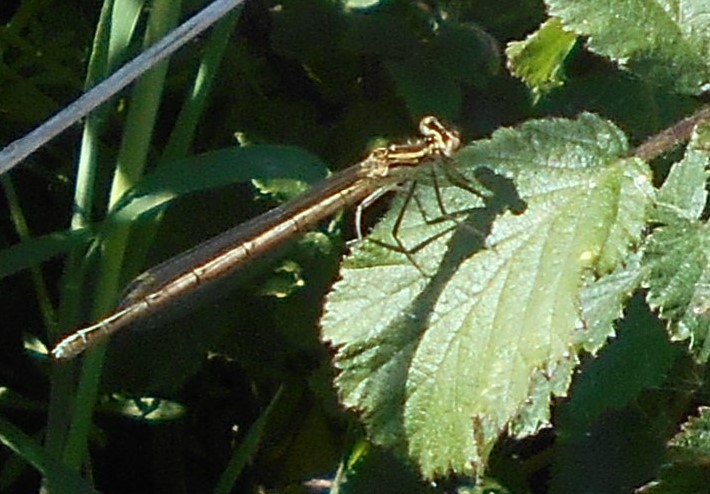
and almost the first signs of summer on the river – two mating Banded Demoiselle damselflies…
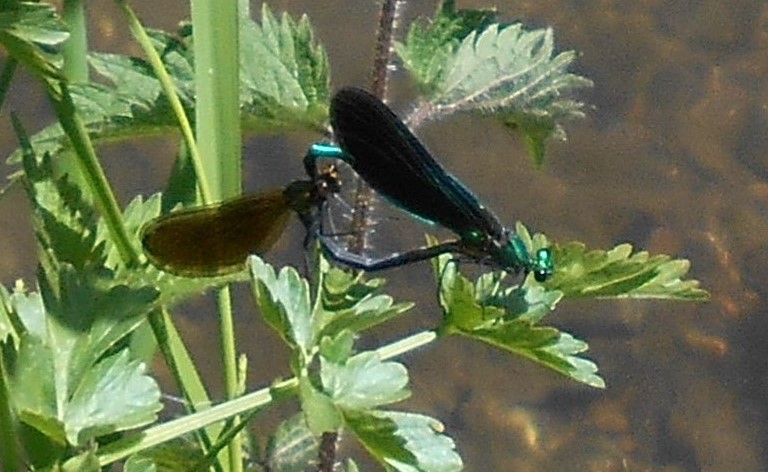
a female Banded Demoiselle damselfy ….
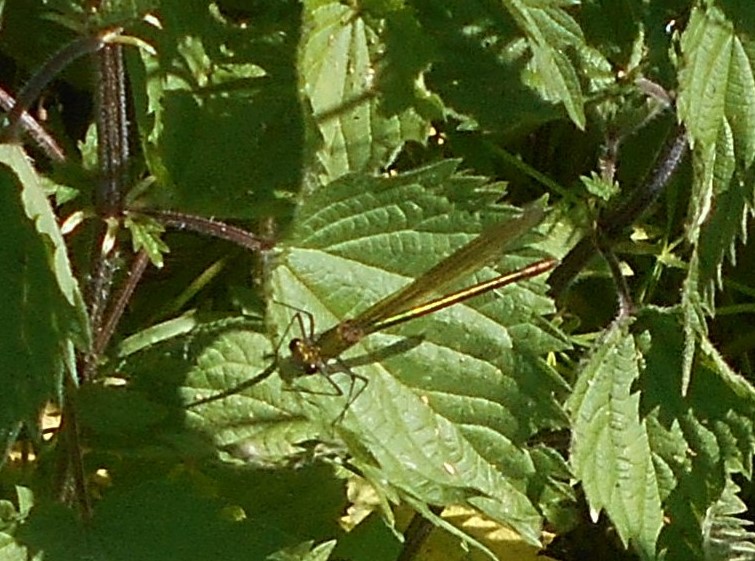
and finally one of a pair of males, sunning themselves beside the river.

24th May 2020 / Temp: 20C / Water Level: Low / 3.30 pm
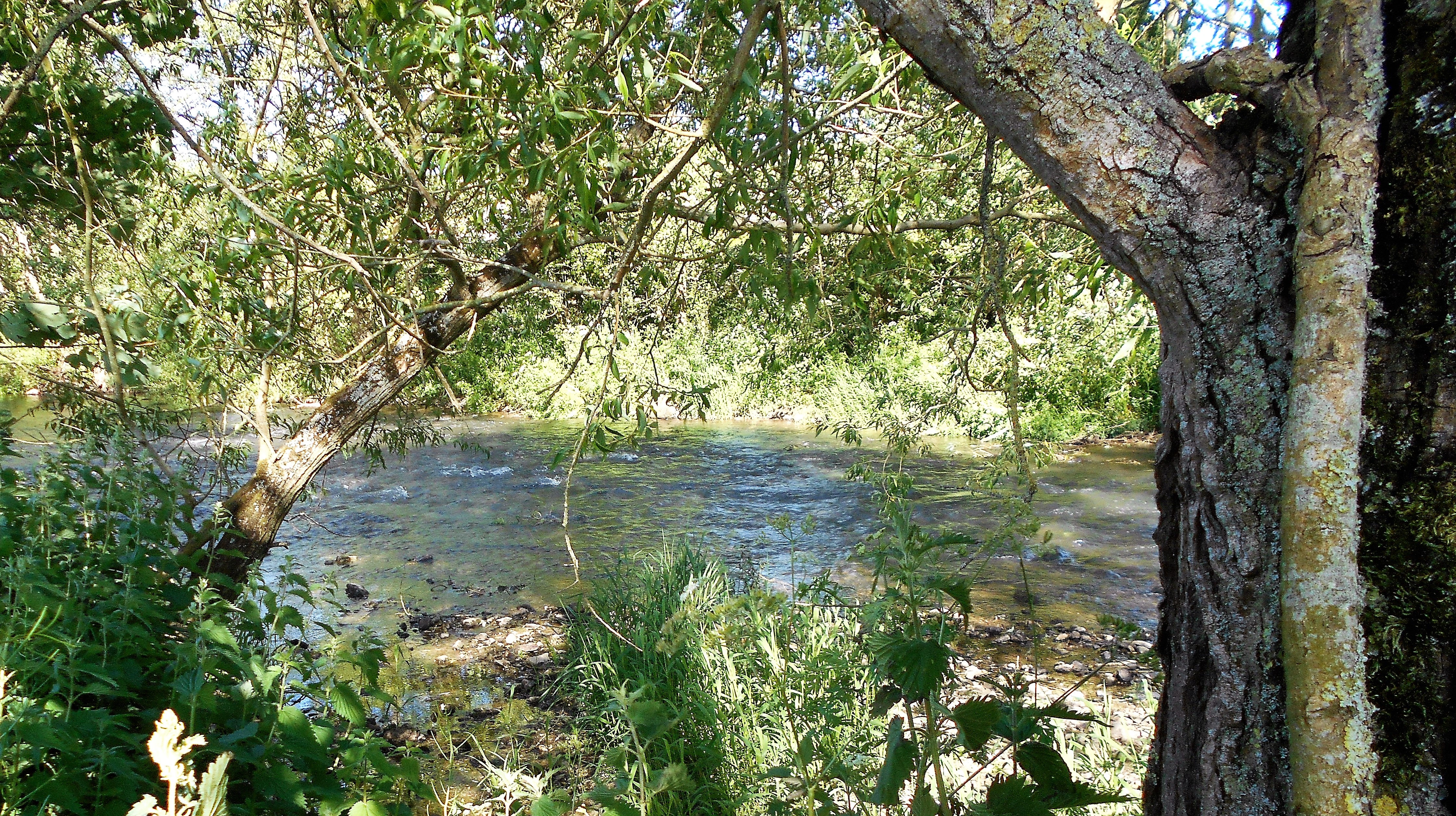
A very warm, beautifully sunny, Sunday afternoon on the Whitsun bank holiday weekend during lock-down Coronavirus pandemic when we have been asked to walk locally rather than drive long distances to honey-pot sites, so we shouldn’t have been surprised at the considerable number of people enjoying this stretch of an idyllic trout river. This, together with catching sight of Ernie the bull with his heiffers in the corner of the field made our checking of the Otter sites pretty rapid. Disappointing to find neither spraint nor pad marks. We disturbed a swimmer tucking into his pasta salad on the last beach, he was perfectly amenable and volunteered that he had cycled over from Bristol (not exactly local) and had lived in the Frome area for years and had wanted to revisit old haunts.
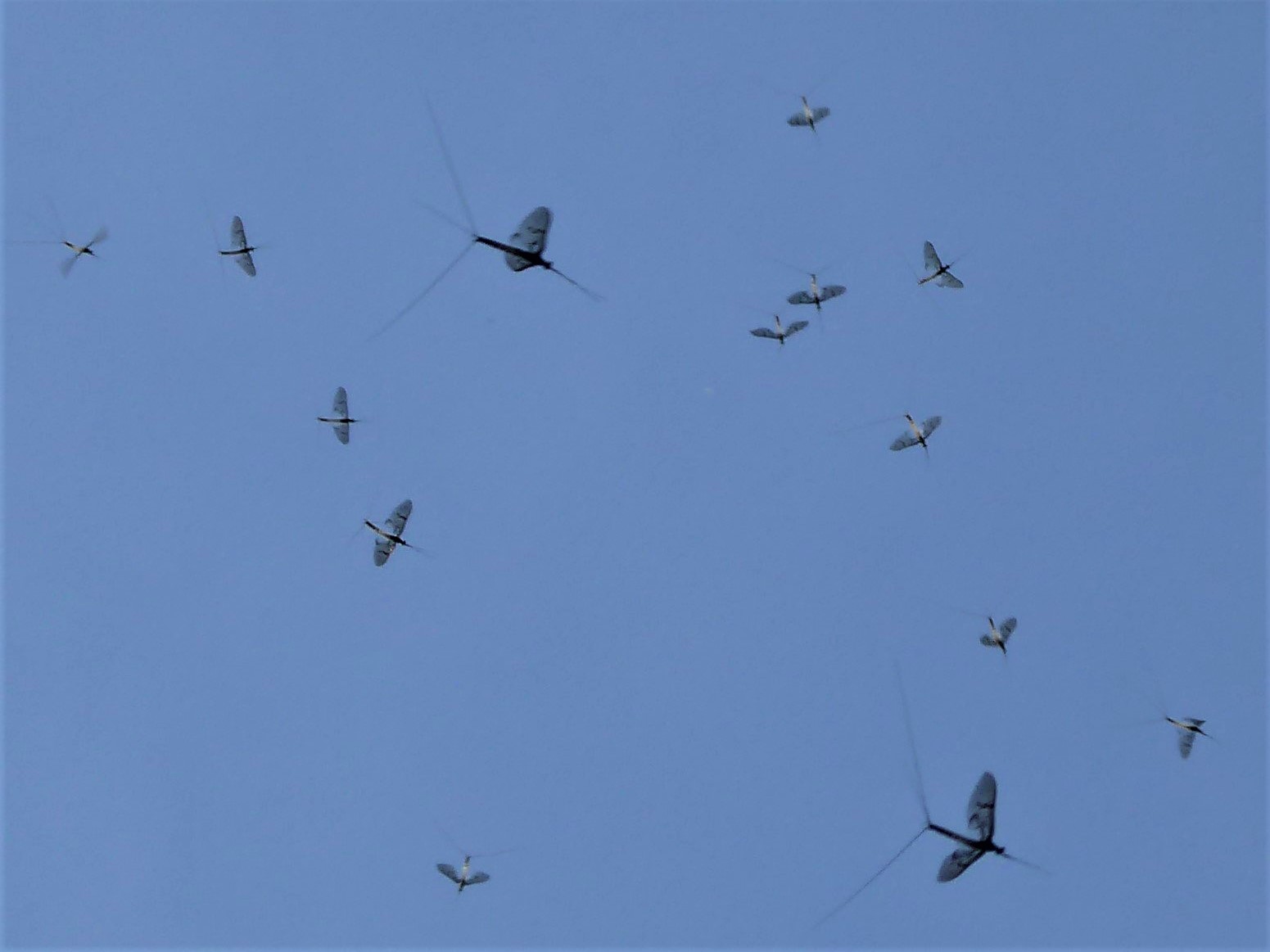
It was difficult to see very much of interest but we did note in passing that the water lillies were showing golden yellow so it wouldn’t be very long before they opened. No luck at the bridge pier site where we had seen spraint on our last check nor on the stones at the edge of the river, but we did arrive just at the peak of the Mayfly hatch and stood for ages watching the spinners dance above the water. What a wonderfully mesmerising sight it is!
Moving on to the next site and again no fresh spraint and although there were three old spraints on one of the beaches there were no signs of recent activity.
16th May 2020 / Temp: 16 C / Water Level: Low / 2.40pm

Beautiful day, sunny and warm with a fairly strong breeze and a perfect day to check two of our sites. Very, very pleased to see recent Otter spraint under the bridge, so long since we have seen spraint here, not since the start of the incessant rains of autumn and winter turned the fast flowing river into a torrent, substantially raising the water level and flooded all the beaches – this makes two of our six sites along this stretch with Otter spraint – good news indeed.
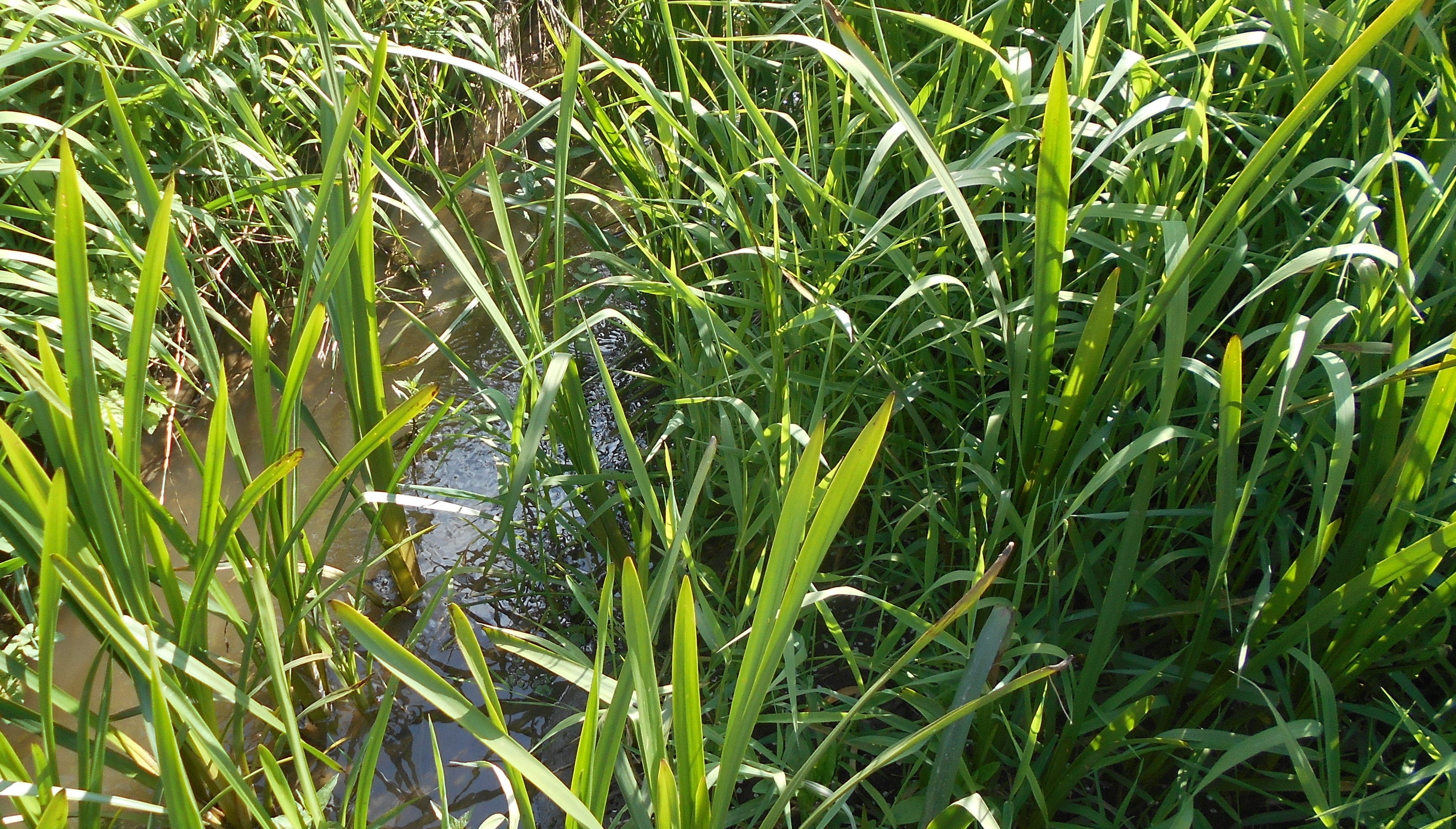
We love walking the narrow rhyne which runs parallel to the main river, part of the old canal and sluice system for flooding the fields in winter, as it is always good hunting ground for insects and water plants. The water level is very low here so it is always surprising to see so many mayfly duns rising from the stream, although not nearly so many as from the river, still a good number. We also watched for the first time this year a small swarm of male spinners yo-yoing up and down above the stream, like painted Masai warriors at their jumping initiation into manhood ceremony and probably both for the same reason – to impress any passing females. Seeing the two close together the metamorphosis is more noticeable – the pale almost cream coloured bodies and wings of the duns and the dark bodied, transparent wings of the spinners.
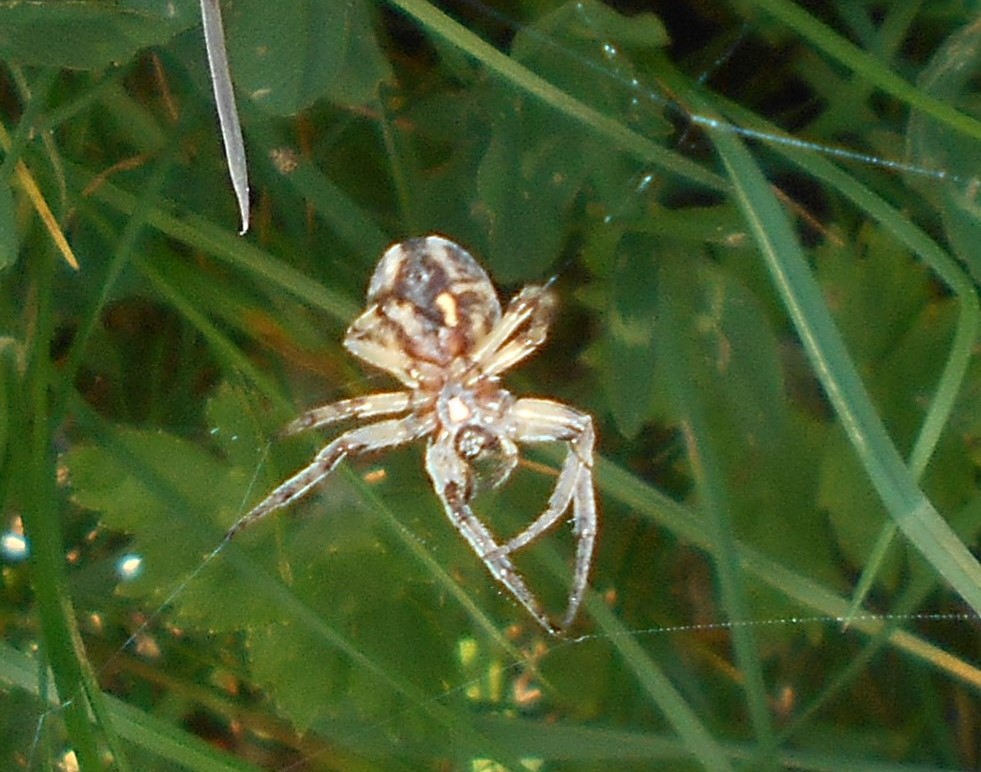
As always, lots of spiders, including this Garden spider – we see quite a number of these but evidently in a recent survey spiders throughout the country are in decline, by 7% in the last 50 years while freshwater insects like dragonflies and caddisflies have inceased.
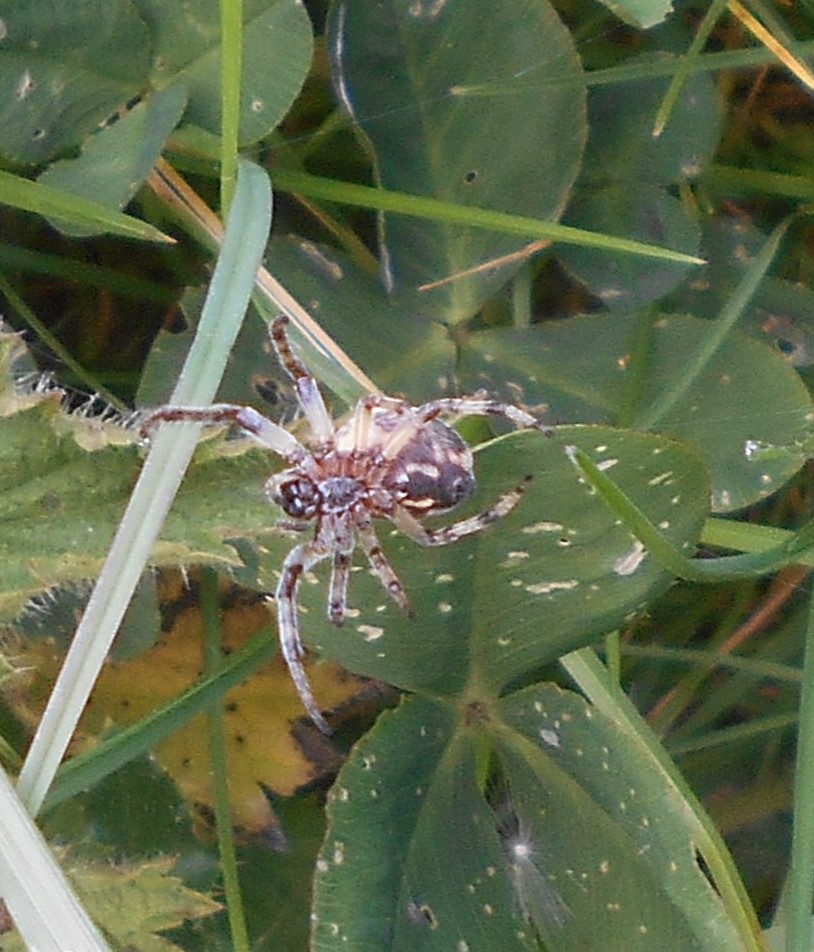
We have certainly seen more alder flies than ever before this year, one even landed on my hand when we briefly sat and rested, and also saw our first small and barely noticeable Blue-tailed damselfly as well as the flashy Beautiful Demoiselles both male and female.
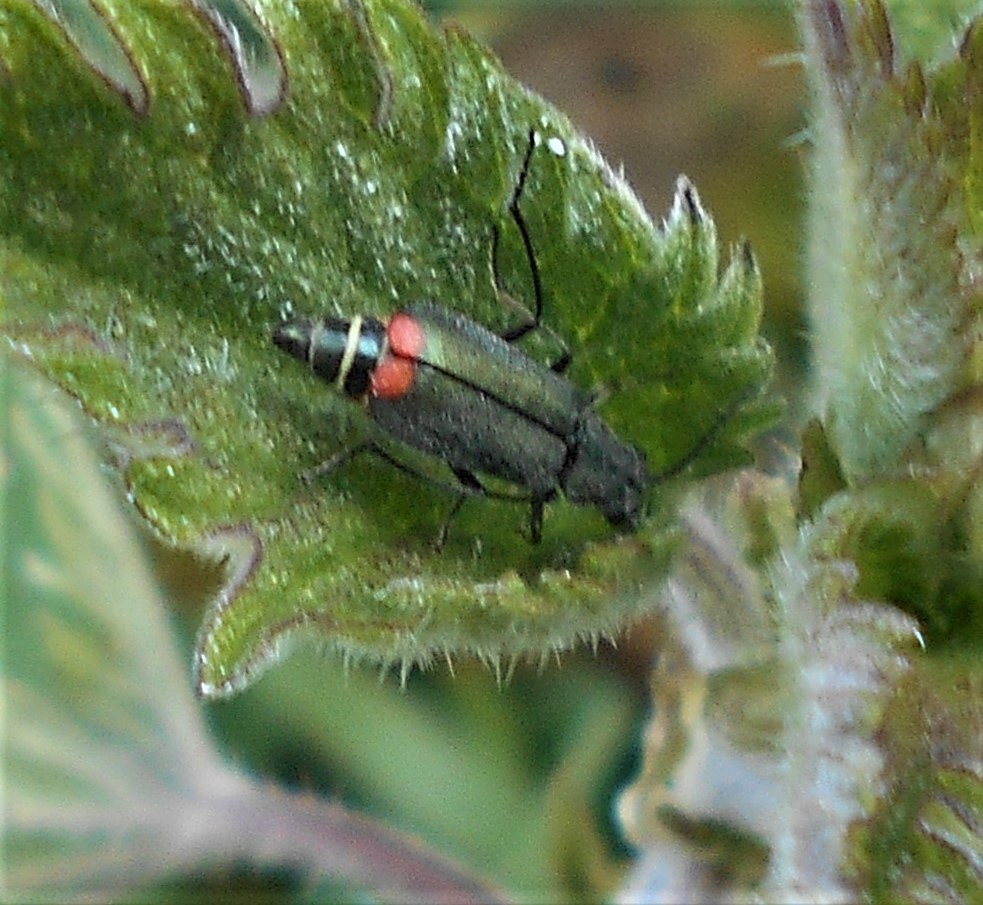
The Garden spider has rather pretty markings but for colour combinations it is difficult to rival the Common Malachite beetle with its vivid scarlet spots and black and white tail. They are most common in lowland meadows bordering farms like this one and as well as feeding on pollen they predate on small insects. Lots of crane flies as always, including a yellow/orange bodied one but too fast to ID, a sepsid fly tied to a cow parsley stalk by silken threads and a number of Soldier beetles and Grey Sailor beetles (a species previously unknown to us).
Good to see 3 Mandarin ducks, 1 pair of Mallard with 6 ducklings and later on another 4 Mallard and then another pair without offspring. Chaffinches, Whitethroats, Great Tits and Blackbirds were the birds in full song, Jackdaws chattering in an adjoining field, while several Crows and a Heron flew over.

When we think about certain insects declining, this is unfortunately not the case of the harlequin ladybirds which appear to be thriving which given that they predate on the native ladybirds is most unfortunate. Like the American Signal crayfish which has had such a devastating effect on our native White Claw crayfish, the number of foreign species seems to be increasing at a time when our own native flora and fauna are already under threat from climate change and intensive farming, which adds yet another destructive challenge.
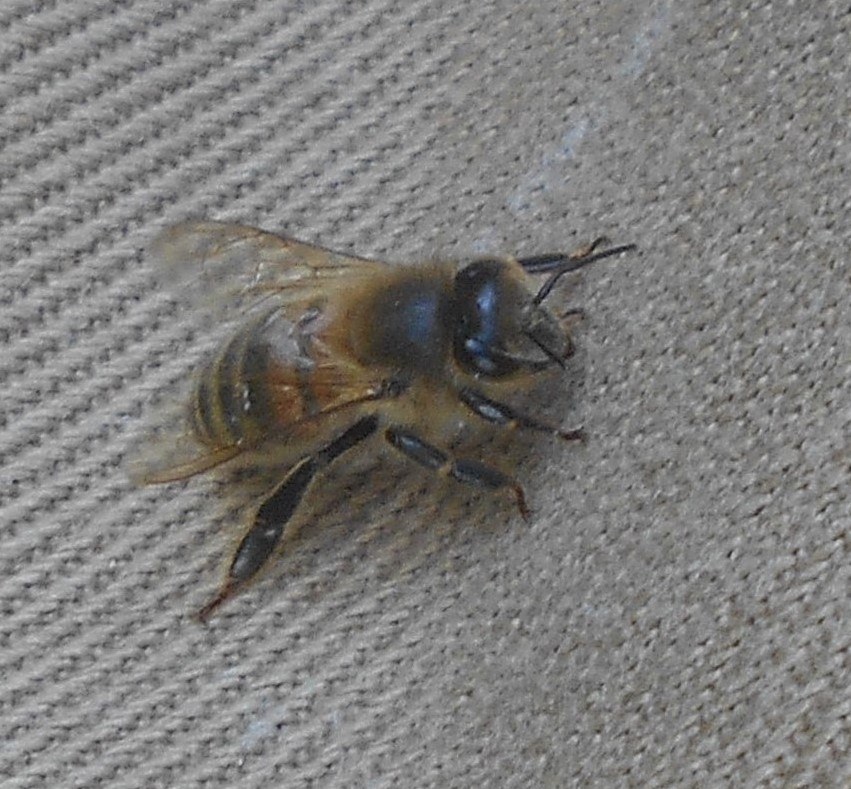
It was surprisingly hard work walking across the meadow as there was no discernable path and the grass was very long and tussocky so hidden mole hills of which there are plenty and dips and uneven ground are unseen at this time of the year before haymaking. The honey bee which hitched a ride on a trouser leg must have been feeling pretty dozey or comfortable because it didn’t fall off for ages until eventually brushed off by an extra tall clump of grasses. Honey bees and buff-tailed bees are certainly in the ascendant in the meadows as far as we have noticed.

End of Coronavirus lock-down for one fly fisherman at least – perfectly timed for the mayfly hatch tempting the brown trout in this part of the river to rise. We have never seen these fish leaping almost their entire length out of the water to catch the mayflies as we have watched them farther downstream – over-indulged with insects here perhaps!
12th May 2020
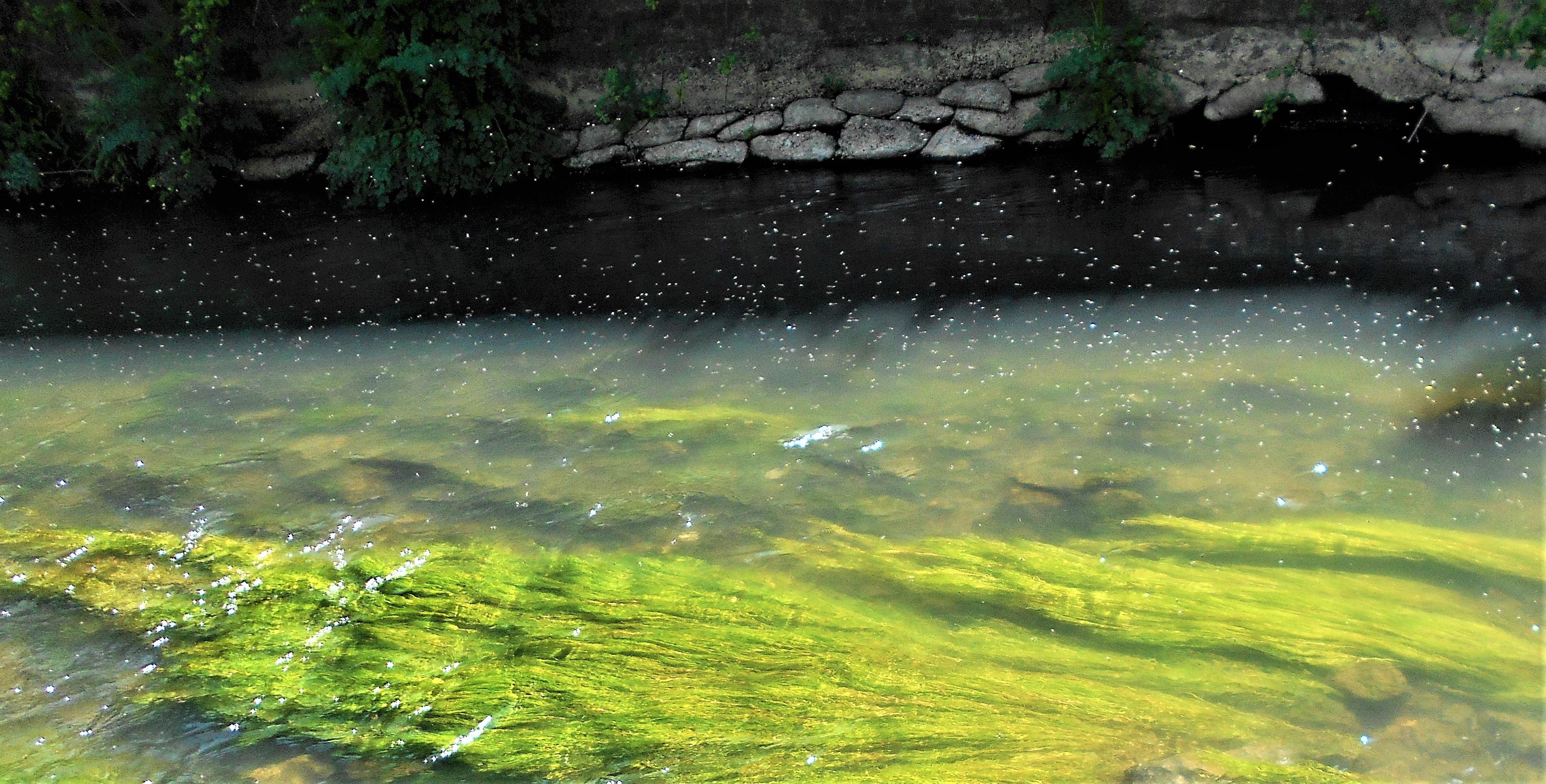
The arrival of summer is heralded for some by the first Swallows, the first Swifts or hearing the first Chiff Chaff but for me summer is a swarm of midges over the water and the mayfly hatch. What can be more pleasurable than sitting on a river bank, in mid to late afternoon in May with the sun warm on your back, watching and trying to keep count as one dun after another rises, rests on the surface while their wings fill and then lift up to fly slowly, somewhat haphazardly above the river and towards the bank onto the vegetation to rest. Some simply don’t make it, unable to rise they remain on the water providing a tasty morsel to a passing brown trout.
Another absolute delight of the afternoon was the number of Banded Demoiselles appearing for the first time on our patch. The males were so dark, their colour verged on indigo – vivid and spectacular – but they were outshone by the females, whose bodies and wings were burnished gold with not a hint of green or brown by the bright sunlight – quite magical! Orange Tip, Brimstone and Peacock butterflies add to the colour and pleasure of the day.
However, the overwhelming good news of this afternoon’s saunter in the sunshine along the river bank was without doubt the discovery at the third of our four sites of 2 fresh and 1 pretty recent Otter spraint, all showing “Frome red” and filled with the crunched shell of an unfortunate signal crayfish, and to dispel any possible doubt – a single crayfish pearl alongside. Frome Reds is the name we give to local otters as, unlike otter spraint in most parts of the country, its spraint is red-brown from a diet almost entirely of signal crayfish rather than the more common black-brown. We haven’t logged spraint here since last September and have felt pretty down-hearted because at one time this site was one of the most prolific; three spraints at one site out of four isn’t overwhelming but perhaps promise of a better summer than we had feared.
Another hopeful sign was sighting a pair of Mallard with 8 ducklings and farther downstream a single female Mallard with 6 ducklings which as we had been so concerned recently about the lack of water birds was very good news. Spotting a Little Egret and a Heron flying over are also augers well.

While Mayflies, Damselflies and Butterflies are the most arresting insects, some bugs and beetles are also very colourful. Good to see a froghopper clinging to a plant on the beach, or a daggerfly perched ready to pounce or the many bumblebees, mining and honey bees or to watch a cranefly lifting from the tall grasses at almost every step, as frequent as grasshoppers in high summer and dung flies in late spring.
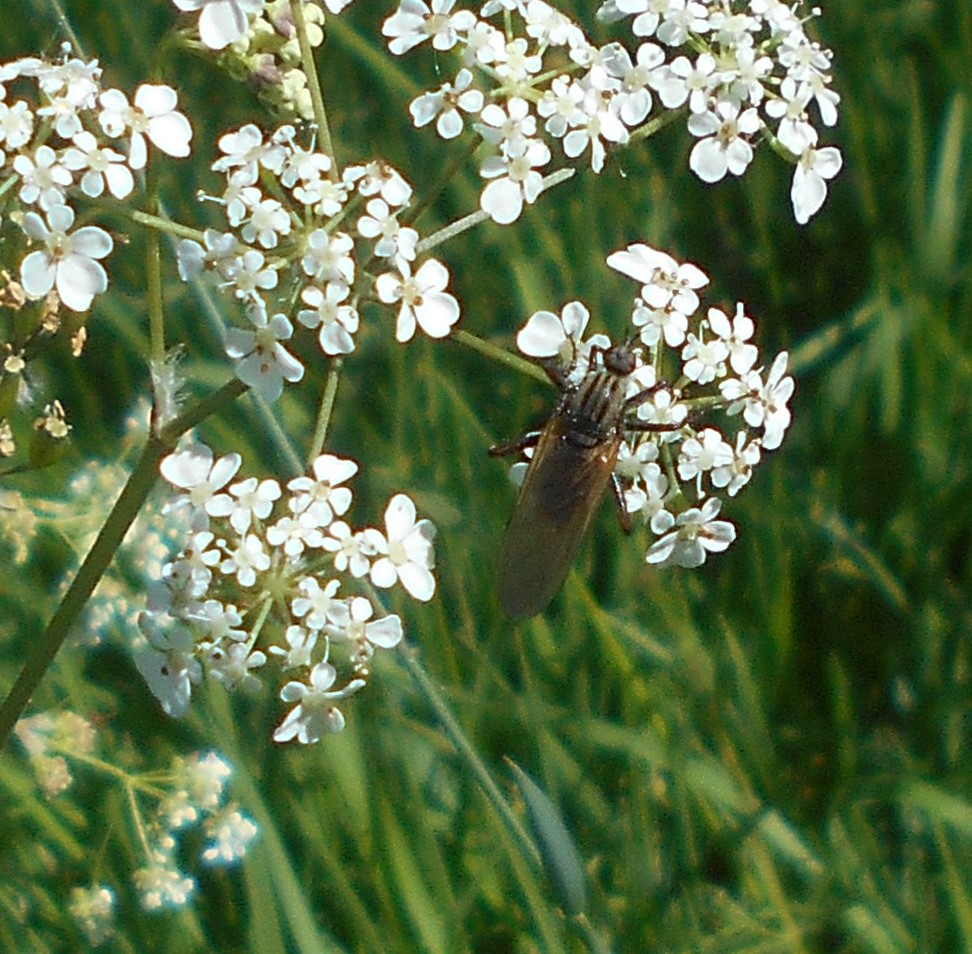
We spotted this daggerfly, Empis tessellata feeding on cowparsley. Though it feeds on nectar it is also a predator and catches other insects using its long pointed proboscis to pierce their bodies. Males of E. opaca and E. tessellata present a ‘gift’ to the female, in the form of a dead insect, before mating takes place. Females will not mate with males who do not present a gift.
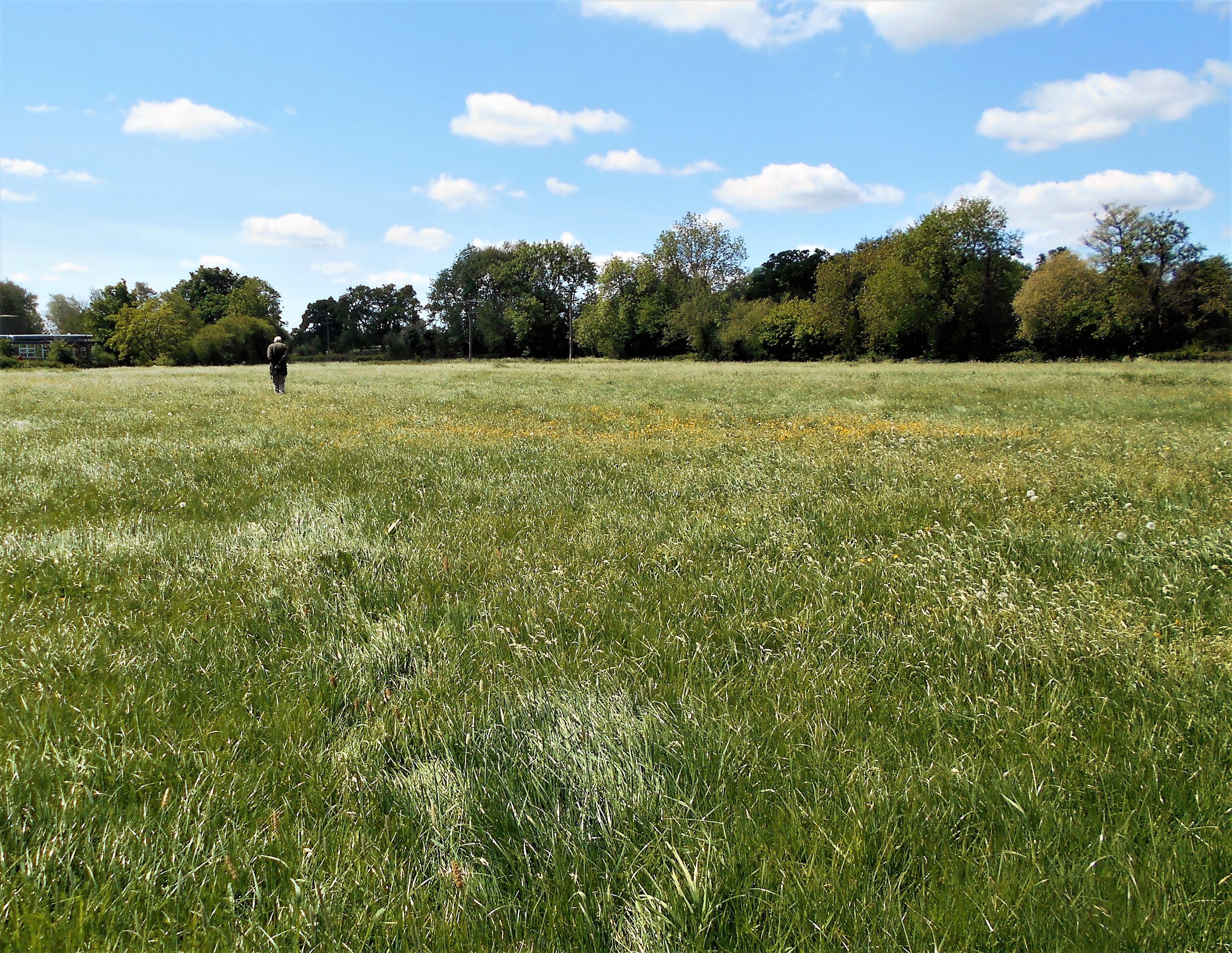
We feel so fortunate still to be able to walk the river meadows and banks and note and enjoy the wildlife and for sometimes precious hours at a time forget about pandemics and covid19 and coronavirus and children’s jobs in jeopardy and their businesses on the edge of a precipice and simply enjoy the moment another mayfly rises.
7th May 2020
We have been asked by iNaturalist on behalf of Durham University to post the photograph of the Beautiful Demoiselle (below) with details of the site, date, time of day to aid their research into mapping wing colourations of Beautiful Demoiselles across the UK. https://www.inaturalist.org/projects/british-demoiselles
During the 2018 flight season, a study of Demoiselles in Great Britain was launched through iNaturalist to learn more about how wing colouration changes through time and in different locations in these species. So far, researchers have measured the relative size of male Banded Demoiselles’ wingspots and have discovered that there is a change in the average wingspot size over the flight season: males emerging early in the year tend to have smaller wingspots than males that emerge in the peak season.
The published Project Study goes on : “These findings are only the beginning. In the future, we will develop new methods to extract measurements of female wing colour (e.g., how light or dark they are), in order to test whether female traits might respond evolutionarily to mating competition between species. We also plan to use the methods and findings developed in Britain to serve as a case study for expanding analyses to the entire range of banded and beautiful demoiselles.”
4th May 2020 / Temp: 17.5 C / Water Level : Med
A sunny but surprisingly cool afternoon for our exercise walk given the temperature, but the breeze blowing across the river meadow felt quite chilly and proved for the most part impossible to avoid, when we did it was warm. Maybe the strong breeze was the reason for so few birds, butterflies and insects – a Wren, a Swan, 3 Mallard, a Crow, a few Wood Pigeons and a Chaffinch plus two Ravens flying over and as we were leaving a single Tree Creeper. Great excitement near the bridge as a couple out walking spotted what they thought were rare birds and on their description, we began to feel hopeful too, thinking they might be Harlequin ducks – sad to say they were Mandarins, pretty enough but rather frequent sightings along this stretch of the river.
Most of the butterflies we saw were Orange Tips, both male and female, a couple of Brimstones and a Small Tortoiseshell and as to the insects, mostly the usual Common Craneflies, Buff-tail bumblebees, more of the Common Snout hoverflies but we did see the first Harlequin ladybirds of the year – not a welcome sight. To set against our gloom at the Harlequins as we were walking back along the river edge we saw our first damselfly of the year, the brilliantly vivid colours of the Beautiful Demoiselle.

We think it was probably an immature male because although the wings were copper coloured, the body was a dark blue not green in the case of the female. It was so lovely to see the first damselfly, a real harbinger of summer. We also feel sure we spotted a mayfly but it seemed to be blown in the wind faster than normal so we cannot be absolutely sure, particularly as it seems a littl early; that having been said, just about everything has been early this year, the result of the mild, wet autumn and winter no doubt.
We eventually managed to identify what we believe to be an umbellifer longhorn beetle from sight and a very indifferent photograph but the snail, spider and other insects must remain mysteries. Our butterfly binoculars have proved a godsend in their ability to focus on butterflies and insects, however they do highlight in a pretty comprehensive way one of the major drawbacks of our small camera in helping with identification. on the other hand, for two such very amateurish observers, we seem to manage pretty well.
25th April 2020 / Temp: 15 C / Water Level: Med-Low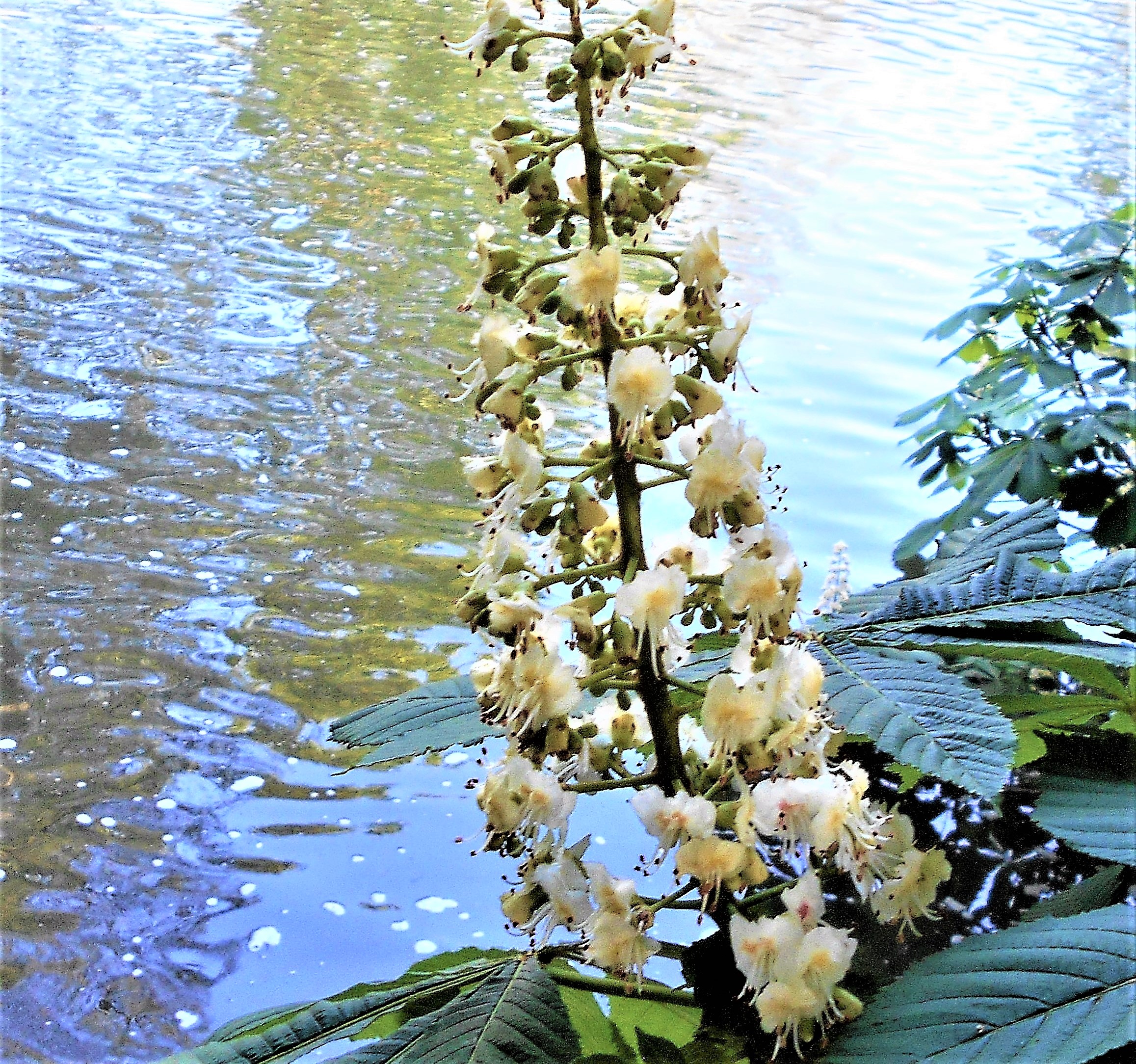
A walk around the water meadow, checking two of the remaining Otter survey sites during our exercise hour. These fractured checks (we cannot do a full survey in an hour) are not altogether satisfactory but still give an idea if the Otters are out and about in our area. Again no signs of spraint, but two lots of pad marks in the soft mud beneath the footbridge and leading away from the stream.
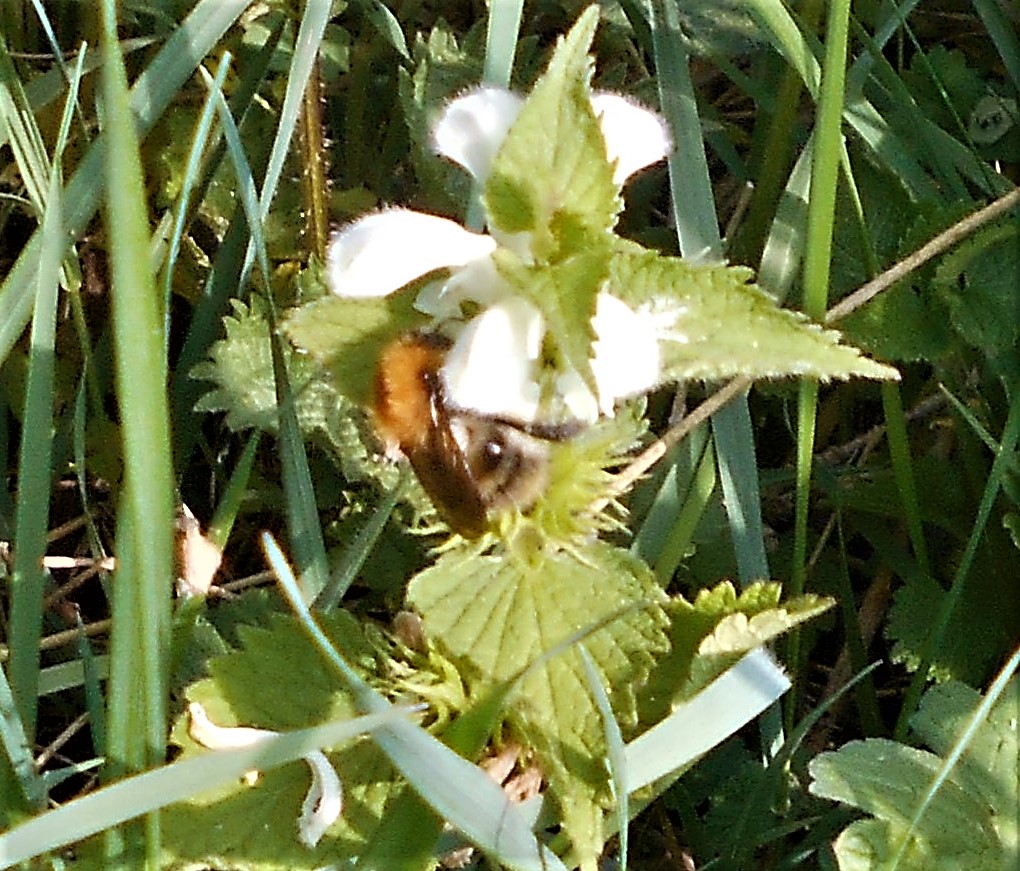
We did trudge rather as the grasses were almost knee-high in parts which made for slow going, although we could sometimes follow animal tracks (probably badger and roe deer) which made it a good deal easier. Milky, thin high cloud and hazy sunshine and signs of late spring were everywhere, not only in the frequency of plants flowering, the increase in the number of bees but also in the number of different insects appearing.

Green nettle weavils and swollen tummied Green dock beetles clinging to their host plants, Spotted Craneflies, Common Craneflies with their gangly legs, floppy and ungainly amongst the grasses, so many Lesser and Yellow Dungflies flying up at our every step and St Mark’s flies everywhere, a few mating mid-flight.

We spotted two new species for us, an astonishing number of Common Snout Hoverfly (above) catching the eye with their striking orange-red coloured bodies almost completely hidden when at rest and an Alderfly (below) with its black lacey-veined wings looking for all the world like ornate leaded glass windows.

So many black spiders skittering along the ground, in amonst the tussocks and running into the dried mud and cracked crevices around the beach, the only reconizeable ones the female Woolf spiders with their noticeable egg sac, and possibly common crab spiders, as well as garden spiders, the webs slung across the bushes.

Lots of summer flowers beginning to come into bloom, the scattered plants of common field speedwell sprinkled amongst the grass, cow parsley, greater stitchwort, buttercups, red campion, cream and purple comfrey, white and red deadnettles, groundsel, herb bennet, hop trefoil, welted thistle and ladies smock as well as wild garlic all now in flower and then suddenly we spotted a lovely Large Red Damselfly fly up from the river and over the field, our first damselfly of the year, a real promise of summer. Several butterflies – Brimstones, Orange Tips (male and female), Peacocks and one Small Tortoiseshell (although we saw several clusters of their writhing hydra-like caterpillars in the nettle beds), and one Common Blue, another welcome sign of summer on its way.

Only one pair of Mallard in the river but a pair of Swans flew over, and we put up a Mandarin duck. A few songbirds – Blackbirds, Chaffinches, Wrens and a Whitethroat, Jackdaws and Crows flying over, three Buzzards circling above the trees, we could hear a Green Woodpecker drumming across the meadow and a Raven croaking in the distance but no more – maybe the birds were as tired and dozey in the afternoon sun as we were!
21st April 2020 / Temp: 11 C / Water Level: Med – Low
A bright and sunny morning with a north-easterly breeze, thankfully less strong than yesterday, so walking the Otter sites was a most enjoyable way of using our allotted exercise hour. The first two sites were devoid of any evidence of Otter, the only sign of life a Pied Wagtail which shot out of nowhere and landed on the electric fence close by the bridge, tail flicking in contempt at my lumbering progress. The thick beds of crosswort caught the eye, the new small yellow flowers glowing from the shade of the hedge and the great expanse of wild garlic under the trees and along the bank were in full starred bloom, so beautiful particularly as their sometimes overpowering scent seemingly largely absent we were glad to find.
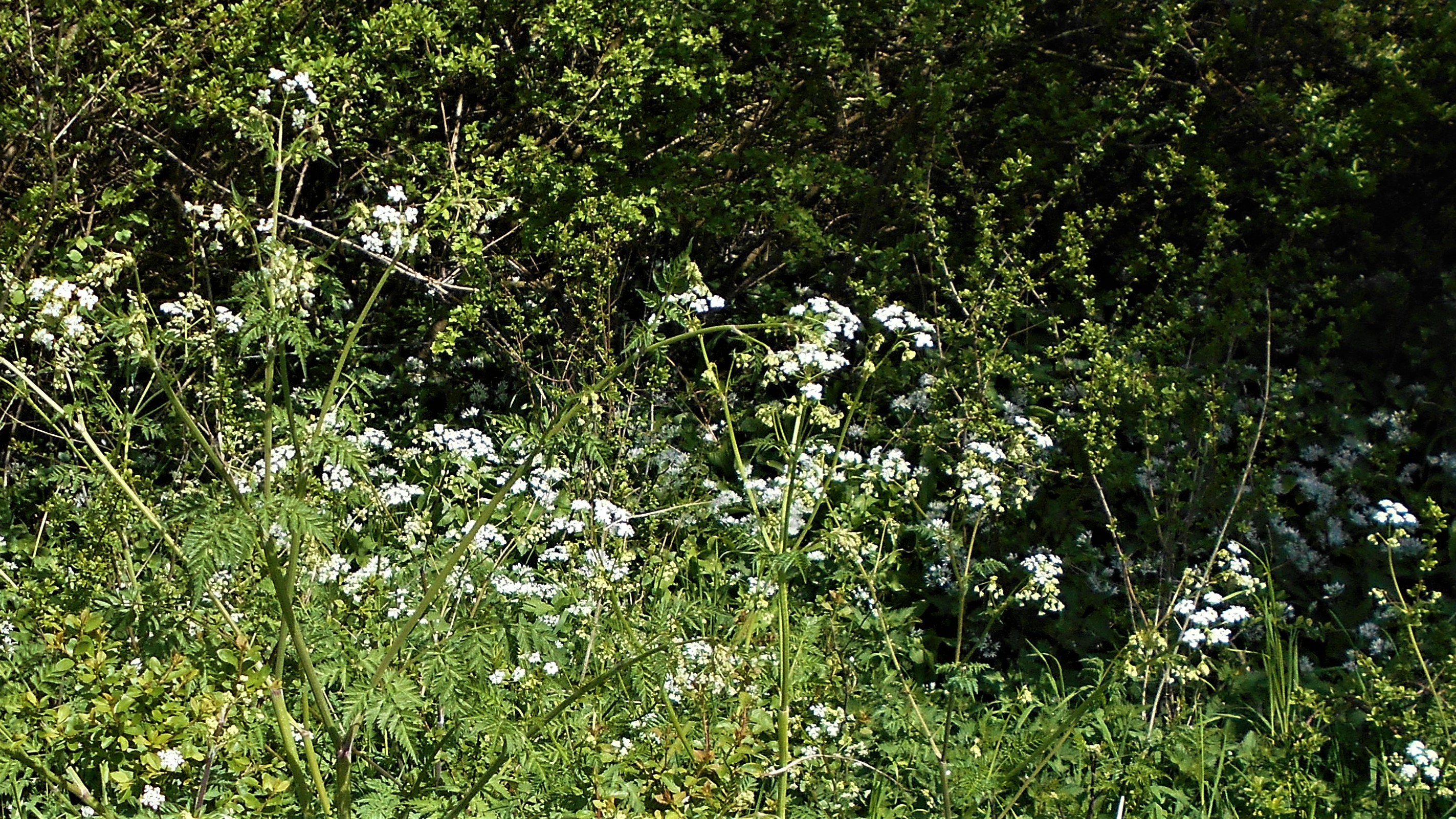
Finding one recent spraint among the roedeer slots on the beach was a great relief, although paltry compared to the same month in the two previous years, as we hadn’t found spraint on this site since October we were happy to see any at all. We set up 6 Mandarin Duck and 4 Mallard so at least there were some water birds but no sign of Goosander, Heron, Little Egret or Cormorant and even the pair of Swans which we see at every visit were unaccountably missing.

Our arrival on the beach at the junction of the two rivers alarmed a Kingfisher who gave a shrill warning peep as he shot downriver. It was, as ever, the most productive area for Otter signs, 1 fresh spraint, 2 recent and a scattering of signal crayfish pearls – the first since the autumn. Here we sat on a ledge half way up the bank and rested, mesmerised by watching the current carrying bubbles downstream, by the sun’s reflections on the water sending flickering lights across the tall rushes, cow parsley and garlic mustard crowding onto the beach. Here also were the loveliest sounds of late spring – Chiff Chaffs, Whitethroats and Yellowhammers singing, rippling water and the hum of Buff-tail bumblebees and the sights – St Mark’s flies, Honey bees, a dandelion filled with three tiny 16-spot ladybirds, cow parsley, red campion, buttercups, pear and apple blossom and white comfrey all newly opened.
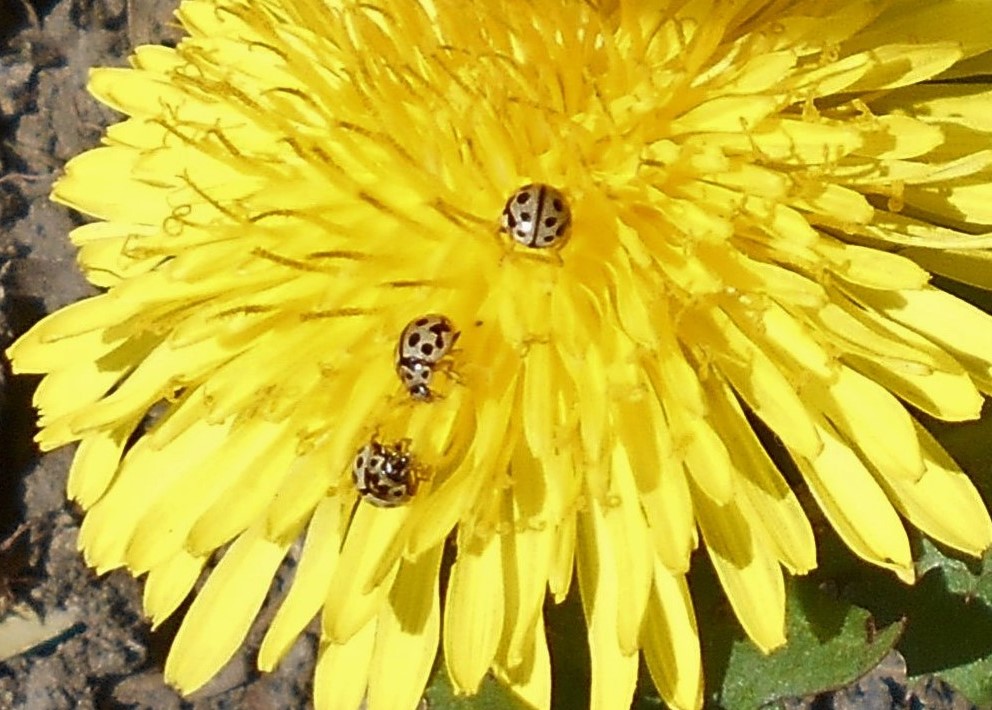 16-Spot Ladybirds
With a final flourish and fanfare of trumpets to our morning – three Swallows appeared, swooping and swerving around at high speed above our heads, sun on their backs, the unseasonally strong warmth bringing out lots of insects – what more delight could they hope to find after flying half way around the world?
20th April 2020 / Temp: 11.5 C / Water Level: Med-Low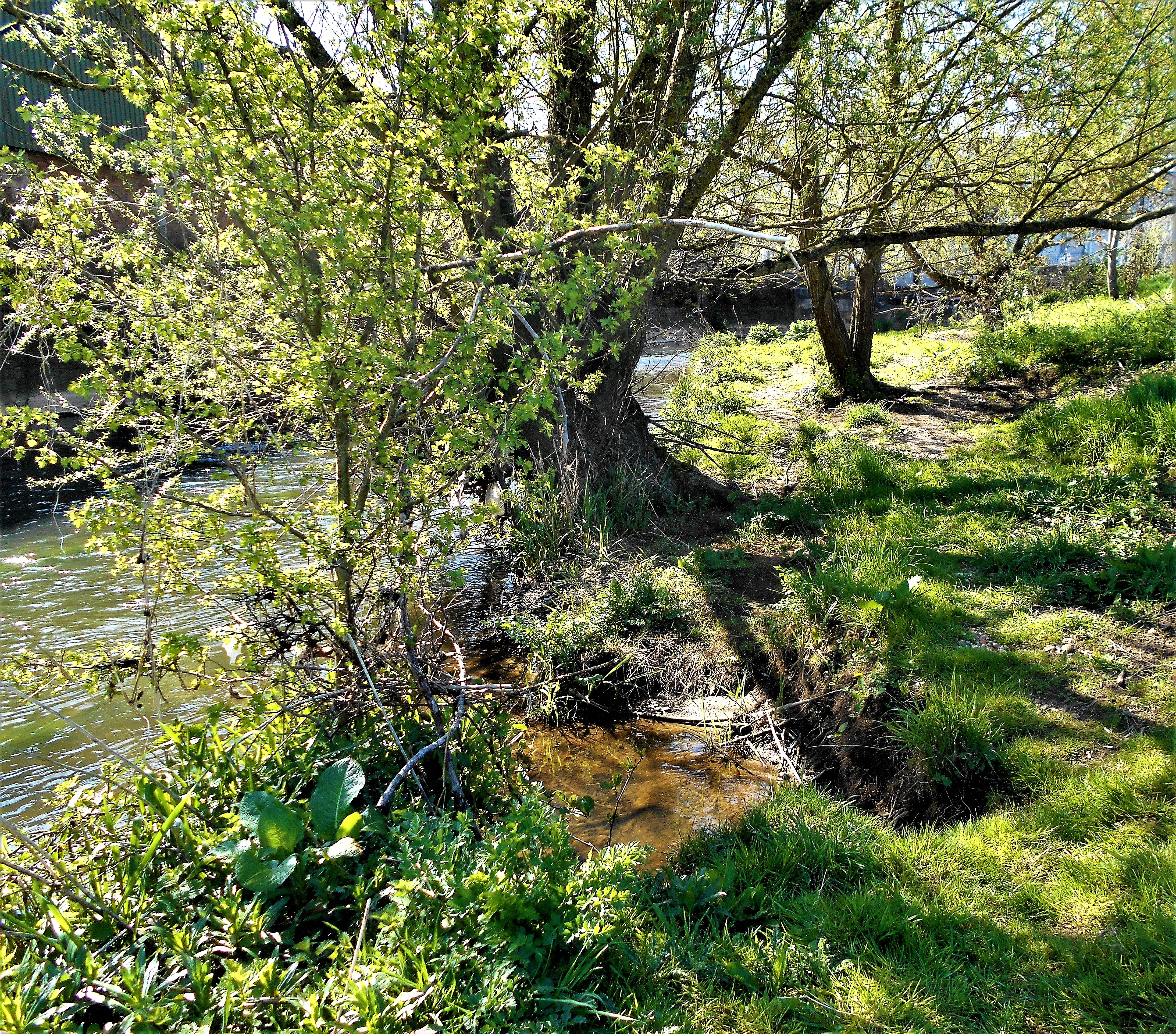
A brilliantly sunny morning, cloudless blue skies but a very strong and cold northerly wind – the sun is summer, the wind is winter! Disappointing not to find any signs of Otter at any of the four sites we walked to on our exercise hour. Six months have now passed since we have seen regular spraint and when we found a fresh one on our last visit, we hoped this was to be the first of many. Unfortunately this now doesn’t appear to be the case.
Lack of Otter signs appears to be matched by the fall in the number of water birds and certainly the number of birds and insects were also less than our last visit, possibly due to the cold wind or even the time of day. However we did see and hear Chaffinches, Wrens, Great Tits and Blue Tits, Blackbirds, a couple of Whitethroats and Chiff Chaffs, a wheeling Buzzard and Red Kite but only a single Mallard, no sign of Swans, Cormorants, Little Egrets, Herons, Mandarin Ducks, Coots which had seemed permanent residents.
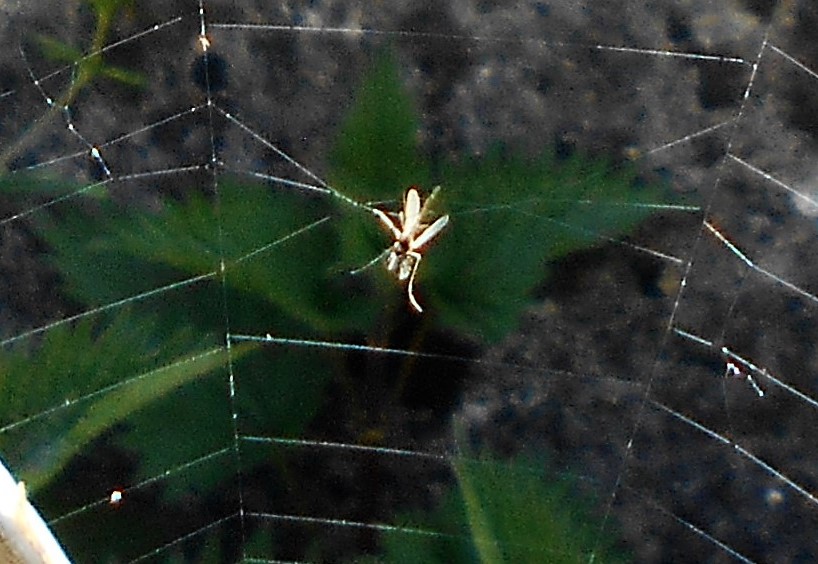
It wasn’t all gloom and doom, lots of spiders webs, lots of midges and gnats both above the water and above the banks, many of them caught in the webs most of which appear to be cironomids, the non-biting midge, the lavae of which we usually find in our occasional kick-sweep surveys of the river, so it was fun to see them close to. We remember the Rossendale Fairies photograph posted in a local northern newspaper showing a particular shot of these midges and claiming they were fairies!
Orange tips (m&f) and a single Peacock the only butterflies but quite a number of mining bees, we saw both Ashy and Tawny as well as a Beefly and a few Honey bees, Hover flies and St Mark’s flies. A phenomenon remarked on by fishermen was very noticeable today, the number of St Mark’s flies being blown onto the river; we didn’t see even one being taken by a fish which we found surprising. Meadow foxtails and Buttercups were the only new plants flowering, there were an increasing number of the delicate Lady smock, Red campion and Cow parsley and still a clump of Marsh marigolds and well as Lesser celandines still hanging on. Overall we were glad to hurry back to get out of the wind and rest up!
11th April 2020 / Temp: 19 C / Water Level: Falling

Another beautiful spring morning and we took the opportunity of our exercise allowance to check out just one of our Otter sites where we were pleased to see two sets of Otter pad marks, one set in a soft muddy beach of the river and the other in the overflow tunnel leading down from the rill. No signs of spraint at either site and none on the log where we had found spraint on a previous visit. It’s frustrating – we can tell there are Otters about, but they seem always to be passing through and not stopping to fish and eat even though the Signal crayfish (their favourite food locally) should be pretty active by now as the river water temperature is rising.
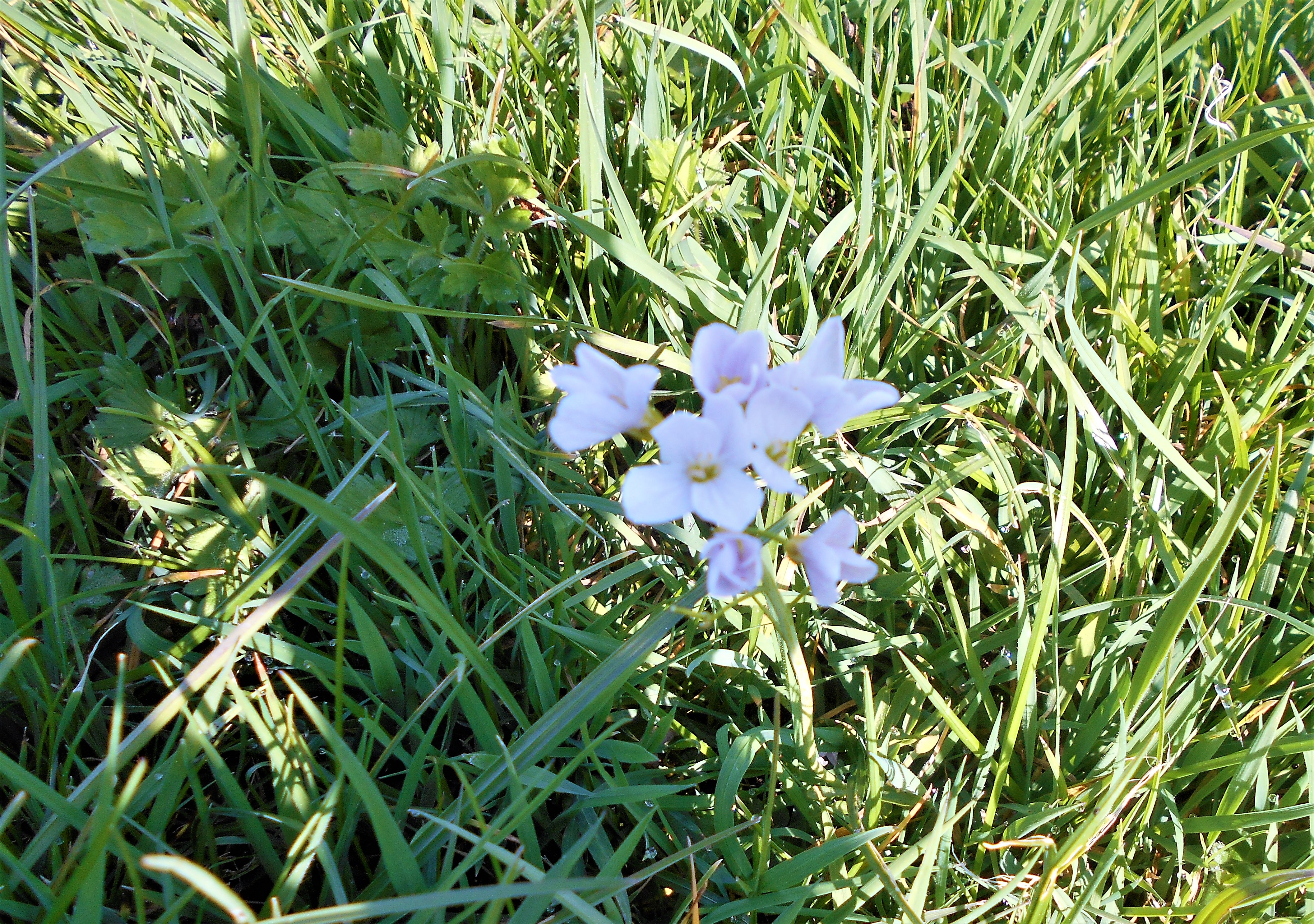
The warm sunny weather of the past week when temperatures are closer to summer than spring has encouraged plants to flower so not only was the meadow covered in splashes of golden dandelions to add to the lesser celandines but the beautiful pale lilac lady’s smock, garlic mustard, birds eye and field speedwell, daisies, chickweed, red and white dead-nettle but also the cow parsley and red campion were just starting to open and the hedges were alight with young leaves and blackthorn blossom.

These two arum lillies are on a steeply sloping ivy covered bank where the plants are growing in profusion. Wild foragers would be delighted with the good spread of young nettles, chives and wild garlic scattered around the meadow, but it needs to be quick, as they are just on the point of flowering. If you are foraging you may be tempted by today’s FT Weekend delicious looking recipe by Rowley Leigh for Nettle Fettuccine with scallops and lemon https://www.ft.com/content/21f475d6-7861-11ea-af44-daa3def9ae03
Well worth reading this witty account of Rowley instructing his photographer in the art of home made fettucine – I will never cook scallops again without hearing “Now, Andy, Now” 2 seconds after putting them in the pan!
Lots of insects now emerging (and mating) as with the green dock beetle pictured here, the much smaller male mounted on the larger female. The rather beguiling primrose coloured grass spider below was dangling from a grass, dozens and dozens of small black spiders scurrying everywhere, uncountable numbers of dung flies flying up at every step almost, both Lesser and Yellow dung flies (even though we couldn’t see any dung and the cows hadn’t been in the meadow all winter given the relentless rain making their pasture a quagmire). 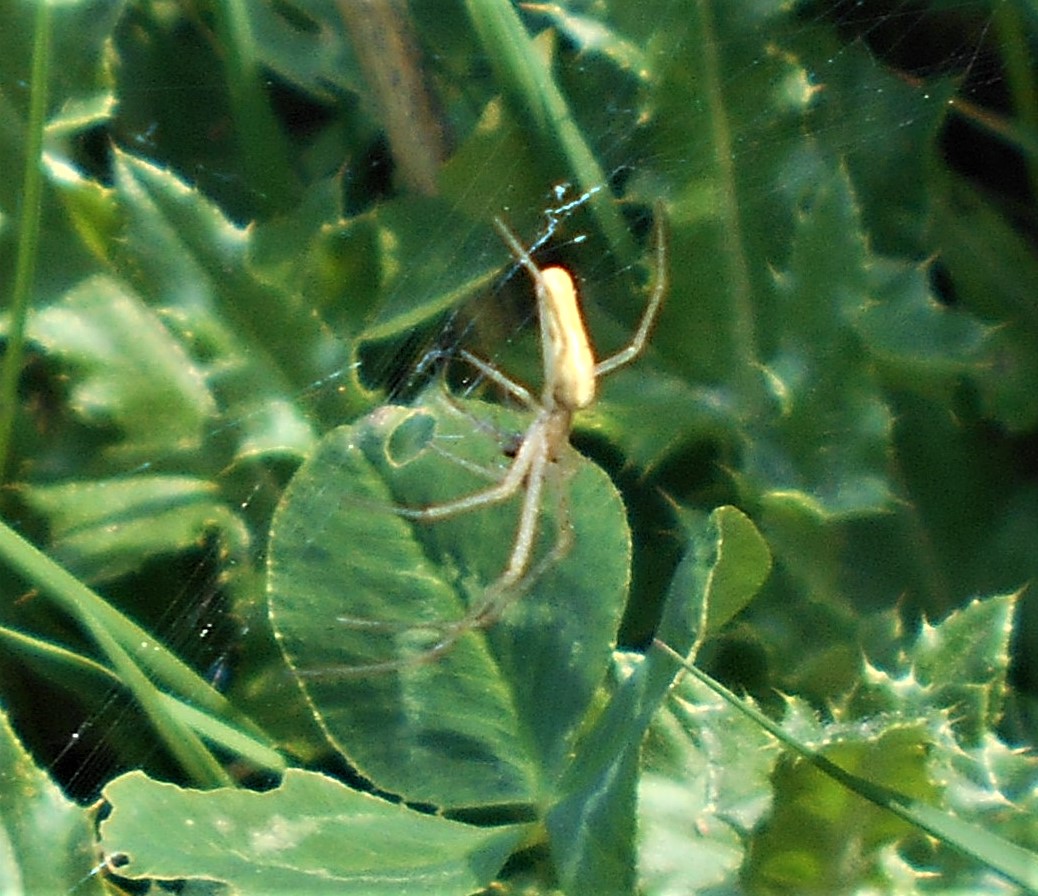
Midges by the ocean full! Drone flies, Hover flies, fat bumblebees and also butterflies now appearing in greater numbers at least 8 Peacock, half a dozen or so Orange Tip, a single Comma, several Brimstones, one Small White and two Small Tortoiseshell.
The surprise was seeing St Mark’s flies gathering above the small beach where the narrow rill widens out into a shallow pool. We perched on the bank and rested and watched them swirling just above our heads. At least two weeks early but no doubt the unseasonably high temperatures of the past few days tempted them out. As always, sitting still, even for 5 minutes or so meant we saw and heard more – a newly arrived migrant Whitethroat singing (a first sighting for us here) a Great Spotted Woodpecker drumming, and Rooks making their usual racket from a rookery close by.
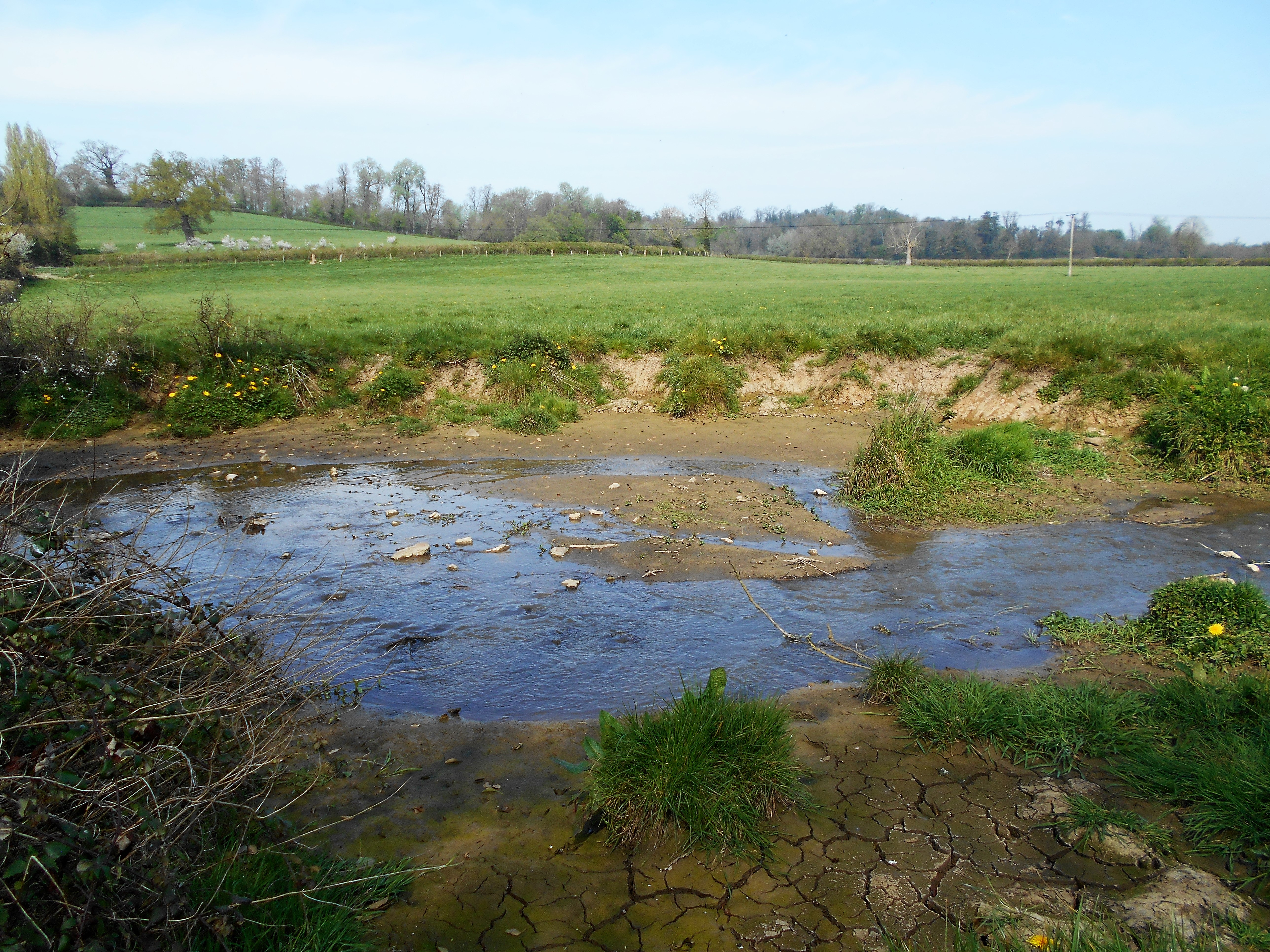
Returning to the river and clambering down the bank to check for spraint, we suddenly spotted a slug, quietly feeding 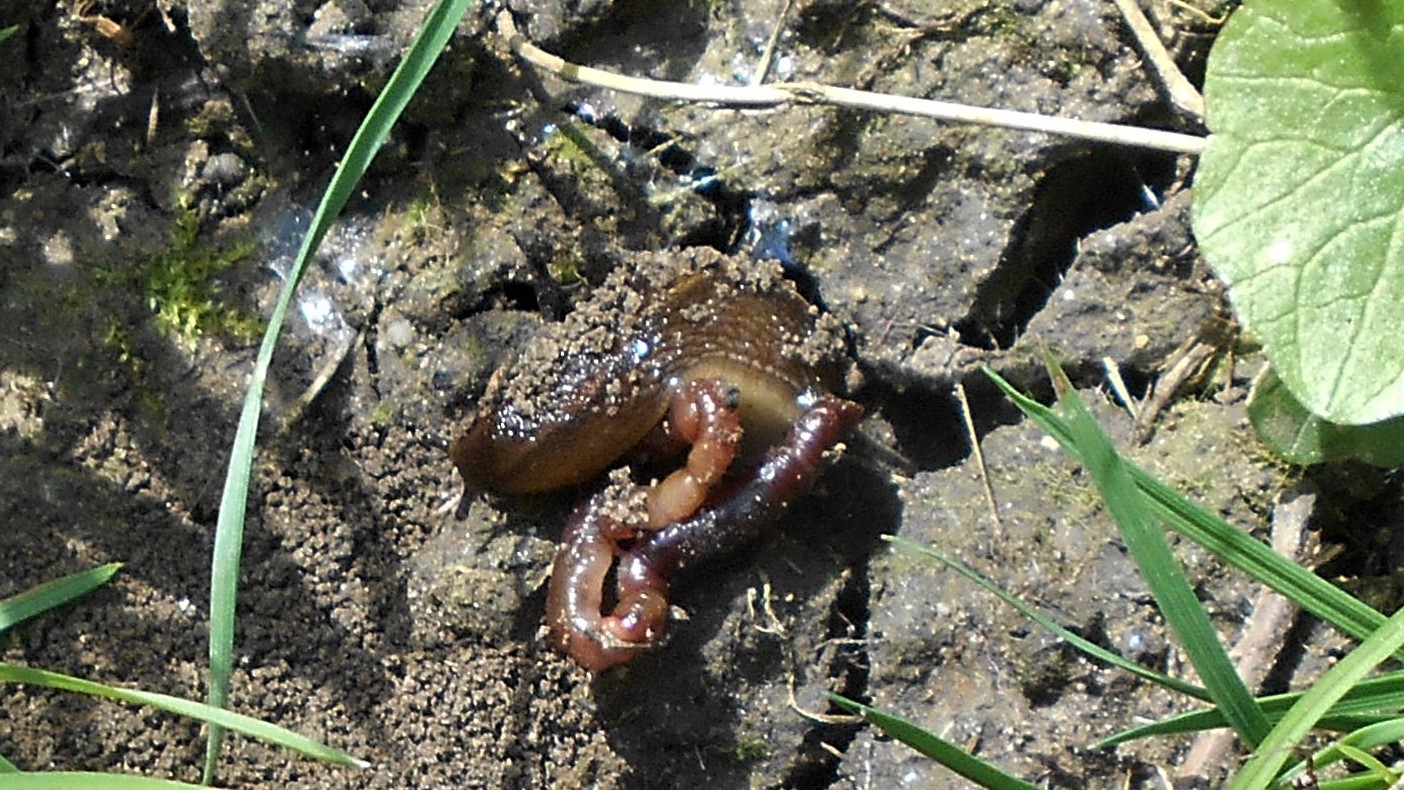
on a fat earth worm, not a practice we were familiar with.
Further investigation when we returned home revealed that slugs being the ultimate scavengers will feed on dead snails, slugs and earth worms as well as fungi but evidently there is a species called a shell-slug Testacella, which lives underground, is rarely seen, and lives entirely on live worms and has a distinctive small ear-shaped external shell on its rear end. My extremely scanty knowledge of slugs makes me think this looks more likely to be a Tawny slug by its markings, but as it kept his head and tail well hidden so we will never know for sure. 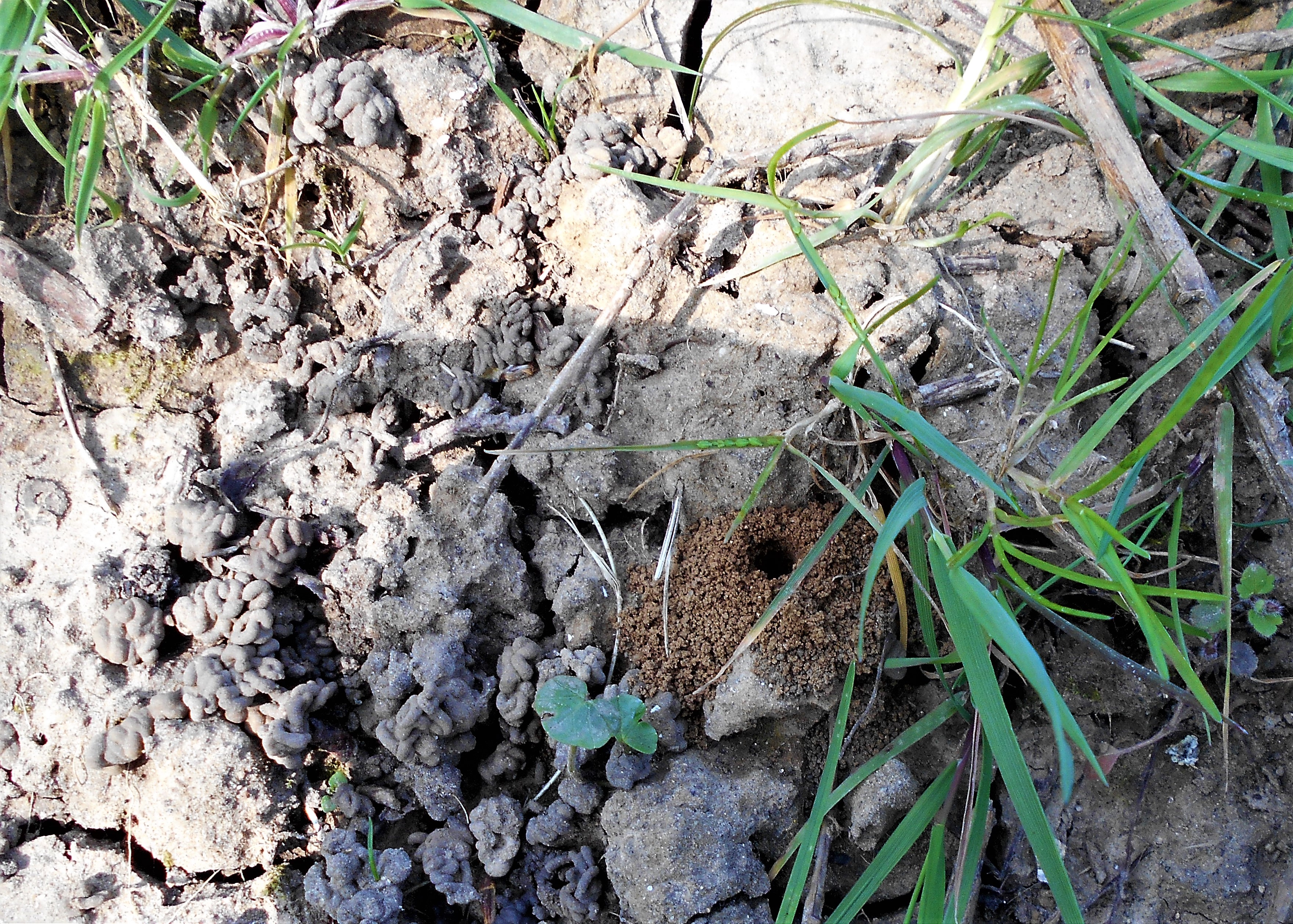
On the same dry sandy bank we also noticed 5 or 6 small volcanos which we always associate with Tawny mining bees, although we didn’t notice any of them flying around.
We spotted a reasonable haul of birds – as well as the Whitethroat and Woodpecker, we saw and heard lots of Wrens, Great Tits, Blue Tits, Chaffinches, Blackbirds and Robins singing, displaying and searching for nesting material; we put up a Little Egret, saw a Swan and several Mallard along the river and heard a distant Raven and Magpie and of course saw lots of ubiquitous Wood pigeons, Pheasants and Gulls everywhere.
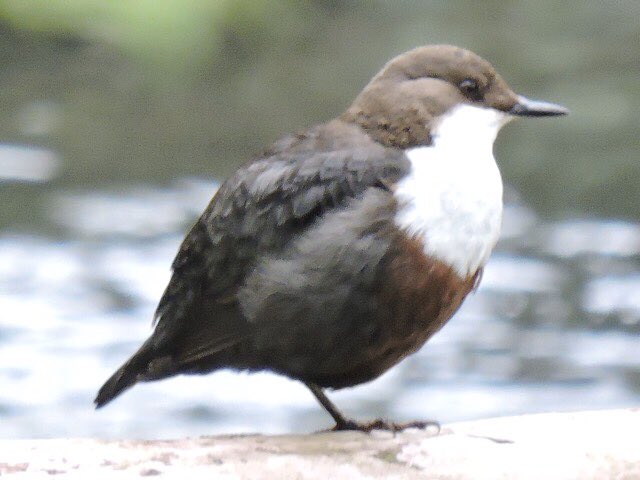 Dipper photographs / copyright John Hansford
We were also so pleased to catch a glimpse of a sole Dipper (no sign of its mate but our first sighting of Dippers this year). John Hansford has captured these superb photographs of a Dipper showing off its brilliant white bib against its chocolate brown body.

A beautiful spring morning with the warmth of summer, a welcome balm against the horrors of coronavirus news. We count ourselves very fortunate to be able to enjoy this all too brief respite.
30th March 2020 / Temp: 8 C / Water Level: Medium – falling

A brief exercise-allowance walk to check one of our Otter sites, and sad to say it was bereft of spraint or any signs pf Otter at all. The weather wasn’t welcoming, the wind cold, the sky overcast and even a sprinkling of icy rain but we trudged along, checking anyway. Two Canada Geese were occupying the prime spot near the bridge leaving their droppings liberally spread all over the grass, we disturbed four Mallard, two male, two female, all of whom left their footprints in the muddy area around the cattle trough. No sign of the Little Egret or the Heron or Cormorants, we did however spot the White Pheasant, hunkered down out of the wind but skittering off when we came too close. It was cheering to see it is surviving, still on the run from the nearby Pheasant Shoot.
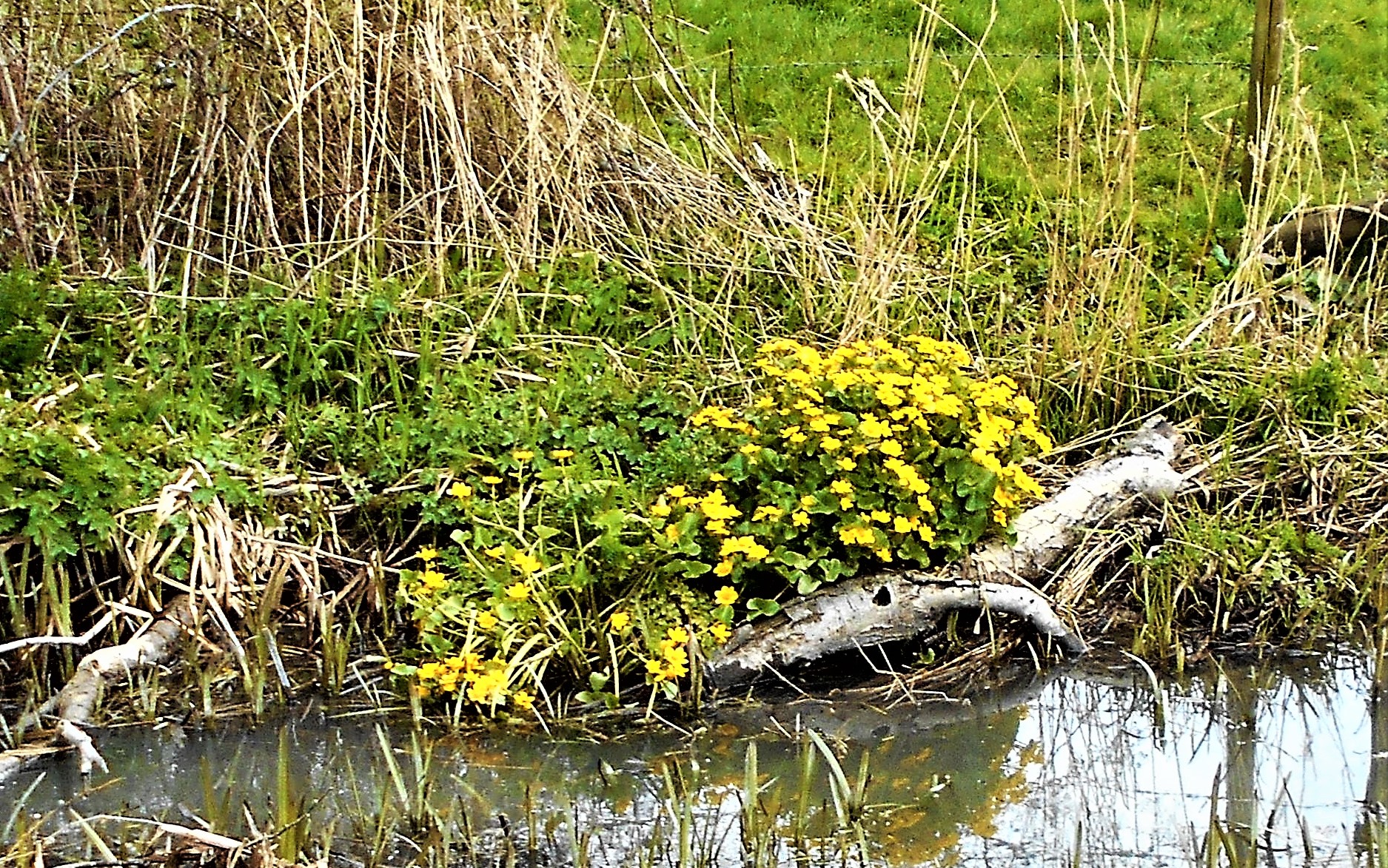
The vivid splash of several golden yellow marsh marigold plants were a very welcome sight of colour in what was a pretty drab scene, white and red deadnettle, dandelions and daisies the only other flowers to show themselves but the blackthorn blossom made a brave show, looking so delicate and fragile in the rain.
Lots of small birds flitting and singing – a Pied Wagtail, Wrens, Blue Tits, Robins, a Chiff-Chaff, Blackbirds, a Song Thrush and of course the inevitable Crow. Surprisingly perhaps given the cold wind we also saw a Buff-tailed Bumblebee and Yellow Dungfly – not the sort of weather to see them usually.

A fairly sizeable tree trunk was slewed across and balanced precariously on the edge of the weir – we have seen more fallen trees in the river this winter than we can ever remember seeing in previous years, a striking reminder of the noticeably high winds of this year’s storms.
25th March 2020 / Temp: 16 C
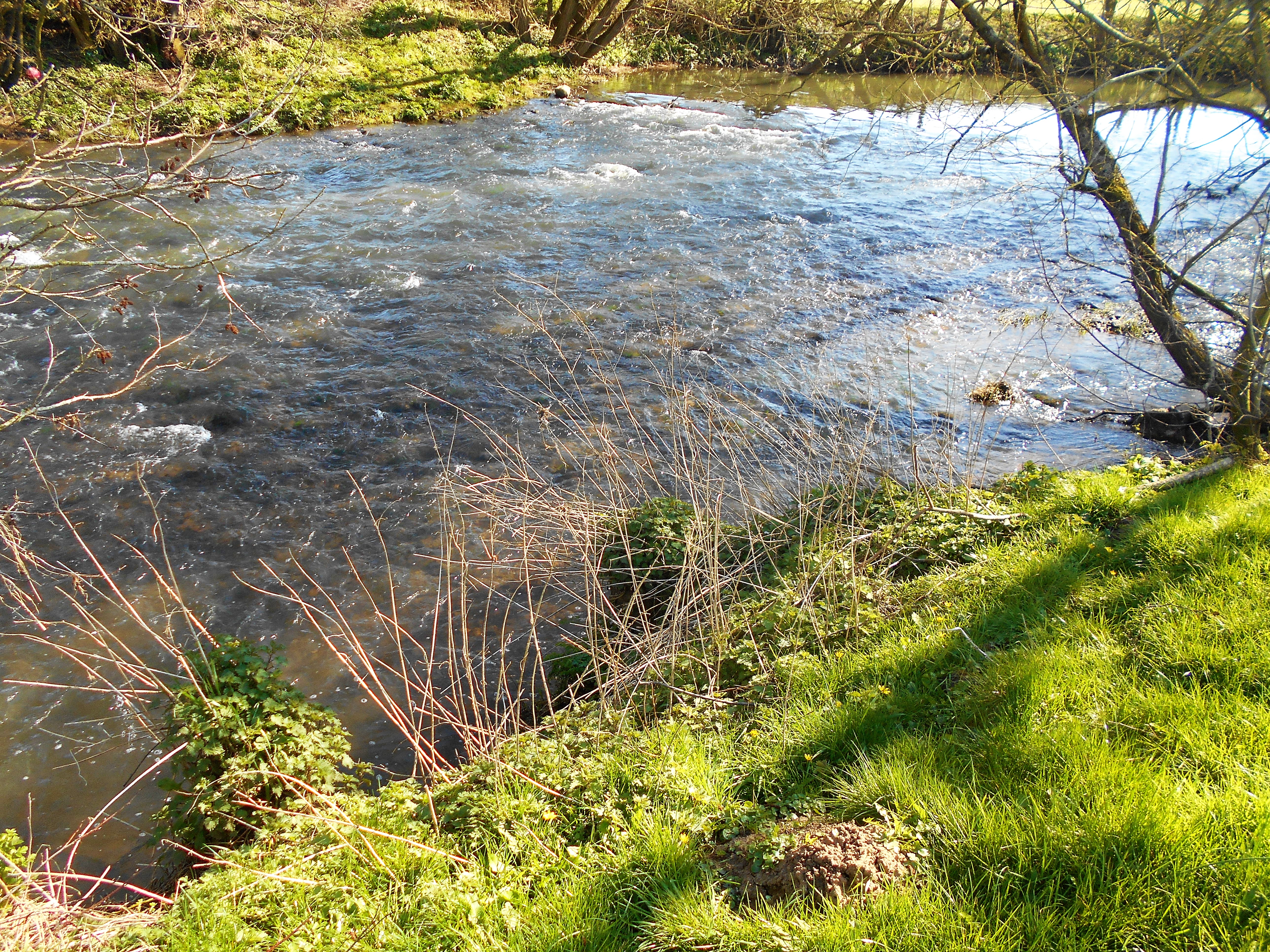
There is something very calming about walking beside a river, the water looks gin clear and sparkles as it ripples over unseen stones, the sound is soothing, there is nothing to offend the eye and we can feel ourselves beginning to unwind, forget the looming threat of Coronavirus for a little while, put down the burden of anxiety over children’s jobs and grandchildren’s home schooling, soak up the quiet beauty and relax.
It helps if a Mute Swan drifts by, Persil white, and 4 or 5 Mallard take off with a noisy clatter and many squawks, followed soon after by 2 quieter Mandarin Ducks. If you can hear Blackbirds and Chiff Chaffs, Wrens and Robins, see at least 5 Small Tortoiseshell butterflies, 2 Brimstones and 2 Peacocks, you feel transported into a different, more innocent world. It is delightful if you catch sight of a small brown head in the water which, before you can quite absorb what you have seen, dives under water and disappears and you stand, gazing at the swirl of ripples and wonder… could it have been an Otter? When you then stand, looking at the river to see if something surfaces, but nothing does and you wonder…. was it?

And then when you cross the meadow to the Mells River rill and begin walking its line and put up a Snipe, not once, but twice, and if this if the first time you have seen the wader for nearly two years you feel pleased to be here on this day at this time when wildlife offers such gifts.
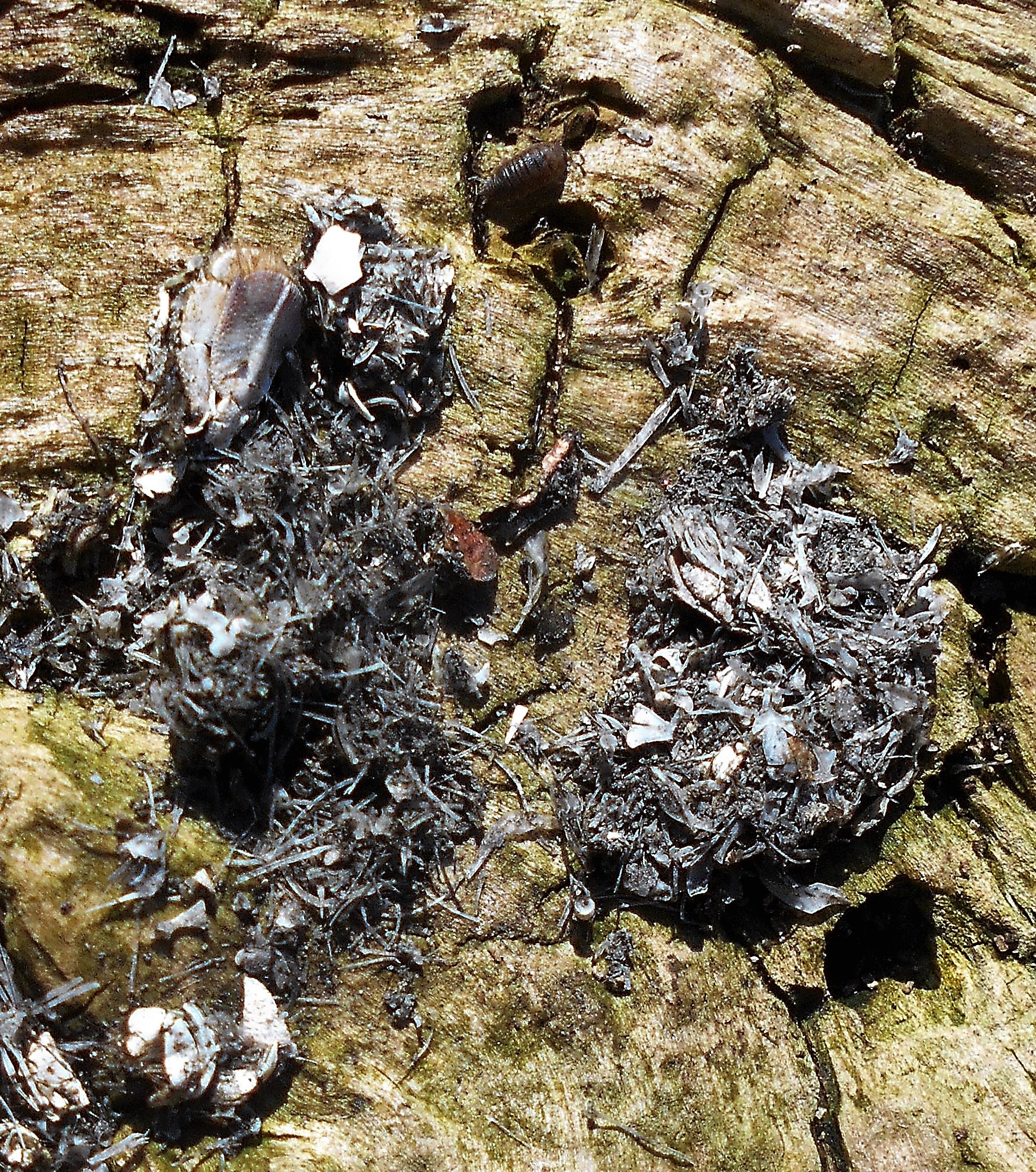
The Otter spraint we spotted on a log by the rill contained the usual fragments of fish bones but also what looked like the carcass of a water beetle with fringed back legs but impossible to identify without much closer scutiny with a hand lens which we didn’t have with us.

[Further research revealed that, disappointingly, it was more likely to be a uropod, part of the tail fan, of a signal crayfish. We should have spotted it earlier, just about every spraint we find is chock full of crayfish remains – they never seem to eat anything else!!]
Every mole hill seemed to have small dusty black spiders running all over them and one had what looked like a dozen or so scattered white slugs’ eggs – possibly the remains of a ground beetle’s lunch.
Update: This photograph of the spores of a cauliflower slime mould has been added to Ispot collection to complete the photographic stages in its life cycle.
Now in the Slime Collection here https://www.ispotnature.org/communities/uk-and-ireland/view/project/777371/-the-slime-mould-collection-/observations-gallery
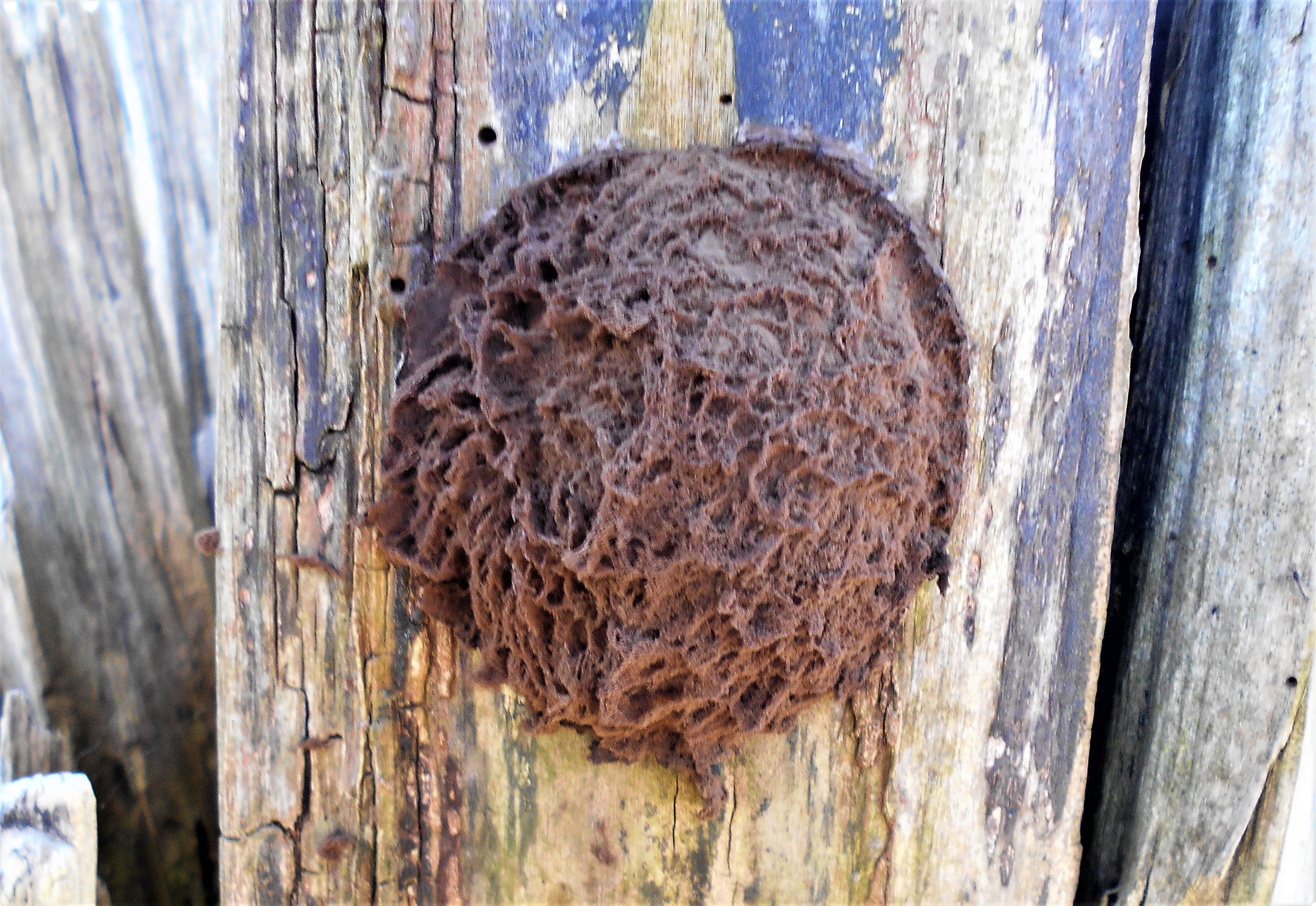
Which lead us to our final conundrum of the afternoon – a cluster of what looked a brown ball of fluffy cobweb! Possibly lichen, possibly fungus – we will ponder!
27th March 2020 : Well, we have to thank Chris Brooks at Ispot for identifying this fungus, which we do, most heartily! He believes it to be the remaining brown spore mass of an old Slime Mould (Reticularia lycoperdon) commonly called a Cauliflower Slime Mould. He goes on to write : “Reticularia lycoperdon is usually seen as a whitish blob on wood but within is a brown spore mass. This is revealed once the outer dries and cracks.” Interestingly, I had taken a photograph of a whitish blob on the other side of the tree, which didn’t look as if it had any connection – here :

How exciting – how weird and wonderful the natural world is!
24th March 2020 / Temp: 11 C – 13 C / Water Level: Medium – falling
 Pied Shieldbug
Cool breeze but sunny and although we were most disappointed not to see any signs of Otter along the whole stretch of our four survey sites – apart from one set of pad marks – we spent an enjoyable morning chasing bees among the red deadnettle and common field speedwel – early bumblebees, buff-tailed bumblebees, honey bees, common drone flies and beeflies all seen without getting a decent photograph of any of them. Ditto the butterflies – Peacock, Small Tortoiseshell, Brimstone and Green Veined White – all were alusive and far too lively, barely settling for a moment before flitting off or, in the case of the bumblebees, disappearing into the long grass. How heartening to see so many insects, a good sign of spring.

We did capture a reasonably clear photograph of the Pied Shieldbug – good enough at least to identify a new species for us, and the first 7 spot ladybird of the season so all was not in vain.
We set up the usual handful of Mallard at two of the sites and 2 Little Egret and 2 Mandarin ducks, but there was very little other birds around – the usual Jackdaws and Rooks among the bleached stubble, we heard a Chiff Chaff, a lovely herald of spring, Chaffinches, Blackbirds, Wrens, Robins, Blue Tits, Great Tits and 3 Buzzards circling and circling over the stand of trees.
The large beds of ramsons were in full leaf and several had fat buds about the burst open, we spotted wild chives, lots of lesser celandine and dog’s mercury, dandelions, white deadnettle, bittercress and blackthorn blossom as well as the first flowering cow parsley of the year.

Walking home along the top track we noticed on the full-sized Ash tree a line of King Alfred’s cakes starting from the first branch and running up the entire length of the trunk! We had never seen this phenomenon before, usually we saw them in clusters, or a short line, never up the whole tree.

Always something new to notice – even on trees we had passed dozens and dozens of times before. Badger diggings and rootlings everywhere alongside their usual well-beaten pathway and both Roe Deer and Muntjac tracks across two of the beaches as well of course the usual dogs and water bird tracks.
It was so good to walk alongside the river checking the beaches, stones and logs for Otter spraint, ambling across the water meadows, feeling the warm sun on our backs and noticing all the many signs of new growth, a blessed few hours during which we were able to forget all about viruses and lock-downs and food shortages and enjoy another world.
18th March 2020 / Temp: 12.5 C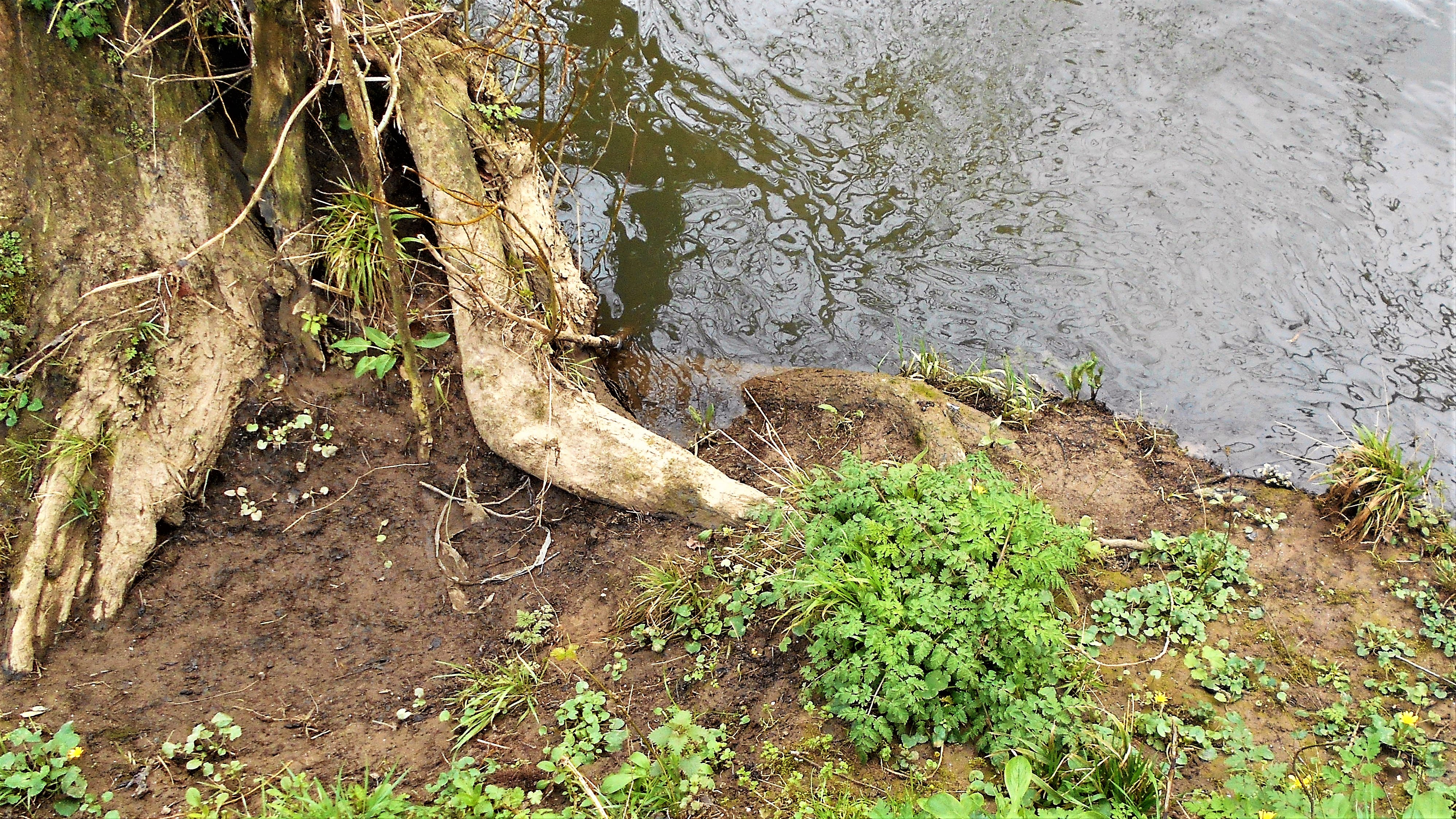
The wettest autumn and winter on record have made river walks untenable, the fields were often flooded and the ground was always a muddy, sludgy quagmire, so although the sky was overcast with heavy cloud and the stiff breeze pretty chilly, we were relieved to have a dry day to explore.
We were both relieved and delighted when we spotted Otter spraint on a tree root close to the river – our first sighting since September – a completely unprecedentedly long hiatus in Otter activity. It may have been the high water level and fast current which was the cause but we believe darker plots may have been at work, other enthusiasts bribing the Otters with fish, coaxing and inveigling them to swim upstream and abandon our stretch for the winter – and yes Simon King – we do mean you!! We had chatted to the tree surgeons at work on the trees around the telegraph poles one of whom lived close to the naturalist and photographer’s house on the other side of Frome where he said Simon King (who fed them) saw Otters frequently. We can only hope that come the warmer weather and the Signal Crayfish becoming more active, the Otters might bore of fish and move downstream for more tasty fare.

The water level had fallen considerably which was a good sign although there was little water bird activity on the river – one Mallard by the weir and two Mallard half a mile downriver, two Cormorants flew over. If there were almost no water birds, there were plenty of other birds – we heard only the second Chiff Chaff of the season along with seeing lots of noisy Robins declaring their territory, Wrens and of course Crows and Wood Pigeons and our beloved Jackdaws as well as Blue Tits and Blackbirds in full voice.
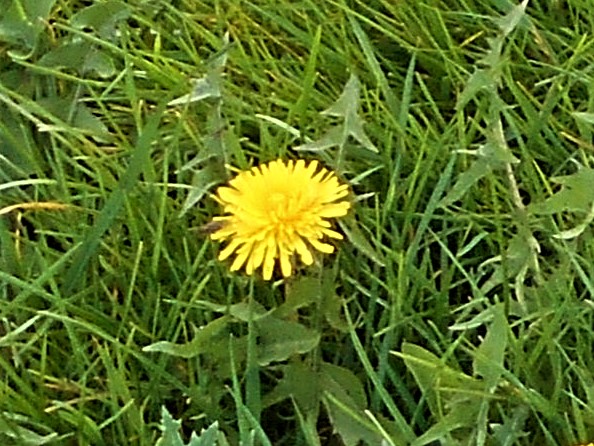
The Grey Willow catkins were well-formed but still green but there were a sprinkling of wild flowers in bloom, both white and red deadnettle, dandelion, common speedwell, dog’s mercury, common chickweed, lesser celandine, hairy bittercress and the partially hidden clumps of beautiful white sweet violets. Despite the grey skies and chill wind, spring has definitely arrived!
22nd February 2020
Last autumn we were in correspondence with the Somerset Environment Agency with regard to the attempted fish survey they carried out in August 2019 which was aborted due to the fallen trees and the turbidity of the water. Various reasons were discussed as to the cause of the turbity, American Signal crayfish eroding the banks when excavating dens, manure from cattle excreting into the river and run off from fields and water meadows.
We mentioned our observation of reasonably clear, self-cleaning water above the bridge, and murkier, turbid water below. We had not been aware at that time that Staplemead Creamery had straightened the course of the river from Great Bridge to their factory, reinforced their bank with concrete and moved the weir (see maps below).
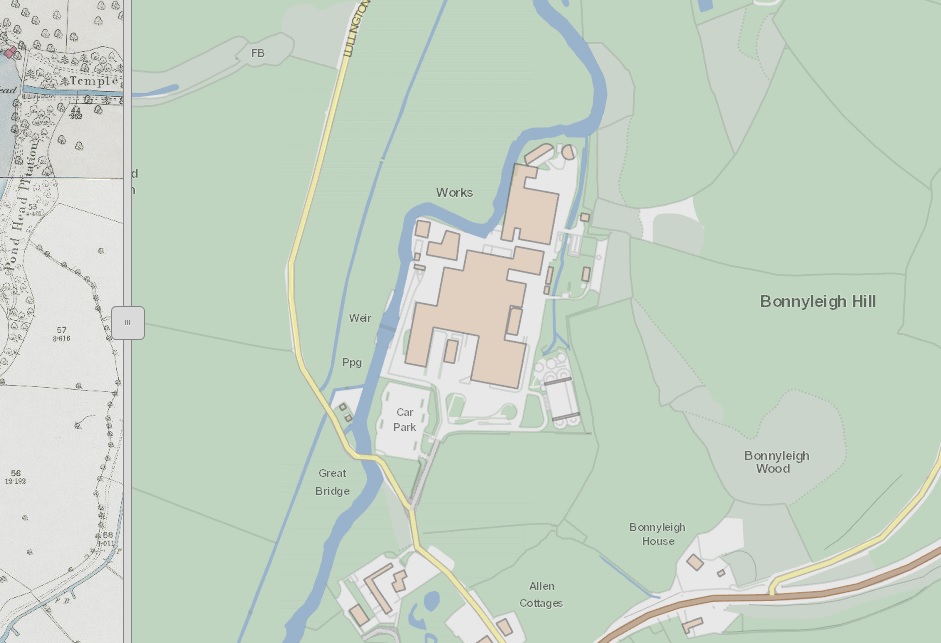 2017 digital map showing the line of the river after the redirection/straightening
 1884 OS Map showing the original meander of the River Frome
As Richard Marston writes in his research paper on river behaviour:
Human-induced environmental changes (e.g. in-channel and landscape modifications by protective measures, agriculture, and urbanization on or around floodplain landscapes) and climate change alter flow regime, floodplain-erodibility characteristics, and sediment-transport rates, and thus can significantly affect the patterns of channel evolution and floodplain vegetation patterns and processes.
Moreover, the alterations in river–floodplain system functioning can lead to a decrease in hydrologic connectivity and a degradation of water quality, which in turn lead to a decline in the abundance and diversity of riparian and riverine habitats.
As is often the case, there may not just one cause but a multiplicity of causes which lead to the degradation of water quality and it is worth considering whether the straightening of the river, tarmacing large car parks and paths around the buildings together with concreting the banks and the subsequent increase of run off has had a detrimental effect on the water quality of the river.
17th February 2020
River Insects and Lichens bucking the trend of wildlife losses
Among all the articles despairing the continuing loss of wildlife, a good news story! Scientist believe that the increase in these insects and lichen could be caused by cleaning the rivers and reducing air pollution. Whatever the reason, we have noticed lichens and mosses thriving on the trees along the river bank and delighted in the numbers of dragonflies, damselfies and mayflies we see during the warmer summer months along our stretch of the river.
5th February 2020 / Temp: 6.5 C / Water Level: Med. High (falling)

The above photograph shows the line of the old trail drain which formed part of the catchworks which is almost completely obscured by the dead plants. From a canal which ran through the farmyard at the top of the slope, water flowed through a system of sluices and down over the water meadows to ensure the ground didn’t freeze during winter. The farmer said that the canal had long since been filled in and the lines of hatches and ditches had been ploughed over so only the dead straight drain running paralel to the river remains. In high summer this is a wonderful sight as the banks are filled with flowers and the flowers are filled with dragonflies, damselflies and butterflies.
The trail drain supports just winter dried plants at the moment but the bright warm sunshine has at least attracted clouds of winter gnats and midges along the entire length of the stream and today we disturbed a couple of dozen Mallard who no doubt welcomed the quieter stretches of the drain rather than the more turbulent river, although sadly they hadn’t shared the space with any Otters. More details about the history of the catchworks can be seen at : https://historicengland.org.uk/images-books/publications/conserving-historic-water-meadows/heag176-conserving-water-meadows/
Walking along to the next beach we disturbed about six Mandarin Ducks, a few more Mallard but not the two Swans, who studiously ignored us, refusing to get up from their comfortable positions on the bank. Lots of Badger snuffle holes, enthusiastic diggings, a well defined smeuse through the hedge and a good many mole hills; from the bare winter trees Robins, Wrens, Blackbirds and Great Tits were in fine song, flitting amongst the yellow hazel catkins.
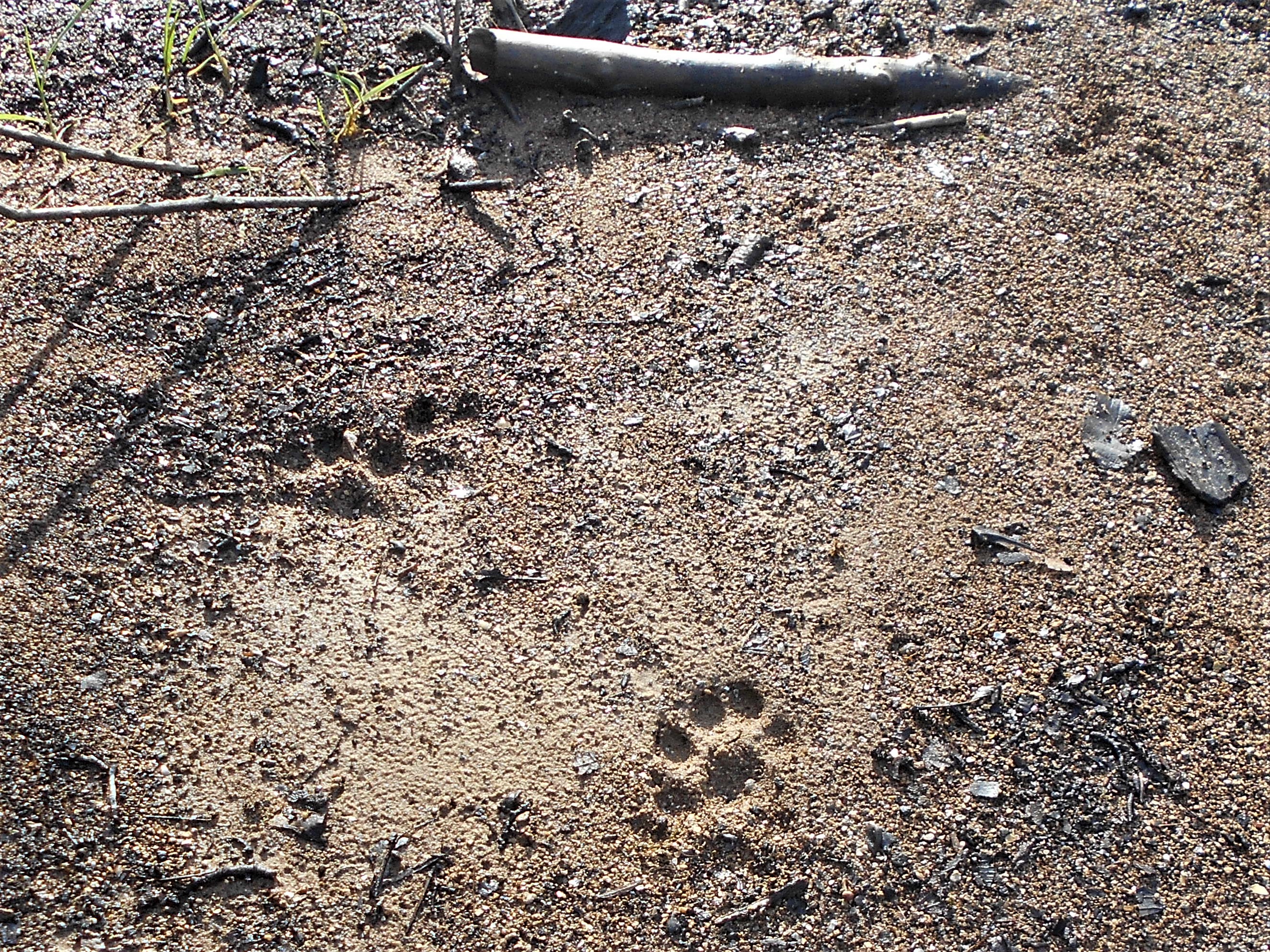
Thank goodness on our very last site we found twenty plus Otter pad marks across the beach, some signs of Otter presence if not the spraint we had hoped for. This beach is always sheltered and by now the sun was surprisingly very warm and we regretted not bringing coffee so we could sit in the peace and quiet of the river bank and bask a little!
 copyright: David Tipling
Scanning the fields in the hope of Heron or Little Egret before turning back, we suddenly caught sight of a Brown Hare racing along close to the hedge. We hadn’t gone far across the field away from the first hare when we saw two more – golden brown in the bright sunlight, boxing and sparring until they saw us when the female crouched down so low we could barely see her and the male stood guard. However, when we began to walk towards them, the male also flattened himself – it was extraordinary how difficult they were to see and how they remained perfectly still until we were quite close when first the female raced off to the fence and soon after the male raced to the gate whereupon the female raced along the fence to join him. A wonderful sight so early in the year.
We watched the Jackdaws and Rooks constantly moving from field to field, continually chattering and calling to each other.
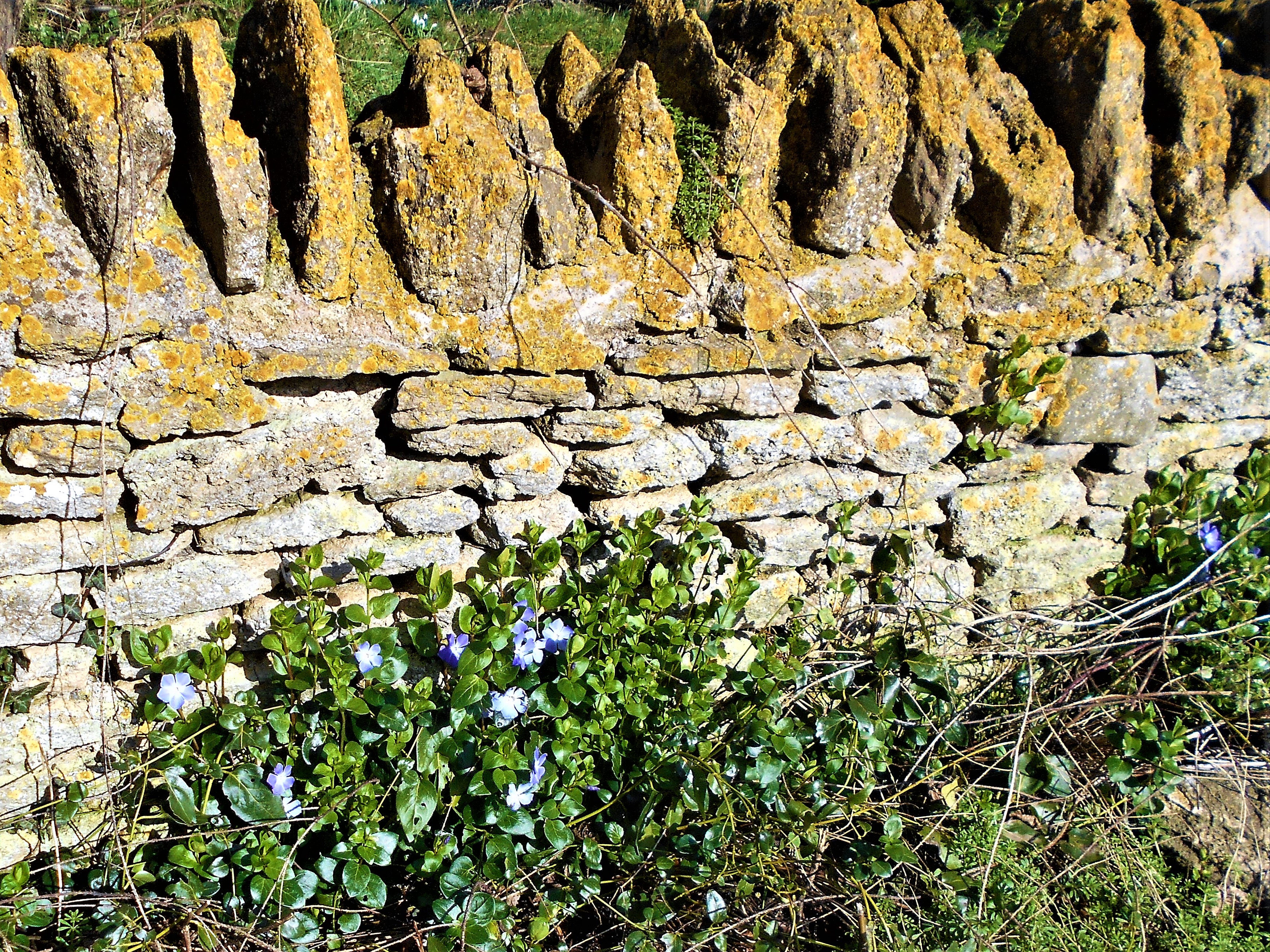
By the time we reached the track the sun was even hotter and it felt so springlike that we weren’t surprised to see our first forager bees of the year, all honey bees from the hives near the farmhouse, from where we could hear the constant buzz. We had already seen snowdrops, red deadnettles and yellow hazel catkins in flower, and the bright blue perriwinkles climbing the lichen encrusted wall was yet another signal that spring must surely be just around the next corner – we will ignore the doomsters who warn of cold, icy, snowy weather yet to come.
4th February 2020 / Temp: 7 C / Water Level: Med. High (falling)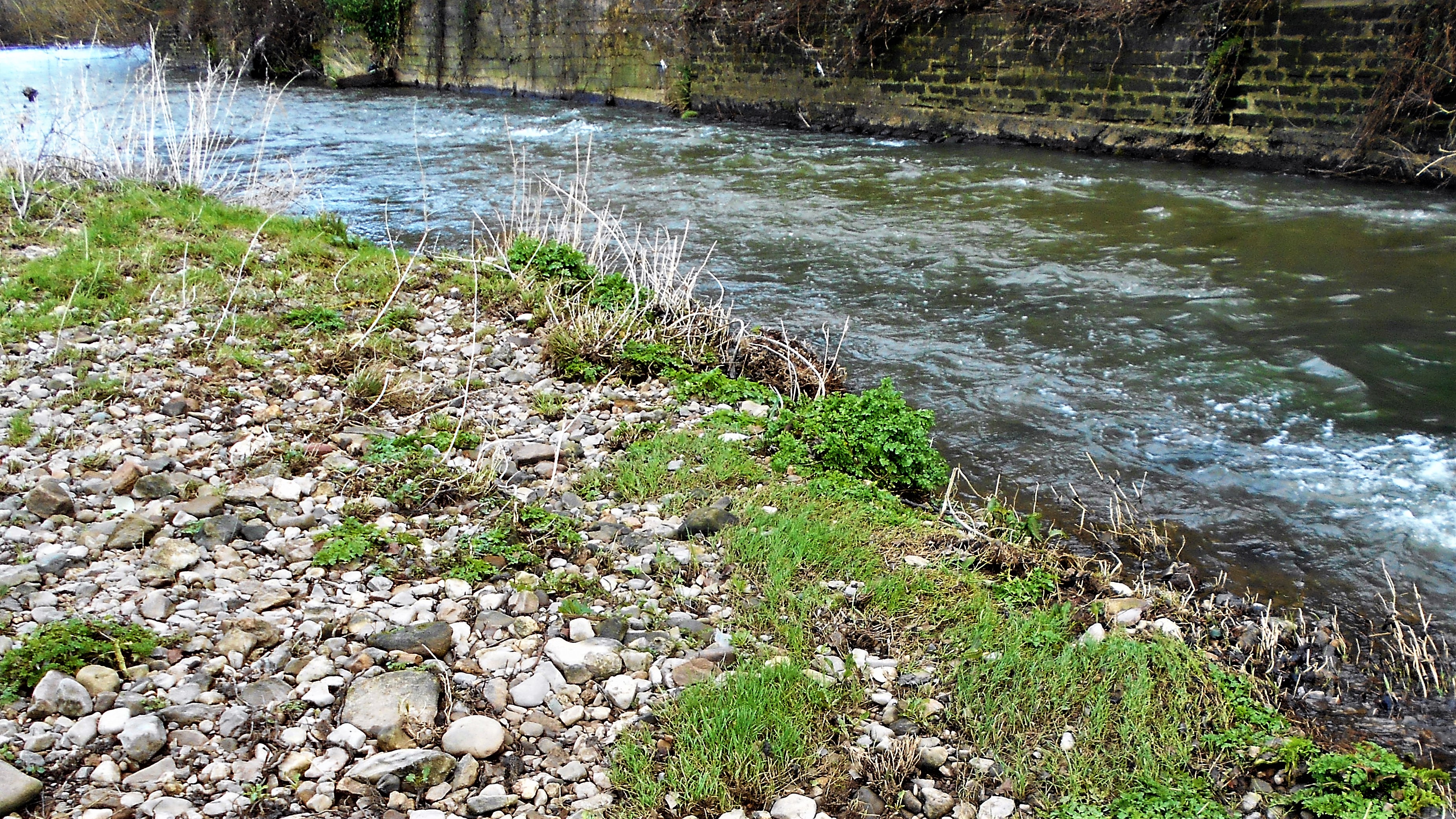
Bright, clear, sunny morning with blue skies and a chill but envigorating wind so it was a good day to walk along the river checking for Otter spraint. Again we were disappointed as we saw no signs of Otter at all, no spraint but also no pad marks either. Since beginning the Otter survey we have never before had such a dry spell of no spraint. This autumn and winter has been so wet and the river continuously high which may very well account for their absence but it is concerning nevertheless – seeing the glossy sticky buds was a cheerful reminder that winter maybe loosening its grip but hardly compensation for lack of Otter, despite, as always, giving into the temptation since childhood of pinching the bud gently between two fingers to check its level of stickiness – satisfyingly toffee apple tackiness!

The birds did their best to compensate for the lack of animal activity and were plentiful and in good voice which raised our spirits. All along the river we could hear them singing as they flitted about the trees, Blue Tits, Great tits, Chaffinches, Wrens, Robins, Blackbirds, a Magpie, a Tree Creeper, Wood Pigeons and Pheasant and also a Kestrel, 2 Buzzards, a Raven, a Green Woodpecker, 2 Heron, 2 Cormorants, Crows, a Little Egret a large flock of forty or more Black Headed Gulls and 5 Herring Gulls – very many more birds that we have heard and seen for a long time.
Unfortunately we also saw two dead Mallard, both well eaten so impossible to see what bird or animal killed them. We didn’t see any live Mallard, in fact no ducks at all and the pair of Swans haven’t reappeared so we think they are probably sticking to the nearby lake for the winter.
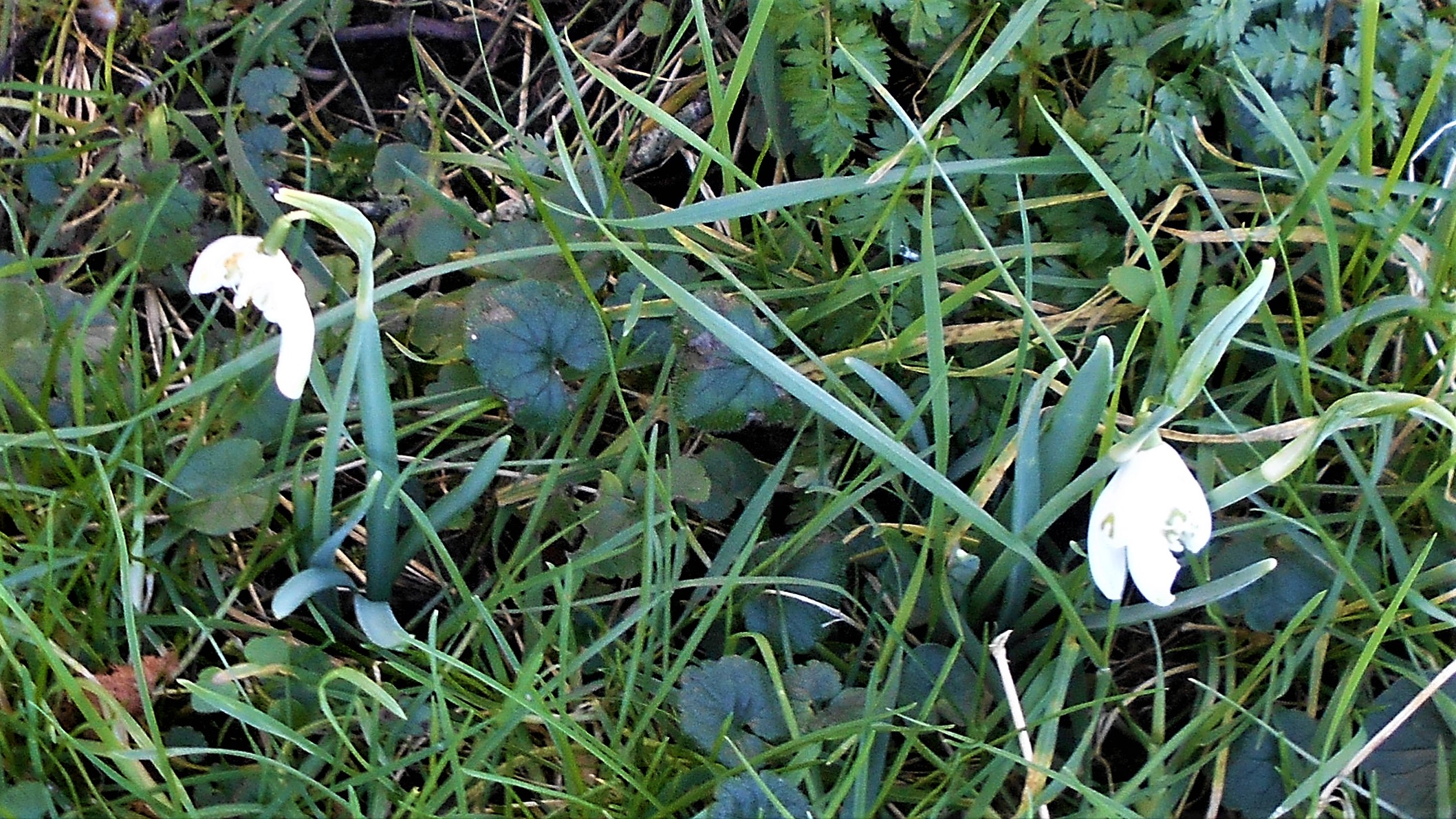
We saw Snowdrops, Lesser Celandine, Dog’s Mercury in flower and Groundsel, Chickweed and pussy willows all showing colour so a few more days of sunshine should see early signs of spring. Innumerable numbers of fresh mole hills, worm casts, two female Yellow Dung flies and a solitary Lesser Dung fly as well as white midges and winter gnats were all lured out by the sunshine, so wildlife also seems to be on the move quite early. Can we hope for an early spring?
9th January 2020 / Temp: 10.5 C / Water Level: High
Sunshine and blue skies meant it was imperative for us to make a dash to the river! How starved we are of light in winter but this winter with its lowering clouds and leaden skies has been particularly hard to endure; it has been difficult to keep in good spirits when day after day we pull back the curtains to confront a day of yet more rain.
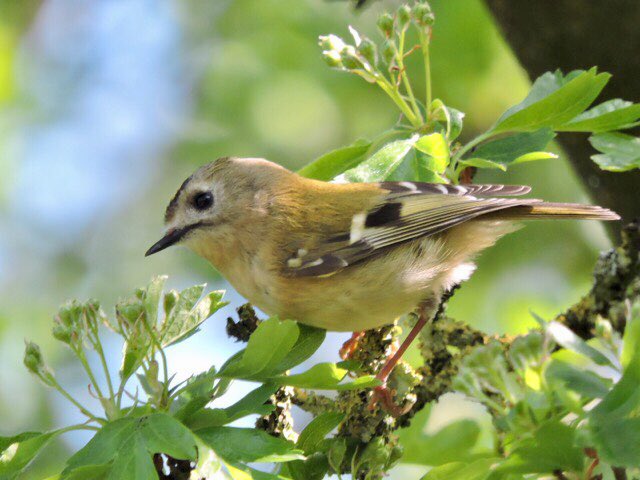 Goldcrest in Summer – copyright John Hansford
Today was a very welcome change and we set off in good spirits despite wading through the thick quagmire of mud spread out for some distance in front of the five-barred gate. But how could we complain when close by we caught sight of our first Goldcrest in this area, hobnobbing with several Blue Tits – what attractive little birds they are! A shy Wren as usual flying around stream under the bridge, a nearby Robin giving good song and a Blackbird’s warning call from the hedge – lots of action.

The river water was of course yet again very high, swirling brown and fast through the sunlit strawlike reeds, but we did see a Coot which was a welcome sight and two Cormorants sitting in judgement on the meadow before them, still and grave high up in a tree, one of them a juvenile. So maybe we might begin to see the water birds returning. A local ornithologist reported Mandarin, Goosander, Little Egrets and Mallard aplenty on the nearby lake so no doubt our usual birds are all wintering there.
Two Buzzards were swirling in the clear air above, Jackdaws, Crows, Magpies and Blackheaded Gulls and the lovely sound of a Green Woodpecker eachoing across the fields.

All the usual suspects as we walked along beside the river – clouds of winter gnats, lots of orange fungus on the cowpats, black spiders dashing around among the grasses, mole hills and worm casts, a sprinkling of white dead nettle in flower, a few white berries still clinging to the snowberry bushes and almost every twig and branch coated with mosses and lichen. We turn a twig and spot a single perfect Variable Oysterling fungus, we nearly crush a scattering of Candlesnuff fungus in a line beside a black mud-streaked log.
We crunched across the beach, littered with water smooth stones and fragments of red brick, duck mussel shells, the odd crayfish claws bright red in the sun, crushed land snail shells and what looked like white clam shells, possibly Asian clams which are said to be invading UK waterways.
Along a branch of our loved old Willow, growing amongst the moss, was the lichen below which we initially thought was Common Green Sheild lichen but on closer examination might well have been Punctelia subrudecta (a lichen recently identified for us by Ispot) covered in the white dots that later develop into soralia, the common reproductive structures of lichens.
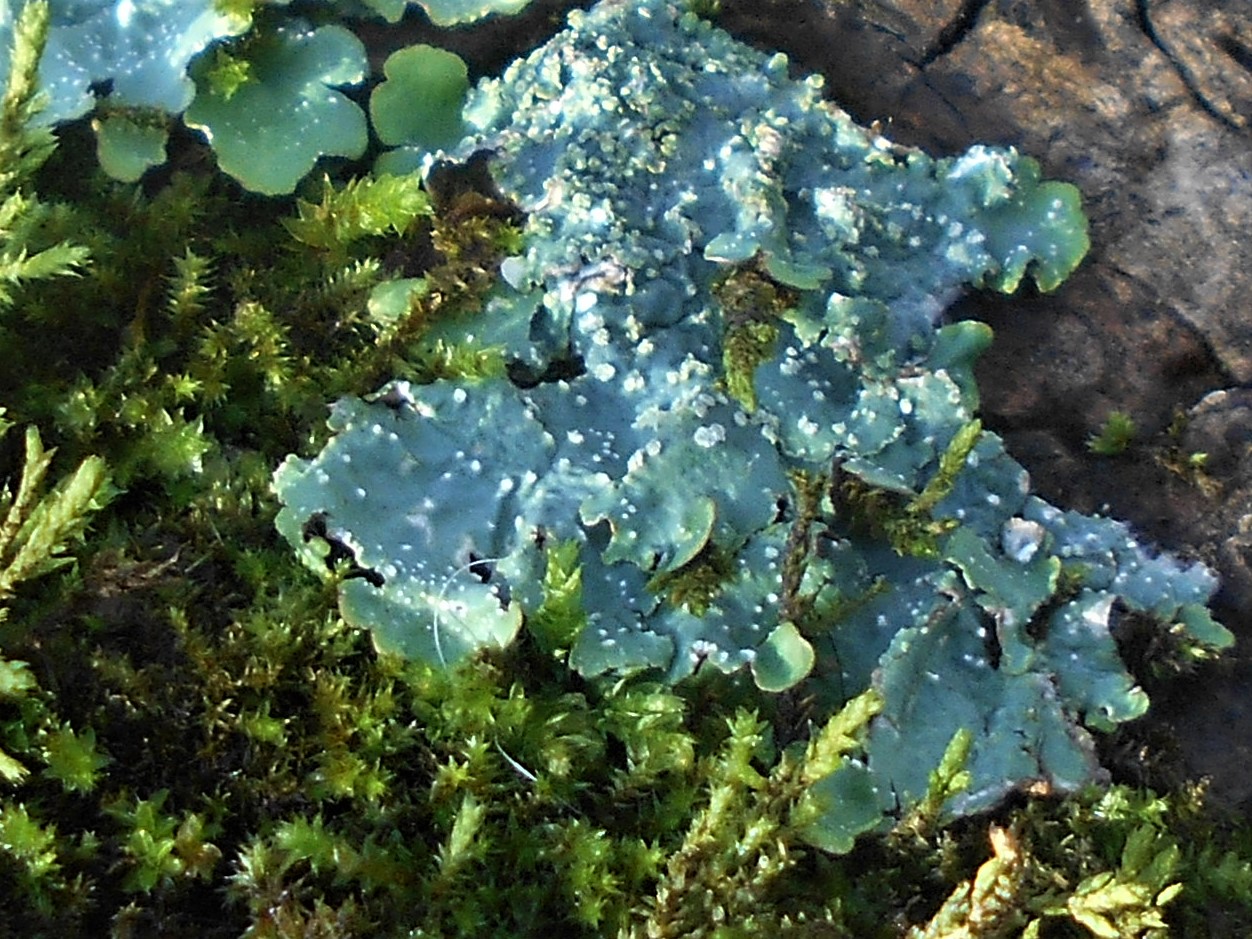
No Otter signs yet again. We do hope that when the water level drops and the river is more calm we may see spraint, worryingly scarce now that an unprecedented three months have passed since we have seen any, but in another three months who knows – the whole scene will have changed, longer days, more sunshine, new growth and then…..
30th December 2019 / Temp: 11 C / Water Level: High
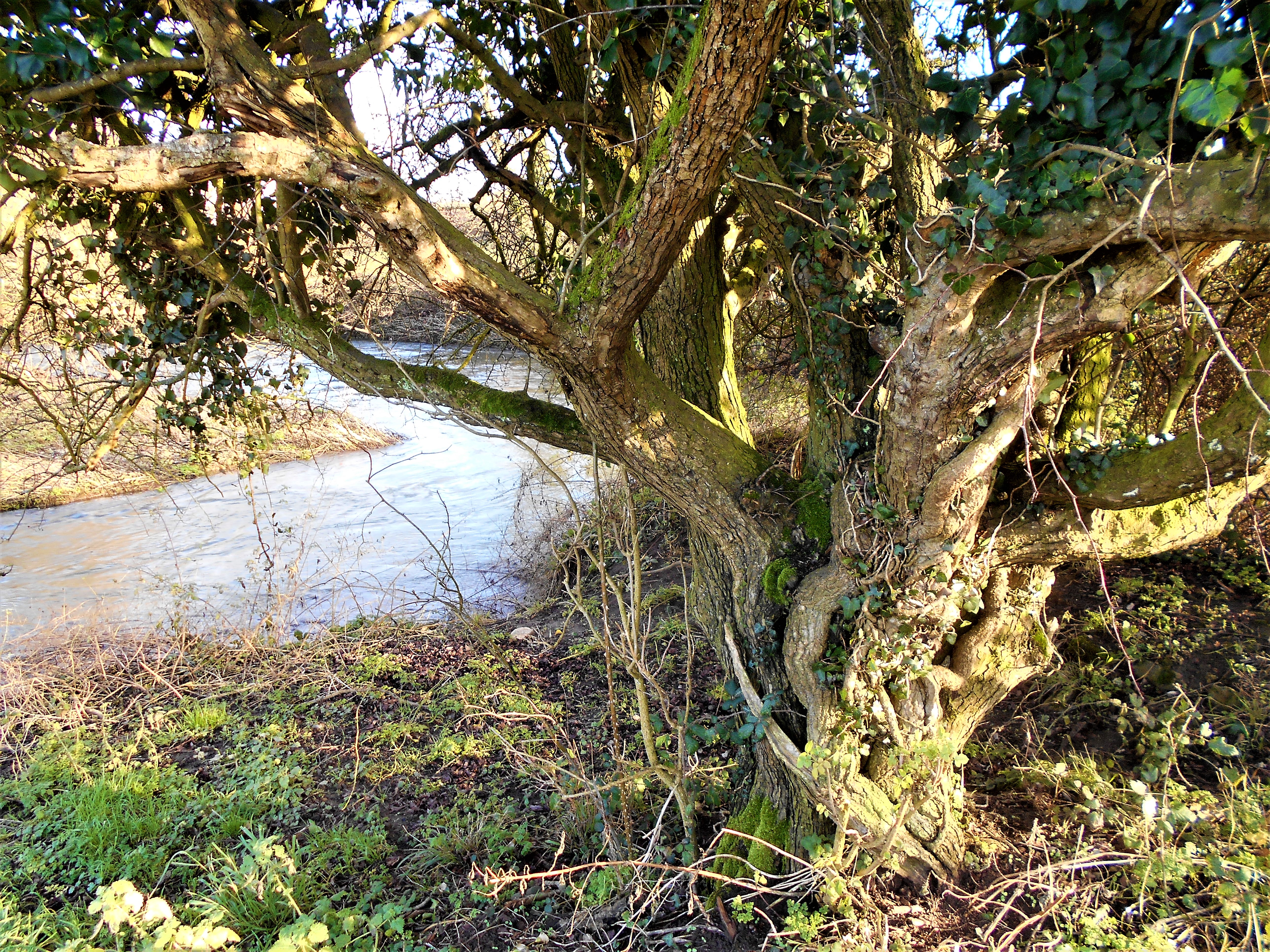
The sun was shining! For the first time in what seems months we felt warm sun on our backs as we walked along, pink clouds sailed overhead, the bright light turned the stubble gold, and long, long shadows stretched almost the length of the field. Wonderful – it felt good to be alive!
The main beach on this stretch of the river was completely under water but one of the others still had a margin of silt where we saw 20 plus pad marks of an otter criss-crossing and exploring the beach although he didn’t leave any spraint; there was no spraint near the only other signs of otter pad marks by the weir. On the final beach no Otter tracks but clear prints of what looked like Muntjak given their shape and size.

The only water birds were the two resident Swans and a Cormorant – no Mallard, Heron or Little Egret to be seen. There was a shoot in a nearby field and the guns were blasting away which may have discouraged the birdlife but given the dearth of water birds at yesterday’s sites, probably not; it could simply be that although the margins of the river were calm, the main current was so fast and turbulant they had flown off to quieter reaches of the river.

No sign of our Dippers or Kingfishers on the far stretch, however, we saw two Buzzards, a Cormorant, Pheasant, Wren, Blackbird, Chaffinch, swirling restless flocks of Jackdaws and Rooks as well as 100+ Herring and Lesser-Black-backed gulls in the field. We also spotted the remains of a Pheasant – just a splash of feathers below a tree, no bird just wing parts so probably a fox kill – they tend to eat the gut and breast.
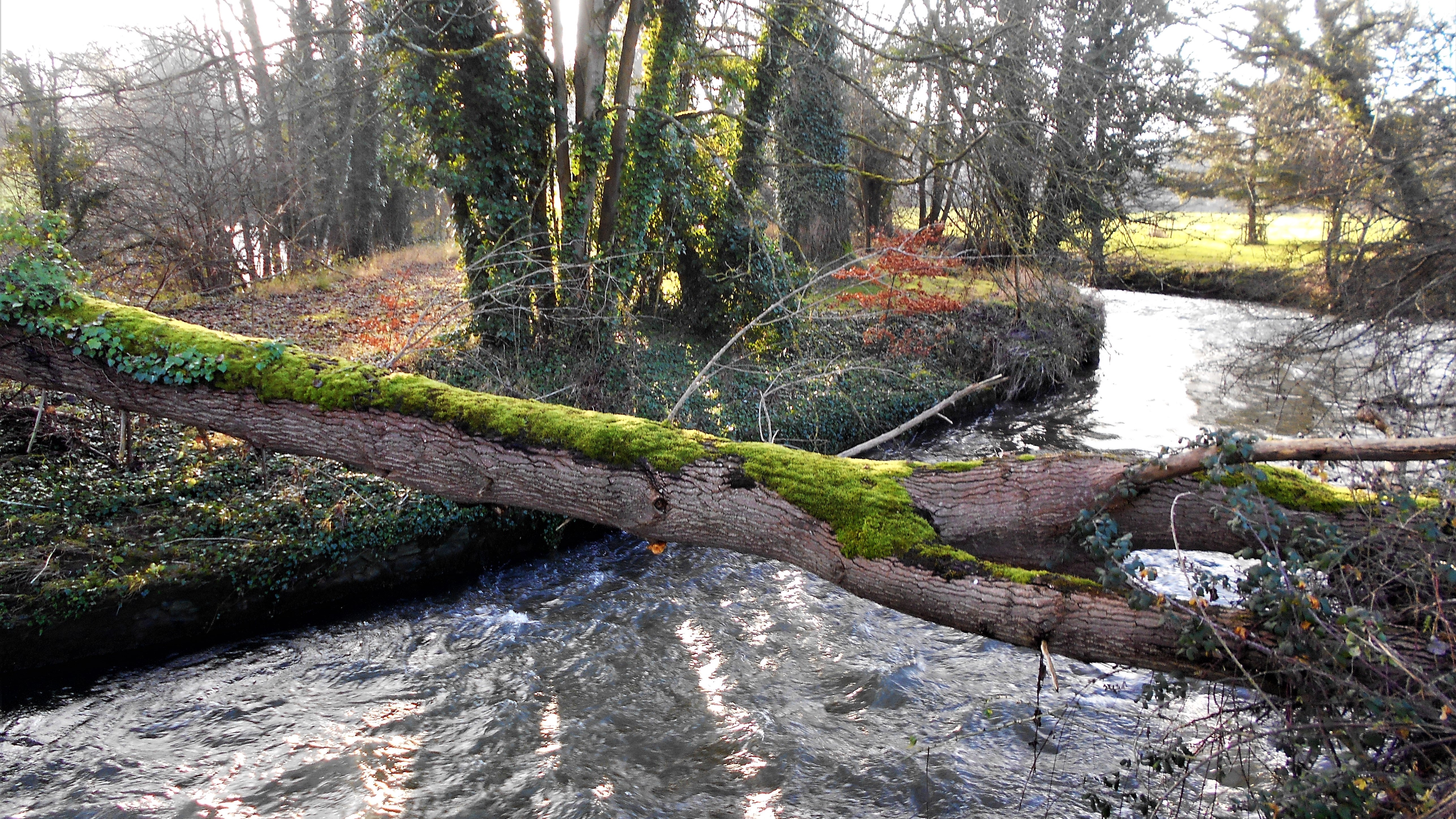
This was one of several trees which have fallen since our last visit, no doubt brought down by the recentstorms, and the second to fall over the river making a good solid land bridge for lots of small creatures to explore new territory.
In spite of so little Otter action, we were very reluctant to leave the river as it felt so wonderful to amble along in the bright sunshine, and decided to walk the boundary of the main meadow to check for possible fungi.

We saw lots of moss skirting the trunks of the hawthorn trees along the hedgerow, nearly every branch and twig of which were covered in golden yellow, green and grey lichen and too many animal runs through gaps in the hedge to count. In the corner of the field we came across the main family of Badger setts, again too many to count, we gave up at ten! By the freshly cleared out earth outside every sett it appeared that the Badgers were also beguiled by the warm sun and had already set to to spring clean their burrows.
Suddenly, to our delight, a flash of movement from the middle of the field which was bathed in sunlight – our usual Brown Hare appeared from his hiding place amongst the grass clumps and tufts and took flight across the field and up the hill towards the wood, running between us as we were some distance apart. Brown Hares are said to reach speeds of 45 mph when evading predators, well it didn’t look quite that fast but still extraordinarily fast. It must be spring!
29th December 2019 / Temp: 8 C / Water Level: High
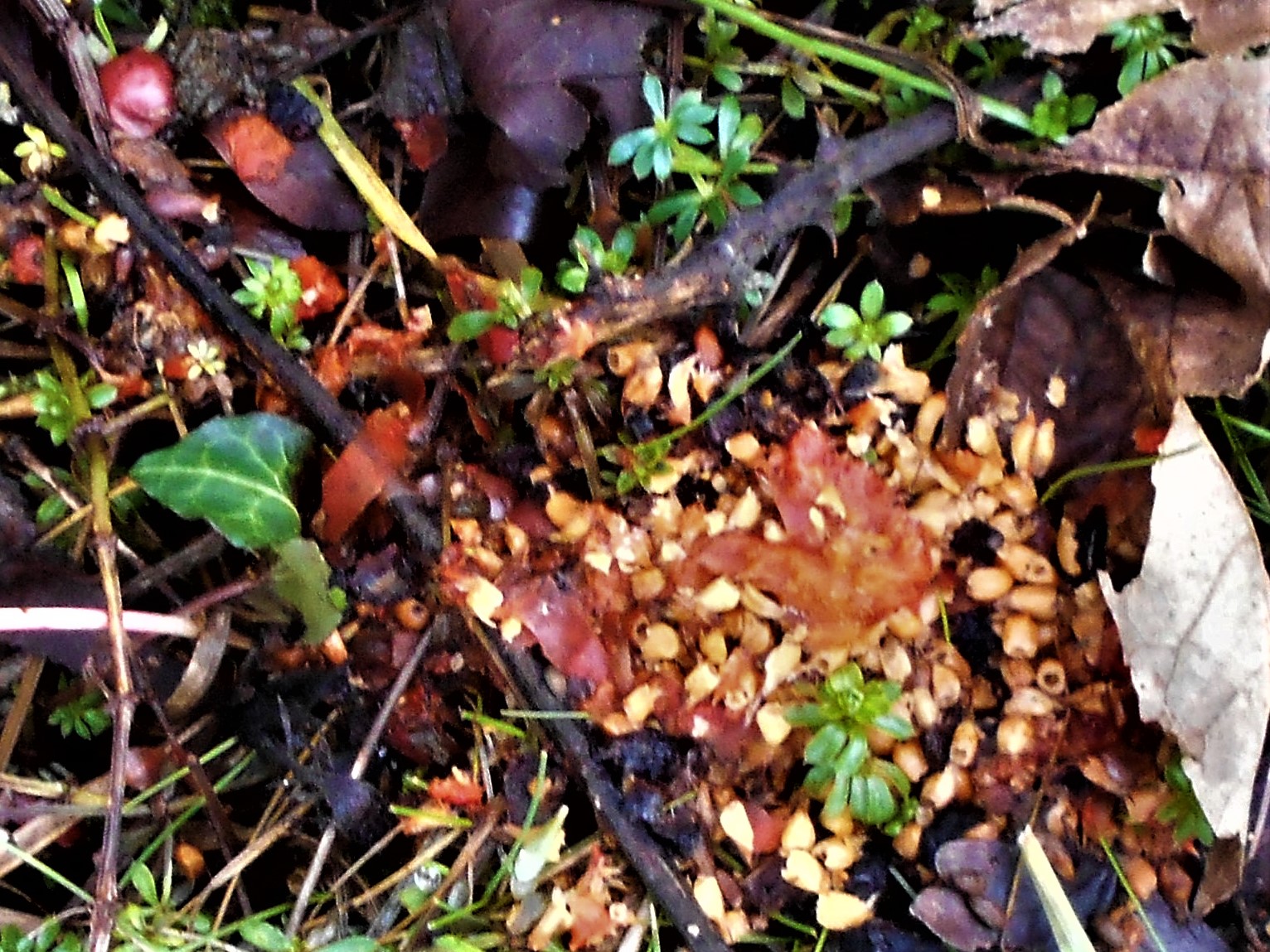
A horribly cold wind and heavy cloud confirmed the weather forecast – temperature 8 C but feels like 5 and so it did, a drab winter scene of bare trees and sullen skies the very occasional brief periods of pale wintry sun not enough to warm chilled faces and backs so we plodded round our survey sites with a pretty jaundiced eye. However the dull day was enlivened by a gleam of sunlight highlighting a small pile of a wood mouse’s last feast, half hidden in the hedge. Peering through the thorny branches we could just make out the holes in the hawthorn seeds where the mice have nibbled through to reach the kernels; the sheer number of abanded seeds shows a hearty high vitamen meal to fend off the winter chill.

When we reached the moss covered dressed stones of footings of an old building, we spotted signs of a not quite so cuddly rodent – a Brown Rat’s den hole with its distinctive trail of excavated earth running from the entrance. We presume that, like the badger, the rat must still be inside as they are both mostly nocturnal and there are no tracks leading from the entrance; it could also be that they both kick out more earth to cover their tracks.
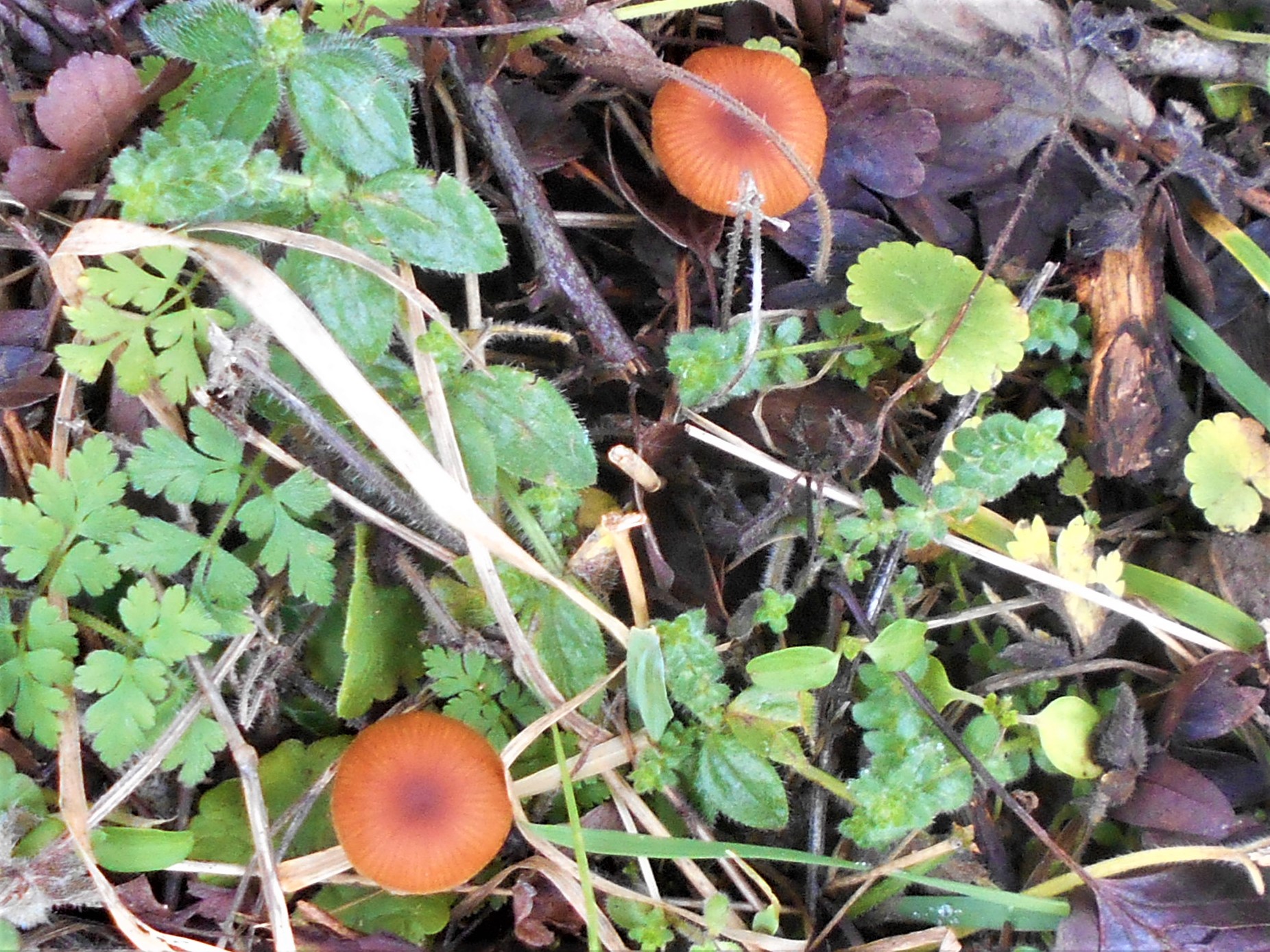
Good to see a sprinkling of fungi under the hedges in the grass and high up in the trees.
We think these little brown jobbies might be Deceiver fungus, their bright tan caps offering a splash of colour.
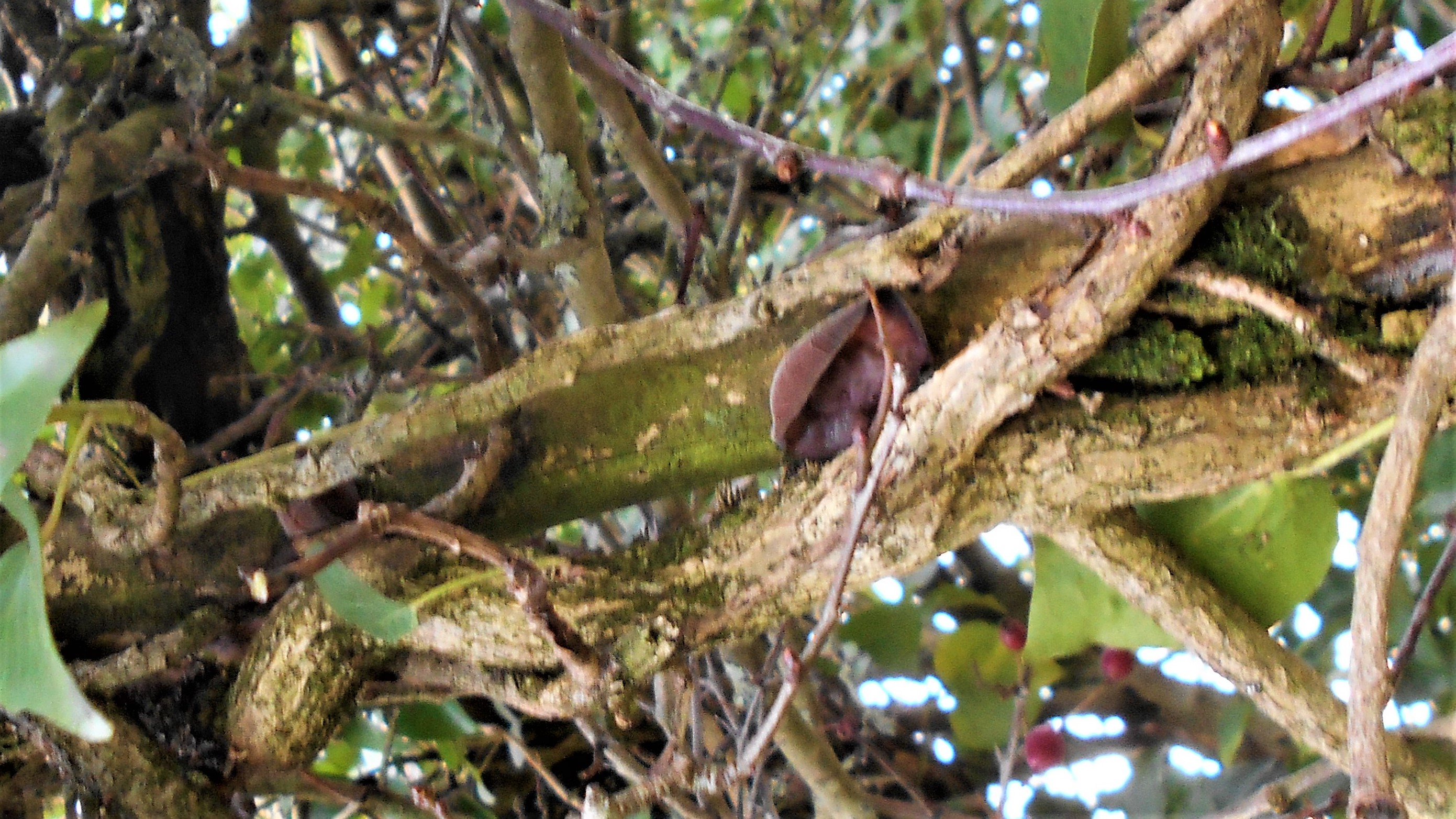

One of the boughs of a hawthorn tree was home to several plum colored Jelly Ear fungus which was rather surprising as the tree was so smothered in ivy, it was difficult to see how anything managed to find enough space to grow.
Our favourite large Willow tree growing on the large gravel beech has acquired what looks like a pink fungus growing on the lichen on on of its boughs. This could be the lichenicolous fungus Illosporiopsis christiansenii which grows on Physcia tenella and occasionally on Xanthoria parietina but if anyone has a stronger contender, we would love to hear from you.
Interesting to find on one of the moss covered boughs of the same tree an abandoned crayfish claw, possible dropped by a Heron who are known to eat crayfish.
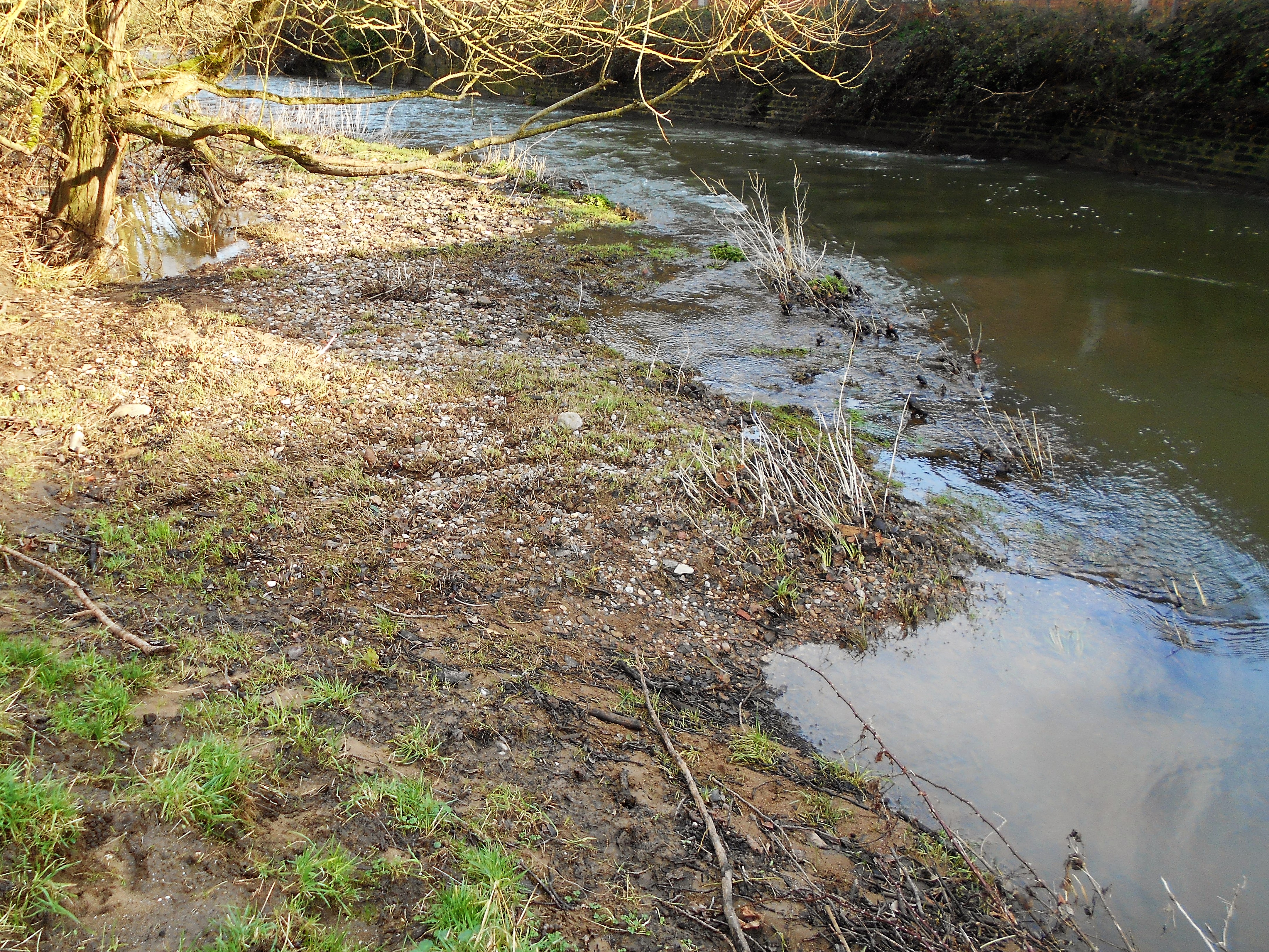

Finally a fungi which we believe to be the rather lovely Winter Twiglet which always looks like a delicious caramel fudge, its gills so well defined, particularly when like in this photograph when it is curled up sufficiently to display them.
We did hear and see a fair few birds – Chaffinches, Wrens, Blackbirds, parties of Tits, mostly Long-tailed tits and Blue tits, Robins, Wood Pigeons and Pheasants of course and large flocks of Jackdaws and Rooks as well as a group of at least 60 plus Black Headed Gulls. A pair of Buzzards circled over the trees, a Cormorant flew over and we heard a Green Woodpecker laughing and yaffling so there was some action despite the cold and the time of day.
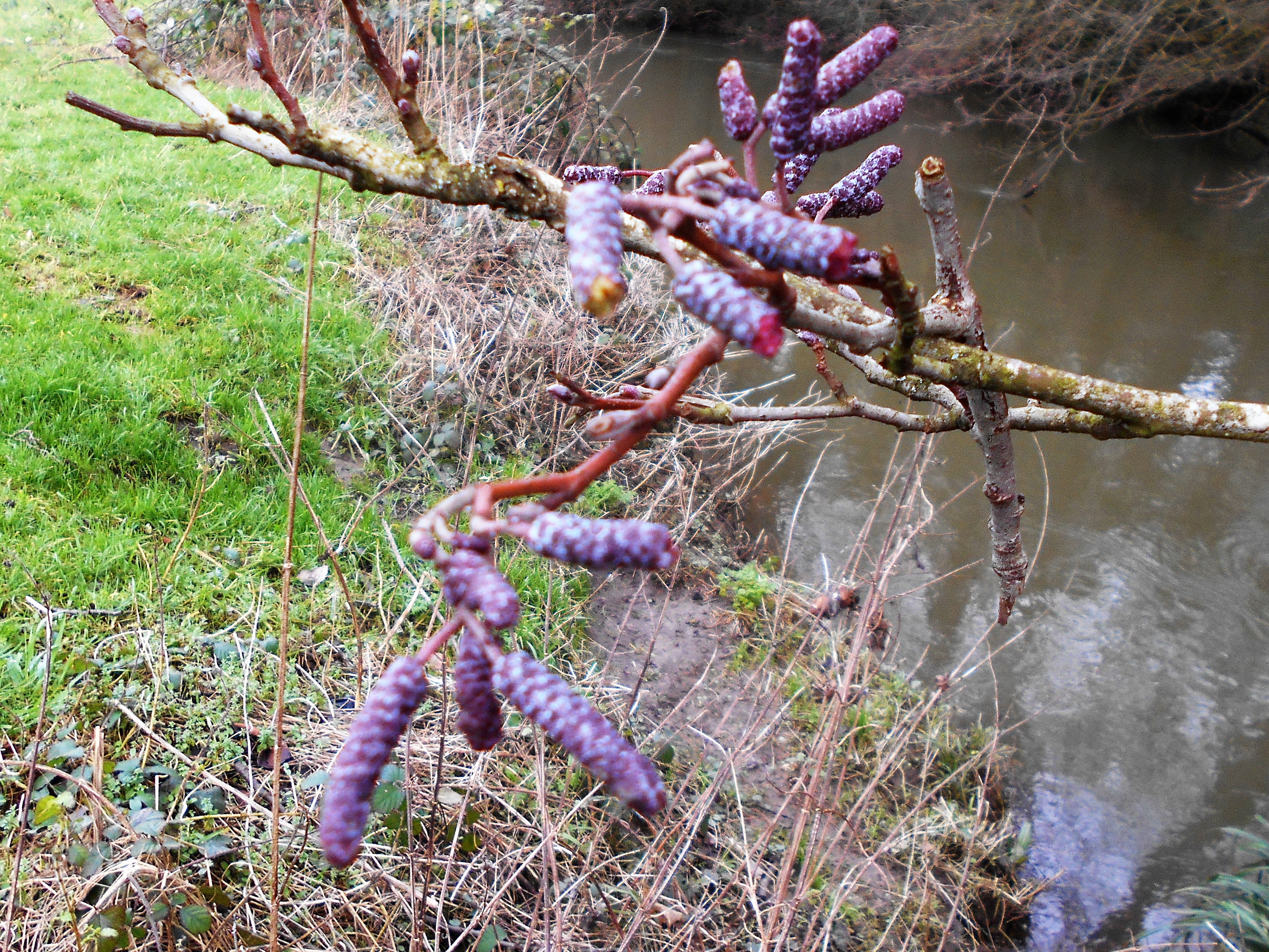
It was good to see some purple male Alder catkins adding a splash of colour. It always astonishes us how early these catkins form and how long it takes before they reach full length in the spring. A couple of these catkins had scarlet tips but we have been unable to find out why.
15th December 2019 / Temp: 7.5 C / Water Level: Very High
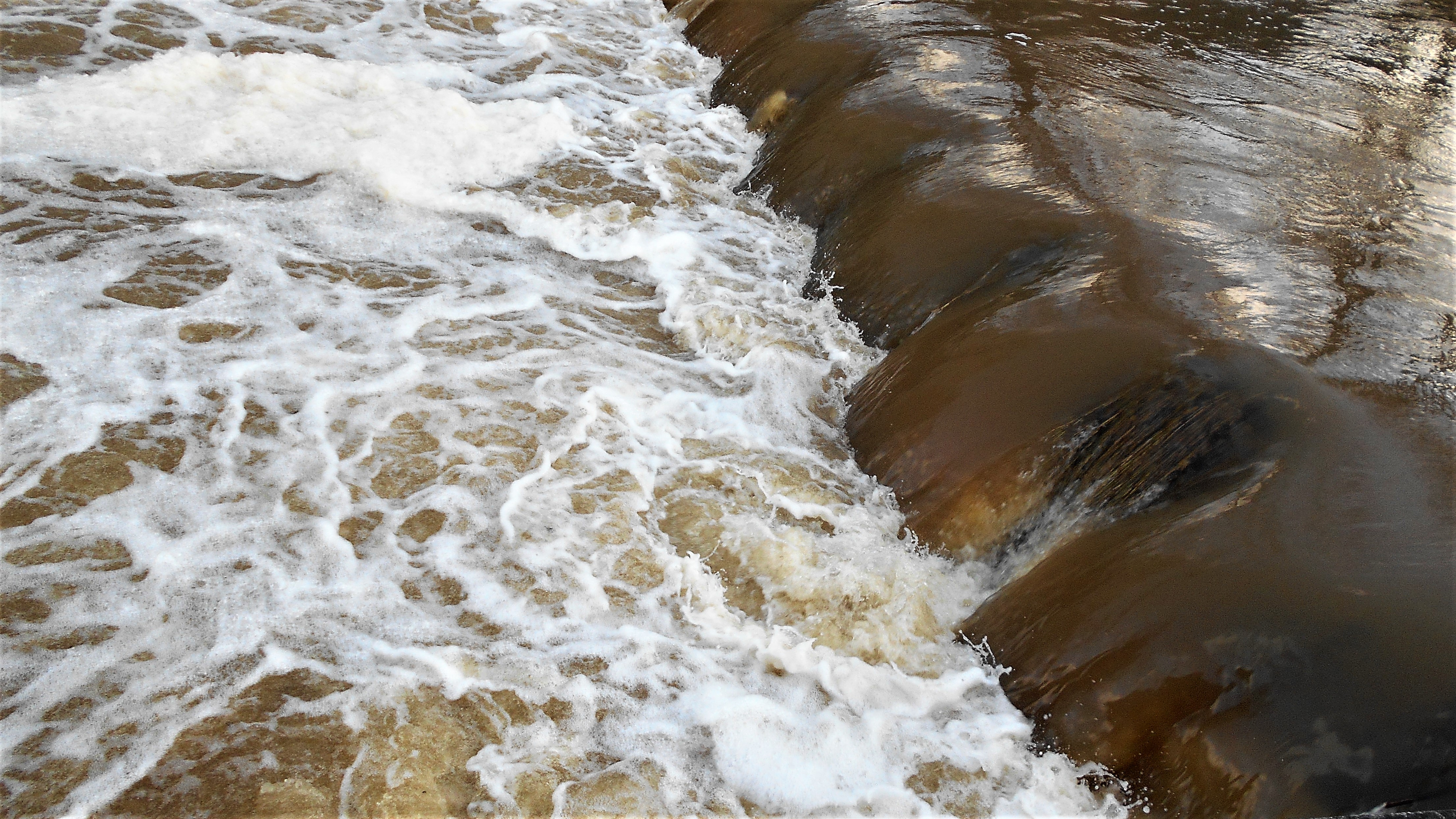
A brutally cold day, an incessant north-westerly wind, blustery and gusting to such intensity we had difficulty keeping our balance. The cold combined with flurries of icy rain tossed in our faces made for an invigorating walk, struggling along we assured each other that it was really energising! The truth is we wanted to escape from election fever and the day and the river reflected our mood.

The river was fast and furious, a roiling boiling current, forming swirls and whirlpools as it raced along, the backwash from the tumbling weir rolling a sizeable tree trunk over and over as if it was a light branch, simply by the sheer force of the water.

It was the highest level we had ever seen, which seems to be the constant refrain this autumn and early winter – whenever we think the river is at its height, it becomes higher, although not surprising given so much rain.

The beach was reduced to a few feet, all the rest being under water, where so many small empty duck mussel shells lay scattered in groups of four or five close together across the crushed shells and grainy silt.
In a quiet mossy haven, among old stone slabs and the remains of a stone wall, well protected by a line of trees, was a small clump of fungus, possibly Beige Fibrecap, athough the species is unknown to us so we can’t be certain. Their warm toffee coloured flesh and cream gills were a welcome sight, brightening the wintry day.
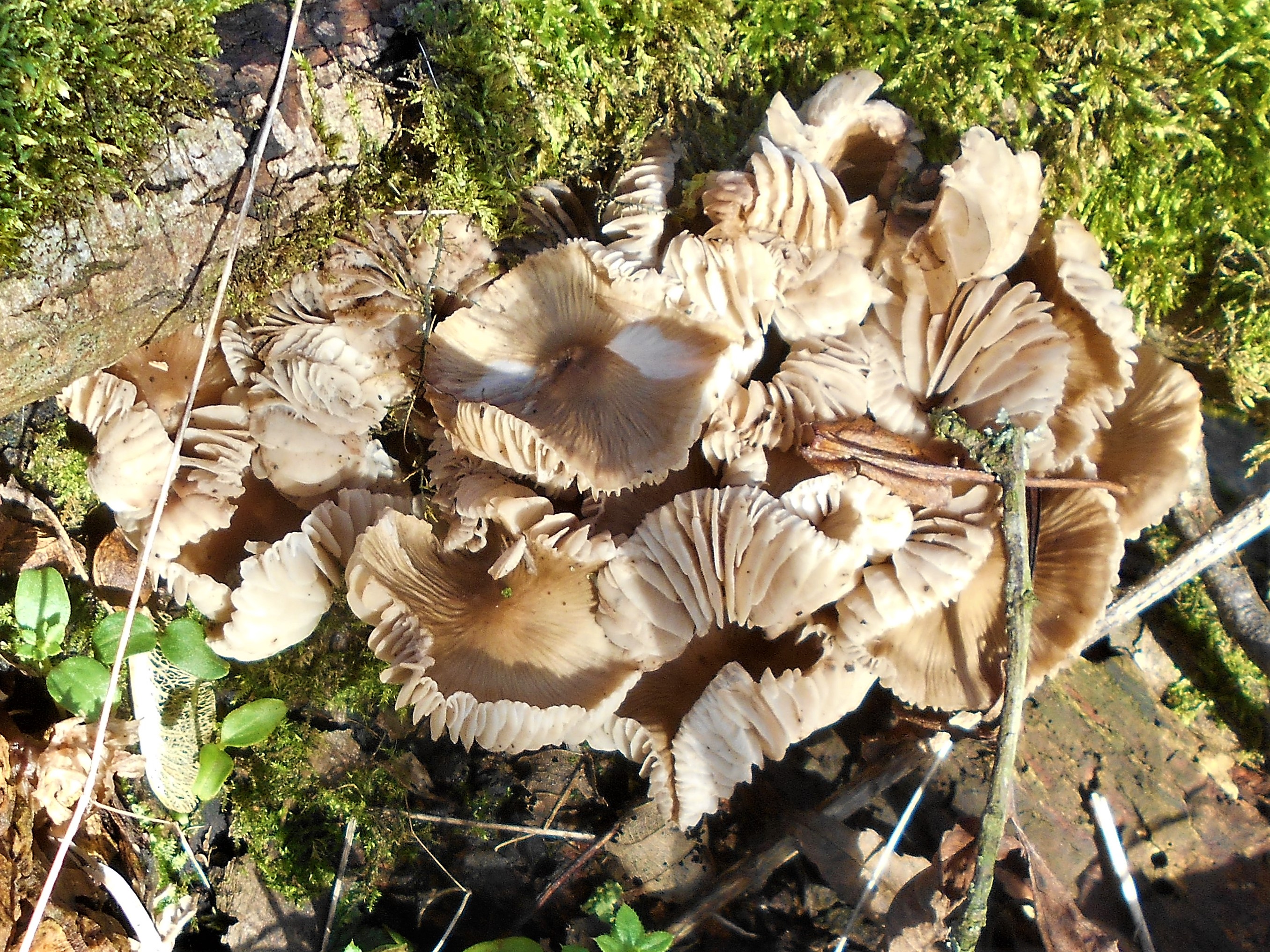
Given the inhospitable weather we were unsurprised to see or hear so few birds, apart from hearing Blackbirds and Chaffinches, the only ones we saw were Robins, Buzzards, Crows and Wood Pigeons with no sign of our Little Egret. But one flash of beauty – zooming upriver with a sharp piping warning a streak of turquoise shot past, the sun highlighting its amazing colour – a single Kingfisher, the first we had seen for what seems months. The reassuring sight was even more welcome as it was close to a known Kingfisher nest so it appeared he was flourishing despite the months of floods.

We fought our way across the meadows to reach the protection of the tree and hedge lined boundary, hoping it would shelter us from the worst of the rain and wind. The canal, which has been cut across the meadows, starting by the weir several fields and half a mile away and running through several more fields until rejoining the main river, here forms a secretive brook between the trees. The water is slower, like liquid obsidian, so black the reflected clouds and and sunlight gleam between the leaves. There are often Robins and Wrens here, and in only a couple of months its banks will be covered with golden lesser celendine and primroses, a warming thought on this the coldest of days.
3rd December 2019 / Temp: 8.5 C / Water Level: Med. High
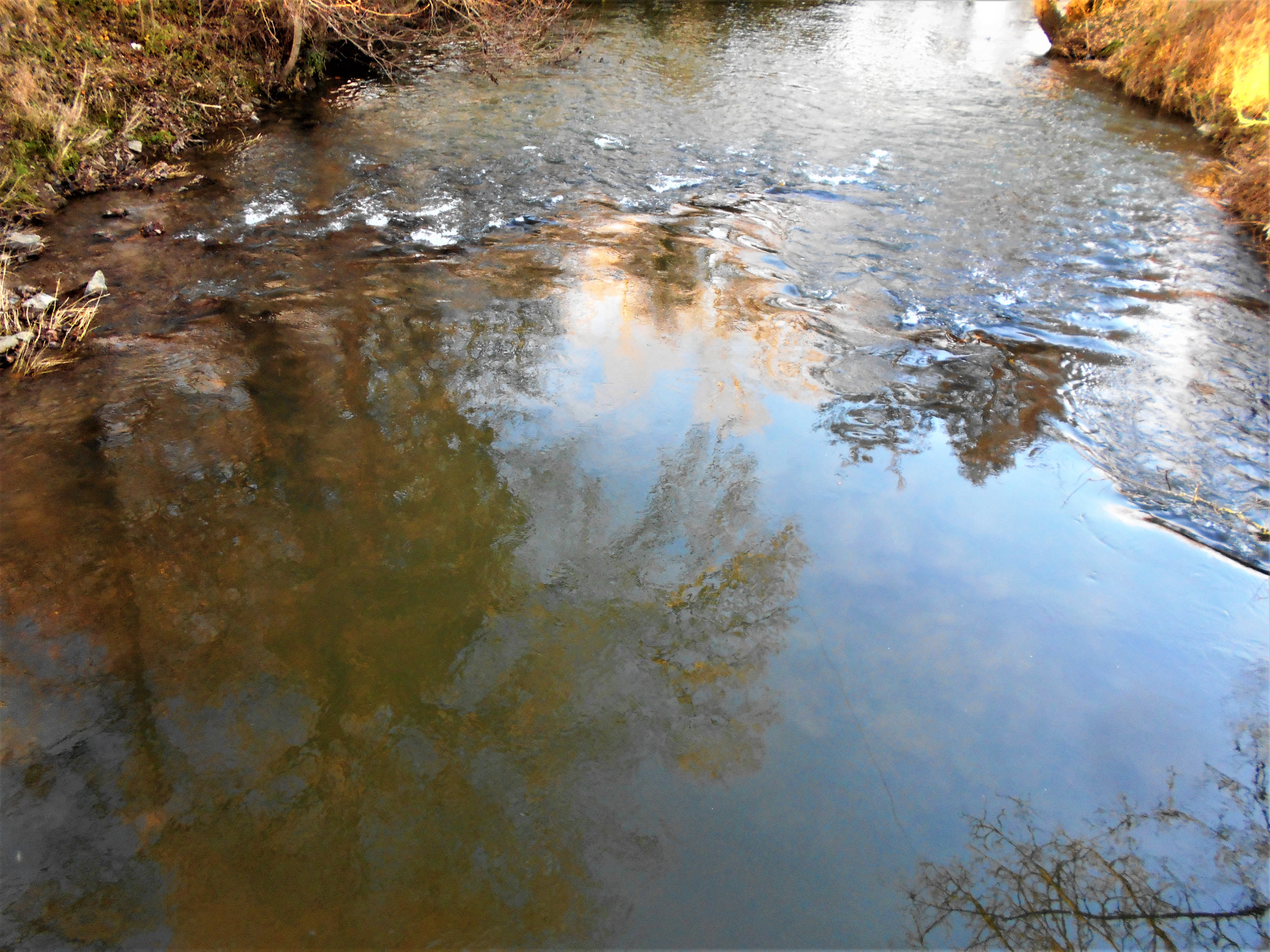
The brilliant low winter sun set the river and fields on fire and offered welcome warmth on what was a pretty chilly afternoon. December already, two days into the atronomical first days of winter, illustrated by the empty fields, bare trees and fast flowing river. Parties of tits dashed through the white stems and the few tattered remains of fluttering white leaves of the tall poplar trees, glowing against the bright blue sky. Tiny Wrens shot inches above the stream and disappeared into the massed plants beside the stone arched bridge, chaffinches hopped through the trees, Robins and Blackbirds gave song, while shining white gulls flew overhead above a couple of new visitors to this stretch – a pair of Swans sailing majestically upriver, their snow white wings arched (rather bizarrely called busking!) in an aggressive display of defending their territory.
It was good to see so much bird activity as the rest of the river landscape was bereft of any signs of life save for clouds of midges brought to life by the warm sun, their endless rising and falling like watching a miniature starling winter murmuration, both swarming over the water, along the banks and over the fields . No Otter spraint or even pad marks at any of the four sites despite the water level having fallen revealing scoured clean beaches strewn with blackened conkers, water sodden acorns, wood mice nibbled empty hazel nut shells, duck mussel and tiny native pea mussel shells of varying sizes, old crayfish claws, empty giant and dwarf pondsnail, ear pondsnail, and garden snail shells, water worn red brick and black stone pebbles, driftwood and the prints of water birds across the mud and sand.
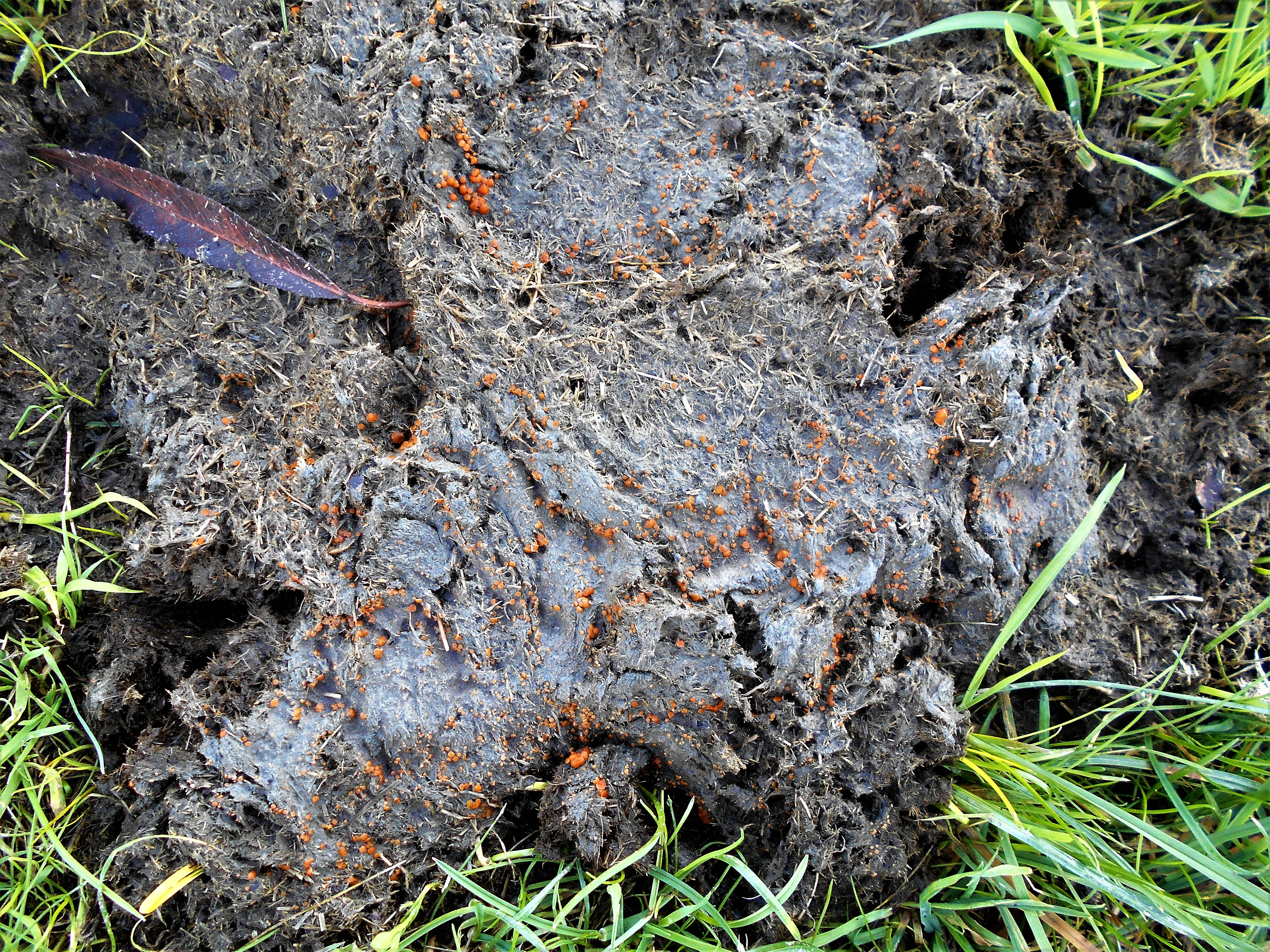 Cow pats of various ages were liberally spattered across the meadows, most scraped by birds or animals and one covered in the common but quite spectacular fungi, cheilymenia fimicola, which is always the first to colonise fresh dung with its bright orange discs encircled with a ring of fine upright standing hair.
On reaching the final site, a small thick muddy beach with its new bank of autumn leaves strewn silt, equally devoid of Otter signs, we were at least rewarded by another pair of Swans chuntering away with their muffled croak, in tone not unlike the Raven’s croak – so not entirely mute. We also caught sight of a Heron flying down-river and the same solitary Little Egret we often see in the same spot beside the flooded stream at the edge of the field. It must be a good feeding station – maybe lots of frogs (we once saw what might have been a small Green Frog on the edge of that stream).
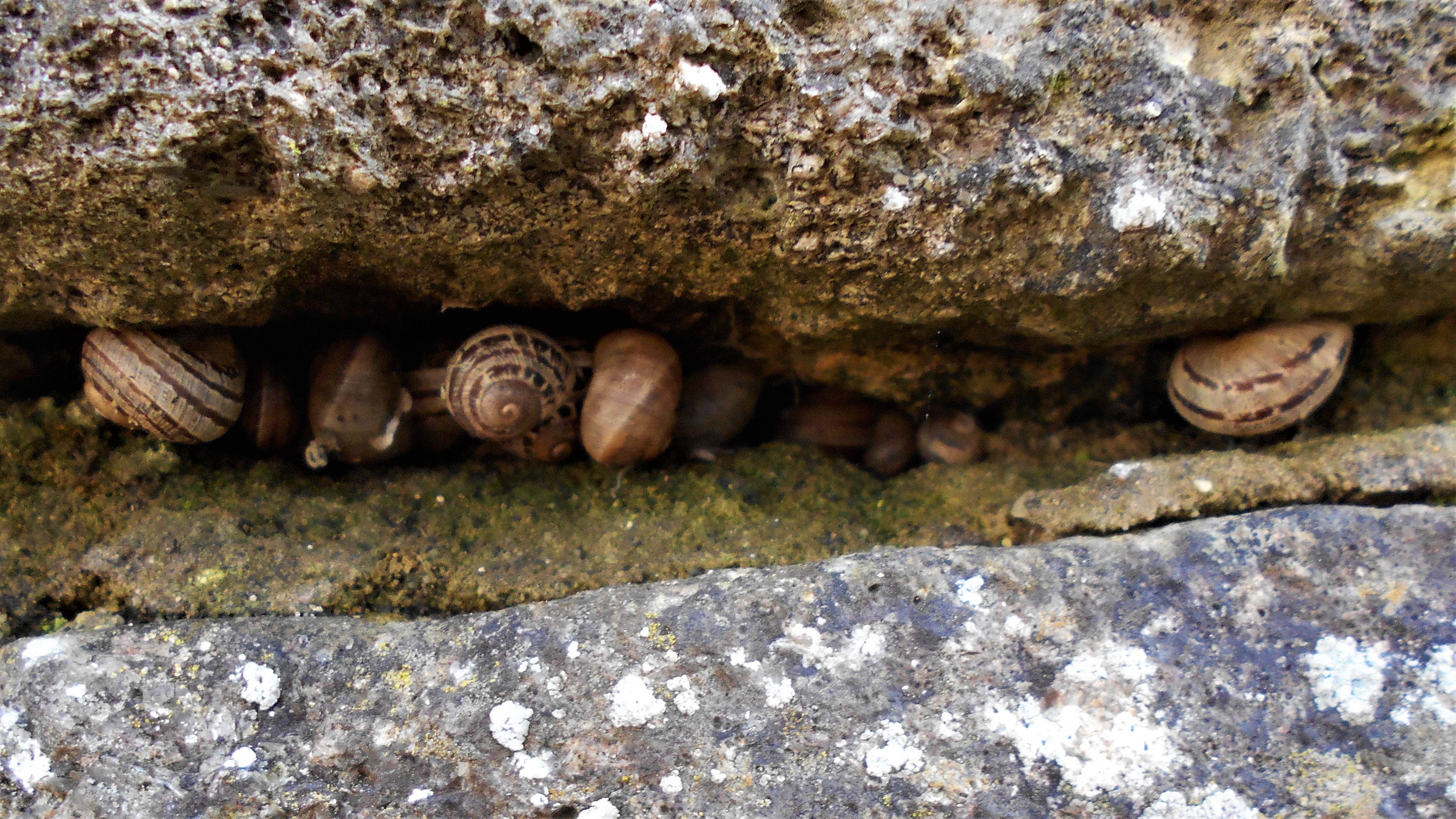
No other water birds – no Moorhen, Coot or Mallard, no Goosander or Cormorant which we occasionally spot and no signs of Otter either when we checked under the orange and white lichen splashed stone bridge. So we began examining and checking along the cracks and crevices between the slabs and there, as expected, we found lines of hibernating Garden snails, tucked into the shelter of the stones, well above any possible water level, clustered together for protection to see out the cold winter months. Would that we could do the same – although it would be a shame to miss tramping across the water meadows on such a golden afternoon.

19th November 2019 / Temp: 4 C / Water Level: High
Bone chillingly cold, thick coating of ice in the cattle trough and even the rain filled animal prints in cow pats are frozen solid, pretty much all of which were raked by an animal or bird searching for insect lavae. A weak sun trying to penetrate the cloud and at first glance very little signs of life as we trudged along, relieved that the temperature had risen a couple of degrees from earlier in the morning, and slowly adjusting to the cold – we were glad to be out and walking along the river bank.

When we reached the beach the water raked grass showed that although the water level was full, it had dropped from its previous high and we noticed empty freshwater Faucet snail and Duck mussel shells among the detritus washed up. It was good to see how clear and clean the river looked after months of murky, sediment full water – there was a good strong flow and there were no cattle in the meadows alongside the river.
We were intrigued to see a good quantity of white hairs strewn all along two mossy willow branches, caught up in the wood knots and bark. Stoats moult in autumn and southern Weasels apparently don’t, however, Weasels appear to be more common locally and given the size of the branch it did seem more likely that it was a Weasel rather than a Stoat chasing maybe a bird or just searching for food, particularly given the length of the hairs. Interesting to learn that Weasels are excellent swimmers and often live along river banks.
There appeared to be lots of birds about flying between the branches, frantically searching for food – mixed parties of tits including Blue Tits and Long-tailed Tits, Chaffinches, challenging Robins, alarm calling Blackbirds, Crows, chattering Jackdaws and Rooks, silent Gulls passing over high up and cooing Wood Pigeons. At the farthest and quietest end of the field well away from the sound of the Creamery a Little Egret rose, lifting majestically in the air flying languidly across the water meadows, crossing a Cormorant flying in the opposite direction.
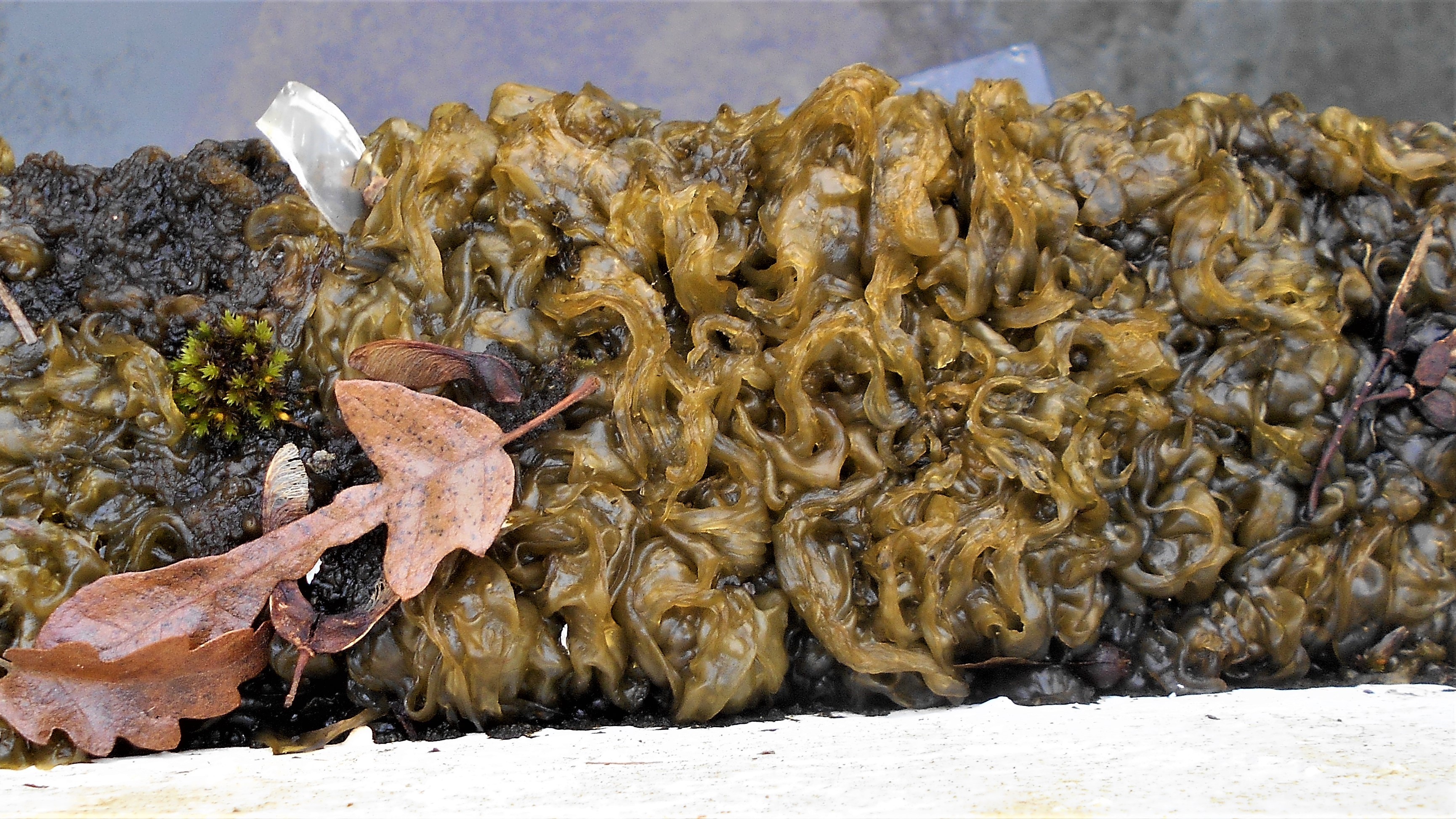
Very little fungus apart from a collection of Field Blewits, Candlesnuff and some Whitewash lichen splashed across some trunks of the trees alongside the small stream. We were surprised to see that the main beam of one of the bridges over the river was covered in what we thought looked exactly like Leafy Brain, a jelly fungus which we had only ever seen growing on bracket fungus which was growing on wood. We could easily be mis-identifying this fungus and will investigate further but it does look a pretty good match. [Update: Brian 38 at Project Noah has identified this as Star Jelly Nostoc commune – a species of cyanobacterium and not a fungus at all].
Unfortunately, as with yesterday, no sign of Otter spraint at any of our sites today and no pad marks either, even along the quieter stretches of the river. Some authorities say that signal crayfish (our Otter’s main diet according to their spraint) keep to the burrows in winter and enter a state of torpor, if this is the case it may not just be the fast flooded river which has been deterring Otters from our sites, it could be lack of food. It could also be another reason there is less sediment in the water, no signal crayfish foraging and fighting and eroding the banks.
18th November 2019 / Temp: 7.5 – 8.5 C / Water Level: High
There was a cold north-easterly wind cutting into our faces so despite the sky being unbroken blue and the sunlight making the river, trees and flooded fields look beautiful, the wind soon penetrated through to our bones so we didn’t linger.
Not that there was very much to linger for. Four of our six sites showed no signs of Otter at all and of the other two sites, one had a mere three pad marks and the other seven. No spraint or anal jelly. No signal crayfish remains or freshwater mussel shells, just the pad marks to show – I came, I saw, and I didn’t stop for lunch! Very disappointing as it is the second month we have not seen any Otter spraint. However, in both months the water levels were high and the river fast flowing.
Very little else. 1 Little Egret, a good sized flock of mixed Herring and Lesser Black Back Gulls, a Sparrohawk, at least 23 Mallard, a Tree Creeper plus the usual Wrens, Robins, Magpie, Blackbirds, and a large flock of Jackdaws, Rooks and Crows rising and swirling and settling in the meadows and a Brown Hare racing across the field, before stopping and waiting to see if we intended to move and then racing off again as we continued walking towards it. On the partially flooded beach where we usually see the most Otter spraint there were clear Roe Deer slots (deer often use this stretch of the river to drink from) but again no Otter spraint or pad marks.

A narrow reed filled ditch which forms the course of a winterbourne, and filled in summer with water mint, marsh marigolds and yellow iris has been used for some animal, most likely to have been Red Fox, to kill and eat an unfortunate Mallard. All that was left were the orange feet and lots of feathers.
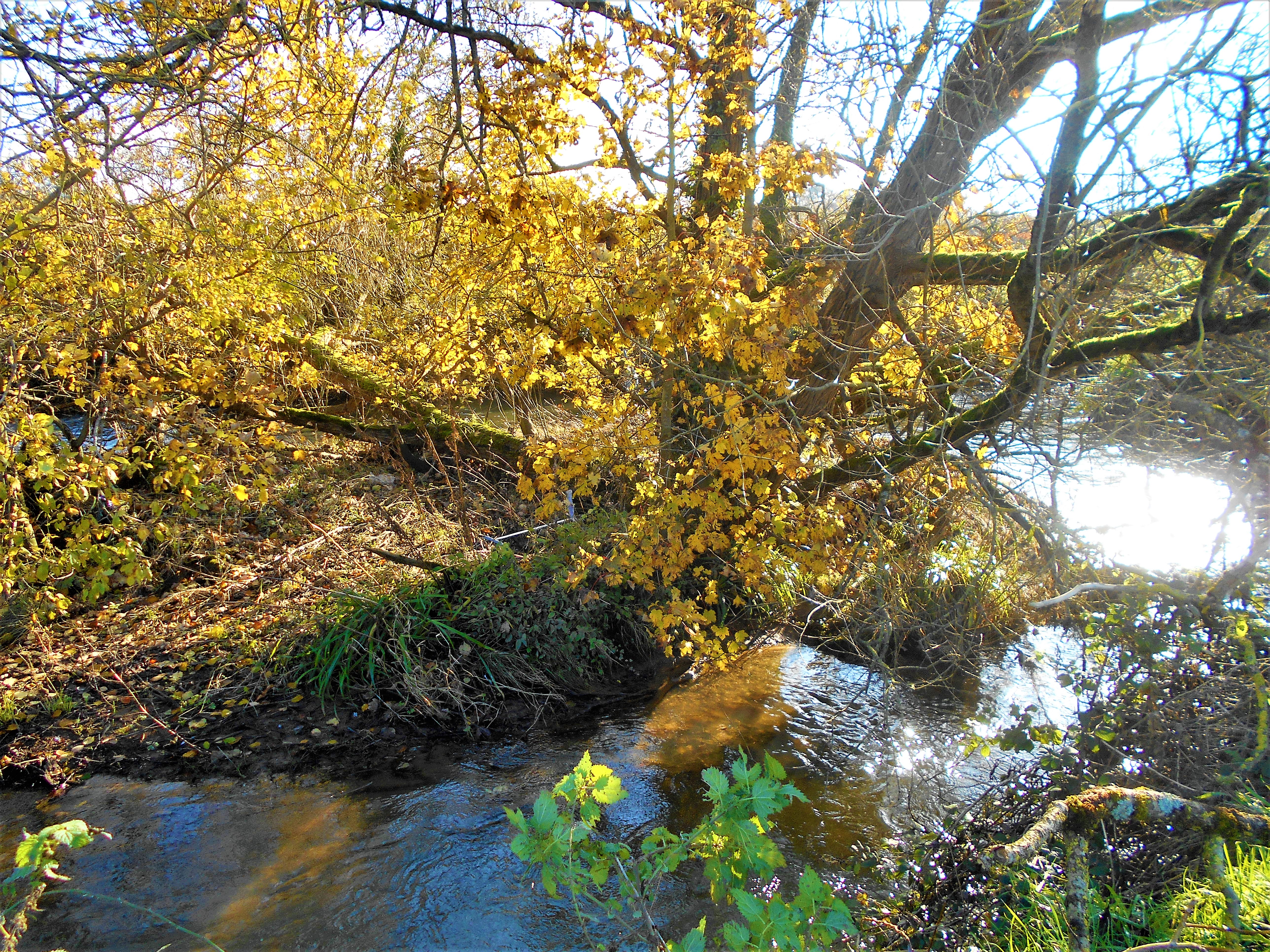
We passed a chatty fisherman who told us that although he hadn’t seen any Otters for some time, he had caught a lovely view of one last winter and even managed to film it – mainly to prove to his family that there were Otters in the river. He loved watching the wildlife of the river as much as fishing and talked about the number of Kingfishers there were – his highest count being ten in one afternoon!
We also had a brief chat with the farmer who described having seen what he thought might have been a pair of Greenshank, having first mistaken them for Snipe which he sees periodically, but that these had a white rump. Did we know what they might have been? We said we couldn’t be sure without looking it up and after doing so thought from his description and the habitat (which includes watercress beds) that they were probably Green Sandpipers. A wonderfully exciting sighting which we haven’t seen locally but which is included in the Rodden Nature Reserve (which is less than 2 miles away) list of species.
5th November 2019 / Temp: 11.5 C / Water Level: High
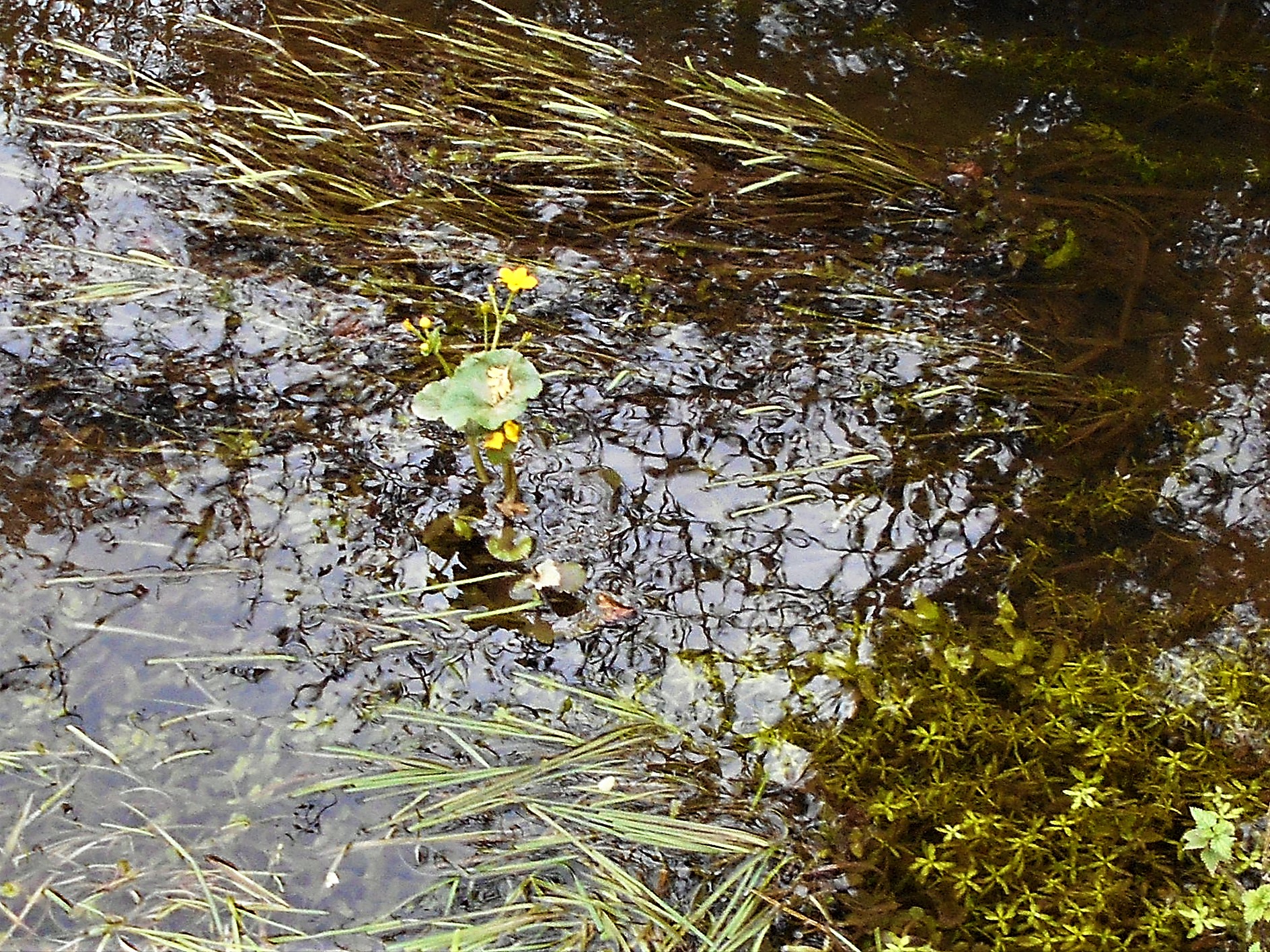
Water levels very high although not over the banks as it was three weeks or so ago, but part of the field was still awash with small lakes as can be seen by the single flowering marsh marigold marooned in the flood water. The high water together with the fast and furious currents swirling the river downstream probably also accounts for there again being no signs of Otter at any of the sites we visited.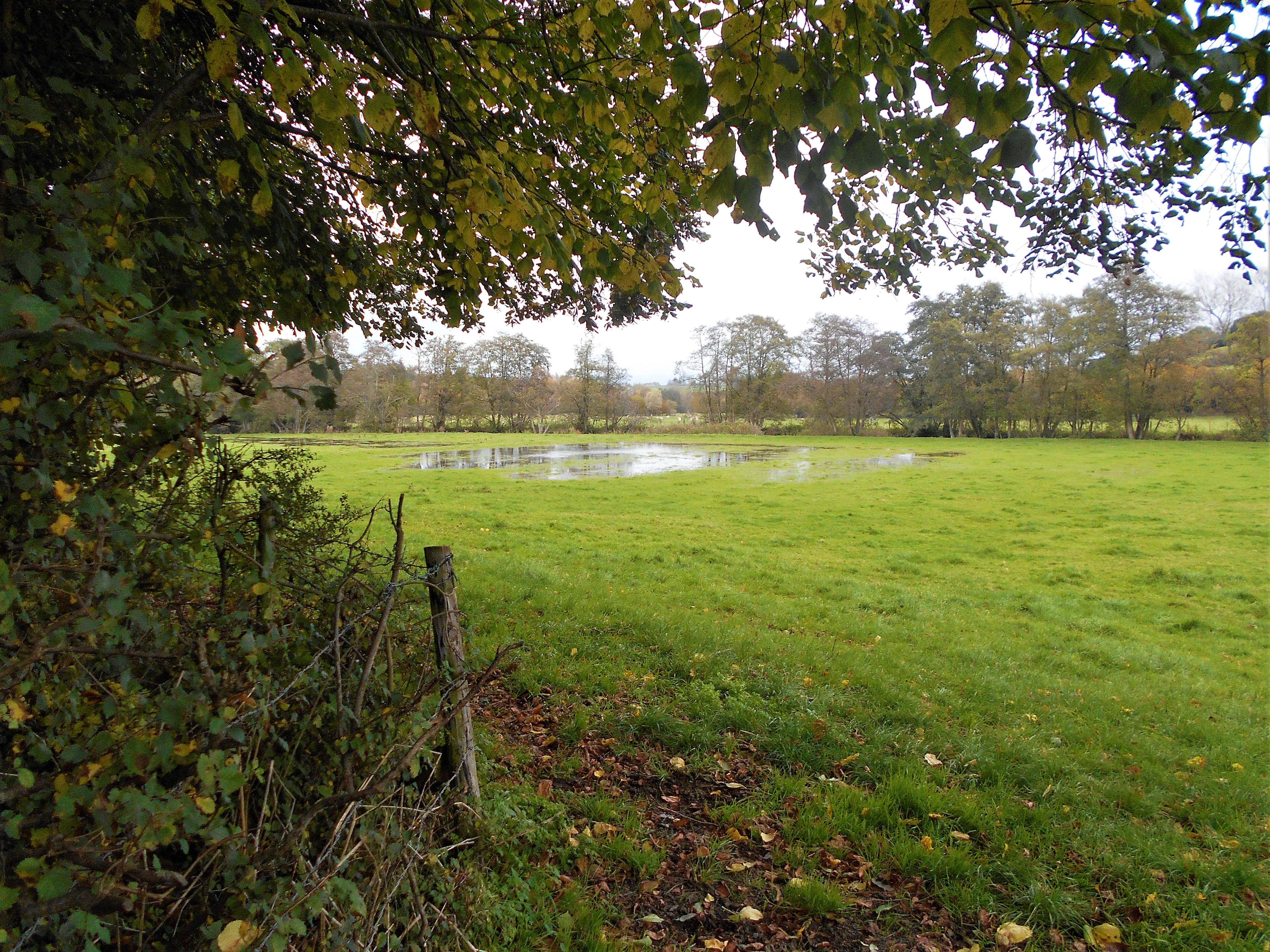
The good news was seeing a Little Egret, at least one Heron and a Cormorant, the first we have seen since early in the year so possibly a winter migrant. There were also two Mallard which flew off as we arrived – a pathetic number compared with previous sightings but maybe a sign that numbers might be picking up.
A good number of pheasants, escapees from a nearby shoot, large flocks of mixed Jackdaws and Rooks swirling above the trees, chattering to each other in loud cackling calls, that lovely emotive autumn-winter sound echoing across the water meadows. Parties of tits in the trees doing their thing – dashing about – ever present, and Blackbirds warning calls from across the river – not a great number of birds but more and more as the season advances.
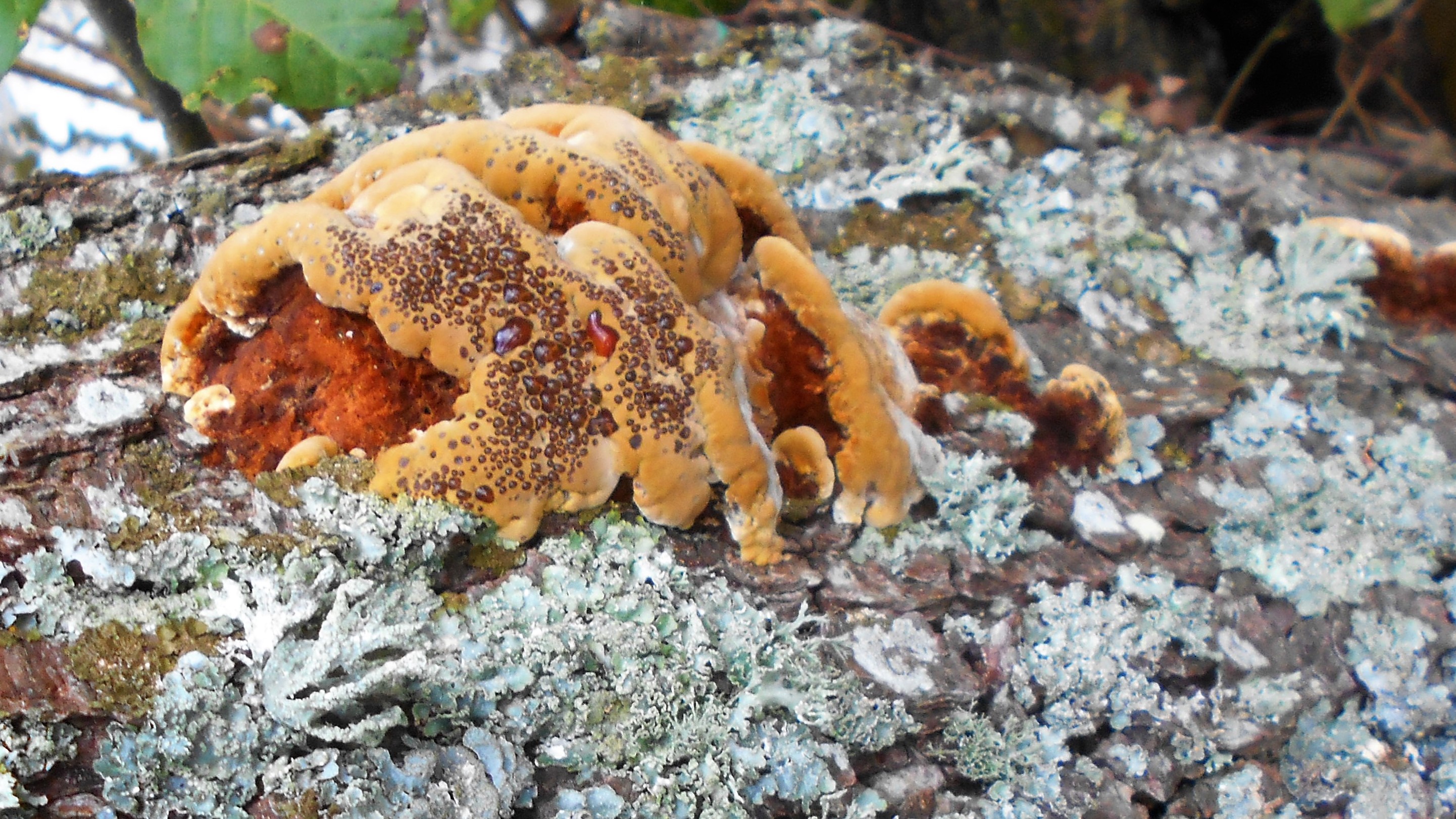
The clumps of Alder bracket fungus marching up the trunk of a tree very close to the water’s edge, looking like some crawling monster, exuding amber coloured droplets, is usually a sign of a dying tree. As this particular Alder is standing sentinel with a similar matching tree at the entrance to the footbridge steps, it will be sad to see it go. 
Spikes of young Candlesnuff (Stagshorn) fungus have sprouted from their bright emerald green carpet of moss on a rotting tree stump and most of the branches along the riverbank are coated with lichen, their subtle colours providing some small change of tone from the dull, cloudy and water-logged scene.
A single Field Blewit sat in lonely splendour on the edge of the field, already well nibbled by some hungry squirrel perhaps – noticeable that it has only eaten the top centre of the mushroom, unlike other mushrooms which are always nibbled from the side.
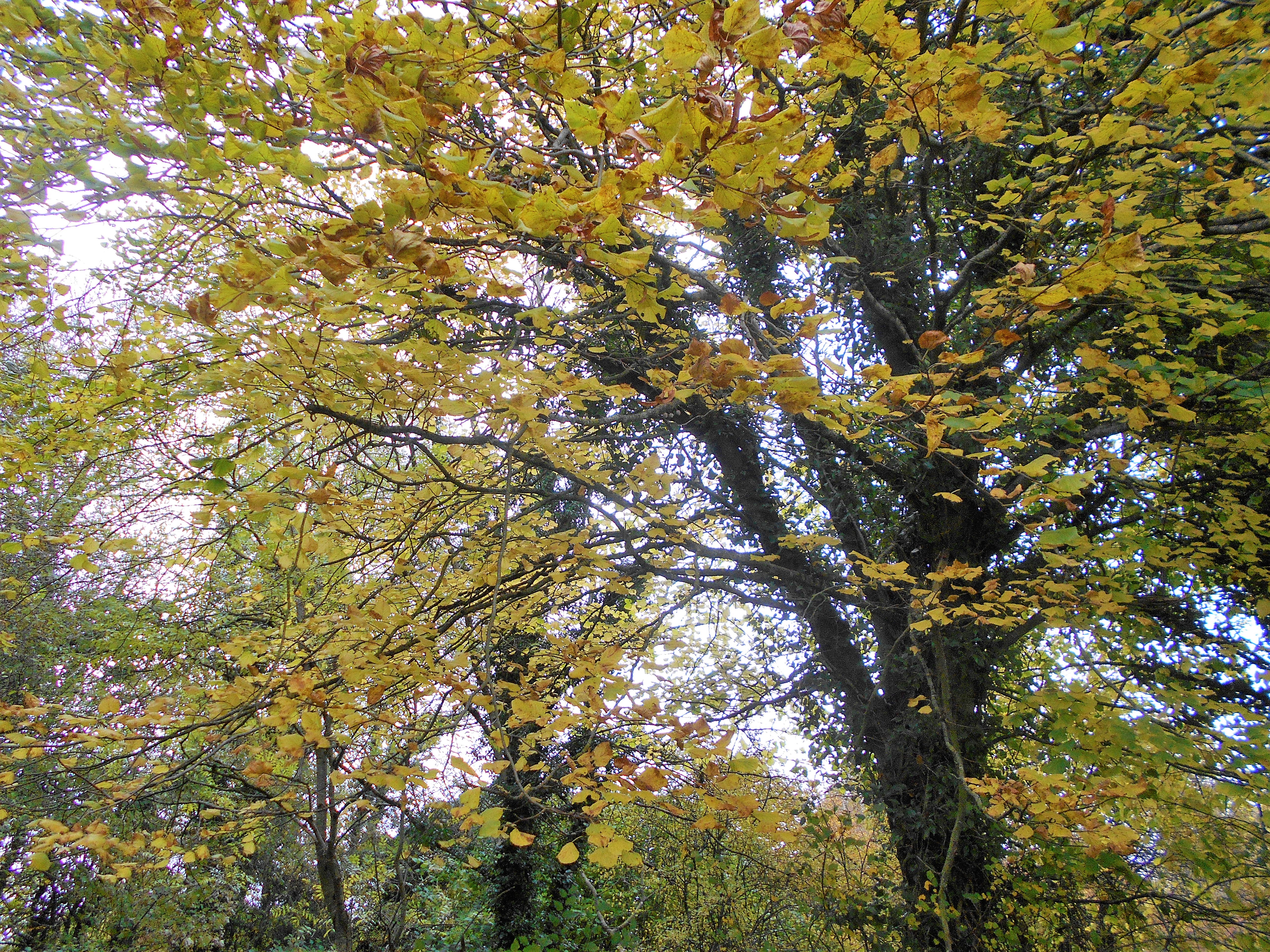
One compensation for the dull wet autumn is the slow turning of the leaves from sombre dark green of late summer to an explosion of colours, every possible shade of gold and copper, yellow and brown. The leaves have been particularly spectacular this year, and wen we are ever lucky enough to catch a gleam of sunlight, the trees catch fire and glow.
23rd October 2019 / Temp: 7.5 C / Water Level: High
Mist
Alice Oswald
It amazes me when mist
chloroforms the fields
and wipes out whatever world exists
and walkers wade through coma
shouting
and close to but curtained from each other
sometimes there’s a second river
lying asleep along the river
where the sun rises
sunk in thought
and my soul gets caught in it
hung by the heels
in water
it amazes me when mist
weeps as it lifts
and a crow
calls down to me in its treetop voice
that there are webs and drips
and actualities up there
and in my fog-self shocked and grey
it startles me to see the sky
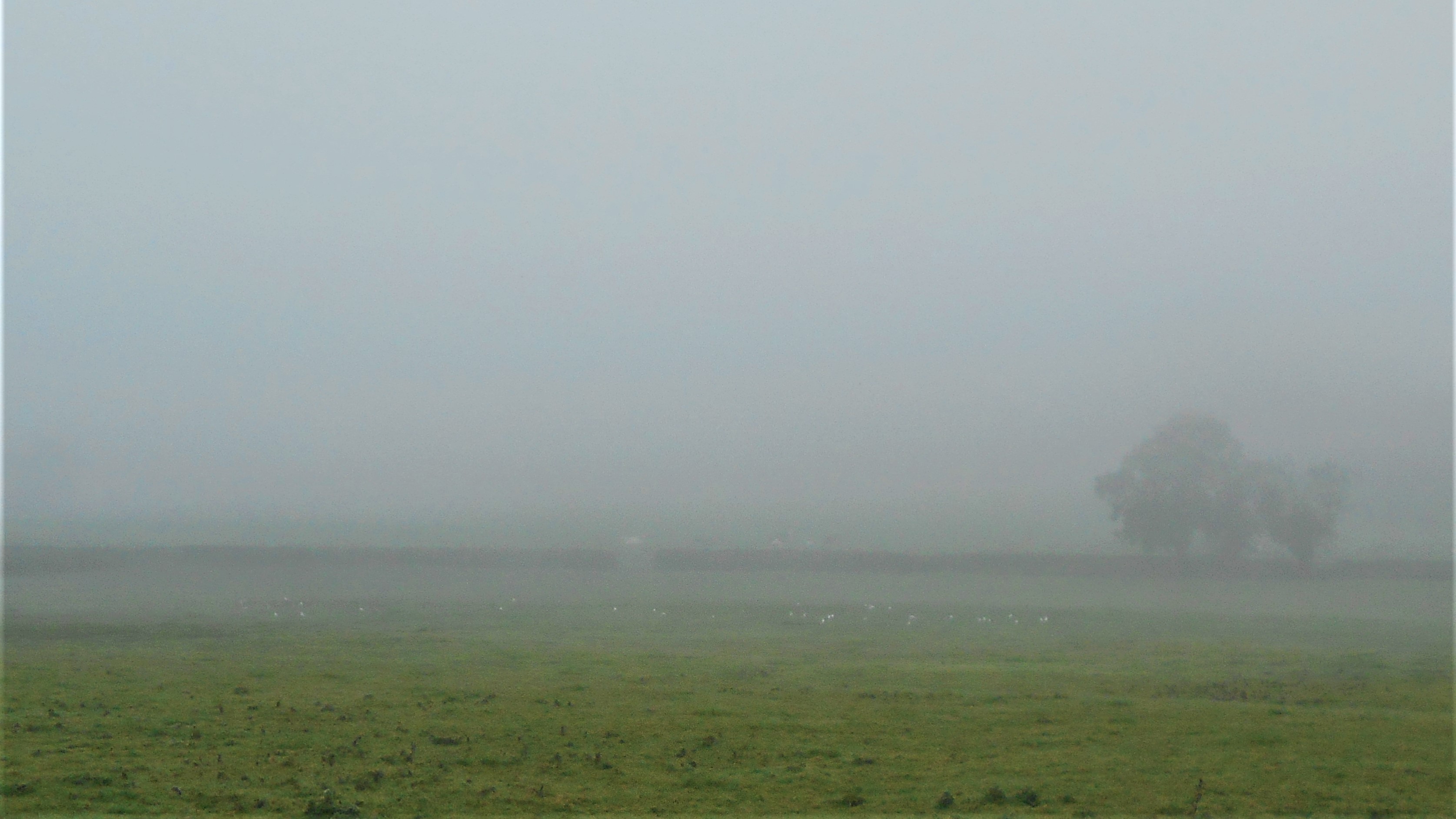
Thick mist, chill air seeping into our bones, boggy underfoot and apart from a Blackbird and a flock of gulls, no birds, no movement, just a dutiful trudge around our sites to fulfil the second day of our monthly Otter survey. This is the reverse of yesterday’s autumn morning but also typical – dull, cold and grey.
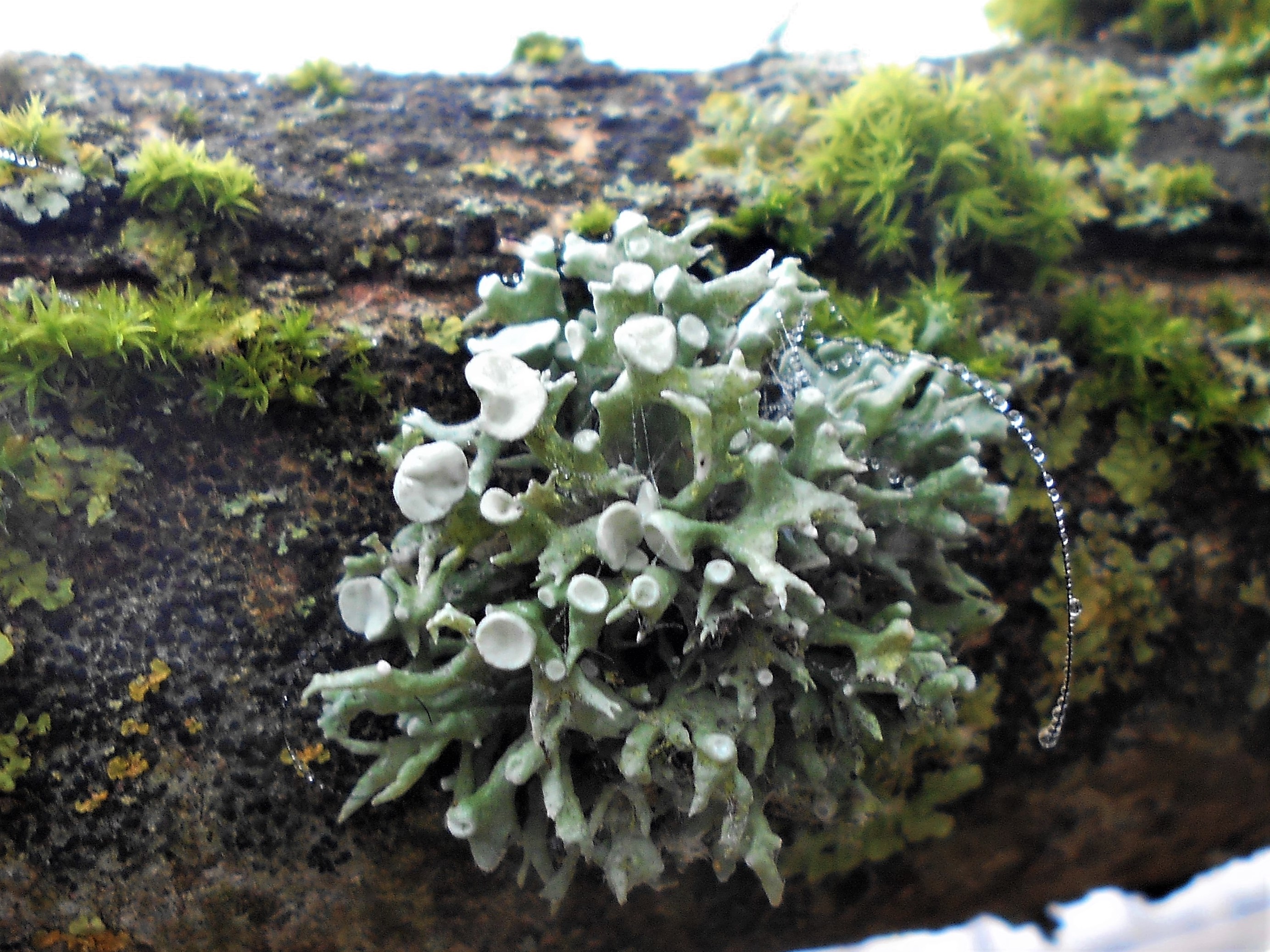
Thank goodness for the mosses and the lichen covered branches and trees, they make a vivid splash of life in the dead landscape. On this branch we found Bristle Moss, Even Scalewort liverwort, and the lichen I love the most, both for its little nodules but most of all for its name – Fanfare of Trumpets which today is garlanded with a tiara of jewelled raindrops.

A garden full of lichen covered this branch – a veritable mixed border of Common Green Shield, Yellow Scale and trailing cobweb wrapped Cartilage lichen fighting each other for space.

Every tree, branch and twig seemed to support a spiders web glistening in the mist. Most were the work of the sheet weave spiders but although I peered closely into quite a few, I was unable to spot even one small spider guarding its web – probably sensibly keeping warm and dry somewhere close by.
Time for us to follow suit – head home for hot coffee, home-made soup, crusty rolls and a quiet doze in the chair out of the damp chilly day!

22nd October 2019 / Temp: 11.5 – 14.5 C / Water Level: High

A gloriously sunny morning, the air crystal clear, the sun warm on our backs and we set off with if not a song in our heart, at least in very good cheer. When we spotted a Heron and Little Egret amost immediately we felt even happier, water birds having been in short supply just recently. Catching sight of a Mayfly (possibly Iron Blue) rising from the river was a surprise, as was the Common Darter dragonfly and the Red Admiral butterfly – all no doubt pleased to see the sun.
Twenty plus Mandarin Duck took to the skies as we walked upriver, followed by at least seven Mallard and the 100 plus flock of Herring and the Lesser Black Backed Gulls scattered across the field almost glowed in the sunlight – snow white against the dark green pasture.

Flocks of finches, Pheasants, Magpies, Wrens, Crows and Wood Pigeons, 50 plus Jackdaws and Rooks circling above the stand of trees, their chatterings and calls echoing across the fields. A Buzzard appeared on the hunt- so a classic autumn morning – bright sunlight, wet grass and muddy fields; a Dusky slug devouring a mushroom, flocks of larger birds restlessly rising and settling, smaller ones flitting and busying themselves along web-strewn hedgerows, jet black Noon flies, face, wings and feet tipped with gold settling on the cow pats, Common Darter dragonflies hunting low, trees laden with blood-red hawthorn berries, Schiaperelli pink splindle fruit, black sloes, two more Herons and another Little Egret join the scene and then the river – builder-tea brown, fast and furious tossing aside branches and logs as it hurtled downstream – full of teeming life and a haven for so very many creatures – Otter, Water Vole, many species of fish, shrimp, mussel, eel, dragonfly and mayfly nymph, water spider and caddis fly lavae in their stone casing and of course the invasive American Signal Crayfish whose numbers are beginning to reach concerning numbers. An endlessly fascinating prospect.

As to our search for Otter spraint, December 2018 was the last time we found no signs of Otter during our monthly survey, for the same reason – partially flooded fields, beaches under water and high water levels. The levels have dropped slightly since last week but still too high it seems to tempt Otter to visit. Disappointing but we hope for better sightings next month.
22nd October 2019
We have received a very full and helpful reply from the Environment Agency in response to our concern at the increased sediment and turbidity in the water along our stretch and to our request for a sight of the fish survey which was carried out in August.
Mr Christopher Doyle of the Agency writes: “We are currently working with partner organisations such as the Bristol Avon Catchment Partnership, Farming and Wildlife Advisory Group (FWAG) and the Bristol Avon Rivers Trust (BART) to identify and tackle problem areas in the catchment, a good example being the Somerset Frome Sediment Pathways Project.”
This website is wide-ranging and informative and we look forward to reading it in more detail.
http://www.bristolavonriverstrust.org/somerset-frome-sediment-pathways-project/
Survey Date: 28/08/2019
Sub Catchment: Somerset Frome
Chub [Leuciscus cephalus] 21
Dace [Leuciscus leuciscus] 1
Bleak [Alburnus alburnus] 13
Gudgeon [Gobio gobio] 9
Roach [Rutilus rutilus] 11
Rudd [Scardinius erythrophthalmus] 1
Perch [Perca fluviatilis] 4
“Unfortunately, this survey was aborted after one run (we would normally undertake three runs over the same stretch of river to obtain a catch depletion) due to the depth of the water being too great to efficiently and safely electric fish and due to the presence of underwater obstructions, such as fallen tree limbs.”
15th October 2019 / Temp: 16 C / Water Level: High

Raging torrent, flooded fields, thundering weir and mounds of detritus showing the river overflowed its banks – it all looked pretty dramatic. However, fortune favours the brave, and we hadn’t walked far before the clouds parted, the temperature rose, and we managed the whole walk under clear blue skies and warm sunshine and even spotted three Red Admiral butterflies which had somehow survived the persistent downpours of the past two or three weeks.

The sun immediately transformed the landscape, the water sparkled and danced, the Aspens, Hawthorns and Hornbeams caught fire, their leaves fluttering in the breeze, flaunting their scarlet and gold leaves and the grasses glittered with raindrops. It felt good to be alive, despite trudging through squelchy mud and cow pat pools. The downside of high water level is the dearth of Otter spraint and finding that most of the beaches were totally under water but the upside is that it gave us the opportunity to see what else is thriving in the river and along the water meadows.

One lovely discovery the bright sunlight highlighted was the tiny Bark Bonnet mushrooms growing among the bristle moss along a branch of the large willow tree which dominates the gravel beach. The caps of these mushrooms were no bigger than 5mm, tiny, perfectly formed and so delicate, like the most exquisite egg shell china, calling to mind Edmund de Waal’s paean to white porcelain. So many different lichens had also found a home and were growing along the same branch, including the Common Green Shield lichen (pale grey when dry and yellow green when wet) and Yellow Scale (Maritime Sunburst) lichen and others which we have as yet been unable to identify.

They made such a splash of bright colour, perfect and unblemished, standing aloof from the devastation on the beach beneath which was almost entirely under water, the roots clogged with flood detritus – trainers, plastic bottles, broken planks of wood, beer cans, plastic bags in great piles including, rather bizarrely, golf balls – we collected 8!
Exploring the areas of beach which were not underwater, we noticed the first empty freshwater mussel shell we had seen since last winter, lots of crayfish remains, earthworms washed down from the banks, lots of empty garden snail shells but also sunshine yellow and grey grove snails clinging to the stems of plants, presumably to keep clear of the flood water.

The warm sunshine seems to have brought out a surprising number of bugs, flies and beetles as well as a few wasps. We liked the Tarnished Plant bug (above) mainly for it’s charming white heart; we offer the name with the caveat that the esteemed Naturespot website warn of identity difficulty with this species of bug as differences between many of them are almost impossible to see without dissection.
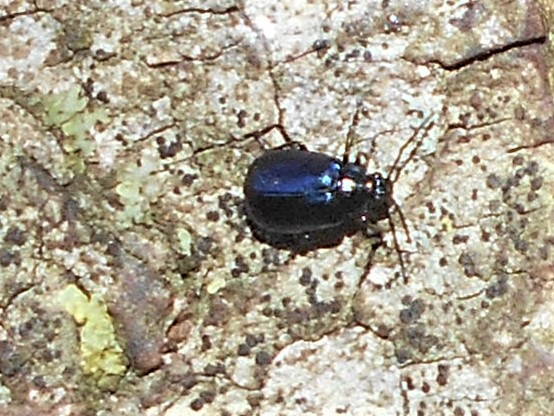
We were amused by the lines of dozens of common flies, sunning themselves on every tree trunk facing the sun, joined on one tree by a Dancing Blue Leaf (or flea) beetle which feed on sallows, great willowherb and purple loosestrife, all of which grow with profusion along the river bank. Near the top of one trunk, working its achingly slow way towards the canopy we also spotted a tree slug.
Still not that many birds – a number of assertively singing Robins, a small flock of twittering finches, Goldfinches and Greenfinches among them, a Jay, the usual suspects – noisy Jackdaws, Crows, Wood Pigeons and Magpies, a couple of Buzzards circling, totally ignored by a large flock of passing gulls, but we were most pleased to hear a Moorhen and see at least one Heron, either the same bird twice or another bird, the first water birds we have seen for months.

Lots of fungus, both under a hawthorn hedge (possibly Winter Twiglet as above) on the ground (below), or decorating tree branches some of which, when we have a spare five or six hours, we may attempt to identify! All in all, the afternoon produced a satisfyingly goodly haul for mid-October.

19th September 2019 / Temp: 14 C – 20 C / Water Level: Very Low

The second day of our Otter survey was another gloriously sunny morning, fresh and sparkling, with clear blue skies although our early start meant a sharp autumnal chill in the air. Disappointingly little to see, no signs of Otter at any of the first three sites, no water birds and few signs of any life at all, so we were pleased to spot the Orange Balsam bush; this is a new species for us and even though the flowers were going over, they still made a vivid splash of colour in what was mostly a mono-green landscape.
As we walked we heard the lovely croak of a Raven, the screech of a young Buzzard and the less welcome squawks of Pheasants from the adjoining fields where they are bred for shooting. A handful of dragonflies – four Southern Hawker and one Common Darter was the sum of the long walk. A few Small Whites were the only butterflies but there were dozens of what looked like wool carder bees feeding on a small clump of Himalyan Balsam – a despised invasive plant but from our observation always attracting lots of bees at a time when few other plants are in flower. A pity the plant is so rampant, quickly smothering nearby native plants until very little else will grow because they are also rather attractive flowers.
Thankfully when we reached the bridge, things began to look up. We disturbed a Grey Wagtail perched on one of the many stones in this part of the river and barely had he flown off before a Kingfisher exploded past, inches above the water, low and fast with a flash of brilliant blue. We found two fresh and three recent Otter spraint, as so often on the bridge pier, surrounded by crayfish remains and enjoyed leaning on the bridge watching numerous small pale buff flies rising from the water. They could have been caddis flies but unfortunately we were too far away to get a positive identification.
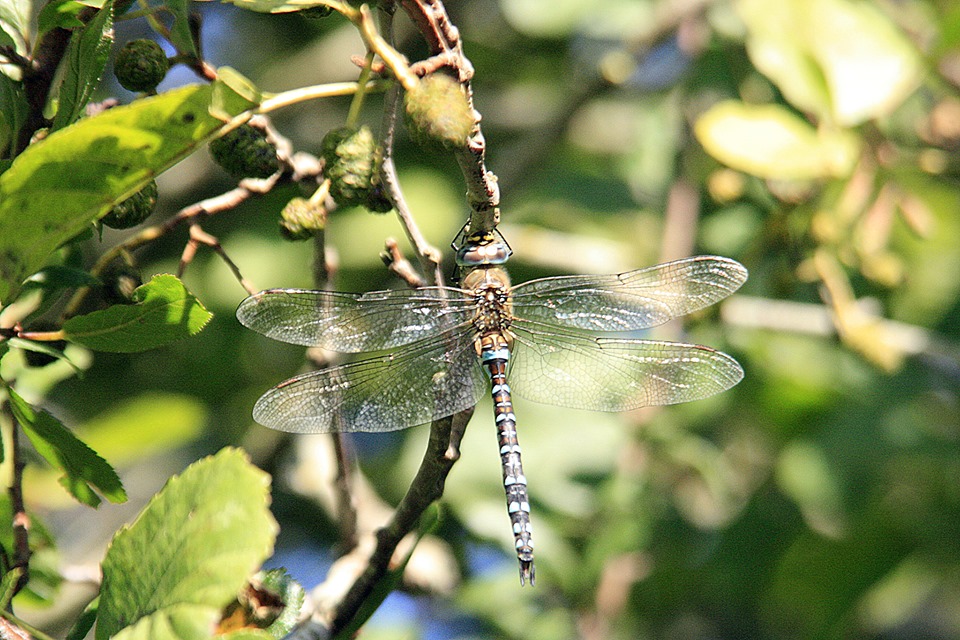 Southern Hawker – copyright Rebecca Muirhead
Even better, as we reached the final site, we saw a Grey Heron lifting slowly and lazily from the river bank where we disturbed his day’s fishing – the first Heron we have seen along this stretch of the river since June, so a very welcome sight. A surprising number of Dragonflies here, three Southern Hawkers plus two mating, a Brown Hawker and at least four Common Hawkers as well as a couple of Common Blue damselflies. Crane flies seem to have replaced grasshoppers in the tussocky grass of the water meadow as we walk across and once again, lots of pale mayflies rising from the water.
We sat down to rest on the riverbank, enjoying the quiet peace of the afternoon, feeling the hot sun on our backs contentedly watching the dragonflies’ fast flight up and down the river, sometimes chasing each other or merely resting on the water reeds, while fish plopped in the water creating widening rings, and even noting the slow waves from a dog jumping in and chasing sticks farther downstream. The sharper sighted of us said idly “Do you suppose that could be Otter spraint” and pointed to two brown bone filled lumps by his feet. We poked them over to reveal the telltale red colouring together with white bone fragments and pearls of a Signal crayfish – Otter spraint – what serendipidy!! And what lovely successful end to the day.
18th September 2019 / Temp: 15.5 – 18 C / Water Level: Very Low
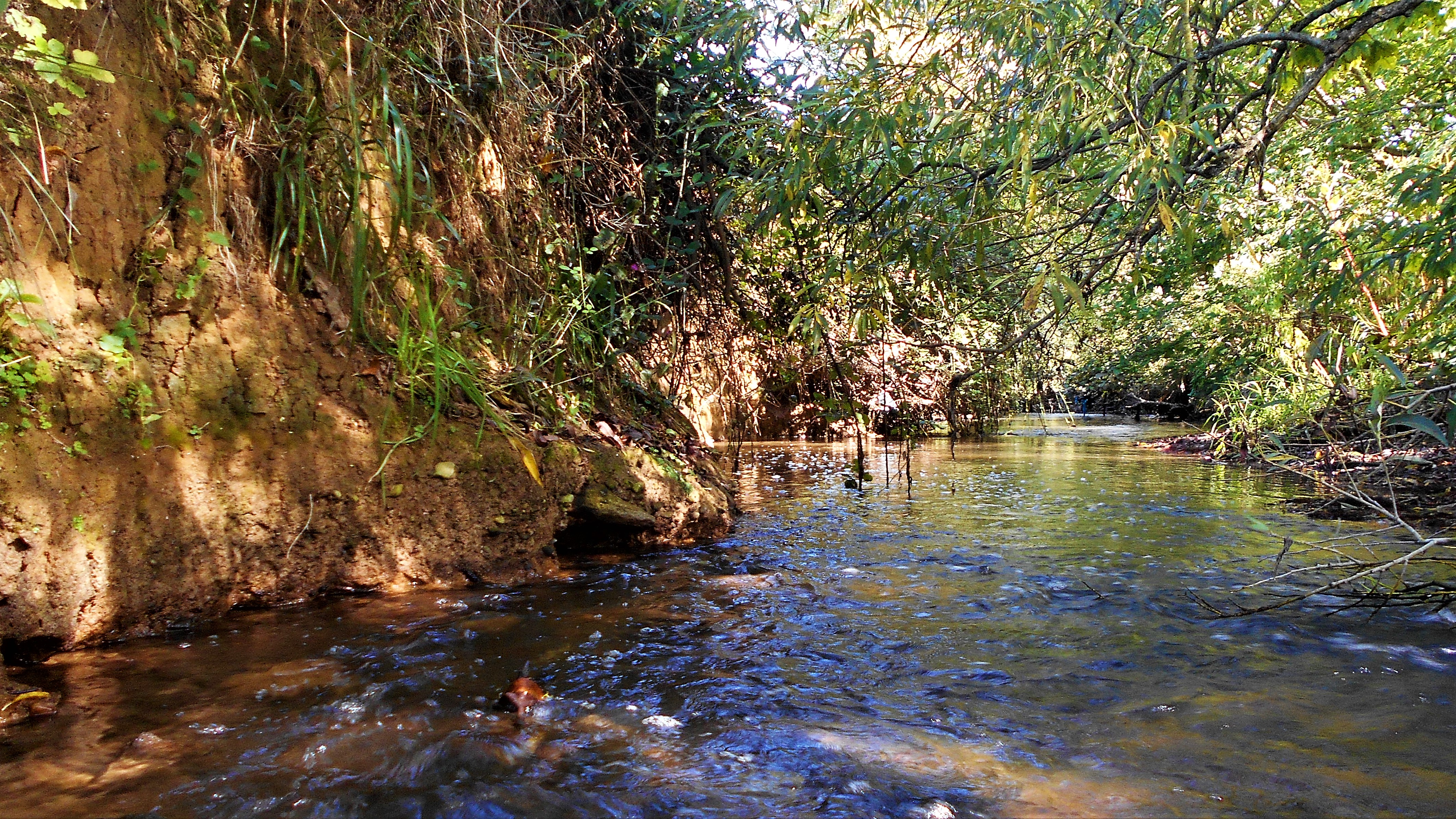
Striding out to do the monthly otter survey on a beautifully clear September morning – wall to wall blue sky, full sun and just a slight nip in the air to confirm summer is over. Did I say striding? A slight exaggeration perhaps, one of us is nearly 82 and still not fully recovered from a severe arthritic flare-up, the other is not that much younger and rather stout so something between a grimly determined lurch and a stout ash-stick assisted stagger might be nearer the mark. But the wonderful gift of a spell of perfect autumn sunshine makes aches and pains seem trivial and it feels good to be alive.
Otter pad marks and anal jelly at the first site, nothing on the second, but 3 sets of pad marks and recent spraint at the third site plus crayfish remains lifts our spirits still further, heightened still more by catching sight of a Dipper and then 5 Mandarin ducks and 5 Mallard. So good to see there are some water birds around as we have seen barely any on the downstream stretch of the river for the past three months.
Our last site is our favourite. So quiet and secluded, surrounded by hawthorn trees thick with scarlet berries, blackthorns with their purple sloes ready for picking and bramble bushes loaded with fat juicy looking blackberries glistening in the sun. The stony beach is always filled with spraint as indeed it is today, 7 fresh and 6 recent, another sighting of a Dipper and lots of Mayflies rising from the water into the sunlight.

The water level is so very low at the moment so we can wade around checking on the intriguing small holes in the river bank, the subject of endless speculation (we are not absolutely sure but given the arched entrance and position on the banks, we believe they may well be entrances to crayfish burrows). Signal Crayfish shelter under rocks and boulders, within tree roots or in cavities within banks and in winter shelter in burrows and enter a state of torpor. These burrows are formed of many inter-connecting tunnels, and can be up to two metres deep. We also wanted to get a closer look at the liverworts clinging to the banks, none of which are we able to identify – any advice would be warmly welcomed!

Addendum: We sent a photograph to Ispot who came back with an identification for two of the three plants. Evidently the largest plant is a bog-standard Hairy Bittercress; the bright green shiny plant beside it, which we had assumed was a liverwort, has instead been identified as a fern – specifically a gametophyte. The tiny plants of which form when spores are released from the underside of fern leaves, fall on suitably damp ground and once the gametophytes have grown and are fertilised, a new adult fern will begin to grow. Great to learn something new and have a mystery solved although unfortunately the dimness of the photograph made identifying the third plant impossible.
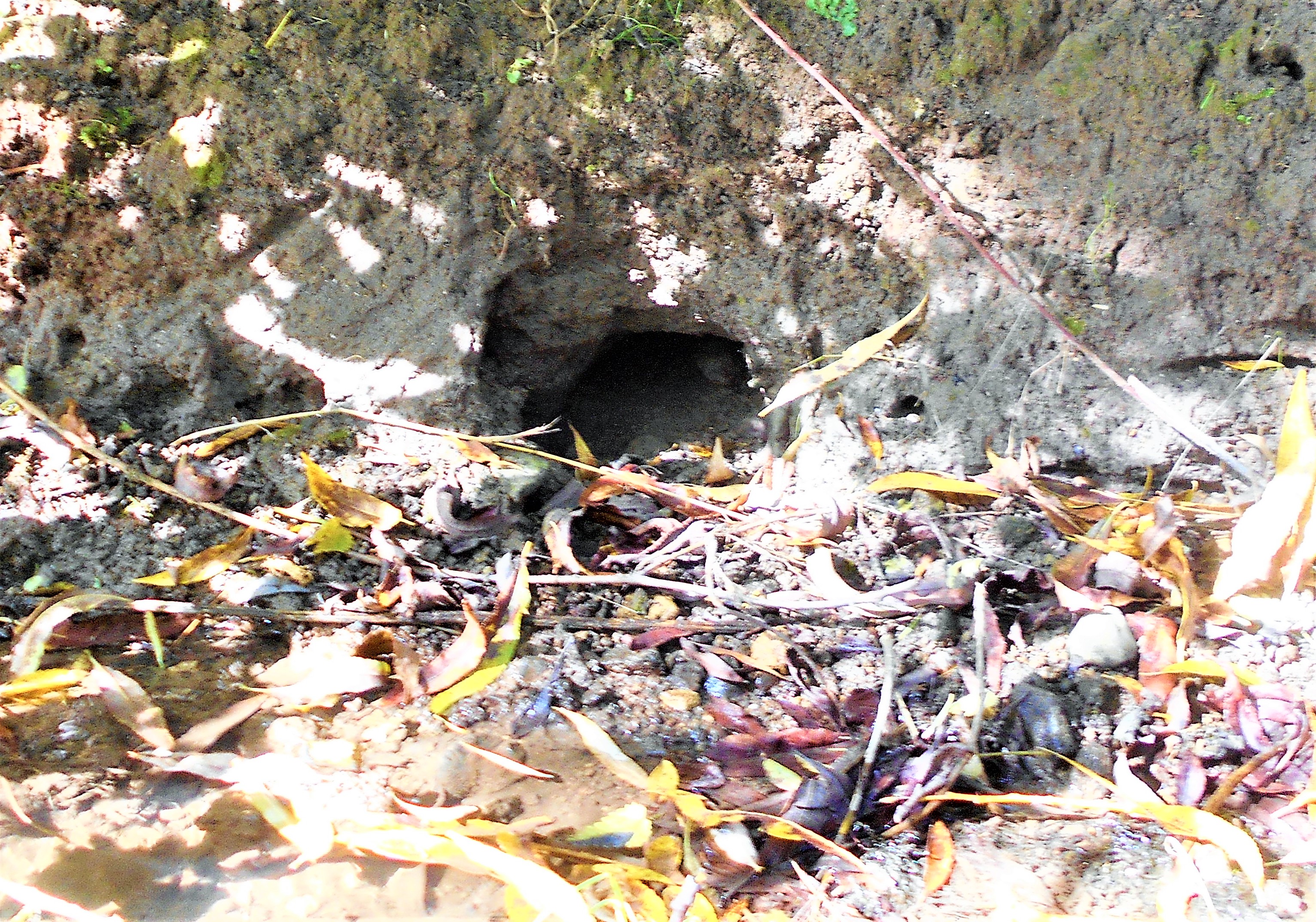
The trailing river moss nearer the beach is coated brown with some sort of sediment, possibly cattle excrement as the cows enter the river here to drink and inevitably excrete into the river or even, if several recent and current academic studies are able to prove, crayfish burrowing causing fine sediment in the water course and turbidity most affected by fighting crayfish not only burrowing but also foraging.
It’s good to see that the fast flowing water does eventually clean and disperse the sediment and only a matter of 20 metres or so down-stream the river moss is bright green again and appears clean enough to support the lavae so necessary to the Dippers. Fallen trees and other detritus impedes the flow to such an extent it cannot clear the sediment farther downstream where the water weed remains worryingly thickly coated over a long stretch, despite the help of a functioning weir (the other weir on this stretch is presently completely dry).
There is also a water extraction plant at the point near where the problem starts so it may very well be that the combination of slowed flow, water extraction and cattle excrement as well as other possible pollutants can have led to this situation. We wonder if this has affected the weeds so much it is depriving the water and fish of oxygen and that is why we have seen so few water birds along that lower stretch of the river.
Finally, a totally inadequate photograph of Ivy bees exploring a long south-facing sandy bank, about 40 metres long. Probably no photo could illustrate or properly give an impression of the 1,000 plus bees constantly on the move here. The farmer who drew them to our attention said that they appeared every year around this time when the Ivy flowers were just forming, and the numbers had just grown and grown over the years as the steep bank formed a border to the field and they were quite undisturbed. He is a keen bird watcher who often sees Snipe and knows the Kingfisher and Dipper nest sites. We love to hear him talking about the dozens of Sand Martins which used to nest along a sandy bank close by the river when he was a boy and when he points out to us the line and remains of what had been the canals, leats and workings that were once used to flood the water meadows thereby enriching the spring grass, a system of agricultural improvement dating back over 500 years.

Whilst we were chatting, we suddenly noticed that we had brought a passenger up from somewhere along the river – a harvestman clinging to a sleeve of a sweatshirt. It is one we have never seen before and we were astonished at the sheer length of his legs and intrigued by what looked like claws at the end of its antennae – quite extraordinary! After searching books and internet once we arrived home we think it might have been a grandly-named Dicranopalpus ramosus agg. which according to Naturespot has spread across Europe from Morocco. They go on to say that as early as 1957, it was reported in Bournemouth in southern England, from where it spread. It reached Scotland in 2000 and is now quite frequent in Britain. It does seem striking how many quite commonplace species of plants, insects etc have come to this country over the centuries and are still arriving. Whether this is due to changes in climate or other explanation we have no idea but it is interesting nonetheless.
13th September 2019 / Temp: 15.5 C / Water Level: Low
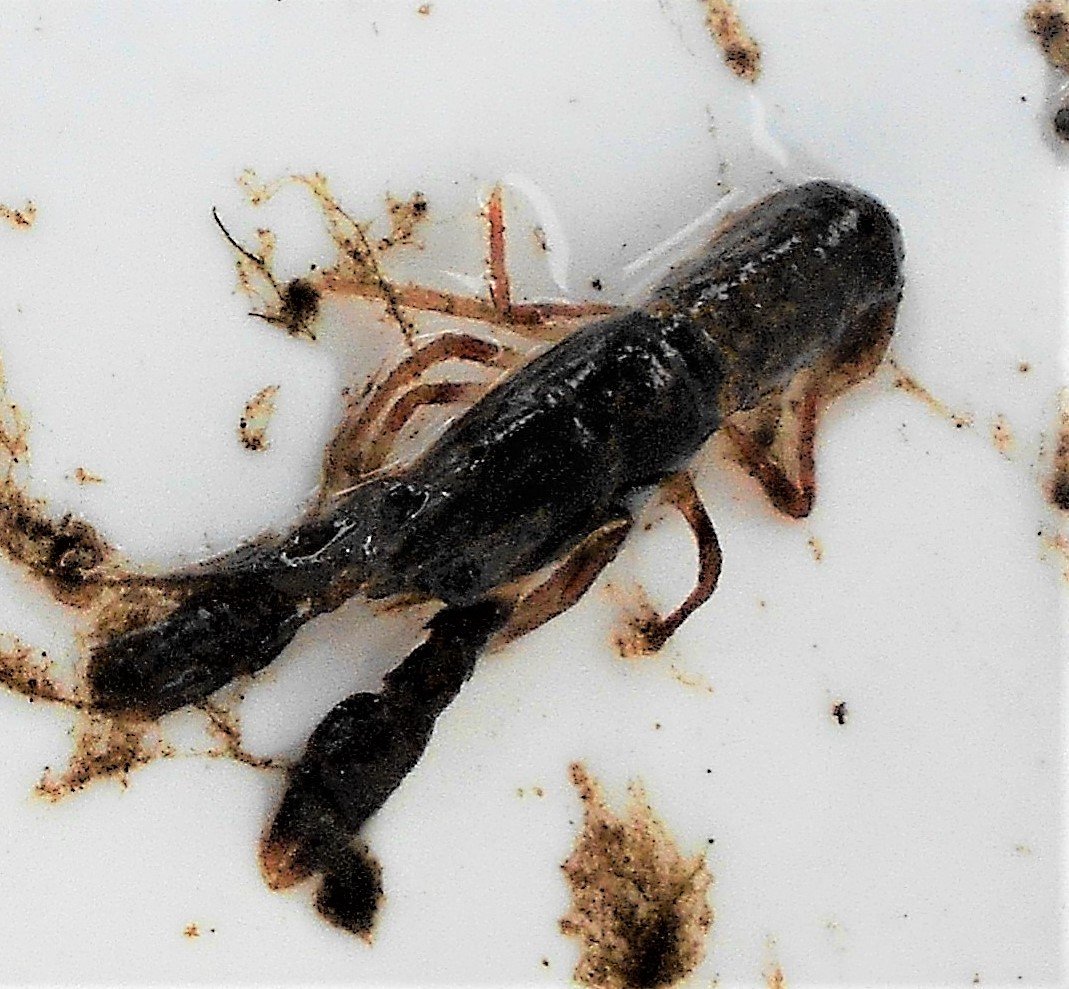
What could be more enjoyable on a fresh, clear September morning when the sun is sparkling off the water and a Grey Wagtail is hopping across the stones, than tramping about exploring the river bed. Armed with nets, buckets, trays, hand-lens, cameras and notebooks and our trusty FSC Guide, we climbed gingerly down the steep bank and began our search between the large stones and moss covered boulders of the gravely river bed for suitable kick-sweep sites
The river is fast flowing here, gouging troughs and hollows in unexpected places, so we tread with care and eventually take two samples – one from mid-stream where the water is clear and one from a couple of yards out from the bank where lots of small creatures hide among the moss.
Although the river mid-stream is gin clear, towards the bank it seems to mirror the countryside, worn out by the summer months, and looking as if it could do with a few winter high water weeks to wash everything through.
Both samples pretty much matched the samples we took at the end of May – Signal crayfish (larger), Bullhead, swimming Mayfly nymphs, freshwater Shrimps, Ramshorn snail and cased caddisfly lavae. No hoglouse or leech but both biting and non-biting midge lavae as well as blackfly lava.
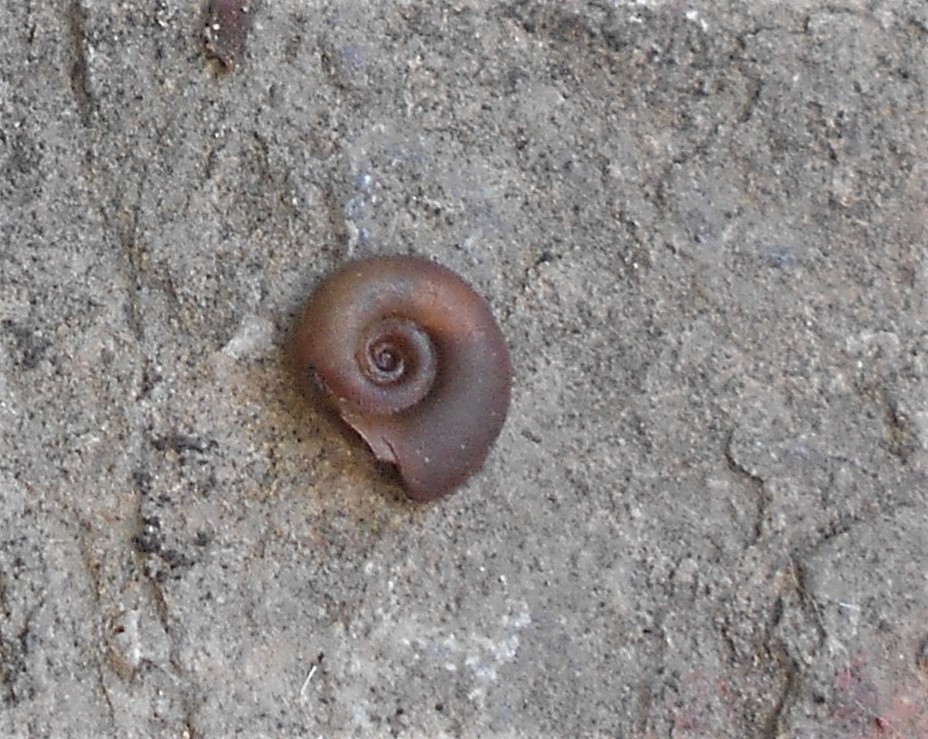
Our rather amateurish BMWP assessment gave a score in the upper 70s – lower than the May score and giving a water quality of Fair biological quality against the ealier Good. Bearing in mind that the May score was in the lower end of the Good score, we think that a reasonable supposition is that the river is Fair-Good or Good-Fair biological quality. Given the local wildlife using the river, Otters, Kingfishers, Dippers, Trout, several species of Mayflies, Dragonflies and Damselflies, but no stoneflies, this is what we would expect. Of course we need to do the sampling rather more often and for a longer period to get a proper idea and certainly hope, health and agility permitting, to do take more samples in the future.
10th September 2019 / Temp: 18.5C / Water Level: Low
 Brown Hawker Dragonfly / copyright – Keith Edwins
Overcast and muggy so a quick check of a couple of Otter sites seemed the best plan as we would be unlikely to see any butterflies or bees in these conditions.
The bridge piers proved again a good source of Otter spraint, as is often the case when water levels are low. Old, recent and very fresh spraint, the latter red, the scattered remains of signal crayfish on both piers reinforcing evidence of the last meal. We were unsuccessful at the second site which showed no signs of Otter activity at all, and equally disappointed that the new footpath we checked out didn’t take us to a previously unexplored stretch of river as we had hoped. However, good to tick it off our list of possibilities.
 Tachinid fly – possibly Eriothrix rufomaculata
They were a few plants with some flowers clinging on – gypsywort, creeping thistle, fools watercress, water mint, great bindweed, stitchwort, water forget-me-not, a patch of beautiful striking purple loosestrife and even a few brambles. One Small White butterfly, a Brown Hawker and two Southern Hawker dragonflies, several Field Grasshoppers, a couple of tachinid flies and a single Crane fly were the only insects to be seen. A meagre few birds, Buzzard, Magpie, Chaffinch, Jackdaws Rooks and Crows, Pheasants – a single Coot and no other water birds which is a constant cause of concern.
Given the derth of anything of interest, it seemed that this was possibly a good time to follow Jeremy Dagley’s advice in The Guardian newspaper’s Country Diary and look at cow pats which he assures his readers “This dipteran dung world is significant not only for its diversity but for its biomass. One average-sized cowpat may contain 1,000 insect larvae, and in a summer grazing season one cow’s dung could support a million flies.” Struggling to take pleasure in the thought of a million flies, we reminded ourselves that flies are excellent pollinators and food for insect eating birds so….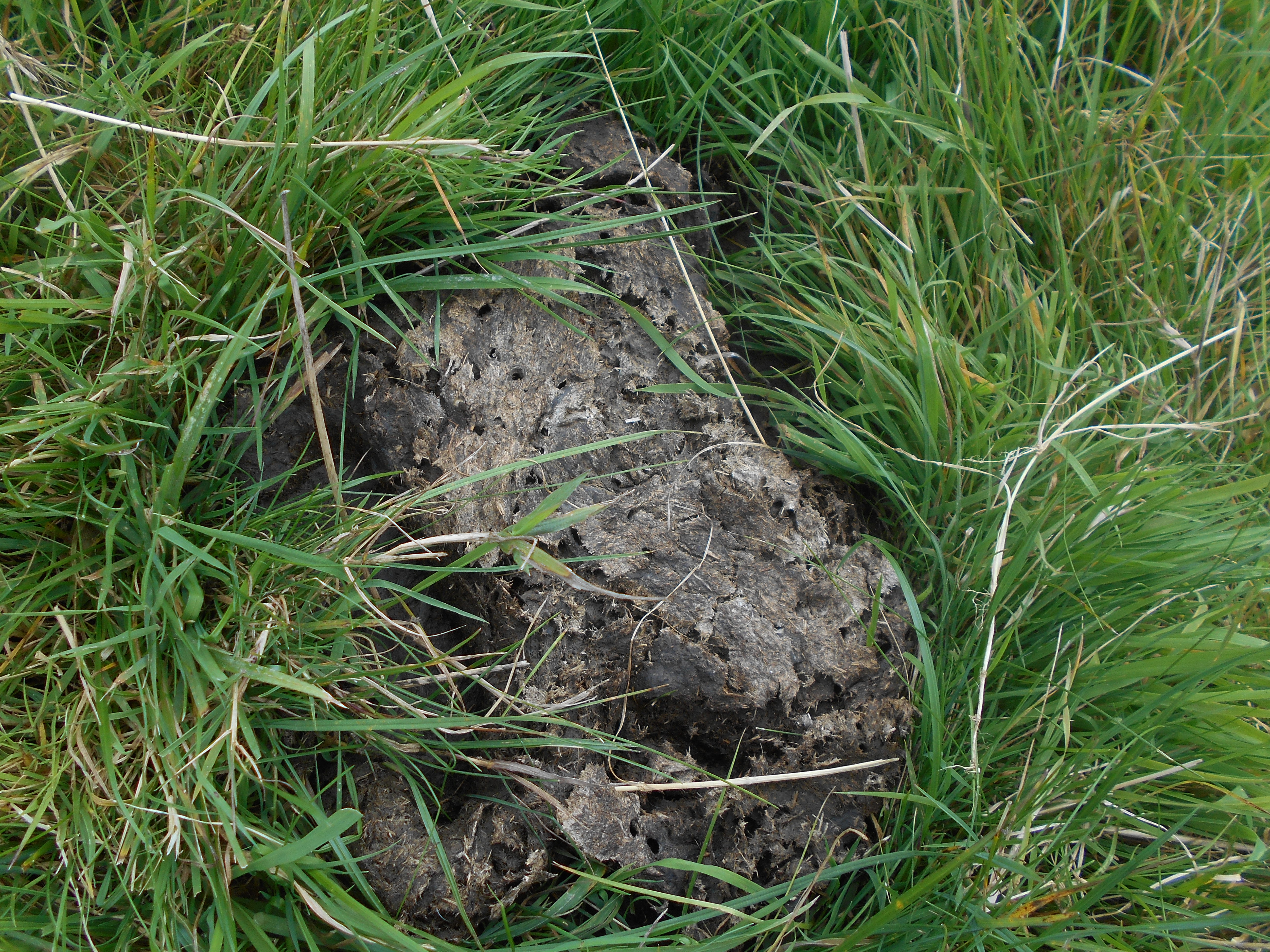
We drew a blank after checking cow pat after cow pat and saw nothing apart from a few desultory flies, not quite the bonanza we had been hoping for, until as we approached one pat quite close to the hedge edging the field, a small black Rove beetle climbed out of one of the holes and scurried off, far too quickly for identification or a photograph.
We then noticed on the same cow pat what looked like a female Woolf spider with an egg sac tucked under her abdomen. We had seen lots of the usual small black spiders which seem to teem in grassy meadows and so were not surprised to see the Woolf spider, but it seems a strange time of the year for her to be carrying eggs, we will have to investigate further. She could of course be carrying spiderlings, which do appear in the autumn – we will have to find out.
Exciting though an afternoon examining cow pats undoubtedly was (evidently cows are averse to eating the grass close to their dung, so the well-fertised grass which grows uneaten around the pats are a haven for insects) we decided we had had enough entertainment for one day but promised ourselves to look again, at fresh dung, on another occasion, which might prove more rewarding in a search for interesting occupants.
Or maybe not…. quite suddenly other alternatives, hated jobs like sorting out the sock drawer or clearing out the garage began to have an overwhelming appeal!

28th August 2019: Frome Angling Association posted the above photograph and the quotation below on their Facebook page:
“The Environment Agency did a fish survey today down The Factory. Unfortunately the trees made it very difficult to do the survey so they couldn’t complete it however they managed to catch a number of huge chub and a lovely perch. The perch in the photo was around 40cm and the chub was over 50cm!!”
The survey report a copy of which the Environmental Agency sent to us showed a catch of 21 Chub, 1 Dace, 13 Bleak, 9 Gudgeon, 11 Roach, 1 Rudd, 4 Perch before the survey was aborted due to the number of fallen trees in the river.
23rd August 2019 / Temp: 21C / Water Level: Low

There is a magical quality to late afternoons and early evenings at the end of summer – something to do with the angle of the sun over the fields, the freshening of the air and the quiet which seems to descend. This was certainly the case when, after an exhausting day we went to the river, climbed over the stile, found a shady spot under the trees from which we could see the entire meadow, spread out the picnic rug, fished out our books and collapsed! The books went unopened as we watched the faint zephyrs, cool and soft, lift the willow branches above us and rustle the dry leaves of the white poplars.
The sky was unbroken blue, the sun warm and the air so clear and fresh, like a glass of cold water on a hot day. We watched a pair of tree creepers continuously scuttling up and down the thicker branches of the willow, like little mice, so small, before flying to the next tree – repeat.
A Brown Hawker dragonfly was criss-crossing a small area of the meadow close to a stand of trees backwards and forwards at dizzying speed, inches above the grass, a red dock beetle landed on the rug, a party of tits flittered and flurried through the branches and a small aircraft droned into view, the sun catching its silver wings, a few desultary cabbage whites crossed and re-crossed the field, a crow squawked a greeting as it passed overhead and Wood Pigeons clattered, rose and swooped to the trees on the other side of the river and then flew back again. Nothing really happened – just a perfect quiet time watching the world go by.

We watched a fly fisherman in waders climb over the stile, walk over to the river bank beside the best pool and set down his rod before beginning to unpack his gear and then kneeling on the grass to select and carefully tie a fly. When satisfied, he waded into the centre of the river and began to fish for brown trout. Meanwhile, back at the fence, another visitor arrived, a Signal Crayfish forager, climbed over the stile and strode off along the bank to check his traps. A veritable hive of busy-ness and activity!

We managed to rouse ourselves from our stupor at last, and also crossed the field and began walking along beside the river, checking the purple loosestrife, himalayan balsam and umbelifers for signs of life while also keeping a careful watch on the water.
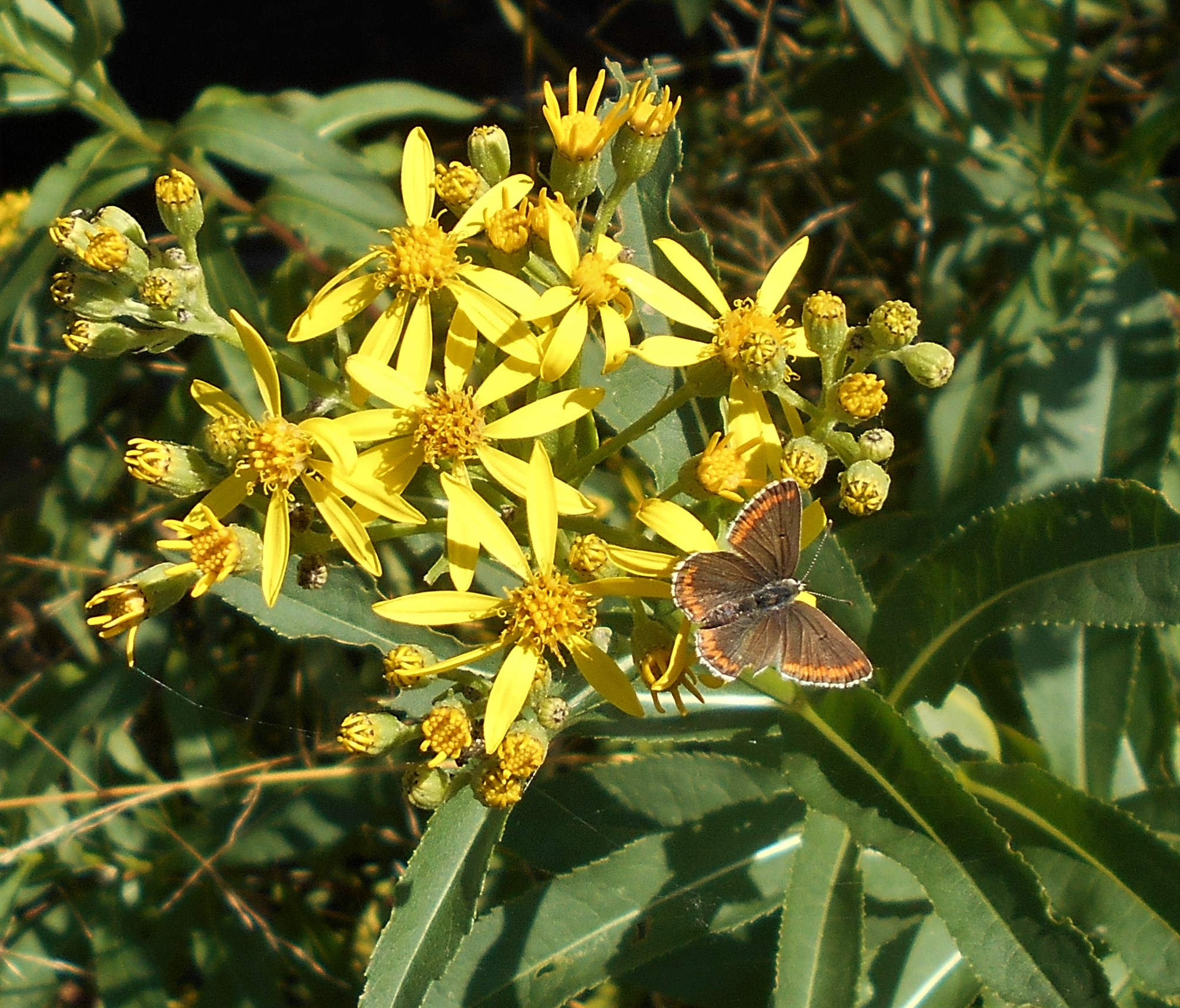
We were amply rewarded for our vigilance, one of us saw our first Brown Argus butterfly pushing for space among the bees, flies, Large Whites and Painted Ladies on the Saracen’s Woundwort and when the other walked on he spotted a pair of Dippers among the stones and rocks on the river bed, less than a mile downriver from our earlier sightings! They were both bobbing up and down, mimicking Steve Smith the Australian cricketer at the crease, so exciting as although we suspected there might be a pair, we had only ever seen one. Who knows,perhaps they are raising young.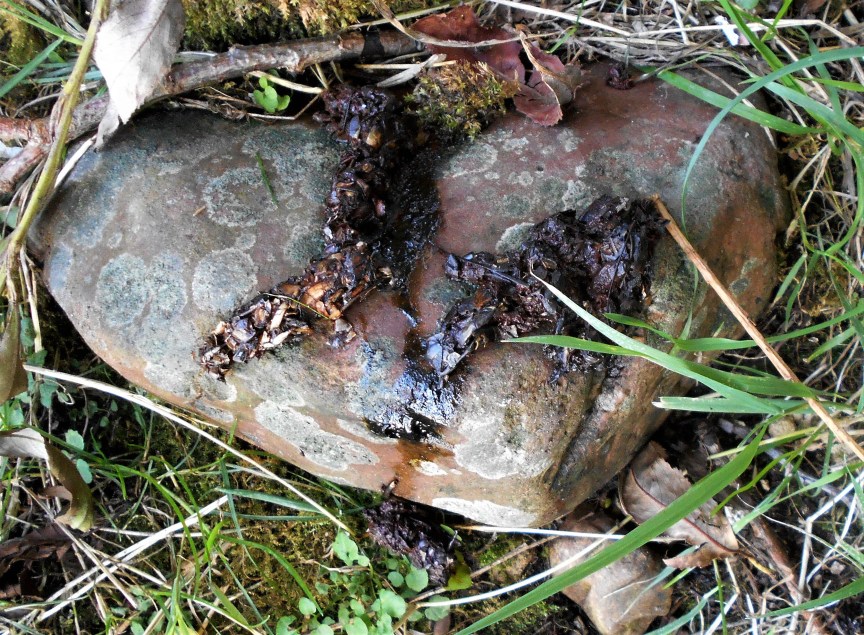
Sheer idleness persuaded us to wade gingerly across the river, steadying ourselves with our sticks, rather than the long walk to the stile, impervious to soaking trousers and shoes alike, which enabled us to join an easy footpath on the far bank. Idleness that is and the hope that the river current would be strong enough to rinse off at least some of the cowpat excrement from one trouser leg and shoe. Concentration on catching a good shot of the Argus butterfly was necessary – watching where I put my feet might also have been a good idea. However, although the river didn’t quite manage a good clean, at least it rinsed off the worst.
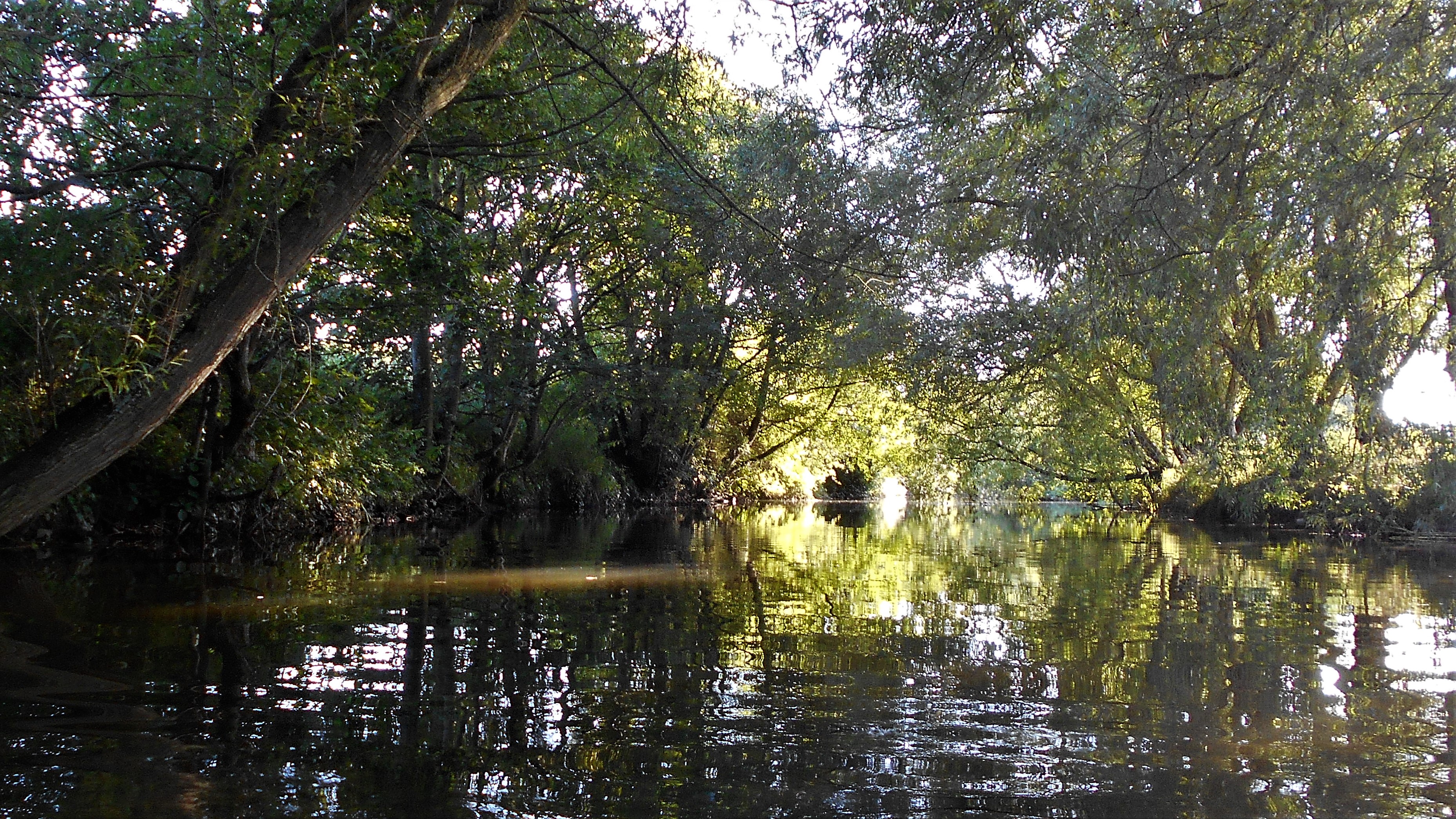
Looking up and down the river from the middle was delightful – it looked so clear, riffling over stones and forming placid pools, flat enough to form perfect reflections of the trees and sky. The final pleasure on arrival at the opposite bank was the discovery of two large water-worn stones close to each other two piles of Otter spraint on each, one set recent the other so fresh the anal jelly was still wet and glistening. A magnificent final flourish on which to head for home.
Difficult to find a moral but the secret appeared to be a mixture of attentiveness and laziness – which had certainly brought the afternoon’s best rewards.
20th August 2019 / Temp: 19C / Water Level: Low
The one recent and two fresh spraints on the top of one of the bridge piers, red from Signal crayfish and filled with crayfish calcium pearls were the sole signs of Otter, although we only visited two sites on our afternoon saunter so who knows, the other sites may have been choc-a-bloc.
The weather has been chill, wet and very windy so the welcome sunshine lured us out for a short stroll. The river meadows look pretty lifeless, apart from the hordes of grasshoppers and white moths, there was little insect life. The bright splashes of colour came from the plants on the very edge of the river, stately purple loosestrife and floppy comfrey, striking pink great willowherb, pale blue water forget-me-not, deep blue brook lime, pale mauve water mint, white fools watercress, white and pale pink Himalayan balsam, the dull yellow trifid bur marigold and the golden yellow buttercups and tansy, none of which surprisingly appeared to attract any insects. A large thick mass of bramble however, with its mixture of black, red and green berries and a scattering of flowers, was a hive of activity, bees, wasps and flies buzzing and humming all over the bushes.
 Large Red Damselfy (male)
We did eventually spot several Banded and a single Beautiful Demoiselle, a Large Red and a couple of Common Blue damselflies, several Brown Hawkers with their beautiful golden-bronze wings, and a Common Darter dragonfly but so few – the abundance of high summer definitely over. Similarly with the butterflies, a couple of Commas, a Small Tortoiseshell, abundant Large Whites were all we saw.
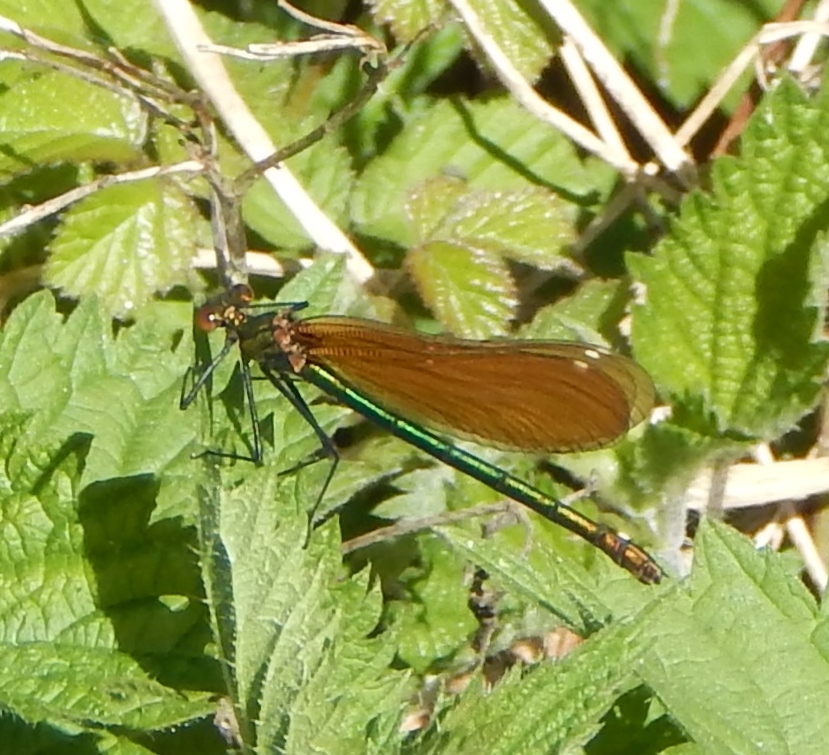 Beautiful Demoiselle damselfly (female)
We have no idea what has happened to the water birds – one lonely Moorhen investigating the reeds was all we saw, the others are presumably hiding and moulting. Most noticeable was the absence of Mallard which are usually so evident in good, sometimes huge numbers but also no Heron, Little Egret or Kingfisher, which are frequent along this stretch of the river.
However, we saw lots of tits, mostly Long Tailed, a pair of Buzzard, circling high, high overhead and heard a Raven. What lifted our spirts more than anything was the sight of twenty or more Swallows, several families weaving, wheeling and zooming over the river, showing off their astonishing aerobatic abilities, feeding up before they start their long journey back to South Africa in the coming weeks.
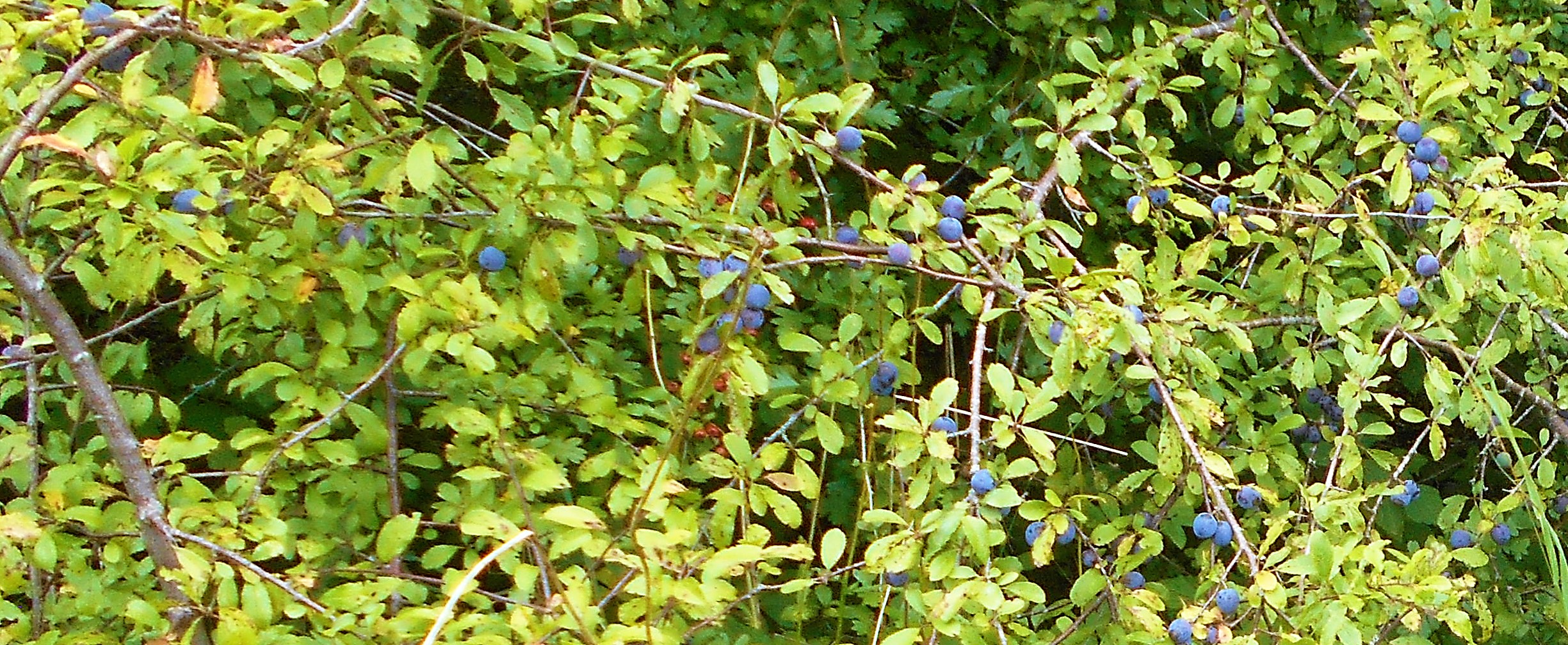
Swallows leaving is the signal for the end of summer, emphasised by the fat purple sloes, the trees here always a good source, and a good harvest this year by the looks of them, the reddening hawthorn berries, white snowberries and ripening blackberries. Thoughts inevitably turn to sloe gin and chutney but we are always reluctant to let go of the exuberant flowers, grasses and insects of summer every year and this year is no exception, the weather never being hot enough for us to long for cool and fresh autumn days.
13th August 2019 / Temp: 18 C / Water Level Medium
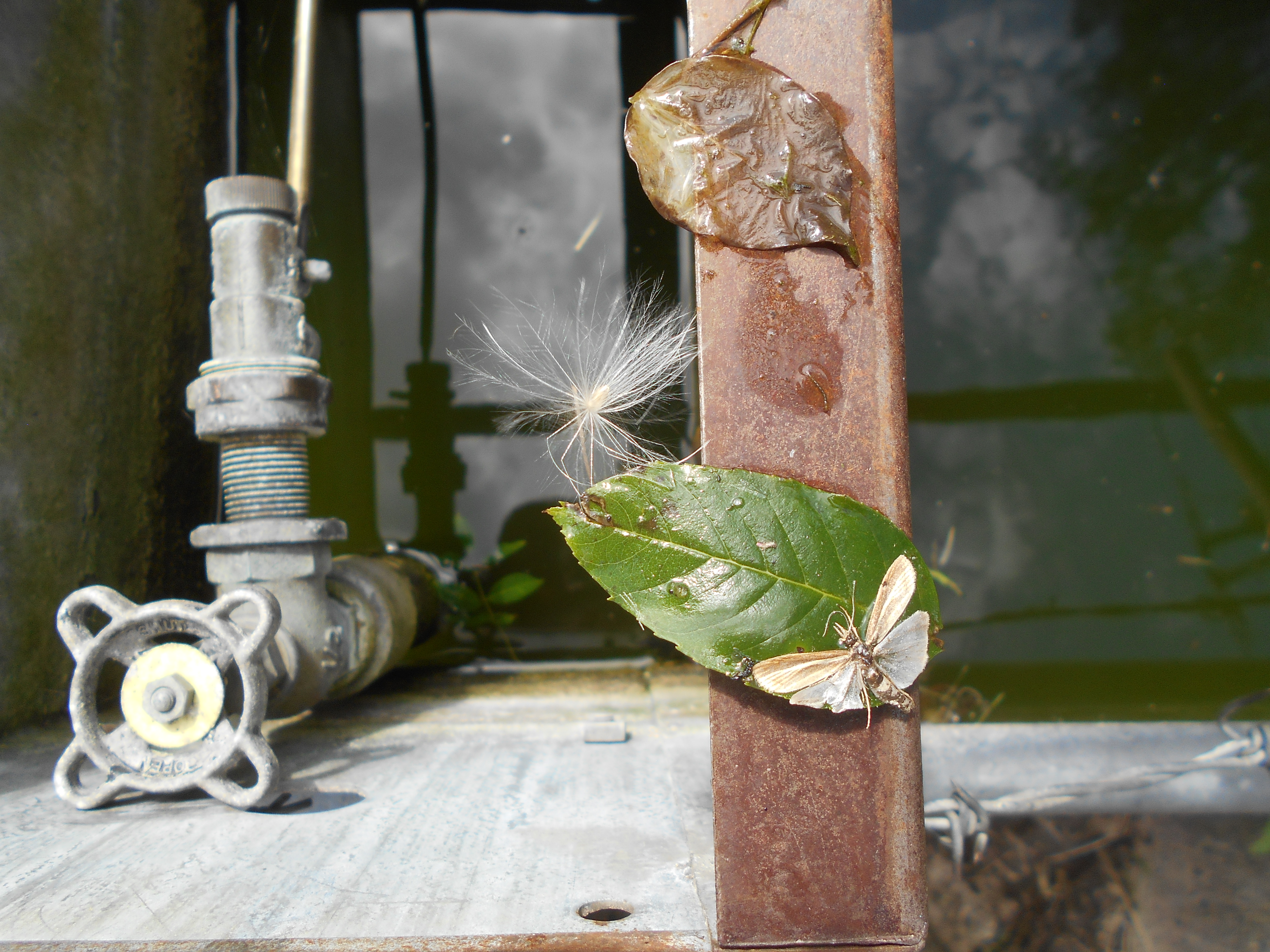
Cooler after rain storms and lows but the sun was warm and the sky blue so walking through the water meadows was very pleasant. Very little activity and very few flowering plants since haymaking cut down the massed umbellifers which were a great source of insects, but maybe the rain with encourage a second flowering – an extreme Chelsea chop! A few desultory butterflies, Large White, Meadow Brown and Gateway among them, no sign of ground beetles around the water trough, a drowned moth, a few pond skaters and a common blue damselfly whizzing overhead was the sum of it.
No signs of Otters at any of the four sites and still no water birds along the entire stretch of the river, not even the ubiquitous Mallard, but an Emperor dragonfly darting backwards and forwards over the water above the weir made a striking splash of colour against the fresh bright green leaves of the bur-reed, quite casting the smaller damselflies into the shade. The Brown Hawker dragonflies may not be so colourful but there were more of them, we spotted 6 during our walk along the river bank, flashing their golden brown wings in the warm sunshine.

The big beach looked a little woebegone, a cattle-trodden scene of broken plants strewn all the way across, but there were arching branches of purple headed burdock and enough plants on the margins to interest a good number of Banded Demoiselles, Common Blue and Blue-tailed damselflies, chasing each other amongst the reeds, although they were not so plentiful as before the rains. We found a dead Forest Bug, its red legs catching the eye, probably also a victim of the rains but little else.
Walking beyond the big beach although the sun-warmed grass is alive with meadow grasshoppers, leaping to avoid our footfall and white grass moths, the river becomes more shaded by a band of trees on both banks with an undergrowth of snowberry bushes their berries gleaming in the shadows in which we saw a couple of small creamy-white mushrooms, possibly Ivory Bonnets. Thick clumps of saracens woundwort interspersed with wild angelica had formed along the bank and the angelica like most umbellifers was covered with insects, hoverflies, icheumon wasps, flies and a few worker bees. It was here on a clear patch of grass that we found a scatter of woodpigeon feathers, a clear sign of a Sparrowhawk’s recent meal.
We moved on to the final site in the rather desperate hope of Otter activity which was dashed as soon as we arrived. However the sun was warm, the bank inviting and the quiet peacefulness of the afternoon persuaded us to linger, sit on the grass and watch the minute fishes darting about into the deeper pools in the mud left by an animal’s prints – their own sun-warmed hot tubs. Sitting on a river bank looking at nothing and everything enlivens an August afternoon.
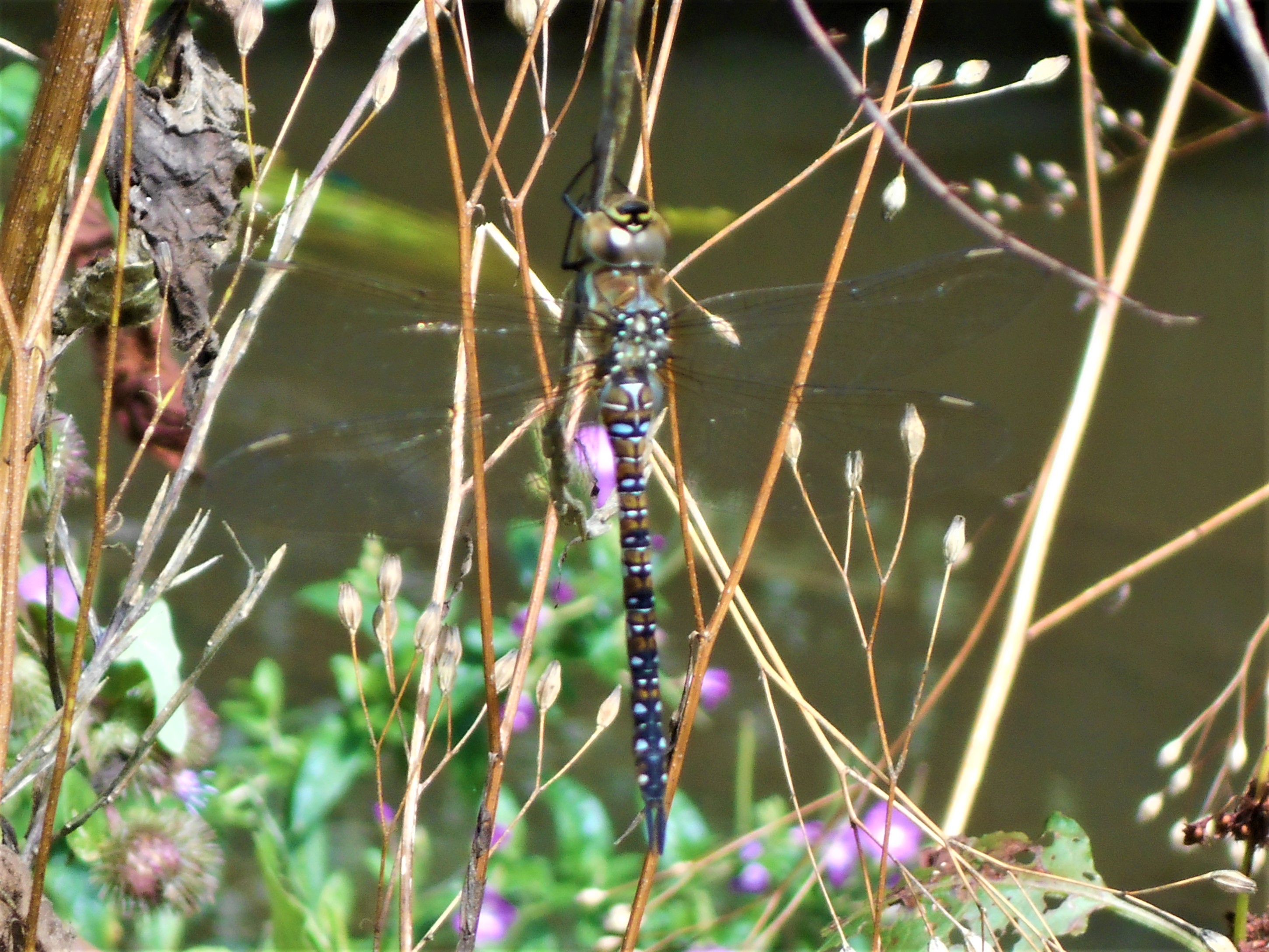
A male Southern Hawker dragonfly chose a plant close by to hang on, allowing us the opportunity to admire its jewelled markings; a Red Admiral fluttered down, making a brilliant splash of scarlet in the grass, followed by a stippled brown and orange Comma; a pair of Common Blue damselfies clung to a leaf and each other, mating; one of the many Brown Hawker dragonflies appeared, Blue-tailed and more Common Blue damselflies investigated the waters edge, and a Mason wasp sat on a leaf vying for attention.

We heard a Green Woodpecker’s call across the meadow, inadvertantly disturbed a large Frog from the ledge below who leapt up and sat between us, and then, out of nowhere, the scintillating blue flash of a Kingfisher heading downriver towards us when it performed a fautless swerve as it veered away, back upstream, giving us a brilliant view of its vivid blue-green turquoise wings.
A perfect end to a lovely summer afternoon by the river.
29th July 2019 / Temp: 23-20 C / Water Level Low
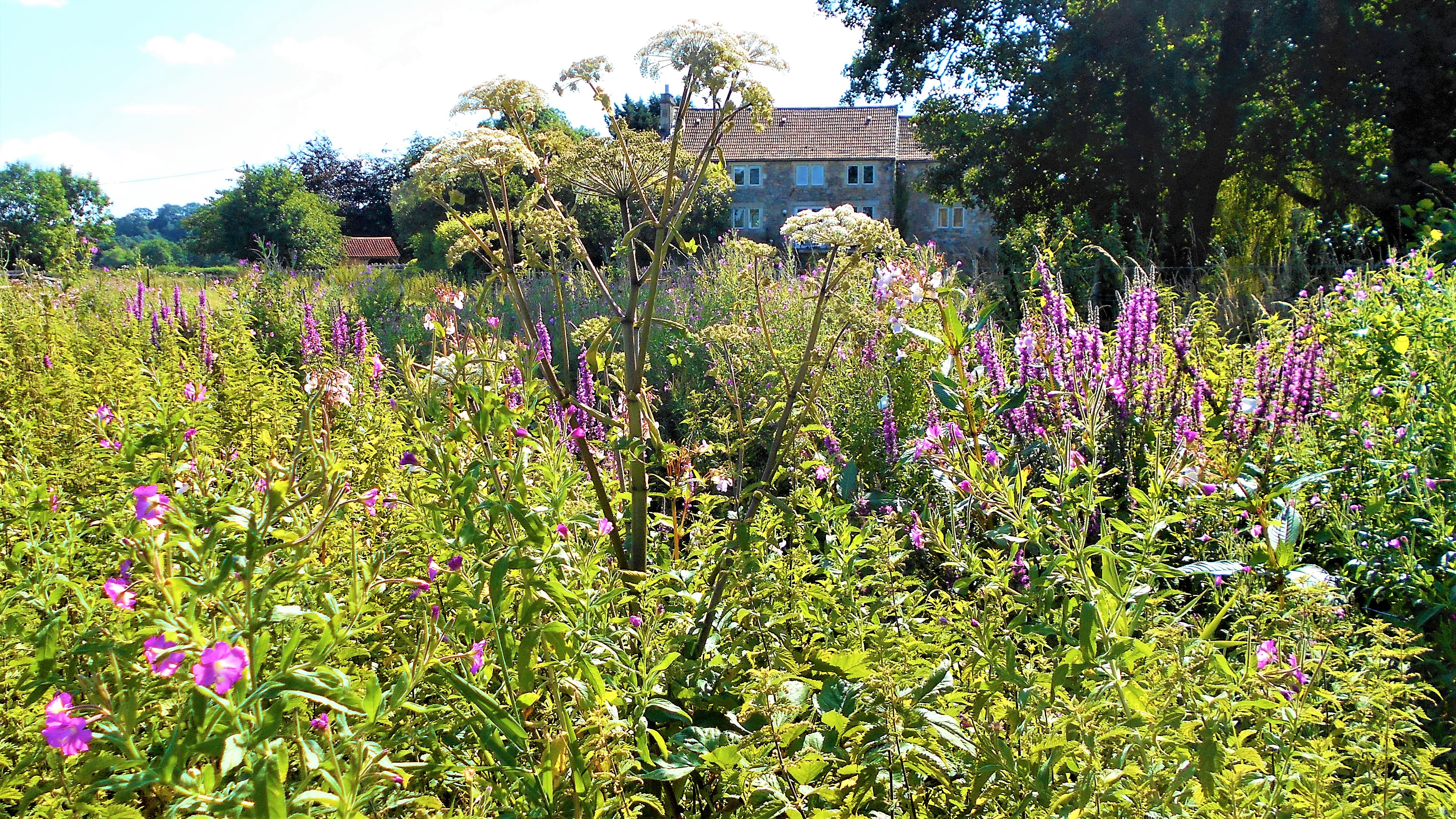
The purple loosestrife plots the line of the narrow stream, which is otherwise completely obscured by the riot of flowering plants: wild angelica, flowering teasel, creeping thistle, Himalayan balsam, great willowherb, hedge bindweed, watermint, meadowsweet, cow parsley, hogweed, common valerian, welted thistle and a good crop of stinging nettle. As well as being a stunning sight, they provide a feast not only for the butterflies, Gatekeeper, Small Tortoiseshell, Large White, Small Heath, Meadow Brown and Small Skipper but also for the damselflies, Common Blue, Banded Demoiselle and Beautiful Demoiselle, a couple of Brown Hawker dragonflies and uncountable numbers of bees. This luxuriant abundance of flowers and insects is heart-warming, just looking at the line lifts the spirits and provides a glowing memory of high summer to carry us through the dark days of autum and winter. The swallows, possibly as many as a dozen, dive and swirl in the air above us, swooping low, inches over the grass, before flying up to the telegraph wires where they gather, perching and twittering,
As we crossed the field to begin our survey we disturbed a hare, which immediately took off at high speed and was soon lost to sight, hidden in amongst the thick tussocky grass. We usually see them racing across the adjacent open fields but as these have been recently harvested, he may feel safer in this area of unmown grass despite the house only 50 yards close by. The dividing hedge bordering this field had attracted a great number of Gatekeepers, both on the leaves and in the grass below, whereas when we reached the field on the other side there were none but lots of Meadow Brown, Small White butterflies, Common Blue and Banded Demoiselle damselflies. A Heron took off as soon as we appeared as did 2 Lesser Black Backed Gulls.

Having drawn a blank at the first two sites, we arrived at the third, still showing no sign of Otter, nothing to see but a stately Common Mullein in lonely splendour with a few red soldier beetles examining its flowers while close to the water there was a great mass of Great Willowherb plants in full flower, absolutely smothered, mainly by honey bees. By now we began to think we were unlucky, that we wouldn’t see anything today, and started the long trudge along the animal worn track, rather weary and very hot to the final site.
Having crawled under the electrict fence, we were so busy watching the large flock of at least 30 Jackdaws and Rooks spread out over the field, rising and falling, forever on the move, that we nearly missed a large quantity of fresh Otter spraint on the path, red-brown and filled with the claws and bones of a recent meal of American Signal crayfish. A few yards farther on, more spraint, older, dried, deposited neatly in the centre of a large dry cowpat, and farther on, yet more fresh spraint filled with crayfish pearls and bones. Much heartened, heat and tiredness forgotten, we walked on, startling 2 Swans and about 15 Mallard and then 6 Goosander and a Heron, all scattering upriver or taking to the air at our approach.
We then slowed and slowly approached the backwater stream, moving stealthily, hardly daring to breathe, and then to our delight our care was rewarded, there was the Dipper as we had hoped, standing on a fallen branch in the river, bobbing up and down, looking around him. We watched the bird for some time perfectly enchanted before a slight movement startled it and it flew off. However, it was enough, we were so pleased to see it for a second time nearly a month after the first, in the same place at the same time of the day, giving us hope that it might be a sign that it is nesting close by.
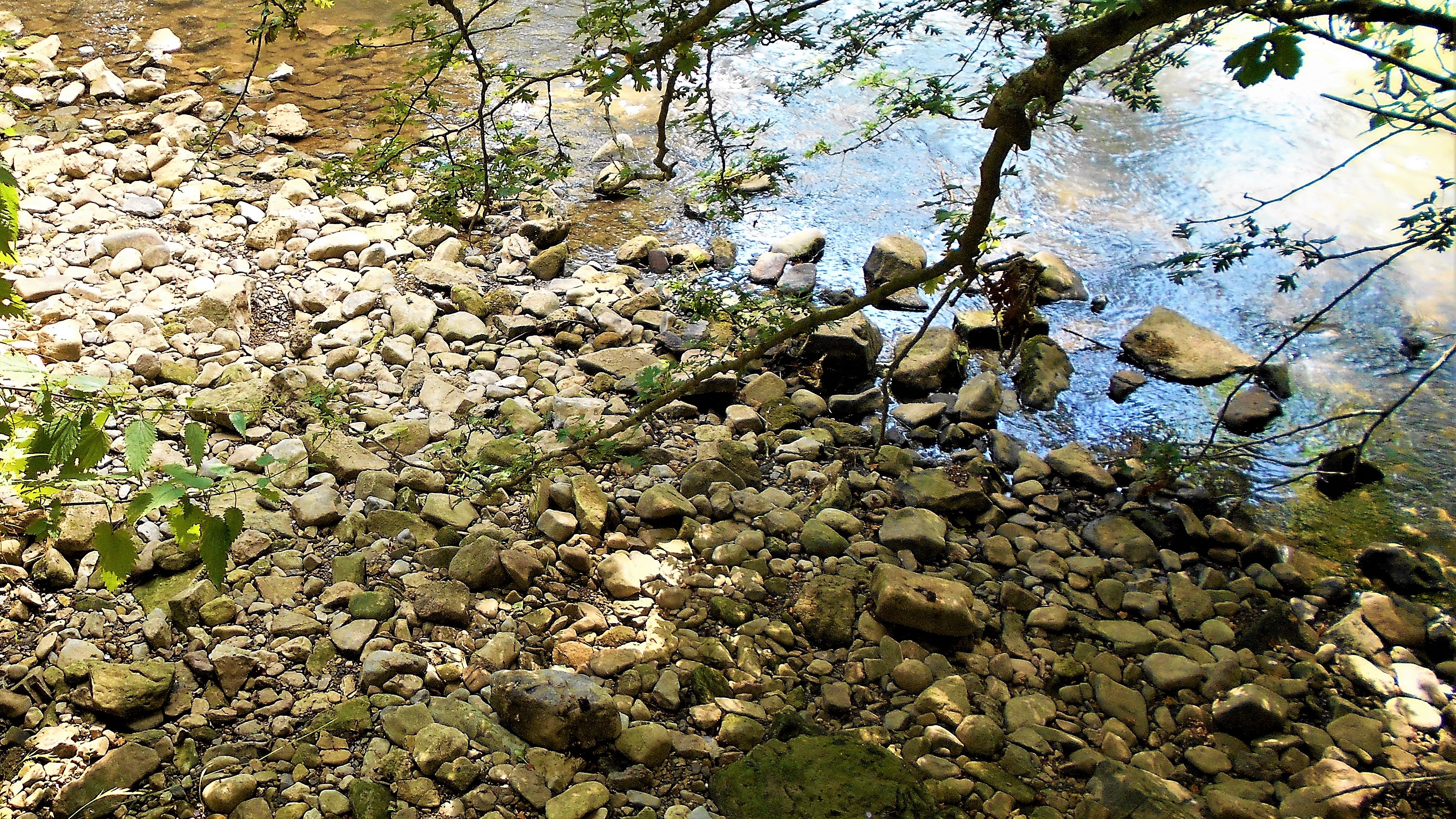
Our final workout was a scramble through briars, brambles and hawthorn branches down the short but steep bank to the Otter’s secret beach, not helped by hearing the Raven’s croak and the Buzzard’s mew as he circled overhead, hoping no doubt to find a body or two to lunch on. This site at least didn’t disappoint; fourteen piles of spraint from recent to glistening fresh deposited on stones and boulders spread across the beach. Some crayfish remains scattered between the stones and in the river, a couple of discarded river mussel shells. A shrill whistle and like a bullet from a rifle, an orange and blue-turquoise body shot past, inches above the water, a Kingfisher – what a triumphant end to the day!
28th July 2019 / Temp: 18.5-20 C / Water Level: Low – Medium
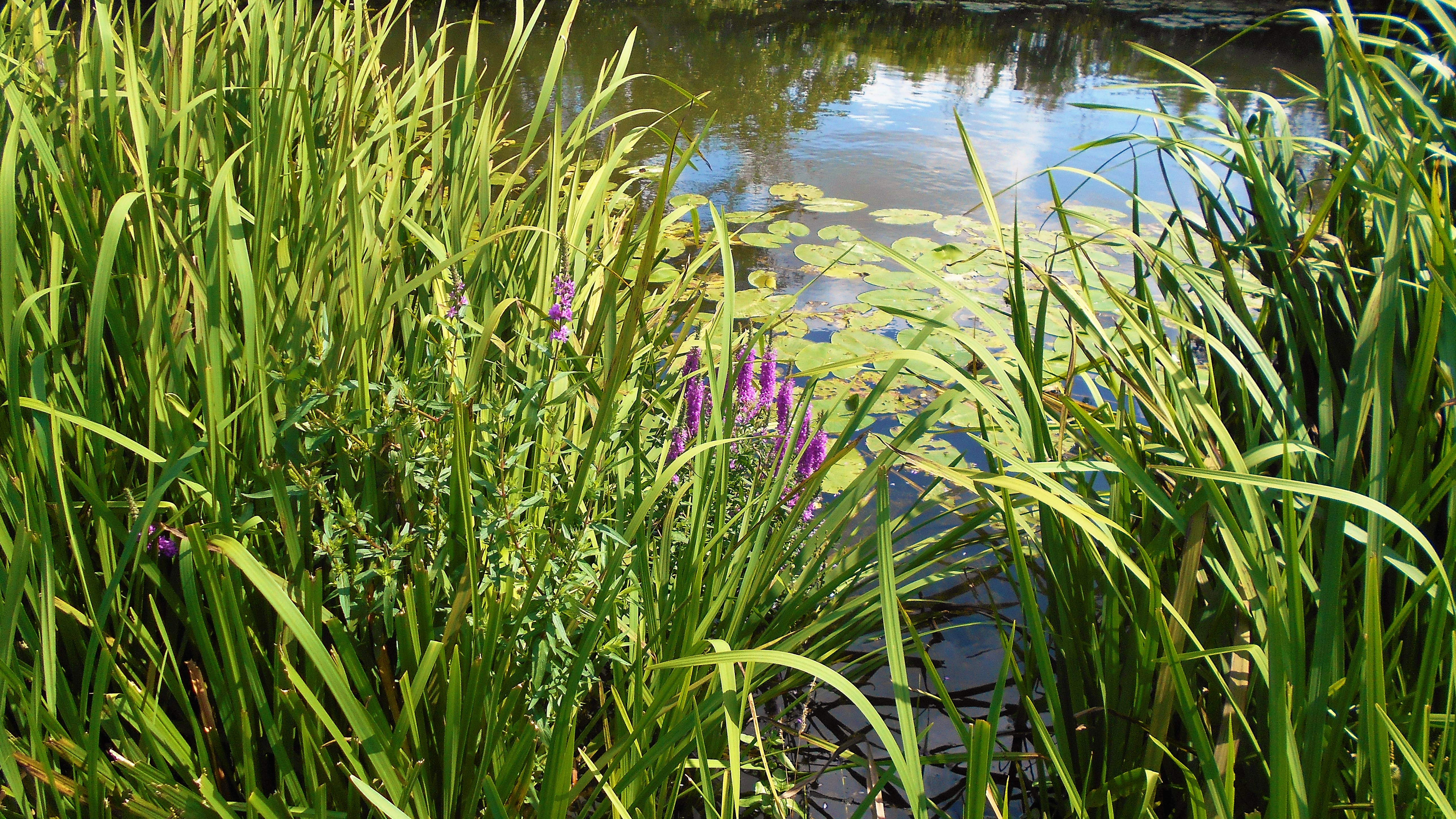
After last week’s record breaking heatwave, the countryside looks exhausted, and the usual slow decline of the plants and flowers of summer has suddenly accelerated leaving bedraggled sun scorched leaved plants, heavy with seed, which we usually associate with late August. This effect has been exaggerated by the recent haymaking, all the fields having been mowed for silage leaving them shorn of the wild flowers and the long waving grasses which looked so magical, now the fields look like bog standard pasture.
Only a few weeks ago the beach was a jungle of head-height flowering plants where we carefully picked a tentative path, whereas now that the heiffers have been let into the field and trampled their way across to drink, the beach is a wasteland of smashed and broken down plants, apart from a few clumps of fat hen and nettles, and those traps for the unwary, very large cow pats! However, help is at hand, the next ten days are forecasted to be thunderstorms and heavy rainfall – by our next visit, the fields will be transformed again.
Lots of Banded and Beautiful Demoiselle damselflies, Blue Tailed and Common Blue as well as many Brown Hawker dragonflies which we saw both in the trees and along most sites. Gatekeepers and Small Whites butterflies predominated but we also saw Red Admiral, Meadow Brown and one Comma whose numbers seem to be down this year.

Comma – copyright John Hansford
We stood for ages watching a newly emerged dragonfly sitting still on a reed which having discarded its exoskeleton had climbed up the stem awaiting full development. It was very pale and its wings were still short and not fully formed. Evidently the whole process of expanding wings and hardening the abdomen lasts between 1 hour for damselflies to 3 hours for dragonflies, so we didn’t wait for the full metamorphosis!
Having seen two Kingfishers at separate sites we were not surprised while chatting to a walker who volunteered with the local wildlife photographer Simon King, to hear that he had seen a Kingfisher nest close by the small tributary where we often heard them. He also said that Simon King, who left a trout out every night, filmed the frequently visiting Otters on his stretch of the river. When we reached the next site, we met a visitor new to the area who had seen an Otter at 11.30 the previous morning running along the river bank and sliding into the water! This seemed jolly unfair as our search for Otter activity had so far been quite fruitless, although the day was eventually saved when at the last site we did at last see some recent spraint.
10th July 2019 / Temp: 22 C / Water Level: Low
 Pond Skaters in the cattle trough
Although warm it was cloudy which made the air extremely humid. We were amused to see a number of pond skaters skittering around on the pollen coated water in the cattle trough – accompanied by one solitary black insect – a scavenging water beetle? – who knows!
Lots of damselflies – Azure, Beautiful Demoiselle, Blue tail, Banded Demoiselle, Common Blue and a single pair of Brown Hawker dragonflies. Several butterflies, mostly Meadow Brown, but also Large White, Ringlet and Painted Lady; we also caught a brief glimpse of a beautiful Scarlet Tiger moth which always catches the eye. A few ladybirds but strangely only a couple of bees and no hoverflies during our entire walk despite masses of hedge bedstraw and brambles in full flower. Presumably the cloudy conditions did not suit. The insect crawling over almost every flower, often two and three on one flower head, was the Common Red Soldier beetle – they were everywhere!
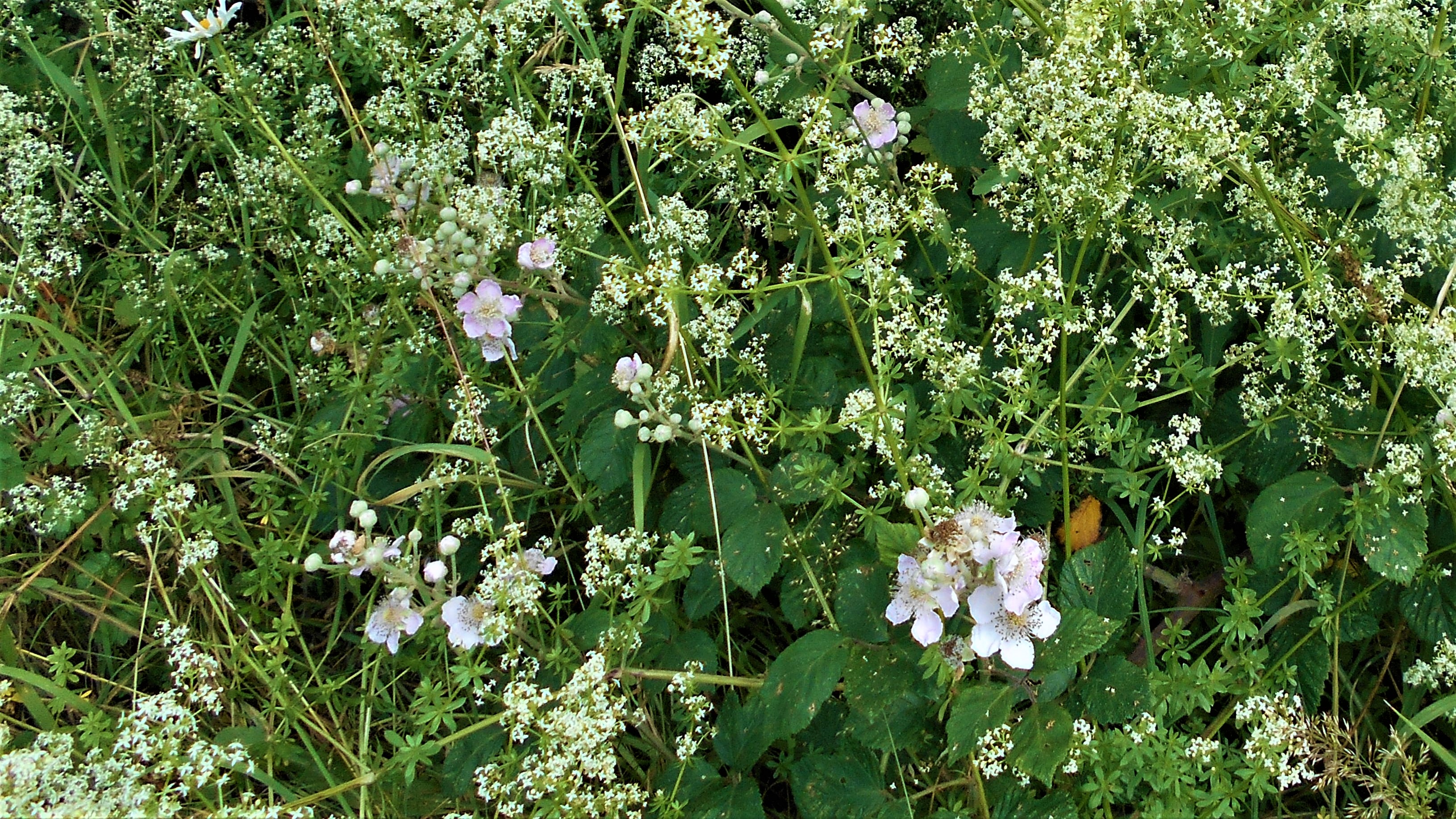
The meadow grasses were thickly coated with seeds – how quick from flower to seed it has seemed this year. The cattle have not been let into the fields so the grasses are incredibly tall, lush and tussocky, and by not crossing the gravel beach and crushing the plants they have grown into a veritable jungle, head and shoulder high with umbelifers, purple loosestrife, great willow herb, fat hen, Himalayan balsam, hemlock, thistles and stinging nettles stinging and scratching our arms as we picked a careful path along the beach – machetes are probably called for!
Lots of damselflies along the reed edge and over the water, particularly the banded demoiselles and the blues but no sign of Otter spraint, Mallard, Kingfishers or Pied Wagtails although we did disturb a family group of nine Goosander females with their chestnut heads and watched a nosiy Sparrowhawk, shrieking loudly as he circled a clump of trees before settling on a telegraph wire for a while before flying off.

We checked the piers under the bridge before leaving and on one side there were the scattered remains of several meals – crayfish claws and lots of legs and pearls among the dried flotsam and debris of recent floods and on the other side copious amounts of spraint, half a dozen separate piles, both fresh and recent. Always heartening to see signs of Otter activity even if we don’t see the Otters!
28th June 2019 / Temp: 23-27 C / Water Level: Low
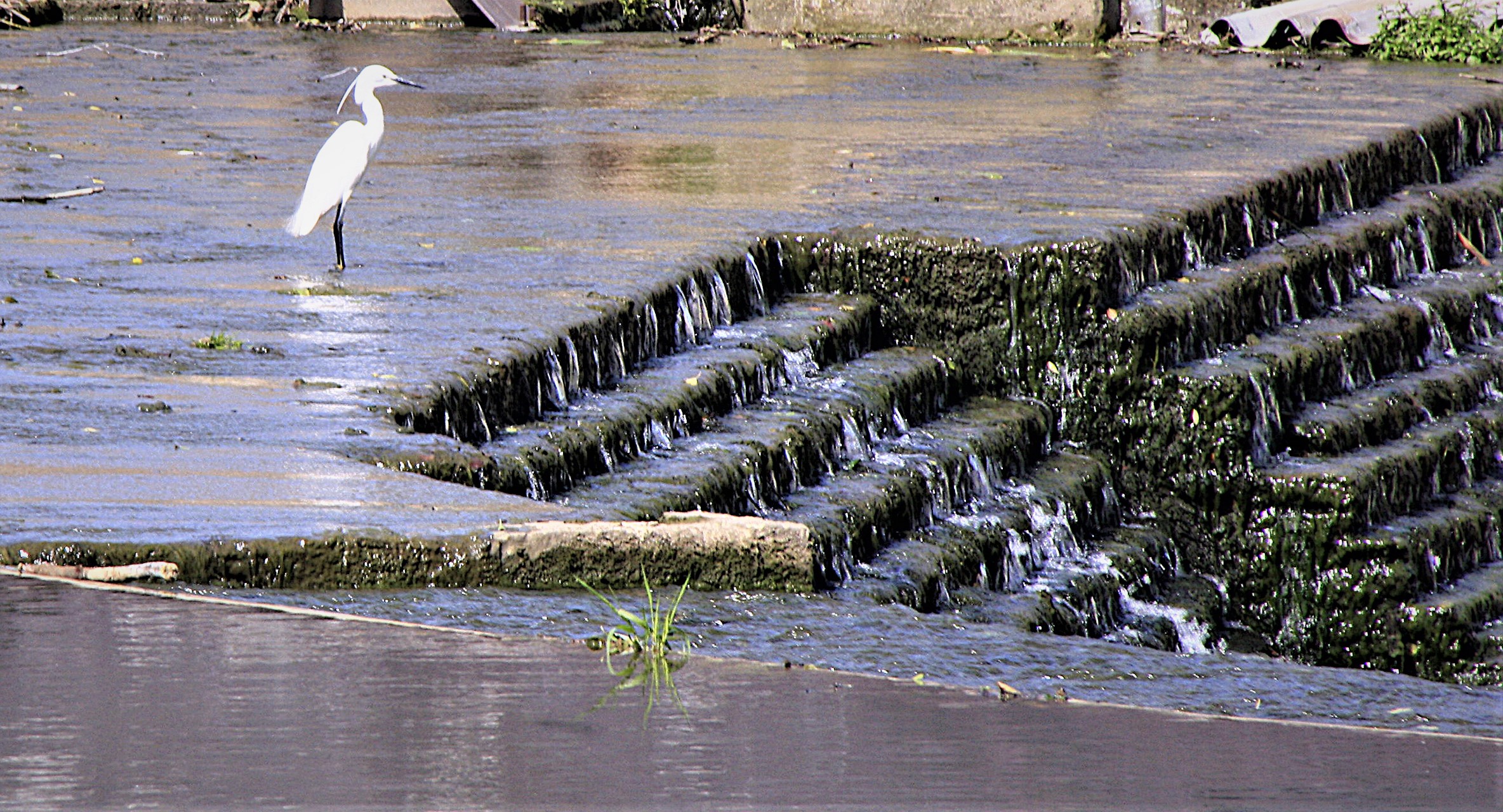 Little Egret on the Weir c. Rebecca Muirhead
From the moment we climbed over the stile to be met by the intoxicating scent of lime tree flowers, the afternoon shouted summer had arrived at last. As we walked across the water meadow we saw a Heron rising from the bank and flap off over the trees, a Little Egret posing coolly on the weir, Red Admirals, Peacocks and Meadow Brown butterflies fluttering around our heads and we even spotted a shy Silver Y moth flying on and on as we ran after it, trying unsuccessfully to capture a photograph before it disappeared, hiding in the long grass.
The wind dropped, the sky cleared, it was extremely hot and as we reached the river a Kingfisher flashed by – this was definitely going to be a day to remember. And so it was. All along the river’s reed and meadow-sweet edged banks were dozens upon dozens of damselflies! Blue-tailed, Common Blue, Large Red, Banded Demoiselle, Beautiful Demoiselle and Azure damselflies chasing, ovipositing, mating and just dashing about, and we even caught sight of a female Broad-bodied Chaser flashing her brilliant gold body as she disappeared upstream – our first dragonfly of the season. These are the sights we had been expecting and hoping for for weeks – and here it is – summer.
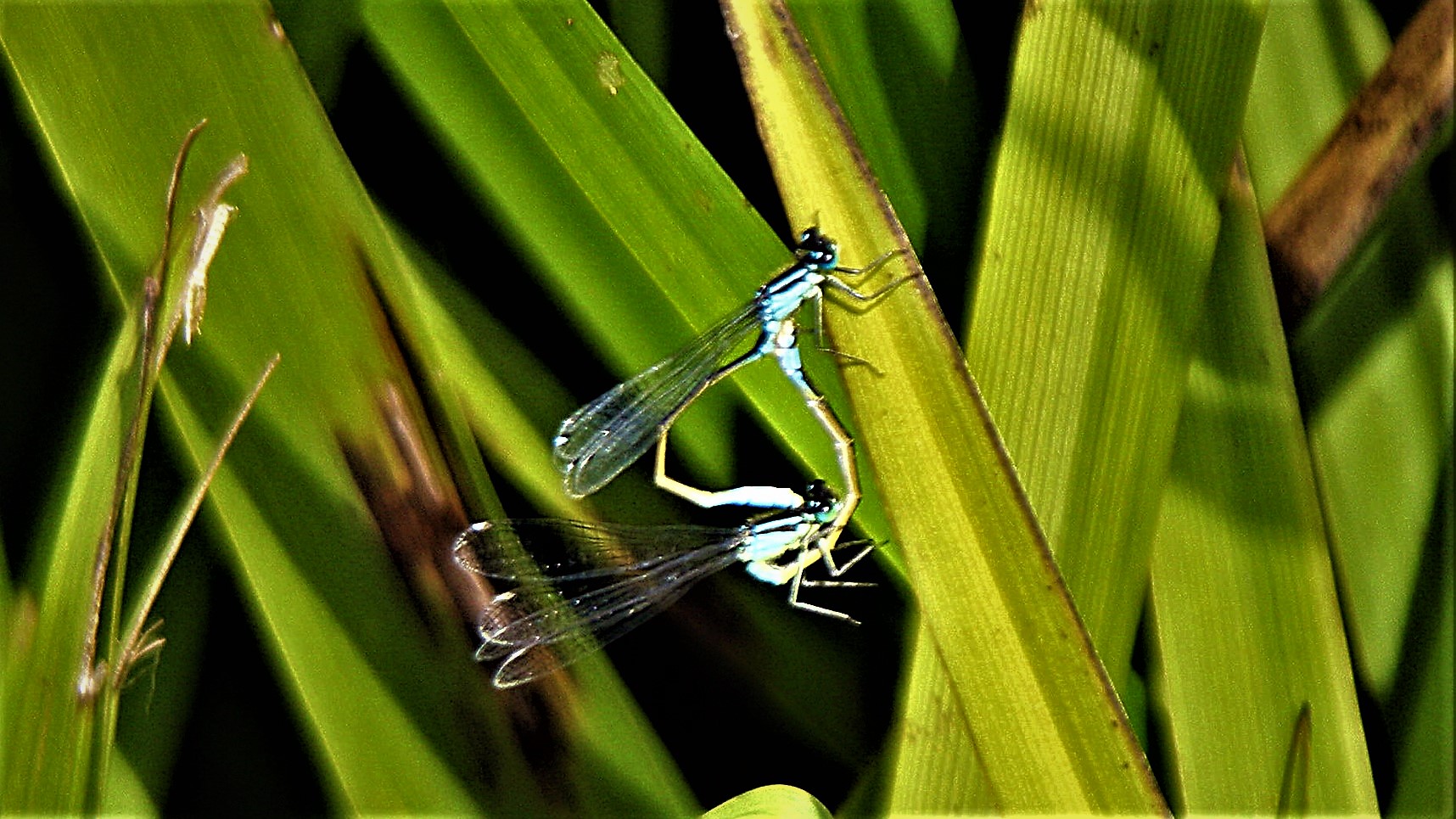 Common Blue damselflies mating c. Rebecca Muirhead
The muddy pond-like ditch in the corner of the field was covered with a carpet so thick with water speedwell, brook lime, water forget-me-not and watercress that hardly an inch of clear water was visible but those small spaces had more than their fair share of pond skaters buzzing around.
Along the river edge fully opened yellow water lilies and their great flat platelike pads made useful resting places for damselflies and the unfortunate few of the many shoals of tiny silvery minnows which when leaping out of the water landed on the pads by mistake before frantically manoevering themselves back into the water. We heard a Moorhen’s warning squawk but he was well hidden unlike the noisy, clattering Wood Pigeons and the beautiful mewing Buzzard wheeling slowly high above us.
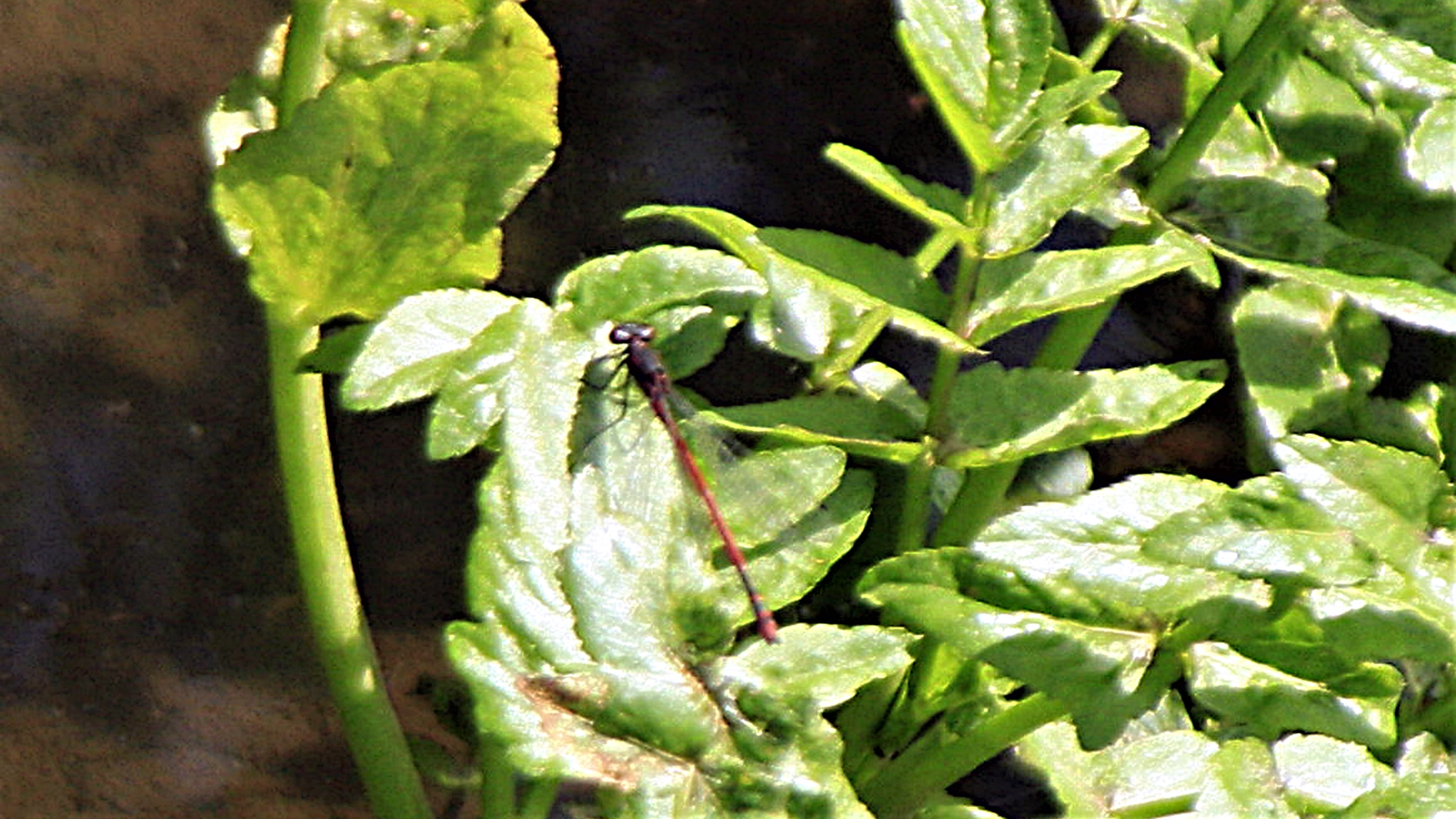 Large Red damselfly c. Rebecca Muirhead
It was good to remember the warmth of the sun and feast of insects as the survey earlier in the day was a duplicate of the day before – strong blustery north-easterly winds and high milky cloud often obscuring the sun. That particular stretch of the river has fewer trees which expose the area to the full force of the wind so we saw little of interest – a few damselflies, no butterflies and no signs of Otter. But we soon approached the quieter stretch protected by a thick hedge and were relieved to see a Heron lifting from the water with a few leisurely flaps of his huge wings, and a couple of Swans, 8 or 9 Mallard and 4 Mandarin Ducks skittering away from us upriver. The river is lined by a dense impenetrable hedge of bramble bushes covered with white and pink flowers, each of which seemed to have a bee burying its nose in the centre, some of whom managing to get more pollen on their faces than nectar on their tongues!
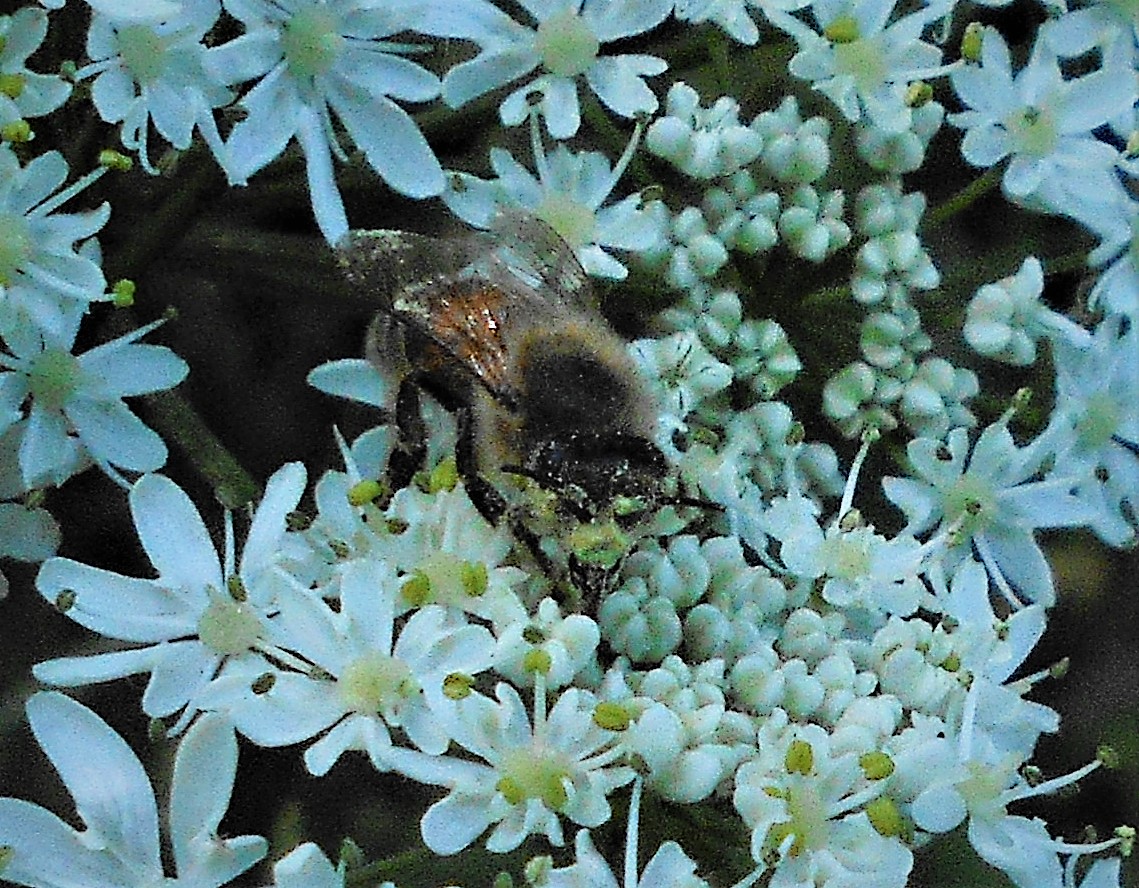
Lots more damselflies here, Common Blue, Banded Demoiselles and Beautiful Demoiselles, Blackbirds singing, Jackdaws calling and Swallows swooping down over the meadow. One recent spraint and one old was the sum total of Otter activity on the beach; the cows had been moved on to another field which made our search easier but they had left their calling cards splattered across the beach, their hoof prints churned deep in the soft mud and this together with the Swan and Goose excrement may not have been an attractive sight for the Otters. But beyond the beach were more yellow water lillies with clumps of reed grasses and a few damselflies so the defiled beach was soon forgotten.
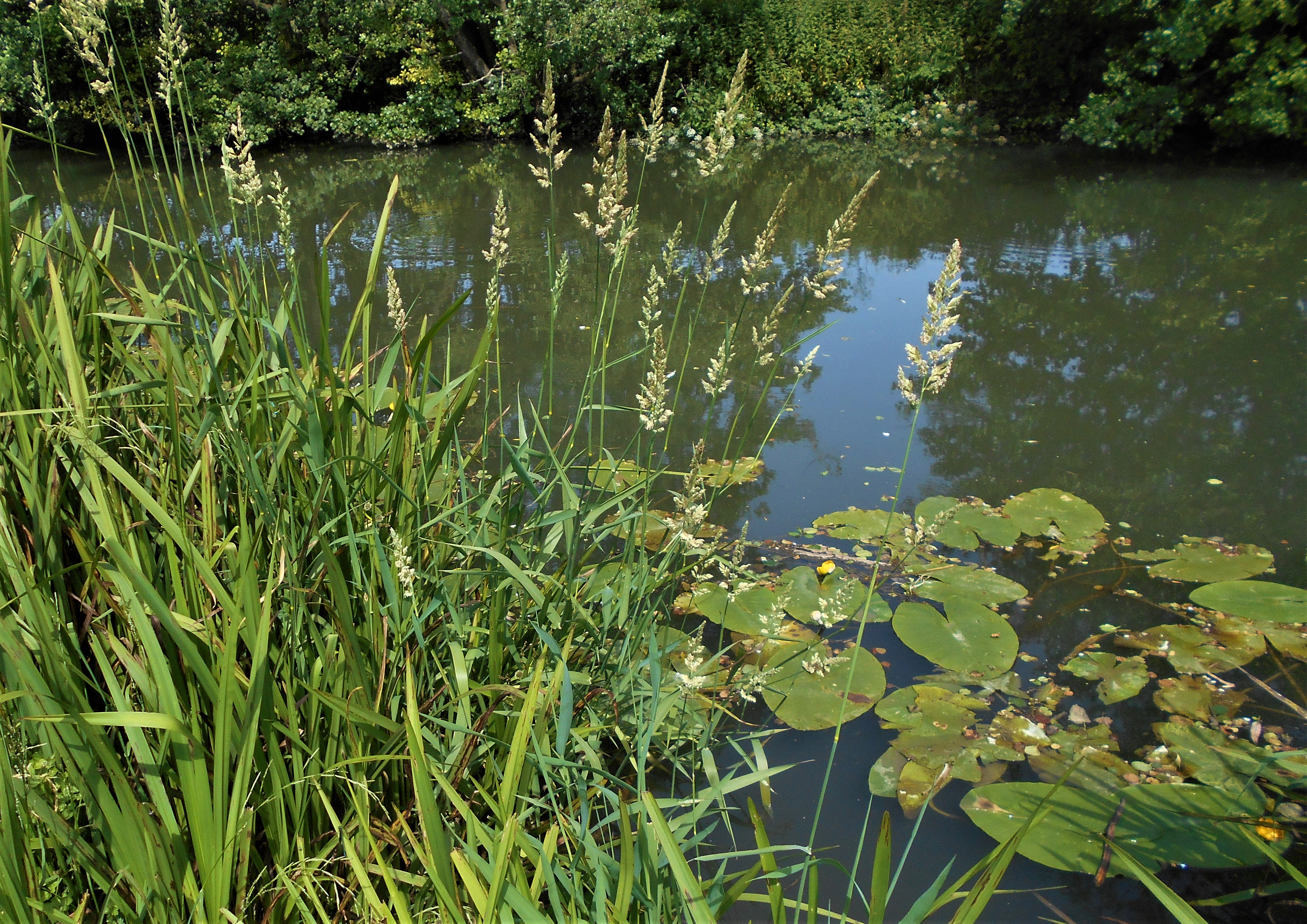
Crossing into the next field we found it hadn’t been either harvested or grazed by the cattle so wading through the long grass along to the survey site was hard work. We have been used to following the well-worn Badger run but the path seemed to have mysteriously disappeared leaving long, thick lush growth of shin deep tussocky grasses to trudge through. The sound of the families of Rooks swooping across the field and around their rookery with cheerful kaas and calls cheered us on our way as did the sight of more Mandarin ducks and Mallard and another couple of Swans – very good to see after the lack of water birds on all the sites yesterday.
The top beach was idyllic as always. The water here rushing, rippling and splashing over stones and boulders, gin clear and cool beneath the overhanging willows – a perfect spot for Dippers and there it was, the very first Dipper we had seen on this stretch of the river. Such an exciting sighting – an absolute delight and further proof of what we had always suspected, the water must be pretty clean.

The top of the bank was covered in scarlet poppies making a lovely splash of colour to admire as we clambered up and down the steep slope to the beach trying with some difficulty to avoid all the meadow and field grasshoppers, the tussocks of hot grass seemed full of them. 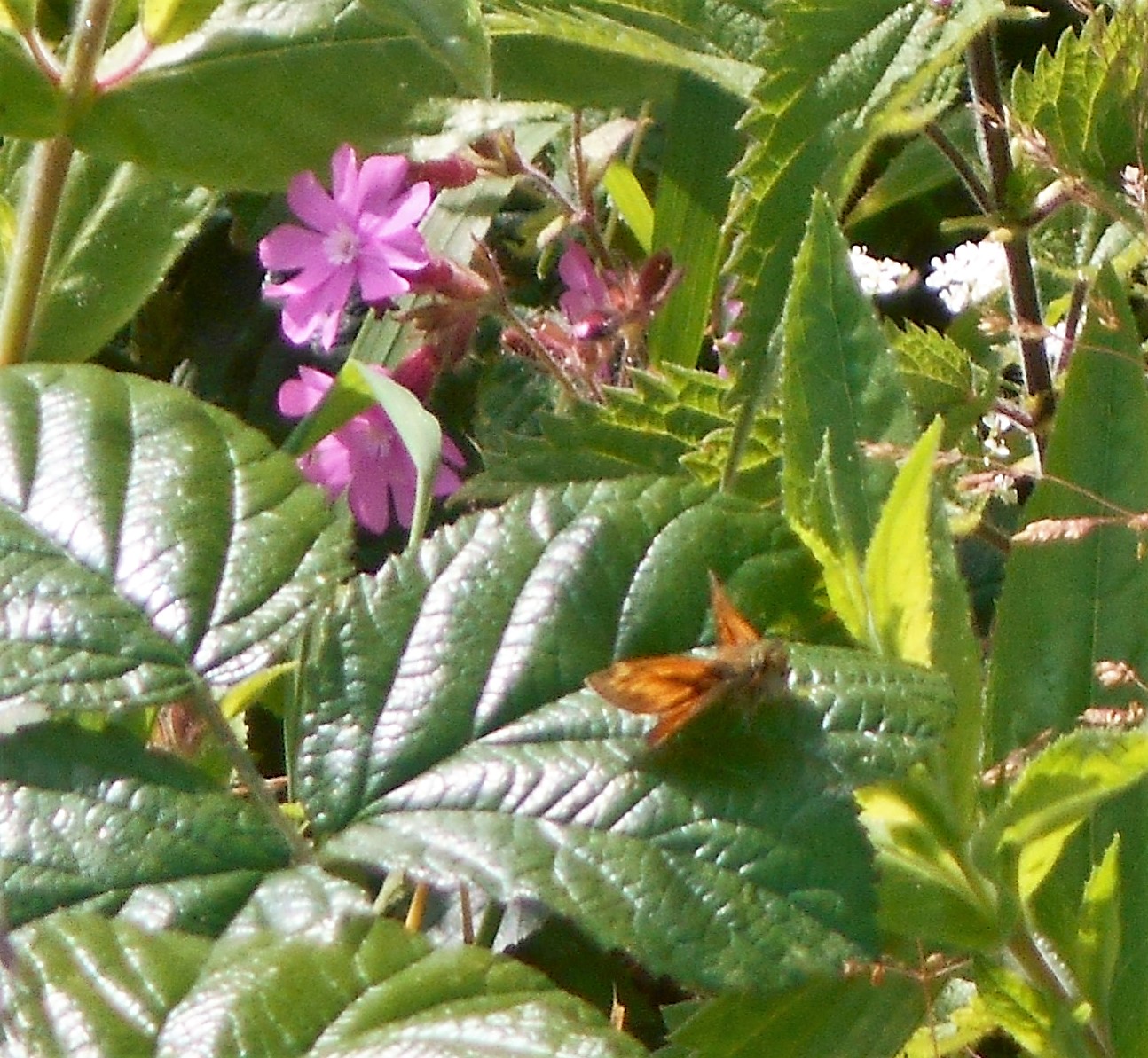
The undergrowth beneath the hawthorn thicket along the water’s edge was a wonderful tangle of flowering bramble, red campion, hedge mustard, dog rose, elderflower and hedge woundwort and we spotted a Large Skipper butterfly vivid against the dark bramble leaves, a Marbled White and a couple of Meadow Brown butterflies as well as a Blue Shield Bug and several Nursery Web spider tents in the long grass, one with the grey female crouching on guard outside and the spiderlings in a close huddle ball inside.
Scrambling through the small gap between the hawthorn branches and those trip wires for the unwary, skeins of bramble branches trailing in every direction, we eventually made it to the second, stony beach where we found copious amounts of Otter spraint, both fresh and recent, together with crayfish remains and crayfish pearls. It feels a very secretive place, quiet and for the most part unexplored except for the wildlife, a total haven out of time. A Kingfisher flashed by while we were exploring the beach and from the trees lining the banks there came the cheery twitter of small birds and the fluid notes of a Blackbird, a wonderful counterpoint to the splashing sounds of the river rippling over stones beside us. A perfect spot for messin’ about on the river.
27th June 2019 / Temp: 19 C / Water Level: Low
 Icheumon Wasp (sarcitorius) female
Strange kind of weather – clear blue skies, wall to wall brilliant sunshine but a stiff north-easterly wind, surprisingly chill, created havoc with the tossing branches and swaying reeds. The wind may have accounted for the almost complete absence of butterflies – apart from a couple of Meadow Browns we saw none at all. When I look back to the same week last year, the meadows and riverside were full of butterflies feeding on the banks of cow parsley, common hogweed and swathes of red campion, ox-eye daisies, tufted vetch and massed grasses and reeds in flower. All of the plants are there, thriving, making that wonderful display of rioting flowering growth which is the glory of June but the butterflies are strangely absent. However, on the thick clumps of tall stinging nettles edging the water, masses of black, furry writhing Peacock butterfly caterpillars cover every inch of every leaf so – good times should be on the way.
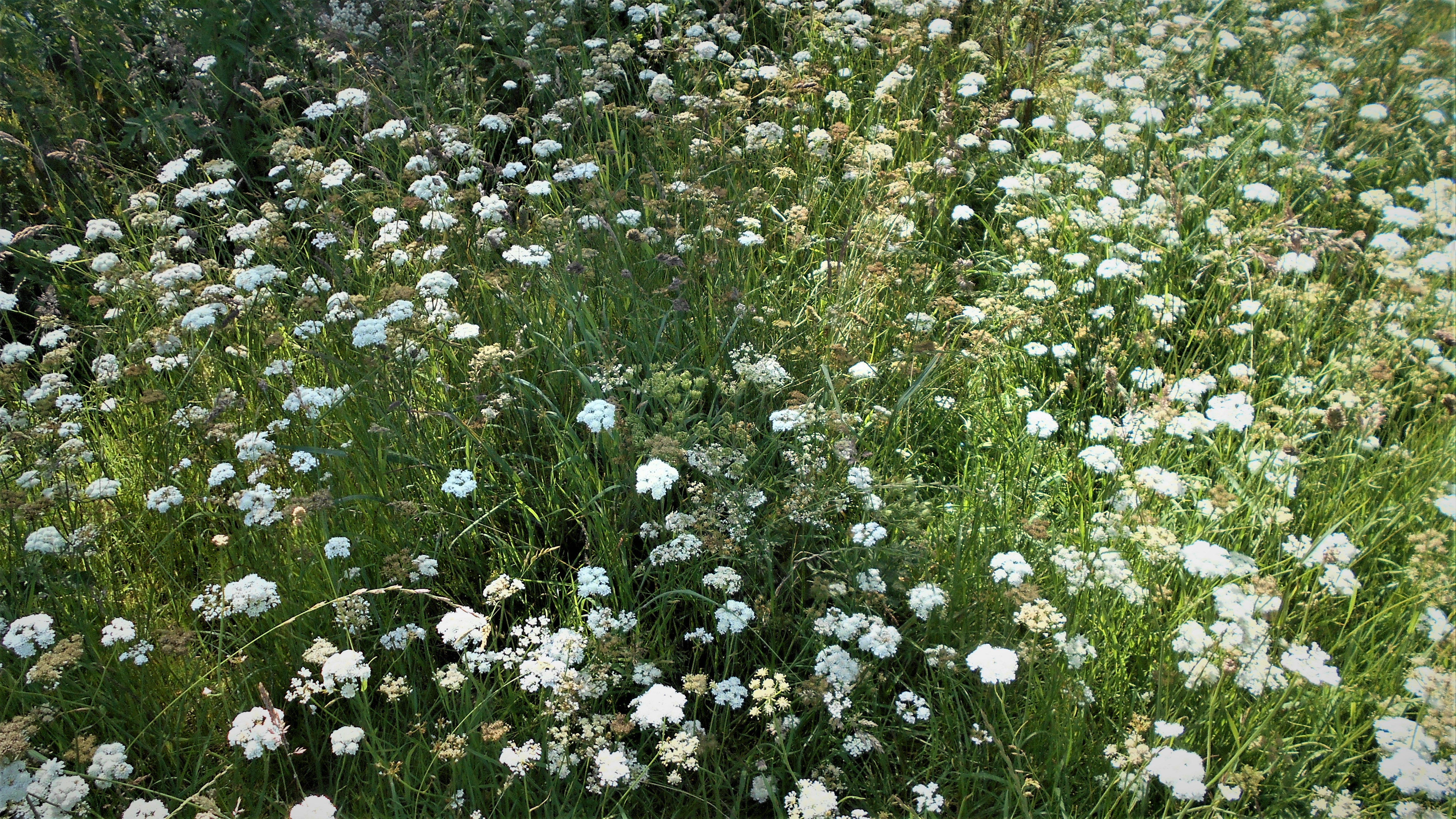
At least there were Banded and Beautiful Demoiselles and a few Common Blue Damselflies after the complete dearth during our last visit, but nowhere near the usual numbers we expect to see at this time of the year. One solitary Mallard was the only waterbird, no Heron, Little Egrets, Canada Geese, Cormorants or Mandarin Ducks and the only other birds were Magpies, Jackdaws, Whitethroats, Wrens, Song Thrush, Robin and Blackbird – no raptors, no tits – a warning peep and the all too brief sight of two Kingfishers flashing past but no sign of the resident Pied Wagtails.
What there were in extraordinary numbers were the bees – Tree Bumblebees, Common Carder bees, Honey bees, Buff-tailed bees, several species of Icheumon wasps, Thick-legged flower beetles, Ladybirds, a Caddisfly and a beautiful Large Yellow Underwing moth swarming over the umbellifers, the newly opened Field roses and the Bramble flowers.
We can only assume that the unseasonally cold, wet weather of the past month or maybe the strong wind, has played havoc with the summer butterflies and dragonflies. Although we haven’t seen the floods experienced by large swathes of the north of England, we have have had weeks of torrential rain and thunder storms which the smaller, more delicate species have simply may have been unable to withstand.

No signs of fresh Otter activity on three of our four sites and only two recent spraint and pad marks and no fresh spraint at the other when again, in the same month last year there were copious amounts of fresh spraint everywhere. Strange times – we blame Brexit!
14th June 2019 / Temp: 18 C / Water Level: High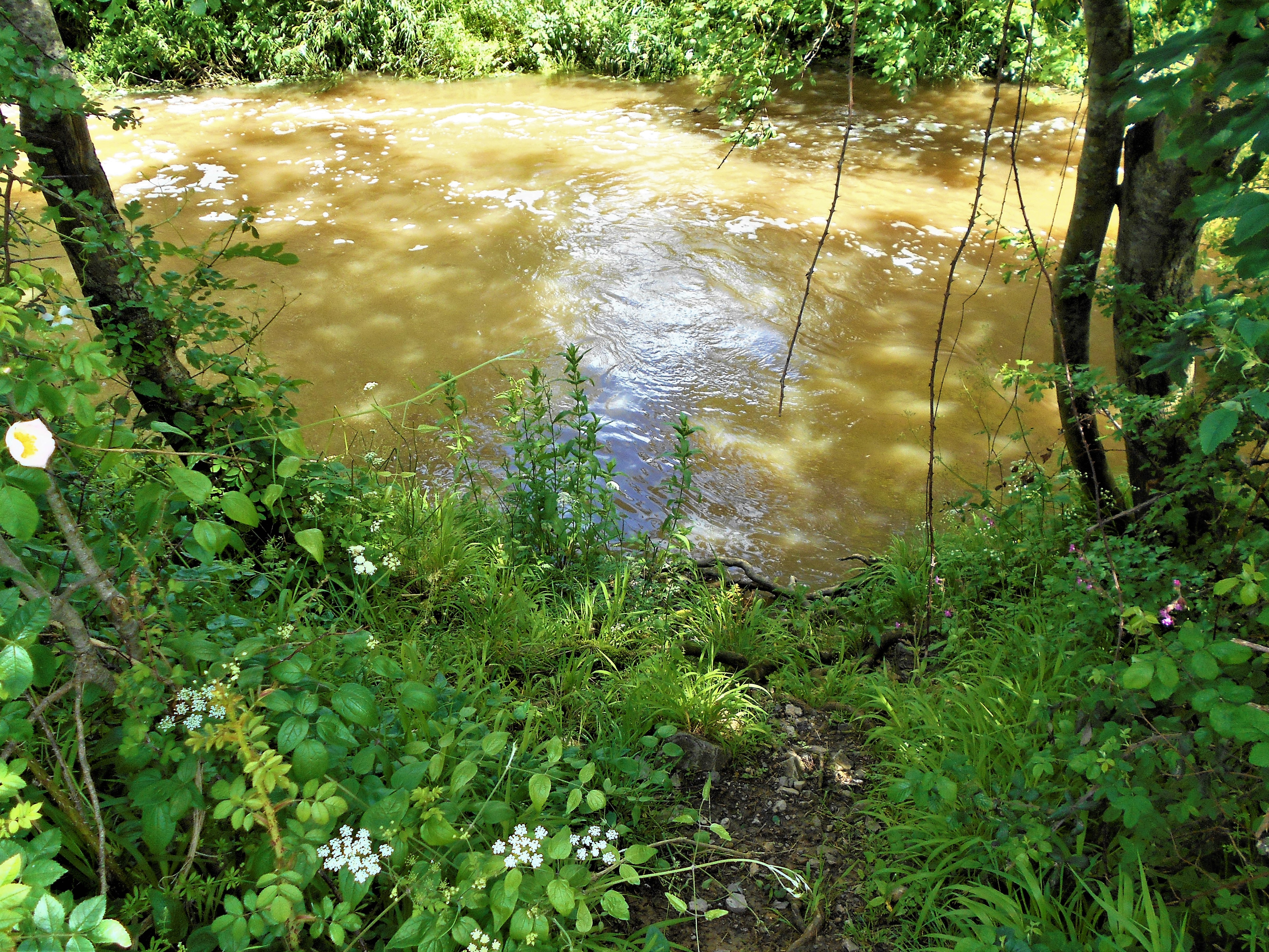
Overcast with sunny intervals, the stiff breeze tossing the branches of the willows, umbellifers and grasses, forcing the bees and insects to cling firmly and driving away the birds and butterflies (apart from one Common Blue) but thankfully dry after weeks of torrential rain. A few brave damselflies risked the wind, but only half a dozen Beautiful Demoiselles and four Common Blues and no Banded Demoiselles at all. Given that there had been uncountable numbers over the river and beach only a few weeks ago, it was astonishing that they had all simply disappeared. Hoping to see flying insects, we were constantly distracted by white willow seeds which the wind played with, drawing the eye to a small scrap of fluff shooting past, which proved disappointingly to be yet another willow seed.
 one of the flower bordered small streams feeding the river
Ladybirds and fat Bumble bees everywhere, including White-tailed bees, new sightings for us, a Dark-edged Beefly which we thought very late, but few honey bees. On Colliers Way where we walked recently it was the opposite, every other bee being a honey bee. A scattering of beetles, a Nettle weevil, a Common Red Soldier beetle (which we as children always called blood suckers) lots of Thick-legged Flower beetles and a small black shiny beetle which we think may well be an Imported Willow-leaf beetle – a rather self-important name for such an insignificant insect! We sat on the bank overlooking the beach while the wind thrashed the plants, whipped the water along the river played around our heads and filled our lungs with fresh chilled air. A tiny Digger wasp landed first on a nearby leaf and then moved to my husband’s trouser leg where he settled comfortably, out of the wind but basking in the sudden burst of sunshine. He was still there when we moved off and stayed until, as he seemed reluctant to leave us, I lifted and flicked him with a pen into the flower filled meadow edge.
The river was in full spate, fast and choppy and mud coloured, in a mad dash to get somewhere, but too deep and muddy to attract Kingfishers and we didn’t see a single one all afternoon. In fact there was an almost complete dearth of any birds at all, the odd Blackbird, Wood Pigeon and Whitethroat but no water birds, not even a Mallard, which must be a first. In the midst of all this winged desert, we were really pleased to see a good quantity of fresh Otter spraint on the beach, which since the cattle have yet to be let loose onto the meadow, is now almost completely covered with a thick forest of shoulder high umbellifers, reeds, red campion, stinging nettles and hedge mustard, surrounding the very old gnarled willow, so at least the Otters haven’t disappeared!

On the way back we spotted a couple of white mushrooms, a surprising sight for mid-June, which we think may well have been a St George’s mushroom given the locality but we weren’t entirely sure. Almost all of the flowering plants matched the list of a week ago, apart from the newly opening Water Figwort among the tangle along the stream, Snowberry, Prickly sow-thistle and Creeping thistle; the Spear thistle although well-grown showed no signs of coming into flower.
1st June 2019 / Temp: 24C / Water Level: Very Low
 Soldier Beetle
A very hot day but by the time we reached the river late afternoon, the sky had become hazy and the wind fresher so it was cool but the river meadows were still bathed in soft sunlight. The birds were mostly silent, very little action on the river (although we were lucky enough to see the Kingfisher flashing upriver and whizzing back. We spotted recent Otter spraint on the stoney beach where the umbellifers were in full flower so the air next to the water was filled with damselflies, beetles, bees and flies. We caught sight of a black legged Soldier beetle (probably Cantharis fusca) feeding on a Hogweed flowerhead who seemed completely oblivious to the Ashy Mining bee sharing the same flower. Common Hogweed flowers are always a tremendous hunting ground for insects, they always seem to have some beetle or fly feeding on them – no wonder they are rated in the top 10 nectar producing plants in the UK.

Lots of ladybirds around including this pair of 7-spot sharing a dock plant with a yellow and black 14-spot which should have been better named, the markings look like exuberant paint splashes by abstract expressionists!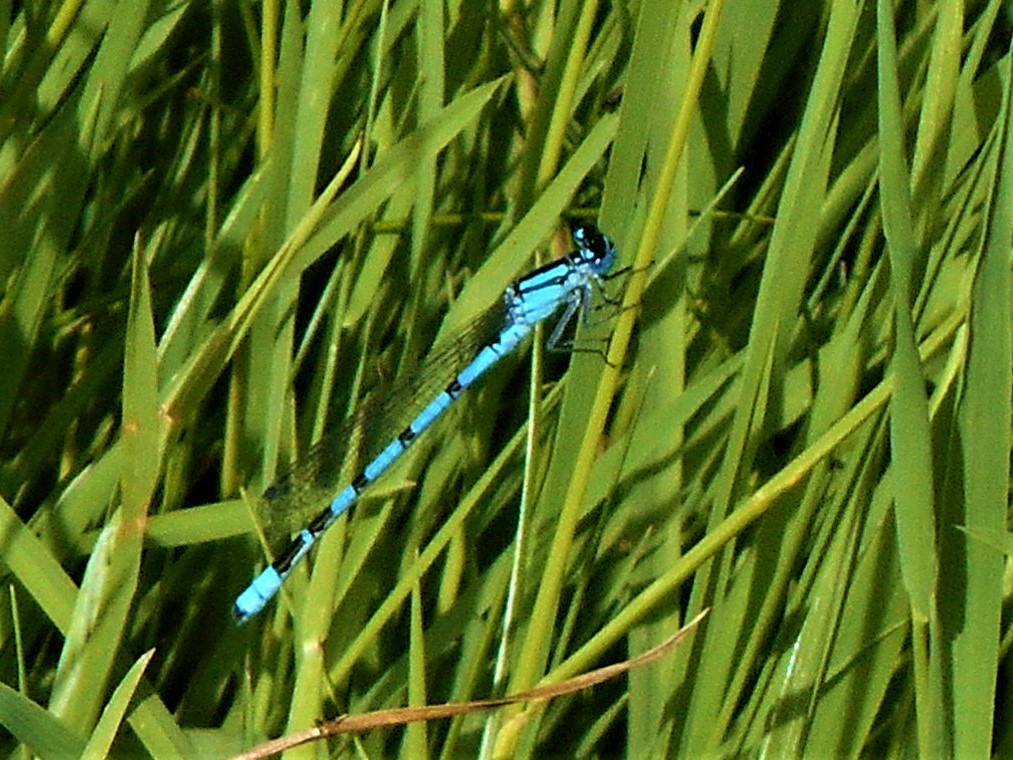
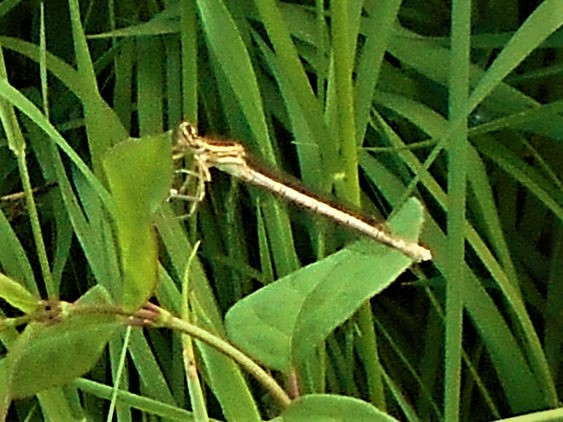
Most of the summer damselflies had arrived, both uncountable numbers of Banded and and good few Beautiful Demoiselles, Common Blue, Blue Tailed and White Legged. Every year the immature damselflies of both the Common Blue and the White Legged damselflies catch me out as I get over-excited thinking I have identified another species, only to find on my bible, The British Dragonfly Society species and identification website British Dragonfly Society that the small buff coloured damselflies and the small pale damselflies with black markings are in fact immature females and even males of the Common Blue or White Legged as the rather fuzzy out of focus photographs here show.
We spotted two Common Cockchafers (Maybug), lots of ungainly Crane flies floundering around in the long grass, a fat Carder bee on the hunt and several Rose chafers arriving in time for the Dog roses which were flowering in profusion in spectacular cascades of pale pink blooms tangled among branches and winding through the hedges. The Ox-eye daisies have also made their appearance, lining the meadow, and as we walked the strong scent of the newly emerging elderflowers filled the air.

Although there were only a couple of butterflies about, an Orange Tip and a Green Veined White, (it is the tail-end for many spring-flying broods, and too early for late summer butterflies) in every other way it truly looked and felt like the Gregorian calendar tell us it is, the first day of summer!
25th May 2019 / Water Level: Low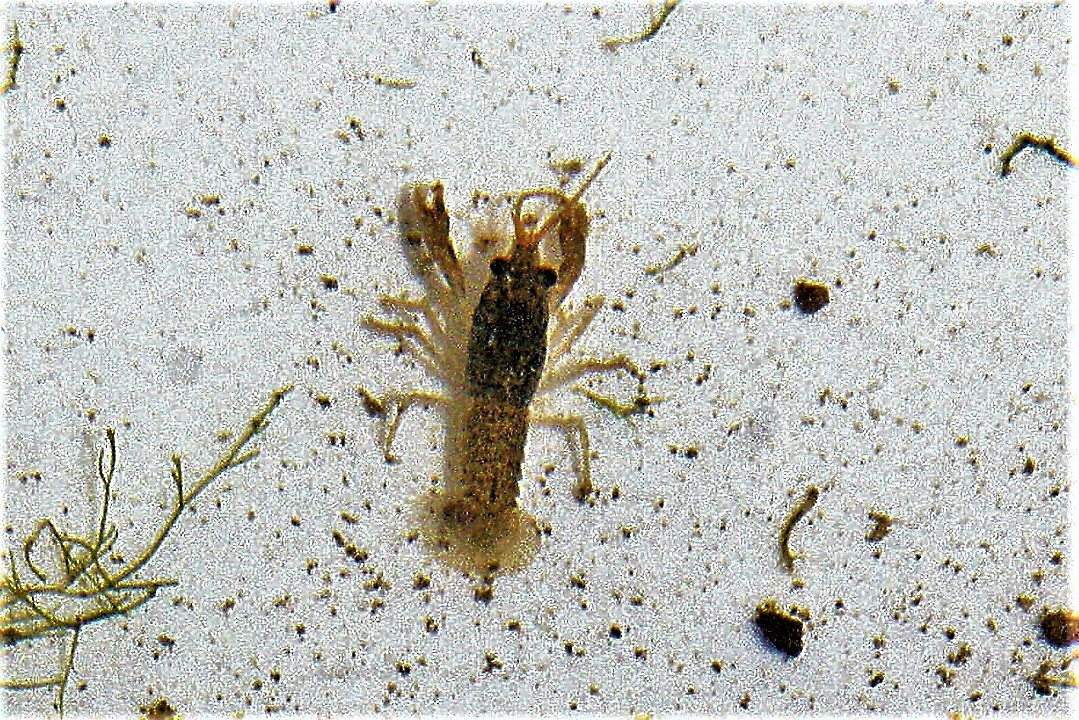 A juvenile Signal Crayfish – less than 3cm long
What can be more enjoyable for energetic small boys, their indulgent Dad, their Aunt, photographer extraordinaire who is always ready with a steadying arm, their loving Grandpa and Grandma, than messin’ about in the river!
We all clambered down the steep bank clutching dipping nets, trays, buckets, linen magnifiers, sunhats, notebooks, cameras, wellington boots, not to mention all the paraphernelia which always seems to accompany outings with children, to the boulder strewn river bed, where fortunately the water was very low, to kick-sample the river quality.
At least that was the idea, but of course it quickly became an adventurous scramble over hazardous rocks and sudden deep pools, with shrieks of delight or fear echoing back from trees, tall grasses and umbellifers and the walled sides of the bridge as a child found something exciting. Maybe crayfish remains in the shallows, or spotting a fish swimming over their boots or finding Otter spraint on a stone or fat river snails clinging to the river weed, or perhaps a broken pearlized shell of a river mussel – gleaming in the water – all the exciting treasures usually found on a river bed.
Exciting finds included a White Ramshorn snail shell, seeing small black leeches attached to a stone, waving in the water, rather gruesome but interesting nevertheless but what we found in the greatest profusion were an extraordinary number of mayfly nymphs (including the Yellow May in our tray) and nymph exoskeletons, drifting on the current, abandoned in the river when the Mayflies moult – they are everywhere.
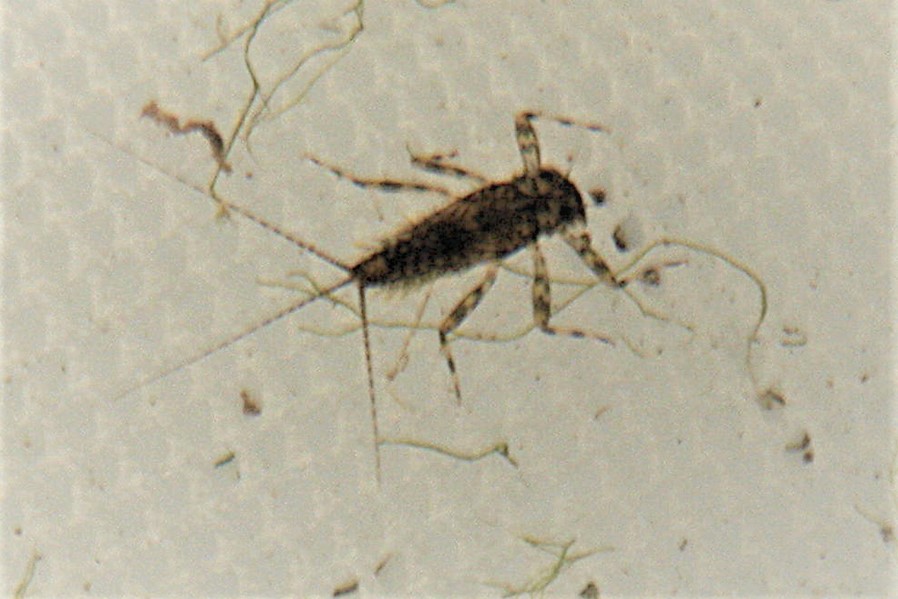 Yellow May (Heptagenia sulphurea) dun nymph – copyright Rebecca Muirhead
A huge yell, lots of splashings, excited chatter, roars of triumph and the result? The boys have caught a good sized Signal crayfish which they carry carefully but with great triumph over to the tray filled with river water, weeds and a scattering of gravel where they gently ease him out and stare with awe-struck delight. The seven year old immediately spots a problem so Dad moves the tray into the shade so he won’t get too hot while they crouch down and examine every inch of their catch while telling us of fishing for crayfish in the Mells River, a feeder stream upriver, by dangling raw bacon tied to thin rope on the end of wooden sticks – a fail-safe method where they catch dozens.
We later found a tiny crayfish, not even 3 cm in length, and later still an even smaller one. In fact it soon seemed that crayfish and mayflies made almost the entire contents of the river! However, as the eggs (between 200-400) hatch in May and the juveniles cling to their mothers for 8 or 9 days or so, and then spend 3 or 4 days exploring and returning to mum before becoming independent, it is the time of year we should see so many crayfish. Even if a lot get eaten with each female crayfish producing so many eggs, no wonder this particular stretch of river is full of them.
After a very happy afternoon exploring the river, a tired party emptied buckets and trays gently into the river, collected their belongings and headed home where the seven year old wrote an account of the afternoon with special mention to crayfish and his “tasty snack” of macaroon biscuits for tea.
22nd May 2019 / Temp: 18 C / Water Level: Low

Our second Otter survey day revealed four fresh and two recent piles of Otter spraint on a muddy stretch of beach on one area and one fresh spraint, one recent, a pad mark and two couches together with copious amounts of crayfish remains at another area of the first of our sites, all of which raised our spirits considerably!
No signs at the next site but when walking across the water meadow we almost fell over a Guinea Fowl standing firm allowing all of her tiny chicks to scuttle off and disappear in the long grass while three or four Swallows chased and caught insects above us. Yellow rock roses nestled at the feet of the meadow ant hills and several beetles, including the red cardinal, busied themselves amongst the plants. We also caught sight of a small insignificant looking damselfly which we later identified as the very common Blue-tailed damselfly which however common was new to us.

What is it with cows and heiffers? We walked quietly, slowly, keeping to the edge of the field, but of course they wanted to come up and say hello – polite of course but not totally welcome as black and white Friesian cows are all rather large, lumbering along with their milk swollen udders swinging, so what with navigating around the cows and the young heiffers and avoiding their fresh dung-fly infested cow pats liberally scattered across the field, our passage was slow and watchful. At least 8 Mandarin Ducks and 6 Mallard with young took exception to our arrival at the beach and of course three cows chose that moment to push in front of us to get to the river to drink so the inspection was hurried and brief – time to clock three recent and some old spraint before we made our way to the next site, shooing more and more cows and heiffers before us as we did so.
A flock of ten batchelor Mandarin ducks and four Mallard flew off as we arrived at the last site. The beach was filled with cattle and when they moved off, they had so churned and splattered the soft mud that any spraint would have been obliterated. We were then obliged to scramble through the hedge, ripping our hands and arms on the brambles and hawthorns, dripping blood spatters over our notebook as we peered at the pebbles and stones searching for spraint while the cows stood knee deep in the river beside us watching our every move while excreting and urinating copious amounts of effluent into the river. Impossible not to feel sorry for any small creature in the river bed beneath or the Kingfisher flashing by with a warning peep. However, our endeavours were rewarded by lots of Otter spraint, four fresh and five recent so the cattle have not driven off the Otters from their favourite beach.
21st May 2019 / Temp: 18-20 C / Water Level: Low

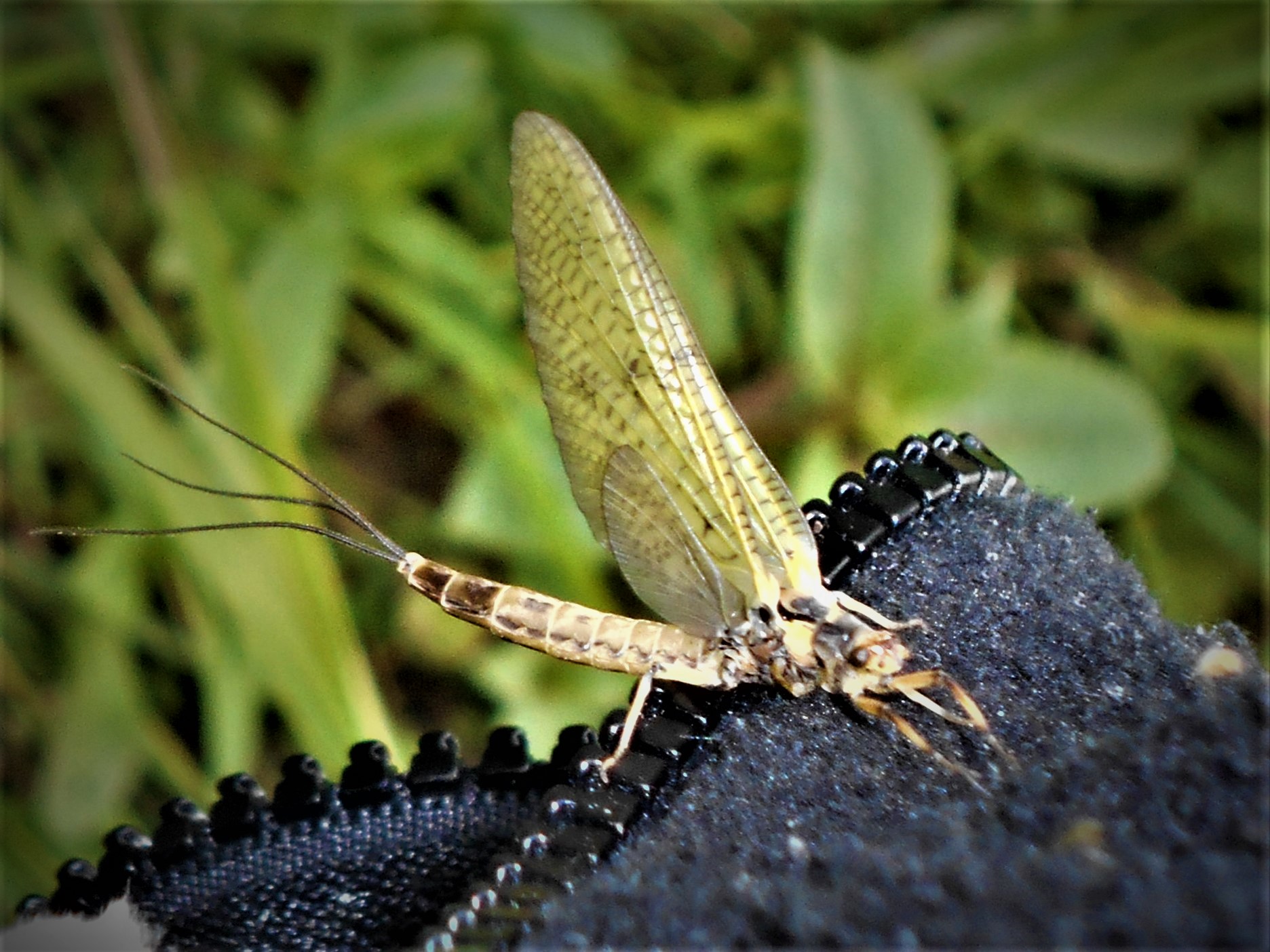 (Sub-imago?) Green Drake (ephemera danica) Mayfly
A green drake mayfly conveniently landed on my jacket which made it easier to take a snap. The most common mayfly on unpolluted rivers and streams and certainly the one we see most often. There were uncountable numbers rising from the river as we checked the banks and stones for otter spraint and we only saw 2 or 3 drake mackerels yo yo dancing above the bank, possibly too early in the day to see the swarms of previous years.
We found fresh and recent otter spraint at two of day’s set of four sites, nine on the large stones exposed by the low water level under the bridge where we shared the river shallows with male and female beautiful demoiselle damselflies, female orange tips, peacocks and speckled wood butterflies fluttering amongst the flowers and grasses while listening to the beautiful tunes of the Blackbird and Song Thrush. None on the next site but this stretch of the river bank is thick with wild flowers at this time of the year, stitchwort, shepherds purse, crosswort, dove’s foot cranesbill, scentless mayweed, ground ivy, hope trefoil, herb robert, red campion, buttercups, bush vetch, birds eye speedwell as well as all the umbelifers. The Norway maple and the Hawthorn trees are in full blossom, the latter filling the air with its not altogether pleasant scent.
 (Male imago?) Drake Mackerel (ephemera vulgata) Mayfly
A pair of Mallard and their young scooted off when we reached the beach, which was a wonderful tangle of plants and flowers, umbelifers and butterburr, common and white comfrey, wintercress and red campion, water forget-me-not and brooklime keeping their feet wet at the waters edge and the wonderfully longed for arrival of the common blue and the banded demoiselles in number, both male and female, joining the earlier beautiful demoiselles above the water, ovipositing in the water crowfoot, or chasing each other among the plants. A vivid red cockchafer joined the usual ungainly crane flies and the whole time mayfly after mayfly lifted from the water, the usual green drakes but also much smaller, pale winged mayflies, possibly fisherman’s curse (caenis horaria) but not ones we have been able to definitely identify.

We chatted to a fly fisherman, newly arrived and asking whether we had spotted any brown trout; we hadn’t so remarking that he was probably too early, he was happy to while away some time discussing the river (which he said was surprisingly clean so relatively close downstream to a town) and the quiet enjoyment of an afternoon’s fishing while the cares and stresses of every day life fell away. We exchanged news of birds and mayflies spotted, he had seen a pair of Mandarin ducks with 6 young, and a Wren feeding on mayflies, something we had never witnessed although we have seen Heron catching and feeding on dragonflies, before he decided to walk farther downstream before trying his luck once again.
The yaffle of a Green Woodpecker, the cheerful song of Whitethroats and Chaffinches, the mew of a circling Buzzard being mobbed by three crows and the screech of a Magpie as well as calling jackdaws and rooks accompanied our saunter back. The harvesters had been out haymaking, leaving long piles of cut grass snaking across the fields, so walking was considerably easier than wading through the long grasses of the past two or three weeks.
21st May 2019
We have received an acknowledgement from Buglife on our reported sighting of a Black Oil beetle:
” What a fantastic find! Oil beetle numbers have declined in the UK, and this is linked to the loss of our wild bees and wildflowers. We are working with landowners to better manage our countryside for both oil beetle and the wild bees upon which they rely. Every record is important and helps us understand the current distributions of these species of oil beetles. You can submit your future records to southwest@buglife.org.uk along with a picture and location.”
Good to have confirmation that the wildflowers and wild bees on our stretch of the River Frome are supporting a number of insects which are declining elsewhere. It will be great if our followers/readers pass on their sightings as well.
Other species on the UK Biodiversity Action Plan list (meaning urgent work needs to be done to conserve them and their habitats) on this stretch of river include: Otter, Depressed River Mussel, Brown Trout, Hedgehog, Brown Hare, Harvest Mouse, Garden Tiger Moth, Yellowhammer, Song Thrush.
15th May 2019 / Temp: 19 C

Yet another day of brilliant sunshine, deep blue skies with a welcome cool breeze to freshen the air. The water meadows were looking stunning, filled with golden yellow buttercups, bird’s eye speedwell, crosswort, shepherd’s purse, bush vetch and stitchwort while cow parsley, winter cress, red campion, brook lime, water forget me not and common comfrey swamped the river’s edge and almost filled the beaches.
Large white, Green Veined and Peacock butterflies fluttered over the tall grasses, joined by the occasional Beautiful Demoiselle damselfly, both male and female on the wing with their emerald bodies and copper wings, and insects everywhere, on the flowers, stones, leaves and in the air. We spotted both Red Headed Cardinal beetles, two mating Green Dock beetles who had left little surviving of the dock leaf they had champed through, and crane flies everywhere, including what looked by its colour the orange-bodied tipula fascipennis crane fly.
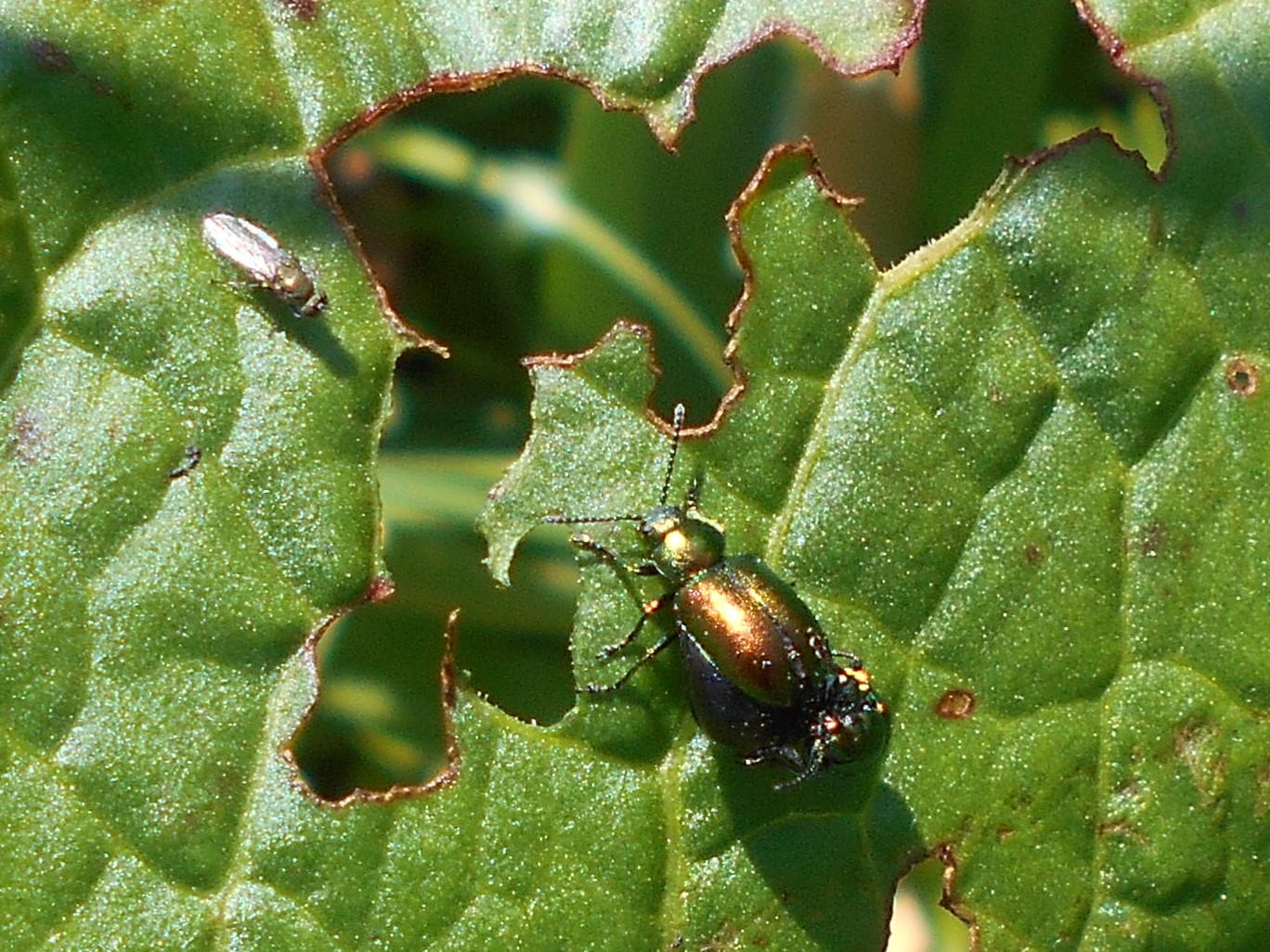
The water level in the river was low revealing bleached stones in the shallows beneath the bridge where we found two fresh and two recent spraint as well as a good number of American signal crayfish remains scattered around; we also found signs of Otter at the beach site, one fresh and one recent spraint so it was heartening to see a good showing of active Otters around and about our stretch of the river.
We arrived at the river in time to see a pair of Mandarin ducks and two young scooting off downriver away from us while a family of Mallard flew off in the opposite direction. We sat on the bank above the beach, unpacked and ate our picnic while enjoying the spectacular show being staged by a pair of Pied Wagtails skimming backwards and forwards, wings fluttering, just above the surface of the river, hoovering up the countless dancing midges and even catching the emerging mayflies mid flight. It does seem rather unfortunate that having spent sometimes up to two years under water and only emerging to mate, mayflies should be caught and eaten before they have the chance to procreate. If the Pied Wagtails had young, which seemed very likely as they constantly flew up to the roof of an adjoining building, they would be grateful for a delicious mayfly. The Pied Wagtails, a Jay flying past, showing off its white rump, a sharp high pitched cry and flash of turquoise announcing a Kingfisher shooting upstream almost before we caught sight of him set the spirit of the afternoon – unbelievably beautiful, quiet and serene but with enough action to keep us alert.

We chatted to a local fisherman and his wife, exchanging news of what has been happening along the river. He said that he loved watching the shoals of chub recently spawning at the foot of the weir, an uncountable number of fish roiling and furiously splashing around. They also mentioned that the white pheasant is evidently still in the adjoining field, so his escape from the shoot seems to have held good.
As we wandered back, following an animal track through the long, lush thick grasses of the meadow, white fluffy cotton-wool like seeds of the poplar trees blew in the cool breeze and drifted around our heads like light snowflakes while the Blackbirds, Wrens and Chaffinches’ song rose up from the hedgerows, clear and loud and lyrical in the fresh clear air.
10th May 2019 / Temp: 13 C

A mixture of sunshine and cloud with a cool gentle breeze, the sun, when it appeared, hot on our backs as we ambled along the river bank. We checked our survey sites but found no signs of Otter at any of them. However, the river level was pretty high, and by the signs on the beach had been considerably higher after days of heavy rain so if there had been spraint, it would have been washed away. Surprisingly, when I walked over to check out the area around the cattle trough where we had seen the black oil beetle, I could see large cracks and fissures in the dry hard sand coloured ground so it was easy to spot a number of black spiders scattering and running away from my boots, some of which were noticeably females carrying egg sacs.
A fair number of birds including Little Egret, Mandarin Duck, Moorhen and Mallard on and around the water and although we didn’t spot a Kingfisher, we heard Chiff Chaffs, and a couple of Song Thrushes, a Greater Spotted Woodpecker, Blackbird and a Magpie and saw the lovely colourful Goldfinch, Blue Tits, Great Tits, a Pied Wagtail as well as Jackdaws and two Buzzards wheeling overhead.
The first damselflies of the season, all Beautiful Demoiselles both male and female, came dancing and flitting down the river examining the edge plants, several Orange Tip butterflies, a Green Veined White and a Peacock, the usual mass of Craneflies rising from the grass as we walk and a tiny bright blue beetle sitting on a stinging nettle leaf which turned out to be a Green Nettle Weevil – a new species for us.

The hot sun tempted us to sit on the bank and listen to the birdsong, watch the damselfies and the hundreds upon hundreds of black midges swarming inches above the water, dipping to drink so attracting the fish rising, pools within pools forming on the surface; deep quiet reigns disturbed only by the occasional sharp squawk of a Moorhen and the full throated song from the birds all around us. A perfectly wonderfully calm way to spend a May afternoon.
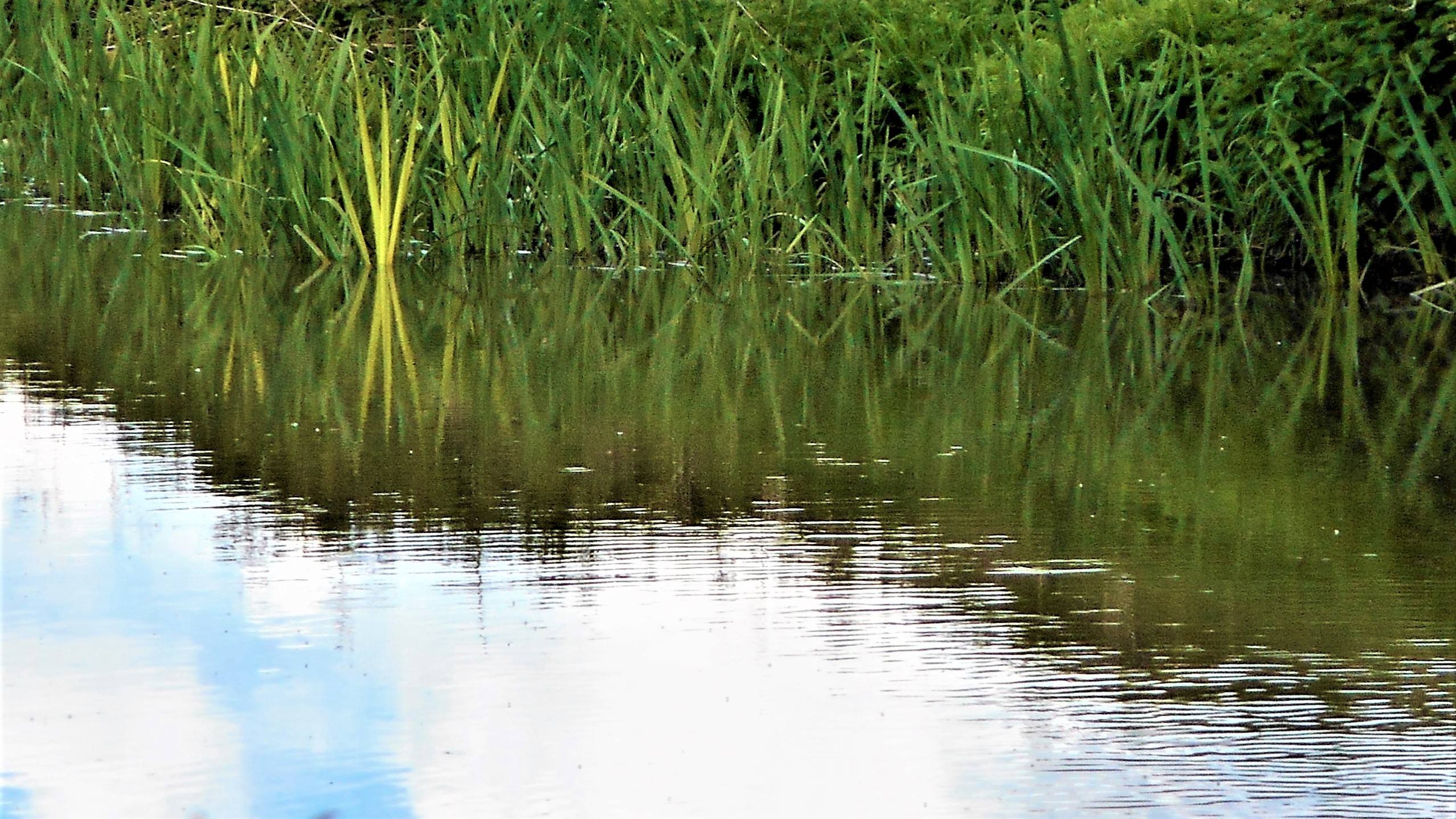
The number of plants in flower, scattered across the water meadow and clustered along the river banks are building towards the peak flowering season: stitchwort, chickweed, red campion, buttercup, dove’s foot cranesbill, ground ivy, dandelion, crosswort, tufted vetch, bird’s eye speedwell, cow parsley, scentless mayweed, ramsons, red deadnettle, white comfrey, common comfrey, white deadnettle, lady’s smock, shepherd’s purse, hedge mustard, wild cabbage and the meadow grasses, tall now as the cows have yet to come to pasture, and already flowering and seeding.
28th April 2019 / Temp: 9.5 -12 C
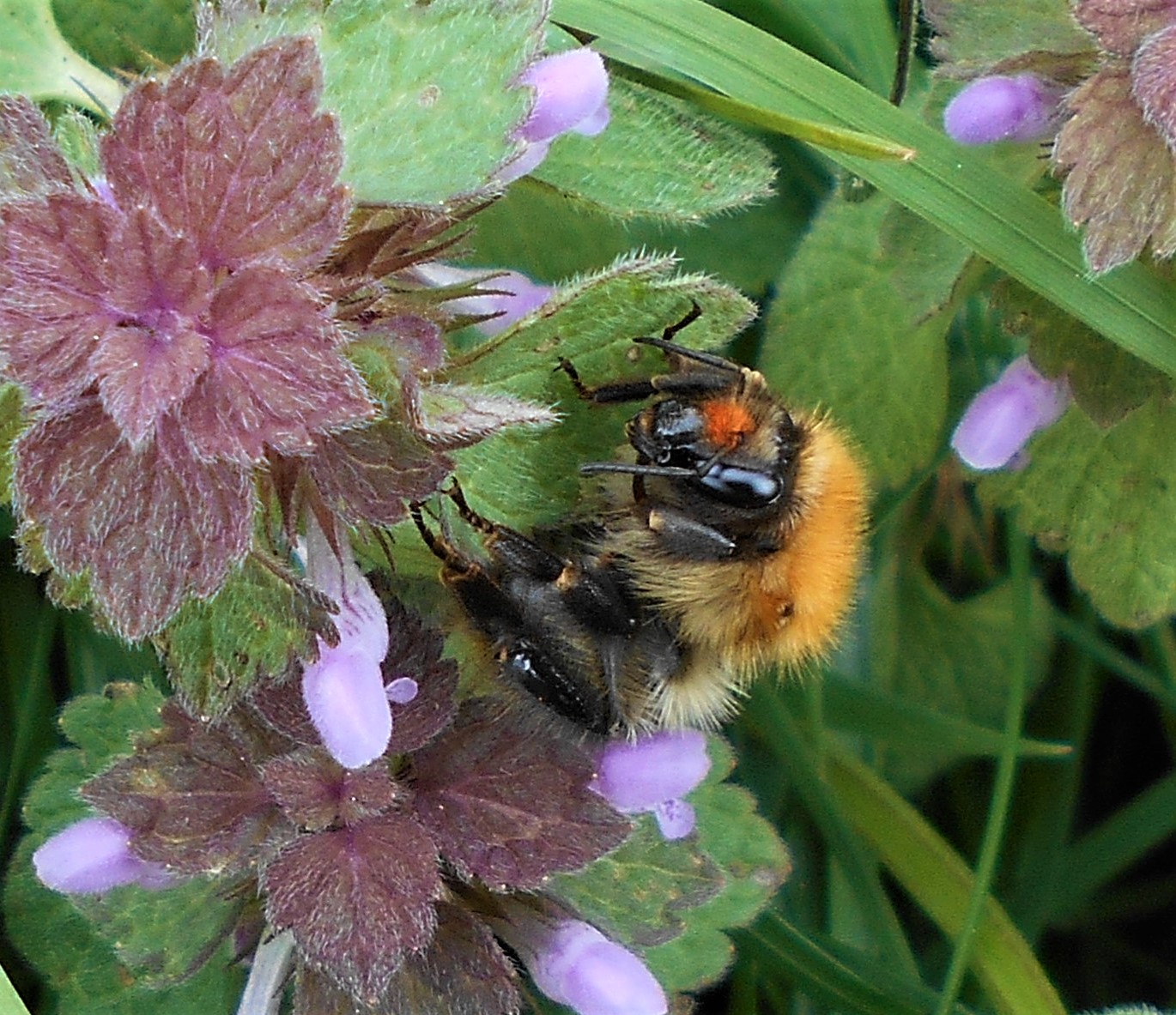
Gloomy, overcast skies, the wind swinging around to the north, it felt a lot colder but thankfully the gusts were not nearly as fierce as yesterday. So dull was the day it was good to see a common carder bumble-bee feeding on the ground ivy reminding us that it was the end of April and not mid-winter.
We found one fresh spraint at our first site which raised our spirits but no signs at all at our next four sites which made us feel a bit downcast. What was astonishing was that the pebbly beach where yesterday we found extraordinarily copious amounts of spraint was totally empty of any new spraint overnight. Fortunately the eight piles of fresh spraint at the last beach made the day worthwhile – all of them red all of them choc-full of crushed American signal crayfish legs and shells.
 A rather bedraggled looking St Mark’s fly had settled on the thick grass of the water meadow and seemed unwilling to move. No doubt it has been battered from yesterday’s gale. Although the hawthorns were covered in buds, they remained tight shut, waiting for warm sunshine to open them up so we’ve no idea what the fly is feeding on.
The water level was fairly low, still no sign of the Swans, however we did set up the Little Egret, a few Mallard and 24 Mandarin Duck – a Kingfisher flashed down-river, lots of Tits, Blackbirds and Wrens were singing very loudly and at last a Heron not seen for some time rose slowly and few away over the trees. Two new nests have been added to the single nest high up in the tall tree but what we had thought was a crow’s nest turns out to be the beginning of a rookery. What a racket the rooks make as we walk along!
As we neared the farmhouse we came across a Guinea Fowl strutting his stuff, and admired the 8 or 9 white Doves posing on the red tiled roof of the nearby barn but what cheered us most was catching sight of four Swallows putting on an impressive aerial display above the farmhouse. It is April!
27th April 2019 / Temp. 8.5C
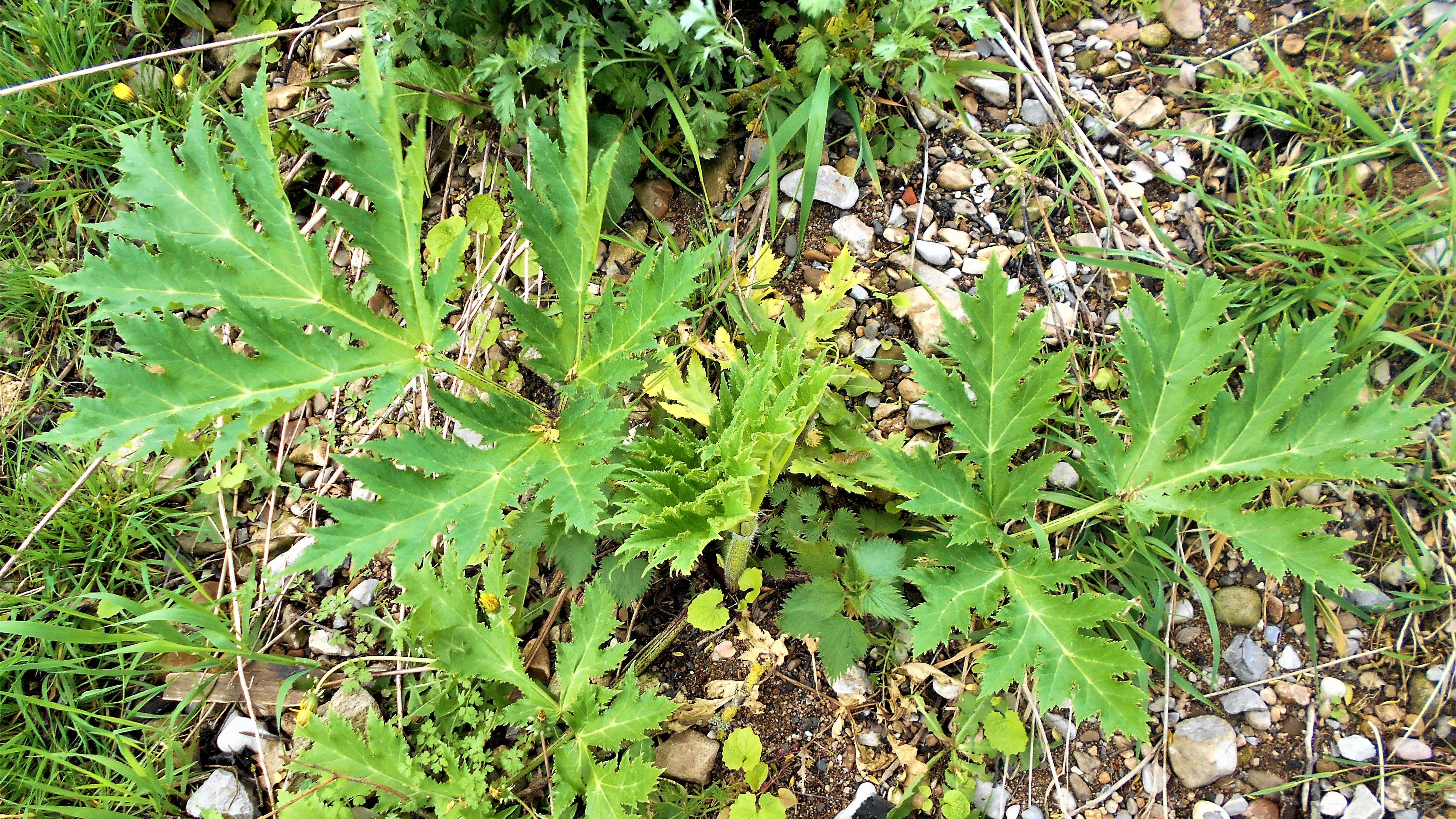
Giant Hogweed growing on the beach
It was rather unfortunate that the first day of our annual Somerset Otter Group 2-day survey should fall on a day when 82 mph gale force winds were blowing although not, we hasten to add, along our stretch of the river, although the wind was strong enough to almost blow us off our feet and it was hard work walking into the full force on our faces. However, we battled on and at least the heavy rain showers had stopped, and although it was cold, the wind was westerly, so not the bitter north-easterly of last year.
We were so glad we persevered as we saw fresh spraint at four of our sites, and at one such a quantity of fresh and recent spraint that we are almost sure our Otter is a female with cubs. Close by the spraint at almost every site there was the usual litter of American Signal crayfish remains and, now that spring is well advanced, the vivid splashes of new flowering red campion, deep blue-purple ground ivy, white cow parsley, garlic mustard, field speedwell and the newly emerging dock, giant hogweed and stinging and white dead nettle growing well all along the beach and the deep yellow buttercups, daisies, shepherd’s purse, groundsel, red dead nettle, dove’s foot cranesbill and mouse ear chickweed scattered over the thick lush pasture.
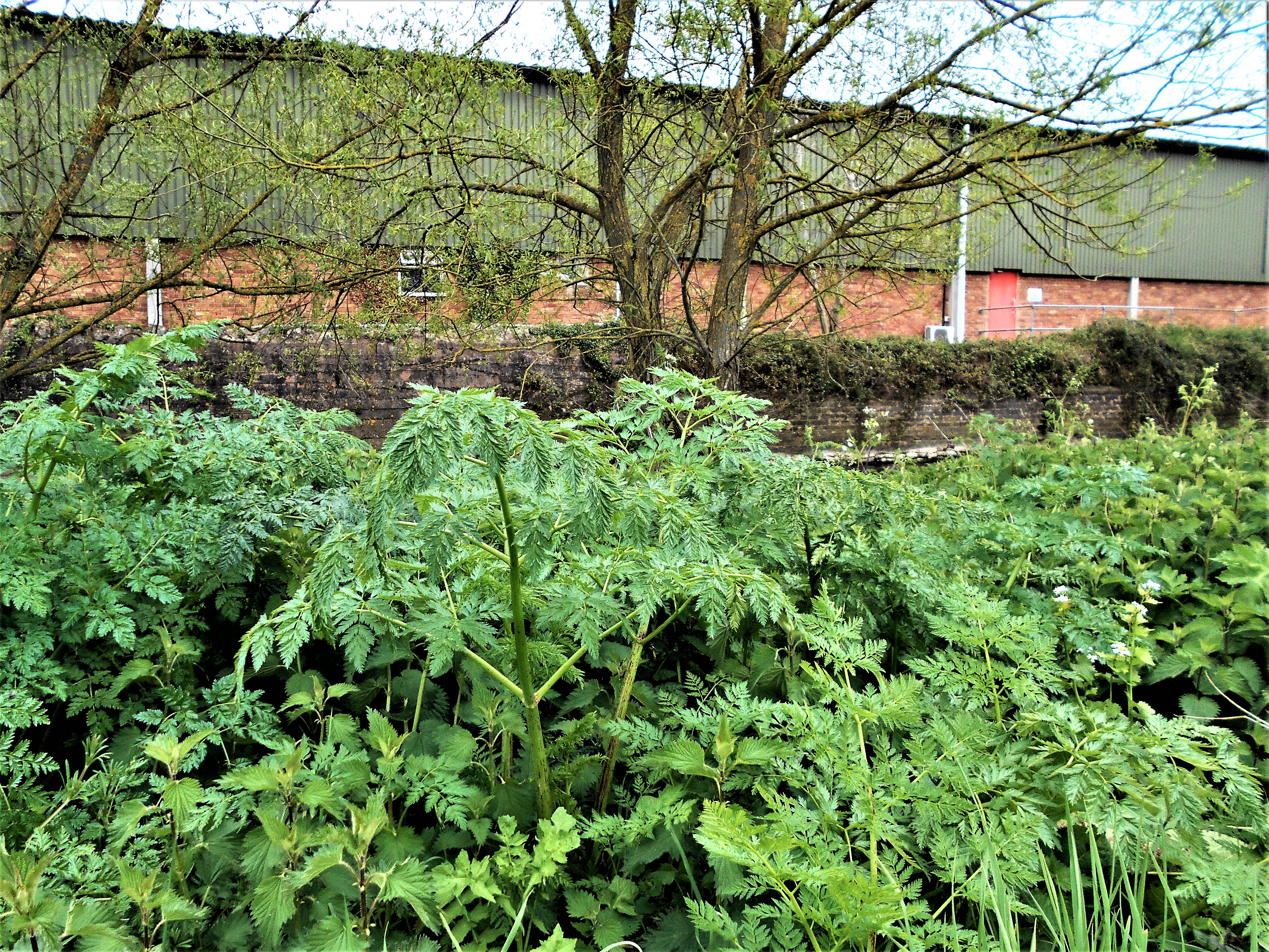
The grass was also thick on the beach and we noticed fresh areas of crushed and flattened grass close to the water’s edge as if something had rolled around or laid there. Rather sad that the shell filled beach which I had been looking forward to exploring and searching for new shells was now almost completely covered with new growth but I know that I will glory in the explosion of damselflies and dragonflies which will flit between those same plants in just a months time. There seemed few birds about in the buffeting wind, apart from wood pigeons, blackbirds, wrens, tits, chaffinches, a magpie, a few crows and a single chiff chaff, although we did set up a snow white Little Egret and 8 or 10 Mandarin ducks and a handful of Mallard once we reached the more secluded far end of our stretch of the river. No sign of Heron, Cormorants or the Swans we usually see and no sign of Kingfishers either. Good to see the clear roe deer tracks in the wet sand, as usual only one set of tracks but this is evidently a favourite watering place.
Once we had checked all six of our sites, we were really glad to be heading back; it had become increasingly tiring battling the head wind so in spite of the sun coming out and the sky beginning to clear, we were just relieved to have finished our survey in one piece and looking forward to heading home for a well-earned lunch at last!

As we were walking back we came across this mangled Blackbird corpse minus his head. Nearby scat looked fox-like so it could have been fox kill, but as it was near the river, it could just as easily have been mink or even raptor prey. Strangely enough, when we turned it over, its innards had been exposed but not eaten – maybe the predator was disturbed at its kill.
23rd April 2019

The contents of Otter spraint we found two days ago has provoked a lively debate among the Somerset Otter Group as to the source of the thread-like remains in the (much enlarged) photograph above. Suggestions so far include tapeworm, earthworth casing, parts of crayfish or any one of 42,000 intestinal worms presently held in an Australian museum. Any other suggestions to add to the debate would be welcomed!

 Evening:
Excitement over. At the suggestion of our co-ordinator at the Somerset Otter Group we returned to the river to collect the spraint to post off for analysis.
It was only when looking closely at the head of one of the many discarded American Signal Crayfish remains that we noticed the antennae – and the mystery was solved – not worms, not even intestinal ones, merely crayfish antennae!
We had no idea that Otter ate crayfish heads as we find so many but it now appears that sometimes they do.
We were glad to have gone down to the river because we found a very small signal crayfish on the pipe over the stream with several spots of anal jelly and then on the main beach we found four separate piles of very fresh spraint, coated with anal jelly, three in the grass, all filled with broken crayfish shell and one with a piece of antennae and all of them red from the crayfish. Where the small deposits were on a large stone there was also some Mink droppings in the same place and a little distance away.
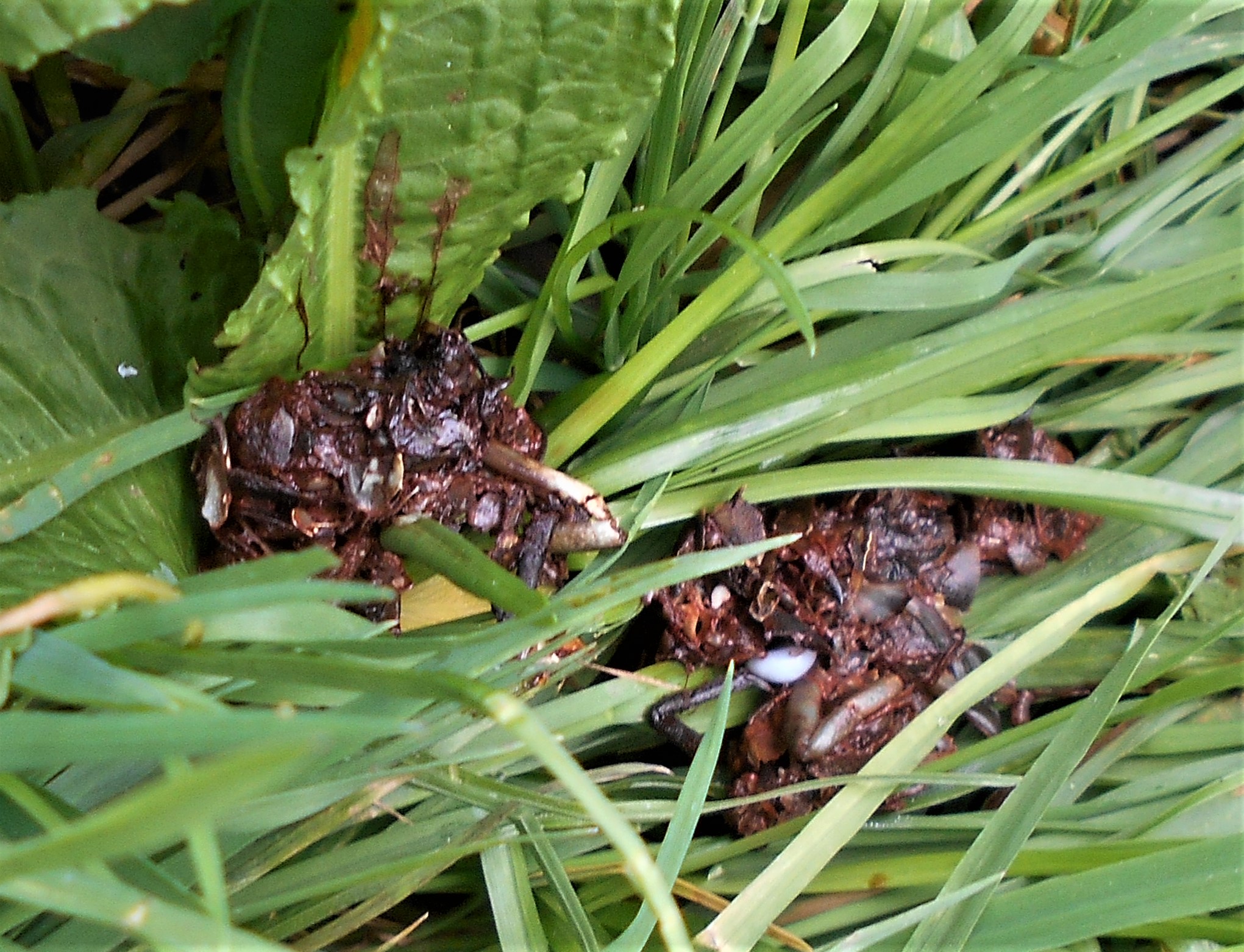
The size of the spraint and the fact that there were so many led us to suspect this may be a sign of a mother Otter with cubs, particularly when we spotted an area of crushed grass which might be from the mother Otter lying down for her cubs to suckle.
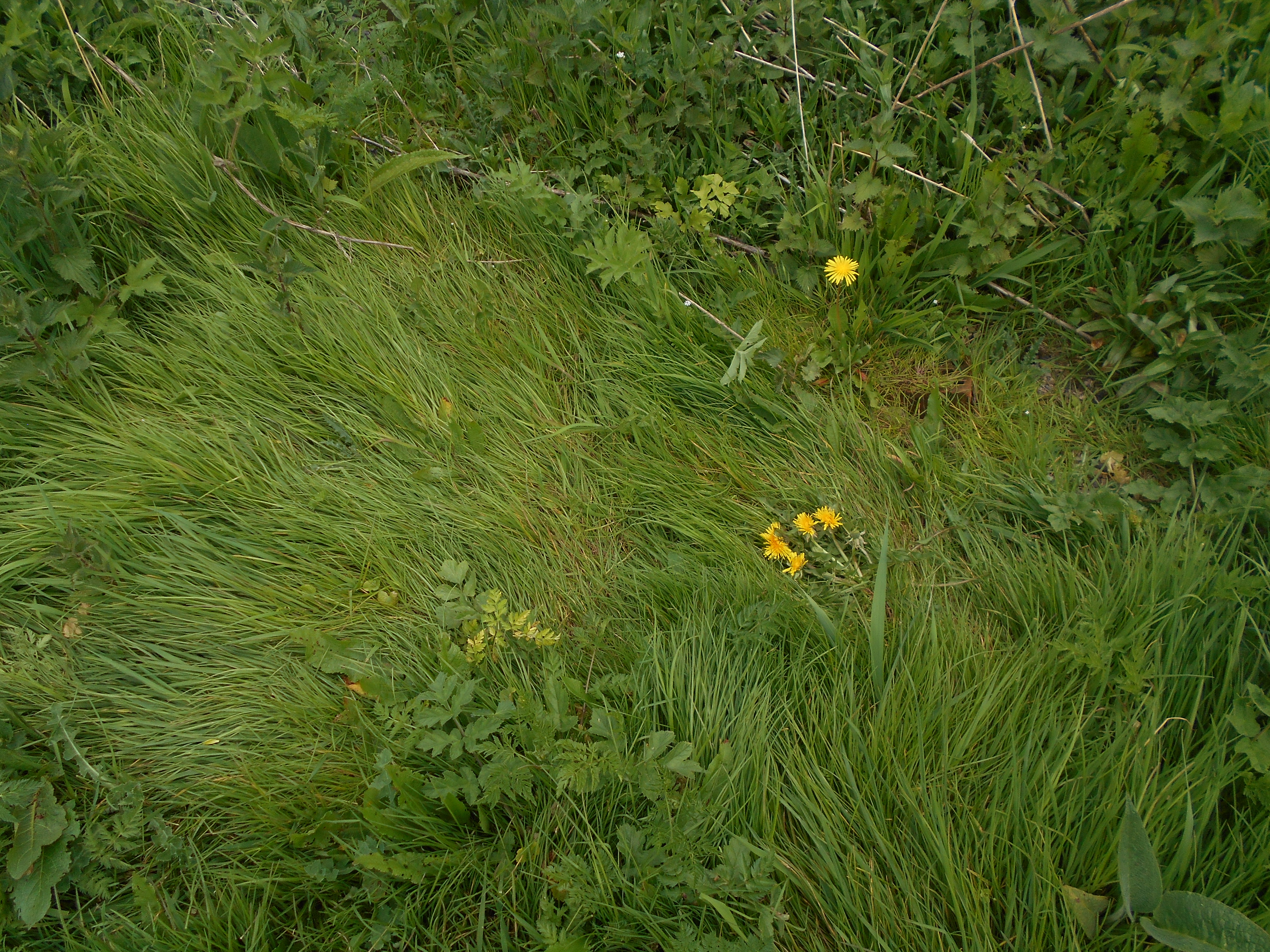
21st April 2019 / Temp: 22 C
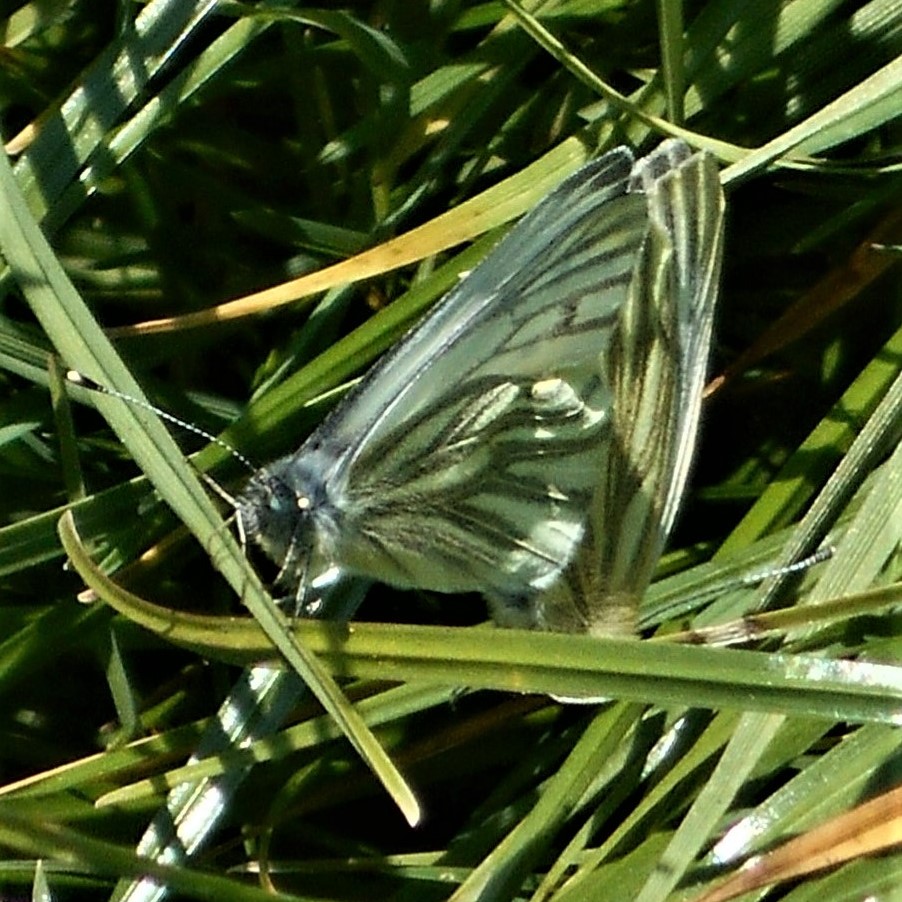 Mating Green Veined White butterflies
An amazingly hot sunny afternoon, wall to wall blue skies and glorious warm air, the perfect day for a stroll along the river where the water splashed round and over the stones and sparkled in the sunlight. Not surprising then to see two fresh Otter spraint on the bleached white stones exposed by the low water level, and none by the tunnel entrance. Three whole days of wonderfully warm weather and a week without rain had tamed the river to make the water fun for a hungry Otter.
An explosion of pond skaters and tiny minnows, a bee fly, dung flies, crane flies, wasps, fat bumble bees and buff tailed bees both in the trees and hunting the tussocky grass, still thick and lush before the cows are put to pasture, scattered with buttercups, lady’s smock, ground-ivy, lesser celandine, mouse-ear chickweed, red campion, field speedwell, white and red dead nettle, comfrey and greater stitchwort, lots for the newly hatched Green Veined White butterflies to feed on and encouraging them to mate. Many of the blackthorn trees were still covered in blossom and the hawthorn flowers were about to burst open so lots of Brimstone butterflies, a couple of Peacocks and dozens of Orange Tips all enjoying the rich flower pasture and hot sunshine.
What we thought was large Otter spraint below the weir which would have been a first sighting here, on clambering precariously down it turned out to be a wet piece of wood – oh dear! More birds appeared as the afternoon progressed, we disturbed a Cormorant, Mallards and an almost adult Cygnet, still retaining some grey feathers but with strong wing beats as it flew over our heads. Lovely to hear both the Green Woodpecker and the Greater Spotted Woodpecker as we walked and then later, sitting on the river bank in the welcome shade of an alder, we watched the Long Tailed Tits, Chaffinches, Wrens, a Robin in the crowded saplings on the opposite bank while hearing and watching a couple of Buzzards wheeling overhead, a party of chattering Jackdaws, a Herring Gull and several Crows flying over. What bliss.
8th April 2019 / Temp: 12.5 C White Pheasant – Boatbirder.com
Weak, hazy sun, thin cloud and a chill easterly wind – a dull day matched by dull sightings on the Otter front. Old pad marks by the tunnel, old crayfish remains near the weir, but no other signs that Otter had been around. But there were midges galore, crane flies, hover flies, a few bees and many black spiders scurrying at top speed across the patches of bare ground between the grass tussocks. Blue tits, Long tailed tits, Chaffinches, Wrens and Robins among the trees, Mallard and Mandarin Duck in the water and Magpies, Jackdaws, Rooks and Ravens overhead, the walk wasn’t without interest.
And then we saw the white Pheasant in the middle of the next field, first feeding, pecking around, and then strutting up and down. We presume this bird is an escape from the close by Orchardleigh who also “lost” the 30 Partridge they bought, which also made good their escape. White pheasants are purposely put into flocks that are being kept for shooting. They are ‘penalty birds’ – shooters are supposed to avoid them (thus adding to the sport), but if they kill one they have to pay an amount (£50 is usual) to a specified charity fund.
We tried to get closer, but as we moved, the pheasant moved, until it eventually hunkered down in the grass to hide from us so it seemed reasonable to download the photograph above to give a clearer idea of what we had seen (a first for both of us) than the photo below!
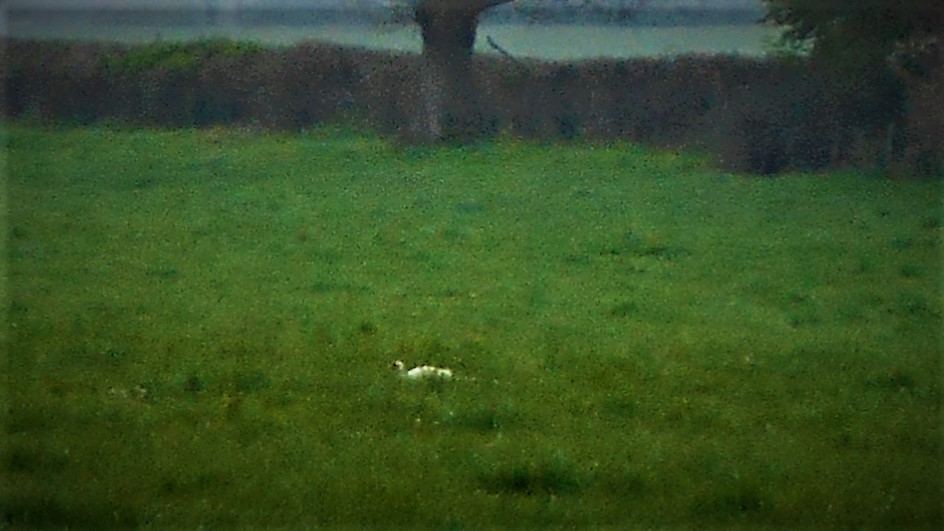
Lots of lesser celandine, dandelions and marsh marigold plants in flower, making cheerful splashes of golden-yellow, ground-ivy, red and white dead nettle, a single ladies smock, its delicate pink-mauve flowers and the tiny white flowers of the chickweed lighting up the hedgerows which were ablaze with blackthorn blossom. Chilly, overcast but most definitely spring.
30th March 2019 / Temp: 16 C

Hazy sun, but warm enough to attract Peacocks, Commas and a female Orange Tip even though the breeze was chilly. The water level was quite low, extraordinary how quickly just a few dry days can cause the level to drop significantly from the full spate on our last visit.
What started out as a Saturday afternoon’s amble along the river bank turned into a hunt in earnest when a casual check of one of our survey sites revealed fresh spraint at the entrance to the tunnel where just over a week ago we had seen the line of fresh pad marks and crayfish remains.
Greatly encouraged we then checked along the stream which runs under the road where for the first time we found fresh spraint on the large pipe which crosses the stream and a pad mark in the stream bed below. Walking on we also found recent spraint on the bank beside the main river and yet farther on we found old and recent spraint on the root a tree growing on the beach very close to the water. All of these positive finds were greatly encouraging after the worrying dearth of spraint sightings over the winter months.

We always approach the beach with a feeling of anticipation. Although we don’t always find Otter signs, the trees, plants, grasses, shells and flood detritus make for an enjoyable exploration as we hunt around, looking for treasure. The Garden Banded snail is a common sight however its treacle coloured humbug stripes and white lip is very eye-catching but by far the best shell find of the day was the Ear Pond snail-shell which, as detailed in the mollusc book, does have an opening exactly like an ear. We found both in the water at the beach edge which was surprising until we remembered the recent high water level which probably washed many shells into the river from the vegetation and small pond high up the beach just below where the steep bank leads onto the field.
Walking back we decided to check for signs of Otter along the small stream on the edge of the field which runs parallel to the river but although we walked the length of the stream there were no signs of anything very much. Occasional large clumps of yellow flag iris plants whose fresh green grow promises flowers in the summer, many marsh marigold plants in full flower, stretches of stream so thick with fools water cress they almost choked the water, and drifts of lesser celandine and small pockets of white dog violet scattered below the leafless hedge bordering the stream. There is a barbed wire fence along this bank which makes it difficult to check the water so we must return at another time and explore the stream from the adjoining field. A dipping trip maybe.
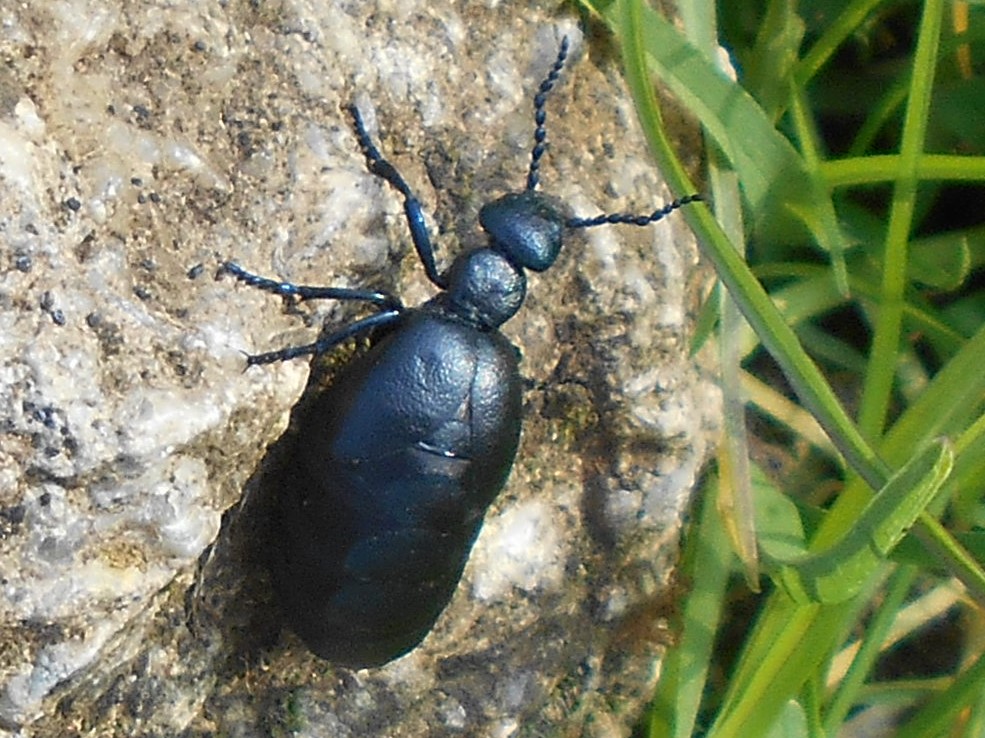
Leaving the stream we crossed the field to get back to the path, passing the cattle water trough where the ground is bare of grass where on the top of a large stone, half sunk, we caught sight of a black beetle. Checking with the buglife website we discovered it was a Black Oil beetle which emerges at this time of the year. We were surprised to read that although the Black Oil beetle is widespread and can be common locally, oil beetles have been subjected to drastic declines due to changes in the way our countryside is managed. ‘Oil beetles have been identified as priorities for conservation action through the UK Biodiversity Action Plan – meaning urgent work needs to be done to conserve them and their habitats. The ideal habitat for oil beetles is wildflower-rich grassland and heathland – two habitats that have been lost from large parts of our countryside ‘. buglife
The grass is thick and lush and thickly squishy underfoot with flowering chickweed, occasional lady’s smock already in flower amongst a scattering of lesser celandine and red dead nettle. The dairy herd should be turned out soon and should have a feast!
27th March 2019 / Temp: 15C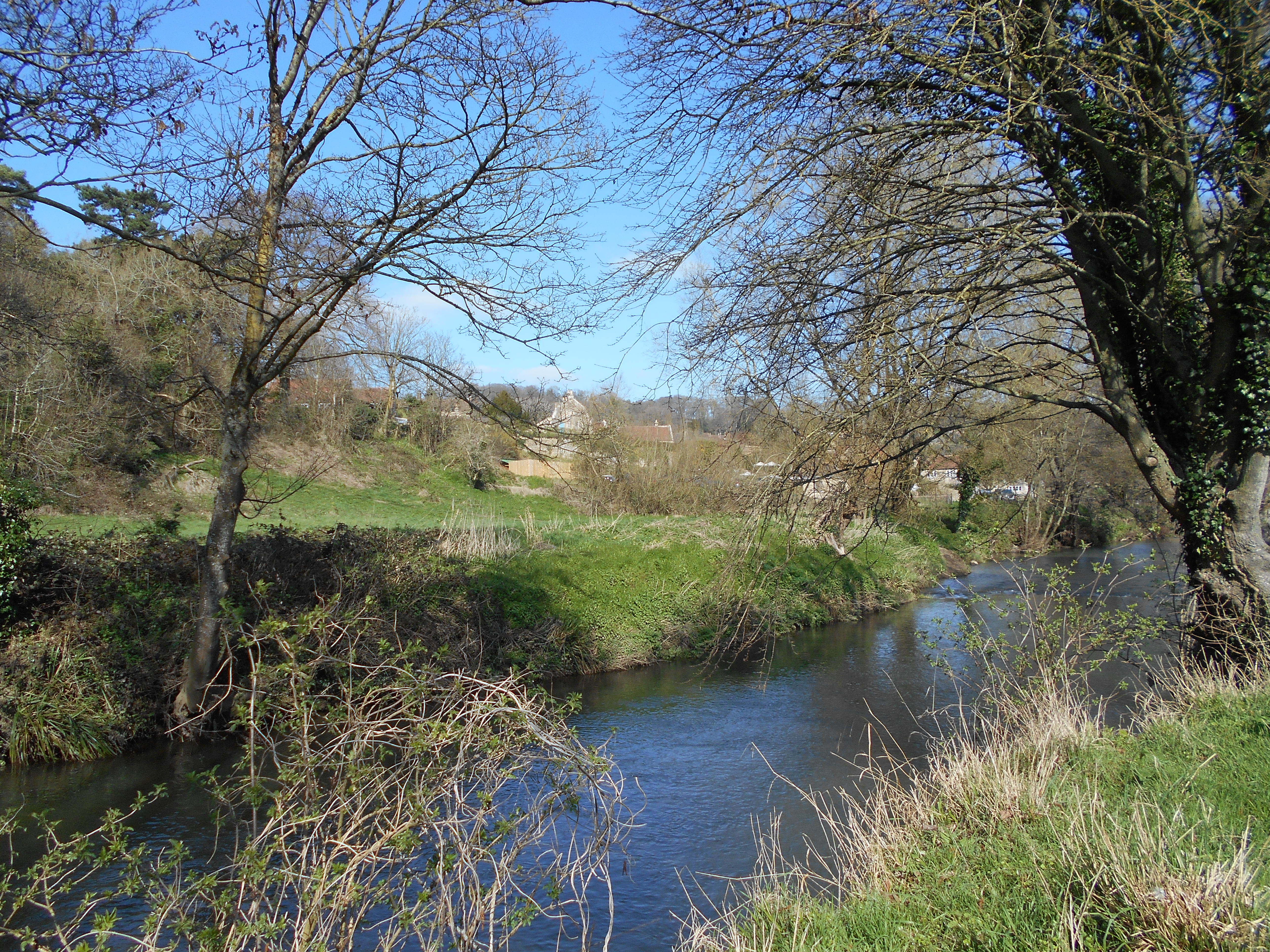 Freshford
With the sunshine sparkling on the water and toasting our backs as we walked along the path persuading ourselves it felt like summer, it was a perfect day to explore the river a few miles downstream from our normal hunting ground and it certainly didn’t disappoint.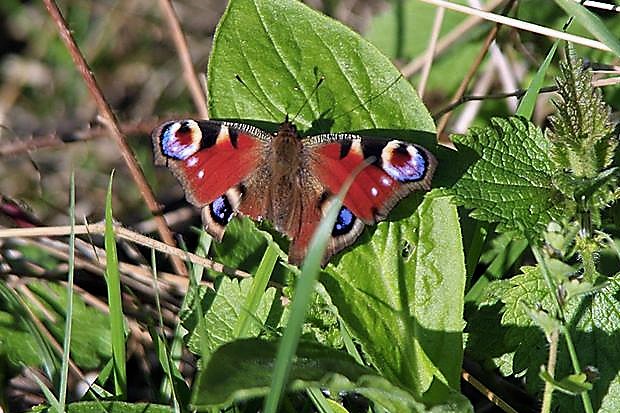
Red Admirals, a Female Orange Tip, Commas, a Brimstone and Peacock butterflies as well as fat bumble bees and two Bee-flies among the snakes-head fritillary, daffodils, lesser celandine, ground-ivy, primroses, dandelions and yellow wild brassica flowers made a glorious display and very welcome sight announcing spring was here at last.
Lots of activity on and around the river. The two Dippers we disturbed were too fast for us to snatch a photograph, they were up and away almost before we noticed them. The Kingfisher was level before we saw him but we were still quick enough to admire his beautiful iridescent blue wings as he flashed into the sunlight and headed downstream. The pair of Goosanders swam regally by but even they took flight and flew off as did the Grey Heron and, eventually, all the Mallard, but the Chiff Chaff obligingly hopped around on the tree opposite long enough for us to identify, even though he remained silent. As for the Raven, Green Woodpecker and Greater Spotted Woodpecker, we didn’t see any of them, merely heard their distinctive calls and drumming as we passed.
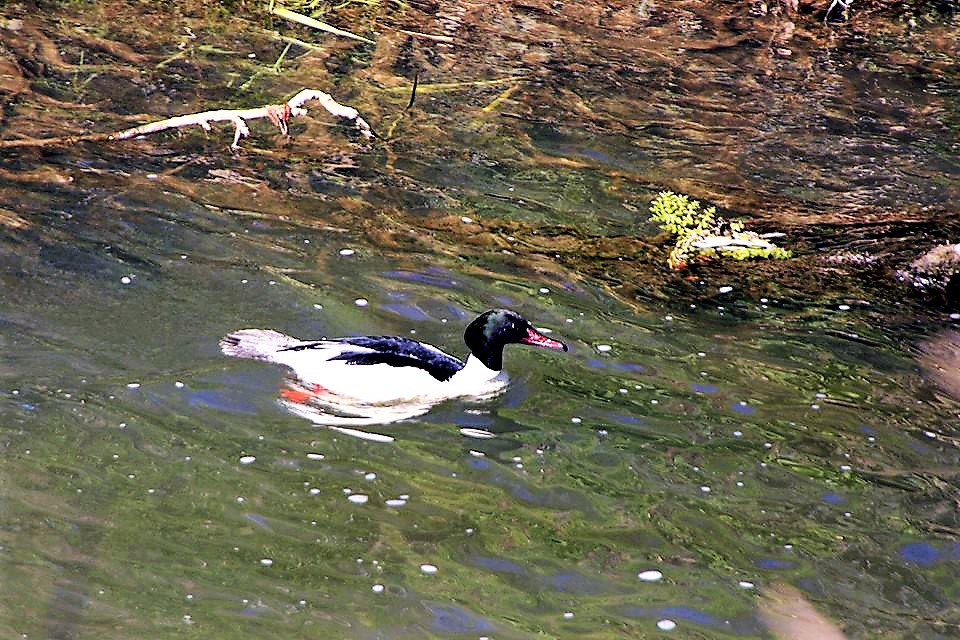
Relieved of the obligations of surveying, we lay on our backs, soaking up the hot sun, listening to the river tumbling over stones, lazily examining the newly opened, bright green leaves of the branches outlined against the deep-blue sky, and idly watched a Buzzard circling overhead all of which made for a perfect way to spend an early Spring afternoon.

We eventually managed to stir ourselves and clambered down the bank to look more closely at what we thought might be Otter spraint and we were right, on a stone close to the river’s edge there were two old spraints and one recent. Any doubt was put to rest by the three or four pad marks the Otter kindly left in the sand. It was noticeable that the number of depressed mussels we saw here far exceeded the number we see further upstream – they were everywhere in every possible size from tiny to very large.
Slowly ambling along the bank we saw at least four Wrens, a couple of Magpies, a Chaffinch, Blue Tits and Great Tits and heard what is impossible to ignore, the constant mournful call of the ubiquitous Wood Pigeons in the background – the continuous accompaniment to any rural walk.
21st March 2019 / 9.30-11.05am / Temp: 12 C

Another dreary overcast day but mild particularly when we were protected from the cold wind; the river is medium high and running fast and turbulent. The ground is boggy underfoot from weeks of rain but although there were no signs of Otter at the first site under and just a single Little Egret stock still the middle of the field in contrast to the Wrens and Tits and Magpies busying themselves amongst the trees, at the second site we were please to see a couple of pad marks close to the water’s edge although there were no signs of spraint or anal jelly.
As we walked towards the first beach the two Swans who were sitting comfortably on the sand first stayed put as if determined not to move and when we still kept coming, tried to deter us by busking, arching their wings in an attempt to defend their territory but when we climbed down onto the beach, they reluctantly entered the water and swam away upstream. We were pleased to find a classic sandy mound on the beach with fresh spraint on top, and two clear pad marks among the line of tracks leading up the beach before being lost to sight in the long grass and wild flowers, mostly large beds of red dead nettle, chickweed, birds eye and field speedwell, lesser celandine, white deadnettle and groundsel across the field as well as the river banks covered with lushly growing ramsons.
There were lots of depressed mussel shells and a few signal crayfish remains on the beach and our arrival also disturbed the usual flocks of twenty or more Mallard and groups of Mandarin Ducks, first six then eight, then a few more lifting up from the river and flying off over the fields and whilst we wandered about searching, we were entertained by both the drumming of a Great Spotted Woodpecker and the yaffling of a Green Woodpecker from the trees at the top of the hill as well as the Blue Tits and Great Tits from the trees surrounding us.

Walking along to the next site we watched the great winter flocks of Jackdaws and Rooks above the trees on the hill, disturbed a few more Mandarin Ducks from the river and saw a Crow’s nest high up at the top of a tree with a quite a bit of disturbance and squabbling with many crows involved, possibly arguing over who would use the nest. Other signs of spring were the dog violets which looked particularly lovely under the gnarled old hawthorn with its low hanging branches as did the clumps of primroses in full flower on the opposite bank and the pussy willows, most of which were now covered in soft yellow pollen.
No sign of Otter on the beach – merely roe deer tracks in the soft mud leading down to the water, a scattering of pea clam shells and a few old crayfish remains.
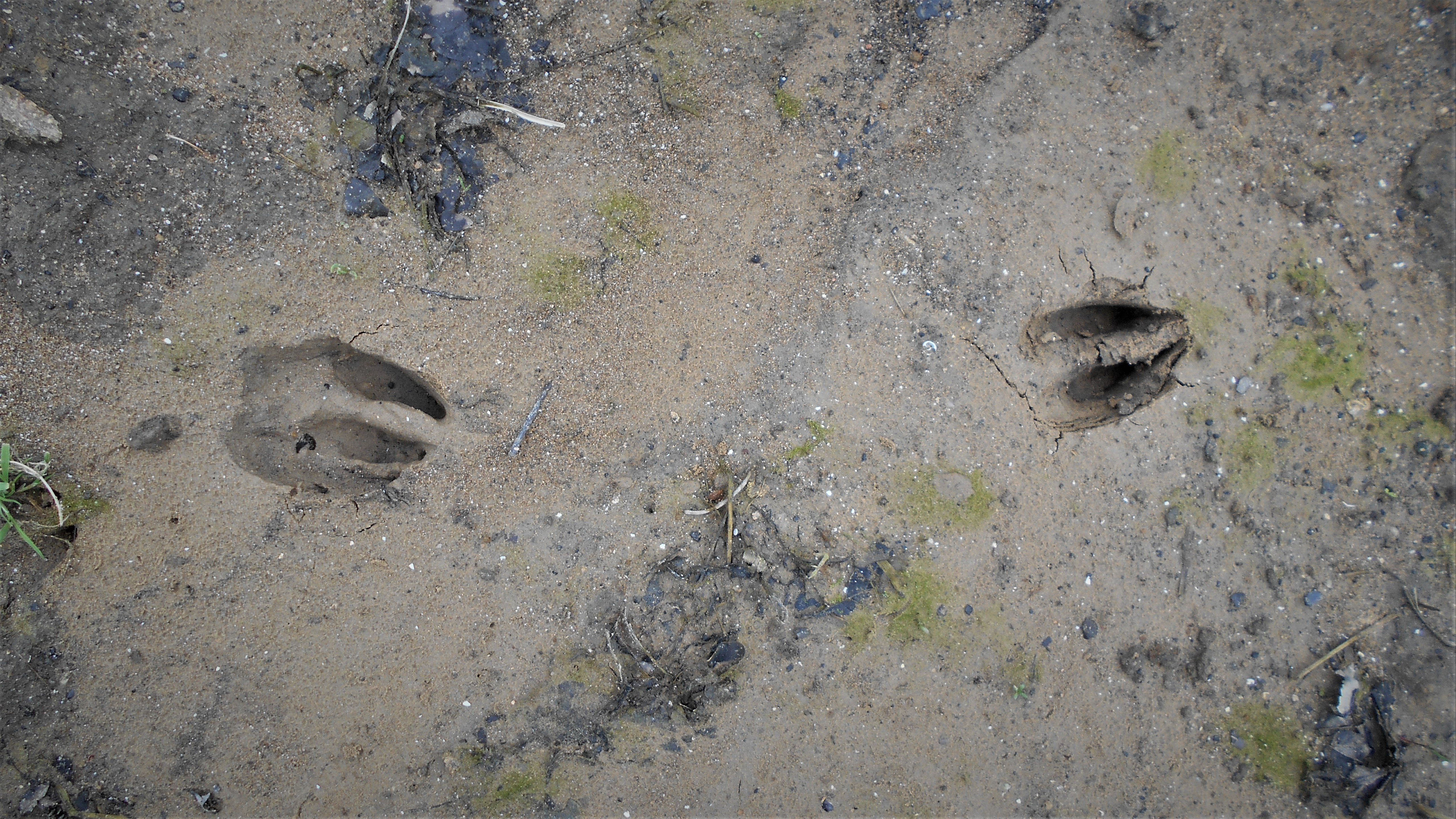
The most noticeable feature of this stretch of river bank is the well trodden badger path and the extraordinary number of badger snuffle holes, diggings and latrines, dozens and dozens of them, many filled with fresh soft droppings. Worm casts cover every inch of the fields we walked through, following the recent heavy rain, so no wonder there are so many badgers!

Finally, as we were heading back home, we came across a rather sad sight. Red Fox scat filled with hair, mostly grey but with strands of tell-tale reddish-brown, which suggests a young leveret. We have seen a Brown Hare intermittently in this field, always a delight to watch and a thrill to see, and when we reported our sightings to the Hare Preservation Trust they thought by the behaviour that it was a female. We can only hope that she had several young and the Fox had only managed to catch one of them.
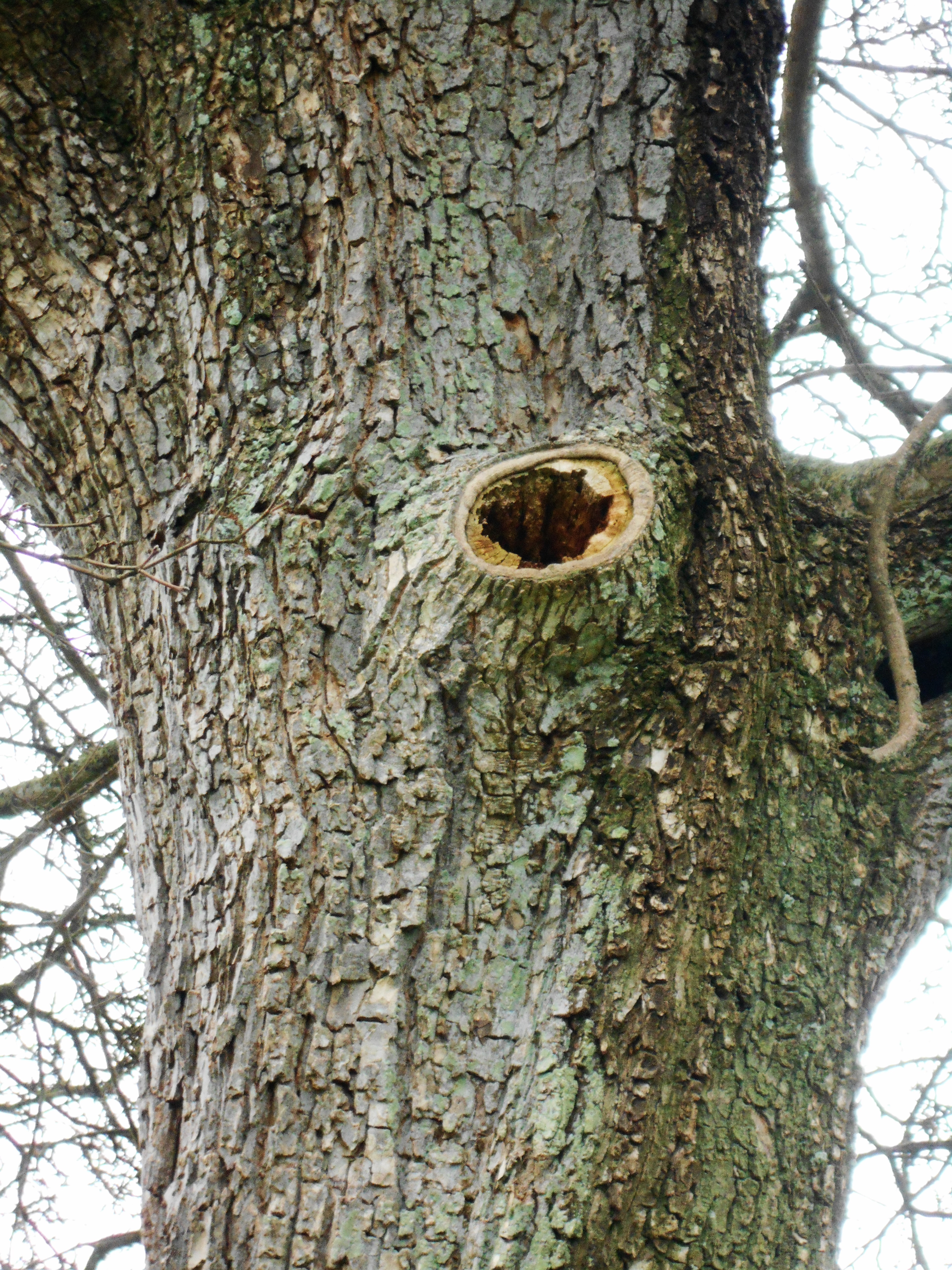
We spotted a large hole in the branch stump of the Ash tree which carries clumps of mistletoe growing on it. It looked newly worked on and could possibly be a nest hole for a woodpecker as they begin their nest-building during March and April.
20th March 2019 / 9.10am – 11.45am / Temp 10 C
Heavy cloud, mild with a stiff, chill wind but signs of spring everywhere from the clumps of primroses, emerging blackthorn blossom, pollen coated pussy willow flowers to the fresh young ramson leaves ready for picking, lesser celandine, red and white dead nettles and the very welcome splash of sunshine which are the clumps of marsh marigolds.
No signs of otter at the first five of our sites so we were tremendously excited at finding a clear trail of pad marks through the mud from a tunnel to the river on our last site. This and the remains of two American Signal crayfish just by the water confirmed that our otter was out and about even though yet again no sign of spraint or anal jelly.
We have in the past often seen pad marks (although never so many) and spraint at the opening to this tunnel which links to the rill in the farmers’ fields so that the water can run down to the river under the road. Our Somerset Otter Group mentor, Tony House believes that our otter is a female, possibly with young cubs which is why she is keeping to the tributaries and rills and away from the main river.
As we clambered up and down the bank to photograph the tracks and peer at the large stones in the river, we disturbed a tiny Wren, several Blue Tits and a pair of Tree Creepers foraging amongst the ivy clad tree trunks. A splash of blood-red among the leaf litter revealed a Scarlet Elf Cup fungus.
While we were scrambling about we were greeted by a dog walker who told us that he often saw Otters when he was walking the dogs between 10.30 to 11pm each night and in fact had seen one near the weir only last night. The fisherman on the bank who also spotted the Otter, immediately up sticks and left saying it was quite pointless to remain The dog walker said he had been walking this river for 30 years and it was only during the past three or four years that he bad begun to see Otters pretty regularly. His best sighting had been late one evening last summer when he had seen four playing around in the water along a quiet stretch of the river.
When we were minutely checking the big beach where most of the distressed mussel shells are to be found, we also saw two caddis fly larvae cases and on an area of beach where the river had just receded, hundreds and hundreds of tiny white shells. When we checked them at home we found that they were tiny pea clam shells, only about 3 or 4 mm in size which we would not have noticed if they hadn’t been scattered with such profusion.
At the next beach we caught a brief glimpse of a Kingfisher, lots of Blue Tits and a pair of Greenfinches and we could hear the Canada Geese, almost certainly from the site we had checked earlier which was thick with their droppings all along the river bank. Although this area is quite shaded from the density of trees it was lovely to see the many clumps of primroses and even a wild cherry with its newly opened flowers lighting up the woods.
No signs of Otters on the beach but lots of small animal tracks in the soft mud and we went through our usual is it/isn’t it with the tracks in the photograph below. 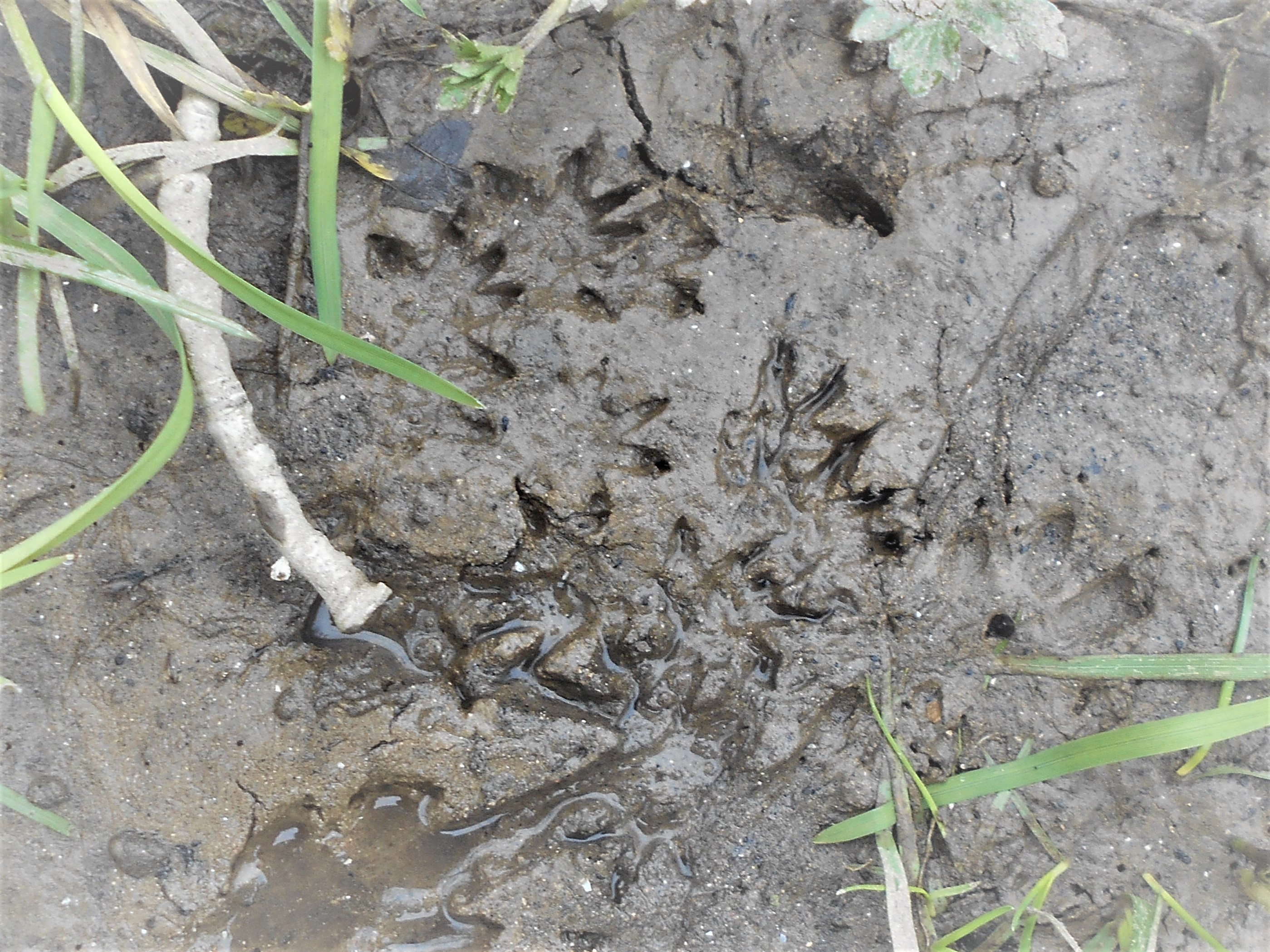
Are they Water Vole tracks or merely brown rat? We are never totally confident although they did look like water vole to us but of course how can we be sure it is not just wishful thinking! 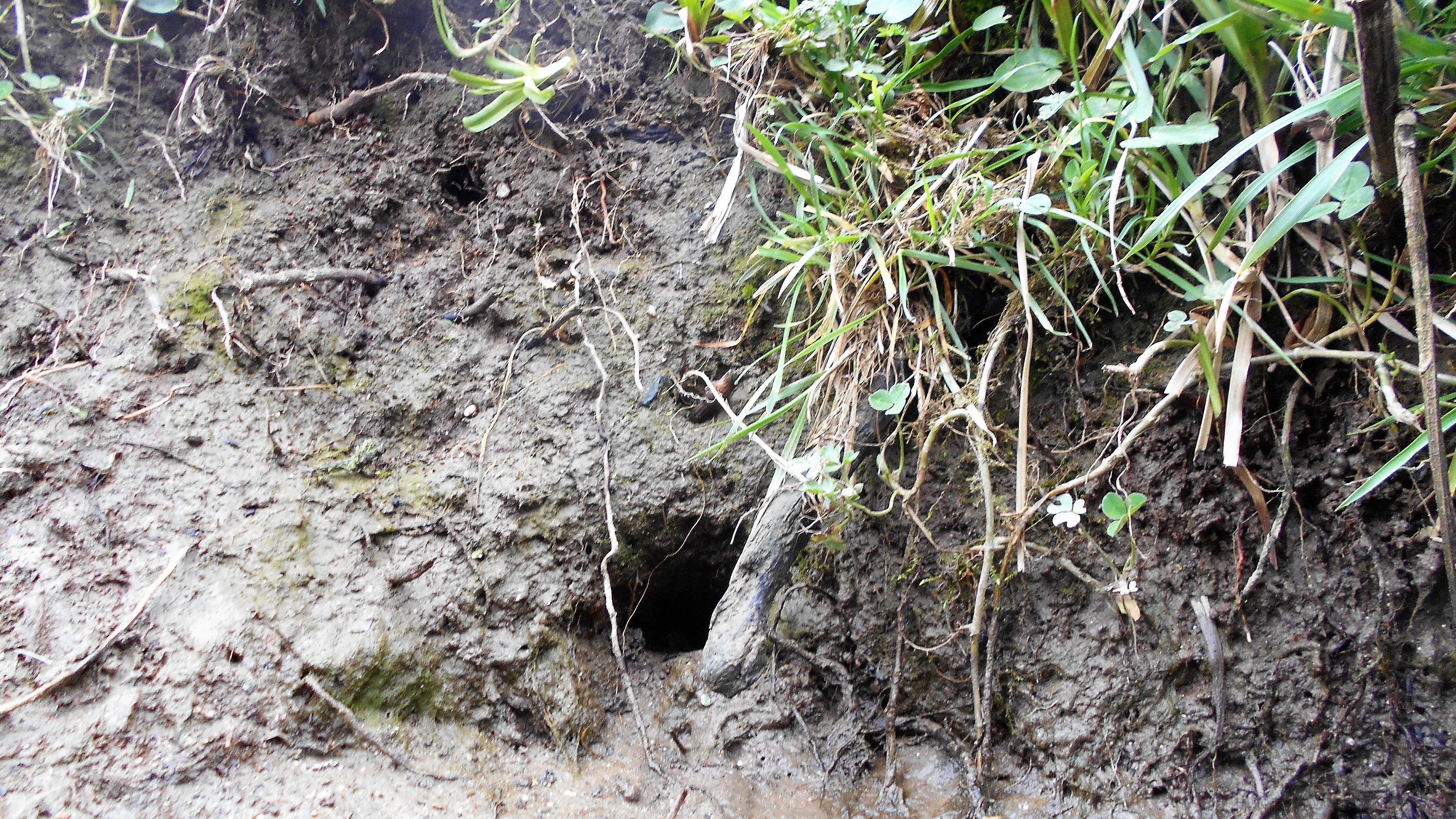
And we always encounter the same problem with the small holes low down the river bank close to the water. Are they Water vole burrows or perhaps crayfish lairs – who knows?
On the way back to the car we nearly trod on the small and delicate little pleated inkcap fungus, an unexpected very early harbinger of mid-spring.
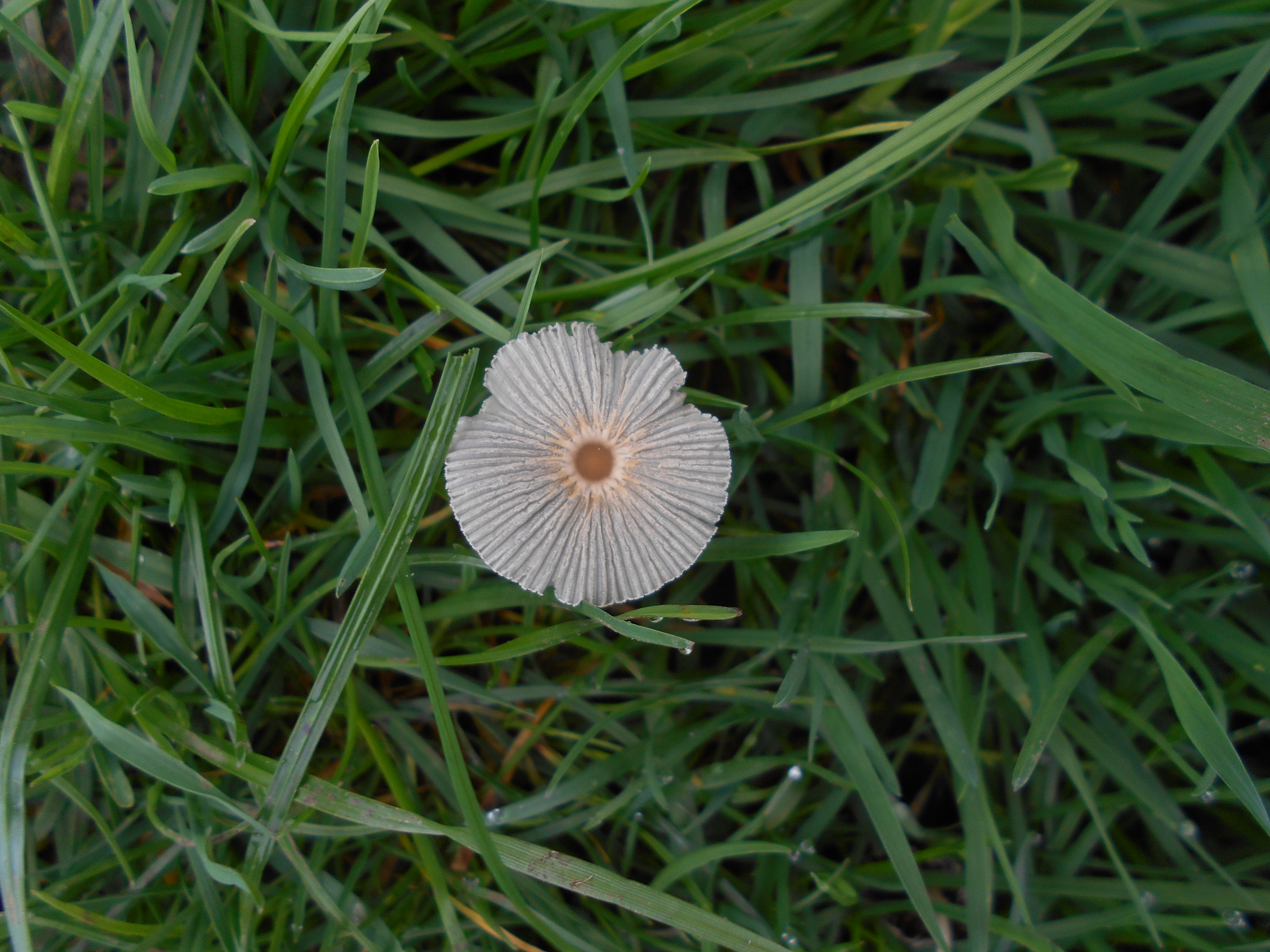
and also caught sight of a tree in the far distance of an adjoining field where there were seven Little Egrets perched on the branches. We often see Cormorants grouped together like this but never before so many Little Egrets together. Impossible to be able to distinguish at this distance whether there were juveniles among them but a good possibility.
6th February 2019 / 9.40am – 11.20am / Temp: 7.5-9C
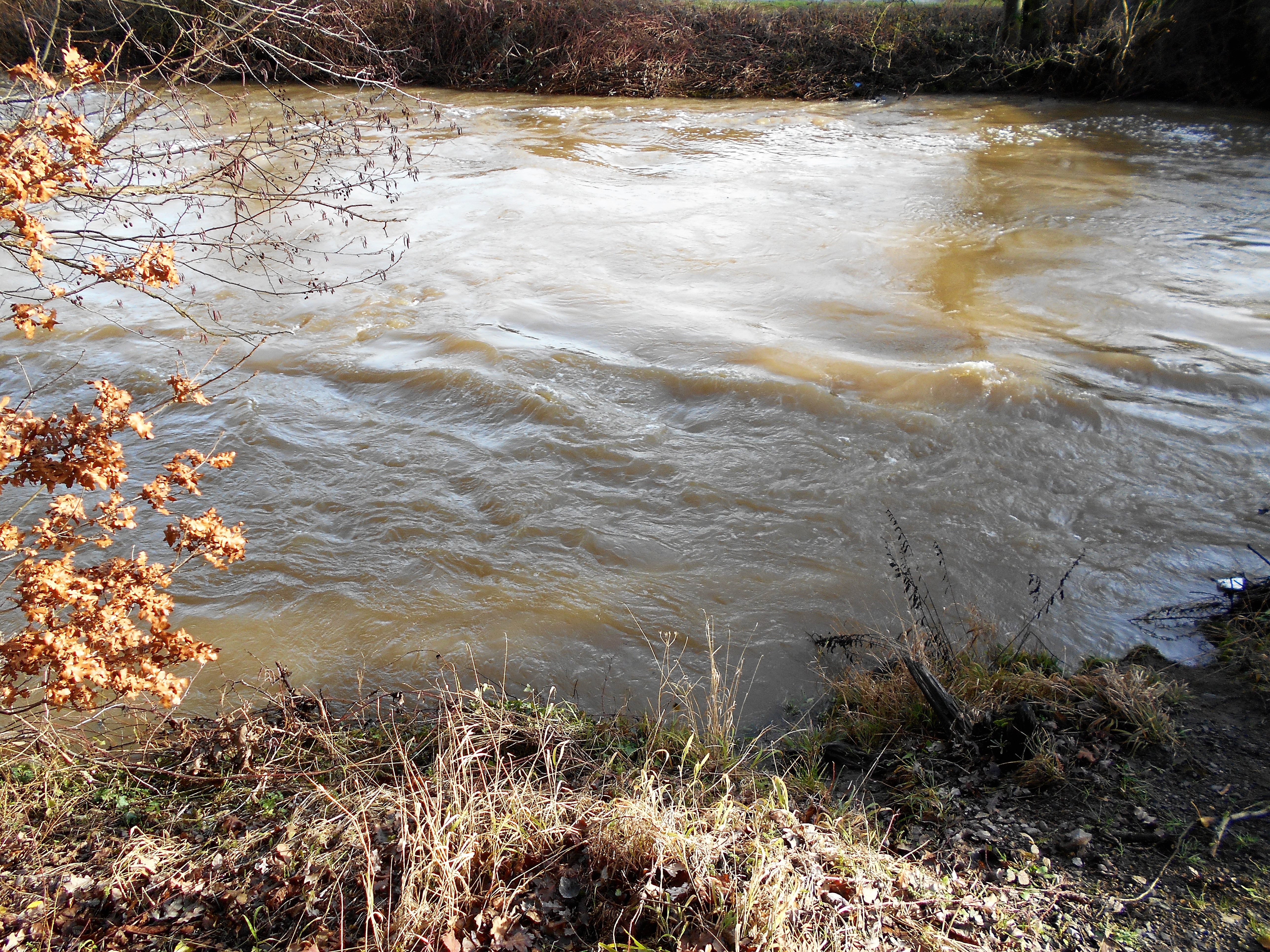
As the low-lying mist slowly cleared, the weak sun struggled through the thin cloud and it was considerably warmer than the past few days. We sploshed and waded through the wide puddles and deeply rutted and muddy tractor tracks across the sodden fields to the river, setting up four swans as we turned down onto the water meadow.
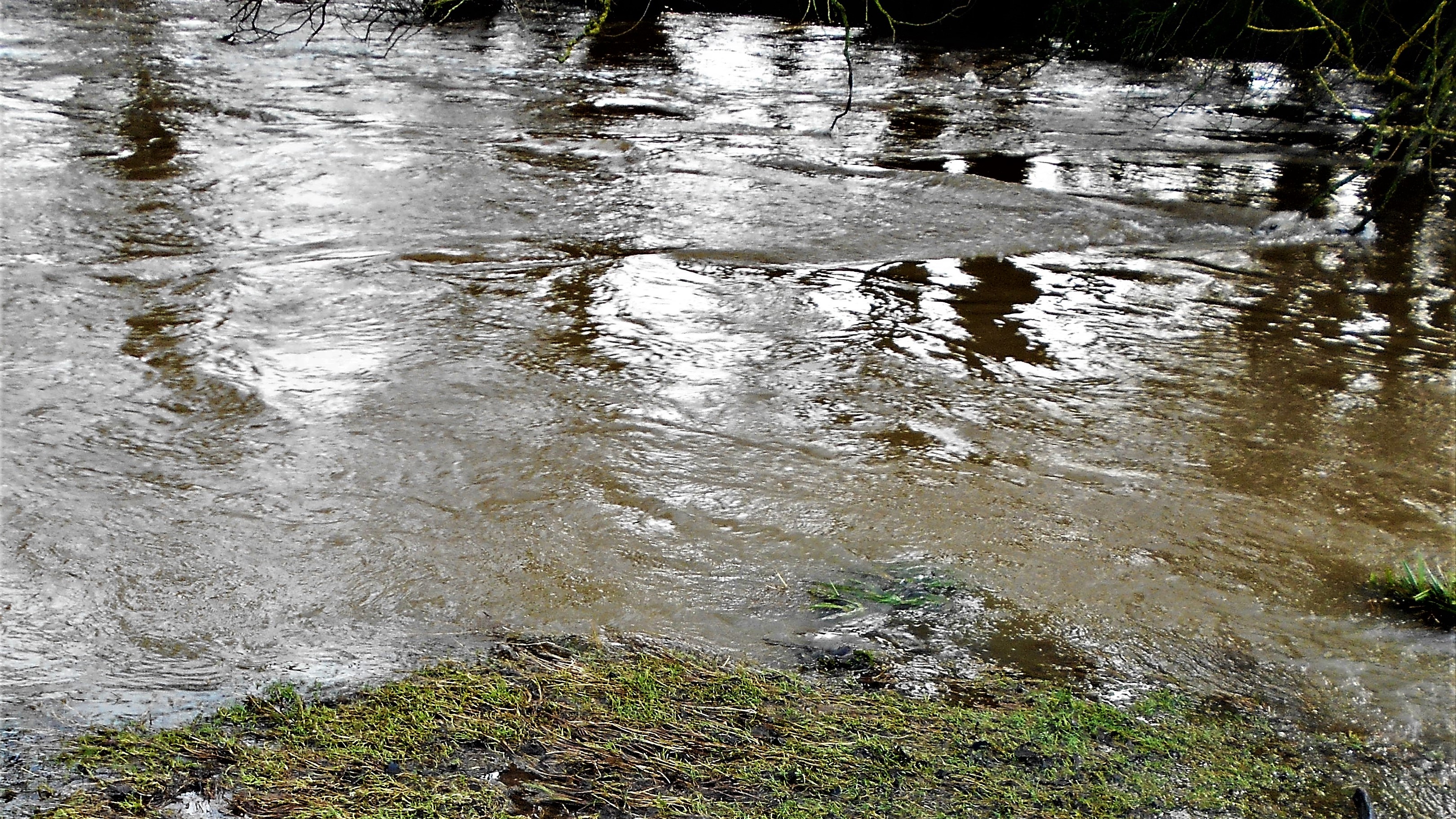
All the snow melt plus the overnight rain made the river look spectacular – in full spate creating whirlpools and swirling waves and eddies, rushing past at what seemed to be ten miles an hour or more – hard to imagine an Otter or anything else venturing along this stretch, and so it proved for we found no signs along either beach, not surprising perhaps as most of each was underwater. A Heron flew up from the river, followed by at least fifteen to twenty Mandarin Ducks and a single Cormorant, and we could hear a Greater Spotted Woodpecker drumming from the woodland at the top of the hill. The air was alive with the sound of birdsong, Great Tits, Blue Tits, Wrens and Blackbirds from every tree we passed.
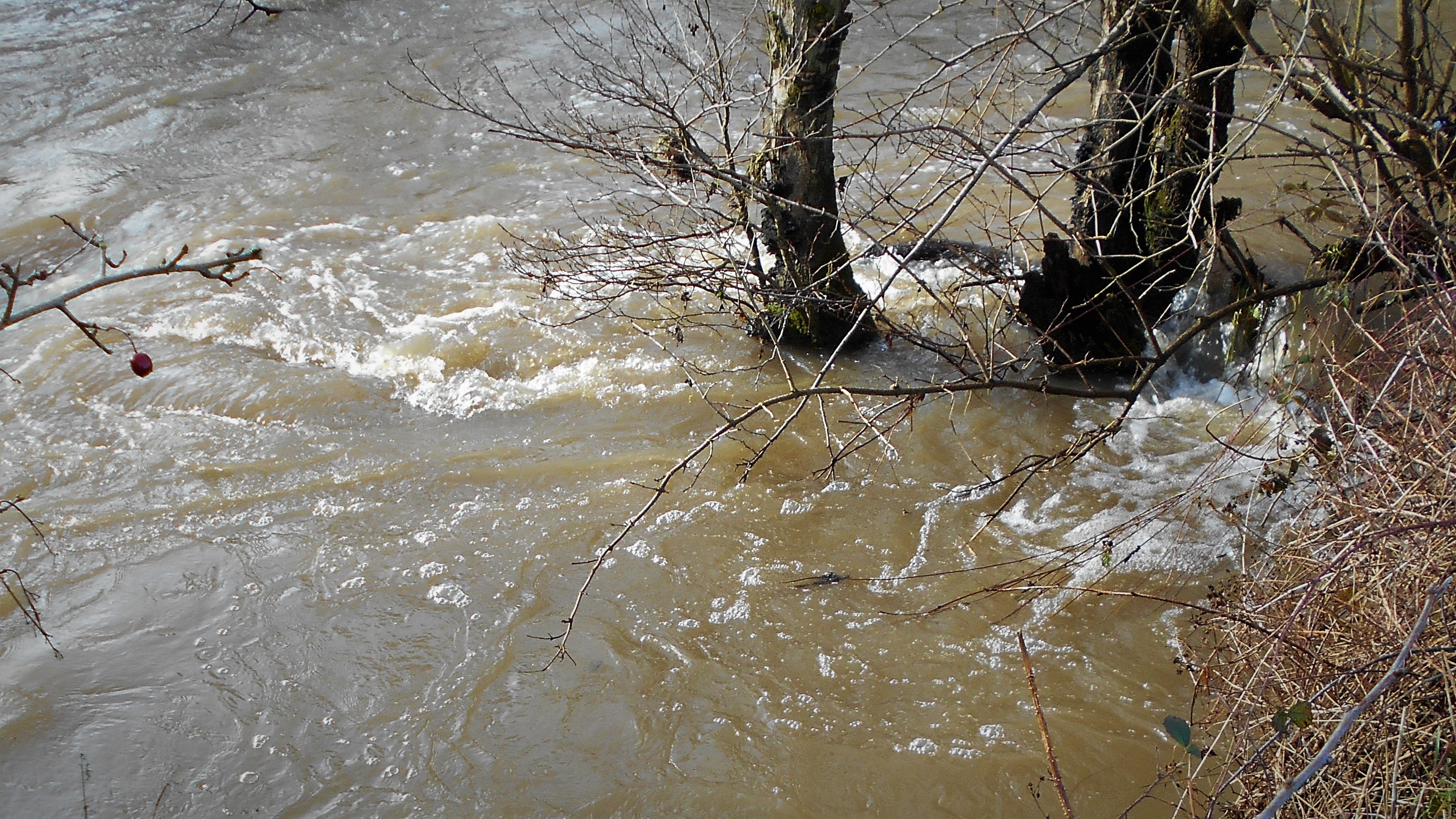
Walking proved rather tricky over the boggy ground and one of us slipped and fell in an attempt to check the flooded beaches and the other was caught by a trailing bramble and fell heavily on the muddy bank, but luckily we were both unhurt. 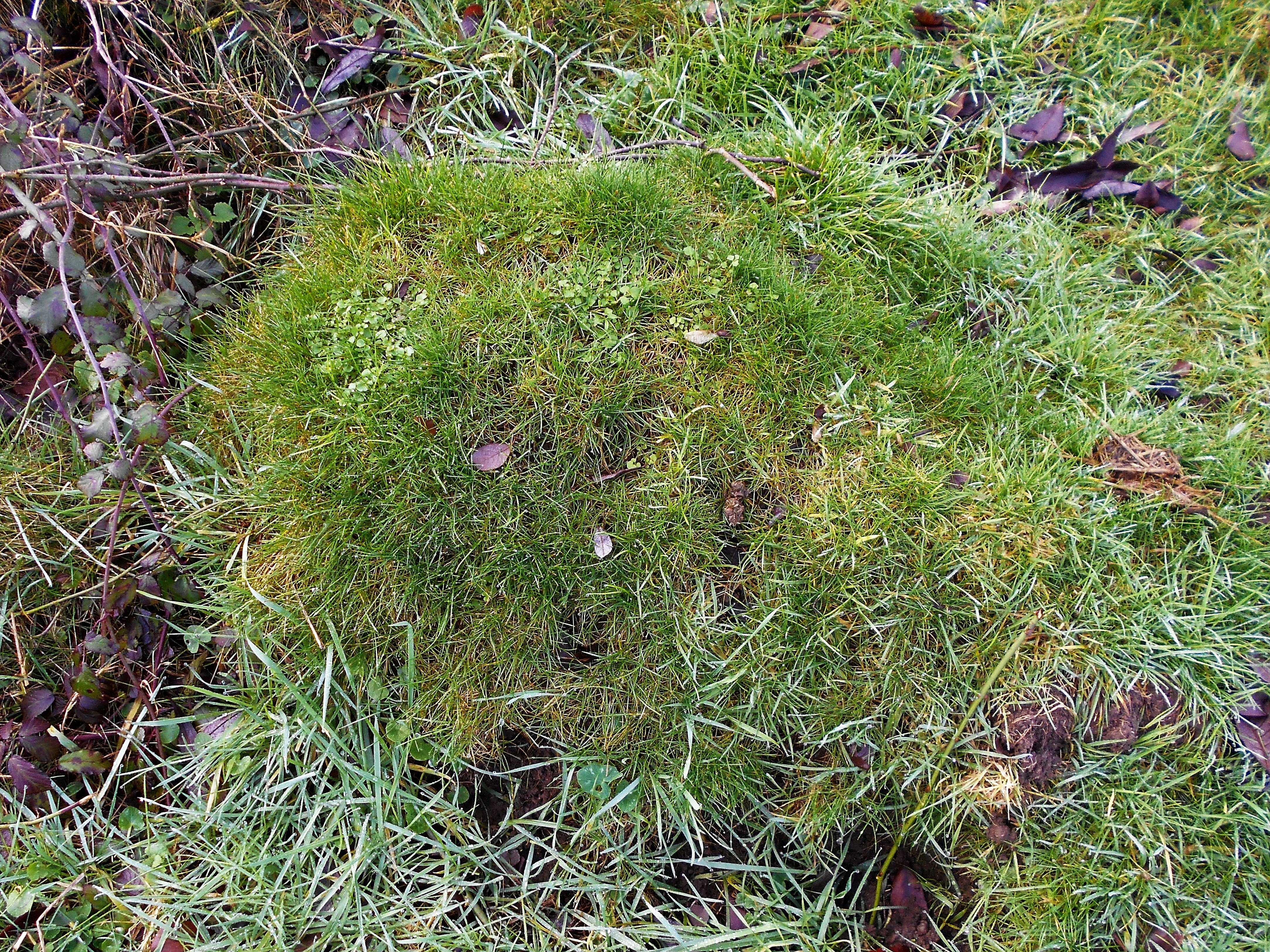
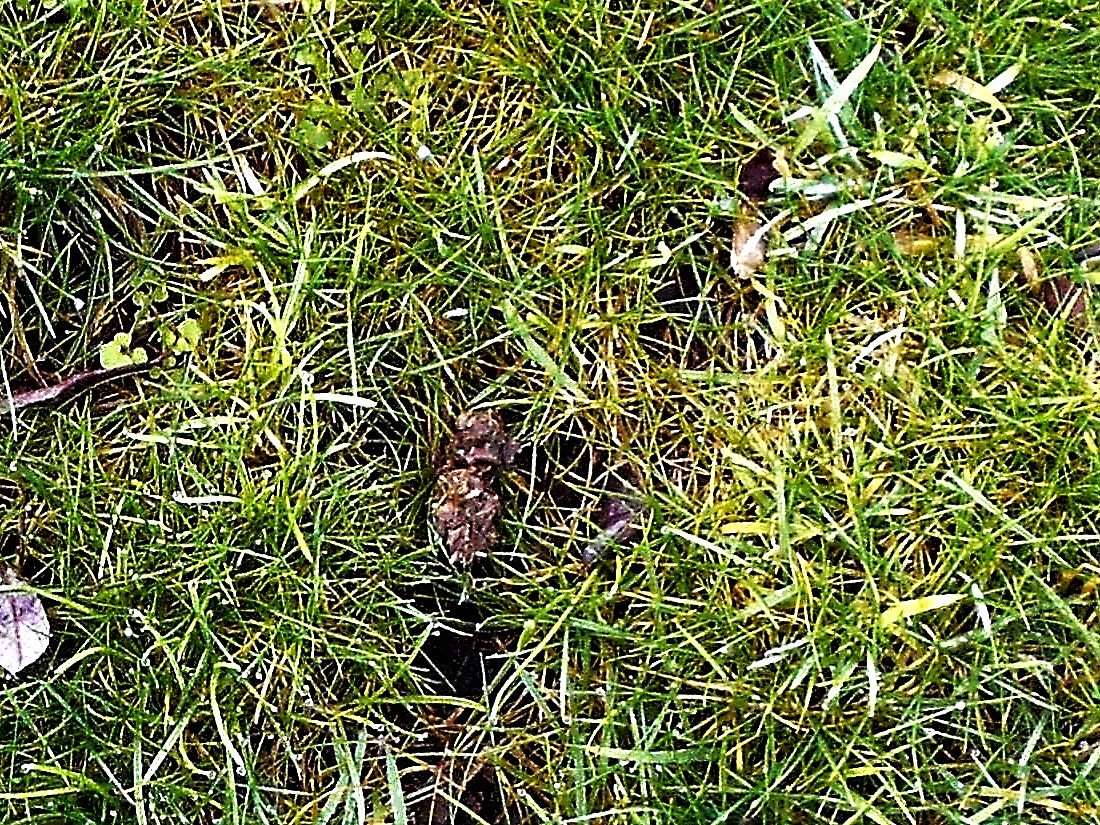
There were crayfish remains close to the beach and some empty river mussel shells but no spraint that we saw at the time but on checking our photographs on returning home saw this one of an anthill showing what might have been a crayfish coloured spraint, but impossible to be sure from a photograph.
A scattering of crow feathers – very unusual as we most often see wood-pigeon kill – although it is said that both hawks and owls will attack crows, enlivened our walk as did lots of badger snuffle holes and pretty sizeable diggings all along the river’s edge and more and more mole hills – which seem to increase in number at every visit. The Rooks and Jackdaws were shouting at the tops of their voices as usual and, just as we were leaving to move onto the next site, we saw a Little Egret take off.
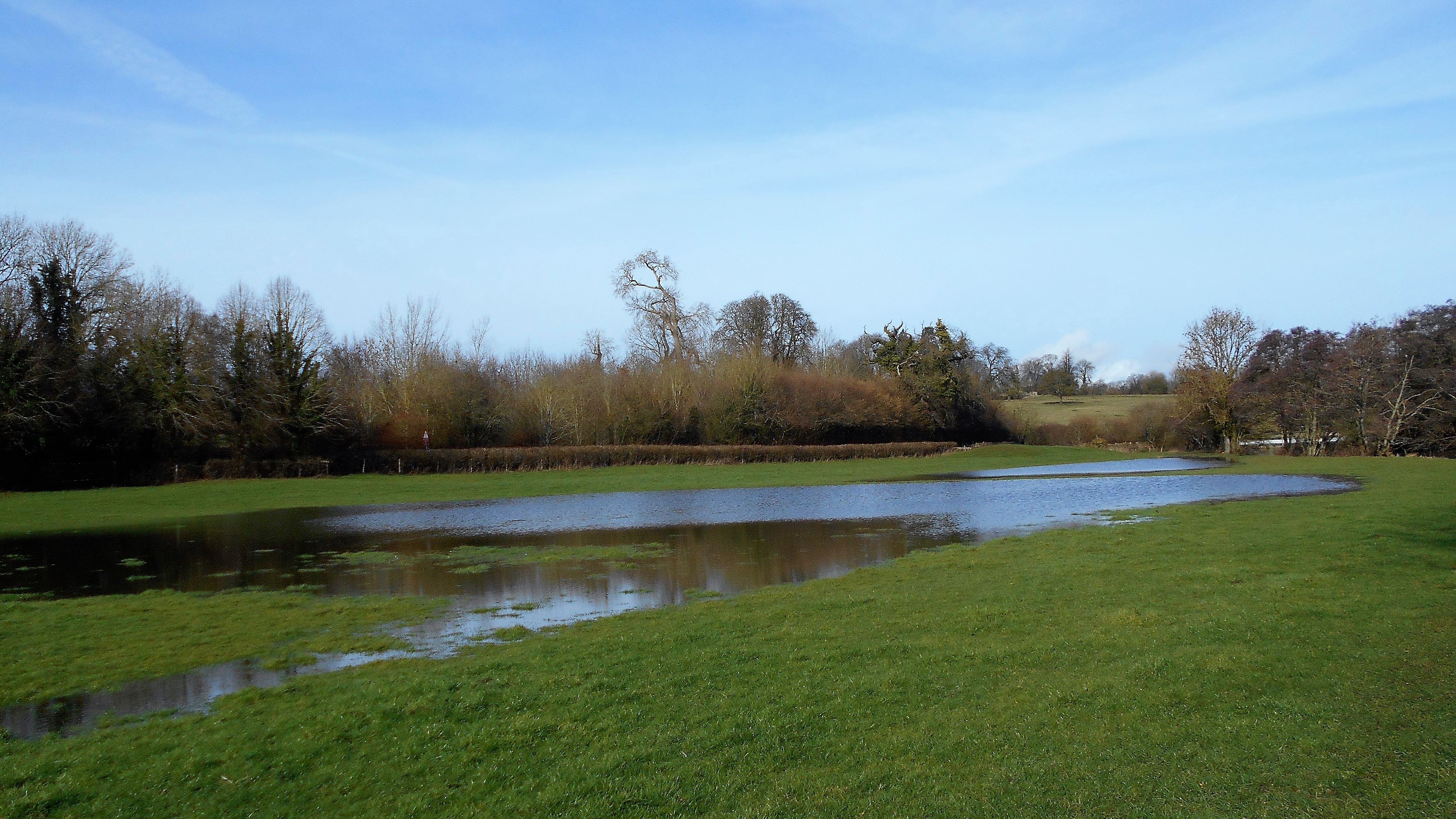
As we climbed over the stile into the next field we had the fleeting, quite stunning sight of innumerable numbers of gulls – Lesser Black Backed, Black Headed and Herring gulls – floating in the lake formed by flooding from the river, strutting around on the grass and circling overhead. Within what seemed a few seconds, they all rose as one and flew off and disappeared into an adjoining field beyond the trees, leaving the scene quiet and empty with flooded ditches and heavy boggy ground.

Although the margins of the river were calm and quiet, the main current was very much in spate, as fast and swift as upriver, full of swirling pools as it hurtled downstream before crashing over the weir. We at last found one recent spraint on top of a molehill but no other Otter signs and no tracks so the croak of a Raven flying overhead, a scooting wren along the reeds and the rattling alarm call of a Blackbird were welcome sights and sounds in what was otherwise a hopeless search.

We were rather astonished to see an acorn tucked carefully into a fissure in the bark with what looked like imprints where others had been. Thinking they must have been a squirrel hoard, we were surprised to read that acorns are main food staple of Jays and who evidently store acorns in trees as part of their winter hoard distribution as well as hiding them in the ground.

Winter is lovely really because we notice things which in the warmer months we simply don’t see. How many times have we used the trunk of the Giant Sequoia to steady ourselves and clocked but not seen the tree. Today for the first time we caught sight of a female cone on the ground beneath the tree, wet and gleaming, the tiny fronds of bright green moss and intricate patterning drawing and delighting the eye and we consequently “saw” the tree. An extraordinarily exotic planting amongst the staid English alder, poplar, ash and holly surrounding it.
2nd February 2019 / 1.30pm – 2.50pm / Temp 3.5 C

After yesterdays swirling snow storms and grey skies followed by the sub-zero freeze overnight, the day broke to clear skies and bright sunshine and although the temperature took all morning to rise above freezing, it was a perfect winter day. The sun hot, the air fresh and clear, like champagne – totally exhilarating and we crunched across the snow-covered fields with rising spirits.
There were few signs of life save a few of the usual birds, Robins, Tits, Chaffinches, Blackbirds in the trees, Ravens, Jackdaws, Wood Pigeons, Crows and Buzzards overhead and Mallard in the river, but the whole scene was so beautiful and the air so crisp we were totally unconcerned.

We were however pleased to see recent (since our last visit) signs of half-eaten American Signal Crayfish and empty River Mussel shells along the gravel beach even though there were no signs of Otter spraint or anal jelly.
We checked the whole beach carefully, more out of a sense of duty rather than in the hope of finding any further signs when we suddenly caught sight of what looked like a line of pad marks coming up from the river and along the inches deep snowy beach.

There was a great sense of anticipation as we very carefully followed the line. At first, to our great disappointment, most of pad marks were too blurred to discern quite what they were with any certainty but then huge excitement – we found a couple of clear Otter prints among the partially melted line of tracks.

Alas, there were still no signs of spraint and no more pad marks. We walked along the river bank, checking every site until we reached the little beach where we found nothing apart from dog tracks and boot marks. However, the cold air, brilliant sunshine and walking through such a beautiful landscape brought out the child in us and faced with fields covered in unbroken layers of four inches of pristine snow and myriad tracks in every direction, it proved impossible not to follow some of the tracks to see where they went.
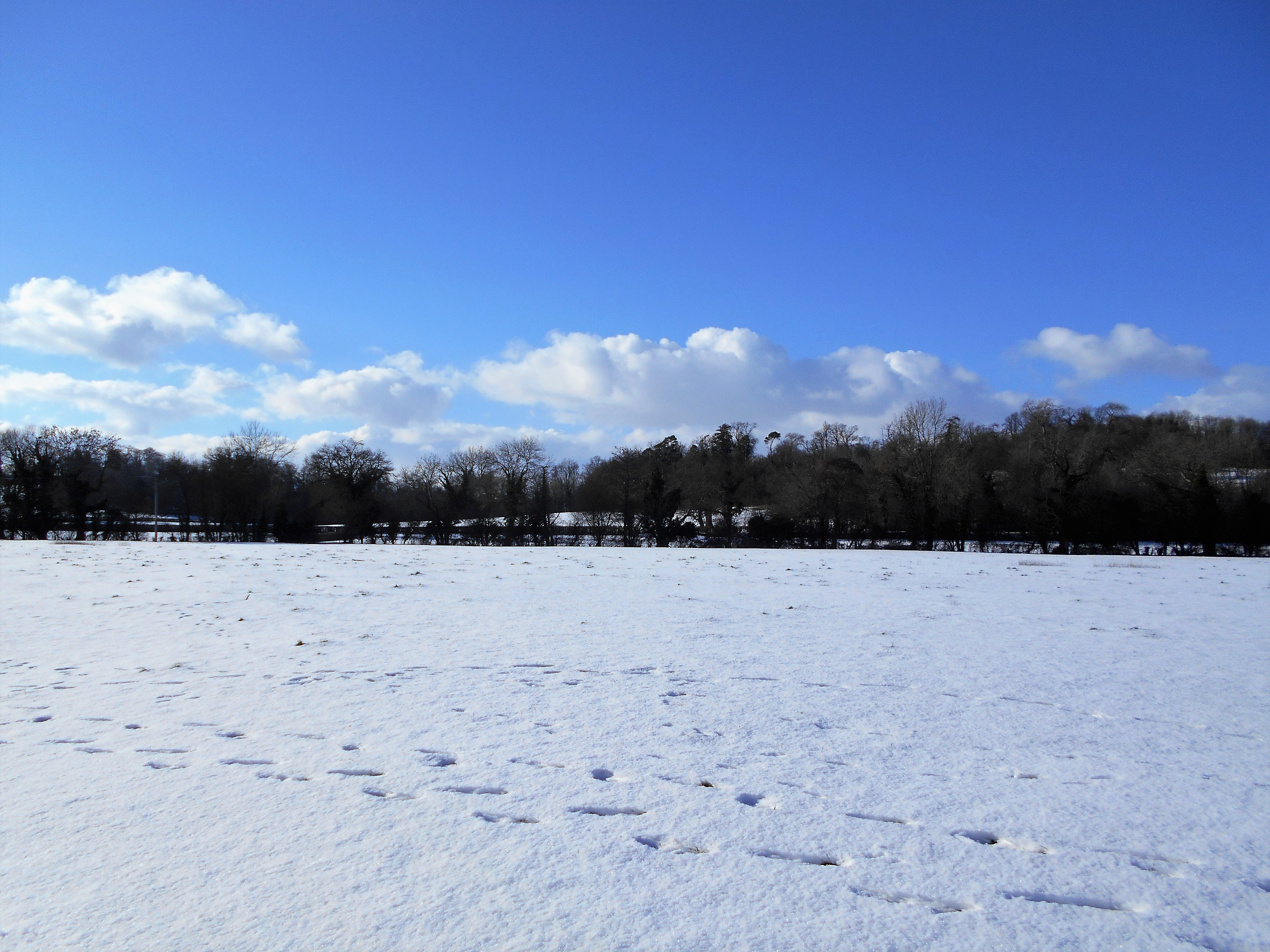
There were clusters of completely isolated bird tracks, just half a dozen prints but coming from nowhere and going nowhere which we could only assume were signs that the birds had merely landed taken a few steps and flown off again.
One set of tracks led from a small hollow or depression in the snow suggesting a Pheasant might well have sat out the storm as the snow fell around it before standing it and strutting carefully, dragging its tail, down the length of the field….
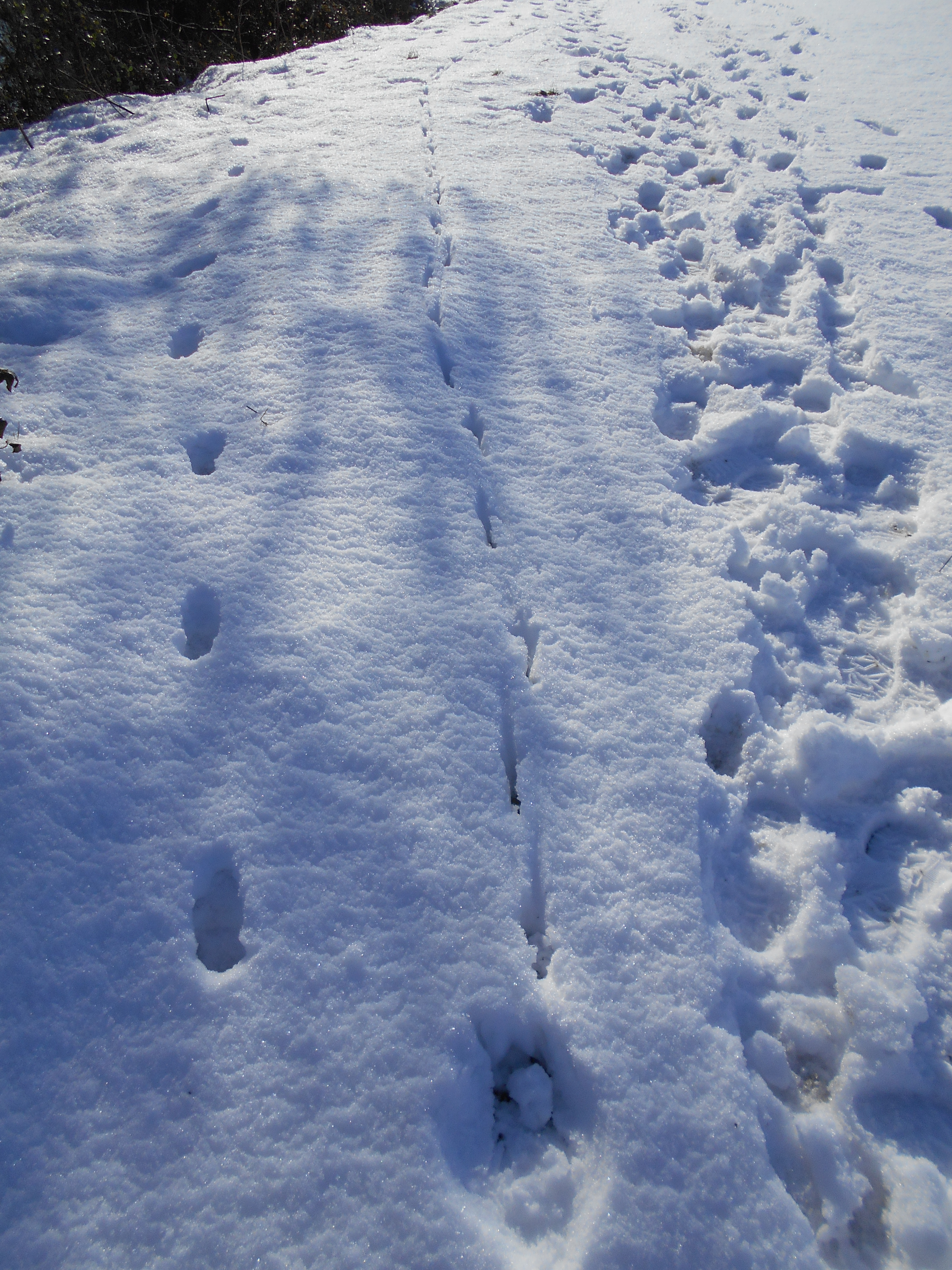
where its prints disappeared among the pock marks under the trees.
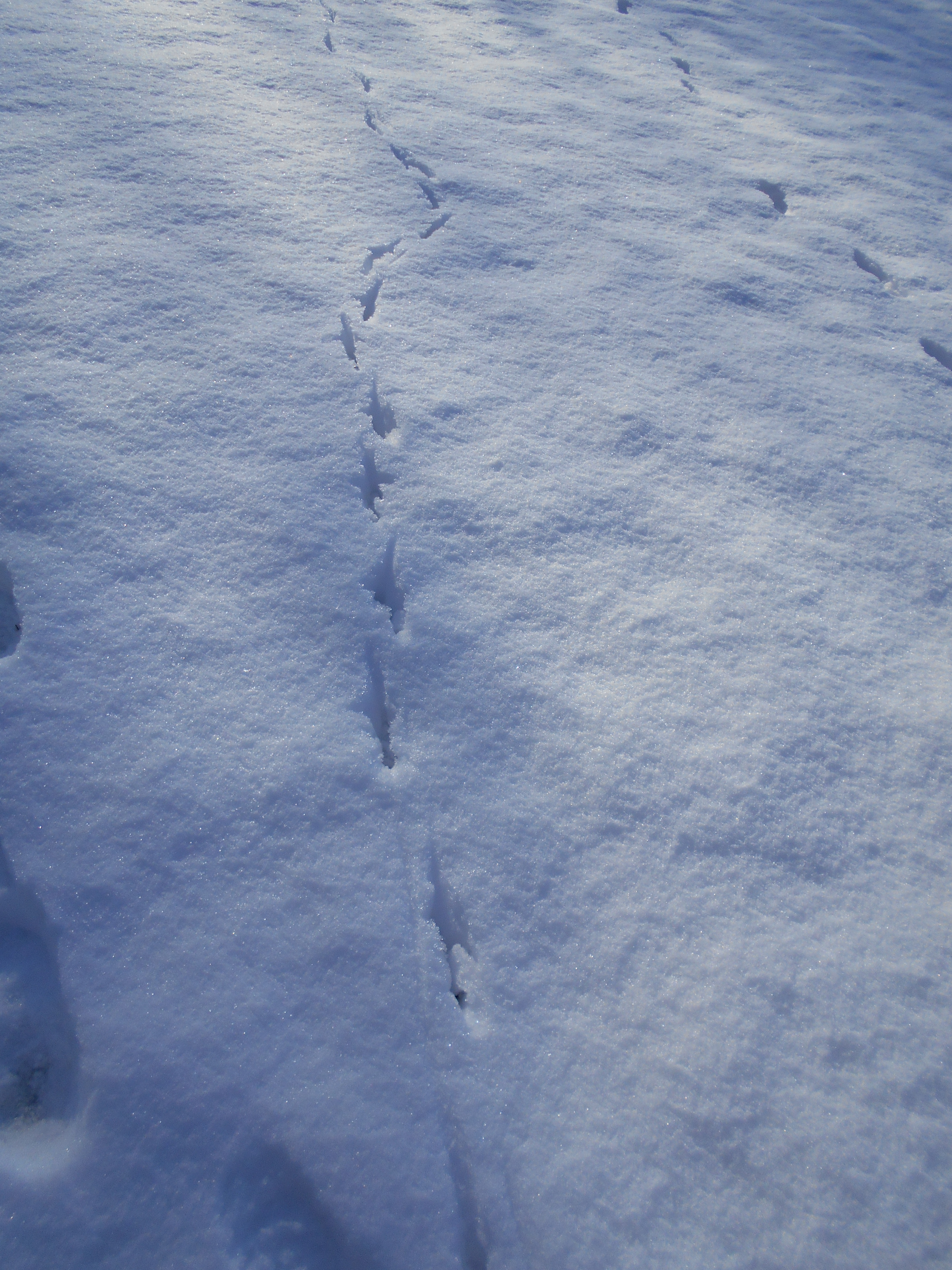
One set, probably a Mallard, showed a line plodding across the river bank heading for the edge where it must have plopped down into the water.
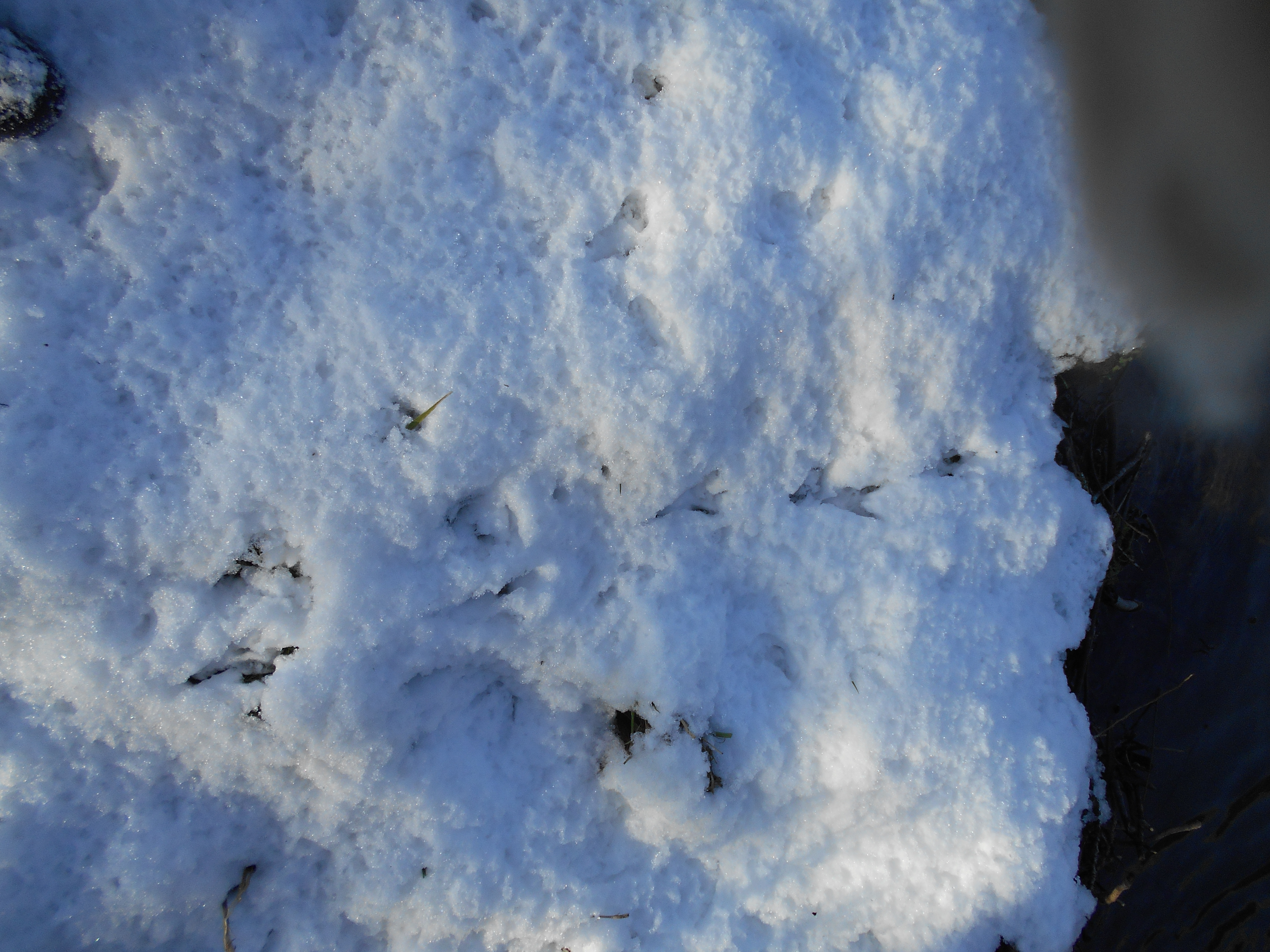
And finally, a set of very large boot tracks – one man and his dog – the man’s prints walking purposefully across the field, the dog’s prints skittishly dashing in circles and chasing after who knows what.
A totally perfect end to a perfect afternoon and we crunched happily if rather tiredly home with glowing faces and equally glowing spirits!
17th January 2019 / Temp: 3 C
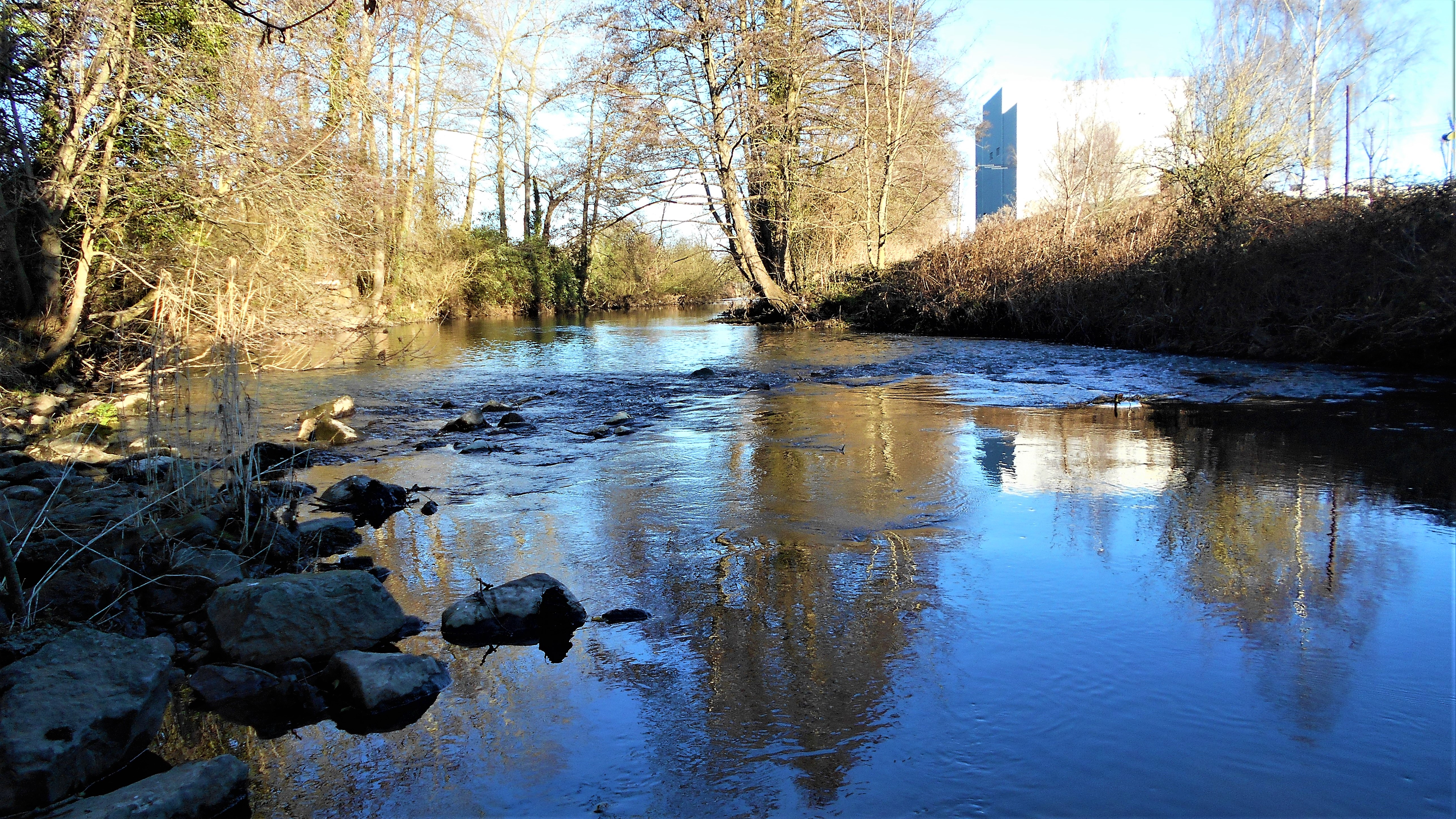
A perfect January day – bitterly cold with a keen icy wind, brilliant sparkling sunshine in a clear blue sky – a great day to be messing about by the river!
Unfortunately no signs of Otter despite wading through the freezing water which even managed to penetrate our Wellington boots in a forlorn attempt to discover a splash of anal jelly or a tiny spraint. We became quite excited after spotting some pad marks in the soft mud under the bridge but on closer inspection they proved by their size and shape more likely to be hedgehog even though they should be hibernating at this time of the year; perhaps like our Japanese quince which is freely flowering now rather than it’s normal time in March-April, it has been fooled by the inceasingly mild winters. Some promising looking spraint on the gravelly beach farther along the river, we were unfortunately unable to positively identify – no smell but no signs of bones either and although there was a recent crayfish claw close by, we thought on balance it was probably not otter spraint. The only other droppings we noticed, apart of course from dog, were found to be Roedeer.
Half a dozen or more corn cob husks across one area of the water meadow together with a bleached Wood-pigeon rib cage close by was the sum total of field sightings save for a single Grey Heron standing forlornly in the centre of the grass. Streams of Rooks, Jackdaws, Crows, Gulls and Wood Pigeons were constantly flying overhead, Blue Tits, Chaffinches, a Wren and Pheasant introduced themselves but the saving grace of a pretty uneventful but sparkling morning was the sight of at least seven or eight Redwings inspecting the adjoining field, joined by a couple of Fieldfares and parties of finches. Has Earth anything to show more fair than Fieldfares and Redwings in winter? Of course not – London, so beloved of Wordsworth, does not even come close. We rested half way home on a log conveniently sited out of the icy wind and lifted our faces to soak up the hot sun on our winter starved skin – what bliss.
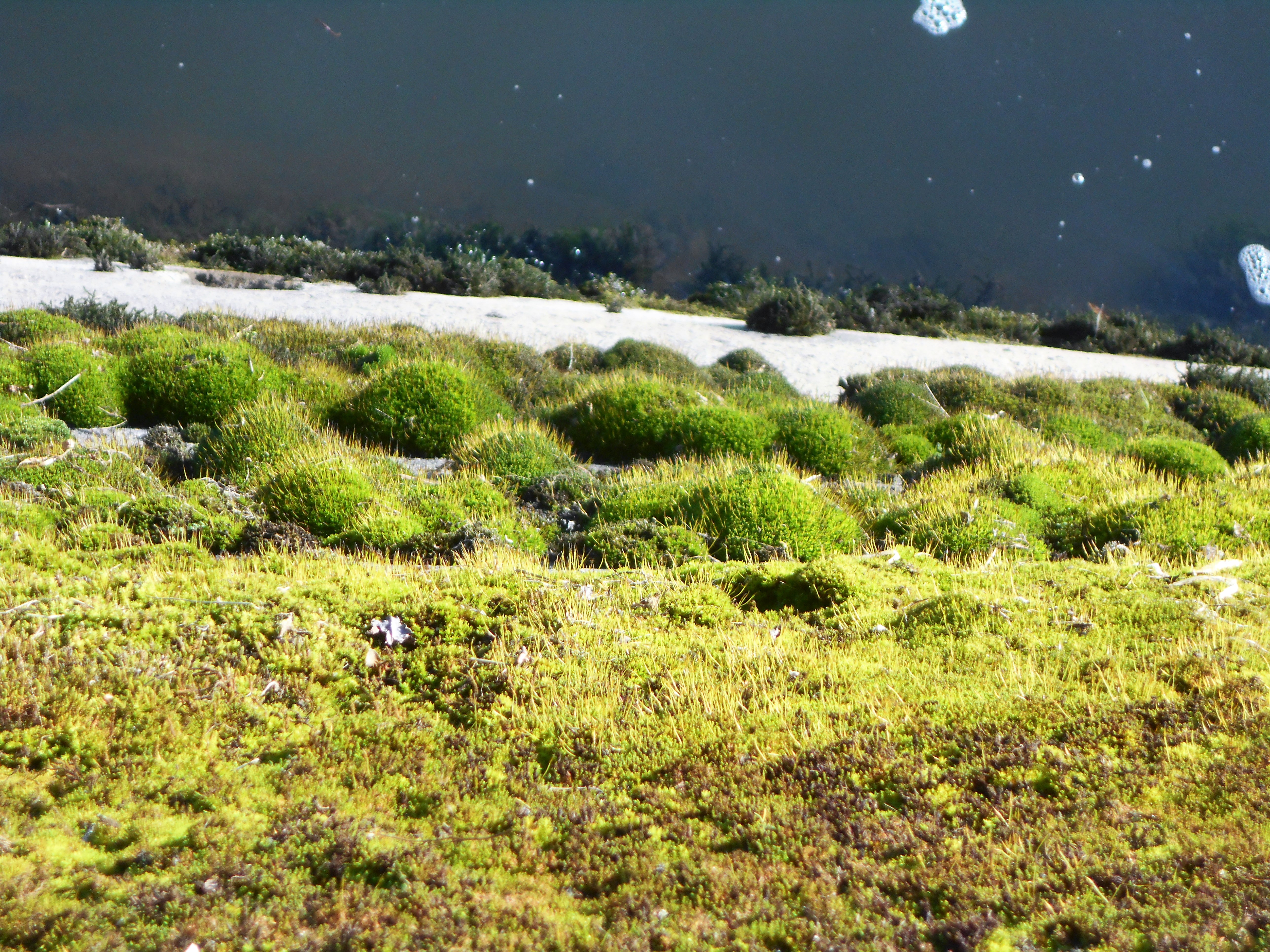
A view taken from above of one of the moss gardens clinging to the walls of the weir, a brilliant splash of colour in the scintilating winter sunshine. Spirit lifting indeed!
9th January 2019

Yet another brisk walk through thick hoar-frost coated grass and plants on a brilliantly sunny but icily cold morning to collect the trail camera and check for signs of Otter. Disappointingly only one recent spraint on a prominent stone on the beach and no other signs. The film from the camera revealed a couple of squirrels running along a branch and a small mouse scampering across the beach (whether wood or harvest difficult to discern but we veered towards harvest by the size of its eyes) and nearly two hundred shots of moving grasses after the camera slipped and fell or was knocked onto the ground! The joys of infra red cameras are possibly sometimes rather overstated.
6th January 2019

A quick dash to the river to collect the memory card and change the batteries on the trail camera. Another chill, very dull afternoon, again with low light which made it difficult to see anything, so perhaps it was just as well there was so little to see. Lots of tracks in the silt and mud of the beaches – Roedeer, Grey Heron, Little Egret and maybe Hare, possibly Water Vole but more likely Brown Rat but no signs of Otter. Three scatterings of pigeon feathers along the bank, showing that at least the raptors are finding sufficient sustenance in these cold mid-winter days.
The one highlight of the afternoon was catching sight of a Brown Hare shooting diagonally across the field above us; he sped at full tilt and extraordinary speed up the field, under the electric fence, across the path and up the hill until we lost sight of him as he disappeared into the hedgerow.
The Brown Hare, two Grey Heron, a party of some 30 or so Mallard and Mandarin Ducks, two Mute Swans together and farther upstream the single remaining cygnet of last year’s brood on its own, the usual flocks of Gulls, Crows, a Blackbird and Wood-pigeons was the sum total of life in and around the river. The film from the trail camera was equally disappointing – birds (mostly tits) fluttering around, a beautiful recording of the river in fast flow, but no signs of the Otters we so longed to see. Another day, another time….
3rd January 2019
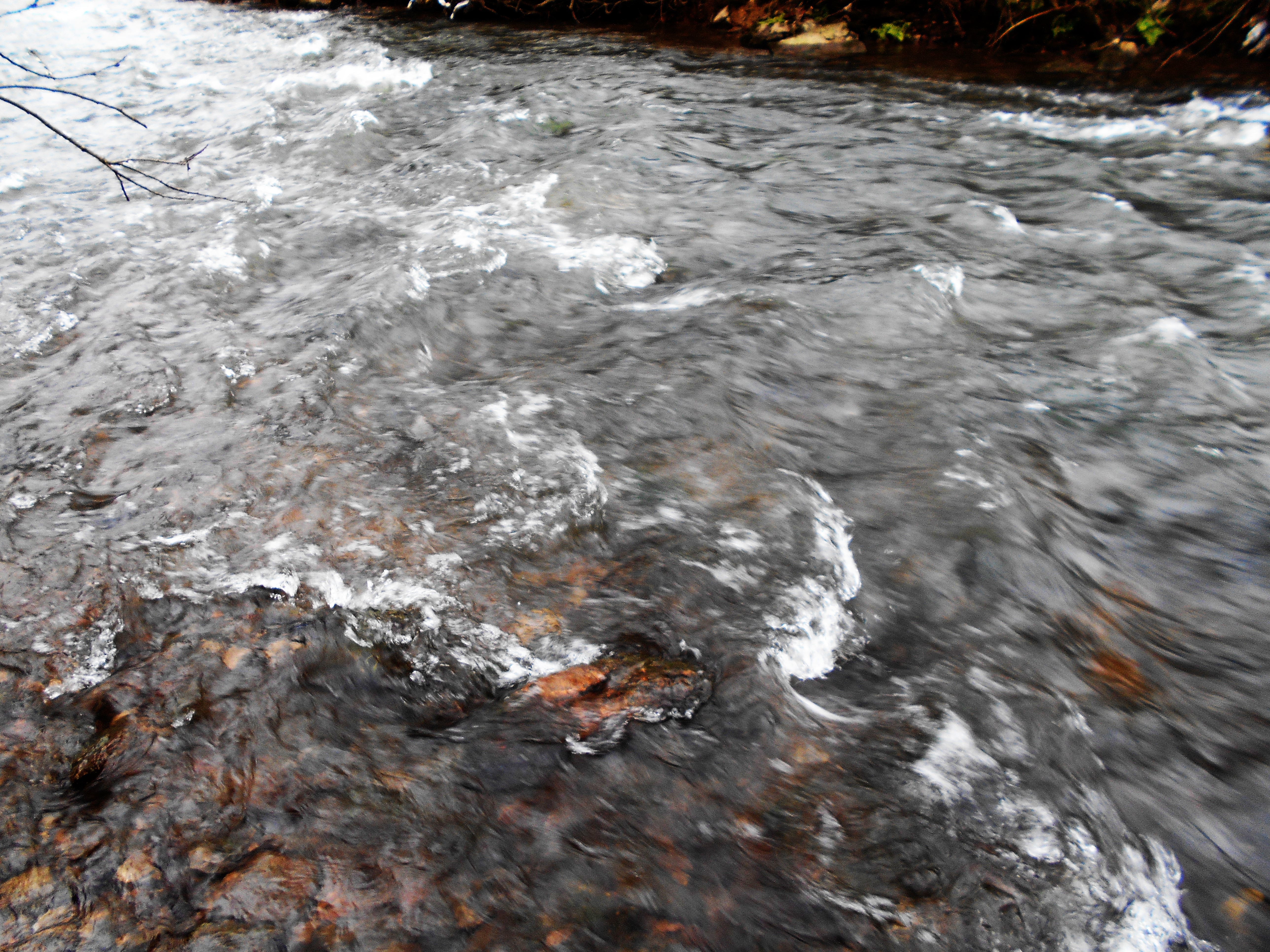
The promising sunshine and blue skies of early morning had disappeared by the time we reached the river and although the light was slightly better than yesterday, it was still chill and gloomy and we set off on our hunt for Otter spraint with few expectations which turned out to be well justified.
Two small signs of spraint on a single stone on one of the beaches, the other under the bridge and if it hadn’t been for the tell-tale signs of minute fish scales and bones in the black tarry substance we would have written them off as bird droppings. However, we decided to go ahead and set up the trail camera in the triumph of hope over experience that we might capture a glimpse of a passing Otter in the next week or so. While we were searching for a suitable site and sturdy enough tree, a Kingfisher’s shrill whistle alerted us in time to see him flash by, inches above the water, and later flash back again before disappearing into the sandy river bank just before the bend in the river. Before we finished fussing over the camera, he hurtled past again, like a shot from a rifle, always with his warning whistle – this is my river, get out of my way! A Robin hopped about watching us, inquisitive as ever, a party of Blue Tits, Great Tits and Long Tailed Tits flittered through the branches and from tree to tree
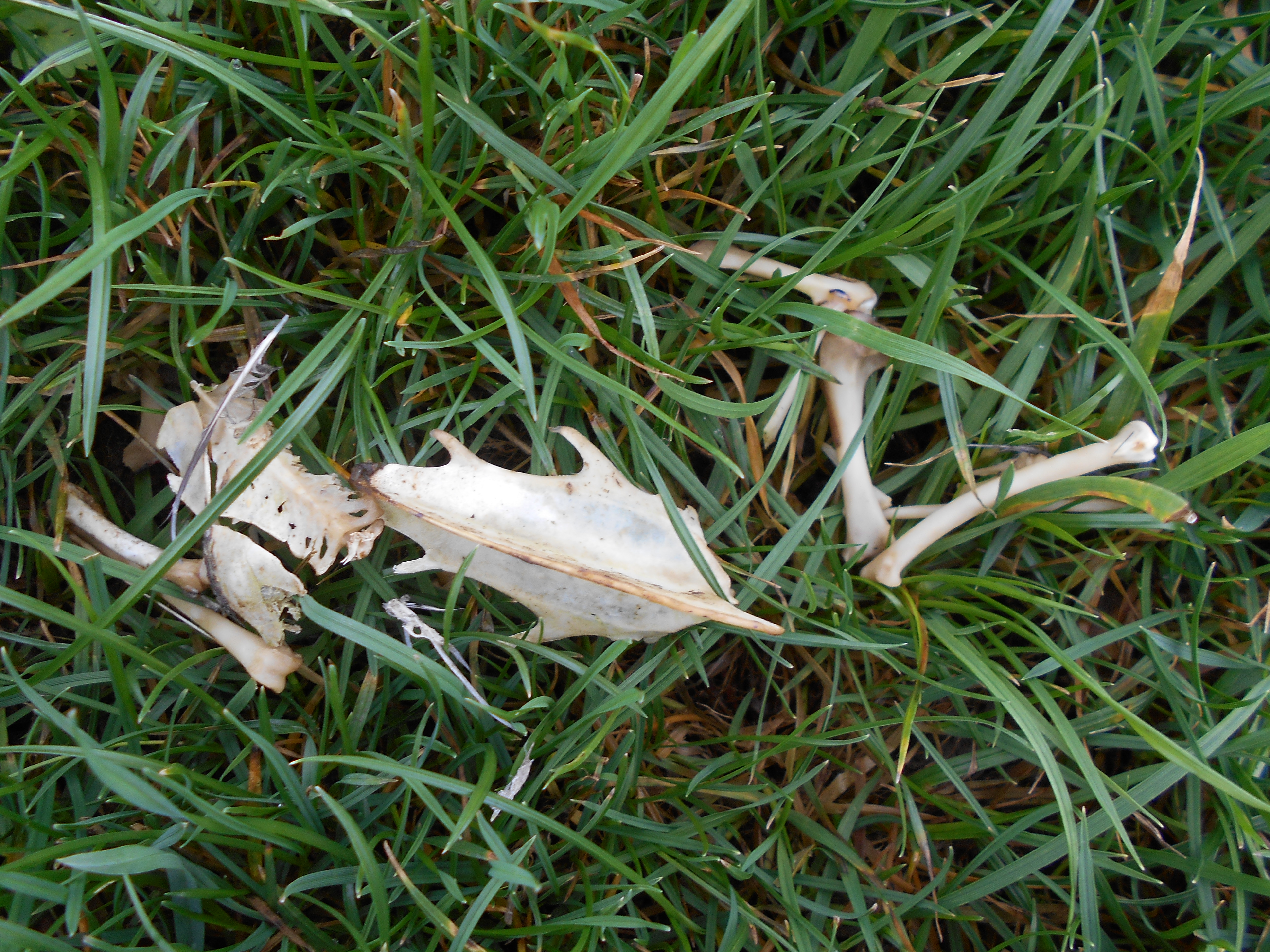

Despite the little Otter activity and the cold, it was good to be out, to watch the 25 or more Mallard taking flight at our approach, the Heron circling above, the huge flock of uncountable numbers of Rooks and Jackdaws amongst the cattle and the 50 plus Herring and Lesser Black Backed gulls taking full charge of the water meadow. The wonderful sound of a Raven’s croak echoing across the fields lifted our spirits, as did the small clump of well-grown snowdrops and the pussy willows already showing off their brilliant white tips. Surprisingly Shepherd’s Purse, Red Dead Nettle, Chickweed and Field Speedwell were all in flower although their petals were firmly closed due to the gloomy light.
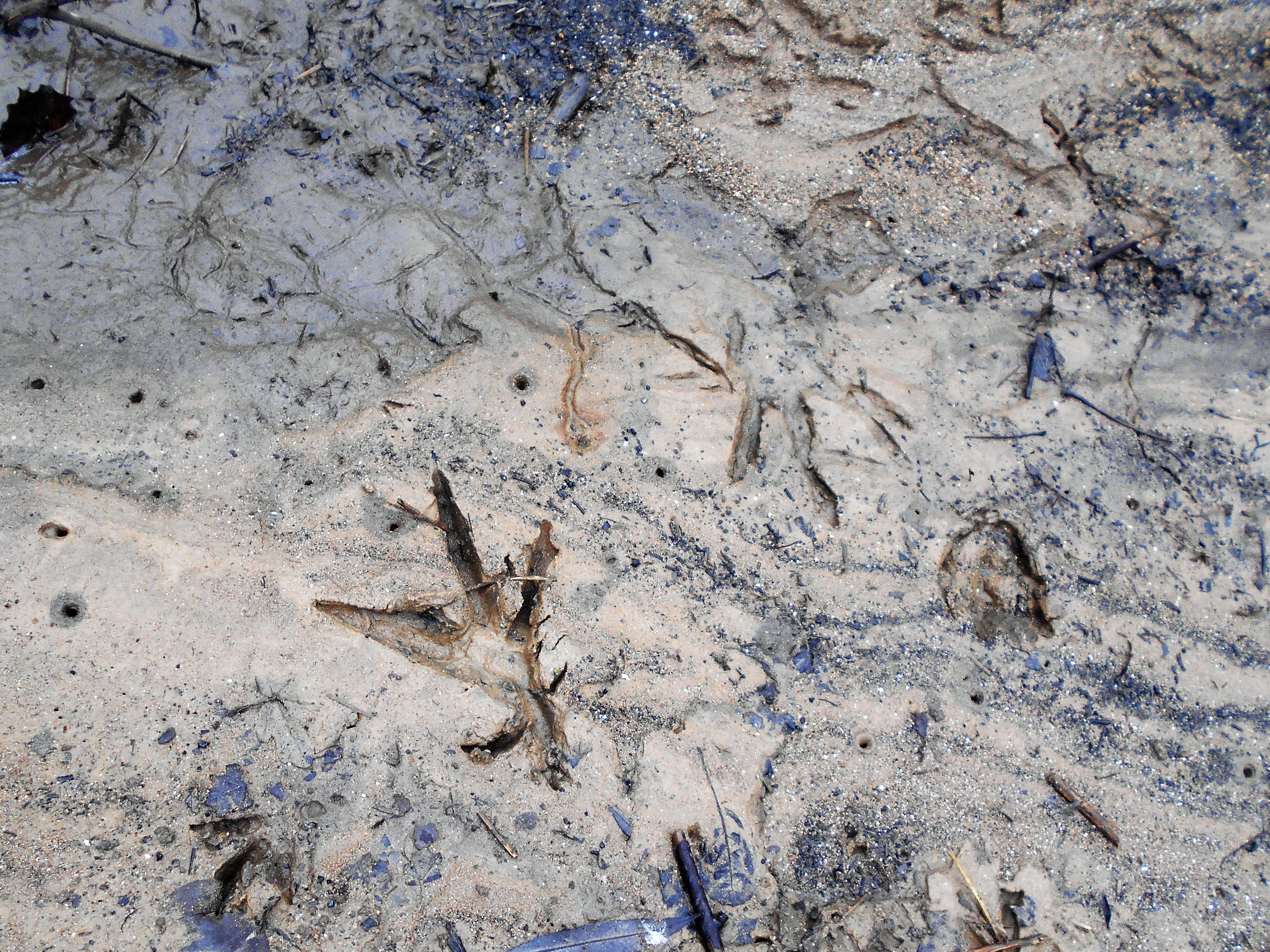
Although we didn’t see any Otter pad marks in the thick soft mud of the beaches, there were small Roe-deer prints and Little Egret and Heron prints, Mallard and dog prints everywhere, fresh mole hills, the bleached remains of a wood-pigeon, every inch of its bones picked clean and three Mandarin ducks taking flight away from the river showed that the local wildlife were coping well with the winter days.
2nd January 2019

Very overcast and gloomy, although it was early afternoon, the light seemed more like twilight. As we reached the gravel beach we saw what might well have been an Otter judging by the wake produced by a sizeable body swimming under the water. At the time we dismissed the idea as it seemed unlikely given the time of day.
No other signs of life as we checked all along the river’s edge and not one sign of Otter spraint, although there were a good number of empty Duck Mussel shells scattered over the beach. A Little Egret lifted from the weed choked stream which has formed a pond. It must be good feeding territory because a pair of mallard also flew off.
We had surveyed most of our sites and were on the final stretch when we met a fisherman who was moving his pitch and was extremely chatty and informative. Amazingly, as he had arrived at the river early afternoon, he caught sight of a small Otter (possibly a female) hunting upriver along the opposite bank, hugging close to the edge. She swam on past, completely oblivious to the fisherman watching her every move. He said that it is the first time he had seen an Otter so early in the day, although he often saw them while fishing in the late evenings in summer. This made us wonder if what we had seen in the water was indeed an Otter but we will never know.
He was a mine of information – on eels, the massive decline in their numbers down to 5% of their 1980 numbers and having dropped even lower from when he started fishing 30 odd years ago, due it was believed to imported eels carrying a parasite which played havoc with their swim bladders, affecting their ability to move up and down through the ocean’s layers and the exceedingly deep water they swam through on their way to the Sargasso Sea to spawn. At one time eels were the favoured diet for Otters and the crash in numbers would certainly have an effect on their predating other prey, especially fish.
He believed that many of the Pike he caught, even the big ones, had signs of Otter attack, slices taken off their tails and long scratch marks down their sides. There were a good number of very large Chub along this stretch, and when we mentioned American Signal Cray fish he said the river was swarming with them and that they nibbled at his bait while he was fishing!

The light was getting worse by the minute and we separated, he to fish now the light was right and us to head home. As we crossed the water meadows towards the stile, three Mute Swans flew down the river towards us, circled and then flew over our heads and headed farther down river. The sound of their large and powerful wings making a rhythmic whistling ‘wou wou’ sound, extraordinarily loud and evocative in the still air, and their synchronised wing beat was quite magical. Some winter’s days bring unexpected delights, despite the temperature being a chill 4 Celsius and the day almost dark and dead looking.
– 21st December 2018 – Winter Solstice –
19th December 2018
The Environmental Agency have today released 6,300 fish into the Somerset River Frome (including 2,000 roach, 1,500 chub, 1,000 bream, 600 tench, 600 crucians [carp – which like water lilies and tree shade – plenty of both on this stretch of the Frome] and 600 dace). The restocking is part of an annual programme, funded by rod licence sales. Restocking occurs in winter because water temperatures are low which minimises any stress on the fish, giving them the best possible survival rates. Restocking is done where numbers are low or have been depleted following a pollution incident, as happened in Frome in Spring 2016. This is good news for the Frome Angling Association and our local Otters!
11th December 2018 / 7 C

The weather was cloudy but with a light breeze so it didn’t feel so cold as yesterday. The river along this stretch is even more dramatic than yesterday’s site, a full and raging torrent, fast with swirling currents. A 20 odd feet alder tree had been uprooted somewhere upstream and was caught across almost the whole width of the weir, trapping other fallen branches in its wake. Although signs indicated the water level had dropped by 1-2 feet from yesterday, it was still higher than we have ever seen it, so it was not surprisingly that we found no signs of Otter at all at any of the survey sites.
However, we did see Roe-deer tracks and a partially eaten Wood-Pigeon caught wedged between the branches of a tree beside a flooded ditch. We were at a loss to think how it could have got caught and could only assume it had been dropped by a bird of prey. We remembered a mass of feathers scattered along the branch of a tree along Colliers Way where a Sparrowhawk had enjoyed his Wood-Pigeon from a roost in the tree rather than on the ground.
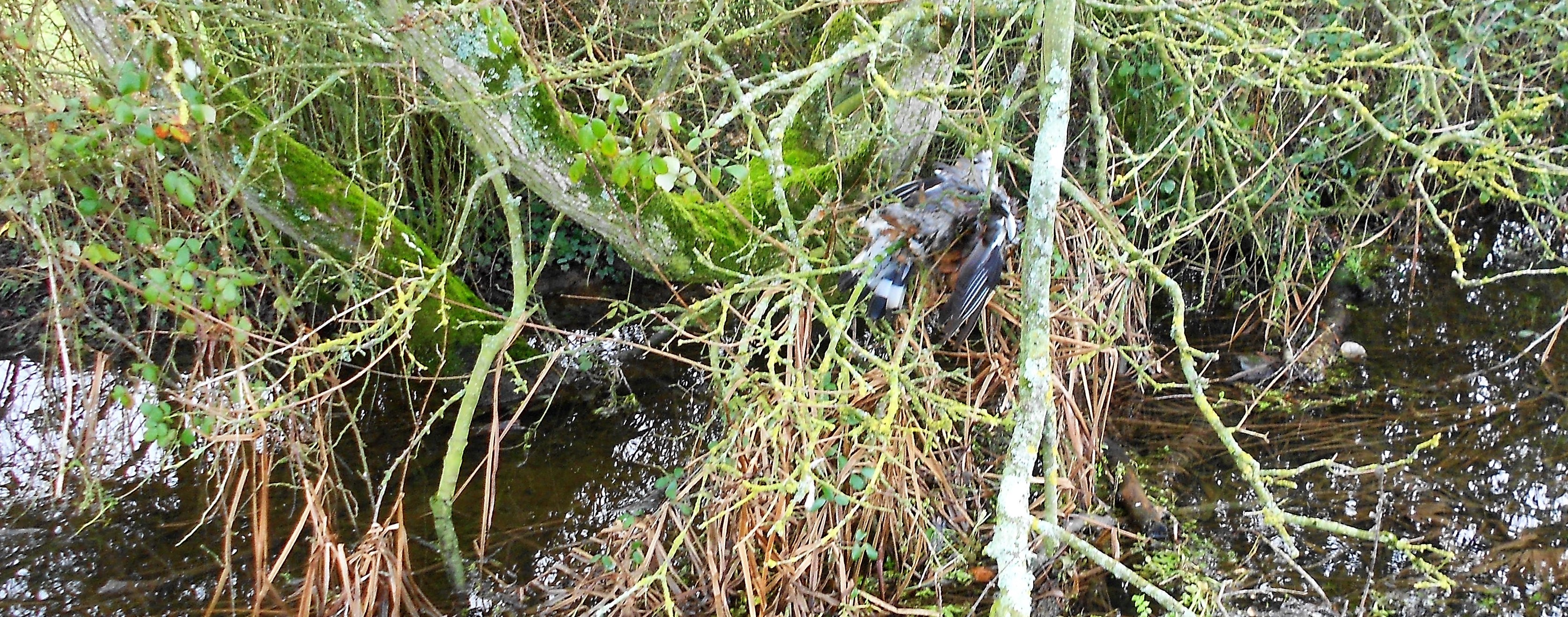
While we stopped to chat to a couple of fishermen, the sun came out and was surprisingly warm on our backs and made us feel glad to be out despite the disappointing lack of Otter signs.

One of the fisherman caught a small half pound chub while we were there and the second had managed to catch a four and a half pound one earlier in the morning. It looked beautiful, healthy and well-grown and the fisherman confirmed that this was true of all the fish he had caught in the river.
The river was so quiet and calm there, with no sign of the turbulence farther upstream, but still very full. He had seen a Cormorant earlier, but no other birds apart from the Blackbirds, we had also noticed and the usual Tits, Crows and Jackdaws.
We missed seeing and dodging Ernie the bull and his harem – the fields seemed strangely empty and deserted without them plus, with most of the leaves already fallen, rather bleak and wintry.
10th December 2018 / 7 C

Cold north-easterly winds but full sun as we sloshed along the path, sinking into the soft mud, before crawling under the electric fence to get to the water meadows and the river. A Little Egret was busy feeding on the grass in an adjoining field and we disturbed first a Heron and then as we reached the river bank we startled a Cormorant in the water which also lifted into the air and circled the field. A flurry of wings and splashings caught our attention, just in time to see 5 Goosanders (2 male, 3 female) scoot down river; our first sighting this winter and it was so good to see that they had returned.
The river was in full spate, swirling and fast, the water level high, although by the look of the water-raked grass on one of the beaches, the level had in fact fallen from its peak. Unfortunately it was far too deep and the flow too fast for us to cross to the island or even to wade upriver. The stony beach had disappeared underwater but we were pleased to see in the thick mud of the smaller beach criss-crossing of fresh pad marks, both domestic cat and the only signs of Otter activity. There were no signs of spraint anywhere – either fresh or old.
We checked all the other sites along our survey stretch and the results were the same – flooded beaches and a complete absence of spraint along the entire length and no more pad marks. This was probably due to the water level but it was also rather concerning to see first one more and then another two Cormorants, totalling four in all fishing in the river. It is well-known from reports all around the country that Cormorants are depriving fisherman and Otters of fish, so great is their increasing numbers, and the sudden increase in the number of Cormorants on this stretch leads us to suppose they are winter migrants from the Baltic sea.
We saw a Buzzard circling as we walked along the water meadow, and the results of his last two meals in the shape of the wide scattering of Wood-Pigeon feathers on the grass. We also noticed at least a dozen or so Mallard, two Swans and a well-grown cygnet in the river and as we walked along the river bank, while flocks of Fieldfares 
Redwings shot across the sky from feasting on the hawthorn berries on the bushes beside the river and Jackdaws and Crows flapped about the sky above us, chattering and croaking, while a tiny Wren and parties of Tits busied themselves amongst the branches of the trees. There were lots of midges everywhere and still a good harvest of the berries for them to feed on.
11th November 2018 / 12.5 C

The river is in spate after days of torrential rain and the water level has risen significantly. It is lower than at the height of the flood but striking after the very low levels of a week or so ago. The grasses on the wide stony beach were flattened and raked into rows by the force of the flood water which left detritus strewn on the ground and caught in the trees when the water level fell. We found no signs of Otter along all the usual sites on our stretch of the river which was probably caused by the rising water levels washing any spraint away coupled with the fact that most of the stones where the Otters usually spraint were under water. The only droppings we did notice were bird droppings containing hawthorn stones, possibly Magpie.
There were few birds around, we heard a Raven and Buzzard, spotted a Sparrowhawk, several Robins, Wrens, Wood Pigeons and Crows and a very large flock of Jackdaws, Rooks and Gulls swirling around in the sky above our heads. We were delighted to catch sight of a Kingfisher perched on a rose thorn branch facing downstream which regretfully flew off at our approach, flashing its iridescent turquoise/green wings.
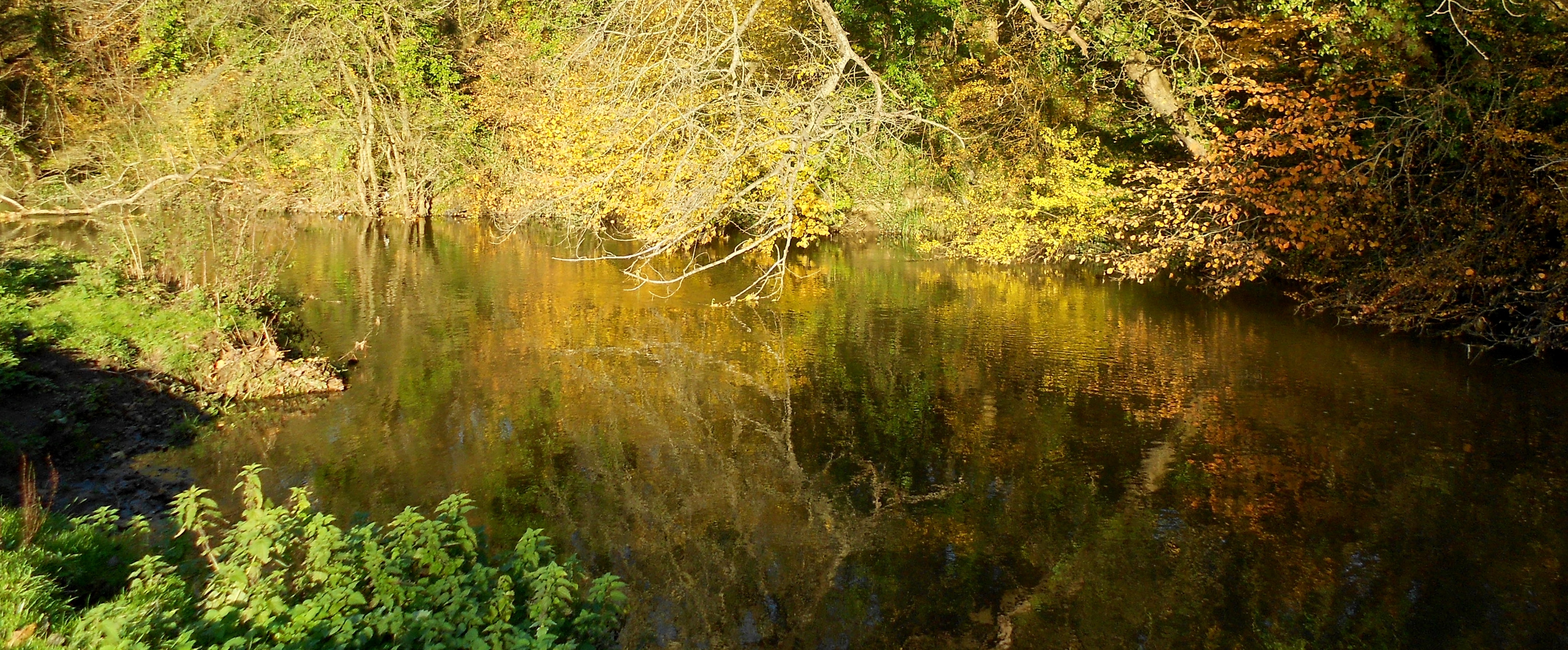
We ran into the fisherman and his wife whom we have met several times before and he told us that about 18 months ago he had seen a female Otter with two very young cubs playing in the water close to where he was fishing. In between telling us how he hated Otters and how evil they were he did also mention that about 3 or so months ago a friend of his who was fishing on this stretch of the river was astonished to see an Otter grabbing his newly caught fish off his hook!
He was less critical of Barn Owls and was excited that he had seen a pair which nested every year in an old barn in the poplar field downriver from our location. He loved going there at dusk and watching them hunting across the fields and gave us detailed directions on how to find the barn and the site of the nesting boxes the farmer has put up around the field. Lovely at this time of year to think about planning spring evenings next breeding season venturing out to check on the Barn Owls.
6th November 2018 / 13.5 C
Cloudy, windy and wet underfoot but a rare dry day in this period of heavy rainstorms as we set out. As Ernie the bull was standing in the gateway, surrounded by his cluster of young heifers, we moved on to the next field where we were disappointed not to see any signs of otter and where the Buzzard overhead mewing his lonely call summed up our mood. We trudged on to the next site and were delighted to find four very fresh spraint and one recent red spraint. The water level was extraordinarily low and the river banks thickly carpeted with copper coloured dead leaves so finding signs was proving difficult.
As we moved on to check the next site, a watery sun came out and shone on the two Little Egrets which rose at our approach, their snowy white feathers gleaming against the dark grey heavily clouded sky. They were soon joined by a couple of Heron which were forced to share the pasture with at least fifty plus Jackdaws and Rooks, flocks of Blackheaded and Lesser Black Backed gulls and as we came closer to the river, we scattered a large flock of a dozen or so Mandarin Ducks and three or four dozen Mallard.
We have at last reached our favourite stretch of the river where the fast flowing water hurtled along over boulders, ripples over stones, and is forced around the ones clogged with dead branches and leaves. Normally we wade upstream to the gravel beach to hunt for spraint and look longingly at the small island which we are unable to reach due to the depth of the water. But today, after such a long dry summer, the river level has dropped lower each time we come and was shallow enough for us to wade carefully with the help of our sticks, avoiding the moss-covered boulders, through the rushing water to the island, disturbing a pair of Mute Swans and their fully grown cygnet.
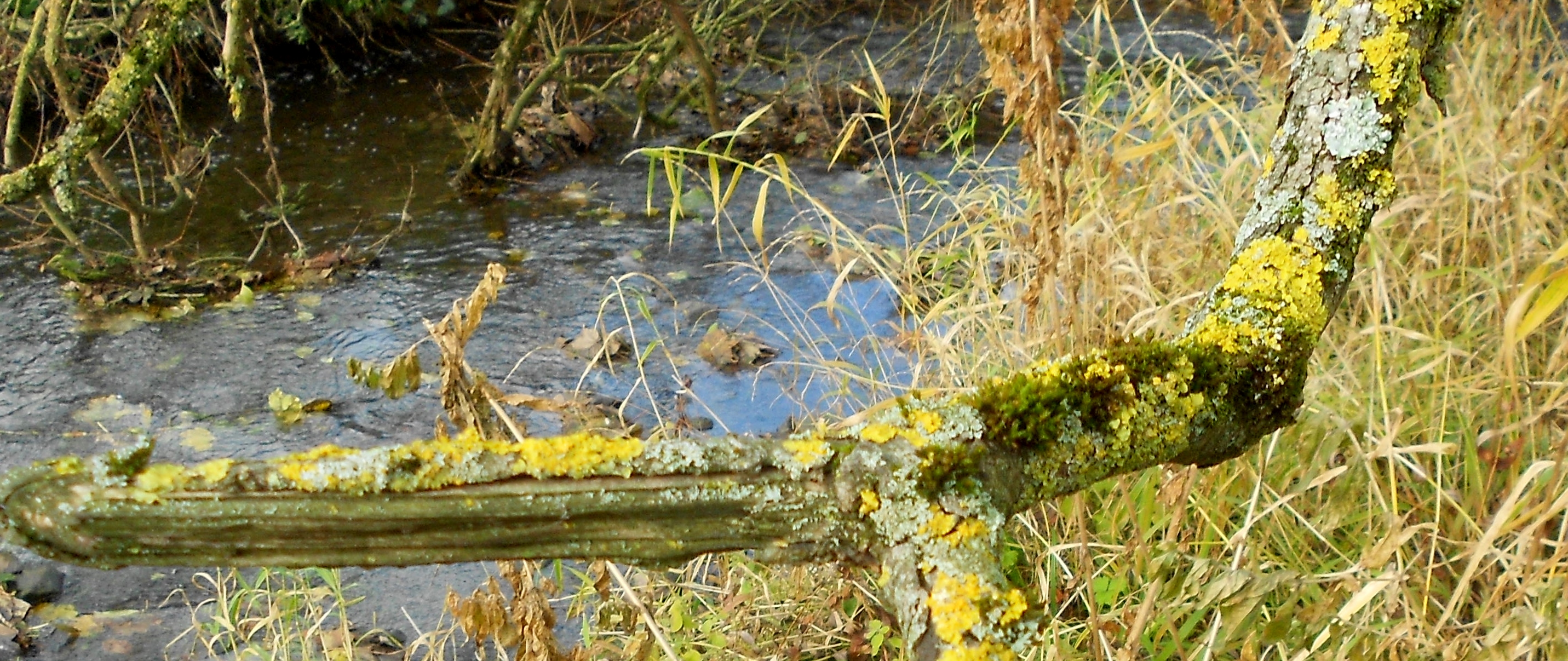
The island was a delight. Overgrown, tangled with tall grasses, fallen moss and golden lichen covered branches, making any advance hazardous, we edged our way over thickly planted uneven ground, under fallen rotting trees until we reached a beach strewn with otter spraint, some very old and crumbly, some very new, black and treacly, and two containing what looked like undigested fish eggs. So secluded, well concealed and safe from trampling cattle or passing walkers – it is a very Otter haven!

Pressure of time and encumbered with cameras, notebooks, bags and binoculars we were not able to explore the whole island, the fallen trees were too many and the undergrowth too impenetrable but given the promise of ten days of unbroken rain to come, we felt so pleased to have the had opportunity to explore the small area we could access and where we may not be able to get to again.

We climbed back up the steep river bank to the pasture and as we made our way homewards, we ran into the farmer who has given us permission to survey his river and stopped to chat. He had lived on the farm all his life and pointed out where the Sand Martins used to build their nests on a sandy bank when he was a boy, how he was a member of the Somerset Ornithological Society and had seen a Great Grey Shrike, often saw Snipe and in the early morning last year had watched a mother Otter and her two cubs playing under the bridge.
21st October 2018 / 13.5 C
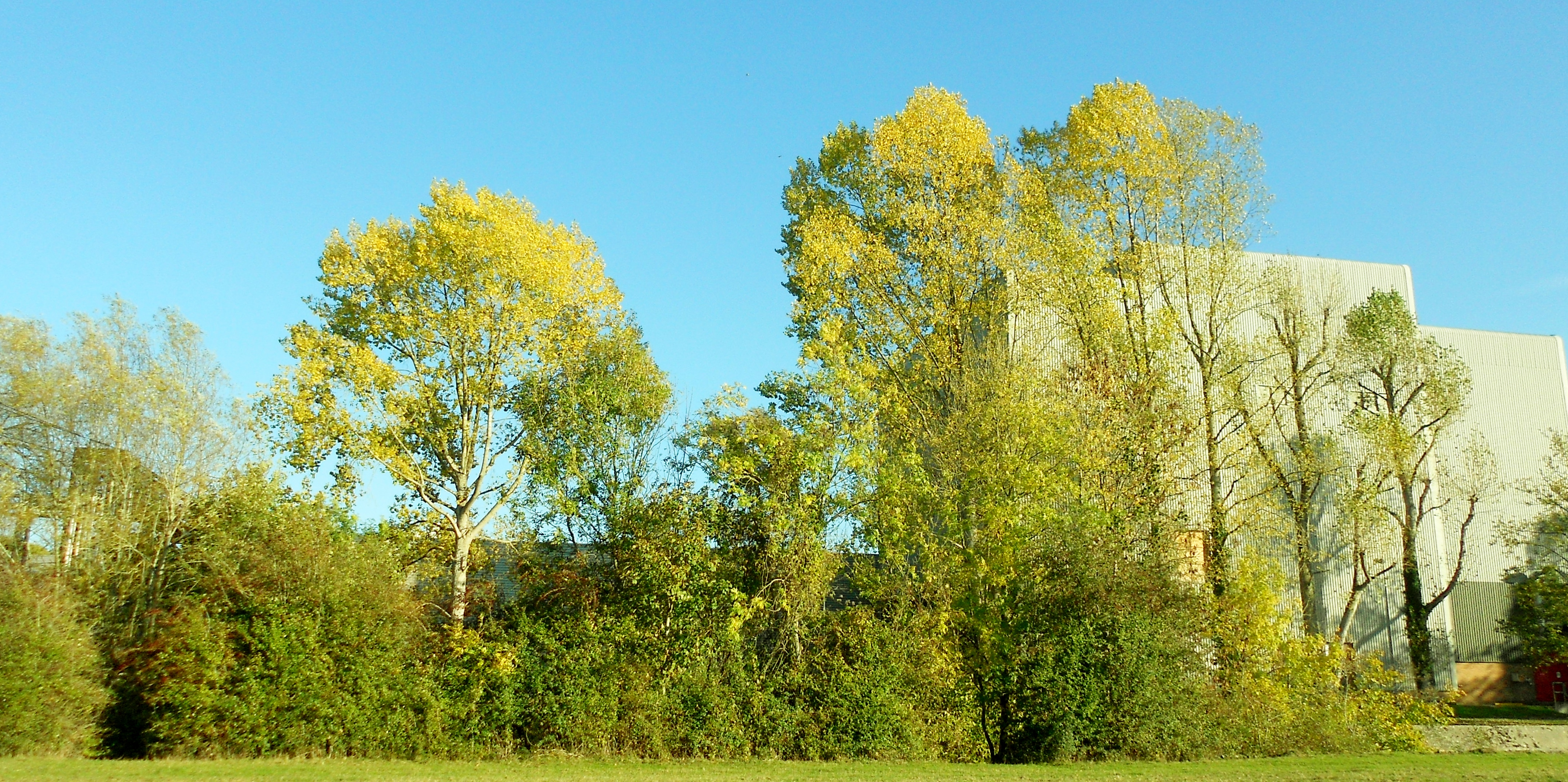
Beautiful autumn afternoon, warm and sunny, the White Poplar leaves silvering as the bright sunlight catches their fluttering leaves and turning the Aspen leaves to pure yellow gold. We found fresh and recent spraint on the gravel beach but no other signs of Otter along the whole stretch of river bank. A bright yellow cluster of tansy flowers and some water forget me nots were the only signs of life as most of the plants have already died down. We watched four or five Common Darter dragonflies working their way along the water’s edge but the river crowfoot, so lushly green only a few weeks ago, is now brown and lifeless. However, it was good to catch sight of a Red Admiral, always an autumn favourite although given the huge numbers we saw everywhere last autumn we were surprised to see so few in the summer. Their numbers dropped throughout the country, the cause believed to be the late cold snap affecting their overwintering here.
There were plenty of fish rising in the slower stretches of water, a flash of Kingfisher’s wings as he turned out of sight, the squawk of a Moorhen and the sudden noisy krk krk of a couple of Jackdaws mobbing a Red Kite. The raptor, looking beautifully striking as the sun highlighted his markings, soared and swirled but was unable to lose them, particularly when they were joined by two more and then a third and the five of them in concert fearlessly harried and mobbed the very much larger Kite until he eventually gave up and flew away. Later, when a pair of Buzzards appeared, they kept to circling the middle of the river pasture and were ignored by both the Jackdaws and some passing Crows.
It wasn’t until we sat on a log soaking up the sun that we noticed six or seven large clumps of clustered brittlestem fungus glowing in the low sunlight falling across the field; we had seen a clump of honey fungus at the foot of a hawthorn tree by the river and a sprinkling of small unidentified fungus along the hedgerow, including a splendid dried up funnel fungus but overall, surprising few fungi for the time of year.
 – Ernie –
Walking back down the field we caught sight of the bull – fortunately in the adjoining field a good distance from his heifers. He looked rather out of sorts so we were glad that the metal gate was between us!
10th October 2018 / 22.5 C
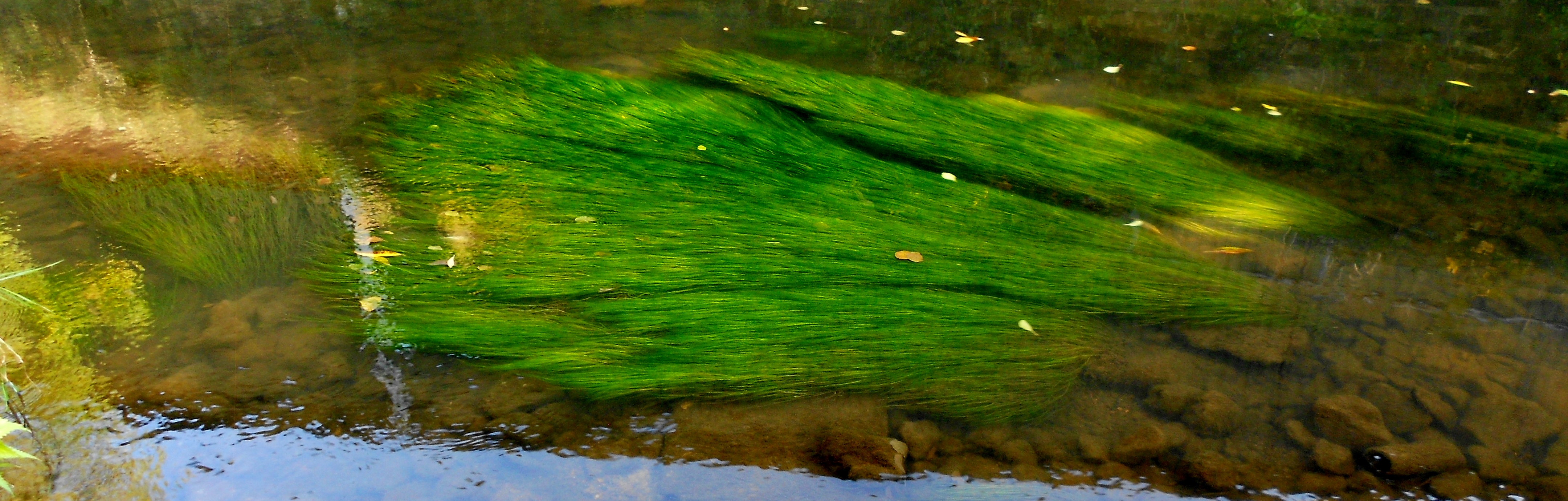
Extraordinarily warm – mid-October and the sun is hot and the sky unbroken blue, more like mid-summer than mid-autumn.
The bull and his heifers are no longer clustered around the gate as they did yesterday, preventing us from getting into the field, but they were only slightly farther away and we walked carefully and quietly, close to the river, while keeping a wary eye. Fortunately after giving us a long considered stare, to our great relief the bull returned to eyeing up a young heifer’s backside and continued chewing his cud. We didn’t see signs of Otter by the weir but didn’t linger, we were just glad to get through and into the next field!
Disappointingly only one fresh spraint at the gravel beach site, no signs of anything very much even though we searched diligently, unable to believe we hadn’t missed something significant. The river water crowfoot was looking beautifully healthy and we did at least eventually spot a single Common Darter Dragonfly.
No signs of Otter at the next site either, maybe like us the Otters were just too hot to move! We walked on and eventually sat down to rest on the river bank, the sun burning our backs, admiring the stand of large willow trees on the opposite bank whose leaves had begun to turn to every shade from pale yellow to deep gold, tossed and fluttering in the welcome cool breeze. An Emperor dragonfly flew by, hawking up and down the river, followed after he disappeared by a Southern Hawker, replaced soon after by a Brown Hawker, all far too fast for me to photograph. We were absorbed in watching the dragonflies and enjoying the heat of the day and the calm inducing quiet of the river when a bird flew down and perched on an alder branch opposite. We were astonished and delighted to see it was a Sparrow-hawk but unfortunately our hope of watching it possibly preen or hunt was dashed as simply raising our binoculars was enough to scare it off. We had been listening to Great Tits and seen Blue Tits and other small birds flitting through the trees, so it is perhaps not surprising that they would attract a hungry raptor on the hunt.

Whilst stopping to examine a clump of Glistening Inkcap mushrooms on the way back, we suddenly heard a loud sharp crack across the quiet air from across the field and a large branch of an Ash tree split and fell with a crash onto the ground. We did wonder if the long, hot dry spell of this extraordinary summer and autumn was the cause as we had already noticed quite a few fallen trees both in the river and along the boundary of the field.
When we turned for home, hot and tired, we were exasperated to see that the bull and his harem had again clustered around the gate making it impossible for all but the most foolhardy to attempt to get through. This meant a wide detour and climbing first one and then another metal five-barred gate to return to the road. It was impossible to be cross for as we passed the gate we could see that some of the cows were quite young and all were beautiful – Holstein-Frisian heifers with glossy black and white coats and clear eyes. The handsome Hereford bull, brown and cream and very, very large stood behind them, at the back, keeping a close and careful eye out for his cows.
9th October 2018 / 12.5 C – 18 C
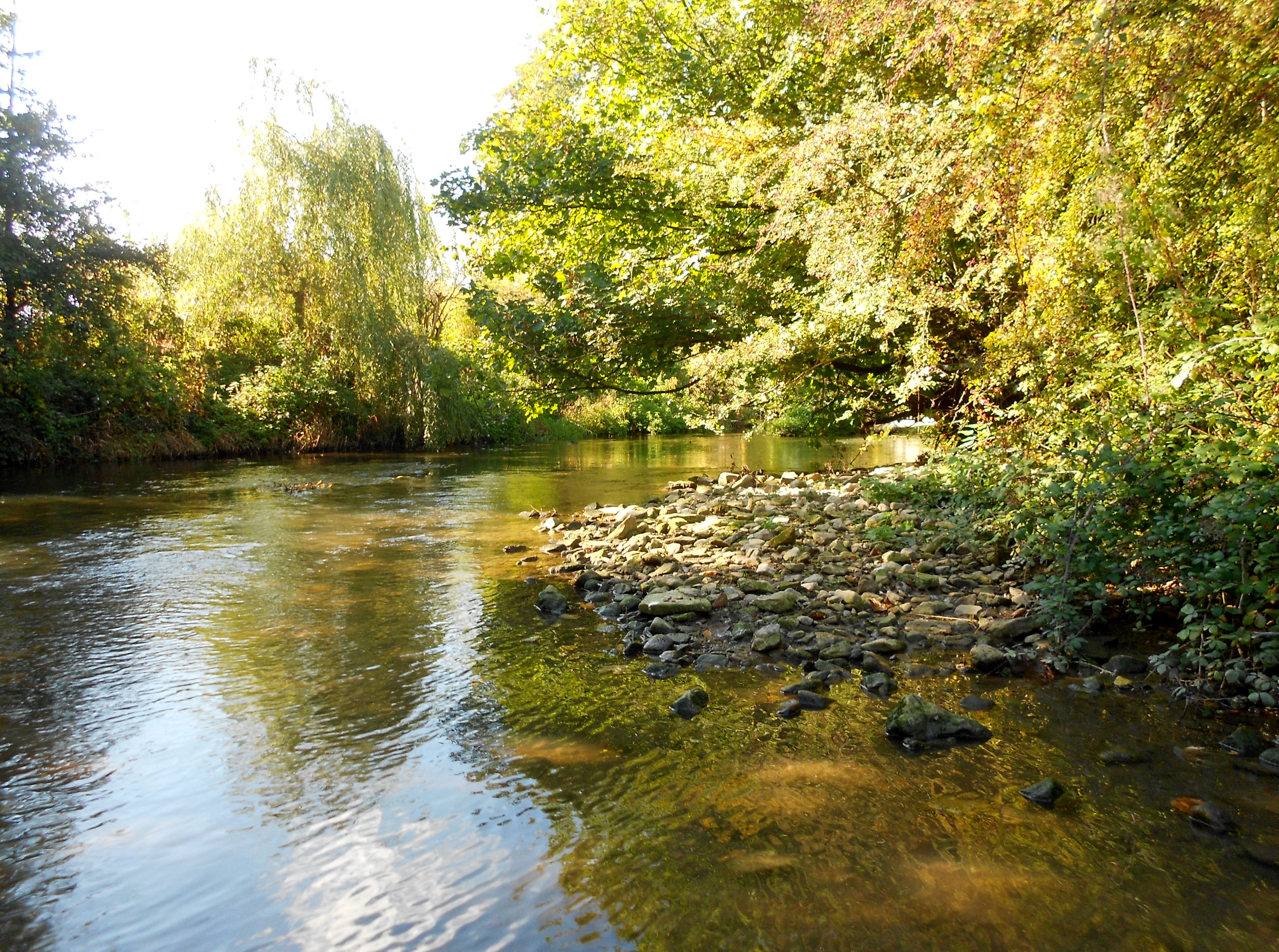
9.30am Beautiful autumn morning, stiff breeze but full sun and clear blue skies.
Water levels are still very low which makes for easy wading under bridges and over stones. We spotted a large clump of common Michaelmas Daisy beside the river but no signs of Otter under the first bridge, very unusual as we often see most of our spraint here and under the culvert nearby. However, in the nearby field which is often empty of signs, we found very fresh spraint in two different places on the bank beside a large bed of reeds where the grass was trampled down and crushed, almost as if a body had lain there.
We chatted to a member of the Frome Angling Association who was fishing for chub, hearing tales of very large fish in these waters where he had recently been astonished to catch a 7.12 lb koi carp by the bridge and often caught brown trout. He had also seen signs of Otter in the river further upstream and was amused that twice a Kingfisher had perched on the end of his rod, waiting to fish!
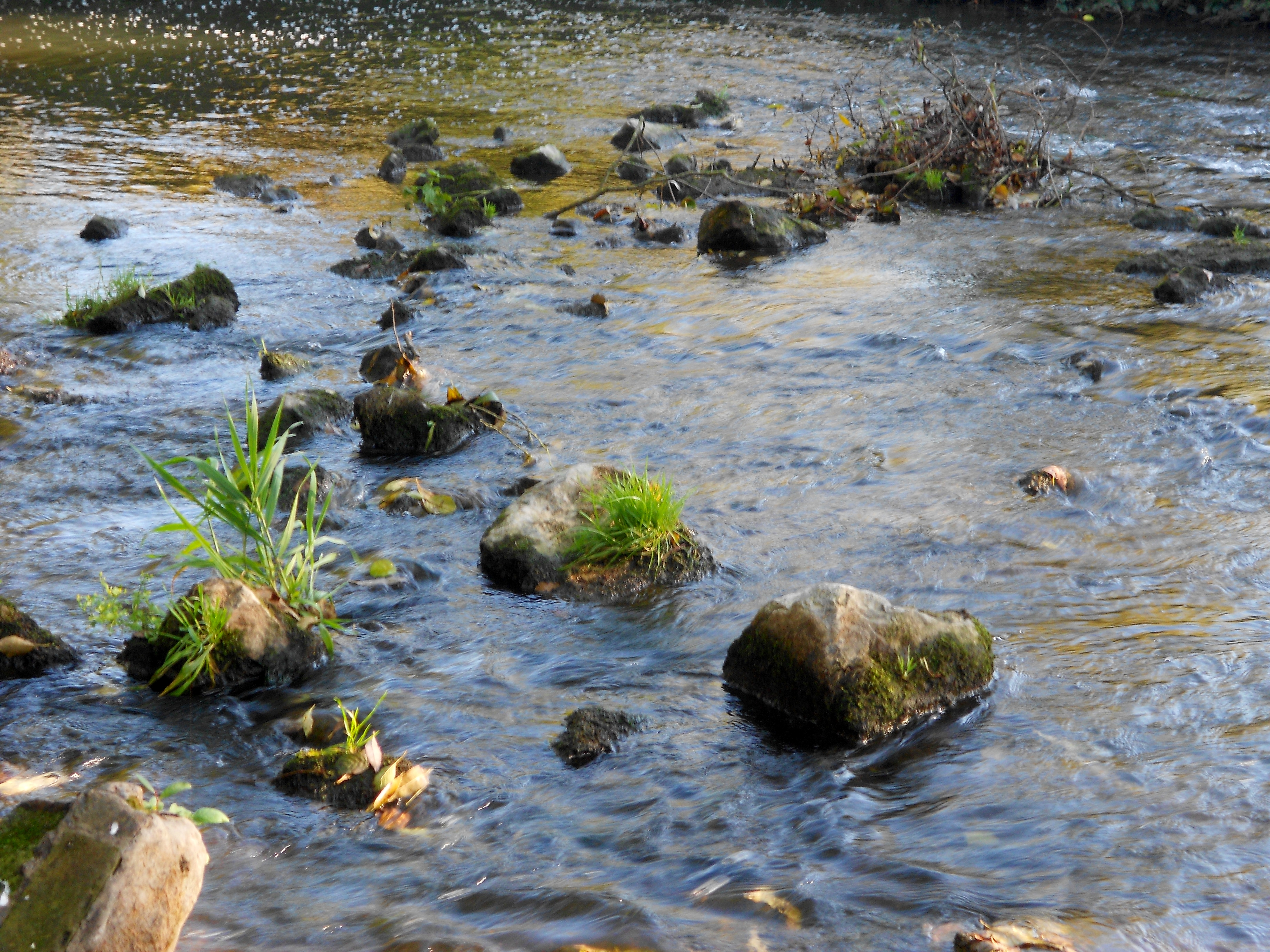
We walked on to the large beach where we spotted crayfish remains and one fresh spraint. The rough pasture and skies overhead were filled with birds, a Little Egret flying up into its roost, two Cormorants, a large flock of Rooks and Jackdaws mobbing a Buzzard and two Swans, one of whom flew noisily and aggressively directly at me as I paddled in the stream before planing on the water and swimming serenely, onwards followed by its mate.
We thought it better to move on to the next site where we disturbed a Heron and nine Mallard with two ducklings the only ones to have survived this year’s brood. Lots more Jackdaws and Rooks both on the ground and in the sky. A good crop of spraint at this site, two fresh, two recent, five old and a splash of anal jelly as well as crayfish remains. A good crop of turkey tail fungus had formed on a pile of logs and nearby a scattering of what looked like bearded fieldcap mushrooms.
The next two sites were empty of interest although some of the forget-me-nots, Himalayan balsam, water mint were still in flower and lots of clumps of teasel. Above the barn on the hill, we could see nearly a dozen white doves making a striking picture as the sun caught their snowy white wings as they flew up and turned and banked about the red-tiled roof-top.
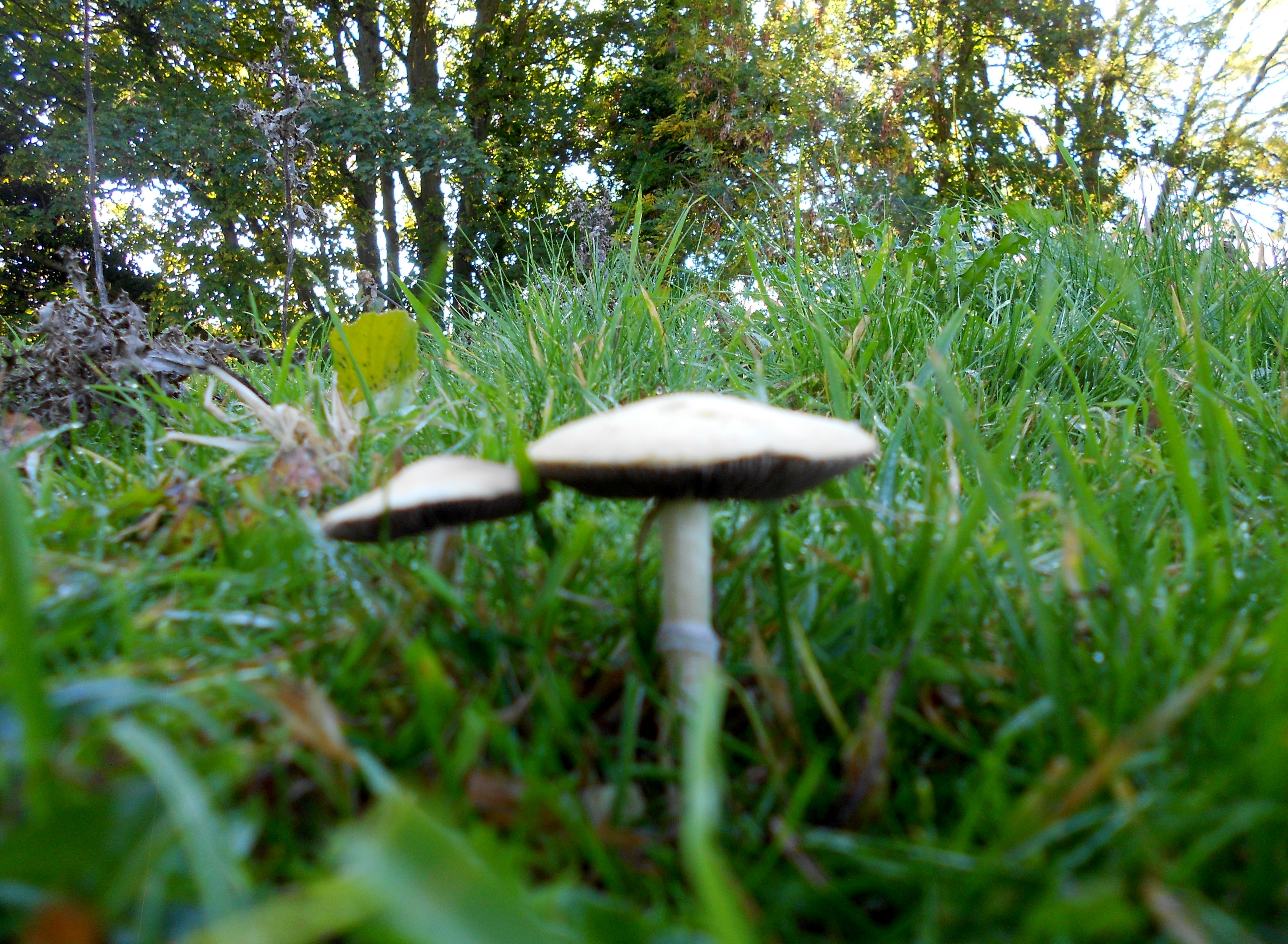 Possibly Bearded Fieldcap Mushroom
23rd September 2018
– Autumn Equinox –
9th September 2018

Beautifully sunny afternoon and warm for September as we sauntered along the river bank, downstream from our usual haunts, closer to where the River Frome joins the Avon. Known in Victorian times as the Nightingale Valley, it is still a favourite walk despite the absence of Nightingales. An idyllic stretch of river valley, wide grassy meadows sprinkled with sheep, the river first widening and rippling over stones where the occasional dipper is busy in the shallows, then narrowing with deep pools and small waterfalls, stretches of water lilies, trails of ranunculus, stands of club rush with glimpses of the lovely Grey Wagtail, its soft gray and yellow a bright contrast against the dark green undergrowth. A Grey Heron lifted from the shallows and flew off downstream as we walked, to land and settle and then lift again as we drew closer, a pair of Swans drifted regally by and Magpies chatter noisily amongst the trees.
We very rarely walk along this stretch of river without seeing Kingfishers, often a pair, zipping up and down the water, peeping their sharp alarm calls, alerting us to their appearance. We sometimes catch a quick flash as they disappear under the trees, sometimes we get a longer view as they skim past, mere inches above the water line, however many times we see them, they always fill us with joy and delight.
As we headed for home, a little wearily after our long walk, we paused to rest, sitting on the grassy bank, backs to the sun, enjoying the quiet, peace and calm of a late summer afternoon in early autumn. We watched a red bodied Common Darter dragonfly hunting the edges, a Comma butterfly lifting, straightening and displaying its vividly colour wings, a large bright Hornet examining the newly fruited pale wild hop bracts threaded through the flowering ivy and up into the branches of a sycamore, while idly watching the tweeting and twittering parties of Great and Blue Tits dashing around the trees opposite, so content we were reluctant to move.
 Copyright: Evelyn Simak
Suddenly we caught sight of a grass snake in the water below the opposite bank, swimming upstream. We had a wonderful view as it eased around the reeds, under the overhanging grass and out into open water. More blue than green, about two and a half feet long, the bright yellow flashes of its collar glowing in the light from the low sun falling over the river. We watched for five minutes or more as it swam first up, turning, swam downstream, slithering over the large stones, but quite fast in the deep water, before it eventually wriggling up the river bank into the long grass and was soon lost to sight in the undergrowth. We were enchanted. Our first sighting of a grass snake swimming in the river instead of our more frequent sightings in local lakes made a fitting finale to a perfect afternoon.
6th September 2018 / 15 – 17 C
Not so warm this morning, a definite warning chill of autumn, but pleasant enough for a gentle ramble over the water meadows down to the river, setting up forty plus Mallard, two Heron and a snowy white Little Egret, who fly away, over our heads, complaining vociferously. The Herons and Little Egret land in the meadow, hang around like bored teenagers until, as we showed no signs or moving away from the river, they fly up into their roosts in the trees along the field boundary. We nearly always see at least 4 or 5 birds of both species in these fields, which indicates a healthy number of fish along this stretch of the river.
This field is pasture for a good herd of black and white cattle and so inevitably there are lots of badger diggings, snuffle holes and full dung pits – traps for the unwary. The sun is not warm enough to dry the overnight dewdrops from the uncountable number of cobweb sacks strewn across the grass, so many they are impossible to avoid, which highlights as little else does the sheer number of spiders on grassland.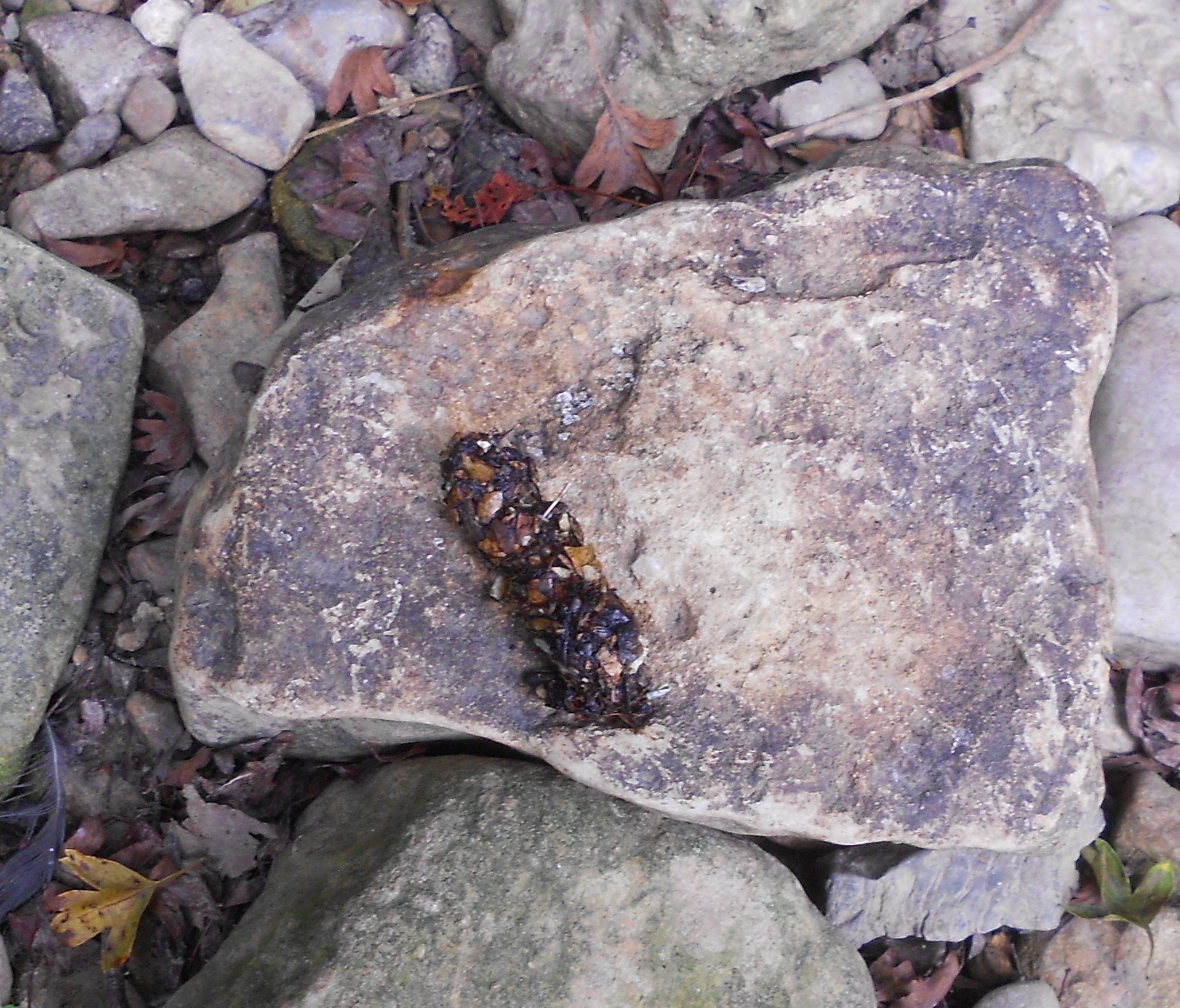
By far the best sighting of the day was the discovery of copious spraint, both recent and very fresh, along the stretch of river where the force of the current has scoured out a stony beach. One spraint so fresh it still contained the black jelly like substance which usually dries within hours so it must have been deposited earlier that morning. There were also crayfish remains scattered in the water, although all the spraint was black and crammed with fish bones and scales and the only red coloured droppings were those of the Herons, who are also known to eat crayfish.
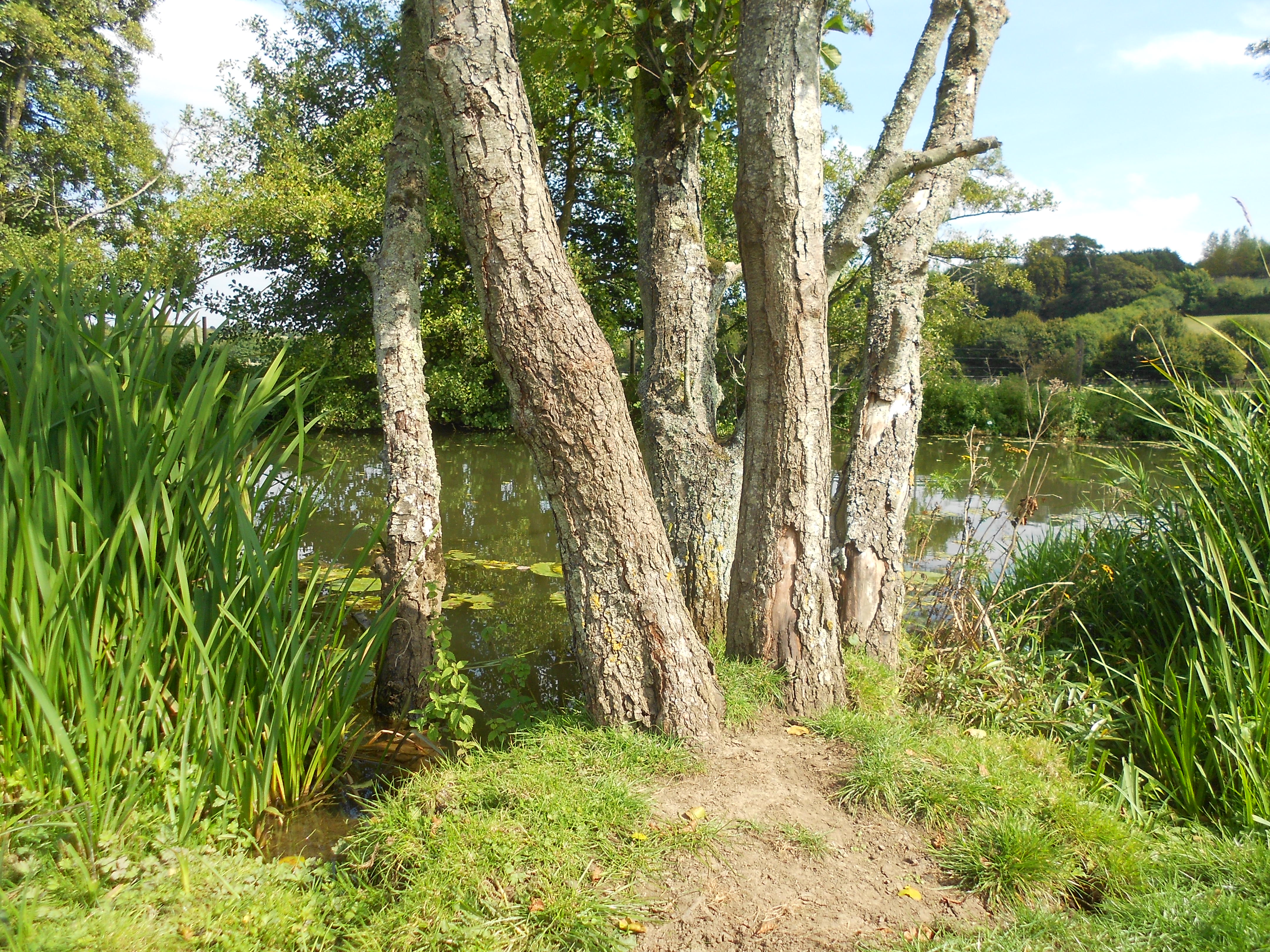
Finally, as we crossed the fields heading for home, it was upsetting to find the remains of what appeared by its colouring to be a juvenile Grey Heron. Impossible to know how it died but it is said that accuracy of feeding for Heron, whether it’s fish, frogs or small rodents, comes with age and experience. Young birds born last summer are under pressure to find enough to eat and many die of starvation trying to hone their killing skills. Another possibility is the bird flying into power cables or even, given the very dry summer and at least some of their prey being frogs, there was a shortage of food. Starvation could certainly appear to be a possible explanation in this case.
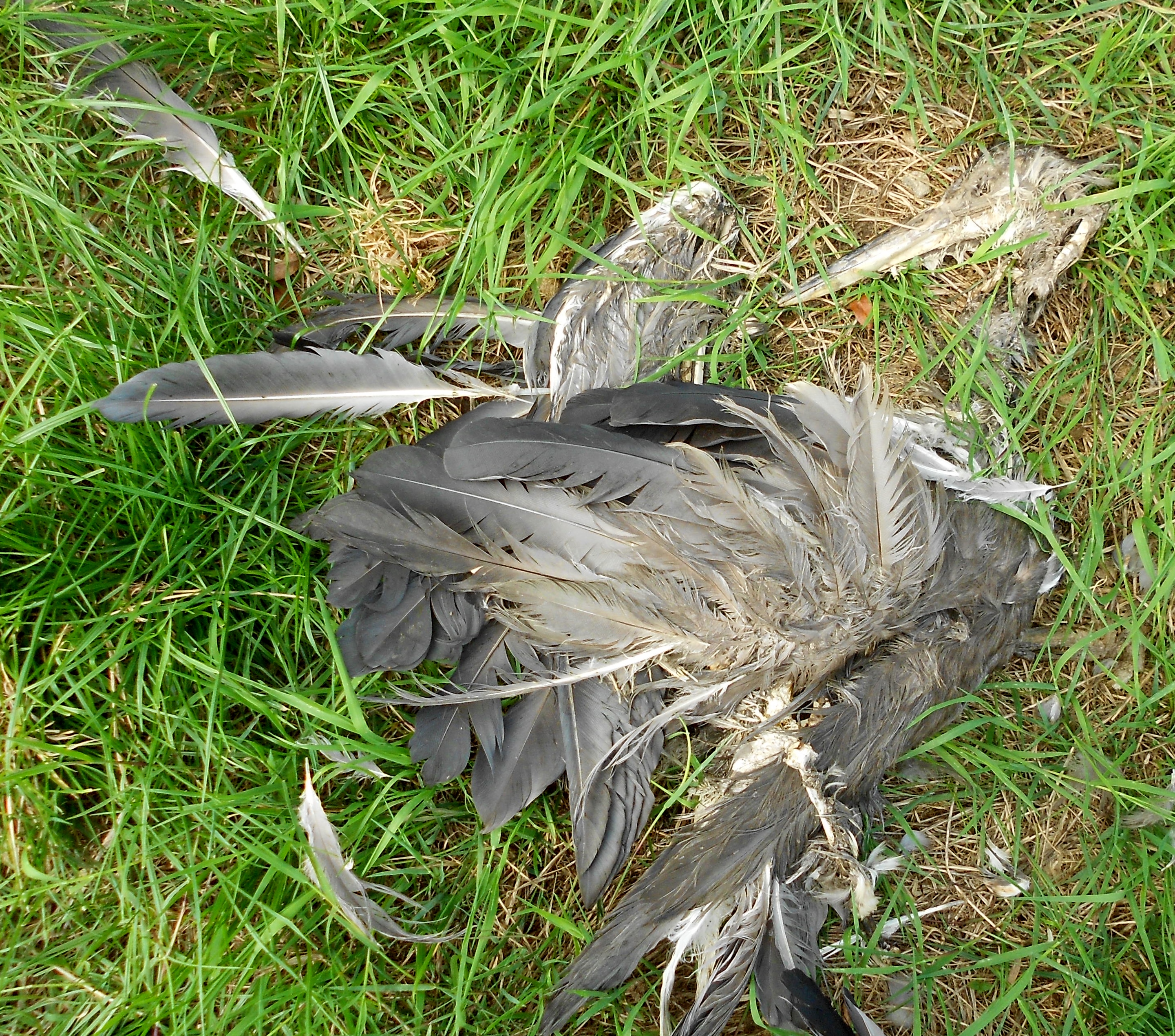
5th September 2018 / 17.5 – 19 C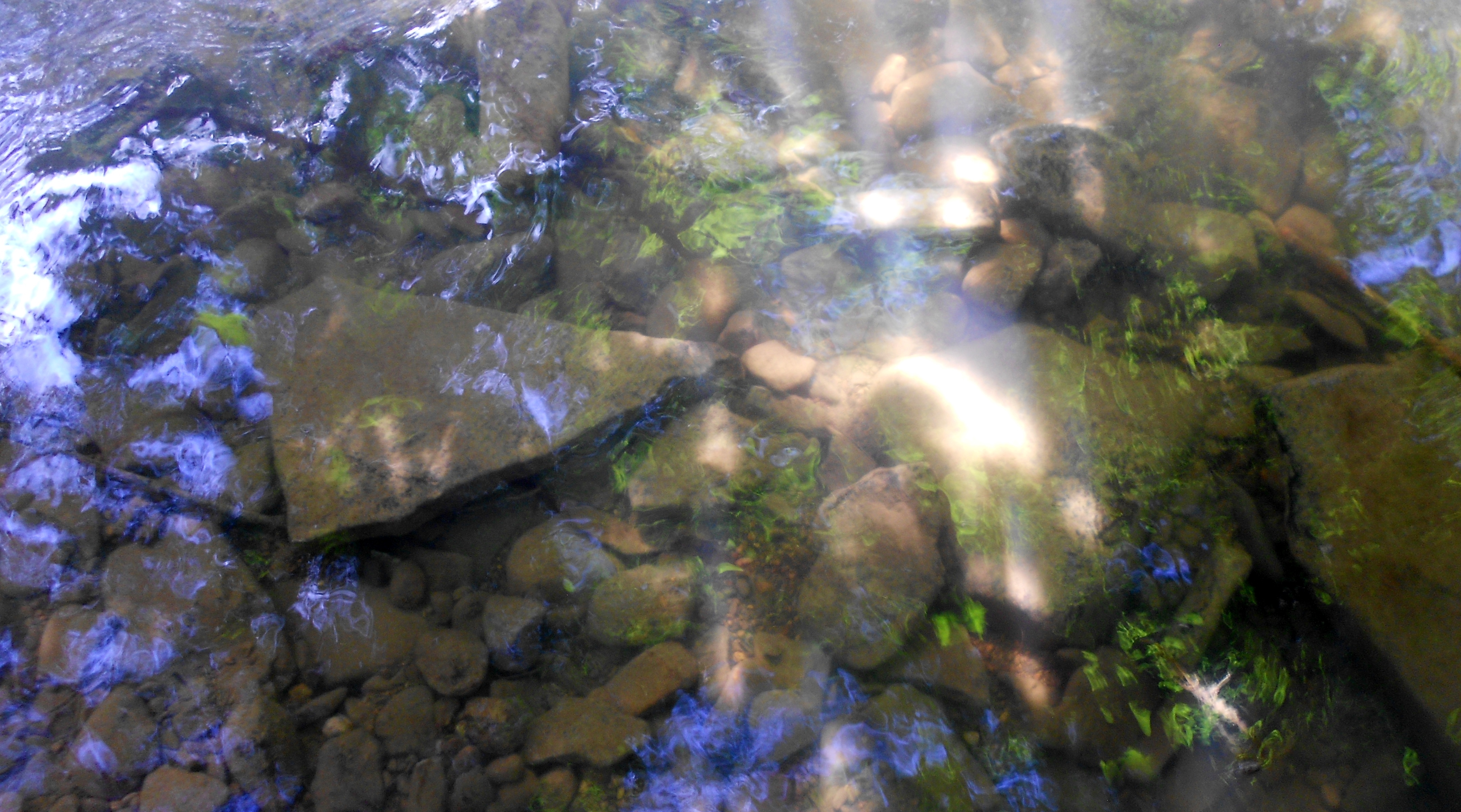
Beautifully sunny September morning with blue skies, fair weather clouds and a fresh breeze. Lots of activity under the bridge with several black Otter spraint filled with fish scales and a single red spraint showing a recent meal of crayfish. Half a dozen pad marks in the soft muddy margins of the river and the usual spraint at the entrance to the dark tunnel alongside the bridge.
The banks of the narrow rill are still crammed with flowering plants – gypsywort, Himalayan balsam, purple loosestrife, common valerian, reeds and teasels – although some of the blooms are fading and none have the same intensity of colour as at midsummer, they still make a wonderful splash of colour and lift the spirits. As for butterflies, a Small Tortoiseshell, a Large White and the brilliantly coloured Small Copper (which we have barely seen this year) were the only ones to be seen all day.

No signs of Otter along the stony beach and only one solitary Banded Demoiselle reminding us of summer days.
There were also no signs of Otter at the next site but we were able to watch the dragonflies flitting among the Water Mint, Water Speedwell and standing Reeds and between the Trifid Bur-Marigolds and Lilly Pads along the water’s edge, a Brown Hawker, Migrant Hawker and Common Darter hunting among the plants. We disturbed a Heron from his fishing and walking carefully, managed to avoid treading on the leaping Field Grasshoppers and delicate grass moths as we crossed the meadow, heading for home.
Trifid Bur-Marigold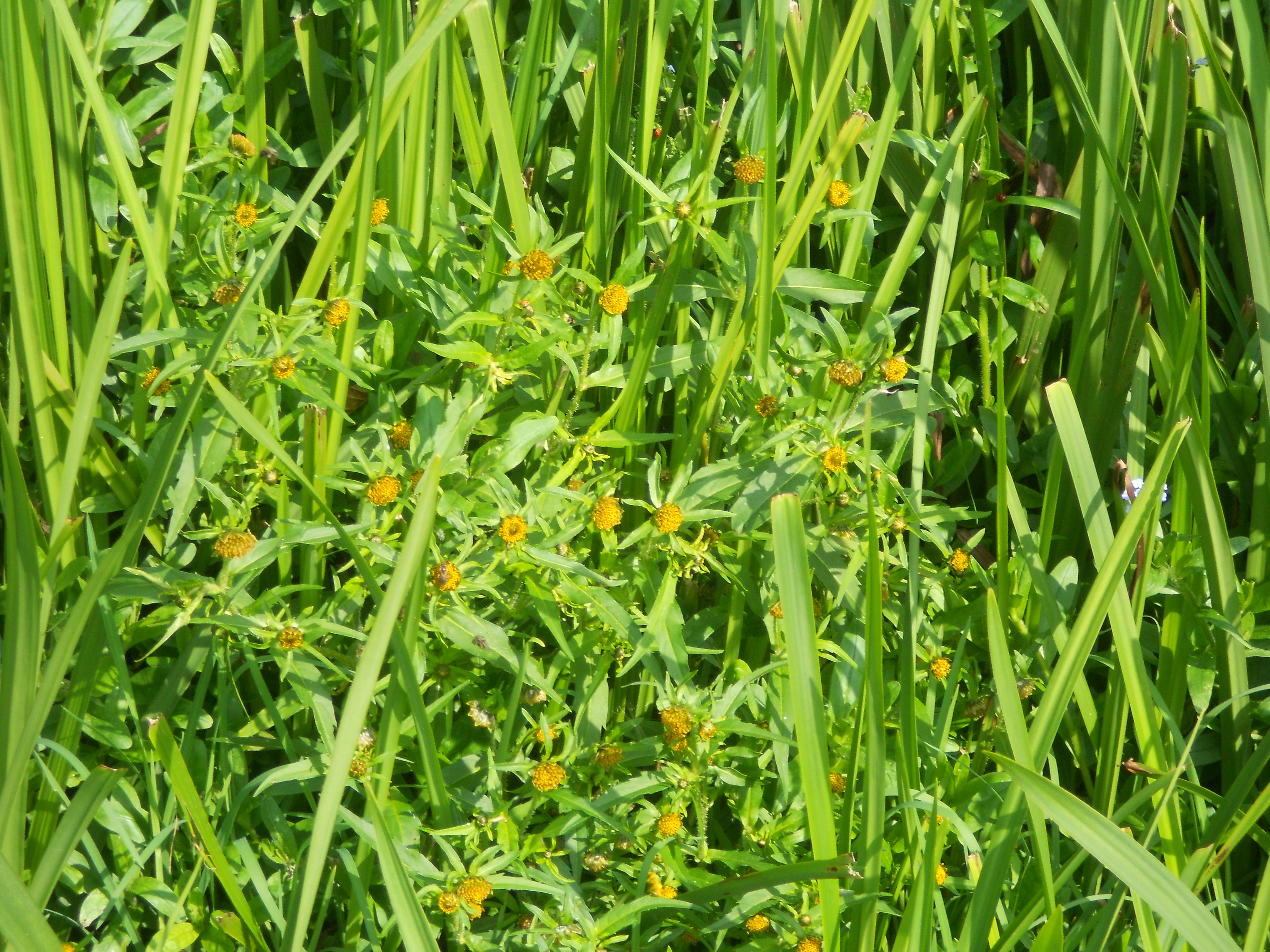
14th August 2018 – 19 C
Overcast skies and a blustery breeze gave a welcome coolness to an otherwise hot summer with little rain and we thought it would be a good opportunity to check the water plants along a stretch of the river. When searching for otter spraint, we are often distracted by a vivid flash of colour from damselflies or the gaudier flowers along the river bank or in the meadows as we move from field to field but the water plants rarely draw the eye. We acknowledge them in our peripheral vision but there always seems something more interesting to observe.

Some of the plants were completely unknown to us and although we attempted to identify them with the aid of one of the very useful Field Studies Council’s waterproof identification guides, even that proved unhelpful faced with the plant itself. However, we did manage to spot a large clump of watercress and, when lying flat on the bank to recover a specimen, saw a layer of crescent cup liverwort coating the side of the bank above the waterline. Shepherds Rod sprinkled the undergrowth and the boggy part of the field which is often underwater from the overflow of a small stream was carpeted with an incredibly thick layer of water speedwell. We noted the stretches of milfoil, fennel pondweed and amphibious bistort floating in amongst the river water crowfoot and Yellow Water-lily pads so our day wasn’t wasted.
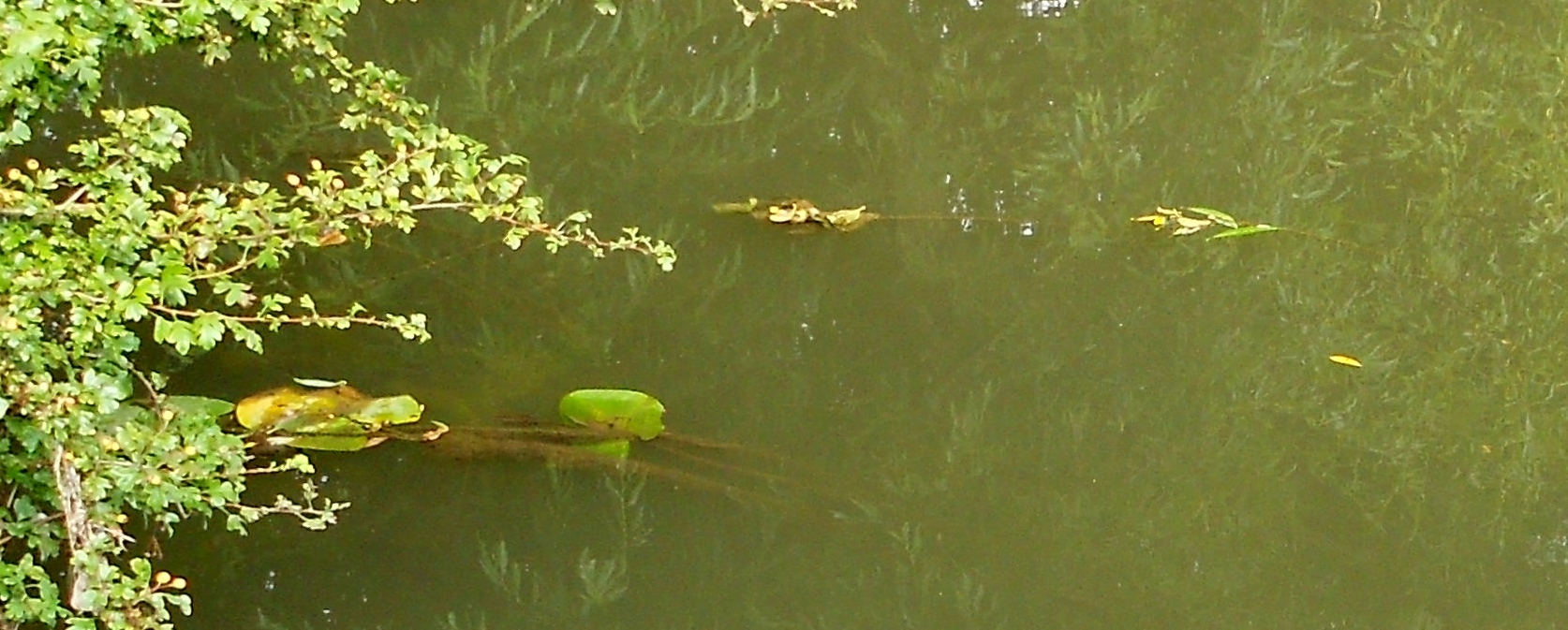
A late splash of sunshine was enough to encourage a few butterflies at least. A good number of large whites of course, but also a meadow brown and small blue as well as a few damselflies, common blues and banded demoiselles and a brown hawker dragonfly. A more brilliant flash of blue heralded a Kingfisher dashing past and, while a Buzzard circled mewing hopefully and great parties of House Martins and Swallows flew down low mere inches above the grass, so as the shadows lengthened we sat on a log and watched as they began swooping back and forth across the river meadow hunting midges. They are so delightful to watch and give such pleasure but with a small tinge of sad awareness that in less than a month they will all be gone and summer will be over. Little else moved, the cows had been collected for milking, the breeze had dropped so the trees were still and we sat quietly, soaking up the sun and the peace and tranquility of a mid-August afternoon.
1st August 2018 – 19.5 – 22 C
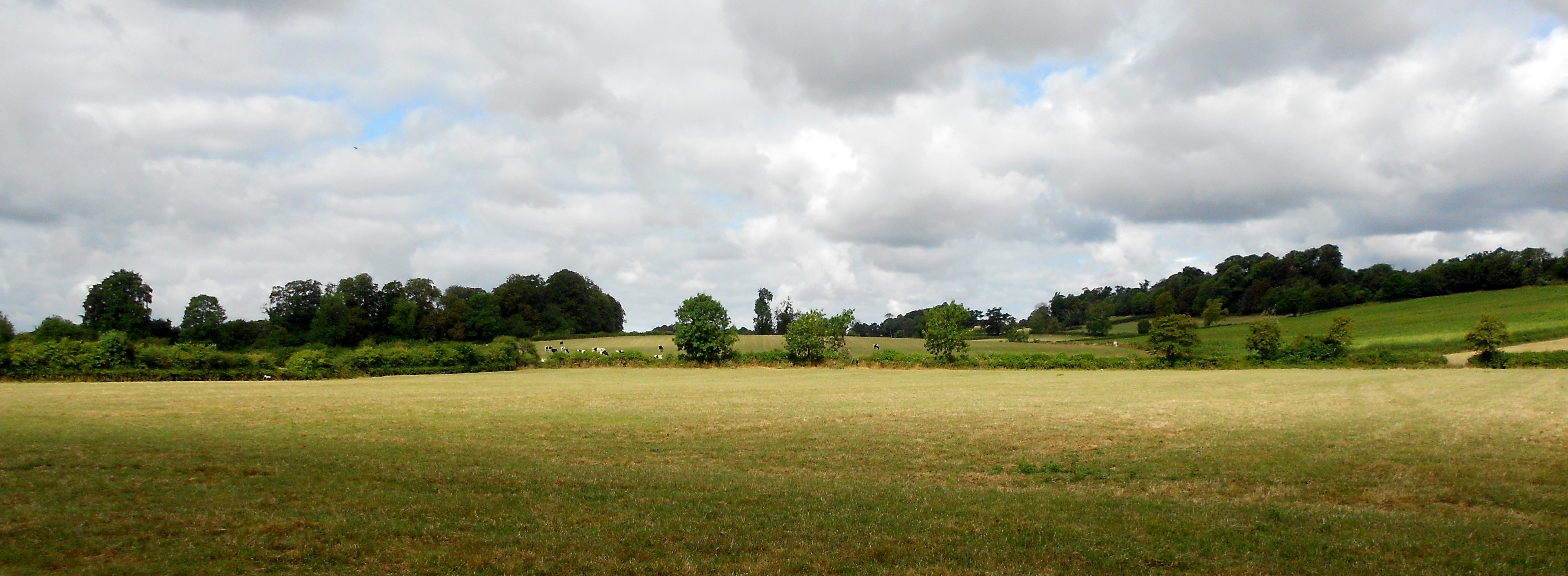
A blessedly cooler day in this summer of almost relentless heat and parched countryside as we walked across the fields to the river. Here although the water is much lower, the trees and plants are still green, and despite the hawthorn berries already reddening and the blackberries being huge and fully ripened, they are bitter from lack of water so there is a risk that both will fall early thus starving the winter migrants of their usual autumn feast.

We waded along the river bed to the large white-stone strewn beach where we found fresh and recent spraint and lots of crayfish remains. The river is beautiful here, secretive and very quiet, the only sound the tumble of the water over the stones, a haven for otters feeding cubs. Thick beds of Water Crowfoot trap lots for the fish to eat, the willows, alders and hawthorns shade the river from the worst of the fierce summer sun and the banks are filled with newly opening brilliant yellow tansy flowers, the gentle blue water forget me not and the deep pink of the great willow-herb. A Kingfisher shot past, a Heron lifted and flew off, two Buzzards drifted and circled on the thermals, and out of nowhere a Brown Hare leapt from the river margins the tore, ears alert, across the cow pasture. Impossible for us to identify whether it was a female leaving young leverets well hidden in the long grass as it is still the breeding season or if it was an outlying solitary male, but our spirits always lift when we see one.

We continued to work around our sites, finding pad marks on the soft mud at the edge of a beach, fresh spraint on a stone beside a large clump of redshank.
As the sun came out we walked along a narrow, extraordinarily thickly massed flower-filled ditch or rill, crammed with great willow-herb, purple loosestrife, common valerian and thistles forming a beautiful dense abundance of almost every shade of violet and purple, mauve and pink, among the unbranched bur-reed and tall waving seed heads of the common reed. The air above the plants was filled with fluttering butterflies, green veined whites, large whites, meadow browns and dancing deep dark blue banded demoiselle damselflies, a lovely, lovely sight, the pure essence of a warm summer afternoon in a river meadow. Then, as we drew closer to the bridge, we were startled by a sudden movement and hearing a sharp cry, turned and watched as a Snipe exploded off the ground and flew beyond the trees and out of sight. This was our first ever sight of a Snipe, although the owner of the farm saw them often – what a marvellous moment to treasure!
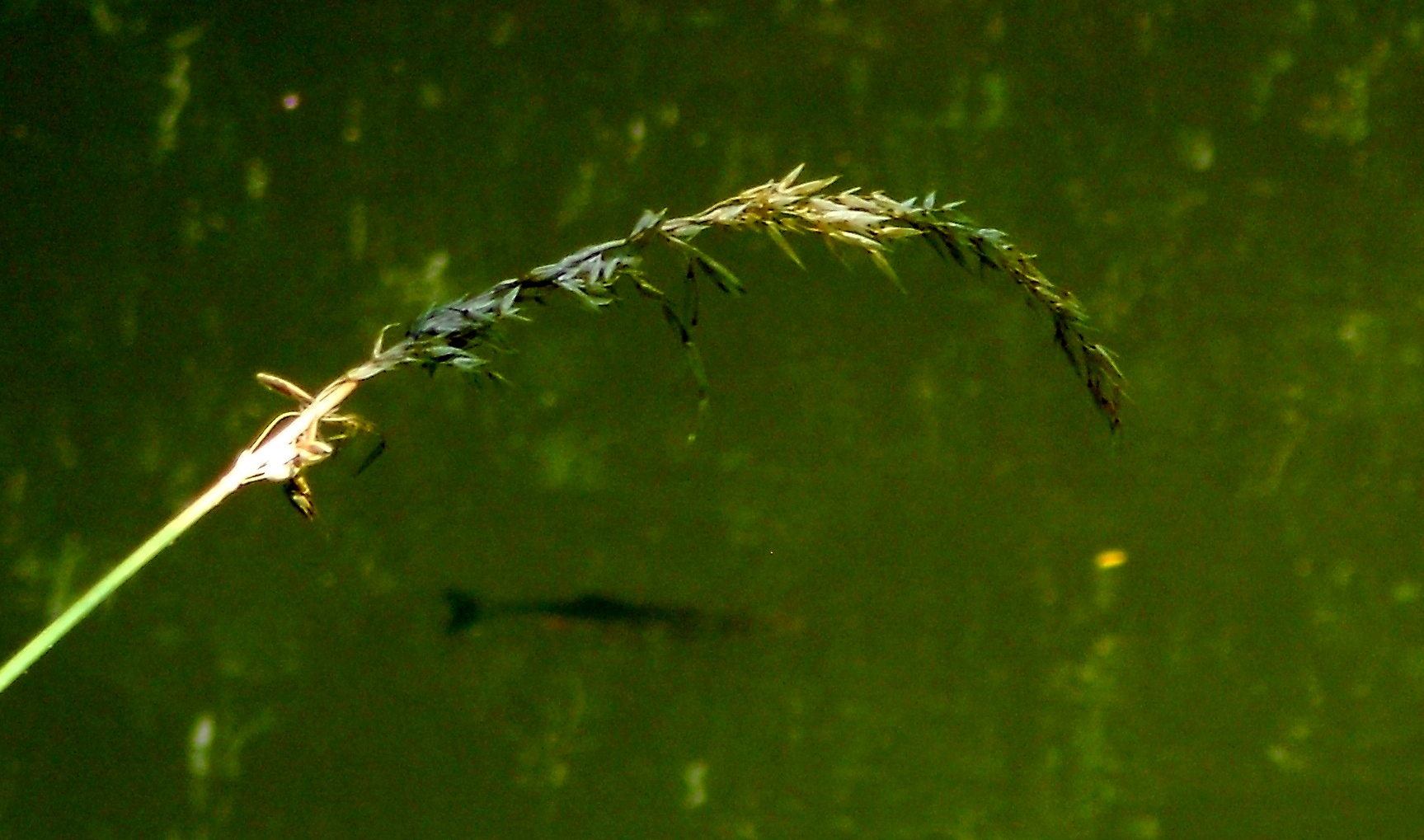
As we sat and rested and ate our lunch on a quiet grassy bank under the cool shade of the trees, we heard a sharp peep peeping alarum call and were astonished to see two kingfishers shoot up from the river, past our heads, skimming low across the field, one seemingly chasing the other, the sun catching their brilliant blue wing feathers as they disappeared down river, the sight of them clinging to the eye’s retina, as we marvelled at the sheer density of colour before turning back to resume watching a dull brown hawker dragonfly continuing his incessant hunt up and down the river plants, and a Roach gently flapping its tail, waiting for some passing water bugs to nibble, quite oblivious to all the fuss!
2nd August 2018 – 19 C
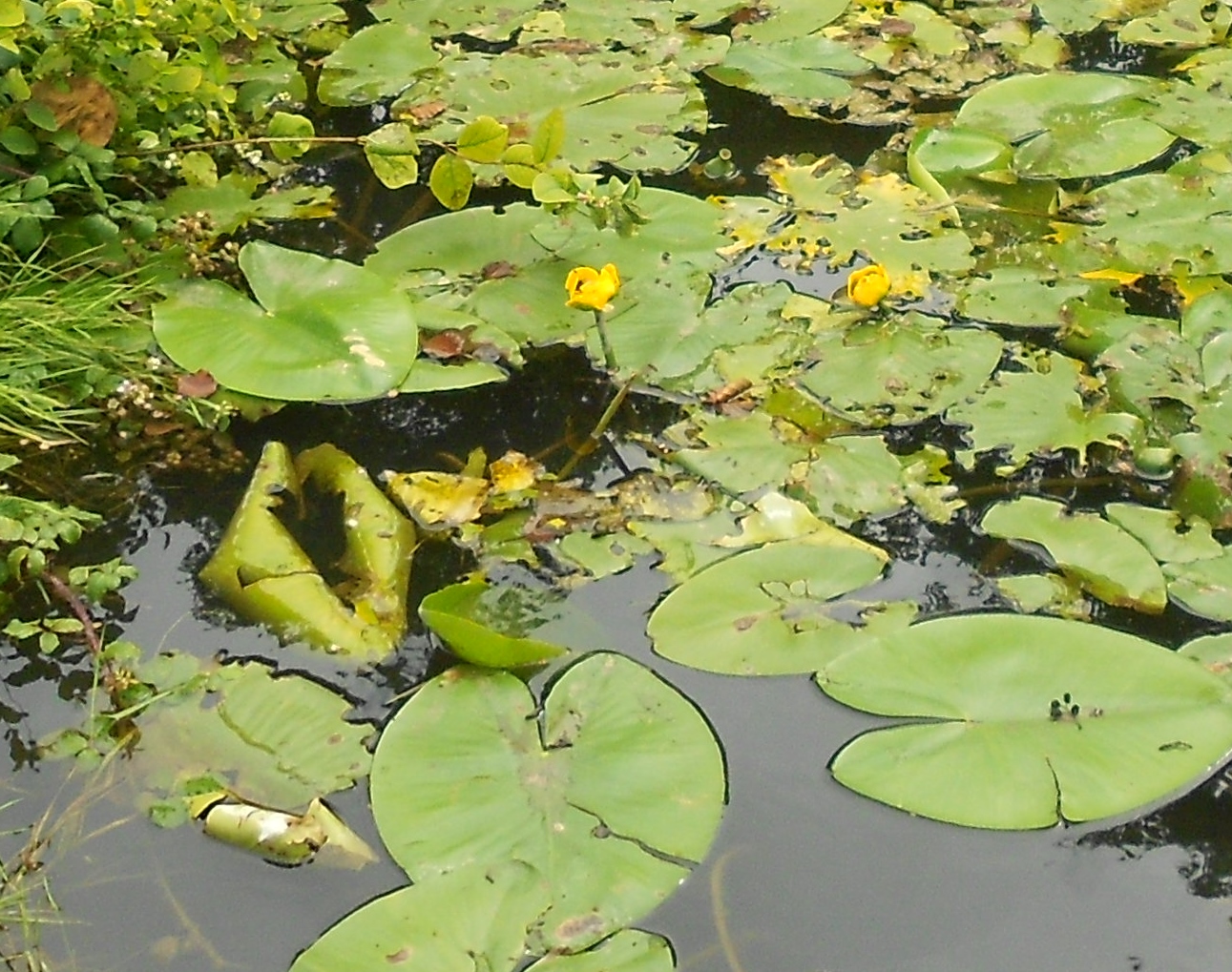
A quiet overcast day for us to complete our survey on the sites we didn’t manage to get to yesterday. Quiet in every way, no sound, no birds apart from a solitary raven and a panicked wren shouting out, few butterflies, a dead sheep sprawled across a log on the opposite bank and no sign of otter activity bar a small scatter of dried up crayfish remains.
However there are fewer pleasures greater than walking a river bank in summer, the newly opening water figwort with its dark red flowers and the duller red of the clumsy burdock, drooping from lack of water, beside the tiny pale flowers on the bare stems of the vervain plant. The water margins are filled with water mint, clumps of gypsy-wort and water forget me not while the lovely fat buds of the yellow water-lily bob gently up and down on the current. And there is always something new to see, like the stone horseshoe sculpture erected in the river bed, similar to the more elaborate towers which have been built farther downriver at Iford.
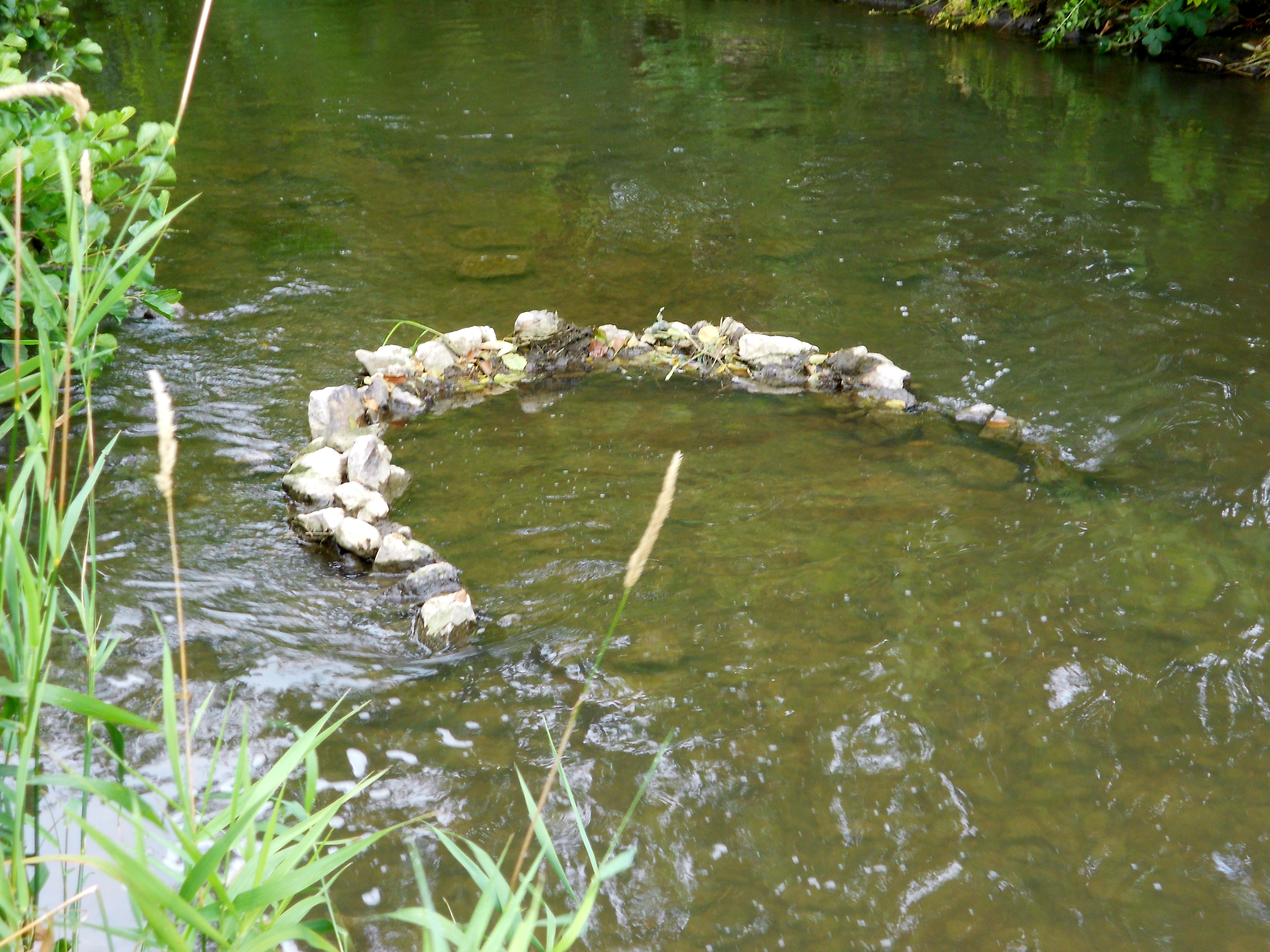
Stone Horseshoe
If it wasn’t for the general lack of activity, we probably wouldn’t have noticed the yellow and black striped insect feeding on a thistle flower. It looked like a hornet but it flew away as we drew near and it was only when it re-settled that we noticed its clear narrow wings and realised it was a Clearwing Hornet Moth, a Nationally Scarce (Nationally Notable) B insect. They usually eat wood, preferable the Black Poplar (there are many along the nearby hedgerow) on which to lay their eggs, so it was quite surprising to see it out in the field away from the trees feeding on a thistle.
21st July 2018 – 25.5 C

Whilst walking along the hedgerow on the edge of the riverside pasture, we came across a scooped out wasps’ nest, its papery combs torn apart and scattered all around and some two dozen or so wasps still buzzing and climbing over the remains. According to The Badger Watching Man, Badgers are (as far as he knew) the only animals that dig wasps’ nests out of the ground in this way. He believed that they are not after the adult wasps, but the juicy, protein-rich larvae. Dry spells, like the one we’re in now, where the ground is so hard, aren’t good for badgers. It’s harder for them to find and dig up worms so they need to look for alternative sources of food. Wasps’ nests are ideal. Last year’s wasp nest which was dug into the side of the concrete edge of the weir and which seemed to just disappear may have suffered the same fate.
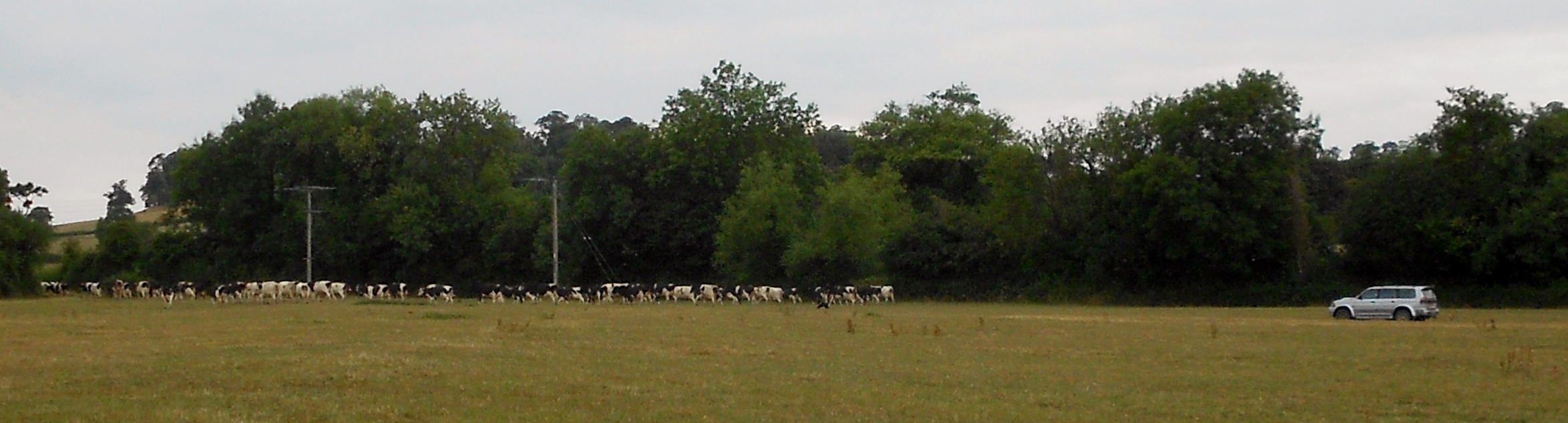
There was very little activity either on or above the water, few birds, only Great willow-herb, Himalayan Balsam, Water Figwort, Fat Hen and False Watercress in flower but we were entertained by the farmer and his dog shepherding the cows across the field for milking by way of the farmer’s estate car and the dog’s barks!
7th July 2018 – 24 C
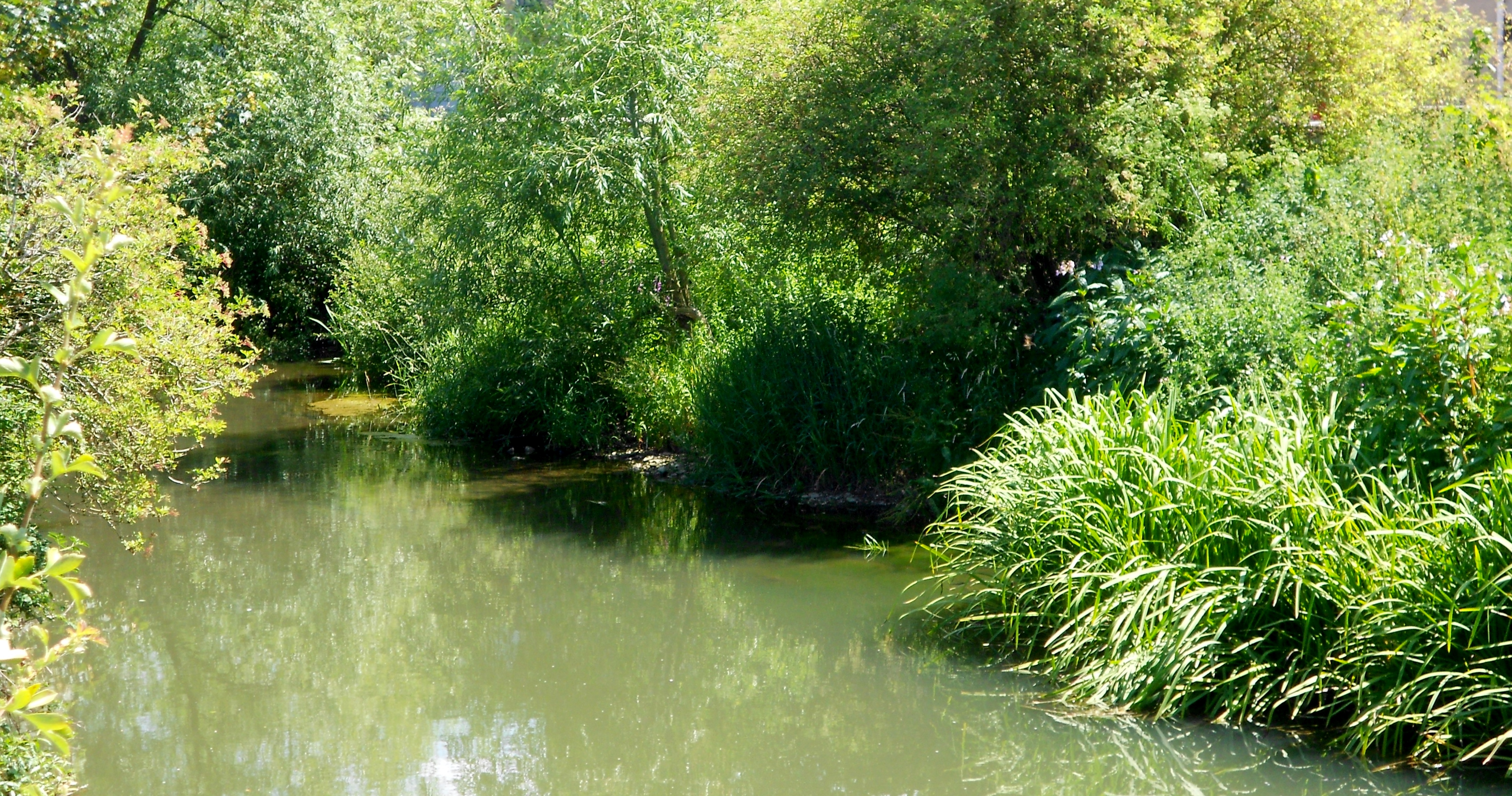
A beautiful hot summer’s day, full sun, blue skies without a cloud and we spent the afternoon exploring the river with our family. The young boys clambered about excitedly among the stones and shallow water under the bridge, with Dad and Grandpa and Aunty’s help, searching for gems and yelling in triumph when they discovered a claw of a crayfish, a freshwater shrimp, a water hog-louse and shouting with utter glee when they splashed after shoals of minnows and turned a stone to discover a common bullhead!
When we walked along the bank they hung precariously over the wall of the weir to spot the dozens of damsel and dragonflies among the reeds, chased the grasshoppers and grass moths across the meadow, the tried and tried without going cross-eyed to count the spots on the nineteen spot ladybird.

The river banks were filled with figwort and great willowherb, purple loosestrife and red campion, cow parsley and creeping cinquefoil, water forget me not and purple flowering teasels while the summer butterflies fluttered up and down – Red Admirals, Brimstones, Orange Tips, Marbled Whites, Small Tortoiseshells and of course this year’s bumper crop of Large and Green Veined Whites dominating the flower heads.
When we reached the beach, although the boys poked about looking for treasure, when none appeared they splashed in the shallows, threw small stones into the river and drove any self-respecting fish, crayfish, animal and insect scuttling away to safety while their Mum and Dad, Aunty, Grandma and Grandpa sat under the welcome shade of the willows, chatting and sleepily watching the swifts chasing in the sky overhead while a grey Heron lifted from the water and squawked in disgust as it flew off to find somewhere else to have a quiet fish.
Water Figwort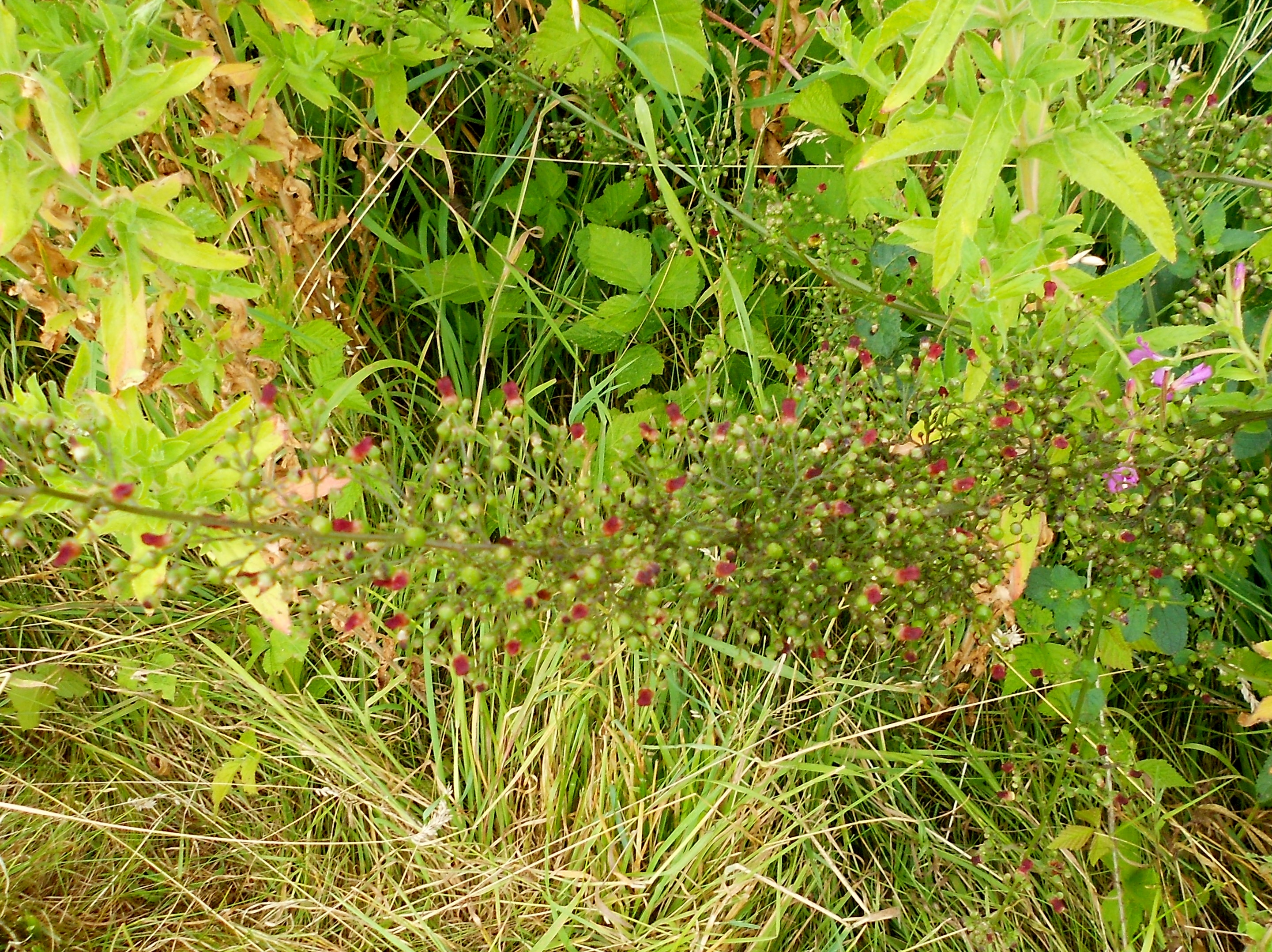
23rd June 2018 / 9.30am – 3pm / 23 C
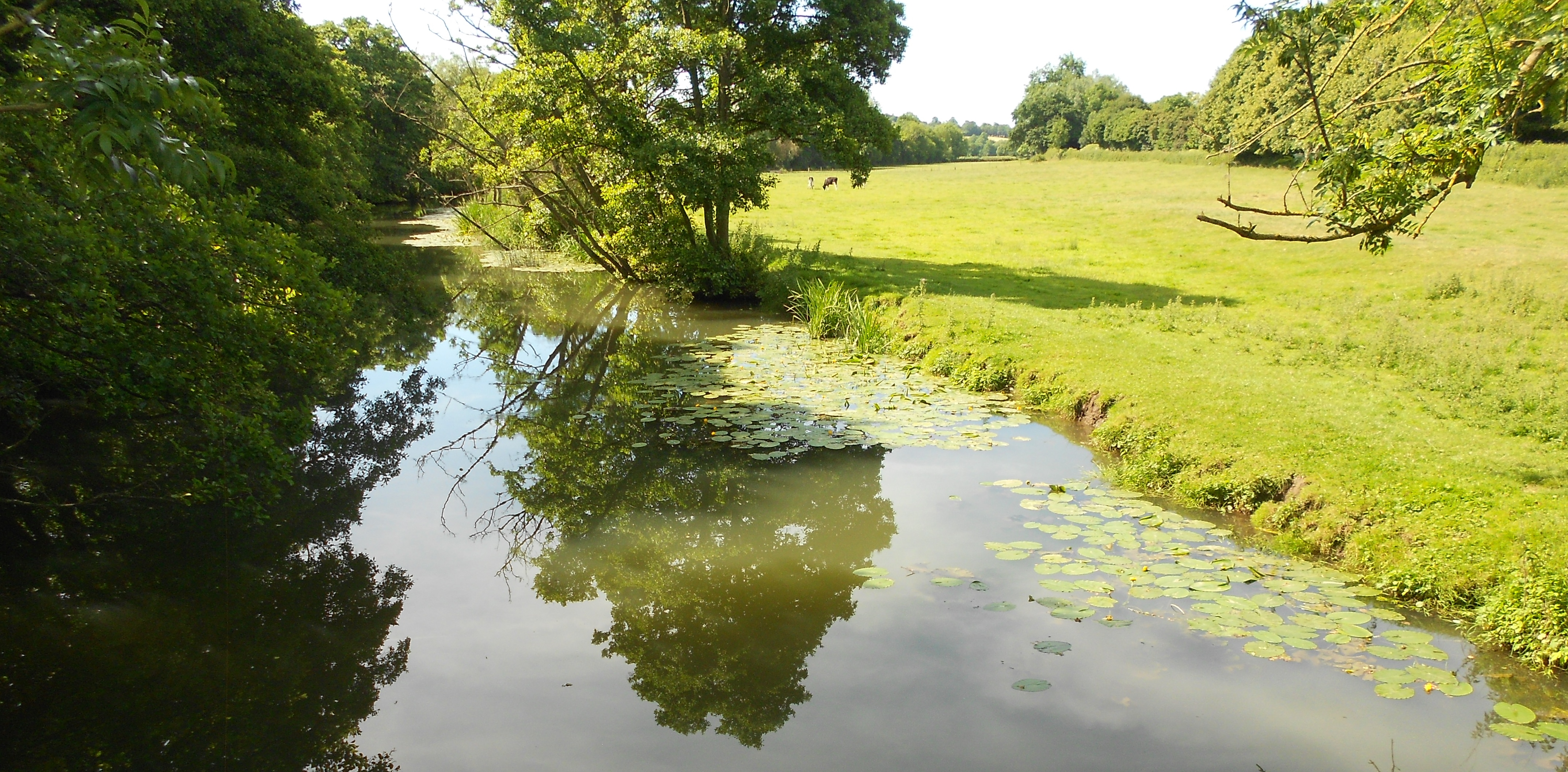
A beautiful morning, the sun already hot in cloudless blue skies, a gentle, fresh breeze – a perfect day for an Otter hunt! The river was quiet and tranquil and no ripples disturbed the glossy, celandine yellow cups of the water lilies floating on the surface.
Our first site had hundreds of minnows and midges, a Moorhen with two noisily cheeping fluffy chicks, butterflies, dragonflies and damselflies and even mink scat, both fresh and old, but no signs of Otter. Eventually, when we had almost given up, our persistence was rewarded, one recent Otter spraint, crayfish remains and a single pad mark in the soft mud near the fishing platform. Under the bridge showed even more activity, lots of spraint, anal jelly and more crayfish remains – all the signs of a good feast.
The beach was a wild tangle of flowering plants and trees; water mint, purple splashes of flowering tufted vetch, reeds, feathery grasses, hot pink red campion and white umbelifers, willow boughs and hawthorn branches through which Meadow Brown and Red Admiral butterflies competed with brilliant blue Banded Demoiselles displaying the distinctive dark thumb prints on their wings, and flashing iridescent green Beautiful Demoiselles, fluttering up and down in great profusion. We also got our first sighting this year of a sky blue male Emperor dragonfly, hawking over the grassy bank along with several Common Darters. While a Raven croaked and wheeled and a Buzzard mewed and circled overhead, we searched among the sun bleached stones at the water’s edge and found more and more signs of an Otter’s visit – recent spraint, anal jelly and yet more crayfish remains.
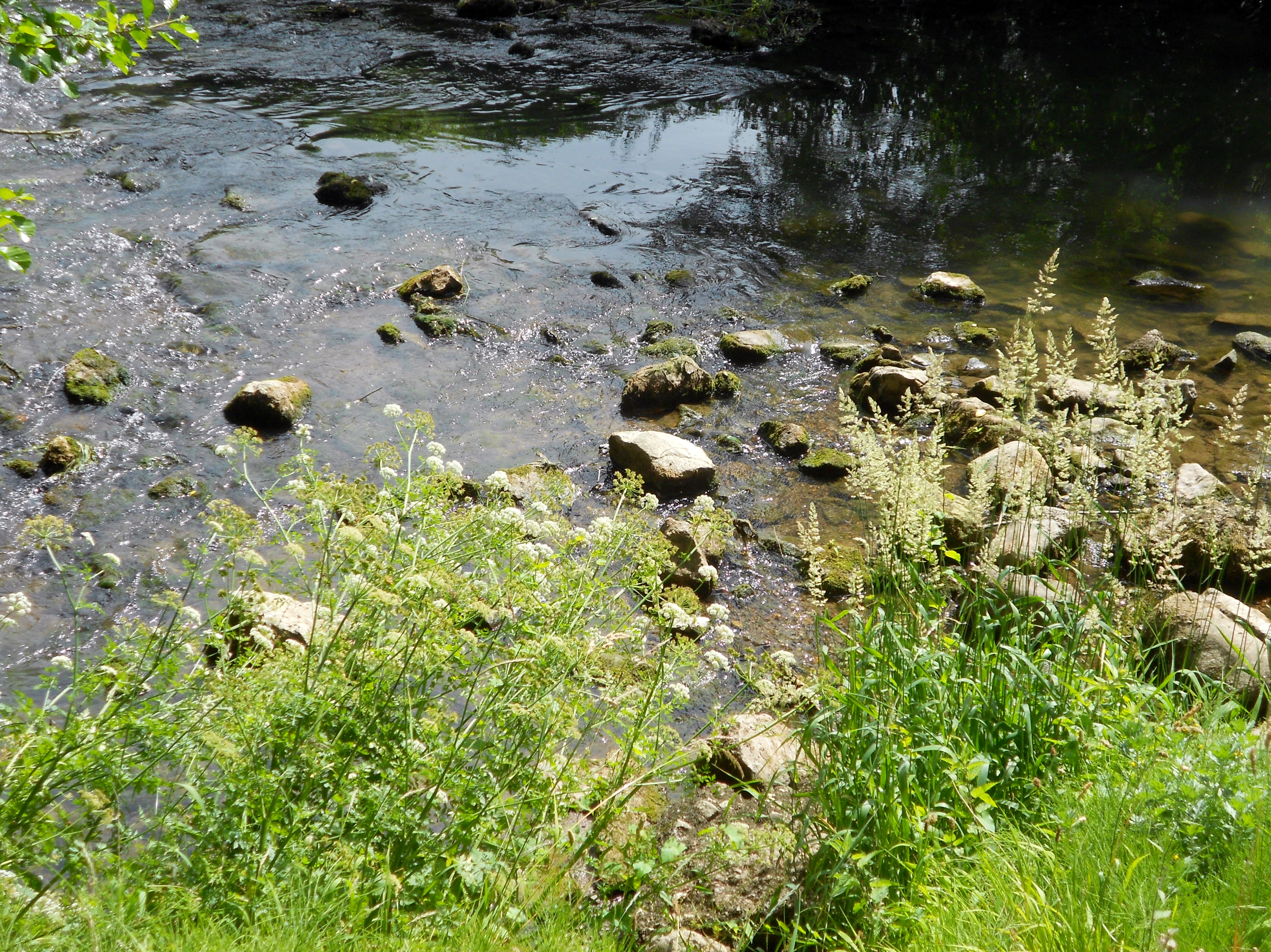
As we walked across the pasture to our next site passed hedgerows filled with the tall upright stalks of hogweed and cow parsley, arcs of dog rose and skeins of honeysuckle we watched another Buzzard being harried by a Kestrel and a Little Egret rising regally from the river bank, his snow-white feathers in stark contrast to the smokey-grey of the two Herons which joined him.
The river is narrow and fast here, tumbling over stones, the deep water rippling and splashing and flashing in the current, and it seemed right that it was here that we heard the sharp warning – peep peep – as the explosive flash of turquoise and orange of a Kingfisher shot past on his way to the slower stretches of water to fish.
Lots of Otter activity on the beach as well as among the large stones on the bend of the river, multiple spraint in both places together with anal jelly and crayfish remains, including a whole arm and claw. A Mallard, half hidden by the reeds, kept her brood of four ducklings well into the backwater and a single Swan drifted disdainfully passed with no sign of the female or any cygnet from the nest we spotted on our last visit, which perhaps haven’t yet hatched.
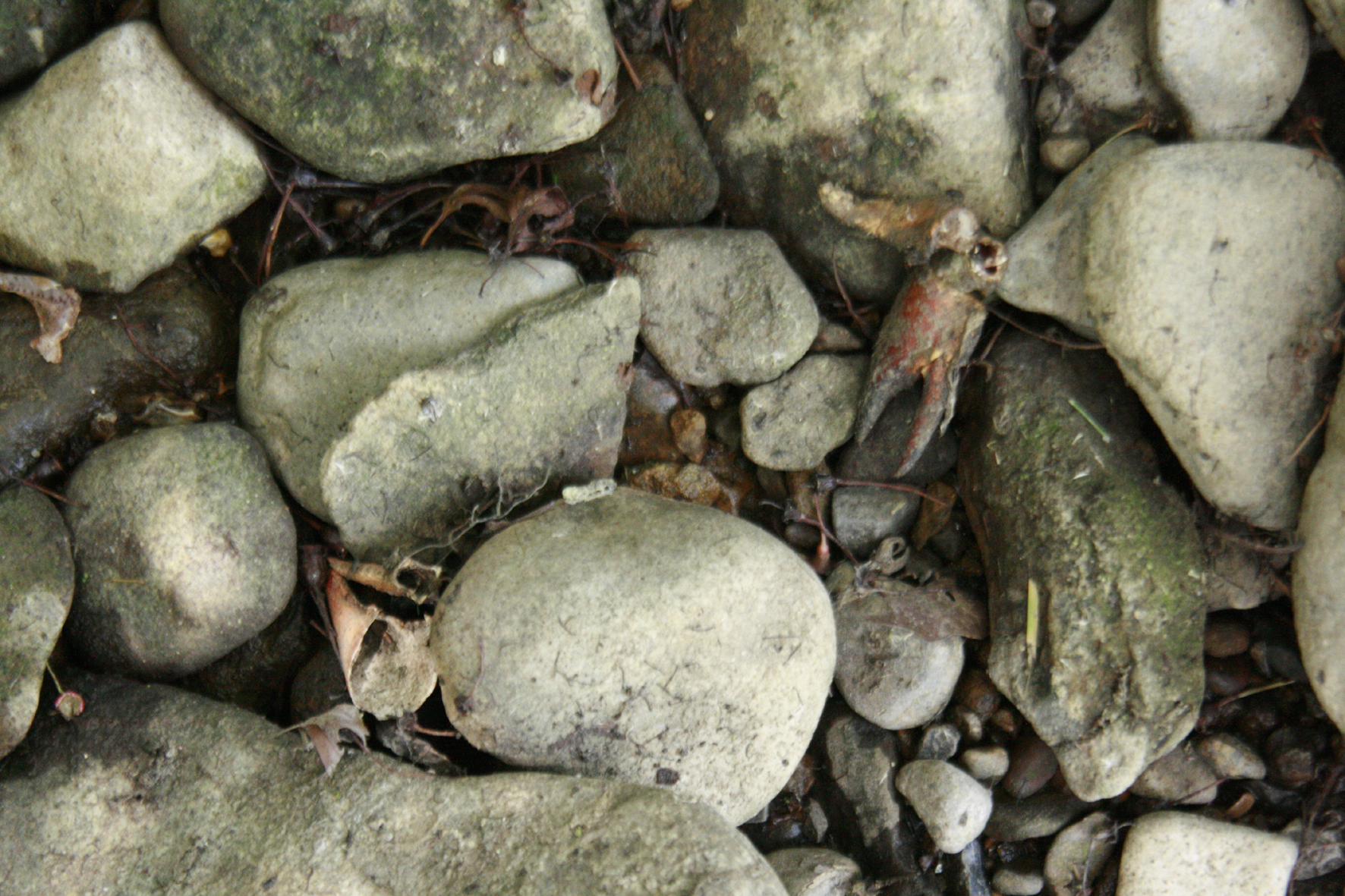
Only a few damselflies and no dragonflies along this stretch but there were Large Whites, Speckled Woods, Tortoiseshells and lots of Meadow Brown butterflies as well as large parties of Long-Tailed Tits and Great Tits flying up into the branches of the trees and the air was filled with the chatter of Jackdaws and Wood Pigeons. The very dry, sun- baked mud path was crossed with ever-widening cracks, but the ground beside it proved a perfect situation for rock roses, mallow, corn chamomile and a visiting Scarlet Tiger Moth.
No signs of any activity at the next beach where we usually see lots of spraint but this could be due to a wide area of green algal bloom covering the water – it certainly looked scummy and uninviting. We were more fortunate at the next bridge which was very open, treeless with no herbage to distract us so we contented ourselves with watching the Swallows swooping low over the fields and perching on the telegraph wires, the White doves flying around the farm buildings and the Little Egret and two Herons stalking the shallows.
11th June 2018
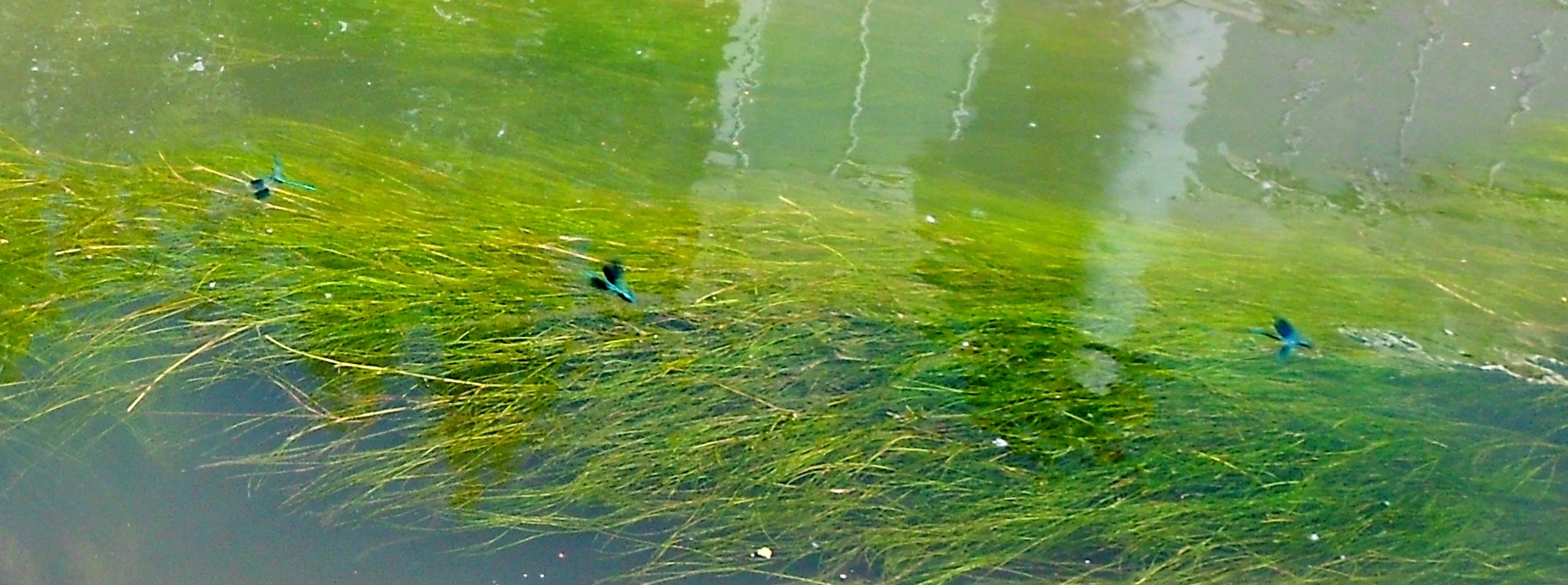
A perfect summer’s afternoon – blue skies, warm sun, fresh breeze, a Kingfisher flashing downstream, Beautiful and Banded Demoiselle Damselflies in abundance and the first sighting of a number of Common Blues, several mating – halcyon days.
There were still a few Mayflies rising from the water, lots of bees and an American Signal Crayfish crawling around in the shallow water on the edge of the river. Only the occasional butterfly, Large Whites and a Peacock but no others and no signs of Otters today on either the gravel beach, the little beach or the weir.
Clouds of white flowering umbelifers all along the bank, including Hogweed, Giant Hogweed, Pignut, False Parsley and Cow Parsley, lots of bright pink Campion with beautiful falls of pale pink Dog Roses and heavily scented Elderflower and splashes of brilliant yellow Stonecrop clinging to the sides of the weir. The air was filled with the sounds of Blackbirds and Wrens singing in the trees, the ubiquitous wood pigeons cooing incessantly and the buzz of bees.

We were fortunate to meet Kevin a keen fisherman who was a fount of local knowledge of the river. He had seen a female Otter with two cubs last year as well as Mink, but was much more interested in the very large Chub which he had just spotted lurking in the deep water close to the bank which he thought was at least five pounds plus in weight and the mass of five hundred or so spawning Chub on this stretch of the River a couple of weeks ago. He had also seen Dippers on the shallow stony stretch under the bridge, yet another confirmation of the purity of the River; we had often seen Dippers farther downstream but never around here, so it was really good to know they are here.
23rd May 2018 / 9.30am – 2.45pm / 12.5 C – 19.5 C / 53.5 F – 67 F
There are days and there is, as Lou Reed sang, A Perfect Day which must surely include a beautiful day in May wandering through river meadows in warm sunshine when the blossom on the wild flowers, trees and hedgerows are at their flawless best, damselflies are fluttering among the reeds, mayflies rise from the river, and when swifts speed, swerve and turn high in the bluest of blue skies overhead in their never-ending attempt to catch insects on the wing – what joy!
The morning was unpromising, cloudy with a chill, strong wind, but the country lane was so quiet and serene that little by little we were seduced into forgetting the weather and just glory in verges filled with gypsy’s lace in full summer bloom, thick with deep scented flowers, shaded by branches of newly opened Hawthorn blossom and sprinkled with deep blue birds eye speedwell.

We climbed over the old wooden stile into the river meadow, knee-high with summer grass, buttercups, stitchwort and red Campion. As we walked towards the river, we could hear and eventually see the massive harvesters in an adjoining field working their way in perfect symmetry down the meadow cutting and stacking the grass in long fat snakes, followed by the smaller tractors and trailers, completing in an afternoon what in years gone by would have taken weeks.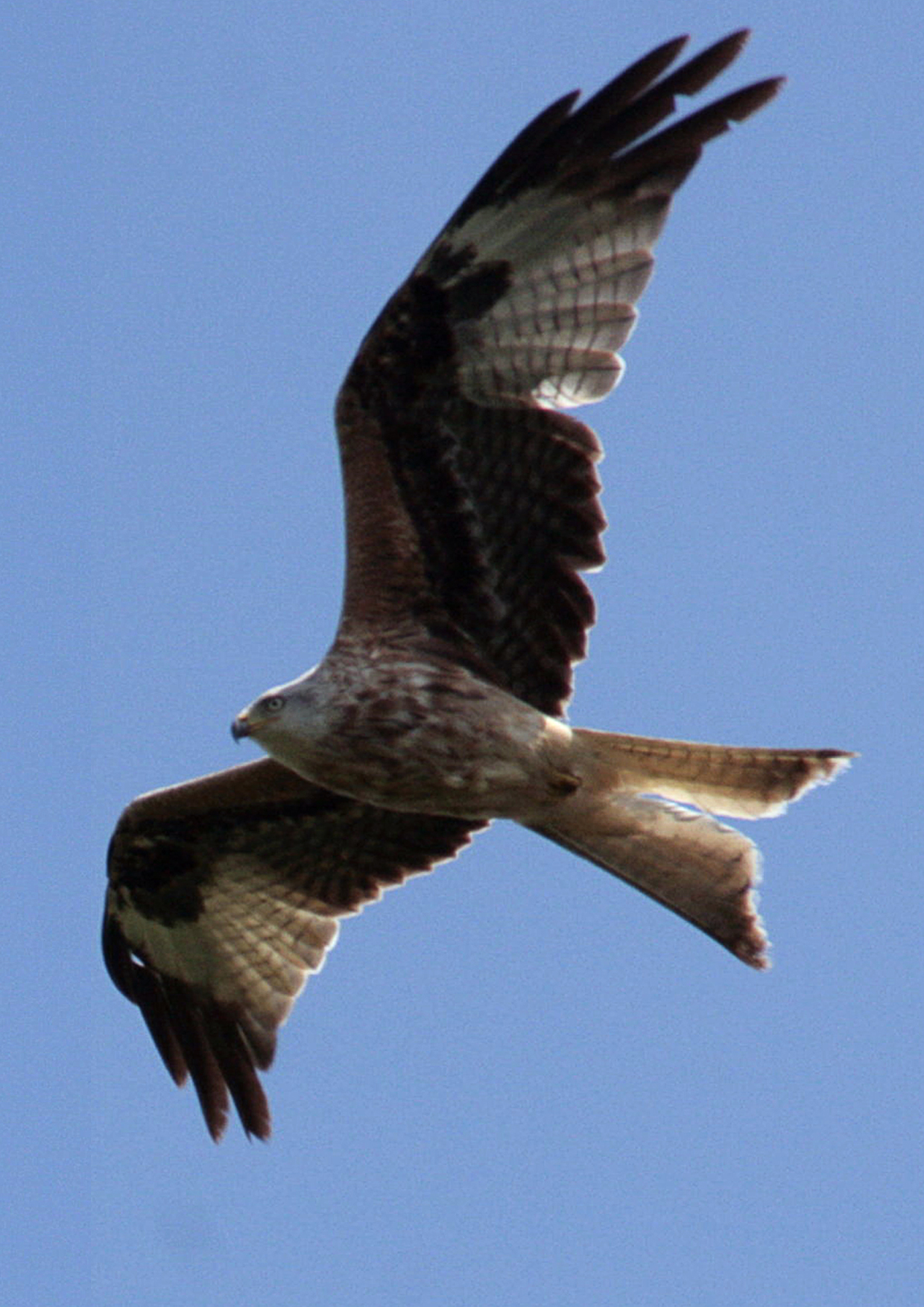
In the sky above hung the raptors, circling slowly on the thermals, heads down, eyes fiercely concentrated on the thick lines of hay, hoping to spot a harvest mice, vole, any small mammals or a ground nesting bird running, scampering away to escape the sharp blades of the harvester. The count was astonishing: ten Buzzards, two Peregrine Falcons and two Red Kites, all hungry for prey which proved to be pretty elusive.
Red Kite – Rebecca Muirhead
As we searched the muddy edges of the gravel beaches, around the roots of trees, on logs and boulders and along ditches for signs of Otter spraint, padding or fish or crayfish remains, it was easy to be distracted by the brilliant metallic blue bodied Banded Demoiselle, the pale blue White-Legged damselflies, and the flash of copper-bronze winged Beautiful Demoiselles, both immature males with the blue bodies and green bodied females in uncountable numbers in amongst the water plants edging the river.
We found both fresh and old Otter spraint on flat stones near the river edge and so were not surprised when a man walking along the opposite river bank said he had seen a mother and cub swimming downriver only a week ago on this stretch of water. The water crowfoot, not yet in flower, trailed its long vivid green tresses to ripple in the brisk current on the broad gravelly shallow river bed from where every few seconds yet another dun, an ephemera Danica Mayfly lifted up from its long two-year immersion to float free for a day, an hour, a few seconds dependent upon wind blowing it off course or a hungry rising trout’s mouth preventing it mating or laying its eggs before dying.

A brilliant turquoise rifle shot exploded past, barely seen, as a Kingfisher flashed down river while a beautifully lazy Little Egret snowy white and elegant lifted herself and flapped slowly away to perch in a nearby tree. Orange Tip Butterflies, Red Admirals and Large Whites were busily feeding amongst the red campion, cow parsley, hemlock water dropwort, comfrey, herb Robert and dog roses which edged the river banks and a large light coloured Grey Heron hunched stock still in the shallows patiently hoping for a kill.

We met a man who had been checking his American Signal crayfish traps (for which he held an Environment Agency licence). He usually caught around 30 crayfish at each site during the season which lasted until August. He hadn’t seen any Otters but had seen lots of brown trout and roach and had noticed crayfish remains left by feasting Otters which we had also seen under the bridge and on the beach in the adjoining field. His companion who spent some time in Bath while researching his doctorate on climate change had often watched Otters playing in the River Avon but had never seen them along the Frome.
We were weary at the end of our stint – climbing stiles, wriggling under bridges and tramping mile after mile along the river banks but it was a good weariness and we were content to saunter back through the afternoon’s sunshine pleased with our count and blessed to be able to enjoy such a wonderful stretch of river. So, with many apologies to Leigh Hunt for messing with his famous poem: Say we’re weary, say we’re sad, Say that health and wealth have miss’d us, Say we’re growing old, but add, the river kissed us!
14th May 2018

The leaves and buds on the horse chestnut tree are beginning to unfold. Perfect timing for hungry Harvest Mice who are emerging from their winter hibernation and the tiny nest in the photograph below might well be an abandoned nest.

28th/29th April – Temperature 8.5-9 C Female Kit – copyright Tony House
Drenching rain and strong cold north-easterly winds didn’t dampen our determination to get to know our patch of the River Frome and examine it thoroughly as part of our first two-day survey for the Somerset Otter Group, although, discretion being the better part of valour, we took a carefully considered joint decision not to enter the field containing a very large, very magnificent looking bull who showed rather too much interest in our presence! We hurriedly skirted the field beyond the wire whilst keeping a careful watch on him and his altogether more docile looking harem of fifteen young heifers, and walked on to the next site.
This is an event which takes place annually when volunteers check all the rivers in Somerset for signs of otters as well as reporting any sightings of Dippers, Kingfishers, Water voles, Goosanders, Herons, Egrets, Dabchicks and Mink all of which indicate the health of the river system. Dippers are especially indicative of water quality and a good bug life. The Somerset Otter Group works in association with Somerset Environmental Records Centre (SERC) and Cardiff University.
After hours of clambering over stiles, wading through knee-high grass and slithering and sliding under bridges, we were rewarded with fresh spraint and padding on one site and recent spraint on another on the first day and fresh spraint at yet another site on the second day, all encouraging signs of an otter being active in our patch.
 Mandarin Duck copyright Tony House
We were disappointed not to see our usual Kingfishers and Little Egrets, which had no doubt found somewhere warm and dry to sit out the truly awful weather, but we did see a Heron, a Cormorant, a pair of Canada Geese, 5 Mandarin Duck, 3 Mallard and a pair of Swans (the female on the nest). We didn’t see any water voles, those shyest of creatures, but we saw several banks peppered with what we believed were their holes, but always bearing in mind Tony House’s caution that both American crayfish and Mink have been recorded using/adapting water voles’ burrows.
We were pleased to see a good harvest of garlic mustard this year which should please orange-tip butterflies looking to lay their eggs, as well as dove’s foot cranesbill, ground-ivy, lady’s smock, cow parsley, white dead nettle, ramsons, red campion, lords and ladies, comfrey and buttercups, daisies and dandelions galore scattered across every field we crossed.
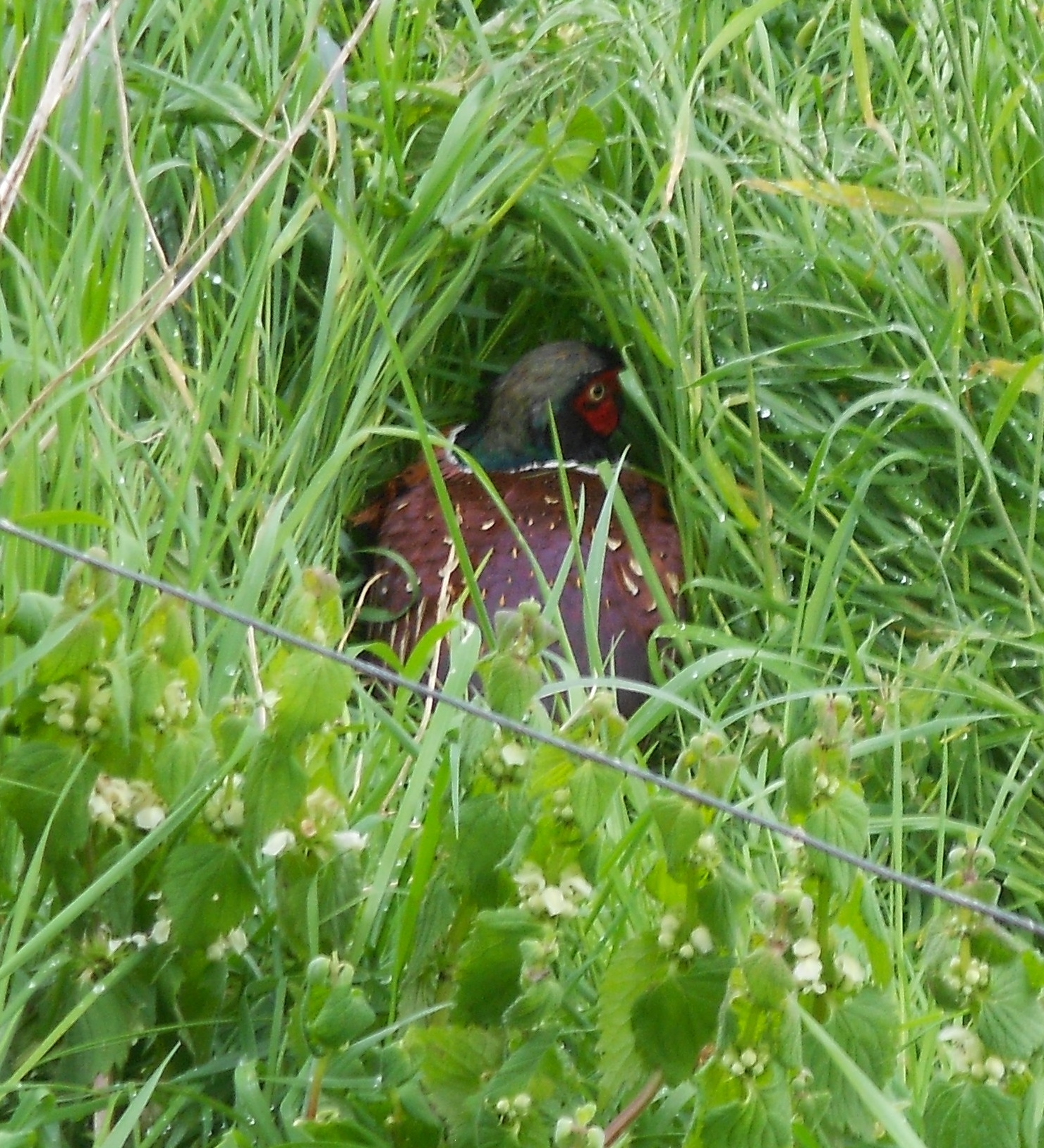
The blackthorn was in full flower along the banks of the river, the willows flaunted their beautiful new soft green leaves and despite the rain tiny Wrens as well as Crows, Jackdaws, Wood Pigeons and Blackbirds were still going about their business and one Pheasant managed to make himself a snug roost which offered some protection from the strong, biting wind.
19th April 2018 – Temperature: 22 C

No signs of otter spraint or padding; there were the dried hairy remains of what might have been old mink spraint, but although the overnight rain had provided good of padding possibilities, the beaches showed only bird and dog tracks.
It was very quiet along the river apart from the sound of two Greater Spotted Woodpeckers drumming in the woods echoing across the water meadows, and from the trees along the banks, the twitterings and tweetings of lots of Tits, Robins and Blackbirds. We saw a couple of Moorhens on the river, a sharp warning shriek alerted us to the brief brilliant sight of a Kingfisher flashing past upstream, a pair of graceful Little Egrets making their stately way along the shallows before lifting effortlessly and flying downstream out of sight and of course we heard the ubiquitous Wood Pigeons in full voice. We were pleased to see that the single Little Egret which had been alone here at this stretch of the river for so many years had at last acquired a mate.
The Blackthorn had formed a riot of frothing white blossom promising a good sloe season in the autumn, there were enormous great clumps of marsh marigolds, striking in the sunlight, garlic mustard, red dead nettle, lady’s smock, lesser celandine, fools water cress, water forget-me-not, and dandelion scattered along the banks.
A small tributary of the River Frome near Lullington showing travertine deposit on the stream bed
15th April 2018: 10am – 1.30pm
We travelled to Glastonbury to meet up with Jo Pearse our S.O.G. trainer who gave a thorough explanation of the health and safety aspects of surveying, together with methodology and some basic ecology before we and the six other trainees followed Jo through the marshes of Sharpham Moor searching under bridges and along the banks for any signs of otters.

Despite the cold driving rain and strong blustery winds, we saw lots of spraint, otter slides and tunnels which otters make through the undergrowth to the water’s edge. It was extremely informative and an extra bonus to hear a Water Rail, Blackcap and Cetti’s Warbler and to see Heron, a group of Swallows and a small herd of eight or so Roe Deer grazing together on one of the marsh islands.
5th April 2018: 10am – 12.30pm
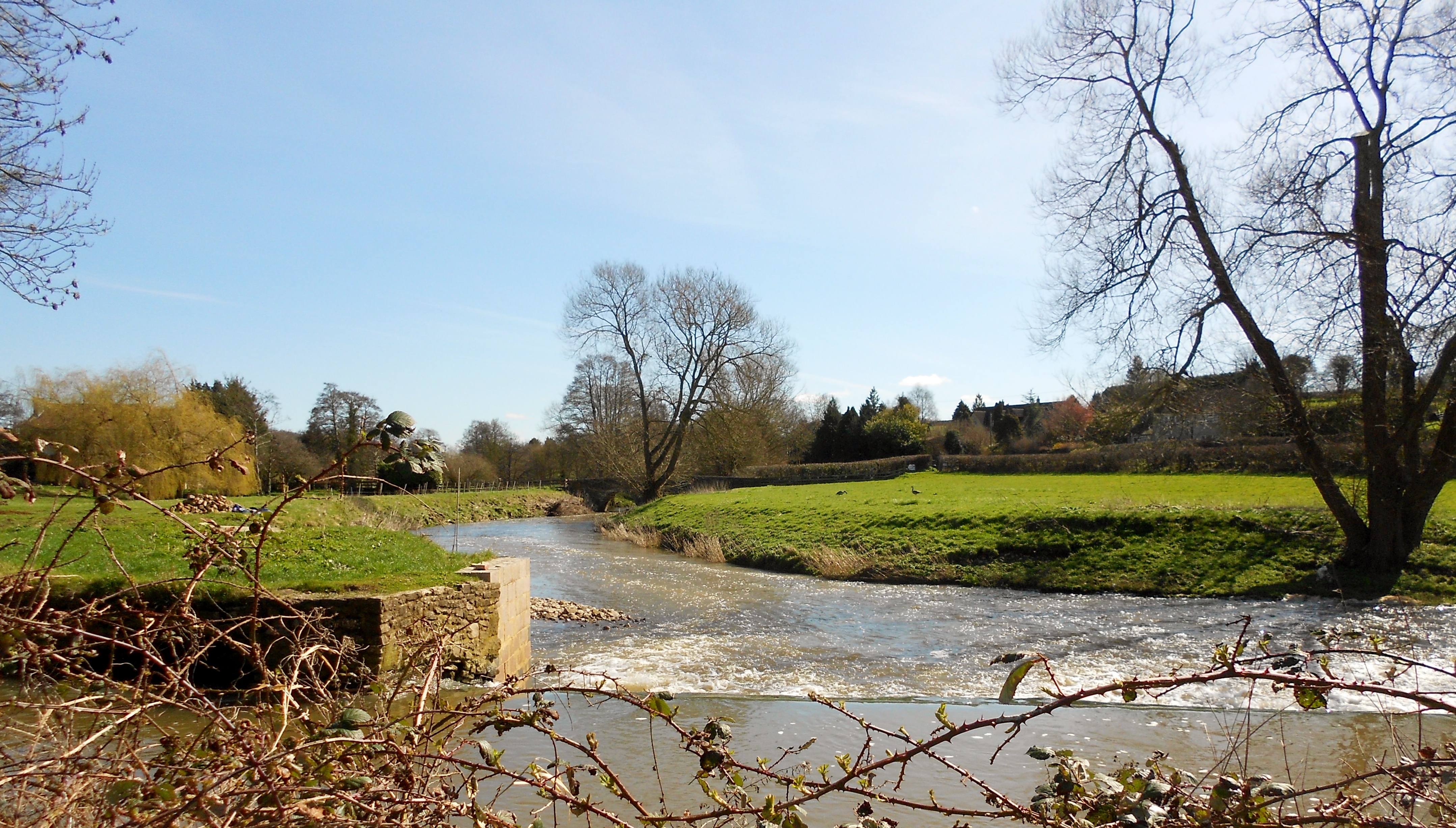
We have volunteered to survey a stretch of the River Frome for the Somerset Otter Group which isn’t presently being checked. As we are complete novices, we were very fortunate that Anthony House, a committee member who has been surveying and recording otters for more than twenty years agreed to show us the ropes. Not surprisingly his knowledge and expertise is prodigious and as we walked the course, he pointed out the areas where we could expect to see spraint (scat), tracks, slides and scrapes if an otter was active in the area. He explained that spraint is often deposited on prominent features like rocks, fallen trees, bridge supports and storm drains and that the deposits act as scent markers to other otters and are used to define territories.

We couldn’t have wished for a better day for our search – the sun was warm, the skies a cloudless blue and the breeze slight and fresh as we clambered over stiles, peered under bridges, pushed our way through thickets and wandered beside the river which was in full fast spate after weeks of constant rainfall. Eventually, to the great delight of us all, we came across a small silted beach where there was not only clear spore but also a patch of anal jelly, the two together a clear confirmation of otter presence.
We look forward to our half-day training session with Jo Pearse at the Somerset Levels and hope one day we will also be lucky enough to actually see a local otter!
===========================================================================
LIST OF SPECIES
[Sighted along the surveyed stretch of the River Frome]
Animals: Brown Hare, Hedgehog (droppings) #Otter, #Fox, #Mink, #Chubb, Brown Trout, Common Bullhead (Miller’s Thumb), Roach, Minnow, Freshwater Shrimp, Water Hog-louse, American Signal Crayfish.
Butterflies, Dragonflies, Damselflies and Insects: Hornet Moth (Nationally Scarce (Nationally Notable) B), Grass Moth (possibly Agriphila straminella), Scarlet Tiger Moth, Garden Tiger Moth; Common Blue, Marbled White, Orange Tip (f), Brimstone, Green Veined White, Large White, Small Heath, Comma, Peacock, Red Admiral, Small Tortoiseshell, Speckled Wood Butterflies.
Common Darter Dragonfly, Brown Hawker Dragonfly, Emperor Dragonfly, Azure Damselfly Common Blue Damselfly, Banded Demoiselle Damselfly (M&F), Beautiful Demoiselle Damselfly (M&F), White-Legged Damselfly (M)
Dark Bush Cricket (F), Common Green Grasshopper, Red-Headed Cardinal Beetle, Two-Spot Ladybird, Asian Lady Ladybird (Harlequin), 24 Spot Ladybird, Common Wasp, Red Tailed Bumble bee, Buff Tailed Bumble bee, Longhorn Beetle, Knot Grass Leaf Beetle, Mint Leaf Beetle, St Mark’s Fly, Hornet, Pond Skater, Robin’s Pincushion (Rose Bedeguar Gall wasp)
Birds: #Dipper, Kingfisher, Little Egret, Grey Heron, Snipe, Goosander, Mandarin Duck, Moorhen, Garganey, Canada Goose, Mute Swan, Mallard, Pied Wagtail, Grey Wagtail, Yellow Hammer, Goldfinch, House Martin, Swift, Swallow, Chaffinch, Song Thrush, Blackbird, Magpie, Wren, Carrion Crow, Jackdaw, Wood Pigeon, Green Woodpecker, Greater Spotted Woodpecker, Red Kite, Raven, Buzzard, Peregrine Falcon, Sparrowhawk, Kestrel.
Plants: Yellow Water Lily, Corn Chamomile, Rock Rose, Common Mallow, Water Crowfoot, Spiked Water Milfoil, Fools Parsley, Black Mustard, Brook Lime, Saracen’s Woundwort, Hemlock Water Dropwort, Cow Parsley, Crosswort, Dove’s Foot Cranesbill, Water Forget-me-Not, Tufted Vetch, Yellow Flag Iris, Meadow Cranesbill, Angelica, Purple and White Comfrey, Mares Tail, Stitchwort, Ground Ivy, Bugle, Marsh Marigold, Lesser Celandine, Meadow Buttercup, Red Campion, Bird’s Eye Speedwell, White Dead Nettle, Red Dead Nettle, Red Clover, White Clover, Dandelion, Garlic Mustard, Lady’s Smock, Fools Watercress, Watercress, Common Daisy, Herb Robert, Bramble, Watermint, Ivy, Common Nettle, Shepherd’s Rod, Purple Loosestrife, Yarrow, Wild Marjoram, Hedge Woundwort, Tansy, Branched Bur-Reed, Unbranched Bur-Reed, Himalayan Balsam, Yellow Stonecrop, Field Bindweed, Creeping Cinquefoil, Teasel, Great Willow-herb, Scentless Mayweed, Bulrush (Common Reedmace), Burdock, Fat Hen, Common Reed, Soft Rush, Common Club-rush, Reed Canary-grass, Reed Sweet Grass, Crescent Cup Liverwort, Amphibious Bistort, Water Speedwell, Fennel Pondweed, Shepherd’s Rod, Common Ragwort, Hemp Agrimony, Sheeps Sorrel, Spear Thistle, Creeping Thistle, Water Figwort, Common Duckweed, Silverweed, Redshank, Gypsywort, Common Valerian, Lords & Ladies, Lady’s Bedstraw, Harts Tongue fern, Old Man’s Beard, Vervain.
Trees, Shrubs: Norway Maple, Snowberry, Black Poplar, Blackthorn, Hawthorn, Elder, Alder, Goat Willow, Crack Willow, Weeping Willow, Common Osier, White Poplar, Ash, Field Maple, Larch, Sycamore, Horse Chestnut, Oak.
# Sighted by Others
 WILD WAY Route 24 :
One thought on “Walking the River Meadows”